Wednesday, June 12, 2019
#Pakistan - Last of the Kalash?
A PHOTOGRAPH of Kalash women captured in their distinct, traditional attire was printed in yesterday’s newspaper — smiling as they took a selfie. Naturally, the colourful image stood out. In the 21st century, however, it seems as if the camera has both immortalised the Kalash and presented the latter with their greatest survival challenge. There are only 3,500 to 4,000 members of the tribe remaining in the northern parts of the country. And yet, in nearly every travel book on Pakistan, in the various music videos and advertisements flashing on television screens, images of the Kalash are used disproportionately to highlight the country’s cultural beauty and diversity. While the intention may be well meaning, these images have frozen the Kalash in time, as they are reduced to two-dimensional, inanimate objects, untarnished by modernity, and viewed as an aesthetic, to be seen and rarely heard; in fact, an ancient, indigenous people perceived as foreigners in their own land. There have been several reports of intimidation and threats to the tribe by religiously motivated militants in recent years. But less reported is how local tourists have harmed the Kalash way of life and threatened the tribe’s basic human need for privacy.
Stirred by the images they see in popular culture, full of curiosity and wonder — and lust, in many instances — local tourists make their way to these remote parts of the country, in the hope of capturing the few remaining Kalash on their cameras and film. Intentionally or not, however, many end up behaving in ways that are deemed intrusive and disrespectful by the local population, since they are not sensitised to their customs, or are misinformed due to harmful rumours. Some Kalash women have taken to wearing veils to protect themselves from the prying eyes of male tourists, while others have mentioned not wanting to celebrate their festivals any more. It would be a great tragedy of our generation if we lose this unique tribe due to the ignorance of some.
Pakistan’s economy is in for a lot of pain

ANDY MUKHERJEE
Pakistan is the new emerging market crisis brewing in Asia & the only hope for Imran Khan is opportunities created by the global trade wars.
Pakistan is flirting with a textbook emerging-market crisis. An unsustainable investment boom has ended. The central bank has raised interest rates to squeeze a current account gap. Growth has collapsed to a nine-year low; youth unemployment is in double digits; and inflation is getting there. Government revenues are stalling.
Getting Islamabad out of its jam is once again the job of the International Monetary Fund. The IMF has put together the country’s 13th bailout since the late 1980s, but it doesn’t want its $6 billion of rescue funds to be used to pay Chinese loans for Belt and Road projects. The fund’s suggestion to let the currency float freely could extend its 30% decline against the dollar since December 2017.
Throw in fiscal austerity, which had an unmistakable imprint on the government’s budget on Tuesday, and the pain’s bound to get worse before it gets better. Rather than having to deal with stagflation and balance-of-payment deficits, Prime Minister Imran Khan is probably wishing he was in England at the Cricket World Cup, which Pakistan won for the first and only time under his captaincy in 1992.
At that time, Pakistan’s per capita real GDP, adjusted for purchasing power of the currency, was 65% higher than India’s. Now it’s 28% lower than its neighbor’s level, and the IMF expects the gap to keep widening.
India’s economy is probably growing much more slowly than the 7% rate claimed in official statistics, but its arch rival is faring a lot worse. The construction frenzy sparked by the $62 billion China-Pakistan Economic Corridor has petered out. Three cement makers are among the biggest losers on the Karachi Stock Exchange’s KSE100 Index this year, with price drops ranging between 45% and 55%. Even the worst performer on the index – Fauji Foods Ltd. – can chalk up the collapse in its shares to the souring of a deal with Inner Mongolia Yili Industrial Group Co. The Chinese firm was supposed to buy 51% of the Pakistani dairy company.
So how will the IMF turn Pakistan around? For an answer, try cotton terry towels, trousers and shorts. As U.S. President Donald Trump’s trade war against Beijing intensifies, American buyers are diversifying their supplier base away from China, the No. 1 exporter of these goods to the U.S. Already, Bangladesh is close to snatching the trousers-to-towel crown. Pakistan, at No. 6 last year, has grown its own shipments to the U.S. by almost 12% this year. It may overtake India, which has seen virtually no improvement.
The good news is that the Pakistani rupee has fallen by almost 20% since 2017. That’s virtually wiped out the currency’s overvaluation adjusted for inflation differences with trading partners, as estimated by the IMF. If the currency slides further and inflation doesn’t accelerate, Pakistani exports should receive a boost, provided global growth and cotton availability for the textile industry hold up.
Auto sales shrank 24% from a year earlier in April. With two-fifths of sales financed by loans, only a meaningful reduction in interest rates can spur demand, especially with carmakers passing on the bulk of the burden of a weak exchange rate (on import costs) to consumers. Only two analysts out of 14 tracked by Bloomberg rate the shares of Pak Suzuki Motor Co. a buy. Subsidized interest rates on low-cost housing could plug the demand shortfall to some extent. But the fiscal elbow room to run such ambitious programs is too limited. Besides, boosting agricultural yields may be a bigger priority than supporting urban consumers.
Khan’s administration was hesitant to tap the IMF, knowing how tough it is to persuade the public of hardships that must be endured as the economy is wrung dry of past excesses. Structural adjustments could also have political costs. Khan, who took charge nine months ago, is the nation’s 19th elected prime minister. None of the 18 before him managed to complete their five-year term.
Now he has no choice but to embrace the conditions that come with the rescue. The prime minister can only hope that the reordering of global supply chains will create opportunities and ease the pain of Pakistan’s recovery. A world cup win would also lift sentiment, but the odds on that are rather long.
#Pakistan - #PTI government is victimizing the Opposition

Chairman Pakistan Peoples Party Bilawal Bhutto Zardari has said that throwing opposition leaders in prison in fake charges is not accountably but victimization and revenge.
In a statement, Chairman PPP said that his spokesman and Chairman for Senate’s Human Rights Committee Senator Mustafa Nawaz Khokhar was faced with an secret FIR by the Islamabad Police and their act of hiding it is condemnable. Chairman Bilawal said under what law was the FIR filed and why it was not revealed.
He added that such shameful acts of oppression are only carried out during a dictatorial rule. He said that it is a person’s lawful right to know what charges are being pressed against him. PPP has always supported the promotion of law and the judiciary. He asked the judiciary to take notice of the government’s blatant disregard and ignorance for the law.
Moreover, Chairman PPP was called on by GB PPP President Amjad Hussain Advocate and they discussed the political situation in the region. Former CM GB Mehdi Shah, Ali Haider and Muhammad Musa were also present on the occasion. The delegation invited Chairman Bilawal to GB and he accepted the invite while assuring them of his visit in August.
عمران خان رات کو چھپ کر تقریریں کررہے ہیں، خورشید شاہ
پیپلز پارٹی کے سینئر رہنما خورشید شاہ نے کہا ہے کہ عمران خان رات کو چھپ کر تقریریں کررہے ہیں، وہ گو نیازی گو کے نعروں سے گونجتے ملک میں دن کی روشنی میں عوام کا سامنا کرنے کے قابل نہیں رہے۔دوسروں کے بچوں کے ملک سے باہر ہونے پر تنقید کرنے والے عمران خان کے اپنے بچے کہاں پل رہے ہیں؟
پیپلزپارٹی کے سینئر رہنما خورشید شاہ نے وزیر اعظم عمران خان کی تقریر پر ردعمل میں ایک بیان میں کہا کہ عمران خان کی منافقت کی انتہا ہے کہ وہ بسم اللہ پڑھ کر جھوٹ بولتے ہیں۔
انہوں نے کہا کہ کیا صرف اپوزیشن رہنماؤں کی گرفتاریاں کرکے اب نیب پی ٹی آئی کے منشور کی تکمیل کرے گی؟ کیا اپوزیشن رہنماؤں کی گرفتاریاں ہی ریاست مدینہ کے قیام کا طریقہ ہیں؟
خورشید شاہ نے کہا کہ ساٹھ برسوں میں اتنی تیزی سے قرضہ نہیں لیا گیا جتنا پی ٹی آئی نے 10 ماہ میں لیا۔مہنگائی اور بے روزگاری میں اضافے سے توجہ ہٹانے کے لئے عمران خان کرپشن کا راگ الاپ رہے ہیں۔
خورشیدشاہ نے کہا کہ اگر عمران خان کرپشن کے خاتمے میں سنجیدہ ہیں تو علیمہ خان، جہانگیر ترین، پرویز خٹک کی کرپشن کیوں نہیں بتاتے، نیب آصف زرداری پر ایک روپے کی کرپشن اب تک ثابت نہیں کرسکی۔
انہوںنے کہا کہ عمران خان آصف زرداری پر وہ الزام لگارہے ہیں، جنہیں تین دہائیوں سے ثابت نہیں کیا جاسکا،دو این آر او دے کر عمران خان کے نزدیک ملک کو تباہ کرنے والا سب سے بڑا مجرم دبئی میں بیٹھا ہے، عمران خان قائد ایوان ہیں، ایوان میں تقریر کرنے کی ہمت کریں۔
Tuesday, June 11, 2019
#Pakistan’s Tribal Areas Are Still Waiting for Justice as Army Tightens Grip

By Ben FarmerWith the Pakistani military’s crackdown on protesters in the northwestern tribal belt in recent days, the security forces have asserted themselves as the true masters of justice in the region.
Commanders have said that an alternative antiterrorism court system will be used to prosecute leaders of an ethnic Pashtun protest movement that witnesses insist has stayed peaceful. Roads have been closed, and a curfew imposed.But this is the year things were supposed to be different in the tribal belt, which has waited for something other than summary justice for decades and was promised it would finally happen.
Pakistan voted last year to merge those borderlands, once known as the Federally Administered Tribal Areas, into the country’s political and legal mainstream. At a stroke, the move assigned the region’s five million residents — the vast majority of them from the ethnic Pashtun minority — the same constitutional rights as other Pakistanis, including access to the national civilian justice system.
Before, it had been run under a harsh frontier code set up long ago by British colonial masters, who put each tribal region under the near-complete power of a single governor. Residents were denied basic rights like access to lawyers or normal trials, and collective punishment for the crimes of an individual was common.
Manzoor Pashteen, the leader of the Pashtun civil rights movement, known as the P.T.M., said that the recent campaign by the security forces had made a lie of last year’s abolition of the old colonial justice code.
“It is very obvious now that FATA and its administrative strings are still in the hands of the army,” he said, using the old acronym for the tribal areas. “In the current authoritarian governance of the army, we don’t think justice could prevail.”
There had been some signs of change. Last month, in one interim court set up in a federal building on the outskirts of the city of Peshawar, even some people waiting their turn to face prosecution under the new system dared to hope things would go better for them.
“Under the old system, we were put in jail and ignored,” said Hajji Amir Khan, a trader in his mid-40s awaiting a court date in Khyber District on charges of smuggling hashish. “I would not be given the chance to be heard by any court.”
Mr. Khan said he had been framed by the police after refusing to pay a bribe. But still, he said, “I am hopeful that I will get relief in this system.”
Many of those hopes were dashed over the past two weeks, when the army began moving more aggressively against the P.T.M. The movement is centered in Khyber-Pakhtunkhwa Province, which now includes the former tribal areas.The P.T.M. has for the past year been a thorn in the side of the military, accusing the security forces of extrajudicial killings, of whisking away dissidents to secret jails and of other abuses.The army, which accuses the movement of being controlled by Afghan and Indian intelligence agencies, has grown increasingly infuriated. And the Pakistani news media, under heavy intimidation from the authorities, has largely stayed quiet about the topic altogether.
Tension boiled over on May 26, when the security forces shot into a crowd of protesters in the North Waziristan tribal area as they traveled to a sit-in, leaving at least 13 dead, members of the movement said. P.T.M. activists and witnesses said the demonstrators were unarmed. The authorities say that demonstrators opened fire first, hurting several officers, though video clips of the demonstration have not shown that.
Two senior supporters of the P.T.M. who are also members of Parliament, Mohsin Dawar and Ali Wazir, remain in custody, as do several members of the group. Smaller demonstrations have broken out across the region, but some have been squelched, including one on Monday in Peshawar, in which protesters said that the security forces used batons to drive off demonstrators at a peaceful sit-in. And last week, four soldiers were killed in a roadside bombing in North Waziristan, once a militant stronghold.
The unrest has led the Khyber-Pakhtunkhwa government to ask for the postponement of the first-ever provincial elections in the newly merged areas. The poll had been scheduled for July 2.
The crackdown follows many warnings by rights advocates that any promise of civil protections would be in vain, given the military’s increasing grasp on power in the country.
“The experience of the last few days has exposed the oppressive control of the army in total violation of the laws and the Constitution,” said Afrasiab Khattak, a former senator and a campaigner for Pashtun rights.For years, residents of the tribal areas have complained of being caught between the brutality of the militant groups that sheltered there, including the Pakistani Taliban and Al Qaeda, and the military.
Supporters of the P.T.M. gathered in Karachi last year to demand the return of missing loved ones.CreditShahzaib Akber/EPA, via Shutterstock The Pakistani military frequently conducted operations against militants in those regions, often at the request of the United States and its allies struggling over the border in Afghanistan. One of the most extensive of those offensives, centered on Waziristan in 2014, was hailed by Pakistanis for nearly completely stamping out a domestic terrorism campaign by the Pakistani Taliban that had scourged the country since 2008.
But it also dislocated hundreds of thousands of residents of the tribal areas. And many aspects of de facto martial law in the region created simmering outrage among the Pashtun population there that eventually gave birth to the P.T.M. last year.As the movement gained momentum, Pakistan’s military began accommodating some of its demands, such as reducing the number of checkpoints in North and South Waziristan, easing aggressive searches, relaxing curfews and starting demining programs.But many in the tribal regions say the security forces never truly relinquished control. And even with the tribal areas’ merger with Khyber-Pakhtunkhwa and the advent of the national civilian justice system, local officials say a slow start on funding those institutions has left the security forces with even more authority.“We, the people of the tribal area, were promised by the Pakistani government that after the merger, police and courts would be dealing with the law and order situation and disputes resolution,” said Malik Nasrullah Khan Wazir, a prominent tribal chief from North Waziristan. “But so far, very little has happened in this regard. In the rest of Pakistan, civil law enforcement agencies are supposed to maintain the law and order situation. But in tribal areas, we have been left at the mercy of the army.”
More than a century of government neglect and two decades of fallout from military operations are unlikely to be undone quickly. But some sort of progress is critical, local officials say.
Nizamuddin Salarzai, a politician in Bajaur District who is running in provincial elections this year, said, “The tribal people are being dragged through yet another phase of governance nightmare.”
“Militaries aren’t trained either for policing or dispensation of justice,” he added. “The absence of both judiciary and properly trained and empowered police after the military operations has brought the military and the public in direct contact with each other on a daily basis — hence creating frictions.”
بلاول اسپیکر قومی اسمبلی سے باضابطہ استعفیٰ کا مطالبہ
چیئرمین پاکستان پیپلزپارٹی بلاول بھٹو زرداری نے اسپیکر قومی اسمبلی سے باضابطہ استعفیٰ کا مطالبہ کردیا۔

ایک بیان میں چیئرمین پی پی کا کہنا ہے کہ آئی ایم ایف کے تجویز کردہ بجٹ کے نفاذ کا خوف درست ثابت ہوچکا، کٹھ پتلی حکومت حق حکمرانی کھو چکی ہے۔
بلاول بھٹو نے کہا کہ کٹھ پتلی حکومت عوام دوست بجٹ پیش کرنے میں مکمل طور پر ناکام ہوچکی ہے، حکومت نے بیرون ملک سے مسلط کردہ کردہ بجٹ پیش کیا۔
چیئرمین پی پی نے مزید کہا کہ کٹھ پتلی حکومت اخلاقیات کا جنازہ نکال کر اپنے وجود کو برقرار رکھنے کا سیاسی جواز تک کھوچکی ہے۔
Chairman PPP demands resignation of Speaker, says fears of IMF dictated budget come true, puppet government had no justification to rule
Senator Mustafa Nawaz Khokhar Spokesperson to Chairman PPP Mr Bilawal Bhutto Zardari has issued the following statement today.

“Chairman PPP Bilawal Bhutto Zardari had decided along with other opposition parties to attend the National Assembly and listen to the budget speech with due attention today. This decision was taken despite the fact that the it was likely to be a IMF-imposed budget and despite witch hunting and a reign of terror let lose by the puppet government against the opposition leaders in the name of accountability. Chairman PPP was even ready to applaud the government if the budget turned out to be people friendly and provided the much needed relief to the people groaning under poverty, inflation and unemployment.
Copies of the budget speech were not provided to the opposition members and so the Chairman PPP had to sit to listen as the speech unfolded. When the part about taxation came the Chairman PPP was horrified that instead of providing relief a tsunami of taxes had been unleashed on the hapless people. It was clear that as a result of new taxation measures a number of enterprises will find it difficult to do business and inflation and unemployment will further increase. The worst fears that it was going to be an IMF-dictated budget had come true.
The Spokesperson said that Mr. Bilawal Bhutto Zardari recalled that the government had made promises of providing 10 million jobs and five million houses but the taxation measures were not anywhere near to achieving the promised objectives. He also recalled that the Speaker National Assembly had failed to take notice of the attack on female members of the House recently.
Furthermore, production orders had not been issued for the elected members of the House from North and South Waziristan districts in KP province, from Benazirabad in Sindh and from Lahore to come to the House. Depriving them of the opportunity to represent their respective constituents at a time when plan for resource allocations and other measures was being presented in the National Parliament the Speaker has failed to act as a neutral custodian of the House, Senator Mustafa Khokhar quoted the Chairman PPP as saying.
Deeply concerned about the inability of the Speaker National Assembly to be a non partisan custodian of the House the Chairman PPP has reiterated his demand that the Speaker step down from his office as Speaker, Mustafa Khjokhar said.
Chairman PPP also is also gravely disappointed with the sheer ineptness and incompetence of the puppet government in preparing a people friendly budget and in taking a foreign dictated budget hook line and sinker. Chairman PPP further believes that the puppet government had totally lost even a shred of moral and political justification to continue in office that it may have had until now, the Spokesperson said
Chairman PPP demands once again that production orders be issued for former President Asif Ali Zardari and MNAs Ali Wazir, Mohsin Dawar and Khawaja Saad Rafique, the Spokesperson said.
'Shutting down' terror camps is an old Pakistan trick, don’t fall for it
Abhijit Iyer-Mitra

The FATF threats have produced a temporary shutting down and freezing for terror infrastructure, but all that has been done is reversible. There is not a single irreversible action here.
If the news is to be believed then the crippling economic pressure that has seen the Pakistani Rupee crash to 151 to the Dollar, a severe balance of payments and liquidity crisis, China withholding aid, and pressure from the Financial Action Terror Force (FATF) have forced the Pakistanis to seemingly abandon their terror infrastructure. Sadly once we start unpacking the details, we find that this may just be another merry-go-round that the Pakistanis have taken us for.
The last time Pakistan was under such intense pressure was in 2001. In the aftermath of the September 11 attacks the United States threatened to “bomb them into the Stone Age” if they didn’t comply with US demands. Initial US demands in return for the lifting of sanctions (owing to General Musharraf’s coup) involved not just abandoning the Taliban but also abandoning the terror infrastructure used against India.
Initially Pakistan seemed to comply. However in December 2001 it launched its most audacious attack against India, sending terrorists to attack Parliament. India, we can say with the benefit of hindsight, reacted exactly the way Pakistan wanted: A massive military build-up that seemed to threaten an all-out war. The Indian calculus was that Pakistan was on its knees, the Pakistani calculus was that it could use the Indian threat to soften the US’ demands.
What happened then was that even though Musharraf gave a conciliatory speech saying terror would be abandoned, in private he convinced the Americans that these “auxiliaries” were needed against the “Indian threat”. This was hardly surprising as in November the same year, the US had allowed a dozen Pakistani C-130 aircraft to evacuate hundreds of foreign fighters from Kunduz, even though many of them could have been involved in the 9/11 attacks just two months prior.
Fast forward 18 years to 2019, the situation is less dire.
First: Pakistan doesn’t face an existential threat the way it did in 2001 on two fronts. Moreover as many Pakistanis like to boast ‘80-90% of Pakistan runs on an informal economy’ and the elites anyway have a pied-de-terre in Dubai, Saudi Arabia, London or the US, where they can easily ride out the storm. Unlike in 2001 when the US was enraged and would have gone after dual Pakistani citizens in other countries, today that threat doesn’t exist.
Second: when the International Monetary Fund (IMF) agreed to a $6 billion bailout, we can be almost certain, that the behind the scenes negotiations would have more to do with political benefits for the European and US governments rather than political benefits to India. After all, why would Europe spend $6 billion to end terror in India, when they have more pressing concerns such as Afghanistan?
Third: At some time between 2007 to 2009 China’s leadership decided firmly that Pakistan was too valuable an ally in destabilising the region. On one hand it decided to go the whole hog in cracking down on any form of religiosity in its Muslim Uighur population, but also now extending to the integrated Hui.
On the other it committed itself to happily allowing Pakistan to play the Islamic terrorist pyromaniac card, something that bogged the US down in Afghanistan, costing over a trillion dollars with nothing to show for. China is definitely not holding back funds because it is upset with Pakistani-sponsored terrorism. China is holding back funds over what it perceives as Pakistani obstructionism and deceit in the completion of the China-Pakistan Economic Corridor (CPEC). Increasingly landowners are holding the CPEC infrastructure products to ransom, demanding more and more money and making the initial costs rise. Despite their public rhetoric, Pakistani elites fear the Chinese who unlike the pliable woolly-headed, messiah complex Americans, don’t swallow their regurgitated sob stories. In fact in most private interactions Pakistani’s are adamant that they will not get into a Chinese debt trap and will not let the CPEC be completed in the hope China will just throw its hands up and leave in desperation writing off the sunk costs.
Fourth: The FATF threats have produced a temporary shutting down and freezing for terror infrastructure, but all that has been done is reversible. There is not a single irreversible action here. Essentially just enough make up to fool the FATF and get a breather.
Cumulatively, it may seem to Indians that the camel’s back is broken, but separating the threads we realise Pakistan is doing what it has always excelled at — atomic balancing of disparate elements to its advantage. The danger is that if Pakistan sees these disparate entities coordinate and present an existential threat a la 2001, Pakistan will react as it did in 2001: It will launch some audacious attack on India, designed to solicit a fierce Indian response, fierce enough to force its other debtors to back off for fear of either nuclear war or nuclear weapons falling into the hands of terrorists. Basically if anyone thinks Pakistan has ‘turned a new leaf’, shame on you because you’ve been fooled for the bazillionth time.
Monday, June 10, 2019
Bilawal Bhutto demands resignation of Speaker, Deputy Speaker National Assembly

Addressing press conference following the arrest of his father Asif Ali Zardari, Bilawal said, “Speaker and Deputy Speaker National Assembly are acting as an extension of the government. They must resign because they are impartial.” He said “I am not allowed to speak in the parliament second time. In the previous session I was also not allowed.”
“I strongly condemn the attitude of the Speaker and Deputy Speaker,” he added.
Aseefa Bhutto says arresting Asif Ali Zardari won’t silence voice of truth
Aseefa Bhutto Zardari, the youngest daughter of former prime minister Benazir Bhutto, has said that arresting Asif Ali Zardari will not silence the voice of truth.

Aseefa added “Curious how Federal Ministers knew about the arrest days and months before the court’s decision. How arrest warrants were issued before bail was cancelled.”“Hum jailon say nahin dartay hain. Tum koshish kar kay dekh lo (We are not afraid of the jails, do try it), she comment on the PPP tweet.
موجودہ حکومت مارتی ہے اور رونے بھی نہیں دیتی جو رویہ حکومت نے اپنایا ہے ایسا تو ڈکٹیٹرز کے دور میں بھی نہ تھا- بلاول بھٹو زرداری

پاکستان پیپلزپارٹی کے چیئرمین بلاول بھٹو زرداری نے کہا ہے کہ موجودہ حکومت مارتی ہے اور رونے بھی نہیں دیتی جو رویہ حکومت نے اپنایا ہے ایسا تو ڈکٹیٹرز کے دور میں بھی نہ تھا ، موجودہ حکومت سلیکٹڈ عدلیہ ، سلیکٹڈ میڈیا اور سلیکٹڈ اپوزیشن چاہتی ہے ، آج فاٹا ، سندھ اور بلوچستان سے آوازیں اٹھ رہی ہیں کہ نیا پاکستان نہ کھپے ، آج اسٹیبلشمنٹ سب کچھ چلا رہی ہے لیکن ہماری کوشش ہے کہ جمہوریت چلے ، فوج بارڈر ، بیرک اور میدان جنگ میں ہوتی ہے وہی اچھی لگتی ہے ، آصف زرداری نے بطور احتجاج گرفتاری دی، نیب ٹیم بغیر آرڈر زرداری کو گرفتارکرنے پہنچی تھی، آج ہمارے منصفانہ ٹرائل کا حق مجروح کیا گیا، علیمہ خان کو ایمنسٹی اسکیم کے ذریعے کلین چٹ دی گئی، اپوزیشن کا احتساب سیاسی انتقام ہے،مشرف،ضیائ اور عمران خان کے پاکستان میں کوئی فرق نہیں،پاکستان ڈکٹیٹرشپ کا شکار رہ چکا ہے، ہمیں جمہوریت کو مضبوط کرنے میں ٹائم لگے گا،مجھے امید ہے کہ پارلیمان اپنی مدت پوری کرے گی، نیب کا قانون کالا قانون ہے ہم ڈرنے والے
نہیں پاکستان کے عوام کی خاطر لڑیں گے ہم نے اپنی دو نسلیں قربان کی ہیں۔
اسلام آباد میں پریس کانفرنس کرتے ہوئے کہا کہ ایوان ڈپٹی اسپیکر کا رویہ قابل مذمت ہے ، انہیں فوری استعفیٰ دینا چاہیے۔حکومت کا رویہ ہے کہ مارتے بھی ہیں اور رونے بھی نہیں دیتے۔یہ حکومت سلیکٹڈ میڈیا، سلیکٹڈعدلیہ اور سلیکٹڈ عدلیہ چاہتی ہے، عدلیہ پر بھی حملہ کیا گیا۔بلاول نے کہا کہ اس نئے پاکستان میں مشرف ، ایوب یا پھر ضیائ کے پاکستان میں کیا فرق ہے؟ تب بھی بولنے کی اجازت نہیں تھی ، آج بھی نہیں ہے۔تب بھی چیف جسٹس کو کورٹ سے نکالنے کی سازش کرتے تھے آج بھی سلسلہ جاری ہے۔مجھ پر فرض ہے اس جمہوریت ، انسانی حقوق ، غریبوں کے معاشی حقوق کیلئے جدوجہد کرنا مجھ پر قرض ہے۔میں نے اسپیکر سے پوچھنا تھا کہ آپ دھمکیوں سے اس بچے کو کیسے ڈرائیں گے؟ جس کے نانا کوآپ نے پھانسی پر چڑھا دیا، جس کی والدہ کو بم دھماکے میں شہید کروا دیا، ایک ماماکو زہر اور دوسرے کو ٹارگٹ کلنگ میں مروا دیا۔جنہیں پھانسی گھاٹ اور بم دھماکوں سے نہیں ڈرایا جاسکا، بی بی شہید کے بچے کو جیل اور گرفتاریوں سے نہیں ڈرایا جاسکتا۔انہوں نے کہا کہ آج ہمارے منصفانہ ٹرائل کا حق مجروح کیا گیا۔نیب ٹیم بغیر آرڈر زرداری کو گرفتارکرنے پہنچی۔آصف زرداری نے آج بطور احتجاج گرفتاری دی۔انہوں نے کہا کہ جو بزدل حکومت ہوتی ہے ، وہ خواتین پر تشدد کرتی ہے،عدلیہ کا مقابلہ نہیں کرسکتی ، توپھر ججز کو ہٹانے کی کوشش کرتی ہے، بزدل حکومت بلاول بھٹو، شہبازشریف، منظور پشتین، اسفند یار ولی کسی کی تنقید برداشت نہیں کرسکتی۔یہ بہت خوفزدہ ہیں،یہ حکومت بجٹ میں مہنگائی اور بے روزگاری کا طوفان لایا جایا رہا ہے۔لگتا ہے یہ نہیں چاہتے پارلیمنٹ چلے۔ہمارا قومی اسمبلی کا سیشن چل رہا ہے، کل سے بجٹ پیش ہونا ہے، عوامی مسائل پرباتیں ہوئیں۔امیروں اور علیمہ خان کیلئے ایمنسٹی اسکیم جبکہ غریبوں کیلئے مہنگائی ہے۔علیمہ خان کو کلین چٹ مل گئی ہے۔جہانگیرترین کو کوئی نہیں پوچھے گا، وہ ڈیفیکٹو وزیراعظم ہوگا،علیمہ خان کا احتساب کہاں ہے؟
صرف اپوزیشن کا احتساب ہونا سیاسی انتقام کہلاتا ہے۔یہ دوغلانظام ہے۔خان نے کہا تھا کہ دو نہیں ایک پاکستان، لیکن سب کے سامنے ہے ایک نہیں دوپاکستان ہے۔نیب کا قانون کالا قانون ہے۔میں نے عید سے قبل اعلان کیا تھا کہ ہم مہنگائی کیخلاف احتجاجی تحریک چلائیں گے۔پیپلزپارٹی نے حکومت ہٹانے کیلئے ہمیشہ جمہوری حق کی بات کی ہے،یہ جوپارلیمان اپنی مدت پوری کرے،ہم نے ہمیشہ کوشش کی۔ہماری حکومت نے پہلی بار پارلیمان کی مدت کو مکمل کیا۔لیکن حکومت کو چلانا حکومت کی ذمہ داری ہے ، ان کے پاس حکومت چلانے کیلئے کوئی پالیسی نہیں ہے۔انہوں نے کہاکہ زرداری اور نوازشریف کو جیل میں کردیا،کرپٹ تواب جیل میں ہیں لیکن ان شفاف حکومت نے جوپیسا بچایا وہ کہاں ہے؟انہوں نے کہا کہ ہماری دونسلیں شہید ہوئیں، لیکن ان کوابھی بھی پتا نہیں چلا کہ ہم ڈرنے والے لوگ نہیں ہیں۔انہوں نے جوظلم کرنا ہے کرلیں۔بلاول بھٹو نے ایک سوال پر کہا کہ میں سمجھتا ہوں کہ یہ ایک بڑا معصومانہ سوال ہے کہ اگر میں اس کا جواب دے دوں توآپ کا نہ ٹی وی شو ہے، آپ کا توبلاگ ہی چلے گا۔لیکن اتنا آسان سوال ہے کہ یہ حکومت انہی نے توبنایا ہے۔سچ تویہ ہے کہ اسٹیبلشمنٹ ہی سب کچھ چلا رہی ہے۔لیکن پیپلزپارٹی کی کوشش ہے کہ ان کوقائل کیا جائے کہ جمہوری ملکوں میں فوج تین جگہوں پر ہوتی ہے۔پاکستان ڈکٹیٹرشپ کا شکار رہ چکا ہے، ہمیں جمہوریت کو مضبوط کرنے میں ٹائم لگے گا۔مجھے امید ہے کہ پارلیمان اپنی مدت پوری کرے گی۔ بلاول نے کہا کہ نیب کا قانون کالا قانون ہے ہم ڈرنے والے نہیں پاکستان کے عوام کی خاطر لڑیں گے ہم نے اپنی دو
https://mediacellppp.wordpress.com/ نسلیں قربان کی
Sunday, June 9, 2019
Bernie Sanders’s Walmart Speech May Offer a Preview of Larger Labor Proposals

By Osita Nwanevu
On Wednesday, Bernie Sanders spoke at Walmart’s annual shareholders’ meeting in support of a resolution that would require the company to consider its hourly associates for seats on its board of directors. “The concerns of workers, not just stockholders, should be part of board decisions,” he said. “Today, with the passage of this resolution, Walmart can strike a blow against corporate greed and a grotesque level of income and wealth inequality that exists in our country.”
On policy, Sanders is perhaps best known for his support for two progressive proposals: Medicare for All and a fifteen-dollar minimum wage. But his appearance at Walmart’s shareholders’ meeting came on the heels of a report, by the Washington Post, that Sanders is expected to release a pair of proposals that take a new approach to reducing the wealth gap. One is a plan to require large companies, like Walmart, to grant workers a substantial number of seats on their corporate boards. The other would require companies to turn over portions of their stock to a worker-controlled fund, granting employees both stock dividends and, potentially, the votes in corporate affairs afforded to shareholders.
Sanders would be the second Democratic Presidential contender to offer a corporate-co-governance proposal. Last summer, Elizabeth Warren introduced the Accountable Capitalism Act in Congress, which would require companies taking in at least a billion dollars in annual revenue to grant worker representatives forty per cent of their board seats. Sanders’s worker-controlled fund would be a novelty in recent American politics, though it could be similar to a proposal recently offered by the Labour Party in the U.K., which would grant workers ten per cent of the stock in major firms. The case the Sanders campaign will make for these proposals is largely intuitive—if workers are granted more of a say in corporate decision-making, companies will make decisions that are better for workers. “Workers are not going to vote to send their own jobs to China,” Warren Gunnels, a Sanders policy adviser, said. “If a company in a big city can make a big profit by polluting the environment in which workers live, if the workers had a seat at the table, they would more than likely prevent that company from polluting their own environment.”
Democratic Presidential candidates have offered a flurry of policy proposals to lift the fortunes of middle- and working-class Americans, from Kamala Harris’s lift Act, which would grant thousands of dollars in supplemental income to working Americans, to Elizabeth Warren’s universal-childcare plan. But one of the major drivers of inequality is stratified access to stock and other capital. The top ten per cent of Americans own about eighty-four per cent of the stock in the economy and seventy per cent of national wealth over all. Beyond a handful of proposals, such as Cory Booker’s baby-bond plan for American children and Elizabeth Warren’s wealth tax, few ideas from the 2020 field address that gap directly. Although details are still light on Sanders’s stock-ownership scheme, it would presumably create a significant expansion in stock ownership among the middle and working classes.
There are thousands of worker-owned and -managed firms in the American economy already, including both standard coöperatives and other models. Nearly seven thousand companies have employee stock-ownership plans, or esops, retirement packages that grant employees ownership stakes in their companies, which have been broadly supported by both parties for decades. The esop model “generally, on average, improves firm performance,” Douglas Kruse, a professor at the Rutgers School of Management and Labor Relations, who was a senior economist for President Barack Obama’s White House Council of Economic Advisers, told me. “And there do seem to be several studies showing that it improves job stability—that the layoffs over the past two recessions were about thirty per cent smaller among employee-ownership companies. There’s not been enough research on the effects on worker income. But the data we have pretty clearly points to worker ownership, employee ownership, coming on top of standard market-level pay.”
Yet, while esops have enjoyed bipartisan support for many years, policies to expand worker ownership have not figured largely in the economic platforms of either party. “I think the reason is that both parties have been committed to the lie that they could dramatically increase real wages to reduce economic inequality,” Joseph Blasi, an economic sociologist at Rutgers and a frequent collaborator of Kruse’s, told me. “And it didn’t work under the eight years of President Obama, it didn’t work under the eight years of President Bush, and it’s not working under Trump.”
Another reason that policymakers have not seriously pursued worker ownership may well be the ideological implications of such proposals. Sanders, as most Americans know by now, describes himself as a democratic socialist. In explaining what this means to laypeople, Sanders generally points to his commitments to Medicare for All and other policies that are, in fact, in keeping with the welfare-state liberalism espoused by Democrats from Franklin Roosevelt to Ted Kennedy. The Democratic Socialists of America, by contrast, define democratic socialism as an economic system in which workers directly control most of the firms in the economy. The worker-ownership proposals Sanders is expected to unveil will be his first in keeping with the fundamentals of that broad vision. As Matt Bruenig, of the People’s Policy Project, put it recently, in the socialist magazine Jacobin, “Sanders’s move, along with his historical advocacy of worker cooperatives and other forms of collective and public ownership of capital, puts him in the position of saying that ownership does matter.”
It’s unclear whether Sanders, with his proposals, will explicitly say the same or meaningfully alter his definition of socialism. Loren Rodgers, the executive director of the National Center on Employee Ownership, said that he is wary of any proposal that requires companies to hand over stock to employees. “Employee ownership works well when companies choose employee ownership,” he told me, adding that he hoped Sanders would put some distance between his proposal and the Labour Party’s, which he views as overly radical. Blasi expressed concern about the political viability of a plan that mandated worker ownership. “There’s been bipartisan support for employee ownership and profit sharing voluntarily for decades,” he said, “and I think compelling companies to do it is going to be a very difficult road. I think it’s unlikely that such a proposal could ever pass the Congress.”
There is some evidence, though, that voters might be more open-minded than lawmakers. A YouGov poll commissioned by the Democracy Collaborative, a worker-ownership advocacy group, last month found that fifty-five per cent of Americans would somewhat or strongly support a plan that would require companies with more than two hundred and fifty employees to put a ten-per-cent share of their stock into an employee-controlled fund annually, which would put up to half of each company’s stock into employee hands over time. “Americans are really, really positively predisposed to the idea of worker ownership in companies in a way that they are not at all about government ownership of companies,” Peter Gowan, of the Democracy Collaborative, told me. “Now, I am a big supporter of public ownership, but this is a really striking finding.”
Whether that translates into support for Sanders’s proposals remains to be seen. But he may nevertheless raise the profile of worker-ownership policy enough to encourage other Democrats to advance their own ideas, in much the same way that his Medicare for All advocacy and the rise of the Green New Deal have prompted more ambitious health-care and environmental proposals. If so, he will push the Party not only further left but deeper left, putting the basic structure of the American economy up for debate.
اسفنديار: عمران خان دې له قبايلو سره کړې ژمنې پوره کړي
د عوامي نیشنل ګوند مشر پر وزيراعظم عمران خان غږ کړی چې د قبايلي سيمې د خلکو غوښتنې دې ومني.
اسفنديار ولي خان د جون پر نهمه نېټه په چارسده کې ولسي غونډې ته د وينا پر مهال په هېواد کې د ګرانۍ او د حکومت پر اقتصادي تګلارو نيوکې وکړې.
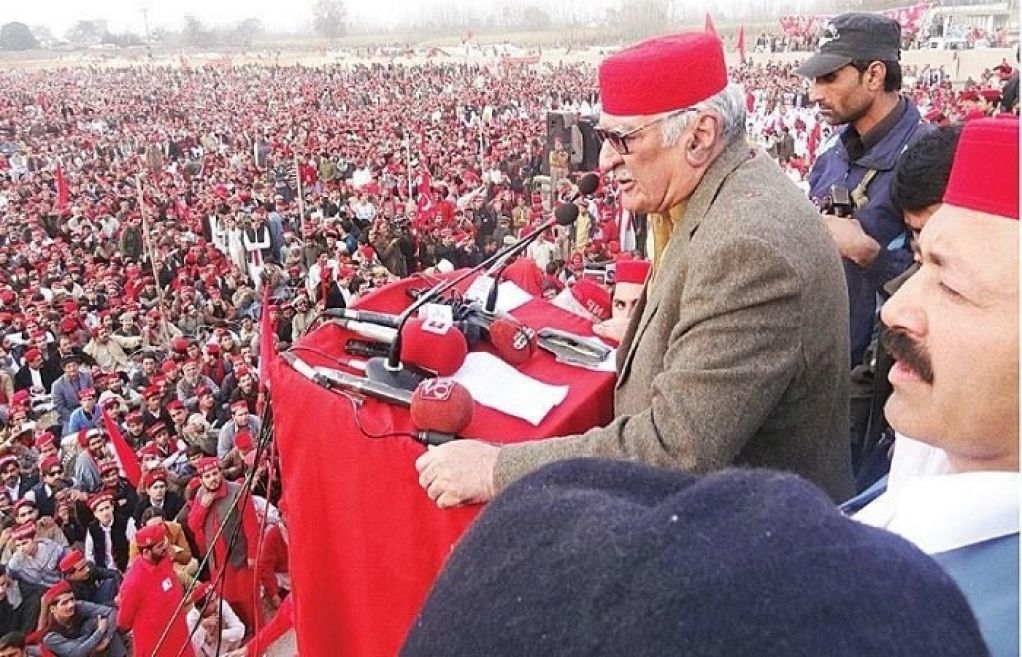
عوامي نیشنل ګوند د صوبې په مختلفو ښارونو کې د ګرانۍ پر ضد مظاهرې کړې دي.
ه دې لړ کې د چارسدې غونډې ته اسفنديار ولي خان وويل چې په پاکستان کې زياتېدونکې ګرانۍ د دې هېواد د متوسطې طبقې اقتصادي توان کمزوری کړی دی چې د ده په وينا دا په راتلونکې ناوړه پايلې لرلای شي.
هغه وویل چې ګراني په راتلونکې کې د هېواد امنيت هم خرابولی شي
په پاکستان کې په ۲۰۱۸ز کال کې د تحريک انصاف ګوند په واک کې تر راتلو وروسته ګراني زياته شوې خو حکومت وايي چې د پخوانيو حکومتونو له لاسه د هېواد اقتصادي وضعيت خراب شوی دی نو مجبوره شوي چې د توکو قيموتونه زيات کړي.
وزيراعظم عمران خان پر خلکو غږ کړی چې له زغمه دې کار واخلي ځکه د ده په وينا پر دوی به اقتصادي فشار تر لنډې مودې پورې وي او ډېر ژر به وضعيت ښه شي.
د شمالي وزیرستان پېښې او مرګ ژوبله
اسفنديار ولي خان په خپله وينا کې د شمالي وزيرستان خړکمر پېښې او د ځمکلاندې بمونو په وروستیو چاودونو کې د پوځيانو د وژنو غندنه وکړه.
پښتون ژغورنې غورځنګ او پوځ پر یو بل د مې پر ۲۶مه د خړ کمر د پېښې او مرګ ژوبلې پړه اچوي.
اسفنديار ولي خان پر وزيراعظم غږ وکړ چې وخت را رسېدلی دی چې له قبايلو سره کړې خپلې ژمنې پوره کړي.
نوموړي دا څرګندونې پر داسې مهال کړې دي چې د جون پر اتمه د پاکستان وزیراعظم عمران خان ویلي چې د قبایلو پرمختیا ته ژمن دی او ورته لومړیتوب ورکوي.
اسفندیار ولي خان د سپريم کورټ د جج قاضي فايز عیسا پرضد د دایر شوې رېفرنس په اړه هم څرګندونې وکړې او ویې ویل چې ګوند یې په دې قضیه کې د وکيلانو ملګری دی.
په قضیه کې پر قاضي عیسا له هېواده بهر د شتمنیو لرلو تور دی چې په وینا یې هغه یې نه دي په ډاګه کړې.
عیسا خپله ولسمشر ته په یوه لیک کې ګیله کړې چې پر هغه د تورونو خبرونه باید د قضیې تر پیل وړاندې نه وای په ډاګه شوي او دا چې دا ډول اقدامات په مقدمو کې د قاضیانو بې پرېوالی اغېزمنولای شي.
هلته د پاکستان حکومت وايي، د احتساب عمل د هېواد هر وګړي لپاره یو شان دی او پر ټول فشار سربېره به روان وي.
د چارسدې ترڅنګ عوامي نیشنل ګوند په ملاکنډ، کواټ، پېښور، نوښار، باجوړ، بونېر، کرک او نورو ښارونو کې هم د ګرانۍ پر ضد مظاهرې کړې دي.

BIG BROTHER IS WATCHING - SOCIAL NETWORKS ARE COMING UNDER INCREASING, AND EVER-MORE INTENSE, SURVEILLANCE IN PAKISTAN

Chandan Khanna

SOCIAL NETWORKS ARE COMING UNDER INCREASING, AND EVER-MORE INTENSE, SURVEILLANCE IN PAKISTAN
Threats, arrests, blocked accounts and restricted posts—Big Brother is watching more closely than ever in Pakistan as authorities accelerate efforts to censor social networks, further reducing an already shrunken space for dissent.
In the past 18 months, a slew of journalists, activists, and government opponents—both at home and overseas—have faced intimidation or the threat of legal action for their online posts.
Censorship is already rife among Pakistan’s mainstream media, with the Committee to Protect Journalists alleging last year that the military had “quietly but effectively” imposed strict limits on the scope of general news reporting.
Platforms such as Facebook and Twitter were regarded as the last holdouts of dissenting voices, but now that has changed. In February, authorities announced the creation of a new enforcement arm to root out social media users accused of spreading “hate speech and violence” as part of the crackdown.
Gul Bukhari, a columnist and sometime government critic who was briefly abducted by unidentified men last year, said the assault on social media was carefully organized and coordinated. “It is the last frontier they try to conquer,” Bukhari explained.
Journalist Rizwan-ur-Rehman Razi was among the people targeted. He was arrested in February at home in Lahore for publishing “defamatory and obnoxious” content against the state. A few days earlier, he had criticized extra-judicial executions allegedly committed by the security forces, according to a copy of his tweets seen by AFP.
Released after two nights, he has not tweeted since, and his posts have been deleted.
The net cast by the crackdown is a wide one, with Shahzad Ahmad, director of the digital security NGO Bytes for All, pointing to the harassment of civil rights activists, the political opposition, and bloggers.
According to Annie Zaman, an expert on cyber-censorship in Pakistan, this is made possible by an all-encompassing 2016 law that prohibits online posts that are deemed to compromise state security or offend anything from “the glory of Islam” to non-defined notions of “decency and morality.”
“Because this law is vague, it gave more space to the authorities to censor online,” Zaman said.
Offenders can face up to 14 years in prison.
The military signaled its involvement in the campaign as early as June last year, when spokesman Major General Asif Ghafoor boasted of the capacity to monitor social media accounts during a televised press conference. In a clear warning, Ghafoor briefly showed an image of what appeared to be specific Twitter handles and names.
Facebook and Twitter transparency reports show the crackdown was already well underway last year, with a huge spike in requests by the Pakistani government seeking to censor online activity.
Facebook restricted more content in Pakistan than in any other country in the first six months of 2018, according to its transparency figures from that time period, which are the most recently available. The social media giant said it restricted the availability of 2,203 pieces of content in total—a seven-fold jump from the previous six months. All but 87 of the items had been reported by the Pakistan Telecommunications Authority “as allegedly violating local laws prohibiting blasphemy, anti-judiciary content, and condemnation of the country’s independence,” it said.
The Pakistan Telecommunications Authority did not respond to requests for comment.
Twitter figures for the same time period showed a similar trend, with requests to remove content from 3,004 accounts in Pakistan compared to 674 in the second half of 2017. A Twitter spokesman said the vast majority of the requests had come from the government, and stressed that the company had acquiesced to none of them.
“The authorities are no longer hiding their agenda [or policy] to silence internet-mediated dissent,” said Rabia Mehmood, a researcher for Amnesty International. “While the current censorship is exceptionally intense, over the years, one message has been consistent that criticism of policies of the Pakistan military will not be tolerated.”
Even those posting on social media from overseas have found themselves targeted. Twitter routinely sends out a notice to users notifying them when the company receives complaints that their posts have violated a country’s laws.
AFP has found dozens of users who received such a message warning they had violated Pakistani laws—including 11 who had tweeted from beyond Pakistan’s borders, in countries such as Australia, the U.S. and Canada. The requests represent “a government censor overstepping jurisdiction boundaries,” said Jillian York, an expert at the Electronic Frontier Foundation, an American NGO.
Subscribe to:
Comments (Atom)