 The head of the Pakistani Taliban, Hakimullah Mehsud, was killed by a US drone strike on Friday, Pakistani intelligence officials told Reuters anonymously. Senior sources within the militant group confirmed the death.
“We can confirm, Hakimullah Mehsud was killed in the drone strike,” one senior security official told Reuters.
Agents sent to the site of the attack in North Waziristan region identified Hakimullah Mehsud as one of the killed, said the sources, who wished to remain unnamed as they were not authorized to talk to the media.
According to another intelligence source, the Taliban leader’s funeral has already been scheduled for Saturday, and will take place in the main regional city of Miranshah.
At least three people were killed in what is believed to be a US drone strike on the tribal region’s village of Dande Derpa Khel, AP reported quoting intelligence officials.
Reuters sources have, however, put the number of drone strike victims at 25, saying that the chief’s closest men were also killed.
“Among the dead, who are in large numbers, are Hakimullah’s personal bodyguard, Tariq Mehsud, and his driver, Abdullah Mehsud, two of his closest people,” the agency was told.
A house was destroyed by the strike in the village, which is said to be the stronghold of the Haqqani network. The Islamist insurgent network is known for routinely targeting NATO troops in neighboring Afghanistan.
Mehsud, one of Pakistan’s most wanted men believed to be in his mid-30s, has been reported dead several times before. He took over the Pakistani Taliban in August 2009 after a drone strike killed the previous militant leader, his mentor.
The head of the Pakistani Taliban, Hakimullah Mehsud, was killed by a US drone strike on Friday, Pakistani intelligence officials told Reuters anonymously. Senior sources within the militant group confirmed the death.
“We can confirm, Hakimullah Mehsud was killed in the drone strike,” one senior security official told Reuters.
Agents sent to the site of the attack in North Waziristan region identified Hakimullah Mehsud as one of the killed, said the sources, who wished to remain unnamed as they were not authorized to talk to the media.
According to another intelligence source, the Taliban leader’s funeral has already been scheduled for Saturday, and will take place in the main regional city of Miranshah.
At least three people were killed in what is believed to be a US drone strike on the tribal region’s village of Dande Derpa Khel, AP reported quoting intelligence officials.
Reuters sources have, however, put the number of drone strike victims at 25, saying that the chief’s closest men were also killed.
“Among the dead, who are in large numbers, are Hakimullah’s personal bodyguard, Tariq Mehsud, and his driver, Abdullah Mehsud, two of his closest people,” the agency was told.
A house was destroyed by the strike in the village, which is said to be the stronghold of the Haqqani network. The Islamist insurgent network is known for routinely targeting NATO troops in neighboring Afghanistan.
Mehsud, one of Pakistan’s most wanted men believed to be in his mid-30s, has been reported dead several times before. He took over the Pakistani Taliban in August 2009 after a drone strike killed the previous militant leader, his mentor.
Friday, November 1, 2013
US drone strike kills head of Pakistani Taliban
The head of the Pakistani Taliban, Hakimullah Mehsud, was killed by a US drone strike on Friday, Pakistani intelligence officials told Reuters anonymously. Senior sources within the militant group confirmed the death.
“We can confirm, Hakimullah Mehsud was killed in the drone strike,” one senior security official told Reuters.
Agents sent to the site of the attack in North Waziristan region identified Hakimullah Mehsud as one of the killed, said the sources, who wished to remain unnamed as they were not authorized to talk to the media.
According to another intelligence source, the Taliban leader’s funeral has already been scheduled for Saturday, and will take place in the main regional city of Miranshah.
At least three people were killed in what is believed to be a US drone strike on the tribal region’s village of Dande Derpa Khel, AP reported quoting intelligence officials.
Reuters sources have, however, put the number of drone strike victims at 25, saying that the chief’s closest men were also killed.
“Among the dead, who are in large numbers, are Hakimullah’s personal bodyguard, Tariq Mehsud, and his driver, Abdullah Mehsud, two of his closest people,” the agency was told.
A house was destroyed by the strike in the village, which is said to be the stronghold of the Haqqani network. The Islamist insurgent network is known for routinely targeting NATO troops in neighboring Afghanistan.
Mehsud, one of Pakistan’s most wanted men believed to be in his mid-30s, has been reported dead several times before. He took over the Pakistani Taliban in August 2009 after a drone strike killed the previous militant leader, his mentor.
Drone strike kills Pakistani Taliban chief,Hakimullah Mehsud
Afghanistan: BSA essential for post-2014 presence

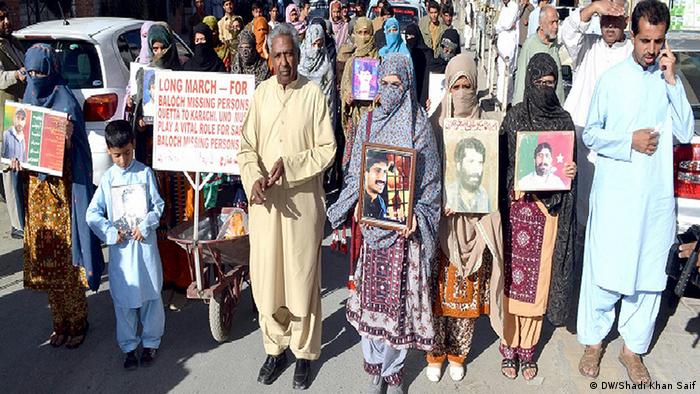
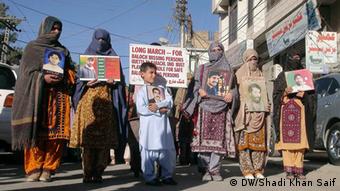
Pakistan: Baloch protesters march against government kidnappings
Mothers Of Czech Hostages In Pakistan Make Plea For Mercy
The mothers of Antonie Chrastecka, 25, and Hana Humpalova, 24, Czech women who were kidnapped in southern Pakistan seven months ago, have released a video message in which they ask their daughters' captors for mercy.
Pakistan: Another Ahmadi gunned down in Karachi's Orangi Town area
Ahmadiyya TimesAn Ahmadi Muslim is shot dead for his faith in Orangi Town area of Karachi, a southern port city in Sind Provence of Pakistan. According to the local reports, approximately 70 years old victim, Bashir Kiyani, was on his way to offer Friday prayers when he was killed by unknown assailant(s). A 10 years old boy accompanying Bashir Kiyani was also struck with bullet(s) to his leg and the injury is being described as serious. Bashir Kiyani is the third member of a family to be target-killed, all in the same area. Mr. Saleemud Din, national spokesperson of Jamā'at Ahmadiyya in Pakistan, noted that the victim’s son Ijaz Kiyani and son-in-law Zahoor Kiyani were also murdered in separate incident in the recent past at the same location. Ahmadis are regularly targeted in Pakistan because of their faith and many have lost their lives, while Ahmadi properties are routinely looted, places of worship defaced, and graveyards vandalized. Pakistani government's biased laws against Ahmadis encourage extremists to carry out hate crimes against Ahmadis with impunity.
Pak-Iran gas pipeline: End of the line?
 The Pak-Iran gas pipeline, long presented as the best hope for overcoming our energy crisis, now appears to be dead. And with this devastating development we need to bury all the loud talk, repeated promises, tall claims of sovereignty and freedom to take decisions in our national interest, especially coming from our old and new rulers. The writing had been on the wall for some time. The US was particularly vociferous in warning Pakistan against going through with the project and international sanctions against Iran made it difficult for us to raise the $2 billion needed to build our portion of the pipeline. We had earlier requested Iran to fund us in this endeavour but, now that their oil minister has said that the contract for supplying gas to Pakistan will likely be annulled, that means the certain end of the pipeline. Iran had already constructed the pipeline on their side of the border but the added expense of paying for Pakistan’s part of the pipeline and the fear that we would abandon the project under US pressure has forced the Iranians to take this drastic step. As recently as last week, Nawaz Sharif was making the case for the pipeline at international forums and vowing not to bow down to international pressure. But Pakistan’s past of meek subservience to the superpower obviously weighed heavy on Iran’s mind. Let us be clear though: that the pipeline will not be pursued is because of the US, which wants to isolate Iran for its nuclear programme.
Some doubts had recently been raised about the efficacy of the pipeline. One organisation, the Sustainable Development Policy Institute (SDPI), claimed that Iran would have sold gas to Pakistan at many times the price of domestic gas. This, according to the institute, would have spelled an economic disaster for the country. That did not necessarily have to be the case. The price of domestic gas is indeed quite low right now but that is only because the government heavily subsidises its use. As we begin to run out of gas, those subsidies are gradually being reduced and we will most likely be paying the market price of gas within a few years. The SDPI also ignored how quickly our gas supplies are being depleted. Moving away from gas is simply not an option for us after the Musharraf government made switching to CNG such a priority. Our gas addiction will have to be fed, and Iran was the best option for that. Now the only available alternative is the Tapi pipeline, which comes with an American seal of approval. Constructing the Tapi pipeline will be fraught with risk though since it will run through Taliban-infested parts of Afghanistan. Still, now that the US has scuttled the Iranian pipeline, we have been forced into a corner and left with no other choice.
The Pak-Iran gas pipeline, long presented as the best hope for overcoming our energy crisis, now appears to be dead. And with this devastating development we need to bury all the loud talk, repeated promises, tall claims of sovereignty and freedom to take decisions in our national interest, especially coming from our old and new rulers. The writing had been on the wall for some time. The US was particularly vociferous in warning Pakistan against going through with the project and international sanctions against Iran made it difficult for us to raise the $2 billion needed to build our portion of the pipeline. We had earlier requested Iran to fund us in this endeavour but, now that their oil minister has said that the contract for supplying gas to Pakistan will likely be annulled, that means the certain end of the pipeline. Iran had already constructed the pipeline on their side of the border but the added expense of paying for Pakistan’s part of the pipeline and the fear that we would abandon the project under US pressure has forced the Iranians to take this drastic step. As recently as last week, Nawaz Sharif was making the case for the pipeline at international forums and vowing not to bow down to international pressure. But Pakistan’s past of meek subservience to the superpower obviously weighed heavy on Iran’s mind. Let us be clear though: that the pipeline will not be pursued is because of the US, which wants to isolate Iran for its nuclear programme.
Some doubts had recently been raised about the efficacy of the pipeline. One organisation, the Sustainable Development Policy Institute (SDPI), claimed that Iran would have sold gas to Pakistan at many times the price of domestic gas. This, according to the institute, would have spelled an economic disaster for the country. That did not necessarily have to be the case. The price of domestic gas is indeed quite low right now but that is only because the government heavily subsidises its use. As we begin to run out of gas, those subsidies are gradually being reduced and we will most likely be paying the market price of gas within a few years. The SDPI also ignored how quickly our gas supplies are being depleted. Moving away from gas is simply not an option for us after the Musharraf government made switching to CNG such a priority. Our gas addiction will have to be fed, and Iran was the best option for that. Now the only available alternative is the Tapi pipeline, which comes with an American seal of approval. Constructing the Tapi pipeline will be fraught with risk though since it will run through Taliban-infested parts of Afghanistan. Still, now that the US has scuttled the Iranian pipeline, we have been forced into a corner and left with no other choice.
Pakistan: Inter-provincial inequality
 The minister for Planning, Development and Reforms, Ahsan Iqbal, reportedly expressed concern over the inequality in development between the provinces - an inequality which, he maintained, would be dangerous for the federation. There is no doubt that Sindh and Punjab are relatively affluent provinces, with many economists labelling them as middle income, followed by Khyber Pakhtunkhwa (KPK) and tailed by the resource-rich Balochistan considered as the least developed province comparable to the least developed countries that include conflict-ridden Afghanistan.
There was nothing astute about Ahsan Iqbal's conclusion with respect to inter-provincial inequality and its resulting danger to the federation. The rise of fundamentalism in KPK is considered an outcome of economic deprivation and lack of job opportunities in rural/tribal areas - conditions that account for the successful recruitment drive by the Pakistan Tehreek-e-Taliban Pakistan that, in turn, has led to the escalation in vicious terror attacks throughout the country. Need one add that the origin of the Punjabi Taliban, mainly from the economically-deprived South, simply strengthen the linkage between economic deprivation and fundamentalism/terrorism. The growing rural, urban divide must therefore be summarily addressed by even the relatively affluent provinces with the objective of providing an environment not conducive to either the rise of fundamentalism or militarism and to deter migration from rural to urban areas in search of jobs that leads to greater socio-economic problems facing the already over-crowded Pakistani cities.
The case of Balochistan is different as the Sardars have done little to share their enormous natural resource wealth, including gas and minerals, with the Baloch people. However, while political constraints require to be tackled, yet here too economic constraints do augment the cultural compulsion for the continuing hold of the Sardars over the hearts and minds of their people. In short, Pakistan has already reached the danger zone with respect to the federation as a direct outcome of developmental inequality between the provinces.
Ahsan Iqbal also pointed out that subsequent to the 18th Constitutional Amendment the provinces have a greater share of the resources relative to the federation and the onus of development would therefore increasingly rest with the provinces. Be that as it may, the federation cannot and must not absolve itself of the responsibility of ensuring that basic physical and social infrastructure is provided to the country's backward areas for in that way alone lies its ability to effectively and permanently deal with terrorism, a national as opposed to a provincial subject, which remains the main impediment to economic growth.
The 2010 landmark National Finance Commission award agreement led to a rise in weightage of poverty or backwardness to 10.3 percent raising allocations from the divisible pool to 9.09 percent for Balochistan and 14.62 percent to KPK. This is certainly not enough for the poor provinces to make a difference to their people and it needs to be supplemented by federal government injections. The Ministry of Planning, Development and Reforms can, of course, play a role in preparing province-specific development plans that would help narrow the stark gap between the provinces within a stipulated time period. For this to materialise, the Finance Ministry would need to make additional releases to ensure that this inequality is tackled and the road to end militancy, terrorism and inter-provincial disharmony in Pakistan is embarked upon.
The minister for Planning, Development and Reforms, Ahsan Iqbal, reportedly expressed concern over the inequality in development between the provinces - an inequality which, he maintained, would be dangerous for the federation. There is no doubt that Sindh and Punjab are relatively affluent provinces, with many economists labelling them as middle income, followed by Khyber Pakhtunkhwa (KPK) and tailed by the resource-rich Balochistan considered as the least developed province comparable to the least developed countries that include conflict-ridden Afghanistan.
There was nothing astute about Ahsan Iqbal's conclusion with respect to inter-provincial inequality and its resulting danger to the federation. The rise of fundamentalism in KPK is considered an outcome of economic deprivation and lack of job opportunities in rural/tribal areas - conditions that account for the successful recruitment drive by the Pakistan Tehreek-e-Taliban Pakistan that, in turn, has led to the escalation in vicious terror attacks throughout the country. Need one add that the origin of the Punjabi Taliban, mainly from the economically-deprived South, simply strengthen the linkage between economic deprivation and fundamentalism/terrorism. The growing rural, urban divide must therefore be summarily addressed by even the relatively affluent provinces with the objective of providing an environment not conducive to either the rise of fundamentalism or militarism and to deter migration from rural to urban areas in search of jobs that leads to greater socio-economic problems facing the already over-crowded Pakistani cities.
The case of Balochistan is different as the Sardars have done little to share their enormous natural resource wealth, including gas and minerals, with the Baloch people. However, while political constraints require to be tackled, yet here too economic constraints do augment the cultural compulsion for the continuing hold of the Sardars over the hearts and minds of their people. In short, Pakistan has already reached the danger zone with respect to the federation as a direct outcome of developmental inequality between the provinces.
Ahsan Iqbal also pointed out that subsequent to the 18th Constitutional Amendment the provinces have a greater share of the resources relative to the federation and the onus of development would therefore increasingly rest with the provinces. Be that as it may, the federation cannot and must not absolve itself of the responsibility of ensuring that basic physical and social infrastructure is provided to the country's backward areas for in that way alone lies its ability to effectively and permanently deal with terrorism, a national as opposed to a provincial subject, which remains the main impediment to economic growth.
The 2010 landmark National Finance Commission award agreement led to a rise in weightage of poverty or backwardness to 10.3 percent raising allocations from the divisible pool to 9.09 percent for Balochistan and 14.62 percent to KPK. This is certainly not enough for the poor provinces to make a difference to their people and it needs to be supplemented by federal government injections. The Ministry of Planning, Development and Reforms can, of course, play a role in preparing province-specific development plans that would help narrow the stark gap between the provinces within a stipulated time period. For this to materialise, the Finance Ministry would need to make additional releases to ensure that this inequality is tackled and the road to end militancy, terrorism and inter-provincial disharmony in Pakistan is embarked upon.
'If polio drops are harmful, why would Saudi Arabia allow them?'
The Express TribuneReceiving polio drops is a major issue among the Pashtun community. However, the views of some in the community are changing. Fazal Jan, a Hajji from Mohammad Agency expresses the change in the way he thinks with regards to polio drops after his visit to Saudi Arabia.
Polio - Haji Camp by BlackBoxSounds In his interview he said “We were told we would receive polio drops at Jeddah Airport.” Further commenting on his views he added, “Had polio drops been harmful or dangerous why would Saudi Arabia being a Muslim country allow them?” He also stated, “We used to think that the foreigners were deceiving us with polio drops. We would wonder why they would spend so much money on us.We thought our children would die from these drops and that they were trying to erase Pakistan’s future generations. But that’s not the case. Had that been true, Pakistan’s population would have decreased instead of increasing at the rate it is.” While talking about the perspective of the Pashtun community regarding polio drops Medical Officer, Health Department Dr Assadullah Khan stated that “The pashtun community is of the view that on one hand the West is bombing its northern areas and Federally Administered Tribal Areas, and on the other they are providing polio drops to keep our children safe — so they wonder about these conflicting policies.” He also mentioned, “We have to clarify to them the fact that those dropping bombs are not involved in the health sector, just like the health sector doesn’t go fight wars in battlefields, nor are they part of any army.”
Pakistan: Another drone strike kills 3 in North Waziristan
A drone strike killed three people in North Waziristan on Friday, Express News reported. Two missiles were fired on a house in Danda Darpakhel Miranshah, with casualties expected to rise. This is the second drone attack in two days, after Wednesday’s strike killed three people in the same town.
Pakistan: Opposition moves privilege motion against Nisar in Senate
 The members of opposition parties in the Senate on Friday submitted a privilege motion against Interior Minister Chaudhry Nisar Ali Khan, Geo News reported.
Speaking to media outside the parliament here, Pakistan People’s Party (PPP) Senator Raza Rabbani said the Senate had been made hostage.
Rabbani said opposition was not taken into confidence over peace talks with Taliban.
The row between the government and opposition has intensified in the Senate over the statistics provided by Chaudhry Nisar on terrorism.
The opposition termed the statistics incorrect regarding deaths in terrorism related incidents and asked the interior minister to withdraw his statement, however, the latter refused to do so.
Following this, the opposition senators not only boycotted the Senate proceedings but also submitted the privilege motion.
The members of opposition parties in the Senate on Friday submitted a privilege motion against Interior Minister Chaudhry Nisar Ali Khan, Geo News reported.
Speaking to media outside the parliament here, Pakistan People’s Party (PPP) Senator Raza Rabbani said the Senate had been made hostage.
Rabbani said opposition was not taken into confidence over peace talks with Taliban.
The row between the government and opposition has intensified in the Senate over the statistics provided by Chaudhry Nisar on terrorism.
The opposition termed the statistics incorrect regarding deaths in terrorism related incidents and asked the interior minister to withdraw his statement, however, the latter refused to do so.
Following this, the opposition senators not only boycotted the Senate proceedings but also submitted the privilege motion.
Subscribe to:
Posts (Atom)