Thursday, July 18, 2019

In the Islamic state of Pakistan, you can piss in public but not kiss in public

Actor Yasir Hussain proposed to his girlfriend actress Iqra Aziz at an awards show and it brewed a storm in the moral teacup of Pakistanis. In Pakistan, you can piss in public, but you dare not kiss in public.Last week, at the Lux Style Awards in Karachi, when actor Yasir Hussain proposed to his girlfriend actress Iqra Aziz, in the most public way, it brewed a storm in the moral teacup of everyone. And why wouldn’t it, after all, the proposal was followed by an intimate hug and a kiss.
How dare the man hug or kiss a woman in the Islamic state of Pakistan, asked many. How dare he propose to her without the permission of her father, brother, uncle or even a male neighbour.
You know, these are the kind of acts that result in earthquakes and tsunamis. Forget the various crimes against women in society, it is a peck that’ll lead to Pakistan’s ultimate destruction.So yes, how dare Yasir think of even showing any warmth to Iqra? The couple has been dating for a while and, to their credit (like a breath of fresh air), they didn’t hide their relationship. Unlike some celebrities in Pakistan who have denied their relationships even after their sex videos were out.
Even actress Veena Malik, a late entrant to the piety club, couldn’t resist from showing her utmost anger towards the newly engaged couple. In a set of tweets, she argued how can a couple kiss before nikah, calling it haram. She tweeted, “Nowhere in r Religion & Quran it is written tht u can hug & kiss before Nikkah. I think we shouldn’t bring religion to support their PDA.
(6/2) be it his acting,hosting,judging but his thoughts which he usually tweet & always takes stand 4 right & always clearly callout wrong.Also just recently saw a video of urs on God which made me realize that u are insightful,cultured & enlightened and then this tweets came up
(6/3)Nowhere in r Religion & quran it is written tht u can hug & kiss before Nikkah.I think we shouldn't bring religion 2 support their PDA.2 wrongs don't make a right.Ofcourse, congratulations to the couple & so happy 4 that they'll get married & preferred Halal over Haram
46 people are talking about this
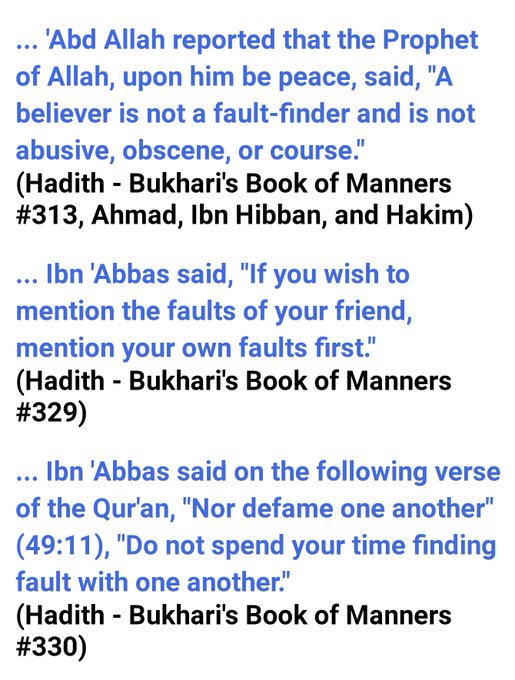
Veena’s rant came in response to actor Hamza Ali Abbasi’s defence of the couple: “Its sad how we Muslims so eagerly pick out individuals/bash them on thr persnl faults. Buraai ko buraai kaho, logon ko zaleel na karo. I criticise item numbers without ever picking out actresses and bashing them individually for doing item numbers. Allah ka khof karo musalmaano!”
In an era when ppl prefer haraam over halal, how can U find faults in a man asking a woman for nikkah? Bcz he hugged her or kissed her on the cheek? STOP IT! Instead celebrate the good... Heartiest congrats to Yasir & Iqra. May Allah bless u both in ur new journey.
View image on Twitter


4,034 people are talking about this
Veena reiterated that media celebrities have a certain responsibility towards the society: “This PDA doesn’t represent r moral & cultural values, let alone religious.”This is rich coming from Veena, who in India’s Bigg Boss would show plenty of affection for a fellow male contestant. Was all that without responsibility, one wonders now. We are told that public display of affection (PDA) is not something that ‘good’ Pakistanis can handle. But, there are a lot of things that we can handle in public places: men scratching their private parts, women being beaten up, men groping women randomly or even eve-teasing. Ironically, two individuals in love hanging out in a public place get a bit too much.
Couples, married or dating, are supposed to behave in a manner that raises no eyebrows. They behave like siblings, who are just having dinner together. On a date, there can’t be any hand-holding in the middle of an intense conversation, for the moral police can even banish you from the restaurant.If you think you can get away with a few moments of intimacy in your car then you have another thing coming. The police will come out of nowhere and ask you suspiciously what are you doing in the car. Then, the officer will ask you for your nikah nama (marriage certificate), as if those who have nikah namas fool around in cars.
Technically, PDA is not a punishable offence, but society deciphers laws as it wants. According to the Pakistan Penal Code’s Section 294, “Whoever, to the annoyance of others; a) does any obscene act in any public place, or b) sings, recites or utters any obscene songs, ballad or words, in or near any public place, shall be punished with imprisonment of either description for a term which may extend to three months, or with fine, or with both”.
The bigger debate is who defines “obscenity” in a public space because, unfortunately, we dwell in an environment where vulgarity is rampant in the form of verbal abuse. People, especially men, use such words unashamed. Also, no one condemns men who openly harass women in public, either verbally or through cheap gestures, and humiliate them. That obviously isn’t considered obscenity. But our patriarchal society considers treating women nicely or displaying affection towards them as an unacceptable and atrocious act.
Some might call it our awkwardness around love — and therein lies the hypocrisy of being one thing in public and another in private. Even men who do show such warmth for women are shunned by their own and are sarcastically called ‘henpecked’. They are told: “Tum toh aurat ke neechaylagay huey ho”. The ghairat brigade (or moral police) would like us to belie
ve that showing affection to a woman is a conspiracy of the West. If that is indeed true, that’s one conspiracy we would like to be accused of.


Pakistan arrests top militant figure ahead of prime minister’s visit to U.S.... [after Imran Khan's visit to DC ends, he will soon be released.]


 By Haq Nawaz Khan and Jon Gerberg
Pakistani authorities on Wednesday arrested Hafiz Saeed, the accused mastermind of devastating 2008 terrorist attacks in Mumbai, police said.
Designated a terrorist by the United States, Saeed was the leader of the Lashkar-e-Taiba militant group that carried out a four-day coordinated terrorist assault across Mumbai, killing at least 160 people in India’s commercial capital.
Saeed later said he left the group and founded Jammat-ud-Dawa, which he called a charity. The organization has been accused of acting as a front to fund militant activities.In 2012, the United States offered $10 million for information leading to Saeed’s arrest, and two years later it formally named the charity as a terrorist group.Analysts see Saeed’s detention as a major move ahead of Pakistani Prime Minister Imran Khan’s first official visit to the United States. Khan is scheduled to meet with President Trump on Monday.In Washington, Trump welcomed the arrest. In one of several tweets on various topics Wednesday morning, Trump wrote: “After a ten year search, the so-called ‘mastermind’ of the Mumbai Terror attacks has been arrested in Pakistan. Great pressure has been exerted over the last two years to find him!” Contrary to Trump’s characterization of a prolonged “search,” however, Pakistani authorities have been aware of Saeed’s whereabouts for years. In fact, his political party participated in national elections last year, and he was photographed casting his ballot. In a 2012 news conference in a hotel near the Pakistani army headquarters, he also publicly mocked the U.S. bounty on his head.
“Here I am in front of everyone, not hiding in a cave,” Saeed declared. He said of the $10 million U.S. reward: “Why don’t they give it to me? I can tell them my whereabouts on a daily basis.”
Trump and Khan have traded barbs in the past. On Twitter last year, Trump accused Pakistan of taking billions of dollars from the United States without doing enough to address terrorism. Khan countered what he called “Trump’s tirade against Pakistan” by stressing that his country was an important ally that has made great sacrifices in the United States’ war on terrorism.U.S.-Pakistan ties were tested in 2011 when al-Qaeda leader Osama bin Laden was located by the CIA in a compound in Abbottabad, Pakistan, just miles from the country’s elite military academy. After living safely in the compound for years, bin Laden was killed in a raid by U.S. Navy SEALs, an operation that was kept secret from Pakistani authorities until it was completed.The White House counterterrorism adviser at the time, John O. Brennan, said it was “inconceivable” that bin Laden had not received support from within Pakistan.As prime minister, Khan has promised to crack down on banned militant groups within his borders, but Pakistan remains on a watch list for allegedly sponsoring militant organizations.
One Indian government official sounded a note of skepticism about the arrest of Saeed. “This is not the first time that such action has been taken,” the official said, speaking on the condition of anonymity because he was not authorized to speak to the media. Pakistan has made arrests related to terrorism attacks in India in the past, but the suspects “have been allowed to walk free after some time.”
The official added that Pakistan was attempting to deflect criticism ahead of the prime minister’s visit to the United States. India wants to see “credible, verifiable, irreversible” progress, “not a cosmetic step to only impress the international community,” the Indian official said. Despite the charges against him, Saeed maintains a loyal following inside Pakistan, especially in his home city of Lahore. His followers regard him as a fearless Islamic fundamentalist.
Saeed’s spokesman, Nadim Awan, denounced the arrest and said the cleric dissociated himself from Lashkar-e-Taiba in 2001 and has had no links with the organization since then, the Associated Press reported. Lashker-e-Taiba was banned in 2002.
Awan said Saeed’s arrest would be challenged in a higher court.
Militant organizations inside Pakistan have often been tolerated — and have claimed a degree of popular support — for their role in the country’s proxy war against archrival India.
Saeed had been detained repeatedly in Pakistan but released each time. In general, courts have appeared reluctant to prosecute members of militant groups, often releasing them on technicalities or for alleged lack of evidence.
Saeed was arrested in 2017 and placed under house arrest. His followers at the time said the action was taken to appease the newly inaugurated Trump administration, which had just declared a ban on visitors from seven other Muslim-majority countries. Saeed was later freed.On Wednesday, Saeed was traveling from Lahore to the eastern city of Gujranwala to post pre-arrest bail in connection with another set of terrorism charges when he was stopped by counterterrorism officials and taken into custody, according a police statement.He was charged with financing terrorist organizations and using charitable donations for his own personal enrichment.

The #IMF Takeover of #Pakistan


On July 3, the International Monetary Fund approved a $6 billion bailout package to help “return sustainable growth” to Pakistan’s economy. Throughout the deal spanning 39 months, the IMF will review Pakistan’s progress on a quarterly basis. As part of the agreement, $1 billion has been released to Pakistan.
This is the 13th IMF bailout for Pakistan, with the Fund looking toward the correction of “structural imbalances” in the country. In this regard, the IMF had announced in the negotiations over the past couple of months that Islamabad would have to increase taxation in order to repay external debt and increase foreign exchange reserves.
Details of the agreement reveal the targets that have been set for Pakistan, requiring the country to increase the foreign exchange reserves from the current $6.824 billion to $11.187 billion next year. As a result, the country’s net reserves are expected to increase from negative $17.7 billion to negative $10.8 billion over the same period.
The IMF has further asked Pakistan to pay $37.359 billion in external debt within the duration of the IMF bailout deal. Islamabad owes $14.682 billion of this figure to Beijing, largely due to the China-Pakistan Economic Corridor (CPEC).
The increase in taxation required by the IMF was visible in this fiscal year’s financial budget, with the government increasing the Federal Board of Revenue’s (FBR) tax collection target from 3.94 trillion Pakistani rupees ($25 billion) to 5.5 trillion rupees. The documents further reveal that over the next two years of the bailout package, additional 1.5 trillion rupee and 1.31 trillion rupee hikes in revenue collection have been scheduled.
Even before the budget was passed, the government had already implemented steps to enhance taxation, with hikes in the price of petrol and electricity. Government officials confirm that further hikes are expected next month.
In addition to the heavy taxation, another precondition of the IMF bailout was the devaluation of the Pakistani currency, which the Fund deemed to be artificially valued. With the IMF calling for a “market determined” value of the Pakistani currency, the rupee has lost over half its value since December 2017, resulting in inflation rate reaching a five-year high at 9.4 percent in April, and expected to rise to over 13 percent, as per the Fund’s forecast.
The All Pakistan Anjuman-e-Tajran (meaning “trader’s association”) calling a nationwide strike is one example of the impact that the rise in taxation has had on local industries. As a result, the working class in the country is rising up against what it calls the “IMF’s imperialistic takeover” of the country.
“[The IMF] package is littered with conditionalities that are putting burden on the lives of ordinary people. Pakistani people and traders have no capacity to pay taxes demanded by the IMF,” Farooq Tariq, spokesperson and the former general secretary of the Awami Workers’ Party, told The Diplomat.
“As part of the package, the IMF installed its own ‘intelligent’ people on key posts. Not only does it serve the IMF’s purpose of increasing its stranglehold over the country, it reflects a total lack of confidence in PTI’s capacity to do the job,” Tariq adds. PTI refers to Pakistan Tehreek-e-Insaf, the current ruling party of the country.
Multiple interviews with officials in the Finance Ministry reveal that the appointments of former IMF mission chief Reza Baqir as the governor of the State Bank of Pakistan and former Finance Minister Abdul Hafeez Shaikh as the prime minister’s adviser on finance were enforced by the IMF in the lead up  to the bailout agreement.
When asked, a senior government official told The Diplomat that the IMF forced the issue to install “its own men” amid continued deadlock with former Finance Minister Asad Umar. The IMF’s pressure further escalated after it was revealed that the entirety of the loan Pakistan received from Saudi Arabia and the UAE at the turn of the year was spent to prevent the currency market from crashing.
Senior financial journalist and analyst at FX Empire Shahab Jafry questions the manner in which the IMF has forced the government to manage the local currency’s valuation.
“The currency market was going haywire, and you had to dump the [U.S.] dollar to buy the rupees – to support the local currency. The government says it is letting the rupee free float – it can’t let that happen, the country will collapse in 48 hours,” he told The Diplomat.
“The currency has an annual 5 percent depreciation against the dollar. I don’t see the rupee stabilizing because I don’t see the economy stabilizing. In the modern day, in competitive floating currencies, you have to have a very strong export revenue generation to have a stable currency – or oil reserves, because you are prone to imports and the fluctuation of commodities and currencies can crash markets,” Jafry adds.
Observers note the usual IMF pattern in its current dealings with Pakistan, with the Fund employing trusted people in countries where there is large-scale misappropriation of funds obtained from international institutions.
Abdul Hafeez Shaikh, the PM’s financial adviser, was also part of the team that negotiated the 11th bailout package with the IMF as the finance minister during the Pakistan People’s Party (PPP) rule from 2008 to 2013.
Last month, an entire inquiry commission was formed to probe the alleged corrupt practices of the PPP and the Pakistan Muslim League-Nawaz over the past decade. While many see it as an attempt to audit the funding received in the past, others see it as a maneuver led by the current ruling party, the PTI, to victimize its political opponents with the help of the Pakistan Army.
Farooq Tariq maintains that the military establishment has had a role to play in the aggravation of the economy, and the PTI isn’t the first party to seek the Army’s help in maintaining the vicious circle of debt for Pakistan.
“Pakistan goes to the IMF every few years because of its ruling political parties’ inability to run the economy. The reason is very simple: military and debt expenses. Both take up over half of the national budget at present. The successive governments have bowed down to the pressures of the generals and the creditors not to reduce these two unproductive expenditures,” he said.
Where the Army bolsters particular parties to safeguard its economic interests, the IMF wants Pakistan to pursue certain geopolitical interests. For many, the bailout agreement reveals that instead of economic reforms, geostrategic interests are at the heart of the deal.
“The IMF package is a straitjacket for Pakistan’s economy. The IMF document illustrates a very simplistic thought process,” economist and political scientist Farrukh Saleem, the PTI government’s former spokesperson on energy and economy, told The Diplomat.
“They say the budget deficit is extremely high, the solution is to increase the revenue by 45 percent. How exactly? It’s a shrinking economy. Similarly, they say the trade deficit is extremely high, and then devalue the rupee. The IMF isn’t trying to solve Pakistan’s problems at all, the package has zero reforms – be it power, budget deficit, or trade deficit. After all, the IMF is not a purely economic institute, it’s a political institute as well,” Saleem added.
The former spokesperson maintains that the IMF is advancing U.S. security interests in the region by using the bailout package to ensure Islamabad’s compliance. He refers to this year’s WikiLeaks document “Army Special Operations Forces Unconventional Warfare,” originally written in September 2008, as evidence of how the IMF and World Bank are used to serve U.S. regional goals.
Lieutenant-General Talat Masood, former secretary of Pakistan’s Ministry of Defense Production, says there are obvious U.S. goals that the IMF is looking to fulfill.
“They would like to control our nuclear development. They don’t want us to spend on conventional forces and try to match India. They want us to focus on the economy. They don’t want us to use Lashkar-e-Taiba [LeT] and others to destabilize India and Afghanistan. Also, CPEC and our relationship with China is too strong for their liking. They want us to contribute significantly in the Afghan peace process by pushing the Taliban,” Masood told The Diplomat.
Masood believes the recent arrest of LeT chief Hafiz Saeed, in the lead up to Prime Minister Imran Khan’s visit to the United States, underlines that Islamabad has succumbed to the American demands. But Masood is also critical of Pakistan’s own policymaking, which renders it vulnerable to external pressure.
“Pakistan’s policies are so shallow and aren’t based on any foundational principles, and hence can’t be defended. It’s a weakness of policy and the internal structure of Pakistan that they have to succumb to external pressure,” he adds.

’شاہنواز بھٹو کوگھناؤنی سازش کے تحت شہید کیا گیا‘

پاکستان پیپلزپارٹی کے چیئرمین بلاول بھٹو زرداری نے شہید شاہنوازبھٹو کو
خراجِ عقیدت پیش کرتے ہوئے کہا کہ نئی نسل کیلئے شہید شاہنوازبھٹو ایک کیس اسٹڈی ہے، آمریتی عناصر شہید شاہنواز بھٹو کی انقلابی سوچ سے خائف اور نوجوانوں میں مقبولیت سے خوفزدہ تھے۔
شہید شاہنوازبھٹو کے 34 ویں یوم ِشہادت کے موقع پر بلاول بھٹو زرداری نے کہا کہ شہید شاہنوازبھٹو کو ایک گہری و گھناؤنی سازش کے تحت شہید کیا گیا، جمہوریت کے لیے جدوجہد میں بھٹو خاندان کی جانب سے بھرپور قائدانہ کردار ادا کرنے کی پاداش میں انہیں شہید کیا گیا۔
انہوں نے کہا کہ عوام کو یہ بھی معلوم ہوگا قوم کی خدمت کے جذبے سے سرشار و زرخیز ذہنوں کے مالک افراد کو کس بے دردی سے موت کے گھاٹ اتارا گیا۔
بلاول نے کہاکہ فکرِ بھٹو پر قائم شہید شاہنواز بھٹو کی جمہوری و انقلابی سوچ کا سفر اور جذبہ عوامی خدمت آج بھی جاری ہے۔
انہوں نے مزید کہا کہ پیپلزپارٹی ملک کو حقیقی جمہوری و مساوات پر مبنی قائدِاعظم کا پاکستان بنانے کے لیےآج بھی جدوجہد کے میدان میں موجود ہے۔
بلاول بھٹو زرداری نے قوم سے اپیل کی کہ پارٹی کارکنان اور عوام سے شہید شاہنواز بھٹو کی روح کے ایصالِ ثواب کے لیےدعا کریں۔

گرفتاریاں حکومت کو بے نقاب کررہی ہے، بلاول بھٹو

پیپلز پارٹی کے چیئرمین بلاول بھٹو زرداری نے کہا ہے کہ سلیکٹڈ احتساب اور سلیکٹڈ گرفتاریاں  اس سلیکٹڈ حکومت کو بے نقاب کررہی ہے۔
چیئرمین پی پی پی نے اپنے ایک ٹوئیٹر پیغام میں کہا کہ اپوزیشن رہنماؤں کی گرفتاریاں، میڈیا پر سنسرشپ اور سلیکٹڈ حکومت، کچھ بھی تو ’نیا‘ نہیں ہے اس پاکستان میں۔
یہ تو ویسا ہی ضیا اور مشرف جیسا پرانا آمرانہ، پاکستان ہے۔ 
انہوں نے مزید کہا کہ اس قسم کے ہتھکنڈے مزاحمت کو نہیں روک سکیں گے۔

Wednesday, July 17, 2019

The military millionaires who control #Pakistan Inc

By Elliot Wilson
Pakistan’s economy is dominated by a ruthless business conglomerate that owns everything from factories and bakeries to farmland and golf courses: the army.
Sometime in late 2004, Pakistan’s all-powerful army made a curious decision. Under mounting pressure from London and Washington to capture Osama bin Laden, believed to be hiding in Baluchistan, Islamabad’s fighting forces instead turned their attention to a far more profitable venture: building golf courses.
In itself this wasn’t particularly unusual. With 620,000 soldiers, Pakistan boasts the world’s seventh-largest standing army, but its senior officers long ago realised the perks to be gained from commercial ventures. Since independence in 1947, the army has steadily intertwined itself into Pakistan’s economy: so much so that it’s hard to tell where the military stops and any semblance of free-market capitalism begins.
All too often, there is no dividing line. In her 2007 book Military Inc: Inside Pakistan’s Military Economy Dr Ayesha Siddiqa exposes the rampant commercialism pervading every aspect of the country’s military forces, until recently headed by President Pervaiz Musharraf. Dr Siddiqa, a former researcher with the country’s naval forces, estimates the military’s net worth at more than £10 billion — roughly four times the total foreign direct investment generated by Islamabad in 2007. She found that the army owns 12 per cent of the country’s land, its holdings being mostly fertile soil in the eastern Punjab. Two thirds of that land is in the hands of senior current and former officials, mostly brigadiers, major-generals and generals. The most senior 100 military officials are estimated to be worth, at the very least, £3.5 billion.
Many of the country’s largest corporations are also controlled by the military, thanks largely to an opaque network of powerful ‘foundations’ originally set up to look after the pension needs of army personnel. The largest three — the Fauji, Shaheen and Bahria foundations, controlled by the army, air force and navy respectively — control more than 100 separate commercial entities involved in everything from cement to cereal production. Only nine have ever published partial financial accounts, and all are ultimately controlled by the Ministry of Defence, which oversees all of the military’s commercial ventures.The Fauji foundation, the largest of the lot, is estimated by Siddiqa to be worth several billion pounds. It operates a security force (allowing serving army personnel to double in their spare time as private security agents), an oil terminal and a phosphate joint venture with the Moroccan government. Elsewhere, the Army Welfare Trust — a foundation set up in 1971 to identify potentially profitable ventures for the military — runs one of the country’s largest lenders, Askari Commercial Bank, along with an airline, a travel agency and even a stud farm. Then there is the National Logistic Cell, Pakistan’s largest shipper and freight transporter (and the country’s largest corporation), which builds roads, constructs bridges and stores vast quantities of the country’s wheat reserves.
In short, the military’s presence is all-pervasive. Bread is supplied by military-owned bakeries, fronted by civilians. Army-controlled banks take deposits and disburse loans. Up to one third of all heavy manufacturing and 7 per cent of private assets are reckoned to be in army hands. As for prime real estate, a major-general can expect to receive on retirement a present of 240 acres of prime farmland, worth on average £550,000, as well an urban real estate plot valued at £700,000.
Unsurprisingly, the military is loath to release details of its commercial operations. The average Pakistani citizen earns just £1,500 a year, making his country poorer than all but 50 of the world’s nations. Most of the military’s junior officers and other ranks live in squalid tents pitched by the side of main roads, even in the capital Islamabad. Revealing to them that the top brass in their air-conditioned, top-of-the-range Mercedes are worth £35 million each (a few are believed to be dollar billionaires including, it is quietly suggested, Musharraf) would probably create widespread unrest. Little wonder that Dr Siddiqa’s book is banned in the country — and that Musharraf was so reluctant to take off his uniform and declare himself a civilian president.
Financial autonomy has also engendered in the military a dangerous sense of entitlement. When any premier or leading politician attempts to limit the army’s power, or even emasculate it, they get slapped down. In 1990 Benazir Bhutto, during her first stint as premier, made a concerted attempt to ‘secularise’ the army, installing non-army personnel at the highest level. Shortly afterwards, her government was forced out. She tried again in May 2006, joining with another former civilian leader, Nawaz Sharif, to issue a Charter of Democracy designed to reduce the economic power of the armed forces. Yet with Bhutto’s assassination, the latest move to tame the armed forces has again faltered — a rather convenient situation for the military.
It’s hard to imagine any individual or political body summoning up enough power or courage to challenge the army head-on. Each year the military gobbles up a bit more land, diversifies into new markets and industries and steadily consolidates power in the key sectors of agriculture, energy, natural resources, logistics and construction.
On the rare occasions when any constitutional body has stood its ground, the army has given it short shrift. In 2005, the Fauji foundation was asked by the elected parliament why it had sold a sugar mill at a ludicrously low price to senior army personnel. The Ministry of Defence refused to reveal any details of the deal. When the Auditor-General’s department questioned why the army was building golf courses — rather than attempting to capture bin Laden — its question was ignored. Yet the Punjab government had that year willingly handed over, for free, 30 acres of prime rural land worth more than £600,000 to the army, which promptly built a driving-range and an 18-hole golf course. Such ‘presents’ to the military are usually returned with interest, with senior civilian officials often being guaranteed a secure retirement on the board of one or more army-controlled ventures. Craven and submissive attitudes have thoroughly pervaded the political system, which defers to the military at every turn: little wonder that senior officers have so little respect for their civilian peers. Other countries have armies, but Pakistan’s army has a country.
Absolute power, of course, corrupts absolutely. It also engenders a sense of invulnerability — that the wielder of the power can get away with anything. This certainly seems to be the case in Pakistan. Land is being requisitioned left, right and centre across the country. In the financial centre of Karachi, the army has built eight petrol stations on land appropriated from the state. In 2004, the Karachi government again willingly gave land worth £35 million to the military, just because they wanted it. These are just two examples among many.
The military has also begun to act in the manner of a feudal landlord. When landless peasants in central Punjab complained in 2001 that the army had changed the status of the land on which they depended for their subsistence (forcing them to pay rent in cash, rather than working the land on a sharecropping basis) the army cracked down, beating many and leaving eight dead. At one point, Dr Siddiqa quotes a naval officer who questions why landless peasants should have any rights in relation to the land they till. ‘They do not deserve land just because they are poor,’ he says.
It’s hard to imagine anyone managing to circumscribe the economic power of Pakistan’s army. The military’s financial security reinforces its desire to retain control of the state. If full democracy were permitted in Pakistan, it would constitute a threat to the army’s throttling power. And since political power in turn creates greater economic opportunities, it’s in the interest of the military fraternity to perpetuate it. More political power leads to greater profit, and vice versa. The one factor that could still harm the army is its arrogant, dismissive attitude to its own people. Its flagrant profiteering engenders huge resentment in rural and smaller provinces, where the army is increasingly seen as an invading force rather than a protector. Ultimately, there is only so much abuse that an impoverished and subjugated populace can take before it rises up in protest.

https://www.spectator.co.uk/2008/01/the-military-millionaires-who-control-pakistan-inc/

#PPP Music Video - Ab Waqt Ki Zaban Hai BILAWAL

#PPP Music Video - Bilawal Bhutto...

Video Report - #Kulbhushan Jadhav Judgement- Who Wins ?? | Najam Sethi Show

Video - #AmeerHaiderKhanHoti #Parliment #Pakistan Ameer Haider Khan Hoti Speech - Parliment of Pakistan

Video - #ANP - #AsfandyarWaliKhan #Mohmand #FataElections2019 Asfandyar Wali Khan Full Speech - District Mohmand

EDITORIAL - Maligning Malala


Since the day she was shot at and injured, till she won the Nobel Prize (to be the youngest one) and she returned to her homeland after five years, Malala Yousafzai, our pride, has been put on trial. Not by a court, but the trolls on social media and some in mainstream media. They accuse her of faking shooting and setting up a plan to settle in Europe and defaming Pakistan. These are the crimes which Malala never committed but trolls are hell-bent on proving everything they have imagined. They hate Malala and they want her never to return to Pakistan. Can they silence her?
Taliban believe that Malala is the agent of western lobby defaming tribal traditions of Swat. Taliban believe in the power of gun and bloodshed. Most of them are stationed in cave towns or hiding in mountains. Shockingly, there has emerged a breed of urban Taliban who is at the forefront of a hate campaign against Malala. This factor sends chills down every Pakistani’s spine. The government must take notice of a self-styled president of the All Pakistan Private Schools Federation who is out with his hate campaign against Malala. Though he does not hold guns, he is lethal in terms of mongering hate about Malala and the girls education. He has launched a movement “I am not Malala” in his schools. Under the campaign, teachers and children shout slogans ‘I am not Malala’ and teachers tell children that Afia Siddiqui, a Pakistan-American scientist convicted of terror charges in the US, is their real hero. Teachers have been told to wear black armbands to protest the brief return to the country – after five long years – of the world’s youngest Nobel Laureate. Earlier in 2015, the APPSF had also published a book to rebut her memoirs.
The hate campaign against her reminds us of the case of another Pakistan’s renowned physicist and Nobel laureate Dr Abdus Salam for his sectarian belief. He is hated for his being an Ahmadi. Pakistanis forget that the honour he earned for Pakistan, in fact, made Pakistan proud in the international community. Dr Salam was not only hounded in his lifetime but even after his death, his achievements are not acknowledged. His desire to establish a top-notch scientific institute in Pakistan remained unfulfilled.
The world has acknowledged the services of Malala for girls education. She has done much for the cause not only in Pakistan but also in Syria, Yemen and other countries. She has even dedicated her Noble prize cash for the girls education. It is the time Malala should be supported for her cause. We are waiting for the time she returns to Pakistan and serves the country by promoting the girls education.

#Pakistan - ‘Black day’ to be observed against PTI govt on July 25

The anti-government alliance will observe a countrywide “black day” on July 25 against alleged rigging in the July 25, 2018, general elections, PPP leader Waqar Mehdi announced in a press conference on Tuesday at Bilawal House, Karachi after a multiparty meeting.The opposition parties in the National Assembly also decided to hold a general convention on the same day outside the Mausoleum of Quaid-i-Azam Mohammad Ali Jinnah. Central leaders of the opposition parties will address the event. Conventionswill also be held in other provincial capitals.
The decision comes at a time when the country’s political atmosphere is already charged and the tussle between the ruling and opposition parties has reached the next level. Opposition parties have submitted a no-confidence resolution against the Senate chairman [who enjoys the support of the ruling party], while the ruling PTI has taken the same step against the deputy chairman of the Senate who belongs to the PPP.
Take a look: PTI says ready for charter of economy as govt, opposition trade barbs in Senate
The participants of the meeting also constituted an organising committee for the event. Two members each from the PPP, the PML-N, the Jamiat Ulma-i-Islam-Fazal (JUI-F), the Awami National Party (ANP), the National Party (NP), the Jamiat Ulma-i-Pakistan (JUP), the Pakhtunkhwa Mili Awami Party (PkMAP) will be a part of the committee.
The PPP leader said that inflation, joblessness and poverty have increased immensely since the incumbent “selected” government was “imposed”. He added that the July 25 general convention would become a milestone in the country’s politics.
Other opposition leaders also addressed the presser and said all political parties of the country are on the same page. They added that masses would not forgive the political forces if they didn’t launch a protest drive.
http://www.thesindhtimes.com/pak/black-day-observed-pti-govt-july-25/

Chairman Bilawal Bhutto Zardari pays rich tribute to Shaheed Shahnawaz Bhutto on his 34th Yaum-e Shahadat

Pakistan People’s Party (PPP) Chairman Bilawal Bhutto Zardari has paid rich tribute to Shaheed Shahnawaz Bhutto on his 34th Yaum-e Shahadat.

In his message, the PPP Chairman said that due to leading role of Bhutto family in making democracy prevail in the country, Shaheed Shahnawaz Bhutto was martyred under a well-knitted plan. The forces of tyranny and authoritarianism were heavily frightened of Shaheed Shahnawaz Bhutto’s revolutionary approach and his accelerated popularity among the youth of the country.
He said that the martyrdom of Shaheed Shahnawaz Bhutto is a perfect case study for the new generation and generations to come to know about the designs and mindset of the forces of authoritarianism, which mercilessly silenced to death those who dare to speak for the people and their democratic rule over the country.

The PPP Chairman said that revolutionary approach of Shaheed Shahnawaz Bhutto based on the ideology of Shaheed Zulfikar Ali Bhutto for democratic system only is being continued in full swing even today because the PPP is in the field fighting for peoples’ democratic country based on the teachings of equality and fraternity of the founder of Pakistan Muhammad Ali Jinnah.
Bilawal Bhutto Zardari appealed to the party designees and workers to offer prayers for the departed soul of Shaheed Shahnawaz Bhutto on the occasion of his 34th Yaum-e Shahadat.

https://mediacellppp.wordpress.com/2019/07/17/chairman-bilawal-bhutto-zardari-pays-rich-tribute-to-shaheed-shahnawaz-bhutto-on-his-34th-yaum-e-shahadat/

Fool’s gold – Pakistan could have made big money from gold mines, now it’s paying penalties


The $5.8 billion penalty in the Reko Diq case should make Pakistanis reconsider the military’s overwhelming presence in their lives.

At a time when Pakistan’s debt-ridden economy cannot afford further bleeding, a World Bank arbitration court has ordered Imran Khan’s government to pay $5.8 billion in damages to a multinational mining giant, which discovered gold and copper deposits in Balochistan only to have its mining lease arbitrarily cancelled.
Pakistan also lost another arbitration case against the asset recovery firm Broadsheet LLC, and has been ordered to pay $33 million in damages and costs. The company had been hired by Pakistan’s National Accountability Bureau (NAB) to search for the hidden assets of former Prime Minister Nawaz Sharif’s family. Broadsheet LLC’s contract was also terminated without regard to international contract law.
Both cases demonstrate how Pakistan’s economy suffers when the hyper-nationalist sentiment of an intrusive and politicised military interferes with economic decision-making. Within Pakistan, the military establishment manages to get its capricious decisions endorsed by a subservient judiciary. But Pakistan has faced a long streak of negative judgments in international arbitration tribunals and courts because of overly simplistic choices made by its generals.
Without the military’s interference, the large gold and copper deposits found at Reko Diq, Balochistan, would have brought in revenues for Pakistan instead of a $5.8 billion penalty. The deposits would have been exploited by Tethyan Copper, a joint venture between Chile’s Antofagasta and Canada’s Barrick Gold, and Pakistan would have shared the profits with the multinational corporation with mining experience.
With the military’s backing, nuclear scientist Samar Mubarakmand demanded ejection of foreign companies from Reko Diq in 2011, and subsequently started mining and smelting operations with his own team.
The Supreme Court, then headed by activist Chief Justice Iftikhar Chaudhry, ordered the cancellation of the Tethyan Copper contract in 2013.
In January 2015, the Pakistan military’s magazine Hilal published an article by Samar Mubarakmand, described as ‘an eminent scientist who led the team of scientists and engineers to conduct Pakistan’s Nuclear Tests at Chagai in May 1998’. The article titled ‘Destined Towards a Rich Pakistan: Reko Diq Mineral Resources’ suggested that Pakistan did not need to pay a foreign company to extract its minerals. It claimed that scientists who succeeded in making nuclear weapons for Pakistan could also make it rich by developing its natural resources.
Mubarakmand’s pitch was received well by the military as well as xenophobic civilians. Balochistan has long been a troubled province and, in the official Pakistani view, easy prey to the usual foreign suspects.
The hyper-nationalists thought the judgment of the country’s highest court was enough to turn a multinational company away without sufficient compensation. Some of the Reko Diq mines were turned over to the Metallurgical Corporation of China (MCC). The Chinese are, in Pakistani folklore, more mindful of Pakistan’s interests and security needs than Westerners and can be trusted to never have any truck with the Indians who allegedly encourage Baloch separatism.
But the Chinese could not extract even an ounce of Reko Diq’s copper or gold, nor could Mubarakmand’s team of patriotic scientists. Although the Chinese are still said to be involved in the mining project as part of the China-Pakistan Economic Corridor.
More recently, the Pakistan army’s Frontier Works Organisation (FWO) – a road and buildings constructor – has been involved in the Reko Diq project, even though it has no experience whatsoever of complex copper mining.
The World Bank’s International Center for Settlement of Investment Disputes (ICSID)’s award in favour of Tethyan Copper should serve as a reminder that military officers and nuclear scientists with a greater claim to patriotism are not the best persons to make decisions about commercial mining or understanding the inviolability of international contracts. But it is unlikely that the lesson will be learnt any time soon.
Pakistan’s generals and officers of the ubiquitous Inter-Services Intelligence (ISI) continue to believe that they are better positioned to define and defend Pakistan’s national interest. This belief persists in the area of economic decision-making even though economics and contract law are not taught at Pakistan Military Academy or the Army Staff College.
Corruption charges against civilian politicians have been used to wriggle out of international contracts. During the late 1990s, contracts of several Independent Power Producers (IPPs) funded by the World Bank were terminated. In 2011, several Rental Power Projects (RPPs) were cancelled amidst allegations that the civilian officials at the time received kickbacks from companies from the United States, Turkey and UAE.
The militarised anti-corruption drive is costing Pakistan more than the recoveries in unlawful assets of corrupt politicians or officials. The Broadsheet case, for example, shows how the generals hired an international firm to help them find hidden overseas assets but then lost the opportunity of recovering these assets by cancelling the asset recovery firm’s contract.
Now, not only won’t Pakistan fail to recover the assets identified by Broadsheet, it would have to pay the firm compensation for its work. Huge arbitration awards are hurting Pakistan’s already thin pocketbook. In 2017, Turkish company Karkey Karadeniz Elektrik Uretim AS won a $780 million award from ICSID over the unlawful termination of its rental power project.
There are other examples of militarised decision-making affecting Pakistan’s economy. Privatisation of large loss-making state enterprises, such as Pakistan Steel, and Pakistan International Airlines (PIA), has often been contemplated but shelved due to ‘national security concerns’. Xenophobic nationalism interferes with travel facilities for foreign businessmen and corporate executives as well as with large investment projects like the Reko Diq copper and gold mines.
Pakistan’s military and intelligence services have often looked upon managing the economy as integral to their remit of ensuring Pakistan’s security. One of the arguments for each of Pakistan’s four direct military coups d’état and for other military interventions in politics was the need to maintain equilibrium in the government’s finances.
The military has often spearheaded anti-corruption drives, although evidence suggests that public sector corruption in Pakistan has increased, not diminished, over the years, including during military regimes. It is not unusual for Pakistan’s national security apparatus to intervene directly or behind-the-scenes for the purpose of denying a local business or foreign investor their legitimate dues from the federal or provincial governments.
The permanent state apparatus wants to be able to sidestep constitutional and legal restrictions, including the opportunity to get out of inconvenient contractual obligations, by any means necessary. But that is not how the real world works. Cancelling contracts and juggling aid packages are not a substitute for land reform and sustained modernisation of agriculture, training of a skilled workforce, and nurturing of innovation or entrepreneurship.
The $5.8 billion penalty in the Reko Diq case should make Pakistanis reconsider the military’s overwhelming presence in their lives. Pakistan’s recurrent economic crises are partly the product of general disdain towards pursuit of economic activity in a culture that extols the virtues of the warrior more than that of the trader.