Sunday, April 1, 2012

Let’s take Sino-Pak trade to $15b

Prime Minister Yousaf Raza Gilani said on Sunday that Pakistan and China had the potential to further enhance their trade ties and called for joint efforts to increase bilateral trade to $15 billion in the next three to four years. He was talking to China’s Executive Vice Premier Li Keqiang, as the two leaders met here on the sidelines of Boao Forum for Asia at the State Guest House, said a statement issued by the PM’s office in Islamabad. Gilani said Pakistan-China friendship was based on mutual trust and respect, and remained a cornerstone of Pakistan’s foreign policy. He said Pakistan was committed to fighting terrorism in all its forms, adding that strategic and defence cooperation was an important component of Sino-Pak partnership. The prime minister said that Pakistan greatly values China’s economic support and assistance, and wishes to promote closer collaboration in agriculture, irrigation, energy, infrastructure development, railways and security sectors. He expressed satisfaction over the establishment of Pak-China Joint Energy Working Group, which was an encouraging landmark in the economic relations of the two countries. He said that Pakistan looked forward to Chinese cooperation in the full gamut of energy, including hydro, coal, thermal, alternative and civil nuclear energy. He mentioned the memorandum of understanding (MoU) signed between the Government of Pakistan and China’s EXIM Bank in 2009 for $700 million credit line for the construction of small and medium dams in Pakistan. He stressed for the early materialisation of this arrangement to alleviate poverty and help Pakistani farmers. Gilani called for establishing an umbrella corporation under the energy cooperation mechanism known as “Pak-China Power Cooperation”, which would include specialists and entities from all fields - conventional and alternative. He said that with joint efforts, Pak-China bilateral trade increased by 22 percent last year to $ 10.6 billion. He said his government derived satisfaction as the Pakistani exports to China had doubled from $1 billion in 2008 to $2.1 billion in 2011. The prime minister welcomed the support of the Industrial and Commercial Bank of China for infrastructure projects as well as Chinese investment in banking sector. He also appreciated Chinese assistance in the wake of massive floods in Pakistan in recent years. The Chinese vice premier said his country wanted to further enhance the existing friendly relations with Pakistan in diverse fields. He hoped that the ties, spanning over six decades, would be further strengthened at the levels of both governments and the two nations. Separately in an interview to China Radio International, the prime minister said the Asian countries should use platforms like Boao Forum for in-depth cooperation. He said despite difficult economic conditions, the performance of the Asian countries was impressive. Gilani added that US drone attacks were violating the sovereignty of Pakistan and had created a negative impact. During Boao conference, Italy also assured Pakistan of its support to get the status of Generalized System of Preferences (GSP Plus) in the European Union. ITALY: Italian Prime Minister Mario Monti in a meeting with his Pakistani counterpart hoped that the GSP Plus would have substantial positive effect on Pakistan’s economy. The two leaders met here on the sidelines of Boao Forum for Asia and discussed wide range of issues of mutual interest, including the GSP Plus - the European Union’s generalized system of preferences that provides developing countries preferential access to the EU markets through reduced tariffs. Gilani mentioned the significant efforts of Pak-Italy Joint Business Commission in enhancing bilateral trade and stressed holding of its regular meetings. IRAN: The prime minister also expressed Pakistan’s strong desire for boosting bilateral relations with Iran, especially in energy and trade. “Realisation of Iran-Pakistan gas pipeline project will open new vistas of cooperation,” Gilani said while talking to Iranian Vice President, Mohammad Javad Mohammadizadeh, as the two leaders met on the sidelines of Boao Forum for Asia. He said the 1,000 MW electricity being supplied from Iran to Balochistan would prove helpful in overcoming the energy shortage. KAZAKHSTAN: Gilani also offered Kazakhstan – the world’s largest landlocked country – to benefit from Pakistan’s shortest route to seaports. In a meeting with his Kazakh counterpart Karim Massimov on the sidelines of Boao Forum for Asia here, the prime minister said Pakistan provides an easy access for the Central Asian states to access the sea for the transportation of goods. Gilani said Pakistan wants to maintain strong trade and communication links with the energy-rich Kazakhstan. He mentioned the Quadrilateral Agreement for Traffic in Transit (between Pakistan, China, Kazakhstan and Kyrgyzstan) that facilitates direct land route between the two countries.

Let’s not forget U.S. student loan debts

AL ARABIYA NEWS
By DANIELLE ANGEL
As most Americans focus on the Trayvon Martin investigation, the Supreme Court health care hearings, and other sensational stories, another potential crisis is looming that experts are comparing to the 2008 economic crisis and the housing crisis: rising student loan debt. Experts may disagree on what to do to amend the current student debt situation, to the students there is no doubt this is a crisis. As American University alum Alexandra Moller explains, “It’s silly that people who are qualified for schools and programs often can’t go because they cannot afford them.” Fellow AU grad Andy MacCracken echoed a similar sentiment stating, “I know [being in debt] will affect my life decisions … Looking further down the road I’m not going to be able to buy a home, or start a family, or start thinking about retirement because I’ll still be paying all these loans and [have] all this debt for this device that’s supposed to train me for all of these things, my education.” The numbers are staggering: just last week cumulative student debt in the U.S. hit $1 trillion for the first time, surpassing credit debt. Defaults on student loans are on the rise as average amount of student debt upon graduation surpassed average starting salary for 2010 graduates. These numbers may grow even more disparate if Congress does not renew the CCPA Act by June 30 this year, which holds student loan interest rates at 3.4 percent. Representative Hansen Clarke (D- Michigan) has taken the issue a step further and introduced a student loan forgiveness bill. Experts have offered a wide variety of recommendations for how to move forward. However, two main ideologies emerge. Neal McClusky of the CATO Institute and Lindsay Burke of the Heritage Foundation agree that federal intervention creates a “vicious cycle” in which “government increases aid, colleges raise their prices and… congress raises aid” as McClusky explains. This, in turn, “sends students scrambling back for federal aid,” according to Burke. While McClusky and Burke agree that government involvement is the source of the crisis, Rory O’Sullivan of the youth advocacy group The Young Invincibles advocates the opposite. O’Sullivan asserts that states have cut funding for higher education, forcing students to turn to loans to make up the difference. “The high cost of college is making it unaffordable to get the education and training they need to succeed in the coming decade,” O’Sullivan added, “and our country is going to be in a lot of trouble.”

Florida teenager's home town turns out in Miami protest

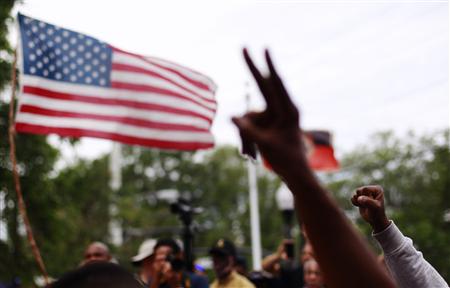
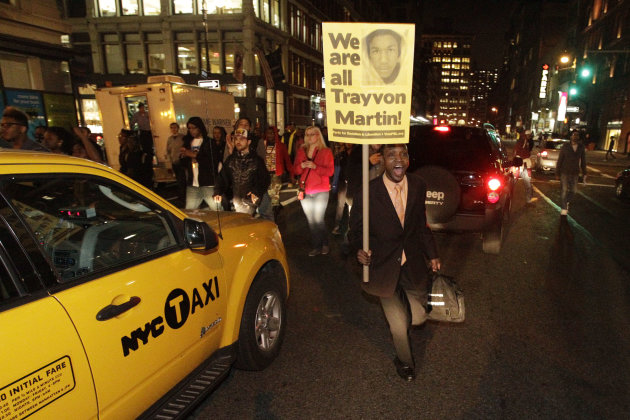
Thousands of protesters gathered in a downtown bayfront park on Sunday demanding the arrest of the neighborhood watch volunteer who shot and killed an unarmed black teenager, Trayvon Martin, in central Florida a month ago.
Civil rights leaders were joined by Martin's parents who were making their first major public appearance in the family's home city since a news conference on the steps of the Baptist Church where the funeral for their son was held last month. Sunday's protest came a day after one of the largest demonstrations yet in Sanford, the central Florida town where Martin was killed. The crowd gathered in an amphitheater with a "Justice for Trayvon" poster behind the stage. Protesters called for the arrest of George Zimmerman, the 28-year-old neighborhood watch volunteer who shot Martin with a semiautomatic handgun. Zimmerman, a white Hispanic, was in his car about to drive to a store when he noticed Martin walking back to his father's fiancée's home after buying candy and iced tea on Oscar night, February 26. Zimmerman called 911 to report that Martin looked "suspicious" and followed him against the dispatcher's advice. He later told police that he was walking back to his vehicle when Martin attacked him and that he fired his weapon in self defense after he was punched in the nose, knocked down and had his head slammed against a sidewalk. Police refused to arrest Zimmerman citing Florida's controversial "Stand Your Ground" law, which allows the use of lethal force outside the home when a reasonable threat is perceived.
The case has sparked a public outcry from celebrities, politicians, civil rights activists and ordinary citizens who believe Zimmerman had judged Martin to be suspicious simply on the color of his skin and should have been arrested for the shooting. More than two million people have signed a petition on Change.Org to demand justice in the case. President Barack Obama weighed into the matter in personal terms, comparing Martin to a son he might have had and calling for "soul searching" over how the incident occurred. A special state prosecutor is examining the case and could decide as soon as this week whether charges should be filed. Federal investigators are looking into charges of racial bias. Martin was visiting Sanford while serving a 10-day suspension from Dr. Michael M. Krop Senior High School in north Miami. His parents are divorced but both still live in Miami where his mother is a county housing agency employee and his father is a truck driver. Martin's former classmates have held several smaller protests, including a school walkout by more than 1,000 students last month.
Martin's mother, Sybrina Fulton, later urged students not to protest with walkouts, but to sign petitions, take part in organized rallies and pray. Martin was reportedly a good student and was taking after-school classes in the hopes of becoming an aviation mechanic. Betty Wright, a Grammy Award winning R&B artist and Miami native was scheduled to sing at Sunday's rally in support of the Martin family. "It is something where we need to stop and realize that this is like 2012 and it's unacceptable," she told NBC. Wright, whose has an album due to be released on Wednesday, will be singing "Dry Well," a song written to honor her own 21-year-old son, Patrick Parker, who was fatally shot in 2005. His killer was also never arrested. "And if I can lend a celebrity voice to it, because when my son died, the way I got through it was through the power of family and the power of prayer," Wright told NBC. "And I began to write it out, as I have always done the pain in my life."

Bahrain youths protest against Formula One

Bahraini police fired tear gas and arrested demonstrators Sunday in two Shiite villages as protests were mounted against the Formula One race to be held in the Gulf kingdom, activists said. Dozens of young protesters gathered in the village of Abu Saiba, west of Manama, and Tubli, south of the capital, according to postings by the Coalition of the Youth of the February 14th Revolution on Facebook. Police fired tear gas to disperse the small gatherings and made some arrests, according to provided footage. Activists have intensified their campaign to push Formula One to cancel the Bahrain round of the world championship, slated for April 20-22 at the Sakhir circuit, southwest of Manama. The race was cancelled last year due to the unrest that gripped the Shiite-majority state after a mid-March brutal crackdown on protests demanding democratic reforms that would challenge the power of the Sunni Al-Khalifa ruling dynasty. "We (object to) holding a sports race that belittles the sacrifices of our children and ignores our suffering and wounds," said a statement read by a youth dressed in a white death shroud and a black hood, according to a video posted online. "Do not tarnish the reputation of the respected auto sport with the blood of Bahrain victims." On Twitter, a whole campaign has been launched against the return of the Grand Prix to Bahrain. "Stop, my blood is flowing" and "race over blood," were two slogans posted by activists on Twitter, where hashtags like BloodyF1 and NoF1 generate scores of tweets. Formula One supremo Bernie Ecclestone has insisted that the outbreak of fresh violence will not affect this year's grand prix. Defending champion Sebastian Vettel and seven-time winner Michael Schumacher lately supported the return to Bahrain. According to an independent probe, 35 people were killed in the unrest between mid-February and mid-March 2011.

Arming Syria rebels will lead to 'proxy war', Iraq warns

Arab leaders on Thursday urged a swift and peaceful solution to the crisis in Syria at a landmark summit in Baghdad, with Iraq's premier warning that arming rival camps there would lead to a "proxy war." Nuri al-Maliki's remarks highlighted the split in the Arab League, with hardliners Qatar and Saudi Arabia calling for Assad to step down and for rebels opposing his regime to be supplied with weapons, while others including Iraq are pushing for political reconciliation. Qatar and Saudi Arabia were among Gulf countries that largely snubbed the summit, with the two countries only sending envoys to the first Arab meet to be held in the Iraqi capital in more than 20 years. Doha said its decision was a "message" to Iraq. Kuwait was the only Gulf country represented by its head of state, the first such visit since Saddam Hussein's 1990 invasion of the emirate, and in all, just nine visiting leaders attended the summit, along with UN chief Ban Ki-moon. Syria, which has been suspended from the pan-Arab body, was not invited. "Based on our experience in Iraq, the option to arm either side of the conflict will lead to a regional and international proxy war in Syria," Maliki warned. "This option will prepare the ground for foreign military intervention in Syria and so infringe on the sovereignty of a brother Arab country," he said. Even as the summit was taking place, Syrian security forces assailed rebel strongholds across the country, a day after Assad's regime made clear it would not abide by any Arab League initiatives. While regional officials wanted to tackle a wide variety of issues, ranging from the Arab-Israel conflict to jumpstarting the bloc's economies, the summit was firmly focused on Syria, where monitors say nearly 10,000 people have died in a year-long revolt against Assad's rule. In his speech opening the summit, UN chief Ban Ki-moon called for Syrian authorities to implement Annan's peace plan and for an end to violence ravaging the country. "It is essential that President Assad put those commitments into immediate effect. The world is waiting for commitments to be translated into action. The key here is implementation. There is no time to waste," he said. He added: "The conflict in Syria is on a dangerous trajectory with potential ramifications for the entire region." Kuwaiti Emir Sheikh Sabah called on Damascus to "listen to the language of reason and wisdom and end all sorts of violence against its people," saying that "prolonging the crisis in Syria will only make it more complicated." Tunisian President Moncef Marzouki, meanwhile, said that while his country was against military intervention in Syria, Damascus was only interested in "extending the conflict" so Assad's regime could "negotiate ... from a position of strength." Arab leaders have said they will call at the summit for talks between the Syrian government and opposition based on Annan's six-point peace plan, according to a draft copy of the Baghdad Declaration obtained by AFP. The region's leaders "denounce the violence, murder and bloodshed, and are in favour of a political solution via national dialogue," said the document, to be issued after the summit. Iraqi premier Maliki also warned in his remarks that Al-Qaeda could benefit from Arab Spring uprisings that have toppled four long-time rulers and shaken other autocratic regimes in the region. "The main thing we are afraid of is that Al-Qaeda will find new cracks (to operate) after it was defeated in Iraq, in Arab countries that are witnessing important developments," Maliki said, adding: "We warn that Al-Qaeda might ride the wave of the Arab uprisings." Iraq has deployed 100,000 security forces in an effort to prevent attacks on the summit, and officials have closed down swathes of roads and mobile networks and shut down airspace. Despite razor-tight security measures that effectively shut down Baghdad, a mortar round struck near the Iranian embassy on the outskirts of the heavily-fortified Green Zone where the the summit was being held, police said, adding that the blast did not cause any casualties but damaged the embassy. Smoke could be seen rising from the site, and security forces members, military vehicles and firefighters raced to the scene of the blast, an AFP journalist said. The Honein jihadist forum has included several recent messages from users threatening attacks on the Arab summit, using mortar shells as well as with suicide bombers. A week ago, Al-Qaeda-claimed attacks nationwide killed 50 people, including three in a car bombing opposite the foreign ministry.

Aung San Suu Kyi's party claims by-election victory

Pro-democracy campaigner Aung San Suu Kyi has won a parliamentary seat in Burma's government, her National League for Democracy party said on Sunday. The NLD says it is on track to win 44 of the 45 seats at stake.

Hundreds arrested for swarming NATO HQ in Belgium

Police in Belgium have arrested some 483 peace activists from hundreds of protesters, who tried to break into the North Atlantic Treaty Organization headquarters in Brussels. The Sunday demonstration organized by the Belgian Association Action for Peace was called to protest NATO intervention in Afghanistan and Libya, and nuclear arming. The activists crossed fields and sought to climb over fences leading to the NATO compound but were stopped by the five to six hundred police officers who were deployed to counter the protesters. "We neither want the anti-missile shield, nor intervention by NATO in Libya or Afghanistan, nor nuclear bombs that are illegal in our country," a spokesman for Action for Peace, Benoit Calvi said. Demonstrators most of them in their twenties, came from 10 European countries including Britain, Finland, France, Germany, Spain, and Sweden. "A military alliance that intervenes all over the world and has nuclear weapons is a threat to world peace," Action for Peace said. The protest came ahead of next month’s NATO summit in Chicago.

Women give Obama lead

http://tucsoncitizen.com
President Obama
has opened the first significant lead of the 2012 campaign in the nation’s dozen top battleground states, a USA TODAY/Gallup Poll finds, boosted by a huge shift of women to his side. In the fifth Swing States survey taken since last fall, Obama leads Republican front-runner Mitt Romney 51%-42% among registered voters just a month after the president had trailed him by two percentage points. The biggest change came among women under 50. In mid-February, just under half of those voters supported Obama. Now more than six in 10 do while Romney’s support among them has dropped by 14 points, to 30%. The president leads him 2-1 in this group. Romney’s main advantage is among men 50 and older, swamping Obama 56%-38%. Republicans’ traditional strength among men “won’t be good enough if we’re losing women by nine points or 10 points,” says Sara Taylor Fagen, a Republican strategist and former political adviser to President George W. Bush. “The focus on contraception has not been a good one for us … and Republicans have unfairly taken on water on this issue.” In the poll, Romney leads among all men by a single point, but the president leads among women by 18. That reflects a greater disparity between the views of men and women than the 12-point gender gap in the 2008 election. Obama campaign manager Jim Messina says Romney’s promise to “end Planned Parenthood” — the former Massachusetts governor says he wants to eliminate federal funding for the group — and his endorsement of an amendment that would allow employers to refuse to cover contraception in health care plans have created “severe problems” for him in the general election. “Romney’s run to the right may be winning him Tea Party votes,” Messina said in an interview, but he says it’s demonstrated that “American women can’t trust Romney to stand up for them.” He adds: “It would be hard for them to win if you have this kind of gender gap.” Romney pollster Neil Newhouse predicts the gender gap will narrow as Romney moves from the pitched battle of the GOP primaries — Wisconsin, Maryland and the District of Columbia vote Tuesday — to a fall election focused on economic issues. “If there’s a gender gap, it goes beyond Mitt Romney or Newt Gingrich or Rick Santorum to a partisan gender gap,” Newhouse said in an interview. “It’s not Romney-specific. I would argue that it’s broader than that.” While women typically are more likely to identify themselves as Democrats than men are, that difference widens to a chasm in the USA TODAY poll. By 41%-24%, women call themselves Democrats; men by 27%-25% say they’re Republicans. The survey of 933 registered voters, taken March 20-26, has a margin of error of +/- 4 points. The swing states surveyed are Colorado, Florida, Iowa, Michigan, Nevada, New Hampshire, New Mexico, North Carolina, Ohio, Pennsylvania, Virginia and Wisconsin.

Pakistani boy dies after setting himself on fire because family couldn’t afford school uniform

A Pakistani boy who set himself on fire because his parents could not afford to buy him a new school uniform has died, his family and officials said Sunday. The tragic story is a reminder of the woeful lives of Pakistan’s many dirt-poor citizens. It brings out the challenges facing those clinging to the hope that education could be the ticket to climbing up from the bottom rung of society. Like many in Pakistan, 13-year-old Kamran Khan’s family did not have enough money to send him to school. He was such a promising student that a local private school allowed him to attend for free, said the boy’s older brother, Saleem Khan. Even then, the family struggled. The boys’ father borrowed money from relatives to buy a work visa to Saudi Arabia four months ago, but he hasn’t yet found a job there, said the elder Khan. Their mother works as a maid. The younger Khan used to wander the streets in Shabqadar, their town of 60,000 in northwest Khyber Pakhtunkhwa province, looking for bits of metal scrap and other items to sell to help out the family, said his brother. He never asked for anything, his brother said, but last month he pleaded with his mother for several days to buy him a new school uniform, a white shalwar kameez, the loose-fitting pants and top worn by both men and women in Pakistan. He was embarrassed that his old one was worn out and patched up. His mother sympathized with him but repeatedly told him the family didn’t have the money. She finally lost her patience with him on March 24 and slapped him, said his brother. The young boy responded by saying, “If you can’t buy me a uniform, then I’m going to kill myself,” according to his brother. He stormed out of their house, doused himself with gasoline and lit himself on fire, said his brother. The youth suffered burns on 65 percent of his body. He was taken to an army-run hospital in Punjab province. But the family could only raise one-tenth of the roughly $5,500 they needed for his treatment. He died of his injuries on Saturday, said Zahir Shah, a police officer in Shabqadar. Public school fees in Pakistan average only around $2 per month, but even this is often too much for poor Pakistanis, who tend to have many children. About 30 percent of Pakistanis have received less than two years of education, according to a report issued last year by the Pakistani government. The results are poor even for those kids who do attend school. Around 50 percent of school children aged 6-16 can’t read a sentence, said the report. ___

Making sense of US-Pakistan ties

Gulfnews.com
Political and military leaders have narrowed their differences and favour a hard-headed pragmatic re-setting of relations By Tanvir Ahmad Khan, Special to Gulf News Pakistan’s relations with the United States are not only important for the country but also for the entire region. Even as it waxes and wanes, the relationship has been a major determinant of the regional history since the Soviet Union’s fateful invasion of Afghanistan in 1979. The Pakistani and American re-engagement in 2001 paved the way for the decade-long US-led Nato-International Security Force’s (Isaf) military intervention in Afghanistan that brought down the Taliban and launched the so-called global war on terrorism. And yet, defining bilateral relations has become a highly contested exercise in the midst of glaring contradictions. In Pakistan, it is no longer clear as to which forum would ‘re-set’ the relationship undermined by various American actions that outraged public opinion and forced the government to block overland transit of supplies for Nato-Isaf forces. President Asif Ali Zardari’s elected government is as, if not more, ‘pro-American’ as that of General Pervez Musharraf and yet it now evades direct executive decisions and declares that future relations with the United States would be decided by parliament. On its part, parliament has before it, since March 20, a report written by the Parliamentary Committee on National Security on Guidelines for Revised Terms of Engagement with USA/Nato/Isaf (PCNS). The report not only seeks to provide a framework for future cooperation with the US but also makes recommendations for strengthening relations with some other states including China, Russia and Iran with a view to re-balancing Pakistan’s foreign policy. A conspicuous lack of consensus in the joint session of the two houses of parliament convened to consider it has led to procrastination and there has been no substantive parliamentary debate so far. An extraordinary meeting of various political and military leaders has now tried to identify ideas that would break the logjam in parliament. Following this conference in which the opposition parties reportedly took a hard line with an eye on the next general election — anti-Americanism gets votes — the Committee has gone back to the drawing board to reconsider some of the initial recommendations; the result may be a tightening of conditionalities under which full scale collaboration with foreign forces could be resumed.Populism apart, the opposition, especially from the right wing, is being driven by two factors: one, scepticism about government motives in referring Pakistan-US relations to parliament and, two, suspicion that recent high level meetings between the two countries — Prime Minister Yousuf Gilani’s consultations with President Barack Obama in Seoul and Pakistan army chief, General Pervez Kayani’s long deliberations with Centcom’s leader, General James Mattis and Isaf commander, General John Allen in Islamabad — were an attempt to settle issues at the executive level while using parliament for political legitimacy. Then there is the pressure of media leaks from Washington that it would turn to India and the northern route states — Russia and Central Asia — if Pakistan fails to deliver. The tipping point will be parliament making cessation of lethal drone attacks a precondition to restoration of overland transit routes. Government leaders in Islamabad deflect criticism with rhetorical declarations that the president and prime minister have effectively transferred their powers to parliament. In reality, Pakistan’s governance continues to be a personality-centred affair with a very narrow base of authority. Pakistani parliaments have seldom taken a proactive interest in the formulation and conduct of external relations; they have, as a rule, lacked information, expertise and the resolve to address highly complex issues of international relations. Matters concerning the US have particularly been settled in secret civil and military conclaves; the process reaching a climax with Musharraf concluding secret agreements that parliament is now belatedly demanding to see. There is much clamour that the armed forces and the allied foreign policy establishment do not allow the elected institutions to play a significant role in the realm of foreign and security policy. The executive has probably gone to parliament not because of a revolutionary re-think but because collaboration with the US has become extremely unpopular after certain events. Prominent among them are the following: departure with impunity of the CIA killer of two Pakistani citizens in Lahore; the unprovoked destruction by Nato aircraft of the Pakistani border post, Salala, in which 24 Pakistani soldiers perished; information that transit rights given to foreign forces in Afghanistan have depreciated Pakistan’s infrastructure to the tune of Rs80 billion and above all, speculative reports that Zardari’s government has facilitated an influx of “thousands” of American intelligence operatives and special forces personnel into Pakistan. As things stand today, political and military leaders seem to have narrowed their differences vis-a-vis Washington and favour a hard-headed pragmatic re-setting of cooperative relations. Parliament is expected to give it a broad ownership but, anticipating early elections, politicians wish to act as custodians of Pakistan’s sovereignty. The government has not been able to control parliament’s proceedings and foreign policy has got caught up in the cross-currents of Pakistani politics. It is yet to be seen how the civil and military leaders re-engage with the US without a prohibitive cost for the political class.

Future of educated Lollywood

Daily Times
Pakistani actor and coming-of-age star, Ahsan Khan, talks to Daily Times about his upcoming film 'Ishq Khuda', his break from Lollywood, and the much-awaited drama serial 'Bilqees Kaur'. Q Tell us a little about the role that you're playing in 'Ishq Khuda', and how much can you relate to it? A. I play Ahsan, the love-bound boy-next-door that almost every guy would be able to relate to. He finds himself stuck in a love triangle, which is very believable and convincing, without any sign of artificiality. Whether I relate to the character or not, I think yes. I can in more ways than one. I play this very regular guy who finds himself in an inevitable situation, and I guess I've been there, done that. Q Why do you think Shehzad approached you for the role? A. You see, Shehzad was the one who introduced me to Lollywood, with my first film 'Nikaah'. The two of us got along immediately, and he is the sort of person I share my mind with. The big hit 'Nikaah' was, and the educated, accomplished director Shehzad is, I said 'yes', without a second thought. Q Did you initially have any reservations or apprehensions about the role? A. Shehzad is of the few filmmakers that we have who make nice, enjoyable, family movies. Many people might not know it but Shehzad's 'Salakhen' was the first Pakistani film to be released in India. Whatever apprehensions I did have, immediately went away as the role and the script was narrated to me. I trust Shehzad with the films he makes and all his directorial ventures. Q How is this role different from other roles that you've played? A. It's not really, actually. I always make sure that I play roles I and the audience can relate to, ones which have the power to convince and have the believable factor to them. QWould we see you dancing and shaking a leg in the film? A. (Laughs) Totally! I love to dance, actually. It's part and parcel of being a commercial film actor I guess. Not in-your-face dancing, but the kind that would get the audience grooving as well. There are not many fast beat tracks in the film, as most of them have a lot of emotion involved. The film has a musical aspect to it, with the kind of touchy-feely sense to it, and not just mindless crooning on which actors and made to dance to. QWho has choreographed the songs for 'Ishq Khuda'? A. You might be surprised but Shehzad himself is an amazing dancer. He's done most of the choreography himself, alongside Pappu Samrat and Jabbar. So, there's a lot of versatility and flexibility to the dance steps. Q We'll be seeing you on the silver screen after a long time. Why's that? A. I wasn't able to find a good role to fit in. Bad timing, you can say. At that time, I could relate more to the drama roles that I was being offered so took a wild plunge in that. It wasn't as if I had made a niche for myself in dramas. I longed for a good film role, and with 'Ishq Khuda', I felt that connection I was longing for. QWhat are you most comfortable in? Silver screen or drama? A. I'll be honest here. I think drama is my real edge. I've learned so much from it, still am. It has really brought out the actor in me. But then again, film is forever. It's a one-time running show and leaves an impact, which is inerasable. I love doing films. QHave you ever tried your hands in theatre? A. Unfortunately, I've not, as drama and my current projects take most of my time. But I'd definitely love to. Working in theatre is one experience I'd love to gain. QHaving Meera as your co-star in 'Ishq Khuda', who has major film experience, both in Pakistan and in India, and boasts of a large fan following, did you at any point feel intimidated that she might outshine you or you might get unnoticed? A. Never for once did I feel that way. I was rather more excited and looked forward to working with her. The experienced actress that she is, the moment I came to know that she'll be my co-star, I realised how much I could learn from her. Acting should be an extractive job. You should extract everything from the cast and the crew and just should never stop learning. Also, I'm a very focused actor and just give everything my best shot, so that leaves no room for insecurity. Q What are the different genres of 'Ishq Khuda' and what is that one genre you're very comfortable in? A. The film is about unconditional love, the sort of love that God has for us and vice versa. Unconditional so to say, along with a beautifully-scripted love story. I really enjoy performing emotional scenes, where one has to do a lot to get inside the skin of the actual character that you're playing. You see, when you just have to laugh or spell out dialogues from a calm setting, you're not doing much. A scene, which asks for an enactment of emotions, is where I like to challenge myself. Q That's interesting to know. So, what is next for you, after 'Ishq Khuda'? A. Well, I'm doing another Lollywood film, which is Faisal Bukhari's 'Sultanat'. Then there a few good plays in my kitty as well, one of them namely 'Bilqees Kaur' with an amazing cast, which includes Bushra Ansari. I'm launching my own fashion store, 'Ahsan Khan', mid-April, Insha Allah. My other play which I'm eagerly looking forward to is 'Heera Ranjha' directed by Yousaf Salahuddin. 'Meri Ladee', 'Kiski Ayegi Baraat', 'Mere Qatil Mere Dildar', and I've two more projects with Momina Duraid in the pipeline.

‘Ishq Khuda’ shooting continues

Daily Times
Pakistani feature film ‘Ishq Khuda’ is currently under production. Its cast and crew recently came back from the beautiful valley of Swat, which included Ahsan Khan and Meera. Portions of songs were filmed during the spell. The director of the film, Shahzad Rafique, said, ‘’By the grace of Almighty Allah, I was able to shoot in the beautiful valley of Swat. It wont have been possible without the support of the Pakistan Army, the police and last but not the least, the public! The public is as good as the weather there. My passion to show my beautiful Pakistan to the world was fulfilled! It’s my message to all the tourists to visit it without any fear. It’s a beautiful place with great people! I am also thankful to my lead artists Ahsan Khan and Meera and also my crew who without any fear participated in the shoot of ‘Ishq Khuda’ with full enthusiasm!’’ The next spell is expected to start from April 7th in Soon Sakesar Valley where other cast and crew of the film will also participate. Rahat Fateh Ali Khan, Shazia Manzoor and Sanam Marvi have sung the songs for the film while marketing and PR is being handled by Hasnat Afridi.

Zardari to address public gathering on ZAB’s 33rd anniversary

Chief Minister Sindh Syed Qaim Ali Shah has informed that president Asif Ali Zardari will address a public gathering at Garhi Khuda Bux Bhutto in connection with 33rd death anniversary of Zulfikar Ali Bhutto shaheed
. Talking to the mediamen here at Garhi Khuda Bux Bhutto on Sunday after offering Fateha at the Mazar of Shaheed Zulfiqar Ali Bhutto, Shaheed Mohtarma Benazir Bhutto and others, he said 33rd death anniversary of Shaheed Zulfiqar Ali Bhutto would be observed at Garhi Khuda Bux Bhutto on April 4, in a respectable manner and all arrangements in this connection had been finalized. He said under the vision of Shaheed Mohtarma Benazir Bhutto, the reconciliation policy strengthened the democratic process in the country with the result that the coalition government in center and in the province of Sindh were working smoothly. About Karachi unrest, the CM said that the law and order problem would be resolved in consultation with coalition partners.

Khyber Pakhtunkhwa deport 929 Afghan families

Provincial Government Sunday ordered to send back 929 Afghan families serving in Afghan National Army. Khyber Pakhtunkhwa(KP) government sought details of the Afghan refugees from all over the province in 66th session of KP Cabinet. Provincial Home Ministry directed commissioners of all districts and Police officials to take Afghan citizens into custody working in Afghan National Army alongwith 306 Head Imams living in the province to be deported to Afghanistan. According to the details, 964 Afghan Citizens have purchased properties illegally whereas 473 Afghanis comprised relatives of several ministers and governors work illegally in the province. Most of them belong to Northern Afghanistan are presently living in posh areas of the province.

In remote Baluchistan, Pakistan fights a shadowy war

By SAEED SHAH
The family of Jalil Reki learned from television news that his body had been found, more than two years after the political activist was allegedly abducted by Pakistani security officials. Reki's body bore signs of severe torture, according to his father, Qadeer Baloch, including broken wrists and knees and burn marks. He was killed by several shots through the back of the head. His grisly story is replicated across the remote and thinly populated western province of Baluchistan, where Pakistani forces are fighting a separatist insurgency that the outside world barely knows about. While the U.S. and other Western powers focus on the country's other war - against Islamic extremists in the northwest tribal areas bordering Afghanistan - the conflict in Baluchistan is raging mostly in the shadows even as violence escalates. In a congressional hearing in Washington in February, Ali Dayan Hasan, Pakistan director for Human Rights Watch, said that since January 2011, at least 300 people had been abducted or killed in Baluchistan and their bodies abandoned. The acts are widely referred to as "kill and dump" operations, in which Pakistani security forces engaged in counterinsurgency may be responsible, Hasan said. The increasingly bloody conflict also has another side: Baluch separatists have targeted and killed hundreds of settlers, mostly ethnic Punjabis who've lived in the province for generations, as well as fellow Baluch whom they accuse of siding with the Pakistani authorities. Though largely ignored, the conflict has geopolitical ramifications. Neighboring Iran, too, has a restive Baluch minority population and is loath to see the insurgency expand. The provincial capital of Quetta is home to the leadership of the Afghan Taliban, which has coexisted peacefully with Baluch insurgents since Afghan refugees began arriving in the area decades ago. The desolate province is resource-rich, with deposits of copper, uranium, gold and silver, and it produces more than one-third of Pakistan's natural gas. Washington is supporting a proposed giant gas pipeline from Turkmenistan to India that would pass through Baluchistan. U.S. officials have been pressing Pakistan for permission to open a consulate in Quetta, which so far has been denied. In February, Rep. Dana Rohrabacher, R-Calif., tabled an unsuccessful bill supporting independence for Baluchistan. The State Department quickly distanced itself from the move, but it added to the conspiratorial view here that Washington is seeking to break up Pakistan. Baluchistan, which runs along Pakistan's western border with Iran, covers 44 percent of Pakistan's territory, yet has just 8 million of the country's 180 million people. Vast deserts and mountain ranges dominate its landscape, the most impoverished in Pakistan. Nationalists here say that the province's natural resources have been exploited by Pakistan's dominant Punjabi ethnic group, with little benefit to Baluchistan. In 1948, the territory was made part of the new nation of Pakistan - nationalists say it was annexed by force - and there have been five revolts against the central government since then. The current uprising, by many measures the most serious, began in 2000 but gained wider support after the killing of a rebel Baluch tribal chief, Akbar Bugti, during a Pakistani army operation in 2006. The long-standing grievances have been multiplied by reports of extrajudicial killings and abductions. Reki, who had a 4-year-old son, was the information secretary of the nationalist Baluch Republic Party, tasked with sending out press releases and drafting speeches and briefings. Taken from his home in Quetta in February 2009, his body was found in November 2011 in Turbat, hundreds of miles to the south. His family, which insists that Reki was not involved in the armed struggle, says that the men who took him were wearing uniforms and driving vehicles of the Frontier Corps, a government paramilitary force, accompanied by plainclothes officers who seemed to be intelligence agents. Pakistani security officials charge that Reki's party is the political wing of the Baluch Republican Army, an insurgent group. "This is inhuman. When India caught Ajmal Kasab, even he got a trial," said Qadeer Baloch, 60, referring to one of the Pakistani gunman responsible for a terrorist attack on the Indian city of Mumbai in 2008, in which 166 people were killed. According to the Voice of Missing Baluch, a local advocacy group, some 6,000 Baluch have disappeared into the hands of the Pakistani authorities since 2003. In 2011, the government acknowledged that some 1,000 Baluch were missing, but this year it revised the figure down to just 48, with little explanation. "They have taken the cream of our society," said Nasrullah Baluch, the group's chairman. "These were our political leaders, doctors, engineers, students. The point of killing them is to snuff out the Baluch voice." Officially, there is no military operation under way in Baluchistan; Pakistan says it has deployed 50,000 Frontier Corps troops to maintain law and order. But privately, security officials claim that abductees have links to the armed uprising in some way, and they also complain that Pakistani courts don't convict terrorists - so the security forces have to find other ways to deal with them. The apparent "kill and dump" policy began in July 2010 in response to deaths of Punjabi settlers, which subsequently dropped. No one has been held responsible for the killings, and security officials have rejected as "baseless" allegations that they're involved. The Frontier Corps declined to comment. "They (intelligence agencies) know how many times a person uses the bathroom a day. How can they say they don't know where these bodies came from?" said Tahir Hussain, the Baluchistan representative of the Human Rights Commission of Pakistan, an independent monitoring organization. Under a U.S. regulation known as the Leahy Amendment, Washington is prohibited from funding any foreign military unit that's responsible for human rights violations. The U.S. provides some $2 billion a year in security aid to Pakistan, though how much goes to the Frontier Corps is unclear. Pakistan repeatedly has claimed that India is supporting the Baluch uprising. Insurgents deny it, but some Western diplomats believe there's evidence to back up the charge. A diplomatic cable sent Dec. 31, 2009, from the U.S. consulate in Karachi and obtained by WikiLeaks said it was "plausible" that Indian intelligence was helping the Baluch insurgents. An earlier 2008 cable - discussing the Mumbai attack that was reportedly hatched by Pakistan-based terrorists - reported fears by British officials that "intense domestic pressure would force Delhi to respond, at the minimum, by ramping up covert support to nationalist militants fighting the Pakistani army in Baluchistan." "Indians are 100 percent funding and training" the separatists in camps in Afghanistan, alleged a senior Pakistan security official, who spoke on condition of anonymity because he wasn't authorized to talk to reporters. The official estimated that the various insurgent groups combined had 3,000 to 4,000 fighters, but that their capability "does not compare" to the superior fighters of the Pakistani Taliban, who are battling security forces in the northwest tribal areas. Pakistani security officials believe that the insurgency is controlled by two exiled leaders, both tribal chiefs: Bramadagh Bugti, who lives in Switzerland and allegedly controls the Baluch Republican Army, and Hyrbyair Marri, who's based in London and is linked to the Baluchistan Liberation Army. Both men deny running these groups. This year, Islamabad proposed to drop all outstanding criminal cases against Bugti and Marri and enter into negotiations - an offer that was rebuffed. "We are occupied by Pakistan, which has done nothing for the Baluch except plunder us for 60 years," said Marri, speaking by telephone from London. "The only negotiation we are willing to hold with Pakistan is the withdrawal of its forces from our land." The rebels have killed 166 Frontier Corpsmen since 2009, according to the military's public relations wing. The Baluchistan Liberation Army claimed responsibility in March for killing two police officers in Quetta. The Human Rights Commission of Pakistan believes that some 800 settlers, including schoolteachers, barbers and professors who had origins in Punjab province, have been murdered in Baluchistan since 2006, seemingly by separatists. The rebels also have killed hundreds of fellow Baluch whom they accuse of siding with Pakistan or spying for it. On March 10, six young and apparently unarmed Bugti men were executed by the Baluch Republican Army in the rebel stronghold of Dera Bugti. Many civilians also have been killed by landmines planted by insurgents. Baluchistan is effectively under martial law. Naseebullah Bazai, the top civilian security official, insisted that day-to-day administration was handled by civilian authorities but added that "our resources do not meet the challenges in any way."

Lifting the veil on Afghanistan’s female addicts

Anita lifted the sky-blue burqa from her face, revealing glazed eyes and cracked lips from years of smoking opium, and touched her saggy belly, still round from giving birth to her seventh child a month ago. “I can’t give breast milk to my baby,” said the 32-year-old Anita, who like other women interviewed for this story, declined to give her full name. “I’m scared he’ll get addicted.” She was huddled with other women at the UN-funded Nejat drug rehabilitation center in the old quarter of Kabul, having sneaked out of her home to avoid being stopped by her husband from going outside alone. With little funding and no access to substitution drugs such as methadone, treatment is rudimentary at Nejat for a problem that is growing in a dirt-poor country riven by conflicts for more than three decades. Afghanistan is the source for more than 90 per cent of the world’s opium, which is used to make heroin, and more of it is being grown than ever before. While it is not uncommon to see men shooting up along the banks of the dried of up Kabul riverbed in broad daylight, women in the ultra-conservative culture of Muslim Afghanistan are expected to stay out of public view for the most part. They often have to seek permission from a male relative or husband to leave their home, and when they do they are encased in the head-to-toe burqa. “I am not allowed to leave home for medical checks. What can I do? I am a woman,” Anita said matter of factly. Like many of Afghanistan’s female drug users, Anita picked up the habit from her husband. Like other women interviewed for this story, Anita asked that only her first name be used. Shrouded in stigma, female drug users is a topic that is almost never mentioned in Afghanistan. They agreed to tell their stories to a reporter only through an intermediary they trusted. CONSUMPTION ON RISE Opium poppy cultivation in a country that has been growing the plant for a thousand years increased 7 per cent in 2011 from the year before, due to a spike in prices and worsening security, according to a survey sponsored by the United Nations Office on Drugs and Crime. In 2011, the farm-gate value of opium production more than doubled from 2010 to $1.4 billion and now accounts for 15 per cent of the Afghan economy, the UNODC says. Opiate consumption in Afghanistan, where it has long been a medication but in recent years has been used increasingly for recreation, is also on a sharp rise. The UNODC says Afghanistan has around one million heroin and opium addicts out of a population of 30 million, making it the world’s top user per capita. No estimates are available on how many women are addicted to opium or heroin. Nejat estimates around 60,000 women in Afghanistan regularly take illegal drugs, including hashish and marijuana. “There has been a definite increase amongst women drug users over the last decade,” said Arman Raoufi, director of harm reduction for women at Nejat. Smoking opium costs around 200 Afghanis a day ($4), a very expensive habit in a country where a third live beneath the poverty line. Women send their children to collect scrap and bottles to help pay for their habit, or resort to begging, extending a hand to cars from beneath their burqa on busy streets when their husbands have left home. “My husband took on a second wife and began to ignore me, so I started to smoke his powder (opium) and now must beg,” said Fauzia, 30, a petite mother of five sitting in the corner of Nejat, her embroidered floral slippers poking out from under her baggy trousers. She said she was terrified that her husband and male relatives might discover she was seeking treatment on her own at the center. Treatment options are sorely limited. A pilot project launched two years ago by Medecins du Monde, which gives methadone to drug addicts, is the only one in the country. The National AIDS Control Programme (NACP) wants to roll it out across the country, but the Ministry of Counter-narcotics has objected, saying it would introduce yet another narcotic onto the black market. IRANIAN CONNECTION With her five-year-old son tugging on her unwashed burqa, 30-year-old Najia said she has smoked opium for nine years. “It is so hard for me. I have kids. I’m poor. I’m not able to work – my husband won’t allow me,” said the raven-haired mother of four. Najia said she picked up the habit from her husband after he returned from his job as a labourer in neighboring Iran. Raoufi at the Nejat center says the return of migrant workers and refugees, who fled to Iran and Pakistan during the Soviet occupation of the 1980s, and the bloody civil war and Taliban rule that followed, is the main reason behind the rise in female drug addicts. Increased street prostitution since the fall of the Taliban, which policed the trade more rigorously than the government does today, has also contributed, he said. Iran has the second highest heroin abuse rate in the world after Afghanistan, according to UNODC. Afghan addicts among the 1 million refugees in Iran have become such an issue Tehran has started to expel them. “Our relatively open borders are not doing us any favors,” said Feda Mohammad Paikan, who heads the NACP working under the Afghan Ministry of Public Health. “Most addicts get hooked in Iran, and many of these men have wives.” PRISONERS OF HABIT Afghanistan’s female narcotics problem is now filling the country’s largest women’s prison, Badam Bagh or “Almond Orchard”, on the outskirts of Kabul. Of its 164 inmates, 64 are opium and heroin users, double what it was when the clinic started in 2008, said clinic doctor, Hanifa Amiri. “There are simply more drugs out there available to women now,” she said, waving a medical-gloved hand over a prison courtyard, where burqa-clad female relatives were bringing gifts of pomegranates and flat naan bread for the inmates. With cropped black hair, a leather jacket and a henna tattoo of a scorpion on her hand, inmate Madina looks nothing like an ordinary Afghan woman. One of seven injecting heroin users in Badam Bagh, she lives with her teenage son and daughter in prison, where she has been for seven years since she killed her husband. She said she murdered him after he forbade her from prostituting herself to support her habit, said Madina, the only inmate at the prison who agreed to speak to Reuters. “I would love to give it all up, but how am I meant to, as a woman?” the 37-year-old mother of two said as she scratched at the scabs on her arm, dark red from recent use. She supports her habit by selling handmade sexual aid tools – stuffing compacted wool into condoms – to other inmates, several of whom have developed lesbian relationships. HIV and AIDS is becoming a more serious issue, largely spurred by injecting drug use, and could reach the general population if not tackled properly. A new strategy being rolled out by the health ministry to target more women in counseling and HIV testing is being met by opposition from the strong conservative forces in Afghan society. “HIV and drug use are viewed as evil in Muslim society, and even more so for women,” said specialist Mohammad Hahn Heddait, who works at the infectious diseases hospital under the ministry of health.

Afghanistan names general to run U.S. prison, asserts control

Afghanistan named a three star general to take over Bagram prison from the U.S. military and with him, final say over which prisoners are released, an issue with the potential to open another rift in relations between Washington and Kabul. The issue of the release of any of the 3,200 people held in the prison at the sprawling American base, north of Kabul, is sensitive to both countries as Afghanistan assumes full security responsibilities ahead of departure of most NATO combat forces in 2014. Washington fears the prisoners, most of whom it says are mid to high level members of the Taliban, might return to the battlefield as has happened in the past, citing the case of a Taliban commander transferred from Guantanamo Bay to Afghan custody in 2007 who ended up fighting coalition forces again. "They (the United States) can have a consultative role, but not a veto," said Aimal Faizi, chief spokesman of President Hamid Karzai. "What's the point of the transfer if we don't have full control," he said, in remarks that have become increasingly assertive following a string of incidents that have strained U.S.-Afghan ties, notably the killing of 17 villagers blamed on a U.S. soldier and the burning of Korans at the Bagram base. Afghan General Ghulam Farooq Barekzai - formerly in charge of policy at the defense ministry - has been named to take over the Bagram detention centre, a palace statement on Saturday said. It was the first step toward handing over control of the prison to Afghan authorities and another move to transferring complete security responsibility to the volatile country before the planned pullout of most Western forces. Afghanistan, which has long sought control of Bagram prison, says no sovereign country can allow thousands of its people to be held indefinitely under foreign guard and that it alone has the powers to determine what to do with them. The two sides reached an agreement in March to shift the prison to Afghan control after months of wrangling and a key element of the pact was that Afghanistan would consult with the United States before freeing any of the men incarcerated there. "And if the United States provides its assessment that continued detention is necessary to prevent the detainee from engaging in or facilitating terrorist activity, Afghanistan is to consider favorably such assessment," the document said. U.S. officials have interpreted that to mean that the two sides at the very least would have to agree before any of the detainees, many held for years without any trial, could be freed. GRADUAL TRANSFER Prisoners there will gradually be transferred to Afghan custody over six months, and U.S. forces will provide "technical and logistical support" for a further six months. About 50 non-Afghan detainees at the prison will remain in U.S. custody, both sides have said. Under the agreement, Afghanistan also has to provide the United States access to the transferred detainees to ensure that they are being treated in accordance with humanitarian laws. They may also be able to interrogate them, which has long been a key U.S. demand, U.S. and Afghan officials said. "This is something that Afghan commanders at the prison will decide," said an Afghan government official, who declined to go into any more detail because of the sensitivity of the matter.

Zulfikar Ali Bhutto 33rd death anniversary to be observed

The 33rd death anniversary of PPP founder late Zulfiqar Ali Bhutto will be observed on 4th April (Wednesday). Quran Khawani will be held at Jinnah Park (old Jail) and Dua will be offered for the departed soul here. Talking to APP, Member Central Excutive Committee (CEC) Qazi Sultan Mehmood said that all the arrangements have been finalised to observe the anniversary of Z.A Bhutto, with a pledge to continue his mission and strengthen the democracy norms in the country. Paying tributes to Zulfikar Ali Bhutto on his death anniversary, he urged the party workers to promote his philosophy and utilize their all available resources for the promotion of democratic culture in the country. He said that Z.A Bhutto wanted to strengthen democracy in the country and accepted gallows in the struggle for the rights of the downtrodden classes of the society adding that Bhutto declined to bow before the military dictator. He said that due to these reasons once again a PPP government has been established in Pakistan under the able leadership of the co-chairman, President, Asif Ali Zardari and the graph of popularity of the party is on rise. Various programmes including seminars and workers convention will be organised in different parts of the country to pay tribute to the PPP founder. Radio Pakistan and Pakistan Television have also made arrangements for special transmission. The special transmission will highlight life, struggle, services and revolutionary achievements of Zulfikar Ali Bhutto.

State of human rights in Pakistan

EDITORIAL
The Human Rights Commission of Pakistan's report on "state of human rights in 2011" in Pakistan makes the disturbing though not surprising disclosure that rights violations increased manifold during the year, offering the unpalatable explanation that this happened because the government was caught up in its own crises - the memo controversy, NRO and rumours of a coup - and fighting for its survival. Indeed, this government has been busy trying to survive in the face of various crises - some self-created and others by extraneous circumstances - but a democratic government is not a one-man show; its army of ministers should have been addressing these issues as and when they came up. Unfortunately, however, there has been a tendency either to play it safe by confusing a given issue or, in certain instances, to look the other way. Unveiling the report on Thursday, HRCP co-chairman Kamran Arif said that 2011 began with the murder of Salmaan Taseer; and later Christian MNA and minority affairs minister Shahbaz Bhatti was murdered. "Minorities", he added, "continued to suffer and are leaving an unsafe country." It is important to recall here how the government handled the two assassinations. Soon after Taseer's assassination, although the assassin left no confusion as to his responsibility and motive, ruling party ministers and various spokespersons sought to deflect attention from the real problem, terming it a political murder. And in the case of Shahbaz Bhatti, who was under extremists' threat, Interior Minister Rehman Malik tried to shift the blame to the victim by claiming that he was offered a used bullet proof vehicle but that Bhatti had insisted on getting a new one. Another minister, Babar Awan, when accused of having accepted a hefty amount - in exchange for ensuring exoneration in court - from the accused in the multi-billion rupee Bank of Punjab scandal, said the accusation came from an Ahmadi community's conspiracy to malign him. Hence, indirectly the government actually contributed to society's tolerance for violent extremists and growing intolerance towards minority communities. The HRCP official also said that sectarian violence, kidnapping and extra-judicial killings dominated discussion during the year gone by. Notably, some of the most horrible incidents of sectarian killings took place in Balochistan where Shias of Hazara community were targeted repeatedly. It is Balochistan also where most kidnappings and extra-judicial killings took place, overtaking the old Baloch sense of deprivation with anger over enforced disappearances. The government response to the first issue has been inaction; and to the second either indifference or denial of the fact that hundreds of political activists remained 'missing'. Baloch leaders across the political spectrum accuse the agencies of enforced disappearances of over a thousand activists, and extra-judicial killings of many of the 'disappeared.' It was only after the courts began taking suo motu notice of these cases that the government admitted of 49 disappearances - too small a number compared to Baloch claims. Such grave rights violations did not happen because the federal government was embroiled in its own problems; but because it wanted to avoid any disagreement with the powers that be. It could have authorised the provincial government to talk to dissidents and settle the issues of conflict. The report also goes on to note that last year saw 16 journalists killed across the country. Sadly, Pakistan has become one of the world's most dangerous places for journalists. The worst affected are those covering lawless tribal areas where they can easily confront trouble either for stepping on the wrong side of the violent extremists or the security agencies fighting them. Other parts of the country are unsafe too. It can only be hoped that an increasing media spotlight on these incidents and the judiciary's interventions will help improve the situation.

Mohmand tribal elders demand compensation for destroying poppy cultivation

Tribal elders in Mohmand Agency have demanded “compensation” for land destroyed in an anti-poppy cultivation
drive on Friday, which injured two men including a member of the paramilitary Khasadar Force. “We held a jirga with tribal elders after the incident. The elders agreed to destroy poppy fields but demanded compensation in the form of development funds for the area,” said Shakirullah, an official of the political administration in Ambar sub-district, where the drive was conducted. He said that the political administration, with help from the Khasadar Force, had cleared almost three acres of land when some young tribal men opened fire in the Shati Mena locality. The injured troop was identified as Mohammad Shah and the civilian as Faisal. Backing their demand for compensation, tribal elders say the area is not conducive to grow other crops. “The political administration officials were destroying our valuable crops without any compensation. What else can we grow in these areas to earn a livelihood?” asked an elder from Shanti Mena on condition of anonymity. “We will continue resisting destruction of our crops until the government compensates us,” he told The Express Tribune. However, they handed over eight people, who were suspected of firing at the anti-poppy cultivation team, under the collective responsibility clause of the Frontier Crimes Regulation that govern the area. But another senior official from the agency’s political administration claimed that they had compensated all affected families with wheat seeds and fertilisers. He said they had also obtained a certificate for eradicating poppy cultivation from Mohmand Agency. He added that a local jirga will soon be convened to decide the date of removing poppy cultivation in the upper Prangghar area of Mohmand Agency. However, local sources in Ambar sub-district and the Prangghar area say that most farmers who own small-sized land grow poppy only because it serves as a more lucrative product. A smaller quantity of poppy fetches more money than a much greater quantity of any other crop, they said.

Pakistan's Zardari to make "personal" visit to India

President
Asif Ali Zardari is expected soon to make the first visit to India by a Pakistani head of state since 2005, with relations between the nuclear-armed rivals at their warmest in years. Zardari's spokesman said on Sunday that the visit would be personal but held out the possibility that it could be official. Indian media quoted government sources there as saying they hoped there would be formal talks. "It has been on the cards, and now it is confirmed," spokesman Farhatullah Babar told Reuters. "It was supposed to be a private visit. But what it turns out (to be) finally, whether private, official, or private (and) official has yet to be confirmed," he added. Lasting Pakistan-India peace is seen as vital to South Asian stability and to smoothing a dangerous transition in Afghanistan as most NATO combat forces prepare to withdraw by the end of 2014. The atmosphere between the two has improved after a flurry of high-level meetings and Pakistan's recent promise to award its neighbour most favoured nation trade status. Zardari is expected to visit a shrine to a revered Sufi saint in the Indian city of Ajmer. Indian newspapers, citing government sources, said that Indian officials were making efforts to hold political discussions during the visit. In November, Pakistani Prime Minister Yusuf Raza Gilani and his Indian counterpart Manmohan Singh met in the Maldives and promised to open a new chapter in their troubled history. Distrust, border clashes and militant attacks have de-stabilised the region since the two nations were carved out of colonial India in 1947, with the disputed region of Kashmir at the heart of tensions. They fought three all-out wars since independence from the British and their border still bristles with soldiers.

Gilani in China, makes pitch for energy support

Pakistani Prime Minister Yusuf Raza Gilani on Sunday made a strong pitch for China to boost its support to hydropower and civilian nuclear projects in Pakistan, as the country grapples with a growing energy crisis. Mr. Gilani called for setting up an umbrella “Pakistan-China Power Cooperation”, which would include “specialists and entities” in a range of energy fields, in talks with Chinese Executive Vice Premier Li Keqiang, reported the Associated Press of Pakistan. Mr. Gilani also sought to assuage increasing Chinese concerns over terrorism spilling across the border into China’s far-western Xinjiang region, which has seen recent violence, blamed by the regional government there on terrorists trained in camps in Pakistan. Mr. Gilani told the Vice Premier that his government was “committed to fighting terrorism in all its forms”. He was meeting with Mr. Li, who is expected to take over from Premier Wen Jiabao later this year, along the sidelines of the Boao Forum, a three-day government-supported annual conclave – marketed here as “Asia’s Davos” – which takes place in the southern Hainan province. The Pakistani Prime Minister singled out energy cooperation between the two countries as being of particular importance in Sunday’s talks, underscoring Islamabad’s keenness on securing greater Chinese investment in hydropower, and particularly civilian nuclear energy projects, with the U.S. and other countries appearing cold to Pakistani calls for support. He said Pakistan sought Chinese cooperation “in the full gamut of energy” from hydropower and coal to nuclear, describing the recently set up joint energy working group as “an encouraging landmark”. State-run Chinese nuclear energy firms are currently in talks to set up three 1,000 MW nuclear power reactors in Pakistan – two at the Karachi power complex and a fifth reactor at Chashma, where Chinese firms have already built two reactors and are in the process of constructing two more. Last week, Luo Zhaohui, Director General of the Department of Asian Affairs at the Foreign Ministry, said China’s civilian nuclear cooperation was “still going on”. This was despite concerns voiced by some countries that the deals for the third and fourth reactors at Chashma violated rules of the Nuclear Suppliers Group (NSG), which bars its members from transferring nuclear technology to countries that have not signed the Nuclear Non-Proliferation Treaty (NPT). India was granted a waiver for its cooperation with the U.S. only after undertaking a range of commitments. Mr. Luo, however, said the two countries’ cooperation was subject to IAEA safeguards and in accordance with international law. Mr. Gilani also called for “the early materialisation” of an MoU signed between Pakistan and the China EXIM Bank in 2009 for US$ 700 million credit for building small and medium dams in Pakistan, which has been slow to take off. He also brought up Pakistan’s energy needs in talks with Iranian Vice President Mohammad Javad Mohammadizadeh, who is also attending the Boao Forum. He said Pakistan’s purchase of 1000 MW of electricity from Iran, which is being supplied to the Balochistan province, would help the “energy shortage”.

Pakistan for boosting ties with Iran in energy

Prime Minister Syed Yusuf Raza Gilani on Sunday expressed Pakistan's strong desire for boosting bilateral relations with Iran, especially in energy and trade. "Realization of Iran-Pakistan gas pipeline project will open new vistas of cooperation," Gilani said while talking to Iranian Vice President, Mohammad Javad Mohammadizadeh, as the two leaders met in Boao's seaside resort city on the sidelines of Boao Forum for Asia, being held Monday. He said Pakistan attaches great importance to its relations with Iran that are deep-rooted in the realms of history, culture and brotherhood. The PM said, "Pakistan is currently facing energy shortage". He especially mentioned that the 1000 MW electricity being supplied from Iran to Pakistan's Balochistan province, would prove helpful in overcoming the energy shortage. He called for joint Pak-Iran efforts to ensure a peaceful and prosperous region, adding that there was a need to address the issues of narcotics and drug trafficking in the region. He expressed the confidence that the opening of Pakistan's consulate in Bandar Abbas would not only facilitate the people but help boost trade through the short distance. PM Gilani also thanked the Iranian vice president for his country's timely assistance after earthquake and floods in Pakistan. He said Pakistan wants to maintain good ties with its neighbours including Iran, Afghanistan, China and India and called for joint efforts for the stability in Afghanistan. Gilani said, "Pakistan wants to enhance trade relations with Iran," and stressed for increasing it up to five billion dollars. He also said Pakistan supports peaceful use of nuclear technology by Iran. The Iranian vice president said that Iran considers Pakistan as its brotherly country with its people having `heart-to-heart' relations and called for greater people-to-people contacts for the benefit of two nations. He said Iran appreciates Pakistan's efforts to play a positive role in the region by maintaining the stance of peaceful co-existence. He also called enhancing connectivity among Pakistan, Iran and Turkey. He said Iran had completed work on its side on Iran-Pakistan gas pipeline and urged Pakistan to expedite from its side.

Imran Khan challenges Nawaz Sharif for live debate on television

Imran Khan challenges Nawaz Sharif for live debate on television Chairman of Pakistan Tehreek e Insaf (PTI), Imran Khan has challenged Nawaz Sharif and the heads of other political parties to have a live debate with him on television. For his interview to a private television channel of Pakistan, the cricketer turned politician emphasized that the people of Pakistan should get to know about the vision of the mainstream leadership and they can see the difference only through live debates. Imran has been one of the most popular political figures in the educated class of the country since last one decade but his party failed to make an impression on the political scene of Pakistan. However, the situation changed drastically last year when huge number of people turned up for the processions of PTI in Lahore and Karachi. Since then, Imran is running a public awareness campaign and has been visiting almost all parts of the country. Chairman PTI calls this movement as ‘Tsunami’ and feels that it will destruct the corrupt system in the country. A number of political heavyweights have joined PTI since last six months and there is no doubt about the fact that PTI has emerged as the third major political party of the country. It remains to be seen that the Justice Party can get same kind of popularity in the electoral process or not. Most of the political analysts of the country feel that PTI is going to give a very tough time to all the mainstream political parties of the country in the upcoming general elections, which are expected to be held in the latter half of 2012 or early 2013. Imran has come with a brilliant idea and if the leadership of other political parties and especially Pakistan Muslim League (N) is clean, it should accept the challenge and conduct live debates with each other. This way, the masses of the country will be able to formulate their opinion in a better way. However, knowing the exceptional communication skills of Imran, it is highly unlikely that any political leader will accept this challenge due to the fear of getting exposed in front of the whole country.

Saturday, March 31, 2012

Amnesty International calls on Jordan to free six political activists

Amnesty International has called on Jordan for the “immediate and unconditional” release of six political activists who are charged with “insulting” King Abdullah II. “Amnesty International believes them to be prisoners of conscience held solely for exercising their right to freedom of expression and that they are being punished for their pro-reform views and peaceful activities,” the UK-based rights organization said in a statement on Saturday.
The six men were detained in mid-March during an anti-government demonstration in the southern city of Tafileh. If convicted, the six face three years in prison each. “According to information by Amnesty International, at least three of them were beaten by security forces during initial interrogations,” the statement added. Meanwhile, members of pro-reform Jordanian youth groups on Saturday staged a protest rally near the prime minister's office in Amman to demand the release of the activists. Police forces moved in to disperse the demonstrators, and made at least a dozen arrests. Jordanians have, since January 2011, been holding street protests demanding political reforms, including the election of the prime minister by popular vote and an end to corruption. Since the beginning of the rallies, the Jordanian king has sacked two successive prime ministers in a bid to avoid more demonstrations. The king has also amended 42 articles of the 60-year-old constitution, giving the parliament a stronger role in decision-making.

Europeans Pay More For Gas

http://sizly.com/...Oil prices have been rising dramatically the past few weeks because of the unrest in the Middle East. Pump prices in America are high, but compared to what Europeans are paying, they may seem like a bargain. In the U.S., Wednesday’s national average for gasoline was at $3.53 per gallon, as monitored by AAA. That’s the 16th straight day prices have increased; prices are already 34 cents higher. In Oslo, Norway, however, the price per gallon is $9.28, according to Norwegian search and news site Din Side. And according to the International Energy Administration (IEA), most Europeans, specifically the British, Irish, Germans, French, and Italians, shell out between $7.50 to $8.00 per gallon at the pump. In Denmark, it was $8.20 per gallon in February. In Greece, they pay $8.45 a gallon. Europeans have their own fuel supplies, so the higher prices do not necessarily come from heavy dependence on foreign supplies. In fact, Norway has a successful oil industry in the Atlantic, as well as the U.K.“The difference between countries comes down to taxes and subsidies,” explained Tom Kloza, chief oil analyst for Oil Price Information Service. “Prices are incredibly high in Europe because of the stiff taxes that EU countries put on fuel. The same holds true for many other countries.” Italy’s oil production company, Eni, is the top oil producer in Libya. But Italians paid $7.77 per gallon on average last February, said the IEA. Aside from Europe, the Japanese also have higher gas prices. At the end of last month, they were forking out $6.30 per gallon. And in Canada, the average is $4.49 per gallon. On the other hand, cheaper gas prices are pretty much the norm among OPEC nations in North Africa and the Middle East, as well as Venezuela and Nigeria. Kloza attributes this to state oil subsidies. “There are some countries, Venezuela comes to mind, where the street price is subsidized and you might hear about a very cheap retail number,” said Kloza. “The same holds true for India and China and some other emerging countries where the prices are subsidized by the state.” In 2008, when gas prices peaked at $4.11 per gallon in the U.S., the average retail per gallon was less than $1 in Egypt, Saudi Arabia, and Nigeria. In Venezuela, it was $0.12 to a gallon.

Pakistan raises petrol prices by up to 8.2 percent

Pakistan Sunday raised petrol prices by up to 8.2 percent, the oil and gas regulatory authority said, contrary to its advice to leave prices unchanged. The price of petrol crossed the psychological barrier of 100 rupees and was raised from 97.66 rupees (1.07 dollars) to 105.68 rupees (1.16 dollars) or by 8.2 percent. The authority said in a statement that it had recommended the government keep petroleum prices unchanged "by absorbing the said increase in petroleum levy (or tax) to provide relief to the public at large." The price of diesel and high-octane gasoline was increased by 4.5 percent and 7.0 percent respectively. The price of compressed natural gas, an alternate transport fuel, was increased from 77.12 rupees to 88.70 rupees. Pakistan has to import most of its oil and its weak economy and currency have forced the President Asif Ali Zardari's coalition government to regularly pass onto citizens the impact of global price hikes due to budget constraints. The International Monetary Fund warned Pakistan in February over its widening fiscal deficit and slow growth, saying the economy remains deeply at risk to both internal and external shocks. The IMF said Pakistan's economy would speed up to a 3.4 percent growth pace in fiscal 2011-2012, which runs to June 30, compared to 2.4 percent last year. Global crude oil prices recovered Friday from the prior day's losses, in a market supported by fresh US sanctions against Iran's oil sector. New York's main contract, West Texas Intermediate crude for delivery in May, closed at $103.02 a barrel, up 24 cents from Thursday's market close. In London trade, Brent North Sea crude for May gained 49 cents to settle at $122.88 a barrel.

N-League responsible for load shedding in Punjab

Pakistan Muslim League-Quaid President Chaudhry Shujaat Hussain and Senior Federal Minister Chaudhry Parvez Elahi have said that the PML-N was responsible for severe load shedding in Punjab. “Shahbaz Sharif sold the interest of Punjab for third time premiership for his brother Nawaz Sharif and their lust for power have thrown Punjab into dark ages,” the two leaders said while chairing a meeting of members of provincial and National Assembly from KP and FATA, district representatives of PML-Q and party workers. Adviser to Prime Minister Syed Qasim Shah presented a resolution which reposed complete faith in the leadership of Chaudhry Shujaat Hussain and acknowledged that his visionary leadership brought successes to the party. The participants seconded the resolution through a show of hand and resolved to fight every intrigue and treachery to harm the party. The participants through the resolution disassociated themselves from the elements who violated the party discipline. The meeting was assured that the PML-Q would be reorganized in KP on democratic lines and party conventions would be held in all the cities of KP very soon. Shujaat said he would visit FATA to address the problem of the region and bring it into mainstream politics. He said that PML-Q was a coalition partner of the government in centre and Sindh and Balochistan and the party was contemplating joining the KP government. Parvez Elahi said the PML-Q was like a grand family where leaders and workers were respected, criticism was accepted with an open heart and valuable suggestions of the workers were incorporated in party decisions. He was of the view that former PML-Q leader Amir Muqam fell from grace and time would tell that he took a wrong turn at a critical juncture of his political career. Elahi said they should not lend ears to gossipmongers and keep a firm belief in the political acumen of the party leadership.

KILLING INNOCENT PEOPLE

The armed terrorists had struck Quetta again killing eight people and injuring more than a dozen others on the pretext of sectarian violence. The trouble started when armed terrorists on motorcycles sprayed bullet on the people traveling on a small van from Hazara Township to Marriabad. Five people died on the spot and three others died in hospital while about a dozen people sustained bullet and other injuries. One of the deceased persons was a woman. The victims belonged to Hazara Tribe and were Shia. It is suspected that the sectarian terrorists had made them target to create anarchy in Pakistan on sectarian ground. The incident sparked off trouble and violence when enraged people exchanged gunfire with the police injuring many police personnel. The trouble spread to the whole locality involving local residents of Hazara Town to come out of their residences and stage a protest demonstration. However, some miscreants were involved in attacking the hospital and ransacked some of the department. Almost all the significant political forces and parties had supported the call for General Strike and a shutter down protest against killing the innocent people of their no crime. The shutter down strike was complete and unprecedented in Quetta. It demonstrated solidarity with the victims of violence. The unqualified support to the victims of violence indicated that the society as a whole had condemned the killing on sectarian ground and the criminals stood isolated as they enjoy no support from any quarter in this province. However, the violence spread to neighbouring localities creating a tense atmosphere in this Capital city of Quetta. It is the duty of the Government to unearth the real culprits targeting the Shia community on sectarian grounds and they should be brought to book without any delay. It had become a permanent feature since the Iranian revolution that Shia elements were targeted by a group of sectarian terrorists. We suggested in these columns that the sectarian violence should come to an end restoring peace in Balochistan on permanent basis. The Baloch people are secular by nature and they are not involved in sectarian killings or they are opposed to Hazara tribesmen for any reasons. They have no conflict with Hazara tribes. The terrorists are drawing their strength from somewhere else and not from the Baloch society which is staunchly secular and highly humanitarian in its approach. There is no history of violence against minorities, including religious and cultural minorities, as the Balochs dealt with the minority in a decent and gentle way for hundreds of years and the minorities had no complaints in the entire history. This wave of Shia killing is related with the Islamic Revolution in Iran and since then the violence against Shia or the Hazara Tribe had been started by the criminal conspirators or some no state actors having their own vested interests. There are millions of Sunni Baluchs residing in Iranian Balochistan and they are living in complete peace and harmony having no sectarian conflict with the majority Shia population. Some outsiders did try to disrupt the peace and tranquility in Iranian Balochistan by undertaking some subversive activities which failed to attract the attention of people from Iranian Balochistan. Same is the case with the Baloch dealing with their religious and cultural minorities where the minorities had no complaints to this date. Now it is the duty of the Government to investigate rather properly chase and unearth the real culprits who off and on targets the Hazara or Shia people purely on sectarian grounds. Such incidents had also taken place in Gilgit and Baltistan where a score of people were identified first and killed while allowing others to go. The incident of Gilgit and Quetta may have some links or some common objectives, it is generally believed by some people.

Peshawar: Flower show held in Gor Gahtree

Peshawar got an edge of holding variety of activities in the recent past only to portray the actual face of the people leaving in this oldest living City on the earth. Peshawar once famous for its black roses in the World and known as City of flowers but gone are days when the roadside have green belts because of the negligence on one part or the other. To highlight the softer image of the City there are varieties of program only to portray the real picture of the people living in this historical City. Flowers are reflection of our aesthetic sense and attitude and depicting the real picture, the Tourism Corporation has organized an event by the name of " The World is my Oyster", a flower display held with the cooperation of Floral Art Society and Horticulture Society of Pakistan at Tehsil Gor Ghatree Peshawar for women. The flower show was opened to general public at 3.00 p.m and they were there till the evening. There were infinite varieties of flowers put on display and were nicely decorated keeping international standards. Respected wives of businessmen, intellectuals, industrialists, armed forces personals, politicians and democrats and above all people from different walk of life graced the occasion. Fragrance of flowers made the environment magical for those who turn-up even from far flung area. Provincial Minister for Sports, Tourism, Archaeology and Museum Sayd Aqil Shah and Provincial Secretary Sayed Jamaludin Shah described their respective feelings while talking to the general public. The historical city of Peshawar has witnessed beautiful seasons and eras. Organizers have done a great job for beautiful decorating the flowers, Jan Ali, visitor said on this occasion. The people also lauded the efforts of the government for organizing varieties of program in making the citizens happy and healthy as they can enjoy the environment. "Such programmes convey to the world that we love flowers and are very peaceful rather terrorists," Amina, a mother of two, told APP during her round to different stalls decorated with handsome of flowers. "It shows that we are a living nation and we can prove through such activities that we are peaceful, loving and want to keep our country green and environmental friendly for the future generation," Lubna, a doctor to be, told this scribe.

Exclusive Interview with Executive Director of Human Rights Watch

US Makes Progress in Afghanistan

The US Defence Secretary Leon Panetta on Friday said that the Afghanistan is making progress against the Taliban. Addressing US Marines, Panetta said the Congress would be irresponsible if it doesn't act to prevent drastic military budget cuts. A budget agreement reached last August calls for defence cuts of $487 billion over a decade, a reflection of the drawdown of two wars in Iraq and Afghanistan and the pressure to reduce the nation's deficit. Answering questions from troops and journalists, Panetta also said last year was a turning point for the war in Afghanistan, where the US is winding down its combat role. Afghan forces are doing their job in the country and more than 50 percent of the Afghan population is now living in areas secured by the Afghan government - showing the US strategy of handing over the security to them is working - but ultimately it will be up to Afghans, the secretary said. "We can't let anything, anything undermine that strategy," he said. He said the level of violence in Afghanistan dropped last year for the first time in five years and the Taliban was weakened.