Saturday, January 21, 2023
#Pakistan won’t hold talks with TTP: Bilawal


Commenting on the previous PTI government, the foreign minister said: “Imran Khan gave the TTP a place to hide. Not only did he release their prisoners who were in Pakistan’s custody, but also engaged in a dialogue with them. “He (Imran) has always been ideologically sympathetic to their point of view,” Bilawal said. The foreign minister was also asked whether Pakistan had hoped that the new Afghan government would act against the TTP, to which he responded: “Our hope, and in fact, their agreement was that their soil would not be used for terrorism. We do hope to cooperate with them to deal with terrorists that are a concern to us. “We are both victims of terrorism. I don’t believe that the Afghanistan government will be successful on their own against terrorism, and neither will we be successful on our own against terrorism. We have to work together.” ‘Pakistan not interested in launching cross-border operation in Afghanistan’ FM Bilawal also said that Pakistan had no intention of launching a cross-border operation in Afghanistan “We’re not interested in launching a cross-border operation, nor would we want to advocate for more military intervention after what we’ve already seen was the longest war,” FM Bilawal told Anadolu. FM Bilawal reiterated Pakistan’s demand for the Afghan government to weed out terrorist organisations and offered to help in this regard. “The most legitimate and the most viable way for us to address the issue of terrorism will be for the interim government in Afghanistan to take appropriate action against these groups.“What we will prefer is for the interim government of Afghanistan to take action against terrorists that may be in their country, and we are ready and willing to help them increase their capacity and ability to deal with that threat.” ‘Pakistan facing multidimensional economic challenges’ On Pakistan’s economic conditions, FM Bilawal said the country is grappling with “multidimensional challenges”. “I think these are incredibly challenging economic times for everyone, particularly where we are seeing the fallout from Covid, the consequences of the Russia-Ukraine conflict, and the sanctions associated with that having an outside effect on the [global] economy,” he said. “Everyone is facing inflation and difficult economic problems.” For Pakistan, he explained, an additional burden was problems related to Afghanistan. “We’ve seen the fall of Kabul and the consequences that has had on our economy,” he said. Adding to that is the devastation caused by the “catastrophic climate event” last year, he said, referring to the deadly floods that claimed hundreds of lives and caused widespread losses that government estimates place at around $30 billion. This was a disaster “on a scale that has never been recorded in Pakistan’s history”, the foreign minister emphasised. “The world has stood in solidarity with Pakistan in this difficult time. This is an important message on climate change and it also gives us a confidence boost as far as our economy is concerned,” he added. “Obviously, we do have to take all the necessary measures domestically to address our economic challenges.” Urges ‘diplomatic engagement’ for Russia-Ukraine conflict Commenting on the geopolitical situation during a dialogue session titled Security and Coordination in Davos on Friday, the PPP chairman expressed hope to see a more proactive approach from both sides to engage in diplomacy in the pursuit of peace. He advised world powers to create space for “dialogue and diplomatic engagement” to resolve the Russia-Ukraine conflict. “I believe diplomacy is the key thing that is missing,” he said. “Our hope is that this does not turn into the next forever war and is resolved sooner than later.” Highlighting Pakistan’s experience of witnessing a long Afghan war in the neighbourhood, FM Bilawal said the conflict was ultimately resolved at the negotiating table. “I feel we wasted time because, in 2002, the Afghan Taliban were willing to surrender and negotiate,” the foreign minister said. “But we did not take that offer seriously and had to do the same ten years later in 2022.” Bilawal said geopolitics these days was reflecting a lot of domestic politics, adding that hyper-polarisation and hyper-partisanship were spreading all over the world. “The international order and institutional framework have been fragmented and undermined,” he said. “What we would like to see is a more normative functioning to solve issues.” FM Bilawal said repercussions of the war were not limited to Europe but extended to Pakistan in the form of high energy and food prices. “As far as support for the UNSC resolutions, international law, and humanitarian crisis are concerned, we share the same views as the world,” the foreign minister said as he shared his views on the Russia-Ukraine conflict. “However, we don’t see the conflict as the first in its time where the UN resolutions were violated.” Bilawal termed it ironic that UN laws were applied in Ukraine but not in Iraq. “We find it sad that the UNSC resolutions that mean so much to Europe and West but are nothing more than the paper they were written on when it comes to India-Illegally Occupied Jammu and Kashmir.” He also called for the revamping and restructuring of international financial institutions to address complaints of the global south. “We should return to normative functioning of international institutions for the resolution of disputes and other challenges including climate change being faced by the global community,” Bilawal said. The foreign minister added that the prevailing disputes which have endangered the world would have been resolved amicably if the international institutions under the UN framework begin working according to the needs of the current era.
https://www.dawn.com/news/1732682/bilawal-urges-dialogue-and-diplomatic-engagement-at-wef-to-resolve-russia-ukraine-conflict
Friday, January 20, 2023
Thursday, January 19, 2023
د پاچاخان، فخر افغان ۳۵ تلین
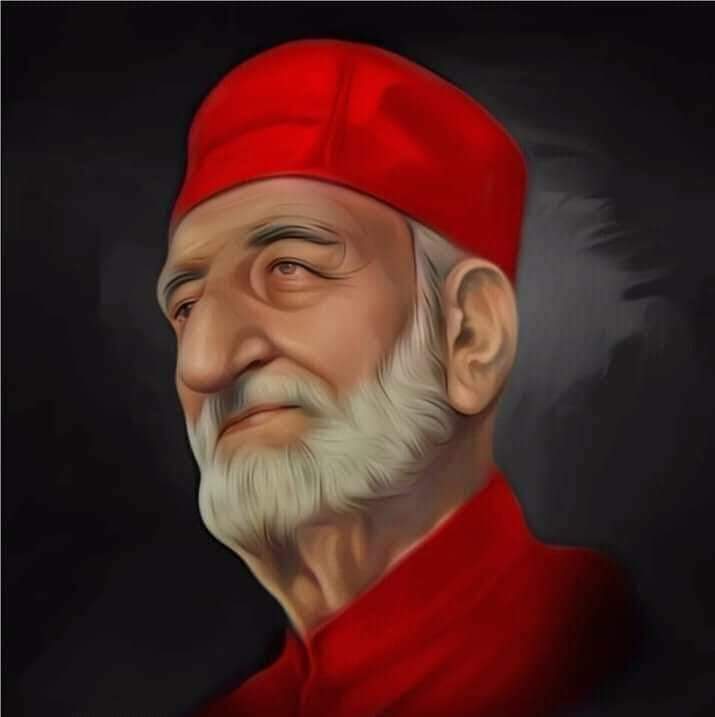
له نن څخه ۳۵ کاله پخوا د ۱۹۸۸ د جنورۍ په شلمه د خدايي خدمتګارانو د تحریک نامتو مشر، فخر افغان خان عبدالغفار خان د ۹۷ کلونو په عمر وفات شو.
پاچاخان د شلمې پېړۍ د عدم تشدد هغه بنسټګر او سرلاری مبارز و چې د خپلې مبارزې په دغه لاره کې يې ډېرې سختۍ وزغملې، خو له خپلې غوره کړې لارې يو قدم هم شاته نه شو. هغه داسې يو سوله غوښتونکی شخصيت و چې نن یې د نړۍ په ګوټ ګوټ کې خلک احترام ساتي او يو زيات شمېر پوهان د هغه د مبارزو د قدردانۍ په خاطر څېړنې کوي
د ایشین ایج په نوم په نوې ډېلي کې د خپرېدونکې ورځپاڼې سرمحرر انندسهای چې د افغانانو په اړه یې څېړنې کړې، ليکي چې خان عبدالغفارخان يوه ځانګړتيا درلوده او هغه دا چې په مقاومت يې باور لاره خو د عدم تشدد په مقاومت. د هغه پیغام دا و چې د دولتي دفتر په مخکې کېني، چارواکو ته ووایي، دا هغه څه دي چې خلک یې غواړي او ستاسو پالیسۍ سمې نه دي، لطفاً خپلې پالیسۍ اصلاح کړئ. که تاسو خپلې پالیسۍ بدلې نه کړئ، دی د لوږې اعتصاب کوي، همدلته کیني او نه ښوري. سهای ليکي:”څو ځلې خان عبدالغفارخان د استعماري پولیسو له خوا ووهل شو، خو ده ويل، تاسو ما وهلای شئ، خو د عدم تشدد پر مقاومت او زموږ پر شعار چې سوله ده، زموږ عقیده له موږ څخه نشئ اخیستلای.”
زوکړه او وقات يې:
عبدالغفار خان د بهرام خان زوی د فېبرورۍ په شپږمه، ۱۸۹۰ز کال کې، د اتمانزيو په ټبر، يوه سوله غوښتونکې پښتانه کورنۍ کې، په اوسني خبير پښتونخوا ايالت کې وزږېد او د جنورۍ په شلمه ۱۹۸۸ مېلادي کال کې ومړ.
پاچا خان څوګ دی؟
د عبدالغفار خان پلار بهرام خان په خپله سيمه کې د ځمکو څښتن خان او ملک وو. په هغه وخت کې د عبدالغفار خان لپاره د پلار او کورنۍ په شتو او مزو کې د راحت ژوند او هوساينې هر څه شته وو. خو عبدالغفار خان نرم بستر، سوړ او راحت خوب ونه کړ، د قوم او انسانيت په پار يې يو بله له ستونزو او کړونو ډکه لاره غوره او وټاکله.
د پاچا خان مبارزه:
عبدالغفار خان؛ د بريتانيوي راج او باج پر وړاندې د نه تاوترېخوالي مبارز او مشر، په جهالت او ناپوهۍ کې د پروت پښتون ولس لپاره د رڼا او زده کړو ښوونکی، د ظلم پر وړاندې غږ، خدايي خدمتګار، د محافظه کارۍ د کلتور پر وړاندې خنډ، د مذهب د ټېکه دارانو سر درد، د خپلواکۍ او يووالي نه ستړی کېدونکی سر لار او څاروان؛ پاچان خان شو.
پاچا خان کلي تر کلي، کور تر کور او تر دې چې، د ټولنې فرد ته يې ځان ورسولو؛ د نه تاوترېخوالی، د خپلواکۍ په پار مبازره، سوله – مينه، حوصله او وېښتيا يې ورته توصيه او لارښوونه وکړه.
وايي چې پا چاخان خپلو خلکو ته وويل، چې که چېرې له پوځ، پوليسو او زورواکو ويره لری، نو داسې وسله به درکړم، چې دوی به يې پر وړاندې مقاومت ونشي کړی؛ دا پيغمبري وسله ده، دا وسله د خدای له خدمتګارانو سره ده، دا وسله زغم، حوصله او عدالت دی.
پاچا خان اوږدې لارې په پښو وهلې، په ۱۹۱۵ کالنو کې يې د پښتونخوا ۵۰۰ کلي ولېدل چې بېده او ناخبره پرته دي، هر کلي ته لاړ ته د وېښتيا او مبارزې يې ورته وويل چې، پښتون وېښ شي، ځان او نړۍ جوړه کړي.
پاچا خان ناکامه سړی نه وو، پاچا خان په کم وخت کې پر ځان سل زره کسان راټول کړل، يون او خوځښت شو، د پاچا خان مبارزې مېوه ورکړه او رنګ يې راوړ. خو پاچاخان د خپلې مبارزې ميوه په لومړۍ ورځ، اونۍ، مياشت او کال کې نه ده تر لاسه کړې، پاچا خان وځورېدو، بندي شو، شنکجه شو، وګواښل شو او ستړی شو، خو ده ستړيا احساس نه کړه.
په ۱۹۳۰ کالنو کې، د بريانيوي راج پر وړاندې به مبارزه کې يې د پېښاور په قصه خوانۍ کې يې، کابو ۲۵۰ ملګري د بريتانيا د پوځ د مرميو ښکار شول، پاچا خان بندي شو، خو په عمل کې يې صبر، زغم، حوصله او نه تاوترېخوالی عملي کړ.
پاچا خان اوسني هند ته ورسېد، مهاتما ګاندي سره يې د يو فکر اړيکه ټېنګه شوه، هند ته يې د نه تاوترېخوالی غږ ورسوه. پاچا خان تر هغه له ګاندې سره وو چې په ۱۹۴۷ کې محمد علي جناح پاکستان را بېل کړ. د پاکستان او هند يو وجود او تجزيې، د پاچاخان مبارزه سړه نه کړه. د پاچا خان منزل، د نه تاوترېخوالي پر وسلې مبارزه او وېښتيا وه.
د پاچا خان ستړي ژوند او مبارزې؛ انسان، افغان او پښتون ته ډېر څه ور زده کړل، ډېر څه يې په لاس ورکړل او د ژوند ريښتنې مانا يې ورته وښودله.
د پاچا خان مبارزه که له ګاندې ډېره نه ده، نو کمه خو هېڅکله هم نه ده، خو ګاندي له مرګ وروسته بيا را ژوندی نه شو، چې خلکو ته ووايي، زما مبارزې وستايئ؛ او له ګاندي څخه ګاندېزم جوړ کړئ، بلکې وېښ ملت تر ې پاتې شو او ګاندي يې ګاندېزم کړ.
https://taand.net/?p=219510
#Pakistan - #PPP not to be part of any electoral coalition
Opinion: Pakistani foreign minister: ‘Democracy is the only way to take on terrorism’
By Lally Weymouth
https://www.washingtonpost.com/opinions/2023/01/19/bhutto-zardari-pakistan-interview/
Wednesday, January 18, 2023
Tuesday, January 17, 2023
Pakistan dispatch: femicide against members of religious minorities must be addressed
In Pakistan, there are multiple instances of gender-based violence every day. For women who have been victims of abuse, there appears to be a lack of justice. Domestic abuse, rape, and torture make up the majority of gender-based crimes. Just before the New Year, on December 28th, Daya Bheel, a member of the Bheel (sometimes “Bhil”) community who practised Hinduism, was gang-raped and killed in Sindh province. The perpetrators mutilated her body and dumped it in a wheat field. Due to the fact that Daya Bheel was a member of a marginalised group from a rural region of Pakistan, there hasn’t been any public uproar over her death.
Femicide refers to incidents when there has been a fatality or a murder. Numerous instances of femicide and gender-based violence have occurred in Pakistan and are still occurring, highlighting the appalling condition of women’s rights. Despite legislative progress to address this significant problem, the current situation is nevertheless dreadful and disturbing. Legislation alone, however, does not provide a remedy for the issue. The patriarchal ethos that has historically dominated Pakistani society as a whole has been used to justify different forms of violence against women. Pakistani men usually impose restrictions on women’s freedom and regard them as insignificant objects with little to no agency, controlling their choices at work and in their households.
It appears that women who belong to religious minorities, such as Daya Bheel, are suffering the most. Minority groups in Pakistan have been protesting against conversion or forced marriage as well as the femicide of local females. Religious minority populations suffer greatly from victimisation based on religion or belief, but minority women are especially susceptible to the ongoing femicide. The organization of political and religious fanaticism has recently occurred both within and outside of educational facilities. This political philosophy is presented as religious doctrine in an effort to enlist and inspire young males to commit acts of violence.
A notorious case from several years ago involved Sonia Bibi, who belonged to Pakistan’s Christian community. She was murdered in Punjab province by a Muslim man who she refused to marry. The murder of Sonia serves as a stark reminder of the peril that young girls and women, particularly those from Christian and other minority origins, suffer when pressured to marry and renounce their faith.
The socioeconomic fragility of the Hindu minority, such as poverty and social estrangement, is one of the reasons that contributes to their particular susceptibility to forced conversions. Furthermore, gender inequality and patriarchy negatively affect women from minority groups more than other groups, making it difficult for them to access education. Extremist Muslim groups exert influence over local power structures to maintain and institutionalize discriminatory practices against non-Muslim communities.
Pakistan’s federal and provincial governments have not demonstrated the necessary commitment to address this serious constitutional breach despite the rise of forced conversions. Despite possessing a legislative majority in the national assembly, the administration chose not to introduce this measure in parliament. Moreover, the police frequently ignore complaints of kidnappings, murders, and forced conversions, allowing offenders to go free. The majority-Muslim police forces are largely sympathetic to the objective of converting religious minorities. The families affected are frequently denied the opportunity to pursue their cases and complaints further because the police either refuse to file a First Information Report (FIR) or distort the information. An FIR is a crucial initial step in the Criminal Procedure Code, thus its absence or distortion prevents the family from seeking justice in the legal system.
Law students and law graduates in Pakistan are reporting for JURIST on events in that country impacting its legal system. University of London law graduate Mariyam Taher Qayyum files this dispatch from Islamabad.
UN to Pakistan: Curb Forced Conversions, Marriages of Religious Minority Girls

In a statement issued by the Office of the U.N. High Commissioner for Human Rights, the experts urged the Pakistani government to "objectively" investigate these acts in line with domestic legislation and international human rights commitments to hold perpetrators accountable.
The group of around 12 independent U.N rights experts includes the special rapporteurs on the sale and sexual exploitation of children, on violence against women and on minority issues, and on contemporary forms of slavery.
"We are deeply troubled to hear that girls as young as 13 are being kidnapped from their families, trafficked to locations far from their homes, made to marry men sometimes twice their age, and coerced to convert to Islam, all in violation of international human rights law," the statement said.
These acts are allegedly being committed under threat of violence to girls and women or their families. The experts said the so-called marriages and conversions take place with the involvement of Pakistani religious authorities and the complicity of security forces as well as the justice system.
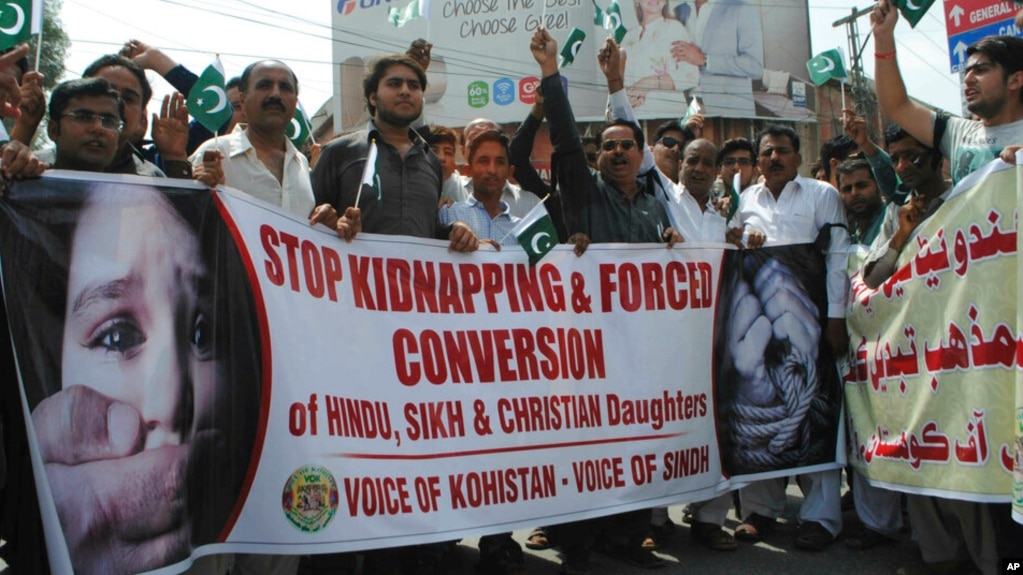
"Pakistani authorities must adopt and enforce legislation prohibiting forced conversions, forced and child marriages, kidnapping, and trafficking … and uphold the rights of women and children."
There was no immediate reaction from the Pakistani government to the U.N. statement.
Local and foreign human rights groups say forced conversion and marriage of young women from minority religions, including Hindus and Christians, is a growing problem in Pakistan.
Campaigners say perpetrators escape legal action because forced conversions are often portrayed as a religious issue in courts, with their lawyers arguing the girls have voluntarily converted to Islam.
Hundreds of such cases are reported in Pakistan every year. Victims are mainly from poor families and low castes.
Forced conversions of kidnapped Hindu girls and subsequent marriages to Muslim men — in most cases to abductors — are routine in southern Sindh province, hosting about 90 percent of the minority community.
Hindus make up 2 percent and Christians less than 1.5 percent of Pakistan's estimated population of 220 million.
Successive Pakistani governments have failed to outlaw forced conversions to protect religious minorities against such practices, mainly due to pressure from Islamic groups.
In October 2021, a parliamentary committee scrapped a proposed bill that would have criminalized forced conversions by proposing up to 10 years of imprisonment.
"Noting Pakistan's previous attempts to pass legislation that will prohibit forced conversions and protect religious minorities, the experts deplored the ongoing lack of access to justice for victims and their families," the U.N. statement said Monday.
https://www.voanews.com/a/un-to-pakistan-curb-forced-conversions-marriages-of-religious-minority-girls/6920855.html
Monday, January 16, 2023
نومیالی وکیل او سیاستوال عبداللطیف اپرېدی وژل شوی دی
روغتیايي چارواکي وايي چې نومیالی وکیل، ملتپاله سیاستوال او د بشري حقونو فعال عبداللطیف اپرېدی په پېښور کې په وسلوال برید کې وژل شوی دی.
د لېډي رېډنګ روغتون ویاند محمد عاصم مشال راډیو ته وویل چې وسلوالو ۸۰ کلن اپرېدی د جنورۍ پر ۱۶مه ماسپښین مهال په پېښور های کورټ کې وویشت.
دی وايي، په پېښور کې د مرستندویه او ژغورنې ادارې ۱۱۲۲ کارکوونکو نوموړی په ژوبل حالت کې روغتون ته لېږداوه خو هلته تر رسېدو مخکې یې سا ورکړه.
د پولیسو یوه چارواکي چې له رسنیو سره یې د خبرو اجازه نه لرله، د نوم نه ښوولو په شرط یې مشال راډیو ته وویل چې د پېښې په ځای کې یې د حملې په تړاو یو مشکوک کس هم نیولی دی.
د پېښور د پولیسو د عملیاتي چارو چارواکي کاشف افتاب هم له خبریالانو سره په خبرو کې تایید کړه چې مشکوک بریدګر یې نیولی دی.
ده زیاته کړه چې د پېښې هراړخیزه پلټنې کوي چې دا معلومه کړي چې بریدګر د عدالت ودانۍ ته د وسلې په وړلو څنګه بریالی شو او دا چې د غفلت کوونکو پرضد به کاروايي کوي.
په عدالت کې یوه عیني شاهد او وکیل خادم اکرام مشال راډیو ته وویل چې یو کس چې د وکیلانو جامې یې اغوستې وې پر لطیف اپرېدي ډزې وکړې او بیا هلته ناستو نورو وکیلانو ونیو او پولیسو ته یې وسپاره.
تر اوسه معلوم نه دی چې پر اپرېدي حمله چا او ولې کړې ده او د وژنې ذمه واري یې هم چا نه ده منلې.
پر ټولنیزو شبکو یوشمېر ویډیوګانې خپرې شوې دي چې پکې ښکاري چې ځینې کسان لطیف اپرېدی له پېښور های کورټه په ژوبل حالت کې امبولانس ته لېږدوي.
اپرېدی د پاکستان له نومیالیو وکیلانو، سیاستوالانو او د بشري حقونو فعالانو یو وو. نوموړی د ۲۰۲۰ز کال په اکتوبر کې د سپریم کورټ د وکیلانو ټولنې (سپریم کورټ بار اسوسیېشن) مشر منتخب شوی وو.
له دې پرته، اپرېدی له څه د پاسه پینځه لسیزو راهیسې د پښتون ملتپاله سیاستوال په توګه مبارزه کړې وه. عوامي نیشنل ګوند په ۲۰۱۹ز کال کې د اختلافاتو له کبله د نوموړي غړیتوب ختم کړی وو. دی هغه مهال د ګوند د وکیلانو د څانګې مشر وو.
اپرېدی تر دې وروسته د ملي جمهوري غورځنګ (اېن ډي اېم) غړی شو او دا راز یې په ۲۰۱۸ز کال کې د پښتون ژغورنې غورځنګ (پي ټي اېم) له جوړېدو راهیسې د هغه تحریک ملاتړ کاوه او د وکیل په توګه یې د پي ټي اېم د یوشمېر ګرفتارو غړو مقدمې پر مخ وړې.
لطیف اپرېدی په ۲۰۱۸ز کال کې د پي ټي اېم د هغې ۳۰ کسیزه جرګې غړی هم وو چې د پاکستان له حکومت سره یې مذاکرات کول.
لطیف اپرېدی د قامي اسمبلۍ غړی هم ټاکل شوی وو او د سیاسي مبارزې پر مهال یې بند هم تېر کړی وو.
د ملي جمهوري غورځنګ مشر محسن داوړ پر ټوېټر په بیانونو کې د اپرېدي د وژنې د غندنې تر څنګ لیکلي دي چې د نوموړي جنازه د جنورۍ پر ۱۷مه سهار ۱۱ بجې د پېښور د حیات اباد په ناران باغ کې کېږي.
غبرګونونه
د پیپلز ګوند شریک مشر او پخواني ولسمشر اصف علي زرداري په بیان کې د اپرېدي وژنه غندلې ده او ویلي یې دي چې د "جمهوریت بحالۍ" لپاره د نوموړي "مبارزه نه هېرېدونکې ده" او دا چې هغه به مسلسل د "ترهګرۍ خلاف" غږ پورته کاوه.
د جماعت اسلامي سیاستوال او سېنېټر مشتاق احمد خان پر ټوېټر په بیان کې د اپرېدي د "قتل غندنه" کړې ده او ویلي یې دي چې په خیبر پښتونخوا کې د امنیت وضع خورا خرابه ده.
د مسلم لیګ (ن) مخکښې مشرې مریم نواز پر ټوېټر لیکلي دي چې لطیف اپرېدي په پاخه عمر او د "ناروغۍ په حالت کې هم وکالت" ته دوام ورکړی وو او د پاکستان د عدلیې یو "توانا غږ" وو.
مریم نواز په بیان کې پوښتنه کړې ده چې "څنګه یو څوک کولای شي چې د عدالت په ودانۍ کې دننه یو مشر او بزرګ شپږ مرمۍ ویشتلای شي؟"
نومیالۍ خبریالې عاصمه شېرازۍ پر ټوېټر لیکلي دي چې "لطیف اپرېدی لالا د بشري حقونو، د ملکي یا سېولیین بالادستۍ او د جمهوریت او جمهوري ارزښتونو علمبردار وو."
شېرازۍ د اپرېدي پر وژنه د خپګان څرګندونه کړې ده.
بل خبریال حامد میر هم پر ټوېټر په بیان کې د نوموړي مړینه غندلې ده او زیاته کړې یې ده چې پر اپرېدي برید د هغو خلکو لپاره د "شرم وړ" دی چې د خیبر پښتونخوا امنیتي وضع "عادي" بولي.
د خیبر پښتونخوا د لوړو زده کړو چارو وزیر کامران بنګښ پر ټوېټر په بیان کې د اپرېدي قتل غندلی دی او ورته یې دوعا کړې ده.
د افغانستان د ملي امنیت د سلاکار پخواني ویاند کبیر حقمل هم پر ټوېټر په بیان کې د اپرېدي پر وژنه خپګان ښوولی دی او زیاته کړې یې ده چې هغه د "محکومو پښتنو له مهمو مدافعینو یو وو."
د لطیف اپرېدي لنډ ژوندلیک
لطیف اپرېدی چې په لطیف لالا مشهور وو په ۱۹۴۲ز کال کې د خیبر ضلعې د تیرا میدان په قمبرخېلو کې زېږېدلی وو خو له لومړنیو څخه یې تر پوهنتونه ټولې زده کړې په پېښور کې کړې وې.
ده له پېښور پوهنتونه د اقتصاد او له خیبر لا کالجه یې د قانون بریلیکونه یا ډېګرۍ تر لاسه کړې وې.
عبداللطیف اپرېدی په ۲۰۱۹ز کال کې د مشال راډیو په "جمهوري غږونه" خپرونه کې ویلي ول چې د خدايي خدمتګار تحریک یو مخکښ غړي مولانا فضل محمود مخفي وراره مولانا فتح الرحمان یې ښوونکی وو چې ورته یې سیاسي شعور ورکړ.
دی په ۱۹۶۰ز لسیزه کې په ښوونځي کې وو چې د باچا خان د تحریک ملګری شو. په کالج کې نوموړی د کیڼ لاسي نیشنل عوامي پارټۍ (نیپ) له مخکښه مشرانو سره ملګری شو او سیاسي مبارزې ته یې دوام ورکړ.
اپرېدي مشال راډیو ته ویلي ول چې په ۱۹۷۷ز کال کې پخواني پوځي مشر جنرال ضیا الحق د هغه وخت د وزیراعظم ذوالفقار علي بوټو منتخب حکومت ړنګ کړ او پوځي قانون (مارشل لا) یې نافذ کړ چې پرضد یې ملتپاله او کیڼ لاسو ګوندونو او سیاستوالانو مبارزه پیل کړه چې جمهوریت بحال کړي.
The Tehreek-e-Taliban Pakistan Is Back. Washington Should Take Note.

By Harris Samad
The circumstances are dangerously ripe for a destabilizing element to shift the strategic balance in South Asia, with global consequences.
The Tehreek-e-Taliban Pakistan, also known as the TTP or simply the Pakistani Taliban, has wreaked havoc since the takeover of Afghanistan by the Afghan Taliban.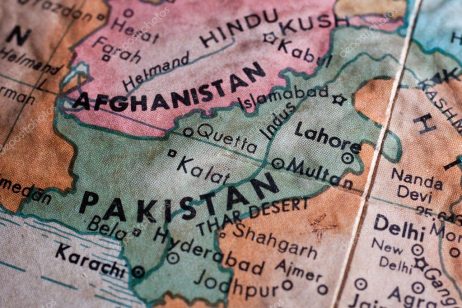
Following years of attacks that killed thousands of Pakistani civilians and service members, the TTP was driven out of Pakistan by the Zarb-e-Azb military offensive in 2014. For a time, the group was mostly quelled. But the TTP has seen a major resurgence since its main benefactor, the Afghan Taliban, once again took the helm in Kabul.Voice of America reports that “violence claimed by or blamed on the TTP and other militant groups killed almost 1,000 Pakistanis, including nearly 300 security forces, in some 376 terrorist attacks in 2022.” This represents an approximately 50 percent increase since the Taliban came to power in Afghanistan.The TTP and the Afghan Taliban’s shared history and overlapping ideology make them an especially dangerous combination for South and Central Asia as well as the international community. Furthermore, the TTP embodies a fast-growing militant ecosystem in the region where other transnational organizations with a historic focus on Western targets, such as al-Qaeda in the Indian Subcontinent (AQIS) and Islamic State Khorasan Province (ISKP), can continue building operational capacity. Consequently, the United States must pay attention to the TTP and the militant resurgence it represents for three key reasons. With huge historic operational capability, strong political capital, the backing of a neighboring de-facto regime armed with more than $7 billion worth of U.S. military equipment, and a host country suffering multiple intersecting crises, the TTP has a window of opportunity to destabilize Pakistan — and by extension, the entire region — that it never had before. Though it may be mainly Pakistan paying the price right now, that the TTP is being allowed to flourish in Afghanistan means that the Afghan Taliban is, in fact, comfortable with transnational militant groups basing their operations in Afghanistan. That constitutes a violation of the 2020 Doha agreement in which, rather questionably, the United States and the Afghan Taliban agreed that the latter would not allow Afghanistan to serve as a launch pad for such activity. One can reasonably infer that Washington has not taken notice simply because these destabilizing elements have not directly impacted the West. To assume that this will be the case in perpetuity, however, is running on blind faith. In the end, whether hosting the TTP reflects intentional Afghan Taliban support, an inability to secure the country, or some combination of the two, the outcome is the same: Today it’s the TTP targeting Pakistan, but tomorrow it could be AQIS or ISKP planning coordinated attacks based out of Afghanistan and Pakistan with their global affiliates in other regions, including the West. Perceived U.S. Disengagement With Pakistan Has Not Gone Unnoticed The TTP and other organizations see that the tangible and rhetorical umbrella provided to Pakistan by the United States in the past has significantly diminished, reflecting the frosty state of Pakistan-U.S. relations in recent years. Although one can infer that this is part of the reason Islamabad is so hesitant to push the TTP (instead accommodating the group through multiple rounds of failed negotiations), it also indicates that a peaceful resolution is unlikely. Yet more concerningly, the consequence of these failed negotiations is a TTP with stronger footing and capacity on Pakistani soil combined with the “clout” of having out-negotiated the government. In this context, if Islamabad is to resume direct military action against the TTP and send a signal to the Afghan Taliban (as well as ISKP and AQIS) that there are formidable forces up against them, the support of the international community would benefit these efforts and help to promote a secure, stable region, a common interest among all parties. This provides a window of opportunity: Washington and Islamabad have both signaled an interest in reconciling following years of deteriorating relations. Supporting Pakistan’s government in the fight against militancy not only pushes back on recently expanded footing found by the TTP and its peers, but it also provides an opening for broader rapprochement in this longstanding but troubled bilateral relationship. A Destabilized Pakistan Will Negatively Impact Regional and International Security The TTP is a direct threat to regional stability. Given the Afghan Taliban’s clear willingness to host transnational terrorist groups, the reality is that Afghanistan will likely become an epicenter of militancy with the capability of destabilizing Pakistan and, by extension, its neighborhood. Militant attacks have nearly sent nuclear-armed India and Pakistan to war on numerous occasions, including in 2008 and 2019. The TTP is arguably even more potent than Lashkar-e-Taiba and Jaish-e-Mohammad, though, and as a result other transnational militant groups such as ISKP and AQIS will look to this example, as well as to the Pakistani government’s ceding of space to extreme elements, and take inspiration. And this is hardly the only crisis Pakistan faces. A dire economic situation, catastrophic floods last year which put one-third of the country under water and devastated millions of livelihoods, collapsing foreign exchange reserves, skyrocketing inflation, and myriad other challenges constitute an incredibly fragile country context, which, as Uzair Younus puts it, is “at odds with itself, and adrift globally.” The circumstances are dangerously ripe for a destabilizing element to shift the strategic balance in South Asia. The international community cannot ignore the warning signs any longer.
https://thediplomat.com/2023/01/the-tehreek-e-taliban-pakistan-is-back-washington-should-take-note/
#Pakistan #PPP - Sindh LG polls: PPP emerges biggest winner in Karachi with 93 wins; JI a close second with 86

The PPP emerged the biggest winner with 93 seats and the Jamaat-i-Islami a close second with 86 seats as the Election Commission of Pakistan (ECP) on Monday released the final consolidated results of all 235 union committees (UCs) in Sindh’s Karachi division after close to a 30-hour wait.
Polling in the provincial capital was held on Sunday for the posts of chairman and vice chairman.
According to the complete results, the PTI was a distant third with 40 seats, followed by the PML-N with seven seats.
Independent candidates and the Jamiat Ulema-i-Islam won three seats each, the Tehreek-i-Labbaik Pakistan took two seats whereas Muttahida Qaumi Movement-Pakistan secured a single seat for itself, despite an earlier boycott of the local body polls announced by the party.
The electoral body had earlier said that the remaining results would be released by Monday evening, adding that it was “a complicated process and it takes time to prepare the result of one union council”.
The JI announced a nationwide series of protests and rallies in different cities against what it alleged was tampering with Karachi’s results.
JI Karachi chief Hafiz Naeem claimed that his party secured the biggest number of seats. He alleged that eight seats were “given to the PPP”, saying that the JI had the signed Form 11s of those UCs to prove it.
He claimed that the party’s total seats were actually 94 and it had appealed for a recount in 10 seats.
On Jan 15, the second phase of the local government elections in Sindh was held in 16 districts of Sindh — East, West, South, Central, Korangi, Keamari, and Malir of the Karachi division; and Hyderabad, Dadu, Jamshoro, Matiari, Tando Muhammad Khan, Tando Allahyar, Badin, Sujawal, and Thatta of the Hyderabad division.
However, the polls came under a question mark on Sunday night when contesting parties — primarily the PTI and the JI — alleged that the results of the polls were deliberately being delayed in Karachi.
The PTI openly accused the PPP, provincial administration and the electoral body of wrongdoing, warning that any attempt to “change the results” after voting would lead to a strong reaction.
JI had come up with the same reservations and allegations. Hafiz Naeemur Rehman, the party’s Karachi chief, held at a hurriedly called press conference in Karachi on Sunday night and warned of sieging the polling stations where he said results were deliberately being delayed “to manage things”.
In Hyderabad and rural districts of the province, the key contestant Grand Democratic Alliance (GDA) — an umbrella of different political parties representing the opposition — rejected the electoral process and demanded “immediate intervention” of the state institutions. It also blamed the ECP for facilitating the ruling PPP in rigging and violation of the code of conduct.
On the other hand, the PPP accused the PTI of violating the rules and going beyond all set rules to sabotage the peaceful process, mainly in Karachi.
In a media statement issued by Sindh Election Commissioner Ejaz Anwar Chauhan today, the ECP said the results were being transferred to the offices of returning officers from all polling stations.
“Each union council consists of four wards and around 20 polling stations, and the final result of a UC remains incomplete if a result sheet of even one polling station is left,” the ECP said.
The provincial election commissioner informed that each RO had at least five UCs, which “is causing a delay in releasing the poll results”.
Chauhan said the results were being prepared on an excel sheet on computers, reminding critics that there was no result transmission system (RTS) in place during the local government elections.
It is pertinent to mention here that the RTS purportedly “malfunctioned” on the night of the 2018 general elections, prompting widespread rigging allegations. At the time, the ECP had to revert to the traditional method of counting votes in the absence of the transmission system.
In a media talk later today, Chauhan elaborated that each returning officer had five to six UCs to oversee, which in turn had 5 constituencies. This meant that if an RO had 5 UCs, they had 25 constituencies.
The ECP official highlighted that Forms 11 and 12 had to be prepared for each of those constituencies, terming the process “time-consuming” and involving “extensive labour”.
“The election commission is aware of its constitutional duties and is sincere in holding free, fair and transparent elections. We have left no stone unturned in this,” he asserted.
“God willing, the results of all 246 union committees of Karachi will be ready by today evening,” Chauhan vowed.
JI victorious on over 100 seats in Karachi, says party chief
In a press conference on Monday, Rehman claimed that his party had emerged victorious on over 100 seats in Karachi while there was confusion in the results of nearly 10 to 15 union councils.
“We have evidence that we are heading towards clear victory,” he told reporters in Karachi.
Rehman alleged that the returning officers were “withholding results” and attempts were being made to manoeuvre them.
“I spoke to the authorities yesterday, including ECP officials. The chief minister also called and assured me that this issue will be resolved. However, 18 hours have passed and the results have still not been released,” he said.
The JI chief demanded that ROs “trying to tamper results” must be stopped and demanded the ECP take notice.
“I am not talking on hearsay. My party worked hard [for the elections] and we ran a campaign. We were the only party that wanted elections. We put in the effort and ensured that the elections were held. We praised the ECP when it fulfilled its responsibility. But if you do something wrong, we will expose you as well.”
Rehman also warned the PPP and ECP against depriving people of their rights. “If you want to talk, sit and resolve this matter […] but you must do things with discipline […] we should be given our rights and this matter should be resolved in the next few hours,” he said.
The JI chief added that if the process of counting votes continued on merit, his party would be able to bring its mayor to Karachi.
“But attempts are being made to turn us into a minority. I want to tell the chief election commissioner, Bilawal, CM and election staff to not take measures that force us to stage a protest,” Rehman added.
PTI rejects results, demands resignations
Meanwhile, PTI Sindh President Ali Haider Zaidi said that his party rejected the LG election’s results due to “rigging and political engineering”.
Addressing a press conference in Karachi, he said, “Since no one in this city is accepting the results, the PTI rejects the results.”
He said his party would have “gladly accepted” any result, had it been fair.
Zaidi demanded that the chief election commissioner resigns from his post as he was a “dishonest person and an extension of the PDM”.
Addressing Sindh Inspector General (IG) Ghulam Nabi Memon, he said, “IG sahab, […] it was your responsibility to hold the elections honestly without listening to any MNA, MPA, minister [or] political engineer.
“You failed before and have failed again. I demand your resignation as well.”
Moreover, the PTI leader demanded Karachi Additional Inspector General (AIG) Javed Odho to resign, saying: “AIG Karachi sahab, I have had cordial relations with you for the past 15-17 years […] you also failed [so] you should also resign. I demand your resignation as well.”
Zaidi added, “You should leave the post if you cannot handle the pressure when calls come from above.”
The PTI leader lambasted the PPP for “rigging the elections” and claiming victory through “political engineering and manipulation of votes”.
PPP not to enter talks with PTI for Karachi mayor: Saeed Ghani
Separately, Sindh Labour Minister Saeed Ghani said the PPP will not enter into any negotiations with the PTI for securing the coveted position of Karachi’s mayor.
Addressing a press conference at the Sindh Assembly building on Monday, Ghani, who is also the PPP Karachi president, conceded that “no single political party on its own” could secure the mayoral post.
He said the people of Karachi had “exposed the reality of the results of rigged general elections held in 2018” by choosing the PPP as the “largest party in the local government polls”.
Ghani said that as per the unofficial results, the PPP had emerged victorious in over 100 UCs in Karachi.
He also congratulated JI and Rehman for remaining the runner-up in the polls, saying the people of the city had also shown their confidence in the party.
To a question, Ghani said it had been the PPP’s desire that the MQM-P should not have boycotted the local government polls.
He said the people of Karachi had proved “utterly wrong” the impression that the PTI was the popular political party in the provincial capital.
Meanwhile, PPP Chairperson Bilawal Bhutto Zardari thanked the people of Karachi and Hyderabad who he said helped the party “sweep” the polls.
Earlier, Minister for Climate Change Sherry Rehman congratulated party supporters today on the “victory of the PPP in the second phase of the local government elections”.
“The arrow is leading the way in Karachi, Jamshoro, Hyderabad, Dadu, Johi, Sehwan, Khairpur Nathan Shah, Matiari, Thatta and other areas,” she tweeted.
Rehman said, “the results of local body elections so far revealed that the PTI has received a historic defeat”.
The people of Sindh have chosen the PPP and have once again rejected the so-called narrative of the PTI, the minister added.
Polling
On the polling day yesterday, political tension remained high as one of the major parties in Karachi and Hyderabad, the Muttahida Qaumi Movement-Pakistan (MQM-P) had boycotted the polls just hours before the polling was scheduled to start.
The polling was held in 16 districts of Sindh including Karachi, Hyderabad and Thatta divisions.
A total of 17,862 candidates took part in the elections, out of which 9,057 were in Karachi, 6,228 in Hyderabad and 2,577 in Thatta district.
Due to the deaths of 23 candidates and the election of seven candidates unopposed in seven Karachi districts, polling was held on 1,200 out of the 1,230 seats of chairman, vice chairman and ward member.
The term of the local governments in Sindh expired on August 30, 2020, and the commission was under a constitutional and legal obligation to hold elections within 120 days after the expiry of the tenure.
The second phase of the local government elections in Sindh was scheduled to take place on July 24, but it was postponed due to unprecedented rains and flooding in the country, particularly in Sindh. The electoral body rescheduled the LG elections for August 28, but they were put off again for the same reason. On Nov 22, the election watchdog announced that the second phase of the polls would be held on Jan 15.