Wednesday, September 21, 2022
Tuesday, September 20, 2022
‘Peaceful Afghanistan is Pakistan’s priority’: Foreign Minister Bilawal Bhutto

The two sides acknowledged the need for continued cooperation on the shared objectives of sustained efforts and engagement of the international community to alleviate the suffering of the Afghan people and promote regional peace and stability.
‘Peaceful Afghanistan is Pakistan’s priority’: FM Bilawal
Pakistani-American Delegation, Including Former Minister, Lands in Israel
The Pakistani delegation, which also includes members of Muslim-American peace groups, is currently in Israel despite a lack of formal diplomatic ties between the two countries. A delegation of Pakistani-Americans, including a former government minister, arrived in Israel on Tuesday, less than a year after a prominent Pakistani journalist was fired following his visit to Jerusalem and meeting with Israeli President Isaac Herzog. The delegation consists of members of the American Muslim and Multifaith Women’s Empowerment Council (AMMWEC) and Sharaka, an NGO founded in the wake of the Abraham Accords to embed people-to-people normalization between Israel and Muslim-majority states. Among those visiting is Dr. Nassim Ashraf, the ex-head of the Pakistan Cricket Board and a former Pakistani Minister of State for Human Development. In a statement reported by the Pakistani news site propakistani.pk, Ashraf said that he was “delighted and honored” to take part in a delegation intended “to promote peace and interfaith dialogue.” “Such people-to-people contacts,” he said, “are very important to develop understanding and harmony between Abrahamic Faiths to which we belong.” Anila Ali, the president of AMMWEC and a Sharaka board member, told the site that “we must continue our work to build peace on a people-to-people connection to promote the Abraham Accords in Muslim countries,” including between Israelis and Pakistanis.“The aim of the trip is to allow the participants to see and explore Israel for themselves, and to transmit what they learn and experience to audiences in Pakistan to help provide information for the important debate underway on whether Pakistan should join the Abraham Accords,” she said, adding that “due to the tragic flooding in Pakistan, much of the visit will focus on life-saving technologies developed in Israel relating to water and food security and to mitigating climate and environmental disasters.” Israel and Pakistan have made overtures to each other in the past, most notably when the country’s foreign ministers met in Istanbul in 2005 following Israel’s withdrawal from the Gaza Strip. But there hasn’t been any major public push to bring the countries closer, even as Israel has tightened ties in recent years with India. Antisemitism and anti-Israel rhetoric is common in Pakistan and every Pakistani passport includes a warning in bold letters that it is valid for all countries except Israel. Just last year, during an interview with CNN, Pakistan’s former Foreign Minister Shah Mahmood Qureshi alleged that Israel had "deep pockets" and "they control the media.” The trip comes only months after journalist Ahmed Quraishi was fired after participating as part of a previous AMMWEC/Sharaka delegation of mostly Pakistani expatriates living in America that travelled to Israel. Among those who assailed the visit was Pakistan’s ousted Prime Minister Imran Khan, a former cricket star turned Islamist politician who was voted out of office in April. Khan claimed the visit to Jerusalem meant to pave the way for Pakistan’s eventual recognition of Israel — something the delegation denied. The government has also said there are no plans to establish ties with Israel. At the time, Anila Ali defended the visit, telling The Associated Press that they only sought to reconcile Muslims and Jews. Ellie Cohanim, the head of the Mukhayriq Initiative, a U.S.-based non-government organization devoted to promoting Muslim-Jewish relations, told the AP that after criticism from Khan, “Quraishi began to receive threats to his life” — even though he was only doing the “job of any good journalist, (which is) to seek information on the ground, and to understand issues first-hand.” Writing in Haaretz following the trip, Hamza Azhar Salam, a Pakistani journalist based in London, reported that Quraishi told him that “all Israelis we met went the extra mile to show us that they have nothing against Muslims, that they respect Muslims, they respect Palestinian Muslims, they respect Muslims from other countries in the world, they would like to make the experience of local Palestinians and visitors from outside who want to visit [Jerusalem’s] Masjid al-Aqsa and the Dome of the Rock and other holy sites as smooth as possible." According to i24 News, an unnamed senior Indonesian official is also currently visiting the country. This follows a prior delegation this January which made a rare visit to Israel recently to discuss coronavirus strategies.Israel and Indonesia do not have diplomatic relations, but for years there have been back-channel overtures to establish official ties. Indonesia has refused to normalize relations with Israel until the establishment of an independent Palestinian state, and has been a staunch supporter of the Palestinians. The United States has been urging Indonesia and Israel to establish full diplomatic relations as part of the Abraham Accords.
https://www.haaretz.com/middle-east-news/2022-09-20/ty-article/.premium/pakistani-american-delegation-including-former-minister-to-visit-israel/00000183-5a58-d1c8-ade3-ffd91a640000
Sunday, September 18, 2022
د زامنو په زېږون خوشالي او د نجونو پر پیدا کېدو خپګان ولې؟
د مشال راډیو د ځانګړي پاډکاسټ "نا ویلې خبرې" په لومړۍ برخه کې پر دې غږېدلي یو چې په پښتني ټولنه کې اکثر د لوڼو پرتله د زامنو زېږون ته ولې ارزښت ورکول کېږي او د نجلۍ پیدایښت ولې د ځینو خلکو د خپګان لامل کېږي؟ له دې پرته دا هم اورئ چې د پوهاوي او تعلیم باوجود خلک ولې تر اوسه زامن د خپلې کورنۍ راتلونکې لپاره مهم بولي او لوڼو ته حقونه نه ورکوي. په خپرونه کې د پېښور یوه اوسېدونکې شاه سلطانه، د ماشومانو د حقونو مبارز عمران ټکر، تاریخپوه نورالامین یوسفزی او د ښځو د ناروغیو متخصصه ډاکتره شهلا مندوخېل مېلمانه دي. خپرونه په لېنک کې واورئ.
Pakistan floods: Medicine shortages threaten health crisis

Waterborne diseases are spreading in northwestern Pakistan as floodwaters recede. Doctors do not have enough medicine to treat displaced people living in crowded camps.
Gul Makai from Swat district in the northwestern Pakistani province of Khyber Pakhtunkhwa was forced from her home after floodwaters inundated her village.Although the waters have receded, the flooding has left behind unsanitary conditions in which dangerous pathogens can easily spread. Medicine and clean water are scarce in this remote area of Pakistan.Makai is staying in a flood shelter 3 miles (4.8 kilometers) from her home and tries to cool her crying infant son with a handheld fan.The 11-month-old fidgets on a plastic floor mat constantly scratching his skin, which has been infected with scabies. Two of her other children are also infected. The ailment is spread by microscopic mites that burrow into the skin."Look at the rashes and scabs on his body. He scrapes them with fingers and cries, while the humid heat adds to his misery in this tent," Makai told DW. The temperature hovers around 30 degrees Celsius (86 degrees Fahrenheit) with 60% humidity.
Flood destruction displaces communities Much of Swat district is situated in a river valley surrounded by mountains and it was one of the worst hit areas in northern Pakistan by last month's record flooding, which washed away infrastructure and houses.Local authorities set up tent camps for displaced people on the grounds of a school. Makai said she received medicated cream for scabies after arriving at the camp, but was not given any further medical assistance.Cholera, diarrhea and dysentery are also spreading in the displacement camps due to lack of clean water. Nauman Khan from the Pakistan Islamic Medical Association (PIMA), a medical NGO, told DW at a camp in Swat's capital, Saidu Sharif, that stagnant rainwater used for drinking and washing was spreading disease. Cases of mosquito-borne dengue fever have also been reported. Khan said mosquito nets and repellent are needed. He added that women are also unable to maintain menstrual hygiene, as pads and tampons are not available. "I detected eight cases of yeast infection in just one day and found the repeated use of a piece of cloth [by menstruating women] caused it," he said. Women are also unable to access pain relievers. A 23-year-old woman told DW anonymously that the tablets and herbal tea normally used to treat menstrual pain are not available. "We have to drink warm water or walk around for relief, but those home remedies fail to save us from the embarrassment of men knowing about a matter very private for us," she said. Medicine in short supply Aid organizations say more medicine is urgently needed to stop the spread of waterborne diseases after the flooding. Pharmacies are out of painkillers, antibiotics, and medicines for skin and gynecological issues, diabetes and eye infections. Asadullah Khan, an aid worker from the Pakistani social welfare charity Edhi Foundation, told DW that many of his acquaintances in Swat have contacted relatives in other parts of Pakistan hoping to acquire insulin and other medicine, only to find pharmacies are out of stock.Khan, who is based in the Swat valley's northern Kalam region, added a World Health Organization (WHO) team visited a local hospital and promised provision of essential medicines and other goods.Pharmaceutical companies have blamed the government for drug shortages, as a price cap has raised the cost of production and led to suspended manufacturing."When a finished product costs us [companies] more than the allowed price, how we will continue manufacturing it? It's the simple principle of doing business," Pakistan Pharmaceutical Manufacturers Association chairman Hamid Raza told DW. He added the issue would be resolved if the government hiked prices in proportion to inflation. Swat District health officer Mohammad Saleem Khan told DW that a health crisis could spread out of control if medical supplies are not provided soon. "We [health department] are trying our best to ensure the availability of medicines but things are fast worsening. We need more medicine," he said.https://www.dw.com/en/pakistan-floods-medicine-shortages-threaten-health-crisis/a-63131924
3.4 million children in Pakistan need ‘immediate, lifesaving support’ after floods: UNICEF

By Sophia Saifi, Jake Kwon, Larry Register and Heather Chen
“Super floods” in Pakistan have left 3.4 million children in need of “immediate, lifesaving support,” according to UNICEF.
The floods – caused by record monsoon rains and dubbed by one minister as “the worst humanitarian disaster in a decade” – have impacted 16 million children in total, UNICEF’s Pakistan Representative Abdullah Fadil said following his visit this week to the country’s southern Sindh Province.That estimate came as the country’s National Disaster Management Authority updated the death toll from the floods since mid-June to 1,545 people, 552 of them children. Meanwhile, officials in the country warn that toll is likely to rise as deaths are being under reported and diseases like dengue fever are on the rise. Azra Pechuho, health minister for the southern Sindh Province – one of the hardest hit areas where many schools and other facilities remain shut, said there was now a “state of emergency” caused by the vast amount of standing water, which provides the perfect breeding conditions for Aedes mosquitoes to spread the dengue virus. UNICEF’s Fadil said the situation on the ground in Sindh was “beyond bleak” with many malnourished children battling diseases like diarrhea, malaria and dengue fever, as well as painful skin conditions. “Girls and boys in Pakistan are paying the price for a climate disaster not of their making,” Fadil said. “Young children are living out in the open with their families with no drinking water, no food and no livelihood – exposed to a wide range of new flood related risks and hazards,” Fadil said. Mothers, many exhausted, anemic and malnourished, were also unable to breastfeed their babies. “Vital infrastructure … has been destroyed and damaged, including thousands of schools, water systems and health facilities,” he added.https://www.cnn.com/2022/09/17/asia/pakistan-flood-death-roll-rise-dengue-fears-intl-hnk/index.html
وزیرِ خارجہ بلاول بھٹو زرداری آج امریکا پہنچیں گے
پاکستان پیپلز پارٹی کے چیئرمین اور وزیرِ خارجہ بلاول بھٹو زرداری آج امریکا

کے دارالحکومت واشنگٹن ڈی سی پہنچیں گے۔
سفارتی ذرائع کے مطابق بلاول بھٹو زرداری نیویارک میں جنرل اسمبلی کے اجلاس میں شرکت کریں گے۔
بلاول بھٹو نیویارک میں امریکی ہم منصب سمیت مختلف ممالک کے وزرائے خارجہ سے ملاقاتیں بھی کریں گے۔
وہ بحیثیت چیئرمین پاکستان پیپلز پارٹی امریکا میں پارٹی پروگراموں میں بھی شرکت کریں گے۔
Friday, September 16, 2022
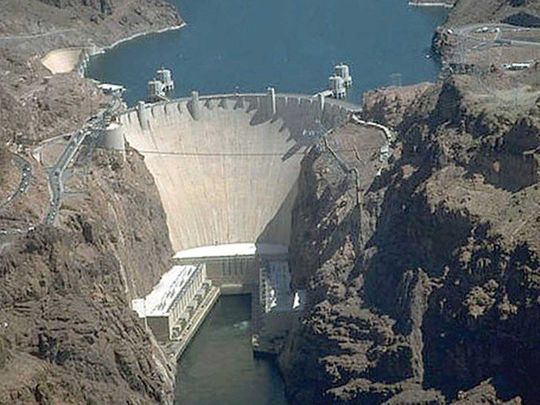
Pakistan Collected $40 Million For Dam, Spent $63 Million On Its Ad: Report
Bilawal Bhutto hopes Pakistan will get off FATF grey list, says “we want to tackle terrorism”
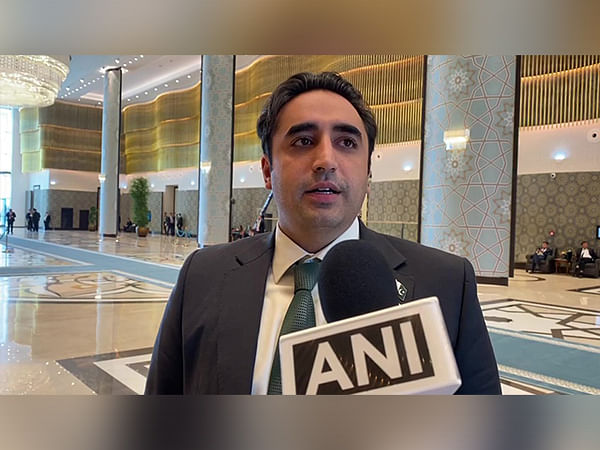
Speaking to ANI, Bilawal Bhutto who is in Samarkand to connection with the Shanghai Cooperation Organisation (SCO) summit, said that Pakistan wants to fight terrorism and extremism and this is a priority not due to FATF listing or the international community but for the people of his country. “We hope that Pakistan will get off the FATF list. We want to tackle terrorism. It is our priority not because of FATF but for the people of Pakistan and also our own resolve,” Bilawal Bhutto Zardari told ANI.Pakistan has been on (Financial Action Task Force (FATF) grey list since 2018. Pakistan’s record on the flow of funds into terrorist activities has been under sustained scrutiny by FATF. Media reports said that Pakistan had sent a letter to Taliban-ruled Afghanistan days ahead of an inspection by the monitors from FATF seeking the arrest of Jaish-e-Mohammed (JeM) chief Masood Azhar Alvi.The FATF-Asia Pacific Group delegation visited Pakistan from August 29 to September 2 to verify the country’s compliance with a 34-point action plan committed with FATF at the highest level. Uzbekistan is the current chair of SCO 2022 whereas India will be the next chair of the SCO. This is the first in-person SCO Summit after the Covid pandemic hit the world. The last in-person SCO Heads of State Summit was held in Bishkek in June 2019. The SCO currently comprises eight Member States (China, India, Kazakhstan, Kyrgyzstan, Russia, Pakistan, Tajikistan and Uzbekistan), four Observer States interested in acceding to full membership (Afghanistan, Belarus, Iran, and Mongolia) and six “Dialogue Partners” (Armenia, Azerbaijan, Cambodia, Nepal, Sri Lanka and Turkey). The Shanghai Five, formed in 1996, became the Shanghai Cooperation Organisation (SCO) in 2001 with the inclusion of Uzbekistan. With India and Pakistan entering the grouping in 2017 and the decision to admit Tehran as a full member in 2021, SCO became one of the largest multilateral organisations, accounting for nearly 30 per cent of the global GDP and 40 per cent of the world’s population.
https://theprint.in/world/bilawal-bhutto-hopes-pakistan-will-get-off-fatf-grey-list-says-we-want-to-tackle-terrorism/1131351/
Thursday, September 15, 2022
The Recent Floods Have Put a New Focus on the Problem of Period Poverty in Pakistan
Many of the more than 8 million women of reproductive age affected by Pakistan’s unprecedented floods have been turning to desperate measures to manage their periods. One woman in the hard-hit province of Balochistan, who called volunteers in distress, reported using tree leaves. “It was heartbreaking,” says Bushra Mahnoor, one of two college students who in July founded Mahwari Justice, a grassroots movement to distribute menstrual products to women in need.
Floods have inundated one-third of Pakistan and displaced more than 33 million people. The waters have also killed more than 1,400 individuals and destroyed hundreds of thousands of houses, as well as bridges and roads. More than 660,000 people are still living in relief camps and makeshift homes.On Monday, Prime Minister Shahbaz Sharif said the country was grappling with food shortages. Relief organizations are rushing aid to affected areas—but supplies of menstrual products are often overlooked. That’s partly because of the stigma around discussing periods in Pakistan, according to Mahnoor.That’s why Mahwari Justice chose such an unapologetic name for itself: Mahwari simply means “periods” in Urdu, Pakistan’s national language. As the flood waters intensified, the group redoubled its efforts to get menstrual products to Pakistani women, knowing that the deluge could lead to a higher incidence of reproductive and urinary tract infections by making safe menstrual practices even harder. So far, Mahwari Justice has delivered 20,000 menstrual kits to those in need and Mahnoor and her co-founder Anum Khalid have been invited to speak about their efforts on the BBC. Along with similar organizations, they have also helped generate a general discussion about the most effective way to help women in flood-stricken areas. “This is something that gets neglected really easily because for a lot of people, and especially for countries like Pakistan—where laws are made by men, when relief work is led by men—there’s no discussion around what a woman needs,” says Sana Lokhandwala, co-founder of HER Pakistan. The group has so far handed out more than 7,000 menstrual kits and partners with volunteers, community mobilizers, activists, and other organizations to distribute additional essentials such as food, shelter, and clothing.
The needs of Pakistan’s rural womenEven before the floods, misconceptions about periods were rife in Pakistan. Dr. Sidra Nausheen, an assistant professor and vice chair of research in obstetrics and gynecology at the Aga Khan University Hospital in Pakistan’s biggest city Karachi, has been working for many years in rural communities to raise awareness about proper menstrual management. She has encountered girls and women who would not take a bath for a week, or avoid drinking hot or cold beverages, for fear it would disrupt their cycle. Some women would be confined to a room until their periods were over. Many girls were not attending school during their periods because of the lack of availability of menstrual products. “Menstrual hygiene is something that in Pakistan especially nobody talks about,” Nausheen tells TIME. In such an atmosphere, inaccurate information can thrive. “Lots of women don’t know what’s happening to their bodies.” When Mahnoor and Khalid first started Mahwari justice, they studied other disaster relief efforts to learn about the most effective ways of supplying menstrual products. They also spoke directly with women in rural areas to find out what items would be most helpful.
Then they came up with three kinds of kits. One contains a pack of sanitary napkins and underwear, the second small towels and underwear, while the third consists of cotton pads. Diagrams accompany the kits, showing the right way to use the products. Different circumstances determine which items are most effective. Lokhandwala, of HER Pakistan, explains that if flood waters haven’t receded, cloth towels may present problems as there is no clean water to wash and dry them. “Cloth pads might work in one community if they are still living in homes and have washing supplies, but might not work in relief camps,” she says.Doctors, relief workers, and public health advocates have long called for Pakistan to remove its luxury tax on menstrual products. “Women don’t feel luxurious during these days,” Khalid says. “Menstrual kits [and] sanitary napkins should be free but the taxes on them are so high people cannot afford it,” says Dr. Alia Haider, a doctor currently working in relief camps. “It’s the responsibility of the state to give us a healthy life—health should be free.” But until menstrual products become affordable, many Pakistani women will have no choice but to rely on private organizations and volunteers for help in managing periods.
From 2019 to 2021, Nausheen and her colleagues from Aga Khan University Hospital conducted fieldwork on menstrual hygiene among women aged 14-49 in Dadu district, Sindh province—an area hit hard by the recent floods. About 40% of the 25,000 women surveyed in Dadu were not using any pads or napkins during their periods but instead would repeatedly change out of and wash their stained clothes. “Many weren’t aware of reusable pads or the availability of pads. They thought it was very expensive and ‘We can’t afford it,’” Nausheen saysNausheen and her team taught the women how to stitch pads from a cheap, absorbent cloth available in the local market. Now, some 90% of the women who took part in the survey are using such pads. Many are also making and selling them—even during the catastrophic floods. Says Khalid of Mahwari Justice: “Periods never stop during any calamity.” https://time.com/6213181/period-poverty-pakistan-menstruation-floods/
Experts slam ‘pittance’ in aid to Pakistan as they find climate crisis played a role in floods
.

By Angela DewanAn analysis of Pakistan’s devastating floods has found “fingerprints” of the human-made climate crisis on the disaster, which killed more than 1,400 people and destroyed so much land and infrastructure it has plunged the South Asian nation into crisis. The analysis, published Thursday by the World Weather Attribution initiative, was unable to quantify exactly how much climate change contributed to the floods — which were caused by several months of heavy rainfall in the region — but some of its models found that the crisis may have increased the intensity of rainfall by up to 50%, when looking specifically at a five-day downpour that hit the provinces of Sindh and Balochistan hard. The analysis also found that the floods were likely a 1-in-100-year event, meaning that there is a 1% chance of similarly heavy rainfall each year. If the world warms by 2 degrees Celsius above pre-industrial temperatures — as it is on course to — short rain bursts like those seen in the five-day period will likely become even more intense. The Earth is already around 1.2 degrees warmer than it was before industrialization.
The scale of the floods and the WWA analysis highlight the enormous financial need to address impacts of the climate crisis. “The kind of assistance that’s coming in right now is a pittance,” Ayesha Siddiqi, a geographer at the University of Cambridge, told journalists at a press conference. “A number of Western economies have argued that they’re suffering their own crises, because of the war in Ukraine and various other issues.” She described the UK’s original assistance of £1.5 million ($1.7 million) as “laughable.” The UK has, however, increased its pledge to £15 million ($17 million) more recently. The geographical area that is now Pakistan was part of the former British colony of India until 1947, when the British partitioned the land into two separate dominions.Fully developed nations bear a far larger historical contribution to climate change than the developing world. Siddiqi said that the funds coming into Pakistan paled in comparison with the assistance sent after deadly floods that hit the country in 2010. “The big global news [in 2010] was all about ‘We must help Pakistan or the Islamists will win,’” she said, explaining that there was a fear in the West at the time that Islamist groups would take advantage of the floods’ aftermath to recruit more members. “And this time around, of course, we don’t have the same geopolitical imperative to help Pakistan, and so the aid has really been a pittance.” Pakistan is responsible for around 0.6% of the world’s greenhouse gas emissions, even though it makes up nearly 2.7% of the global population, according to the European Union’s global emissions database. China is the world’s biggest emitter, at 32.5%, and while the US is second, accounting for 12.6%, it is historically the biggest emitter globally. More than 33 million people in Pakistan have been impacted by the floods, which is more than the population of Australia or the state of Texas. The floods destroyed 1.7 million homes, swept away dozens of bridges and turned verdant farmland into fields of dust. The UN estimates the recovery could cost around $30 billion, which around the same value as the country’s annual exports. What’s to come There were limitations to how much scientists could determine about the role of the climate crisis in the floods because the impacted area has such huge natural variability in rain patterns during monsoon seasons. It’s also a year of La Niña, which typically brings heavier and longer rainfall to Pakistan. The role of climate change in heat waves — which also hit Pakistan and other parts of the Northern Hemisphere this year — is much larger and often clearer to determine in South Asia, the scientists said. A WWA study published in May found that pre-monsoonal heat waves in Pakistan and India were made 30 times more likely by climate change. “Every year the chance of a record-breaking heat wave is higher than the year before,” said Friederike Otto, co-founder of WWA and a climate scientist with the Grantham Institute at Imperial College London. The next heat wave in Pakistan will probably have “quite devastating consequences,” she said. “Because even if everything is done now to invest in reducing vulnerability, that takes time.” She said that while scientists couldn’t determine exactly how much climate change contributed to the floods, it was probably closer to “doubling” their likelihood, as opposed to the 30-fold factor they found with the region’s heat wave. The issue of who should pay for the impacts of the climate crisis, known as “loss and damage,” has long been a sticking point between developing and some developed nations, and is expected to be central to the upcoming COP27 international climate talks in Egypt. “I think it’s absolutely justified to say, ‘We need, finally, some real commitment to addressing loss and damage from climate change,” Otto said. “A lot of what leads to disaster is related to existing vulnerabilities and not to human-caused climate change. But of course, the Global North plays a very large role in that as well, because a lot of these vulnerabilities are from colonialism and so on. So there is a … very huge responsibility for the Global North to finally do something real and not just talk.”
https://www.cnn.com/2022/09/15/asia/pakistan-climate-floods-attribution-intl/index.html
Wednesday, September 14, 2022
Enforced disappearances in Pakistan raise questions over role of secret services: Report
https://theprint.in/world/enforced-disappearances-in-pakistan-raise-questions-over-role-of-secret-services-report/1128843/
#Pakistan - #FloodsInPakistan #FloodsInPakistan2022 - Ignoring the cries of those affected by climate change
https://www.geo.tv/latest/439737-ignoring-the-cries-of-those-affected-by-climate-change
Sunday, September 11, 2022
The trouble with viewing 9/11 and the pandemic through a wartime lens
When we use military metaphors to make sense of domestic tragedies, we blind ourselves to the realities of human suffering.

In the 21 years since Sept. 11, 2001, Americans have relied on wartime tropes to understand the tragedy: “Ground Zero” conjured images of nuclear detonation; the dead were described as “fallen heroes”; the proliferation of American flags served as a visual symbol of unity; we conjured up a “war on terror” in response. We used these tropes to create a sense of solidarity, something we’ve also attempted with less impressive results throughout the coronavirus pandemic. In the last two years, calls for unity and common purpose have centered on the same talk of victory and defeat that permeated 9/11 discourse. Vaccines and therapeutics have been figured as weapons, and viral surges described as covid’s “counterattack.” We’ve been at “war” with a cartoon spiky orb, and we’ve been losing.The way we speak about the pandemic comes straight from the conceptual mold of 9/11 — the last crisis we can remember fondly for the way it brought us all together, if only for a while. Such rhetoric was stunningly effective at convincing the vast majority of Americans at the time that military actions were not only justified but a necessary response to the attacks. That focus, however, left us blind to the extent of the internal damage, including the suffering of those such as sick first responders and civilians. While similar martial metaphors have failed to unite us as successfully throughout the pandemic, they may still serve to obscure pain and loss.
Framing major domestic disasters through the lens of war occludes a role for civilians on the front line, displacing them from our national narratives. In fact, thanks in large part to community advocacy, only recently has the 9/11 commemorative story been modified to include those who are suffering from or have died of 9/11-related illnesses like cancer, respiratory and gastrointestinal illness, and other health issues caused by inhaling toxic dust. Such health problems began emerging in the early days of the World Trade Center cleanup, but they broke into public consciousness only after being championed by comedian Jon Stewart on “The Daily Show” in 2010, nine years after the attacks.
More broadly, recognition for 9/11’s second wave of victims has come after a decades-long struggle to secure care for those who cleaned up the World Trade Center site, and for those who lived, worked and attended school in Lower Manhattan’s toxic air in the aftermath of the towers’ collapse. All were assured by their own government that the air was safe to breathe. (Despite insufficient data, the Environmental Protection Agency announced within a week of the attacks that the air was safe, a claim that was debunked in 2003 in a report by the EPA inspector general.) All saw their concerns roundly ignored by those in power, even as officials invoked 9/11 to justify expensive interventions abroad.But even though the wartime pomp of 9/11 made it harder to see this domestic tragedy unfolding, that same language has been critical for those seeking recognition. First responders had to lean heavily on their Bush-era depiction as the “first soldiers in the war on terror” when they went to Washington seeking care for their post-9/11 health issues. Others for whom that ready-made frame was a poor fit had to adapt their messaging in an almost comical exercise in creative marketing. The more than 300,000 civilians who breathed in the toxic air of Lower Manhattan after the attacks found that the only way to amplify public awareness of their illnesses was to position themselves as different kind of soldiers — troops in the fight to save the economy (a position that played into Rudy Giuliani’s assertion that “the resilience of life in New York City is the ultimate sign of defiance to terrorists”). But while the fantasy of toughing it out in wartime may have helped these patients achieve recognition, it was also what exposed them to danger in the first place. The media at the time highlighted their “brave” return to schools and homes, fulfilling their patriotic duty of “getting back to normal” as quickly as possible, breathing air they were promised was safe.
Today, a similar scenario is playing out in our covid-ravaged communities, and for similar reasons. As in the immediate aftermath of 9/11, our obsession with “getting back to normal” underpins much of the conversation about the pandemic. This fall we’ll be sending our children back to schools that have no covid mitigations in place and repeating the same careless mistakes we made with students after 9/11, potentially imposing a lifetime of illness in service of our desire to believe that our problems are over — or, more troublingly, that we’ve “vanquished” them.It’s this fiction of triumph that’s critical. Wartime metaphors feel good because they tap into our understanding that wars end. Never mind that war has been our reality for the past two decades, no matter how many times we attempt to bookend it into a set of defeats and victories. Indeed, it may be this implicit idea of a terminus that makes the fact of perpetual conflict bearable. Much the same is true for the pandemic, which lingers in ways we find we can endure precisely because our martial metaphors accustom us to thinking we will definitively defeat it. But until we stop using wartime language to describe domestic crises, we’ll be stuck with an unrealistic notion of the future, unable to imagine it as anything other than a return to some golden version of the past where everything was “normal.” That means we won’t be able to meaningfully move forward, let alone confront the lingering traumas and other consequences of the crisis we’re still living through.
We have an opportunity, however, to think outside the war framing and look critically at which experiences and impacts should inform our covid response. The coronavirus pandemic in the United States is a self-inflicted national tragedy whose uneven effects on people make it hard to classify. The fact that it has occurred in an age of intense political polarization and was exacerbated by the incompetence of the nation’s leaders has only made matters worse. Like the story of 9/11, the story of the pandemic is about the struggles of civilians to be taken seriously in the aftermath of government negligence. They are both stories of the failure of institutions and imagination and, frankly, our failure to recognize them as such is tied to our inability to conceive of these events as chronic rather than acute disasters.
We are not living through a war. We cannot fight our way out of a pandemic. Understood in terms of their domestic ramifications, the coronavirus and 9/11 are both public health stories, not war stories. Responding to them properly requires attention to social systems and health infrastructure, neither of which tends to capture the public imagination like victories and heroes do. When we think about chronic problems through a wartime framework, we make them more tolerable, but at the expense of our capacity to solve them. We must stop speaking as if we were all good soldiers and recognize that some human tragedies are just that.
https://www.washingtonpost.com/outlook/2022/09/09/covid-911-anniversary-war-metaphors/
Jill Biden shares memories of Sept. 11 as wife, sister, more
https://apnews.com/article/pennsylvania-jill-biden-congress-government-and-politics-adf38eae4d6395768b096f57218a3f79
سیلابی تباہی تصور سے زیادہ، گلوبل وارمنگ دوسروں کی غلطی سزا پاکستان بھگت رہا ہے، بحالی میں مدد کی جائے، سیکرٹری جنرل اقوام متحدہ
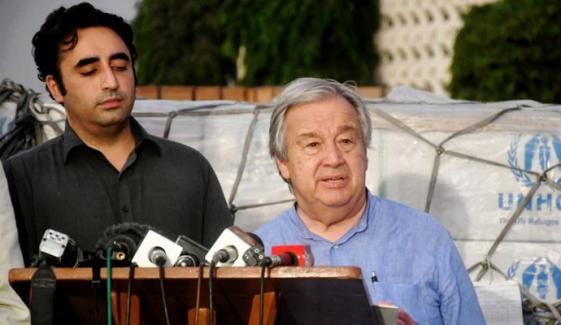
https://jang.com.pk/news/1134404
Saturday, September 10, 2022
Friday, September 9, 2022
Disaster orthodoxy in Pakistan — floods aren't God's fury, we're the culprits and inaction is our sin

Educational Dividend In Pakistan: Imperatives For Single Curriculum – OpEd
Socialization is the process of inculcating the norms and ideologies of society in individuals. School in this regard is considered as one of the primary and important agents of socialization, where children learn about social expectations and social responsibilities.The present schooling system of Pakistan can be recognized as a class divisions system which is dividing nation at three levels. The education system of Pakistan can be divided into three different tiers. Public sector schools are at the first tier, where medium of instruction is a local language and syllabus is mostly in Urdu language. These schools have a specific curriculum, teaching techniques, co-curricular activities, and evaluation patterns. These schools mostly have poor infrastructure and lack of water, electricity, and other facilities. There is an unbalanced student’s teacher ratio in these schools with small number of teachers and large number of students in classrooms. These schools mostly charge no fee. At the second tier, we have Private English medium schools. The medium of instruction and syllabus in these schools is in English. These schools have mostly good infrastructure with relatively better facilities. These schools have a separate curriculum, teaching techniques, co-curricular activities, and evaluation patterns. The size of students in classrooms of these schools is relatively small with good teacher student ratio. These schools have specified and modern dressing and code of conduct. There is yet another small stratum of schools which encourage co- education schooling. Also, known as elite schools which are linked with foreign education system from curriculum to evaluation. These schools have very high fees which only few percent of the population in the country can afford. Finally, we have Madrasas where there is completely different setup from curriculum to evaluation and certification. The financial needs of Madrasas are mostly fulfilled by the individual charities. The students in Madrasas, mostly belong to very poor families who cannot afford to pay high fees to teach their children in other types of schools. Countering other and defending one’s own religious sect is also an important part of teaching and learning in these Madrasas. Following this, the children coming out of these three different educational systems will have different cultural and social capital in terms of problem solving, knowledge, experiences, exposure and understanding. The elite and private schooling system is inculcating the skills that is greatly contributing towards the personal growth and development of individuals. While the public and Madrasa schooling system stresses on civic oriented and ethical lessons with poor skills for personal development. In addition, this divided education system is creating different value structures. Therefore, it appears that the present education system of the country is divided on an extreme level. It has failed and has not been able to teach citizens to wait on traffic signal for their turn to go. Which shows the lack of understanding on civic responsibilities of the individuals. This education system should have been based both on teaching the required skills to its people and also inculcating the core national values. Although there was a lot of criticism over the single national curriculum and a lot of resistance from private schools and Madrasas, but in my opinion the idea of a single national curriculum is a step in the right direction. The education system of a country is a mean to promote national identity by adopting the core values of the country. Even in the developed countries of the world, through formal and hidden curriculum, skills and societal values are inculcated and reinforced in the children through schooling. Apart from teaching academic curriculum, the school also teaches children about the social roles, rules, expectations, and integration of the society. For example, meeting deadlines, following schedules, fulfilling duties and responsibilities. It is the school and education, which through values and norms, mold the diverse groups of the society into a single shared identity and prepare the citizens for its citizenship roles. A single national curriculum can bring integration, equality, and uniformity among all the students and citizens of the country. This can also provide a level playing field to all the students of the country. This could be one of the leading options to put an end to the dividend and class-based education system of the country. We need to include and advocate our comprehensive core values through a single national curriculum to flourish and move towards national integration and social cohesion. These core values should be guided by the principles of Islam including justice and rule of law where all students can have equal opportunity to higher education and upward social mobility. And the overall social development of the children is in line with local aspirations and evolving international trends. https://www.eurasiareview.com/09092022-educational-dividend-in-pakistan-imperatives-for-single-curriculum-oped/
چیئرمین پاکستان پیپلز پارٹی، وزیرِ خارجہ بلاول بھٹو زرداری سے یو ایس ایڈ کی ایڈمنسٹریٹر سمانتھا پاور کی ملاقات
چیئرمین پاکستان پیپلز پارٹی، وزیرِ خارجہ بلاول بھٹو زرداری سے یو ایس ایڈ
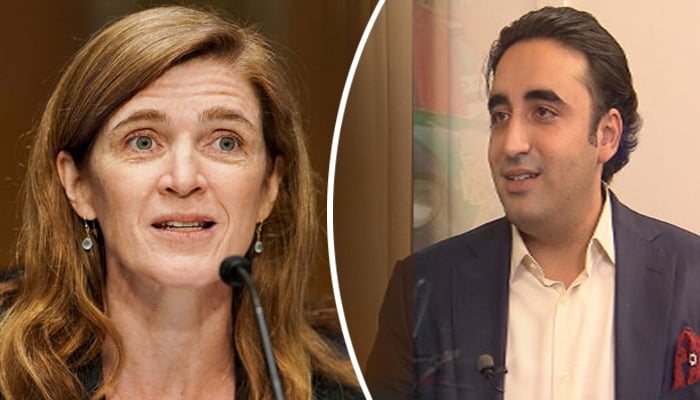
وزیرِ خارجہ بلاول بھٹو زرداری نے یو ایس ایڈ کی ایڈمنسٹریٹر کو سیلاب کی تباہ کاریوں سے آگاہ کیا۔
بلاول بھٹو زرداری نے متاثرینِ سیلاب کے لیے 30 ملین ڈالرز کی امداد پر سمانتھا پاور کا شکریہ ادا کیا۔
وزیرِ خارجہ نے ایڈمنسٹریٹر یو ایس ایڈ سے پاکستان کے لیے عالمی برادری کے وسائل متحرک کرنے کے لیے تعاون کی خواہش کا اظہارکیا ہے۔
ملاقات کے دوران بلاول بھٹو زرداری اور ایڈمنسٹریٹر یو ایس ایڈ سمانتھا پاور نے موسمیاتی تبدیلی سے متعلق گفتگو بھی کی۔