Tuesday, December 25, 2018
بے نظیر سے جڑی یادیں

بات شروع کی تھی اس آخری ملاقات کی، میں نے کہا کہ الیکشن مہم ختم ہو رہی ہے اور میرا کراچی جانا ضروری ہے، آپ سے ملاقات الیکشن کے بعد ہو گی۔ پھر میں نے سوال کیا کہ کیا یہ سچ ہے کہ آپ کو لیاقت باغ جانے سے منع کیا جا رہا ہے، حملے کا خطرہ ہے۔ جواب آیا ’’ہاں یہ سچ ہے کہ یہ سارے لوگ منع کر رہے ہیں مگر یہ بھی سچ ہے کہ میں جلسے میں جائوں گی، نہیں گئی تو یہ دہشت گردوں کی فتح ہو گی اور میں انہیں کامیاب ہوتا نہیں دیکھ سکتی‘‘۔ بینظیر نے عملی سیاست کا آغاز اپنی والدہ کے ساتھ قذافی اسٹیڈیم، لاہور میں لاٹھیاں کھا کر کیا اور جتنے عرصے وہ سیاست میں رہیں، ڈرائنگ روم سے زیادہ عوامی سیاست کی۔ ایک بار اگست 1986ء میں لیاری سے جلوس نکالنے کا اعلان کیا تو پولیس نے 70کلفٹن کو چاروں طرف سے گھیر لیا۔ لیاری میں ہنگامہ شروع ہو گیا۔ پی پی پی کے کارکنوں کو یقین نہیں تھا کہ بینظیر پہنچ سکیں گی مگر اچانک پولیس کو چکمہ دے کر وہ ایک مقامی رہنما کی گاڑی میں چھپ کر لیاری کی تنگ گلیوں سے نمودار ہوئیں اور وہ بھی اس وقت جب شدید آنسو گیس سے پورا علاقہ متاثر تھا۔ مجھے آج بھی یاد ہے جنرل ضیاء کا وہ دور جب بھٹو کی پھانسی کے وقت دونوں ماں، بیٹی نظر بند تھیں۔ ابھی سپریم کورٹ میں اپیل زیر سماعت تھی۔ ایک دن اچانک سرکاری ٹی وی سے خبر آئی کہ بینظیر کیخلاف غیر ملکی سفارت خانوں کو خطوط بھیجنے کی تحقیقات شروع ہو گئی ہیں۔ بینظیر کیخلاف سازشوں کا سلسلہ پرانا تھا۔ شاید اس وقت جب بھٹو کو پھانسی ہوئی تو اندازہ نہیں تھا کہ پی پی پی اتنی مقبول جماعت بن جائے گی۔ جب وہ 10اپریل 86ء کو واپس آئیں تو بہت بڑا استقبال ہوا جس سے خدشہ پیدا ہونے لگا کہ الیکشن جیتنے کے بعد وہ ان لوگوں سے انتقام لے سکتی ہیں جنہیں وہ بھٹو کی پھانسی کا ذمہ دار سمجھتی ہیں، تاہم میری جب ان سے پہلی ملاقات ہوئی تو میں نے ان کے اندر ایک سچا اور محب وطن پاکستانی پایا۔ میں نے ان سے کہا بھی کہ آج آپ کے بارے میں میرے خدشات دور ہو گئے ہیں‘‘۔
مگر اس کے باوجود بھی ان کا رستہ روکا گیا۔ الیکشن سے پہلے 1988ء میں شوشہ چھوڑا گیا کہ اسلامی ملک کی حکمرانی عورت کیسے کر سکتی ہے، 60کی دہائی میں محترمہ فاطمہ جناح کیخلاف بھی ایسا ہی کہا گیا تھا۔
الیکشن وہ پھر بھی جیت گئیں تو انتقالِ اقتدار میں رکاوٹ ڈالی گئی اور پھر سازشیں اقتدار دینے کے بعد بھی جاری رہیں اور 18ماہ بعد ہی اگست، 90کو حکومت ختم کر دی گئی۔ پہلی بار پیسہ سیاست دانوں میں ان لوگوں نے تقسیم کیا جو حکومتیں بناتے اور گراتے رہے۔ بینظیر سے جڑی یادوں میں ایک یاد اس تاریخی شادی کی بھی ہے جو انہوں نے جلاوطنی ختم کرکے واپس آنے کے صرف ایک سال بعد 1987ء میں کی۔ چونکہ عوامی لیڈر تھیں تو ایک دعوت اپنے دوستوں، عزیز و اقارب کی ہوئی مگر ولیمہ کی عوامی تقریب پیلرز اسٹیڈیم لیاری میں ہوئی، میں نے ایک بار پوچھا کہ شادی کی ایسی بھی کیا جلدی تھی تو مسکرا کر جواب دیا ’’میں مشرقی روایات کی بڑی قائل ہوں۔ شادی ایک خوبصورت بندھن ہے۔ پھر والدہ اور خاندان والے بھی چاہتے تھے کہ شادی ہو جائے تو سیاست جاری رکھوں۔ ویسے بھی تمہیں پتا ہے کہ جس معاشرے میں عورت کے گھر سے باہر جانے، تعلیم حاصل کرنے اور نوکری تک کو مختلف نگاہ سے دیکھا جاتا ہے وہاں غیر شادی شدہ کا سیاست کرنا کتنا مشکل ہے‘‘۔ اس گفتگو میں وہ مجھے مختلف بینظیر نظر آ رہی تھیں۔ کئی بار انہوں نے اپنی سیاسی غلطیوں کا اعتراف بھی کیا جس میں حکومتی امور چلانے میں ناتجربہ کاری اور اچھے مشیر نہ ملنا بڑی وجوہات بیان کیں۔ بینظیر کیخلاف قتل کی پہلی سازش ان کے دوسرے دورِ حکومت میں پکڑی گئی جب بلاول ہائوس کے قریب ایک نالے میں نصب بم برآمد ہوا۔ بعد میں ایک شخص گرفتار بھی ہوا مگر وہ کیس آگے نہ بڑھ سکھا مگر 2007ء کو ان کی واپسی کے اعلان کیساتھ ہی اس طرح کی خبریں آنا شروع ہو گئی تھیں۔ 18اکتوبر 2007ء نے 10اپریل 1986ء کی یاد تازہ کر دی مگر پھر وہی ہوا جس کا خدشہ تھا۔ ایک خودکش حملے میں پی پی پی کے 150جیالے شہید ہو گئے، سو سے زائد زخمی کوئی اور ہوتا تو گھر سے باہر نہ آتا مگر وہ دوسرے دن صبح جناح اسپتال زخمیوں کو دیکھنے پہنچ گئیں۔ 27دسمبر 2007ء کی رات تین بجے میں ہوٹل پہنچا، پورا سندھ جل رہا تھا مگر جو کچھ اس دن کراچی میں ہوا وہ بیان سے باہر ہے مگر جو واقعہ میں بیان کرنے جارہا ہوں اس کا جواب آج تک تلاش نہیں کر پایا۔
شہید تو خیر اسے ہونا ہی تھا بھٹو کی وارث جو ٹھہری۔ بھٹو نے کال کوٹھڑی میں آخری ملاقات میں بینظیر کو نصیحت بھی لکھوائی اور وصیت بھی۔ ’’میں نوٹس لیتی رہی اور سوچتی رہی کہ اس شخص کا ذہن اس وقت بھی آنے والے حالات کا سوچ رہا تھا جبکہ اسے پتا تھا کہ کچھ گھنٹے بعد پھانسی کے پھندے پر چڑھ جانا ہے۔ کہنے لگے کہ زمین سے رشتہ کبھی نہ توڑنا اور عوام میں رہنا، پھر کہا کہ پھانسی کے بعد یاسر عرفات، قذافی اور حافظ الاسد کا شکریہ ادا کرنا۔ یہ لوگ پاکستان سے محبت کرنے والے رہنما ہیں اور مشکل وقت میں مدد کی ہے پاکستان کی‘‘۔
بینظیر کے قتل کی سازش شاید کبھی بے نقاب نہ ہو پائے، جس طرح ملک کے پہلے وزیراعظم کی سازش آج تک ایک راز ہے۔
شہید تو خیر اسے ہونا ہی تھا مگر وہ جاتے جاتے بھی اپنے سب سے بڑے سیاسی حریف سے ’’میثاقِ جمہوریت‘‘ کرکے سیاست میں نئی مثال قائم کر گئیں۔ جب دونوں نے اعتراف کیا کہ وہ ایک دوسرے کیخلاف استعمال ہوئے۔ شاید یہی وجہ تھی کہ آخری جلسے کے دوران خبر آئی کہ میاں صاحب کے جلوس پر فائرنگ ہوئی ہے۔ شہادت سے چند منٹ پہلے ان کی آخری ٹیلی فون کال میاں صاحب کو تھی مگر بات نہ ہو سکی کہ گولی چل گئی، دھماکہ ہو گیا۔ اسپتال پہنچنے والوں میں سب سے پہلے سیاستدان نواز شریف تھے۔ میں وہ آخری الفاظ کیسے بھول سکتا ہوں جو شاید تھے تو آخری انتخابی جلسے کے حوالے سے مگر اب تو لگتا ہے کہ اسے اندازہ تھا کہ کیا ہونے والا ہے۔
’’کیوں مظہر، میرا آخری جلسہ کور کئے بغیر ہی کراچی جا رہے ہو‘‘۔ میں صرف حیران ہوں کہ پارٹی کی قیادت نے ان لوگوں کو بغیر تحقیق کیسے باہر جانے دیا، کیسے کچھ کو اقتدار میں شریک کیا جن کا ذکر فیروز آباد تھانےکی FIRمیں 18اکتوبر 2007ء کے دھماکے کے بعد کیا گیا تھا۔ اب تو یہ کہہ سکتے ہیں
میں کس کے ہاتھ پہ اپنا لہو تلاش کروں
تمام شہر نے پہنے ہوئے ہیں دستانے
https://jang.com.pk/news/590712-mazhar-abbas-column-25-12-2018
#Pakistan - #PPP - Chairman PPP Bilawal Bhutto celebrates Christmas with Christian brothers and sisters

Pakistan People’s Party (PPP) Chairman Bilawal Bhutto Zardari has celebrated the Christmas with Christian brothers and sisters and cut a Christmas cake on the occasion of Christmas being celebrated worldwide on December 25.
On the occasion, Bishop Sadiq Daniel, Senator Anwer Lal Din, Sindh MPA Anthony Naveed, PPP Minority Wing President Lal Chund Ukrani, PPP leaders and large number of Christian representatives were present.
Speaking to the auspicious gathering, the PPP Chairman cordially felicitated the Christian fraternity on this August day of Christmas.
Bilawal Bhutto Zardari said that the PPP is the custodian of social justice, parity, religious and interfaith harmony in the country and its advocacy for the prevalence of peace and tranquility across the world is heavily established.
While lauding the Christian fraternity, Bilawal Bhutto Zardari said that the Christians of Pakistan have greatly contributed in variety of fields particularly education, vocational training and even defence of the country, which deserves due recognition with great applause and respect.
The Christian representatives had on the occasion lauded the PPP Chairman Bilawal Bhutto Zardari for a vibrant and brighter role that the PPP and the Chairman have played for the betterment of the Christians in Pakistan.
https://mediacellppp.wordpress.com/2018/12/25/chairman-ppp-bilawal-bhutto-zardari-celebrates-christmas-with-christian-brothers-and-sisters/
#Pakistan - #PPP may go to ‘any extent’ if party chairman targeted


The report of the JIT probing money laundering of billions of rupees through fake bank accounts claims to have found a close nexus between the Zardari Group, Bahria Town and Omni Group.Addressing a press conference at Bilawal House in Karachi hours after the SC hearing of the money laundering case and the judgement by an accountability court against former prime minister Nawaz Sharif, PPP leaders questioned the ongoing “accountability system” and vowed that the party would face all challenges but not give up its campaign against the “selected government”.
“There is a meeting of the party’s central executive committee on Dec 26,” said Senator Mustafa Nawaz Khokhar. “The chairman would announce the party decision on Dec 27 for its future strategy. And let me tell you that there is anger among the workers and people of Pakistan. If any move is made that targets our chairman then it would be clear to everyone that workers would come out [on roads] and we have every option to protest against such move,” he warned.
Bilawal will announce party’s future strategy on Dec 27
The PPP leader said the JIT report was nothing but a document filled with assumptions and table stories which had nothing to do with the reality, wondering why the country’s judiciary was only taking up cases against the opposition parties.
“It’s so unfortunate that the former premier [Nawaz Sharif] was sentenced today,” he said. “Amid all such happenings, the question also arises over our courts. For instance a court in Rawalpindi is hearing cases against four former prime ministers of Pakistan, but at the same time it’s not moving against dictator General [Pervez] Musharraf, who had violated the Constitution and arrested the judges.”Mr Khokhar asked the National Accountability Bureau (NAB) about the hurdles in the way of arrest of senior Pakistan Tehreek-i-Insaf leaders and key members of the government, including Pervez Khattak, Aleem Khan and Zulfi Bukhari.
“It is pity that the system of accountability is only targeting opposition parties. It’s not our opinion alone as every independent circle is raising the same issue. Everyone knows about strong stance of [PPP] chairman Bilawal Bhutto-Zardari whether it’s about missing persons or freedom of expression. We firmly believe that the government wants to target him for his strong stance to suppress his voice,” the PPP senator said.
In Islamabad, senior PPP leaders lashed out at the accountability process in country and said the system was not only victimising the party leadership but also trying to silence the democratic voice.
“This JIT report was connivance between the JIT and the government and I have raised this question in the Senate too. What was Shazad Akbar, who is special assistant to the PM on accountability, doing with the JIT?” Senator Sherry Rehman said.
PPP secretary general Nayyar Bukhari said that a JIT had been constituted against the party founder Zulfikar Ali Bhutto and now another was investigating against its co-chairman Asif Zardari. “As long as the allegations are not proved in the court of law, Faryal Talpur and Asif Ali Zardari are innocent,” he added.Ms Rehman said: “If they think that we will stand down with our hands folded under the pressure of accountability then they are wrong; we will never bow down to this politics of victimisation.”She announced that on the occasion of death anniversary of Benazir Bhutto on Dec 27, the PPP would demonstrate its mass standing and show its strength against what she called political victimisation of the party leadership.She said Mr Zardari had spent 12 years behind bars, but nothing was proved against him, adding that the accountability process should be across the board and sparing a few persons was not correct.
Ms Rehman said that everything was for the opposition parties only to hide failures of the present government as around 100,000 people had been rendered homeless and joblessness had increased over the past four months.
If such mishaps and disrespect to public sentiments continued in “new Pakistan, then we will not remain silent; PPP has never been afraid of political victimisation and our workers even get charged in such testing times,” she added.
In Lahore, senior PPP leader Qamar Zaman Kaira objected to the media reporting on the case proceedings and termed it “hired reporting” by the FIA. He said the media must not have reported on it before a court order, but “it seemed as if the case had been adjudicated against us”.
He said they had requested the Supreme Court to refer the fake accounts case to a trial court and now it’s up to the apex court whether it accepted the plea or heard the case on its own. “We would prove innocence of our leadership in courts as well as before the masses.”Mr Kaira recalled that the PPP leadership had been sentenced in the past and the media then had reported “similar authentic reports” but the courts had latter acquitted them.
Mr Zardari’s lead counsel Farooq H. Naek said that so far initial proceedings in the fake accounts case had been held and that the case would take many turns and its flaws would be exposed in the subsequent hearings.
Pakistan should be the last country that should lecture others on treating minorities properly.Don't need lecture from you: Mohammad Kaif hits out at Pakistan PM Imran Khan
ormer Indian cricketer Mohammad Kaif has come out strongly against Pakistan Prime Minister Imran Khan for his comments on India and the state of minorities. Imran Khan had recently said he will show the Narendra Modi government how to look after minorities in the country.
Taking a dig at Imran Khan, Kaif questioned the treatment meted out to minorities in Pakistan. He said Pakistan should be the last country that should lecture others on treating minorities properly.
"There were around 20 per cent minorities at the time of Partition in Pakistan. Less than 2 per cent remain now. On the other hand, the minority population has grown significantly in India since Independence. Pakistan is the last country that should be lecturing any country on how to treat minorities," he said in a tweet.

There were around 20% minorities at the time of Partition in Pakistan,less than 2% remain now. On the other hand minority population has grown significantly in India since Independence. Pakistan is the last country that should be lecturing any country on how to treat minorities.
https://www.indiatoday.in/india/story/mohammad-kaif-lashes-out-at-pakistan-pm-imran-khan-1416944-2018-12-25
Monday, December 24, 2018
#Pakistan - #AsiaBibi No #Christmas cheer for Asia Bibi as long as the radicals hold sway

Christians around the world are busy with last-minute preparations, shopping for gifts, and enjoying all the fun of carol services and nativity plays. But there is one person for whom this is all a million miles away: Asia Bibi.
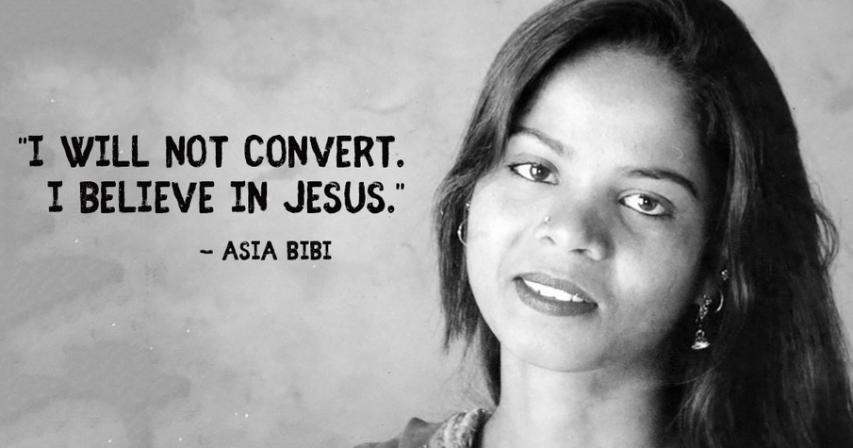
Despite being acquitted of blasphemy charges and freed from years of imprisonment on death row, it is as if she has moved from one prison to another. Yes, she is free from her prison bars but having been forced directly into hiding by throngs of Muslim extremists baying for her blood, there is no true freedom for Asia Bibi.
For her own protection, her whereabouts are secret, but that hasn't stopped heartless radicals from apparently going door to door to hunt her down. We are to understand that the security forces are protecting her round the clock but the risk to her life is still grave. Sobering reminders of this are the murder of Salmaan Taseer by his own bodyguard after he spoke in her defence, and the death of Samuel Masih, admitted to the Gulab Devi hospital in Lahore for tuberculosis only to be killed by the police officer who had been assigned to guard him. In both cases, the killers boasted of their crimes and claimed they had only done their religious duty.
While her family have been vocal in their appeals for asylum elsewhere, no offer has been made yet - something country leaders keep insisting is because of the delicacy of the internal process in Pakistan and the risk to Bibi's life.
Whatever the case, she remains in Pakistan, a country that is becoming harder for her to leave with every passing day because of the review petition against her acquittal that is due to be heard in January and another petition filed to the Supreme Court calling for her name to be added to the exit control list. Once added to this list, an offer of asylum would be of little consequence.
Time is truly of the essence and yet I fear that the review petition won’t be heard any time soon. Chief justice Saqib Nisar is leaving his office early next year and it’s questionable how much of a priority the review petition is for him.
The blame for Bibi's continued heartache lies squarely on the shoulders of Tehreek-e-Labaik Pakistan (TLP), whose violent protests brought Pakistan to a standstill and caused the panic-stricken government to strike a quick deal to review her acquittal.
The sorry turn of events only begged the question: who actually runs Pakistan, the government or the extremists? The government should never have capitulated to such a despicable party that called not only for the death of a woman fully exonerated in the courts of law, but also the very judges who bravely ignored the screaming mob to reach their just verdict - that there was no evidence she committed blasphemy.
That the appeal process - which spanned years - was thorough and followed due process is not in question. If ever there was a time for the Pakistani government to 'man up' against the extremists running the country into the ground and making a mockery of its governing institutions and judiciary, now is that time.
This is no time for mollifying or appeasing the TLP and their hate-filled anti-minorities, anti-democratic, anti-everything agenda. This is no time for backtracking on a decision by the highest court of the land at the first sign of foot stomping and fist wringing by radical Muslims. This is the time for tough action that sends a clear signal to all extremists that they have no place in modern Pakistan.
One green shoot of hope was the recent announcement from the government that it would be pressing terrorism and sedition charges against TLP leaders following its nationwide protests against Bibi.
‘Today we have decided to take legal action against the TLP leadership,’ Pakistani Information Minister Fawad Chaudhry told a press conference.
‘All those who were directly involved in destroying property, who misbehaved with women, who set fire to buses, are being charged under laws of terrorism at different police stations.’
The government has made similar statements in the past only for there to be very little real follow through. This time, the government needs to follow through and give those found guilty the maximum sentence of life in prison.
And that is only the first step. For freedom to have any meaning for Bibi, Chief Justice Saqib Nisar must finish this once and for all before leaving office, uphold the original verdict, free Bibi to go to a country of her choice, and help the government to leave this mess behind. It should never have fallen to him a second time to be the one who has to stand against all the rage of the extremists - that is the government’s failing - but fallen to him it has and he must do what is right in maintaining Bibi’s innocence. Because ultimately we all know that Bibi and her family will never be safe in Pakistan and Pakistan won’t be able to protect them for a lifetime.
For now, it’s another Christmas in incarceration for Bibi. I am led to believe that she is a fan of Christmas lights because she thinks Christmas is a festival of lights. There is also a sweet account I heard of Bibi one time being moved to tears when the woman who cleaned her cell every day handed her a small piece of Christmas cake wrapped in foil.
After so many lonely Christmases in solitary confinement, it is heartbreaking knowing that a dark shadow hangs over what should have been her first Merry Christmas with her family after being freed. Instead, I doubt she has any Christmas lights or decorations where she is being held under tight security.
Christians around the world celebrating Christmas must remember those unable to celebrate the season like them and not neglect to pray for a just outcome for Bibi and others like her suffering for their faith. Pray for the day when Bibi, just like them, can put up lights around her home, go to church, eat Christmas cake with her family, and enjoy all the other festive delights most of us take for granted.
Fears From An Afghan Woman Remembering Childhood – OpEd


I was just five-years-old when Taliban took control over Kabul. Since I was very young, I only remember glimpses of the first years. However, the killing of former president Najibullah the same year, on Sep 28. 1996, the demolishing of the two Buddha statues in Bamiyan in the spring of 2001, and the 9/11 attacks are vivid and clear as if they happened yesterday.
The killing of Dr. Najibullah (ruled from 1987-1992) was one of the first cruel acts Taliban did as they announced their new administration in Afghanistan. He was beaten senseless, shot, dragged through the street and hanged at a traffic pole along with his brother. Thousands of people witnessed the barbaric act. Taliban placed cigarettes in his hands to make him appear as a drug addict. This was the earliest cruel act, and Taliban had not started their strict rules yet. We still had access to TV, and could watch the images. My mom was really sad. First, I concluded from my mom’s reaction that he was our relative, but later on I found out that he was previous president of Afghanistan. Although all my family tried to stop me from watching the scene shown on TV, I managed to see him. His blue clothes were turned red from spilt blood as he was hanging there.
It was my first experience on a long journey of fear.Taliban did serious damages to the country and the Afghan society during their rule (1996-2001), but perhaps the most serious and disturbing changes were sanctions towards women.
Burqa and breakdown of self- esteem
My mother used to work at the Kabul University science center. She was soon asked to stay at home and wear a burqa whenever she left the house. Although female civil servants and teachers received wages for a short period of time after the ban, my father soon had to start working more and harder as the sole breadwinner of the family.
Wearing the burqa was a difficult task. It is hard to see through those tiny holes. The first year, many women came home with bruises, including my aunt who broke her ribs after falling down in a water drainage. My mother needed to wear glasses, and to combine those with wearing the burqa was a daily challenge. However, the most difficult issue for her, was that her identity was reduced to nothing more than a walking ghost, looking like covered by a sack. Women had no freedom of movement outside the house, as they could only venture out if they had a male escort, a mahram.
If women were found outside without mahram they were beaten. Often, my sister and her friends managed to run from the control patrols of Taliban called Amr-i-blmaruff (who were to prevent sin and promote virtue), but they were not always all lucky. In the first summer of Taliban control, they were chased by Taliban. They split and my sister had taken shelter in a random home. Later that day I saw the red marks of flogging on my mother’s cousin’s back. She had been punished for the ‘crime’ of not having mahram and not wearing thick socks. She was crying, cursing Taliban, and her mother was dressing the wounds. Women were banned from riding a motorcycle or bicycle, even if they had a mahram. I never learned cycling, although it was one of my deep wishes.
Women were also banned from going to general hospitals, after Taliban took control. Only one hospital in Kabul offered a women ward. Male doctors were forbidden to touch the bodies of female patients. One brave woman, Dr. Souhaila Seddique, was the head of that hospital. She and her sister are said to be the only women in Kabul who did not wear a burqa during the Taliban reign.
There was a ban on women wearing high-heeled shoes. No man should hear a woman’s footsteps, in case they would excite him. Women were banned from speak loudly in public, as no stranger should hear a woman’s voice. All ground and first-floor residential windows were painted over or screened to prevent women from being visible from the street. Photographing or filming of women was banned, as was displaying pictures of females in newspapers, books, shops or at home. Later, any kind of pictures was forbidden even in the homes. Any names of places that included the word “woman” were changed. For example, “women’s garden” was renamed “spring garden”. A ban was introduced on women’s presence on radio or at public gatherings of any kind. Women were simply not present, rather they were prisoners behind the dark walls of their homes.
Education- the impossible dream
Taliban abandoned women from studying. Girls older than eight years were not allowed to study. My elder sister was about to join 10th grade and I was about to start school when Taliban ruled Kabul in 1997. I remember my sister crying day and night, since her dream of becoming a doctor now seemed to be impossible. For a short period, the whole family broke down, but soon my mother sent my sister to Mazar-e-Sharif, in Balkh province, which did not come under Taliban rule until 1998. For my education different options were discussed including dressing me as boy. Since I did not like shorter hair than the bob cut, I denied to wear boys’ clothes and feature as the main character of the movie Osama (Bacha posh).
A second option, since I was just seven years old, was to study at a madrasa. I was sent to such a religious school. At six o’clock in the morning, we had to be present there. We would study till eight in the morning and then leave and come back for the science lessons at one o’clock in the afternoon. On the first day, I was told that my clothes were not proper: I was not allowed to wear jeans, and my scarf should be longer. In morning we mostly studied religious books and in the afternoon, some science was taught, but by the same teacher. For the purpose of having a proper school curriculum, which would include all kind of subjects as literature, sciences, arts.
I soon started going to a secret home school. We use to put our books in a Quran sheet, and I acted as if I was going to the madrasa, but still the risk of being caught by the Taliban was always there. In period of five years I changed home school more than ten times. Through this journey, I had teachers who had no instructional education and who would insult and beat students. This also happened at the madrasa. Still I was happy to obtain some kind of education, and for a young child like me the whole situation was too complicated to analyze back then.
Taliban occupied Mazar-e-Sharif, and my sister’s dream of education again risked being forgotten forever. Most families in Afghanistan married their daughters off at an early age, as there were few alternatives for them. My mother started working for Care international. She use to build secret home schools and spent her salary to send my sister to Pakistan for further education.
The mindset that changed
After the first two years of Taliban rule, the mindset of the society had changed. Now the new dominant values were those which Taliban believed in. Going to home schools and getting out of home were not only seen as crimes by Taliban, but by many citizens as well. There was a clear difference between the values of my family and those of many in the society outside. Of course, I believed my parents were right, as any other child would. To defend their points of view, I turned a bit aggressive, as a tomboy always on guard to defend myself, even in front of Taliban. I must have been around seven years old, I was playing in front of our home, when a ‘Talib’ threatened me to go home or he would beat me with a cable he held in his hand. I turned back and answered: do you think you can beat me because you have a cable? Get the hell out of here, or I will bring our video player cable and beat you till death.
Later that night, my father was informed by neighbors that I was taking about the fact that we had a TV and a video player at home. He was angry and told me it could have been a big problem for the family. Thus, I learned as a seven year old how to hide secrets in order to survive.
The light of hope
After Taliban were driven out of Kabul, I started my education in a more proper way, and my sister came back to Afghanistan. My mom started working again. Breaking the burqa tradition and starting to learn at a foreign language learning center took some time. After all, Taliban had damaged the mindset of a whole generation of Afghans. Women started their struggle for liberation, a frustrating still ongoing fight where your enemy is most of the time inside your own family. Your elder or younger brother might have joined a madrasa and become a follower of Talibanization.
Afghanistan is not the same today as it was 16 years ago. More women do understand their rights; many are educated and highly ambitious. Although women are only at the beginning of a long struggle for their rights, they are determined and progressing. It is a fight to be won by changing the societal mindsets about women. This needs time and is a slow and inclusive process.
The peace talks and concerns
The United States have sent Zalmay Khalilzad as a Special envoy to ‘invent’ a solution to end the ‘war against terror’ in Afghanistan in less than 12 months. The Trump administration seems determined of ending the costly war to add to the list of his presidential achievements and to take credit for this in the upcoming 2020 election campaign.
Representatives of Taliban joined meet the US officials recently and talked around peace issues in Afghanistan. Taliban have before as well asked for withdrawal of foreign forces and to suspend the constitution of Afghanistan. A variety of views and assumptions are identified, particularly distinguishing between the young generation and the traditional elites in Afghanistan about an unclear future, not least including women rights. The dissuasion inside the Afghan government as well seems to be not inclusive and women are absent in most of the decision-making consultation. In a recent twitter post Shahrazad Akbar founder of Open society foundation and women right activist wrote “Men. Men. And more men. Well, at least both meetings have one thing in common: Excluding women when it comes to discussions about the future of this country. Not very different from Taliban on this aspect.”
Women in Afghanistan are far from certain as to how much history will repeat itself with this such a peace agreement. If it happens, will the peace bring a fundamentalist Islamist generation with it to blend into the modern new Afghan educated young progressive society? If yes, what are the efficient methods, strategies for social integration of an extremist group to a new and progressive modern Afghanistan?
How #Pakistan can curb the influence of the religious right

By Hannan R. Hussain
Since Pakistan’s Supreme Court acquitted Asia Bibi of blasphemy, the religious right, led by the party Tehreek-e-Labaik, have taken to the streets. In an attempt to counter the party’s influence, several of the its leaders have been arrested and mosques associated with the party raided. Hannan R. Hussain argues why legal action not security measures hold the key to countering the rise of religious extremism in Pakistan.
Over the past month religious fundamentalism has taken a dangerous turn in Pakistan. The far-right religious political party, Tehreek-e-Labbaik Pakistan (TLP), took to the streets from the end of November on the issue of blasphemy, laying siege to major cities, and encouraging violence against Supreme Court judges. This unrest comes in the wake of the country’s highest court’s acquittal of Asia Bibi, a Christian-woman convicted of blasphemy in 2010. While the protests have been a landmark moment for the recently elected Imran Khan, it has been the first time that the party’s top command, including Pir Afzal Qadri (one of the party’s leaders) has called for the assassination of Pakistan’s Chief Justice, Mian Saqib Nisar. The party has also called for Asia Bibi’s name to be placed on the Exit Control List, a government-run emigration list that bars certain individuals from leaving the country.
The government’s decision to also detain Khadim Hussain Rizvi, another TLP leader, along with more than 3,000 TLP workers, is a noticeable change from its recent attempt to appease hardline religious protestors. The crackdown of the TLP began on November 23rd with law enforcement personnel raiding TLP mosques and deploying security units to the site of the 2017 Faizabad sit-in. This collective attempt serves as the first coordinated effort among the police, security agencies and the government since TLP’s rise to prominence in November last year.
The TLP’s overt criticism of Pakistan’s military has been a key trigger for involving Pakistan’s recent security response. The party’s co-founder Pir Afzal Qadri recently called for the overthrow of Army Chief Qamar Bajwa, encouraging members of the party to rise in rebellion. The Pakistan Army has a reputation for responding to criticism such as this decisively; its disintegration of the non-violent, Pashtun Tahaffuz Movement being the latest example.
Problems with a Charge of Treason
Such moves from the military may have an effect in curbing the organizational powers of the party in the short-term, however the arrest of Rizvi and a possible charge of treason against him offers a potential legal solution, but one unlikely to be pursued by the government.
Jibran Nasir, one of Pakistan’s most high profile activists, believes that a treason charge against TLP will be difficult to establish. He argues that a person is guilty of treason when he abrogates (or conspires to abrogate), suspends, or subverts the constitution of Pakistan, either by force or any other unconstitutional means. This can be done once an armed group takes over the state. TLP never actually took over.
Mr. Nasir argues that the interests of the military establishment will be another impeding factor. “A treason trial against Khadim Rizvi is automatically going to raise questions about the decade-long trial against General Musharraf“, he recently told me. “And if a treason precedent was to be established against TLP, it will also be used to go after the Pashtun Tahafuz Movement, or any movement opposed to the military. This is a concern among the progressive intellectuals of Pakistan.”
Ideology not Security
While the TLP’s rift with key institutions of state might result in a decline in the party’s ability to operate, it does not deal with the continued presence of the ideological power and popularity of TLP’s conservative messaging. So far, the government’s efforts to contain the party have remained largely ineffective. The government’s strategy has mainly been through an attempt to reason with the party. Last month, the government convened a two-day conference on the ‘Finality of Prophethood’, assuring the religious clergy of its commitment to safeguarding Pakistan’s blasphemy laws. The government also allowed the TLP to file a review petition against Bibi’s acquittal.
Electoral appeal
At present, Tehreek-e-Labbaik enjoys a support-base of 2.2 million voters nationwide. The party made its electoral debut in the 2018 general election on the back of an attempt to allow the TLP into the political mainstream, a strategy proposed by Pakistani military officials in 2016. TLP finished as the fifth largest party in terms of vote count in 2018, beating Pakistan People’s Party to third in Punjab, the country’s most populous province.
Tehreek-e-Labbaik’s participation in elections poses a direct threat to the conservative vote of parties such as Pakistan Muslim League-Nawaz (PML-N). A 2018 Gallup Pakistan Exit Poll found that a substantial number of Tehreek-e-Labbaik voters had voted for PML-N in 2013. Thus, the former’s 6% vote share in Punjab proved enough to break into PML-N’s far right vote, allowing the centrist party Tehreek-e-Insaf to finish first in many constituencies.
If the TLP decides to field candidates in the next elections, its impact on provincial politics is going to be much of the same: appealing to the conservative vote and denying majority-parties a comprehensive victory margin in home constituencies. The party’s growing street support is reflected in its well-attended sit-ins. During the 2017 Faizabad dharna, a few-thousand protestors were enough to subdue capital police units, and lay siege on the twin cities of Islamabad and Rawalpindi for nearly three weeks. Last month however, Tehreek-e-Labbaik’s sympathizers also appeared in the cities Karachi, Lahore and Multan – jamming major avenues and highways in protest against the Asia Bibi verdict. This departure from citywide protests to an inter-provincial support base comes in less than a year.
Legislative Steps to Counter the Religious Right
The government’s starting point to limit the power of TLP should be the revival of the 2015 National Action Plan, and the collective implementation of its twenty points. The plan was proposed as an overarching framework for combatting violent religious extremism in the country in the wake of the 2014 Peshawar school massacre. It states that banned political parties will not be allowed to operate under different names, potentially ending TLP’s case for electoral participation. It also focuses on cutting finance sources of terrorist organizations, setting up provincial intelligence agencies, and prosecuting all sectarian extremist groups in all forms.
Additionally, the government should work towards amending Section 295 and 298 of Pakistan’s Penal Code. Both sections enable blasphemous conduct to be established in the absence of specific material evidence, and the victim’s right to a “fair trial”.
If Not Reform Then a Change of Politics Alliances
Should the government not peruse these legal changes and or implement the policies above, it should consider strengthening its alliances with left-leaning parties, especially those that have been vocal critics of faith-driven politics. This includes Pakistan People’s Party, whose senators and ministers have questioned the participation of banned parties in elections, as well as made attempts at amending the blasphemy laws to protect Pakistan’s minorities from unjust conviction. In Pakistan there exists many tools to try and combat the TLP. Only when these have been exhausted should the solutions be security-based.
When minorities are killed with impunity extremists are only emboldened to attack the society as a whole

By Adam Weinstein and Zahra Dsouza
Published - August 18th, 2016

Pakistan’s Constitution provides for the protection of minorities but in reality discriminatory legislation, social prejudice and sectarian violence leave them vulnerable. In this article, Adam Weinstein and Zahra Dsouza discuss the threat that Deobandi-inspired extremists pose to tolerance in Pakistan, and write that the government cannot turn a blind eye to the treatment of minorities as this will only embolden perpetrators and result in wider and more indiscriminate attacks on society.
On Sunday Pakistan marked its 69th independence day with cheers of “Pakistan Zindabad” or “long live Pakistan.” But this year has proved to be another year of death for Pakistanis at the hands of Deobandi-inspired terrorists. Deobandi thought is a fundamental interpretation of Islam founded in South Asia that has similarities to Salafism. Some of these attacks have indiscriminately targeted all members of Pakistani society. Yet the minority religious groups of Pakistan including the Shi’a, Christians and Ahmadis have been under siege by extremist Sunni factions for decades.
Such attacks are facilitated by the fact that individuals and minorities in particular tend to live in close proximity to their places of worship. As an illustration, Catholics in Karachi have historically lived in Catholic Colony and Parsis in Parsi Colony. Thus the battle lines are drawn. This is reflected in property values: while residential properties located near the Ismaili Jamat Khana were once very expensive, demand for these properties has fallen as individuals have chosen to live further away for fear of falling victim to attack. Pakistan’s government and overall society adamantly reject indiscriminate attacks against public places and security forces but both have turned a blind eye to the predicament of minority religious groups. However, when Pakistan forsakes its minorities to appease Deobandi sensibilities it foments the very sectarianism that envelops the entire country.
It could be argued that Pakistan today is the most dangerous country in the world to practice the Shi’a interpretation of Islam. Activists within the Shi’a community often claim a slow genocide is occurring within Pakistan and recent events reveal that this statement cannot be dismissed as hyperbole. In 2015 sectarian groups attacked Shi’a Muslims during the annual Moharram commemorations in Jacobabad in which 22 people were killed, and an explosion in a bazaar in Kurram in December killed more than 20 people. A string of mass shootings targeted the Hazara Sh’ia minority in Quetta, Baluchistan. Many of these attacks were claimed by or attributed to the Lashkar I Jhangvi group. Like other Shi’a communities living in Sunni majority countries the typical rhetoric suggests that they are a fifth column of Iran. It is true that Pakistan’s main Shi’a political party Tehrik-e-Jafaria Pakistan and its leader Syed Sajid Naqvi are adamant supporters of the Supreme Leader of Iran Ayatollah Khamenei but this does not translate to blind discipleship. Furthermore, Iran balances its interests in defending Pakistan’s Shi’a community with maintaining a positive relationship with Islamabad. Lastly, the Shi’a community of Pakistan is divided among Ismailis and Ithna ‘Ashari (Twelver) practitioners and does not have an established practice of emulating ayatollahs or adhering to clerical leadership. Thus the Deobandi accusation that Pakistan’s Shi’a community are agents of Iran ignores history.
Smaller religious minorities fair no better. The Ahmadi community identifies as Muslim but are prohibited from asserting themselves as such by law and the fact they cannot vote. Hindus are vulnerable to kidnapping and forced conversions, and continue to migrate to India where they are housed in refugee camps. Hindu and Christian women in particular are subject to forced conversions and marriage in defiance of true Islamic law. Bombings targeting Christians were a regular occurrence since 2013 and on 27 March this year a blast killed at least 75 people in a Lahore park frequented by Christians.
The Constitution of the Islamic Republic of Pakistan provides for freedom of religion and the protection of minorities. However, these guarantees have been thwarted by discriminatory legislation, social prejudice and sectarian violence and as a result tolerance in Pakistan remains a mirage. The government not only permits but engages in violations against minorities that go unpunished. With respect to education, Pakistani textbooks teach intolerance and distrust of minorities by characterising them as non-Pakistani i.e. associating Christians with Britain or identifying them as Western, and Hindus with India. Despite positive rulings by the Supreme Court the government failed to provide adequate protection to targeted groups or to prosecute perpetrators and those calling for violence. In June 2014 the Supreme Court ordered that the federal government establish a special police force to protect religious minorities and revise biased school curricula but the government has failed to protect individuals undertaking these activities. A National Action Plan was implemented to combat extremist attitudes and terrorism although even with these efforts attacks on minority communities and hate speech intended to incite violence continue unabated.
Discriminatory legislation, particularly blasphemy laws, exacerbate religious extremism and vigilantism. Under Sections 295 and 298 of Pakistan’s Penal Code, acts and speech that insult a religion or religious beliefs or defile the Qur’an, the Prophet Muhammad, a place of worship, or religious symbols are criminalised. Violations are interpreted from a Deobani framework exclusive of religious pluralism even for other Muslims. So under these codes a Shi’a could be accused of blasphemy against the Prophet simply for espousing Shi’a interpretations of the Imamate or Prophet’s wives/family. In one case a man named Ghulam Ali Asghar was jailed simply for misquoting a Hadith in Punjabi. Regardless of the standards, allegations of blasphemy are rarely legitimate and are often the product of personal vendettas such as business rivalries. Individuals accused of blasphemy either go into hiding, are taken into protective custody or suffer a brutal death and the cases rarely go to trial. Mob mentality prevails in instances of blasphemy allegations and individuals take the law into their own hands. For example, Naimat Ahmar was a Christian teacher in Faisalabad who was stabbed by his student for alleged blasphemy at the urging of Ahmar’s colleagues.
Where blasphemy cases do come before a court lengthy jail sentences and heavy fines are imposed even when the individuals are acquitted. Yet when vigilantes execute violent extrajudicial punishments against those accused of blasphemy such criminals intimidate judges and threaten witnesses. Entire communities come under attack in response to such allegations. High-profile blasphemy cases and mob violence have affected the Christian community among others: in March 2013, a crowd burned down a Christian area in Lahore after a resident was accused of blasphemy. Institutions associated with these individuals distance themselves from them out of fear of facing reprisals. The issue has become so heated that even Muslims, private and public figures alike who support persons accused of blasphemy have been murdered for taking this stance. In 2011, Salman Taseer, the governor of Punjab province and owner of multiple news outlets was gunned down by his own bodyguard, Mumtaz Qadri, who explicitly said he shot Taseer because of his opposition to Pakistan’s blasphemy law. Qadri was executed earlier this year, but has become a martyr and symbol of the Deobandi movement.
The government of Pakistan and society as a whole must decide whether it will follow Muhammad Ali Jinnah’s vision of a constitutional Islamic republic or sink into the chaos of a Deobandi State. So long as terrorism is justified as heroic or decried solely based on the identity of the victims the latter version of Pakistan will prevail. This choice must not be confused with adopting counter-terrorism strategies of foreign powers that some politicians such as Imran Khan warn against. The necessity of taking a pragmatic approach to transnational terrorist networks like the Taliban is a reality somewhat unique to Pakistan.
But when minorities are killed with impunity the extremists are only emboldened to attack the society as a whole. After all the majority of Pakistan is Sunni Muslim but very few people within that majority measure up to the Deobandi critique of what a Muslim ought to be. Therefore the bombing of a Shi’a mosque or Christian church in Sindh is on the same spectrum of extremism as an attack against a military school in Peshawar. Such incidents cannot be categorised differently because both stem from the same extremist outlook. When Pakistan reaches its 70th year of independence will it remain a country in which minorities claim asylum in droves, educated young people leave en masse, and the political elite maintain two passports because even the leadership has no faith in “Pakistan Zindabad”? Until Pakistan views an attack on any member of society as an attack on the nation itself the answer to that question will remain yes.
#Pakistan dangles between hope and despair over minority rights

Will 2019 be a better year for Pakistan's religious minorities? 2018 offered some hope, as the country's top court released Asia Bibi, a blasphemy-accused Christian woman, from jail. Should we keep our hopes high?
In a landmark decision in October, Pakistan's Supreme Court acquitted Asia Bibi, a blasphemy convict who had been on death row since 2010. Bibi, an impoverished Christian woman and a mother of five, had been accused of blasphemy in 2009 and sentenced to death a year later.
The top court's ruling came as a pleasant surprise for the Islamic country's rights activists and civil society groups, who had been demanding her release for nearly a decade.
The liberal euphoria about Bibi's acquittal, however, turned out to be ephemeral. Islamist groups took to the streets against the court's verdict, chanting "Death to Asia Bibi, death to blasphemers" slogans. The chaos and violence forced Prime Minister Imran Khan's government to strike a deal with the hardline Tehreek-e-Labbaik Pakistan (TLP) party, allowing TLP to file a petition asking the Supreme Court to review its decision.
Bibi was eventually released from jail, but she still cannot leave the country. As Islamists continue to bay for her blood, Bibi has reportedly been placed under "protective custody."
It is unclear when she and her family will be able to leave Pakistan, but most likely she won't be able to spend another Christmas as a free person.
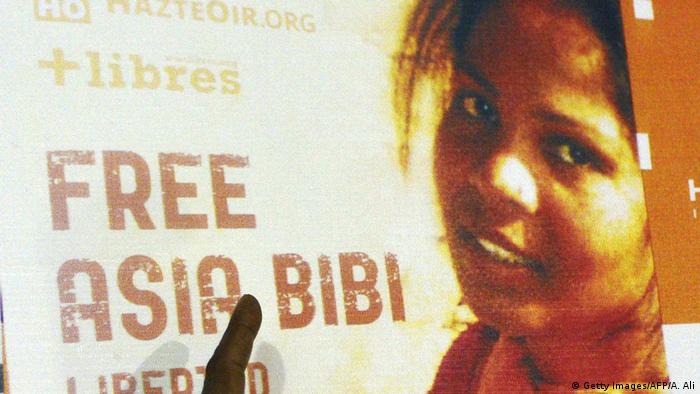
Asia Bibi is currently under 'protective custody' of Pakistani authorities
'Grave injustice'
Blasphemy is a sensitive topic in Pakistan, where 97 percent of its 180 million inhabitants are Muslims. Rights activists have demanded reforms to the controversial blasphemy laws, which were introduced by the military dictator General Zia-ul-Haq in the 1980s. Activists say the laws have little to do with blasphemy and are often used to settle petty disputes and personal vendettas.
Bibi was arrested in June 2009, after her neighbors complained she had made derogatory remarks about Islam's Prophet Muhammad. A year later, Bibi was sentenced to death despite strong opposition from national and international human rights groups.
After a hearing on October 8 of this year, Pakistan's Supreme Court reversed two lower court verdicts against Bibi in what was her final appeal against the 2010 death sentence.
In 2014, when the death sentence had been upheld by the Lahore High Court, rights group Amnesty International called the verdict a "grave injustice."
Bibi's is one of the most high-profile blasphemy cases in Pakistan, with international rights groups and Western governments demanding her freedom. In 2015, Bibi's daughter met with Pope Francis, who offered prayers for her mother at the Vatican.
Her husband, Ashiq Masih, had appealed to US President Donald Trump for asylum, along with British Prime Minister Theresa May and Canadian Prime Minister Justin Trudeau.
Can Pakistan set an example?
The year 2018 has thus offered some hope that Pakistan wanted to safeguard minority rights. At the same time, it reinforces the fact that the South Asian country has a long way to go before it reins in Islamists and follows a liberal path.
In a recent speech, Pakistani Prime Minister Imran Khan vowed to protect religious minorities in his country. He even said that Pakistan would set an example for Indian Prime Minister Narendra Modi on how to uplift minorities.
The Bharatiya Janata Party's Hindu nationalist government in India has come under sharp criticism from the country's liberal and secular sections for promoting a right-wing agenda and discriminating against religious minorities. Several cases of vigilante attacks on Muslims have made headlines in the past few years.
PM Khan was actually responding to remarks by renowned Bollywood actor Naseeruddin Shah, who said that the current situation in India was worrisome. But after Khan's "advice" to India, Shah retorted that the Pakistani prime minister needed to focus on his own country and "walk the talk" regarding minorities.
"I think Mr. Khan should be walking the talk in his own country instead of commenting on issues that don't concern him. We have been a democracy for 70 years and we know how to look after ourselves," Shah told The Indian Express newspaper.
The overall situation for religious minorities in Pakistan is far from being "exemplary." Attacks on Christians, Hindus and Ahmadis (who were declared non-Muslims by Pakistani lawmakers in the 1970s) have continued unabated in the past few years.
Not too long ago, PM Khan had to backtrack on his decision to appoint a world renowned Ahmadi economist as part of his advisory team due to pressure from conservative Muslim groups.
Persecution of religious minorities
Pakistan's Christians and other religious minorities have often complained of legal and social discrimination in their country. In the past few years, many Christians and Hindus have been brutally murdered over unproven blasphemy allegations.
In one case, a young Christian girl with Down syndrome was accused in August 2012 of burning pages upon which verses of the Koran were inscribed. Rimsha Masih was taken into police custody and only released months later, when charges were dropped. The case caused an uproar in her hometown and beyond and sparked riots and violence against Christians in the region. In 2013, she and her family relocated to Canada.
In 2014, a Christian couple was beaten to death for allegedly desecrating a copy of the Koran. Their bodies were subsequently burned in a brick kiln.
In September last year, a Christian man in Pakistan was sentenced to death for sharing "blasphemous" material on WhatsApp.
The Supreme Court's Asia Bibi verdict has, however, paved the way for some legal and constitutional improvements regarding the issue of minority rights in Pakistan.
PM Khan has an opportunity to turn things around in 2019. Letting Asia Bibi out of the country would be crucial and will be seen as a test case for his government. But more importantly, his government needs to pass laws for the welfare of religious minorities. Will he be able to do that?
Subscribe to:
Posts (Atom)