Sunday, December 7, 2014

Pakistan - DAESH FLAGS AND SLOGANEERING BY TAKFIRIS NEAR IMAMIA COLONY IN LAHORE


http://www.shiitenews.org/

Notorious takfiri nasbi terrorists are fluttering DAESH (ISIL) flags and raising takfiri slogans at a gathering being held in a park near Shia majority Imamia Colony right now.
Shiite News correspondent has reported from the scene that supporters of banned takfiri terrorist outfits have gathered in Umer Park where they are hoisting the flags of banned Taliban (TTP) and ISIL (ISIS or DAESH).
Takfiri fanatics are raising slogans in favour of takfiri terrorist DAESH and Taliban and also raising takfiri slogans against Shia Muslims. Residents of Imamia Colony have complained to police to arrest the takfiris and prevent them from continuing their takfiri activities but the police have not taken any action so far.
Reports had it that their provocative hate-speeches and activities could anger Sunni and Shia Muslims and there could be a clash if the police did not take due action against the provocateurs.
Pro-takfiri PMLN government of Pakistan and its Punjab province have joined hands with the Taliban-allied Sipah-e-Sahaba (ASWJ and Lashkar-e-Jhangvi) and they are allowed to continue their takfiri terrorism and fanaticism.

http://www.shiitenews.org/index.php/shiitenews/pakistan/daesh-flags-and-sloganeering-by-takfiris-near-imamia-colony-in-lahore

Pakistan - A Geo-Political Analysis Of Balochistan


Zafarullah Barech
The largest province of Pakistan, Balochistan, consists of 43.6 percent of total area, least literate and has a 7.5 million population only 5 percent of total population of Pakistan. Being poorest yet it provides significant share of national gas supply for industrial and domestic use, consisting of 200 coal mines that plays a significant role in industrial phase.  It got the status of province after 23 years of British withdrawal in 1970. Enjoying the longest and deepest coast line of the Arabian Sea, it has gained importance among superpowers in international arena. Balochistan is considered the central hub as it plays the role of junction between South Asia, Central Asia and the Persian Gulf.
Gwadar, an important district of Balochistan was the part of state of Oman. In 1958, it was purchased for 550 million rupees from Oman. In 1964, it was suggested as a suitable port and in 2002, the construction of port was initiated with China’s assistance. It is at the doorway of Persian Gulf, 180 nautical miles from Strait of Hormuz through which 40% of the world’s oil passes and it’s the largest trade route of the world. Likewise it provides the shortest route to Central Asia. Therefore, America has an eye on Gwadar for being its future “potential military base” while UAE considers it an undesirable contest.
Simultaneously, Recodiq in Chaghi is the 4th largest deposit of gold and copper in the world and it’s also known as “Hillock of Gold”. It has been proved that about $260 billion reserves are buried under Recodiq. The decision of Supreme Court has revealed that under and around “Hillock of Gold” there exists 10 million kg copper and 370 million gram gold.
Gwadar port being completed with the help of China who has an eye on it, owing to import of raw materials and oil from Middle East and export its materials through land corridor that would extend from Gwadar to Xinjiang province as the port is near Hormuz and China wants to access the sea for its land locked western provinces.
America being economic giant of the world would not be capable of maintaining its position within 25 to 30 years and might be supplanted by China within coming years. Therefore being part of “International Conspiracy”, her strategic position is to enter Afghanistan and Iran for maintaining its economic position by extracting minerals. That would only be possible by destabilizing the Province of Balochistan. According to “Corridor Conspiracy”, Balochistan would play key role in invasion of Persian Gulf and south Asia.
Consequently, America and its allies, India inclusively, doesn’t want Pakistan to gain these benefits by their strategic planning. To accomplish their policies, they use small powers sometime for solo role and at times for numerous ones. Today Baluchistan is divided among Pakistan, Iran and Afghanistan. Province that consists of multi linguistic and ethnic groups, their geo- political and geo-strategy are the best to evaluate the importance of state.
Pakistan can germinate it’s forth leaves by demeaning revolt demonstrations and acts of brutality. The government of Pakistan has to deactivate the centripetal and centrifugal forces through strict and stern norms. For negotiations with rebellions, actions are needed rather than round table conferences. Funds to be made available, trust-deficits to be brought back, policies should be made for strong Pakistan, and not for “strong center”. Illiteracy must be counteracted by inaugurating more schools, colleges and universities. Eventually, gigantic natural resources must be urbanized in order to boost economic and social life of country, failing which, it may become a hot bet for foreign maneuverings that would result in easing their way rather than preventing them.

Pakistan - The barbaric Punjab police


The Punjab police seem to have a predilection for covering themselves with infamy and disgrace. Their latest foray into how not to win friends and influence people concerns a protest being held by a group of disabled people outside the Lahore Press Club. The protesters were mostly blind or partially sighted, and some were said to be deaf in varying degrees. They were seeking to get the quota of disabled employees increased in the government sector from its current two per cent, a not unreasonable demand. There are differing accounts as to what happened when the protesters tried to move towards the Chief Minister House on the Mall.The protesters claim that they were beaten, manhandled and baton-charged. The police strenuously deny this, saying that they tried to “facilitate” the protesters at the outset but had to respond when they tried to advance from the Press Club.
Whatever the rights and wrongs of the incident, the fact that it happened on World Disability Day is the most unfortunate of coincidences. People with special needs of all types have a hard life in Pakistan. Some like those protesting in Lahore do get minimal relief in the form of job quotas, but they are a minority. When they choose to protest as is their right they come up against police forces whose crowd control techniques are limited to brute force, and little more than licensed thuggery on occasion. The Punjab force has an entirely justified reputation for heavy-handedness and brutality, and is protected by the culture of impunity that forms a wall around them. On this occasion, five police officials are reportedly suspended and the Punjab Chief Minister Shahbaz Sharif has reportedly “taken note” of the incident. Nothing will come of this and the matter will quickly fade from view, but the wider issue of how the police handle public demonstrations, peaceful or otherwise, remains. Their handling of blind protesters was inept at best, criminally abusive at worst. Small wonder our police are held in such low esteem.

Pakistan - Children of a lesser God


The investigating committee found 50 babies on 12 beds with 18 being oxygen-dependent
'To be born and not bred is'


perhaps the biggest tragedy being human can entail. What we have seen happening in Thar, Karachi, Sargodha and Vehari is the horrible realisation that, as a society, we have gone back hundreds of years when newborn babies were buried alive due to the inhumanity of humans. Newborns dying of malnutrition and maltreatment, four-year-olds being raped, eight-year-olds being held for money and so it goes. This of course is only what is reported and highlighted by the media; what must be happening in reality where the media is not present or where the wrongdoers are too practiced and powerful to let these facts spill out, is a horrible reality most of us would rather not ponder over.

Despite consistent denials by each government that things have reached a shameful level as far as saving and protecting our children is concerned, facts speak louder than words. A report by Save the Children, ‘Ending newborn deaths’, said that in 2012 Pakistan had the highest rate of first day deaths and stillbirths in the world at 40.7 per 1,000 births, followed by Nigeria (32.7), Sierra Leone (30.8), Somalia (29.7), Guinea-Bissau (29.4) and Afghanistan (29). Maternal mortality rates have also been worsening in the country as even within South Asia, mothers in Bangladesh and Sri Lanka have a better chance of surviving than in Pakistan.

Factors responsible for this shameful rating are multifold. Poverty and illiteracy are root causes of this waster of human lives. Most mothers are undernourished due to poor nutrition and non-existent healthcare by the government. The ratio of people below the poverty line has increased considerably. Almost 60 percent of Pakistanis live on less than a dollar a day income that makes it very difficult for them to afford even two meals a day. In a country like ours, where the government consistently complains of not having enough resources to save these precious lives, it becomes imperative to focus on making mother-child health a priority in the given resources. Thar may be a case of chronic famine, though even that is debatable, but what happened in Sargodha is a case of the clinical apathy of the government. The Supreme Court (SC) had to call for an inquiry as government actions seemed more for media consumption than some serious actions. To add insult to injury, the government admitted flaws in healthcare facilities but also blamed the poor health of mothers as a major cause of the deaths of these children. A response absolutely identical to the one given by Qaim Ali Shah, chief minister of Sindh, on why children were dying every day in hospitals in Thar.

The inquiry report showed chilling details of the facilities in DHQ Sargodha. There were seven oxygen outlets in the neo-natal ward that were connected to the central oxygen supply system. Each supply was used for multiple babies through tubes being connected to them in a totally unsafe and unprofessional manner. Imagine treating oxygen supply like a cable television being provided to multiple televisions from one source. This horrific example of the unavailability and abuse of life saving devices in our hospitals is evidence of the statement that if you are poor and sick, death may be a better alternative to being treated given the way hospitals treat you in times of personal misery. The investigating committee found 50 babies on 12 beds with 18 being oxygen-dependent. For those 50 unfortunate babies, only six baby warmers were available with zero ventilators in the hospital.

The government response is to suspend the medical superintendent and form a committee to investigate and rectify the situation. But how is the medical superintendent responsible for a government that allocates less than one percent to the health budget? Countries that become developed spend six percent of their budget on health and ensure access to all health facilities to their public on a standard and accountable basis.

It is true that Pakistan is facing multiple resources challenges and that for years the debt cycle has eaten up all our reserves and very little can be spared for a number of underdeveloped areas. But that is the test of nations that are trying to come into the comity of nations. Prioritisation is an important task when there are scarce resources and multiple ends. The question is: when all tested and tried models in the world prove that human development is the basis for sustainable economic development, why do governments consistently fail to give this area importance? The classic example for preferring to make a 30 km lane for a metro bus at a cost of Rs 50 billion rather than upgrading facilities in 100 hospitals and thereby saving thousands of lives is what confounds the mind and aches the heart.

Infrastructure development is no doubt an important part of developing a country. However, road networks cannot contribute to a knowledge economy the way an educated and healthy workforce can. Never in human history has a nation progressed with a road network if its human network is undernourished, ailing, neglected, illiterate and unexposed. If this evidence is so convincing why do we find politicians failing to pay attention to priorities that really are the foundation of any development? The answer is obvious. Politicians in countries like Pakistan are rooted in a culture where the mindset of quick bucks and quick show works. Building roads are mega projects that allow fat commissions, kickbacks, and are also easy show and tell tangible proof for an unexposed public that does not fully understand the true meaning of development. In comparison to infrastructure development, human development will take years to show the difference to a population that has gone through better education and health standards and by that time the next election will already be over. Also, the feudal background of a typical politician is afraid of an educated mind that may question and demand changes that will disturb the years of political power hoarding that these politicians have practiced.

However, such imbalance in societies is the root cause of unrest and extremism. With a media that is now hungry for breaking news, and the digital revolution of mobile technology, reaching the lowest cadres with information is now more possible. Thus the time for politicians to hide behind fancy roads and feudal hierarchies is running out. Either they straighten their priorities and invest in human capital or the suppressed human race will retaliate in ways that will eventually make government in name only.


Pakistan - Six more polio cases confirmed

Six new cases were reported by the Polio Virology Laboratory at the National Institute of Health on Saturday.
Four polio cases were reported from Fata and one each from Khyber Pakhtun­khwa and Balochistan.
An 11-month-old boy and an 11-month-old girl of Jam­rud tehsil, a 12-month-old boy of Wana, a 17-month-old girl from FR Bannu tehsil, an 18-month-old boy of Nowsh­era and an 18-month-old boy of Killa Abdullah were repor­ted to have caught the virus.
Meanwhile, a public health specialist and television anc­hor has been appointed director of the newly constituted Emergency Polio Cell. Mazhar Nisar will also continue to serve in his current position at the Ministry of National Health Services as Director Technical.

Pakistan - Makhdoom Amin Fahim clarifies reports of his not being consulted in nomination of vice president PPPP

http://mediacellppp.wordpress.com/

My attention has been drawn to a newsreport saying that I was neither informed nor consulted before the nomination of Ms. Sherry Rehman as vice president of the PPPP of which I am the President.I wish to clarify that appointments in the PPPP are made by broad based consultation. 
As the need for a woman vice president of the Party was felt for a long time informal consultations have been held at various levels from time to time for the appointment of a woman vice president. The consultative process led to the nomination of Ms. Sherry Rehman as vice president. 
When finally the notification was issued in accordance with the laiddown procedure I was travelling and it escaped my attention.
As President of the PPPP I am and have been, as it should be, part of the consultative process in making nominations to posts, including that of vice president, in the Party.

Pakistan - NWA: Al-Qaeda leader Omer Farooq died in drone strike


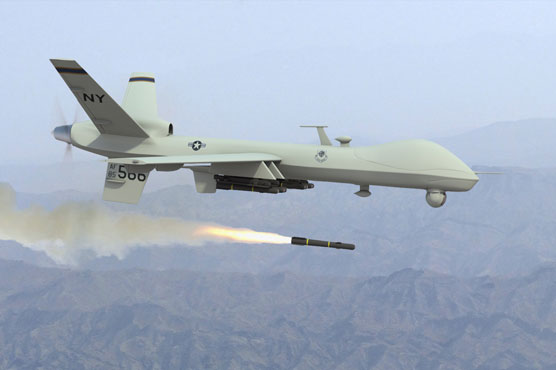
 At least four persons along with a main Al-Qaeda leader Omer Farooq on Sunday died in a drone strike in North Waziristan, Dunya News reported.

According to details, a drone strike has been reported in the area of Khar Tangi, tehsil Data Khel in which a center has been targeted by the missiles. The main leader of Al-Qaeda Omer Farooq who was an ally of Ustad Farooq along with his four accomplices got killed.

Intelligence agencies have confirmed the attack and the death of Omer Farooq.

Moreover, police have started search operation for the collection of further evidences.

Saturday, December 6, 2014

China - Corruption must be punished, discipline must be strictly upheld: People's Daily

The decisions to expel Zhou Yongkang from the Communist Party of China (CPC) as well as investigate and arrest him demonstrated that the CPC Central Committee, with Comrade Xi Jinping as the general secretary, has resolved to uphold the Party's unity and punish corruption, said a commentary to be carried by Saturday's People's Daily.

The Political Bureau of the CPC Central Committee on Friday decided to expel Zhou Yongkang from the CPC and transfer the details of his suspected crimes to judicial organs to be handled in accordance with the law.

The Supreme People's Procuratorate (SPP) also decided to open an investigation into Zhou Yongkang's suspected crimes and to arrest him according to the law.

The decisions showed that the CPC sticks to the principle that everyone is equal before the law and nothing is off-limits in fighting corruption, the People's Daily commentary said.

"The decisions highlighted that the CPC persists in the belief of safeguarding the people's fundamental interests," the commentary said. "The decisions won approval from the Party and the people."

Zhou's conduct deviated from the Party's nature and purpose, greatly damaged the Party's image and caused huge losses for the cause of the Party and the people, the commentary said. "The impacts are extremely bad."

The resolute decisions of the CPC Central Committee guarded Party discipline and the socialist rule of law, the commentary noted.

"The Party and corruption are like water and fire," the commentary said. "The Party's nature and purpose require persistent combat against corruption. Upholding the Party's leadership and cementing the Party's ruling also require persistent combat against corruption."

Since the 18th Congress of the CPC, the CPC Central Committee, with Comrade Xi Jinping as the general secretary, has shown no tolerance nor mercy toward corruption, demonstrating that strict management of the Party is not a slogan and punishment of corruption has no exception, the commentary said.

"We need to advance the anti-corruption drive through the investigation of Zhou's serious violations of Party discipline. We must stick to the attitude of no tolerance, the resolve of strong treatment, the courage to scrape poison from the bones, and the measure of severe punishment," the commentary said.

"All corruption will be fought and each vice will be eradicated," the commentary added.

Fighting corruption and upholding Party discipline are demonstrations of the Party's power and common wishes of all Party members, the commentary said.

All Party organizations and members, especially leading cadres at all levels, must make sure the whole Party stays in accordance with the CPC Central Committee, with Comrade Xi Jinping as the general secretary, in thought, in politics and in action, the commentary said.

"As we continue fighting corruption in a strong and tough attitude, managing the Party in strict accordance with regulations, and constantly strengthening the ability of self-improvement, the Party will always be the strong core of leadership of the socialist cause with Chinese characteristics," the commentary said.

The UK should abandon its colonialist mindset

In September 2014, protestors occupied several major HK intersections, doing seriousharm to Hong Kong's social order and to its economic development. While China has beentaking measures to deal with the protest and restore order, the UK has been trying tomaking trouble for China. A group of British MPs had planned to travel to Hong Kong aspart of an “inquiry into the state of the Sino-British Joint Declaration”, a proposal to whichChina took strong objection.
HK has been a part of China since ancient times. In the 1840s, the UK waged a war againstChina and forced the Qing government to cede Hong Kong Island. The UK went on tocolonize Hong Kong for more than 100 years. In 1997, in accordance with the Sino-BritishJoint Declaration, China resumed the exercise of sovereignty over Hong Kong. This meansthat the UK no longer has any reason to interfere with Hong Kong affairs.
The UK's interference is explained under the pretext of protecting “democracy” and“freedom” in Hong Kong. British Prime Minister David Cameron has said that accordingto the Sino-British Joint Declaration, rights and freedoms of speech, of the press, ofassembly, of association, and of strike are to be ensured by law in the Hong Kong SpecialAdministrative Region. In fact, the people of the SAR already enjoy such rights. But theprotest is damaging social order and causing harm to everyone in Hong Kong. It seemsthat the UK has no interest in defending the rights of the majority of the people.
In 2012, Cameron had a meeting with the Dalai Lama, which damaged China-UKrelations. China delivered a clear message to the UK at the time that China objects to anycountry's interference with China's internal affairs. Later, the UK reiterated its respect forChina’s sovereignty and territorial integrity.
In recent years, the two countries have made progress in restoring the relationship. TheUK should work with China to achieve win-win bilateral relations. The UK has no right totry to impose the values of western counties on others, and should abandon its colonialistmindset.

Russia - Putin sees hope for new peace deal in E. Ukraine


Vladimir Putin has expressed the hope that a new ceasefire deal in eastern Ukraine will be reached soon. His comment comes after talks with Francois Hollande who made an unscheduled short visit to Moscow to discuss the conflict.
Speaking to reporters after the meeting, Putin said that while both sides in the Ukrainian conflict are not fulfilling all their obligations, the situation there gives hope for improvement in the near future.
Both Paris and Moscow agree on the need for an “immediate end to the bloodshed," Putin said. He called on Kiev to promptly withdraw its artillery and multiple rocket launchers from the border with the Donbass region.
“The situation [in Ukraine] is tragic, we can see that people are still dying there, but I very much hope that in the near future a final decision on the ceasefire will be made,” he said.
Russia expects Kiev to exclude any possibility of a blockade of the eastern Donetsk and Lugansk republics, he added: "Otherwise it is difficult to imagine the territorial integrity of Ukraine. Russia, as you know, supports the territorial integrity of Ukraine."
“Russia initiated the meeting [between Kiev and representatives of the eastern republics] in Minsk, with our direct participation these protocols were signed, so we support their full implementation,” Putin elaborated.
A residents of Azotny district clears the area around his house following shelling which killed a 12-year-old boy and a 55-year-old woman, Donetsk, Ukraine (RIA Novosti)

Meanwhile, Ukraine’s President Petro Poroshenko announced a new round of talks between Kiev and representatives of the eastern republics will take place on Tuesday. The negotiations will focus on agreeing a schedule for the implementation of the measures to be taken under the Minsk protocol. It is not certain whether Hollande and Putin were referring to Tuesday’s talks when speaking in Moscow. The proposed date of talks coincided with the so-called “Day of Silence”, when both sides of the conflict vowed to observe a ceasefire.
Hollande made an unexpected stop in Moscow’s Vnukovo-2 airport as he traveled from neighboring Kazakhstan to France on Saturday.
"I was flying over Moscow and made a decision to stop over here for discussing the most significant issues related to Ukraine's crisis and to all the sufferings stemming out of it for the Ukrainians, for the European Union and for Russia as well," Hollande said.
Putin welcomed his counterpart and thanked him for the visit, saying that it “certainly will benefit the resolution of many problems.”
The French leader said he was eager to continue the discussion started at the G20 in Australia and at the three-way meeting between himself, Putin and German Chancellor Angela Merkel during D-Day celebrations in France.
“On June 6 we talked about the need to find solutions, to work together. We’ve talked with Angela Merkel. We believe that Russia and France will be able to find the necessary solution,” he said. "I believe at some moment it is necessary to overcome the obstacles, the walls, which may separate us, and I believe we can do this."
The Mistral-class assault warship (AFP Photo / Georges Gobet)

Tensions between Russia and France have been on the rise as Paris has come under to annul delivery of Mistrals, helicopter-carrying amphibious assault ships, to Moscow over the Ukrainian crisis.
As a result, in late November Hollande decided to suspend the delivery of the first such ship "until further notice".
Moscow has urged Paris to fulfill the agreement with top-ranking officials adding Russia will sue France should the ship not be delivered at all. France is facing a multibillion dollar fine, if it fails to deliver under the contract. The delay of the warships’ delivery has reportedly entailed additional costs for Paris.
On Saturday, Putin said that the two leaders did not speak about the delay as Moscow proceeds from the fact that the contract will be fulfilled. Otherwise Russia expects full compensation from France, he added.

Video - Biden: Killing of US Hostage 'Despicable'

Video Report - Greek protest march turns into clashes

Gauhar Khan slapped: 'Traditional Indian clothes were far skimpier than actress' dress'


By LIZZIE DEARDEN

An Indian television presenter who was slapped by a male audience member because he thought her dress was too revealing has tradition on her side, according to a historian.

Gauhar Khan was left visibly traumatised after the attack last month, while she filmed the grand finale of singing competition Raw Star.

Akil Malik, 24, took offence to her cutaway dress and ran up to the stage to hit her across the face and threaten her.
“Being a Muslim woman, she should not have worn such a short dress,” the Mumbai police quoted him as saying afterwards.
“Actresses are the face of society and they should not wear skirts and short clothes as they make youngsters get attracted to them sexually…if actresses stop wearing short clothes, crime will decrease and lead to a better society.”
The incident prompted a debate in India about changing fashions and the notion of modesty but according to historian Toolika Gupta, short dresses are an ancient tradition in India.
Although the country is most associated with floor-length saris and salwar kameezes for women, that has not always been a case.
Ms Gupta wrote on the BBC News website that what many Indians today believe are home-grown ideas of decorum and modesty are in fact British imports left over from the Empire.
The earliest representations of women show them with minimal clothing, she said, including in sculptures from the Maury and Sunga periods around 300 BC, when men and women wore rectangular pieces of fabric, covering their genitals and little else.
Gauhar Khan wearing a lengha
“Modesty has had different definitions over time and in different regions and communities,” she wrote. “It was not always about covering your face and body and in many respects India's hot climate led the way. People just did what was convenient.”
Even in the colonial era some women in southern in India did not cover the upper part of the body and saris were routinely worn without blouses over bare breasts in Bengal, Ms Gupta said.
She concluded that Ms Khan’s dress, with a fully covered front and cutaway back, went far beyond the requirements of “modesty” dating back centuries.
Her attacker was arrested on charges of assault and intimidation and has been remanded in custody.

India - Jammu and Kashmir Terror Attacks: 'Unambiguous Pakistan hand,' Says Army


The serial terror attacks in Jammu and Kashmir on Friday bore an "unambiguous clear link to Pakistan," and the elements involved were "right at the top," the Indian Army has said. 

"There has been a top-down coordination in Pakistan to synchronise the terror attacks," Lieutenant General Subrata Saha, the top army commander in Kashmir, told NDTV on Sunday. This is because it is "not possible for non-state actors in Pakistan to operate without nexus with elements in official establishment".
The packets of food the terrorists were carrying show they had been manufactured in Pakistan, ammunition and weapons show they have been produced by a Pakistani company, Lt General Saha said.
Thirteen people - a civilian, nine soldiers and three policemen - died in the four attacks on Friday, days before the third phase of assembly elections are to be held in the state. 

The deadliest attack took place at the army camp in Uri, in which eight Armymen, including an officer, were killed. All six militants were also killed in the encounter which lasted over six hours. 

Besides food packets, six AK rifles, 55 magazines, two shotguns, two night vision binoculars, four radio sets, 32 unused grenades and one medical kit were recovered from the dead terrorists.

Lt General Saha said there were no lapses on part of the army. "Can't say any lapses at our end because our priority is to keep civilians safe, which we did... Sometimes, my men have had to pay a very high price but we do it for democracy."

Home Minister Rajnath Singh has already blamed Pakistan for sheltering terrorists who cross the border to target India. "I think Pakistan should try to stop these incidents, if they can't, they should speak to India about it," he said.

Prime Minister Narendra Modi, too, has condemned the attacks, saying they were "desperate attempts to derail the atmosphere of hope" in the state, brought about by the high turnout in the first two phases of the elections.

Music - Eminem - Guts Over Fear ft. Sia

Video - Today in History for December 6th

Video Report - Afghan War: What was it for?

Afshin Rattansi goes underground on the legacy of war in Afghanistan. Matthew Hoh, former marine and the first official to resign from the state department over the war, calls for accountability for the death of troops from ‘political leaders who made them sacrifice for nothing.’

Video Report - U.S. hostage killed during rescue attempt in Yemen

Video - Obama highlights job growth, urges Congress against government shutdown

Hillary Clinton sticks with President Obama on Israel


By 

In appearance with a pro-Israel donor, she defends the White House on Iran talks.

Hillary Clinton had several opportunities to distance herself from the Obama administration during an appearance Friday before a heavily pro-Israel crowd, but she didn’t take them.
Instead, she defended President Barack Obama’s dealings with the Jewish state at a time of tense U.S.-Israel relations, insisting the White House is committed to Israel’s security and supporting America’s nuclear talks with Iran.
The former secretary of state and likely 2016 Democratic presidential contender was speaking at the Saban Forum, an event hosted by the Brookings Institution and named for billionaire and Democratic mega-donor Haim Saban. She offered her most extensive Israel-related comments since criticizing the president’s foreign policy in a summer interview with The Atlantic that caused a political maelstrom.
Ahead of her remarks, some attendees chattered over cocktails about their disagreements with the White House, especially on its decision to pursue the negotiations with Tehran. But, during a half-hour conversation onstage with Saban, Clinton signaled little daylight with the administration.
“If you look at the close cooperation, and what this administration and the Congress over the last six years has done with respect to Israel’s security, it’s quite extraordinary,” she said, pointing to funding for military equipment and strategic consultations. “Nobody can argue with the commitment of this administration to Israel’s security, and that has to continue, it has to deepen regardless of the political back-and-forth.”
Clinton has yet to say if whether she will launch a second campaign for president — an announcement is expected early next year — but Republicans already have been scrutinizing her tenure at Foggy Bottom during Obama’s first term. Many in the GOP accuse Obama of being insufficiently supportive of Israel, and some have tried to link Clinton to Obama’s foreign policy missteps.
In the interview with The Atlantic, published in August, Clinton questioned the White House’s self-described foreign policy doctrine of “Don’t do stupid sh—,” as well as its approach to the bloodshed in Syria, among other criticisms. Her remarks prompted blowback from people close to the administration. Some were unhappy with the timing of her comments, which came as the president faced a slew of international crises. Clinton eventually called the president to patch things over.
Had she decided Friday to issue more criticisms, she could have risked another flurry of anger, especially amid the White House’s efforts to keep the talks with Iran on track. World powers, including the United States, have extended the negotiations with the Islamic Republic until the summer.
Israel views a nuclear weapon-armed Iran as an existential threat, and it doesn’t believe Iran’s assurances that its nuclear program is peaceful.
As secretary of state, Clinton was deeply involved in laying the groundwork for the negotiations (she credited sanctions as helping bring the Iranians to the table). On Friday, she sought to reassure the crowd that “no deal is better than a bad deal,” and that “all options” must remain “on the table” in preventing Iran from obtaining a nuclear weapon.
But, in at times hawkish language, she defended the path the White House has taken with Tehran so far, even as she also painted Iran as a deeply destabilizing force in the Middle East. She also indicated support for the extension of talks, saying it’s “very important” to “try to see if we can reach an agreement in line with our requirements.”
“My bottom line is a deal that verifiably closes all of Iran’s pathways to nuclear weapons,” she said. “The key there is ‘verifiably’ and ‘all.’”
Clinton was also asked about Benjamin Netanyahu, the conservative prime minister of Israel, with whom Obama has a particularly fraught relationship. In The Atlantic, Clinton offered sympathetic words for Netanyahu, but on Friday, she avoided that, instead downplaying Israel’s disagreements with the administration.
“At times there are going to be differences,” she said. “And I don’t think it’s personal. I think it is a different perspective about, sometimes what we think is best for our friends may not be what our friends think is best for them. When we say that, I don’t believe that’s disrespectful or rupturing the relationship. I think that’s an honest relationship. That’s the kind of friend I want. I want people to say that to me, I want to be able to say that back. I think that’s a broader, more accurate way to look at the relationship right now.”
She also reiterated her support for a two-state solution to resolve the Israeli-Palestinian conflict, noting that goal was pursued when her husband, Bill Clinton, was president, as well as in the Bush and Obama administrations.
The absence of negotiations “leaves a vacuum that gets filled by…bad actors, threats…[that are] not good for Israel and not good for the Palestinians,” she said. “So I think the efforts undertaken in the last several years, when I was secretary [and under] Secretary [John] Kerry are very much in the interests of Israel and in the interests of the Palestinians.”
Asked about her biggest regrets while at the State Department, Clinton named several, including the administration’s decision not to do more to boost the pro-democracy protests in Iran in 2009, something she discussed in her recent memoir, “Hard Choices.”
The event drew lawmakers and former lawmakers, including House Minority Leader Nancy Pelosi (D-Calif.), Rep. Nita Lowey (D-N.Y.), whose district includes the Clintons’ Chappaqua home; Sen. Lindsey Graham (R-S.C.), former Sen. Joe Lieberman (I-Conn.) and former Rep. Jane Harman (D-Calif.), along with former Israeli Amb. Michael Oren, among others.
Clinton lingered after the event, hugging Lowey, greeting old colleagues from the State Department, taking pictures with Oren and huddling with Graham.


Read more: http://www.politico.com/story/2014/12/hillary-clinton-barack-obama-israel-113360.html#ixzz3L8MYjDk2

Obama touts positive job news in weekly address


President Obama, in his weekly radio address Saturday, prodded the incoming Republican Congress with the news that the U.S. has added more jobs in 2014 than in any year since 1999, saying it's an argument for lawmakers to enact his administration's economic priorities.
"Building new roads and bridges creates jobs. Growing our exports creates jobs. Reforming our outdated tax system and our broken immigration system creates jobs," Obama said. "Raising the minimum wage would benefit nearly 28 million American workers, giving them more money to spend at local businesses — and that helps those businesses create jobs."
The Bureau of Labor Statistics reported Friday that payroll employment, adjusted for seasonal variation, grew by 321,000 in November, above economists' expectations. Including strong revisions to recent months, the economy has added 2.65 million jobs on the year with a month left to go, eclipsing the growth of 2005 and setting the highest mark since the dotcom bubble year of 1999.

Average hourly earnings were up 0.4 percent in November, and 2.1 percent in the past year, right in line with the trend and slightly higher than the rate at which consumer prices have risen.
In a statement, House Speaker John Boehner said "while it's welcome news that more people found work last month, millions still remain out of work, and middle-class families across the country, including my home state of Ohio, are struggling to get by on wages that haven’t kept pace with rising costs.
"The president’s response has been more of the same: the same massive regulations, the same rising premiums, and the same uncertainty for manufacturers and small businesses," he said.
House Republican leaders, who have watched with frustration over the past two years as Democratic Senate Majority Leader Harry Reid of Nevada has bottled up their legislative agenda, are already planning ways to enact their own measures with the help of the Senate's new Republican majority.