Sunday, September 28, 2014
China : Govt denounces Hong Kong protests
The central government Sunday condemned the illegal pro-democracy movement Occupy Central for undermining social stability in the Hong Kong Special Administrative Region (SAR) in response to the surprise launch of the protest that has brought chaos to the city's business district. "The central government firmly opposes all kinds of illegal behavior in Hong Kong that undermines social order and stability. It is fully confident that the Hong Kong government can handle the situation in accordance with the law and resolutely supports such handling," a spokesperson for the State Council's Hong Kong and Macao Affairs Office said Sunday afternoon. The central government's liaison office in Hong Kong issued a similar statement Sunday night, slamming the Occupy campaign for blocking traffic and disturbing social order, stressing that the recent reform framework released by the top legislature is not to be challenged. At a press conference Sunday, Hong Kong Chief Executive Leung Chun-ying also urged the public to engage in rational discussion on political reform, and said the SAR government is resolute in opposing unlawful actions by Occupy Central. "The police shall continue to handle the situation in accordance with the law," he said. Protesters on Sunday evening spilled out onto some of Hong Kong's busiest streets in the Central and Admiralty districts, paralyzing traffic. Violent clashes have injured six police officers, according to Hong Kong police. According to Radio Television Hong Kong, the city's Hospital Authority said as of 9:45 pm Sunday, 26 people had been hospitalized due to the clashes, without identifying them. Police said they were forced to escalate their action after several warnings and used pepper spray and tear gas to disperse activists intent on forcing their way past police cordons. Stanley Chan Wing-leung, a Hong Kong-based criminal defense lawyer and former senior inspector of police, believes the police have been restrained in their handling of protesters. "The police have to prevent further chaos, especially when Monday will be a working day. Hence the situation has left them with no choice but to maintain social order by driving off the protesters," Chan told the Global Times. Chan believes despite the sudden launch of the protest, the Hong Kong police began preparing for this scenario long ago and have arranged enough manpower to deal with the protests. The Standing Committee of the National People's Congress (NPC) in August adopted a legal framework for ways to elect Hong Kong's top leader by universal suffrage in 2017. Some Hong Kong pro-democracy politicians and activists have expressed opposition to the plan for the nomination threshold as they fear it may bar them from running. They threatened to seal off the heart of Hong Kong's financial district as they push their demands for a "genuine" democracy. The Occupy Central protest was widely expected to begin on Wednesday, the 65th National Day, following a wave of class boycotts organized by university and secondary school students since September 22. Over 60 people were arrested on Friday night at the student-led rally in support of the class boycotts after hundreds of protesters broke into a restricted area next to the government headquarters. Riding on the week-long school strikes and protests, Benny Tai Yiu-ting, co-founder of the Occupy Central movement, made an earlier-than-expected announcement at a student-led rally outside the government headquarters in Tamar in the early hours of Sunday morning, kicking off the movement. While some students supported the early launch, others said Occupy Central had hijacked their protest. "We were summoned by the student leaders but the Occupy Central organizers have hijacked our protest. I think they are just putting on a show," said a student surnamed Lam at the City University of Hong Kong, reported i-Cable TV network. Another student protester from the Chinese University of Hong Kong surnamed Ho said on the same report that she feared arrest for participating in the Occupy movement which may leave her with a criminal record. Late on Sunday, the Hong Kong Federation of Students called on students to retreat from protests in the heart of the city, reported AFP. "The early launch was a carefully planned tactic by the Occupy Central organizers. They have manipulated and incited innocent students to break into government headquarters," Stanley Ng Chau-pei, spokesperson of an anti-Occupy Central group, the Alliance for Peace and Democracy, told the Global Times. Ng said the alliance has recently received complaints from parents that their children have been deceived by the Occupy campaign, which uses their passion and lack of knowledge of the city's political reality. Regina Ip Lau Suk-yee, a Hong Kong legislator, said extreme measures will produce no positive effect but will only affect the livelihood of Hong Kong society. "They [the activists] won't be able to change the NPC's decisions by street battles. They must take part in constructive discussions with the government," Ip told the Global Times on Sunday.By Cathy Wong

Turkey - Beginning of Sharia - Turkey imposes ban on piercings, tattoos in all schools
 Turkey’s government has banned all school pupils nationwide from having tattoos or body piercings in a new dress code deemed oppressive and unenforceable, according to the law’s critics.
US President Barack Obama admits US underestimated the Islamic State

PRESIDENT Barack Obama acknowledged that US intelligence agencies underestimated the threat from Islamic State militants and over-estimated the ability and will of Iraq’s army to fight.
Obama described the US intelligence assessments in response to a question during a CBS 60 Minutes interview. He was asked about how Islamic State fighters had come to control so much territory in Syria and Iraq and whether it was a surprise to him.The president said that during the Iraq war, US military forces with the help of Iraq’s Sunni tribes were able to quash al-Qaeda fighters, who went “back underground”. “During the chaos of the Syrian civil war, where essentially you have huge swathes of the country that are completely ungoverned, they were able to reconstitute themselves and take advantage of that chaos,” Obama said, according to an excerpt released before the show aired. He noted that his director of national intelligence, James Clapper, has acknowledged that the US “underestimated what had been taking place in Syria.” Obama also said it was “absolutely true” that the US over-estimated the ability and will of the Iraqi army. The Obama administration has cited its intelligence weaknesses before. At an August news conference, Obama said “there is no doubt” that the Islamic State group’s advance “has been more rapid than the intelligence estimates” suggested it would be. US intelligence agencies, he said, did not have “a full appreciation of the degree to which the Iraqi security forces, when they’re far away from Baghdad, did not have the incentive or the capacity to hold ground against an aggressive adversary.” At an intelligence conference this month, National Security Agency Director Mike Rogers expressed regret that his agency had not been “a little stronger” in tracking the Islamic State’s shift “from an insurgency to an organisation that was now focused on holding ground, territory, the mechanism of governance.” Obama called Syria ground zero for jihadis around the world, and said military force was necessary to shrink their capacity, cut off financing and eliminate the flow of foreign fighters. He had been less adamant about the threat in the past. In an interview published earlier this year by The New Yorker, Obama appeared to minimise the Islamic State group militants by comparing it to a junior varsity basketball team. The White House at the time said he was speaking about a different threat posed by a range of extremists across the world. Questioning Obama’s strategy to destroy the group, House Speaker John Boehner said the US may have “no choice” but to send in American troops if the mix of US-led air strikes and a ground campaign reliant on Iraqi forces, Kurdish fighters and soon-to-be trained Syrian rebels fails to achieve that goal. Boehner, in an interview broadcast on Sunday did agree with the White House that Obama had the power to order air strikes in Iraq and Syria, but said he believes Congress should consider a resolution authorising the use of force for this specific mission. Boehner said he would bring lawmakers back to Washington - they are not set to return until after the November 4 election - if Obama were to seek such a resolution. The White House pushed back against Boehner’s comments on ABC’s “This Week” about the potential need for American ground troops to confront the militants. Asked whether he would recommend sending in Americans if no one else was able to step up, Boehner said, “We have no choice. These are barbarians. They intend to kill us. And if we don’t destroy them first, we’re going to pay the price.” But Obama’s deputy national security adviser, Tony Blinken, said the country would not see a repeat of the Iraq war. “Hundreds of thousands of Americans on the ground in the Middle East getting bogged down, that’s exactly what al-Qaeda wants,” Blinken said. “That’s not what we’re going to do.”
PPP Chairperson Bilawal Bhutto appeals to PPP sympathizers
http://mediacellppp.wordpress.com/

Pakistan : Four Muslim Gang Rape 15 Year Old Christian Girl for Video Clips
 On September 15, 2014, a fifteen year old Christian girl, Monaza Bibi, was gang raped by four young Muslim turn by turn and they made Mobile video Clip in Deera Sindha Kalan Village of Sialkot.
The Police registered FIR. No.646/14 under sections 476/114 PPC against the two rapists on the complaint of Gang Rape victim's father, named Mubarak Masih. The Police and the some influential local Muslim pressurized the victim family to exempt the other two rapists and did not mention their names in the complaint otherwise ready for dire consequences. The Police completed the Challan speedily and sent the two arrested rapist in judicial lockup so that the police could be successful to save other two rapists.
Advocate Sardar Mushtaq Gill,human rights defender ,who heads LEAD, was informed and being requested by Tariq Seraj (Advocate) from last week to defend the victim family and follow the case for legal assistance and support, but due to shortage of funds Mr. Gill refused to take this case. On September 20 to 25, 2014, Mr. Gill was requested a number of times and yesterday with the financial support of some supporters of LEAD, Mr. Gill headed to meet the victim family along with his team including main legal advisor of LEAD Mr. Aric John (Advocate). Mr. Gill made assured the victim family for legal assistance and possible support for them and prayed for the victim girl and her family.
The father of gang rape victim girl told that they were yet being threatened by the accused family members and they were also being pressurized for compromise with the culprits. Mr. Gill along with his team and the father of victim girl went to the concerned Police Station and met with Investigator Officer and SHO of the Police Station. The father of victim girl got registered a new complaint about the threats and the pressure which is being developed by the rapists' relatives and other influential Local Muslim. The SHO made assured to take immediate legal action against them.
The SHO also made it confirmed that the rapists made some mobile video clip which is the part of evidence and the concerned investigator included Mobile and memory card in the Police Challan for evidence.
"It is our obligation as Christians to help and save the girls who have been gang raped and sexually assaulted," said Mr. Gill. He further added that is is very disturbing for him that the rapists gang raped turn by turn and made video clip. This is really the horrific act of the rapists.
In Pakistan rape is used as an instrument of arbitrary power over Christian girls, who come from poor and marginalized families. It is a form of violence that wants to reiterate the submission to Muslims. The rest of society is not outraged because the victims mostly belong to religious minorities, who are the most vulnerable. It is very sad to share that rarely rapists are punished. Furthermore, rape victims face terrible difficulties; they do not receive adequate medical treatment for sexual assault. A number of girls are traumatized and become depressed and in need of psychological assistance.
LEAD encourages you, and those in your local church, to speak out on behalf of persecuted Pakistani Christians and pray for them, including young girls, who are constantly at risk of being victimized through the injustice and sexual abuse. We at LEAD request to stand with us morally and physically and also pray for the safety of all believers and LEAD team in Pakistan.
On September 15, 2014, a fifteen year old Christian girl, Monaza Bibi, was gang raped by four young Muslim turn by turn and they made Mobile video Clip in Deera Sindha Kalan Village of Sialkot.
The Police registered FIR. No.646/14 under sections 476/114 PPC against the two rapists on the complaint of Gang Rape victim's father, named Mubarak Masih. The Police and the some influential local Muslim pressurized the victim family to exempt the other two rapists and did not mention their names in the complaint otherwise ready for dire consequences. The Police completed the Challan speedily and sent the two arrested rapist in judicial lockup so that the police could be successful to save other two rapists.
Advocate Sardar Mushtaq Gill,human rights defender ,who heads LEAD, was informed and being requested by Tariq Seraj (Advocate) from last week to defend the victim family and follow the case for legal assistance and support, but due to shortage of funds Mr. Gill refused to take this case. On September 20 to 25, 2014, Mr. Gill was requested a number of times and yesterday with the financial support of some supporters of LEAD, Mr. Gill headed to meet the victim family along with his team including main legal advisor of LEAD Mr. Aric John (Advocate). Mr. Gill made assured the victim family for legal assistance and possible support for them and prayed for the victim girl and her family.
The father of gang rape victim girl told that they were yet being threatened by the accused family members and they were also being pressurized for compromise with the culprits. Mr. Gill along with his team and the father of victim girl went to the concerned Police Station and met with Investigator Officer and SHO of the Police Station. The father of victim girl got registered a new complaint about the threats and the pressure which is being developed by the rapists' relatives and other influential Local Muslim. The SHO made assured to take immediate legal action against them.
The SHO also made it confirmed that the rapists made some mobile video clip which is the part of evidence and the concerned investigator included Mobile and memory card in the Police Challan for evidence.
"It is our obligation as Christians to help and save the girls who have been gang raped and sexually assaulted," said Mr. Gill. He further added that is is very disturbing for him that the rapists gang raped turn by turn and made video clip. This is really the horrific act of the rapists.
In Pakistan rape is used as an instrument of arbitrary power over Christian girls, who come from poor and marginalized families. It is a form of violence that wants to reiterate the submission to Muslims. The rest of society is not outraged because the victims mostly belong to religious minorities, who are the most vulnerable. It is very sad to share that rarely rapists are punished. Furthermore, rape victims face terrible difficulties; they do not receive adequate medical treatment for sexual assault. A number of girls are traumatized and become depressed and in need of psychological assistance.
LEAD encourages you, and those in your local church, to speak out on behalf of persecuted Pakistani Christians and pray for them, including young girls, who are constantly at risk of being victimized through the injustice and sexual abuse. We at LEAD request to stand with us morally and physically and also pray for the safety of all believers and LEAD team in Pakistan.
Pakistan Is Building Smaller Nukes, But They Just Might Be More Dangerous
Pakistan is likely working to create tactical nuclear weapons, which are smaller warheads built for use on battlefields rather than cities or infrastructure. These weapons are diminutive enough to be launched from warships or submarines, which makes them easier to use on short notice than traditional nuclear weapons. Developing tactical nuclear weapons calls for miniaturization of current weaponry (the "Davy Crockett," developed by the US in the '50s, was designed to launch from a simple tripod). But as The Washington Post reports, analysts are divided on whether Pakistan will be able to make warheads tiny enough for sea-launching. There's less uncertainty about the military advantage gained with such weapons. A warhead-toting navy would allow Pakistan to stay nuclear-capable regardless of what happens to its homeland, where its nuclear infrastructure is spread out. The trade-off there, for both Pakistan and the world, is that nuclear missiles become more likely to fall into rogue hands, whether those of a maverick military commander or extremist groups. At a land-based facility, a hijacker would need "to commandeer two separate facilities, with two separate security procedures and local commanders," Jonah Blank, a political scientist with the RAND Corporation, wrote in an email to Business Insider. "For a sea-based nuclear device, a rogue operator would need only to commandeer one asset: A submarine or surface vessel." Other safeguards exist - US submarines, for instance, require complex codes before permitting a nuclear offensive - but faster access still simplifies one factor in a high-stake equation. Historically, deterrence and the stability it brings is often the salutary result of rivals with equal nuclear capability. It's also Pakistan's stated goal. Last September a statement from a meeting of the National Command Authority (which directs nuclear policy and development) said Pakistan is developing "a full-spectrum deterrence capability to deter all forms of aggression." The meeting was presided by Pakistani prime minister Nawaz Sharif. "India has what's called the triad, the ability to launch nuclear weapons form air, land, and now soon by sea. Pakistan is looking for the same," Arif Rafiq, a researcher at the Middle East Institute, told Business Insider. He believes nuclear parity between the countries has achieved deterrence. "Since India and Pakistan tested nuclear weapons in 1998, there has been a greater level of restraint in terms of the behavior of both countries when it comes to war," Rafiq said. "They've advanced their nuclear arsenal but they've also taken significant steps towards normalizing relations." While nuclear weapons can be beneficial, Rafiq doesn't exactly applaud them: "Having one nuclear warhead is something that's terrible enough for this world," he said.PIERRE BIENAIMÉ
Militants In Afghanistan, Pakistan Claiming Allegiance To IS
A mid fears the Islamic State (IS) extremist group could expand to Afghanistan, there are already signs that some militants in the region are eager to claim affiliation with the group. One sign came this week in a video sent to RFE/RL's Radio Free Afghanistan that shows three purported Afghan militants, their faces covered, sitting beneath the black IS battle flag. Speaking in the Ghazni dialect of Pashto, the trio's spokesperson claimed to represent a group called the Islamic Organization of Great Afghanistan and stated his readiness to fight for the IS and its "caliph," Abu Bakr al-Baghdadi. The unidentified spokesperson called for all militants in Afghanistan, the Pashtun tribal areas in Pakistan, and in the Baluch areas of Pakistan and Iran to join together under the IS banner. At times, however, he appeared as much focused on his own nationalistic agenda as the Islamic State's goal of uniting all Muslim lands in a new caliphate. He repeatedly called for attacks on the "Punjabi state" of Pakistan and accused the Afghan Taliban's leaders of working for Islamabad's interests, while praising IS as the only power able to "free" his countrymen. The video was sent a week after an anonymous caller contacted Radio Free Afghanistan's correspondent in Ghazni Province and claimed to represent the IS militant group in Afghanistan. Although intended to reinforce the caller's claim, the video did not offer any details as to the size or strength of the group behind it. That makes is impossible to know whether the group in the video has a direct link to the Islamic State's leadership. But its use of IS symbols and the reverence with which the spokesperson refers to the group does offer a measure of how much name recognition IS now has in the region and of its potential for expansion. 'Slightly Outdated Model' Some intelligence services believe IS is actively seeking new members in Afghanistan. A Russian diplomat in Afghanistan said this week that some of his sources report that IS has already opened an office, though he did not say where. "We know that about a hundred [IS] members have penetrated there," Zamir Kabulov, special representative in Afghanistan for Russian President Valdimir Putin, told Interfax on September 23. "As I understand it, [IS] views the Taliban or even Al-Qaeda as a conservative and slightly outdated model," Kabulov said. "They present themselves as a new ideology, which is more offensive, aggressive, and advanced." If IS does turn eastward, it will likely come into competition with the Taliban, currently the dominant militant movement in the region. The competition could be both for first-time recruits and for seasoned fighters. A commander in the Hizb-i-Islami group, which fights alongside the Taliban in Afghanistan, told the BBC last week that he was "sure" his leadership would announce allegiance to IS. It was not clear whether the commander, named Mirwais, was speaking for himself alone or for others. Reuters reported last week that a splinter group of Pakistan's Taliban insurgents, Jamat-ul Ahrar, also was ready to consider invitations to join IS. "IS is an Islamic jihadi organization working for the implementation of the Islamic system and creation of the caliphate," Ehsanullah Ehsan, Jamat-ul Ahrar's leader and a prominent Taliban figure, told Reuters on September 7. "We respect them. If they ask us for help, we will look into it and decide." Refugee Camp Recruitment Meanwhile, there are signs some groups already are trying to recruit for IS in refugee camps in Pakistan. A 12-page pamphlet emblazoned with the Islamic State group's black flag and written in both Pashto and Dari was distributed earlier this month in camps near Peshawar, the capital of Khyber-Pakhtunkhwa Province. The camps house refugees from Afghanistan and from Pakistan's restive tribal regions. Reuters quotes Sameeulah Hanifi, a prayer leader in Peshawar, as saying the pamphlets were distributed by a little-known local group called Islami Khalifat, an outspoken IS supporter. By moving into South and Central Asia, IS would be following home the many recruits from the region who currently are fighting with the group in Syria and Iraq. Iran said recently it had arrested Afghan and Pakistani citizens trying to join IS in Syria and Iraq. The BBC quotes Interior Minister Abdolreza Rahmani as saying on September 8 that the men planned to cross Iran but did not specify their number or where they were arrested. Similarly, dozens of militants from Uzbekistan, Kyrgyzstan, and Tajikistan are reported to have made the journey through Turkey to Syria to join extremist groups battling the regime of Syrian President Bashar al-Assad.By Charles Recknagel
http://www.rferl.org/content/islamic-state-expanding-afghanistan-pakistan/26607471.html
Pakistani exiles speak out about country's religious extremism
By Susan Mahoney
While much of the world is currently focused on the threat posed by ISIS, a Pakistani couple living in exile in the United States continues to speak out about the heavy cost of Islamic fundamentalism in their homeland.Husain Haqqani and Farahnaz Ispahani have spent their careers fighting to improve the lives of their fellow Pakistanis. Ms. Ispahani is a journalist and was a member of the Pakistani parliament, while Haqqani, her husband, was Pakistan's ambassador to the U.S. from 2008 to 2011. They are both passionate advocates of liberal, secular values, democracy and the rule of law – and it has cost them. Both have received numerous death threats. Ispahani says that when her father was ill and dying, she could not go home because of threats from the Sunni militant group Lashkar-e-Jhangvi. Haqqani was forced to resign as ambassador in 2011 over allegations that he had sought U.S. help to head off a possible military coup, while Ispahani was stripped of her seat in parliament, ostensibly because she holds dual U.S.-Pakistani citizenship. They now live in Washington, D.C., where Haqqani is director for South and Central Asia at the Hudson Institute and Ispahani was, up until recently, a public policy scholar at the Wilson Center. A few years ago the couple was included in Foreign Policy magazine's list of "Top 100 Global Thinkers,” for "pushing tough love for their troubled country." They both say religious violence in Pakistan is on the rise. Suicide bombings, so-called “honour killings” and assassinations of members of the media, the judiciary and politicians accused of blasphemy have become so common as to be almost routine. “Time is running out,” says Ispahani in an interview with Michael Enright on CBC Radio's The Sunday Edition. “It is escalating to a point where the state can’t stop it if they wanted to.”
‘Every world leader’s worst nightmare’In addition to being unable to prevent sectarian violence, successive Pakistani governments have failed to provide their citizens with basic necessities. About two-thirds of Pakistan's nearly 200 million people live on less than two dollars a day. And of course, Pakistan has the bomb. All this makes for a combustible mix. As former CBC foreign correspondent Brian Stewart once put it, “The mere thought of Pakistan boiling over into unpredictable chaos is every world leader’s worst nightmare.” Many commentators regard it as “the most dangerous nation in the world.” In recent months, Pakistan has been embroiled in a political crisis. Former cricket star Imran Khan and Canadian cleric Tahir ul-Qadri have been leading crowds of protesters through the streets of Islamabad, the capital, demanding the resignation of Pakistan’s current prime minister, Nawaz Sharif. Although Haqqani and Ispahani are not political allies of Mr. Sharif, they deplore the attempt to topple a democratically elected government. “They are tapping into the people’s overall unhappiness at the government’s inability to supply basic services," says Ispahani, who has written a forthcoming book about religious violence in Pakistan. “But it is an orchestrated protest, designed to clip the wings of an elected civilian government. My husband and I come from a different political background to Mr. Sharif, so we don’t have any personal interest in supporting him. But we do support him.” Ispahani and Haqqani point to Pakistan’s military, with its emphasis on an almost permanent state of war with India, as the cause of many of the country’s problems, including religious extremism. “The Pakistan military created jihadi groups to fight in India and in Kashmir. But during what I call their 'off-season,' when they’re not fighting elsewhere, these jihadi groups turn their focus back home," says Ispahani. "Some like killing Shias, some like killing Ahmadis, Hindus, Christians, Sikhs. The Pakistani military has created a monster. Because they need them sometimes, they can’t turn them on and off at will.”
‘Baying for blood’Ispahani also blames "mob rule."
“No one has been put to death for the blasphemy laws by the state. But the number of people who have been targeted, murdered, burnt alive by mobs baying for blood, is huge. That’s why I believe what Mr. Khan and Mr. Qadri are doing is so dangerous. They are conflating Islam and the anger of the youth about corruption and no jobs – and unleashing it.”The couple agree that the West can have influence in Pakistan, by tying aid and business relationships to human rights. “The rest of the world should not be doing business with a country where leaders like former Prime Minister Benazir Bhutto and countless others have been killed. There has been no human rights qualification. That is what we wish,” says Ispahani. “The relationship with the west has been one of dependence, deception and defiance," says Haqqani, whose most recent book is called Magnificent Delusions: Pakistan, the United States and an Epic History of Misunderstanding. "I support engagement and economic assistance for the poor in Pakistan. But most of the aid has gone for primarily military purposes. The international community needs to stop allowing Pakistan’s officials and its government to sell them a bill of goods, and get away with saying aid money is going to help the poor.” “Pakistan is at that last moment where either reform comes, or we go further down the slippery slope," says Haqqani. “I would love to go back to Pakistan if I didn’t feel physically threatened, I would like to make these arguments to my countrymen at home."
Pakistan: Blasphemy again | The broken justice system
Waqqas Mir
 Muhammad Asghar is the latest victim of the Pakistani vigilantism motivated by religion. He was shot by a policeman. Rewind a few days and witness something similar in Karachi: a liberal Islamic scholar shot to death after he had been accused of blasphemy by his colleagues.
You should all turn to the person next to you in the street, in your neighborhood, in your workplaces to thank her that he has not accused you of blasphemy — yet.
Whatever you do in this country, no matter how powerful you may be, there is one basic and cold fact that you cannot escape: all someone needs to do to end your life, as you know it, is to accuse you of blasphemy. From the moment you are accused of this offence, regardless of whether you are actually charged, the clock starts ticking. You live on borrowed time. Each day that you live is because the ‘pure’ ones are feeling magnanimous.
Once a person is accused, he can try anything — it will not work. We can beg the accuser for mercy, plead insanity, plead innocence, and explain the context of what was said or heard. None of that matters. All that matters is this: the allegation is all the proof someone needs to kill you. The state is as helpless as you.
More and more people seem to have decided that courts are a mere nuisance and the only real evidence of love and respect for any religious figure is to take matters of life and death in your own hands — more importantly, the only real evidence of love is to take someone’s life. Then there are those who go a step further and kill themselves too.
Bigotry and violence create their own agency. This results in a situation where the state and its so-called monopoly over violence is not even half the story. Pakistan is a classic case. The debate about the ‘law of blasphemy’ largely misses the point. The role of the state is often similar to yours and mine: we are helpless on-lookers.
Organising seminars or using donor money to talk about the law of blasphemy in a free speech context when it comes to Pakistan is not going to get us anywhere. You don’t have to like this fact. You just have to live with it. It is not only naïve, it is also irresponsible. You cannot expect any politician to even discuss tweaking the law on anything related to religion and stay alive. There is a space that needs to be created first.
The problem is simple: most people are missing the point.
The problem is also not the law on the books. Every state has a legitimate interest in prohibiting or punishing, partially or wholly, categories of speech that it deems undesirable. This includes pornography, defamation, incitement to violence, ‘fighting words’ etc. The problem is the state and mindset of the citizens who think they are bound to ignore the law of the land and take it into their own hands.
Let me explain how.
A broken justice system works both ways here. The accuser feels that the justice system is broken, so the person accused of blasphemy will be able to get away. The accused, on the other hand, feels that the system is hopeless at every level, ranging from investigation to even physical protection of the accused. The state does not know how to prosecute or exonerate someone without endangering lives. The judges hearing these cases begin fearing for their lives if someone is not pronounced guilty. The lawyers representing the accused, if any lawyers come forward that is, live on borrowed time too. But the judicial verdict or outcome is not the one that matters.
A result, quite logical if you follow how systems work, is that a new power broker steps in to fill the void left by the state. That power broker is currently the violent mindset — the champions of vigilante violence; something the state is doing nothing to change. And it cannot change it — for it lacks capacity and even the intestinal fortitude.
None of this is meant to absolve those practicing vigilante justice. Those who attack or kill people in the name of avenging blasphemy challenge the authority of the state. They must be dealt with harshly. However, even if you are someone who believes that the law is the problem and you somehow pretend that the law does not exist, no problem will be solved. Vigilante violence will still take place.
The state has not even entered the arena where it really matters: conducting a discourse. And it will not do this in my lifetime at least.
The reason is that a state will only act against violence that threatens it. Right now the state thinks this violence will not turn towards the state. And even if it does, it can be controlled. “So what? The state could argue. “A few people die each year in vigilante violence because of blasphemy related charges. We try to protect them, we fail. But what do you want us to do? Say or do something which brings out all the hornets?”
But the state is wrong. This is Pakistan, a Muslim majority state where religion is your license to do everything, and more importantly, a cover for everything. It gives people the power to slit throats and to pronounce minority sects as those worthy of nothing but death.
One day, long after we are gone, historians will analyse how Pakistan shot herself in the foot — and let herself bleed to the brink of death. But that day is not now. In today’s Pakistan, be grateful for the life that you have and do everything you can, in your own little way, to challenge the mindset that threatens each one of us.
In one way, it is only a matter of time so why not do all that we can?
Muhammad Asghar is the latest victim of the Pakistani vigilantism motivated by religion. He was shot by a policeman. Rewind a few days and witness something similar in Karachi: a liberal Islamic scholar shot to death after he had been accused of blasphemy by his colleagues.
You should all turn to the person next to you in the street, in your neighborhood, in your workplaces to thank her that he has not accused you of blasphemy — yet.
Whatever you do in this country, no matter how powerful you may be, there is one basic and cold fact that you cannot escape: all someone needs to do to end your life, as you know it, is to accuse you of blasphemy. From the moment you are accused of this offence, regardless of whether you are actually charged, the clock starts ticking. You live on borrowed time. Each day that you live is because the ‘pure’ ones are feeling magnanimous.
Once a person is accused, he can try anything — it will not work. We can beg the accuser for mercy, plead insanity, plead innocence, and explain the context of what was said or heard. None of that matters. All that matters is this: the allegation is all the proof someone needs to kill you. The state is as helpless as you.
More and more people seem to have decided that courts are a mere nuisance and the only real evidence of love and respect for any religious figure is to take matters of life and death in your own hands — more importantly, the only real evidence of love is to take someone’s life. Then there are those who go a step further and kill themselves too.
Bigotry and violence create their own agency. This results in a situation where the state and its so-called monopoly over violence is not even half the story. Pakistan is a classic case. The debate about the ‘law of blasphemy’ largely misses the point. The role of the state is often similar to yours and mine: we are helpless on-lookers.
Organising seminars or using donor money to talk about the law of blasphemy in a free speech context when it comes to Pakistan is not going to get us anywhere. You don’t have to like this fact. You just have to live with it. It is not only naïve, it is also irresponsible. You cannot expect any politician to even discuss tweaking the law on anything related to religion and stay alive. There is a space that needs to be created first.
The problem is simple: most people are missing the point.
The problem is also not the law on the books. Every state has a legitimate interest in prohibiting or punishing, partially or wholly, categories of speech that it deems undesirable. This includes pornography, defamation, incitement to violence, ‘fighting words’ etc. The problem is the state and mindset of the citizens who think they are bound to ignore the law of the land and take it into their own hands.
Let me explain how.
A broken justice system works both ways here. The accuser feels that the justice system is broken, so the person accused of blasphemy will be able to get away. The accused, on the other hand, feels that the system is hopeless at every level, ranging from investigation to even physical protection of the accused. The state does not know how to prosecute or exonerate someone without endangering lives. The judges hearing these cases begin fearing for their lives if someone is not pronounced guilty. The lawyers representing the accused, if any lawyers come forward that is, live on borrowed time too. But the judicial verdict or outcome is not the one that matters.
A result, quite logical if you follow how systems work, is that a new power broker steps in to fill the void left by the state. That power broker is currently the violent mindset — the champions of vigilante violence; something the state is doing nothing to change. And it cannot change it — for it lacks capacity and even the intestinal fortitude.
None of this is meant to absolve those practicing vigilante justice. Those who attack or kill people in the name of avenging blasphemy challenge the authority of the state. They must be dealt with harshly. However, even if you are someone who believes that the law is the problem and you somehow pretend that the law does not exist, no problem will be solved. Vigilante violence will still take place.
The state has not even entered the arena where it really matters: conducting a discourse. And it will not do this in my lifetime at least.
The reason is that a state will only act against violence that threatens it. Right now the state thinks this violence will not turn towards the state. And even if it does, it can be controlled. “So what? The state could argue. “A few people die each year in vigilante violence because of blasphemy related charges. We try to protect them, we fail. But what do you want us to do? Say or do something which brings out all the hornets?”
But the state is wrong. This is Pakistan, a Muslim majority state where religion is your license to do everything, and more importantly, a cover for everything. It gives people the power to slit throats and to pronounce minority sects as those worthy of nothing but death.
One day, long after we are gone, historians will analyse how Pakistan shot herself in the foot — and let herself bleed to the brink of death. But that day is not now. In today’s Pakistan, be grateful for the life that you have and do everything you can, in your own little way, to challenge the mindset that threatens each one of us.
In one way, it is only a matter of time so why not do all that we can?
Balochistan: From Pillar to Post
 By Hammal Baloch
If one is to commit the blasphemy of dismissing the vacuous references to the ‘Balochistan’s peculiar traditions, every now and then flaunted by the powers that be, it is already one of the worst places on earth for women.
A decade long insurgency and a growing dependency of its women on the male members of their families to negotiate with modernity, coupled with negligible opportunities for participation in public sphere, have come together to exact enormous miseries on women of Balochistan. More so in the rural areas of Baloch inhabited districts of the province, where Pakistan’s military and Baloch separatists have their horns locked for quite some time now.
It is not to deny that spare a few, the majority of ordinary people in the province are forced to lead a life under repression. However, it is the women of Balochistan who have suffered the most. Too many of them have lost sons and husbands to a bloody war that has been underway for the last one decade, grief stricken yet condemned to carry on and fend for themselves and their families.
The missing persons saga continues to contribute to their miseries, as well. For example, in the households where men have gone missing, the women have been forced to take charge. For them the drudgery of routine has coincided with the agony of a missing family member — often the bread winner of the household. Nevertheless, they have shown tremendous resilience, both publicly and privately.
From marching long distances for the recovery of their loved ones to organising protest rallies and sit-in camps; the women seem to be making inroads into the space that has so far been exclusively reserved for men. Obviously, this new trend has more to do with compulsion rather than choice. As a matter of fact, Zar Jan, the wife of Zahid Kurd, has been running from pillar to post for the past two months to learn the fate of her missing husband. While the likes of Farzana Majeed continue to shuttle between courts and press clubs without any respite.
A chain of recent events indicates that the women in Balochistan better brace themselves for even worse. It is unfortunate that it takes as horrifying events as of last month — when unknown men threw acid on the faces of six women shoppers in the bazars of Quetta and Mastung — to remind us of the hardships of women in Balochistan. As a matter of fact, stakes in Balochistan are so high that it looks crass to point out the plight of individuals amid competing grand narratives of national rights and national interest. It is thus high politics that has come to define and dominate the lives of people of Balochistan.
Regardless of the twisted rationale that prompted these horrendous attacks, one is dumbfounded by the callousness meted to the women here on a daily basis. They have to face a retrogressive social order at one level and bear with a state that has chosen to stay stern and stoic to their miseries. Despite claims of the incumbent provincial government that things have improved, there is overwhelming evidence that nothing substantial has changed.
The forced closure of co-ed schools in Makkuran region and the recent attacks on women in the northern parts of Balochistan, appear to be two manifestations of the single grand design to repress its already beleaguered women. The people of Balochistan have seen more than their fair share of brutality — particularly the women, but sadly their woes fail to attract much concern.
Serious violations as the recent acid attacks, at maximum manage to engender dull references to ‘Balochistan’s peculiar traditions’ and fangless condemnations. Ironically, theriwayat mantra is most frequently invoked by the quarters that claim to practice pro-people politics, i.e nationalists. The riwayat-response is not merely superficial, it is problematic for other reasons as well: for one, it portrays an image of people living in Balochistan as trapped in a time warp, unchanging, and following esoteric codes to conduct their lives; as if prior to the attack, everything was nice and good and in accordance with those rules. By extension it means that the normal course of conduct, in this case the treatment of women, is perfectly fine. Furthermore, the riwayat-line effectively discourages rational inquiry into the existing social arrangement. As a result it unwittingly or wittingly upholds the status quo.
Such attacks, more than anything else, should provide us with the opportunity to do some soul searching: as any serious attempt to rectify the situation, would require intellectual conceptions that go beyond traditional and simplistic recourses. And it’s only then that the roots of deep sexism that afflicts Baloch society today can be unearthed. But again, that’s not going to happen when there is a war going on.
By Hammal Baloch
If one is to commit the blasphemy of dismissing the vacuous references to the ‘Balochistan’s peculiar traditions, every now and then flaunted by the powers that be, it is already one of the worst places on earth for women.
A decade long insurgency and a growing dependency of its women on the male members of their families to negotiate with modernity, coupled with negligible opportunities for participation in public sphere, have come together to exact enormous miseries on women of Balochistan. More so in the rural areas of Baloch inhabited districts of the province, where Pakistan’s military and Baloch separatists have their horns locked for quite some time now.
It is not to deny that spare a few, the majority of ordinary people in the province are forced to lead a life under repression. However, it is the women of Balochistan who have suffered the most. Too many of them have lost sons and husbands to a bloody war that has been underway for the last one decade, grief stricken yet condemned to carry on and fend for themselves and their families.
The missing persons saga continues to contribute to their miseries, as well. For example, in the households where men have gone missing, the women have been forced to take charge. For them the drudgery of routine has coincided with the agony of a missing family member — often the bread winner of the household. Nevertheless, they have shown tremendous resilience, both publicly and privately.
From marching long distances for the recovery of their loved ones to organising protest rallies and sit-in camps; the women seem to be making inroads into the space that has so far been exclusively reserved for men. Obviously, this new trend has more to do with compulsion rather than choice. As a matter of fact, Zar Jan, the wife of Zahid Kurd, has been running from pillar to post for the past two months to learn the fate of her missing husband. While the likes of Farzana Majeed continue to shuttle between courts and press clubs without any respite.
A chain of recent events indicates that the women in Balochistan better brace themselves for even worse. It is unfortunate that it takes as horrifying events as of last month — when unknown men threw acid on the faces of six women shoppers in the bazars of Quetta and Mastung — to remind us of the hardships of women in Balochistan. As a matter of fact, stakes in Balochistan are so high that it looks crass to point out the plight of individuals amid competing grand narratives of national rights and national interest. It is thus high politics that has come to define and dominate the lives of people of Balochistan.
Regardless of the twisted rationale that prompted these horrendous attacks, one is dumbfounded by the callousness meted to the women here on a daily basis. They have to face a retrogressive social order at one level and bear with a state that has chosen to stay stern and stoic to their miseries. Despite claims of the incumbent provincial government that things have improved, there is overwhelming evidence that nothing substantial has changed.
The forced closure of co-ed schools in Makkuran region and the recent attacks on women in the northern parts of Balochistan, appear to be two manifestations of the single grand design to repress its already beleaguered women. The people of Balochistan have seen more than their fair share of brutality — particularly the women, but sadly their woes fail to attract much concern.
Serious violations as the recent acid attacks, at maximum manage to engender dull references to ‘Balochistan’s peculiar traditions’ and fangless condemnations. Ironically, theriwayat mantra is most frequently invoked by the quarters that claim to practice pro-people politics, i.e nationalists. The riwayat-response is not merely superficial, it is problematic for other reasons as well: for one, it portrays an image of people living in Balochistan as trapped in a time warp, unchanging, and following esoteric codes to conduct their lives; as if prior to the attack, everything was nice and good and in accordance with those rules. By extension it means that the normal course of conduct, in this case the treatment of women, is perfectly fine. Furthermore, the riwayat-line effectively discourages rational inquiry into the existing social arrangement. As a result it unwittingly or wittingly upholds the status quo.
Such attacks, more than anything else, should provide us with the opportunity to do some soul searching: as any serious attempt to rectify the situation, would require intellectual conceptions that go beyond traditional and simplistic recourses. And it’s only then that the roots of deep sexism that afflicts Baloch society today can be unearthed. But again, that’s not going to happen when there is a war going on.
Pakistan - Drone strike kills two suspected militants in South Waziristan
The Express Tribune
 At least two suspected militants were killed and one injured when drones fired missiles at a compound in Karezai Pal, Wana, South Waziristan Agency on Sunday, Express News reported.
“A US drone fired two missiles at a vehicle and at least two militants were killed and one was wounded,” a senior security official told AFP on condition of anonymity.
“The militants had just parked their vehicle outside the main gate of a compound and had asked for drinking water from inside. Just when they were drinking water standing on the road, drones fired two missiles.”
Their identities were not known but initial information indicated that they were not locals, the official added.
A militant source who called AFP from an unknown location also confirmed the missile strike and casualties.
This is the second drone strike this month and the first in the South Waziristan Agency this year.
On September 24, at least 10 suspected militants, including foreign fighters, were killed and two injured in a US predator strike in North Waziristan Agency.
At least two suspected militants were killed and one injured when drones fired missiles at a compound in Karezai Pal, Wana, South Waziristan Agency on Sunday, Express News reported.
“A US drone fired two missiles at a vehicle and at least two militants were killed and one was wounded,” a senior security official told AFP on condition of anonymity.
“The militants had just parked their vehicle outside the main gate of a compound and had asked for drinking water from inside. Just when they were drinking water standing on the road, drones fired two missiles.”
Their identities were not known but initial information indicated that they were not locals, the official added.
A militant source who called AFP from an unknown location also confirmed the missile strike and casualties.
This is the second drone strike this month and the first in the South Waziristan Agency this year.
On September 24, at least 10 suspected militants, including foreign fighters, were killed and two injured in a US predator strike in North Waziristan Agency.
Pakistan - Islamic Studies Only Please - ‘objectionable material’
 The PTI government in Khyber Pakhtunkhwa has decided to remove ‘objectionable material’ from primary school textbooks to please the Jamaat-i-Islami. While our national curriculum needs heavy revision, JI as the news author is probably not the direction we want to go in. JI has reservations over pictures of minor girls without dupatta, Christmas cakes, an ambulance crosses and other petty things that they would like to micro manage. A primary school child learning the phrase “Good morning” is now offensive to these men, and as a nation we need to decide how much religion we want to institutionalise. If these changes were made for the preservation of the Pakistani culture, one would still understand. But this is imposition of religion, and we already have religious education as a subject, and Urdu and Pakistan Studies are already rife with religious stories and sermons.
The previous ANP government had revised some of the curriculum to remove overtly religious sermonising. They had replaced some Islamic topics and personalities with Ranjit Singh, Raja Dahir and Abdul Ghaffar Khan to acquaint children with local heroes. Also included in the syllabus were lessons on human rights and tolerance, while hate material and harsh sentiments against non-Muslims were removed. Most of JI’s demands have been met and much secular content will be removed. Additionally, there will be the inclusion of Quranic verses in chemistry, physics and biology.
While many want Pakistan to change into a tolerant and progressive country, myopic conservatism has a tight grip on the minds of our children. What should have been objectionable to a political party is how our textbooks target minority faith groups, how the entirety of a woman’s existence is to be a mother and homemaker, how the history of the people of the subcontinent starts with the Arab hero, Muhammad Bin Qasim, how science never even touches on evolution and chapters on reproduction are missing or censored. We have been immature and cowardly about how we have handled the content of our children’s education and we can never progress if they are not taught the basic lessons of tolerance and diversity. While the story of Khan Abdul Ghaffar will be left out of books, little girls will now wear dupattas and hijabs to the satisfaction of bearded men. Kudos to the KP government. Will we hear Imran talk about this kind of education at his Lahore jalsa today? Of course not. This is the only kind of compromising he seems to believe in.
The PTI government in Khyber Pakhtunkhwa has decided to remove ‘objectionable material’ from primary school textbooks to please the Jamaat-i-Islami. While our national curriculum needs heavy revision, JI as the news author is probably not the direction we want to go in. JI has reservations over pictures of minor girls without dupatta, Christmas cakes, an ambulance crosses and other petty things that they would like to micro manage. A primary school child learning the phrase “Good morning” is now offensive to these men, and as a nation we need to decide how much religion we want to institutionalise. If these changes were made for the preservation of the Pakistani culture, one would still understand. But this is imposition of religion, and we already have religious education as a subject, and Urdu and Pakistan Studies are already rife with religious stories and sermons.
The previous ANP government had revised some of the curriculum to remove overtly religious sermonising. They had replaced some Islamic topics and personalities with Ranjit Singh, Raja Dahir and Abdul Ghaffar Khan to acquaint children with local heroes. Also included in the syllabus were lessons on human rights and tolerance, while hate material and harsh sentiments against non-Muslims were removed. Most of JI’s demands have been met and much secular content will be removed. Additionally, there will be the inclusion of Quranic verses in chemistry, physics and biology.
While many want Pakistan to change into a tolerant and progressive country, myopic conservatism has a tight grip on the minds of our children. What should have been objectionable to a political party is how our textbooks target minority faith groups, how the entirety of a woman’s existence is to be a mother and homemaker, how the history of the people of the subcontinent starts with the Arab hero, Muhammad Bin Qasim, how science never even touches on evolution and chapters on reproduction are missing or censored. We have been immature and cowardly about how we have handled the content of our children’s education and we can never progress if they are not taught the basic lessons of tolerance and diversity. While the story of Khan Abdul Ghaffar will be left out of books, little girls will now wear dupattas and hijabs to the satisfaction of bearded men. Kudos to the KP government. Will we hear Imran talk about this kind of education at his Lahore jalsa today? Of course not. This is the only kind of compromising he seems to believe in.
Pakistan: Blast at Hangu IDP camp leaves seven dead
 At least seven people died and 11 others were injured in a blast at displaced persons' camp in Khyber Pakhtunkhwa's Tog Sarai area of Hangu.
The injured were immediately taken to District Headquarters Hospital for treatment.
Police sources said Sunday the bomb explosion occurred inside Mohammad Khawaja IDPs camp bazaar where the tribesmen from Orakzai Agency were residing.
Deputy Superintended of Police (DSP) Hangu Falak Nawaz told Dawn that the explosion was caused by a remote controlled improvised explosive device (IED).
The explosive was planted on a motorcycle, District Police Officer (DPO) Anwar Saeed Kundi added.
Security personnel were immediately sent to the site.
Hangu, racked by sectarian violence, had been on the frontline of a seven-year-long Taliban insurgency borders the semi-autonomous Federally Administered Tribal Areas (Fata).
It also borders the northwestern tribal region of Orakzai, one of Pakistan's seven lawless districts on the Afghan border considered to be the hub of Taliban and Al Qaeda-linked militants.
At least seven people died and 11 others were injured in a blast at displaced persons' camp in Khyber Pakhtunkhwa's Tog Sarai area of Hangu.
The injured were immediately taken to District Headquarters Hospital for treatment.
Police sources said Sunday the bomb explosion occurred inside Mohammad Khawaja IDPs camp bazaar where the tribesmen from Orakzai Agency were residing.
Deputy Superintended of Police (DSP) Hangu Falak Nawaz told Dawn that the explosion was caused by a remote controlled improvised explosive device (IED).
The explosive was planted on a motorcycle, District Police Officer (DPO) Anwar Saeed Kundi added.
Security personnel were immediately sent to the site.
Hangu, racked by sectarian violence, had been on the frontline of a seven-year-long Taliban insurgency borders the semi-autonomous Federally Administered Tribal Areas (Fata).
It also borders the northwestern tribal region of Orakzai, one of Pakistan's seven lawless districts on the Afghan border considered to be the hub of Taliban and Al Qaeda-linked militants.
Saturday, September 27, 2014
Russian Foreign Minister Lavrov: Western bloc headed by Washington rejects UN principle that all states are equal


Bill, Hillary Clinton Become Grandparents

 Political power couple Bill and Hillary Clinton can add a new title to their resumes: grandparent.
The former U.S. president and former secretary of state celebrated the birth of their first grandchild on Friday night.
Political power couple Bill and Hillary Clinton can add a new title to their resumes: grandparent.
The former U.S. president and former secretary of state celebrated the birth of their first grandchild on Friday night.
 Their daughter, Chelsea, announced the news on Twitter and Facebook Saturday, saying she and husband Marc Mezvinsky "are full of love, awe and gratitude" as they celebrate the birth of their daughter, Charlotte Clinton Mezvinsky.
In their own statement Saturday, the senior Clintons said they are "blessed, grateful and so happy" to be grandparents. They said "Chelsea is well and glowing. Marc is bursting with pride. Charlotte's life is off to a good start."
The news comes as Hillary Clinton considers a run for the White House in 2016. She is the leading Democratic contender to succeed President Barack Obama, her campaign rival in the 2008 race for the Democratic nomination.
Their daughter, Chelsea, announced the news on Twitter and Facebook Saturday, saying she and husband Marc Mezvinsky "are full of love, awe and gratitude" as they celebrate the birth of their daughter, Charlotte Clinton Mezvinsky.
In their own statement Saturday, the senior Clintons said they are "blessed, grateful and so happy" to be grandparents. They said "Chelsea is well and glowing. Marc is bursting with pride. Charlotte's life is off to a good start."
The news comes as Hillary Clinton considers a run for the White House in 2016. She is the leading Democratic contender to succeed President Barack Obama, her campaign rival in the 2008 race for the Democratic nomination.
Video - Chelsea Clinton and Marc Mezvinsky Welcome Baby Girl
Chelsea Clinton and her husband Marc Mezvinsky announced the birth of their baby girl, Charlotte Clinton Mezvinsky, on Twitter Friday night.
Balochistan’s unending problems
 Once again there is news of bullet riddled bodies found across Balochistan. From political rivalries to tribal enmities to sectarian genocide, the province has an unending list of problems. The politics of Islamabad is understandably more important for political parties right now. But not attending to Balochistan’s problems has made it snowball into the crisis that it is today, and the more time is wasted in turning to it, the worse it will get. As argued repeatedly in this space, the biggest reason for lawlessness in the province is the presence of numerous security and secret organisations at work simultaneously.
When those mandated with providing security have their powers curbed, it is little surprise that law and order breaks down in the long term. With the military calling the shots, the FC running its own network, and the ISI also always present, there is not much space the police and relevant civilian agencies are left with. It was hoped that the present provincial dispensation would be more sympathetic to the province’s problems than its predecessors, but going by statistics alone, it has also been a letdown, with little hope for the future.
There is a tendency among certain political and media circles to blame most things wrong with the country on outside elements. Balochistan’s fate is no exception. It is always foreign agencies stirring up trouble or bribing disgruntled elements. But they forget that policies coming from the highest offices in the country are responsible for creating a situation that is easily exploited by enemies. Nationalists, too, find it easier to operate when there is predominant deprivation of rights, extra judicial killings, and a general feeling of apathy towards such a large and significant part of the country. Those finding their way across Islamabad’s complicated political labyrinth must realise that Balochistan requires urgent action. If it is not attended to immediately, it will present a far more complex mix of problems. And if the government cannot control what is happening now, it will have a slim chance of getting a handle on the problem when it gets much worse.
Once again there is news of bullet riddled bodies found across Balochistan. From political rivalries to tribal enmities to sectarian genocide, the province has an unending list of problems. The politics of Islamabad is understandably more important for political parties right now. But not attending to Balochistan’s problems has made it snowball into the crisis that it is today, and the more time is wasted in turning to it, the worse it will get. As argued repeatedly in this space, the biggest reason for lawlessness in the province is the presence of numerous security and secret organisations at work simultaneously.
When those mandated with providing security have their powers curbed, it is little surprise that law and order breaks down in the long term. With the military calling the shots, the FC running its own network, and the ISI also always present, there is not much space the police and relevant civilian agencies are left with. It was hoped that the present provincial dispensation would be more sympathetic to the province’s problems than its predecessors, but going by statistics alone, it has also been a letdown, with little hope for the future.
There is a tendency among certain political and media circles to blame most things wrong with the country on outside elements. Balochistan’s fate is no exception. It is always foreign agencies stirring up trouble or bribing disgruntled elements. But they forget that policies coming from the highest offices in the country are responsible for creating a situation that is easily exploited by enemies. Nationalists, too, find it easier to operate when there is predominant deprivation of rights, extra judicial killings, and a general feeling of apathy towards such a large and significant part of the country. Those finding their way across Islamabad’s complicated political labyrinth must realise that Balochistan requires urgent action. If it is not attended to immediately, it will present a far more complex mix of problems. And if the government cannot control what is happening now, it will have a slim chance of getting a handle on the problem when it gets much worse.
China's Choice: India or Pakistan?
Among China’s relations with Asian neighbors, its ties with the countries in South Asia are generally considered to be the weakest. Now, with Sino-Japan tensions over the East China Sea and conflict with many Southeast Asian countries over the South China Sea, the role of South Asian countries has become more prominent. South Asia is now a focus in China’s regional strategy, as shown by President Xi Jinping’s recent visit to the area. When it comes to South Asia, people think of India and Pakistan first. China has an “all weather friendship” with Pakistan but an ambivalent, often testy relationship with India. But the future is sometimes different from both the past and the present. Moving forward, which country is more important for China? Even without a clear answer, just puzzling through this question can help make many issues clear. In fact, we only to need to answer two questions to know whether India or Pakistan is more important for China. First, which one is a major power? Second, which one can better help China realize its interests? Which is the major power, India or Pakistan? The answer is relatively simple — India. When it comes to international influence, India is part of BRICS and the G20 and is a leader of the developing world through the G77 and the Non-Aligned Movement. India is well poised to become a major power in the world arena. The answer is even more obvious from the economic perspective. According to the World Bank, India’s GDP in 2013 was roughly $1.9 trillion. By contrast, Pakistan’s GDP was only $236 billion, only about 12 percent of India’s. In 2013, India was the 10th largest economy in the world in terms of GDP. India’s economy is just beginning to boom; its growth rate in 2013 was 4.5 percent. Experts believe that India today is like China in the mid-1980s, poised for rapid economic growth. Despite many difficulties, there is no reason for India’s economic growth to come to a halt. By contrast, Pakistan has not enjoyed the same type of economic growth in the past decade. Of course, at 1.2 billion, India’s population is far greater than Pakistan’s, but even when looking at per capita GDP India outranks Pakistan. The gap between two countries will probably widen in the future, placing Pakistan at even more of a disadvantage when compared with India. Of course, it’s worth asking the obvious question: as India becomes a major power in the international stage, will it necessarily be friendly toward China? Indeed, not all major countries look kindly on China — just look at Japan. However, Sino-Indian international cooperation far outweighs the disputes between two counties. This is the point where they can carry out friendly cooperation. China’s top leaders understand this clearly. Though the Sino-Indian border problem has to be addressed, it is fundamentally different from the Sino-Japan conflict over the Senkaku/Diaoyu Islands. The problem has not become a precondition and impediment for bilateral development; it is instead viewed as one of many issues that are part of a normal bilateral relationship between two countries. Looked at another way, existing issues in the Sino-Indian relationship have not impeded China’s important strategic initiative of “marching West.” Meanwhile, the China-Japan disputes have seriously impacted China’s strategy for oceanic development. Since these two countries kicked off negotiations on border issue in 1981, China and India have established coordination and communication mechanisms on a variety of fronts, including official meetings at the deputy-minister level, task-force meetings, meetings of diplomatic and military experts, special delegate meetings, and the Working Mechanism for Consultation and Coordination on China-India Border Affairs. It’s safe to say that these mechanisms rule out the possibility of war over the border issue, even though so-called sensitive incidents are often hyped by the media in both countries. By contrast, there are no such mature communication mechanisms for China and Japan in their dispute over the Senkaku/Diaoyu Islands. Given that India is a major power and that the Sino-India border issue has not scuttled bilateral relations, China has good reason to develop diplomatic ties with India. As top Chinese leaders are devoting much effort to establishing a presence in the South Asia, this trend will continue and intensify in the future. Beijing also hopes that India can become a partner to support China’s interests when it comes to international issues. For China, the potential rewards of such a strategy are huge. For a country often seen as “isolated,” as China is, it’s extremely important to have a friend that shares the same stance on international issues. To play such a role, this partner should be economically strong with some clout in international politics. Besides Russia, India is the natural choice to play this role in China’s foreign policy. Hence, the answer to my second question becomes evident – a Sino-Indian partnership can help China achieve its national interests more quickly and easily. Chinese leaders are aware of this. After taking office, China’s Premier Li Keqiang paid a visit to India as part of his first trip abroad. Li also proposed establishing the Bangladesh-China-India-Myanmar (BCIM) Economic Corridor, a sign of how valuable India is to China. Undoubtedly, India was the most important destination during President Xi’s visit to the South Asia. It is quite rare for both top Chinese leaders to visit the same country so soon after taking office; this was China’s way of endorsing Sino-Indian friendship. China and India already have similar positions on a number of issues, including their stances toward Syria, Russia’s involvement in Ukraine, and the need to protect the interests of developing countries. Together with Russia, these three countries have formed a kind of “quasi-alliance” relationship. These three countries already work together in the BRICS organization; now India is getting ready to join the Shanghai Cooperation Organization (SCO). These are the foundations for China and India to work together as major world powers. Unlike India, Pakistan cannot become a top-level strategic partner of China in international affairs due to its limited capabilities in the world arena. Pakistan is not a major country in a global sense, although it plays an important role in regional affairs. Despite this, for a long time, China has tried to contain India diplomatically by intensifying bilateral relations with Pakistan. This formed the foundation for China to form a “strategic alliance” with Pakistan in the 1970s. As China seeks more cooperation with India, this rationale for the China-Pakistan friendship becomes less important. At the same time, Pakistan is becoming more important to China due to the frequent occurrence of terrorist attacks in west China. Pakistan plays a bigger role in fighting terrorism than India, and Chinese leaders believe that terrorism will become a major obstacle for China in developing its western regions. In response, China has established an alliance with the SCO to fight terrorist forces in northwest China; it also works with Pakistan to do so in southwest China, giving new meaning to the “strategic alliance” between China and Pakistan. However, Pakistan’s rise in importance brings both opportunities and risks for a stable Sino-Pakistani relationship. The strategically adjusted Sino-Indian relationship and new developments in anti-terrorist cooperation will pose constraints for the development of China-Pakistan relations. The U.S.-Pakistan relationship deteriorated significantly due to different approaches to the fight against terrorism. China will have to be careful to avoid repeating the failure in U.S.-Pakistan relations when it comes to fighting terrorism. Based on my own interactions with Pakistani officials, though they expressed their support for fighting terrorism, they would not talk much about specific cooperation and results in this regard. Judging from Pakistan’s military capabilities and ideology, they face some objective and subjective constraints in fighting terrorism. That in turn could pose a constraint for future China-Pakistan cooperation. For example, the media will eagerly publicize China’s privately aired resentments in this regard to the international community. Of course, there are also some constraints for developing Sino-Indian relations. Beyond the border issue, India’s cooperation with other Asian countries such as Japan and Vietnam could have a negative impact on Sino-India relations. However, the criteria to judge if the Sino-Indian relation is healthy is to see if India has the intention to contain China in these outward activities. If Indian outreach to Japan and Vietnam is just part of normal national exchange, China should be tolerant. For example, Russia’s sales of weapons to Vietnam will not affect the strategic landscape between China and Russia. Any relationship between major powers includes both cooperation and competition, and Sino-India relation is not an exception. The competition between China and India, however, is mostly about safeguarding territorial sovereignty. The conflict between China and Japan, as a comparison, goes deeper and involves the two countries’ differing outlooks on the international order. Therefore, the Sino-Japan competition is more problematic as each seeks to contain the development and international exchanges of the other country. As China has become the world’s second largest economy (and will soon become number one), India has lost its edge to compete with China economically. The Indian people are quite realistic about this. Therefore, the economic competition between China and India will become less fierce in the future as India focuses on its own growth rather than comparing itself to China. In fact, the China-India partnership can benefit as China increases its investments and helps propel economic growth in India. Politically, China is already accepted as an internationally important country, one of the permanent members of the UN Security Council and a major voice within the existing international order. India does not seek to challenge to China’s position. On the contrary, India seeks to work with China in certain international platforms (such as G20, BRICS, and now the SCO) so as to attain greater international influence. China already plays an important role in these organizations and can help India do the same. In this sense, both countries have stronger incentives to cooperate politically. India is a major power with clear development prospects while Pakistan is a regionally important country facing an uncertain economic future. China has to take this into consideration with developing relations with India. However, this is not to say that Beijing should abandon Pakistan. It’s also in China’s interests to maintain friendly relations with Pakistan, both to in promote diplomatic relations in South Asia and to fight terrorism.By Mu Chunshan
Modi Wants Pakistan Talks Without 'Terrorism' Shadow
VOA NEWSIndia's Prime Minister Narendra Modi said on Saturday that he wants to hold bilateral talks with neighboring Pakistan “without a shadow of terrorism,” a day after Pakistan's prime minister expressed frustration over stalled talks over Kashmir. Last month, India announced it was withdrawing from the planned peace talks about the disputed Himalayan region between the two nuclear-armed neighbors because of plans by Pakistan to consult Kashmiri separatists ahead of the meeting. “I want to hold bilateral talks to improve friendship and cooperation in all seriousness and in an atmosphere of peace, without a shadow of terrorism,” Modi, speaking in Hindi, told the United Nations General Assembly in his first address to the world body. “But this is also the duty of Pakistan to come forward and create an appropriate atmosphere and with all seriousness come forward for a bilateral dialog,” he said. India says Pakistan supports separatist militants that cross the Line of Control, which divides Kashmir between India and Pakistan-controlled regions, from the Pakistan side to attack Indian forces. Modi appeared to chastise Pakistan Prime Minister Nawaz Sharif, who had used his own General Assembly address on Friday to blame India for the collapse of the latest talks over Kashmir. “By raising this issue in this forum,” Modi said, “I don't know how serious our efforts will be, and some people are doubtful about it.” Modi is due to have private meetings with the prime ministers of Nepal and Bangladesh and the president of Sri Lanka on Saturday in New York, but no meetings are planned with Sharif or other Pakistani officials, according to the Indian delegation.
Pakistan : PIA flight comes under fire near Peshawar airport
The Express Tribune
A Pakistan International Airlines (PIA) aircraft was fired upon during landing at Bacha Khan International Airport in Peshawar on Saturday evening, Express News reported. According to details, some unknown miscreants opened fire at PIA flight PK-376 arriving from Riyadh, Saudi Arabia, near Mashokhel area of Badhber, Peshawar. However, no casualty was reported as a result of firing. It was the third such attack in Peshawar in last few months. On September a Russian cargo plane came under fire in the Sheikh Muhammadi area of Badhaber, while in June this year, a PIA flight PK-756 was fired upon in a similar fashion in the same area. One woman was killed and two persons were injured in the attack.
Afghanistan : Farewell Karzai
Pakistan : Bilawal Bhutto greets women cricket team on winning Asian Games Gold Medal
http://mediacellppp.wordpress.com/Bilawal Bhutto Zardari, Chairperson, Pakistan Peoples Party has congratulated the Pakistani women cricket team on winning Asian Games Women’s Twenty20 Cricket gold medal after beating determined Bangladesh. In a press statement issued here, Bilawal Bhutto Zardari said growing participation of women in sports and their best performance in national and international events was a very encouraging sign for the country. He congratulated every single player of Pakistani women cricket team including the Captain Sana Mir, Manager Ayesha Asher and PCB women’s wing chairperson Bushra Aitzaz on retaining gold medal in the 2014 Asian Games.
Pakistan: Killed for alleged blasphemy
Pakistan: Targeted assassinations
Khyber Pakhtunkhwa to remove ‘objectionable’ material from textbooks
The Pakistan Tehreek-i-Insaf government in Khyber Pakhtunkhwa has decided in principle to remove ‘objectionable material’ from the textbooks of local primary schools to please the key partner of the ruling coalition, Jamaat-i-Islami.
A senior official of the education department told Dawn on Friday that JI leaders had voiced reservations about the printing of pictures of minor girls without dupatta, Christmas cake and a Cross emblem on an ambulance instead of Crescent, the mention of good morning instead of Assalamu Aliakum, and presence of some other ‘objectionable’ content in textbooks for primary schools.
“JI leaders have complained about minor things in textbooks, whose removal has been decided in principle,” the official said requesting anonymity as he is not authorised to speak to the media.
He said JI had demanded replacement of the expression ‘good morning’ with Assalamu Aliakum and the government was quick to accept it.
When contacted, JI provincial spokesman Israrullah said his party had serious reservations about certain contents of textbooks but ‘objectionable’ content had been removed after elementary and secondary education minister Atif Khan met party leaders on Wednesday.
“Officials of the department concerned and textbook board have formally agreed to remove objectionable contents from textbooks and will induct material to be proposed by Jamaat,” he said.
The meeting held in Peshawar on Wednesday was attended by education minister Atif Khan, additional secretary education Qaisar Alam, chairman of the textbook board Jamal Nasir and other senior officers.
Jamaat-i-Islami was represented by local government minister Inayatullah Khan, head of the JI education committee Mirajuddin and other members of the party.
“Jamaat is now satisfied with the government’s assurances and hopes minutes of the meeting with the minister will be implemented in letter and spirit,” Israrullah said, adding that the revised syllabus would conform to Islamic teachings and the ideology of Pakistan.
JI had recently protested the presence of objectionable material in textbooks and even threatened to quit the PTI-led government over it.
JI provincial chief Professor Mohammad Ibrahim had stated early this month that his party had not been taken into confidence before preparation of syllabus for primary schools.
He had complained that the provincial government has removed lessons on the life of Holy Prophet Mohammad (Peace Be upon Him), His wives and four caliphs of Muslims from textbooks and inducted contents about Ranjit Singh, Raja Dahir, and Khan Abdul Ghaffar Khan.
JI claimed that it had signed an agreement with its senior coalition partner in which it was decided that the controversial contents of textbooks by the previous government would be removed and that the new syllabus would be designed with the JI consultation.
Israrullah said the meeting of JI was held in Peshawar on Thursday night which discussed the recent agreement with the government regarding preparation of new syllabus for schools. Professor Ibrahim chaired the meeting.
The spokesman said the material related with teaching of Islam, Prophet Mohammad (PBUH) and important Muslim personalities, including Quaid-i-Azam Mohammad Ali Jinah, would again be included in textbooks.
He said the India-occupied Kashmir was not shown as part of Pakistan in the map printed in textbooks, while lessons about Quaid-i-Azam were also removed from textbooks designed for children.
He said induction of lesson about Khan Abdul Ghaffar was not a big issue.
The government official said the objection over Khan Abdul Ghaffar Khan was turned down and JI leaders were convinced that like Abdul Ghaffar Khan, every politician was controversial.
He said the map incorporated in the Survey of Pakistan had been reproduced in the textbooks.
Friday, September 26, 2014
Pakistan: Metro Bus or Mars: The problem with our priorities
By Bilal Karim Mughal
1969 was the year, when the United States succeeded in landing humans on the moon – our closest neighbour in space – and safely bringing them back to Earth.The United States, being the most technologically advanced country on Earth, put that feather in its hat about 45 years ago. What was the condition of India and Pakistan at that time? The two countries had already fought two battles, and were about to plunge into another one in 1971. While the Indian Space Research Organisation (ISRO) was established in 1969, the same year when humans set foot on the moon, Pakistan’s Space and Upper Atmosphere Research Commission (SUPARCO) was established in 1961 – eight years before its Indian counterpart.
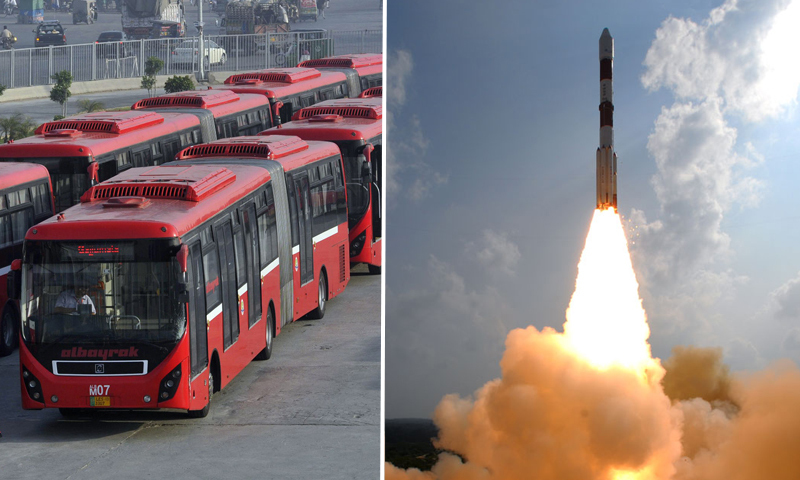
SUPARCO was set up by the most famous of all Pakistani scientists and the country’s only Nobel Laureate: Dr Abdus Salam.Dr Salam had advised Field Marshal Muhammad Ayub Khan, then President of Pakistan to establish a Space Sciences Research Wing within Pakistan Atomic Energy Commission. This later turned into SUPARCO in 1964. In 1960, President John F Kennedy had announced that the United States planned to land an American on the moon, and bring him safely back to earth before the decade was over. Dr Tariq Mustafa, a scientist at Pakistan Atomic Energy Commission’s, writes in his memoir that for this project, NASA needed to map the wind conditions at the upper atmospheric region above the Indian Ocean. In mid-September 1961, Dr Abdus Salam and Dr Tariq Mustafa held a meeting with NASA officials in Washington. On the occasion, NASA offered help to Pakistan in the development and launching of rockets to map the atmosphere above Indian Ocean, on the condition that any data acquired from the research on upper atmosphere will be shared with NASA. Pakistan quickly bagged the offer, and started working on the project. On 7 June 1962, Pakistan launched an unmanned rocket, Rehbar-I from Sonmiani, with assistance from NASA. Dr Tariq Mustafa led the team working on this project. With this experimental launch, Pakistan became the third country in Asia, first in South Asia, and only the 10th country in the world to have conducted such a launch. According to a report of the Wisconsin Project on Nuclear Arms Control, before the June 1962 launch, NASA had started training Pakistani scientists at Wallops Island and the Goddard Space Flight Centers. It also put up fellowships and research associate programs at American universities for "advanced training and experience" in the field of space. In subsequent years, however, Pakistan’s space program severely lagged due to the political turmoil which enveloped the country. India built its first satellite Aryabhata, and launched it in 1975. Pakistan built its first satellite Badr-I and launched it in 1990. India is now independently developing satellites, launching them on its own, and is the first nation to put its orbiter in Mars’s orbit in the first attempt. Meanwhile, Pakistan is still limited to Geographical Information Systems (GIS), remote sensing, and communication satellites. The Paksat-1R, launched in 2011 is Pakistan’s latest satellite, that was funded, designed, built, and launched by our friend in need, China. Pakistan’s only fully functional satellite is this communication satellite. So much for a national space agency in the 21st century. Putting aside NASA and the European Space Agency, ISRO too started off with resources similar to Pakistan, and I will argue, with even lesser expertise than Pakistan. SUPARCO was ahead of all other Asian nations in the space race, but what happened to us then? On September 24, when India's Mars Orbiter Mission, or Mangalyaan successfully entered the Martian orbit, I was completely overwhelmed with happiness. Why? Because as a person deeply interested in science, scientific achievement anywhere around the world – even if it is in some far off island in the Oceania – the achievement humbles me. But at the same time, I think about Pakistan, the country whose passport I hold, and whose National Identity Card gives me an identity. Pakistan is now nowhere in the space race. Pakistan is nowhere near eliminating polio. Pakistan is nowhere in literacy. Where is Pakistan? Pakistan’s education budget was, in actual terms, reduced by 11 per cent in the recent budget, whereas other countries are investing more in health and education. It is obvious that the nation’s priorities are wrong.
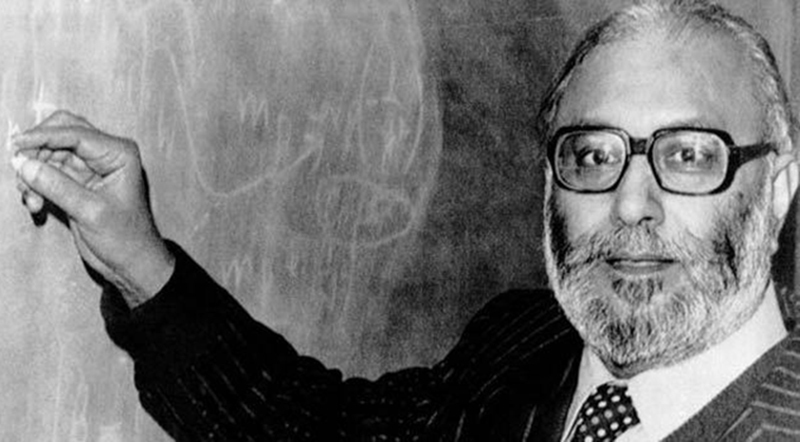

I am not a critic of infrastructure projects, but roads, mass transits, flyovers, schools, and colleges are things Pakistan should’ve built a long time ago. The current focus should’ve been on education, science, and technology, with emphasis on space technology.Why space technology? Because this is one area where technological advances require such intensive research on every subject, all the way from electronics to human biology, that every new project propels forward not just the field of space research but all other sciences touched by it. Historically, we have seen several discoveries in one field or another as offshoots of space programmes. For example, it was the US space shuttle’s fuel pump design which led to invention of the artificial heart. The heart has now been transplanted to more than 20 people. The algorithm developed for sharpening the images acquired from the Hubble Space Telescope now helps sharpen the images of mammograms for treatment of breast cancer patients. Dresses to keep the body temperature controlled for patients in certain diseases were inspired from astronauts’ spacesuits. That is why the US spends billions of dollars on NASA every year; not just for an obsession with space, but for technological prowess overall, which ultimately translates into more development for people. A number of people are still bashing India on failing to eliminate poverty before reaching out for Mars. I will respond by saying Pakistan has neither eliminated poverty, nor reached Mars. It is about time that the government reconsider its priorities. Policies and funding allocations in our federal budgets need a revision. SUPARCO’s budget should be increased. It had potential in the past, and it still does! I met some great scientists from SUPARCO in a public fair once and was amazed at the enthusiasm of these people. SUPARCO can still take the lead in the regional space program, if the government puts its attention towards it. I am sure that if India has reached Mars in its first attempt, Pakistan will reach a new horizon too, in its first attempt, if it makes one. And who knows if that horizon is as far as Pluto? Let’s keep the hope alive.
Subscribe to:
Posts (Atom)