Saturday, August 20, 2022

OP-ED: Leading From The Front - Foreign Minister of Pakistan Bilawal Bhutto Zardari

By Senator Sehar Kamran 
@SeharKamran
August 2,2022
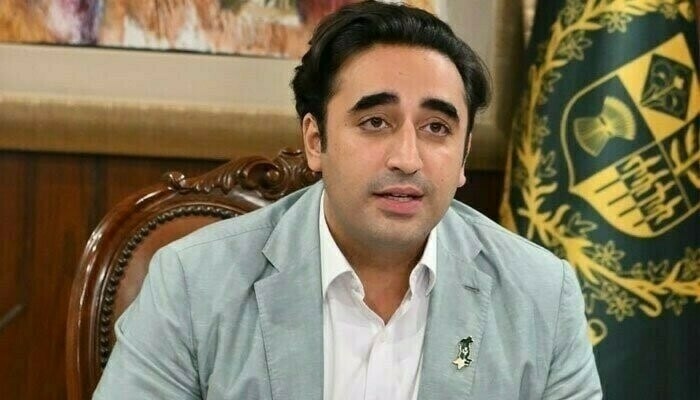

“You cannot defend the soil unless you know the smell of that soil.” – Zulfiqar Ali Bhutto
Foreign Minister of Pakistan Bilawal Bhutto Zardari will complete his first 100 days in office, on August 4. Keeping up with the legacy of his grandfather and Former Prime Minister of Pakistan Zulfiqar Ali Bhutto who served as a foreign minister before assuming charge as the chief executive of the country, Foreign Minister Bilawal Bhutto Zardari has carved his own niche and is setting new benchmarks with every passing day.
Chairman Bilawal Bhutto Zardari took the oath as Pakistan’s 37th Foreign Minister in April 2022. In the face of humongous challenges left by the previous government and its mishandling of Pakistan’s foreign relations, Foreign Minister Bilawal Bhutto Zardari has a daunting task ahead of him, to meet the expectations of millions of people.
Despite being the youngest foreign minister in the history of the country, Bilawal Bhutto Zardari has been on a relentless mission to improve Pakistan’s image in the world, and renew its diplomatic ties, especially with the West by engaging them. Since assuming office, he has advocated the case for trade and engagement with other countries. His presence and speeches at the various international forums have exhibited his passion and commitment toward the people of Pakistan, as well as showcased effective communication with clarity of thought in his words and media engagements. The maturity and resolve he displayed while representing the case of Pakistan was a much-needed breath of fresh air.
In a short span of time, Foreign Minister Bilawal Bhutto Zardari has become a celebrity of sorts among the diplomatic community. His gentle mannerism, charisma and humility have earned him global popularity and positive international media coverage which is rare for a Pakistani government official. By leading from the front, Foreign Minister Bilawal has been successful in bridging the diplomatic gap with Pakistan’s allies and striking a balance in its diplomatic relations. He has played a pivotal role in reaffirming Pakistan’s ties with the Gulf Cooperation Council, European Union, US, and other friendly countries which was the need of the hour. His successful visits to important countries like the US, China, KSA, Turkey, UAE and Iran, to name a few, and high-level engagements have helped revive Pakistan’s goodwill in the diplomatic community.
Foreign Minister Bilawal Bhutto Zardari has proven with his actions rather than words that he is a representative of the people of Pakistan and not just Pakistan’s largest political party.
During his maiden visit to the US at the invitation of the Secretary of State Antony Blinken, Foreign Minister Bilawal Bhutto Zardari had important engagements and sideline meetings. He also met with UN Secretary-General Antonio Guterres and raised the issue of Jammu and Kashmir. He also held an important bilateral meeting with the US Secretary of State Blinken to reset the diplomatic ties between Pakistan and the US and expressed his determination to further strengthen the broad-based and multifaceted bilateral relations.
Another core issue which has been successfully handled by Foreign Minister Bilawal Bhutto Zardari has been raising his concerns regarding the issue of Islamophobia and persecution of Muslims in India. In June, Foreign Minister Bilawal, in a telephone call, apprised the President of the UN General Assembly (PGA), H.E. Abdulla Shahid, of the derogatory and offensive remarks made by two senior officials of India’s ruling party BJP, against the Holy Prophet Muhammad (Peace Be Upon Him).He also contacted the OIC Secretary General Hissein Brahim Taha and apprised him of the plight of Muslims in India, and stated that this matter needed to be addressed through collective efforts. As a result of Bilawal Bhutto Zardari’s effective and credible leadership in his first 100 days as the Foreign Minister, Pakistan has managed to get out of the Financial Action Task Force’s grey list, revived the International Monetary Fund’s program which was put on hold, thwarted India’s bid for the United Nations Security Council membership, assisted getting a $2.3 billion loan facility agreement amid dwindling cash reserves, raised the issue of Islamophobia at various international platforms, to name a few.
On his personal special request during his meeting with State Councilor and Foreign Minister Wang Yi in China on May 22, 2022, the first batch of Pakistani students was able to return to China for on-campus studies on June 20, 2022. In addition, Foreign Minister Bilawal Bhutto Zardari has led the Pakistani delegation and represented the country at various international forums including the World Economic Forum, and Shanghai Cooperation Organisation (SCO), among many others. Like a true statesman, he displayed maturity in his interactions and held important bilateral meetings.
A key initiative taken by Foreign Minister Bilawal was the successful convening of the first meeting of the Group of Friends on Countering Disinformation, as a follow-up to the implementation of UN’s landmark resolution 76/227. Foreign Minister Bilawal Bhutto Zardari urged the international countries to create an “international plan of action” to battle disinformation and demanded the United Nations create an effective strategy. This step will have a positive impact globally as the world governments are struggling to control the menace of disinformation campaigns, especially those run on social media.The Pakistan-sponsored resolution on Countering Disinformation for the Promotion and Protection of Human Rights and Fundamental Freedoms was adopted by the UN General Assembly on Countering Disinformation for the Promotion and Protection of Human Rights and Fundamental Freedoms, in June 2022.
Foreign Minister Bilawal has the advantage of representing the new generation of Pakistan. According to the United Nations Development Programme, 64 per cent of Pakistan’s population is under 30 years of age, and 29 per cent of Pakistanis are between 15 and 29. He truly is the representative of the vibrant and emerging youth with a hand on the pulse of the people. His motivation and drive to present the soft image of Pakistan on the global stage are being acknowledged and applauded.
It is said that the darkest hour brings out the best in people. The importance of visionary leadership is often underestimated, nor is the concept too often understood properly. There is a unique set of characteristics which sets statesmen apart: principles, vision, a moral compass, and an innate ability to unite differing factions, and Foreign Minister Bilawal encompasses all of the above qualities. Foreign Minister Bilawal Bhutto Zardari has proven with his actions rather than words that he is a representative of the people of Pakistan and not just the Chairman of Pakistan’s largest political party. Bilawal Bhutto is a torchbearer of the Bhutto Legacy. He is determined to follow the footsteps of his grandfather Zulfiqar Ali Bhutto and mother Shaheed Mohatrma Benazir Bhutto to carry forward their arduous struggle for democracy, fundamental rights and constitutional supremacy.
Great leaders are said to inspire greatness in others, by envisioning and creating policy directions that will bear fruits for generations. In his first 100 days in office, Foreign Minister Bilawal Bhutto Zardari has brilliantly demonstrated his leadership skills, calibre and foresight. He has truly emerged as an icon of hope who will shape the future landscape of the country and will lead Pakistan towards the path of peace, prosperity and progress.
https://dailytimes.com.pk/975672/leading-from-the-front-5/

Friday, August 19, 2022

Music Video - "Chammak Challo Ra.One" - ShahRukh Khan,Kareena Kapoor

Video Report - #MJtv LIVE BREAKING: Shebaz Gill 2nd police remand decision announced

Video Report - #Pakistan #PPP - Children Emergency Hospital Civil Hospital Karachi | #FreeofCost #TreatmentforAll #VoteForTeer

Video Report - #Pakistan #PPP - Peoples Poverty Reduction Program Thatta | #VoteForTeer

Foreign Minister Bilawal Bhutto: Access to sea for CAS via Karachi, Gwadar a key component of ‘Vision Central Asia'


Foreign Minister Bilawal Bhutto-Zardari has said that short and easy access to the sea for the landlocked Central Asian States (CAS) through Karachi and Gwadar ports is a key component of “Vision Central Asia”.
The foreign minister was speaking to Deputy Foreign Minister of the Kyrgyz Republic Artykbaev Aibek Muhtarovich who called on him here Thursday.
They exchanged greetings on the 30th anniversary of the establishment of diplomatic relations between Pakistan and the Kyrgyz Republic.
The foreign minister congratulated Deputy Foreign Minister Muhtarovich on the successful conclusion of the 2nd Session of Bilateral Political Consultations (BPC) between Pakistan and the Kyrgyz Republic.Expressing satisfaction at the upward trajectory of bilateral relations, the Foreign Minister said that close coordination between the two countries at multilateral forums demonstrated the convergence of views on global and regional issues.
The foreign minister reiterated that the government’s “Vision Central Asia” was aimed at building sustainable and result-oriented engagement with Central Asian countries, focused on political, trade and investment, energy and connectivity, security and defence and people-to-people exchanges.
He added that short and easy access to the sea for the landlocked Central Asian States through Karachi and Gwadar ports is a key component of this vision.
https://www.brecorder.com/news/40192512/access-to-sea-for-cas-via-karachi-gwadar-a-key-component-of-vision-central-asia-fm

Thursday, August 18, 2022

Music Video - LAL MERI PAT - NOOR JEHAN

Video Report - Shaheed Mohtarma Benazir Bhutto Trauma Centre | Free of Cost Treatment for all | #voteforteer

75 Years Of Pakistan’s Independence: A Bone Or Bane? – OpEd

By Gulnaz Nawaz
The day of Pakistan’s independence always brings out the best in individuals and their deepest feelings for their nation. Flags and lights are strung from every rooftop and draped over every passing vehicle. On this day, people start writing new patriotic songs and have parties to honor their freedom. Being a proud Pakistani, I also spent the morning getting up in my best Pakistani attire and am ready to celebrate the day. Let me assure you: I am not different from you. But my point is this: have we taken a single moment to consider the future of our country? Why do we agree on something once a year but then continue to disagree the other 364 days? Even though it’s been 75 years, I still wonder whether we’re independent.
How come we choose opposite sides, fire on Shia processions, and recklessly turn the nation into a battlefield when it comes to sectarian violence? So, what path does the nation plan to take? Is it leaning forward ever so slightly because we want our young people to save us? Then again, maybe it’s a descent into the depths of infinity. The most important anniversaries of our independence have all been marked by major crises or the closeness to them. The 25th one found us recovering from the trauma of 1971, while the 50th saw us set to enter the nuclear age. Our economy and other important institutions are under severe strain on this, the 75th day. In reality, we became a state prone to crises not long after 1947, with a new political and/or economic crisis surfacing every three to four years.
Pakistan is a challenging nation. Constantly, we are put to the test of our patriotism. Our Oscar victory was marred by controversy, and our team’s performance in the Olympics was a letdown for the nation. Even more upsetting is the widespread belief that this was to be anticipated. We have made some progress in the ways we think about issues like honor killing, terrorism, politics, women’s rights, and the future of children, but our society is still on the brink of disaster when you take into account everything from the food we eat to the education we receive to the state of our minds and the affairs of our own country.Half of the politically and administratively savvy population wastes their time criticizing one another and does nothing to improve the situation in our nation. I’m not referring to the kind of life-altering choice that involves building a dam or becoming president. Yes, I am referring to the little things, the ones under our control. Creating much-needed facilities, such as hospitals and educational institutions, in underdeveloped regions The other half of the population, however, doesn’t give a hoot about the political party in power since all they care about is maintaining the status quo of mediocrity in our society. In reality, our leaders or the governments of other nations have nothing to do with this. Our flawed ideas and actions are to blame for all of society’s ills.
Our aggressive and self-centered nature means that we don’t care if anybody is wounded as we pursue our own goals. It seems we never stop to consider how we may improve our society. There’s no way one of us is going to consider the other’s proposal. We call ourselves “independent,” yet we actively work against the freedom of others to pursue their own goals in life in this nation. We band together when we perceive the nation is on the upswing, then turn on each other when our expectations are dashed. The comforts this nation provides are worth the hassles we have to go through to get here. Those who wrongly feel they are free are much more oppressed than the others, as Goethe put it.
We are diving headfirst into this bottomless pit of dangerous madness because we want to. Nothing or no one else can be blamed for the current state of affairs in our nation. But the renewed patriotism we’ve felt today isn’t enough to solve the problems of corruption, economic collapse, social inequality, and political intimidation that our country faces. It won’t help people who require necessities such as food or shelter. This won’t help people get out of their plight or educate the masses. Were you able to answer the question? To what use is freedom if it does not include freedom from want, inequity, injustice, and exploitation? To be free is to have the power of choice. Irresolvable dilemmas raise the question: what do they imply? Politicians in our nation are always at each other’s throats, so how can we expect them to see the larger picture? This leaves us, the idealistic patriots, to pick up the slack. It is imperative that we not allow our spirits to wither away today. If you want to make a difference in the world when tomorrow comes, you have to carry the same feeling of pride and responsibility you feel now. One of the most valuable qualities we have is the capacity to maintain optimism and self-assurance in the face of difficulty. If we can continue our ancestors’ tradition of hard work and optimism, we just might change our national identity and become a respected country once again.
Our nation, and all of its citizens, can only improve and become truly independent if we first improve and become independent. If we all do what we can to make our immediate surroundings better, like respecting the rights of others, being kind to strangers, and giving money to people who need it, we may be able to start making positive changes in our society. But we shouldn’t take advantage of each other. Instead, we should show respect by listening to each other and working together to make ideas happen instead of just criticizing them. If we are successful in making the world a better place for future generations, there is hope that the larger issues will be resolved and that this nation and its people will be able to declare its independence with confidence.
https://www.eurasiareview.com/17082022-75-years-of-pakistans-independence-a-bone-or-bane-oped/

Pakistan at 75: A Country in Search of Itself

 By 


Its Independence Day should be a day to reflect and ponder on the mistakes of the past rather than celebrating fiction as history.
Since Jinnah’s death in 1948, Pakistan’s leaders have marked Independence Day with fanfare, making sure that the founding father’s vision remains at the center of all celebrations. However, with every passing year, the country has only moved further away from Jinnah’s vision.
After more than seven decades, the country has not been able to escape the “India syndrome,” meaning some vested interests in Pakistan have made unambiguous efforts to find a permanent enemy in India. As has been the tradition since the country’s inception in 1947, anti-India oratory will mark Pakistan day.
For many in Pakistan, independence is more about showing the world that India remains an exclusive threat to Pakistan’s existence and that the partition of the Indian subcontinent has not been accepted by New Delhi yet.
In the words of French Orientalist Ernest Renan, “Getting its history wrong is part of being a nation.” This accurately describes Pakistan’s case. For more than seven decades, the history taught at Pakistan’s schools tried to make a case for a country that was part of some sort of prophecy. For instance, school children are taught that Pakistan has its origins in Muhammad bin Qasim’s eighth-century invasion and takeover of Sindh, one of Pakistan’s current provinces, and that Islam was the sole uniting force behind the Pakistan movement.
To this day, debate remains open on whether Jinnah wanted a state whose laws were to come into conformity with Islam. On the other hand, many historians have argued that the creation of Pakistan was perhaps the unintended result of Jinnah’s strategy to force the Indian National Congress to accept a federated arrangement in which Muslim majority provinces would have considerable autonomy. If anything, Pakistan’s Islamic identity has not been able to keep the country united. As Pakistan celebrates its 75th independence day, the country is internally divided along religious lines. Islamic parties and right-wing conservative groups openly and regularly dispute the state’s writ.Pakistan’s 1973 constitution lays out the rules of governance. However, political parties and state institutions have done everything to trample the laws of the land. For instance, the real power in Pakistan does not rest with the Prime Minister’s Office and Parliament – the two institutions that are supposed to make key policy decisions under the constitution.
There are other institutions that have become so powerful that they have literally become a parallel state with little accountability.The irony is that opportunistic politicians and religious fundamentalists look toward these state institutions for support to sustain their own grip over power, and in the process strengthen their hold over the state’s affairs further. Pakistan is currently in the midst of one of its worst political, constitutional, and economic crises in its history. Parliament has become practically irrelevant as the political elite is at loggerheads. The country’s judicial system faces a collapse, as thousands of cases remain pending in courts. The bureaucracy is deeply politicized and resists reforms that could see the administrative system becoming more effective. The country’s security institutions are more involved in managing politics than doing their mandated work under the constitution. Moreover, militant groups and their ideologies have taken deep root in Pakistani society. As I write this, there is a mounting power struggle among political groups and institutions which could see Pakistan getting destabilized substantially.
The country is far more intolerant, regressive, and radical than ever before. Indeed, the biggest security crisis confronting Pakistan today emanates from within rather than from outside. In this setting, Independence Day should be a day to reflect and ponder on the mistakes of the past rather than celebrating fiction as history. It is about time that Pakistan’s leadership do some course correction and think about making Pakistan a country that is respected, valued, and sought after by the world.
More than ever, Pakistan needs a clear direction, otherwise, the gradual decay of the state’s institutions and ethos would eventually lead to the implosion of the state.
https://thediplomat.com/2022/08/pakistan-at-75-a-country-in-search-of-itself/

Opinion: Pakistan at 75: Attacks against democratic institutions have to stop


 By Hamid Mir

Pakistan has just turned 75. The anniversary should be a cause for celebration, but also for serious self-criticism. Many Pakistanis are fond of citing our achievement of becoming the world’s first Muslim nuclear power. But how are nuclear weapons supposed to save Pakistan if our institutions are falling apart? The army, of course, remains strong. But our parliament, judiciary and media are becoming weaker by the day.
It is a matter of shame that four military dictators ruled Pakistan for more than 32 years. Civilian prime ministers — 29 of them — have ruled the country for 43 years. No elected prime minister has completed a full five-year term. Three different constitutions of Pakistan were abrogated or suspended five times in the 75 years since the country achieved statehood.
True, Pakistan – once routinely referred to as a garrison state – has not seen a military intervention since 2007. Yet democracy is still very weak. The Economist Intelligence Unit recently described Pakistan as a hybrid regime — a country that doesn’t qualify as a proper democracy even if it has some democratic aspects. It’s not a secret that the generals effectively installed Imran Khan as prime minister with a rigged election in 2018.
When Pakistan became ungovernable under Khan, the army decided to stay neutral. Earlier this year, Khan created a crisis by dissolving the national assembly to save his government — but he was ultimately ousted by a parliamentary no-confidence vote. He then proceeded to blame the United States for his downfall. He started attacking the neutrality of the military leadership and declared them to be traitors. He tried to return to power by blackmailing the same generals who once made him prime minister. His trick didn’t work.His anti-Americanism and economic crises did help him to regain a degree of popularity. Now, his political opponents are trying to disqualify him from another term with allegations of corruption and receiving prohibited funds. Back in 2017, the Supreme Court made Khan’s victory possible by disqualifying previous prime minister Nawaz Sharif. The current government now wants to do the same. Even if it is justified, the disqualification of another popular leader will create yet more instability.
The Pakistani judiciary does not enjoy a good reputation. The World Justice Project, a group that tracks legal systems around the world, ranks Pakistan 130 of 139 countries on the rule of law. A historical pattern of collaboration between dictators and judges has weakened democracy. Pakistani judges need to stop getting involved in politics. On one side, Khan is challenging the “neutrality” of the army, and on the other the government of Prime Minister Shehbaz Sharif is pushing the courts to disqualify Khan. Both the government and opposition are fighting with state institutions.
Media freedom is another casualty of the political war among power players. Pakistan is ranked 157 of 180 in the World Press Freedom Index of 2022. Pakistan fell 18 points in the ranking since 2018, when Khan took power. TV channels were blocked. Journalists were attacked, arrested and banned.Media freedom is under threat even now that Khan has left power. When my colleagues Asad Toor and Absar Alam were attacked last year, then-opposition leader Sharif visited them and expressed his commitment for media freedom. Now, he is prime minister, and his government has banned ARY, a pro-Khan TV channel. The owner and anchors of that channel are facing sedition charges for allegedly airing criticisms of the army.When I was facing sedition allegations last year, ARY commentators wanted to see me behind bars. One of its anchors declared me an enemy of Pakistan just because I made a harsh speech against those who had attacked one of my journalist colleagues. Yet, I never left the country. I chose to stay. My former critics are now facing similar allegations. I don’t support silencing them.
Freedom of the press is an essential pillar of democracy. It is hard to imagine any form of democracy that does not allow for wide-ranging discussion of social and political problems. Last year, I was banned from the air for nine months without an order from any court. A few days ago, yet another anchor, Imran Riaz, was taken off the air by his channel without any charges being filed. These kinds of tactics will not only weaken the media as an institution but ultimately turn Pakistani democracy into a joke.
I know I might face a lot of criticism from people in positions of power for taking the side of those who were not nice to me. But I don’t think that revenge is a solution to our problems. I think that Khan should say that supporting a disqualification of Sharif was his mistake. Sharif should also oppose the disqualification of Khan.
President Arif Alvi belongs to the biggest opposition party, which is led by Khan. Shehbaz Sharif is the younger brother of Nawaz Sharif, who made Pakistan a nuclear power in 1998. Can these two power players start a dialogue with all political stakeholders to strengthen democratic institutions? The best way forward is the rule of law and supremacy of the constitution. Only they can save the institutions from crumbling.
https://www.washingtonpost.com/opinions/2022/08/18/pakistan-75-democratic-institutions-crumbling-weak/

Wednesday, August 17, 2022

Video Report - #Mali demands emergency #UN meeting over #French “acts of aggression”

Video Report - Pence says he'd consider testifying before Jan. 6 committee if invited

Video Report - Rep. Cheney Tells TODAY: Defeating Trump Will Require A Broad, United Front

Liz Cheney’s courage is a wake-up call to us all

David Aaronovitch
In defying Donald Trump’s lies the Republican congresswoman underlines the cowardice of all too many politicians.
On Tuesday a candidate addressed her supporters after being massacred at the polls. “Two years ago I won this primary with 73 per cent of the vote,” Wyoming congresswoman Liz Cheney told the crowd. “I could easily have done the same again. But it would’ve required that I go along with President Trump’s lie about the 2020 election [and] enable his ongoing efforts to unravel our democratic system and attack the foundations of our republic. That was a path I could not and would not take.”No one seriously disputes that Cheney’s ousting by registered Republicans owed everything to her defiance of Trump. Though she voted against impeaching him over his endeavour to use the president of Ukraine to help him in his battle with Joe Biden, his refusal to accept the result of the 2020 presidential election and his subsequent attempt to reverse it was too much for her. Which was why she agreed to be part of the congressional inquiry into the January 6 assault on the Capitol. Agreed whence almost all other Republicans had fled.
Democracies aren’t just regulated by laws but by behaviour. There is no statute in any democracy as far as I am aware requiring losing politicians to concede defeat to their rivals. But as Cheney observed while congratulating her opponent, the Trump-backed Harriet Hageman, “Our republic relies upon the goodwill of all candidates for office to accept honourably the outcome of elections.”
In 2000 Al Gore, though winning a narrow plurality of votes in the presidential election, lost by 271 electoral votes to 266, the result turning on an incredibly narrow result in Florida. There followed a series of legal battles over a recount in that state. But five weeks later Gore conceded the presidency “for the sake of our unity as a people and the strength of our democracy”.That is how democrats do it. In 2020, however, Trump received over seven million fewer votes than Biden and lost the election by 306 electoral college votes to 232. And he has never conceded. Instead he and his supporters constructed the fiction of a stolen election — a fiction that has led to violence and insurrection. And, terrifyingly, he now seems to have taken most of the Republican Party with him. As Cheney pointed out, because Trump-backed candidates in Republican primaries have won most of their contests, future elections in some states will be supervised and presided over by people who have never accepted the 2020 result.
The extreme plasticity of many office-seeking Republicans in the face of the Trump supremacy is well illustrated by Cheney’s victorious opponent. In 2016 Hageman was not a Trump fan. She described him as “racist and xenophobic”, which even allowing for the vagaries of Wild West politics is unlikely to have been a compliment. But by 2022 she had remoulded herself to fit the needs of the moment. She had been wrong about Trump, she explained, having been led astray by lies told by “the Democrats and Liz Cheney’s friends in the media”. The reader, even if unimpressed by Hageman, may object that such behaviour is not uncommon in the political world. Closer to home in the past few days, several senior Conservatives have belatedly discovered that Rishi Sunak is not after all the person to unite the party and lead the nation, and that instead Liz Truss better embodies these aspirations.
The first cabinet member to make this journey was the Welsh secretary Sir Robert Buckland. “I backed Rishi Sunak as I felt that he was at that stage embodying what was needed . . . As the campaign moved on . . .” Let’s stop there. We all know what happened as the campaign moved on. Liz Truss’s big polling lead happened. You have to wonder what Sir Robert and the other Late-Trussers see when they look in the mirror. What profiteth a man and all that — but for Wales, Sir Robert. There is a quotidian cowardice about this, but in Buckland’s defence, as Falstaff says on the battlefield of Shrewsbury: “What is that ‘honour’? Air. A trim reckoning! Who hath it? He that died o’ Wednesday.”
Honourable politicians died in their droves following the Brexit vote. Those prepared to stand up to their parties, or even to take the risk and leave them, were eventually slaughtered at the polls or forced from the field. Some of the best, most honest and competent of our moderate politicians: Rory Stewart departed; others — Dominic Grieve, David Gauke, Chris Leslie, Anna Soubry, Luciana Berger among them — went massively unrewarded by a polarised electorate. Meanwhile, for their surviving peers Johnson was just marvellous until he wasn’t and Corbyn could be tolerated until he couldn’t.
It was bad and we suffer the loss still. Even so the cowardice displayed by many Trump-supporting Republicans leads to a different category of damage. For all that a liberal like me abhors many of the political stances of someone like Liz Cheney, in the matter of maintaining democracy she is on my side and I on hers.Bizarrely this is not a message that the Democratic Party seems to understand. Earlier this month in Michigan another Trump-backed conspiracist John Gibbs won his primary against a sitting anti-Trump Republican, Peter Meijer. Democrat leaders, reckoning that an extremist would be easier to defeat in November’s midterm election, spent over $400,000 on ads designed to boost Gibbs. It was a move lacking in all principle and helping to weaken the very thing that true democrats should want urgently: a return of the Republican Party from the Mar-a-Lago Hades.From January, Wyoming will have a coward for a congresswoman. But that’s not the worst of it. Grandmother-sellers rarely vend just their own relatives. So while Hageman almost certainly doesn’t herself believe the “stolen election” conspiracy, many of the new Republican representatives do, and she and others have helped them indulge their dark fantasy. It’s a fantasy that could well lead to civil disaster.All is not lost though. Trump’s support has taken a hit among the electorate due to the January 6 hearings. And although in his charmless way he predicted this week that Cheney would “finally disappear into the depths of political oblivion”, she is entirely free to put herself forward as a potential candidate for her party’s nomination for president in 2024, and to appear in all those debates he so enjoys.
That woman has the guts to do it. The rest of us need to wise up.
https://www.thetimes.co.uk/article/liz-cheneys-courage-is-a-wake-up-call-to-us-all-jksc0jgnx

Salman Rushdie: Public reading in New York to show solidarity with writer

James Callery
Hundreds of writers will gather to read Salman Rushdie’s works in New York this week in an act of defiance against the fatwa declared over his book The Satanic Verses. The event is a recreation of a similar public reading of Rushdie’s books that was held a few days after the order to kill him was issued in 1989 by the cleric Ayatollah Khomeini, Iran’s supreme leader at the time.
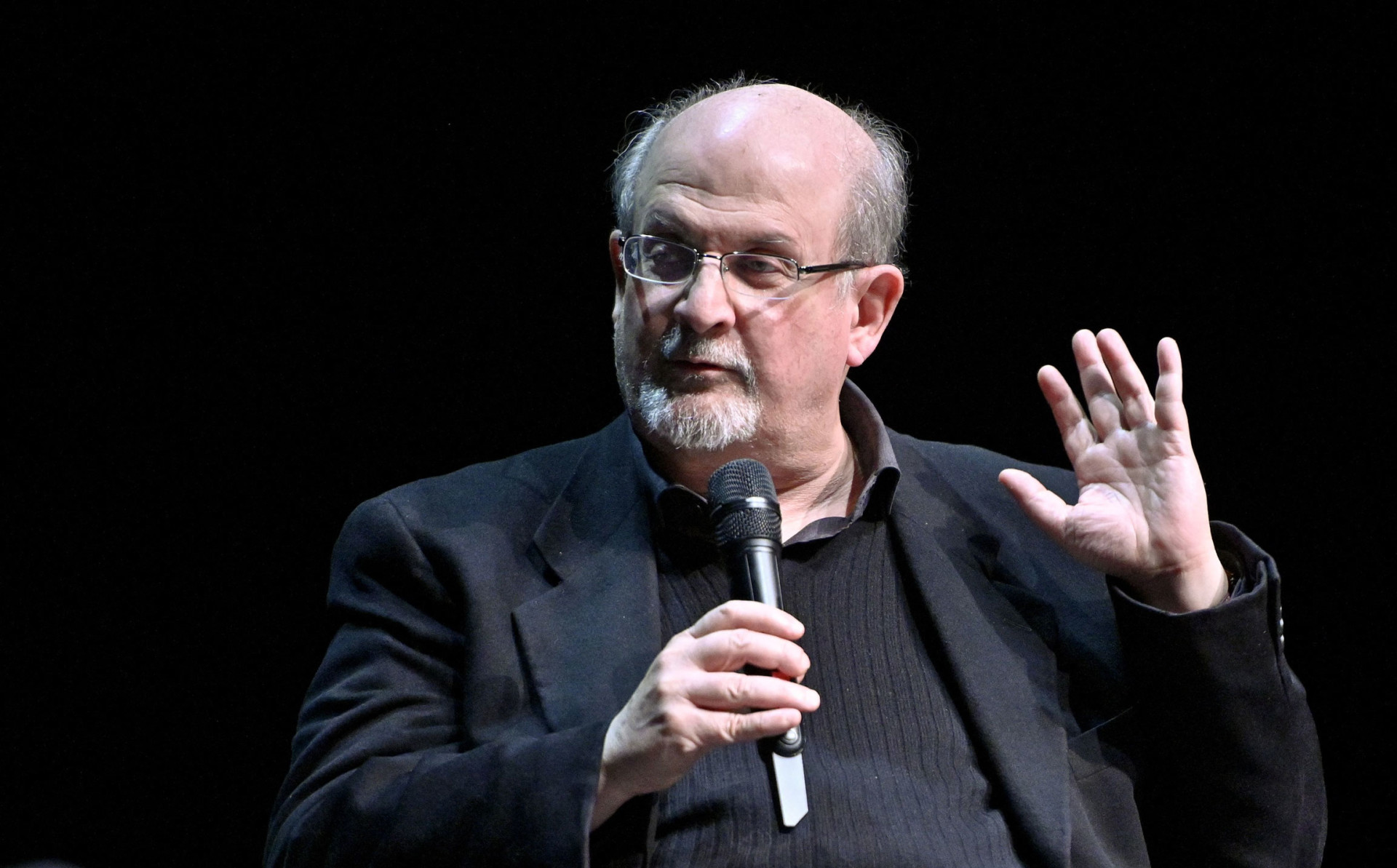
Among the authors taking part will be Paul Auster, Tina Brown, Kiran Desai, Amanda Foreman, AM Homes, Siri Hustvedt, Hari Kunzru and Gay Talese.
The “Stand with Salman” event will be held on the steps of the New York Public Library on Friday morning. The 1989 event was attended by more than 3,000 people.Rushdie, 75, was stabbed at an event last Friday at the Chautauqua Institution in upstate New York, where he had been due to speak about freedom of speech and how the US is a haven for persecuted writers.
The moderator of the event, who suffered a head injury during the attack, hopes to return to the venue one day to interview Rushdie again. Henry Reese, who still has severe bruising to his face, said the incident highlighted more than ever the values the novelist stands for.
Reese told the BBC: “I’m doing well, everything is proceeding — I’m doing quite well. I think our concern is for Salman, and I mean that for himself, but also what he means in the world.”
Asked what the incident meant for the importance of Rushdie’s values, Reese added: “There couldn’t be anything more vivid in its materialisation of our values. Our mission is to protect writers who are in sanctuary and to see Salman Rushdie assaulted for his life is unimaginably... it’s hard to describe what it is to see that happen in front of you.”
Rushdie suffered severe, life-changing injuries after being stabbed several times. His family said that his “usual feisty and defiant sense of humour remains intact” as they revealed the extent of his injuries.Downing Street has dismissed as “ludicrous” a suggestion from Iran that Rushdie might be in any way responsible for the attack. An Iranian government official denied on Monday that Tehran was involved in the attack on the author, adding: “We do not consider anyone other than Salman Rushdie and his supporters worthy of blame.”
https://www.thetimes.co.uk/article/salman-rushdie-interviewer-reveals-injuries-from-attack-jp8xbbb6d

#Pakistan #PPP - کل بھی بھٹو زندہ تھا،آج بھی بھٹو زندہ ھے

Video - Zulfiqar Ali Bhutto Rawalpindi speech 1973

#Pakistan - #PPP - Forever resilient - Z A BHUTTO


By Sarwat Ali
Even after a traumatic defeat, Pakistani cultural activities quickly bounced back during the Bhutto era.

F

ew countries have bounced back from dismemberment as Pakistan did. Call it apathy or resilience, the trauma of a military defeat, as long as it lasted, facilitated the promulgation of the first ever constitution.

The dismemberment led to probably a more homogeneous country, but the diversity was still seen as debilitating. At a different level, the Pakistan Peoples Party government recognised culture as a legitimate activity. That made way for the setting up of several institutions in the public sector for the promotion of the arts. It overcame the taboo of lehv o la’ab and some space was granted for it to nurture in its autonomous growth, though always accosted by the need to make it purposeful and hence infused with socialistic fervour.

The Pakistan National Council of the Arts was conceived and from its womb was born the Institute of Folk Heritage (Lok Virsa). Similar art councils were formed in the provinces and some budgetary allocations made. Film, too, was given a cover under the National Film Development Corporation and the Academy of Letters was established, as were the language authorities. These included Punjabi, Pushto, Sindhi, Balochi and later Seraiki.

Since everything awami was the slogan of the new government, the folk arts were considered to be the area to concentrate upon and the classical arts were left to wither on the vine as being too elitist. But the upswing was arrested in its trajectory by the imposition of yet another martial law.

What Pakistan lost in East Pakistan, a bailiwick to unload expansion ambitions was rerouted towards Afghanistan. It became the playground for the mini-imperial ambitions, the long shadow started to fall on the Pakistan. A more subsuming role was ascribed to religion yet again but with a very conservative hue. The radicalisation, if any, of the Bhutto era started to be rolled back with ferocity to be replaced with religious radicalism by force.

Though it was under one umbrella, it was difficult to draw strict lines to be followed. Even then centralisation was refracted differently because in the Punjab much cultural activity took place as indeed in Sindh where the Sindhis were pampered to be weaned away from the PPP through doses of Sindhi culture. In the Punjab it provided a vent and a release of pent up political frustration. Television became the mouthpiece of conservatism. A counter current at the local level started to present a more balanced view of the cultural dynamics. Theatre blossomed, purposeful and risqué, and challenged the mores.

The constant chant of Western influence and Indian machinations permeated the public discourse as more and more Indian films were viewed through sources that were not upfront. VCRs became the major mode of entertainment as the films could be viewed in the privacy of the individual spaces away from official censorship.

Similar art councils were formed in the provinces and some budgetary allocations made. Film, too, was given a cover under the National Film Development Corporation and an Academy of Letters was established as were the language authorities. These included languages like Punjabi, Pushto, Sindhi, Balochi and later Seraiki.

The means of communication, both physical and digital, changed the society in no uncertain terms. Cultural figures started travelling abroad more frequently as the diaspora became more prosperous and the digital media opened a totally new world that had been hidden away by the strict censorship in the country. A sneak-peak was possible as never before and the new television channels opened a new world shunning prescribed inhibition.

Music was to be seen as heard and the technological breakthrough started to redefine the formal structures of the arts. The painters, too, found a foothold and their works became products to be purchased and the result was more exposure and prosperity. The writings in English, too, became legit and the poets and novelists earlier sidelined won more attention abroad than the very famous ones writing in local languages.

All regimes after Ziaul Haq’s mushroomed under his shade. Terrorism, once championed, was supplanted by a mantra of the soft image, not an organic home-grown product but a deliberate top down policy.It was alleged that the society was being misunderstood as only the fringe advocated extremism. There has been a succession of culture policies since then, all faltering in implementation.

However, the digital revolution upturned the society. The surface may have remained the same and seemingly unruffled but the cauldron of discontent seethed, cooking from a recipe book a new dish that tasted different. The platform was there for all to use and the gatekeeper, the editor and the authorised bodies all rendered obsolete by the technological shift. The people had finally the advantage of being equally heard. The space was public space for all - clogged with all those empowered to speak and be heard.

The younger people suddenly found freedom handed over to then on a platter by technology in the form of an android phone. And it was from here that they started as their takeoff point, with little care for history and the past. It was freedom to be brandished and with an individual take. The post-truth era was upon us and the post-modern behavioural patterns were flashed with utter disregard.

In this molten centre, the top has tried desperately to retain the solidity of the crust. The exposure far exceeds the experience and the eclectic piling up has replaced the much considered masticated response. It is seen as unnecessary, the mulling over, ruing, and any resistance to knee jerk reaction. It is more instant and on the up –the bedrock being provided by slogans and homilies, the simplistic lines drawn to demarcate right from wrong, light from dark. The social media threw its weight about and created an impression or an image of unquestioned truth and reality.

The local grated against the global and the individuality of culture either valued as treasure or disregarded as passé has fuelled the debate, the vocabulary being swept by the word “narrative” as everyone started making one. Authenticity was what the narrative was.


https://www.thenews.com.pk/tns/detail/981712-forever-resilient 

#Pakistan - Amid worsening political crisis, it seems we are moving towards new phase of hybrid rule - A dangerous dead end

By Zahid Hussain
@hidhussain
IT was yet another massive show of political strength by the ousted prime minister in Lahore last week. The triumph in the recent by-elections and regaining control of Punjab seem to have given the PTI a huge political boost. Evidently, the charge of receiving ‘unauthorised funding’ does not seem to have had any effect on the party’s support base.
For now, the PTI is clearly dominating the political narrative. But can Imran Khan maintain the momentum with his populist rhetoric?
Undoubtedly, it was a well-choreographed show on the country’s independence anniversary in the political heartland that continued beyond midnight. The overall content of Imran Khan’s speech of more than an hour may not have been very different from his past speeches but the tenor certainly was, with no mention of the ‘neutrals’ playing dirty.Also missing was the threat of storming the capital and forcing the federal government into announcing the election date. The difference in his position was apparent. The inquiry into illegal funding and the arrest of his close aide on sedition charges seem to have stolen his thunder. The pressure was palpable as he warned against what might be described as a conspiracy to remove him from the political field.
Khan referred to the ‘sword of Damocles’ dangling over his head. There may be some realisation that he has opened too many fronts — hence, the easing of criticism against the establishment. In fact, the tone has become much more conciliatory as he blames his rivals for creating a chasm between his party and the military.
The faltering administration is increasingly relying on the security establishment to deliver.
In a curious change of tack, Imran Khan now seeks to challenge his opponents in by-polls rather than putting his entire effort into forcing the government to dissolve the National Assembly and hold early elections. In a clever move, he has decided to contest all nine seats on which polls have become due after the acceptance of the resignation of some PTI lawmakers.
Notwithstanding his rising popularity graph, the move could prove to be a great political gamble. Even if he wins all the seats, it is not going to change the power dynamics. It will only mean another round of by-elections. With the rest of the resignations of PTI lawmakers being accepted in the coming weeks the country would go through another cycle of by-elections.One wonders how that would serve the PTI’s political strategy. It could only keep the country engaged in purposeless electoral activities and in a perpetual state of instability. Meanwhile, the Shehbaz Sharif government’s incompetence and the rapidly declining political stock of the ruling coalition has added to the problem. In fact, the PTI’s increasing popularity, to a great extent, owes itself to the failure of the ruling alliance to present a more effective policy narrative.
Most of these parties represent the past and can’t think beyond dynastic political interests. They have failed to recognise that social and economic changes have also impacted political dynamics in the country. The humiliation suffered by the PML-N in the recent by-elections has exposed the vulnerability of a party that had dominated Punjab politics for decades.
One of the factors responsible for the debacle was the choice of Hamza Shehbaz as chief minister. The very image of father and son holding the most powerful positions at the centre and in the biggest province was enough to alienate the urban, educated and youthful population.
The entire PML-N storyline over the years has revolved around Nawaz Sharif. The party did not have anything new to offer to the young generation looking for change.
That effectively fed into the PTI’s campaign against family-dominated politics — notwithstanding the fact that the party itself has relied on political dynasties to win seats. Shah Mahmood Qureshi’s son and daughter being given party tickets is such an example. Yet, it has not affected the party’s blind following. Moreover, the internal struggle within the Sharif family has further weakened the PML-N and affected the Shehbaz Sharif government’s capacity to deliver. Some of the hard measures taken by the finance minister may have helped stem the free fall of the economy but it’s not clear whether he is fully in charge given the constant interventions from London. That has also been the reason for some delayed action that makes it more difficult to stop the slide.
The nine-party coalition government appears like a rudderless ship with no coherent policy direction. It’s one of the largest cabinets in the country’s history with many of the ministers and advisers without a portfolio. The disorder is much more pronounced on the foreign policy front with an invisible foreign minister in the post.
The existing disarray on the conduct of foreign policy was highlighted when the prime minister’s adviser — Tariq Fatemi — recently met the US deputy secretary of state at her office in Washington and reportedly discussed bilateral relations including economic matters. But curiously, a few days later, a statement issued by the Pakistan foreign ministry clarified that Fatemi’s visit to Washington was not official. Unsurprisingly, the faltering administration is increasingly relying on the security establishment to deliver on both the economic and foreign policy fronts. It was unprecedented for an army chief to phone the US deputy secretary of state to push the IMF into immediately releasing nearly $1.2 billion that Pakistan is due to receive. The army chief reportedly made similar calls to the leaders of Saudi Arabia and some Gulf countries, apparently for financial support for the country. It seems to be the beginning of a new phase of hybrid rule, with a weak civilian administration and a worsening political crisis. The situation has become even more precarious with the ruling coalition losing control over the most powerful province. The ongoing confrontation between the federal and Punjab governments has taken a very ugly turn. That has also limited the role of the central government.
It is a very serious situation with no political solution in sight. Political uncertainty makes it harder to stabilise the economy. Even early elections are not going to resolve the political crisis in this atmosphere of confrontation. It is an extremely unfortunately position for a county that has just celebrated the 75th anniversary of its independence.
https://www.dawn.com/news/1705351/a-dangerous-dead-end
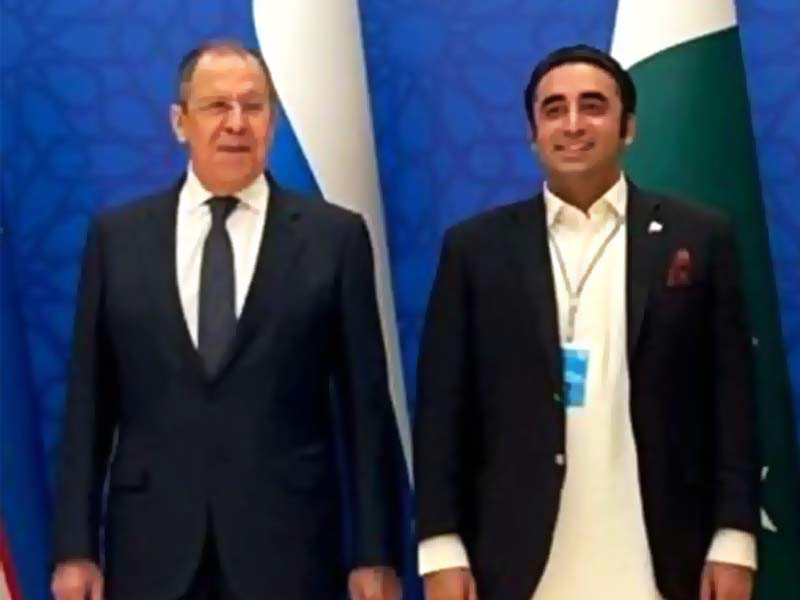
Russian Foreign Minister Sergei Lavrov invited his Pakistani counterpart Bilawal Bhutto-Zardari to visit Moscow

In an informal meeting, Russian Foreign Minister Sergei Lavrov invited his Pakistani counterpart Bilawal Bhutto-Zardari to visit Moscow.
The sources also said that Pakistan was exploring options for a possible bilateral meeting between Russian President Vladimir Putin and Shehbaz.However, nothing is final yet, the sources added.
Pakistan PM Shehbaz Sharif is likely to have a bilateral meeting with Chinese President Xi Jinping next month on the sidelines of the Shanghai Cooperation Organisation summit in Uzbekistan.
https://www.business-standard.com/article/international/pak-pm-sharif-likely-to-meet-chinese-pres-xi-during-sco-summit-report-122081700463_1.html

Tuesday, August 16, 2022

Video Report - Why Republicans and Democrats are having a blame debate over Afghanistan's crisis

Video Report - #Afghanistan #Kabul Afghanistan: Taliban militants captured Kabul exactly one year ago

Video Report - #HamidKarzai #Afghanistan #Taliban 'The way the US withdrew from Afghanistan was disgraceful' | DW interview with Hamid Karzai

Video Report - #AJStartHere #afghanistan #taliban Can the Taliban fix Afghanistan’s economic crisis?

Video Report - Mediterranean migrants: Why are deadly sea journeys on the rise again? | The Stream

I Still Believe in the Power of Sexual Freedom

By Nona Willis Aronowitz
Ms. Willis Aronowitz is a writer, an editor and the author of “Bad Sex.”
In an essay written in 1970, amid the early years of the women’s liberation movement, the novelist and feminist activist June Arnold recalled several consciousness-raising sessions devoted to sex. The women talked about masturbation, lesbianism and the relationship between love and lust. They deemed sex a “huge and crucial” topic, Ms. Arnold wrote — and yet the nature of their own desires was often inscrutable.

These women spent much of their adult lives wanting to be considered a “good lay,” which sometimes meant contorting themselves to mirror their male partners’ sexuality. “But no man had ever really grooved on our sexuality,” she wrote. “How could he? We didn’t know really what it was yet.”
The sexual revolution was riding high, but second-wave feminism had barely gotten off the ground. The women’s frustration with the sexual landscape was, as Michelle Goldberg recently put it, “what you get when you liberate sex without liberating women.” There was an expectation for women to be free and horny, but the fact that sex was still tailored to men thwarted those efforts at every turn. Many heterosexual women felt their emotional needs were left in the dust while their sexual needs often remained a mystery to both their partners and themselves.
Half a century later, we’re grappling with a similar dynamic. Generation Z — which rightly sees how women are still, after all these years, taught to prioritize men’s desires over their own — has started to reject the concept of sex positivity and question whether casual dating is worth it, sometimes opting out of sex altogether. As the righteous energy of #MeToo fades into a more ambiguous debate, we’ve reached a point where it’s become obvious that consent and figuring out what you don’t want is just not enough. What does it mean to go beyond consent and discover what you do want?
The early feminists in those living rooms had their sights set on this question, one they deemed central to liberation. But uncovering the answer has proved to be a tall order. As a result, we have ended up sidelining a chaotic and mystifying but also politically essential process: pursuing desire on one’s own terms. At the tail end of 2016, I ended an eight-year relationship about six years too late. Our marriage was modern and progressive by most standards: We experimented with nonmonogamy; my partner did more laundry than I did. And yet I found myself unable to admit a simple fact: Our sex, it turned out, was bad. Intrinsically, gut-level bad. Though sex wasn’t the only thing wrong with our relationship, it was the starkest evidence of our weak connection. But despite this, I stayed frozen in dissatisfaction, unable to articulate my deepest needs to myself, my partner or my friends. How had I, a supposedly empowered feminist, wound up here?
Understanding our authentic desires has long been hopelessly stymied by politics. Even as the feminists of the 1960s and ’70s were recognizing the importance of pursuing sexual happiness, it was clear that embracing one’s sexual freedom was going to be easier said than done. A liberated woman was expected to dodge the roles and rules prescribed to her and replace them with her own desires — the discovery of which often involves unraveling a lifetime of learned behavior.
Just six years after Ms. Arnold wrote her essay, the sociologist Shere Hite released a report on female sexuality. In it, regular women who were navigating the mores of the sexual revolution struggled to pin down what they were looking for. One woman tried to explain that she didn’t want traditional commitment, exactly — just more connection, more affection, more … something. “I don’t believe you have to be in love and married till death do us part,’” one woman said. “But mind and body are one organism and all tied up together, and it isn’t even physically fun unless the people involved really like each other!” One can sense the nebulousness of it all, the work involved in rewriting longstanding cultural scripts.
Meanwhile, a growing sect of the feminist movement, disillusioned by the results of the sexual revolution, had recently veered down a protectionist path when it came to sex, and it was considerably more cut and dried than an active pursuit of pleasure. “Don’t rape me, don’t abuse me, don’t objectify me,” they demanded of a misogynist society.
The don’ts extended to women, too: The ones who wanted to be dominated or have casual sex or even have sex with men at all were kidding themselves. “Every woman here knows in her gut,” wrote the writer and anti-porn feminist Robin Morgan in 1978, “that the emphasis on genital sexuality, objectification, promiscuity, emotional noninvolvement and coarse invulnerability was the male style and that we, as women, placed greater trust in love, sensuality, humor, tenderness, commitment.”
If male-centered ideas about sex hardly encouraged self-actualization, neither did this new strain of feminism. Its subjective judgments about what women should know in their guts did nothing to acknowledge women’s realities and only added to their internal shame machines.
A group known as pro-sex feminists warned against the dead-end politics of focusing only on sexual violence, which just made women the “moral custodians of male behavior,” as Carole S. Vance put it in her landmark anthology, “Pleasure and Danger.” Besides, the suppression of female desire, they argued, had long been a tool of the patriarchy. “The horrific effect of gender inequality may include not only brute violence,” she wrote, “but the internalized control of women’s impulses, poisoning desire at its very root with self-doubt and anxiety.” Fighting against this control and instead advocating pleasure, intimacy, curiosity and excitement were key to expanding women’s autonomy and their ability to live full lives. A lot has changed since then. Women’s right to sexual satisfaction is taken as much more of a given; most people are now aware of things like clitorises and vibrators. But extracting what we actually want from a mess of cultural and political influences can still sometimes feel like an impossible challenge. How did I find myself in a marriage filled with bad sex? I was as equipped as anyone could be to seek out real erotic freedom, and yet I still spent my high school and college years feeling uncertain about how to do so. I idolized Samantha from “Sex and the City,” and I also wished my sex was more meaningful. I wanted sex to be meaningful, but I was also turned off by the whole heterosexual dance in which women demand commitment in exchange for sex and men acquiesce. I was turned off by the dance, and yet I clung to the cultural validation offered to married heterosexual couples, staying way too long at the expense of my own happiness.
When I left my marriage at 32 to pursue my true desires, I wondered whether things like blow jobs and B.D.S.M. were actually my desires or just coping mechanisms in a misogynist society — or if you could even separate those things.
None of this push and pull makes for good slogans. It’s precisely sex’s slippery quality that makes the pursuit of sexual pleasure such a tricky political project. It’s a moving target, often obscured by the clashing expectations of both the patriarchy and feminism. Grappling with our true desires can feel like an epic, often lonely journey. It demands of us to be vulnerable and trusting, even when societal circumstances give us lots of reasons not to be. It can be frustrating and demoralizing: Our culture’s expectations for sex keep getting higher, even as the quality of sex can still be stubbornly low. So it’s no wonder why it’s often more tempting to remain in a defensive crouch, to narrow down our options and home in on boundaries — which is what’s happening now as part of a sort of sex-positive backlash. Christine Emba, the author of “Rethinking Sex,” has called for raising “the standards for what good sexual encounters look like,” for “better rules” that can safeguard against the malaise that many Gen Z women express. “In our haste to liberate ourselves, we may have left something important behind,” she writes — namely, better norms, a shared sense of what good sex should look like. I would never advocate ceaseless sex as a default; there’s nothing more joyless than forced sexual exploration. But I do believe that reaching for more sexual freedom, not less — the freedom to have whatever kind of sex we want, including, yes, casual sex and choking sex and porny sex — is still the only way we can hope to solve the problems of our current sexual landscape.
In the wrong circumstances, this freedom can result in coercion; we still live in a misogynist world. And yes, exercising freedom can be exhausting. Particularly for straight people, it requires them to move past the cultural defaults and instead actively reach for authentic happiness. Queer people have often made it part of their politics to think affirmatively and deliberately about their desires. In 1983, the poet Cheryl Clarke listed reasons she’s a lesbian: “because it’s part of my vision,” “because being woman-identified has kept me sane.” What would it look like if we all made our own lists?
What those early feminists understood is that sex had a role to play in helping women to break free from the various stereotypes — prude, slut, girlfriend, wife — that so dismayed them. These ideas about women shape their lives in ways that go beyond the bedroom. And in order to dissolve stereotypes, we need to replace them with a constellation of women’s realities, which includes our sexual desires. In one of those meetings about sex in the 1970s, Ms. Arnold recalled a cacophony of voices: Some women couldn’t enjoy sex unless they were in love; others resented the lingering expectation of marriage. Some felt sexually rejected by their partners; others felt harangued by them.
“I guess we’re not going to get any conclusions from this session,” one woman remarked. “We’re all saying completely different things.”
“Beautiful!” another replied. “Maybe that’s what liberation really is.”
https://www.nytimes.com/2022/08/16/opinion/sex-women-feminism-rules.html

Video Report - Mediterranean migrants: Why are deadly sea journeys on the rise again?

Video Report - #Kenya #Ruto #Africa Ruto declared Kenya president: "Democracy has suffered major setback", Odinga says

Video Report - From sailor to bookseller: Paris welcomes new cohort of ‘bouquinistes’

Video Report - President Biden signs the Inflation Reduction Act into law

Video Report - د طالبانو حکومت او پاکستان کې یې پر افغان کډوالو اغېزې

Video Report - #KhabarSayAagay #NayaDaur #miftahismail Nawaz, Zardari Angry With Miftah Ismail | Gill, ARY Cases: Establishment Under

کوز دير: حکومت دې د وسله والو د "بیا منظمېدو" مخه ونیسي

د خيبر پښتونخوا د کوز دير مظاهره چيانو غوښتنه کړې چې د خيبر پښتونخوا او وفاقي حکومتونه دي د وسله والو د بيا منظمېدو مخه ونيسي.

دا مظاهره د اګست پر ۱۶مه نېټه د کوز دير په مېدان سيمه کې شوې ده. يو ګډونوال عدنان خان مشال راډيو ته وويل چې په کوز دير کې د پوځي عملياتو برسېره "وسله وال ګرځي" او امنيت په بشپړه ډول نه دی بحال شوی نو ځکه دوی بیا مظاهرو ته مجبوره شوي دي.
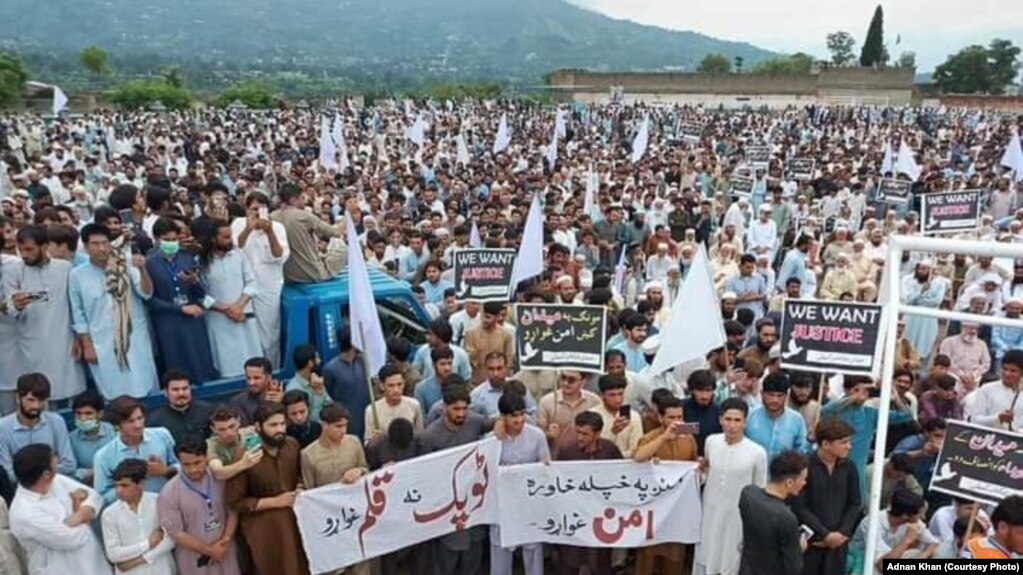

هغه زیاته کړه:"روانه بدامني دې بنده کړل شي. زموږ يوازې يوه غوښتنه ده او هغه دا چې دلته دې امن قايم کړل شي. دلته بريدونه زیات شوي دي. پر مويال سېګنل ټاورونو هم حملې شوې دي. په ۲۰۰۹ کال کې دلته عمليات شوي وو. بيا تر دې کاله پورې په مختلفو وختونو کې د ترهګرو پر ضد کاروايانې وشوې خو مکمل امن رانغلی."

دا په داسې حال کې ده چې د اګست پر شپږمه نېټه په کوز دير کې د تحريک انصاف پر سیاستوال او خيبر پښتونخوا اسمبلۍ غړي ملک لیاقت علي خان حمله شوې وه. د نامعلومو وسله والو په دې بريد کې هغه پخپله زخمي او د نوموړي سره مل، څلور نور کسان وژل شوي ول. په وژل شويو کې يو دوه امنيتي سرتيري، يو د ملک لیاقت ورور او وراره وو.

تر هغه بريد وروسته هم په کوز دير کې په سلګونو ولسي خلکو لاريون کړی وو. د "دیر قامي پاڅون" په نوم د نوي غورځنګ مشر ملک جان عالم د اګست پر ۱۰مه مشال راډیو ته ویلي ول، د سیمې د ګوندونو سیاستوالانو او لسګونه مدني فعالانو د اګست پر نهمه د میدان له کمبړ بازاره تر لوبغالي (سټېډییم) پورې لاریون وکړ او مشرانو بیا هلته جلسې ته په ویناګانو کې د امنیت ټینګښت غوښتنه وکړه.

 خيبر پښتونخوا وزيراعلی محمود خان پر ټويټر ليکلي وو چې دا بريد غندي او د پېښې د پلټنې حکم یې کړی دی.


Pakistan under the threat of Hepatitis

Dr Muhammad Faheemullah Kamboh
Despite Hepatitis cases multiplying at an alarming speed in Pakistan, government seems unserious.
As World Health Organization has developed a Global health sector strategy to achieve hepatitis elimination by 2030 in collaboration with different countries’ authorities, and among them, some countries like Iceland, Qatar, Australia, Japan, etc are on the track to achieving hepatitis by 2030. some countries are working towards elimination but unfortunately, Pakistan is among the countries in which elimination seems unachievable with its current policy.
lack of education, proper counseling, and lack of screening and vaccination are major problems to Eliminate hepatitis. There is also a lack of effective monitoring and evaluation of provincial hepatitis programs, where sometimes medicines and necessary materials to conduct PCR tests are insufficient in resulting patients having to suffer a lot. Who is to blame for the failure of Pakistan to eliminate Hepatitis? Government of Pakistan, Health care workers? or people themselves are accountable for being unsuccessful in achieving the target to combat hepatitis?
The disease of hepatitis is called a silent killer because many patients remain undiagnosed without having any symptoms Upto many years before developing complications and dying. Though there are five types of Hepatitis, from A to E. But Hepatitis C is the leading cause of death all over the world.In Pakistan, almost 12 million people are suffering from hepatitis B or C. Each year brings about 150 000 new cases.
Identify the following common risk factors for the transmission of hepatitis B and C. Unnecessary therapeutic injection use, and unnecessary hospital stay that is most commonly observed in today’s era, syringe reuse, improper sanitization of medical devices, blood transfusion, sharing of razor and shaving machine with others, contaminated blood and body fluids while coming in contact with someone’s wound, Getting a tattoo or piercing, Trips to the salon or barbershop, Having sex with someone who has hepatitis B is a major cause of new infections.
To prevent Hepatitis, Vaccination of Hepatitis B, from newborn children to Adults, mass screening, washing dishes, fruits, and vegetables properly, eating well-cooked food, avoiding unnecessary blood tests, hospital administration, and injections, and using medicines as per doctor’s advice are the effective ways to prevent Hepatitis.
https://dailytimes.com.pk/979884/pakistan-under-the-threat-of-hepatitis/

#Pakistan - ‘Kill me if you want but I’m going to play cricket’ – the struggle of Pakistan women to do what they love

Aayush Puthran
@aayushputhra

On March 6, 2022, Bismah Maroof entered the Bay Oval in Mount Maunganui holding Fatima, her seven-month-old daughter, in her arms. She was leading Pakistan against arch-rivals India in the 50-over cricket World Cup, and it was the first time a Pakistani player had returned to international cricket post-childbirth. Even though she was one of eight mothers playing in that tournament, Bismah emerged as a beacon of hope to millions. And not without reason.

For a country so obsessed with cricket, it’s interesting to examine how the sport remains at an arm’s length from nearly half the Pakistan population. Representing the country at cricket is the highest form of izzat (honour) and yet many women testify to the bezatti (humiliation) they have faced for playing.
In 2009, 17-year-old Saba Nazir was discovered by her brother secretly playing. In the conservative town of Muridke, for a girl to be indulging in a frivolous recreational activity like cricket was a matter of embarrassment for the family. He beat her up and warned her against repeating it. “You can kill me if you want, but I’m not going to stop playing cricket,” she screamed in defiance. “Even if you cut off my legs, I’ll crawl to the ground and play.”
In the Pakistan women’s team, it is common to find players who have played in secrecy from family members or neighbours. Some have had to deal with objections, some were beaten up, and some had close ties cut off. Only a few others made it through to the national team unscathed. It’s not always the best athletes or the most skilful players who end up representing the national team. It’s invariably those who’ve either won their battles or found support from family members who were willing to fight that societal battle on their behalf.
Around the same time that Saba was putting up a fight, a similar scene was playing out nearly 50km away in Gujranwala, where Nida Dar had to play cricket using a pseudonym to avoid her brother finding out. Nahida Khan in Chaman — a small town near the Pakistan-Afghanistan border — didn’t tell her neighbours that she was playing for almost eight years after she made her international debut, because she and her family were once humiliated when a photo of her playing cricket at college appeared in a local newspaper.
A chance to play cricket for many of these women wasn’t even about playing with a leather ball on a green field. It could merely be the act of shadow bowling on the terrace when no one would dare come up in the afternoon’s scorching sun. Or swinging a bat on the sidelines of a tape-ball game in return for sandwiches. As several senior cricketers admit, even today, despite everything that they have achieved on the field, even recreationally running on the streets is still frowned upon.
Noorena Shams, an international squash player, brought up in the war-ravaged region of Timergara, bordering Afghanistan, had to play cricket disguised as a boy when she was 15. Her name itself was born out of the desire that the family wanted a boy. Even though there are various meanings to the word Noorena in Pashto, she claims it is one of the names that’s often given to girls as a superstitious practice in the region in the hope that the next child would be a boy.
“Let alone playing a sport, girls weren’t even allowed to reveal their faces,” she says. “We’ve had to fight for everything from education to playing sports. I would even have to ride my bicycle in secrecy from my family.” Recently, she was berated on social media for practising in shorts — an outfit she’s most comfortable playing in. But she’s putting up a fight.
“We are used to fighting, we had to, we didn’t have any other choice,” she says, reflecting on the lives of women in Dir, North-West Frontier Province (NWFP). “We’ve grown up listening to gunfire and bomb shells all our lives, had our school and homes struck down. We didn’t even have an identity independent from those of our fathers and brothers. We can surely put up a fight on social media.”
These are unfortunately only the stories of players whose families eventually agreed to let them play. The struggles of those who lost the fight will be hard to unearth. “Sport is a choice and choice is a human right. Unfortunately, most girls from our region are not allowed to exercise that right,” Shams adds. Sana Mir, Pakistan’s longest serving women’s captain, says: “Our parents had to be courageous. The system doesn’t provide them, or us, with any sort of security.
“They are worried about us. Most of them are misunderstood — they aren’t trying to control their daughters, they are trying to protect them.”
In a way, it’s a fair assessment because sport is only a reflection of society, which is dominated by the politics at play. When cricket tournaments had just begun to develop in the 1970s, the martial rule of military dictator General Muhammad Zia-ul-Haq quickly nipped them in the bud. During his regime, to prove an accusation of rape a woman required the testimony of four “honourable Muslim men”. The court testimonies of women in other cases were considered to be worth half that of a man. Extreme punishments for offences included amputation for theft and stoning to death for extramarital affairs. Public flogging for various crimes was the norm and, in fact, a highly viewed event. In sport, akin to other activities like dancing, acting and singing, women weren’t allowed to perform in public. Even as many of the harshest punishments were eradicated in the wake of Zia’s death in 1988, religious extremism continued.
When Shaiza and Sharmeen Khan attempted to play a cricket match in 1988, they were threatened with death and the pelting of their house with stones. When they did eventually begin to play cricket in 1997, the challenges they faced included having to flee the country secretly to play a World Cup in India, fighting with rival groups and engaging in legal battles with the administrators of the men’s game, who attempted to stop them.
In 2005, members of a politically-muscled religious outfit physically attacked women who wanted to be a part of a mixed-gender marathon in Lahore. To be running alongside men was considered an unholy act. In the same year, attempts were made to ban women from playing sports in NWFP.
Irrespective of which part of the country girls came from, the social, cultural and political challenges were enormous. Many of those who ended up playing had their careers end abruptly due to marriage. Bismah Maroof, who married in November 2018, was the first woman to have an uninterrupted cricket career after marriage.
“Whenever I looked at my older team-mates retiring, I would believe that a similar fate awaited me,” she reflects. She was fortunate though, and supported in her endeavour because she was married to her cousin and her in-laws had seen the effort she had put into becoming a cricketer since childhood. Her return to cricket after childbirth was further aided by institutional support from the Pakistan Cricket Board, which rolled out a last-minute parental policy. Not everyone has been as lucky.
Nonetheless, there is hope Bismah’s act will change a few minds. In the orthodox Abbottabad region, Ayesha Naseem is playing cricket even though she had the choice to play in the cosmopolitan Karachi. But she has greater motivations, wanting to normalise the act of girls stepping out to the field with a bat and ball. There are many battles won and lost before donning a national jersey. And then you wonder, where is the real game being played and where lies the victory?
https://www.thetimes.co.uk/article/kill-me-if-you-want-but-im-going-to-play-cricket-the-struggle-of-pakistan-women-to-do-what-they-love-5dgfjgb8d