Wednesday, December 16, 2020

OP-ED: 1971: #BangladeshLiberationWar #BangladeshGenocide - Power did come from the barrel of a gun

 Farid Erkizia Bakht

Bengalis picked up the gun to fight for freedom in 1971? Why didn’t Indian leaders do the same 50 years earlier?

The case for using violence in 1971 is self-evident. The cruel negligence of the cyclone victims in the cold winter of 1970 revealed the true face of Pakistani indifference, indeed contempt, towards Bengalis. When their civil-military leaders prevaricated over the stunning election results in December, there were three paths open: Acquiesence and collaboration, a peaceful People-Power movement, and an armed struggle for freedom. Option three was chosen, as it had to be. 

1971 righted the wrongs of 1947, which were themselves a consequence of missed opportunities in 1922 and 1930. The Non-Cooperation Movement of 1920-22 and the Salt Marches in 1930 had been orchestrated by MK Gandhi. These historic challenges against the British Raj mobilized millions, gathering massive momentum. On both occasions, just as London began to panic, Gandhi backed down. Inexplicably, he called off the movements. The decisions made little strategic sense. It gave the colonialists a get-out-of-jail card. Evidently, Gandhi wasn’t planning liberation “by any means necessary.” 

The Irish model

Ireland was under brutal English rule too. In 1916, Irish republicans launched the armed Easter Rising. Defeated, they began a guerilla campaign in 1919 and won independence for most of the island in 1922. Dublin is less than 500km from London. Delhi is almost 7,000km away. The British army and navy were literally next door to Ireland. 

So why did the Irish rise up in armed revolt while the much more numerous Indians did not? Why did the Irish not rely solely on peaceful protests like the Congress and Gandhi? Turn that around. Why did the Indian freedom movement not take up weapons and wrest liberation like the Irish did (and Bengalis in 1971)? 

Nehru v Bose

Viceroy Linlithgow once asked Nehru when he thought India would gain independence. Nehru replied: 1972. How wrong he was. Or, how right he was (unintentionally). Bangladesh’s first leader returned home to take power in 1972. Had it not been for another Bengali leader, then Nehru might well have been correct for the sub-continent.

A one-time leader of Congress, the charismatic Subhas Chandra Bose, represented the radical, rebellious wing of the Independence movement, and was bitterly opposed by the Gandhi-Nehru duopoly.

During World War Two, Subhas Chandra Bose raised an army from Indian POWs and accompanied the Japanese army up through Burma towards Assam and Bengal. The slogans were Cholo Delhi and Jai Hind. The British engineered the Bengal famine (and the death of 3 million) by deliberately interfering in grain movements -- a scorched earth policy to deter INA-Japanese forces. 

Ultimately, the Indian National Army (INA) was unable to break through. In 1945, Bose subsequently died in a plane crash in Formosa. He apparently intended to start another front for India’s liberation. 

When the British authorities soon put three INA officers on show-trial (a Sikh, Muslim, and Hindu), the official Indian Raj army’s soldiers started to rumble, some threatening mutiny. The Raj realized that without the loyalty of the Indian soldiers, they could not hold down India. They feared another 1857 uprising in 1946. Bose’s armed rebellion had shattered the confidence of the British. The game was up, as the saying goes. Nehru and Jinnah’s messy compromise led to Partition, hurriedly brought forward by the Labour Party from 1948. Jai Hind did not materialize as hoped. Joi Bangla did though, a generation later. 

Bengal and Bangladesh

In the 1940s, there was talk about a United Bengal, independent and nothing to do with Pakistan. While Hindu leading lights in Calcutta had opposed the division on Bengal in 1905, they had changed their minds by now. MK Gandhi, partly funded by millionaire Birla, hindered the concept on one Bengal. After all, Marwari business interests saw profit in a divided Bengal. The rest was history.

In the winter of 1971, when Nehru’s daughter, Indira Gandhi, sent armoured columns over to surround the Pakistani Army in the Bengali delta, some older heads wondered whether they would return to barracks, across the border, as rapidly as they as they had come to help the Bengali Mukti Bahini freedom fighters.

The Indian military would receive deserved, unreserved gratitude. Their relatively prompt exit meant the sovereignty of Bangladesh would not be in doubt. 

In 1974, Bangladesh’s paramount leader recognized the political and military significance of Subhas Chandra Bose’s armed struggle. As prime minister, he invited the Japanese liasion officer and close associate of Bose, Fujiwara Iwaichi, as a distinguished state guest. It was a way of “demostrating his admiration of Netaji and the profound achievement of the Indian National Army.”

Deep down, the inspiration for the Bangladeshi freedom struggle in 1971 was never Gujarat’s Gandhi. It was Bengal’s Bose.

https://www.dhakatribune.com/opinion/op-ed/2020/12/16/op-ed-1971-power-did-come-from-the-barrel-of-a-gun

ED: #BangladeshLiberationWar - After nine months of battle, a nation is born

It has been our ability to overcome the odds, however, to succeed in the face of adversity, that has defined us as a nation over the past five decades.
It was today, on December 16, 1971, 49 years ago today, after a nine month long brutal and bloody Liberation War, that our country emerged as a sovereign nation -- that Bangladesh was born.
This victory was only possible because of the indomitable leadership of Bangabandhu Sheikh Mujibur Rahman who galvanized the entire population, and set about in motion the struggle and resistance that would finally end the 24 years of oppressive Pakistani rule of East Pakistan and give birth to Bangladesh.
Of course, we cannot forget the incredible tribulations and sacrifices of the Mukti Bahini and the sacrifices of millions of brave civilians who were martyred during the war. Despite the most heinous of tactics employed by the Pakistani forces, including massacring our intellectuals, the very best and brightest minds we had during the time so as to cripple us from our very inception, we have not been held back, and over the next five decades, we have grown from strength to strength.
Fast forward to 2020, with Bangladesh in the middle of Mujib Year to celebrate 100 years of the birth of the Father of the Nation, and with 2021 marking 50 years of independence for the country, it was supposed to be a landmark 2020 and 2021 for the country, full of festivities.
Unfortunately, the Covid-19 pandemic has completely changed the trajectory of the entire planet, with every country in the world struggling to cope with the devastating effect it has had on both lives and livelihoods.It has been our ability to overcome the odds, however, to succeed in the face of adversity, that has defined us as a nation over the past five decades. To that end, Bangladesh’s response to the coronavirus had parallels to our response to the oppressive Pakistani forces in 1971 that gave birth to our country.
Through a collective, concerted effort, this time led by Prime Minister Sheikh Hasina, Bangladesh has largely kept our economy moving in a positive direction during the pandemic after an initial setback, despite all indicators suggesting otherwise. This is a testament to the resilience of the Bangladeshi people, one that has always been a hallmark of our nation.
However, challenges will keep appearing, as they always have done for any nation, and Bangladesh has plenty of work to do before it can truly claim to be the “Sonar Bangla” for each and every citizen that resides within its borders, and while our progress as a nation is undeniable, there remain plenty of points of contention that must be addressed with priority.
The most fundamental challenge remains holding on the foundational principles on which Bangladesh was founded -- that of nationalism, socialism, secularism, and democracy. We must remember that Bangladesh is for all of its citizens, and the rights of each and every one of those citizens remain the same, regardless of ethnic, religious, or economic backgrounds. To that end, caution must be exercised when fundamentalism threatens to destabilize the country and the secular forces on which it was founded upon.
Similarly, we must ensure a fair and equitable society, not one where the rich keep getting richer and the poor keep being left behind. Technology can be both a great equalizer and a great divider, and it is imperative for the authorities concerned to ensure that it continues to be the former, not the latter.The threat of climate change also remains the single biggest global problem of the 21st century, with Bangladesh among the most vulnerable countries to its effects. Our government must continue to do its part, not only as a voice of dissent against richer economies who continue their unchecked greenhouse emissions, but also set an example by adopting cleaner, more renewable sources of energy to propel the economy to the next level.Our goals remain extremely ambitious, with the desire to become a middle-income country by this decade and a developed nation in the next two decades. Keeping the spirit of Victory Day with us, remembering our foundational principles, and persevering as we always have as a nation, there are few today who will doubt our ability to fulfill those ambitions, and become the “Sonar Bangla” that was envisioned by Bangabandhu.
https://www.dhakatribune.com/opinion/editorial/2020/12/16/ed-after-nine-months-of-battle-a-nation-is-born

A Pakistan apology could heal Bangladesh's war wounds


By Rock Ronald Rozario


Bloody 1971 Bangladesh Liberation War was a crucial defining chapter in the history of the subcontinent.

Dec. 16 is Victory Day in Bangladesh. On this day in 1971, some 93,000 Pakistani soldiers settled for an unconditional surrender to India-Bangladesh joint forces in Dhaka that led to the emergence of a new nation state in South Asia.
The bloody nine-month Bangladesh Liberation War from March 25 to Dec. 16 was a crucial defining chapter in the history of the Indian subcontinent and a pointer to the historic blunder of the partition of India and Pakistan along religious lines in 1947.
Bangladeshi fighters defeated Pakistan with the support of its arch-enemy India, which was drawn into the war as over 10 million refugees overwhelmed its territory.Pakistan’s military and its local collaborators, including Islamist militias, were accused of killing three million people in what was then East Pakistan, raping 200,000 women and committing the most horrible war crimes in one of the worst genocides of the 20th century.One of the darkest chapters of the war was the abduction, brutal torture and massacre of over 1,000 Bengali intellectuals including teachers, doctors, journalists, writers and cultural artists by the military and Islamic militias for supporting Bangladesh independence. It was a Gestapo-style killing mission seeking to eliminate the brightest sons and daughters to cripple the emerging nation.
Pakistan never officially apologized to Bangladesh for the military atrocities of 1971 when its leadership sought a genocidal solution to a political crisis.
Relations between the nations have been bitter and cold in the past decades. There were some attempts to normalize ties, but the unwillingness of successive Pakistani governments to offer an apology never let it happen.Analysts say several factors, including a fear of huge reparations and a backlash from the powerful military and political establishments, have held back Pakistan from issuing an apology. Relations have further soured since 2013, when Bangladesh started prosecuting and executing more than a dozen leaders of the country’s largest Islamist party, Jamaat-e-Islami, for 1971 war crimes — a long-standing popular demand for national healing from the wounds of the war. The war crimes tribunal was important for Bangladesh because Pakistan never prosecuted its leadership and military commanders for war crimes as promised when its troops were extradited in exchange for repatriation of Bengali migrants after the war.
Related News-Bangladesh hits out at war crimes tribunal criticismBangladesh hits out at war crimes tribunal criticismUN to raise global awareness of 1971 Bangladesh genocideUN to raise global awareness of 1971 Bangladesh genocideBangladeshi war heroines honored at lastBangladeshi war heroines honored at lastThe priest-martyrs of Bangladesh's independence warThe priest-martyrs of Bangladesh's independence war Pakistani politicians expressed dismay publicly and in parliament over war crime trials and executions, angering Bangladesh. Pakistan’s position on trials was a pointless attempt to meddle in the domestic affairs of an independent nation and showed it has yet to admit its faults over the war, let alone offer a heartfelt apology.
In Pakistan, the younger generation are more eager to confront the bitter past including 1971 and improve the international image still tainted by it. They also wish to get away from the legacy of an Islamist-military unholy alliance that still plagues the nation.
However, many of the older generation are less inclined as they still consider Bangladesh independence a result of Indian conspiracy instead of Bengali people’s genuine struggle for self-determination and emancipation from neo-colonialist, Islamic Pakistan.
1971 is an emotive issue in Bangladesh that continues to shape political, social, economic, cultural and even religious discourses. People, irrespective of faith and ethnicity, supported, sacrificed and fought for independence.Anyone speaking ill of independence is viewed as a blasphemer, while any entity, whether social, political or economic, that has the slightest dispassion about the spirit of the war is considered suicidal and self-destructive. Islamist collaborators with Pakistan's army like the Jamaat-e-Islami leaders are still hated as traitors. That is why political Islamists have never been a strong force in Bangladesh.During the war, minority Hindus were the worst sufferers due to Pakistan’s hatred for India, which was accused of breaking Pakistan. Hindus made up the majority of refugees who fled to India during the war. Most returned but many were scared and stayed there.
Christians, who make up roughly 600,000 of Muslim-majority Bangladesh’s population of more than 160 million, have been overwhelmingly in favor of independence. They also denounced the repressive Pakistan regime and felt they would be more at home in secular and pluralistic Bangladesh than in the Islamic state.
Hundreds of Christians became guerrilla fighters against Pakistan's military. Priests, nuns and laypeople opened their hearts, while churches and Christian houses became shelters for war refugees for months.In retaliation, Christians were massacred and villages were burned down by the military and their local collaborators. Three Catholic priests including two foreigners were shot dead.Thus, the issue of apology also reverberates in the Christian community and they too strongly demand Pakistan should apologize for atrocities committed in 1971. For the victims, families and relatives of the war, many still alive, an apology from Pakistan amounts to justice for the horrific atrocities they suffered. Since cricketer-turned-politician Imran Khan became Pakistan’s prime minister, there have been louder calls in Bangladesh and abroad for the long overdue apology. Some even suggested Bangladesh should file cases in international courts against Pakistan for the cause and even break all diplomatic relations.
Khan has shown renewed interest in forging better relations with Bangladesh recently. In July, he made an unusual call to Bangladeshi Prime Minister Sheikh Hasina to discuss flooding, the coronavirus pandemic and better bilateral and regional cooperation.
And, after nearly two years, Bangladesh finally accepted the credentials of Imran Ahmed Siddiqui as Pakistan’s high commissioner to the country. Siddiqui also recently met with Hasina in an apparent effort to improve relations.
Such gestures are welcome, but with the wounds of 1971 still fresh in the public psyche in Bangladesh, it would be impossible for Pakistan to improve ties without a formal apology. Moreover, it would be an important boost for Bangladesh to sustain its secular and pluralistic nature against creeping radicalism.
On the other hand, it can improve Pakistan’s image internationally and empower itself as it struggles to overcome a powerful military, religious fanatics and a fragile democracy.
As Bangladesh kicks off year-long celebrations of the 50th anniversary of independence, Pakistan’s leadership needs to do some serious soul searching to decide on whether it can shed its ego with an apology to move forward or continue to nurture the ghosts of the past.
https://www.ucanews.com/news/a-pakistan-apology-could-heal-bangladeshs-war-wounds/90701#

Pakistan: Is Imran Khan on the way out?

Opposition parties in Pakistan have ramped up their anti-government protests to oust Prime Minister Imran Khan from power. The chances of their success depend on both domestic and international factors.

Almost all major political parties in Pakistan are demanding that Prime Minister Imran Khan step down, claiming he came to power through a rigged election in 2018.

For the past few months, the Pakistani Democratic Alliance (PDM), a coalition of 11 political parties, has been staging massive public rallies across the country to ramp up pressure on Khan's government.

The latest demonstration was held on Sunday in the eastern city of Lahore, a stronghold of former PM Nawaz Sharif, who was ousted from power in 2017 on corruption charges. Sharif, who denies the graft allegations against him as politically motivated, is currently living in the UK undergoing medical treatment.

Opposition leaders announced Sunday they would march to the capital, Islamabad, with their supporters in January 2021 in a final attempt to overthrow Khan, who has been criticized for bad governance and economic mismanagement since he took power in 2018.

Can protests oust Khan?

Khan on Monday said he was not concerned about the opposition rallies. His aides believe the protests are not large enough to topple the government.

"They are free to march to Islamabad (in January), but I don't think the opposition parties have the public support," Mirza Shahzad Akbar, an advisor to the prime minister, told DW.

"There is a constitutional way to oust the premier; by a vote of no-confidence in parliament. Imran Khan is a democratically elected prime minister and the opposition will not be able to force him out through protests," he added.

Some political analysts agree that protest rallies alone won't be enough to oust Khan.

"The protest movement will put pressure on the government, and this is what the opposition is trying to do," Mosharraf Zaidi, an Islamabad-based political analyst, told DW.

Political analyst Qamar Cheema is of the view that although the opposition parties lack a majority in parliament to remove Khan from his post, "they can try to create political instability in the country," he told DW.

Pakistan's political collision course

Opposition leaders have ruled out the possibility of negotiations with the government and the military, which they accuse of installing Khan as a "puppet regime."

"The time for talks is over and we will organize a long march to Islamabad," Bilawal Bhutto-Zardari, the leader of the Pakistan People's Party (PPP), told the Lahore rally participants on Sunday.

Khan's aide, Akbar, told DW the government was ready for negotiations. "But we won't be blackmailed into dropping corruption cases against the opposition leaders," he stressed.

Experts say that a dialogue between the government and the opposition alliance is unavoidable.

"The military, the civilian government, and the opposition need to hold negotiations to determine the future political course of the country," said analyst Zaidi.

Cheema believes the government is unlikely to hold direct talks with the opposition and will engage with the PDM through a "third party."

"The military wants to have a consensus on key national security issues," he said.

Confrontation with the military

Although, the main target of the opposition rallies is Premier Khan, the anti-government campaign has transformed into an anti-military movement in the past few months.

Experts say the civilian political class in Pakistan increasingly sees the military as an opponent not only in matters of political governance but also of the economy.

"The military is not only involved in politics, it also has huge stakes in Pakistan's economic affairs. To protect these interests, it has captured the state. The situation is so grave that elected representatives have become totally powerless," Arshad Mahmood, an Islamabad-based political analyst, told DW.

Former Prime Minister Sharif and his daughter Maryam Nawaz are the most vocal critics of the military in the opposition alliance.

Addressing the Lahore rally on Sunday via video link, Sharif lashed out at the military generals for their alleged interference in the political affairs of the country.

"They say, don't take names? Tell me, what should we do? Is Imran Khan alone responsible for the predicament the country is in?" Sharif said in a reference to the military generals.

Some political observers also believe that the opposition is optimistic that a change in the US presidency in January, with Joe Biden replacing President Donald Trump, could benefit their cause.

Democrats, historically, have backed civilian supremacy in Pakistan. But regardless of who sits in the White House, the political situation in Pakistan is likely to remain volatile and unstable.

https://www.dw.com/en/pakistan-is-imran-khan-on-the-way-out/a-55946869

Baluchistan: Lawyers to challenge Gwadar fencing issue, Baloch senator says ‘safe city project’ unacceptable

 Lawyers in Balochistan have decided to challenge Pakistan’s government’s decision to fence Gwadar in the name of security.

The Quetta Bar Association’s Vice Chairman Muneer Kakad said on Saturday a Balochistan-wide strike will be held and the decision will be challenged in the Balochistan High Court.

Mr Kakar announced this while addressing a joint press conference with the Balochistan Bar Council.

He was quoted as saying, “The Centre thinks it will control Gwadar once it has been fenced but we won’t let that happened. You can’t seal a city for its protection.”

Kakad also added that people in Gwadar don’t have access to clean drinking water yet funds are being spent on fencing the city.

Earlier an opposition senator Mir Kabir Mohammad Shahi has blamed the federal and provincial governments of hatching a conspiracy to “separate Gwadar from Balochistan” by fencing the port town in the name of Gwadar Safe City project.

During a press conference, he said, “A fence is being erected around Gwadar in the name of the Safe City project through which the city will be divided into two parts. Those people who regularly go inside the city will be given a card without which no one could enter the city.”

He said the plan to bring Gwadar under the control of Centre was initiated during Musharraf regime and now the federal government was implementing it.

He maintained that initially an attempt was made to declare the coastal belt of Balochistan the property of the federation through an ordinance and later islands of Balochistan and Sindh were handed over to the federal government through another ordinance.

“The ordinance on the islands of Sindh and Balochistan was not discussed in the Senate,” he said, adding that the “move to hand over Gwadar to the federal government” in the name of security was interference in provincial [Balochistan’s] affairs.

Mr Mohammad Shahi said that Balochistan was not someone’s estate to hand over its resources to the federation through a piece of paper. “We will not allow the looting of Balochistan’s resources through a presidential ordinance.”

He said the China-Pakistan Economic Corridor existed due to Gwadar but the development of the port city had been ignored.

“The people of Gwadar are compelled to purchase drinking water at the rate of Rs2, 500 per tanker,” the senator said, adding that there was no permanent arrangement of water supply in the city.

Jam Kamal Khan CM Balochistan, however, dubbed as fencing of Gwarar as ‘additional security’ saying, ‘barbed wire has been laid in some areas to provide additional security.’

https://balochwarna.com/2020/12/13/balochistan-lawyers-to-challenge-gwadar-fencing-issue-baloch-senator-says-safe-city-project-unacceptable/

Imran Khan will have to resign by 31st January, Chairman PPP Bilawal Bhutto Zardari

Chairman Pakistan Peoples Party, Bilawal Bhutto Zardari has said that Imran Khan will have to resign by 31 January.

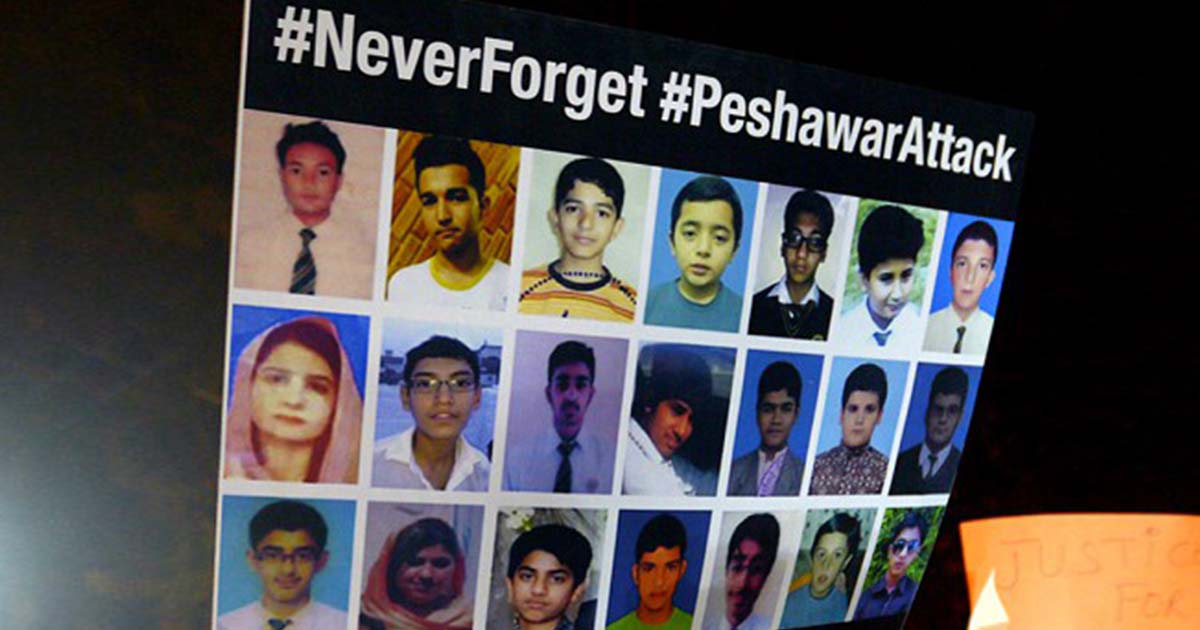
Bilawal Bhutto Zardari said this while talking to journalists in Lahore on Wednesday afternoon. He said that the PPP has a history of resistance. Our workers struggled against and defeated General Zia and Genral Musharraf so they have the history of resistance. The mobilization of party workers is going very well and Imran Khan will have to resign by 31 January. He said that 16 December reminds us of two tragedies for Pakistan, First is fall of Dacca and that other is the martyrdom of students of Army Public School in Peshawar. He said that the APS tragedy is still fresh in our minds and this selected government has failed to provide justice to the bereaved families. During this puppet, incapable and illegitimate government the main culprit of APS tragedy Ehsanullah Ehsan fled the captivity and the country. This government gives relief to the terrorists and imprisons opposition politicians, journalists and bloggers. This government is doing nothing to give any relief to the people. Price-Hike, unemployment and hunger and poverty are the real issues the people are faced with in this government. Pakistan has the highest inflation and lowest growth rate in the region. Pakistan is economically worse than Afghanistan.

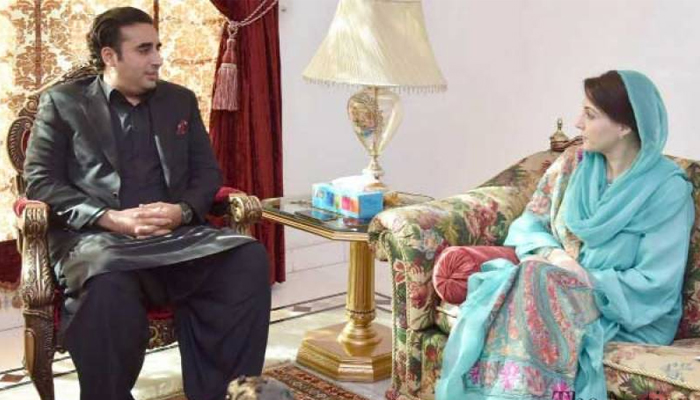
Responding the questions by the journalists Bilawal Bhutto Zardari said that he had gone to visit Shahbaz Sharif to condole with him on the death of his mother. He and Shahbaz Sharif talked about the unity of opposition in the country. He said that his party is ready to sacrifice Sindh government in this movement to achieve its goal. He said that opposition will form such a strategy which will not harm the democracy. Opposition will not be damaged by this movement and warning has already been issued to Imran Khan to step down or face the music. There will be pdama dam mast qalandar’. He said that Shaheed Zulfikar Ali Bhutto and Shaheed Mohtarma Benazir Bhutto both knew the politics of resistance as well as the politics of reconciliation. We know how to use both tools. He rejected any dialogue with puppet government and puppet prime minister, puppet chief minister and puppet speaker national assembly.

Bilawal Bhutto Zardari said that this is wrong notion that any phone call had ended long march held for judiciary. He said that the PPP leaders had convinced President Zardari to restore the judiciary and afterwards telephone calls were made for face saving of others.

https://www.ppp.org.pk/pr/24166/

بلاول کی زیر صدارت اجلاس، بے نظیر بھٹو کی برسی سے متعلق فیصلے

چیئرمین پیپلز پارٹی بلاول بھٹو بھٹو کی زیر صدارت اجلاس میں بے نظیر بھٹو کی برسی کے انتظامات سے متعلق فیصلوں کو حتمی شکل دے دی گئی۔

چئیرمین پیپلز پارٹی بلاول بھٹو زرداری کی سربراہی میں بے نظیر بھٹو کے یوم شہادت کے حوالے سے اجلاس ہوا، بلاول ہاؤس میں ہونے والے اجلاس میں قائم علی شاہ، شیری رحمان، نثار کھوڑو، وقار مہدی اور سعید غنی، منظور وسان، ناصر شاہ، عاجز دھامرا، مکیش چاولہ اور دیگر نے شرکت کی

اجلاس میں پاکستان ڈیموکریٹک موومنٹ کے رہنماؤں کی میزبانی و دیگر انتظامی معاملات کا جائزہ لیا گیا۔

اجلاس میں بے نظیر بھٹو کے یوم شہادت پر گڑھی خدا بخش میں جلسے کے انتظامات سے متعلق فیصلوں کو حتمی شکل دی گئی۔

https://jang.com.pk/news/859242 

سینیٹ میں کسی کو غیر آئینی ہتھکنڈے دہرانے نہیں دیں گے، بلاول، مریم کا اتفاق

پیپلز پارٹی کے چئیرمین بلاول بھٹو زرداری کا پاکستان مسلم لیگ (ن) کی نائب صدر مریم نواز سے ٹیلیفونک رابطہ ہوا ہے۔ دونوں رہنمائوں نے اتفاق کیا کہ سینیٹ میں کسی کو ایسے غیر آٸینی ہتھکنڈے دہرانے نہیں دیں گے کہ وہ 2018 کے الیکشن بن جائیں۔ 


اعلامیہ کے مطابق گفتگو میں دونوں رہنماٶں نے پی ڈی ایم کے کامیاب جلسوں کے بعد بوکھلاہٹ کی شکار حکومت سمیت مجموعی سیاسی صورتحال پر تبادلہ خیال کیا گیا۔

پی ڈی ایم کے سرکردہ رہنماؤں نے سینیٹ کے آئندہ انتخابات کے متعلق حکمت عملی پر بھی تبادلہ خیال کیا۔

اس موقع پر دونوں نے اتفاق کیا کہ سینیٹ میں کسی کو ایسے غیر آٸینی ہتھکنڈے دہرانے نہیں دیں گے کہ وہ 2018 کے الیکشن بن جائیں۔

بلاول بھٹو زرداری نے مریم نواز کو شہید محترمہ بینظیر بھٹو کی برسی کے جلسے میں شرکت کی دعوت بھی دی

https://jang.com.pk/news/859240 

Tuesday, December 15, 2020

Video - #DailyShow #TrevorNoah #DonaldTrump Trump Loses Again in Electoral College as His Fans Riot in D.C. | The Daily Social Distancing Show

Video Report - First EU Covid-19 vaccinations likely before end of year, bloc’s commission chief says

Video Report - Keilar calls out GOP members who won't acknowledge Biden's win

Barr shielded Trump from Congress, Mueller and the law, but couldn't save him from voters

Paul Rosenzweig 

  Cromwell's devotion to King Henry VIII knew no bounds. Barr had the same blind loyalty to Trump and the principle that presidents are above the law. 

Nearly 500 years ago, King Henry VIII sacked his most loyal courtier, Thomas Cromwell, removing him from office and then beheading him. Today, Attorney General William Barr suffers the same Cromwellian fate, his sycophantic fealty to President Donald Trump rewarded by being tossed onto the pile of discarded Trumpian supporters. Fortunately for Barr we have given up the tradition of beheading, but he was given the modern-day equivalent send off — the opportunity, Trump said, to “spend more time with his family” (as if leaving the job Dec. 23, 28 days before it would end, is necessary to assure his family’s holiday happiness).
Crowell’s tenure was marked by his willingness to do almost anything to satisfy King Henry. He arranged the annulment of Henry’s marriage to Catherine, Queen of Aragon, so that the King could marry Anne Boleyn. As the King’s chief minister, he oversaw the expropriation of Catholic church properties and advanced the doctrine of royal supremacy over the church. His devotion to the king knew no bounds.
Barr’s tenure is marked by the same blind loyalty to a leader and to his conception of power. Throughout his time in office, Barr acted more like the president’s personal advocate than like an attorney general whose job it is to represent the people and government of the United States. That is what Barr will be most remembered for from the past two years.

Barr's legacy of presidential supremacy

► Almost his first act in office was to defend Trump by wildly mischaracterizing Special Counsel Robert Mueller’s report. That report credibly collected evidence that the president had obstructed justice and laid out extensive evidence of connections between the Trump campaign and Russian actors. In defending the president against these claims. Barr sank into obfuscation and outright misdescription.

Not content with misstating the law, Barr also took operational control of defending the president’s political image. He personally directed law enforcement and military officials to clear Lafayette Square of protesters last summer so that Trump could walk across the part and have a Bible-holding photo op in front of St. John’s Church.

► Diverging from the long-standing practice of attorney general neutrality, Barr injected himself into the presidential election, warning that if Biden won, the United States would be “irrevocably committed to the socialist path.” 

He interfered in the criminal investigation of Trump confidants Roger Stone and Michael Flynn to protect the interests of the president. In Stone’s case he sought to get Stone a lighter sentence. In Flynn’s he sought to dismiss criminal charges to which Flynn had already pled guilty. In both cases, career prosecutors at the Department of Justice resigned in protest at Barr’s political interference. 

► He likewise politicized the criminal investigation process by continuing a seemingly-unending investigation into the Russian investigators — an inquiry he has now sought to entrench by the appointment of a special counsel in a manner that is clearly intended to limit the discretion of the incoming Biden-appointed attorney general.

DOJ in ruins:Trump and Barr wrecked the Justice Department. Here are 6 ways Joe Biden can fix it.

► He refused to recognize the lawful authority of Congress to conduct oversight of the executive branch. On Barr’s watch, Trump’s Department of Justice has fought every subpoena issued by Congress, sometimes on the fanciful ground that the president is absolutely immune from congressional review. 

But most fundamentally, Barr served Trump by promoting the principle that the president is above the law. At every turn, Barr has advanced a view that the executive branch is not restrained by our constitutional system of checks and balances and that the president is not subject to criminal review of his actions. Here, perhaps, Barr most closely mirrors Cromwell, whose view of royal supremacy is an almost perfect analog for Barr’s view of presidential supremacy.

Barr is the Cromwell of the Trump era 

In the end, Cromwell lost his head because he could got give Henry the one thing Henry wanted most desperately — a male heir. It simply proved impossible, and for the sin of failing to achieve the impossible, Cromwell was removed and executed.

Barr, likewise, has lost his job because of his failure to do the impossible. Confronted with the hard reality that there was no evidence of significant fraud in this election — indeed that it was, as Trump’s cybersecurity chief put it, “the most secure election in history” (for which apostasy he, too, got fired) — Barr simply could not conjure an alternate reality in which Donald Trump won reelection. 

2020 election watershed:Barr finally met a Trump lie he couldn't swallow

And for that failure Barr, like Cromwell, met the fate of all failed loyalists, discarded on the ash heap of history where his memory will deservedly be that of a faithful subordinate to a failed leader. The best thing that can be said of him — quite literally the very best — is that he refused to join other Republican leaders as they followed Trump like lemmings off the cliff of electoral authoritarianism. His refusal to influence the election by announcing an investigation of Hunter Biden, combined with his refusal to call the election a fraud, show that even for the most devoted adherents there are lines they cannot or will not cross. But after all of Barr’s failures that have gone before, that is modest praise, indeed.

And so, William P. Barr’s legacy is this: He is the Thomas Cromwell of our age.

 https://www.usatoday.com/story/opinion/2020/12/15/barr-blind-loyalty-not-enough-to-save-trump-from-voters-column/3904158001/

Video - Chairman PPP Bilawal Bhutto Zardari’s media talk outside Lakhpat jail, Lahore

Video - #KhabarSayAagay #NayaDaur #PDM Bilawal-Shehbaz Meeting, And Early Senate Elections

Pakistan Army is now an echo chamber — look at what it did to ex-ISI chief Asad Durrani


The ex-ISI chief was punished not for disclosing any secret, but for analysing the tantalising event of the 2011 American operation in Abbottabad to kill Osama bin Laden.

When Field Marshal Sir Claude John Eyre Auchinleck returned to India in 1943 as the commander-in-chief of the military, one of his goals was to ‘Indianise’ the force while ensuring high levels of professionalism. Though the demands of performing in the Second World War obfuscated his plans to move away from limiting recruitment to the ‘martial races’, he developed a culture of professionalism that made it imperative for the armed forces to analyse every operation, including failures, for future benefit.

Reading the recently published opinion article by the former head of the Inter-Services Intelligence (ISI), Lt. General (retd) Asad Durrani, it seems that Pakistan’s military has deviated from the culture of questioning its actions and carrying out analysis. General Headquarters of Pakistan Army in Rawalpindi is no longer interested in critical evaluation even if it is from one of its own. The current leadership has reached the new milestone of tightly locking itself up in an echo chamber and not tolerating dissent. A senior retired officer like Durrani fears for his life and has been constrained from traveling to meet family. This is in addition to him being hauled up in front of an inquisition regarding his books, especially Spy Chronicles, which he co-authored with the former chief of India’s Research and Analysis Wing (RAW), A.S. Dulat, and his pension being stopped for a while.

Durrani’s punishment

Durrani was punished not for disclosing any secret, but for analysing the tantalising event of the 2011 American operation in Abbottabad to kill al-Qaeda leader Osama bin Laden. The general retired in 1993, which means he wasn’t privy to any secret, but could still analyse based on his knowledge of his institution. Perhaps due to his pride in the military, he could not believe that the Pakistan Army could be caught with its pants down. And so, he claimed in an interview to Al Jazeera that the top generals negotiated the Osama bin Laden operation with the Americans. While the interview was ignored, Durrani repeating this claim in the book angered army chief General Qamar Javed Bajwa, who was totally sidetracked by his political ego. Durrani’s theory about the Abbottabad operation took attention away from what the army chief was trying to do – tell the world that former Prime Minister Nawaz Sharif had hurt national interests by disclosing to the newspaper Dawn that the world was concerned about Pakistan’s involvement with militant groups and extremism.

The jury on how much the army top brass knew about the American operation is still out. In his recently published book The Promised Land, former US President Barack Obama claims that it was a secret kept from Pakistan because some of its intelligence personnel were deeply connected with the Taliban and al-Qaeda. Former army chief General Ashfaq Kayani seems to have only demanded that Washington come clean about the operation after it was all done. None of this means that the generals at the helm of the Pakistan Army did or did not have more details. We will probably have to wait many more years when American records get declassified to get a clearer picture. Durrani, and many other officers like him, might eventually get disappointed as they realise that the military high command continued to sleep during the operation, as they did during the outbreak of the 1965 war with India.

Impact of the Durrani leak

However, Durrani’s article is important due to six factors. First, there is unrest in the larger military fraternity of Pakistan caused by actions of the new generation of generals. Second, there is an indication of a shift in the army’s culture. The institution has strayed away from its tradition of showing respect to the senior command, and even the retired ones. What started under General Pervez Musharraf in the form of criticising Lt. General Ali Quli Khan in his book has come full circle with a senior retired general being mercilessly hounded.

Third, the article says a lot about the military’s socialisation process. Power is maintained not just through distribution of perks and privileges, a system that Durrani criticises as being abused by the top brass, but also by revoking security clearance of officers that are seen as having stepped out of line. While Asad Durrani’s clearance was withdrawn for using his pen instead of the sword, Maj. General (retd) Mahmud Durrani lost his clearance that would enable him to attend functions where the chief would be present probably for his admission that Ajmal Kasab was a Pakistani citizen. There are many more stories waiting to be told about how men may retire from their respective services but can never return to civilian life.

Fourth, Durrani seems to have exposed the working of General Bajwa’s cabal, the influence of former generals, and the petty-mindedness behind the targeting of a senior retired officer. The former spy chief came out guns blazing about corruption of the military leadership, especially the story of General Beg extracting money from a Karachi banker, Younis Habib, to finance an ISI operation against Benazir Bhutto’s government. I remember my own interview with General Beg for my first book on Pakistan’s arms procurement decision-making at his think tank in Rawalpindi, in which he confessed that this was not the first time that the ISI had got money from private entrepreneurs. Intriguingly, Beg also managed to extract resources from the Germans, who continue to be a significant European source for financing both kosher and dubious think tank activities in Pakistan. The picture that emerges then is of a military with issues at the top.

Fifth, such close-mindedness means that the top-brass lacks capacity to deviate from their traditional behaviour, and are not capable of any strategic policy review. This means they are more likely to get stuck geo-politically and politically in situations from which they will be unable to extricate themselves. Finally, the institution’s capacity to harm people, including its own officers, has multiplied.

The building of an echo-chamber

Durrani published his thoughts in an Indian news blog probably because because he didn’t think it would be printed in Pakistan. He timed it well to further expose the shallowness of the existing top brass that is confronted with mounting political opposition to its hybrid rule formula. His article is a rap on Bajwa’s knuckles, and could become painful if it gets circulated widely in military circles. In his novel Honour Among Spies, Durrani shows the army chief exiting from the office, which is not a probability in real life except in case of a coup by another general. But additional pressures could be consequential for Lieutenant General Faiz Hameed’s future, whose desire to become the next army chief is no secret.

The Durrani leaks tell us about the growing weakness of an institution that has made it a habit not to expose itself to critical examination or alternative views. This particular problem dates back to the Musharraf years, when any discussion of the Kargil operation and shooting down of Pakistan Navy’s Breguet Atlantic maritime patrol aircraft at war colleges was totally forbidden. At that time, any discussion that took place was by the larger security community and in the country’s media. However, over the years, this became a bad habit with the military shifting from not listening to alternative views to gagging voices and planting views that would echo its own. The 14-15 think tanks in Islamabad mostly say what is approved. This creates the problem of an echo chamber that only regurgitates what the military leadership wants to hear.

There is a larger problem at the back of this behaviour: the proclivity of military leadership to generally consider itself like Caesar’s wife — above questioning. It tends to enforce its sensitivity on society as a fact of life. From a command-and-control perspective, such sensitivity is tricky. From the Pakistan Army punishing its own general for reviewing his institution’s performance to the Indian Air Force chief complaining about something minor in a Netflix series, this kind of behaviour implies that military leadership is not open to the idea of evaluation, or even laughter. In the process, it’s a bid to create a special category for the military as an institution that cannot be examined.

Surely, modern militaries are technologically advanced and more complex, which makes control difficult. The myth-building about their service to the nation and how critical they are for ensuring security to the State then puts them at a pedestal where questioning becomes relatively difficult. This is not easy to ignore because it presents a long-term issue for civil-military relations. The sensitivity of the military is negotiated through the society with the legitimacy of politicians, depending upon the respect they show their armed forces.

Zulfiqar Ali Bhutto, the leader of the Pakistan People’s Party (PPP), was told not to allow any discussion of the 1971 debacle and the military’s performance. He ensured silence, but paid with his own life. The survival of politics makes it vital for societies and polities to engage with the armed forces and treat them as one of the institutions, rather than the only one.

https://theprint.in/opinion/pakistan-army-is-now-an-echo-chamber-look-at-what-it-did-to-ex-isi-chief-asad-durrani/566966/

PDM is united against this selected government - Bilawal Bhutto Zardari

 Chairman Pakistan Peoples Party, Bilawal Bhutto Zardari has said that all the parties in Pakistan Democratic Movement are united against this incapable, fake and illegitimate government of Imran Khan.

Bilawal Bhutto Zardari said this while talking to media after visiting Pakistan Muslim League Nawaz president and leader of opposition in the national assembly Shahbaz Sharif in prison on Tuesday afternoon in Lahore.
Chairman PPP said that it is our tradition and custom that we sympathize to the bereaved family at the time of grief and sorrow and express solidarity with them. He said that he had gone to meet Shahbaz Sharif to condole with him on his mother’s death who recently passed away. He said that this selected Prime Minister and his government does not have courage to hear the truth. This is probably the only government in the world in which current and former leaders of opposition are languishing in prison without any conviction namely Shahbaz Sharif and Syed Khursheed Ahmed Shah respectively. President Zardari was kept in prison for 12 years without any conviction. This is against democracy and human rights. Bilawal Bhutto Zardari said that this is the reason the democracy has not progressed in this country.
He said that the government is unable to control price-hike and economically Pakistan is continuously suffering. In democracy the government and the opposition both put forward their view points and a way to stabilize the economy is found but unfortunately this selected government refused the democratic way to solve the problems. We had asked Imran Khan to become prime minister of Pakistan but he refused to take this advice and chose to become prime minister of PTI. We want to restore the real democracy in Pakistan as Imran Khan has sent critique of his policies to prison whether politician or media men.

Responding to questions by the journalists, Chairman PPP said that all the parties of PDM are on one page and one stage and our target is the same to send this puppet home. The resignations have to be submitted to the party leadership by 31 December and these resignations are our atom bomb which we will use from the platform of PDM. He said that there are puppets in this government from speaker of the assembly to the chief minister Punjab. We cannot have dialogue with the puppets. When the leader of opposition is not allowed to talk on the floor of assembly then what national dialogue the government is talking about, he asked. Bilawal Bhutto Zardari said that the message for Imran Khan is loud and clear that he should resign. We will go to every nook and corner of Punjab and the country to mobilise people against this selected government. The mobilization is increasing by the day.

Today Pakistani economy is worst than Afghanistan and in this situation Imran Khan will have to resign. Imran khan has made institutions disputed and the integrity of institutions is being harmed by Imran Khan. This selected prime minister makes hue and cry about corruption but the entire corrupt are in his cabinet. The thieves of sugar, flour, K-electric, Malam Jabba, BRT etc are with him. Imran Khan is protecting them all. Funds from Israel and India are in the foreign funding case against Imran Khan.

https://www.ppp.org.pk/pr/24162/

Chairman PPP Bilawal Bhutto Zardari - Bloodshed of the innocent children and martyrs of Army Public School, Peshawar will continue to shake the conscience of the entire nation

Chairman Pakistan Peoples Party Bilawal Bhutto Zardari has said that bloodshed of the innocent children and martyrs of Army Public School, Peshawar would continue to shake the conscience of the entire nation until the perpetrators and facilitators of this gory crime against humanity were not exposed and brought to justice.

In his message on the 6th martyrdom anniversary of the APS Peshawar carnage, the PPP Chairman saluted the martyred students and their brave parents, whose immeasurable agony can only be felt by the families of those who also had their loved ones martyred by terrorists. “Being the son of a martyr Shaheed Mohtarma Benazir Bhutto, I, and the PPP, stand in complete solidarity with these parents,” he added.
Bilawal Bhutto Zardari paid glowing tributes to the innocent souls whose loss shook the nation, adding that it is the responsibility of the state and the government to prove that terrorists are not more powerful than them, and to provide justice, bringing long deserved solace to grieving families.

https://www.ppp.org.pk/pr/24164/

کراچی: بلاول ہاؤس کے سامنے گاڑی میں نصب بم برآمد

کراچی کے علاقے کلفٹن میں بلاول ہاؤس کے سامنے کھڑی گاڑی میں بم نصب ہونے کی اطلاع پر بم ڈسپوزل اسکواڈ پہنچ گیا جس نے بم برآمد کر کے ناکارہ بنا دیا۔

پولیس کے مطابق چلتی ہوئی گاڑی میں میگنیٹک بم چپکایا گیا تھا، مذکورہ گاڑی میں غیر ملکی سوار تھے، جنہیں محفوظ مقام پر منتقل کر دیا گیا ہے اور ان سے تفتیش کی جا رہی ہے۔

پولیس کو بم کی اطلاع ون فائیو مددگار پر دی گئی تھی جس پر پولیس نے بم ڈسپوزل اسکواڈ کو طلب کر لیا تھا۔

ایس ایس پی ساؤتھ زبیر نذیر نے بتایا کہ بم ڈبل کیبن گاڑی میں نصب کیا گیا تھا، یہ گاڑی بلاول ہاؤس کے سامنے بینک کے سامنے کھڑی تھی۔

ایس ایس پی ساؤتھ نے یہ بھی بتایا کہ بم والی گاڑی کی نشاندہی ہونے کے بعد پولیس نے 200 میٹر کے علاقے کو گھیر لیا تھا جبکہ مذکورہ گاڑی اور علاقے سے لوگوں کو ہٹا دیا گیا تھا۔

https://jang.com.pk/news/858597


Monday, December 14, 2020

Music Video - Guns N' Roses - Paradise City

#DailyShow #TrevorNoah #BarackObama President Obama on Roasting Trump, Private Life, and His Legacy | The Daily Social Distancing Show

Video Report - #Coronavirus #Vaccine #SputnikV Russia kicks off mass COVID-19 vaccination program with Sputnik V | DW News

Video - President-elect Biden Delivers Remarks on the Electoral College Vote Certification

Video - Electoral College formally affirms Biden's presidential win

Ghazal - ABI TU MEIN JAWAN HOON MALIKA PUKHRAJ,TAHIRA SAYED

Video - #PDM Where Is PDM Headed? Will It Collapse? A Discussion With Najam Sethi

Video - #NayaDaur #PDM #Politics After Lahore Jalsa, What's The Future Of PDM And Maryam's Politics?

#Pakistan - #Covid-19 runs unchecked in overcrowded prisons

A human rights report released Monday criticised Pakistan’s response to the coronavirus threat faced by tens of thousands of inmates stuck in overcrowded and often unsanitary prisons.
Instead of following through on promises to ease prison overcrowding made when the pandemic first hit, the government has actually increased its inmate population by over 6,000 between April and August, from 73,242 to 79,603. Some of the few who were freed were later rearrested. The joint report by London-based Amnesty International and Justice Project Pakistan said inmates face a growing risk of infection, and called for renewed efforts to free certain prisoners, particularly the elderly, women and “prisoners of conscience.”
“As Pakistan braves the second wave of Covid-19, prisoners remain dangerously exposed as the authorities not only failed to reduce overcrowding, they actually worsened it,” said Rimmel Mohydin, South Asia regional campaigner for Amnesty International.
In the first weeks of the outbreak in February, the Islamabad High Court (IHC) ordered the release of pretrial inmates charged with nonviolent crimes as well as those whose bail had previously been denied. In Sindh, 519 prisoners were to be released on bail. But in late March, the Supreme Court suspended all bail orders that were granted because of the virus. “The Supreme Court’s decision checked the countrywide momentum to reduce prison populations and even led to the rearrest of prisoners,” said the report.
Even when the Supreme Court did allow certain prisoners to be freed because of age or time served, they were never released, said Sarah Belal, Justice Project Pakistan’s executive director.
Also still behind bars are the women prisoners whom Prime Minister Imran Khan ordered freed if they met certain criteria, such as those on trial or convicted of minor crimes, Belal said.
There was no immediate comment from the government on the 37-page report.
The country’s prison system was already dangerously overcrowded before the pandemic. Built to accommodate less than 58,000 people, it routinely houses nearly 80,000 inmates, according to the World Prison Brief, delivered by the University of London’s Institute for Crime and Justice Policy Research. Punjab stopped reporting positive cases in jails in April when it had registered just 86 cases. However, in response to a Right to Information Request, the report discovered that only 16,534 virus tests had been conducted over seven months in Punjab’s jails, with 1,345 testing positive. The report called for the immediate release of all “prisoners of conscience” but also asked the government to “strongly consider” releasing pretrial detainees.
The rights groups also want a review of a wide variety of prisoners, such as the elderly who have served most of their sentence, prisoners who are serving sentences for minor crimes and those with health issues, “including those with a weakened immune system, due to the exacerbated risks an infection with Covid-19 would bring to their health and lives.”
“Prison authorities should ensure that the person discharged has a place to go quarantine and the local authorities are notified that the person has been discharged,” Mohydin added.
https://www.pakistantoday.com.pk/2020/12/14/covid-19-runs-unchecked-in-overcrowded-prisons/

Pakistan's opposition to lead march to capital in bid to oust Imran Khan

The leaders of an anti-government alliance urged tens of thousands of supporters at a rally on Sunday (Dec 13) to join a march to the Pakistani capital next month to demand the ouster of Prime Minister Imran Khan, who they say was installed by the military in a rigged 2018 election.
An alliance of 11 major opposition parties - Pakistan Democratic Movement (PDM) - has been holding mammoth rallies since its inception in September to seek Khan's ouster and press the military to stop interfering in politics.
"The time to have a dialogue is over. There will be a march now," said opposition leader Bilawal Bhutto Zardari, the son of the late former Prime Minister Benazir Bhutto.
He ruled out the possibility of any dialogue with Khan or the military unless fresh elections were announced.
Khan, who says the protest campaign is aimed at blackmailing him into dropping corruption cases against its leaders, has criticised the rallies amid the novel coronavirus pandemic.
The opposition, which has held six mammoth rallies in recent months, says it plans to put pressure on the government to call a fresh election. The next election is due in 2023.
Pakistan has reported 72 coronavirus deaths and 3,369 infections in the last 24 hours, the highest numbers since June.
The protest campaign come as the country's economy struggles with high inflation and negative growth, which the opposition blames on Khan and the military.
"Who else do we blame," asked former Prime Minister Nawaz Sharif, addressing the rally via a video link from his home in London where he has been living since he left on a medical bail late last year.
Sharif, after he fell out with the generals, was convicted in 2018 on corruption charges.
"Don't use the military's institution for your political ends," Sharif urged the military generals.
Khan and the military deny the accusations.
https://www.channelnewsasia.com/news/asia/pakistan-opposition-rallies-march-against-pm-imran-khan-13765762