Wednesday, November 11, 2020
#Pakistan’s #Lahore sees peak pollution as #coronavirus surges
By BABAR DOGAR and MUNIR AHMED
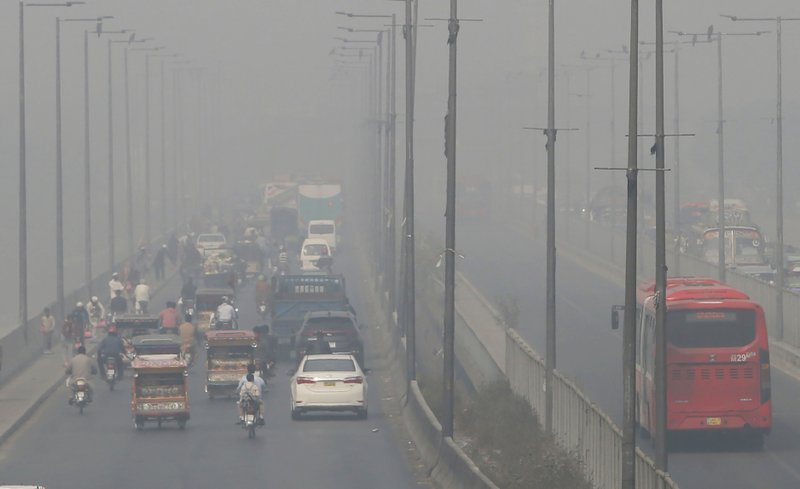
A thick blanket of smog enveloped Pakistan’s cultural capital of Lahore on Wednesday, prompting officials to warn that tens of thousands of the city’s residents risk respiratory disease and eye-related problems while doctors urged people to stay at home.
The air quality in Lahore deteriorated to hazardous levels, putting an additional burden on the fragile healthcare system amid a surge in coronavirus deaths and new infections. The Air Quality Index at one point rose to 750 in the city’s poorer areas — about 12 times the recommended level.
Earlier in the day, Switzerland-based air quality information platform IQair declared Lahore the second most polluted city, after New Delhi, India’s capital. Pollution indexes peak dramatically in Pakistan in winter, when farmers burn off stubble in the fields. Winds worsen the pollution by further spreading smog across the region.
“The air quality level was hazardous today,” said Sajid Bashir, a spokesman for Environmental Protection Department.
By mid-day the situation had improved, he said, as authorities took steps to keep smoke emitting vehicles off the roads and shut brick kilns across the province of Punjab, where Lahore is the provincial capital.
Lahore, once dubbed as the city of gardens, remained pollution-free for months after March, when the government imposed a lockdown to contain the spread of coronavirus. But the restriction was lifted in May, allowing a return to industrial activities and normal businesses. With cars back on the roads, the air quality gradually deteriorated, falling again to unhealthy levels.
Pollution is no stranger to Pakistan, a country of 220 million — or Lahore, with some 12 million people. Cars are the top pollutants in Lahore but the city also has other sources of pollution, including the stubble burning, steel manufacturing furnaces and the city’s famous brick kilns.
“Coughing, throat infection and irritation in the eyes are common,” said Anza Farid, an environmental expert, warning that the situation could worsen in the coming weeks as more people burn garbage in the cities and farmers burn off the stubble in their fields.
Dr. Talha Ayub urged people to wear face masks for protection, both from pollution and the coronavirus. “People should try to stay at home if they can,” he appealed.
Pakistan on Wednesday said it registered 21 new COVID-19 deaths and 1,708 new infections over the past 24 hours — despite a government-imposed partial lockdowns in 4,136 residential areas across the country. The government is turning to sealing off hotspots in a bid to contain rising fatalities and infections from coronavirus.
Authorities also banned large gathering, shut shrines, cinemas and theaters to contain the spread of the virus, which has infected more than 348,000 people in Pakistan and killed 7,021 since February.
https://apnews.com/article/virus-outbreak-pakistan-health-air-quality-lahore-c58d15948b4d50cef7c1ec88beb16d5e
Sudden spurt in #coronavirus cases in #Pakistan
The total number of active cases on November 10 was 20,045 as against 5,831 on September 14.
Pakistan is contemplating new measures to combat the coronavirus after at least 1,708 new COVID-19 cases were detected in the last 24 hours, taking the national tally to 348,184 on Wednesday.
Around 21 patients died in this period as the COVID-19 death toll reached 7,021, reported the Ministry of National Health Services.
The ministry data showed that some 320,065 people have fully recovered while 1,109 were in critical condition.
The National Command and Operation Centre (NCOC) in its meeting chaired by Federal Minister for Planning Asad Umar discussed the option to limit the public gatherings and enhance restrictions on high-risk areas.
The forum was informed that the number of cases have nearly tripled since the NCOC's earlier recommendation, on October 12 and then on November 3, to the National Coordination Committee (NCC) to ban large public gatherings and outdoor activities. However, no consensus has yet been reached by the stakeholders.
The meeting was informed that the positivity rate was increasing in educational institutions and there was a need to check the trend. It was decided that the federal education minister would chair a meeting of provincial education ministers on November 16 to review its situation.
"Other recommendations put forth by the body are to limit public gatherings – political, religious, cultural, entertainment and civil society in nature – to a maximum of 500 people,” according to a statement.It was also recommended in the meeting to limit restaurants and eateries to outdoor dining till 10pm and takeaways. Other suggestions included the closure of shrines in the country and early closure of markets with designated 'safe-days'. It was suggested to increase restrictions for high-risk sectors.The NCOC appreciated adherence to SOPs in mosques for the last many months. However, it noted a decline in compliance at present and urged the stakeholders to keep following the procedures in place.
Later Minister Umar tweeted that daily cases had nearly tripled since mid-October, when the National Coordination Committee (NCC) chaired by the Prime Minister first considered the NCOC recommendation to ban large public gatherings.
"NCOC has once again recommended to ban all large public gatherings. Rapid increase in positivity requires urgent steps to save lives & livelihoods,” he tweeted.
The NCOC -- the nerve centre to synergise and articulate unified national effort against COVID-19 -- was briefed on Tuesday about the threat of rising positivity as the rate of coronavirus cases once again surpassed five per cent after a gap of over three months, the Dawn News reported.
The highest increase of 16.71 per cent was observed in Pakistan-occupied Kashmir (PoK), followed by Balochistan (8.71 per cent), Sindh (5.39 per cent), Punjab (4.46 per cent) and Gilgit-Baltistan (3.24 per cent); while in Islamabad and Khyber Pakhtunkhwa, cases were decreased by 4.92 per cent and 4.61 per cent , respectively.
In Pakistan, the maximum positivity rate had reached 23% in June. It was brought down to 1.7% in September, the report said.
Positivity rate is the percentage of positive results out of the total number of tests sampled.
The positivity rate was 11.79 per cent on March 30, 19.95 per cent on May 25 and 22.24 per cent on June 1. Later, it started dropping and reached 16 per cent on July 6, 3 per cent on August 10 and 1.7 per cent on September 21. An upward trend in the positivity rate was spotted the following month as it reached 2.49 per cent on October 19, 4.26 per cent on November 2 and 5.13 per cent on November 10.
Similarly, the trend of new admissions due to COVID-19 has also started rising as 131 patients were admitted in hospitals, across the country, as compared to 46 on October 5, the report said.
The NCOC was informed that among healthcare workers, 8,573 cases were confirmed which was 3 per cent of overall COVID-19 cases.
According to the latest data released by NCOC, the number of active COVID-19 in Pakistan has increased by more than 14,000 cases in the last eight weeks.
The total number of active cases on November 10 was 20,045 as against 5,831 on September 14.
https://www.tribuneindia.com/news/world/sudden-spurt-in-coronavirus-cases-in-pakistan-169319
#Pakistan: #Christian mother and her son brutally lynched to death by an Islamist mob over #blasphemy
According to activist Rahat Austin, Yasmin was shot dead by Mohammad Hassan. His son, severely injured, died minutes later as he desperately clung to his wife’s hands while his two daughters saw their father dying.A Christian woman named Yasmin and her son Usman Masih were brutally killed by a Muslim mob led by Muhammad Hassan and others in Kathor Kalan village in Gujranwala, Pakistan. The activist further mentions that the crowd gathered at the spot watched the specter of violence unleashed against the Christian family, with none of them coming forward to help them. Pakistan PM Imran Khan’s remarks rationalising Samuel Paty’s killing emboldens fundamentalists The incident which has its roots in blasphemy occurred days after Pakistani Prime Minister issued a clarion call to the Islamic world to unite against ‘growing Islamophobia’ in the aftermath of the merciless beheading of a French teacher, Samuel Paty. He was killed and decapitated for showing the caricatures of Prophet Muhammad published by French satirical magazine Charlie Hebdo in his classroom.
Paty’s decapitation had triggered sharp disapproval from French President Emmanuel Macron, who raised concern over the ominous spread of Islamism and emphasised the need to foster an “Islam of enlightenment”. Macron’s sharp rebuke was also accompanied by sweeping measures ordered by the French government to suppress extremism.
Macron’s statement and action instituted by France in the aftermath of the Samuel Paty killing served as fodder for the leaders of the Islamic world, who made a beeline to rationalise the blasphemous murder of the French teacher and lay the blame on the Western world for hurting the religious sensitivities of the Muslims.
Turkish President Recep Erdogan, Pakistani Prime Minister Imran Khan, former Malaysian Prime Minister Mahathir Mohamad and several others issued incendiary statements, with a view to gin up anti-western sentiments and justify violence in the name of blasphemy. Many believe such rationalising remarks from Islamic leaders have served to embolden the fundamentalists in their respective countries to take a more hardened approach to deal with the criticism of Islam.
Plight of minorities in Pakistan and rising cases of violence over blasphemy
As such Pakistan has a poor record of safeguarding its minorities population and blasphemy is used as an instrument to target the minorities. Christian and Hindu minorities in Pakistan live under a constant threat of being persecuted by the Muslim extremists in the country. Girls belonging to the minority communities are routinely abducted, forcibly married and converted into Islam by the Muslim fundamentalists. Non-compliance or resistance have often led to their murder.
Just a few days back, another killing over blasphemy had come to the fore in Pakistan. A bank manager was shot dead by the security guard over a purported blasphemy allegation. Videos of the crowd cheering the security guard for killing the Bank Manager had gone viral on the internet.
In one such viral video shared by Pakistani activist Rahat Austin, Ahmad Nawaz, the security guard who shot a manager of the National Bank of Pakistan branch in Quaidabad tehsil of Khushab, accusing him of blasphemy, is seen leading a fanatic crowd of supporters which greets him and raises slogans in his favour as they walk together on the street. Amidst loud cheers and slogans, one person appears from the crowd and kisses the guard.
Even the Pakistani legal system appears to side with the fundamentalists as far as blasphemy is concerned. In September 2020, a Pakistani court in Lahore convicted a Christian man to death under the controversial ‘blasphemy’ law. The Lahore Session Court sentenced 37-year-old Asif Pervaiz Masih for insulting Islam and sending ‘blasphemous’ texts to a former supervisor at work. Masih was arrested in 2013 for alleged blasphemy.
Recently, in a brutal incident, an elderly man belonging to the minority Islamic sect of Ahmadiyyas, who was facing a trial for ‘blasphemy’, was shot dead in front of the judge in a local court situated in a high-security zone in Pakistan’s Peshawar city.
Tahir Ahmad Naseem, who was arrested on the charges of blasphemy two years ago, died on the spot in the court of Additional Session Judge Shaukatullah Khan after being shot at. The man on trial was facing charges for ‘insulting’ the Muslim Prophet Muhammad.
After the incident, shockingly, the Islamists in Pakistan had turned Khalid Khan—the man who shot dead Tahir Ahmed Naseem into a ‘hero’ as people took to social media to hail him as the ‘Lion of Islam’ for killing the ‘blasphemer’.
In a similar case, Aasia Bibi, a 48-year-old mother of four was convicted in 2010 for insulting Islam. She maintained her innocence but spent eight years in solitary confinement. Later she was acquitted by the Pakistan Supreme Court and had to escape to Canada. Salman Taseer, who was the former Punjab governor was also killed by his own guard in 2011 after he sought mercy for Asia Bibi.
https://www.opindia.com/2020/11/pakistan-blasphemy-christian-islamists-yasmin-usman-masih/
Chairman PPP Bilawal Bhutto Zardari and Maryam Nawaz held one on one meeting
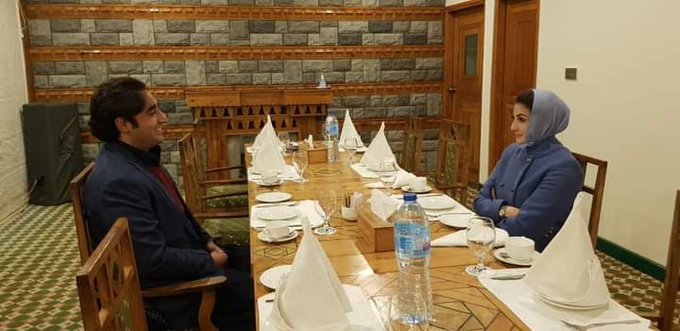
Chairman Pakistan Peoples Party, Bilawal Bhutto Zardari and vice President Pakistan Muslim League-Nawaz, Maryam Nawaz held an one on one meeting in the hotel where both the leaders are staying in Gilgit in connection with their parties election campaigns. They discussed political situation in the country.Both the leaders also held meeting with their delegations. The PPP delegation included Senator Sherry Rehman, Senator Mustafa Nawaz Khokhar and President PPP GB Advocate Amjad Hussain whereas the PML-N delegation was consist of Shahid Khaqan Abbasi, Ahsan Iqbal, Pervez Rasheed, Maryam Aurangzeb and Hafiz Hafeezur Rehman.
Tuesday, November 10, 2020
In Pakistan, feminist revenge drama ‘Witches’ sparks outrage following online debut
.Filmed in Karachi but released by an India-based streaming service, the show centres on four women who open a detective agency to catch cheating husbands.
.The storylines cover often untouched topics such as gay relationships, sexual exploitation, male dominance and Pakistan’s obsession with fair skin
A fiery online series about a group of women who unleash revenge on men has sparked a backlash in conservative Pakistan, where tough censorship rules prevent such shows from appearing on television.
.Filmed in Karachi but released by an India-based streaming service, Churails, or “Witches” in English, centres on four women who open an underground detective agency under the guise of a clothing store to catch cheating husbands.
The storylines cover often untouched topics such as gay relationships, sexual exploitation, male dominance and Pakistan’s obsession with fair skin.
It caused a buzz among much of its audience online – often limited to affluent Pakistanis who can afford the platform’s subscription fee – but infuriated conservatives when clips began to circulate on social media.“When all of us read the script for the first time we thought to ourselves, ‘Are we even allowed to do this?’,” said actress Mehar Bano.She plays Zubaida, a young woman from a poor and traditional family who loves boxing but is forbidden from practising the sport.“We knew what we were getting into, we knew that something like this would garner a lot of hate,” she said.It is a rare women-centred script for strait-laced Pakistan, where shows are often limited to the stormy relationships between stay-at-home wives and their demanding mothers-in-law.“Before this, I had not heard or seen these women on television or on digital platforms or cinema, even though I knew they existed,” said British-Pakistani filmmaker Asim Abbasi, who wrote the 10-episode series.
He faced relentless accusations of “making immorality glamorous” once the show began streaming, especially after a clip from the series went viral on social media.
It portrayed a successful businesswoman character who discussed having to perform sexual services for her boss in order to be promoted.
Zee5 later temporarily pulled the series while it “addressed” a complaint from the Pakistan Television Authority.
How do we fix something when it’s not being talked about?
Mehar Bano, Pakistani actress
“How do we fix something when it’s not being talked about? It keeps the status quo in place,” said Bano of complaints by the “moral police”.
The actress, whose character is rescued from a forced wedding while her parents are held at gunpoint, said the familiar portrayal of women as respectful and subservient was keeping Pakistani women at a disadvantage.
Abbasi said he would never have been able to produce the show for Pakistani television, which faces heavy censorship from authorities particularly related to sexuality.
International subscription streaming platforms do not face the same constraints, but tech companies do risk outright prohibition – Pakistan briefly banned Chinese short video app TikTok earlier this year because of “immoral” content.
Series star Sarwat Gillani said her country was “living in denial”, with the lives of Pakistanis “sugarcoated” for television.
“We weren’t telling a lie,” she says of Churails, in which she plays a rich trophy wife who founds the detective agency after discovering her husband has been texting dozens of women.
“We weren’t telling a story of another country. We were telling a story about our people,” she adds.
Pakistan’s censorship crusade against supposedly indecent media has been gathering pace under Prime Minister Imran Khan, a former cricket star with a playboy past, who has sought to placate powerful conservative and religious constituencies.
“The problem is that you cannot define indecency. It has a totally different definition for different segments of the population,” complained science minister Fawad Chaudhry, who opposes the government bans and says they are harming the country’s tech industry.
In the past few months, foreign-made dating apps such as Tinder and Grindr have been blocked and YouTube has been threatened.
There has been an “erosion of the kind of things we can talk about”, said filmmaker Hasan Zaidi, a former head of the Karachi Film Festival.
“The avenues and space available for creativity have really shrunk in Pakistan,” he said.
Series star Bano added that she understood it was “uncomfortable” for Pakistanis to see the flaws in their own society but said entertaining narratives gave audiences a chance to reflect.
https://www.scmp.com/news/asia/south-asia/article/3109231/pakistan-feminist-revenge-drama-witches-sparks-outrage
“Because of this banning culture, there are a lot of problems that are being swept under the rug,” she said.
The Return of Militancy in Pakistan

After a few years of relative peace, militant groups are on the rise again – and at a dangerous time for Pakistan.
Pakistan has enjoyed comparative peace over the past few years, other than sporadic incidents. Following a devastating attack on a school in Peshawar in 2014, the state cracked down on religious and other banned militant outfits under the National Action Plan (NAP), the country’s 20-point counterterrorism strategy. This offensive pushed such groups back into hiding, temporarily disrupting their networks. As a result, the country’s major cities have been largely immune to militancy.
An October 27 IED blast at a religious school in Peshawar, in which eight young people died and more than 110 were injured, has disrupted that peace.
It is believed that Sheikh Rahimuddin Haqqani, a Afghan cleric originally from Jalalabad, in Afghanistan, was the target. He was taking a class in the religious school where the explosion took place. He was the target of suspected elements of the Islamic State in a gun attack in 2016. He escaped safely back then, as he did this time, protected by his young security guards from the religious school.
Close to the Afghan border in Pakistan’s Khyber Pakhtunkhwa province, Peshawar has witnessed some of the worst violence of the last two decades, since the United States invaded Afghanistan in 2001. The most horrific and horrendous attack was the 2014 incident in which Taliban gunmen stormed a military school. By the end, 150 were dead, most of them children. The attack shook the conscience of the world, and provoked Pakistan’s security forces to take a sterner approach under NAP, which was formulated in the aftermath of the tragedy. The NAP called for the military to go after banned outfits of all sorts, including religious and nationalist groups often believed to be implicitly backed by Pakistani authorities. The strategy provided a brief calm, but now once again Peshawar has been hit, allegedly by religious militants.
Unfortunately, the Peshawar blast was followed a motorcycle blast in Quetta, the provincial capital of Balochistan in the southwest of Pakistan. As a result of the blast, three people reportedly were killed and over a dozen injured. Worryingly, the blast occurred in the outskirts of Quetta as opposition leaders of the country’s major political parties were present in the city, addressing tens of thousands people in a bid to mount pressure on the government.
In Pakistan, the former Federally Administered Tribal Areas (FATA) – now merged with Khyber Pakhtunkhwa province – have long been the major source of militancy, which eventually evolved into a threat to the state itself. Over the past five years, the security forces have carried out major operations against Taliban-linked groups, flushing them out of the tribal areas. Since then, other than sporadic attacks, these groups have been biding their time, but are now gathering momentum once again – this time with the addition of the Islamic State (IS) to the list of groups carrying out attacks. Reports suggest the militant groups have managed to regroup, despite being weakened by the intelligence-based operations.
The current wave of attacks is taking place at a crucial time, when the major opposition political parties are in the streets protesting against the government led by Prime Minister Imran Khan. Other than political uncertainty, Pakistan is increasingly faced with financial woes, which have only gotten worse in recent years. In Pakistan, China has become the dominant investor under the China-Pakistan Economic Corridor (CPEC). But since Khan came to office in 2018, Chinese investors have been discouraged by the government’s inexperience, especially in economic management. Recently, the Chinese have returned, reviving the multibillion-dollar CPEC projects after some delays.
In order to attract investments and economic development, Pakistan’s government has to ensure the safety and stability of the country. In that regard, some analysts have pointed out a curious coincidence: The resurgence of religious-cum-sectarian attacks has been taking place exactly as the CPEC has been revived in the country after quite some time on the backburner. Baloch militant groups have been opposed to CPEC from day one, and have been carrying out attacks in Gwadar – the heart of the CPEC – and elsewhere in the country in order to show their opposition.
The Chinese, despite their heavy investments, are concerned about the security situation. Militant groups, including banned religious outfits, have carried out attacks against Chinese workers and installations in the past. Now they have to worry that the revival of CPEC projects has gone hand-in-hand with the recent upsurge of militancy in various parts of the country. Already, Baloch separatists have carried out major attacks against Chinese workers and installations in Balochistan province, as well as in Karachi, the provincial capital of Sindh.
Pakistan’s security-centered approach has failed to stop such attacks, which are detrimental to Chinese investments. So the government has shifted course with the announcement of the South Balochistan Package, meant to generate jobs and other economic opportunities in the area. Officials believe that, through this effort, Baloch youth can be dissuaded from joining the rank and file of the separatists in Balochistan. But realities on the ground suggest otherwise. A political question cannot be resolved through economic policy alone.
Meanwhile, along with terrorism, sectarianism between Shia and Sunni groups is also rearing its head in various parts of the country. As seen in the past, sloganeering can trigger sectarian violence, which has already claimed thousands of lives in Pakistan. Keeping in view the recent sectarian developments in the country, Pakistan could slip into sectarian chaos anytime. Since policymakers have not learnt any lessons from the past, it keeps on repeating, with dire consequences for the state and its people. Among other problems, major political parties are not giving serious attention to recent sectarian tensions: either they are complicit or they are too afraid to speak out about it.
Militancy has returned to Pakistan after a brief hiatus. If it is not dealt with, it could initiate a new cycle of violence, engulfing the peace and prosperity of the country and the region as a whole.
https://thediplomat.com/2020/11/the-return-of-militancy-in-pakistan/
Several localities in #Lahore, #Pindi, #Multan go under lockdown amid #Covid-19 spike


Several localities in Lahore, Rawalpindi and Multan have been declared as coronavirus hotspots and put under lockdown with immediate effect, according to notifications from the Punjab Primary and Secondary Healthcare Department released late Monday, after 400 new cases were reported province wide for the first time since July 18.
The notifications said there had been a "constant increase in positivity percentage and prevalence of Covid-19 in the province of Punjab during the last two weeks which poses a serious and imminent threat to public health", adding that all possible measures needed to be taken to control the spread of the virus.
According to the notifications, following areas in the three cities were put under lockdown "with immediate effect" until November 19:
Lahore:
- New Muslim Town
- Raza, Sikandar and Umar blocks of Iqbal Town
- Certain blocks in Garden Town
- Cavalary Ground
- DHA Phase 1 (AA Block)
- DHA Phase 6 (L Sector, A Sector)
- Askari 11
- Anarkali
- Mozang
- Shadman
- Certain parts of Gulshan-i-Ravi
Rawalpindi:
- Fauji Foundation University, New Lalazar
- Government Girls Highschool, Kahuta
- Satellite Town
- Abbasi Abad
Multan:
- Naqshband Colony
- Gulgasht Colony/ Khairabad
- Mepco Colony
- Khwajabad/ Multan Kacheri
- Sadat Colony

Grocery stores, fruit and vegetable shops, tandoors and petrol pumps would be allowed to remain open between 9am and 7pm on all days of the week. Milk shops, fish and meat shops, and bakeries would be allowed to open from 7am to 7pm. All medical services, including hospitals, clinics and pharmacies would remain open 24 hours a day, the notification said.
The measures come as Punjab reported more than 400 daily cases on Tuesday for the first time since July. The government's coronavirus portal showed the province recorded 407 new infections in the last 24 hours, taking its total to 107,329. The province last reported more than 400 cases on July 18, when it confirmed 442 infections.
According to the official figures, from July 21 to Oct 23, Lahore had been reporting less than 100 daily cases. Since Oct 24, however, the city has been reporting over a 100 cases and on Monday, accounted for 174 out of the total 345 new cases in Punjab.
Of the total new cases in the province yesterday, 50 tested positive for the virus in Multan and 41 in Rawalpindi.
Others were reported from DG Khan, Narowal, Sialkot, Gujrat, Sargodha, Mianwali, Kasur, Bahawalnagar, Muzaffargarh, Faisalabad, Lodhran, Gujranwala, Bahawalpur, Okara, Toba Tek Singh, Mandi Bahauddin, Sahiwal, Khanewal, Vehari, Khushab, Jhang and Chiniot.
Meanwhile, the National Command and Operation Centre (NCOC) on Monday observed that the Covid-19 positivity ratio is rapidly increasing in major cities, with the rate exceeding 15 per cent in at least three cities across the country.
Multan had the second highest positivity rate across the country at 15.97 per cent, behind only Hyderabad at 16.59pc. Lahore (5.37pc) and Rawalpindi (4.63pc) were also declared among the top 15 cities with the highest positivity ratios.
Separately, a special meeting of the Cabinet Committee for Anti-Corona held at Chief Minister’s Office took notice of the violation of standard operating procedures (SOPs) in markets and businesses and decided to shut down all such places.
Speaking on the occasion, Health Minister Dr Yasmeen Rashid said there is an ample stock of essential medicines and PPEs.
"The health department will buy more PCR kits for tests," she claimed.
Industries Minister Mian Aslam Iqbal said every necessary measure would be taken to control the second wave of coronavirus in the province, according to a report by Radio Pakistan.
The meeting also decided to declare the Rawalpindi Institute of Urology as a dedicated hospital for treating coronavirus patients.
https://www.dawn.com/news/1589639/several-localities-in-lahore-pindi-multan-go-under-lockdown-amid-covid-spike
Medical Report in #Pakistan Proves Arzoo Raja Is A Minor
According to local reports, a medical board in Pakistan found that Arzoo Raja, a 13-year-old Christian girl abducted and married by her 44-year-old Muslim neighbor, is no more than 14-years-old. This finding supports Arzoo’s birth and baptism certificates submitted to the court by Arzoo’s parents in October.
On October 13, Arzoo was abducted from her family home in Karachi by Ali Azhar, her Muslim neighbor. Arzoo’s parents reported the incident to local police and were informed two days later that their daughter had converted to Islam and married Azhar.
Arzoo’s parents challenged the validity of the marriage claiming it violated the Sindh Child Marriage Restraint Act. However, on October 27, the Sindh High Court ruled in favor of the marriage and order local police to protect Arzoo and Azhar.
On November 2, police were ordered by the Sindh High Court to recover Arzoo and arrest Azhar. This came after Pakistan’s Minister for Human Rights became involved in the case as an intervener. Arzoo was taken to a women’s shelter and Azhar was arrested.
On November 5, Arzoo appeared before the Sindh High Court. In this appearance, Arzoo stated she was 18-years-old and married Azhar of her own free will. She went on to say she was not abducted and converted to Islam by her choice. Following this hearing, the Sindh High Court ordered a medical board to examine Arzoo and determine her age.
As the findings of the medical board were announced in court today, Arzoo once again stated she wanted the court to release her to her ‘husband’ and that she had married Azhar of her own free will. However, since the court has found Arzoo to be underage, this was refused and she was returned to the shelter home.
The court also directed police to take legal action against Azhar for kidnapping Arzoo and violating the Sindh Child Marriage Act. The Sindh High Court has adjourned the case for the next two weeks.
According to a study by the Movement for Solidarity and Peace Pakistan, an estimated 1,000 Christian and Hindu women are abducted, forcefully married, and forcefully converted to Islam every year. Many of the victims are minors. Sexual assaults and fraudulent marriages are used by perpetrators to entrap victims and authorities are often complicit.
The issue of religion is injected into cases of sexual assault to place victims from religious minority communities at a disadvantage. Playing upon religious biases, perpetrators know they can cover up and justify their crimes by introducing an element of religion.
https://www.persecution.org/2020/11/09/medical-report-pakistan-proves-arzoo-raja-minor/?utm_campaign=coschedule&utm_source=facebook_page&utm_medium=International%20Christian%20Concern
Study highlights online harassment of Pakistani minorities
Kamran ChaudhryKamran Chaudhry
Hate speech spreads as media face threats, abuse, trolling, hacking, blocking and charges of treason.
Media groups in Pakistan have voiced concerns about hostility to religious minorities on social media and closing spaces for dissent online.
The findings were shared in a report titled “Closing Spaces: Coercive Cyber Regulations Impede Online Journalism and Free Speech in Pakistan” issued by Freedom Network to mark International Internet Day on Oct. 29.
The report said that online news media platforms reported facing hostility and organized targeting for their content related to religion, religious minorities and human rights. They face threats, abuse, trolling, hacking, blocking and charges of treason from various threat actors including individuals, political parties, religious groups, unknown organized groups and even official sources.
“Hate speech against religious minorities on social media and their online harassment were prevalent in 2020. Religious minorities, security agencies, human rights, gender, politics and development were identified as the main discussion themes online that elicited the most hostile reactions from detractors online,” the report stated.
Concerns about misinformation, disinformation and fake news grew as political polarization was encouraged by the ruling party and Prime Minister Imran Khan himself, it claimed.
Misinformation complaints spread principally through social media platforms. Pakistan experienced several setbacks in enforcement of freedom of expression and right to information online, the report stated.
“It is troubling to note that the accumulative effect of the slide in enforcement of digital rights is contributing to a general closing of online spaces. The biggest casualty is online free speech, and online journalism in particular is being impeded in by coercive cyber regulations,” said Iqbal Khattak, executive director of Freedom Network.
The report said the media legal context of Pakistan during 2020 was characterized by an aggressive federal government seeking to extend and expand its authority to over-regulate the media sector and to redefine the boundaries of free speech for journalists, online citizens, opposition political parties and civil society movements.
“There was an increased reliance on the Prevention of Electronic Crimes Act (PECA) to encourage censorship. The cybercrime law was repeatedly invoked against journalists and opinion makers for exercising freedom of expression and social media activism,” it stated.
The executive-controlled internet regulator Pakistan Telecommunication Authority used its unchecked powers to censor materials on the internet and this summer unleashed another controversy by requiring registration of virtual private networks (VPNs).”
Last month more than 150 female journalists signed a petition raising the alarm about “vile and vicious attacks” by people affiliated to the government, political parties and their social media wings.
Father Qaiser Feroz, who runs a Facebook page for Radio Veritas Asia Urdu Service with 8,522 followers, focuses only on good news for social media.
“We try to give a positive message to strengthen faith and promote peace. Most of our listeners are Muslims who appreciate the RVA content focusing on gospel reflection, information and news. Our editorial policies restrict any hate material,” he told UCA News.
https://www.ucanews.com/news/study-highlights-online-harassment-of-pakistani-minorities/90098#
Bilawal Bhutto urges Gilgit-Baltistan to vote
Pakistan Peoples Party (PPP) chairman Bilawal Bhutto Zardari on Sunday urged the people of Gilgit-Baltistan to shape their own fate by making the right choice on election day, and exercise their right to vote.

"If you don't vote, then a puppet will rule you," he warned, reported Geo News.
Zardari said that several voices demanding the construction of roads and threatening a boycott of voting have been growing louder.
"I hear slogans such as 'no road, no vote' are being raised. Removing yourself from the voting process is not the path to success," he said.
Pakistan had announced that they will hold elections to the so-called Gilgit Baltistan legislative assembly on November 15.
The PPP chairman also claimed to resolve all the problems of the people.
"We are related to the people of this area for the last three generations and we have to revive again this relationship," Geo News quoted Zardari.
Zardari also promised to provide jobs to the local residents in the China-Pakistan Economic Corridor (CPEC) project.
Bilawal also vowed to make Gilgit-Baltistan a constitutional province.
Gilgit-Baltistan is a vital part of the multi-billion dollar CPEC project, with the project's major overland crossing at Kashgar, in the territory's north.
Meanwhile, the Imran Khan government had recently announced granting provisional province status to the region, which is scheduled to have elections this month.
The people across Gilgit-Baltistan are up in arms against Islamabad's decision of integrating the illegally occupied region with the rest of Pakistan.
https://www.malaysiasun.com/news/266939055/bilawal-bhutto-urges-gilgit-baltistan-to-vote
گلگت بلتستان کے عوام سیاسی مہم میں ہمارے ساتھ ہیں، بلاول بھٹو
پاکستان پیپلز پارٹی کے چیئرمین بلاول بھٹو زرداری نے کہا ہے کہ گلگت بلتستان کے عوام سیاسی مہم ہمارے ساتھ ہیں، یہ تاثر غلط ہے کہ گلگت بلتستان میں انتخابی مہم چلانے کیلئے مجھے رعایت دی جارہی ہے۔

الیکشن ہم ہی جیتیں گے، حکومت بنانے کیلئے پی ٹی آئی سے اتحاد کا سوچ بھینہیں سکتا، نظام کو نہیں چلنے دیا جارہا ہے، ڈکٹیشن پر نہیں چل سکتا، سلیکٹڈ وزیر اعظم نے گندے وزیر بھیجے جو گندی زبان استعمال کرتے ہیں، عمران خان کا ہر وعدہ جھوٹا ، سلیکٹڈ گلگت بلتستان میں بھی تباہی کرنا چاہتا ہے۔
عمران نیازی تو خود عبوری وزیراعظم ہیں اور جو عبوری وزیراعظم ہوں وہ کیسے صوبہ بنا سکتا ہے ؟ 15 ؍نومبر کو گلگت بلتستان کے انتخابات میں فتح حاصل کرنے کے بعد ذوالفقار علی بھٹو اور محترمہ بینظیر بھٹو شہید کا مشن پورا کرینگے۔ ان خیالات کا اظہار انہوں نے نگر اورسمائیر میں عوامی جلسوں سے خطاب اور ایک انٹرویو میں کیا۔
بلاول بھٹو زرداری نے وفاقی حکومت پر تنقید کرتے ہوئے کہا کہ اس سلیکٹڈ حکومت کے دو سال ہوچکے ہیں، عمران خان نے آپ کیلئے کیا کیا؟ انہوں نے ایک منصوبہ بھی گلگت بلتستان کے لیے نہیں دیا اور اب کہتے ہیں کہ عبوری صوبہ بنائینگے۔
انہوں نے کہا کہ انتخابات سے قبل انہوں نے اسکی مخالفت کی تھی اور اب انہیں یہ یاد آرہا ہے۔ان کا کہنا تھا کہ پیپلز پارٹی نے 2018 کے منشور میں کہا تھا کہ گلگت بلتستان کا مطالبہ ہے کہ سینیٹ اور قومی اسمبلی میں انکی نمائندگی ہونی چاہیے۔
انہوں نے کہا کہ15 نومبر آپ کی جدوجہد کا امتحان کا دن ہے اور اس دن پیپلز پارٹی کو ووٹ دیں تاکہ ہم جی بی کو اس کا حق دلوا سکیں۔انہوں نے کہا کہ پاکستان پیپلز پارٹی ہی گلگت بلتستان کو حقوق دلوا سکتی ہے، ہم حقوق دینے والے ہیں حقوق چھیننے والے نہیں۔
ان کا کہنا تھا کہ جو لوگ صوبہ بننے سے قبل گلگت بلتستان کی سبسڈی ختم کریں، ٹیکس بڑھائیں تو وہ صوبہ بنانے کے بعد کیا کرینگے۔ انہوں نے کہا کہ پیپلز پارٹی گلگت بلتستان ہی نہیں وفاق میں بھی حکومت بنائے گی۔انہوں نےعوام سے مفت صحت کی سہولیات قائم کرنے کا وعدہ بھی کیا۔
ان کا کہنا تھا کہ ہمیں صرف حقوق حاصل نہیں کرنے بلکہ تبدیلی کے نام پر پورے پاکستان میں پھیلی تباہی کو دبانا ہے۔ انہوں نے کہا کہ خدا نخواستہ یہاں بھی کٹھ پتلی حکومت بنی تو نوجوانوں کے ساتھ یہ کیا کیا کرینگے۔
https://jang.com.pk/news/842622
Monday, November 9, 2020
Will Trump accept defeat and leave the White House? Yes, experts say

President may try to use his power to push for more conservative court appointments or environmental deregulations.
Trump Fires Mark Esper, Defense Secretary Who Opposed Use of Troops on U.S. Streets

By Helene Cooper, Eric Schmitt and Maggie Haberman

Mr. Esper’s removal was quickly followed by speculation that the president was not finished: The F.B.I. director and the C.I.A. director could be next, according to administration officials.
President Trump fired Defense Secretary Mark T. Esper on Monday, upending the military’s leadership at a time when Mr. Trump’s refusal to concede the election has created a rocky and potentially precarious transition.
Mr. Trump announced the decision on Twitter, writing in an abrupt post that Mr. Esper had been “terminated.”
The president wrote that he was appointing Christopher C. Miller, whom he described as the “highly respected” director of the National Counterterrorism Center, to be the acting defense secretary. Mr. Miller will be the fourth official to lead the Pentagon under Mr. Trump.
Two White House officials said later on Monday that Mr. Trump was not finished, and that Christopher A. Wray, the F.B.I. director, and Gina Haspel, the C.I.A. director, could be next in line to be fired. Removing these senior officials — in effect decapitating the nation’s national security bureaucracy — would be without parallel by an outgoing president who has just lost re-election.
Democrats and national security veterans said it was a volatile move in the uncertain time between administrations, particularly by a president who has made clear that he does not want to give up power and that he would be reasserting his waning authority over the most powerful agencies of the government.
“President Trump’s decision to fire Secretary Esper out of spite is not just childish, it’s also reckless,” said Representative Adam Smith, Democrat of Washington and the chairman of the House Armed Services Committee. “It has long been clear that President Trump cares about loyalty above all else, often at the expense of competence, and during a period of presidential transition, competence in government is of the utmost importance.”
Two senior administration officials noted on Monday that Mr. Trump enjoyed firing people and had only two more months to do so. Mr. Esper’s dismissal also gave the president the chance to reclaim some of the postelection headlines, which have been dominated by President-elect Joseph R. Biden Jr.’s victory.
At the Pentagon, Mr. Esper’s departure means that Mr. Miller would — if he lasts — see out the end of the Trump administration. Defense Department officials have privately expressed worries that the president might initiate operations, whether overt or secret, against Iran or other adversaries during his last days in office.
“In my experience, there would only be a few reasons to fire a secretary of defense with 72 days left in an administration,” Representative Elissa Slotkin, Democrat of Michigan and a former Pentagon official in the Obama administration, said in a statement.
“One would be incompetence or wrongdoing, which do not seem to be the issue with Secretary Esper,” she said. “A second would be vindictiveness, which would be an irresponsible way to treat our national security. A third would be because the president wants to take actions that he believes his secretary of defense would refuse to take, which would be alarming. Whatever the reason, casting aside a secretary of defense during the volatile days of transition seems to neglect the president’s most important duty: to protect our national security.”
Mr. Esper’s downfall had been expected for months, after he took the rare step of disagreeing publicly with Mr. Trump in June and saying that active-duty military troops should not be sent to control the wave of protests in American cities.The defense secretary was aware that he was likely to be fired, but Pentagon officials said he hoped to continue serving as long as possible to try to sustain orderly leadership of the Defense Department. Although Mr. Esper had a resignation letter prepared, his allies said he did not think anything was imminent from Mr. Trump on Monday.But the president expressed his ire in the Oval Office on Monday morning, and the White House gave Mr. Esper only a few minutes’ advance notice of his firing.
In a two-page letter to Mr. Trump obtained by The New York Times, Mr. Esper said, “I serve the country in deference to the Constitution, so I accept your decision to replace me.”
Friends and colleagues of the new acting secretary praised Mr. Miller’s Army Special Forces background and counterterrorism credentials but expressed surprise that he had been elevated to such a senior position, even in a temporary capacity. Mr. Miller does not have the stature to push back on any precipitous actions that Mr. Trump might press in his final weeks in office, colleagues said.
“A move like this probably sends a chill through the senior ranks of the military,” Nicholas J. Rasmussen, a former top counterterrorism official in the Bush and Obama administrations, said in an email. “Not because of anything about Chris Miller personally, though it’s a highly unconventional choice, to be sure. But simply because a move like this contributes to a sense of instability and unstable decision-making at exactly the time when you want to avoid sending that kind of message around the world.”
Mr. Miller is a former Army Green Beret who participated in the liberation of Kandahar early in the war in Afghanistan. He also previously served as the top counterterrorism policy official in the National Security Council in the Trump White House. After that job, he briefly served in a top counterterrorism policy role at the Pentagon this year.
It was only in August that Mr. Miller was named to replace Russ Travers, who was the acting head of the counterterrorism center.
Upon his arrival at the Pentagon on Monday afternoon, Mr. Miller tripped on the stairs and said, “That would have been great, broke my ankle on the way in.”Mr. Miller began his military career as an enlisted infantryman in the Army Reserve in 1983. He also served as a military police officer in the District of Columbia National Guard. He was commissioned as a second lieutenant in 1987 and became an Army Green Beret in 1993.In addition to his deployment to Afghanistan, he also served in Iraq in 2003, both with the Fifth Special Forces Group.
Rosa Brooks, a Georgetown University law professor and a Defense Department official during the Obama administration, led a group of 100 current and former national security officials and election experts from both parties this year in exercises to simulate the most serious risks to a peaceful transition of power.
That exercise anticipated an 11th-hour switch of the defense secretary, particularly if Mr. Esper was perceived to suggest to the president that he should accept an election loss.
When Mr. Esper broke with Mr. Trump in June on deploying active-duty troops to U.S. cities, the secretary’s spokesman tried to walk back the damage, telling The Times that Mr. Trump did not want to use the Insurrection Act either, or he would have invoked it already. White House officials disagreed.
Mr. Esper, 55, a former secretary of the Army and a former Raytheon executive, became defense secretary in July 2019, after Mr. Trump withdrew the nomination of Patrick M. Shanahan, the acting defense secretary, amid an F.B.I. inquiry into allegations from Mr. Shanahan’s former wife that he had punched her in the stomach. Mr. Shanahan denied the accusations.
Mr. Shanahan had been standing in for Jim Mattis, who resigned as defense secretary in 2018, citing his own differences with the president.
Mr. Esper had taken pains to hew to the Trump line during his tenure. But concern over invoking the Insurrection Act to send troops to quell civil unrest across the country was deep in the Pentagon. Under heavy public criticism, Mr. Esper ultimately broke with the president.
Mr. Trump has referred to Mr. Esper as “Mr. Yesper.” Ironically, it was the defense secretary’s public break with the president during a news conference in June that infuriated Mr. Trump to begin with. Those comments came after Mr. Esper had accompanied Mr. Trump on his walk across Lafayette Square outside the White House, where protesters had been tear-gassed, prompting condemnation from former military and civilian Defense Department officials.
By midsummer, Mr. Esper was walking a fine line to push back on Mr. Trump’s other contentious positions involving the military.The Pentagon, without once mentioning the word “Confederate,” announced in July that it would essentially ban displays of the Confederate flag on military installations around the world.
After the events in June, Mr. Esper avoided the news media and kept a low profile to prevent being pulled into election politics.
He traveled often beginning in early summer, including overseas trips to North Africa, the Middle East and India. When he did speak in public, either abroad or in Washington, it was often in prerecorded remarks on safe subjects (criticizing China and Russia on the Africa trip) or in friendly places (a session on military readiness at The Heritage Foundation, where Mr. Esper had served as the organization’s chief of staff).
Mark Meadows, the White House chief of staff, called Mr. Esper five minutes before the president’s Twitter post to tell him he had been fired. Mr. Esper was still at the Pentagon cleaning out his desk on Monday afternoon when Mr. Miller arrived, administration officials said. It was unclear if the two men spoke; Mr. Miller met with Gen. Mark A. Milley, the chairman of the Joint Chiefs of Staff.
Yet on the single biggest issue of 2020 — the coronavirus pandemic — history may show that Mr. Esper has, by far, outperformed his boss, who largely refused to wear a mask and contracted the coronavirus during an outbreak at the White House. Mr. Esper, by contrast, has strictly adhered to guidelines from the Centers for Disease Control and Prevention on wearing a mask when unable to keep a recommended social distance.
At a Pentagon virtual town-hall-style meeting, the defense secretary responded to a sailor on the aircraft carrier Gerald R. Ford who said that the required social distancing aboard the ship was hurting morale.
“It is tedious — I understand that,” Mr. Esper said. “But I think it’s showing, in terms of the Navy’s results in terms of infection rates, that they’re doing a very good job.”
https://www.nytimes.com/2020/11/09/us/politics/esper-defense-secretary.html?action=click&module=Spotlight&pgtype=Homepage
بلاول بھٹو زرداری - گلگت بلتستان میں حکومت بنانے کے بعد گلگت بلتستان کے مسائل اولین ترجیحات کی بنیاد پر حل کیے جائینگے۔

چیئرمین پیپلز پارٹی بلاول بھٹو زرداری نے کہا کے ابھی جی بی میں حکومت بنائی ہی نہیں عمران خان کہے رہے ہیں کہ وہ جی بی کے عوام سے سبسڈی واپس لینگے اور ٹیکس لگائیں گے۔ ورکز کنوینشن میں موجود کارکنوں سے جب چیئرمین پی پی پی نے سوال کیا کے سلیکٹڈ عوام کو دیا ہی کیا ہے؟ تو کارکنوں نے پرجوش نعروں میں جواب دیا کے کچھ نہیں دیا ہے صرف ظلم کیا ہے۔ چیئرمین پیپلز پارٹی نے کارکنوں کی جدوجہد اور کارکردگی کو سراہتے ہوئے کہا کے میں آپ کی کارکردگی اور قردار سے مطمئن ہوں مجھے خوشی ہے کے میں آپ کے درمیان موجود ہوں آپ کی جدوجہد ابھی ختم نہیں ہوئی 15 نومبر تک آپ اپنے گھروں میں نا بیٹھیں اور محنت کریں تاکہ 15 نومبر کے انتخابات میں ہم بھرپور کامیابی حاصل کریں۔ بلاول بھٹو زرداری نے کہا کے مجھے آپ کے ساتھ کی ضرورت ہے ہمارا تعلق تین نسلوں سے ہے۔ انہوں نے کہا کے میں گلگت بلتستان کی جگہ جگہ گیا ہوں مگر مجھ ایسی کوئی جگہ نہیں ملی جہاں شہید ذوالفقارعلی بھٹو نہیں گئے ہوں ادھر نگر خاص میں ایک بڑی اجتماع سے خطاب کرتے ہوئے چیئرمین پیپلز پارٹی نے کہاکہ میرا خپلو سے لیکر سکردو تک عوام کی طرف سے شاندار استقبال دیکھ کر سلیکٹڈ کٹھ پتلی کو گلگت بلتستان کا خیال آیا تو انہوں نے ایک گندا وزیر بھیجا ہے جو یہاں پر آکر گندی زبان بول رہا ہے مریم نواز آپ کی مہمان ہے ان کے خلاف بھی گندی زبان استعمال کر رہا ہے، کیا یہ آپ کی ثقافت ہے؟ کیا آپ اس زبان کو پسند کرتے ہیں جس پر حاضرین نے نفی میں جواب دیا اور عمران خان کے خلاف شدید نعرے بازی کی جلسہ عام کے دوران عوام شہید ذوالفقارعلی بھٹو اور محترمہ بینظیر بھٹو شہید اور سابق صدر آصف علی زرداری کے حق میں پر جوش نعرے بازی کرتے رہے۔
چیئرمین پیپلز پارٹی بلاول بھٹو زرداری نے مزید کہا کے انہوں نے ان کے حقوق کے لیے تحریک شروع کر رکھی ہے جو گلگت بلتستان کے عوام کی حق حاکمیت ،حق ملکیت اور حق روزگار کے لئے ہے۔ انہوں نے کہا کے اب تو نیشنل سیکیورٹی اور ہمارے مخالف بھی گلگت بلتستان کے حوالے سے ہمارے پیج پر آگئے ہیں جو آپ کی بہت بڑی فتح ہے مگر ہم 70 سال کی بات کرتے ہیں ان 70 سال کے دوران آپ کا جو استحصال ہوا آپ کے جو حقوق غصب ہوتے رہے ان کے ازالے کی بات کر رہا ہوں اور ریاست نے اس کا ازالہ کرنا ہے۔ چیئرمین پیپلز پارٹی نے کہا کے میں چاہتا ہوں کے وزیراعظم گلگت بلتستان کے منتخب نمائندوں کے ووٹ سے منتخب ہوں اور ریاستی امور کے فیصلوں میں بھی آپ کی شراکت ہو۔ انہوں نے کہا کے بلاول بھٹو زرداری جو وعدہ کرتا ہے وہ پورا کرتا ہے ہمارا تین نسلوں کا آپ کے ساتھ رشتہ اور ساتھ ہے اور یہ ساتھ میں نبھاﺅں گا۔ چیئرمین پیپلز پارٹی نے مزید کہا کے عمران خان کو ہر وعدہ جھوٹا ہے انہوں نے ایک کروڑ نوکریاں دینے کا وعدہ کیا تھا مگر اسٹیل ملز اور پی ٹی ڈی سی سے ہزاروں ملازمین کو برطرف کیا 50 لاکھ گھر بنانے کا وعدہ کیا تھا مگر لاکھوں لوگوں سے گھروں کی چھت چھین لی، سلیکٹڈ گلگت بلتستان میں بھی تباہی کرنا چاہتا ہے۔ انہوں نے کہا کے عمران نیازی تو خود عبوری وزیراعظم ہیں اور جو عبوری وزیراعظم ہوں وہ کیسے صوبہ بنا سکتا ہے ؟ انہوں کہا کے جب آصف علی زرداری نے گلگت بلتستان کو صوبہ کا درجہ دیا تو عمران نے سپریم کورٹ میں اس کے خلاف پٹیشن دائر کی جو ابھی تک واپس نہیں لی۔
چیئرمین پیپلز پارٹی نے کہا کے ہم قانون سازی کر کے گلگت بلتستان سے منتخب نمائندوں کو قومی اسمبلی اور سینیٹ میں بیٹھائیں گے تب تک ہم اسلام آباد سے پوچھتے رہیں گے کہ گلگت بلتستان کے عوام کو حقوق کیوں نہیں ملےَ چیئرمین پیپلز پارٹی نے کہا کے گلگت بلتستان کے عوام کو جو سبسڈی شہید ذوالفقارعلی بھٹو نے دے تھی اس کو کوئی ختم نہیں کر سکتا۔ عوامی اجتماع سے سینیٹر شیری رحمان، سینیٹر مصطفی نواز کھوکھر نگر حلقہ 5 سے پیپلز پارٹی کے امیدوار مرزا حسین اور پارٹی رہنما محمد علی اختر نے بھی خطاب کیا۔ چیئرمین پیپلز پارٹی بلاول بھٹو زرداری نے پیر کی شام سمائیر میں اس مقام پر خطاب کیا جس مقام پر شہید ذوالفقارعلی بھٹو نے راجگیری نظام اور ایف سی آر کے خاتمہ کا اعلان کیا تھا۔ چیئرمین بھٹو جب سمائیر پہنچے تو ہزاروں کی تعداد میں عوام نے ان کا والہانہ استقبال کیا ۔عوامی اجتماع سے خطاب کرتے ہوئے بلاول بھٹو زرداری نے کہا کے شہید ذوالفقارعلی بھٹو نے آپ سے جو وعدہ کیا وہ پورا کیا شہید محترمہ بینظیر بھٹو نے جو وعدے کئے وہ پورے کرتی رہی اورپھر گلگت بلتستان کو صوبہ بنانے کو وعدہ بھی صدر آصف علی زرداری نے پورا کیا ۔میں جو آپ سے وعدہ کر رہا ہوں کے آپ کو حق حاکمیت دلاﺅں گا دریا اور پہاڑوں پر آپ کے حق ملکیت کو تسلیم کراﺅں گا اور حق روزگار بھی دلاﺅں گا۔ یہاں پر بھی انہوں نے عمران خان کو کڑی تنقید کا نشانہ بناتے ہوئے کہا کہ گندی سلیکٹڈ وزیراعظم نے یہاں گندے وزیر بھیجے ہیں جو گندی زباں استعمال کر تے ہیں۔ 15 نومبر کو پیپلزپارٹی کو شہید بینظیر بھٹو کو ووٹ دیکر اس گندے وزیر کو یہاں سے بھگاﺅ اور اس کے بعد ہم اسلام آباد جاکر اس گندے وزیر اعظم کو گھر بھیجے دیں گے-
فکر جاتے ہوئے شایار کے مقام پر سیکڑوں کی تعداد میں جیالوں نے استقبال کیا اور پھول نچھاور کئے ۔ اس کے بعدبلاول بھٹو زرداری نے پارٹی کے سرگرم کارکن شہید ذوالفقارعلی بھٹو کے ساتھی سلطان علی کی قبر پر پھول چڑھائے اور فاتحہ خوانی کی اور پارٹی پرچم لہرایا۔
https://www.ppp.org.pk/pr/24058/
Subscribe to:
Posts (Atom)