Saturday, September 14, 2019

Corporal punishment: How long will Pakistan's children remain at risk?

Will Hunain Bilal's gruesome death prompt our lawmakers to finally criminalise corporal punishment?

Earlier this month, news broke on social media of the shocking death of Hunain Bilal. The teenager was, according to a police report of the incident, punched repeatedly, grabbed by his hair and slammed against the wall of his own classroom by his own teacher.
The brutal beating was administered, witnesses said, because Bilal "had failed to memorise his lesson".
His death was followed by an arson attack on Lahore's American Lycetuff school, where the incident had taken place. It was Bilal's fellow students themselves who allegedly set the fire — grieved and angered at his violent death.
The disturbing events of that day serve as a jarring reminder of our state's continued failure to protect our children. This becomes starker considering Pakistan is a signatory to the United Nations Convention on the Rights of the Child, which clearly prohibits corporal punishment within as well as outside schools.

Need for a dedicated law

The state's failure to protect our children stems from its inability to address corporal punishment effectively, be it through official policy or through a structured national narrative aimed at stigmatising and eventually outlawing violence against children.
Look at Punjab, where the incident happened, for instance.
“There is no specific, formal law in Punjab that criminalises all kinds of physical and mental torture against children," notes Iftikhar Mubarak, advocacy member of the Initiator Human Development Foundation (IHDF), a non-governmental group working for children's rights.
In the absence of a formal law, the provincial government has been trying to address the crisis armed only with a standing administrative order issued under the slogan of Maar Nahi Pyar (affection, not beatings).
The order was issued by the Punjab Education Department in 2005, under then-military ruler Pervez Musharraf’s regime.
According to Mubarak, the order binds government and private schools to taking disciplinary action against teachers found involved in inflicting physical or mental torture upon students. But that’s where the scope of the order ends: there is nothing else that directly identifies and criminalises corporal punishment in the province.
And instead of moving ahead and developing legislation to address the issue in a more specific manner, "the (Punjab) government continues to stick with the standing administrative order as a stopgap arrangement".
Punjab's Provincial Minister of Human Rights Ejaz Alam Augustine told Dawn.com that the fact that there is no formal law in Punjab against corporal punishment is, in fact, "the fault of previous governments". 
He assured, however, that "the provincial government as well the opposition have now reached a consensus that they will legislate on the issue". 
"A bill will be moved in the Punjab Assembly to end corporal punishment in educational institutes in the province," Augustine promised.
Till that bill (if and when introduced) evolves into an act of law, educational institutions in the country’s biggest province have to continue dealing with cases of corporal punishment in an ad hoc manner.
The rest of the country isn't faring all that better either.

Legislative (in)action

Pakistan was among the first countries in the world to ratify the United Nations Convention on the Rights of the Child (UNCRC) on November 12, 1990. This essentially meant Islamabad had made a formal commitment to take all measures within its power to protect the rights of children as defined in the convention.
The reality has been far from ideal.
As stated earlier, there is, to date, no clear-cut, uniform state policy or law that outlaws the practice of corporal punishment across Pakistan both within schools and without.
Human Rights Commission of Pakistan co-chairperson Uzma Noorani underscores the need for the government to take remedial measures, including effective inspections of schools and to establish the bodies to take redressal measures. She notes that in case parents complain to the educational institutes’ management, the principals try to defend their staffers.
Pakistan did come close to passing such a law in a rare move in 2013, when the National Assembly ‘unanimously’ passed a bill to criminalise corporal punishment across the country.
Moved by MNA Attiya Inayatullah, the proposed law prescribed up to one-year imprisonment and up to Rs50,000 as a fine on the person found guilty of inflicting corporal punishment on children.
The bill was aimed at protecting the dignity of children as a human right. However, it could not become law due to a technicality.
Because the Lower House passed the bill on its second-last day of work, it could never make it to the Upper House. According to the National Assembly’s Rules of Business, a bill in the assembly must be passed at least a week before the session ends for it to make it to Senate.
"Inayatullah was sincere, but the timing wasn’t right," recalls Rana Asif Habib, president of IHDF.
Later on, a bill to outlaw corporal punishment was also submitted by lawmakers Marvi Memon and Leila Khan. However, nothing came of it.
More recently, in May 2018, the Parliament passed the Islamabad Capital Territory Child Protection Act to provide for protection and care of children from all forms of physical or mental violence, injury, neglect, maltreatment, exploitation and abuse.
However, it stopped short of directly or specifically prescribing a punishment for the perpetrator. Also, it is applicable only to children in care of the federal capital.

The role of provinces

Since the 18th Amendment, Islamabad has devolved certain subjects to the provinces and constitutionally empowered them to legislate on a wide range of matters.
Child protection and corporal punishment are among the areas that provinces can directly legislate on. They do not have to look to the federal government to extend protection to the children in their dominion.
However, Habib says, the provinces have either not addressed the issue or have not implemented formulated laws in letter and spirit.
“No specific law exists in Punjab, Khyber Pakhtunkhwa or Balochistan that outlaws the physical and/or mental torture of students at the hands of their teachers,” says Habib.
Sindh is the only province that has a dedicated law against corporal punishment (enacted in March 2017); but though the law exists, he says it is not being implemented in letter and spirit.

Why criminals go scot free

In the absence of dedicated laws and the respective governments’ failure to update existing laws, the issue is far from being effectively addressed.
Usually, an offence involving physical torture inflicted on a child by parents or guardians is dealt with under Section 89 (Act done in good faith for benefit of child or insane person, by or by consent of guardian) of the Pakistan Penal Code (PPC).
Mubarak explains that this section basically empowers parents, other guardians and teachers to use corporal punishment as a means to 'discipline and correct' the behaviour of a child under the age of 12. However, under this law, such punishment is required to be moderate and reasonable.
In case a 'punishment' inflicts serious injuries as defined in the PPC, the adult causing it can be booked under Sections 334 and 336 of the penal code and penalised in case of physical hurt. The penalty can also lead to imprisonment of the adult inflicting harm. However, cases of corporal punishment involving grievous harm are rarely dealt with under these two sections.
Mubarak says the only specific section that has recently been added to the PPC to address the issue to some extent is 328-A (Cruelty to a child), brought in through the Criminal Law (Second Amendment) Act, 2016.
This Section reads: “Whoever willfully assaults, ill treats, neglects, abandons or does an act of omission or commission, that results in or have potential to harm or injure the child by causing physical or psychological injury to him shall be punished with imprisonment of either description for a term which shall not be less than one year and may extend up to three years, or with fine which shall not be less than twenty-five thousand rupees and may extend up to fifty thousand, or with both.”
This section extends to all of Pakistan. Most recently, it was applied in the Tayyaba torture case, which had involved a child maid being physically and mentally abused by her employers.
The Islamabad High Court (IHC) had sentenced additional district and sessions judge Raja Khurram Ali Khan and his wife Maheen Zafar — the employers — to one-year imprisonment and Rs50,000 fine each for the crime of beating and burning the hand of the ten-year-old.

How legal loopholes have benefited accused

In most cases of corporal punishment in which the victim dies, complainants are usually persuaded to lodge an FIR under Section 322 of the PPC, which deals with qatl bis-sabab — manslaughter — as opposed to under the much more severe Section 302, which deals with qatl-i-amd — pre-meditated murder.
“The defence counsels always exploit legal loopholes by arguing that the act of the teacher was meant to the benefit the child and not intended to kill him/her. Subsequently, they manage an agreement between the accused and victim parties sooner or later, as punishment under Section 322 is much less severe and easily compoundable (compromisable),” says Habib. “In most of the cases, the parents end up pardoning the accused."
As the Hunain Bilal case goes to court, policymakers and activists should sit up and take note. This incident should mark the last time a child is harmed in a space where they should feel protected at all times. The way this case will be litigated, and precedents in similar cases before it, will provide valuable lessons to lawmakers looking to rectify this continuing inadequacy in our legal system.
It bears repeating that sound, comprehensive laws must be enacted without further delay to protect our children. Our lawmakers bear a heavy responsibility in this regard.

#Pakistan - The Prudent Bilawal


The first jolt to Moulana Fazlur Rehman, chief of Jamiat Ulema Islami Fazal (JUI-F), over his “decisive march” against the government comes from Bilawal Bhutto Zardari. Bilawal’s party is not joining Moulana’s march against the government. Moulana, dying to overthrow the present government, thinks that the right way to overthrow the government is to orchestrate a long and forceful march in collaboration with the rest of the opposition parties.
However, so far, he has failed in convincing at least one of the major opposition political parties, i.e., Pakistan People’s Party (PPP) in joining his march against the government. Does Moulana’s failure to convince other the leadership of PPP show his lack of political acumen? Nothing can be said with conviction in this regard. But the decision of Bilawal Bhutto Zardari shows his political maturity that many seasoned politicians do not have.Bilawal, while speaking to the reporters, shattered Moulana’s expectations. Moulana was relying on the support of all opposition parties. PPP’s refusal to participate in Moulana’s march has made it easier for other parties to turn down Moulana’s desire to march on Islamabad. At the same time, Bilawal, like a shrewd politician, tried not to make Moulana unhappy.
Moulana must indeed have felt hurt when Bilawal refused to participate in his march. However, Bilawal saying that he does not disagree with Moulana’s reservations against the government must have served the purpose of soothing Fazlur Rehman. Furthermore, Bilawal refusing his support to the chief of JUI-F by saying that his party in the past also did the same will make it difficult for Moulana to hold a grudge against him. Moreover, even if the opposition benches think that the incumbent government is failing the country and the people, the right way is the one that Bilawal suggests. Go to people and offer them an alternative against the present scheme of things. If people get convinced with the proposed alternative, no power on earth can force them not to vote against the current government in the next general elections.
Having said this much, it is also possible that Bilawal does not want to invite the anger of the incumbent government. The co-chairperson of the PPP, Asif Zardari, is already behind bars. Bilawal might have been thinking of striking a deal with the government by not becoming a party to any such agitation that can weaken the government. Whatever the reason be, on the surface of the things, Bilawal’s way of political opposition is far better than the one that Fazlur Rehman chooses.

#Pakistan - #Polio on the rise - A disproportionately high number of cases are from Khyber Pakhtunkhwa

  • A disproportionately high number in KP
Two new cases of polio have been confirmed, one from Sindh and the other from KP taking the total to 62 this year. This is higher than the number of new cases from the last three years combined and a 500 per cent jump over last year. Polio eradication is a global effort that has been immensely successful in most of the world. Unfortunately, Pakistan along with neighbouring Afghanistan and Nigeria are the only three countries where polio still exists. It is difficult to understand how such an astronomic rise in cases has been reported this year when the figure had fallen significantly in the last few years- in 2014, 307 cases were reported and in 2018, only 12. A disproportionately high number of cases are from KP, 46 out of 62, where the PTI has been in power for six years. Historically KP has been the most problematic region with a majority of the total cases in the country reported in the province. One of the reasons is the increased resistance towards vaccination drives and violence against polio workers in the province as compared to the rest of the country. But these problems had been addressed in the past by the same PTI government that convinced influential religious clerics who were opposed to the polio eradication drive to become part of the effort- no wonder cases from KP dropped from 247 in 2014 to just 8 in 2018. Extra security provided by the army for polio workers also contributed heavily towards more children being vaccinated on time.
It is therefore puzzling why a downward trajectory has turned upwards by such a margin in a matter of months. PM Khan has described polio eradication as his government’s top-most priority yet it is on the rise. UNICEF, WHO and the Bill and Melinda Gates foundation who lead the effort globally have provided significant funding to Pakistan; have the funds been utilised properly? The government will have to understand the problem better through a thorough investigation that highlights the issues and restrictions in the areas worst affected by the polio virus. Only then can it move forward with eradication efforts, following a comprehensive plan with the help and support of international organisations that also want to see an end to this debilitating virus from the country.

Pakistani media in chains

  • A mark of dishonour for government
In Washington, PM Imran Khan dismissed concerns about media freedom in Pakistan saying it was freer than the media in Britain. The PM can deceive his dyed-in-the wool followers but not the people of Pakistan or the world at large.
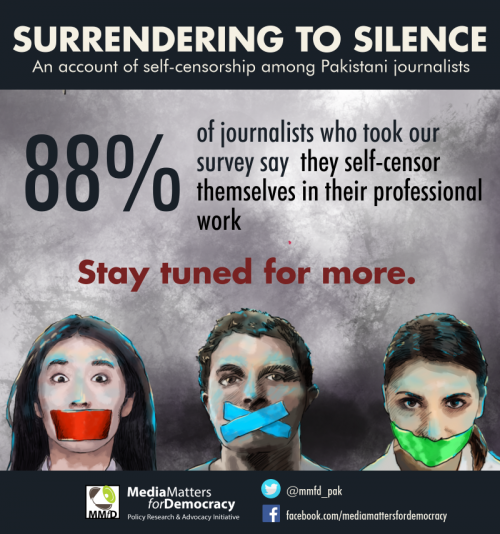
The complaints about unprecedented pressure on media came first from the opposition leaders, writers and bloggers. They criticised the government for intimidating journalists and broadcasters. Also, for the abductions and beatings of journalists and the treason case instituted against a columnist. Some of the anchorpersons were summarily removed and critical write-ups by columnists discarded at orders from above. Several TV channels were briefly taken off-air and opposition protests and news conferences remained unreported.
Protests from journalists’ bodies in different cities were followed by strongly worded resolutions from CPNE and APNS describing government’s proposal to form a single body to regulate both electronic and print media as institutionalised “arm-twisting”. The media, it was maintained, was already braving strong pressures in the form of press advices and measures of intimidation from ruling quarters which are tantamount to undeclared censorship.
Soon after, the issue was taken up by news agencies like Reuters and AFP and by respectable western newspapers. A write up in the New York Times in July described Imran Khan’s ‘New Pakistan’ as being as good as the old, looking like a struggling dictatorship. Another opinion piece in Washington Post in July captioned “A dirty war on freedom of the press in Pakistan” maintained that, “certain forces aim to prevent the media from providing independent coverage of the country’s central political issue — specifically, a deepening power struggle between the military and the civil authorities.”
Foreign governments considered friendly by Pakistan are the next in line to comment negatively on how those who matter are stifling the media. A hard-hitting report by the UK government’s influential Foreign Affairs Committee cites examples from several countries, including Pakistan, where it notes that the future for press freedom is bleak. The report demands that those who violate media freedom be shamed and punished through international coordination and sanctions. It should be difficult to ignore UK, Pakistan’s second-largest export market and third largest source of FDI.

#PPP Music Video - AYA AYA BILAWAL...

پاکستان پیپلزپارٹی کے چیئرمین بلاول بھٹو زرداری کی شکار پور مدیجی میں میڈیا سے گفتگو - بلاول بھٹو

Defence of geography, ideology interlinked: PPP Chairman Bilawal Bhutto for following constitutional framework to ensure invincible defence of Pakistan

 Chairman Pakistan Peoples Party has stated that defence of our geography and defence of our ideology are interlinked urging that all the national institutions should work within their constitutional framework to ensure an invincible defence of Pakistan.


In his message on Defence Day, the PPP Chairman said this was the day to remember the sacrifices of our martyrs, both civilians and soldiers and reinforce our commitment to defend our geography, ideology, democracy and human rights without any compromise.


Bilawal Bhutto Zardari saluted Prime Minister Shaheed Zulfikar Ali Bhutto for laying foundation of a firm nuclear programme, which today stands tall as a monumental defence against powerful adversaries. Prime Minister Shaheed Mohtarma Benazir Bhutto gifted ballistic missile programme, currently the core delivery system.


He paid glowing tributes to the martyrs of nation from the armed forces and expressed solidarity with their families, who sacrificed their near and dear ones in the defence of Pakistan.
Bilawal Bhutto Zardari pointed out that people of held Kashmir are undergoing worst kinds of human rights violations and let us not forget them as defending them is also our duty as a nation.

https://mediacellppp.wordpress.com/2019/09/05/defence-of-geography-ideology-interlinked-ppp-chairman-bilawal-bhutto-for-following-constitutional-framework-to-ensure-invincible-defence-of-pakistan/

Video Report - Khursheed Shah Blasts #PTI In National Assembly | 13 Sep 2019

بھٹو نے کبھی نہيں کہا ''ادھر ھم ادہر تم''، بلکہ فوج کے ٹکروں پر پلنے والے ايک صحافی نے جھوٹ بولا

Friday, September 13, 2019

Pashto Music - د کابل زخمي سندرې | پيرمحمد کاروان | سردار علي ټکر

Music Video - PPP Song Ab Waqt Ki Zaban Hai BILAWAL

Bilawal Bhutto accuses centre of trying to 'occupy Karachi'

PPP Chairperson Bilawal Bhutto-Zardari on Thursday lashed out at the federal government for "trying to occupy Karachi" following Law Minister Farogh Naseem's statement that the centre was considering taking over the administrative affairs of the metropolis through a little-known constitutional provision.
Yesterday, Naseem had told Dawn that a strategic committee on Karachi was going to recommend to Prime Minister Imran Khan that he invoke Article 149 for the uplift of Karachi.
“After getting approval of the cabinet, the provision will be exercised. In case of any resistance shown by the provincial government, we will approach the Supreme Court under Article 184(1) of the Constitution to seek a directive in this regard. If the province still shows reluctance, we will file a contempt petition in the SC,” he had said.
The minister had told news channels that it was his personal view that the Centre should take over Karachi’s affairs. Any decision was likely to be taken by the premier during his visit to the metropolis on September 14, he added."You try to build a narrative against [Indian Prime Minister Narendra] Modi, saying that he unconstitutionally captured occupied Kashmir, and at the same time you try to occupy Karachi. This is bizarre," Bilawal said in his press conference. He said Prime Minister Imran Khan, "who has vowed to protect human rights in [occupied] Kashmir, has ripped apart democratic rights of the people of Pakistan.
"You want to run Karachi from Islamabad?" he asked
Addressing the media in Hyderabad, Bilawal said that the PPP, which is the ruling party in Sindh, "will never accept any conspiracy" against the province.
"According to the Constitution, the province that produces a resource is entitled to utilise it before providing it to the rest of the country," the PPP chief said, referring to Sindh government's longstanding complaint that the province, despite producing natural gas, was not receiving its due share.
The federal government is trying to provide gas produced in Sindh to the rest of the country and wants the province's residents to use expensive LNG gas imported from Qatar, Bilawal alleged.
If the federal government "continues to weaken democratic powers in the country, oppresses its people, steals their human rights and on top of that, tries to occupy their land and city, do you think that your country will survive?" Bilawal said.
"This country has already been broken in the past when Islamabad has tried to control the state. It's not like those people were less patriotic than you or me [...] If PPP and other like-minded parties don't stand up, tomorrow, separate Sindhi and Pashtun states might be formed," he warned.
"Come to your senses! The Islamic democratic system is what has kept this country together," he said.

حکومت زرداری کی جان کے درپے: بختاور


بختاور بھٹو نے ایک مقامی انگریزی روزنامے میں اپنے مضمون میں کہا کہ پی ٹی آئی حکومت کا مقصد ان کے والد کو جسمانی اور نفسیاتی طور پر توڑنا ہے۔

سابق وزیراعظم بینظیر بھٹو کی بیٹی بختاور بھٹو زرداری نے الزام عائد کیا ہے کہ پاکستان کی ’فسطائی حکومت‘ ان کے والد آصف علی زرداری کی جان کے درپے ہے۔
جمعے کو پاکستان کے قومی انگریزی اخبار میں چھپنے والے ایک مضمون میں بختاور کا کہنا تھا کہ آصف علی زرداری کی صحت خراب ہونے کی تمام رپورٹس کے باوجود عدالت نے ان کو اگست میں اڈیالہ جیل بھیج دیا، جہاں وہ اب بھی قید ہیں۔
بختاور نے لکھا: ’ان کے خاندان اور وکیل کو ان سے ملنے کی اجازت نہیں جو ان کے بنیادی انسانی حقوق کی خلاف ورزی ہے۔‘
ان کا کہنا تھا کہ آصف علی زرداری ایک سابق صدر اور ملک کے قانون کا احترام کرنے والے شہری ہیں۔ مقدمے کی سماعت سے پہلے ان کے ساتھ یہ رویہ نہ صرف ناجائز ہے بلکہ مجرمانہ غفلت بھی ہے، جس کا مقصد ان کو نقصان پہنچانا ہے۔
سابق صدر جعلی بینک اکاؤنٹ کیس کی تحقیقات کے سلسلے میں 16اگست سے اڈیالہ جیل میں جوڈیشل ریمانڈ پر ہیں۔
بختاور کے مطابق: ’پی ٹی آئی حکومت میں وزیر داخلہ وہی ہیں جو پرویز مشرف کے دور میں اہم سکیورٹی عہدوں پر فائز تھے اور جو خود میری والدہ کے قتل کے مقدمے میں نامزد ہیں۔ان کو اب زرداری کے ساتھ کیے جانے والے سلوک کی نگرانی کی ذمہ داری سونپ دی گئی ہے۔‘
جمہوری نظام
بختاور کا کہنا تھا  بینظیر بھٹو کی ہلاکت کے بعد ان کے والد نے خود کو ایک ٹوٹے ہوئے ملک میں پایا۔ انہیں افسردہ قوم کو دلاسہ دینا تھا اور ایک زخمی اور دکھی پارٹی کو جوڑنا تھا اور انہوں نے ’پاکستان کھپے‘ کا نعرہ بلند کیا اور بینظیر بھٹو کے ’جئے بھٹو‘ کے نعرے سے سربراہی کا راستہ اپنایا۔
’یہ آصف علی زرداری کا عزم تھا کہ وہ سیاسی مسائل، قدرتی آفات اور دہشت گردی کی خطرات کے باوجود آگے بڑھے اور کسی خون خرابے، مواخذے اور اندرونی بدامنی کے بغیر ملٹری ڈکٹیٹر پرویز مشرف کو ہٹا کر جمہوریت واپس لائے، جوان کی اہلیہ کا ویژن تھا اور جس کے لیے انہوں نے اپنی جان دی۔ ‘
بختاور نے کہا زرداری کے دور میں بڑی کامیابیاں حاصل ہوئیں ، جیسے بینظیر انکم سپورٹ پروگرام جس سےکم آمدنی والے گھرانوں کی خواتین کو فائدہ ہوا، اور اٹھارویں ترمیم جس سے فنڈز اور اختیارات صوبوں کو دیے گئے۔
بختاور نے کہا زرداری کی سربراہی میں پاکستان کی تاریخ میں پہلی بار ایک منتخب حکومت نے اپنی مدت  پوری کی، لیکن پھر 2018 کے انتخابات میں پاکستان میں وہی پرانے مسائل آنا شروع ہوئے۔
انہوں نے لکھا عمران خان نے ملک کے رہنماؤں کے خلاف مہم شروع کی اور حزب اختلاف کے لیڈروں پر بیرون ملک پیسے رکھنے کے الزامات لگائے، عمران خان نے ’پالیسی کی نہیں بلکہ ذاتیات کی سیاست کی، عوامی جلسوں میں لیڈروں کے خلاف باتیں کیں، عوام کو اکسایا اور مذہبی تعصب کی آگ کو ہوا دی۔‘
بختاور نے مزید کہا  2018 کے انتخابات سے پہلے زرداری پر کرپشن کے الزامات کا شور میڈیا میں مچ گیا، ان الزامات کا وقت ویسا ہی تھا جیسے امریکی الیکشن میں ہیلری کلنٹن کی ای میلز کا ۔
بختاور نے لکھا: ’سات جون 2018 کو کچھ نجی بینکوں کی ٹرانسیکشن پر ایف آئی اے نے مقدمہ درج کیا، اس میں تفتیشی افسر نجف مرزا وہی تھے جنہوں نے زرداری کی گذشتہ حراست میں ان پر جسمانی تشدد میں کردار ادا کیا اور جن پر ایف آئی آر بھی درج ہے۔ یہ پہلے سے ہی واضع ہوگیا تھا کہ معاملہ ذاتی ہے ‘۔
انہوں نے مزید کہا  کچھ ہی ہفتوں میں صدر زرداری کے خلاف کیس کو اچانک بینکنگ کورٹ سے نکال کر ملک کے سب سےاعلیٰ کورٹ میں پہنچا دیا گیا،اس سب کے باوجود  زرداری سندھ سے الیکشن جیت کر ایم این اے بنے۔
انہوں نے مزید کہا جس دن قومی اسمبلی وزیراعظم کے لیے ووٹ کرنے کے لیے جمع ہوئی ،اسی دن زرداری کی گرفتاری کے وارنٹ آگئے اور پارلیمان میں ووٹ دینے کے بجائے ان کو ضمانت کے لیے عدالت جانا پڑا۔
انہوں نے کہا پی ٹی آئی کے وزرا اُ س وقت کے چیف جسٹس ثاقب نثار سے کئی بار ملے اور جہاں حکومت نے ڈیم فنڈ میں عطیات کے لیے ان کی مہم کی حمایت کی، وہیں چیف جسٹس نے بینکوں کی ٹرانزیکشن  کیس میں جے آئی ٹی بنا دی جس میں حساس اداروں کے اہلکار بھی شامل تھے۔
مضمون میں لکھا ہے: ’صاف ظاہر ہے یہ دہشت گردی کی فنڈنگ یا قومی سلامتی کا معاملہ نہیں تھا۔ یہ بس پروپیگینڈااور بد نظمی تھی۔‘
انہوں نے مزید کہا کہ جنوری میں سپریم کورٹ نے جے آئی ٹی کی تحقیقات کے نتائج کو نیب راولپنڈی میں بھیج دیا اور اسے تحقیقات سنبھالنے کا حکم دیا۔
بختاور کے بقول: ’یہ بالکل ناجائز ہے کیونکہ نہ صرف یہ عدالتی اختیار صوبوں کے درمیان متنازع ہے بلکہ نیب خود ایک متنازع ادارہ ہے، جسے ایک ڈکٹیٹر نے بنایا اور جسے سیاست دانوں کو دباؤ میں ڈالنے اور منتخب حکومتوں کو ہٹانے کے لیے استعمال کیا جاتا ہے۔‘
جون تک زرداری نیب اور جے آئی ٹی کے بلانے پر جاتے رہے مگر پھر انہیں گرفتار کر لیا گیا اور 10 جون کو نیب کی جیل میں ڈال دیا گیا۔
بختاور نے کہا: ’ان کا طبی معائنہ کروایا گیا جس میں ان کی دل کی بیماری اور خون میں شوگر کی سطح زیادہ ہونے کی تصدیق ہوئی، اس سب کے باوجود انہیں عدالت نے اڈیالہ جیل بھیج دیا اور ان کے اہل خانہ اور وکیل کو ان سے ملنے کی اجازت نہیں دی گئی۔‘
’میں دوبارہ کہوں گی کہ وہ ایک سابق صدر ہیں کوئی دہشت گرد یا ملک  دشمن نہیں، اب تک ان پر کوئی الزامات قانونی طور پر عائد نہیں کیے گئے، ریفرنسز کی تفتیش ہونا ابھی باقی ہے اور عدالت میں سماعت بھی۔‘
 ’صدر زرداری نے کبھی تحقیقات سے منع نہیں کیا۔ درحقیقت وہ پاکستان کے سب سے زیادہ مقدموں، تفتیش اور قانونی کارروائیوں کا سامنا کرنے والے شخص ہیں لیکن انہیں اب تک ایک بار بھی سزا نہیں سنائی گئی۔ 11 سال جھوٹے کیسوں میں جیل میں گزارنے کے بعد وہ اب پھر راولپنڈی کی اڈیالہ جیل میں بھیج دیے گئے ہیں، وہ شہر جہاں میری والدہ کو 2007 میں قتل کر دیا گیا۔ ‘
بختاور کا کہنا تھا: ’ان کا جرم بس یہی ہے کہ انہوں نے پاکستان میں جمہوریت کو کامیاب ہوتے دیکھنے کا میری والدہ اور نانا کا خواب پورا کیا، اب مقصد یہ ہے کہ ان کو توڑ دیا جائے، جسمانی اور نفسیاتی طور پر کیونکہ وہ اس وقت کی طاقتوں کے احکامات کو نہیں مان رہے۔‘
انہوں نے مزید کہا: ’پنجاب میں ان کے گورنر کو قتل کر دیا گیا، ان کے اقلیتوں کے وزیر کو قتل کر دیا گیا۔ ان کو لاحق خطرات کو کم نہیں بتایا جا سکتا۔ ان کی حکومت کو ہمیشہ احتیاط سے چلنا تھا کیونکہ اس سے پہلے کسی منتخب حکومت نے اپنی مدت پوری نہیں کی تھی۔‘
دوسری طرف حکومت کا موقف دیکھا جائے تو وہ ہمیشہ سے یہی رہا ہے کہ نیب ایک آزاد ادارہ ہے اور اس پر کسی قسم کا کوئی دباؤ نہیں۔ حکومتی بیانات کے مطابق نیب اپنے فیصلے کرنے میں مکمل آزاد ہے۔

#Pakistan #PPP - Asif Ali Zardari — always persecuted never prosecuted

Bakhtawar Bhutto-Zardari
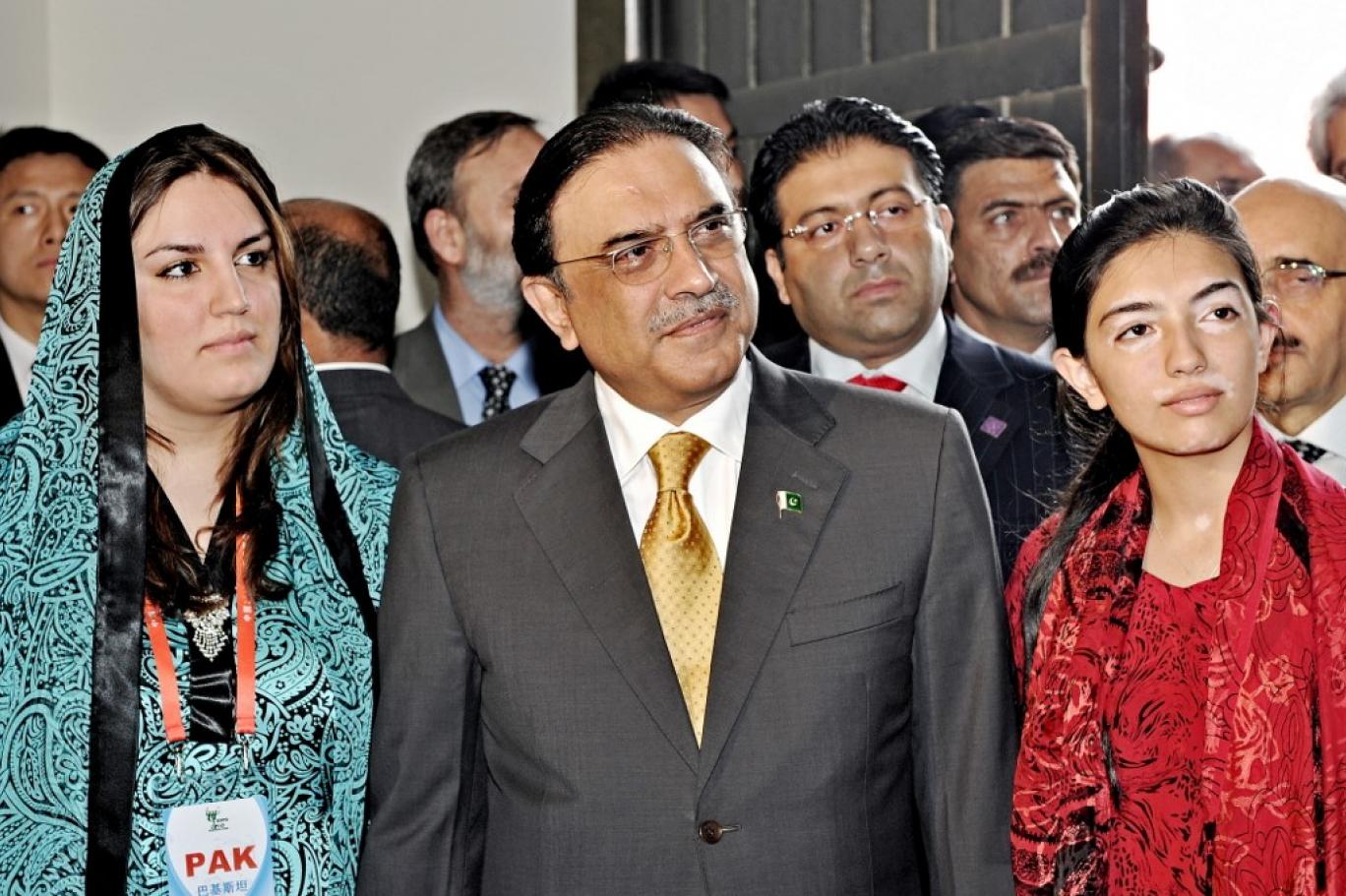
 After the assassination of Shaheed Benazir Bhutto, Asif Ali Zardari found himself at the epicentre of a broken country. He had to console a nation in mourning, suture together a party battered and wounded, resentful and hurt. How do you make up for such a colossal loss? How do you move forward? He found leadership in coming together “Pakistan Khappay” and direction in her vision “Jeay Bhutto”. Pakistan was a hairline away from being declared a failed state with almost daily terrorist attacks. The PPP government of 2008 had a lot to overcome. It was Asif Ali Zardari’s resolve that despite all the political turmoil and natural calamities, despite all the terror threats, he pushed ahead to resurrect the vision of his late wife by ousting the longstanding military dictator Musharraf without bloodshed, impeachment or domestic unrest and re-establishing the foundations of democracy for which she laid down her life.
One of his first acts as the president was wilfully surrendering his presidential powers to Parliament thus restoring its supremacy. Previous dictators had usurped this power to dismiss elected governments through presidential ordinances. By doing so he became the first president in history to voluntarily give up his powers. His was a coalition government of consensus and reconciliation with monumental achievements like creating the first social safety net, The Benazir Income Support Programme, that empowered women in low-income households. He promulgated the 18th Amendment to the Constitution of Pakistan that devolved powers and funds to provinces allowing for more provincial autonomy and equitable distribution of resources. In the backdrop of the World Recession as well as the height of the war on terror, his appointed governor of Punjab was murdered in cold blood; his minister for minorities was assassinated. The threats could not be understated. His government was always treading on eggshells, as no democratic government before it, had ever been able to realise a full term in power.
Despite very serious reservations on the 2013 election and lack of a level playing field for the Pakistan People’s Party, for the first time in the history of Pakistan, President Asif Ali Zardari oversaw the transition of power from one democratically elected government to another. This process was intrinsic to the evolution of democracy in Pakistan.
The years leading up to the 2018 elections saw Pakistan slipping back to old ways. This time the face bearer was going to be Imran Khan. He led a campaign based on guile and gumption, election slogans of complete hyperbole and hysterical claims of repatriating 200 billion dollars of looted money stashed abroad by opposition leaders. This was well-orchestrated chaos, politics not of policy but of person. Spewing hatred in public gatherings for the leaders of the last 10 years, bifurcation of the youth and fanning the flames of religious bigotry. The campaign slogans read that all ailments of Pakistan were due to their “corruption”. He spoke openly of his fanboy vision of a glorified Pakistan era under the military rule in the 60s and early 2000. The biggest irony is Pakistan has never had an uninterrupted period where democracy was allowed to flourish. What he was actually doing was creating a hatred for civilian rule. He was known for his lack of attendance in Parliament, deeming it as a wasteful exercise. Cursing even the very existence of the Prime Minister House like it was a personal property of Zardari or Sharif. This leaflet of propaganda was well backed, funded and sold to the masses. A direct repercussion of this were the corruption allegations brought against Asif Ali Zardari.
In the weeks before the 2018 general elections, a hysterical frenzy broke out on all media channels of corruption allegations against Asif Ali Zardari. The timing of it mirroring the likes of the Hilary Clinton email fiasco. On June 7, 2018, an FIR was registered by the Federal Investigation Agency questioning some private intra-banking transactions. The investigating FIA officer happened to be Najaf Mirza who facilitated Asif Ali Zardari’s torture during his previous incarceration and had an active pending FIR investigation on him. It became obvious very early on that this matter was more personal and against the person. In the following weeks, the matters brought against Asif Ali Zardari were suddenly elevated from the banking courts in Karachi to the highest court of law – the Supreme Court in Islamabad due to “slackness in the progress of pending enquiries” on fake bank accounts. This was an unprecedented legal move where a pending enquiry on private intra-banking transactions was considered slack. The Supreme Court had overstretched its insight deeming it as a matter of fundamental rights thus exercising its suo motu powers under Article 184(3) of the Constitution.
It is unfathomable to understand how slackness was a legal reason when the judicial and wrongful murder of Shaheed Zulfikar Ali Bhutto (1979) and the case of the assassination of Shaheed Benazir Bhutto (2007) are still pending in our honourable courts for decades. I understand there may be benefits of judicial activism in cases of swift justice but for the first time we see our courts entering into a phase of judicial expediency with selected justice. On July 9th 2018, ten days after the suo motu notice, the Supreme Court ordered for both President Zardari and his sister Faryal Talpur to be placed on the Exit Control List. This would be the start of curbing his human rights. Despite this, he was elected from his constituency on July 26, 2018, regardless of these blatant attempts to tarnish his campaign. Even the notion of him returning to Islamabad was bound to ruffle feathers. Election day was a complete debacle and deserves an entire chapter on the vast contraventions of the Election Act. Our Rangers went from securing polling booths to counting votes, in the absence of polling agents. They wanted my father out of the political scene but here he was elected by the people right back in the heart of the capital as an elected member of the National Assembly to defend what he had so carefully put together - the institution of democracy and supremacy of Parliament.
The morning the House gathered for the prime ministerial vote - arrest warrants were issued for Asif Ali Zardari. Instead of attending Parliament to vote, he was rushed to court for bail proceedings. Simultaneously, our prime minister began his maiden speech where he hurled direct threats, vowing to persecute and imprison his incumbents of the last 10 years. This would be exactly the course of events that followed. In the following months, several PTI top-ranking ministers met privately with the then Chief Justice of Pakistan, Saqib Nisar, where the government endorsed his call for collecting donations to build a dam. The same Chief Justice ordered to form a Joint Investigation Team (JIT) with extra-constitutional powers including members of the secret service (ISI) with the purpose to investigate the intra-banking transactions case alleging involvement of Asif Ali Zardari. Clearly this was not a matter of funding terrorism nor a matter of national security. It was just a gimmick of national propaganda and well orchestrated chaos.
The people of Pakistan would soon realise how the PTI government was never prepared for the job. It was a government with a vision completely misconstrued. They had set the nation on a course to nowhere. A government of oxymorons, clearly confused and absolutely useless. However, what they have mastered is a fascist form of government of slander and accusations against the opposition to divert attention from the relevant, curbing liberties and rights of the press and the people. During the JIT investigations, the PTI minister of information would repeatedly pre-empt legal developments on national television. There was no subtleness in their collusion. They wanted to undo what Asif Ali Zardari had done in his tenure and destabilise the majority PPP government in Sindh. Therefore, they started openly denouncing the 18th Constitutional Amendment, questioning why funds had to be given to the provinces. This debate took place in tandem with carefully orchestrated corruption allegations against Sindh cabinet members. The speaker of the Sindh Assembly was suddenly arrested, without any probe or investigation, on frivolous charges of “assets beyond means”, and he still remains in custody.
On December 27th 2018, PTI leaders addressed a press conference announcing their intent to form their own government in Sindh. Hours later, a whole host of elected representatives from the PPP government in Sindh were placed on the Exit Control List including the Chairman of the party, Bilawal Bhutto-Zardari. There was not an iota of legal ground or justification — this was nothing short of dictatorship and the enforcement of a one-party rule with all other leaders of opposition behind bars.
On January 7, 2019, the Supreme Court decided to move the findings of the JIT reports to the National Accountability Bureau in Rawalpindi and ordered them to take over the investigation. Not only was this absolutely unjustified, given that it was a jurisdictional leap across provinces but that NAB itself is a highly controversial entity. NAB is an investigative body set up by the military dictator Musharraf (who himself is an absconder and wanted man with Swiss bank accounts, international properties but not a single investigation) wildly used as a tool to pressurise and coerce politicians and undermine and dismiss elected governments. They boast unbridled power with unaccounted deaths in their custody but have never been held answerable or accountable. The achievements of NAB is a tale of absolute shambles where instead of recovering money their misadventures have cost Pakistan’s exchequer billions. The public accounts committee and parliamentary procedures are undermined and bypassed with the existence of this extra-constitutional body. In a completely unrelated series of events, NAB has just inaugurated an art gallery in Quetta. The threshold today is if you are with PTI you are given a clean chit by NAB and if you are on the other side of the aisle, you get persecuted.
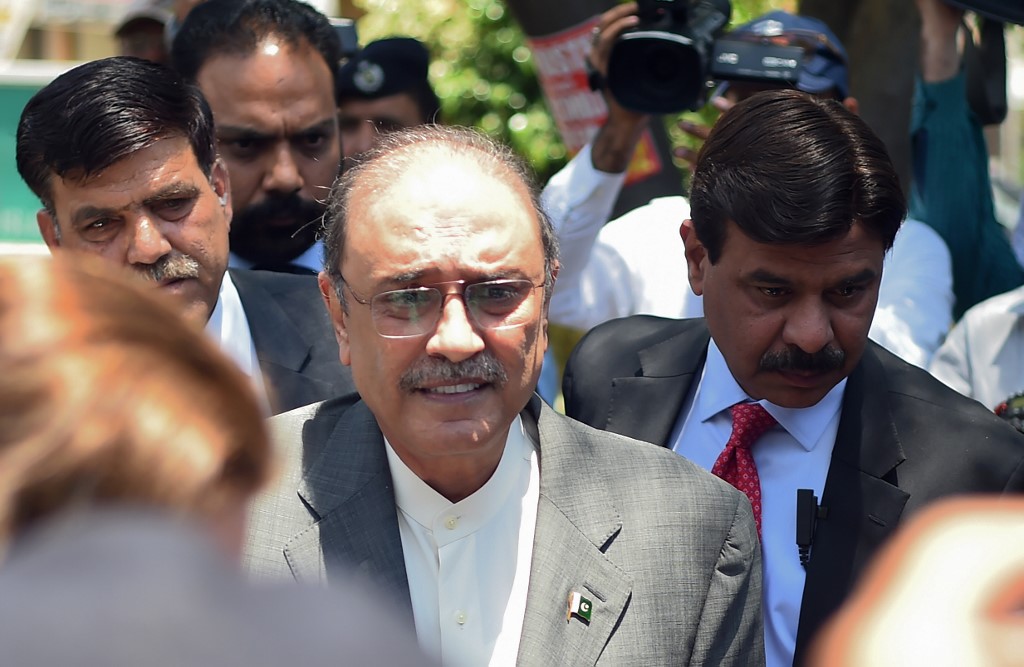
Up until June 2019, Asif Ali Zardari was present and complicit for all JIT and NAB summons. In an outrageous power trip, he was arrested and sent to detention in a NAB cell on June 10th 2019. A medical examination arranged by NAB authorities at the Rawalpindi Institute of Cardiology on the 13th of June discovered a depleted state of his health. After all he suffers from ailments brought on from his first 11 years of unjust incarceration and physical torture. The report conducted by Professor Major General Azhar Mahmood Kayani revealed three coronary arteries are severely blocked. His blood sugar levels had been uncontrollable exasperating his daily condition. Despite all of this, the courts went ahead and sent him to Adiala Jail on judicial remand on August 16, 2019, where he still remains. He is being kept in a fenced off Class B 12x12 prison cell in complete isolation. The courts are even scrambling over a decision as to whether he should be allowed an air condition in his cell. Both his family and lawyers are denied access in complete violation of his human rights. Apart from being the former President of Pakistan, and a law-abiding citizen, his pre-trial treatment is not only unwarranted but also criminally negligent with an intent to harm.
On August 29th media broke the news of his midnight shift from jail to a cardiac hospital. The next morning, my sister Aseefa rushed to the hospital to see him. She barely caught a glimpse of our ailing father when she was denied access and manhandled by police at the hospital gates despite brandishing her court orders in hand. The hospital doors were locked and barricaded — even patients were not permitted entry or exit. I must reiterate at this point, that this is a former president, not a terrorist or enemy state pilot and up till now no charges have been formally brought against him; the references are still pending investigation and the trial has yet to even begin. He was brisked back to Adiala Jail the very same day without even completing the required check-ups or obtaining a discharge form. No record of this visit has been shared with us or his lawyers till date. This was not the first time a court order was so unabashedly dismissed. We also had permission for Eid visitation but were denied the most basic of prison rights. I narrate these events to highlight the absurdity of what is taking place in Pakistan. PTI’s interior minister who served the same post under Musharraf is not only personally nominated accused in my mother’s assassination but has now been tasked to personally oversee the treatment being handed down to Asif Ali Zardari. Make no mistake about it, it is very clear that this fascist regime is after his life.
President Asif Ali Zardari never once objected to being investigated. As a matter of fact, he has been the single most scrutinised, investigated, persecuted, but never once convicted person in the history of Pakistan. Not a single conviction to date, despite spending 11 years in prison on falsified charges, he is now again sent to Adiala Jail in — the city where my mother was assassinated in 2007. My grandfather, Zulfikar Ali Bhutto’s crime was saying, “all power to the people” and he was sent to the gallows on trumped-up charges. My mother, Benazir Bhutto returned from exile to fulfil the dream of restoring democracy in Pakistan but she was assassinated for saying, “Democracy is the best Revenge”. My father, Asif Ali Zardari, resonated the slogan, “Jeay Bhutto”. His crime is that he managed to succeed in realising their vision of democracy in Pakistan. Now the intention is to break him, mentally, physically as he defies the new orders of power. Time will decide how he goes down but that time is not now.

Video Report - Najam Sethi on Arab Visits

Why have Saudi Arabia, UAE failed to condemn India over Kashmir?


By Bilal Kuchay

 The Gulf heavyweights have not sided with Pakistan, and analysts say it's because of India's growing economic clout.
Last week, the foreign ministers of Saudi Arabia and the United Arab Emirates (UAE) travelled to Islamabad in a symbolic show of solidarity with Pakistan after New Delhi stripped the Indian-administered Kashmir of its autonomy.
UAE Foreign Minister Sheikh Abdullah bin Zayed Al Nahyan and Saudi Minister of State for Foreign Affairs Adel al-Jubeir held meetings with Pakistani Prime Minister Imran Khan, powerful military chief General Qamar Javed Bajwa and Foreign Minister Shah Mahmoud Qureshi but stayed away from issuing strong words against India.
The Gulf countries, with whom Pakistan has enjoyed a long-standing "brotherly" relationship for decades, have stayed away from condemning India's crackdown in Kashmir.
While Saudi Arabia expressed concern over India's unilateral decision to scrap Kashmir's special status and the imposition of crippling security lockdown, the UAE called it New Delhi's internal matter.
Other Gulf countries - Kuwait, Qatar, Bahrain and Oman - have apparently not issued any statements.
Amid the lockdown in Indian-administered Kashmir, the UAE bestowed on Modi the country's highest civilian award - the Order of Zayed - as a mark of appreciation for his efforts to boost bilateral ties between the two nations.
The Hindu nationalist prime minister under whose watch Muslims have been targeted was also honoured with Saudi Arabia's highest civilian award in 2016.
With $100bn in annual trade, India has emerged as a vital economic partner to the Gulf countries. Moreover, millions of Indian workers help drive the region's economy.
"India has developed a good economic relationship with Saudi Arabia and the UAE," said Manoj Joshi, a distinguished fellow at Observer Research Foundation in New Delhi.

"Both these countries are looking to the future when oil will run out, and they see India as a potential country where they can invest and a country with a large market with which they already have good economic ties."

India-Saudi trade growing

India's ties to Saudi Arabia have grown significantly over the past two decades, with bilateral trade hitting $28bn. Home to more than 2.7 million Indian expatriates, the kingdom is India's fourth-largest trading partner.
India's richest man, Mukesh Ambani, announced last month that Saudi Arabia's state energy group, Saudi Aramco, is set to acquire a 20 percent stake in Reliance Industries Limited's (RIL) oil-to-chemical business for an enterprise value of $75bn. Saudi Arabia and the UAE are also jointly building a mega refinery in India with an investment of $60bn. 
India-UAE annual bilateral trade stands at $55bn, with Indians being the largest foreign investors in Dubai's real estate market. Nearly 30 percent of the UAE's total population comprises of Indians.
New Delhi and Abu Dhabi have also struck close security ties since Narendra Modi was first elected prime minister in 2014.
In India's comparison, the annual bilateral trade between Pakistan and Saudi Arabia stands at $3.7bn and the country's trade volume with the UAE stands at $8bn.
"It's important to remember that India has a long-standing, deep and multifaceted relationship with the Gulf Cooperation Council (GCC) countries, so no realistic Pakistani would ever have expected a wholesale endorsement from the GCC countries," said Mosharraf Zaidi, a Pakistan-based political analyst.
"But there is an expectation of shared concern for the human rights safety and security of the people of Kashmir," he said.
Joshi, the Indian foreign policy analyst, said the Middle East countries are not looking just for Islamic solidarity.
"If it was just Islamic issue then they [Gulf countries] should have taken a strong stand on Xinjiang but they have not," he said.
"… they see India more important for their national interest."
The Middle East remains key to India's energy security as New Delhi imports 80 percent of its petroleum needs from the region.
Talmiz Ahmad, an Indian diplomat who has served as an ambassador to Saudi Arabia, Oman and the UAE, believes that New Delhi has "secured strategic interests" in the Middle East at the cost of Pakistan though it is not linked to the Kashmir issue.
He said that from mid-2000, the frequency of high-level state visits from GCC countries went up as part of their new focus on political engagement with India.
Abu Dhabi Crown Prince Sheikh Mohammed bin Zayed, who has called Modi his friend, was the chief guest at India's Republic Day parade in 2017, while Saudi King Abdullah bin Abdulaziz al-Saud was invited in 2006.

India's goal

Zahid Hussain, a Pakistan-based political analyst, however, said that the measured response from the Saudi-UAE should not be seen as a "support for India's action" in Kashmir.
The Gulf support for Pakistan on Kashmir issue was "always ambiguous and whatever has come has always come from OIC [Organisation of Islamic Cooperation] platforms", he said.
Pakistan's refusal to join Saudi-led forces to fight in Yemen, it seems, has not gone down well with its Gulf allies.
"Pakistan has still armed forces that these [GCC] countries believe would come to their assistance if they were in jeopardy. This perception received a major jolt when Pakistan refused to provide its armed forces," Ahmed, the former Indian diplomat, said.
Islamabad also did not allow itself to be drawn into the proxy war between Saudi Arabia and Iran as it continued its close relations with Tehran.
Omair Anas, from Ankara Yildirim Beyazit University, said that Pakistan's position on Iran was one of "the most worrying components in Gulf-Pakistan relations".
"Pakistan's neutrality on Yemen and Qatar could be a watershed moment in the two regional heavyweights' security perception," he said referring to the UAE-Saudi-led blockade imposed on Qatar since 2017.
Sami al-Arian, the director of the Center for Islam and Global Affairs, said that both the UAE and Saudi Arabia want to strengthen their ties with countries such as the United States, China, India or Israel at the "expense of the populations who have been suffering in these areas such as the Palestinians, the Uyghurs or the Kashmiris".
"I don't expect much as a response from these two regimes," he added.