Sunday, September 2, 2018

#Pakistan - Worth the Bill? Pakistan, Maldives Caught in Debt Jam on China's 'Silk Road'


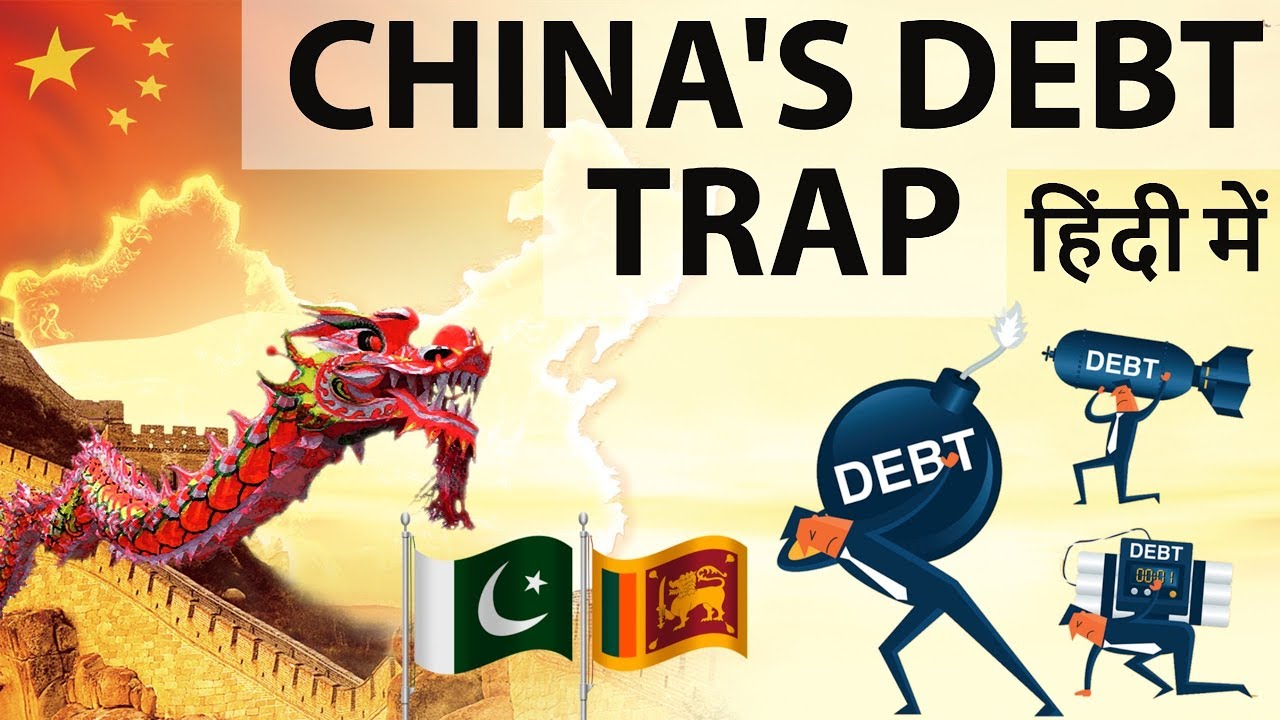
Sri Lanka has already paid a heavy price for being highly indebted to China. Last year, the island nation had to grant a 99-year lease on a strategic port to Beijing over its inability to repay loans for the $1.4-billion project.


China's massive and expanding "Belt and Road" trade infrastructure project is running into speed bumps as some countries begin to grumble about being buried under Chinese debt.

First announced in 2013 by President Xi Jinping, the initiative also known as the "new Silk Road" envisions the construction of railways, roads and ports across the globe, with Beijing providing billions of dollars in loans to many countries.

Five years on, Xi has found himself defending his treasured idea as concerns grow that China is setting up debt traps in countries which may lack the means to pay back the Asian giant.

"It is not a China club," Xi said in a speech on Monday to mark the project's anniversary, describing Belt and Road as an "open and inclusive" project. Xi said China's trade with Belt and Road countries had exceeded $5 trillion, with outward direct investment surpassing $60 billion.

But some are starting to wonder if it is worth the cost. During a visit to Beijing in August, Malaysia's Prime Minister Mahathir Mohamad said his country would shelve three China-backed projects, including a $20 billion railway.

The party of Pakistan's new prime minister, Imran Khan, has vowed more transparency amid fears about the country's ability to repay Chinese loans related to the multi-billion-dollar China-Pakistan Economic Corridor.

Meanwhile, exiled leader of the opposition in the Maldives, Mohamed Nasheed, has said China's actions in the Indian Ocean archipelago amounted to a "land grab" and "colonialism", with 80 percent of its debt held by Beijing.

Sri Lanka has already paid a heavy price for being highly indebted to China. Last year, the island nation had to grant a 99-year lease on a strategic port to Beijing over its inability to repay loans for the $1.4-billion project.

'Ambiguous Partner'

"China does not have a very competent international bureaucracy in foreign aid, in expansion of soft power," Anne Stevenson-Yang, co-founder and research director at J Capital Research, told AFP.

"So not surprisingly they're not very good at it, and it brought up political issues like Malaysia that nobody anticipated," she said. "As the RMB (yuan) becomes weaker, and China is perceived internationally as a more ambiguous partner, it's more likely that the countries will take a more jaundiced eye on these projects."

The huge endeavour brings much-needed infrastructure improvements to developing countries, while giving China destinations to unload its industrial overcapacity and facilities to stock up on raw materials.

But a study by the Center for Global Development, a US think-tank, found "serious concerns" about the sustainability of the sovereign debt in eight countries receiving Silk Road funds. Those were Pakistan, Djibouti, Maldives, Mongolia, Laos, Montenegro, Tajikistan and Kyrgyzstan.

The cost of a China-Laos railway project — $6.7 billion — represents almost half of the Southeast Asian country's GDP, according to the study. In Djibouti, the IMF has warned that the Horn of Africa country faces a "high risk of debt distress" as its public debt jumped from 50 percent of GDP in 2014 to 85 percent in 2016.

Africa has long embraced Chinese investment, helping make Beijing the continent's largest trading partner for the past decade. On Monday, a number of African leaders will gather in Beijing for a summit focused on economic ties which will include talks on the "Belt and Road" programme.

'Not a Free Lunch'

China bristles at criticism. At a daily press briefing on Friday, foreign ministry spokeswoman Hua Chunying denied that Beijing was saddling its partners with onerous debt, saying that its loans to Sri Lanka and Pakistan were only a small part of those countries' overall foreign debt.

"It's unreasonable that money coming out of Western countries is praised as good and sweet, while coming out of China it's sinister and a trap," she said.

Stevenson-Yang said China's loans are quoted in dollar terms, "but in reality they're lending in terms of tractors, shipments of coal, engineering services and things like that, and they ask for repayment in hard currency."

Standard & Poor's said Beijing structures the infrastructure projects as long-term concessions, with a Chinese firm operating the facility for a period of 20 to 30 years while splitting the proceeds with the local counterpart or government.

The head of the International Monetary Fund, Christine Lagarde, raised concerns about potential debt problems in April and advocated greater transparency. "It's not a free lunch, it's something where everybody chips in," she said.

US-Pakistan Tensions Flare Before Pompeo Trip

Pakistan has dismissed as “incorrect” reports the United States has canceled $300 million in military aid to the country, saying Washington owed the money to Islamabad for expenses incurred on fighting terrorism.
Foreign Minister Shah Mehmood made the remarks a day after the Pentagon disclosed it decided to scrap the funds because Pakistan was not doing enough against terrorist groups inside its borders.
“It is not a cut in any [U.S.] aid, it is not assistance. This is our own money which we have used for improving regional security situation and they had to reimburse it to us,” Qureshi told reporters Sunday in Islamabad.
The controversy is the latest to hit Islamabad’s troubled relationship with Washington, coming a few days before Secretary of State Mike Pompeo together with General Joseph Dunford, chairman of the Joint Chiefs of Staff, are scheduled to visit the South Asian nation.
This will be Washington’s first high-level dialogue with Islamabad since the new government of Prime Minister Imran Khan assumed office following recent elections.

Qureshi confirmed his American counterpart will visit Pakistan Wednesday and downplayed suggestions the funding row has fueled mutual tensions. 

The aid the Pentagon has decided to scrap was to come from a so-called U.S. Coalition Support Funds established to help Pakistan counter terrorism and secure its volatile porous border with Afghanistan.

“Due to a lack of Pakistani decisive actions in support of the South Asia Strategy the remaining $300 million was reprogrammed,” said Pentagon spokesman Lieutenant Colonel Kone Faulkner on Saturday.

The spokesman explained the plan will be submitted to Congress for approval and it will bring the total amount withheld from Pakistan under the Coalition Support Funds to $800 million since early this year.
Pressure on Taliban
Observers see the cancellation of Coalition Support Funds funds as pressure on Islamabad to prevent Taliban insurgents from using Pakistani soil for plotting attacks inside Afghanistan.
"This is not something that we were not expecting,” a senior Pakistani security official told VOA on condition of anonymity, citing continued deterioration in bilateral ties. In January, U.S. President Donald Trump suspended all military assistance to Pakistan accusing the country of rewarding past assistance with “nothing but lies and deceit."
Pakistani officials defend their counterterrorism record and cite “massive human and economic losses” militancy has inflicted on the country after it joined the U.S. war. Islamabad rejects U.S. accusations of inaction, saying they stem from Washington's military failures in Afghanistan.
Prime Minister Khan told reporters on Friday his government will hold talks with Pompeo’s delegation to seek a “mutually beneficial” relationship with the United States that will be based on “mutual respect.”
Senator Mushahid Hussain, who heads the foreign affairs committee of the upper house of parliament, tells VOA the stoppage of $300 million will undermine Pompeo’s visit.
“On the eve of the most important visit to Pakistan by an official American [delegation] since the new government took office, Pakistan-American relations are hanging by a thread,” Hussain cautioned.
The influential Pakistani Senator alleged an“outmoded, zero-sum "ideologically-driven" U.S. foreign policy is making Washington “increasingly less relevant to Asia than before.” Hussain cited tension in the U.S. relations with China, Russia, and Iran.
Pakistani officials insist that Coalition Support Funds funds also cover the costs on maintenance of the country’s ground and air lines of communications, commonly known as GLOCS and ALOCS respectively, U.S. and NATO use to ferry key supplies to their troops in the landlocked neighboring country. They say Pakistan is using its own funds and fencing the country's long porous border with Afghanistan to promote regional stability.
New alliances
Trump’s decision to suspend military assistance to Pakistan has also shut training and educational programs for Pakistani military officers under the bilateral cooperation.
In a rare cooperation agreement with Pakistan last month, Moscow agreed to open doors of its military institutions for training Pakistani army officers, underscoring intensified efforts Russia has been making to seek closer relations with Islamabad.
China has also deepened ties with Pakistan in all fields and is investing unprecedented billions of dollars in the country to help its traditional ally overcome its economic and energy challenges.
Beijing, Moscow, Tehran and Islamabad have lately increased political and security cooperation to jointly fight the emergence of Islamic State in Afghanistan.
But top American military commanders accuse Russia of trying to destabilize and undercut international gains in Afghanistan by maintaining ties to the Taliban insurgency, charges Moscow denies.
https://www.voanews.com/a/us-pakistan-tensions-flare-before-pompeo-trip/4554607.html


Saturday, September 1, 2018

Video - #JohnMcCain - Joe Biden: I'm a Democrat and I love John McCain

#JohnMcCain - Meghan McCain: 'America of John McCain Has No Need To Be Made Great Again' | NBC News

Video - #JohnMcCain - John McCain funeral: George W. Bush's Eulogy

Video - #JohnMcCain - John McCain funeral: Barack Obama's Eulogy

#JohnMcCain - John McCain was complex. His legacy warrants critical discussion


By Rebecca Solnit
In the wake of his death, too many fell into the simplistic binary thinking that plagues our country and steamrolls politics.

Icome not to praise Senator John McCain nor to bury him – plenty of people are taking care those things – but to describe him and our problems with complex people and complex descriptions. I found McCain a fascinating, frustrating character who often expressed high ideals and as often betrayed them. That is something quite different than, say, the ruthlessly mercenary instincts of Mitch McConnell or the transparently self-serving amorality of Paul Ryan. With his death, the last shreds of conscience in his party have gone, though they were often only present in him in flickers of conflicted, contradicted impulses.
McCain seemed to believe in a gallant idea of what a soldier, a politician and an American should be. Though his version was often deeply at odds with mine, it appeared to be a genuine set of ideals. His life was a public performance of his meandering path to and from and around those ideals, and those trajectories were fascinating to watch, with the sense of some Faustian private struggle behind the public drama. He was often called a maverick and embraced the term, which comes from a Mr Maverick of Texas who didn’t brand his calves. The term is now used to mean a dissident, an untamed soul, someone who doesn’t run with the herd, but McCain’s orthodoxies jostled with his unorthodoxies, and he often ended up back in the Republican corral with the rest of the conservative cattle. Or on the other side after all, regretting Sarah Palin, regretting his consent to the Iraq war, which he admitted was a disaster. At this point in political history even the admission of error is an endangered species.

In the wake of his death last week, too many people fell into the simplistic binary thinking that plagues our country and steamrolls its politics: that he had been good and thus nothing bad could be said of him, or the opposite, that he had done evil and nothing good could be admitted of him, and if nothing good could be said of him nothing at all could be thought about him. This not only refused an accurate picture of a complex figure, but the possibility of complex conversation, and perhaps even that habit of appraising and evaluating and reaching ambiguous, ambivalent conclusions we call thinking.
It’s a far wider problem than one of writing the obituary of a rightwing icon, a habit that seeks to reduce all things to something as simple and binary as computer code and divides the world into sides or categories beyond which nothing remains to be said or thought. Good or evil, swipe right or left, like or dislike, ours or theirs– as George W Bush infamously declared on 20 September 2001, “Either you are with us or you are with the terrorists,” which is the authoritarian way to say shut up and fall in line.
Our country was founded in conflict – not the ordinary conflict of the Revolutionary war, but the conflict between Thomas Jefferson’s ideals and his actions as an owner and exploiter of other human beings. You can dismiss the slavery and uphold the ideals, or vice versa, but an understanding of who we have been and how we got here means recognizing both and how they inflect each other. And how often we use the master’s tools to dismantle the master’s house, including using the ideals in the constitution against the founding fathers’ many shortcomings on human rights.
It means recognizing Abraham Lincoln’s greatness and his monstrous policies toward the Lakota, recognizing that we have been neither – as American exceptionalism would have it – the best of nations, or the worst, but a magnificent, unresolved pile of conundrums and paradoxes and populations at odds with each other and ideals that are more often held up for admiration than they’re upheld. Those ideals are lived out best by rebels and dissidents, not in the Senate, but in the streets and jails and strikes. It’s when those people – those true mavericks – succeed in those marginal arenas that the causes are eventually championed in the Senate.
We hear a lot about bitter partisanship now. Perhaps it begins with the willingness to reduce into simple categories or the refusal to have thoughts that reveal how leaky those categories are. Or perhaps it’s about the desire to have heroes, villains and simple dramas, to live in a world of cartoons where no thought needs to be more complex than a headline, or the fact that so much of our conversation now is uninflected headlines, tweets, texts and soundbites.

That is, partisan absolutism may begin in oversimplification and devout faith in categories. You can think McCain was wholly evil and still have nuanced ideas about him, because the differences between, say, Pol Pot and Joseph Stalin, or Jeff Bezos and Rupert Murdoch, are worth exploring. If we want to be able to perceive and describe the world, our conversations have to have room for the occasional harmful acts of people we like and the beneficial acts of those we don’t.
McCain did a lot of harm by my estimation, and some of it he did because he genuinely believed that the collateral damage was worth it for some good cause. He believed devoutly in war and the military, and the military was perhaps the constituency he served most faithfully. He was one of the grandest characters in the theater of Congress, and his performance was first of all theater, sometimes intentionally so – as when, last year, he came into the Senate chamber at the last minute and, with a thumbs-down gesture like that of a Roman emperor, ended the Trump plan to kill the Affordable Care Act (which he had, of course, opposed when it was put forth). As Jordan Weissman wrote in Slate, his veto was “delivered in front of a sulking Mitch McConnell, elicited a gasp from the Senate floor and brought months of frantic work by the GOP to a crashing stop”.
Then, more quietly, he voted to repeal the individual mandate, condemning millions to the loss of their health insurance after all. He stood up for the rights of the disabled, but also the privileges of the super-wealthy. He was suspicious of LGBT people in the military right through 2010, but last year spoke up for the rights of trans people in the military, perhaps to smack down Trump’s attempt at a trans ban, perhaps because the generals opposed that ban. (In 2010, Think Progress noted that he’d had held 11 different positions on the “Don’t Ask, Don’t Tell” policy.) Sometimes his positions seemed to be about fights within his own party – with Bush Jr, who he had been defeated by and whose torture policies he ferociously opposed – and then with Trump, who he thoroughly and repeatedly denounced, perhaps most scathingly and recently for Trump’s groveling before Vladimir Putin in Helsinki.

His noble stances were more visible than his compromises and his go-alongs with vicious policies on Native rights, voting rights, economic inequality, and more. Perhaps it was that the theatrical McCain was out of joint with the pragmatic McCain, but that performance was riveting.
Sometimes he betrayed and then repented – thus he was one of the Keating Five, caught up in protecting a corrupt savings and loan that collapsed, and then he was, with the liberal senator Russ Feingold, the co-author of the McCain-Feingold campaign finance reform act of 2002. That bill was also about his capacity to take bipartisan action, to work with colleagues across the aisle, and he counted Democrats as his friends. This made him a relic of an age before the Tea Party movement brought total war to the Republicans as their gospel and strategy. Sometimes he did good things and then slid away from them. He was early in the 2000s a co-sponsor of important climate change legislation, BUT by the time of his presidential campaign in 2008 he was so fine with his party’s climate denial and inaction that he brought in Sarah “Drill Baby Drill” Palin as his running mate.
What captivated me at times was the sense of McCain as a tragic figure, someone who knew what he ought to do when he was not doing it as well as when he was. In his 2008 concession speech he sounded relieved to have escaped the nightmarish grip of his own ambition and all the contortions it had forced him into, including the recruitment of Palin, who he later repudiated.
He was also the protagonist of a prison epic, and the extremity of his suffering set him apart from his peers. His years as a prisoner of war, captured while his country was bombing civilians in a terrible war of aggression against the people of Vietnam, is central to the story of who he was, and it excuses and explains nothing but it does round out a story that seems epic as well as troubling. I don’t want people to appraise him for his sake, but for our own: for our ability to tell irreducible stories, to see the world and its players in their full complexity.
On Twitter, the national security journalist Benjamin Wittes tells a story from 15 years ago when he saw McCain introduce Anne Appelbaum’s book Gulags at the Polish Embassy in Washington DC. Wittes writes, “While McCain had many thoughts about the book, he said that the part that really hit him in the gut was Anne’s description of prisoner tapping codes – by which prisoners would tap on cell walls in specific patterns to make out letters to communicate with those in adjacent cells.” He described the version he and his fellow prisoners used. “Then he paused and said that he still dreamed in that code sometimes. And then he tapped.”

Music Video - #Pashto Song dedicated to DIEHARD PASHTUN/AFGHAN - DR.NAJIB

#PPP - Kal Bhi Bhutto Zinda Tha, Ajj Bhi Bhutto Zinda Hai

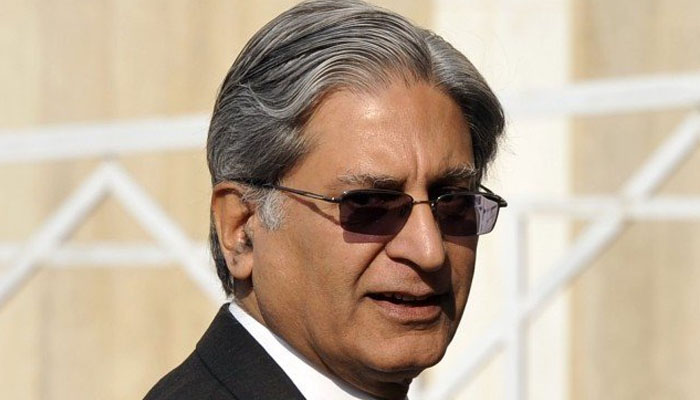
#Pakistan - Aitzaz Ahsan's win will be tantamount to victory of all liberal forces: #PPP

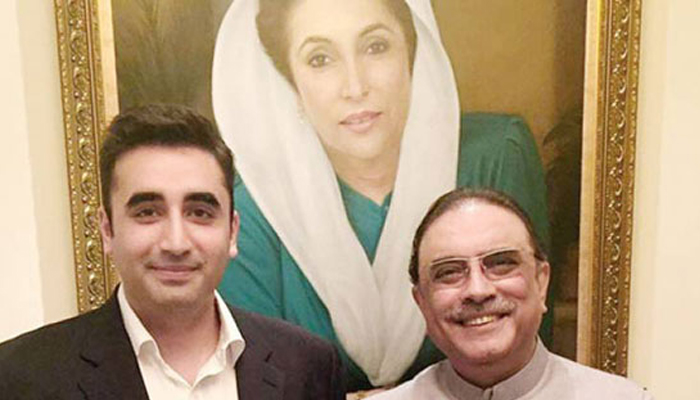
PPP co-chairman Asif Zardari said that Aitzaz Ahsan's victory in the upcoming presidential election would be equivalent to victory of all liberal forces.
" PPP has nominated Ahsan, which would be remembered in history. Our friends should realise that his victory would be tantamount to victory of all liberal forces," Zardari told PPP's MNAs, senators and other members, according to PPP.
"Chaudhry Aitzaz Ahsan is one of the oldest Party friends and he is our candidate for the office of President of Pakistan. Maulana Fazl Ur Rehman is also a candidate for the same office but we have to see which candidate could represent the image of the country more positively and dynamically."
Ahsan had come forward as attorney of Shaheed Benazir Bhutto when late President Ishaq Khan had implicated her in fake case. He had then vowed that he would not allow Ishaq Khan to try Shaheed Mohtarma Benazir Bhutto but would try him instead.
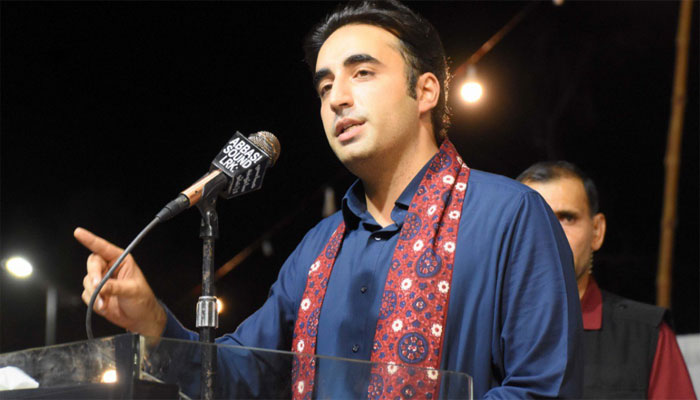
PPP Chairman Bilawal Bhutto Zardari also spoke on the occasion.
The address was held in connection to the Presidential campaign of Chaudhry Aitzaz Ahsan.
Zardari said that Pakistan has stuck in serious challenges and hence the overall situation calls for practical manifestation of serenity and sanity.
Speaking on the occasion, Chairman Bilawal Bhutto Zardari urged upon the legislators to vote for Aitzaz Ahsan and said that every effort is made in order to keep the unity of the opposition on one point agenda.
The PPP Chairman said that PPP would raise the voice of concern over rigging in the general elections because the political engineering and rigging would finally cause the masses to lose their faith and trust in the process of elections.
He said that when the opposition asked for a substitute candidate in lieu of Aitzaz for the office of President, three names were laid before them say; 1- Aitzaz. 2- Aitzaz and 3- Aitzaz. Bilawal Bhutto Zardari said that it is the blessing of the democracy that three consecutive elections have been conducted in the country and power was transferred.
"There is no comparison of Aitzaz with candidate of PTI for the same office of President of Pakistan," he said, adding that Asif Zardari had been country’s most powerful President and it was the PPP’s grand act to transfer President’s special powers to the Parliament and the Prime Minister.
Bilawal said that the present government of PTI is after revoking the 18th constitutional amendment, which the PPP would oppose with full intensity.
The presidential candidate Aitzaz Ahsan, CM Sindh Murad Ali, Shah Faryal Talpur, Khursheed Shah, Nisar Ahmed Khuhro, Qaim Ali Shah, Naveed Qamar and other party leaders were also present.

https://www.thenews.com.pk/latest/362618-aitzaz-ahsans-victory-will-be-tantamount-to-victory-of-all-liberal-forces-ppp

PPP workers are my eyes and ears: Bilawal

Pakistan People’s Party (PPP) Chairman Bilawal Bhutto Zardari said that party workers are his eyes and ears, we have to move forward with the ideology of the party and Bhuttoism.

Bilawal Bhutto was addressing the polling agents and party workers of his electoral constituency, NA-200 at Naudero in Larkana here Friday.
He said, “Party is like a family and is embedded with the sacrifices of Shaheed Zulfikar Ali Bhutto, Shaheed Mohtarma Benazir Bhutto, Shaheed Mir Murtaza Bhutto, Shaheed Shahnawaz Bhutto and other party workers.”
The Chairman said that the struggle has to be accelerated and result-oriented in Sindh and Pakistan so that the federation should become stronger. “Moving forward with the ideology of the party is the only guarantee key for making us reaching our destination”, he added.
Victory and defeat are two aspects of reality but what matters is the way the polling agents of his electoral constituency had worked for him and supported him. In particular, the female polling agents deserve due applause. Female voters were deliberately disturbed during the polling because it is a known fact that the votes of the females have always been for the PPP, said the PPP Chairman.
Bilawal Bhutto Zardari said he needs very active support of the party workers as usual like they had supported Shaheed Bhutto and Shaheed Mohtarma Benazir Bhutto.
“I assure you, every single opportunity would be created for the employment while making best use of all resources in Sindh”. There are plenty of issues and problems in Sindh but the party would keep representing the masses despite all challenges.
Bilawal Bhutto Zardari vowed that he won’t tolerate any conspiracy against the constitution and the country. “The incumbent government in centre is inflicting irreparable colossal loss to the democratic system of the country because they are crooked opportunists.
The PPP Chairman while expressing his deep concern on plans of the federal government said that it is driving the people to the devastations through privatization of national institutions but the PPP won’t allow them to succeed in their vested designs.
“What one could expect from the Prime Minister of the country, who had in his first speech rendered 500 families jobless”.
On the occasion, party leaders including Nisar Ahmed Khuhru, MPA Suhail Anwar Siyal, PPP District Larkana President Abdul Fatah and others had accompanied the Chairman.

https://www.thenews.com.pk/latest/362126-ppp-workers-are-my-eyes-and-ears-bilawal

Chairman PPP Bilawal Bhutto Zardari and former President Asif Ali Zardari addressed a gathering of party’s legislatures in connection with presidential elections at Chief Minister House

Chaudhry Aitzaz Ahsan is one of the oldest Party friends and he is our candidate for the office of President of Pakistan. Maulana Fazl Ur Rehman is also a candidate for the same office but we have to see which candidate could represent the image of the country more positively and dynamically. Ahsan had come forward as attorney of Shaheed Benazir Bhutto when late President Ishaq Khan had implicated her in fake case. He had then vowed that he would not allow Ishaq Khan to try Shaheed Mohtarma Benazir Bhutto but would try him instead.


PPP Parliamentarian President Asif Ali Zardari stated this while addressing to the PPP Senators, MNAs and MPAs of Sindh at Chief Minister’s House on Saturday evening. PPP Chairman Bilawal Bhutto Zardari also spoke on the occasion. The address was held in connection to the Presidential campaign of Chaudhry Aitzaz Ahsan.
Asif Zardari said that PPP has nominated Ahsan, which would be remembered in history. Our friends should realise that his victory would be tantamount to victory of all liberal forces.
He said that Pakistan has stuck in serious challenges and hence the overall situation calls for practical manifestation of serenity and sanity.
Speaking on the occasion, Chairman Bilawal Bhutto Zardari urged upon the legislators to vote for Aitzaz Ahsan and said that every effort is made in order to keep the unity of the opposition on one point agenda.
The PPP Chairman said that PPP would raise the voice of concern over rigging in the general elections because the political engineering and rigging would finally cause the masses to lose their faith and trust in the process of elections.
He said that when the opposition asked for a substitute candidate in lieu of Aitzaz for the office of President, three names were laid before them say; 1- Aitzaz. 2- Aitzaz and 3- Aitzaz.
Bilawal Bhutto Zardari said that it is the blessing of the democracy that three consecutive elections have been conducted in the country and power was transferred.
He said that there is no comparison of Aitzaz with candidate of PTI for the same office of President of Pakistan.
The PPP Chairman said that Asif Zardari had been country’s most powerful President and it was the PPP’s grand act to transfer President’s special powers to the Parliament and the Prime Minister.
Bilawal Bhutto Zardari said that the present government of PTI is after revoking the 18th constitutional amendment, which the PPP would oppose with full intensity.
The presidential candidate Aitzaz Ahsan, CM Sindh Murad Ali, Shah Faryal Talpur, Khursheed Shah, Nisar Ahmed Khuhro, Qaim Ali Shah, Naveed Qamar and other party leaders were also present.

https://mediacellppp.wordpress.com/

د شمالي وزيرستان کډوالو مظاهره کړې

د شمالي وزيرستان کډوالو د اګست په ۳۱ مه په بنو کې مظاهره کړې. دوی وايي شاوخوا څلور کاله یې وشو چې له خپلو کورونو بهر دي او په کډوالۍ کې له ډېرو ستونزو سره مخ دي.
خو دوی وايي هله دې خپلو سيمو ته ستانه کړل شي چې هلته کې بشپړ امن پرځای شي.
دوی دا تور هم ولګاوو چې له اوو مياشتو راهيسې ورته حکومتي مرستې بندې دي. دوی وايي چې ګڼ شمېر وزيرستاني کډوال دا وخت په افغانستان کې هم دي او حکومت يې د واپسۍ څه بندوبست نه کوي.
د کډوالو کمېټې مشر غلام خان د اګست په ۳۱ مه مشال راډيو ته وويل چې له حکومته يې غوښتنه ده چې د دوی مطالبې ومني کنه په پېښور کې به دهرنه پېل کړي:
(( موږ ته چې د حکومت لخوا د کورنۍ پر سر د مياشتې دولس زره روپۍ راکړل کېدې هغه بندې شوي دي .بل په افغانستان کې چې زموږ خلک دي او له هغو سره مېرمنې،ماشومان،څاروي او ګاډي دي نو هغه دې په عزت سره پاکستان ته راوستل شي.
او دا خبره هم ضروري ده چې حکومت دې ړومبې زموږ په سيمو کې امنيت راولي چې دارنګ هلته زموږ ژوند خوندي وي))
د پاکستان په قامي اسمبلۍ کې د شمالي وزيرستان منتخب استازی محسن داوړ د اګست پر ۳۱ مه مشال راډيو ته وويل چې دوی د کډوالو يادې ستونزې حکومت ته رسولي او تر هغو به په قلاره نه کېني چې دغه حل شوې نه وي.

A new chapter for #Pakistan, the same story for Ahmadis

By Nayyar Khokhar

A few years ago, my parents decided to perform Umrah (a lesser pilgrimage) to the holy city of Makkah in Saudi Arabia. Carrying Pakistani passports and belonging to the Ahmadiyya Muslim Community, a reformist community labeled and marginalized by a majority of Muslims as heretics and enemies of Islam, it was no surprise that they were concerned about their status quo and whether Saudi authorities would even allow them to undertake this journey. Nevertheless, driven by their love of Islam and their spiritual master, Prophet Muhammad PBUH, they mustered the courage to complete the Umrah.
In anticipation of their travel, my mother had to make a quick visit to a local ministry in Abu Dhabi (place of residence) where an officer asked my mother, what is your sect in Islam? Are you a Sunni or a Shia? My mother, with a cracking voice responded by saying she was an Ahmadi Muslim. The officer was rather surprised by her response and asked her again, is that Sunni or Shia? Lost for words she remained quiet to which the officer quoted the words of the declaration of faith, do you believe there is No God but Allah, and Prophet Muhammad PBUH is his Messenger? My mother responded in the affirmative, to which the officer agreed and stamped her passport for travel. I cant imagine the excitement and happiness my mother experienced in that moment, the relentless anxiety and worry, all but evaporated in this moment. My mother, a devout follower and a patient woman, felt all her prayers throughout the years were finally heard by the Almighty God.
The miracles of their journey didnt end with this incident but it has a deep link to the infamous blasphemy laws of Pakistan that have disrupted and destroyed nations before. Ahmadiyya Muslim Community is not recognized as an Islamic sect and given the current political climate in Pakistan, the community members are worried about their status after Tehrike Insaaf (a political party) leader Imran Khan has become a likely candidate for Prime Minister of Pakistan. In his recent remarks, Imran Khan has promised to defend the blasphemy laws. Whether this was a political statement to appease his right-wing supporters, or a genuine feeling, only time will tell. However, one cannot consider such a statement as benign because all tumors, no matter how small, eventually grow into full-blown aggressive cancers.
To fully comprehend this problem, I will narrate a historical perspective on this issue. Saudi Arabia is on a positive trajectory for world recognition having lifted the driving ban on women, opening cinemas and as an emerging leader in the stock market.
Not very long ago, all was not well in the Saudi Kingdom with its strict Shariah Law and an aristrocratic establishment that believed in a totalatarian style leadership. In the 1970’s, Saudi Arabia was responsible for its political campaign against Muslim minorities such as Shia, Ahmadi Muslims, Hindus and Christians which led many other Muslim countries to hold similar beliefs or worse. Pakistan, being a young nation in the 70’s, passed the infamous blasphemy laws in 1974 which barred Ahmadi Muslims and other minorities from declaring or practising their faith openly. Those who did were charged with blasphemy under the penal code and some were even sentenced to death.
Putting all of this into perspective, my mother journeying to Saudi Arabia and to openly declare to authorities that she is an Ahmadi Muslim was a brave act, but some may paint it as borderline eccentric. What good is faith if you cant openly declare it? Belief in something or someone is a fundamental right of every human being whether Muslim or otherwise. The Quran states “There is no compulsion in matters of faith” (Chapter 2 verse?). The Quran offers a simple yet comprehensive solution to all religious conflicts and matters of jurisprudience. We cannot assert our authority or incite violence or hate against any minority just because we disagree with their faith or vice-versa.
Muhammad Ali Jinnah, the founding father of Pakistan stated in his 14 points of constitution that “Full religious liberty i.e. liberty of belief, worship and observance, propaganda, association and education shall be guaranteed to all communities”. This clause says it all. Putting his faith into practice, his cabinet members comprised a devout Ahmadi Muslim, Sir Muhammad Zafrullah Khan and a Hindu, Jogendra Nath Mandal, as minister of law and labor.
All considered, Imran Khan may as well stand as a beacon of peace and reconciliation for our society, but I caution him and leaders alike. It is important to be versatile in approach and to prevent such laws from becoming the reason of a nation’s downfall. Let’s not forget that Achilles was only as strong as his heels.

Read more at http://www.beliefnet.com/columnists/muslimyouthusa/2018/08/new-chapter-pakistan-story-ahmadis.html#Yb4Q1w3GiqaYtsrL.99

#Christians still fearful in Imran Khan's #Pakistan

When cricket star Imran Khan rose to power last month after securing the popular vote in Pakistan's elections, minorities responded with caution rather than jubilation, uncertain as to how he would approach the country's sensitive minorities question.
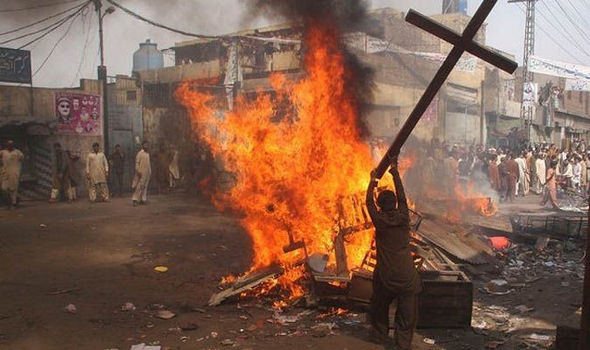
For Christians, Pakistan is a harsh and even deadly place to live and the source of a lot of their misery is the loathed blasphemy laws. Weeks after Khan took office, concerns remain that his government will not stem the violence of the last decade.
This week, Human Rights Watch sent a letter to Khan urging him to take steps to address Pakistan's human rights situation, including upholding freedom of religion and amending the blasphemy law. 
'In the past two years, Pakistan has witnessed an increase in blasphemy-related violence while the government continued to encourage discriminatory prosecutions and other forms of discrimination against vulnerable groups by failing to repeal discriminatory laws and using religious rhetoric, inciting hatred against minorities,' it said.
'Human Rights Watch urges the Pakistani government to amend the blasphemy law, as a first step towards its repeal.'
Khan's promises this week to push for blasphemy laws at international levels will have done nothing to allay the fears of minorities.
This week, he said his government would raise the blasphemy issue at next month's United Nations General Assembly and he is courting the support of other Muslim countries.
'Our government will raise the matter in the Organisation of Islamic Cooperation (OIC) and ask the Muslim countries to come up with a collective policy that could then be brought up at international forums,' Khan said. 
He then drew parallels with European countries that threaten prison sentences for Holocaust denial, according to Dawn news.
His comments came amid protests in Pakistan over Dutch nationalist politician Geert Wilders' plans to hold a caricature competition of the Prophet Mohammed. Wilders has since cancelled the competition, saying he did not want to put others at risk of violence. 
Nasir Saeed, director of CLAAS-UK, an organization that supports Pakistani Christians accused of blasphemy, said it was right to cancel the cartoon competition and that no country should allow any competition which hurts the religious feelings of people. However, he added that Muslims in Pakistan should stop hurting the religious feelings of people who belong to different religions.
'The misuse of the blasphemy law should also be stopped in Pakistan and the government must take concrete steps in this regard,' he said.
'Those who misuse the blasphemy to settle their personal scores and grudges should be brought to the justice.'
Last month, there were two separate attacks on Christians, one of which was fatal. Christian husband and father Vicky Masih had been preparing to celebrate his ninth wedding anniversary when he was shot dead. According to the British Pakistani Christian Association, police have been uncooperative. 
In a separate incident, Alvin John and his family were forced to flee their home after a mob attacked when he refused to allow his daughter to be forcibly married to a Muslim man.
Kashif Anthony, a coordinator for the National Commission for Justice and Peace in Karachi, said the latest violence was 'a sign of prevailing intolerance against Christians' in Pakistan.
'It is a result of the hate-based curriculum taught in the educational institutions, hate speeches, and other unmonitored publications against Christians,' he said. 
https://www.christiantoday.com/article/christians-still-fearful-in-imran-khans-pakistan/130333.htm

Exclusive: Pentagon cancels aid to Pakistan over record on militants

 By Phil Stewart and Idrees Ali


The U.S. military said it has made a final decision to cancel $300 million in aid to Pakistan that had
been suspended over Islamabad’s perceived failure to take decisive action against militants, in a new blow to deteriorating ties.
The so-called Coalition Support Funds were part of a broader suspension in aid to Pakistan announced by President Donald Trump at the start of the year, when he accused Pakistan of rewarding past assistance with “nothing but lies & deceit.” The Trump administration says Islamabad is granting safe haven to insurgents who are waging a 17-year-old war in neighboring Afghanistan, a charge Pakistan denies.
But U.S. officials had held out the possibility that Pakistan could win back that support if it changed its behavior.
U.S. Defense Secretary Jim Mattis, in particular, had an opportunity to authorize $300 million in CSF funds through this summer - if he saw concrete Pakistani actions to go after insurgents. Mattis chose not to, a U.S. official told Reuters. “Due to a lack of Pakistani decisive actions in support of the South Asia Strategy the remaining $300 (million) was reprogrammed,” Pentagon spokesman Lieutenant Colonel Kone Faulkner said. Faulkner said the Pentagon aimed to spend the $300 million on “other urgent priorities” if approved by Congress. He said another $500 million in CSF was stripped by Congress from Pakistan earlier this year, to bring the total withheld to $800 million.
The disclosure came ahead of an expected visit by U.S. Secretary of State Mike Pompeo and the top U.S. military officer, General Joseph Dunford, to Islamabad. Mattis told reporters on Tuesday that combating militants would be a “primary part of the discussion.”
Experts on the Afghan conflict, America’s longest war, argue that militant safe havens in Pakistan have allowed Taliban-linked insurgents in Afghanistan a place to plot deadly strikes and regroup after ground offensives.
INCREASING PRESSURE
The Pentagon’s decision showed that the United States, which has sought to change Pakistani behavior, is still increasing pressure on Pakistan’s security apparatus.
It also underscored that Islamabad has yet to deliver the kind of change sought by Washington.
“It is a calibrated, incremental ratcheting up of pressure on Pakistan,” said Sameer Lalwani, co-director of the South Asia program at the Stimson Center think tank in Washington.
Reuters reported in August that the Trump administration has quietly started cutting scores of Pakistani officers from coveted training and educational programs that have been a hallmark of bilateral military relations for more than a decade. The Pentagon made similar determinations on CSF in the past but this year’s move could get more attention from Islamabad, and its new prime minister, Imran Khan, at a time when its economy is struggling. Pakistan’s foreign exchange reserves have plummeted over the past year and it will soon decide on whether to seek a bailout from the International Monetary Fund (IMF) or friendly nations such as China.
“They are squeezing them when they know that they’re vulnerable and it is probably a signal about what to expect should Pakistan come to the IMF for a loan,” Lalwani said. The United States has the largest share of votes at the IMF.
Khan, who once suggested he might order the shooting down of U.S. drones if they entered Pakistani airspace, has opposed the United States’ open-ended presence in Afghanistan. In his victory speech, he said he wanted “mutually beneficial” relations with Washington. A Pakistani official, speaking on the condition of anonymity, said he was unaware of a formal notification of the U.S. decision on assistance but said one was expected by the end of September.
Pakistan has received more than $33 billion in U.S. assistance since 2002, including more than $14 billion in CSF, a U.S. Defense Department program to reimburse allies that have incurred costs in supporting counter-insurgency operations.
Pakistan could again be eligible next year for CSF.

Video Report - #Ghana risks losing $40m land in #Pakistan


Ghana risks losing a parcel of land worth $80 million located in the capital of Pakistan, Islamabad.

The land which was allocated to the country for construction of its embassy has currently been encroached upon by Malaysia.

According to the 2016 auditor general report, both France and Canada have expressed interest in the land prompting the Pakistani authorities to urge Ghana to develop the land or lose it.

Appearing before the Public Accounts Committee, the Minister for Foreign Affairs and Regional Integration Shirley Ayorkor Botchwey said her Ministry has no money for construction of a fence wall to secure the land at a cost of $180,000.

“What will be the ideal thing is to wall it and secure the piece of land. Unfortunately, it will cost us about €160,000 which we do not have at the moment. So it is the issue of lack of resources. The limited resources that we have, we are having to apply it to the countries where we have missions,” she told the Committee.

Asked if Ghana was that poor it could not get €160,000 to secure the land which is valued $40 million, the Foreign Affairs minister assured that she would look for the money “someway, somehow” to secure the land.

Friday, August 31, 2018

Arabic Music Video - Habibi Sawah -

THE SHEER, DESPICABLE HYPOCRISY OF SAUDI ARABIA | OPINION


In typical fashion, Saudi Arabia’s response to this week’s UN report claiming it may be responsible for war crimes in Yemen is full of bluster.
How dare the human rights experts make ‘false allegations’ that the Riyadh-led coalition has targeted civilians, restricted humanitarian aid and carried out arbitrary detentions, it says.
This despite all evidence to the contrary.

Whether it’s air strikes on school buses killing dozens of children or the bombing of ships carrying humanitarian aid as they wait at a harbour entrance, the truth is plain to see.
This is not to say that Iran-backed Houthi rebels which the coalition is fighting are not guilty of heinous crimes as well. That they are also responsible for atrocities is made clear by the report, which says that both sides are guilty of arbitrary detentions, torture, enforced disappearances and recruiting children.
With 6660 civilians killed, 10,563 injured, 1.1 million hit by cholera and 22 million in need of aid, the war in Yemen is the world’s biggest humanitarian crisis.
But when you consider these stark facts it is hard not get riled by one thing which stands out from the Saudi rebuttal just for its sheer audacity.
The statement expresses "surprise for the report’s disregard of the great humanitarian role played by the coalition states in Yemen, and the huge humanitarian assistance it has provided in order to alleviate the suffering of the Yemeni people."
Hang on, if you hadn’t spent the past three years bombing the country back to the Dark Ages, there would be no need for any of the humanitarian aid which you are so proud of.
It’s a bit like a reckless motorist who wilfully causes carnage on a motorway expecting a pat on the back for picking up the medical bill afterwards.
The UN report found that coalition air strikes—armed with British and American firepower—have hit residential areas, markets, funerals, weddings, detention facilities, civilian boats and medical facilities.
Not only this but the UN’s Group of Experts "have reasonable grounds to believe that individuals in the government of Yemen and the coalition may have conducted attacks in violation of the principles of distinction, proportionality and precaution that may amount to war crimes."
GettyImages-1014360820A Yemeni child stands next to the destroyed bus at the site of a Saudi-led coalition air strike, that targeted the Dahyan market the previous day in the Huthi rebels' stronghold province of Saada on August 10, 2018.STRINGER/AFP/GETTY IMAGES
Time after time the Saudi authorities—who profess to uphold international law and human rights—throw their toys out of the pram when they are accused of flouting it.
You can see it in their over-the-top response to criticism from Canada about their continued incarceration of women’s rights activists.
You can see it in their brass neck claims not to be pirating transmissions of the World Cup, Champions League, Premier League, Formula One or any other passing sporting event whose broadcast rights are owned by rival Qatar—despite all evidence to the contrary.
But this month’s prize for sheer hypocrisy must surely go to both Saudi Arabia and the United Arab Emirates, who for a year have been blockading Qatar, accusing the tiny Gulf state of supporting terrorism, which Doha denies.
For there is new evidence from an Associated Press investigation that the Saudi-led coalition in Yemen has actually been negotiating, paying and helping Al-Qaeda, the terror group behind the 9/11 attacks.
So, a months-long offensive, Operation Swift Sword, was portrayed as a victory in the mountainous province of Shabwa for Emirati and Yemeni fighters over Al-Qaeda forces which had dominated the region for three years.
The UAE ambassador to Washington, Yousef al-Otaiba, said the triumph would "disrupt the terrorist organisation’s network and degrade its ability to conduct future attacks."
What wasn’t revealed was how weeks earlier the two sides had reportedly negotiated for trucks full of masked Al-Qaeda militants to quietly leave the area. About 200 Al-Qaeda fighters received payment, with one getting £20,000 ($26,000). Some have even joined the coalition side.
This is the same Yousef al-Otaiba who repeatedly accuses Qatar of funding terrorism.
GettyImages-933742038A photo taken on March 18, 2018, shows a Yemeni child looking out at buildings that were damaged in an air strike in the southern Yemeni city of Taez.AHMAD AL-BASHA/AFP/GETTY IMAGES
It led to Doha’s ambassador to the U.S., Sheikh Meshal bin Hamad Al-Thani, saying: "For now, we must pose urgent questions to the UAE and Saudi Arabia: How can they in good faith give arms, safe passage and financing to terrorists? What are the terrorist groups doing with all of these funds and weapons?"
For now, a list of people who may be responsible for war crimes in Yemen has been passed to the UN high commissioner for human rights.
The UN report also urged the international community to "refrain from providing arms that could be used in a conflict"—a reference to America and Britain, who have been arming the Saudi-led coalition, and to Iran, who are supplying the Houthi rebels.
The plane that flew for an hour over the market in Dahyan, northern Saada, before launching its deadly payload killing 40 children on the school bus was armed with a U.S.–made 500lb laser-guided MK82 bomb.
For the perpetrators to say the Saada attack was a "legitimate military operation carried out in accordance with international humanitarian law" is despicable, and the UN is right to call out those responsible.
And as long as the U.S. continues arming the coalition with the types of Lockheed Martin weapons used on that school bus, and the U.K. rolls out the red carpet at every opportunity for Saudi Arabia, we too will be complicit in the carnage they cause.