Monday, May 28, 2018

Bilawal Bhutto nominates ex Senator Farhatullah Babar to the reconciliatory jirga proposed by the Pakhtun Tahaffuz Movement for negotiations with the state institutions

Chairman PPP Bilawal Bhutto Zardari today nominated ex Senator Farhatullah Babar to the reconciliatory jirga proposed by the Pakhtun Tahaffuz Movement (PTM) for negotiations with the state institutions.
The nomination was made after the head of PTM Mr Manzoor Pashteen called Mr. Bilawal Bhutto Zardari on the phone Monday. PPP Chairman is in Karachi to chair meetings of parliamentary board for award of party tickets to aspiring candidates for forthcoming general elections on July 25.
During the talk Bilawal Bhutto said that PPP believed in peaceful resolution of issues through dialogue and negotiations and he was happy to nominate Farhatullah Babar to the PTM reconciliatory jirga.

https://mediacellppp.wordpress.com/2018/05/28/bilawal-bhutto-zardari-nominates-ex-senator-farhatullah-babar-to-the-reconciliatory-jirga-proposed-by-the-pakhtun-tahaffuz-movement-for-negotiations-with-the-state-institutions/

Sunday, May 27, 2018

Music Video - 21 Savage, Offset, Metro Boomin - Ric Flair Drip

Video - David Chang - Starting a Conversation About Our Food on "Ugly Delicious" | The Daily Show

US opioid crisis reaches boiling point: Traces of oxycodone found in Seattle mussels

Video Report - Italy fails to form govt over anti-EU economic minister

Saudi Arabia: Growing Crackdown on Women’s Rights Activists


Saudi authorities have released two of the leading women’s rights activists, Aisha al-Manea on May 23 and Hessa al-Sheikh on May 24. Both were arrested the previous week but not named in the local state media campaign accusing those detained of treason. The conditions of their release have not been made public. Among those still detained are Loujain al-Hathloul, Eman al-Nafjan, Aziza al-Yousef, Mohammed al-Rabea, and Ibrahim al-Modaimeegh. Saudi activists have said that others arrested but not identified in government-aligned media include Madeha al-Ajroush and Walaa al-Shubbar. Saudi activists have told Human Rights Watch that the detainees are being held incommunicado.

(Beirut) – Saudi authorities have accused seven recently detained women’s rights activists and others associated with the women’s rights movement of serious crimes, Human Rights Watch said today. A statement issued by the Presidency of the State Security cited possible charges for “suspicious contact with foreign parties” and undermining the “security and stability” of the state that appear to be directly based on their activism.

The Presidency of the State Security was created by King Salman shortly after he named his son, Mohammad bin Salman, crown prince in June 2017, and reports directly to the king’s office. Within days of the activists’ arrests, pro-government newspapers and social media accounts launched an alarming and apparently coordinated campaign against them, branding them “traitors.” Saudi activists say at least four other women’s rights defenders have also been arrested since May 15, 2018, bringing the total suspected number of detainees to at least 11.

“The crown prince, who has styled himself as a reformer with Western allies and investors, should be thanking the activists for their contributions to the Saudi women’s rights movement,” said Sarah Leah Whitson, Middle East director at Human Rights Watch. “Instead, the Saudi authorities appear to be punishing these women’s rights champions for promoting a goal bin Salman alleges to support – ending discrimination against women.”

Local state media outlets identified the long-time rights advocates Loujain al-Hathloul, Aziza al-Yousef, and Eman al-Nafjan, along with Mohammad al-Rabea, an activist, and Ibrahim al-Modaimeegh, a human rights lawyer, among those arrested. It is not clear if the detained activists have been charged with the offenses the State Security cited.

Saudi activists told Human Rights Watch that the seriousness of the allegations and the viciousness of the deeply personalized media campaign are unprecedented and shocking. Saudi Arabia’s Okaz newspaper reported that those arrested could face up to 20 years in prison. Al-Jazirah, a local daily newspaper, published a photo of al-Hathloul and al-Yousef on its front page under a headline describing them as citizens who betrayed the state. A pro-government Twitter account posted images of those arrested with the word “traitor” splattered in red across their faces. Saudi Arabia does not permit any independent media to operate in the country.

Several of the detained activists are best known for campaigning against the ban on women driving and publicly advocating abolishing the male guardianship system, which gives men the authority to make a range of critical decisions on behalf of their female relatives. Their arrests come ahead of the anticipated lifting of a ban on women driving on June 24.

Saudi rights defenders said that in September 2017, the day the lifting of the ban was announced, officials working for the king’s office (also known as al-Diwan al-Malaki in Arabic) had phoned prominent activists, including some of those now detained, and warned them not to speak to the media.

Al-Yousef, 60, is a retired professor of computer science at King Saud University, and a leading activist in the longstanding campaign against the male guardianship system. Under this system, women need the permission of their male guardian – who may be their father, husband, brother, or even son – to apply for a passport, travel outside the country, study abroad on a government scholarship, get married, or even leave prison.

Al-Nafjan, 39, is an assistant professor of linguistics at a university in Riyadh, and the author of a popular blog on Saudi society, culture, and women’s rights. She has written about women’s rights for numerous international media, including the New York Times and the Guardian. In 2013, al-Yousef and al-Nafjan protested the driving ban by filming as they drove by police stations in Riyadh and were both briefly detained.

Saudi authorities detained al-Hathloul, 28, in November 2014, as she attempted to drive into Saudi Arabia from the United Arab Emirates while live-streaming to bring international attention to the issue. She was held in a juvenile detention center for 73 days. She has built a significant social media following since then, with over 300,000 followers on Twitter, which has widespread popularity in Saudi Arabia.

Mohammad bin Salman has offered rhetorical support for women’s rights reforms, especially during his whirlwind public relations tour in the United States and Europe promoting business opportunities and promising “a return to moderate Islam.” During his interview with 60 Minutes on March 19, he said: “Saudi women still have not received their full rights. There are rights stipulated in Islam that they still don’t have. We have come a very long way and have a short way to go.”

Such reforms have so far been limited. In addition to planning to lift the driving ban, the authorities have allowed women to hold jobs previously closed to them, such as air traffic control, border control, and traffic police. However, the male guardianship system, the most serious impediment to women’s rights, remains largely intact.

Moreover, Mohammad bin Salman has overseen a widespread crackdown on prominent activists, lawyers, and human rights defenders, which has intensified since he began consolidating control over the country’s security institutions.

In mid-September 2017, Saudi authorities arrested dozens of people, including prominent clerics and intellectuals, in what appeared to be a coordinated crackdown on dissent. Other Saudi activists and dissidents are serving long prison terms based solely on their peaceful activism, including Waleed Abu al-Khair, Abdulaziz al-Shubaily, Mohammed al-Qahtani, Abdullah al-Hamid, Fadhil al-Manasif, Sulaiman al-Rashoodi, Abdulkareem al-Khodr, Fowzan al-Harbi, Raif Badawi, Saleh al-Ashwan, Abdulrahman al-Hamid, Zuhair Kutbi, Alaa Brinji, and Nadhir al-Majed.

“Every government that believed that the Saudi crown prince is a reformer and a champion for women should demand the immediate and unconditional release of all human rights activists,” Whitson said. “It’s not real reform if it takes place in a dystopia where rights activists are imprisoned, and freedom of expression exists just for those who publicly malign them.”


https://www.hrw.org/news/2018/05/23/saudi-arabia-growing-crackdown-womens-rights-activists

Music Video - Ängie - Smoke Weed Eat Pussy

Video - US Midterms: Record numbers of women are running for office

Video - Thousands of Berliners counter-protest anti-immigration AfD party demo

Video Report - Trump misleads on military pay raises, NYT reporting

What the legal process looks like for an immigrant child taken away from his parents


Philip Bump
There’s been an avalanche of grim news centered on young immigrants apprehended at the border with Mexico. On Wednesday, the American Civil Liberties Union published a report documenting abusive encounters between young people and border agents during the administration of President Barack Obama. Last month, the government admitted it had lost track of more than a thousand children who had been placed with sponsors after being caught crossing the border alone.
In recent days, though, attention has been focused on a new crisis for immigrant children. Earlier this month, Attorney General Jeff Sessions announced a new policy in which families arriving at the border would be forcibly broken up, with children and parents separated from one another and detained separately. MSNBC’s Chris Hayes explored the practical ramifications of the policy: children as young as 1½, too young to form complete sentences, much less care for themselves, torn away from their parents and sent to government detention facilities.
It’s a policy specifically meant to serve as a deterrent to future immigrants, as White House Chief of Staff John F. Kelly made clear in an interview with NPR a few weeks ago. Sessions tried to argue that it was meant to prevent trafficking and abuse, but Kelly’s insistence that it was a deterrent matches reporting that indicates President Trump himself authorized the change to limit a recent increase in the number of families seeking entry to the United States. 
On Saturday, Trump tweeted that the policy of ripping apart families was a law being supported by Democrats. That’s not true. It’s a policy he supported and implemented, apparently because of its “horrible” — his descriptor — deterrent effects. The organization Kids in Need of Defense (KIND) has for a decade been supporting minors who are detained after entering the country. Its president, Wendy Young, spoke with The Washington Post by phone on Friday to explain how Trump’s policy shift affects young immigrants — and how it fits into his broader shift in how the country deals with immigrants. Her organization provides pro bono legal services to immigrants who arrive at the border without a parent — unaccompanied children, in the parlance — once they leave federal detention facilities to join family members already in the country. “This is the really sad and ironic and tragic part of this new policy of family separation,” Young said. “Obviously, from both a child welfare perspective and from the perspective of the U.S. immigration system in terms of its adjudication of cases when people arrive, it is much better to have a child arrive with a parent, because that’s a natural source of care and support for the child and that also means that the child’s case is attached to the parent’s case, and typically the parent is the one who has the information and the resources to inform the immigrant judge about what’s going on.”
“Now they’re making it a very formal policy to separate the child from the parent,” she said. “Because of that, the child is reclassified as unaccompanied.”
There are special protections under the Trafficking Victims Protection Reauthorization Act of 2008 that apply to unaccompanied children. After all, young people may lack the ability to advocate for themselves in the way that an adult might. KIND helps provide representation to between 50 and 60 percent of those young people — but Young fears the percentage will drop now that the pool of unaccompanied children is being deliberately expanded. “It has very serious consequences for the underlying case,” she said. “Because now you have a child — and this is being done with infants, even, babies — now you have a child with a much more challenging case detached from the parent. Very often they’re not being allowed to even communicate, and in some cases, the parent’s being deported and the child’s being left behind.” When the child is meeting with an attorney or appearing before a judge, their ability to explain why they are there and the reasons they might be seeking refuge are limited. There’s a parent who could potentially answer those questions — but that parent was moved by the Department of Homeland Security to another facility. The child, detained by the Office of Refugee Resettlement, has probably had no contact with his or her parent.
It’s tricky for the attorneys to make contact, too.
“It can be extraordinarily challenging to figure out where that person went, to establish communication,” Young said. “If that parent is deported in the meantime, then you have the added challenge of trying to find the parent back in the home country.” “From humanitarian perspective, we’re quite concerned about this,” she added, “but also from a government efficiency perspective, it’s creating an additional case in a backlogged system and it’s making it more challenging for the immigration judge or the [Citizenship and Immigration Services] officer to sort out what’s going on in this child’s life.” Remember: Those legal complications begin only once the child is released from detention. That period in detention is problematic for its own reasons — and Young says that the amount of time children are spending in detention is increasing. Under Obama, children were held for about a month, Young said, while the government tried to find family members who could take them in. The law, she said, “is really grounded in the notion that children are better off cared for by their families than they are in a detention center by the federal government.” That month-long detention is getting longer. “We’re starting to see that creep up more into the 45- to 55-day range,” she added. “Which is also concerning to us because obviously locking children up is not a good thing.” In part because of the new policy of child separation, the government is exploring opening detention centers on military bases, housing hundreds or thousands of kids. But such mega detention centers already exist. “I actually was down at the border a few weeks ago,” Young said, “and saw a facility that opened in the past year or so, that’s actually a permanent facility, a converted Walmart with 1,200 beds.”
“Generally what we’re seeing there, through a whole lot of administrative changes, is they’re turning what were intended to be protection tools under the trafficking act into law enforcement tools,” Young said. She added, “The framework of protection is starting to really fragment.” KIND recently released a report documenting recent changes to immigration policy. She said that her organization had seen an increase in the number of children separated from their families. Asked if she thought it would at least be an effective deterrent for future immigrants, she said it wouldn’t.
“This is truly a refugee crisis,” Young said. “People become refugees when they’re desperate to escape violence. The violence is throughout Honduras, El Salvador and Guatemala, and the governments are too weak or too corrupt to control it. So people make the only choice they feel they have available, and they run. “You’re not going to be able to stop that,” she added, “until conditions in the home country improve.”

https://www.msn.com/en-us/news/us/what-the-legal-process-looks-like-for-an-immigrant-child-taken-away-from-his-parents/ar-AAxRER9?ocid=mmx&ffid=gz

Music Video - North Korean Moranbong Band: 배우자 - Let's study

Ireland's yes voters celebrate a 'leap forward' in landmark vote on abortion


By Kara Fox

As she held her 18-month old daughter closely to her chest, Amanda Mellet summed up in words what many in Ireland were feeling Saturday after the nation's referendum on abortion passed by a landslide.

"It just means that women -- and the men who love the women of Ireland -- have spoken out and they've said times have to change. And they are going to change now," a tearful Mellet said at the Royal Dublin Society, where the count took place throughout the day.

A crisis pregnancy for Mellet in 2011 became an important step in the fight against Ireland's constitutional amendment that bans abortion in almost all circumstances. She was forced to choose between carrying a non-viable pregnancy to term, or travelling abroad for a termination. She chose the latter, and in June 2016, the UN's Human Rights Council ruled that the country's abortion regime subjected her to "cruel, inhuman and degrading treatment," and called on the Irish government to reform its laws.

Now, voters in Ireland have had their say.


Under a blistering sun in Dublin Castle across town, thousands of people chanted "Yes" as they waited for the final results to be announced. They arrived to celebrate early because an exit poll released by Ireland's national broadcaster RTE signaled that a victory was in store for yes voters -- who had advocated to repeal the amendment -- defying earlier projections that the race would be tight.

Scores of other abortion rights activists gathered across Dublin throughout the day. Dr. Ruth Cullen, a spokeswoman for the anti-abortion LoveBoth campaign, conceded defeat Saturday before the count had finished.
Clare Comran was at the count, where she watched as all Dublin constituencies were declared overwhelmingly in favor of repealing the amendment, including one area that voted yes at 78.5%.

Comran said she had always hoped Ireland would make the "leap forward" and had recently noticed a shift in national attitudes. The Irish people, she said, were "really ready to embrace progress and trust themselves."


"It feels really lovely to be trusted and to feel like a whole person in my country. I've never had that in my entire life as an Irish person," she said, adding that she was grateful for the groundwork that women's rights activists had done to arrive at this moment.

Ailbhe Smyth, a veteran campaigner and co-director of Together4Yes, the national pro-repeal group, is one of those women.
As she arrived to the count, she was greeted with roars of applause from supporters, who thanked her for her longstanding efforts.
Smyth told CNN that the road to get to this day had been a long and hard one, but the result marked a seismic shift for the country.
"Irish people are clearly standing up and saying of course the lives of women in Ireland matter. It's a great victory for equality for freedom for dignity for human rights, -- and not only for women," Smyth said.
A baby's murder opened a dark chapter in Ireland that still hasn't been closed
Mark Hickey, a no voter, observed the count with two other anti-abortion campaigners and was not celebrating.

"Truth is not established by popular consensus," he said. "We will look back at this moment in history at being a very grey one."
Lawmakers are expected to vote on legislation providing for terminations in the first 12 weeks of pregnancy -- and later in cases where there is a risk to the mother's life or the fetus is not expected to survive by the end of the year.
Not far from the polling station, a more somber atmosphere was felt at the mural of Savita Halappanavar, a 31-year-old woman who died in 2012 from a septic miscarriage in Galway after being denied an abortion.

John Howard, 28, brought a bouquet of flowers to the site.
"Her story was one that captured the realities of what the Eighth Amendment meant in a material, tangible way," he said. "It took the life of a woman. Her memory is a bit of an avatar for change — and for the direction that we'd like Ireland to take. Her story encapsulates what we'd like to never see again and hope that whatever changes can be made in her honor."
Others left notes. One read: "If I have a daughter, I will name her Savita, after you."

Brendan Lynch, 81, was standing between a group of young people drinking sparkling wine and a mother whose children had fallen asleep in their stroller.
He said he was happy Ireland had moved on from its past, one where the Church "controlled everything." He acknowledged that he was an outlier in his age group, nodding to RTE polls that demonstrated voters 65 and over were the group with a majority vote for no.
"I never thought I would see this day," he said. "I'm absolutely delighted, and I feel sorry for all the women who had to go to England to have abortions. But now those days are over."

Moments later, a chorus exchanged classic rock lyrics for feminist rhymes as a group of women dressed in angel costumes walked by.
As the final results trickled in, the skies briefly opened. An Irish mist sprinkled over the crowd, but the mood was not dampened.
The Friday turnout was 64.13% -- a record high. The country's Referendum Commission said 1,429,98 (66.4%) voted for the amendment and 723,632 (33.6%) voted against.

Emma Gallagher, 22, was crying with joy moments after the referendum passed.
"I feel safe now, I feel comfortable," she said. "It felt for a long time women didn't matter...now we know that we matter."

Next to her was Rene Wogan, a 66-year-old woman who said she didn't vote in the 1983 referendum -- which placed the abortion ban into the constitution -- for fear of speaking out against cultural norms of the time.
Wogan said this time was different and held Gallagher's hand in solidarity.
"It was all for justice," she told Gallagher. "You're forwarding the flag on for women."
Ireland's Prime Minister Leo Varadkar said in a press conference that a "quiet revolution" had taken place.
In the square, a crowd of some 5,000 supporters roared, "We did it."

Video - #Ireland abortion referendum: PM hails 'quiet revolution' - BBC News

Video - History is made as Ireland votes to repeal anti-abortion laws

Ireland: 8th amendment repealed!


There were celebrations in the streets of Dublin as the conservative establishment in Ireland was dealt another heavy blow. The landslide vote to repeal the 8th amendment, which banned abortion in Ireland, follows the unexpected 'yes' result in the gay marriage referendum three years ago.

This is a decisive defeat for the catholic church and reaction in Ireland. The result, which gave 66.4 percent to yes, is exactly the opposite to what took place in 1983 when the 8th amendment was introduced to the Irish constitution, by a result of 67 to 33. This is a sea change in Irish politics.

The no side was hoping that the rural areas would rally to their cause, but, aside from Donegal, all constituencies voted yes with comfortable majorities. Roscommon-Galway, which was the only county to vote no in the gay marriage referendum, voted yes in this case, with 57 to 43. Dublin voted 75.5 percent for yes and in all the Dublin constituencies at least 70 percent voted yes. So, although the urban areas led the way, no was decisively defeated in almost all the rural areas as well.

Women and the youth, as expected, voted yes. According to the exit polls, 72 percent of women voted for repeal, and the 18-24 age group voted yes vote by a whopping 87.6 percent, while 25-34-year-olds voted yes by 84.6 percent. Only the over-65s voted no in majority, with 58 percent supporting the keeping of the 8th amendment.

This represents a decisive rejection of the Catholic Church and the conservative establishment. The bourgeois politicians, who for decades have defended the status quo, has been forced, begrudgingly, to attempt to put themselves at the head of the movement. This in order not to be dragged down along with the Catholic Church, which is widely discredited.

Even the no campaign attempted to avoid bringing the church into their campaign because of how badly it has been discredited. Priests were discouraged from using the pulpit for propagandising, and the campaign tried to avoid religion.

The government is now rapidly going to introduce legislation to make abortion up to 12 weeks legal, and beyond that under exceptional circumstances. This will bring Irish legislation up to the same level as most of Europe. Still, the campaign is far from over. The no side has promised to resist the introduction of medical services to offer abortion. In their statement today they wrote:

"What Irish voters did yesterday is a tragedy of historic proportions. However, a wrong does not become right simply because a majority support it."

"If and when abortion clinics are opened in Ireland, because of the inability of the Government to keep their promise about a GP led service, we will oppose that as well. Every time an unborn child has his or her life ended in Ireland, we will oppose that, and make our voices known."

This is an implicit threat to picket and terrorise both doctors and patients. The details of how provision will actually look, where it will be available etc. will still remain to be fought over. The vote also raises the question of the right to choose in the North, now the only part of the British Isles where abortion remains illegal. The result of the referendum will reverberate around the world and encourage pro-choice movements in other countries.

For Ireland, together with the gay marriage referendum, this is the beginning of a new epoch in politics.


https://www.marxist.com/ireland-8th-amendment-repealed.htm

Persian Music Video - Alireza Ghaderi - Golpari joon

Video Report - پاکستان کې لومړنۍ سیک خبریال مانميت کور

Video Report - لسګونه کسانو د قبایلي اصلاحاتو ضد مظاهره کړې

د جمرود اوسېدونکي د ګرانۍ له کبله شیان نشي اخیستای

#PTI leaders Imran Khan and Naeemul Haque - Wrong Precedent


Pakistan Tehreek-i-Insaaf (PTI) leaders Imran Khan and Naeemul Haque are under fire for the latter’s actions on a talk show recently. Naeemul Haque lost his temper and slapped Pakistan Muslim League Nawaz’s (PML-N), Daniyal Aziz. Verbal disagreements are a regular part of the Pakistani talk shows and sometimes politicians even take the liberty of abusing their counterparts in such scenarios. Same was the scenario in this case when Naeemul Haque lost his cool after Daniyal Aziz kept on accusing PTI Chairman Imran Khan of being a thief. Political accusations are a part and parcel of the political scene in Pakistan, however, getting physical is rightly looked down upon. If there is a disagreement, it must be resorted verbally rather than indulging in a physical fight.

PTI leader Naeemul Haque is rightfully being reprimanded by political leaders and the masses of the country. Such behaviour from the top leadership of a political party is bound to set the wrong precedents. This was not the first time Naeemul Haque lost his temper and disrespected his counterparts instead of verbally addressing their accusations. The behaviour of Murad Saeed in the parliament does not come as a shock because these are the examples the party has set. The usual justification for such incidents is that they are frustrated with the inaction of those in power, however, that does not allow anyone to get physical and take matters into their own hands in an illegal manner. This is the same behaviour which promotes incidents similar to what happened in Sialkot a few days ago.

At the same time, it is a shame that PTI Chairman Imran Khan lauded Naeemul Haque for the behaviour. Naeemul Haque’s statement for a local TV channel shows that he has no remorse for his actions, and that those around him are also very proud of his display of intolerance on national television. However, what is ironic is his tweet that followed. Even though he himself clearly stated that Imran Khan was pleased with his behaviour, he now claims that media is misquoting him by projecting that Imran Khan was pleased with the slap. He went ahead to clarify that Khan never supports violence and he was only pleased with the rebuttal of Aziz’ arguments. If that is the case, Naeemul Haque should have apologised for his actions.

#Pakistan - 2.6 million women in #Balochistan are deprived of right to vote: Women activists


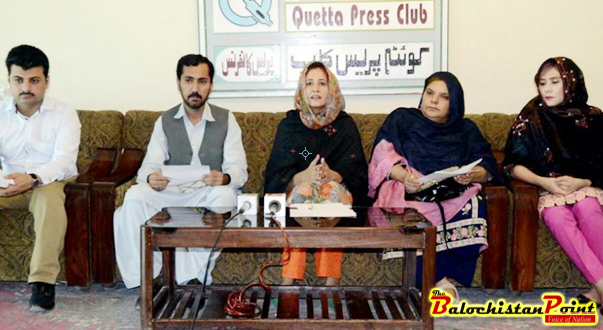
Women Rights activists on Saturday said that 2.6 million women in Balochistan are deprived of right to vote and millions more will be unable to vote if necessary arrangements are not done for their registration.

Sana Durrani President Balochistan Women Network (BWN) and Mis Haleema Chairperson Health and Rural Development (HARD) and Gul Khan Nseer  in a press conference at Quetta Press Club demanded NADRA to increase the number of mobile Registration Vans to register more women for provision of Computerized National Identity Cards (CNICs) from National Database and Registration Authority (Nadra).

Sana Durrani asked for reduction in the fee charges of registering CNICs at minimum level in order to provide facilities to poor women and their family members for availing CNICs.

“The Election Commission of Pakistan (ECP) should work with political parties and Civil Society Organization (CSOs) to assist in voting registration in order to ensure women voting in upcoming general and local elections.” Mis Haleema demanded.

Mentioning the ECPs voters’ data Mr Gul Khan Naseer said: “The unregistered vote per women shows that Balochistan has the worst score as 27 out of 100 women are still not listed to cast their vote in the upcoming elections. Balochistan has the most unsatisfactory figures in unregistered vote per women.”

The women activists demanded ECP and NADRA for rapid response for successful political process and tangible actions against obstacles confronting women voters in Balochistan. 

Bilawal terms GB package as insulting, vows to restore legislation powers


Giving powers of legislation to the bureaucracy in Islamabad and brazenly denying the people their rights is an affront to the people of Gilgit-Baltistan that will have far reaching consequences for political stability.

This has been stated by Pakistan Peoples Party chairman Bilawal Bhutto Zardari in a statement after Prime Minister Khaqan Abbasi announced enforcement of the Gilgit-Baltistan reforms package.

Referring to the 31st constitutional amendment, he said the parliament just passed a amendment bill taking away powers of the president on tribal areas to empower its people. “Just the same time the federal government has ambushed the people of GB by taking away their powers and vesting it to the prime minister,” he said.

According to the reforms package, the prime minister will not only make laws for GB but can also override any law passed by the Legislative Assembly, he said asking if there could be anything more provocative.

“The so called reforms package is a grave provocation and warned against the consequences of bulldozing it without taking the people and the GB Assembly into confidence,” he said.

Bilawal assured the people of GB that PPP will ensure that the right to legislate is vested in the GB Legislative Assembly, and the parliament and not the prime minister should make legislation as is the case for all provinces.

He said the PPP will not allow the bureaucracy or any individual to legislate for GB, not even the prime minister of Pakistan. “If the president can no longer legislate for the tribal areas why should the Prime minister legislate for the people of GB,” he asked.

Bilawal also questioned sweeping restrictions on the GB Assembly on issues of discussion calling it a grave violation of the fundamental rights of the people.

All coercive laws have been extended to GB but human rights-related laws are not, he said adding, such degrading treatment of people of GB must come to an end before it is too late.

Bilawal also questioned the definition of citizenship saying that it opened the door for exploitation of the local people by outsiders and called for its review.

Furthermore, the provision that only retired judges of the high courts and Supreme Court are eligible to become Chief Judge of the Supreme Appellate Court of GB means that no citizen of GB can ever become the Chief Judge, he said.

Bilawal also demanded release of rights activists and a halt to the taking over of lands by the state.


https://arynews.tv/en/bilawal-gilgit-baltistan-package-insulting/

بلاول نے وزیراعظم کاگلگت بلتستان پیکج مستردکردیا

چیئر مین پاکستان پیپلز پارٹی بلاول بھٹوزرداری نے وزیراعظم کے گلگت بلتستان پیکج کو مستردکردیا ہے ۔ان کا کہنا ہے کہ پارلیمنٹ نے31ویں آئینی ترمیم کے ذریعے فاٹا کے عوام کوآئینی حقوق دیے اور وزیراعظم نے پیکج کے ذریعے وہاں کے عوام کے حقوق پروارکیا  -میڈیا سے گفتگو کرتے ہوئے بلاول بھٹو کا کہنا تھا کہ ہم وزیراعظم کے گلگت بلتستان پیکج کو مسترد کرتے ہیں اس سے علاقے کے سیاسی استحکام پر منفی اثرات ہوں گے ۔قانون سازی کااختیارافسر شاہی کودیناگلگت کے عوام کے حقوق سے انکار ہے،وزیراعظم کے پیکج کو گلگت بلتستان کی اسمبلی نے بھی مسترد کر دیا ہے ۔ان کا مزید کہنا تھا کہ پارلیمنٹ نے31ویں آئینی ترمیم کے ذریعے فاٹا کے عوام کوآئینی حقوق دیے جبکہ گلگت بلتستان پیکج عوام کی توہین ہے،اور وزیراعظم نے پیکج کے ذریعے وہاں کے عوام کے حقوق پروارکیا ہے۔

https://www.nawaiwaqt.com.pk/27-May-2018/834749

Will focus on water crisis in next tenure: Bilawal Bhutto

Pakistan People’s Party Chairman Bilawal Bhutto said on Saturday that in the next government his party will priortise the issue of water shortage.

The PPP chairman was addressing media about the performance of the Sindh government at the Chief Minister House.

He said that a lot of work has been done for the health department in Sindh.

Bilawal Bhutto said propaganda is being carried out about the situation in Thar and work is being carried out in the field of energy in the area.

Residents of Karachi have been protesting against water shortage and loadshedding in various areas of the metropolis.


http://www.thesindhtimes.com/sindh/05/will-focus-water-crisis-next-tenure-bilawal-bhutto/

Bilawal Bhutto Zardari extends felicitations to the Pakistani cricket team on winning the Test Match at Lords against England

Chairman Pakistan Peoples Party Bilawal Bhutto Zardari has extended felicitations to the Pakistani cricket team on winning the Test Match at Lords against England on Sunday.

In a statement, the PPP Chairman praised the team-spirit of the national squad and eulogized the performance of both bowlers and batsmen of the team.

Bilawal Bhutto Zardari said the way the Pakistani team members displayed professionalism, discipline and performance has once again proved that our players have great potential in the cricket world.

https://mediacellppp.wordpress.com/2018/05/27/bilawal-bhutto-zardari-extends-felicitations-to-the-pakistani-cricket-team-on-winning-the-test-match-at-lords-against-england/

Saturday, May 26, 2018

Video Report - Tens of thousands protest across France against President Macron's economic reforms

Video Report - ‘You can’t buy France!’: Thousands rally against Macron’s reforms

Video Report - Putin Pokes Fun At Macron Over "Huge" French Investments In Russia

Video Report - France recognizes Russia's new role in international relations - Macron

Video Repot - North Korea and South Korea hold surprise meeting

Documentary - #PPP - Zulfiqar Ali Bhutto

#Pakistan - #PPP - Her Gher Se Bhutto Nikley Ga - Long Live Bhuttoism!!!

#PPP - Kal Bhi Bhutto Zinda Tha,Ajj

Dodging UN And US Designations: Hafez Saeed Maintains Utility For Pakistan And China -Analysis


A recent upsurge in insurgent activity in Kashmir likely explains Pakistani and Chinese reluctance to crackdown on internationally designated militant Hafez Saeed and the network of groups that he heads.
So does the fact that Mr. Saeed and Lashkar-e-Taiba, an outlawed, India-focused ultra-conservative Sunni Muslim group widely seen as one of South Asia’s deadliest, have assisted Pakistani intelligence and the military in countering militants like Tehrik-i-Taliban Pakistan, the Pakistani Taliban, that have turned against Pakistan itself.
Lashkar-e-Taiba has also been useful in opposing nationalist insurgents in Balochistan, a key node in China’s Belt and Road initiative. The China Pakistan Economic Corridor (CPEC), a $50 billion plus China investment in Pakistani infrastructure and energy, is the initiative’s single largest cost post with the Baloch port of Gwadar as its crown jewel.
The United States has put a $10 million bounty on the head of Mr. Saeed, who is believed to lead Lashkar-e-Taiba (LeT) as well as Jamaat-ud-Dawa, an alleged LeT front, and is suspected of being the mastermind of the 2008 Mumbai attacks in which 166 people were killed.
Lashkar-e-Taiba is “not only useful, but also reliable. (Its)…objectives may not perfectly align with the security establishment’s objectives, but they certainly overlap,” says international security scholar Stephen Tankel.
The links between Lashkar-e-Taiba and the Pakistani security establishment are reflected in the fact that the group has recruited in some of the same areas as the military and that some former military officers have joined the group.
The relationship is reinforced by a fear in parts of Pakistan’s security establishment that the group’s popularity, rooted partly in social services provided by its charity arm, would enable it to wage a violent campaign against the state if the military and intelligence were to cut it loose.
So far, Pakistan with tacit Chinese backing appear to see mileage in the group’s existence as a pinprick in India’s side even if creating the perception of greater distance to the security establishment has become a more urgent necessity because of international pressure.
One way of doing so, is the apparent backing of Pakistani intelligence and the military of Mr. Saeed’s efforts to enter the political mainstream by securing registration of a political party in advance of elections expected in July. Pakistan’s election commission has so far held back on the application.
Speaking to the Indian Express, Major General Asif Ghafoor, a spokesman for Pakistan’s intelligence service, Inter-Services Intelligence, said that “anything (Mr. Saeed) does, other than violence, is good. There is a process in Pakistan for anyone to participate in politics. The Election Commission of Pakistan (ECP) has its rules and laws. If he (Mr. Saeed) fulfils all those requirements that is for the ECP to decide.”
Indian officials are not so sure. In a world in which demarcations between various militant groups are blurred, Indian intelligence expects a spike in attack in Kashmir this summer as a result of Lashkar-e-Taiba operatives joining groups like Jaish-e-Mohammed (JeM) and the Hizbul Mujahideen (HM).
Twenty-two security personnel and six civilians were either killed or injured in seven attacks in Kashmir in the first five weeks of this year. India said Lashkar-e-Taiba was responsible for an attack in March on soldiers and policemen in which three Army personnel, two policemen, and five militants were killed. Another 20 were killed in clashes in April between Lashkar-e-Taiba and security forces.
Lashkar-e-Taiba’s utility notwithstanding, Pakistan and China are discovering that engagement with militants is never clean cut. Decades of Pakistani support of often Saudi-backed ultra-conservative Sunni Muslim militants has woven militancy into the fabric of militancy into segments of the military, intelligence, bureaucracy and the public.
“A military–mullah–militant nexus has existed for several decades in Pakistan. During this time, the Pakistani military has used religious and political parties connected, directly or indirectly, to various militant outfits as political proxies,” Mr. Tankel said.
National security expert S. Paul Kapur and political scientist Sumit Ganguly noted that “the Pakistan-militant nexus is as old as the Pakistani state. From its founding in 1947 to the present day, Pakistan has used religiously motivated militant forces as strategic tools… Supporting jihad has been one of the principal means by which the Pakistani state has sought to produce security for itself.”
Decades later, the strategy is backfiring. Concern of increased domestic violence if Pakistan were to cut its links to militants and crackdown on them irrespective of their utility is heightened by the fact many of the groups operate either with no regard for the concerns of the security establishment or with the unsanctioned support of individual military and intelligence officials.
That is believed to have been the case in a string of sectarian attacks in Balochistan by Lashkar-e-Jhangvi (LeJ), ultra-conservative, anti-Shiite Sunni Muslim militants, in which hundreds of Shiites have been killed. China has also been a target of militants in Balochistan.
The spike in sectarian attacks prompted a military crackdown earlier this month. “While such intelligence-based operations are vital, they deal with the symptoms rather than the disease,” cautioned Dawn newspaper.
Speaking in September last year in New York when he was still foreign minister, Khawaja Muhammad Asif acknowledged that Mr. Saeed and other Pakistani-backed militants have become liabilities. But even so, Mr. Asif appeared to be looking for wiggle room.
“I accept that they are liabilities but give us time to get rid of them because we don’t have the assets to match these liabilities,” Mr. Asif said.

#Pakistan - Lack of medical facilities in Khyber Pakhtunkhwa puts lives of newborns at risk


Zeenat Khan


Two, three or at times even more infants cramped in a single incubator is not an uncommon sight at government hospitals in Khyber Pakhtunkhwa's capital city.
According to doctors practising in Peshawar, the provision of proper medical care to newborn babies has become progressively difficult due to a shortage of medical facilities, staff, and beds.
Lady Reading Hospital (LRH), the largest government hospital in the province, only has 38 beds and 25 incubators in its nursery wards. The average number of patients admitted to the ward every day is 60.

A doctor treats multiple babies accommodated on a single bed. — Photo by author

The hospital staff says the nursery section was equipped in accordance with the LRH's gynaecology ward's requirements. However, due to the growing number of referrals, the number of patients admitted is now higher than the ward's capacity.
Since most of the patients brought are in critical condition and cannot be turned away, the staff has to accommodate three to five babies on one bed, a doctor explained.
The situation at the Khyber Teaching Hospital's nursery ward is worse. The hospital only has 35 beds and 11 incubators, while the average number of newborn babies hospitalised every day is 60 to 65. In addition, the hospital also lacks trained staff, which increases the risks to infants' lives.
"The nursery ward is extremely overburdened due to the high number of referral cases," Doctor Hamid Bangash of the Khyber Teaching Hospital told DawnNewsTV.
"As the number of patients is double the number of beds in the ward, there is no choice but to accommodate two to three patients on one bed."
He admitted that the practice is against the standards set by the World Health Organisation, according to which there should be a separate bed and incubator for each newborn in order to prevent the transmission of viruses and infectious diseases.

Due to a shortage of beds, it common to accommodate more than one infant on the same bed. — Photo by author

"But there is no other way to deal with the inflow of patients," he explained.
He also cited management issues faced by the staff in dealing with a huge number of patients.
A paediatrician said that due to the inflow of patients, doctors often have to discharge old patients who have not yet fully recovered in order to accommodate the new ones who are often brought in in critical condition.
They do tell the parents of the newborns being discharged to bring them back in case of an emergency however, he said.
Hayatabad Medical Complex faces more or less the same challenges. At least 40 infants are admitted to the hospital on a daily basis, while the nursery ward only has 30 beds and 11 incubators.
The hospital staff says they often have to shift occupants from the nursery ward to the paediatric ward when the number of patients is high.
The huge number of referral babies increases the burden on the staff and the ward as well.

Private hospitals and inaccessibility

Though there are two to three nurseries in private hospitals in Peshawar, they charge Rs7,000 a day which puts them out of reach for many patients.
The treatment costs are also significantly higher, due to which middle-class and lower-middle-class families are unable to afford them.

Three children fitted in one incubator, increasing the risk of transmission of infection diseases. — Photo by author

Accessibility to medical care is another reason which makes KP a risky province to be born in. There are only four functioning infant and neonatal nursery units in the province, three of which are in Peshawar and one in Abbottabad.
In the rest of the province, there are no proper healthcare units for infants. People from all over the province, as well as Fata, have to bring their children to Peshawar for medical treatment, further increasing the burden on already overcrowded hospitals.
Doctors blame the government for failing to take appropriate measures to ensure that proper medical care for infants is accessible throughout the province.
They say there is an urgent need to build healthcare units in remote districts of the province so that residents are able to get access medical care in their area.
Additional Director General Health, Tahir Bashir, however, maintains that the outgoing government has already bought the necessary equipment and the results will be visible in coming years.
Speaking to Dawn, he said that the government had also hired more medical staff. He further mentioned that the government was also working on new trends of specialised treatment and soon those would be implemented in the hospitals.

Video Report - 🇮🇳 Heat wave in India worsens water shortages

ایسی کتاب کوئی سیاستدان لکھتا تو غدار کے فتوے لگتے، رضا ربانی

سابق چیئرمین سینیٹ اور پاکستان پیپلز پارٹی کے رہنما میاں
رضاربانی کے آئی ایس آئی کے سابق سربراہ لیفٹیننٹ جنرل ریٹائرڈ اسد درانی کی انڈین خفیہ ادارے را کے سابق سربراہ کے ساتھ ملکر کتاب لکھنے کے اقدام کو ایوان بالا میں سخت تنقید کا نشانہ بنایا اور کہا کہ کیا جنرل اسد درانی نے وفاقی حکومت سے کتاب لکھنے سے قبل اجازت لی تھی جس پر چیئرمین سینیٹ نے وزیر دفاع خرم دستگیر سے جواب طلب کر لیا۔رضا ربانی نے کہا کہ ایسی کتاب کوئی سیاستداں لکھتا تو غداری کے فتوے لگتے، عام شہری بھی ایسا کام کرتا تو اسوقت پورے ملک میں احتجاج بھی ہو رہا ہوتا، فاٹا کے معاملے پر پارلیمنٹ نے کٹھ پتلی کام کیا،افسوس ناک بات ہےپارلیمنٹ خود فاٹا اصلاحات کیلئے کام نہیں کرسکی بلکہ باہرسےاسے کہا گیا، پھرنیشنل سیکیورٹی کونسل نے فاٹا کی اصلاحات کا کہا، پارلیمنٹ نےپہلےکوشش کی فاٹااصلاحات کوعملی جامع پہنایاجائےلیکن یہ نہیں ہواہے۔ جمعہ کو سینیٹ کے اجلاس میں نکتہ اعتراض پر بات کرتے ہوئے میاں رضا ربانی نے کہا کہ اگر یہ کتاب کسی عام
شہری یا پاکستانی سیا ستد ا ن نے اپنے بھارتی ہم منصب کے ساتھ مل کر لکھی ہوتی تو آسمان سر پر اُٹھا لیا جاتا، کتاب لکھنے والے سیاستدان پر نہ صرف غداری کے فتوے لگ رہے ہوتے بلکہ اس کے خلاف پورے ملک میں احتجاج کا نہ رکنے والا سلسلہ بھی شروع ہو جاتا، رضاربانی نے کہا کہ حیرت کی بات ہے کہ ایک طرف انڈیا اور پاکستان کے تعلقات خراب ترین سطح پر ہیں جبکہ دوسری طرف ایک ایسی کتاب کی رونمائی ہو رہی ہے جو دونوں ممالک کی خفیہ ایجنسیوں کے سابق سربراہوں نے لکھی ہے، میاں رضاربانی نے سوال اُٹھایا کہ کیا لیفٹیننٹ جنرل ریٹائرڈ اسد درانی نے اپنے ادارے یا وفاقی حکومت سے اس بات کی اجازت لی تھی کہ وہ اپنے انڈین ہم منصب کے ساتھ مل کر کتاب لکھ رہے ہیں؟رضا ربانی کا کہنا تھا کہ اگر آئی ایس آئی کے سابق سربراہ نے اجازت لینا ضروری نہیں سمجھا تو کیا اُنھوں نے اس کتاب کے بارے میں وفاقی حکومت یا وزارت دفاع کو آگاہ کیا تھا؟ انہوں نے کہا یہ کوئی آسان معاملہ نہیں ہے کیونکہ دونوں ملکوں کے درمیان خراب تعلقات کی ایک تاریخ ہے، بھارت لائن آف کنٹرول پر آئے روز خلاف ورزیاں کر رہا ہے جس میں مسلح افواج کے علاوہ سویلیں شہری نشانہ بن رہے ہیں، مقبوضہ کشمیر میں انسانی حقوق کی خلاف ورزیاں ہورہی ہیں، جس پر چیئرمین سینیٹ صادق سنجرانی نے وزیر قانون محمود بشیر ورک سے اس پر جواب کیلئے کہا تو وزیر قانون نے کہا کہ اُنھیں اس کتاب کی اشاعت کے بارے میں حکومت سے اجازت لینے کے بارے میں علم نہیں ہے۔ وزیر دفاع اس پر جواب دیں جس پر چیئرمین سینٹ نے وزیر دفاع سے جواب طلب کر لیا ہے۔ سینیٹر مشتاق نے نکتہ اعتراض پر کہا کہ امریکی کرنل جوزف بارے میں کہا گیا تھا کہ اسے یہاں سے جانے نہیں دیا جائے گا لیکن وہ پھر بھی پروٹوکول کے ساتھ امریکا جاچکا ہے، شکیل آفریدی کے بارے میں بھی بتایا جائے کہ وہ کہاں ہے کیونکہ جنر ل اسد درانی اور بھارتی خفیہ ایجنسی کی کتاب سپائی کرائنکلز میں لکھا گیا ہے کہ جس شخص نے شکیل آفریدی کی امریکا کے لیے جاسوسی کی تھی اسے بھی بحفاظت امریکا پہنچا دیاگیا ہے، ہمیں ان معاملات کا کتاب کے ذریعے علم ہوتا ہے اور ایوان کو بے خبر رکھا جاتا ہے، ایوان کو آگاہ کیا جائے جس پر چیئرمین سینٹ نے وزیرداخلہ سے ایوان میں جواب طلب کر لیا۔ علاوہ ازیں سینیٹر ڈاکٹر جہانزیب جمالدینی نے کہا کہ بلوچستان کے ضلعی چاغی میں صرف چھ گھنٹے بجلی آتی ہے اور میرے حلقےمیں 12گھنٹے بجلی آرہی ہے جس پر کیسکو سے جواب طلب کر لیا گیا۔ سینیٹر رحمن ملک نے کہا کہ امریکا میں پاکستانی طالبہ سبیکا کو شہید کر دیا گیا، پاکستان کی بیٹی کو امریکی دہشت گرد نے شہید کیا، پاکستان ہمیشہ دہشت گردی کے خلاف رہا، ڈونلڈ ٹرمپ نے ہمیشہ دہشت گردی کو اسلام کے ساتھ جوڑا، دہشت گردی کا کوئی مذہب نہیں ہوتا، سبیکا کو ایوارڈ دیا جائے جس پر چیئرمین سینیٹ نے رپورٹ طلب کر لی۔ سینیٹر بہرہ مند خان نے کہا کہ پاکستان سے مختلف گروپس عمرے اور حج کے بہانے لوگوں کو سعودی عرب لے جاتے ہیں اور وہ بھیک مانگتے ہیں جس سے نہ صرف پاکستان کی بدنامی ہوتی ہے۔ اپوزیشن لیڈر سینیٹر شیری رحمن نے کشن گنگا ڈیم کی تعمیر سے پاکستان کا پانی روکنے کے معاملے پر کہا کہ بھارت سندھ طاس معاہدے کی خلاف ورزی کر رہا ہے، دریائے نیلم پر کشن گنگا ڈیم تعمیر کیا گیا جبکہ اس سے پہلے بگلہار ڈیم تعمیر کیا گیا اور پاکستان کو پانی روک لیا، کشن گنگا ڈیم پر پاکستان نے اپنے تحفظات کا اظہار کیا اور چار رکنی وفد واشنگٹن بھیجا گیا ہے، یہ معاملہ بہت اہم ہے اور بتایا جائے کہ پاکستان اس معاملے کو عالمی بنک اور دیگر عالمی اداروں کے سامنے کس طرح پیش کررہا ہے جس پر چیئرمین سینیٹ نے وزارت خارجہ سے رپورٹ طلب کر لی۔

https://jang.com.pk/news/498136#_

Video - Bilawal Bhutto - #PPP Will Form Government After 2018 Election

Zardari announces to contest election from Nawabshah

Former President and Co-Chairman Pakistan Peoples Party Asif Ali Zardari on Saturday announced to contest for a National Assembly seat in the upcoming polls from Nawabshah.
The party chief made the announcement in an Iftar reception at Karachi. While speaking to the participants, Zardari predicted that no party will hold the majority in the next assembly.
Zardari has been elected as MNA from Karachi's area of Lyari in 1990, and from Nawabshah in 1993.
On Jan 12, while speaking to the party workers, the party chairman at Nawabshah told the workers that he would contest from their city, he told them to expedite the election campaign.

https://www.geo.tv/latest/196979-zardari-announces-to-contest-election-from-nawabshah

North Korea Wants to End up Like Pakistan, Not Libya


DOMINIC TIERNEY
A poor country made enormous sacrifices to get nuclear weapons—and has them still. 

When Donald Trump canceled his planned summit with North Korean leader Kim Jong Un—before hinting that it might happen anyway after all as the South Koreans moved into damage-control mode on Saturday—it followed days of discussion over a historical parallel: Libya. U.S. National-Security Adviser John Bolton said the basis for a deal with North Korea was the “Libya model” from 2003 to 2004, when Muammar Qaddafi essentially handed over his entire nuclear program to the United States. For North Korea, however, this allusion to Libya looked “awfully sinister” because, in 2011, less than a decade after Libya appeased the West, the United States and its allies joined with local rebels to topple Qaddafi’s regime.
For Pyongyang, Libya is not the only warning from history about the perils of disarmament. In 2003, Iraq claimed to have abandoned its pursuit of weapons of mass destruction, and even allowed inspectors back into the country, but nevertheless endured a U.S. invasion and regime change. In 2015, Iran agreed to limit its nuclear program in exchange for sanctions relief, but in 2018 Trump tore up the deal.
So are there any models of “rogue” regimes with nuclear programs that might appeal to North Korea? The answer is yes. But, unfortunately, it’s a state that kept its nuclear deterrent intact: Pakistan. If Pyongyang is weighing up two possible futures—Libya vs. Pakistan—it’s not much of a choice.
Pakistan began to seriously pursue nuclear weapons in the 1970s, motivated by a desire to deter its more powerful rival India, as well as match India’s nuclear capability. The Pakistani politician Zulfikar Ali Bhutto, who later became prime minister, claimed, “If India builds the bomb, we will eat grass or leaves—even go hungry—but we will get one of our own.” In 1998, on a clear and bright day in the Chagai district, Pakistan carried out a series of nuclear tests. Pakistan’s chief scientific officer said “All praise be to Allah” and pushed the button, causing the mountain to shake in a vast explosion.
In 2016, the Bulletin of the Atomic Scientists estimated that Pakistan had 130 to 140 warheads and predicted that it would nearly double its arsenal by 2025. Islamabad could deliver nuclear weapons by medium-range ballistic missiles, cruise missiles, F-16 fighters, and tactical systems for short-range use on the battlefield.
We can be confident that North Korea is paying close attention to Islamabad’s experience. After all, the two countries share important similarities. They both face an enduring rivalry with a far more powerful democratic state that used to be part of the same country (India and South Korea). Furthermore, both North Korea and Pakistan have, at times, flouted international norms. In 2003, North Korea withdrew from the Non-Proliferation Treaty. Pakistan never signed the treaty. For decades, North Korea and Pakistan have been informal allies, trading conventional weapons and supporting Iran in the Iran-Iraq War.
Another reason that Pyongyang is certain to consider the Pakistan model is that the two states have cooperated on nuclear development. In 2006, the Congressional Research Service reported that Pyongyang gave missile technology to Islamabad, and Pakistan transferred nuclear technology to North Korea, through the network of the Pakistani nuclear engineer Abdul Qadeer Khan. During the 1990s, when North Korea suffered a famine that killed perhaps 500,000 people, and North Koreans literally ate grass and leaves, Pyongyang continued to prioritize military development and received key data from Pakistan on uranium enrichment. Pakistan is even suspected of having carried out a nuclear test for North Korea.
From North Korea’s perspective, the Pakistan model must look compelling. First of all, Pakistan’s nuclear weapons have successfully deterred India. The 1960s and 1970s were a time of humiliating military defeats for Pakistan, including the 1971 Indo-Pakistani War, when Pakistan lost 56,000 square miles of territory, which became the new state of Bangladesh. Nuclear weapons have essentially removed the possibility of a large-scale Indian invasion. In 1987, President Muhammad Zia-ul-Haq told his Indian counterpart, “If your forces cross our borders by an inch, we are going to annihilate your cities.” In 1999, Pakistani troops crossed into Indian-controlled Kashmir, triggering the Kargil Crisis and military hostilities. Crucially, India avoided escalation, kept the war limited, and declined to enter Pakistani territory. One study concluded “the principal source of Indian restraint was Pakistan’s overt possession of a nuclear arsenal.”
In addition, Pakistan’s nuclear capability led the West to handle the country with kid gloves. The United States provided millions of dollars of material assistance to guard Pakistan’s nuclear stockpile, including helicopters and nuclear detection equipment. Pakistan’s nuclear capability is also one reason why Washington continued to provide billions of dollars in military and economic aid, even though Islamabad supported the Taliban insurgency that battled U.S. troops in Afghanistan. Meanwhile, Pakistan gained prestige as the only Muslim-majority country with nuclear weapons. The Pakistani Ministry of Foreign Affairs described the nuclear program as “Pakistan’s finest hour.” The nuclear program is also domestically popular. The nuclear tests in 1998 that shook mountains led to jubilant street celebrations. Of course, all of this came at a cost. The money poured into Pakistan’s nuclear program could have been spent on health or education. The nuclear tests in 1998 were condemned around the world. After refusing to sign the Non-Proliferation Treaty, Pakistan faces restrictions on importing civilian nuclear technology. Nuclear weapons may deter India, but they also risk accidents and even escalation to nuclear war.
But for North Korea, the balance sheet still favors the Pakistan model: a poor country that ate grass to build a nuclear deterrent, seeks to be accepted as a recognized nuclear power, supports denuclearization in principle but only as part of a broader international disarmament effort (that will likely never happen), successfully deters a more powerful rival, and gains domestic prestige and international status. Saddam and Qaddafi made their choices, and they’re both dead. North Korea wants to follow a different path. Why not become the Pakistan of East Asia?