M WAQAR.....
"A man's ethical behavior should be based effectually on sympathy, education, and social ties; no religious basis is necessary.Man would indeed be in a poor way if he had to be restrained by fear of punishment and hope of reward after death."
--Albert Einstein !!!
NEWS,ARTICLES,EDITORIALS,MUSIC... Ze chi pe mayeen yum da agha pukhtunistan de.....(Liberal,Progressive,Secular World.)''Secularism is not against religion; it is the message of humanity.''
تل ده وی پثتونستآن
پاکستان کی تاریخ میں خواتین کا کردار بھی کسی اہمیت سے کم نہیں ہے ۔ وہ برصغیر کی جدوجہد ہو یا ڈکٹیٹر شپ ، ہر دور میں خواتین نے اپنا لوہا منوایا ہے۔
پاکستان سمیت دنیا بھر میں 8مارچ کا دن خواتین کے عالمی دن کے موقع پرمنایا جاتا ہے۔ اس دن خواتین کی جانب سے سیاسی، سماجی، فلاحی جدوجہد پر انہیں خراج عقیدت اور خراج تحسین پیش کیا جاتا ہے جس میں مختلف سماجی ، سیاسی اور بین الاقوامی سطح پر تقریبات کا انعقاد کیا جاتا ہے۔
اسی سلسلے میں پاکستان پیپلز پارٹی شعبہ خواتین کی جانب سے خواتین کے عالمی دن کے موقع پر تمام صوبائی دارالحکومتوں اورعلاقائی ہیڈکوارٹرز میں ’’ کاروان بینظیر ‘‘ کے نام سے ریلیوں کا انعقاد کیا جارہا ہے۔
کراچی سے نکلنے والی ریلی کی قیادت پی پی پی خواتین ونگ پاکستان کی مرکزی صدر ایم این اے فریال تالپورکررہی ہیں جبکہ ان کے ہمراہ خواتین ایم این ایز، ایم پی ایز، سول سوسائٹی سے تعلق رکھنے والی خواتین بھی شامل ہوں گی۔
پی پی پی خواتین ونگ کی صوبائی صدر پنجاب، خیبرپختونخواہ، گلگت بلتستان، بلوچستان، آزاد کشمیر اور فاٹا میں نکالی جانے والی ریلیوں کی قیادت کریں گی۔
ریلی سندھ اسمبلی سے کراچی پریس کلب پر اختتام پذیر ہوگی جس میں ایم این اے فریال تالپور ودیگر رہنما خطاب کریں گی ۔
پاکستان میں اگر خواتین کی قربانیوں اور جدوجہد کی بات کی جائے توپیپلز پارٹی اس دوڑ میں صف اول پر آتی ہے۔مسلمہ امہ میں پہلی خاتون وزیراعظم محترمہ بینظیر بھٹو کا تعلق بھی اسی پارٹی سے تھا جنہوں نے اپنے والد قائد عوام شہید ذوالفقار علی بھٹو کے بعد بطور چیئرپرسن سب سے بڑی جمہوری پارٹی کی بھاگ دوڑ سنبھالی اور اسے احسن طریقے سے سرانجام دیا۔
پیپلز پارٹی پاکستان کی خواتین کے حقوق کے فروغ اور تحفظ دینے کے لئے پرعزم ہے۔ اس نے ہمیشہ خواتین کے حقوق کو فروغ دیا اور انہیں قائدانہ عہدے دیئے ہیں۔
* مسلم دنیا کی پہلی خاتون وزیر اعظم محترمہ بینظیر بھٹو
* پہلی خاتون گورنر رعنا لیاقت علی خان
* قومی اسمبلی کی پہلی خاتون اسپیکر
*قومی اسمبلی کی پہلی خاتون ڈپٹی اسپیکر
*پہلی خاتون وزیر خارجہ
پاکستان میں قائم سیاسی جماعتوںمیں کوئی سیاسی پارٹی سوائے پیپلز پارٹی کے ایسی نہیں جس نے خواتین کے حقوق کیلئے بڑھ چڑھ کر حصہ لیاہوں بلکہ ان دیگر جماعتوں نے سیاسی ،سماجی ادوار میںخاتون رکن کیلئےرکاوٹیں ڈالی ہیں۔
پاکستان پیپلز پارٹی نے خواتین کیلئے زمین، آمدنی، قرضہ اور انصاف کے مواقع سے وابستہ حقوق کے لئے اقدامات کئے۔ بینظیر انکم سپورٹ پروگرام،فرسٹ ویمن بینک،خواتین کے لئے علیحدہ پولیس اسٹیشنز، لیڈی ہیلتھ ورکرز پروگرام،نادرا کارڈز کا مفت اجراء جس سے خواتین کی شناختی آئی ڈی میں اضافہ ہوا، بینظیر بھٹو لینڈ ٹرانسفر پروگرام،یونین کائونسل سطح پر غربت کے خاتمے کا پروگرام جس کے تحت ہزاروں خواتین مستفید ہوئیں، سیکنڈری تعلیم حاصل کرنے والی تمام لڑکیوں کے لئے وظیفہ جیسے پروگرام کا اطلاق کیا۔
خواتین کی قانون سازی کے حوالے سے بات کریں تو پیپلز پارٹی نے ـ’قومی کمیشن برائے خواتین کا قیام ‘ اینٹی ویمن- پریکٹس ایکٹ،اینٹی-ایکڈ کرائمز کا قانون، ویمن ڈسٹریس اینڈ ڈیٹینشن کا قانون، ملازم پیشہ خواتین کو ہراساں کرنے کے خلاف قانون منظور کیا ۔
پاکستان کی سیاسی جماعت میں پیپلز پارٹی واحد پارٹی ہے جس کی قیادت میں خواتین کی تیسری نسل محترمہ بینظیر بھٹو شہید کی صاحبزادیاں محترمہ بختاور بھٹو زرداری اور محترمہ آصفہ بھٹو زرداری حقوق اور تحفظ کی جنگ میں سب سے آگے ہیں۔
Veteran leftist politician Jam Saqi, who passed away in Hyderabad on Monday after a prolonged illness, was one of the country’s best known communist leaders, who was arrested, tortured and imprisoned by both civilian and military governments.
Jam Saqi was born on Oct 31, 1944, at Jhajj, a small village in Chhachro, Tharparkar district (Sindh). His father was a primary schoolteacher as well as a known social worker.
Jam Saqi passed his matriculation examination from Chhachro in 1962 and got admission in Kalimori Government College. A pamphlet written by Dada Ferozud Din in 1953 on the political implications of vernacular languages in Pakistan helped Jam Saqi and his friends form their views about language issues. Later, in one of his own pamphlets, Jam Saqi demanded the status of national language for all the country’s provincial languages, with Urdu as the lingua franca.
Jam Saqi wrote his first popular pamphlet, which was banned by the military government, against the One-Unit Scheme. Later, he and Ponus Khatri, Ismael Adijo, Bazin Bizenjo and Asif Mirza initiated the Hyderabad Students Federation (HSF), which held its first convention in November 1964; Jam Saqi became the general secretary.
When Zulfikar Ali Bhutto was invited to the HSF convention, he feared that the Ayub Khan regime would threaten the students’ movement with aggression. Jam Saqi wrote back to assure Bhutto of his support. This was the first public gathering that Bhutto attended after resigning from Ayub Khan’s government. Later, the views of Jam Saqi and Bhutto differed. Jam Saqi supported the Tashkent Agreement and opposed the One-Unit Plan. Bhutto ordered Jam Saqi’s arrest once he took over the office of the president of Pakistan in 1971.
The young man never took a serious interest in academics. He joined Wapda but left after five months to concentrate on political activities. Despite abject adversity, he never failed to go to the university hostel to continue his political work among students. He also took active part in Fatima Jinnah’s political struggle.
Jam Saqi and his colleagues established the Sindh National Students Federation (SNSF), and he was chosen as its president. He became a member of the CPP on June 7, 1963, and was jailed every year between 1966 and 1969.
The politician married Sukhaan on March 3, 1968; she ended her life when rumours of her husband’s death during custody spread in 1978.
Jam Saqi presided over the first session of the Pakistan Federal Union of Students in Lahore on May 6, 1970. In March 1971, when Gen Yahya Khan ordered the military operation in the then East Pakistan, Jam Saqi organised a procession and thereafter had to go into hiding. Subsequently, he was tried by a military court in his absence and the court sent him on a year-long imprisonment.
The National Awami Party (NAP) and Jamiat Ulema-i-Islam (JUI) formed joint governments in Balochistan and the erstwhile NWFP in 1972 and Mir Ghaus Bakhsh Bizenjo became the governor of Balochistan. It was then that Jam Saqi resumed public political activities. However, he was detained again while he was addressing a joint gathering of the NAP and the Haari Committee in Nawabshah.
With nobody allowed to meet him for many weeks, Jam Saqi embarked on a 12-day hunger strike and subsequently had to be moved to hospital. The then chief minister of Sindh, Mumtaz Bhutto, ordered his transfer to Multan prison, where he was incarcerated as a Class C criminal and had completed the jail term.
The year when a new constitutional framework was being discussed, 1972, the Communist Party of Pakistan (CPP) had already rejected it citing that it was ceding more space to the religious circles and that the provinces were being deprived of their autonomy. Mir Ghaus Bakhsh Bizenjo believed that the CPP’s position would be used as a pretext for the large-scale arrests of its members once again. Jam Saqi, however, believed that the CPP must oppose the new law openly. Mir Bizenjo’s apprehensions proved correct and Jam Saqi had to go underground once again.
Jam Saqi was taken into custody again during Gen Zia’s regime, taken to Hyderabad garrison and tortured. Thereafter, he was transferred to the Shahi Qila in Lahore and subjected to torture again. It was during this period of detention that a police officer informed him of his wife’s death.
Brought to the Lahore High Court on July 2, 1979, and flown back to Karachi on July 15 where he was shifted to an army camp, Jam Saqi embarked on a hunger strike again and was shifted to Sukkur jail. After five years of detention and three years of solitary confinement, a special court in Hyderabad announced a further decade of rigorous imprisonment for him. Jam Saqi was given into judicial custody on Feb 27, 1980. The military detained Nazir Abbasi, Professor Jamal Naqvi, Sohail Sangi, Bashir Ahmed and Kamal Warsi from Karachi on July 30, with Nazir Abbasi dying because of torture. The special military court announced its verdict on Jan 16, 1985, but reserved its verdict on Jam Saqi, who remained under solitary confinement for a long time. Finally, he was released on Nov 9, 1986.
The politician contested the Sindh Assembly elections of 1970 and 1988 from Tharparkar, but did not win. He was selected as the secretary general of the CPP in 1990 but resigned in 1991, thereafter starting a democratic movement. On June 22, 1994, Jam Saqi joined the PPP. He also joined the Human Rights Commission of Pakistan as a member.
Jam Saqi is survived by his second wife, Akhter Sultana, and children.
I first met Jam Saqi in 1966. He was a senior student in Sindh University and I had just entered in my first year.
First of all, I was struck by his name. Jam in Urdu is wine and saqi is the one who serves wine.
People used to find his name amusing. He used to explain that Jam was a common first name in Sindh and Saqi was his takhalus — pen name.
Jam Saqi was as unusual a person as his name. He had one pair of shirt and pants. He always wore chappals. I never saw him wearing shoes.
He was always on the move between the old campus of Sindh University in the centre of Hyderabad and various colleges.
Jam was dedication personified. Even before being convinced by his political message, one was convinced of the sincerity of the man.
Jam Saqi with his father Mohmand Sachal, mother Mehi Bai, sister Marvi and brother Sultan. —Photo from Ahmed Saleem and Nuzhat Abbas' biography of Jam Saqi
Soon I started visiting him in the kholi he occupied on the top floor of a shabby building in Tilak Charri. The room was hardly large enough to contain his charpoy.
There was an oil stove in a corner on which he cooked his only meal of the day late in the evening. The meal would generally consist of lentils and chapati. He would always insist that I share the food with him.
Jam was from a small village, Jhanji, in the furthest confines of Tharpakar, only a few kilometres from the Indian border.
His mother tongue was Thari. His father, Sachal Baba, was a teacher in the primary school of the village.
There was a well in the village which yielded only muddy water unless there were sufficient rains.
It was a long distance from Jhanji to Chachro, the nearest town. And travelling from Chachro to Mirpurkhas in those days was like going by train from Karachi to Lahore, to say nothing of Hyderabad, which felt like some light years away.
Jam Saqi with leftist poet Habib Jalib. —Photo from Ahmed Saleem and Nuzhat Abbas' biography of Jam Saqi
How did Jam become a communist? When I asked him, he replied that metal is always attracted by magnet.
He was a voracious reader. Apart from Sindhi, he read a lot in Urdu as well as English. One book he liked a lot and gave everyone to read was the Urdu translation of Naked Among Wolves, a novel set in a Nazi-controlled concentration camp.
The Urdu translation, under the title Phool aur Samoom (Flowers and Thorns), was by Razia Sajjad Zaheer, the wife of Sajjad Zaheer, famous Urdu writer and the first general secretary of Communist Party of Pakistan. Jam later on also named his first son Sajjad Zaheer.
A young Sindhi writer of those days, Munir Manik, used to joke that Jam is distributing Phool aur Samosay (Flowers and Samosas) to others all the time.
Jam Saqi with Khan Abdul Wali Khan and Sindhi writer Badar Abro. —Photo from Ahmed Saleem and Nuzhat Abbas' biography of Jam Saqi
Jam was an extremely affectionate person. This is what struck the people most in him. He usually embraced everyone on meeting them and his favourite way of addressing them was jani.
This was not merely for form: there indeed was a sincere warmth and gentleness in his attitude towards people irrespective of whether they were political friends or adversaries.
Years later, after spending eight years in jail during the Zia regime, most of it in solitary confinement at the Lahore Fort and Mach Jail, he bore no grudge against the men in uniform.
He used to say that the ordinary soldier has nothing in common with the likes of Yahya Khan and Zia-ul-Haq
Jam Saqi with acclaimed poet Ahmed Faraz and others. —Photo from Ahmed Saleem and Nuzhat Abbas' biography of Jam Saqi
Jam was first put in prison in the Ayub era, then under Yahya Khan’s regime and finally during Zia’s time.
Between these stints behind bars, he married his first wife Sukhan, who was from the same village as him.
During his bride’s first visit to Hyderabad, he brought her to meet my mother who had become very fond of him over the years.
My mother was a very religious person but she liked his dedication and simplicity. In the meantime, I went abroad, but he continued to visit my mother.
Later on when Jam had to go underground with the state sleuths at his heels, he used our house to meet with Sukhan.
Just days before he was arrested in 1978, he met his wife in our house. This proved to be his last meeting with Sukhan.
Jam Saqi with his first wife, Sukhan. —Photo from Ahmed Saleem and Nuzhat Abbas' biography of Jam Saqi
Sukhan had borne him two children, a boy and a girl, Sajjad Zaheer and Bakhtawar. When news spread that Jam was being tortured in Lahore Fort and kept in solitary confinement, Sukhan could not bear it.
To escape the torment, she jumped into the well in her village and died.
Sukhan’s love for Jam would need another Shah Abdul Latif Bhittai to celebrate it in his verses. A Sur Sukhan like Sur Sassi and Sur Marvi.
A news clipping following Jam Saqi's release from jail, with a picture of the home where he was born. —Abro Khudabux
When Jam came out of jail in 1987, the long imprisonment had taken its toll on him. He was physically diminished. His legs were practically crippled after being kept in a standing position for interrogations lasting hours on end. Sukhan’s death had also wrought grief over his entire existence.
Some years later when well-wishers arranged for his treatment at Cromwell Hospital in London, the doctors told him that it was a miracle that he was still alive. But his lust for life led him to remarry and to re-establish family life.
Jam Saqi with his second wife, Akhtar Sultana. —Photo from Ahmed Saleem and Nuzhat Abbas' biography of Jam Saqi
The ideal Jam fought for suffered a deadly crash with the collapse of the Soviet Union, but his attachment with the poor and oppressed remained intact.
He also had great admiration for those who stood bravely against dictatorial regimes in Pakistan. This was the reason why he held Benazir Bhutto in great esteem
It was not, perhaps, political affiliation as much as adoration for the person who fought empty-handed against the cunning regime of Zia-ul-Haq.
Benazir Bhutto vouching in favour of Jam Saqi in court during the Zia regime. —Photo from Ahmed Saleem and Nuzhat Abbas biography of Jam Saqi
Jam Saqi has died at the age of 74. This was not a short life, but in substance, it was cut short by years of imprisonment and personal sufferings.
When I attended his funeral this week, I was immersed in reminiscence of the days when I first became acquainted with him.
I kept thinking about the man he was and the immense energy he had. He was certainly too great for this life that cuts short the giants.
‘No wonder studies show that women’s intellectual self-esteem tends to go down as years of education go up. We have been studying our own absence.’ — Gloria Steinem
Women’s day is supposed to be my day, but I am not celebrating it. I am not celebrating it because my country Pakistan ranks second worst on the gender gap statistics. Simply put, women are not treated well in this country.The World Economic Forum’s 2017 Gender Gap Report placement of Pakistan shows that the greatest distance between male-female equality occurs in two areas; namely economic participation and political empowerment. A recent UNDP report, “Gender equality in Public administration — A case study of Pakistan” has found that women’s participation in the political arena has increased by 50 percent in the last 15 years but only one in five women actually participate in the workforce. We see women’s stars shine in one or more fields in Pakistan but this change is not transcending to the bulk of women. Cases like those of the mountain climber Samina Baig, pilot Ayesha Farooq or newly elected senator Krishna Kumari are certainly triumphs, but they are exceptions — not the rule. We are not making a change that includes all women yet.
Being a woman, who served first in the Pakistan Air Force (PAF) and then in the civil service as a second career; I know that the picture of women’s empowerment portrayed by the government is not true. Even the PAF — which proudly announced to the world that it has enrolled women fighter pilots, ignored the fact that many of the women opted out of flying due to a lack of supportive structures and societal pressure about issues like marriage and motherhood. In the Pakistan Civil Service (PCS), at the federal government level women constitute a mere 4.6 percent of the workforce(UNDP). We have the highest concentration of female officers in middle level management in Punjab. This promptly fissile out when it comes to heading districts as there is no enabling environments for them to work.
Most of this work force is employed in the informal sector — which is open to exploitation. Only 26 percent of the women’s workforce is employed in the formal sector. In the formal sectors as well, we see men thriving as usual whereas women struggle to keep pace
We find very few women in the senior level management. Though yes, the number of women has doubled in the public sector in a mere 20 years, it has not translated into substantive women’s empowerment. Despite the opening of quotas for women in all spheres of life, improvement in female literacy rates and labour force numbers, why are we failing the cause of gender equality?
In Pakistan’s case — the devil is in the details. As mentioned earlier, women today have more opportunities to join the work force. However, most of this work force is employed in the informal sector — which is open to exploitation. Only 26 percent of the women’s workforce is employed in the formal sector (UNDP).In the formal sectors as well, we see men thriving as usual whereas women struggle to keep pace.
The patriarchal structure of organizations makes it very difficult for women to advance even if they are able to enter organisations. Just increasing the number of women in the work force without changing organizational structure is akin to window dressing. For women, this situation feels like a defeat despite breaking the barriers in hope of making work conditions women friendly.
In Pakistan’s public sector, bulk of women is concentrated in the middle and lower levels. We hardly see women at the top policies making positions. Rather than making gendered considerations part of all policies, it is dealt with by making a separate gender policy; which more than often come across as a superficial way to deal with lack of gender perspective in policy making.
The realm of political empowerment is also disappointing. The number of women politician’s in the national legislature has increased from 3 percent in 1988 to 19.5 percent in the post 2013 elections (SSRC). Women’s participation has increased through introduction of a women’s quota in legislature. Women quotas were created to more women a chance to join the legislature. However, this political participation is mostly concentrated to women from powerful political parties. The National Assembly of Pakistan has a total of 60 reserved seats for women. A glance at most of the last names reveal political pedigree. This should have prompted the way for more women to be elected on general seats but that has not happened. We hardly see women from the middle or lower classes reaching policy making circles. Even when elected, most women politicians seldom make alliances on issues of women empowerment and prefer to toe their party’s line.
Sexual harassment remains one of the biggest issues in Pakistan. This epidemic is spread from the streets and bazaars all the way to the workplace — and in some cases even the home. The Government has now passed praiseworthy legislation against harassment but without implementation, it serves no purpose. Pakistan’s culture makes a woman’s chastity a matter of the whole society’s honour. As a direct consequence of this warped worldview, Pakistani women are still reluctant to report sexual assault or harassment cases. A cultural shift is slow and at times it seems to be reversing in face of rise of extremist and ultra-religious thought strains in the society.
There are many steps that can be taken to close the gender equality gap at workplace. Firstly, make gendered policies in place of policy with gender component. Equal wage law must be put in place to cover vulnerable women in informal sectors. In case of the public sector, patriarchal structures must be amended to end alienation of women at the work place. Political parties must make an effort to include women from all economic classes in decision making. An impact evaluation of the parliamentary women caucus will also be imperative to understand its actual effectiveness. Women have made inroads in many sectors; their progress must not be stalled or reversed. United Nations estimates that at the current speed of events, the world will not be able to close the gender equality gap until 2086. Pakistan needs to play its part in improving this pace. There should not be just one day to celebrate women’s success nor incidences to know that we need to empower half of the population of Pakistan.
On the International Women Day being observed on Thursday, the Chairman Pakistan Peoples Party Bilawal Bhutto Zardari has announced that his Party’s Women Wing will organize #KarawaneBenazir rallies in all the provincial capitals and in Azad Jammu & Kashmir, Gilgit-Baltistan and FATA to celebrate the day and PPP’s achievements for empowerment of women in the country.
In his message on UN’s International Women Day, the PPP Chairman said that the commitment and conviction of the Party for gender equality and women empowerment have been fully reflective in the steps taken so far. From first woman Prime Minister in the Muslim world to Speaker, Deputy Speaker, Foreign Minister, the women have always been leading from the front in the PPP, he added.
Bilawal Bhutto Zardari further pointed out that PPP started a grand poverty-alleviation programme Benazir Income Support Programme (BISP) which was acclaimed and appreciated by the World Bank and other international organizations. Shaheed Prime Minister Mohtarma Benazir Bhutto herself established The First Women Bank and Women Police Stations and started Lady Health Workers Programme. PPP government allotted lands to landless women peasants and initiated Union Council-based Poverty alleviation programme, which has benefitted 600,000 women and their families so far in Sindh, he stated.
Describing PPP performance in pro-women legislation as unmatched, he said that PPP government passed laws and acts for establishment of National Commission on the Status of Women, Anti-Women Practices Act, Anti-Acid Crimes Law, Protection of Women at Workplace Law at the Federal level. Sindh Assembly led by PPP also adopted Sindh Child Marriages Restraint Act 2013, Domestic Violence (Protection & Prevention) Act 2015 and Commission on the Status of Women 2015.
Bilawal Bhutto Zardari said that besides protection and promotion of women in political and social fields, the PPP plans to take more steps for economic empowerment of the women including registration of women farmers for their easy access to credit and inputs. Projects for Credit facilities to ladies through Microfinance and small and medium enterprises loans shall also be launched when PPP comes into power again, he added.
He said that in fact it was only PPP which has always empowered women whenever it came into power and pledged that he would continue the struggle of his mother Shaheed Mohtarma Benazir Bhutto to achieve her dreams of equality for women in every sphere of life.
A report compiled by an international NGO Christian Solidarity Worldwide (CSW), non-Muslim Pakistanis are enjoying a status of second-class citizens. The report is based upon finding related to violations of freedom of religion or belief in the educational setups. The study includes four other countries Burma, Iran, Mexico and Nigeria along with Pakistan.
The report titled “Faith and a Future: Discrimination on the Basis of Religion or Belief in Education”, says that the textbooks and curriculum are playing a pivotal part in inculcation of religion based discrimination and intolerance in the minds of Pakistanis. The report declares that such an environment is prevailing which bestows a status of second class citizenship to non-Muslim citizens. Non-Muslims’ patriotism is questioned while their contribution towards the betterment of the country is disregarded.
Specifically in Pakistan, the report says the textbooks are fashioned in a way “to create a monolithic image of Pakistan as an Islamic state and of Pakistani citizens only as Muslims.” Thus non-Muslim Pakistanis are successfully deprived of acknowledgement and national identity these textbooks also fail to “recognize and celebrate Pakistan’s religious and ethnic diversity”.
The report points out to the 1980s era, when the then-ruler General Zia-ul-Haq started systematic process of Islamization of the nation, tainting education with an ideological angle. It was observed that the consequences of this step “are still felt everywhere in society, particularly within the educational system.”
It was stated that the Christians, Hindus, Sikhs and other religious communities face violations of freedom of religious freedom in this perspective. The content of the textbooks is sometimes full of insulting material while oftentimes the language used is derogatory. Non-Muslim teachers and students face discriminatory attitudes. The ill-treatment is source of psychological abuses for the minority students.
Situation is alarming despite the fact that freedom of religion was guaranteed by the Founder of Pakistan Mohammad Ali Jinnah who said in his address on August 11, 1947, “You are free; you are free to go to your temples, you are free to go to your mosques or to any other place or worship in this State of Pakistan. You may belong to any religion or caste or creed that has nothing to do with the business of the State.
We are starting in the days where there is no discrimination, no distinction between one community and another, no discrimination between one caste or creed and another. We are starting with this fundamental principle: that we are all citizens, and equal citizens, of one State.”
Two witnesses mandatory for anyone to get blasphemy case registered at police station.
The Senate’s Special Committee on Human Rights on Tuesday recommended that perpetrators of false accusations of blasphemy be given the same punishment as set for those convicted for blasphemy.
“Anyone falsely accusing someone of blasphemy should be subjected to the same punishment as a person convicted of blasphemy,” the recommendation stated.
The punishment for blasphemy in Pakistan ranges from several years in prison to a death sentence. Under existing laws, a person making a false accusation can only face proceedings under Section 182 of the Pakistan Penal Code, which entails a maximum punishment of six months, or a mere Rs 1,000 fine.
It was claimed that Council of Islamic Ideology (CII) had also recommended the same punishment in its annual report of 2000-2001 and 2003-2004.
Section 295-C was added by an act of parliament in 1986 during Gen Zia’s regime, making the use of blasphemous remarks about the Holy Prophet (PBUH) a criminal offence punishable by death.
The recommendation also stated that anyone looking to register a blasphemy case at a police station should have to bring two witnesses to support their accusation.
However, committee member Senator Mufti Abdul Sattar, who belongs to the Jamiat Ulema-i-Islam-Fazl, opposed the recommendations, terming them “an attempt to sabotage the blasphemy law”.
“Are there no other laws in the country that are being misused?” the legislator complained. “We are not trying to make any changes to the blasphemy law, we are trying to keep people from misusing it,” Senator Farhatullah Babar clarified.
The committee has decided to forward its recommendations to the CCI.
Last year in October, the Islamabad High Court (IHC) had suggested parliament to make the blasphemy law tougher by fixing the same punishment for any person misusing it or falsely accusing someone of blasphemy.
IHC Justice Shaukat Aziz Siddiqui had said in his order that due to the misuse of the law, critics even demanded abolishing it, adding it was better to stop exploitation of the law rather than abolishing it.
At the time, the judge had referred the matter to the legislature.
On February 16, the Interior Ministry submitted a draft of proposed amendments to the Prevention of Electronic Crimes Act 2016 to Justice Siddiqui. The amendments had sought to equate punishments for a false accusation of blasphemy to the punishment for actually committing blasphemy.
The matter had first been brought before the IHC by the Lal Masjid-led Shuhada (Martyr’s) Foundation, which had initially accused five bloggers of sharing blasphemous content on social media last year.
However, the Federal Investigation Agency had later informed the IHC that the bloggers, who had been forcefully disappeared early last year, were not involved in blasphemy and the investigation agency had not found any tangible evidence against them.
Justice Siddiqui had subsequently proposed invoking the blasphemy-related Section 295 of the Pakistan Penal Code, which deals with those who falsely accuse another of blasphemy.
In his116-page verdict, Justice Siddiqui had discussed in detail the criticism against the blasphemy law and said that due to misuse of this law, critics were demanding its abolition, adding that it would be better to stop the exploitation of the law rather than abolishing it.
The committee also discussed the Youhanabad lynching case and said that the charges against those arrested in the case should be reconsidered.
Recapping the case for the committee, Babar said: “Three years ago, two churches were targeted in Youhanabad as a result of which at least 150 Christian citizens died. People in the area conducted protests to condemn the deaths of their fellow citizens – as is their right. These people were charged with terrorism and have been rotting in jail for three years.”
“Terrorism charges against the people arrested should be dropped and they should be tried in civil courts,” the committee recommended, while adding that charging innocent people with terrorism is unfair.
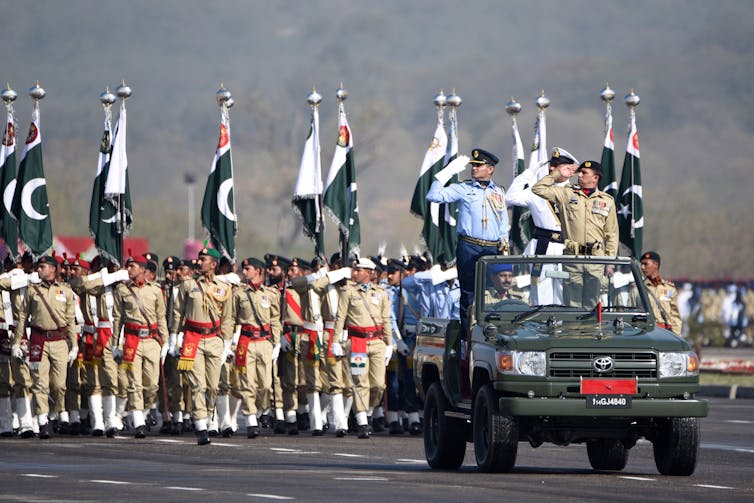
Pakistan recently announced that it will send military personnel to Saudi Arabia. The details of the deployment remain elusive, but a composite brigade of the Pakistani military will reportedly fulfil advisory and training roles. It seems Islamabad and Riyadh’s longstanding relationship is getting stronger – so what are the implications?
First of all, Pakistani troops have been deployed in the Saudi kingdom before. Pakistani military engagement started when its special services participated in the operation to eliminate fundamentalist elements that seized the Grand Mosque in Makkah in 1979. Afterwards, tens of thousands of Pakistani troops remained in Saudi Arabia during the Iran-Iraq war. Most were recalled after the war ended in 1988 – but a smaller contingent stayed on.
The two countries’ close ties were tested in 2015 when the Pakistani parliament unanimously rejected a Saudi request for Pakistani troops to support its Yemen campaign, but the relationship never quite broke down. Despite the parliamentary rejection, Pakistan still provided some naval assistance early in Saudi’s Yemen operations, and since then, the two militaries have conducted joint exercises.
Reports broke in early 2017 of Pakistan sending a brigade of its troops to Saudi Arabia, but there was never a confirmation from Islamabad. The decision to send troops was finally made in February 2018 and announced in a surprise press release from a Pakistan military spokesperson on February 15, 2018. The military was clearly the decisive authority here, as parliament was apparently not consulted on the deployment. The timing of the announcement also spoke volumes about Pakistan’s current worries.
At around the same time, the Indian prime minister, Narendra Modi, completed a successful trip to the Middle East. He received a warm welcome in the UAE, and the prospect of a closer partnership between the two states clearly left Pakistan rattled.
Equally, Pakistan has deep reservations about Indian activities on Iranian soil. During Iranian president Hassan Rouhani’s recent trip to India, a deal was struck that grants New Delhi operational control of the Chahbahar port in southern Iran. The Indian-Iranian connection has caused problems before: two years ago, Kulbhushan Yadav, an alleged operative of the Indian intelligence agency’s Research and Analysis Wing who ran his operations from Chahbahar, was arrested as he entered Pakistan from Iran.
So Pakistan’s military has been prompted to counterbalance Indian influence in a more vigorous manner, safeguarding its strategic interests. The Pakistan military’s footprint within the Saudi kingdom is growing in proportion to its sense of security in the Middle East writ large – and that’s especially apparent in its ever more vocal support of Riyadh’s war in Yemen.
Sense of insecurity
Pakistan is also worried about its own deteriorating relationship with the US. Washington has not only withheld hundreds of millions of dollars in security aid to Islamabad, but is taking further punitive actions to press Pakistan to do more over alleged Taliban sanctuaries.
At the intergovernmental Financial Action Task Force meeting in February 2018, the US, the UK and France jointly moved a resolution that sought to place Pakistan on an international terror-financing watchlist. The move met resistance from Turkey, China and Saudi Arabia – and while US pressure finally prevailed in putting Pakistan’s name on the list from June 2018 onwards, the episode showed that an array of states are emerging as Pakistan’s new supporters at international forums.
According to the Pakistani defence minister, the latest troops sent to Saudi Arabia have embarked on a training and advice mission, and will not be dispatched onward to Yemen. The Pakistani army has apparently developed significant expertise in mountain warfare and counter-insurgency during recent military operations in Pakistani tribal areas and the Swat Valley, and will be transferring these skills to Saudi forces. And the only mountainous region within the kingdom that’s currently a conflict zone is on the Yemeni border.
But whatever specific role this deployment plays in Saudi Arabia’s Yemen campaign, it’s part of something bigger. This new chapter in the Pakistani-Saudi relationship is part of a story unfolding across the Middle East, where political, economic and security partnerships are being realigned and tested. The region’s balance of power will soon look very different indeed.
Krishna Kumari became Pakistan's first Hindu-Dalit senator after she was elected to the upper house of parliament Saturday. In an interview with DW, Kumari talks about the plight of religious minorities in Pakistan.
DW: You are the first lower caste Hindu senator in Pakistan's history? How do you feel about it?
Krishna Kumari: I still cannot believe that I have become senator. It feels like a dream. Even male members of our community [Dalit] haven't made it to parliament. We are a community that has not been given many opportunities to excel.
As daughter of a peasant in Sindh province, it was unimaginable that I could become member of the upper house of parliament one day. As a child, I had to work very hard as a bonded laborer. So when the Pakistan People's Party (headed by Former Prime Minister Benazir Bhutto before her assassination in 2007) chose me for the Senate seat (reserved seat), I was really surprised. Not only me, but the whole Hindu community in Pakistan was excited.
My election to the Senate means that even those who were opposed to girls' education are now thinking to put their daughters in school. I have become a role model for so many people in my country.
Can we say that your election to the Senate is a step toward a liberal and progressive Pakistan?
It bodes well for Pakistan. An oppressed and backward community that could only vote for the majority candidates can now choose their own members of parliament. It is definitely a progressive step.
There are now three members of the Hindu community in the Senate. We need to make efforts to work for the oppressed communities. I am sure we can make a difference.
There are laws for the protection of minorities and other marginalized communities in Pakistan. We need to make sure that they are properly implemented. Also, we need to work for more legislation to help these communities.
But the election of one or two minority members to the Senate doesn't guarantee a structural change. What do you say about it?
I am optimistic. I have worked hard to be where I am now. For years, I have been involved in campaigns to create awareness about education and other social issues. We must continue with these efforts to improve our political and social systems. I firmly believe that we can bring about a change.
There have been many cases of forced conversions of Hindus to Islam in your Sindh province. Why has the PPP's provincial government not able to put an end to it?
It is fine if a Hindu girl marries a Muslim out of her free will, but it is not acceptable if she is forced to do so. Forced marriages and religious conversions happen in some parts of Sindh and the PPP government has made efforts to stop them.
I will try my best to ensure the implementation of laws on forced Hindu marriages and explore ways to pass new legislation.
What needs to be done to ensure more political empowerment for women in Pakistan?
I think education is key to female empowerment because with it comes awareness, a larger share in jobs and more representation for women in parliament. At present, the representation of women in parliament is not satisfactory. I would like to see at least 50 percent representation of women in parliament because they constitute more than 50 percent of Pakistan's population.
You are also a rights activist. What are you currently working on?
I have been working on campaigns to create awareness about health, education, human rights, bonded labor and some other issues in my constituency in Thar district. Girls' education is not a priority for many people in Pakistan. Underage marriage is another a pressing problem in many areas, including Thar. With my Senate position, I will be in a better position now to make a difference.