Tuesday, August 5, 2014
Pakistan's Load Shedding: A less than ‘electric’ Eid
Healthcare in Pakistan: No one cares because they're not taught to
No civilization would ever have been possible without a framework of stability, to provide the wherein for the flux of change. Foremost among the stabilising factors, more enduring than customs, manners and traditions are the legal systems that regulate our life in the world and our daily affairs with each other. — Hannah Arendt. Grey slacks, blue button-down oxford shirts: this was the daily attire at St Marks School of Texas, where rules — of which there were many — were pervasively enforced. At my all-boys' prep school, life could not have been anymore regimented. Uniforms established equality, while a core curriculum rounded out carefully manicured courses of study and training. It wasn't until many years later, as an adult, that I fully appreciated the formative powers of such structure, regulation, and order. From the carefully constructed storyline of my cloistered childhood, descent into Islamabad constituted pure culture shock delivered by sensory overload. Stepping out of the airport, chaotic traffic, colourful buses, and a barrage of beggars competed for my attention from all sides. The meaning and profundity of the experience flew over my head, but it definitely struck a nerve. I had come here to study medicine at a school established by American-trained physicians, but it immediately was clear that the most important lessons in medical practice would be those taught by the people of Pakistan. A foreigner or driving in Pakistan: If I can drive in Pakistan... An excited relative shepherded me through the dense swamp of people to a car, where a driver who had been patiently awaiting us tucked away my baggage and authoritatively drove us to our destination. "Arif, you see, a driver is a buffer. You see, the road here is sort of like a jungle. If there's an altercation; it's the driver’s responsibility to resolve it," my uncle explained to me. Indeed, the rule of the road seemed to be anarchy: cars ploughed through red lights, lane markers were egregiously disregarded, and disorder was rampant. And the disorder didn't end at the medians and sidewalks: structure, regulation, order were often nowhere to be found. The scene stirred in me an awareness of the disparities around me, and I applied the lessons in order and discipline of my schooling towards a goal of contributing towards the propagation of equality and justice through health care in the city around me. Every Friday, I would venture into the open-air bazaar to seek out the anxious beggars who were otherwise entirely overlooked in the bustling market, offering attention, care, and charity of my means. It was here that I learned how compassion and empathy play vital roles in the process of healing. One ageing woman I met there had been suffering from osteoarthritis for at least 10 years, unaware of the existence of analgesics; imagine the change in her quality of life when medical intervention came. Following diagnosis by X-ray, prescription of anti-inflammatory drugs and a simple aerobic exercise schedule; she was ecstatic. There were many like her – for whom dramatic relief was a greeting and a brief consultation away. My most memorable experience, however, was of a pariah whose compulsive outbursts of obscenities left him shunned by the public; hoping to help, I established a rapport. Suspecting a Tourette's diagnosis (neurological disorder), I arranged for a psychiatric evaluation to confirm. His diagnosis changed his self-concept. With heartbreaking gratitude, he would continuously tell me that no one had ever really acknowledged him before. I remember feeling completely overwhelmed when he called me his saviour. During a dermatology rotation, I was greeted by an extremely coy and impoverished 12-year-old girl. After an in-depth history and physical examination, it was determined that she had primary syphilis. Coming from a family of 10 living in a single room, she regularly witnessed her parents fornicating. She became intrigued one day and engaged in sexual activity while her parents were at work. We were unable to involve her parents, knowing they would react harshly. I remember she was terrified of seeing a doctor initially, but she also trusted me. We treated her with Penicillin G and counselled her about safe sexual practices. Delving deep into the chasm of these individuals' personal lives and health made me realise how fortunate I was to grow up in a country where you can actually see legal rights and equality in action. No one really cared for any of these people because they were never taught to.By Arif Mahmood
As a society where legal violations were disregarded and dealt with monetarily, it's no surprise Pakistan has lost track of its most valuable asset: its people.
Medical school taught me the importance of maintaining a high regard for humanity and equality. The value of human life, regardless of geographical location, socio-economic status, or education should always remain high and level. Our biggest asset is our people, but that is yet to be learnt.
Former President Zardari telephones Asfandyar Wali and Chaudhry Shujaat
http://mediacellppp.wordpress.com/

Pakistan's True Heroes: Helping Children, Despite Death Threats: A Vaccinator Explains
When my translator and I arrive in a crowded, dusty neighborhood in Karachi, Fatima Noor is waiting in a full black burqa. But she pretends not to see us. She turns down the alley and disappears. We follow her into a neighborhood, where the buildings are so close together that Noor's burqa brushes the walls. Finally she slips into the entryway of a building, and with a sigh of relief, she pulls back her headscarf. Noor is a 42-year-old mother of three. She's also one of Pakistan's roughly 100,000 Lady Health Workers, who help provide basic health services to children in slums and remote rural areas of Pakistan. On this day, she and two other workers are immunizing kids for measles. The trio is explaining to a group of young mothers how their children will need to get measles booster shots in a year and a half. Being a front-line health worker usually isn't controversial. But in Pakistan, it can get you killed. The Taliban went on an offensive against polio immunization in 2012 after it became clear that the CIA used a fake hepatitis vaccination campaign to gather intelligence on Osama bin Laden. Since then, more than 60 polio workers have been gunned down. "Whenever I go out for a polio campaign, my heart is scared, and my mind is not working," Noor says through our translator. During polio drives, she goes door to door giving children drops that protect them from permanent paralysis. But the attacks have completely changed the drives, Noor says. She no longer wants to be seen carrying the small, blue ice chest that holds the vaccine. "We ask one of the kids to go in the street and check if the situation is all right or not," Noor says. "And I'll get my son to carry the vaccine cooler. He hides it inside a shopping bag. And I'll be covered in a burqa." Noor has worked as a Lady Health Worker for 20 years and earns roughly $70 a month. During nationwide polio immunization drives, many of the other vaccinators are hired by the day. They earn just $2.50 a day, which is so low that even in Pakistan, they're often referred to as "volunteers." Her team has never been attacked, she says. But whenever they hear something that sounds like gunfire, they all run and hide. And when the vaccinators go into an apartment building, they post one person to wait outside and watch for trouble. "When we come out of a building, we have to be careful," Noor says. "Sometimes we stop for a while to see if anyone was watching us." Sometimes they also travel with a police escort. In most neighborhoods, she says, parents accept the vaccine. But in some places — usually poor slums — parents can be hostile. Some refuse to have their children vaccinated, saying the campaign is a Western plot against Muslims or a government scheme to sterilize their children. "People are saying that it's a form of family planning," she says. "We tell them that if the government wanted to, they could add birth control into anything, into the water, into the food." Eventually, many parents accept that the rumors don't make sense. What's harder to overcome in Pakistan is the fear created by the militant attacks on polio workers. Whenever another vaccinator gets shot, Noor's husband urges her to stop going on campaigns and to stay home. But Noor says she can't. To her, protecting Pakistani kids from polio paralysis is crucial to the country — especially since there's no treatment for the disease. "These are our children, and it's obvious we will not let them be disabled," she says.By JASON BEAUBIEN
China: Who does terrorism in Xinjiang really target?
 Jume Tahir, 74, of the Id Kah Mosque in the city of Kashgar in northwest China's Xinjiang Uygur Autonomous Region, was murdered by three terrorists at 6:58 a.m. on July 30 after he finished hosting morning prayer rituals.
Two days earlier, 37 civilians were killed and another 13 were injured in a terrorist attack in Shache County, Kashgar Prefecture. The heavy casualties of this attack make it the most deadly terrorist incident in the region since the 7/5 Incident in 2009. In response to the attack, police have killed 59 terrorists and arrested 215 others.
Why do the authorities fail to suppress these spates of terrorist attacks, which tend only to intensify? Why is terrorism still so difficult to counter even though anti-terrorism measures have been enacted?
The Chinese central government has always paid a great deal of attention to the economic and cultural development of Xinjiang. They have maintained such efforts into the present day, as the central authorities gather resources from throughout the nation to support Xinjiang's growth, protect local cultures, improve people's living conditions, and create other favorable policies and services.
In contact between Han and other ethnic groups – primarily the Uygur ethnic group – in Xinjiang, the government underscores "preserving unity among different ethnic groups," which often results in compromise and concession on the part of ethnic Han Chinese.
This care and goodwill has failed to be greeted with reciprocal gestures from extremists in Xinjiang, who spread hateful opinions in order to deceive people from different ethnic groups into believing that the benefits they receive from the central authorities are a repayment of "the country's debt to them." Those few people who are successfully misled, in addition to considering "compensation" justifiable, demand that Uygurs be deemed superior to all other ethnic groups in the nation.
Issues such as these originate from one key question: who, in fact, is the owner of this land?
It is well-known that the area of present-day Xinjiang was referred to as Xiyu (Western Region) in ancient times, since which time people from various ethnic groups have been living here. Chinese central authorities began governing this area during the Western Han Dynasty (202 BC – 9 AD), both farming the land and protecting it. The emperors of the Yuan Dynasty (1206-1370) expanded Chinese territory to extend further into central Asia, and the final Chinese imperial dynasty, the Qing Dynasty (1636-1912), formally established Xinjiang as a Chinese province.
History therefore shows that Xinjiang has been an inseparable part of China since ancient times. Some people with ulterior motives have, however, attempted to distort this history by terming certain ethnic groups "natives" and others "foreigners" – or even "colonists" – based on mere assumptions.
This is no more than an attempt to mislead the public into supporting the separation of Xinjiang from Chinese territory. Unfortunately, some inlanders who are not aware of the relevant history have gone along with the separatists' orchestration, evident in their lack of self-confidence in dealing with disputes that involve ethnic groups.
Appeasement has fostered violent terrorists' arrogance, reducing their respect for the law, even though they are already committing killings and lootings. These violent terrorists fundamentally wish to dominate Xinjiang while exorcizing other ethnic groups in the name of protecting their homeland and "expelling invaders." They carry the banner of Islam only because they seek recognition from their ethnic group. The terrorists do not hesitate to incite ethnic hatred and advocate murder in order to achieve their goal.
The murder of Jume Tahir has brought the extremists' and terrorists' true intentions to light. "Preserving Islam and restoring Islamic rituals" are falsehoods they use to hide their attempts to separate Xinjiang from the homeland along lines of culture, religion, customs, costumes, and diet, among other things.
If we have learned anything from Chinese history, it is that anyone who attempts to achieve his or her own goals at the cost of social stability and financial and personal damage to others will ultimately meet with failure.
People from all ethnic groups in Xinjiang should recognize the true intentions of the Three Evils – "terrorism, separatism and religious extremism" – which promote the slaughter of both innocent civilians and religious leaders. They attack government offices, including those of law enforcement officials. In their crimes against the state and their crimes against humanity, they trample upon the lives and safety of everyone, including those of their own people.
Jume Tahir, 74, of the Id Kah Mosque in the city of Kashgar in northwest China's Xinjiang Uygur Autonomous Region, was murdered by three terrorists at 6:58 a.m. on July 30 after he finished hosting morning prayer rituals.
Two days earlier, 37 civilians were killed and another 13 were injured in a terrorist attack in Shache County, Kashgar Prefecture. The heavy casualties of this attack make it the most deadly terrorist incident in the region since the 7/5 Incident in 2009. In response to the attack, police have killed 59 terrorists and arrested 215 others.
Why do the authorities fail to suppress these spates of terrorist attacks, which tend only to intensify? Why is terrorism still so difficult to counter even though anti-terrorism measures have been enacted?
The Chinese central government has always paid a great deal of attention to the economic and cultural development of Xinjiang. They have maintained such efforts into the present day, as the central authorities gather resources from throughout the nation to support Xinjiang's growth, protect local cultures, improve people's living conditions, and create other favorable policies and services.
In contact between Han and other ethnic groups – primarily the Uygur ethnic group – in Xinjiang, the government underscores "preserving unity among different ethnic groups," which often results in compromise and concession on the part of ethnic Han Chinese.
This care and goodwill has failed to be greeted with reciprocal gestures from extremists in Xinjiang, who spread hateful opinions in order to deceive people from different ethnic groups into believing that the benefits they receive from the central authorities are a repayment of "the country's debt to them." Those few people who are successfully misled, in addition to considering "compensation" justifiable, demand that Uygurs be deemed superior to all other ethnic groups in the nation.
Issues such as these originate from one key question: who, in fact, is the owner of this land?
It is well-known that the area of present-day Xinjiang was referred to as Xiyu (Western Region) in ancient times, since which time people from various ethnic groups have been living here. Chinese central authorities began governing this area during the Western Han Dynasty (202 BC – 9 AD), both farming the land and protecting it. The emperors of the Yuan Dynasty (1206-1370) expanded Chinese territory to extend further into central Asia, and the final Chinese imperial dynasty, the Qing Dynasty (1636-1912), formally established Xinjiang as a Chinese province.
History therefore shows that Xinjiang has been an inseparable part of China since ancient times. Some people with ulterior motives have, however, attempted to distort this history by terming certain ethnic groups "natives" and others "foreigners" – or even "colonists" – based on mere assumptions.
This is no more than an attempt to mislead the public into supporting the separation of Xinjiang from Chinese territory. Unfortunately, some inlanders who are not aware of the relevant history have gone along with the separatists' orchestration, evident in their lack of self-confidence in dealing with disputes that involve ethnic groups.
Appeasement has fostered violent terrorists' arrogance, reducing their respect for the law, even though they are already committing killings and lootings. These violent terrorists fundamentally wish to dominate Xinjiang while exorcizing other ethnic groups in the name of protecting their homeland and "expelling invaders." They carry the banner of Islam only because they seek recognition from their ethnic group. The terrorists do not hesitate to incite ethnic hatred and advocate murder in order to achieve their goal.
The murder of Jume Tahir has brought the extremists' and terrorists' true intentions to light. "Preserving Islam and restoring Islamic rituals" are falsehoods they use to hide their attempts to separate Xinjiang from the homeland along lines of culture, religion, customs, costumes, and diet, among other things.
If we have learned anything from Chinese history, it is that anyone who attempts to achieve his or her own goals at the cost of social stability and financial and personal damage to others will ultimately meet with failure.
People from all ethnic groups in Xinjiang should recognize the true intentions of the Three Evils – "terrorism, separatism and religious extremism" – which promote the slaughter of both innocent civilians and religious leaders. They attack government offices, including those of law enforcement officials. In their crimes against the state and their crimes against humanity, they trample upon the lives and safety of everyone, including those of their own people.
Monday, August 4, 2014
China: Xinjiang vows unceasing terror crackdown
 Xinjiang authorities revealed details of the Shache county terror attack on July 28 in a Saturday meeting chaired by its Party chief, putting the death toll at 96 and calling for a resolute crackdown to eradicate terrorists believed to be linked to overseas masterminds.
In one of the largest attacks since the July 5 riot in 2009, extremists in Shache, Northwest China's Xinjiang Uyghur Autonomous Region attacked civilians, police stations and government offices on July 28, authorities announced.
According to news portal ts.cn, a website administered by the Xinjiang government, police gunned down 59 terrorists and arrested 215 others in the attack on July 28 in Shache, Kashi prefecture.
A total of 37 civilians, including 35 ethnic Hans and two Uyghurs, were killed by terrorists in the attack. Thirteen were reportedly injured, the regional government said after a meeting on Saturday presided over by Zhang Chunxian, head of the regional committee of the Communist Party of China.
It was not reported whether the police had suffered any casualties.
The attack, which was preceded by a large-scale police crackdown in Hotan and followed by the brutal murder of a respected imam in Kashi, signals the fight against terrorism has reached a decisive stage, analysts said.
Xinjiang authorities said masked militants armed with knives and axes attacked police stations and government offices in Elixku township early on the morning of July 28 and were fought off by law enforcement.
The extremists also set up roadblocks at multiple sites on the Bachu-Shache road, stopping vehicles before slashing passengers indiscriminately and forcing civilians to join them in the terror attack, Xinhua reported.
Thirty-one vehicles were smashed and six were burned. Two government officials from a nearby township, who were Uyghur, were murdered after they allegedly criticized extremists for their terror activity.
Police have identified Nuramat Sawut from Elixku township as the mastermind behind the attack.
Sawut allegedly had close connections with the terrorist organization East Turkestan Islamic Movement (ETIM) and had been spreading separatism and religious extremism thoughts through audio and video materials since 2013.
Xinjiang authorities said Sawut and his group had had multiple gatherings in remote places since the beginning of the Islamic holy month of Ramadan, during which they plotted the attack and prepared tools for their violent acts.
It was reported that police had confiscated jihad-themed banners along with machetes and axes during the attack.
"The scale of the incident is the largest in recent years in terms of the number of terrorists arrested. It shows that the conflicts between anti-terrorism forces and terrorists are becoming more fierce and confrontational as terrorists grew increasingly desperate," Pan Zhiping, director of the Institute of Central Asia at the Xinjiang Academy of Social Sciences, told the Global Times.
His opinion was echoed by Xu Jianying, a research fellow with the Research Center for Chinese Borderland History and Geography, the Chinese Academy of Social Sciences.
"We are still closely following the situation to see whether this attack is a turning point [in Xinjiang's anti-terrorism movement]," Xu said.
The Shache attack came a day after a police hunt in which some 30,000 residents in southern Xinjiang's Hotan prefecture joined police forces to locate terrorists, China Central Television reported on Saturday.
Nine terrorists were eventually gunned down and one was arrested.
It was reported that more than 70 local residents have provided tip-offs to facilitate the operation.
Authorities have offered 4.23 million yuan ($685,000) in cash rewards to those who helped hunt the terrorist group, Xinhua reported.
The Shache attack was also followed by the murder of Jume Tahir, the 74-year-old imam of Kashi's Id Kah Mosque, the largest mosque in Xinjiang, two days later.
Tahir had openly criticized terror activities and called for Muslims to stay away from extremist paths. Analysts believed that Tahir's murder was used to spread fear among Uyghur people and to isolate them from local government.
Xinjiang authorities revealed details of the Shache county terror attack on July 28 in a Saturday meeting chaired by its Party chief, putting the death toll at 96 and calling for a resolute crackdown to eradicate terrorists believed to be linked to overseas masterminds.
In one of the largest attacks since the July 5 riot in 2009, extremists in Shache, Northwest China's Xinjiang Uyghur Autonomous Region attacked civilians, police stations and government offices on July 28, authorities announced.
According to news portal ts.cn, a website administered by the Xinjiang government, police gunned down 59 terrorists and arrested 215 others in the attack on July 28 in Shache, Kashi prefecture.
A total of 37 civilians, including 35 ethnic Hans and two Uyghurs, were killed by terrorists in the attack. Thirteen were reportedly injured, the regional government said after a meeting on Saturday presided over by Zhang Chunxian, head of the regional committee of the Communist Party of China.
It was not reported whether the police had suffered any casualties.
The attack, which was preceded by a large-scale police crackdown in Hotan and followed by the brutal murder of a respected imam in Kashi, signals the fight against terrorism has reached a decisive stage, analysts said.
Xinjiang authorities said masked militants armed with knives and axes attacked police stations and government offices in Elixku township early on the morning of July 28 and were fought off by law enforcement.
The extremists also set up roadblocks at multiple sites on the Bachu-Shache road, stopping vehicles before slashing passengers indiscriminately and forcing civilians to join them in the terror attack, Xinhua reported.
Thirty-one vehicles were smashed and six were burned. Two government officials from a nearby township, who were Uyghur, were murdered after they allegedly criticized extremists for their terror activity.
Police have identified Nuramat Sawut from Elixku township as the mastermind behind the attack.
Sawut allegedly had close connections with the terrorist organization East Turkestan Islamic Movement (ETIM) and had been spreading separatism and religious extremism thoughts through audio and video materials since 2013.
Xinjiang authorities said Sawut and his group had had multiple gatherings in remote places since the beginning of the Islamic holy month of Ramadan, during which they plotted the attack and prepared tools for their violent acts.
It was reported that police had confiscated jihad-themed banners along with machetes and axes during the attack.
"The scale of the incident is the largest in recent years in terms of the number of terrorists arrested. It shows that the conflicts between anti-terrorism forces and terrorists are becoming more fierce and confrontational as terrorists grew increasingly desperate," Pan Zhiping, director of the Institute of Central Asia at the Xinjiang Academy of Social Sciences, told the Global Times.
His opinion was echoed by Xu Jianying, a research fellow with the Research Center for Chinese Borderland History and Geography, the Chinese Academy of Social Sciences.
"We are still closely following the situation to see whether this attack is a turning point [in Xinjiang's anti-terrorism movement]," Xu said.
The Shache attack came a day after a police hunt in which some 30,000 residents in southern Xinjiang's Hotan prefecture joined police forces to locate terrorists, China Central Television reported on Saturday.
Nine terrorists were eventually gunned down and one was arrested.
It was reported that more than 70 local residents have provided tip-offs to facilitate the operation.
Authorities have offered 4.23 million yuan ($685,000) in cash rewards to those who helped hunt the terrorist group, Xinhua reported.
The Shache attack was also followed by the murder of Jume Tahir, the 74-year-old imam of Kashi's Id Kah Mosque, the largest mosque in Xinjiang, two days later.
Tahir had openly criticized terror activities and called for Muslims to stay away from extremist paths. Analysts believed that Tahir's murder was used to spread fear among Uyghur people and to isolate them from local government.
US Doctors Infected with Ebola Treated with Secret Serum – Reports
 US missionary workers who contracted Ebola while fighting the deadly virus in Liberia were treated with an experimental serum that most likely saved their lives, CNN reported Monday citing a source familiar with details of the treatment.
US doctor Kent Brantly working with the aid organization Samaritan's Purse first showed the symptoms of the disease on July 22. Three days later, his colleague Nancy Writebol was also diagnosed with the infection.
According to CNN, the National Institutes of Health contacted the organization and offered the patients an experimental treatment which has never been tried on humans but showed positive results in experiments with monkeys. The medicine, known as ZMapp was manufactured by the biotech firm Mapp Biopharmaceutical Inc.
After the patients granted their consent, the manufacturer sent “three top secret, experimental vials stored at subzero temperatures” to Liberia.
Earlier on Sunday, top U.S. health official Dr. Tom Frieden announced that Brantly, who returned to the United States for treatment, showed signs of improvement. Writebol whose response to the medicine was initially not as remarkable, according to CNN, was given a second dose “which resulted in significant improvement.” Writebol is expected to arrive in the United States next week.
CNN said that Mapp Biopharmaceutical was awarded with “additional funding” for “promising results” on July 30.
Ebola hemorrhagic fever is one of the deadliest viruses known to mankind. The virus is transmitted by direct contact with the blood or bodily fluids of an infected person. The UN’s World Health Organization (WHO) put the number of people who contracted the disease since February at 1,440. The Ebola death toll in West Africa currently stands at 826.
US missionary workers who contracted Ebola while fighting the deadly virus in Liberia were treated with an experimental serum that most likely saved their lives, CNN reported Monday citing a source familiar with details of the treatment.
US doctor Kent Brantly working with the aid organization Samaritan's Purse first showed the symptoms of the disease on July 22. Three days later, his colleague Nancy Writebol was also diagnosed with the infection.
According to CNN, the National Institutes of Health contacted the organization and offered the patients an experimental treatment which has never been tried on humans but showed positive results in experiments with monkeys. The medicine, known as ZMapp was manufactured by the biotech firm Mapp Biopharmaceutical Inc.
After the patients granted their consent, the manufacturer sent “three top secret, experimental vials stored at subzero temperatures” to Liberia.
Earlier on Sunday, top U.S. health official Dr. Tom Frieden announced that Brantly, who returned to the United States for treatment, showed signs of improvement. Writebol whose response to the medicine was initially not as remarkable, according to CNN, was given a second dose “which resulted in significant improvement.” Writebol is expected to arrive in the United States next week.
CNN said that Mapp Biopharmaceutical was awarded with “additional funding” for “promising results” on July 30.
Ebola hemorrhagic fever is one of the deadliest viruses known to mankind. The virus is transmitted by direct contact with the blood or bodily fluids of an infected person. The UN’s World Health Organization (WHO) put the number of people who contracted the disease since February at 1,440. The Ebola death toll in West Africa currently stands at 826.
10 Ebola ‘Outbreak’ Facts Everyone Should Know

According to Anthony Fauci, director of the National Institute of Allergy and Infectious Diseases (NIAID), “the National Institutes of Health has been developing an Ebola vaccine for several years that has had encouraging results in primates.” Fauci is involved in a push for a fast track with the Food and Drug Administration (FDA) to ensure that a human trial for a vaccine to preempt an outbreak of Ebola is conducted.The target date is September for “phase 1 clinical trial” for the purpose of studying the “safety and some efficacy” of a new drug that will be marketed to the general public. Fauci explained that: “Results from the study should be available by January. If the vaccine proves safe and effective, it could be given to health workers in affected African countries sometime in 2015. We are starting to discuss some deals with pharmaceutical companies to help scale it up, so on an emergency basis, it might be available in 2015 for health workers who are putting themselves at extreme risk.” On July 31, 2014, President Obama amended Section 1(b) of Executive Order (EO) 13295 entitled, “Revised List of Quarantinable Communicable Diseases”, written by former president George W. Bush. The original EO stated in Section 1: “Based upon the recommendation of the Secretary of Health and Human Services (the “Secretary”), in consultation with the Surgeon General, and for the purpose of specifying certain communicable diseases for regulations providing for the apprehension, detention, or conditional release of individuals to prevent the introduction, transmission, or spread of suspected communicable diseases, the following communicable diseases are hereby specified pursuant to section 361(b) of the Public Health Service Act: Cholera; Diphtheria; infectious Tuberculosis; Plague; Smallpox; Yellow Fever; and Viral Hemorrhagic Fevers (Lassa, Marburg, Ebola, Crimean-Congo, South American, and others not yet isolated or named). Severe Acute Respiratory Syndrome (SARS), which is a disease associated with fever and signs and symptoms of pneumonia or other respiratory illness, is transmitted from person to person predominantly by the aerosolized or droplet route, and, if spread in the population, would have severe public health consequences.” Obama’s change to section 1(b) is as follows: ” Severe acute respiratory syndromes, which are diseases that are associated with fever and signs and symptoms of pneumonia or other respiratory illness, are capable of being transmitted from person to person, and that either are causing, or have the potential to cause, a pandemic, or, upon infection, are highly likely to cause mortality or serious morbidity if not properly controlled. This subsection does not apply to influenza.” This alteration to EO 13295 comes just days before “two Americans infected with Ebola in Liberia” will arrive in Atlanta, Georgia and taken to Dobbins Air Force base just outside the Atlanta metro area. An unidentified spokeswoman for the US State Department was quoted in the media as saying: “Every precaution is being taken to move the patients safely and securely, to provide critical care en route on a noncommercial aircraft, and to maintain strict isolation upon arrival.” The US State Department is working in conjunction with the Centers for Disease Control and Prevention (CDC) to coordinate the arrival of these Ebola victims to the US for treatment. One of the facilities where the two Americans will be treated is Emory University Hospital (EUH) because it “houses a specially built isolation unit equipped to treat patients exposed to deadly infectious diseases such as Ebola.” Bruce Ribner, head of the special unit at EUH said: “The 12-year-old unit, developed in collaboration with the CDC, which is right down the road, previously treated a patient with SARS, which swept through multiple countries in 2003. The unit is separate from other patient areas, and its staff is highly trained.” Ribner explained: “We can deliver a substantially higher level of care, a substantially higher level of support, to optimize the likelihood that those patients will survive this episode.” Since February of this year, the Ebola outbreak has spread from Guinea to Sierra Leone and Liberia. An estimated 1,323 people have been infected and 729 have died from the virus. Richard Wenzel, infectious disease specialist and emeritus professor of internal medicine at Virginia Commonwealth University (VCU) commented: “The risk is low, but it’s not zero in terms of transmission … [however] all of the bodily fluids are highly infectious.” In 2012, the Canadian Food Inspection Agency (CFIA) conducted a study on how Eloba is transmitted. The researchers showed “pigs infected with this form of Ebola can pass the disease on to macaques without any direct contact between the species.” Gary Kobinger, scientist from the National Microbiology Laboratory (NML) for the Public Health Agency of Canada explained: “What we suspect is happening is large droplets – they can stay in the air, but not long, they don’t go far. But they can be absorbed in the airway and this is how the infection starts, and this is what we think, because we saw a lot of evidence in the lungs of the non-human primates that the virus got in that way.” Overseen by the US Department of Defense (DoD) under the Transformational Medical Technologies program (TMT) of the Defense Threat Reduction Agency and the National Institutes of Health (NIH) have spent millions of dollars conducting scientific research into the Ebola virus and its potential to be turned into a bio-weapon and potential vaccine efforts through Massachusetts-based Sarepta Therapeutics and Tekmira Pharmaceuticals of Canada . Soon after the project began, the funding was abruptly cut. The TMT creates relationships with private sector biotech firms, pharmaceutical corporations and academic institutions, as well as other government agencies to advance biological warfare, research viral and biological weapons and estimate threat levels of all biological agents based on ability to infect and effectiveness of devastation. The DoD suddenly stopped funding Ebola vaccine research through these two corporations due to financial constraints. Larry Zeitlin, president of Mapp Biophamracueticals commented: “With the sporadic nature of Ebola outbreaks, combined with the absolute deadly nature of the virus makes it a hard sell to large pharmaceutical corporations because it isn’t a huge customer base and big pharma is obviously interested in big profits. So these niche products which are important for biodefense are really driven by small companies.” The Ebola virus mysteriously appeared in the Democratic Republic of the Congo (DRC) in 1976 and has sporadically reappeared in the area without explanation ever since. It is believed that eating monkeys who are infected with Ebola was the initial mode of transmission. However this is accepted speculation because the scientific community agrees that the natural reservoir of the virus is unknown and therefore knowledge of transmission is only hypothesized. In 2012, a sudden outbreak of the Ebola virus surfaced, killing 14 people. The World Health Organization (WHO), the CDC and Uganda’s Ministry of Health came together to control the unexpected eruption. Dr. Paul Roddy, Medecins Sans Frontieres (MSF), a French charity, asserts that the outbreak of the Ebola virus in Uganda has been stabilized, however an additional outbreak could erupt in another location. Roddy speculated that natives eating bush-meat were the catalyst for spread. He assumes that monkeys who have eaten infected bats, that were then consumed by Ugandans was the chain of infection. Eight days later, in the DRC, a new strain of the Ebola virus has surfaced according to medical volunteers from MSF. It is not the same strain as was discovered in Uganda. Back in April, locals in Guinea shut down an Ebola virus treatment center established by DWB because they believe that the organization has been infecting local populations with Ebola. Local government allowed DWB to set up camps with 60 international field workers to treat the Ebola break out that has ravaged Guinea. Bart Janssens, director of operations for DWB was warning the Ebola epidemic in West Africa is “totally out of control” and there is a strong need for “international organizations and the governments involved need to send in more health experts and to increase the public education messages about how to stop the spread of the disease.” Janssens said: “The reality is clear that the epidemic is now in a second wave. And, for me, it is totally out of control. I’m absolutely convinced that this epidemic is far from over and will continue to kill a considerable amount of people, so this will definitely end up the biggest ever.” DWB is pushing for “a real political commitment that this is a very big emergency. Otherwise, it will continue to spread, and for sure it will spread to more countries.”
Kiev ‘gave up on us’: Ukrainian commander tells why 400 troops escaped into Russia

The command in Kiev has blatantly abandoned a group of more than 400 soldiers encircled by the self-defense forces, the senior Ukrainian officer who requested sanctuary in Russia with his men has revealed.
Lack of ammunition, food, fuel and clear orders from the command on how to act in the condition of encirclement has made the Ukrainian troops cross the border, Major Vitaly Dubinyak, a battalion commander, told Itar-Tass news agency. “For two weeks, we were fighting back without ammunition and fuel. I didn’t have the opportunity to feed my men for almost two weeks. We even ran out of first strike ration. The personnel were more exhausted by despair than by the actual shelling,” Dubinyak said. “Other than giving us a command to ‘hold on,’ Kiev provided us with no other assistance. And during the last week, they’ve aborted all communication. They’ve simply given up on us,” he added. A total of 438 soldiers, including 164 Ukrainian border guards, were allowed into Russia on Sunday night. The troops have been housed in a tent camp deployed near the checkpoint via which they entered Russian territory.
“In order to save the people, the commanders of units have made a decision to cross the border with Russia. All the equipment and weaponry had to be left on the Ukrainian side. The main thing was to save the people,” the commander stressed.
‘This civil war must be stopped’
Dubinyak said that he was surprised by “almost brotherly” treatment his men had received from Russian colleagues. “Those, who give order to us are lying that we are in war with Russia. None of the Russian’s even gave a wry look. They understand that we are hostages in this troubled situation,” he said.“A medical check-up was organized for us here. The wounded received assistance. We were fed. We showered for the first time in a month. We were given clothes, with conditions required for recreation created for us,” the commanded added. According to Dubinyak, his men went through “a meat grinder” and they won’t return to battle again. He urged the decision makers in Kiev to “fight on their own and send their own children to die.”
The commander also admitted that the fighting in south-eastern Ukraine has turned into a full-scale civil war. “I don’t know how I’ll look into the eyes of the mothers of those of my boys, who died. But I know for sure that this civil war must be stopped. I’ve seen enough tears of the locals and enough suffering of my men. I’m sick of it. The main thing is that we’re alive. We’ll deal with the rest after we get home,” Dubinyak concluded.
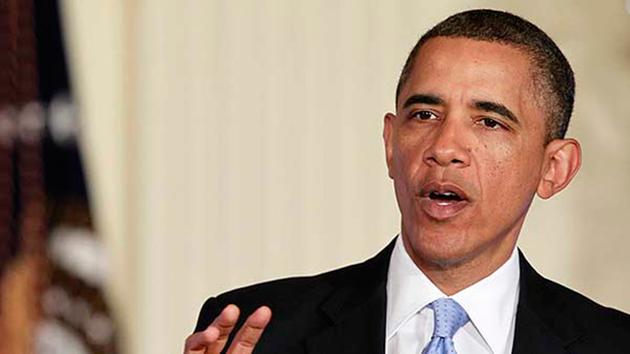
PRESIDENT OBAMA CELEBRATES 53RD BIRTHDAY

Pakistan: Asif Zardari condoles deaths in China’s earthquake
Abdullah's Team Rejoins Afghan Presidential Election Audit
http://www.rferl.org/Afghan presidential candidate Abdullah Abdullah has rejoined an audit of election ballots, a day after negotiations with United Nations and Afghan election officials in Kabul. Nur Mohammad Nur, a spokesman for the Independent Election Commission, said representatives from Abdullah's team were present during the vote recount on August 4. Abdullah's team had refused to attend the recount on August 3 due to disagreements over how votes would be adjudged fraudulent or valid. However, the UN announced an agreement had been reached with Abdullah later on August 3. The audit of all 8 million votes in the June 14 presidential runoff was halted last month amid technical disagreements between the quarreling candidates. Abdullah says massive fraud tilted the results of a preliminary vote count in favor of his rival, Ashraf Ghani.
Why is it Wrong to be a Hindu in Pakistan?
http://www.sharnoffsglobalviews.com/
By Zahid Ali Baloch
Pakistan must take strong action to ensure security for all religious and ethnic minorities; otherwise a generation of Hindus will be lost.The marginalization and mistreatment of the Hindu community in the Pakistan’s Sindh region is believed to have started during the era of Pakistan’s sixth president, the military dictator Muhammad Zia-ul-Haq. Violence was rare in the beginning; however it now seems like an everyday tool used by the extremist groups. Dr. Hari Lal, a community leader whose home was attacked told local media “We feel like there is a plan to get us out of here. That is because we are well-to-do, there is envy and people want us gone.” Islamic militancy flourishes with impunity against all religious minorities in Pakistan. Pakistan’s ruling government has failed to prevent the persecution of religious minorities, especially the Hindus in Sindh. As result, extremists are burning their religious temples, forcing them to covert to Sunni Islam, whisking them away and dumping their dead bodies. I have the privilege of knowing Kapil Kumar, a graduate in chemical engineering and a resident of Sindh. He is one of my great Hindu friends and a Fulbright Fellow. After the recent attack on his religious temple close to his home, I was extremely concerned about his safety. Once I got to know that he was doing fine, I could relax. I was talking to him and was also curious to ask him how does he feel being a religious minority in Pakistan. But before I asked him, I actually asked it to myself what I had felt being a religious minority in Pakistan. Honestly speaking, being the oldest settler in the southwest of Balochistan and belonging to the Baloch ethnicity, I never feared of persecution. Yet I have always feared that Islamic militancy would be used as a tool to counter the Baloch freedom movement. That has absolutely become a true presumption. Anyway, I assumed that I had a different mentality then Kapil Kumar. When I finally asked him how he felt, he replied, “People call it [Pakistan] land of the pure, but I feel shame to live in such a land of the pure where I am mistreated on account of religious orientation. ” Kapil added “We do not feel secure because it is easier for the extremist to attack us in Pakistan because our name reveals our religious identity, but I cannot change my name now.” I was extremely impressed by what he described to me. It is true that the followers of the different sects of Islam almost have similar names if they do not have similar views, but the names of Hindus are entirely different and are the symbol of their religious identity. Kapil Kumar was convinced that militant attacks against religious minorities will continue – and with impunity from the government. He said “I wish I could flee Pakistan because I am not optimistic about my life’s security. Sometimes, I receive threatening calls stating that if I do not convert, I would be abducted and taught a great lesson.” Pakistan’s government and human rights groups should take strong action to ensure security for all religious and ethnic minorities; otherwise a generation of Hindus will be lost in Pakistan.
Pakistan: Hazara Persecution in Balochistan
http://www.sharnoffsglobalviews.com/
By Shah Meer
According to Shia Hazara, there is too much discrimination against them to have a future in Pakistan.The recent spate of violence targeting the minority Hazara, Shia by sect, has left the community of about 500,000 people fearing for their safety in Quetta, the capital of Balochistan Province in southwestern Pakistan. According to locals over 1,000 Hazara have been gunned down in and around Quetta from the last 10 years. In the most recent incidents, in June at least 24 people were killed when gunmen stormed a hotel and opened fire indiscriminately in an outskirt area of Quetta. On the other hand widespread fear of harassment, discrimination and killings has prompted some Hazara community members living in Quetta to consider leaving the country, even through illegal means. With detail reports available approximately 30,000 Hazara have fled in the last five years. Lashkar-e-Jhangvi, an extremist group with links to al-Qaeda is allegedly behind the threats and assault as well as several other targeted attacks on Shias – particularly Hazara Shias – in Balochistan. It is worth mentioning here that extremist Sunni Muslims and a particular mind set in Pakistan continue to treat Shia Muslims as non-Muslims declaring them as kafir ( A derogatory, blasphemous term for those who don’t believe in Allah and his last prophet Muhammad). Under this discriminatory system, a large number of Shia Muslims particularly those belonging to Hazara community in Pakistan’s Southwestern province of Balochistan are forbidden from traveling, studying and working. According to Shia Hazara, there is too much discrimination against them to have a future in Pakistan. Meanwhile security institutions in Balochistan moved following operation Zarb-a-Azb in the North Waziristan and security was tightened at Hazara Town and Marriabad. During the Muslim festival Eid the security of mosques and other Islamic institutions and public buildings where the members of Hazara community are settled was strictly monitored following attacks on Zairin in Taftan hotels and Karachi International Airport. The Hazara want the government to act against those targeting them on the basis of sect and ethnicity and insist urgent steps are taken to end the persecution. According to Hazara leaders they are being targeted on account of “both ethnic and sectarian grounds” by extremist groups – mainly the sectarian Lashkar-e-Jhangvi and Sipah-e-Sahaba. Moreover, the Hazara are also concerned about further persecution if the Taliban returned to power in Afghanistan.
The cost of Pakistan’s delayed action against militants
By Wajahat Ali
Pakistan's offensive campaign against militant strongholds in North Waziristan has resulted in the purging of elaborate terrorist cells, but it also reveals the cost the government has paid in making deals with militants and delaying a necessary purge.Pakistan's offensive campaign against militant strongholds in the tribal region of North Waziristan has resulted in the long-awaited purging of elaborate terrorist cells. The government says it wants to eradicate breeding grounds for extremism in what has been billed a "decisive battle" against religious militancy. Hundreds of terrorists were killed, arms and ammunition were seized and torture cells were unearthed, while facilities dedicated to producing explosives and propaganda were captured. The offensive has reaped dividends for Pakistan's military in an area that has long been known as the hub of international terrorism. Until recently, the international community was repeatedly calling for Pakistan to take action, clear the area of radical outfits and bring it back into its administrative control. The government has been forced to defend the delay in taking action. Siddiq-ul-Farooq, chief coordinator of the ruling PML-N Party, said: "We are following a very objective and result-oriented policy. We tried to engage the TTP (Tehreek-e-Taliban Pakistan) leaders in a dialogue process, and they also supported it. However, that attempt failed. Now, we can distinguish between those who want dialogue and those who want war. We are fighting against those who are against peace." The operation was triggered by the army in response to a brazen attack on the Karachi airport on June 8. However, weeks earlier, a top militant leader in North Waziristan, Hafiz Gul Bahadar, was already asking residents to leave their homes and move to safer locations, claiming he had "credible information" the government was planning to launch a full-scale operation in the area. Sources claim the government allowed hundreds of militants to leave ahead of the offensive. Gul Bahadar had a peace agreement with the Pakistan government, yet, he targeted its security personnel, harboured foreign militants and built elaborate terrorist infrastructure in the area. Ejaz Haider, from Capital TV’s National Security Affairs, said: "Now that we look back, we realise that that deal didn't really work to the state's advantage. But the fact is that at the time the deal was made, the thought was that it would allow some kind of stability in the area." There are reports of civilian casualties in North Waziristan. However, the government has strongly denied these claims and the media cannot confirm or deny them since they cannot move around the conflict zone independently. Pakistan's experience in North Waziristan reveals the cost the government has paid in making deals with militants and delaying what has become a necessary purge.
Pakistan: Let there be light!
By Lal Khan
If it were only a matter of praying to Allah for the masses to end their woes and achieve their emancipation, how easy it would be!The present right-wing regime of the PML-N came to power with a disputed, heavy mandate. This crisis-stricken state was grudgingly accepted by the battered imperialists, giving it the false legitimacy it craved for. The ongoing lull, fatigue and despair within society and the lack of movement and leadership to counteract the onslaught of reaction meant the masses accepted it as a fait accompli. The defeat of the PPP was due to its utter failure to deliver and provide the basic essentials to the people. Among the excruciating pain that this regime inflicted upon the masses was the electricity load shedding or power outages that intensified further the misery of the ordinary people. Nawaz Sharif and the other leaders of the PML-N made extravagant promises for ending this scourge in anything from three months to three years. These promises, however, sounded hollow even during the elections, but after coming to power they were very quickly exposed, with their utter incompetence, lack of vision and direction with their chaotic and pathetic attempts to address this issue. Sharif’s first measure was to reward the power cartels that have been holding the country to ransom, by handing over Rs 500 billion of circular debt to erase this torment but without any conditions and assurances from the IPP bosses. This provided a certain respite to the masses for a brief period but the pain and misery of these punishing power outages have returned with a vengeance to an agonising norm and, coupled with IMF forced price hikes, life has become even more harrowing. Now the chickens have come home to roost. The resultant rage in the womb of society is generating a heat that is destabilising the polity with increasing unrest and the stirrings of internal contradictions in the state. The regime and ruling party’s conflicts are now in the open with ministers daggers-drawn and Sharif having to personally intervene to resolve the impossible task of patching up the unravelling factional clashes within his cabinet and party leaders. This has deeply shaken the regime and there is a roaring turbulence in the government despite Sharif’s deceptive posturing of calm. His cemetery smiles often betray the false confidence he tries to flaunt. Perhaps the time has come for confessions and the wagging of twitchy fingers within the hierarchy of the PML-N. In a press conference on July 14, 2014, the federal and state ministers confessed their failure and pleaded forgiveness for not even being able to provide electricity during Ramadan. A Daily Times report (July 15, 2014) said the following: “Federal Minister for Water and Power Khwaja Asif on Monday apologised to the nation over prolonged power load shedding. Addressing a press conference along with state minister for power Abid Sher Ali and Secretary Nargis Sethi, the minister said that there is a shortfall of 7,000 MW of electricity, while the demand has increased to 19,000 MW, which has resulted in massive load shedding. He said that the crisis further intensified in the past three days, as two grid stations of 1,500 MW in Lahore tripped. He appealed to the masses to pray for rain so that the load shedding could be reduced. He said the system could not bear load of more than 15,000 MW of electricity. If the load exceeds 15,000 MW grid stations start tripping. He said it would take three to four years to rectify the entire system. He said that the circular debt is hovering around Rs 280 to Rs 285 billion. “The power minister cautioned that the power shortfall would witness a further rise if the ongoing spell of heat did not subside. He appealed to the people to conserve electricity so that all areas could be provided with it. He said the government could not give a time frame for ending load shedding, as we do not want to make any more false promises, which would cause us to be embarrassed in front of the nation.” The report further narrates his pathetic stance, “Allah will rescue (help) us during the next two to three days and the situation will be improved.” He says it all, does he not? How pathetic! As stated above, if all that is required is to pray to Allah for the masses to end their woes and get their emancipation, why has life not improved? What is the need for scientific research, governments, parties, leaders and democracies so much revered and touted as sacred scriptures by these stooges of capital who are supposedly the leaders of the nation and torchbearers of development and prosperity in society? Poverty, misery, disease, deprivation, crime and other social and economic vices inflicting society are created by this system and not by God. It is these exploitative capitalists and feudals who are fleecing humanity, responsible for these devastations and the agonising life that the vast majority of the people are forced to live. It has become a common practice of our rulers and their pedlars in the media, the clergy and intelligentsia to blame these tragedies as if they were acts of a divine force and to exonerate themselves from these heinous crimes of socioeconomic destruction they are mercilessly carrying out to inflate their profits in a rush to fill their coffers. Invariably, in natural calamities like floods and earthquakes, it is always the poor and the toiling masses that suffer. The mullahs call these disasters the “wrath of God” due to the sins committed by these innocent but deprived and oppressed people. The notion spread by these prostituting intellectuals and priestly vultures of capital is that these bosses sitting in their palatial mansions in the metropolitan centres and in the countryside are the most pious and commit no sins. In reality, it is in these palaces where the most heinous and criminal political and financial policies are manufactured. The working classes of this and other lands have, most of the time, prayed and prayed for generations, yet their lives have gone from bad to worse. And now, in the second decade of the 21st century, they are being asked by the federal minister for power to pray for rain and electricity? How abhorrent and reactionary! The stark reality is that this ruling class, in almost seven decades of taking charge, has failed to build a modern infrastructure, the vital part of which is the generation and supply of electricity through modern grids and efficient transmission lines, crucial for human existence today. They have failed to complete any of the tasks of the national democratic revolution, from the creation of a unified nation state to the abolition of feudal remnants and the imperialist stranglehold. Their abject historical and economic failures are tearing apart society and paving the way for the kind of barbarism that threatens to destroy civilisation. Without the overthrow of this reactionary ruling class and its system, society will remain mired in darkness and no light will shine. Let there be light!
Pakistan : PMLN government failed to stop Shia genocide
shiapost.comAllama Arif Wahidi, secretary general of Pak Shia Ulema Council, has said that the PMLN government failed to stop Shia genocide. Condemning the targeted murders of innocent Shia youths on the day of Eid, he said, takfiri terrorists were free and continued killings. “Government must tell us and the nation why no action has so far been taken to eliminate the menace of terrorism by awarding capital punishment to the takfiri terrorists,” he urged. Shia Ulema Council’s leader also contacted the relatives of 2 martyr Shiites of Quetta and conveyed to them the condolence message of Allama Sajid Naqvi, chief of the SUC.
Listen the screams of poor Pakistani Christians
Christians could count themselves among minorities that made up 15% of the population at pre-partition. Now minorities fall short of roughly around 5% of the country. The Christian community in Pakistan, roughly around 15 million, is the first largest religious minority present here. But the actual figure is never been given; because there is no census after 1998. Yet the minorities are being persecuted, targeted, slaughtered and killed, without mercy – just because our faith is not the same as that our killers’. One would think this horror might be consuming the pulpits and pews of Western churches. The silence has been nearly deafening. In this predominantly Muslim nation, religious extremism and resentment of the West contribute to violence against Pakistani Christians. We feel most of the time we are not equal. Not only equal, but the growing feeling is that we are not even wanted. Some of the violence against Christians is directly related to the American-let war against Muslims in different countries like war in Afghanistan, Iraq and to some extant Israel war against Philistine, so has an expressly political motive. Months later the US-led coalition attacked Afghanistan in 2001, a grenade attack on a chapel inside a Christian Mission Hospital Taxila city killed four people. If it is said that Shias are being attacked but the dynamic with that particular enmity is entirely different. Shias in Pakistan are seen as influential and high profile with positions in the ruling class and playing prominent role in the country. They are caught up in what many analysts call a proxy war between Shia Iran and Sunni Saudi Arabia. Pakistani Christians evoke public sympathy and are not tools of a larger sectarian and ideological battle. My concern is; what is the future of Christians in Pakistan? In fact, the right question is, do they have a future here at all? Majority of the Pakistani Christians are living below poverty line residing in the slum areas across the country and around the seasonal drainage in the federal capital especially. Living with low income, they cannot afford school fees and thus their children remain uneducated. Many Christians suffer from grinding poverty. Education and employment discrimination leave them only the lowliest occupations. Many of them spend their lives in brickyards, within perilous distance of blazing hot kilns. These families are close to being slaves – bonded laborers – never able to work off the outrageous debts laid on them by Muslim landlords. Others find work as janitors or sewer workers. Their employers barely regard their Christian employees as human. Christian sanitation workers are the first ones sent into sewer trench lines, and usually without proper protection. Every year many Christian workers die from exposure to the toxic fumes. And their young girls work as maid and been raped by masters and then were forcefully converted to Islam. Hundreds of the Christians’ students have not been promoted to next classes for their parents were unable to clear the dues at the schools in the twin city only. There could hundred thousand in the country. Sister Abida, head of the Saint Teresa High School, Rawalpindi has reportedly expelled 17 girls’ students for the school for their parents had not paid their school fee during this semester. This is missionary school, which aim should be to encourage poor Christian’s students to study. It is unfortunate that none of the priest has taken notice to it till I am writing these lines. The situation becomes more terrible when so called social and religious reformers and Christian politicians living in and outside the country play with them. They receive huge funds from the West but deliver little and rests spend for their own luxury life. None of them has ever planned to bring economic and social revival for this most vulnerable community. Many talented young ones are wasting their lives with low income jobs and have no future. Shahroz Tabassum, son of Akram Masih, student of La Salle High School, Faisalabad was the top scorer securing 1073 marks in his Secondary School Examination this year. Many of the so called social activists like me have posted his picture on their timelines but no one has announced any scholarship to encourage him. The US, EU and UK government funds seem directed to the Muslim regime to supporting the raise of Islamic militants to power. Even when aid is given to Pakistan, none ever reach the beleaguered Christian community. And sad to say, even the Christian human rights groups working in Pakistan seem to focus to hire Muslim employees. I wonder; what is future of the poor Pakistani Christians? Do they have any a future here? Is there anyone who listen the screams of the poor Pakistani Christians?By Shamim Masih
Pakistan: 'Silence of ‘good men’: A week on, Gujranwala mob attack victims await justice'
Last week an elderly woman and her two minor grand daughters were burnt alive in Gujranwala by a charged mob. A week of silence has passed since then. No suo motu notice of the mob attack was taken, no joint investigation team was formed to investigate the incident, no judicial inquiry was ordered and no political party protested the killings. Roads were not blocked in protest. There were no arrests. The victims were members of the Ahmadi community, which means they see a different side of Pakistan’s judicial and political processes than most citizens. A member of the Ahmadi community from Gujranwala, requesting anonymity, told The Express Tribune that most members of his community had anticipated the apathetic reaction from all quarters. “All politicians and religious groups forget their differences when it comes to Ahmadis,” he said. He said members of his community had lost faith in protesting and making demands. “We cannot reach out to any institution of the state,” he said. “Every state in the world must protect life and property of all its citizens equally. If the state does not recognise its duty, its people are helpless.” He blamed the government for failing to make proper security arrangements and criticised the law enforcement agencies for failing to control the mob. He said Ahmadis of Gujranwala were living in fear of another such attack and had gone to extreme lengths to ensure what little security they could afford. He said the law and order situation was poor across the country but the Ahmadis were especially vulnerable to the violence. “The brutality of the mob attack in Gujranwala surpassed our wildest imagination,” he said. He said a mob had been incited through announcements in mosques. He said a large group of people had gathered and set fire to houses of Ahmadis. “The mob was there for hours,” he said. “But no one was there to stop them.” He said no politician had condemned the incident and lawyers and civil society organisations had been silent on the issue. “I suppose this shouldn’t be surprising,” he said. He said the prime minister had condoled the bereaved family after he was criticised for remaining silent on the issue. “Politicians do not talk about our problems because no one wants to lose their vote bank,” he said. He said mob attacks on minorities had become frequent, adding that the government should take concrete steps to protect them as soon as possible,” he said.By Rana Tanveer
Pakistan: Displaced women, children suffer from militant misrule
http://centralasiaonline.com/
By Hasan Khan
Rehabilitating those who lived under the militants' reign of terror will be costly, doctors and authorities say.Pakistanis continue to learn about life under militant rule as internally displaced persons (IDPs) share their stories of humiliation and suffering. "We were living in hell," Barakat Sher, an elderly displaced North Waziristan resident, told Central Asia Online. No good militants existed, he said. "All were equally cruel, beating and torturing ordinary people." Effect on women Life for women was especially difficult because it was emotionally draining and actually led to health problems. Women, especially those who were married or had children, lived in perpetual fear, Mir Ali town resident Ghawar Dawar said. "Every time a bomb went off, they feared that their husband or child would not come back home," he said. Many women are depressed or suffer from a psychological illness brought on by the militancy, he said, adding that he knows two such women. "Seeing dead, mutilated and tortured bodies daily has a grave impact on their minds," Dr. Said Alam Mehsud said, adding that the government faces a major challenge in rehabilitating these communities. "This [rehabilitation] needs huge funding and resources, as complete overhauling is needed here to bring life to normal," he added. Life for women in highly conservative tribal society was already difficult and the militants made it much worse, Boya resident Zameera Abay said. "The only time I left my home was to attend funerals," an elderly woman told Central Asia Online. "We visited the homes of those killed by militants or in bombings daily." Pregnancy-related diseases have also been widely reported. The health centres in Miranshah and Mir Ali were poorly equipped and received a large number of women, a health worker said. Stress and acute depression leading to low blood pressure are very common, and for pregnant women, those factors contribute to pre-mature births and to the maternal death rate, he added. Pre-mature births and mental illness are common afflictions in populations suffering oppression and constant fear, Dr. Said Alam Mehsud said. "Depression causes different diseases in women … for pregnant women, they include stillbirths and pre-mature births," he said. Shamed by militants Stories of humiliation are also common among those found in the IDP camps. "They do not need provocation to humiliate or torture you," Meeran Mehmood, a middle-school pupil from Miranshah, said. "I still feel embarrassed when I remember how our elderly teacher was slapped and beaten when he tried to conceal the identity of a boy whom the militants were trying to find." Youths were the main target of the militants, he said. "Whenever we came across a group [of militants], they would start abusing and taunting us," he said. Children and boys were an easy target, and militants used them in many cases to take revenge on families who opposed them. "Having a young son or a boy is like having an unlicenced weapon at home," Ali Akbar, an elderly IDP, said. Parents of young sons lived in constant fear that militants would take away or misguide their sons, and though nobody dared to challenge the militants, stories of them taking away the young boys and torturing them at their camps to coerce families into obeying the militants are rampant, Akbar added.
Pakistan: August 14, 2014: D-day of the fall of 'Sharif Empire'
 August 14, 2014 will the remembered in the history of Pakistan as the day of the fall of 'Sharif Empire' at the hands of Pakistan Tehreek-e-Insaf (PTI).
An electrified Imran Khan reiterated this clichéd claim while speaking at a party workers convention here on Sunday.
"Pakistan will be delivered from the jaws of Sharif family's monarchical tyranny as PTI's 'Azadi March' will bring them down on August 14, The Independence Day. Our marchers will not pull up stakes from Islamabad until they have changed the system", a roaring Khan told his 'gung ho' workers.
Khan said that Pakistan was not a democracy but a monarchy in the guise of the latter.
"This is a 'Kingdom of Sharif Dynasty', where a powerful family was sitting pretty on the throne. The democracy, the incumbent rulers so proudly brag about, is nothing but a mockery of it", said Khan vowing to 'dethrone' Sharif.
Telling PTI workers about the difference of democracy and monarchy, Khan said merit was the quintessence of the former, while the latter was devoid of it.
"A head of the state is accountable to the people, who elect him to power, but a monarch is not. That's exactly how Mian Nawaz Sharif was running the show. Can Sharifs justify spending taxpayers' Rs400 million a month for keeping their Raiwind estate so heavily guarded? Absolutely not", said the PTI leader.
Secondly, democracy was about merit, which had so wantonly been violated by the Sharif family that it was nowhere to found in Pakistan anyomre, Khan added.
August 14, 2014 will the remembered in the history of Pakistan as the day of the fall of 'Sharif Empire' at the hands of Pakistan Tehreek-e-Insaf (PTI).
An electrified Imran Khan reiterated this clichéd claim while speaking at a party workers convention here on Sunday.
"Pakistan will be delivered from the jaws of Sharif family's monarchical tyranny as PTI's 'Azadi March' will bring them down on August 14, The Independence Day. Our marchers will not pull up stakes from Islamabad until they have changed the system", a roaring Khan told his 'gung ho' workers.
Khan said that Pakistan was not a democracy but a monarchy in the guise of the latter.
"This is a 'Kingdom of Sharif Dynasty', where a powerful family was sitting pretty on the throne. The democracy, the incumbent rulers so proudly brag about, is nothing but a mockery of it", said Khan vowing to 'dethrone' Sharif.
Telling PTI workers about the difference of democracy and monarchy, Khan said merit was the quintessence of the former, while the latter was devoid of it.
"A head of the state is accountable to the people, who elect him to power, but a monarch is not. That's exactly how Mian Nawaz Sharif was running the show. Can Sharifs justify spending taxpayers' Rs400 million a month for keeping their Raiwind estate so heavily guarded? Absolutely not", said the PTI leader.
Secondly, democracy was about merit, which had so wantonly been violated by the Sharif family that it was nowhere to found in Pakistan anyomre, Khan added.
"Let me ask you one thing? Does Maryam Nawaz Sharif deserve to be sitting on a government fund worth Rs100 billion. Is she worthy of the job bestowed on her by her king father? Why Hamza Sharif behaves like a de facto chief minister of Punjab and moves about like a prince? There goes the merit", said Imran Khan. Khan also threatened the government with dire consequences if it tried to put him under any form of 'house arrest'. "In case they shut me in PTI will shut the whole Pakistan down", Khan said. He also warned the police against resorting to armed violence against the marchers. "If any uniformed servile salve of Sharif family shot and killed even a single protestor, I will myself make sure the murderer is convicted, sentenced, and executed. The whole chain of command behind any such brutality will find no place to hide anywhere. Mark my words", Khan pledged solemnly. He postulated that a peaceful protest demonstration was any political party's unalienable democratic right.' PTI's captain also tasked his workers with bringing out at least 100,000 motorbikes to take part in their march to Islamabad.
Pakistan: Imran rejects Nisar proposal to postpone ‘Azadi March’

Interior Minister Chaudhry Nisar on Monday held telephonic conversation with Pakistan Tehreek-e-Insaaf (PTI) chief Imran Khan to exchange views on upcoming ‘Azadi March’ on August 14. Meanwhile, Imran Khan told Chauhdry Nisar that he considers him as a friend but he will not discuss Azadi March. Imran said Azadi March will be held in any case from Lahore to Islamabad. The march scheduled for Independence Day (Aug 14) will head towards the federal capital from Lahore to protest what the PTI claims was rigging in the May 2013 general elections.
Pakistan used US anti-terror military aid to fight India: US ex-diplomat
Pakistan: Growing extremism and acid attacks in Balochistan
Yousaf Ajab Baloch
These acid attacks on women in Balochistan are quite surprising because such acts differ from the history, traditions and rituals of Baloch society where women are greatly respected and such violence hardly ever happensThe growing extremism and alarming steps being taken by radicalised outfits are a great menace to all people in Balochistan where, once again, Baloch women are confronting acid attacks. The recent three attacks on 12 women within 10 days in Pishin, Quetta and Mastung have proved that extremists in Balochistan not only target kill the Hazaras and Zikri Baloch and forcibly shut down schools, they also burn women with acid to impose their brand of fundamentalism on Baloch society. People in Balochistan were terrified when, on July 21, four women were sprayed with acid in the outskirts of Quetta, followed by a similar attack on two girls in Mastung on July 22. The third brutal attack took place on July 29 in the Tang area of Pishin district when four assailants entered a house and sprayed six women with corrosive acid. The assailants managed to flee the crime scene and, till now, no one has been arrested. The government of Balochistan has taken the easy route: pinning the blame for these attacks on crimes of revenge and passion. In all these incidents, the perpetrators drove motorcycles and used syringes to throw the acid. Fortunately, these 12 victims have not received serious burns but no doubt they have been hurt psychologically and it is now near impossible for them to lead normal lives in the future. Prior to the Quetta, Mastung and Pishin attacks, on April 13, 2010, two sisters were attacked in Dalbandin city of Balochistan where a religious, underground organisation claimed responsibility. Three young sisters were attacked on April 29, 2010, in Kalat city, some 150 km from the capital of Balochistan. Before the Kalat acid attack, a religious group had already warned women to wear head coverings while the responsible organisation had threatened students in private schools, English language centres and vocational institutions to give up studying and not to come out of their homes without being accompanied by a male family member. The enforced shutdown of schools in Panjgur and Makran areas and incidents of acid attacks can never be separated because these acts are moves to radicalise Baloch society. There is intimidation by Tanzeem-ul-Islam al Furqan, a religious militant organisation that has closed down all private schools and English language centres in Panjgur district. The said organisation also attacked and burnt one of the school’s vans carrying female students and teachers on May 14 in Panjgur. These acid attacks on women in Balochistan are quite surprising because such acts differ from the history, traditions and rituals of Baloch society where women are greatly respected and such violence hardly ever happens. Gender equality and respect for women have been part of Baloch history and culture. We can find no real record of assaults on women in Baloch and Pashtun society because of tribal or family feuds. Baloch nationalists and intellectuals allege that the patronisation of extremists is meant to weaken Baloch nationalism and the rights movement where, along with the male Baloch, the women are now also playing a leading role. Acid attacks and threats to girls to abandon education are aimed at keeping Baloch women away from the Baloch movement. The roots of growing extremism are linked to the Afghan jihad that left a number of effects on Balochistan, due to which the province is still suffering. First of all, millions of Afghan refugees rushed to Balochistan. These Afghan ‘brothers and sisters’ from across the border introduced Balochistan to the terrible Kalashnikov and drug culture. Secondly, when the Afghan war ended, the number of fighters who were trained and sent from Balochistan and other parts of Pakistan returned with religious and sectarian passion, and they were accommodated in madrassas (seminaries) where their activism was slowly strengthened against the Shia Hazaras in Balochistan. Now the same elements are allegedly being utilised against Baloch society. Having observed the ground realities, no doubt the allegations made by Baloch nationalist are enough to make one believe that allowing extremism to grow is one of Islamabad’s policies to appease Islamist extremists while suppressing the genuine demands of the Baloch people. This bloody approach will wreak devastation in already conflict-hit Balochistan. Using religious fundamentalists as proxies in Balochistan will create a new set of problems because acid attacks on women, closure of girls’ schools and the massacre of Zikris in Makran cannot destroy incipient nationalism. Therefore, Islamabad needs to review its policy regarding Balochistan.
Pakistan: PTI’s confusion
Pakistan: Unappreciated and demoralised, how effective is the police?
By Asim Qadeer Rana
Pakistan: Govt should’ve invoked 245 for Peshawar
 Opposition leader in the National Assembly Syed Khursheed Ahmed Shah says the invocation of Article 245 is required in Peshawar or Bannu rather than Islamabad which is a city of not more than 1.5 million souls.
Talking to reporters at the PPP office in Lalamusa on Sunday, he said it seemed that the government had employed the ‘tactic’ to tackle the PTI’s march.
He said PPP would never become part of any march aiming at derailment of democracy.
Mr Shah said: “It is a basic right of every citizen and political party to lodge a peaceful protest by remaining within the constitutional domain. My party is neither interested in the Tsunami march nor in the so-called revolutionary march despite the fact that PPP have some serious reservations over the results of the 2013 general election.”
He criticised the Nawaz government for the Gaza issue as the prime minister seemed to be interested in securing his government during his recent visit to the Saudi kingdom.
“PPP has been the sole opposition party in the country that always strives for strengthening of democracy as this fact has been proven on many occasions in the political history of Pakistan. Even now the party will stand for democracy but the government should also realise its own responsibilities and old mistakes must not be repeated,” he said.
Opposition leader in the National Assembly Syed Khursheed Ahmed Shah says the invocation of Article 245 is required in Peshawar or Bannu rather than Islamabad which is a city of not more than 1.5 million souls.
Talking to reporters at the PPP office in Lalamusa on Sunday, he said it seemed that the government had employed the ‘tactic’ to tackle the PTI’s march.
He said PPP would never become part of any march aiming at derailment of democracy.
Mr Shah said: “It is a basic right of every citizen and political party to lodge a peaceful protest by remaining within the constitutional domain. My party is neither interested in the Tsunami march nor in the so-called revolutionary march despite the fact that PPP have some serious reservations over the results of the 2013 general election.”
He criticised the Nawaz government for the Gaza issue as the prime minister seemed to be interested in securing his government during his recent visit to the Saudi kingdom.
“PPP has been the sole opposition party in the country that always strives for strengthening of democracy as this fact has been proven on many occasions in the political history of Pakistan. Even now the party will stand for democracy but the government should also realise its own responsibilities and old mistakes must not be repeated,” he said.
Pakistan: PPP seeks joint session of parliament over govt move
Former president Asif Ali Zardari’s Pakistan People’s Party has called for summoning a joint session of parliament to discuss the Nawaz Sharif government’s decision to seek the army’s assistance in Islamabad under Article 245 for security in the city. When contacted, PPP Senator Raza Rabbani said that the government should place before parliament the intelligence reports that forced it to invoke Article 245. “If the government thinks sensitive information is involved, it can convene an in camera session.” Rabbani said invocation of Article 245 could have serious political repercussions because it would suspend the high court’s jurisdiction during the army’s stay in Islamabad and people would be unable to approach the court against violation of their fundamental rights. The senator expressed the fear that a parallel judicial system could be put in place, recalling that military courts had been established in the past. He said the government should explain why sections of the Pakistan Penal Code were not invoked instead of Article 245. Leader of Opposition in the National Assembly and PPP member Khurshid Shah termed invocation of Article 245 a blunder by the prime minister. He said that neither parliament nor political parties were consulted before taking such a critical decision. Lack of consultation with political forces on important issues would lead to chaos, he added.
Subscribe to:
Posts (Atom)