The leader of Bahrain’s main Shia opposition group Al-Wefaq has been detained for interrogation over comments made during a religious sermon. The move has sparked an anti-government rally, with supporters demanding his release. "Al Wefaq National Islamic Society said its secretary-general, Sheik Ali Salman, is considered arrested after the series of illegal measures taken to call him in for interrogation at the Criminal investigations Department (CID)," the opposition movement said in a statement on its website. “Salman has been transferred from the CID to the Public Prosecution Office for interrogation.” The Gulf kingdom’s Interior Ministry said that Salman had been questioned over comments he made one day earlier in a religious sermon. He has been accused of “inciting hatred” of the government and "promoted rioting and vandalism,” the ministry stated. News of Salman’s arrest has sparked protests against authorities in the Sunni-ruled state. Supporters of the opposition leader gathered outside his home to express anger over the move. Some held pictures of Salman while “demanding his immediate release,” according to a statement from Al-Wefaq.
Local police fired tear gas at protesters, Al-Wefaq said on Twitter. Salman’s Saturday arrest is the opposition leader’s second detention in nearly two months. In November, the country’s public prosecutor charged the opposition leader with insulting the interior ministry. The prosecution accused him of “denigrating and disparaging the [ministry]” by alleging human rights violations conducted on protesters by the police during a speech at the opening of the Revolution Museum. Authorities claimed Salman’s speech was “packed with lies...which represented an affront to the status of the police.”
Salman was released after five hours of questioning, which he said was “a clear violation of our political work and our freedom.” Al-Wefaq, Bahrain’s top opposition group, is demanding democracy and a constitutional monarchy in the country, which is run by the Sunni royal family. The group initiated protests in 2011, demanding political change and a larger Shia influence in the country led by the Al-Khalifa dynasty. The group insists that it rejects violence, but Gulf state authorities blame the movement for the unrest which has shaken the country for almost three years. A month-long protest that started in February 2011 was dispersed in mid-March during a deadly crackdown. Over 80 people have been killed since the protests began, according to the International Federation for Human Rights.
 Saudi police on Saturday pulled over a woman minutes after she got behind the wheel in the Red Sea city of Jeddah after activists called for a new challenge to a driving ban.
"Only 10 minutes after Tamador al-Yami got behind the wheel police stopped her," activist Eman al-Nafjan told AFP, adding that Yami carries an international driving licence and was with another woman who was filming her in the car.
 Tamador's husband was called to the scene and she was forced to sign a pledge not to drive again without a Saudi licence, said Nafjan on her Twitter account.
Women are not allowed into driving schools in the ultra-conservative kingdom are not granted licences.
Elsewhere in Khobar, in Eastern Province, another woman drove for two hours, accompanied by her husband, without being stopped, Nafjan said.
Activists say Saturday was chosen as a "symbolic" date as part of efforts first launched more than a decade ago to press for the right for Saudi women to drive.
The call for action is a "reminder of the right so it is not forgotten," activist Nasima al-Sada had told AFP.
The absolute monarchy is the only country in the world where women are barred from driving, a rule that has drawn international condemnation.
Saturday's action is a continuation of a campaign launched on October 26, when 16 activists were stopped by police for defying the ban.
In addition to not being allowed to drive, Saudi women must cover themselves from head to toe and need permission from a male guardian to travel, work and marry.
 There was no motorcade, and none of the traditional trappings of power: the leader of India's upstart "common man party" arrived on a crowded metro train on Saturday to be sworn in as chief minister of Delhi, India's capital.
Tens of thousands of jubilant supporters watched as Arvind Kejriwal, a mild-mannered former tax official, was anointed after a stunning electoral debut that has jolted the country's two main parties just months before a general election.
The emergence of Kejriwal's Aam Aadmi (Common Man) Party, or AAP, as a force to be reckoned with barely a year since it was created on the back of an anti-corruption movement could give it a springboard to challenge the mainstream parties in other urban areas in the election due by next May.
That could be a threat to the front-runner for prime minister, Narendra Modi of the Hindu nationalist Bharatiya Janata Party (BJP), who is counting on strong support from urban, middle-class voters.
"Today, the common man has won," Kejriwal said in a triumphant speech at Delhi's Ramlila grounds, the very place were huge protests over corruption erupted in 2011, opening the way for the birth of the AAP.
"This truly feels like a miracle. Two years ago, we couldn't have imagined such a revolution would happen in this country."
In a December 4 election to the legislative assembly of Delhi, a city of 16 million people, no party won the majority of seats required to rule on its own.
The impasse that ensued was broken after the AAP - in a display of citizenship politics - consulted the people of the city. It then agreed to lead the Delhi government with "outside support" from the Congress party, which heads the national ruling coalition.
Opinion polls show that Congress, the party of India's celebrated Nehru-Gandhi dynasty, will be punished in the general election because of disgust with a government whose two terms have brought corruption scandals and stubborn inflation.
A THREAT TO MAINSTREAM PARTIES
Wearing a simple blue sweater and with a boat-shaped Gandhi cap on his head, Kejriwal pledged to set up an anti-bribery helpline.
"If anyone in the government asks you for a bribe, don't say 'no'," he said. "You report it on the phone number and we'll catch every bribe-taker red-handed."
Kejriwal, who has tapped into a vein of urban anger over the venality of the political class and the neglect of citizens' rights in the world's largest democracy, has promised to expand his movement across the country.
"Riding an anti-incumbency wave, the BJP, especially under Narendra Modi, had hoped to garner most of the urban vote," said Ashutosh Varshney of Brown University, who described the rise of Kejriwal's party as "an electoral insurgency".
"The AAP might significantly cut into that, hurting not only the Congress but also the BJP. That is why India's two largest parties feel a deep sense of threat," Varshney wrote in a column in the Indian Express newspaper this week.
Along with a pledge to send Delhi's corrupt lawmakers to jail, the AAP has also promised free water for every family in the capital and a sharp reduction in their electricity bills.
A business lobby group said on Saturday the unorthodox ideology was not important as long as results were delivered.
"We feel that though the promises made by it may look tall, they can still make a good economic sense if the objective ... is achieved by bringing in operational efficiencies," Rana Kapoor, president the Associated Chambers of Commerce and Industry of India, said in a statement.
http://www.csmonitor.com/
Although unemployment has fallen substantially from its post-recession peak, a historically high number of Americans – 4.1 million as of November – have been out of work for more than 26 weeks.This weekend, extended unemployment benefits expire for some 1.3 million Americans who are looking for jobs and have already been out of work for more than half a year.
It’s typical for these special benefits to expire after recessions. But the question this time is: Is this the appropriate moment to withdraw the special support? It’s a tricky policy question because, although unemployment has fallen substantially from its post-recession peak, a historically high number of Americans – 4.1 million as of November – have been out of work for more than 26 weeks.The “Emergency Unemployment Compensation” (EUC) program gives those people some extra months of support – not a free ride on the federal dole. And many economists say continuing the program would add to the nation’s economic growth next year. But the program, started in 2008, costs federal dollars at a time when the two parties have been having a hard time agreeing on budget matters. President Obama and many in Congress want to find a way to keep the benefits going, after the EUC failed to make it into an end-of-year budget accord between Democrats and Republicans. Here are some things to know about the economics behind this policy debate. Both unemployment and long-term unemployment are falling. The Labor Department counts 10.9 million people as unemployed (jobless and looking for work) as of November, down from 12 million a year before. And among the unemployed, the share who have been jobless more than 26 weeks is edging down, too: from 40 percent back to 37 percent recently. But unemployment remains high and persistent. About 7 percent of the labor force is unemployed, and that 37 percent figure (jobless Americans who are “long-term unemployed”) is historically very high. “The rise in … long-term unemployment [has been] far worse than at any other time in the postwar period,” concluded an Urban Institute study this year. During the Great Recession and its aftermath, long-term unemployment peaked at 45 percent of all unemployment, compared with a 25 percent share back in 1983, after another severe recession, the report by Josh Mitchell said. long-term unemployment remains higher today than in the depths of a typical recession. The extended benefits carry a cost, but don’t last forever. Keeping emergency benefits in place during 2014 would add about $25 billion to federal deficits, the Congressional Budget Office estimates. But the payments don’t give the jobless a free ride. States with very high unemployment can offer benefits lasting as long as 73 weeks with the EUC. But in most states, jobless benefits would last 40 to 63 weeks with the EUC in place, compared with 26 weeks without it. Letting the benefits expire means hard choices for workers. For people out of work longer than 26 weeks, expiration of the longer benefits may mean accepting a job they’d rather not take, continuing the job hunt without any benefits, or dropping out of the labor force and leaning on family or other means to get by. North Carolina has offered what may be a cautionary case study, by opting out of EUC early this year. Unemployment there has fallen faster than nationally – from 9.4 percent in February to 7.4 in November. But the reason isn’t people getting jobs (the number employed went down for several months before taking an upward path) as much as people dropping out of the labor force. Economic growth could be slower without the extended benefits. In a recent report, White House economists estimated that by removing income from the economy, failing to extend the benefits would cost 240,000 jobs in 2014. The report also cited estimates by the Congressional Budget Office and JP Morgan that gross domestic product (GDP) would be 0.2 to 0.4 percentage points lower. Against this backdrop, Gene Sperling, director of the president’s National Economic Council, issued a statement Friday supporting bipartisan legislation to continue the extended benefits. “Never before have we abruptly cut off emergency unemployment insurance when we faced this level of long-term unemployment and it would be a blow to these families and our economy,” Mr. Sperling said.
As the U.S. exit from Afghanistan nears, we can expect to hear steadily more about the lessons we should have learned since international intervention in the country back in 2001. But one dimension of the Afghan effort that might get overlooked next year is this: how has the Afghan conflict impacted transatlantic solidarity? The short answer is that transatlantic relations may well be another long-term victim of the war in Afghanistan. The Afghan operation started as a spectacular demonstration of the solidity of the transatlantic alliance in the aftermath of September 11, 2001, when NATO activated Article V of its collective defense clause for the first time in its history. But the limits of cooperation were quickly demonstrated, eroding the foundations of transatlantic solidarity. Whether they can be fully restored remains to be seen. Afghanistan has been a story of frustration on both sides of the Atlantic. One of the early disagreements was over the relative importance of military operations versus a broader political approach – while the United States tended to focus on the former, European states emphasized the latter. The resources that each side was capable and willing to engage in Afghanistan played a role in this initial difference, but this doesn’t explain everything. Europeans had a genuine problem with the U.S. approach, which, over the years, kept focusing on security at the expense of politics and a sustained effort at national cohesion. As a result, all Afghan political institutions were created in a way that reflected Washington’s desire for expediency rather than a need to ensure the political system’s sustainability. Torn between their willingness to demonstrate solidarity with Washington after 9/11 and their perception that the goals of the mission, as defined by Washington, were unachievable, many European countries limited their investment to the minimum and sought instead to bring their troops home. Others, in particular the closest American allies, decided to stick to U.S. strategy even when they knew it was bound to fail. These allies paid a heavy human, financial and political price, but seemed to take some absurd comfort in the fact that the failure would be a collective responsibility. In parallel, the temptation in Washington to blame the Europeans for the coalition failures in Afghanistan grew as it became increasingly clear that, despite the official rhetoric, the United States had achieved none of its objectives. If al Qaeda has been weakened, none of its local affiliates has been eradicated and its reemergence remains a possibility in 2014 and beyond – the reality is that the Afghan state that is emerging from the reconstruction effort is in no position to prevent this happening on its own once U.S. forces have withdrawn next year. Ironically the impending exit from Afghanistan has only exacerbated ill feelings on both sides of the Atlantic. In spite of the principle “in together, out together,” Washington decided unilaterally to withdraw, but felt let down when some of its partners decided to anticipate its own departure. The consequences of this mutual frustration are unlikely to be spectacular. European states are too dependent on the United States for their own security to snub Washington. Nor is Afghanistan the sole reason for Washington’s diminishing commitment to European security. With the existential threat of the Soviet Union long gone and given European governments’ dwindling capacity to contribute to collective security, the continent no longer constitutes a strategic concern for Washington. At the same time, the war-weary and fiscally-stressed United States is increasingly reluctant to commit to foreign military adventures. These two phenomena, neither of which is directly or exclusively related to Afghanistan, are pulling the two sides of the Atlantic apart. Future conflicts may not exactly look like Afghanistan, but there is a good chance they will share some of its characteristics, in particular the primacy of politics and the relatively secondary character of military force. In Afghanistan, most U.S. allies concurred with the perception that the conflict could not be solved kinetically. However, for a variety of reasons, they never really stood against that dominant U.S. paradigm. Instead, they let themselves become part of a succession of U.S. military strategies that all proved short lived. The result of all this is a collective failure that from next year will very likely translate into a loss of credibility not just for the U.S., but for the entire Western alliance.By Frederic Grare
http://www.rferl.org/Authorities in the Afghan province of Jowzjan have annulled the marriage of a seven-year-old girl, whose father admits giving her away in return for $2,000. Authorities in the northern Afghan province of Jowzjan have launched a probe against a father, who has acknowledged forcing his seven-year-old daughter to marry a man five times her age. Ramadan, who like many Afghans goes by one name, blamed his action on poverty that has plagued his family. "We didn't have a place to live, we were hungry, we had debts," he said. "I regretted doing this the day I did it. I regret it now." He acknowledged marrying off his underage daughter in return of some $2,000, and foodstuffs, including rice and wheat. Jowzjan police officials say a criminal case was opened after Ramadan's wife complained to local human rights groups and officials that her eldest daughter was being subjected to violence by her in-laws. "My daughter was married for nearly one year, and during this time she ran away from her home twice," said the mother, who didn't give her name. "Her husband beat her frequently. I didn't want my daughter to go back to her marital home but her husband would come and take her back by force." Police have arrested Ramadan and his 35-year-old son-in-law, Asadullah, as well as the mullah who conducted an Islamic marriage ceremony for the couple. The mullah, Mawlawi Noor, who was released on bail, insists the parents lied to him about the girl's age. Many Afghans do not have birth certificates, and it's not uncommon for religious marriage ceremonies to be conducted without the bride's and the groom's identity documents. Instead, two witnesses and two representatives of each party are invited to be present at the marriage ceremony to testify about the couple's real names, ages, and marital status, if the mullah requires such information. Poverty, Drug Addiction According to Ewazali Saberi, a children's rights advocate for Afghanistan's Independent Human Rights Commission, the authorities should also punish the witnesses and the family representatives for "withholding information about the girl's age" during the marriage ceremony. "The two witnesses and the two family representatives should be held responsible for their actions," he said. "Police haven't investigated these people so far." Authorities have annulled the marriage, as the investigation continues. "This marriage violates both Afghan laws and religious norms," said Abdulmalek Mamnun, the head of the criminal investigation department of Jowzjan Province. Human rights groups as well as women and children's organizations have been involved in the case. Maghferat Samimi, the head of the regional Human Rights Organization said "locking up a few culprits doesn't resolve the problem, we need to do more." "The father of the girl is a drug addict," she added. "He doesn't understand his children's rights. Poverty in one hand, and drug addiction in the other, has led the man to take such actions against his own children." In a joint meeting this week in the provincial capital, Sheberghan, local authorities, court representatives, and human rights officials decided to send Ramadan to a drug rehabilitation center in neighboring Balkh Province. The mother was placed in a Sheberghan safe house for women, while her four children have been transferred to a nearby children's home. Local authorities say they are considering "finding a suitable job for the mother -- in the women's shelter or children's home -- to help the family rebuild their lives."
By Rob Crilly
Almost half the members of Pakistan’s national and provincial parliaments did not pay any tax last year, according to the latest survey of MPs’ finances. More than one in 10 does not even have a National Tax Number and even those that do pay up offer paltry amounts. Although the results are an improvement on last year’s numbers, the figures will cause outrage in an impoverished country where a third of the population survives on less than 30p a day and will anger donors who provide billions of pounds for basic services. British aid to Pakistan has soared in the past two years and earlier this year MPs recommended that the government only increase payments further if Pakistan improves its collection rate. The report will raise awkward questions for many of Pakistan’s richest and most powerful figures.
Nawaz Sharif, the prime minister who comes from a wealthy family which made its fortune with steel mills and lives on a vast estate with more than 100 peacocks, declared that he paid about £15,000 in income tax last year.Other politicians said they had paid as little as £10.
Tackling corruption is also a key requirement of a recent £4billion International Monetary Fund loan package designed to shore up the country’s failing economy. The new report, published by the Centre for Investigative Reporting in Pakistan, used data collected from the Election Commission, which publishes financial declarations from political candidates. The drop in non-payers – from two thirds in 2011 - suggests that either scrutiny has forced more to file returns or that elections this year, in which the Pakistan People’s Party was defeated by Mr Sharif’s Pakistan Muslim League (PML-N), may have cleared out some of the most corrupt politicians. However, Umar Cheema, the report’s author, said the high level of tax evasion and avoidance through amnesties and exemption, meant more of the burden fell on the poor who could not escape indirect taxation. “This tax evasion culture is practised within Parliament and subsequently prevails in all sections of society,” he wrote. “When law-makers would not pay tax, they lose moral authority to pressurise others for the compliance of laws.” As a result Pakistan has one of the lowest collection rates in the world with only about 9% of its gross domestic product collected as tax – compared with about 36% for the UK. Less than 1% of the population file income taxes. Meanwhile Britain’s Department for International Development has increased aid in order to stabilise the country, pouring more than £1billion into Pakistan over five years, mostly for its crumbling school system.
By Rob Crilly
Pakistan Idol is everything you would expect from the familiar global franchise. Young hopefuls sing their hearts out on stage under the watchful eye of a panel of judges who then offer their thoughts – some constructive, some less so. In a country where politeness is an art form and saying what you really think is the height of vulgarity, the judges’ “Simon Cowell” moments have brought an angry backlash.Pakistan Idol’s acerbic judges attract huge audience but prompt accusations that they are humiliating contestants and are too brash for local tastes
In one notorious exchange, Ali Azmat, lead singer with the band Junoon, mocks a male singer’s high pitched voice and then starts dancing with his head and hands in a style more generally associated with troupes of performing transvestites across South Asia.
Social media have been abuzz with condemnation and a public petition has attracted almost 1500 signatures demanding a public apology from the show’s makers for humiliating contestants. “Also I would require an assurance that such behaviour will not be repeated in future, and if at all a contestant does not fit the criteria, he/she would be given positive criticism which helps him/her grow,” runs the petition. In a country riddled by Islamic extremism, Pakistan Idol was hailed as a crucial opportunity to reclaim the country’s cultural heritage from conservatives and give traditional music a chance to flourish among a new generation of wannabes. Auditions ran in some of the most troubled parts of the country, including Swat, a region overrun by the Taliban as recently as 2009 and where Malala Yousafzai, the schoolgirl activist, was shot last year. The show’s first run in Pakistan began earlier this month and producers say their viewing figures make it a smash hit. In part, they say, the attraction is down to the acerbic approach of the judges. In one of the early episodes they mock Naveed Ali, a student, for his squeaky voice. “Leave it, do you remember some nursery rhyme, Oh frog, oh frog jump in the water) or sing twinkle twinkle little star. That would suit your voice,” said Mr Azmat, before asking why he thought he could sing. The exchange prompted viewers to complain that the judges were trying too hard to ape the brasher attitude of the American show - and Simon Cowell in particular – without the humour and without regard to Pakistan’s rather genteel sensibilities. “Here, it seems that the judges are trying overly hard to channel the mocking nature of their American counterparts, especially Simon, but failing miserably,” wrote Noman Ansari, a blogger. Not that the criticism has affected Mr Azmat, who has been baiting his critics on twitter this week.
And the producers are unrepentant. A show insider said: “It’s a bit of a culture shock. This is not a place where people say what they think - well not in public, at least – but it’s all part of the show.” Imran Aslam, the president of Geo TV, the channel that bought the rights to the Pop Idol franchise, promised not to tone down the criticism. “There’s certainly been some criticism of the judges but it should be taken in the spirit of the show,” he said. “If someone can’t sing, well then they can’t sing.”
Did Pakistan's founder Jinnah want to create an Islamic or a secular state? The question divides Pakistanis even after 66 years of their country's independence. Some say Jinnah was not very clear about it himself.
 Pakistan was probably never as divided as it is today between Islamists and liberals. What kind of state should Pakistan be? Should it be secular or Islamic? Did its founder Muhammad Ali Jinnah - whose 137th birthday was on December 25 - want to establish an Islamic state or a majority-Muslim country where religious minorities and non-believers also enjoyed equal rights? It seems that even after 66 years of their independence from the British colonial rule, Pakistanis are still unclear about how their country should be.
Even many people who do not want Taliban-style Islamist rule in their country, want to see their state ruled by Islamic laws to some extent. These people oppose secularism and the Western way of life in Pakistan and make up the majority of Pakistanis. They claim that Jinnah and his All-India Muslim League party envisioned a purely theocratic state, a separate country for Indian Muslims governed by shariah law. For six decades, Pakistan's rulers have been endorsing and propagating this narrative in one form or another.
Liberal Pakistanis believe the idea that Pakistan should be a theocratic state is dangerous and has been responsible for the rise of umpteen militant Islamist movements in the country. They say that Jinnah was a whisky-swigging, Western-educated liberal and had no desire to create an intolerant Islamic state. Progressive - mostly urbanite and educated - Pakistanis see their space further shrinking in the country, and the rise of Islamism in the country worries them tremendously.
The world, too, is keeping a close eye on the instability of nuclear-armed Pakistan. If the state were to fall in the extremists' hands, it could result in a regional catastrophe beyond anyone's control, say experts.
The debate whether Pakistan should be a modern secular state or an Islamic one has thus gained more significance in the past few years. More so, what kind of state did Jinnah envision, as both Islamist and secular Pakistanis continue to quote Jinnah's speeches and writings in support of their views.
Ambiguity
S. Nomanul Haq, a professor of humanities and a scholar of Islamic history and philosophy in Karachi, believes Jinnah himself was not very clear on the issue.
"I think that there is a degree of ambiguity in this matter. There is no clarity on this issue, as there are some statements by Jinnah in which he was very clear about the kind of state he had envisioned, whereas some are not so clear," Haq said, adding that the arguments of liberals that Jinnah's vision of Pakistan was secular were not very strong.
"Soon after the partition of India, Jinnah asked the legislators to devise an Islamic banking system. How would you interpret that?" asked Haq. The expert said that there had to be some distinguishing characteristics of the newly-formed Pakistani state from secular India. "Jinnah thought that religion could determine that distinguishing factor."
Haq says that Jinnah's personal life was very secular, however, it is unclear whether his personal attitudes had an impact on his politics. "People sometimes bring the argument that Jinnah spoke a lot about the minority rights, but speaking about minorities doesn't mean that he wanted a secular state."
But Sartaj Khan, a left-leaning political activist in Karachi, is quite unequivocal about Jinnah: "Jinnah's politics were secular. He represented the Muslim ethnic groups, not religion."
Amer Ishaq Soharwardi, a journalist in Karachi, says that Jinnah definitely did not want a country that Pakistan has become over time.
"It is difficult to say whether he wanted Pakistan to be theocratic or secular. What we can say with certainty is that Jinnah desired a welfare state," Soharwardi said. "He did not want any group of a certain faith to dominate others."
Shiite activist Syed Ali Mujtaba Zaidi agrees: "I am sure that Jinnah never wanted a state where citizens were murdered in the name of Islam and where religious minorities were persecuted."Religious identity Irrespective of what Jinnah wanted, over the past ten years, the South Asian country has turned into a breeding ground of extremist Islamists, and an anti-secular and anti-West extremist Islamic doctrine has dominated public discourse and politics. In this scenario, quite a few Pakistanis are now questioning the ideological basis of the partition of India and Jinnah' s politics. Islamabad-based filmmaker and social activist Wajahat Malik goes to the extent of calling the partition of India "one of the biggest blunders of the 20th century." "What benefits have the Muslims of the Indian sub-continent reaped from the partition of India except that they are now scattered in three different countries [India, Pakistan and Bangladesh], and are subjected to sectarian and communal violence?" said Malik in an interview with DW. Mavra Bari, an Islamabad-based journalist, thinks that any country founded on the basis of religion is bound to have problems.
I am a Pakistani, but it does not necessarily mean that I am a Muslim. Similarly, just because someone is Muslim does not mean they are more patriotic than non-Muslim Pakistanis," Bari told DW. "Religious ideology has adversely affected Pakistani citizens, particularly the minority communities," she added, saying that the premise of the partition was faulty. But the journalist Soharwardi is of the view that Pakistan should address more pertinent issues rather than wasting time on discussing the partition and what the country's founder wanted. He says that Pakistan is facing many crises and there is a dire need to focus on education, economy and nation-building. Others believe that the country cannot move forward without revising the entire ideological framework, and that is where it becomes crucial to revisit Jinnah, too.


* True follower of the Bhutto legacy of courage * PPP patron-in-chief terms terrorists ‘wild animals’, announces jihad against monsters thirsty for human blood * Blames ‘Punjabi Establishment’ for party’s defeat in general election * Assures Nawaz of all-out help if any attempt is made to roll back democracy in country


by Aamir Hussaini
27- دسمبر گڑھی خدا بخش کے قبرستان میں بے نظیر بھٹو کی چوتھی برسی کے موقعہ پر پاکستان پیپلزپارٹی کے چئیرمین بلاول بھٹو زرداری نے جو تقریر کی اسے معرکۃ الآراء تقریر کہا جاسکتا ہے یہ تقریر پاکستان پیپلز پارٹی کی اس سیاست کی طرف دوبارہ جانے کا اعلامیہ بھی کہی جاسکتی ہے جس سے پیپلزپارٹی کی قیادت کافی عرصے سے توبہ تائب نظرآتی تھی پاکستان پیپلزپارٹی کی قیادت نے پاکستان کے اندر تکفیری دیوبندی گروہ اور اس کی سب سے بڑی علامتی طاقت تحریک طالبان پاکستان کے بارے میں 2008ء سے 2013ء تک جو رویہ اور پالیسی اختیار کئے رکھی اس نے پی پی پی کے نظریاتی تشخص کو خاصا نقصان پہنچایا پاکستان پیپلزپارٹی کی سرکاری طور پر ظاہر ہونے والی پالیسیوں میں پاکستان مسلم لیگ نواز کی فکری اور عملی کج روئیوں سے اغماض برتنے کی پالیسی نے بھی عام جیالے کو مایوس کیا تھا پی پی پی کی قیادت نے پاکستان تحریک انصاف کے ابھار اور اس کے لیڈر عمران خان کی پنجاب میں مقبولیت کا بھی غلط تجزیہ کیا تھا اور اس پارٹی کو مسلم لیگ نواز کی جگہ سیکڑنے کے تجزئیے کرتے ہوئے یہ اندازا نہیں لگایا کہ یہ پارٹی دائیں بازو کے زیادہ شدت پسند موقف کو جواز بخشنے والے اقدامات کرے گی اور اس معاملے میں نواز لیگ سے بھی دو ہاتھ آگے چلی جائے گی بلاول بھٹو زرداری نے گڑھی خدا بخش کے قبرستان میں ڈائس پر کھڑے ہوکر جب یہ اعلان کیا کہ “پنجاب میں مسلم لیگ نواز اگر دھشت گردوں کے خاتمے اور غربت مکانے کے لیے کام کرے گی تو وہ نواز شریف کے ساتھ کھڑے ہوجائیں گے” تو یہ بہت واضح اشارہ تھا کہ پی پی پی مصلحت پسندی کے دائروں سے اب باہر آنے کو تیار ہوچکی ہے بلاول بھٹو زرداری نے جس طرح سے دیوبندی تکفیری خارجی آئیڈیالوجی کی علمبردار تحریک طالبان پاکستان کے خلاف اعلان جہاد کیا اور پنجابی اسٹبلشمنٹ کو للکارا اس سے پتہ چل گیا کہ پی پی پی کا نیا چئیرمین وقتی مصلحتوں کے ساتھ سیاست نہیں کرے گا بلاول بھٹو زرداری روزبروز بے پناہ سیاسی بلوغت کا مظاہرہ کررہے ہیں انہوں نے اس طرح کی بلوغت کا اظہار اس وقت کرنا شروع کیا تھا جب انہوں نے سلمان تاثیر شہید کی شہادت پر لندن میں ایک پریس کانفرنس کی تھی اس پریس کانفرنس کے دوران انہوں نے پی پی پی کے باقی لیڈروں کی طرح معذرت خواہانہ رویہ اختیار نہیں کیا تھا اور دیوبندی تکفیری دھشت گردوں اور ان کے روحانی باوا جان جنرل ضیاءالحق کی باقیات کو اسی طرح سے للکارا تھا جیسے ان کی نانی نصرت بھٹو اور ماں بے نظیر بھٹو للکارا کرتی تھی بلاول بھٹو زرداری نے 2011ء میں بھی بے نظیر بھٹو کی برسی پر تقریر کرتے ہوئے انصاف کو کانا کردینے والے چیف جسٹس کے بارے میں جو باتیں کی تھیں وہ مصلحت آشنا نہیں تھیں یہ بلاول بھٹو زرداری تھے جنہوں نے شیعہ برادری کی نسل کشی پر رد عمل ایسے دیا کہ ایک باقاعدہ پریس کانفرنس کی اور کہا کہ “آج سے وہ بلاول ہاؤس پر علم عباس لہرارہے ہیں اور اعلان کرتے ہیں کہ پی پی پی کا ہر جیالا شیعہ اور ہزارہ ہے” یہ بلاول بھٹو زرداری تھے جنہوں نے رنکل کماری کیس پر ہندؤں کے حق میں وہ باتیں کیں جو کوئی کرنے کو تیار نہیں تھا بلاول بھٹو نے 27 دسمبر سے ایک دن پہلے کہا کہ “ان کی شدید خواہش ہے کہ اپنی زندگی میں پاکستان کا مسیحی وزیر اعظم دیکھ لیں” بلاول بھٹو زرداری نے وزیراعظم نواز شریف کی جانب سے صنعتوں کے قومیائے جانے کے خلاف بیان اور نجکاری کی حمائت میں دئے جانے والے بیان کے خلاف جو آرٹیکل لکھا وہ بھی اس بات کا آئینہ دار تھا کہ ان میں پی پی پی کو پھر سے غریب دوست جماعت بنانے کی صلاحیت بدرجہ اتم موجود ہے اس آرٹیکل سے پہلے بلاول بھٹو زرداری نے سابق چیف جسٹس افتخار چوہدری کی رخصتی پر جو کالم لکھا تھا وہ بھی پی پی پی کے اپنے اصل ٹریک کی جانب مراجعت کی طرف ایک اشارہ تھا پی پی پی کے چئیرمین بلاول بھٹو زرداری نے سیاسی مفاہمت کی نئی تعریف متعین کرڈالی ہے انہوں نے واضح کیا ہے اس مفاہمت کے دائرے سے تحریک طالبان سمیت تمام وہ دھشت گرد انتہا پسند گروہ خارج ہیں جو اس ملک کے شیعہ،اہل سنت بریلوی،احمدی،عیسائی،ہندؤں کو سماجی طور پر خارج کرنے کی فکر رکھتے ہیں انہوں نے مسلم لیگ نواز پر بھی واضح کیا ہے کہ اس سے تعاون اور مفاہمت کی شرط مسلم لیگ نواز کی جانب سے پنجاب میں تکفیری دیوبندی دھشت گرد نیٹ ورک کے خاتمے اور غریب کش پالیسیوں سے باز آجانا ہے –اس سے ہٹ کر کوئی مفاہمت نہیں ہوگی بلاول بھٹو نے نظریاتی بنیادوں پر بہت واضح ریڈ لائن کھینچ دی ہے اور یہ پی پی پی کی نظریاتی اساس کی بحالی کا اعلان ہے جس سے پی پی پی سے قدرے مایوس نظر آنے والے پی پی پی کے روآغتی حامی حلقے پھر سے پی پی پی کے ساتھ اپنی جڑت مضبوط کرنے میں کامیاب ہوں گے تعمیر پاکستان ویب سائٹ نے پی پی پی کی پالیسیوں پر جس دوستانہ تنقید کا فوقتا فوقتا اظہار کیا اس تنقید کو پی پی پی کے چئیرمین بلاول بھٹو زرداری نے بہت سنجیدگی سے لیا اور صورت احوال میں خاصی بہتری نظرآرہی ہے بلاول بھٹو جس ترقی پسند ریڈیکل سوچ کے ساتھ پارٹی کی قیادت کررہے ہیں اور ابھی کچھ عرصے بعد ان کی آواز بطور قائد حزب اختلاف قومی اسمبلی میں بھی گونجے گی اس سے پاکستان کی سیاست میں ترقی پسند سیاست کا نیا باب وا ہوتا نظر آرہا ہے بلاول بھٹو ٹھیک ٹھیک نشانہ لگارہے ہیں-اس بات کا اندازا ان کے مخالفین کے بیانات سے ہوتا ہے آئی ایس آئی اور پنجابی اسٹبلشمنٹ کی کمائی پر راج کرنے والی شریں مزاری اور کالعدم سپاہ صحابہ پاکستان کے سرپرست رانا ثناءاللہ کی بدزبانی بلاول بھٹو کو کوئی نقصان پہنچا نہیں سکتی بلکہ یہ بلاول بھٹو کی سیاست کی کامیابی کی علامت ہے فرانسیسی خبر رساں ایجنسی اے ایف پی کے تجزیہ نگار نے بلاول بھٹو کی بے نظیر بھٹو شہید کی برسی پر کی جانے والی تقریر کے دوران بلاول بھٹو زرداری کے انداز اور لہجے کے بارے میں تبصرہ کرتے ہوئے ٹھیک ہی کہا ہے کہ “انداز بھٹو جیسا اور لہجہ بے نظیر جیسا” اس کے ساتھ ساتھ یہ بھی کہا جاسکتا ہے کہ بلاول بھٹو کی سوچ میں آج کے حالات کی جھلک بھی نظر آتی ہے-بلاول بھٹو جتنی بے باکی سے پاکستان کی نسلی اور مذھبی اقلیتوں کے حق میں بات کررہا ہے اتنی بے باکی سے پہلے کبھی نہیں کی گئی تھی بلاول کے بارے میں تعمیر پاکستان ویب سائٹ کی ٹیم کا تبصرہ بس یہی ہوسکتا ہے کہ “ہونہار بروا کے چکنے چکنے پات” - See more at: http://lubpak.com/archives/300561#sthash.E1pszttm.dpuf
http://en.shiapost.com/blockquote>The mosque and the cloth market in Raja Bazaar, which were burnt during the Ashura violence and subsequently pulled down for being dangerous, stood on the disputed land of a Hindu temple, it has been learnt. An official of the Evacuee Trust Property Board (ETPB) told Dawn that the department was the owner of the land. He said after Pakistan came into being, the mosque was built on a piece of land surrounded by the temple. During the 1980s, the ETPB handed over an additional piece of land to the seminary on the directives of the then military dictator, Ziaul Haq and the clerics expanded the building. “Total 103 shops were constructed on Khasra No U-1310 and U1310/A under the name of Madina Market and 22 shops on the temple property, U-1330, 1331 and 1332.” He added that the issue was taken up with the federal secretary religious affairs and minorities in 1985 but it was still not resolved. He admitted that the ETBP did not pursue the matter fearing a religious backlash. When the mosque and cloth market were burnt in the sectarian clash, rescue officials broke a building in front of the plaza on the Hamilton Road side to enter the premises. The temple, built on 12×14 square feet, became visible after the demolition of the burnt-down building. Jag Mohan Arora, a leader of the Hindu community, said he never visited the temple because it remained hidden among the buildings. “This is very strange that the temple remained out of the sight of the clerics. I was of the view that the temple had already been pulled down because over 10 temples in the city were demolished after the Babri mosque incident in 1992,” he said. In a report, the ETPB Rawalpindi chapter stated that it owned total two residential properties and six commercial units, comprising the madressah, mosque and the cloth market. The residential area of the two buildings owned by the ETPB was on rent of Rs590 per month and Rs900 per month, four commercial units adjoining the temple area rented out on Rs93 per month to Rs3,401 per month. However, the area comprising the madressah, mosque and the cloth market, including Madina Market and Al-Umar Plaza, were under litigation since 1985. “At present, the case is pending with the federal secretary,” the report said. When contacted, ETBP assistant administrator Asif Khan said the land on which the mosque and madressah had been built was disputed. He added that not the whole land but some of its portions given to the seminary during the Zia era were disputed. Maulana Ashraf Ali, the caretaker of the Taleemul Quran Madressah, told Dawn that his late father Maulana Ghulamullah Khan had established the mosque and seminary after partition. “Hindus gave their property to my farther before leaving for India and I have all the documents. The land of the mosque is not disputed nor is the mosque built on the temple land. If we had any bad intention, how could the temple remain intact,” he said.
http://www.christiansinpakistan.com/Pakistan Christian League condemns ruling party for not giving possession of property Saint Francis School in Lahore to the Catholic Archdiocese. - See more at: http://www.christiansinpakistan.com/denationalization-of-christian-institutionsproperty-of-saint-francis-school-yet-to-be-handed-over-to-christains/#sthash.tvaptdZD.dpuf In line with details, Dr. Nazir S Bhatti, President of Pakistan Christian Congress PCC stalwartly criticized the Punjab government for not transferring ownership of land of St. Francis School Anarkali Lahore to the Catholic Archdiocese of Lahore although payments of denationalization have been carried out. According to sources: The Catholic Diocese of Lahore had paid amount of One Hundred and Eighty Thousands of Rupees as fees for de-nationalization of St. Francis School to provincial government of Punjab but possession of said property is never transferred to diocese.” It is worth mentioning here that the Christian schools, colleges and hospitals were nationalized by Zulfiqar Ali Bhutto government in 1972, which were later to some extent de-nationalized during Gen. Pervez Musharraf’s rule however, there are more than 100 schools, 3 colleges and 2 hospitals which are still under control of provincial governments. At time of nationalization of Christian institutions the then government settled that properties of these institutions shall be treated as rented by government. Dr. Nazir Bhatti said: As St. Francis School ground is adjacent to Anarkali Bazar which is very valuable commercial zone of Lahore, it is feared that Pakistan Muslim League Nawaz Group PML (N) leaders in Punjab government have planned to grab valuable land of St. Francis School ground to build a commercial plaza and handing over of property of St. Francis School is intentionally delayed by authorities. Dr. Nazir Bhatti put forward his demand for an instant transfer of entire land of St. Francis School Anarkali Lahore to the Catholic Diocese of Lahore. According to Pakistan Christian Congress St. Francis School lies in election constituency of Prime Minister of Pakistan Mian Nawaz Sharif, therefore, in case of stubborn negligence in transfer of St.Francis School land or illegal grabbing of its land, Mian Nawaz Sharif will be held accountable. - See more at: http://www.christiansinpakistan.com/denationalization-of-christian-institutionsproperty-of-saint-francis-school-yet-to-be-handed-over-to-christains/#sthash.tvaptdZD.dpuf

''A blasphemy accused tells his tale from behind the bars.''


http://www.firstpost.com/A senior pilot of Pakistan's state-run airlines has gone on leave after he being accused of blasphemy for allegedly insulting the Prophet Mohammed. This is the first incident of its kind in the history of the Pakistan International Airlines.Officials said today that the president of the PIA employees association, Hidayatullah Khan, complained to the airline's chairman that the senior pilot used derogatory words about a 'kalma' or Islamic declaration of faith and the Prophet in the presence of many colleagues. A three-member committee, set up to probe the matter, recorded the statements of the pilot's colleagues and submitted its recommendations to the chairman. The committee's findings have not been made public but a PIA official said that it had declared the pilot guilty of blasphemy and recommended he should be removed from service. The pilot went on leave to save himself from "extremist elements" in the airline, sources said. Some of his friends even suggested he should leave the country to save his life, they said. Under Pakistan's controversial blasphemy law, a blasphemer faces life imprisonment or the death penalty. Rights groups have said the law is often misused to settle personal scores or persecute minority communities. "You see blasphemy is the most sensitive issue in Pakistan and one may lose one's life if he or she faces blasphemy charges," said a PIA official, who did not want to be named. Read more at: http://www.firstpost.com/fwire/pia-pilot-goes-on-leave-after-facing-blasphemy-charges-1309921.html?utm_source=ref_article
 By TAHMIMA ANAM
It was a Pakistani journalist, Anthony Mascarenhas, who gave the world the first detailed account of Bangladesh’s war of independence. In April 1971, soon after the army of Pakistan started suppressing the secessionist movement in what was then still the eastern part of the country, it invited Mr. Mascarenhas to report on the conflict, believing he would buttress the false propaganda of a just war. Mr. Mascarenhas promptly moved his family, and then himself, to Britain knowing that soon he would no longer be able to live in Pakistan.
“For six days as I traveled with the officers of the 9th Division headquarters at Comilla I witnessed at close quarters the extent of the killing,” Mr. Mascarenhas wrote in a lengthy, damning report published under the headline “Genocide” in the June 13, 1971, edition of The Sunday Times.
“I saw Hindus, hunted from village to village and door to door, shot off-hand after a cursory ‘short-arm inspection’ showed they were uncircumcised. I have heard the screams of men bludgeoned to death in the compound of the Circuit House (civil administrative headquarters) in Comilla. I have seen truckloads of other human targets and those who had the humanity to try to help them hauled off ‘for disposal’ under the cover of darkness and curfew.”
Four decades later, Mr. Mascarenhas’s government still insists on denying the past: the mass killing of civilians (perhaps as many as three million), the targeting of Hindus, the systematic rape of thousands. On Dec. 16, Pakistan’s National Assembly adopted a resolution expressing concern over the recent execution of Abdul Quader Mollah, a leader of Jamaat-e-Islami, Bangladesh’s leading Islamic party, who was convicted by a Bangladeshi court of committing murder and rape while collaborating with the Pakistani Army during the 1971 war. Calling Mr. Mollah a Pakistani sympathizer — and the independence of Bangladesh “the fall of Dhaka” — a multiparty majority of the assembly complained that Mr. Mollah was sentenced because of his “loyalty to Pakistan” and asked the Bangladeshi government to drop all other cases against the Jamaat leadership.
There is no doubt the Pakistani Army committed war crimes in 1971. Yet in history books and schoolrooms throughout Pakistan, the army’s atrocities are glossed over.
This denial prevails despite an official study by the Pakistani Army. Just after the war, Prime Minister Zulfikar Ali Bhutto set up an independent judicial commission to investigate atrocities committed in East Pakistan in order to understand why the army had failed there. When the Hamoodur Rahman Commission report was published in 1974, it documented how, under the pretense of quashing a rebellion, the Pakistani Army had planned and carried out the execution of intellectuals, soldiers, officials, businessmen and industrialists, and had buried them in mass graves.
The commission recommended that the Pakistani government set up a special court to further investigate misconduct by the army. This never happened, and the report remained classified for nearly three decades. Five Pakistani heads of state have visited Bangladesh since 1971 without extending a formal apology. The closest any of them came to recognizing Pakistan’s wrongs was Pervez Musharraf, who wrote in 2002 in a visitors’ book at a war memorial near Dhaka, “Your brothers and sisters in Pakistan share the pains of the events of 1971. The excesses committed during the unfortunate period are regrettable.”
Bangladesh’s own efforts to deal with its messy birth were unsuccessful — until 2008, when the Awami League was voted into power partly on a mandate to hold a war crimes trial that would bring to justice the people who collaborated with the Pakistani Army in 1971. (By then Bangladeshis had grown weary of successive governments’ turning a blind eye to crimes many of their own families had endured.) The International Crimes Tribunal was created in 2009; 12 men have been charged so far; three of them have been convicted, including Mr. Mollah.
From the outset, the court was dogged with criticism. It has been accused of skirting international procedural standards and of being politically motivated: Most of the accused are members of Jamaat-e-Islami. In December 2012, President Abdullah Gul of Turkey requested “clemency” for the defendants, on the grounds that they were “too old” to stand trial. On the eve of Mr. Mollah’s appeal, Secretary of State John Kerry reportedly warned Prime Minister Sheikh Hasina of Bangladesh that Mr. Mollah’s execution would create instability on the eve of the general election set for Jan. 5.
Whatever one thinks of these trials or the death penalty generally, the sentence against Mr. Mollah was handed down by an independent court in a sovereign country on the basis of extensive eyewitness testimony. And Mr. Mollah’s execution on Dec. 12 had widespread public support. Never mind Prime Minister Hasina’s flaws: At least she has had the political courage to take a stand against whitewashing the past, while the opposition leader, Khaleda Zia, has reinforced her ties with Jamaat by remaining silent on the matter.
But then, a few days after Mr. Mollah’s execution — precisely on the anniversary of Pakistani Army’s surrender to independent Bangladesh — the Pakistani National Assembly adopted its denialist resolution. Instead of supporting Bangladesh’s efforts to come to terms with its brutal birth, Pakistan is pouring salt into its wounds. Pakistan, it is high time you apologize.
 A Bahraini court has acquitted two police officers, including a Bahraini princess, who were on trial for torturing doctors while in detention during political turmoil in the Gulf Arab island kingdom in 2011, a lawyer and an activist said on Friday.
Sheikha Noura bint Ibrahim al-Khalifa was one of the two police officers acquitted by the court of appeals on December 23, Hameed Mulla, a lawyer for the doctors told Reuters by telephone from Manama. He said he plans to submit a request to appeal against the verdict for a second time.
The government's Information Affairs Authority (IAA)confirmed Sheikha Noura was acquitted on Monday by the Supreme Criminal Appeals Court but did not say what charges she had faced or provide other details. It said the court upheld a previous acquittal verdict on July 1.
Bahrain's ruling al Khalifa family includes hundreds of princes and princesses, many of whom hold jobs in the public sector. According to media reports, Sheikha Noura is about 29 years old.
The alleged torture took place in 2011 when the U.S.-allied kingdom was convulsed by unrest following the start in February that year of mass protests led by majority Shi'ites demanding democratic change in the Sunni-led monarchy.
Local media said the appeals court upheld the verdict due to lack of evidence.
In January, Nawaf Hamza, head of the Public Prosecution's Special Investigation Unit, told Reuters that Sheikha Noura was charged with using "torture, force and threats against the victims Zahra al-Sammak and Kholoud al-Durazi to make them confess to a crime." She denied all the charges.
An international human rights commission has said 35 people died during the unrest and two months of martial law that followed. The opposition puts that number at more than 80.
The commission headed by prominent Egyptian-American jurist Cherif Bassiouni to investigate the unrest and abuses during martial law said security forces used widespread and excessive force, including torture, to extract confessions.
The government says it has taken steps to address the brutality of security forces by dismissing those responsible and introducing cameras at police stations to monitor abuses. But activists say abuses continue and several police officers were acquitted by the court despite torture claims.
Bahrain drew criticism from abroad for arrests of doctors and nurses during and after the uprising.
Since March 2011, at least 60 health professionals have been tried and sentenced to jail terms of up to 15 years on charges including attempting to bring down the government, according rights group Physicians for Human Rights.
Most appealed and the majority had their sentences reduced or quashed.
U.S.-based Human Rights First said Bahrain needs to hold those responsible for abuses accountable.
"It's sort of surprising that the authorities haven't pressed harder to secure convictions for those who tortured the medics," said Brian Dooley, of Human Rights First.
"Bahrain's international reputation is dominated by the image of it being a place which tortured its doctors after they treated injured protesters, and then failed to punish those who ordered and carried out the torture."
Read more: http://www.businessinsider.com/bahrain-court-acquits-princess-on-trial-for-torturing-doctors-2013-12#ixzz2ojzG9AIC
 The police have staged a crackdown on protesters who took to the streets in Istanbul Dec. 27 to denounce the corruption and bribery allegations against the government over a graft probe that has shaken the country since last week.
 In scenes that were reminiscent of the nationwide Gezi protests, riot police fired tear gas and water cannons against a group of protesters who were attempting to gather in Istanbul’s iconic İstiklal Avenue in the Taksim area.
Police also fired rubber bullets against protesters. Many ambulances and fire trucks were seen entering the pedestrian road following the crackdown. Daily Radikal reporter covering the protest was among those shot by rubber bullets. She is said to be fine and could continue reporting from the scene. Some of the protesters hurled fireworks and stones to the riot police officers. At least 31 people were detained, including three lawyers, the Istanbul Bar Association said.Footages and photos showed municipality workers closing the street cameras in the surroundings of the Taksim area ahead of the demonsration.
Protesters, who gathered upon a call that spread via social media, urged the government to resign over the accusations that led to the resignations of three ministers.
Protesters chanted “Everywhere bribery, everywhere corruption,” reminiscent of the slogan “Everywhere Taksim, everywhere resistance” that became the motto of the Gezi protests. They also shouted slogans as "Catch the thief!" in reference to the corruption allegations.
Police chased protesters as they tried to escape from the narrow streets leading to the Cihangir neighborhood. The streets surrounding the area were affected by intense tear gas, reports said.
Similar protests were held in Ankara and İzmir where police also resorted to tear gas and water cannons to disperse the crowds.
The sons of former Interior Minister Muammer Güler and former Economy Minister Zafer Çağlayan, who handed over their portfolios Dec. 26 after resigning, were among the 24 people who have been formally arrested under the corruption investigation.
http://dunya.com.pk/سابق صدر آصف علی زرداری نے پرویز مشرف کو بِلا قرار دے دیا۔ کہتے ہیں جب سے پاکستان بنا سیاسی قوتوں کو لڑایا جا رہا ہے۔ بِلا بھی آ کر دودھ پی جاتا ہے جب مرضی وزیراعظم کو گھسیٹ کر ہتھکڑیاں لگانا مذاق نہیں۔ نواز شریف کا ساتھ دیں گے، کمزوریاں بھی یاد دلاتے رہیں گے۔ گڑھی خدا بخش: (دنیا نیوز) بینظیر بھٹو شہید کی برسی کی تقریب سے خطاب کرتے ہوئے آصف علی زرداری کا کہنا تھا کہ بِلے نے جہاز کے اغوا کا ڈرامہ رچایا جیلوں میں ہی پتہ چل گیا تھا کہ فوج نے سب کچھ سنبھال لیا ہے۔ انہوں نے بِلے سے واپس آنے کا نہیں کہا تھا اب قانون دودھ پینے والوں سے پوچھے تاکہ آئندہ کسی کو ایسا کرنے کی ہمت نہ ہو۔ حکومت کی کامیابی کی خواہش کا اظہار کرتے ہوئے سابق صدر کا کہنا تھا کہ وزیراعظم نواز شریف کا ساتھ دیں گے، حکومت کو کمزوریاں بھی یاد دلاتے رہیں گے۔ سابق صدر کا کہنا تھا کہ غربت بھی طالبانائزیشن کی بڑی وجہ ہے ہمیں اس مائنڈ سیٹ کے خلاف بھی لڑنا ہو گا۔
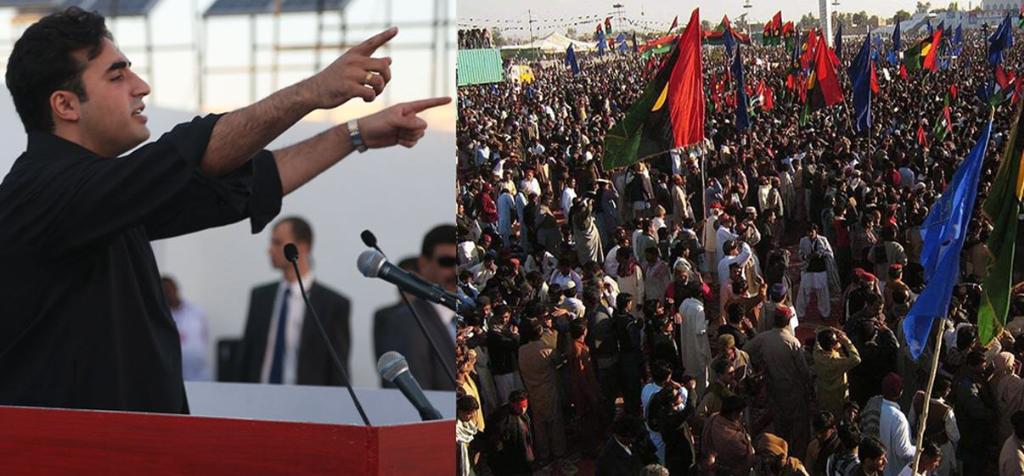
 In a fiery speech at Garhi Khuda Bakhsh to mark sixth death anniversary of his mother Benzair Bhutto on Friday, patron-in-chief of Pakistan People’s Party (PPP) Bilawal Bhutto Zardari declared war against Taliban militants while announcing the start of his political career.
He also indicated that his two sisters, Asifa and Bakhtawar will also participate in practical politics before next elections, scheduled to be held in 2018.
 Accepting that the path he has chosen was full of dangers, Bilawal, in an obvious reference to the tombs of his mother and grandfather Zulfikar Ali Bhutto, said his destiny was “martyrdom and Garhi Khuda Bakhsh.”
Besides criticizing his political rivals specially the government’s policy of negotiating with the TTP militants, he tried to reduce prevailing despair in traditional workers and jiyalas of the PPP.
On behalf of his party, he suggested very strict conditions for dialogue, if any, with proscribed Tehrik-i-Taliban Pakistan (TTP). They include surrendering arms, blood money for victims of terrorist attacks and respect for minorities among others.
With a touch of ZAB’s style and enunciation of Benazir, the PPP patron-in-chief eloquently used Urdu in his speech to the surprise of many. He used political chants and slogans along with poetry throughout the speech.
 “PPP is not a party of any landlord, industrialist, player or a mullah but it’s People’s Party.”
Ruling out the notion that the PPP has changed, he said traditions do not change. “People’s Party is passion….its zeal and a tradition,” he added.
Assailing ideology of Imran Khan’s Pakistan Tehrik-i-Insaf (PTI), Bilawal said the complicated issue of terrorism and extremism was not going to get resolved through sit-ins and long marches.
“It’s not kids’ game of cricket which can be resolved through a magic bat,” he said in an obvious reference to Imran Khan.
“Tsunami cannot be brought by pouring water in four lotas.”
He said it will take several generations to resolve the issue of terrorism from the country. “Friends of terrorists are traitors,” he chanted.
“Only by eradicating terrorism from society, Pakistan can become prosperous and peaceful,” he said, adding that People’s Party was standing in front of terrorists and blocking their way.
The Express TribuneFormer president Asif Ali Zardari did what everyone thought was impossible; he ensured the smooth transition of power from one democratic government to another, Pakistan Peoples Party (PPP) patron-in-chief Bilawal Bhutto Zardari said on Friday. He was addressing a mammoth rally in Garhi Khuda Bux that had gathered to commemorate his mother, Benazir Bhutto’s death anniversary. Applauding the public for strengthening democracy in the May 11 elections, Bilawal said people took revenge of his mother’s assassination by siding with democratic forces. “We all should congratulate former president Zardari, who had spent 11 years in jail in support of democracy,” he stressed. Commenting on PPP’s performance in the general elections, Bilawal said certain elements in establishment and judiciary didn’t want PPP to come to power. He went on to assure Prime Minister Nawaz Sharif that PPP will stand by him if anyone tries to derail the democratic process. An almost frenetic Bilawal said “all of Benazir’s children will come into politics by the next elections.” Terrorism Bilawal said if Prime Minister Nawaz Sharif fights terrorists, PPP will be the first party to support him. Lashing out at Tehreek-e-Taliban Pakistan (TTP), Bilawal said the terrorist outfit killed Benazir and many other innocent people. He criticised TTP’s war against non-Muslims and said Islam teaches respect for all religions. Rejecting the link between growing extremism and drone strikes, Bilawal said Pakistan was a victim of terrorism before drone campaign started and that terrorist attacks will continue even if the campaign ends. He did however express confidence in the Pakistan Army’s eventual victory over the terrorists. With a few “mein bhaagi hun” chants and slogans chock-full of bravado, Bilawal wrapped up his speech, telling his jiyalas he was not afraid of death.