By MATTHEW ROSENBERG
With less than a year left in his final term, President Hamid Karzai insists that he is eager to leave the presidential palace and lead a quieter life. It turns out, though, he may just be moving next door, to a lavish new home yards from the complex that has been the seat of his power for more than a decade.
According to Afghan officials, Mr. Karzai’s new home will be an old, European-style mansion that, once renovations are done, will be roughly 13,000 square feet. And the scale would befit the new role he is said to desire: guiding whoever fills his old job, as a presidential adviser for life.
As a clue to how Mr. Karzai, 55, might try to retain his influence, and security arrangements, the new estate in the heart of Kabul may be Exhibit A. But Western and Afghan officials examining the political scene here say there are a host of other ways Mr. Karzai is already working to influence the 2014 election. The vote is deemed critical for the Afghan government to keep its hold over the country with the American-led coalition ending its mission next year and negotiations on keeping some foreign forces here after that at an impasse.
Mr. Karzai has consistently placed loyalists in roles crucial to managing and securing the coming vote, raising concerns about the potential for fraud. Most Afghans now in positions of influence owe their jobs, and often their riches, to the president. And even as Mr. Karzai has publicly sought to appear above the fray as presidential candidates have announced their campaigns, it is widely acknowledged that none of them would be in the running if not for Mr. Karzai’s tacit acceptance, or at least ambivalence.
Whether he will be able to handpick a pliable successor is one of the chief questions hanging over the coming election. The conventional wisdom among both the Afghan elite and Western diplomats is that he can, and that whoever he decides to support will become the front-runner, in part because Afghan politics have few of the trappings of a democracy. There are no polls to be dissected, no political parties of any significance, no platforms or policy proposals.
For candidates, what matters “are your networks and allies, your ‘vote bank’ ” — that is, your ethnic or regional base — “and how much money you can liquefy for the campaign,” wrote Kate Clark and Gran Hewad of the Afghanistan Analysts Network in an essay published recently by the research group.
Afghanistan is run on patronage, and Mr. Karzai, who wields sweeping powers under the Afghan Constitution, has spent the past 11 years deciding who gets the best jobs and who gets the most money, with the two outcomes often coinciding.
In many ways, Mr. Karzai has approached the presidency much like an old Afghan tribal chief, a role that his family holds in the Popalzai tribe of the Pashtuns. Even his fiercest critics acknowledge he has excelled largely by doling out favors and cash to keep ethnic, regional and personal rivalries in check and bring old warlords into line.
Fazal Ahmad Manawi, a former election commission chief and no fan of Mr. Karzai, said the country needed him to help the next president manage. All former Afghan leaders have been killed or have fled, he said. “God forbid, if President Karzai leaves Afghanistan, then this will create another problem and achievements will be lost,” Mr. Manawi said.
To skeptics, including some current and former officials within his inner circle, that is exactly the problem. The government is far too centered on Mr. Karzai, and he has solidified his hold over Afghanistan’s electoral machinery in the past year, they said.
He is now carefully weighing whom to back in the race, in hopes of becoming the power-broker-in-chief after leaving office, in the estimation of Afghan officials and some Western diplomats.
Mr. Karzai will certainly have the kind of palatial home needed for the part. The spot selected sits just beyond the grounds of the Arg, a former royal palace that spreads across 83 acres in the center of Kabul and now serves as the presidential seat.
The property is hidden behind high walls and security barricades. Afghan officials familiar with the plans say it includes buildings previously used by the National Directorate of Security, the Afghan intelligence service. The renovation of old buildings and the construction of new ones, including a reception hall, began more than two months ago, said Aimal Faizi, a spokesman for the president.
Mr. Faizi said that the location was selected for security reasons, and that Mr. Karzai would only help the next president if asked.
Omar Zakhilwal, the finance minister, said in an e-mail that the property was being prepared for Mr. Karzai as part of the government’s legal obligations to any former president. Part of the land already belonged to the government, and it was being rented by the United Nations, which cleared out in June. The rest was purchased from a private owner, Mr. Zakhilwal said, adding that the government, not Mr. Karzai, would own the estate.
Mr. Zakhilwal did not provide additional details and declined to say how much the project would cost.
But other officials said the private owner was the family of Mohammad Daud Khan, Afghanistan’s first president. His story provides good reason for Mr. Karzai to seek a loyal successor.
Mr. Khan took office in a 1973 coup that deposed his cousin, King Zahir Shah, and abolished the monarchy. Five years later, Mr. Khan and more than 20 of his family members were killed in another coup.
The cynical view of Mr. Karzai’s postelection plans is that his main goal is to protect his family and others close to him, many of whom have amassed fortunes in the past 11 years.
But a number of people who have worked closely with Mr. Karzai, including some who are now critics, say that he sincerely sees himself as having his people’s best interests at heart and is needed to help ensure Afghanistan’s stability.
In the meantime, he has assiduously placed loyalists in roles crucial to the election.
Last month, Mr. Karzai chose Umar Daudzai, who served as Mr. Karzai’s chief of staff and ambassador to Pakistan, to be the new interior minister. The Interior Ministry controls police officers, many of whom were accused of aiding the substantial vote rigging that marred Mr. Karzai’s re-election in 2009.
Over the summer, Mr. Karzai named nine new members of Afghanistan’s election commission to replace commissioners who had served their terms. Experts said most of the new members have ties to the palace.
Mr. Karzai also resisted a push by Parliament to have foreign experts sit on a separate commission charged with adjudicating electoral disputes. In 2009, the five-person commission included three foreign experts, and it disqualified tens of thousands of votes, forcing Mr. Karzai into a runoff against his top competitor, Abdullah Abdullah, who eventually dropped out of the race.
Mr. Abdullah recently announced he would run again. He is the most prominent candidate to formally enter the race so far, and the leading opposition contender.
But the focus remains on who will emerge from Mr. Karzai’s inner circle. Ashraf Ghani, a close adviser to Mr. Karzai who ran for president in 2009, also announced his candidacy, as did Abdul Rab Rassoul Sayyaf, a former Pashtun warlord accused of involvement in war crimes.
Neither is considered a favorite of Mr. Karzai. Mr. Ghani suggested as much in an interview on Wednesday, saying he had asked the president to remain neutral.
The two names mentioned most often as the president’s likely choices are Qayum Karzai, his brother, and Zalmay Rassoul, the foreign minister, who is seen as polished and palatable to the West, and weak.
Neither has yet registered, and President Karzai has privately said that his brother should not run, according to another brother, Mahmood, and other Afghan officials.
Still, Mahmood Karzai, who has often been publicly critical of his presidential brother, said he thought the president would come around.
Qayum Karzai, he said, would certainly seek guidance from the current president if elected. “No one knows Afghanistan like he does,” Mahmood Karzai said. Whoever President Karzai supports “will have a big advantages.”
M WAQAR..... "A man's ethical behavior should be based effectually on sympathy, education, and social ties; no religious basis is necessary.Man would indeed be in a poor way if he had to be restrained by fear of punishment and hope of reward after death." --Albert Einstein !!! NEWS,ARTICLES,EDITORIALS,MUSIC... Ze chi pe mayeen yum da agha pukhtunistan de.....(Liberal,Progressive,Secular World.)''Secularism is not against religion; it is the message of humanity.'' تل ده وی پثتونستآن
Sunday, October 6, 2013
Karzai Is Planning to Be There for a Successor. Right There.
By MATTHEW ROSENBERG
With less than a year left in his final term, President Hamid Karzai insists that he is eager to leave the presidential palace and lead a quieter life. It turns out, though, he may just be moving next door, to a lavish new home yards from the complex that has been the seat of his power for more than a decade.
According to Afghan officials, Mr. Karzai’s new home will be an old, European-style mansion that, once renovations are done, will be roughly 13,000 square feet. And the scale would befit the new role he is said to desire: guiding whoever fills his old job, as a presidential adviser for life.
As a clue to how Mr. Karzai, 55, might try to retain his influence, and security arrangements, the new estate in the heart of Kabul may be Exhibit A. But Western and Afghan officials examining the political scene here say there are a host of other ways Mr. Karzai is already working to influence the 2014 election. The vote is deemed critical for the Afghan government to keep its hold over the country with the American-led coalition ending its mission next year and negotiations on keeping some foreign forces here after that at an impasse.
Mr. Karzai has consistently placed loyalists in roles crucial to managing and securing the coming vote, raising concerns about the potential for fraud. Most Afghans now in positions of influence owe their jobs, and often their riches, to the president. And even as Mr. Karzai has publicly sought to appear above the fray as presidential candidates have announced their campaigns, it is widely acknowledged that none of them would be in the running if not for Mr. Karzai’s tacit acceptance, or at least ambivalence.
Whether he will be able to handpick a pliable successor is one of the chief questions hanging over the coming election. The conventional wisdom among both the Afghan elite and Western diplomats is that he can, and that whoever he decides to support will become the front-runner, in part because Afghan politics have few of the trappings of a democracy. There are no polls to be dissected, no political parties of any significance, no platforms or policy proposals.
For candidates, what matters “are your networks and allies, your ‘vote bank’ ” — that is, your ethnic or regional base — “and how much money you can liquefy for the campaign,” wrote Kate Clark and Gran Hewad of the Afghanistan Analysts Network in an essay published recently by the research group.
Afghanistan is run on patronage, and Mr. Karzai, who wields sweeping powers under the Afghan Constitution, has spent the past 11 years deciding who gets the best jobs and who gets the most money, with the two outcomes often coinciding.
In many ways, Mr. Karzai has approached the presidency much like an old Afghan tribal chief, a role that his family holds in the Popalzai tribe of the Pashtuns. Even his fiercest critics acknowledge he has excelled largely by doling out favors and cash to keep ethnic, regional and personal rivalries in check and bring old warlords into line.
Fazal Ahmad Manawi, a former election commission chief and no fan of Mr. Karzai, said the country needed him to help the next president manage. All former Afghan leaders have been killed or have fled, he said. “God forbid, if President Karzai leaves Afghanistan, then this will create another problem and achievements will be lost,” Mr. Manawi said.
To skeptics, including some current and former officials within his inner circle, that is exactly the problem. The government is far too centered on Mr. Karzai, and he has solidified his hold over Afghanistan’s electoral machinery in the past year, they said.
He is now carefully weighing whom to back in the race, in hopes of becoming the power-broker-in-chief after leaving office, in the estimation of Afghan officials and some Western diplomats.
Mr. Karzai will certainly have the kind of palatial home needed for the part. The spot selected sits just beyond the grounds of the Arg, a former royal palace that spreads across 83 acres in the center of Kabul and now serves as the presidential seat.
The property is hidden behind high walls and security barricades. Afghan officials familiar with the plans say it includes buildings previously used by the National Directorate of Security, the Afghan intelligence service. The renovation of old buildings and the construction of new ones, including a reception hall, began more than two months ago, said Aimal Faizi, a spokesman for the president.
Mr. Faizi said that the location was selected for security reasons, and that Mr. Karzai would only help the next president if asked.
Omar Zakhilwal, the finance minister, said in an e-mail that the property was being prepared for Mr. Karzai as part of the government’s legal obligations to any former president. Part of the land already belonged to the government, and it was being rented by the United Nations, which cleared out in June. The rest was purchased from a private owner, Mr. Zakhilwal said, adding that the government, not Mr. Karzai, would own the estate.
Mr. Zakhilwal did not provide additional details and declined to say how much the project would cost.
But other officials said the private owner was the family of Mohammad Daud Khan, Afghanistan’s first president. His story provides good reason for Mr. Karzai to seek a loyal successor.
Mr. Khan took office in a 1973 coup that deposed his cousin, King Zahir Shah, and abolished the monarchy. Five years later, Mr. Khan and more than 20 of his family members were killed in another coup.
The cynical view of Mr. Karzai’s postelection plans is that his main goal is to protect his family and others close to him, many of whom have amassed fortunes in the past 11 years.
But a number of people who have worked closely with Mr. Karzai, including some who are now critics, say that he sincerely sees himself as having his people’s best interests at heart and is needed to help ensure Afghanistan’s stability.
In the meantime, he has assiduously placed loyalists in roles crucial to the election.
Last month, Mr. Karzai chose Umar Daudzai, who served as Mr. Karzai’s chief of staff and ambassador to Pakistan, to be the new interior minister. The Interior Ministry controls police officers, many of whom were accused of aiding the substantial vote rigging that marred Mr. Karzai’s re-election in 2009.
Over the summer, Mr. Karzai named nine new members of Afghanistan’s election commission to replace commissioners who had served their terms. Experts said most of the new members have ties to the palace.
Mr. Karzai also resisted a push by Parliament to have foreign experts sit on a separate commission charged with adjudicating electoral disputes. In 2009, the five-person commission included three foreign experts, and it disqualified tens of thousands of votes, forcing Mr. Karzai into a runoff against his top competitor, Abdullah Abdullah, who eventually dropped out of the race.
Mr. Abdullah recently announced he would run again. He is the most prominent candidate to formally enter the race so far, and the leading opposition contender.
But the focus remains on who will emerge from Mr. Karzai’s inner circle. Ashraf Ghani, a close adviser to Mr. Karzai who ran for president in 2009, also announced his candidacy, as did Abdul Rab Rassoul Sayyaf, a former Pashtun warlord accused of involvement in war crimes.
Neither is considered a favorite of Mr. Karzai. Mr. Ghani suggested as much in an interview on Wednesday, saying he had asked the president to remain neutral.
The two names mentioned most often as the president’s likely choices are Qayum Karzai, his brother, and Zalmay Rassoul, the foreign minister, who is seen as polished and palatable to the West, and weak.
Neither has yet registered, and President Karzai has privately said that his brother should not run, according to another brother, Mahmood, and other Afghan officials.
Still, Mahmood Karzai, who has often been publicly critical of his presidential brother, said he thought the president would come around.
Qayum Karzai, he said, would certainly seek guidance from the current president if elected. “No one knows Afghanistan like he does,” Mahmood Karzai said. Whoever President Karzai supports “will have a big advantages.”
Balochistan Earthquake: How Jihadists Convert A Tragedy Into An Opportunity
The Baloch HalBy Saifullah
The recent earthquake has brought backward areas of Balochistan an irrevocable havoc, affecting almost twenty-five thousands families. Balochistan Chief Minister, Dr. Malik Baloch, confirmed this after his brief visit to London. However, the worst has yet to come. In the backdrop of the post-earthquake relief operations, Jihadist organizations are setting up an unprecedented and somehow a successful network of recruitment in the Baloch areas under the disguise of rescuing the long lamented Baloch brothers. In fact, the army, after the failure of its earlier strategies to keep aloof the Baloch youth from joining ranks of the separatists, has deployed Jihaid-humanitarians such as the Jamat-u Dawah, as a new strategy to achieve the desired results. And to our surprise, this strategy has turned out to be a successful one. Balochistan has a long history of natural catastrophes; earthquake, a particular one, is because of the fault lines this region has which in turn is an effect of unstable plate tectonic movements. In 1935, Quetta witnessed a horrible earthquake with all its buildings collapsed to ground. Only the then cantonment separated from the city by deep canal, where the whole city sewerage gets it outlet, survived. However, the recent earthquakes, tracking from the one that happened a couple of years ago in Ziarat – a picnic and historical spot – and following years, a dreadful one that stuck Mashkhel, adjacent to Pak-Iran boarder, has been accompanied by a number of Jihadi-militant organizations establishing their network in the region. The Jamat-ud Dawah was one of the organizations which surpassed other organizations even the then government in helping out the earthquakes affectees. Even today, by travelling through those areas, tents, disposable shelter homes and the likes, over which the Dawa name is conspicuously written, vindicates the organization’s active participation in working for rehabilitation of the affectees. Moreover, it was Dawah that took precedence over other NGOs and the Pak Army to record their name as the first organization that went to Mashkhel and helped the quake victims. This development is of great significance – because of its ‘bizarreness’ – that an organization like Dawah, accused of sponsoring terrorism in Kashmir, has established its network both in Pashtun and Baloch populated areas; Ziarat and Mashkhel, respectively. For, Dawah which primarily aims at waging Jihad against India in Kashmir with the help of the Lashkar-e-Taiba, had never been ‘headache’ of neither of Pashtuns nor Balcohs. On contrary, it is the province wherein distribution of power and economic resources’ belongingness are more contested – which are ‘boarder confined concerns’ – instead, as is the case in Punjab and the Khyber Pakhtunkhawa, in particular, where Jihadis’ ‘trans-boarders expansionary’ vision finds conducive environment. The Baloch youth intermeshing with the Dawah network testifies that the network has just gained its monument. With a massive destruction inflicted by the nature, Dawah is trying its best to turns the devastation unleashed by the nature into an opportunity for its two pronged strategy: to rescues and rehabilitate the affectees invoking empathy for their ‘strayed’ brothers – the Balochs – and to translate the ‘deceitful’ humanitarian image into a resort by establishing network of the Dawah. Sequences of the developments implicates that Dawah is increasing its activities and deepening its presence in the previously ‘unconquered’ region under the tacit affirmativeness of the military. Establishment of Dawah in Balochistan, if am not speculating into a remote and far less possibility, will serve two functions: first, it will prove, as it is, a successful strategy deployed under the patronage of the military to prevent the Baloch youth form joining separatists’ ranks. Second, the military can use, in future, the Dawah in par with other militant Jihaidi organizations, now working in Balochistan. The later development is a very unique but not unusual: with the severing loyalties of other Jihades, based in Balochistan and operating across the border in Afghanistan, Dawah – a most reliable organization which our military can trust – can be deployed anytime against the ‘other’ Jihades to undo their ‘pernicious’ intentions against Pakistan. Adding into the misery of Balochistan, lamenting not only a massive fund raising campaign for the affectees by leading news channels, however there are exceptions, focusing too much on the two premiers’ meeting but also the news channel missed the opportunity to criticize our military for pampering organizations like Dawah – this time in Balochistan – that has sabotaging impact on the peace talks between India and Pakistan. Lastly, besides paying attention to schism between the province and center, the public must also pay attention how our military is covertly breeding afresh generation for militancy.
Who bombed Pakistan's Christians?
Pakistan: Mr Khan in Wonderland
The chairman of Pakistan Tehreek-e-Insaf, Imran Khan, has penned an article in this newspaper – Dialogue: the best of difficult options – explaining his position on the Taliban threat. It’s good that Khan has presented his position in writing, which can be scrutinised and debated.
He opens his spell with a reference to East Pakistan, informing us that the events leading to “the breakup of our country, left me with a strong conviction that military operations are never a solution to any problem, least of all one involving one’s own people”. This is a very loose ball.
While the now-Bangladeshis wanted to secede for political reasons, the Taliban, far from wanting to secede, actually want to conquer this state. They are not saying ‘you go your way and we shall ours’. They want us to surrender and give up our land.
Perhaps, we should set aside this fundamental difference for the sake of making room for Khan’s two-staged operative objection about use of force against own people. My position on the normative aspect of this statement is not far from Khan’s. I shall go a step further and say that the use of force even against another state must be an option of last resort. This should establish two facts: one, it is never a happy situation where one might have to resort to the use of force; two, one may yet do it and states have done it, not just against other states but also against internal threats.
I may also indicate to Khan that the secession of East Pakistan, in the final analysis, came because of an external military push. It is a counterfactual but perhaps he should give a thought to the question of whether East Pakistan could have seceded without that massive military help.
Finally, and because the argument above must not be misconstrued as taking away from the socio-political and economic grievances of East Pakistan, it is important to note that the debacle in that wing was not a military one. In taking a snapshot view of what happened in East Pakistan, Khan is losing the longer, political trajectory that led to the use of force, even if we grant, with hindsight, that that policy in its details and planning could have been better, if not entirely different. But, as I have argued above, it is equally imperative to see whether without a full-fledged Indian invasion of East Pakistan, we would have seen the secession. A good example of that is Occupied Kashmir.
Khan then goes on to say that he “stood firmly with those who opposed Musharraf’s Balochistan operation and earlier the sending of the military into Waziristan”. I agree. Balochistan was best dealt with politically. But Baloch sub-nationalism is again a secessionist threat. It cannot be put in the same category as the Taliban threat.
As for sending the military into Waziristan, Khan makes two mistakes. One, it is factually incorrect to say that the army was never deployed to the tribal agencies before 2004. He should read the history of 7 Division and the raising of XI Corps with the addition of 9 Div. His other mistake is to imply that the tribal agencies should be left as an anachronism.
Khan, perhaps unknowingly, is correct in assuming that the military, initially, was quite unaware of how to deal with the situation. The fault was General Musharraf’s. The operations conducted between 2004 and 2007 were flawed in many ways, alternating between suing for peace and using force without much thought to the politico-strategic ends of either.
Moreover, Khan continues to suggest that the tribal areas were an idyllic place into which the state inducted the serpent. That is absolutely incorrect. Al-Qaeda and other sundry foreign fighters had ingressed into the area. They were not only using the tribal areas as sanctuaries but also planning and executing attacks from Pakistani territory into other states and inside Pakistan. That situation needed to be addressed. While one can criticise the conduct of the operations, to imply that operations were the cause of what we face today is to reverse causality rather arbitrarily.
This war did not begin in 2004. Its enabling environment started shaping in the early eighties with the two policies of Islamisation at home and support for the Afghan mujahideen. The extremism begotten of one began to complement the jihadist millenarianism of the other. Groups and individuals nourished in this environment began to think and act supra-state. Khan’s party represents the state and the state simply cannot accept actions and motives that go beyond and above it.
This means, first, that Khan’s starting point for this conflict on the historical tragedy is flawed and, second, that this mindset will not vanish when the last American troops pull out of Afghanistan. If anything, unless we adopt domestic and regional strategies to root it out, including but not exclusively through the use of force, the situation is likely to get worse.
Khan seems “convinced that peace cannot be restored in Pakistan through continuing military operations”. I hope he is right. But he needs to appreciate the situation rather than situating the appreciation.
That brings me to another point that Khan and his party stalwarts raise – ie, military operations have not been effective. Having witnessed many of these operations, I can assure Khan that the physical landscape of the tribal agencies and frontier regions today is very different from what it was in 2007 and 2008. The relevant point, however, is this: why has the physical dominance of these areas so far not entirely resulted in social-psychological and economic-fiscal dominance, which is the only way to successfully build the strategic triangle?
The answer to that will not come by focussing merely on military operations or their perceived ineffectiveness but by asking the question of how and why other elements of national power could not be harnessed and employed to make use of the space that was created by military operations. Why, for instance, has the state not addressed the threat of reprisals that were to inevitably come in the urban centres and which required, and still do, the creation of effective counter-terrorism police units to work in collaboration with a capable police force?
Formulating a strategy requires, foremost, a full evaluation of the responses available to the state and answering the question of whether the state, in fact, has utilised them. In our case, that has not happened.
There’s much else that can be debated in Khan’s article but there’s never enough space. He keeps comparing situations – like Ireland – with the one we have here when they were/are strategically, historically and ideologically very different. Even in the case of Sri Lanka, while most of us know about and refer to the Tamil problem, no one seems to know or remember another problem, much more like ours: Sinhala extremism by the JVP. In any case, the examples he gives either refer to foreign occupations or to secessionist movements. Pakistan is neither in illegal occupation of its territories nor is the TTP a secessionist force.
Finally, his defence of the proposal to open a TTP office by using the term ‘stakeholders’ in the resolution that came out of the government-sponsored conference is at best naïve, at worst, dangerous. The TTP is not a legitimate stakeholder in power-sharing like perhaps the Afghan Taliban whose office Khan keeps referring to and who are, again, fighting combined armies of states foreign to Afghanistan. Talking to the TTP, therefore, is meant – or should mean – for the state to reassert its authority, not accept the legitimacy of the TTP’s criminal actions. Offering the TTP an office, even before determining the bargaining zone and establishing the state’s maximum reservation point, is to reverse the order of negotiation theory.
I understand Khan’s frustration. I don’t doubt his sincerity. But he must understand the complexity of what’s happening and why. (I wish it were as simple as a mere reaction to drone strikes, which is another topic altogether.) Even more, he should know that we are in this for the long haul.
Pakistan: Inordinate delay in LG polls
Sad as it is elected provincial governments, both the previous and the present ones, have been reluctant to cede power to the grass roots level. Foot dragging on holding elections to this third tier of government continues under one pretext or the other. The election Commission of Pakistan has informed the Supreme Court of Pakistan that it cannot hold local bodies elections in 2013 for the simple reason that the pre-poll preparations by provinces are not complete yet. It may be recalled that following the 2008 elections, one by one the then provincial governments had dismissed local bodies replacing them with the colonial era commissionerate system. They kept ignoring the constitutional provision to hold fresh elections and hand over control to local representatives of the people. The Supreme Court, taking suo motu notice of the irregularity in April last year, ordered the governments to hold elections on the same day in June. Still, the resistance continued. The excuse used was incomplete voters' lists even though by-elections were regularly held for assembly seats that fell vacant either because of death of a member or disqualification on account of a fake degree.
That being the background, it is hardly surprising if the court is exasperated over inordinate delay in LG polls - this time on account of federal and KPK governments' slow progress in passing the required law. A three-member bench of the apex court headed by Chief Justice Iftikhar Mohammad Chaudhry reminded the federal and provincial governments on Thursday that "the general public at the grass roots level must be allowed to participate in the democratic system, which is possible only if they take part through their representatives in the local government elections." The KPK government has taken as long as it has to pass the necessary legislation because it is in the process of making a radical change in the old system, converting 957 union councils into 35,000 village councils representing 8,000 people, each. Which is a much welcome change aimed at genuine grass roots empowerment. Necessary fresh delimitation work is to take time. The KPK Advocate General told the court that that is the reason the provincial government is reluctant to give a specific timeframe for the elections. There is no valid justification whatsoever for the federal government's failure to decide the schedule for LG polls in the capital territory. The court has said the governments have to make some stopgap arrangements, "especially when the constitution gives a way out." The way out is to issue ordinances pending legislation. There is no constitutional obligation, nonetheless, for the provinces to hold LG elections on the same day. KPK's issue should not hold back the other three provinces or Islamabad. They must go ahead to announce firm dates instead of giving the court vague assurances, Sindh government says it is 'likely' to hold the elections by November 27 and Balochistan sometime around December 7. Punjab has set a date, December 14, for the electoral exercise, though after passing a law that takes away vital administrative functions and financial independence from the LGs. It seems that a better way to deal with this foot dragging would be for the court to set a timeframe and seek compliance.
Practice of extortion on the rise in Peshawar
Salman Yousafzai
Taking extortion has become on the most dangerous practices in the country. The Khyber Pakhtunkhwa in general and Peshawar in particular have also been badly affected by this menace.
Sources in police department said that the traders of provincial capital have so far given millions of rupees as extortion money to the extortionists. These criminals have become so powerful that some reports suggested that they had also demanded extortion money from one of the influential person in the Khyber Pakhtunkhwa government.
The police sources also claimed to have arrested two persons for threatening the important political figure of the province.
The extortionists were few years back were associated only with Karachi but now they have started their criminal activities in Peshawar with businessmen and high profile people as their victims. Mostly the extortionists called traders from the numbers of Afghanistan and Waziristan. The Afghanistan numbers can be used easily as different telecom companies are providing roaming facilities. The Peshawar High Court though have ordered immediate stop to providing roaming facilities to Afghan companies in Pakistan.
A resident of Peshawar who is running a travel Agency informed The Frontier Post on the condition of anonymity that he received calls from unidentified extortionist last week demanding extortion money, however, at last he informed police about the incident and give the number of extortionist to Gulberg police but they no action was taken against the criminals so far.
While contacted officials of Gulberg Police Station said that in such cases they only lodge FIR after tracing out the accused.
The sacrifices given by the Khyber Pakhtunkhwa are not a hidden fact and the bravery of our policemen will always be written in golden words as large number of cops had been martyred in war against terrorism.
However, they lack modern equipments like GSM locaters when it comes to tracing out the terrorist especially for those who involved in collecting extortion money, mobile snatchings and kidnapping for ransom.
Waqar Ahmad, city police spokesman, told The Frontier Post that the tender of purchasing GSM locator was approved however, still waiting for Pakistan Telecommunication Authority (PTA) and Interior Ministry approval.
He said, through GSM locater they easily traced out the location of culprits within hours adding that due to lack of the technology they take help of Investigation Bureau from where they got the records of cell phones which take two to three days. While answering a query DSP Waqar Ahmad informed that they purchased that technology on around 7 crore rupees, saying, they had experts for using this technology. Sources added that militants group mostly used their volunteers for collecting extortion money and through these volunteers they assassinate their victims who rejected to fulfill their demands or kidnapped these traders or others while the assailants volunteers also even not know the exact situation that why they killed the traders or someone else. During last few months, many traders and businessmen of province, including Peshawar, Nowshera, Sawabi and Mardan, received threatening calls and letters from banned groups and demanded of extortion money, however, who rejected to give the money the militants kidnapped the traders or they placed bomb near their houses. During the Ramzan in Peshawar dozens of low intensity bomb were exploded near the houses of many high profile people which not claimed lives but give signs of warning to that people. The practice is increasing with each passing day. Unconfirmed reports said that more then hundreds businessmen and traders given billion of rupees extortion money to banned groups. The mostly businessmen who gave extortion money in Peshawar were doing their business on University Road, Saddar, Ghur Mnadi, People Mandi, Ram Pura and other trading markets. Traders of Swabi were also become victim of extortionists, however, this alarming situation is calm down to some extant in that area by law enforcers but not completely. Police also arrested many such criminals who demanded of extortion money but such elements were still present in province and collecting money. According to security agencies officials, local criminals, former fighters of banned groups and present banned organizations militants were involved in such crimes. An official of Intelligence Agencies said that a local person of the area performed his duty as informer of militants and give information about their victim about his trade, location timing of coming towards home etc. Few days ago police also arrested the extortionists who earlier working for banned group of Taliban in Bajawar Agency, however, it is not cleared about the arrested men that he had the support of his bosses or not. Sources revealed that earlier, extortionists contacted with traders for money through their mobile no of Waziristan and Afghanistan local numbers but with the passage of time they started phone calls from local phone numbers and mostly they send letters to traders for demanding money. Sources further informed that the extortionists also have their workers in every city who received the demanded money from their victim. An official of intelligence agency informed that few months ago a high profile and political leader from Swabi also received such threatening calls from extortionist; however, he refused to give the money adding that after his refusal banned outfits sent two militants for his assassination. They further revealed that bosses of two volunteers told them that the political leader belong to Qadyani sect that why the volunteers become ready to killed that person, however, fortunately, police arrest the said volunteers and foiled the attack. SP City Ismail Kharak informed the Frontier Post that they arrested several extortionists red handed while they were planting the bombs and their operation is also underway to traced out such criminals, but he lamented that "whenever the extortionists demanding money from 10 traders only one or two person secretly informed the police while others did not cooperate with police". He appealed the traders and other high profiles to cooperate with police in this regards to get rid from that abuse. A trader of Peshawar said that one change was observed in the regime of present government of PTI that is "extortion money", adding that traders of the city did not hear the name of extortion money in previous government. He further said that several traders leave the city due to increasing the incidents of extortion saying that they will also leave their business in the city if such incidents will continue. He demanded of Chief Minister to take solid steps for the eradication of this abuse from the city.
Pakistan: Ignominious retreat
Under pressure from the Supreme Court (SC), the government had little option but to withdraw its September 30 notification regarding the massive increase in the electricity tariff. While withdrawing the notification that had been declared by the SC as illegal, beyond the purview of the government, and which should rightfully have been left to the National Electric Power Regulatory Authority (NEPRA) to issue, the government has now requested NEPRA to review the tariff of the distribution companies and KESC. During the proceedings, the three-member bench headed by Chief Justice (CJ) Iftikhar Mohammad Chaudhry took not just the government, but also its Minister for Water and Power Khwaja Mohammad Asif and NEPRA Chairman Khwaja Naeem to task. The minister was embarrassed by being reminded by the CJ that he had argued during the rental power case before the SC that the federal government has no authority to influence the decisions of NEPRA. The CJ then went on to ask him why he was giving up his earlier stance. Khwaja Asif was only let off the hook once Attorney General Muneer Malik confirmed that the September 30 notification was indeed being withdrawn. NEPRA's Khwaja invited the wrath of the court when he tried to plead the case of the government, arguing that since it had already determined the tariff and bills according to the raised rates had been sent out to consumers, the decision should be allowed to stand. The CJ was severe on Khwaja Naeeem, questioning whether he was holding a government brief. During the proceedings, Justice Jawwad Khwaja once again raised the issue of the failure of the government to collect outstanding bills of Rs 441 billion, choosing instead to further burden honest bill payers through increased tariffs. Justice Khwaja termed this nothing less than exploitation under Articles 3, 14 and 24 of the constitution. Now while the wound is self-inflicted because of a surprising ‘memory lapse’ on the part of Khwaja Asif regarding the proper method, body, procedure for notifying tariffs, and the government has retreated before the correct focusing of the SC on the illegality involved, this should not be read as meaning that the government has abandoned its plan to increase tariffs. Khwaja Asif is trying to frighten the public by warning that the NEPRA review will mean even higher tariffs, while some analysts think this is a smokescreen for the government’s real intent to get NEPRA to do its ‘dirty’ work for it by re-notifying the same increases.
Meantime the Federal Board of Revenue (FBR) has, in the name of filling the gap of General Sales Tax (GST) not being collected on over 40 items at the dealers, distributors and wholesalers’ stage of the supply chain, decided (reportedly in collaboration with the manufacturers) to raise the rate of GST at the manufacturing stage by 2 percent to 19 percent. This, according to reports, is because the manufacturers expressed their inability to print the retail price on all products, which would then have formed the basis for GST at the retail and intermediate stages of the supply chain. The manufacturers further argue that they cannot print a retail price that applies to the whole country since retail prices vary from market to market due to a variety of reasons. So now, as a result of the new move, the manufacturers will pay 19 percent GST; the intermediate and retail stages will pay nothing; documentation of the economy that could have been helped by the printing of retail prices on all products will suffer one more big setback; and the consumer will no doubt be subjected to higher prices on the excuse that GST has ‘gone up’ by 2 percent. This end result is foreseeable, judging by how the markets usually respond to such steps. All the ‘sophisticated’ arguments of the FBR regarding the measure not amounting to any new taxation cannot hide the ugly reality that price rises can be expected for all the listed items and a sympathetic rise in all products across the board. This will be one more ‘gift’ of the government to the masses groaning under backbreaking inflation, not to mention unemployment, law and order and terrorism. The government’s economic policy thrust seems focused on passing the burden of the economic crisis onto the shoulders of the already suffering masses. This may help the government and its business friends in the short term, but it has serious implications for the former in political terms.
Pakistan: Nawaz's style of governance irks party members
Some in the ruling party openly, and some discreetly, have begun expressing concerns over concentration of powers in the Prime Minister Office.
Sources in the PML-N have told Dawn that there’s considerable resentment in the party against what they call the prime minister’s over-reliance on bureaucracy.
The sources said that even some ministers had protested over lack of control of their ministries. According to them, the PM Office not only keeps close tabs on all ministries but also intervenes in their routine affairs.
“The federal cabinet exists only on paper; on the ground every government department is being micro-managed through bureaucrats, both serving and retired,” said a senior PML-N leader.
Ministers are not even allowed to hire personal secretaries of their choice. A minister had a ‘shouting match’ with a senior cabinet colleague over the matter and threatened to quit the portfolio if demand for a secretary of choice wasn’t accepted.
Similarly, ministers have been barred from appointing and transferring staff in their departments without prior approval of the PM Office. The prime minister recently turned down requests from two ministers for transfer of their secretaries.
“By all means, it’s a highly centralised government and the PM Office is at the centre of all powers. The concept of decentralisation of power and collective responsibility, which forms the core of the parliamentary form of government, doesn’t exist here,” said another PML-N leader.
He confirmed that ministers were not allowed to run their ministries independently. During cabinet meetings, he said, the ministers dared not ask any question, what to talk of offering views that differed from those of the premier.
According to him, this is the sole reason why ministers don’t take interest in attending the proceedings of parliament and answering questions.
During the last National Assembly session, the treasury benches were assailed by the opposition for ministers’ absence from the house.
“Why should ministers go to the house and set themselves up for tough questions when they can hardly do anything worthwhile in their ministries,” argued the party leader.
At the moment, the prime minister is holding portfolios of important ministries like foreign affairs, defence, communications and law.
Meanwhile, the PML-N leadership is known for running highly centralised governments. From 2008 to 2013, Punjab Chief Minister Shahbaz Sharif single-handedly ran the provincial government.
However, this time he has shared some of his powers with his son Hamza Shahbaz.
On the other hand, the chief minister is sharing the burden of his elder brother at the centre. He regularly attends meetings of the water and power ministry and the planning division.
Besides the PM Office, Shahbaz Sharif also keeps tabs on the federal departments. A federal government official confirmed that bureaucrats had been instructed to regularly send progress reports on federal government departments to the chief minister.
The prime minister’s tendency to prefer bureaucrats over politicians is also evident in the appointment of his advisers and special assistants. Three of his four advisers and special assistants — Tariq Fatemi, Sartaj Aziz and Khawaja Zaheer — are former bureaucrats.
Only Sardar Sanaullah Zehri, who has been appointed as special assistant to the prime minister and enjoys the status of a federal minister, is a politician. However, Mr Zehri’s is a totally different story.
Mr Zehri was a strong candidate for the post of chief minister of Balochistan, which eventually went to Dr Abdul Malik Baloch of the National Party. The prime minister rewarded Mr Zehri with the status of federal minister only to placate him, according to the sources.
Since the general elections, many senior party members have been sidelined. PML-N’s Secretary General Iqbal Zafar Jhagra is still waiting for some important assignment.
Initially, there were reports that he would be made governor of his home province of Khyber Pakhtunkhwa. If a senior member of the PML-N is to be believed, Mr Jhagra even finds difficulty in holding a meeting with the prime minister, who is the party’s president.
“What message are we sending to the party’s rank and file who remained loyal to the party leadership during Gen [Pervez] Musharraf’s rule,” a party leader said. He criticised the present lot of prime minister’s advisers who were deliberately not allowing genuine party workers to go near the PM Office.
The PML-N leader also recalled how the party loyalists were ignored when the prime minister picked former British lawmaker Chaudhry Muhammad Sarwar as the Punjab governor. Earlier, Rana Iqbal was tipped as governor, but he was made speaker of the Punjab assembly instead.
Former Sindh chief minister Syed Ghous Ali Shah, who went through difficult times during the Musharraf regime, met a similar fate. Mr Shah resigned as president of the party’s Sindh chapter in August, after the party refused to accommodate him in the federal government.
“Once in power, the party workers expect respect from their leadership, both in terms of reward and recognition. But that’s missing from our government,” said the party source.
Worse still, no sincere effort was made to address Mr Shah’s grievances, he added.
Nawaz missed no chance to topple PPP government
Pakistan People’s Party (PPP) leader Qamar Zaman Kaira Saturday dispelled the impression that Pakistan Muslim League-N played a friendly opposition during PPP rule, saying ‘Nawaz Sharif did not waste even a single chance to topple our government’.
“He (Nawaz Sharif) had himself gone to the court in black suit to send the government packing,” Kaira said while talking to media men here.
The PPP leader said that Punjab Chief Minister Shahbaz Sharif used to ridicule the then president Asif Ali Zardari and all the government departments. Shahbaz Sharif kept spitting venom against the then PPP-led government, he added.
He said the PML-N secured the mandate by telling lies to the people, as all their promises proved to be a lie. “While they (PML-N) made it even more difficult for the masses to survive by introducing additional taxes of billion of rupees, they failed to impose any tax on their associates,” Kaira regretted.
PPP fully supports govt to end terrorism: Khursheed
http://mediacellppp.wordpress.com/Leader of the Opposition in the National Assembly says terrorists and extremists have virtually paralyzed the national economy.Opposition leader in the National Assembly Syed Khursheed Shah has said that the PPP is providing full support to the government to eradicate terrorism and extremism from the country. Talking to media in Faisalabad‚ he said the government has the full authority and powers to decide what course of action should be taken to save the nation from this menace. He said terrorists and extremists have virtually paralyzed the national economy besides promoting bad image of the country at international level.
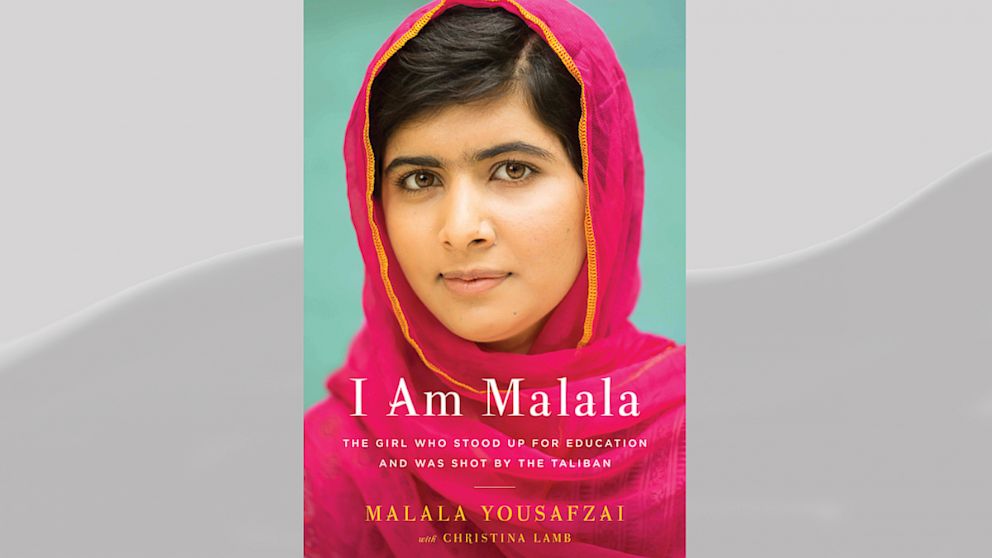
Malala Yousafzai: The Bravest Girl in the World
In this exclusive excerpt from her autobiography, I Am Malala, young activist Malala Yousafzai recounts the day she was shot by the Taliban.
In a country that’s seen more than its share of violence, the fate of one teenager might not seem to count for much. But somehow Malala Yousafzai of Pakistan has managed to become an international inspiration. She was only 11 when she took on the Taliban, demanding that girls be given full access to school. Her campaign led to a blog for the BBC, a New York Times documentary (watch it below), and a Pakistani peace prize. But all that was only a prelude to even more extraordinary events. Last October, Taliban assassins attacked Malala, then 15, on her way home from school, shooting her in the head. Here, Malala describes that day and offers her hopes for the future.
Tuesday, Oct. 9, 2012, wasn’t the best of days to start with, as it was the middle of exams—though as a bookish girl I didn’t mind them as much as some of my classmates did. That morning we arrived in the narrow mud lane off Haji Baba Road in our usual procession of brightly painted rickshaws sputtering diesel fumes, each one crammed with five or six girls. Since the time of the Taliban, our school has had no sign and the ornamented brass door in a white wall gives no hint of what lies beyond.
For us girls, that doorway was like a magical entrance to our own special world. As we skipped through, we cast off our head scarves and ran helter-skelter up the steps. At the top of the steps was an open courtyard with doors to all the classrooms. We dumped our backpacks in our rooms, then gathered for assembly under the sky, our backs to the mountains.
The school was founded by my father before I was born, and on the wall above us, “Khushal School” was painted proudly in red and white letters. We went to school six mornings a week, and as I was in Year 9, my classes were spent chanting chemical equations or studying Urdu grammar, writing stories in English with morals like “Haste makes waste” or drawing diagrams of blood circulation—most of my classmates wanted to be doctors. It’s hard to imagine that anyone would see that as a threat. Yet outside the school lay not only the noise and craziness of Mingora, the main city of the province of Swat, but also those, like the Taliban, who think girls should not go to school.
Because it was exam time, school started at 9 instead of 8 that morning, which was good, as I don’t like getting up and can sleep through the crows of the roosters and the prayer calls of the muezzin.I slept in the room at the front of our house. The only furniture was a bed and a cabinet that I had bought with the money I’d been given as an award for campaigning for peace in our valley and the right for girls to go to school. On some shelves were the gold-colored plastic cups and trophies I had won for coming first in my class. There were a few times I had not come out on top—both times I was beaten by my class rival, Malka-e-Noor. I was determined it would not happen again.
The school was not far from my home and I used to walk, but since the start of the last year I had been going with other girls in a rickshaw and coming home by bus. It was a journey of five minutes along the stinky stream, past the giant billboard for Dr. Humayun’s Hair Transplant Institute, where we joked that one of our bald male teachers must have gone when he suddenly started to sprout hair. I liked riding the bus because I didn’t get as sweaty as when I walked, and I could chat with my friends and gossip with Usman Ali, the driver, whom we called Bhai Jan, or “brother.” He made us all laugh with his crazy stories.
I had started taking the bus because my mother worried about me walking on my own. We had been getting threats all year. Some were in the newspapers, and some were messages passed on by people. I was more concerned the Taliban would target my father, as he was always speaking out against them. His friend and fellow campaigner Zahid Khan had been shot in the face in August on his way to prayers.
Our street could not be reached by car. I would get off the bus on the road below, go through an iron gate and up a flight of steps. Sometimes I’d imagine that a terrorist might jump out and shoot me on those steps. I wondered what I would do. Maybe I’d take off my shoes and hit him. But then I’d think that if I did that, there would be no difference between me and a terrorist. It would be better to plead, “Okay, shoot me, but first listen to me. What you are doing is wrong. I’m not against you personally. I just want every girl to go to school.”
I wasn’t scared, but I had started making sure the gate was locked at night and asking God what happens when you die. I told my best friend, Moniba, everything. We’d lived on the same street when we were little and had been friends since primary school. We shared Justin Bieber songs and Twilight movies, the best face-lightening creams. Moniba always knew if something was wrong. “Don’t worry,” I told her. “The Taliban have never come for a small girl.”When our bus was called, we ran down the school steps. The bus was actually a white Toyota truck with three parallel benches. It was cramped with 20 girls and three teachers. I was sitting on the left between Moniba and a girl named Shazia Ramzan, all of us holding our exam folders to our chests.
Inside the bus it was hot and sticky. In the back, where we sat, there were no windows, just plastic sheeting, which was too yellowed to see through. All we could see out the back was a little stamp of open sky and glimpses of the sun, a yellow orb floating in the dust that streamed over everything.
Then we suddenly stopped. A young bearded man had stepped into the road. “Is this the Khushal School bus?” he asked our driver. Usman Bhai Jan thought this was a stupid question, as the name was painted on the side. “Yes,” he said.
“I need information about some children,” said the man. “You should go to the office,” said Usman Bhai Jan. As he was speaking, another young man approached the back of the van.
“Look, it’s one of those journalists coming to ask for an interview,” said Moniba. Since I’d started speaking at events with my father, journalists often came, though not like this, in the road.
The man was wearing a peaked cap and had a handkerchief over his nose and mouth. Then he swung himself onto the tailboard and leaned in over us. “Who is Malala?” he demanded.
No one said anything, but several of the girls looked at me. I was the only girl with my face uncovered.
That’s when he lifted up a black pistol. Some of the girls screamed. Moniba tells me I squeezed her hand. My friends say he fired three shots. The first went through my left eye socket and out under my left shoulder. I slumped forward onto Moniba, blood coming from my left ear, so the other two bullets hit the girls next to me. One bullet went into Shazia’s left hand. The third went through her left shoulder and into the upper right arm of Kainat Riaz.
My friends later told me the gunman’s hand was shaking as he fired.
In the year since that fateful day, Malala has undergone a recovery that is nothing short of miraculous. The bullet narrowly missed her brain, and doctors at Queen Elizabeth Hospital in Birmingham, England, where she was brought in a medically induced coma six days after the attack, marveled that she was able to stand within a week of her arrival. Malala underwent multiple surgeries and spent nearly three months in the hospital (which specializes in treating wounded soldiers), though mercifully it was found she had suffered no major permanent neurological damage. The ordeal did, however, solidify her will: “It feels like this life is not my life. It’s a second life. People have prayed to God to spare me and I was spared for a reason—to use my life for helping people.”
Malala Yousafzai Describes Moment She Was Shot Point-Blank by Taliban
Before Pakistani schoolgirl Malala Yousafzai was shot in the head by a Taliban assassin, she told her best friend, "Don't worry. The Taliban have never come for a small girl."
In Malala's new book, the 16-year-old worldwide symbol for peace and education details the day she was shot point-blank on her way home from school.
Malala was 11 years old when she took a stand against the Taliban, who had issued an edict that all girls' schools should be closed. She began advocating for the right to go to school, writing an anonymous blog for the BBC and appearing in a New York Times documentary.Her father, Ziauddin Yousafzai, ran a girls' school in the SWAT Valley, and had been targeted for death by the Taliban. And Malala's increasing visibility put her at risk as well.
"I wasn't scared, but I had started making sure the gate was locked at night and asking God what happens when you die," Malala wrote in her autobiography "I Am Malala," excerpted in Sunday's Parade magazine.
Before the shooting, Malala wrote that she considered what she would do if a terrorist jumped out and shot her.
"Maybe I'd take off my shoes and hit him," she wrote. "But then I'd think that if I did that, there would be no difference between me and a terrorist."
"It would be better to plead, 'Okay, shoot me, but first listen to me. What you are doing is wrong. I'm not against you personally. I just want every girl to go to school.'"
On Oct. 9, 2012, Malala was on the bus on her way home from school when a "young, bearded man" stepped into the road. Her best friend, Moniba, thought it was a reporter wanting to talk to Malala.
The bus was a white three-bench Toyota truck with 20 girls and three teachers packed inside.
The masked man approached the vehicle and demanded, "Who is Malala?" No one said anything, but several girls looked at Malala. She was the only one with her face uncovered.
"That's when he lifted up a black pistol," she wrote. "Some of the girls screamed. Moniba tells me I squeezed her hand."
"My friends say he fired three shots," Malala continued. "The first went through my left eye socket and out under my left shoulder. I slumped forward onto Moniba, blood coming from my left ear, so the other two bullets hit the girls next to me ... My friends later told me the gunman's hand was shaking as he fired."
The bullet narrowly missed Malala's brain and she was taken to Queen Elizabeth Hospital in Birmingham, England, six days after the attack. She spent nearly three months in the hospital and underwent numerous surgeries.
Now Malala and her family are living in Birmingham and she is back at school. She spent her 16th birthday giving a speech at the United Nations and has become the youngest person to ever be nominated for a Nobel Peace Prize.
She has also founded the Malala Fund, a nonprofit organization that advocates for and supports girls education around the world through grants and partner collaborations.
Malala is dedicated to devoting her life to her cause.
"It feels like this life is not my life. It's a second life," she said. "People have prayed to God to spare me and I was spared for a reason -- to use my life for helping people."
"I Am Malala" will be in bookstores Tuesday, Oct. 8. In addition to the U.S., the book will be published in 21 countries. Click here to learn more about the book.
Saturday, October 5, 2013
Obama Open To Redskins Name Change
http://espn.go.com/President Barack Obama says that if he owned the Washington Redskins, he would "think about changing" the team name, wading into the controversy over a football nickname that many people deem offensive to Native Americans. Obama, in an interview with The Associated Press, said team names like the Redskins offend "a sizable group of people." He said that while fans get attached to the nicknames, nostalgia may not be a good enough reason to keep them in place. "I don't know whether our attachment to a particular name should override the real legitimate concerns that people have about these things," he said in the interview, which was conducted Friday.An avid sports fan, Obama said he doesn't think Washington football fans are purposely trying to offend American Indians. "I don't want to detract from the wonderful Redskins fans that are here. They love their team and rightly so," he said. But the president appeared to come down on the side of those who have sharply criticized the football team's name, noting that Indians "feel pretty strongly" about mascots and team names that depict negative stereotypes about their heritage. Other professional sports teams have Indian nicknames, including football's Kansas City Chiefs and baseball's Atlanta Braves and Cleveland Indians. Numerous colleges and universities have changed names that reference Native Americans. St. John's changed its mascot from the Redmen to the Red Storm, Marquette is now the Golden Eagles instead of the Warriors and Stanford switched from the Indians to the Cardinal. The Redskins' nickname has attracted a fresh round of controversy in recent months, with local leaders in Washington calling for a name change and some media outlets refraining from using the name. The name is the subject of a long-running legal challenge from a group of American Indians seeking to block the team from having federal trademark protection. Congressional lawmakers have introduced a bill seeking the same goal, though it appears unlikely to pass. Opponents of the Redskins nickname also plan to hold a protest Monday outside the NFL's fall meeting in Washington. Team owner Dan Snyder has vowed to never abandon the name. But NFL commissioner Roger Goodell said last month that the league should pay attention to those offended by the nickname -- a subtle change in position for Goodell, who had more strongly supported the nickname in his previous statements this year. Despite the controversy, an AP-GfK poll conducted in April showed that nationally, "Redskins" still enjoys wide support. Nearly four in five Americans don't think the team should change its name, the survey found. Only 11 percent think it should be changed, while 8 percent weren't sure and 2 percent didn't answer. Obama said he doesn't have a direct stake in the Redskins debate since he's not a team owner. But he hinted that might be part of his post-White House plans. "Maybe after I leave the presidency," he joked. "I think it would be a lot of fun." He added: "I'd probably look at a basketball team before I looked at a football team. I know more about basketball than I do about football."
Bangladesh: Wali Khan: He rallied for Mujib, against Yahya
At the war crimes trials, some of the accused Jamaat-e-Islami leaders justified siding with the Pakistani military during Bangladesh’s war of independence, saying they had done that to save the unity of Pakistan.
But then there were some West Pakistanis who tried to save that unity not by siding with the military, but by trying to stop its bullets.
Khan Abdul Wali Khan, former president of the National Awami Party (NAP) and son of Khan Abdul Ghaffar Khan (known as the Frontier Gandhi), was one of them. A staunch believer in democracy in Pakistan, he faced persecution by the ruling military junta for opposing the General Yahya Khan's decision to ignore the people’s verdict in the 1970 elections, where Bangabandhu Sheikh Mujibur Rahman and the Awami League won a landslide victory.Together, Wali Khan and Sheikh Mujib formed the Democratic Action Committee to restore democracy in Ayub Khan-dictated Pakistan.
Wali Khan received the “Friends of Liberation War Honour” during the seventh phase of the award-giving ceremony on Tuesday. His son Senator Asfandyar Wali Khan, current president of the party now known as the ANP, received the award on his behalf.
In a conversation with The Daily Star on the same day, Asfandyar reminiscedx about the contributions of his father to the independence of Bangladesh.
He had arrived at the lobby of the Sonargaon Pan Pacific Hotel for the interview, after a visit to the Bangabandhu Memorial Museum.
“Being here is difficult for me,” he said in English. “I am here for the first time since independence, and I had to see how a man was assassinated by the very people he had liberated. Sheikh Mujib was very close to my father. After every meeting, the two would spend the evening together.”
Asfandyar told this correspondent that the ANP always thought that Sheikh Mujibur Rahman had rightfully earned his place as the prime minister of Pakistan, after pulling the Awami League through the landslide victory in its first democratic elections.“My father warned that if they opposed Sheikh Mujib, Pakistan would be divided. But the junta did not pay heed. He used to quip through quoting an Urdu saying, ‘You are trying to earn love with bullets, washing the land with blood. You think you are reaching the goal, but you do not know when you lost it,’” he recalled.
Right before the crackdown on March 25, 1971, Abdul Wali Khan had gone to General Yahya Khan to negotiate with him about handing over power to Sheikh Mujib.
“Yahya told my father to get out of the country because he planned to shoot. My father replied, ‘Shoot a Pakistani chest with a Pakistani bullet?’ But Yahya was unmoved,” said Asfandyar.He recollected that throughout April and May of the year, NAP workers were persecuted and its top leaders arrested. “We were enraged. I was a part of the student wing. We went and vandalised Yahya Khan’s mansion. I am not proud of having done that, but when our constitutional methods of dissent are taken away, we often react unconstitutionally. Our liberties were taken away, similar to East Pakistan.”
Their hostels were raided that night, and they were placed under arrest, Asfandyar said.
“The 1970 election was the first chance for the oppressed Baloch, Pashtun and Bengalis to protest. The West Pakistani politicians did not care about us. None of them even visited East Pakistan during the 1970 cyclone, the worst storm in the history of the land.”
However, Asfandyar believes that the bloodshed during the Liberation War of Bangladesh could have been averted if the West Pakistani top brass had paid heed to the people’s verdict.
He went on: “We have a lot more in common than what we have in contrast, and a functioning democracy that protects the rights of the oppressed Bengalis and the minorities could have been formed, if only the junta gave up power. It was a flawed political decision, but the flaw did not show up until now. Now we are trying to establish cooperation among two nations that have bred nothing but hate for each other for the last 42 years.”
Many people were not happy that he was coming to Bangladesh to receive the award, he noted.
“However, I believe that we would only have been eligible for gratitude from Bangladesh, if we could have persuaded the junta not to go to war against its own people.”
Pakistan: A theatre of war turning on itself
http://gulfnews.com/
By Aamer Ahmed KhanThree attacks within 10 days killing nearly 150 people in Pakistan’s northwest city of Peshawar is an escalation even by Pakistani standards — an escalation in a war that has killed 45,000 civilians over the last 10 years in attacks as random as they were brutal. Coming in the backdrop of the government’s efforts to initiate peace negotiations with Taliban militants, a hugely controversial initiative which seems to have divided Pakistani opinion makers along seemingly irreconcilable lines, these attacks have thrown up questions that go beyond the obvious and all-encompassing label of terror. None more so than the deadly suicide attack on a Sunday mass in one of the oldest churches in the city which killed more than 80, left thousands mourning and a nation stunned at its own inability to stop the bloodbath. Never before has the country’s Christian minority been targeted with such deadly intent. Always a discriminated minority, they have been a silent witness to the country’s steady retreat against hardline Islamist ideologies espoused by a mushrooming array of militant groups. At times, they have fallen victim to Pakistan’s contentious blasphemy laws, but by and large they have gone about their business even as the sphere of social, cultural and religious tolerance around them has continued to shrink. But on September 22, as two suicide bombers positioned themselves among the 400-odd worshippers at the conclusion of the ceremony, this under-2 per cent minority suddenly found itself on the frontline. As Pakistan mourned its latest tragedy analysts went into overdrive, with some arguing there was no reason why the Christian community had been singled out for this outrage. Like their 180 million fellow Pakistanis, irrespective of their caste, creed or religion, they were just caught up in a war that seems to be pushing its boundaries with every passing day. Confirmation of the feeling that anyone and everyone could be a target came with an attack on a bus carrying civil servants a few days later, followed by an attack in the city’s oldest bazaar whose inhabitants shared everything with their attackers — religion, ethnicity and nationality. This is a theatre of war turning on itself. For years, Pakistan has bet on the Taliban as the glue that could bind a fractious Afghanistan together once international troops withdraw from the country. It has sat by and watched the Taliban’s ideological merger with Al Qaida in the hope that the latter would melt away once Afghanistan stabilises, with the Taliban as part of the ruling mix.
Pakistan bottom of the barrel on net freedom: Report
“Pakistan remains one of the worst countries when it comes to online freedom of speech, user rights and citizens’ privacy”, commented Digital Rights Foundation Executive Director, Nighat Dad. “In the past year, state has been rigorously trying to implement the best of surveillance set-ups to create a kind of watchdog upon activists, journalists and a common citizen on the name of war against terrorism. Pakistan’ civil society, despite being faced with threats and vicious consequences, is strongly fighting against the state-employed policies and technologies that can hurt Pakistani citizen”.Even though the number of internet users in the country is increasing, the Pakistan report states that there have been various political and social obstacles by successive governments that came into power, in the name of fighting terrorism and preserving Islam.
This has caused problems for many civil rights activists, students and other such personnel who want to engage in intensive multimedia training, the report concluded.
According to the report:
“Legal measures also threatened digital rights, particularly over sensitive religious issues. At least two of the 23 criminal investigations launched in 2012 under Pakistan’s strict blasphemy laws—which carry the death penalty—involved content sent by mobile phone. A Twitter spat escalated into a defamation suit after a political website accused a religious leader of inciting hatred”.
Obstacles to access
According to the report, “Low literacy, difficult economic conditions, and cultural resistance have limited the proliferation of ICTs in Pakistan. Poor copper wire infrastructure and inadequate monitoring of service quality by the Pakistan Telecommunication Authority (PTA) have historically stymied the expansion of broadband internet.”
Only urban cities such as Karachi, Lahore, Islamabad and Peshawar have access to better quality broadband services, the report found.
Additionally, the report cited “bureaucratic hurdles” as having caused a problem for development of 3G or 4G networks.
Access to the internet has been deliberately obstructed by the Pakistani authorities in Balochistan where there has been persistent conflict between the Baloch nationalists and the security forces, the report stated.
Limits on content
Some of the major developments by the government in 2012 and 2013 included creating and installing new equipment to systemise website blocking and filtering, the report found.
Despite such blocking, the report concluded that Pakistanis have relatively open access to international news organizations and other independent media, as well as a range of websites representing Pakistani political parties, local civil society groups, and international human rights organizations.
“Nevertheless, most online commentators exercise a degree of self-censorship when writing on topics such as religion, blasphemy, separatist movements, and women’s and LGBT rights,” it added.
Surveillance
Ordinary internet users as well as activists, bloggers, and media representatives in Balochistan are concerned about government surveillance as they feel restricted to openly talk about their religious beliefs, particularly atheists.
In February 2013, the upper house of parliament passed the Fair Trial Act 2012 allows security agencies to seek a judicial warrant to monitor private communications “to neutralize and prevent threat or any attempt to carry out scheduled offenses;” and covers information sent from or received in Pakistan or between Pakistani citizens whether they are resident in the country or not. Under the law, service providers face a one-year jail term or a fine of up to PKR 10 million for failing to cooperate with the warrant.
According to the report, “Pakistan is also reported to be a long-time customer of Narus, a US-based firm known for designing technology that allows for monitoring of traffic flows and deep-packet inspection of internet communications, and some media reports say Pakistani authorities have also acquired surveillance technology from China.”
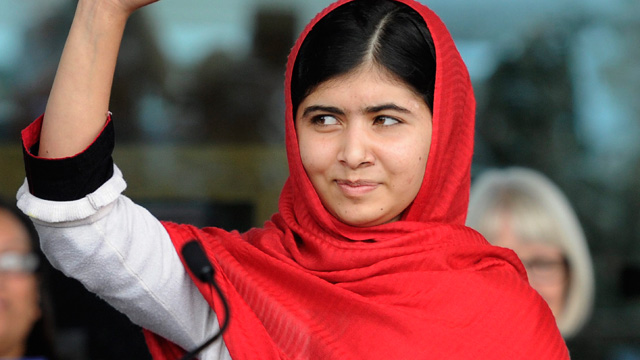
Malala Wins a Rights Award
By THE ASSOCIATED PRESS
The Pakistani schoolgirl who survived a Taliban assassination attempt received a human rights award on Friday. The girl, Malala Yousafzai, an education activist, was shot as she traveled to school in northwest Pakistan last October. On Friday in London she was declared the winner of the Anna Politkovskaya Award. Ms. Politkovskaya, a Russian journalist and Kremlin critic who worked to uncover abuses in Chechnya, was killed in 2006. The award is given annually by the group RAW in WAR (Reach All Women in War) to a woman who defends human rights. The group said Ms. Yousafzai, 16, had been chosen “for her courage to speak out when nobody else dared,” for giving a voice to many women and girls and for promoting education for girls.
Malala Yousafzai Named as Top Nobel Peace Prize Contender
http://www.parade.com/Much like Oscar season, the period before the announcement of each year’s Nobel Prize recipients is marked with speculation: Who will win? The much-anticipated news of this year’s Nobel Peace Prize winner won’t be revealed until Friday, October 11—but one organization, the International Peace Research Institute, has released its short list of favorites for the honor. Topping the list is Malala Yousafzai, the 16-year-old Pakistani activist who rose to international fame when she took on the Taliban and demanded access to school for girls. “Malala would not only be timely and fitting with a line of awards to champions of human rights and democracy, but also sets both children and education on the peace and conflict agenda,” Kristian Berg Harpviken, head of the International Peace Research Institute, said in a statement. Yousafzai was shot in the head by Taliban assassins last October, and has since staged a miraculous recovery. “It feels like this life is not my life. It’s a second life,” she writes in her autobiography I Am Malala, excerpted exclusively in this Sunday’s Parade. “People have prayed to God to spare me and I was spared for a reason—to use my life for helping people.” If Yousafzai is awarded the Nobel Peace Prize, she’ll be one of only 15 female recipients and the youngest winner by far (the average age of the previous laureates is 62, and the youngest winner so far is Yemeni journalist Tawakkol Karman, who won the honor at age 32 in 2011). Other top contenders for this year’s Nobel Peace Prize, according to the Oslo-based organization that predicts laureates every year, include: Uganda peace advocate Sister Mary Tarcisia Lakot; Russian activists Lyudmila Alexeyeva, Svetlana Gannushkina and Lilya Shibanova; Guatemalan attorney general Claudia Paz y Paz; and Congolese gynecologist and anti-sexual violence activist Denis Mukwege. The Nobel Prize, selected by the Norwegian Nobel Committee, has been awarded since 1901. Previous winners of the peace honor include Mother Teresa, Martin Luther King Jr., and President Barack Obama
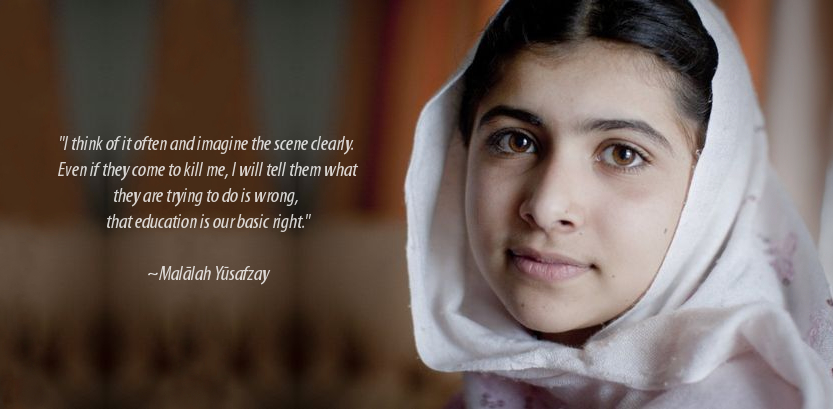
Assad: Turkey will pay for backing rebels
The Syrian president, Bashar al-Assad, has said Turkey will pay a heavy price for backing rebels fighting against him, and accused it of harbouring "terrorists" who, he claimed, would soon turn on their hosts.In an interview with Turkey's Halk TV due to be broadcast on Friday, Assad called the Turkish prime minister, Recep Tayyip Erdogan, "bigoted" and said Ankara was allowing terrorists to cross into Syria to attack his army and civilians. "It is not possible to put terrorism in your pocket and use it as a card. It is like a scorpion which won't hesitate to sting you at the first opportunity," Assad said, according to a transcript from Halk TV. "In the near future, these terrorists will have an impact and Turkey will pay a heavy price for it." Turkey shelters about a quarter of the two million people who have fled Syria and has allowed rebel fighters to cross in and out of Syria. Last month, the al-Qaeda-affiliated Islamic State of Iraq and the Levant seized Azaz, about 5km from the border with Turkey, and has repeatedly clashed with the local rebel FSA brigades since then. 'Sectarian agenda' Assad accused Erdogan, whose AK Party has its roots in conservative Islamist politics, of having a sectarian agenda. "Before the crisis, Erdogan had never mentioned reforms or democracy, he was never interested in these issues. Erdogan only wanted the Muslim Brotherhood to return to Syria, that was his main and core aim," he said. Assad again denied his forces had used chemical weapons and blamed such attacks on the rebels. Asked whether he expected the Geneva process to accelerate if Syria handed over its chemical weapons, Assad said he saw no link. "Practically these issues are not related. Geneva II is about Syria's own domestic political process and cutting neighbouring countries' weapons and financial support to terrorists," he said.Syrian president tells Turkish TV station that "terrorists" will turn on their hosts "like a scorpion".
What is Postpartum Depression ?
http://www.webmd.com/Postpartum depression (PPD) is a complex mix of physical, emotional, and behavioral changes that happen in a woman after giving birth. According to the DSM IV, a manual used to diagnose mental disorders, PPD is a form of major depression that has its onset within four weeks after delivery. The diagnosis of postpartum depression is based not only on the length of time between delivery and onset, but also on the severity of the depression
What Is Postpartum Depression?
Postpartum depression is linked to chemical, social, and psychological changes associated with having a baby. The term describes a range of physical and emotional changes that many new mothers experience. The good news is postpartum depression can be treated with medication and counseling.
The chemical changes involve a rapid drop in hormones after delivery. The actual link between this drop and depression is still not clear. But what is known is that the levels of estrogen and progesterone, the female reproductive hormones, increase tenfold during pregnancy. Then, they drop sharply after delivery. By three days after a woman gives birth, the levels of these hormones drop back to what they were before she got pregnant.
In addition to these chemical changes, social and psychological changes associated with having a baby create an increased risk of depression.
What Are the Symptoms of Postpartum Depression?
Symptoms of postpartum depression are similar to what happens normally following childbirth. They include lack of sleep, appetite changes, excessive fatigue, decreased libido, and frequent mood changes. However, these are also accompanied by other symptoms of major depression, which may include depressed mood; loss of pleasure; feelings of worthlessness, hopelessness, and helplessness; and thoughts of death or suicide.
What Are the Risk Factors for Getting Postpartum Depression?
A number of factors can increase the risk of postpartum depression, including:
a history of depression during pregnancy
age at time of pregnancy -- the younger you are, the higher the risk
ambivalence about the pregnancy
children -- the more you have, the more likely you are to be depressed in a subsequent pregnancy
having a history of depression or premenstrual dysphoric disorder (PMDD)
limited social support
living alone
marital conflict
Who Is at Risk for Postpartum Depression?
Most new mothers experience the "baby blues" after delivery. About one out of every 10 of these women will develop a more severe and longer-lasting depression after delivery. About one in 1,000 women develops a more serious condition called postpartum psychosis.
Friday, October 4, 2013
Saudi black op team behind Damascus Chemical weapons attack – diplomatic sources
The August chemical weapons attack in the Syrian capital’s suburbs was done by a Saudi Arabian black operations team, Russian diplomatic sources have told a Russian news agency.
“Based on data from a number of sources a picture can be pieced together. The criminal provocation in Eastern Ghouta was done by a black op team that the Saudi’s sent through Jordan and which acted with support of the Liwa Al-Islam group,” a source in the diplomatic circles told Interfax.
The attack and its consequences had a huge impact on the Syrian situation, another source said.
“Syrians of various political views, including some opposition fighters, are seeking to inform diplomats and members of international organizations working in Syria what they know about the crime and the forces which inspired it,” he told the agency.
Liwa Al-Islam is an Islamist armed group operating near Damascus headed by the son of a Saudi-based Salafi cleric. The group claimed responsibility for the bombing of a secret governmental meeting in Damascus in July 2012 that killed a number of top Syrian officials, including Defense Minister Dawoud Rajiha, his deputy Asef Shawkat, and Assistant Vice President Hassan Turkmani.
The allegations mirror a number of earlier reports, which pointed to Saudi Arabia as the mastermind behind the sarin gas attack, which almost led to US military action against Syrian government. Proponents of this scenario say intelligence services in Riyadh needed a false flag operation to provoke an American attack in Syria, which would tip the balance in favor of the armed opposition supported by Saudi Arabia.
While the majority of Western countries say they are certain that the Syrian government carries the blame for the attack, Damascus maintains that the rebel forces must be behind it. Russia shares this conviction too, calling the incident a provocation.
Back in March US President Barack Obama said the use of chemical weapons would be a ‘red line’ for the Syrian government, crossing which would prompt America’s intervention into the bloody Syrian conflict. After the August attack, which the US believes has claimed some 1,400 lives, the president was called on his words by many supporters of the Syrian opposition both at home and outside of the US.
The plan for military action was put on pause after a Russia-brokered deal with Damascus, which agreed to join the Organization for the Prohibition of Chemical Weapons (OPCW) and destroy its stockpile of chemical weapons. Experts from OPCW are currently in Syria preparing for the disarmament.
Back in March, US President Barack Obama said the use of chemical weapons would be a ‘red line’ for the Syrian government, crossing which would prompt America’s intervention in the bloody Syrian conflict. After the August attack, which the US believes has claimed some 1,400 lives, the president was called to act on his words by many supporters of the Syrian opposition both at home and outside the US.
Earlier a UN report concluded that nerve gas had indeed been used “on a large scale” in August. However, the consistency of the findings is under question.
According to the report, none of the environmental samples the UN collected in Western Ghouta tested positive for Sarin, while biomedical samples, taken from affected people, all tested positive.
RT’s Worlds Apart host Oksana Boyko has spoken to Angela Kane, UN high representative for disarmament affairs, who has just returned from Damascus.
“If you read the report, the report comes out and says sarin was used. It is also a matter that maybe in the environmental samples they took there was no sarin found, but that does not mean that sarin was not used,” Kane told Worlds Apart. “It was there in the human samples. If they had more time to go around they would have found different samples. It was a limited collection that they did, but the collection was conclusive. I think, it was very comprehensive, therefore, we shared all of those samples with the Syrian government.”
At the same time, there have been concerns voiced that witnesses the UN team spoke to were brought by the opposition from different regions and did not live in Western Ghouta.
“I think it is not possible to say ‘We brought them all from a different area.’ To my mind that is inconceivable. You can come up with the theory, but this does not mean the theory is correct,” Kane said.
Afghanistan: Students Launch Movement Seeking Youths’ Participation in Elections
Meanwhile, the organizers emphasized that the movement is completely neutral, and it has no links with any political group or party. The main purpose of the movement is to persuade the young Afghan boys and girls to vote in the next spring's elections.
"Election is a vital pillar for democracy. We all should come forward and vote for our future. We should also participate in the movements that are aimed at encouraging the youth to participate in the elections," said Ms. Kubra Gawhari, a student participating in the movement.
"We want that this program attracts more citizens and persuades them to register themselves and vote in the elections," said Hashmatullah Bahnam, another student.
Meanwhile, several members of the Hezb-e-Mardom Afghanistan (HMA), at another gathering urged the youths to come out in large numbers and cast their ballots. The members said that the youths of can shape the future of Afghanistan.
"The youths across the country should monitor the elections and ensure that it is held in a free, fair and transparent manner," said Dawood Rawosh, the Chairman of the HMA.
The Afghan youth makes up 70 percent of the total population, and their vote is expected have major impact on the outcome of the upcoming elections. The choice of electoral candidates of the educated youth is considered vital to shape the future of Afghanistan.
Afghanistan's road to World Cup 2015
The safe and unsafe in Pakistan
by Waseem Altaf

UNSAFEGenuine scientist, Abdus Salam who later won a Nobel Prize in physics took refuge in Italy for he was unwanted and unsafe in Pakistan.
SAFEFake scientist, Abdul Qadeer Khan, who stole nuclear designs from the Netherlands and traded nuclear secrets and illicit technology across several continents, took refuge here for he was “wanted” and safe in Pakistan.
UNSAFEThe conscientious and courageous judge namely, Pervez Ali Shah who had convicted and sentenced Mumtaz Qadri, the murderer of ex-Governor Salman Taseer took refuge in Saudi Arabia for he was unsafe in Pakistan.
SAFEKhalid Sheikh Mohammad, the mastermind of 9/11 terror attacks took refuge in Rawalpindi, for he was safe in Pakistan.
UNSAFEAfter police foiled a bomb plot to blow up his house in Lahore, the moderate Islamic scholar Javed Ahmad Ghamdi took refuge in Malaysia for he was unsafe in Pakistan.
SAFERamzi Yousaf, who was involved in 1993 bombing of World Trade Center and a plot to kill Pope John Paul II and plant bombs in passenger planes flying out of Bangkok, took refuge in Islamabad for he was safe in Pakistan.
UNSAFEAfter receiving death threats, Owais Sheikh, the lawyer of Sarabjeet Singh, the Indian spy incarcerated at Kot Lakhpat jail Lahore, took refuge in Sweden for he was unsafe in Pakistan.
SAFEWorld-renowned master terrorist Osama bin Laden, took refuge in Abbotabad, for he was safe in Pakistan. How ironic that those we should be proud of as a nation feel unsafe here while those we should be ashamed of feel safe in this country! - See more at: http://lubpak.com/archives/285777#sthash.uKZIARDW.dpuf
Pakistan: Journalist kidnapped in Waziristan
Subscribe to:
Posts (Atom)