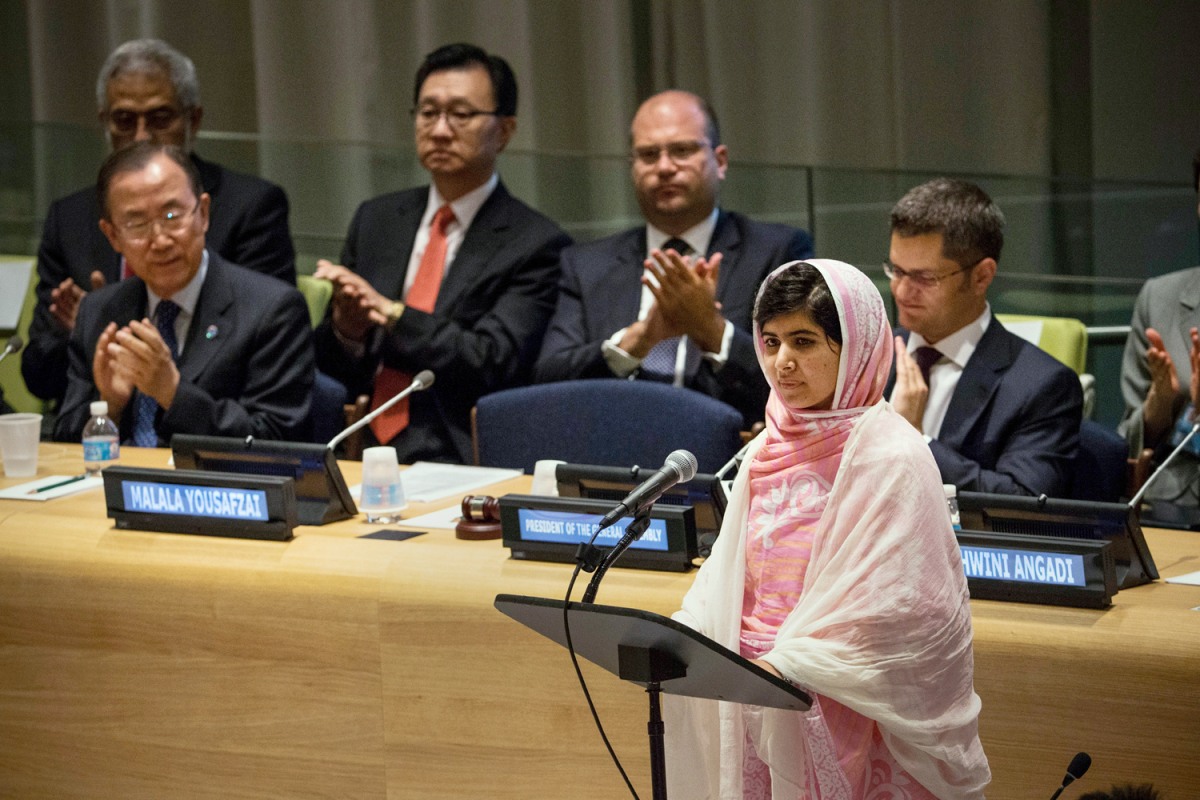
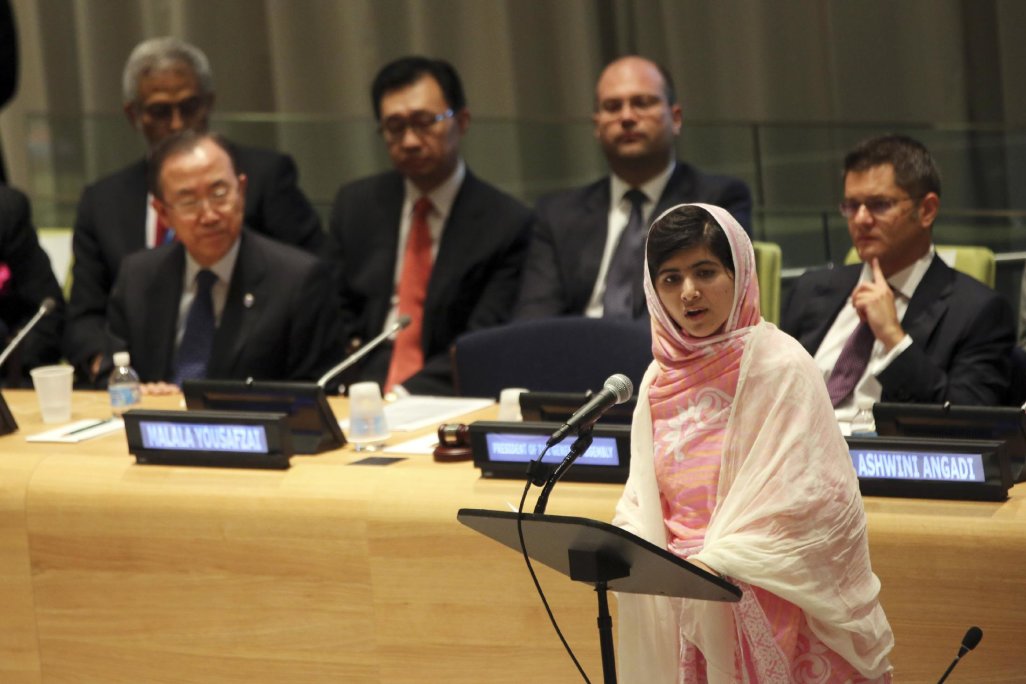
 Pakistani teenager Malala Yousafzai's inspiring speech at the United Nations on every child's right to go to school is just the beginning of a major push on education, former UK Prime Minister Gordon Brown said Saturday.
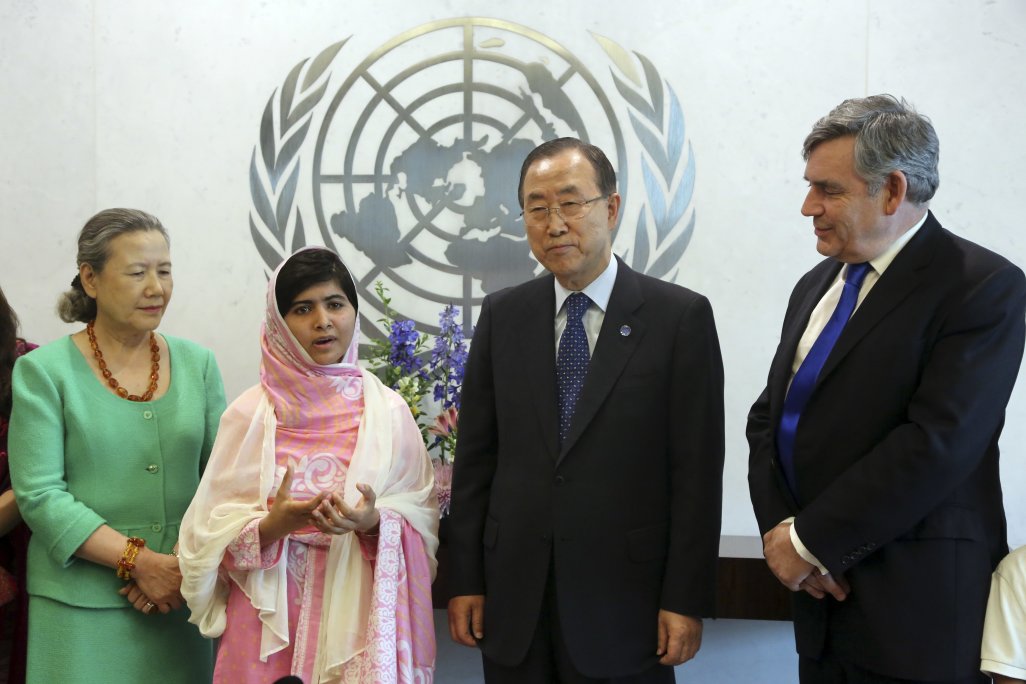
Yousafzai -- who on Friday gave her first public remarks since she was shot by the Taliban last year for advocating that all girls should go to school -- will return to the United Nations in September to press her point, according to a statement from Brown's A World at School campaign.
Accompanied by Brown, she will address an education summit of world leaders during the week of the full General Assembly at U.N. headquarters in New York, it said.
There, the 16-year-old will demand action on behalf of 57 million children around the world who have no access to any schooling.Meanwhile, Brown, who's the U.N. special envoy for global education, will travel to Pakistan in July to discuss education issues with the country's new government. He also intends to visit Nigeria, Africa's most populous nation, in the fall.
Between them, Pakistan and Nigeria have 16 million children out of school, the statement said, most of them girls.
Malala's journey from near death to recovery
Brown and Yousafzai met with the United Nations' Pakistan high commissioner on Friday to discuss the plight of more than 5 million children who are out of school in the country, the statement said.
"Malala's speech was just the start of a momentous push for change in the run up to 2015, to deal with the education emergency," Brown said.
The Millennium Development Goal on education set by U.N. member states in 2000 pledged to have every child in school by 2015.
In her speech Friday, Yousafzai said the masked gunmen who shot her in the head in October, who also injured two other girls, had not silenced her ambitions but rather made her stronger.
Gordon Brown: The story of Malala's friend
"They thought that the bullets would silence us, but they failed," she said. "And then, out of that silence came thousands of voices."
She said that she doesn't seek revenge against the Taliban, who have threatened to hunt her down again and end her life, and that she's against no one.
Malala's global voice stronger than ever
"I am here to speak up for the right of education of every child," she said. "I want education for the sons and the daughters of all the extremists, especially the Taliban."
She also reflected on the very real dangers faced by teachers and students in Pakistan.
Earlier this summer, a teacher was gunned down in front of her son as she drove into her all-girl school. A school principal was killed and his students severely injured when a bomb was tossed onto a school playground at a girls' school in Karachi in March.
In January, five teachers were killed near the town of Swabi in the volatile northern Khyber Pakhtunkhwa province, the United Nations says.
And, in June, a suicide bomber blew up a bus carrying 40 schoolgirls as it made its way to a girls' campus in Quetta. Fourteen students were killed.
The speech, given on her 16th birthday, was not about her, Yousafzai added, but rather to give a voice to all the voiceless millions around the world fighting for their rights.
"Let us wage a global struggle against illiteracy, poverty and terrorism, and let us pick up our books and pens. They are our most powerful weapons," she said.
"One child, one teacher, one pen and one book can change the world. Education is the only solution. Education first."
Saturday, July 13, 2013
Gordon Brown: Malala's U.N. speech is just the beginning
Pakistani teenager Malala Yousafzai's inspiring speech at the United Nations on every child's right to go to school is just the beginning of a major push on education, former UK Prime Minister Gordon Brown said Saturday.
Yousafzai -- who on Friday gave her first public remarks since she was shot by the Taliban last year for advocating that all girls should go to school -- will return to the United Nations in September to press her point, according to a statement from Brown's A World at School campaign.
Accompanied by Brown, she will address an education summit of world leaders during the week of the full General Assembly at U.N. headquarters in New York, it said.
There, the 16-year-old will demand action on behalf of 57 million children around the world who have no access to any schooling.Meanwhile, Brown, who's the U.N. special envoy for global education, will travel to Pakistan in July to discuss education issues with the country's new government. He also intends to visit Nigeria, Africa's most populous nation, in the fall.
Between them, Pakistan and Nigeria have 16 million children out of school, the statement said, most of them girls.
Malala's journey from near death to recovery
Brown and Yousafzai met with the United Nations' Pakistan high commissioner on Friday to discuss the plight of more than 5 million children who are out of school in the country, the statement said.
"Malala's speech was just the start of a momentous push for change in the run up to 2015, to deal with the education emergency," Brown said.
The Millennium Development Goal on education set by U.N. member states in 2000 pledged to have every child in school by 2015.
In her speech Friday, Yousafzai said the masked gunmen who shot her in the head in October, who also injured two other girls, had not silenced her ambitions but rather made her stronger.
Gordon Brown: The story of Malala's friend
"They thought that the bullets would silence us, but they failed," she said. "And then, out of that silence came thousands of voices."
She said that she doesn't seek revenge against the Taliban, who have threatened to hunt her down again and end her life, and that she's against no one.
Malala's global voice stronger than ever
"I am here to speak up for the right of education of every child," she said. "I want education for the sons and the daughters of all the extremists, especially the Taliban."
She also reflected on the very real dangers faced by teachers and students in Pakistan.
Earlier this summer, a teacher was gunned down in front of her son as she drove into her all-girl school. A school principal was killed and his students severely injured when a bomb was tossed onto a school playground at a girls' school in Karachi in March.
In January, five teachers were killed near the town of Swabi in the volatile northern Khyber Pakhtunkhwa province, the United Nations says.
And, in June, a suicide bomber blew up a bus carrying 40 schoolgirls as it made its way to a girls' campus in Quetta. Fourteen students were killed.
The speech, given on her 16th birthday, was not about her, Yousafzai added, but rather to give a voice to all the voiceless millions around the world fighting for their rights.
"Let us wage a global struggle against illiteracy, poverty and terrorism, and let us pick up our books and pens. They are our most powerful weapons," she said.
"One child, one teacher, one pen and one book can change the world. Education is the only solution. Education first."
President Karzai Congratulates Malala Yousafzai- Education Activist on Her 16th Birthday


Saudi princess may have kept four other women as slaves, police say
 Authorities are investigating whether four other women from the Phillippines found living with a woman described as a Saudi princess in Irvine were forced to work as slaves.
The Saudi woman, 42-year-old Meshael Alayban, was charged Wednesday with one count of felony human trafficking after a Kenyan woman managed to leave the Irvine gated community and flee, carrying a suitcase and a U.S. State Department pamphlet on human trafficking, officials said.
Orange County prosecutors allege that Alayban forced the woman to work 16 hours a day, seven days a week, for only $220 a month. Authorities say she was unable to leave because Alayban kept the woman's passport and documents.The law of our nation and California does not tolerate people who deprive or violate the liberty of another and obtain forced labor or services," Orange County Dist. Atty. Tony Rackauckas said. "If any person is being enslaved, he or she should contact law enforcement."
In addition to the Kenyan woman, police said officers found four other workers being held under similar circumstances at Alayban's home. No charges have yet been filed in those cases.
Orange County prosecutors identified Alayban as one of the wives of Saudi Prince Abdulrahman bin Nasser bin Abdulaziz al Saud.
Alayban's attorney, Paul S. Meyer, said there was no physical abuse, no physical restraint and that the complaints were about hours worked and wages paid.
"We intend to fully investigate this matter, and expect that the truth will resolve it," he said.
The servant, whose identity was not released by authorities, began working for the family in Saudi Arabia to help cover her young daughter's medical care, officials said. The woman was contacted through an agency in Kenya to work for Alayban's family in Saudi Arabia in March 2012. She was meant to work for two years and be paid $1,600 a month. She was told she'd work eight hours a day, five days a week and that her pay would rise after three months, authorities said.
Irvine police said that when the woman arrived in Saudi Arabia, Alayban took her passport. She accompanied Alayban and her family when they came to Irvine in May. Police said the servant came with four other women from the Philippines working under similar contracts.
She told detectives she was required to work excessive hours and paid only a fraction of the agreed-upon salary. When the woman complained about the working conditions and asked for her passport back so she could leave, Alayban refused to give it to her, police said.
The servant told authorities she was working for various Alayban family members living in four luxury apartments in a development off Jamboree Road, police said. She claimed she was not allowed to leave the complex without a member of the family present.
"We are gratified to have been able to help this victim find her freedom," Irvine Police Chief David L. Maggard Jr. said.
Turkish journalists hit street to denounce police brutality during Gezi protests
 Journalists gathering under the banner of the “Journalists’ Platform” came together at Galatasaray Square at 7 p.m. to protest what they termed the continual violence, pressure and threats they have faced at the hands of the police since the Gezi Park protests began in late May.
The journalists, which included representatives of a number of different media outlets, also protested the arbitrary detentions and arrests, firings and acts censorship and self-censorship that have occurred since the demonstrations began.
Police have arrested journalists even after reporters show their official press cards, private broadcaster IMÇ TV’s Gökhan Biçici said, while others complained of having their equipment seized by authorities. ETHA news agency journalist Arzu Demir also accused the police of sexually harassing her while searching her house during a June 18 raid.
The journalists marched behind a banner of penguins in a direct jibe at CNNTürk, which became the target of widespread ridicule and sarcasm at the beginning of the protests in late May when it chose to air a documentary on penguins rather than cover the demonstrations. CNNTürk’s penguins were subsequently adopted as a symbol of the self-censorship that many news organizations, particularly the mainstream media, demonstrated during the initial stages of the protests.
The group began a sit-down strike after close to 100 police blocked their way toward Taksim Square outside Galatasaray High School with two water cannon, but the group was ultimately not subjected to any police attack.
Before the journalists’ march, activists also gathered in cities around Turkey, including Tünel on Istanbul’s İstiklal Avenue, to commemorate Dora Özer, a transsexual who was found murdered in the Aegean province of Aydın’s Kuşadası district on July 9.
INDIA: 20-year-old private tutor gang-raped, set afire in UP
 A 20-year-old private tutor was allegedly gangraped and then set on fire two days ago in Etawah, the home district of Uttar Pradesh chief minister Akhilesh Yadav, the police said on Friday.
The young woman is battling for life with 90% burn injuries at the Sanjay Gandhi Post Graduate Institute of Medical Sciences at Saifai.
According to the first information report lodged by the woman’s brother, her fiancé Farhan and four of his associates raped her and set her on fire. The complaint also names two women as accused.
Etawah senior superintendent of police Nilabja Choudhury, however, said there were reports the woman had set herself ablaze because a dowry demand of Rs. 5 lakh from Farhan’s family had cast a shadow over their marriage.
The woman is a graduate, while Farhan is a mechanic, said a police official.The police have not been able to make a single arrest in connection with Wednesday’s crime, the latest in a string of such violent attacks on women and children reported from across UP. “Efforts are on to nab the accused,” the SSP said.
Other cases In Pratapgarh, a rape victim was allegedly attacked by the family members of the accused who tried to severe her tongue on Wednesday. The girl was admitted to the hospital with serious injuries. In Lucknow, a four-year-old girl's body was found on Wednesday with multiple wounds. She had allegedly been raped before being killed. Police initially tried to pass off the case as an attack by stray dogs.
Obama speaks with Putin on Snowden, but no sign of movement
Afghanistan: Rise in Female Kunduz Prison Inmates
http://www.tolonews.com/Kunduz province prison officials on Friday said that there has been a twofold increase in the number of female prisoners compared to last year. According to Gen. Shah Mir, the Director of the Kunduz provincial prison, two years ago 20 females were imprisoned, but now the number has increased to nearly 50. Gen. Mir cited illiteracy, poverty and domestic violence as one of the reasons behind the increase in the number of female inmates in Kunduz. "The crime rate is increasing day by day, last year we had 16 female prisoners. Unfortunately, this year the number has risen to 47," said Gen. Mir. Prison officials said that among the 47 female prisoners that are serving jail time, there is a diversity of criminal charges, including, but not limited to, murder and kidnapping. Gen. Mir said that 20 children who have reached seven years of age belonging to the female inmates have been transferred to a special children's home where they are educated and receive vocational training. However, he said many more children below seven are still living with their mothers in the prison. Meanwhile, the female prisoners told reporters that they want to seek pardons for the sake of their children's futures. "I am imprisoned with my children and I request that the President pardon my sentence for the sake of my children," begged one of the female prisoners, imprisoned for murdering her husband. "I have six children and for their future please release me. I committed a crime and I won't do it again," said another prisoner. Emphasising the efforts put in by the provincial authorities to work with the prisoners, officials of Kunduz prison said that professional training is being done so that the female prisoners can earn a livelihood after their release. Officials told reporters that the prisoners are receiving training in tailoring and carpet weaving. Presently, 825 convicts are imprisoned at the Kunduz prison and among them 47 are female prisoners.
US withdrawal from Afghanistan

Pakistan: Power crisis deepens in month of Ramadan

Pakistan's Load Shedding: ‘Govt didn't keep word even in Ramazan’

India's Razia Sultana gets UN education award on Malala Day

National Security Policy — The Baloch Perspective
The Baloch HalBy Sanaullah Baloch Pakistan’s political-cum-civil-military elite are desperately in search of a ready-made recipe for peace to end chronic politico-religious violence. Since we have a habit of being in utter denial about self-created crises, we always look for foreign remedies and fancy plans. The previous PPP regime introduced an unrealistic 3D formula — development, deterrence and dialogue — to curb violence without understanding the difference between complex conflicts and geographically disconnected crises. However, the new PML-N government has recently announced a theoretically more complex policy to deal with endless violence and the worsening law and order challenges. Based on Chinese and Malaysian models, the five layers of the national security policy, prepared by the National Counter-Terrorism Authority are: to dismantle, to contain, to prevent, to educate and to reintegrate. Economically fragile, politically unstable, ethnically divided and strife with sectarian crisis, the ruling elite need to understand before duplicating these that Pakistan is neither equal to economic giant China nor to economically self-reliant Malaysia. And both countries, set as models in the new policy, have never experienced such ethnic discontent, political crises and extreme violence. The current five-pillar policy looks like mixing oranges and apples. The policy doesn’t differentiate between type of crises and violence and doesn’t have the feel of a serious conflict-resolution initiative. It’s a known fact that crises in Fata and Khyber-Pakhtunkhwa (K-P) need a totally different approach and dealing with unrest in Balochistan requires a unique and bold policy. Moreover, managing the sectarian menace requires both domestic and international efforts. In spite of thousands of killings, loss of property and humanitarian crises both in K-P and Balochistan, the civil-military elite in Islamabad are in total denial about the existence of politico-economic conflicts in Balochistan and governance-related conflict in Fata. For conflict-resolution and crisis management, there are three preconditions: acknowledgment, acceptance and adaptability. Bureaucratically-drafted, the national security policy lacks understanding and discounts the existence of conflicts. It would be of no use in addressing the protracted crises. Regarding Balochistan, the government and its politico-military appendage must demonstrate maturity and acknowledge the conflict’s existence, rather than trying to deny it. The politico-military establishment needs flexibility and adaptability. Adaptability requires openness to ideas that could lead to viable solutions. A firm commitment and resolve, with the flexibility to make concessions, will determine how those solutions will be implemented. A national security policy, which begins with the idea of “dismantling”, cannot be considered a wise or constructive approach to deal with national crises. The policy should guide national decision-making and determine the courses of action to be taken in order to attain the state or condition wherein the national interests, the well-being of people, and peace and security are protected and enhanced. The policy must encourage the political-military leadership to acknowledge past mistakes and the existence of multifaceted conflicts — accept the existence of different stakeholders and adapt new ideas and approaches in the conflict-resolution process. Pakistani policymakers must not confuse, and should not avoid the fact that extremism and violence is an offshoot of our politico-military blunders. If we continue to maintain the administrative status quo in Fata for strategic reasons — consider criminals, mafias and extremists as “strategic assets” and political activists as a national threat in Balochistan — peace will have little chance to grow. Adapting a multilayered conflict- resolution model — Pakistan’s national security policy should focus on four key elements namely: 1) governance; 2) delivery of basic services; 3) economic reconstruction and sustainable development; and 4) security sector reform. (Courtesy: Express Tribune)
Terrorist Osama’s Pakistan
The Baloch HalBy Vardha Khalil The U.S. military action in Abbottabad and the eventual killing of Osama bin Laden in the operation not only shocked Pakistan but also compelled public and national circles to raise several question. Two of these questions were most important of all: First, why were the Pakistani authorities unaware of the presence of Bin Laden inside the country? Secondly how the US managed to conduct an attack on the Pakistani soil? In order to ascertain the answers to these critical questions, the Pakistani government formed a commission which recorded statements of 201 persons and finalized an inquiry report. The report contains facts and figures about the Abottabad operation. In the report, the commission has not only highlighted many mistakes at political and military level but also severely criticized Pakistan’s official response to the crisis that damaged country’s reputation at international level and breached public trust in the government and the institutions of national security. Because of its critical nature, the commission expressed concerns over its public disclosure saying that government might keep it secret to bury the truth. Though this concern was well founded the truth could not be hidden as Aljazeera leaked the report earlier this week. According to the report, Bin Laden entered Pakistan through Tora Bora in 2002 and spent some time in South Waziristan and Bajur Agency. Then, he moved to six different places one by one including Swat, Haripur and Abbottabad. He moved with the help of only two of his aides and every time evaded police and other government authorities. During his nine-year presence in Pakistan, he not only built a house but his wife also managed to settle with him in Pakistan after ending her confinement in Iran, his children were also born there. The commission has also pointed out a crucial flaw in Pakistan’s foreign policy. Pakistani government clearly failed to handle the crisis after this operation. The government was confused and ill-informed. It failed to launch a positive response and even it tried to distance itself from this event. The commission has observed that Pakistani government launched an inquiry into the matter on public pressure and not by its own will. This inquiry was initiated reluctantly. The commission says that Pakistani government and its institutions failed at every level of planning, threat assessment and positive response. The report has held the Revenue Department, National Database and Registration Authority, local police, government and military responsible for the presence of Bin Laden in Pakistan for nine years. Report also demands all these institutions to make a public apology for their negligence. The report of Abbottabad commission not only indicates negligence regarding Bin Laden’s presence and US raid but it also portrays a clear picture of the failure in other national matters as well. Corruption and political pressure have damaged Pakistani institutions. These weak institutions failed to locate high value target in Pakistan for nine years. How somebody may hope that they will capture other terrorists who are targeting hundreds of innocent people around Pakistan on daily basis. Aljazeera has also claimed that the page number 157 of this report has been obliterated which contained the statement of former ISI [Inter-Services Intelligence] Director General Ahmad Shujah Pasha. This point should also be noted that Pakistani intelligence apparatus has once again played its role in removing key information from the commission report to hide facts regarding national security. The commission’s observation raises some serious questions about the compatibility of the Pakistani government and its mechanism of response. In addition to the many problems haunting Pakistan’s new government, revising policies and tactics could be more challenging. Because this time negligence might prove fatal in a world where such mistakes are no longer tolerated.
Punjab Govt to dump WIC, Mayo Surgical Tower projects?

Malala Day: Paying tribute to teen icon
The Express Tribune
By Riazul Haq / Maryam Usman


Malala celebrates 16th birthday with UN address


Friday, July 12, 2013
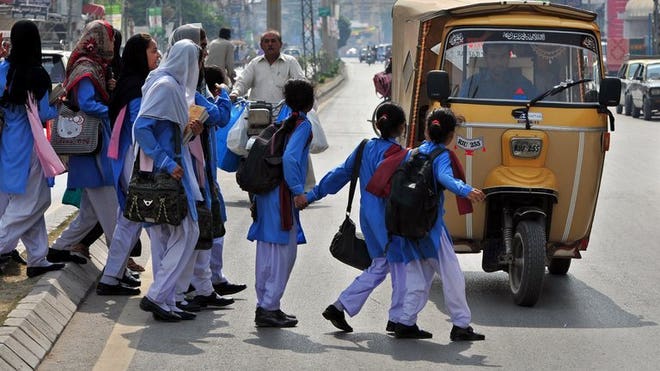
Girls throng to school in Swat as Malala addresses UN

 When the Pakistani Taliban shot Malala Yousafzai in the head, their message to the world was simple: girls have no right to an education and their dreams of a better future should be crushed.
The attack portrayed the world's only Muslim nuclear power in an appalling light as Western leaders and celebrities fell over themselves to turn Malala into a global icon of child rights.
But while she gears up to address the UN General Assembly on Friday -- her 16th birthday and nine months since the shooting -- more girls than ever in her home, Pakistan's northwestern Swat valley, are in school.
Educationalists say it has less to do with Malala's fame and more to do with a growing confidence that far from being resurgent, Taliban influence is declining in Swat.
"Many students were actually scared when the government named a college after Malala," said Anwar Sultana, head mistress of Government Girls High School No 1, the oldest in Mingora, the main town in Swat.
Last December, around 150 girls at another school protested against the renaming of their college after the injured schoolgirl, fearing it would make them a target for militants.
They tore up and stoned pictures of Malala, since nominated for the Nobel Peace prize and now being privately educated in Britain, accusing her of abandoning Pakistan.
But Sultana says more girls are now going to school because people feel more liberated as more time passes since the Pakistan army quashed a 2007-9 Taliban insurgency in the valley.
"Whenever you suppress something, it appears with more freedom," she told AFP, sitting on a veranda as girls in long white shirts and baggy trousers poured out of congested classrooms.
"The Taliban banned girls education and threatened females for going to schools. Now more and more girls are joining schools which means the fear is over," Sultana said.
In the first six months of 2013, 102,374 girls registered at primary schools in Swat compared to a total of 96,540 during all of last year, said Dilshad Bibi, Swat district education officer.
At Sultana's school, there are no desks and chairs in the dark brown, grey and orange coloured classrooms. Instead the girls sit on the floor to pack a maximum number into each room.
Saeeda Rahim, 13, is one of those girls.
The Taliban stopped her and thousands of other girls from going to school between 2007 and 2009. When the army offensive came in 2009, she and her family were forced to flee for their safety.
Displaced for three months, she spent much of the time in tears, her dreams of getting an education and becoming a doctor in tatters.
"Those days were the most difficult of my life. I lost hope and courage. I had no energy to read. I thought I'd never be able to study again," she told AFP.
Then when her family returned home, her mother initially refused to let her go back to school, fearing that she could be attacked.
But she is now back at Government High School No 1. She covers her face with a white veil, wears the pink strip of a prefect and says she takes inspiration from Malala.
"I really like her speeches. I want to continue her work, I want to appear in the media and convince parents that education is a right for their daughters," she said.
There is certainly a long way to go.
Throughout Pakistan, nearly half of all children and nearly three quarters of young girls are not enrolled in primary school, according to UN and government statistics published late last year.
In Malala's northwestern Khyber Pakhtunkhwa province only 36 percent of women and 72 percent of men are literate, according to the government.
Muhammad Atif, the provincial education minister, says hardline Islamist militants have destroyed 750 schools since 2008, of which 611 have been reconstructed.
The new provincial government, led by the party of former cricketer Imran Khan, has increased its annual education budget by 27 percent and declared female education its priority.
"Our government has allocated 66 billion rupees ($660 million), the highest amount in the provincial budget for education and female education is our top priority," said Atif.
Azra Niaz, a teacher at Government Girls High School No 1, says Malala's defiance and determination to continue her education -- despite being so badly wounded -- was a true inspiration.
"Every girl has been encouraged. Their fear has stopped. Every girl now wants to become a Malala. They say 'we want to study and progress in life'," she told AFP.
Read more: http://www.foxnews.com/world/2013/07/11/girls-throng-to-school-in-swat-as-malala-addresses-un/#ixzz2Yq9O60mk
Bahrainis rally to protest against torture in prison
Bahraini demonstrators have taken to the streets in several regions in the Persian Gulf state to protest against the torture of pro-democracy activists arrested by the Al Khalifa regime.
The protests took place on Friday in the capital Manama and a number of villages including Salmabad, Sitra and Diraz.
The protests comes after Bahraini pro-democracy activist Rayhana Al-Mousawi said on Thursday that the Al Khalifa regime forces tortured her physically and psychologically while in custody.
Also on Thursday, Bahrain’s main opposition party, the al-Wefaq National Islamic Society, issued a statement saying that the actions of the regime “reflect its detachment from Islamic, national ,and humanitarian values and principles, and its behavior refers to degraded practice which does not exclude assaults on women and detention camps, in a way which crossed the red line.”
“By that behavior, the regime has drawn a new map for practice, and what detainee Rayhana Al-Mousawi and others had revealed was a complete degradation and a deprivation from humanitarian and national values… and all the officials in this regime hold the responsibly of its outcomes,” the statement said.
The Bahraini uprising began in mid-February 2011, when the people, inspired by the popular revolutions that toppled the dictators of Tunisia and Egypt, started holding massive demonstrations.
The Bahraini government promptly launched a brutal crackdown on the peaceful protests and called in Saudi-led Arab forces from neighboring states.
Dozens of people have been killed in the crackdown, and the security forces have arrested hundreds, including doctors and nurses accused of treating injured revolutionaries.
Bahrainis say they will continue holding demonstrations until their demand for the establishment of a democratically elected government is met.
U.S: Top senators rap Karzai on US presence
http://www.pajhwok.com/enTop American senators on Thursday lashed out at President Hamid Karzai's recent statements, saying the ball was firmly in his court on an American military presence in the country post 2014. “President Karzai must now decide whether his government is willing to accept a longer-term US troop presence by coming back to the negotiating table with acceptable terms,” Senator Robert Menendez said at a Congressional hearing on Afghanistan. “The ball is in his court, but he and the Afghan people should understand that if we fail to reach an agreement, it will not be for lack of trying on America's end,” remarked Menendez, chairman of the Senate Foreign Relations Committee. Menendez asked Karzai not to think that the question of a post-2014 US presence in Afghanistan was of simply leverage for him. “If he does, then he is sadly mistaken,” warned the senator. “President Karzai should understand in clear terms that his legacy of leaving behind a stable Afghanistan that is supported by the international community will be in serious jeopardy with a flawed election outcome,” he added. Senator Bob Corker, a ranking member of the Senate Foreign Relations Committee, was even tougher toward Karzai. He has just returned from a visit to Afghanistan and Pakistan. “Karzai is the most frustrating world leader we've probably dealt with in a long time. He is irrational. It's hard to believe that he believes the things that he believes. But, he truly believes today that we are in cahoots with Pakistan, and trying to destabilise the country,” Corker said. “The reason he does is, because he knows of the first fact that I just mentioned that we've known here in this committee for a long time. I think he believes there are some people within the administration that because of previous political issues almost want Afghanistan to fail. I don't. He's a strange person,” the Senator said. He believed the US had helped create the kind of relationship with him since no one at the administration would talk with him about some of the questions he had asked about American support to him personally. “We have helped create a monster here. I know that we have a tough and difficult and frustrating person to deal with on this bilateral agreement, but I hope that this administration is not going to personalise it,” the senator remarked. “I know that Karzai has embarrassed the president publicly by talking about the fact that he believes that he is working with Pakistan to destabilise the country, and I know that we have a lot of problems with Karzai." Corker asked the Obama administration to look beyond Karzai.
BBC digs deep into Altaf Hussain’s antics
 Even though Karachi’s strongest political party is in a state of denial, the British media has launched a frontal attack on the party known for its strong-arm tactics in Pakistan by revealing that Muttahida Qaumi Movement’s (MQM) self-exiled chief Altaf Hussain is being questioned for money laundering worth at least £400,000 as well as his role in inciting violence in his home country. The revelations were part of a documentary prepared by BBC programme NewsNight on the MQM and included footage of Hussain making violent statements. As if the BBC documentary wasn’t enough, the British government has also confirmed to BBC the existence of a letter from Hussain to then prime minister Tony Blair in which the controversial MQM leader promised to help counter terrorism in Pakistan, and suggested disbanding the country’s premier spy agency, the Inter-Services Intelligence (ISI). The confirmation, previously denied by the Downing Street, was revealed via a Freedom of Information request by the BBC. BBC DOCUMENTARY
The BBC NewsNight footage also gave an outline of the death of assassinated party leader Dr Imran Farooq, as well as interviews with a former MQM leader, a policeman accusing the party of murder, and the party’s Deputy Convener Farooq Sattar. Starting the show with a clip showing Altaf saying, “We will prepare your body bags,” NewsNight host Jeremy Paxman posed the question: “Supposing if it (Britain) was offering sanctuary to an organisation that was using Britain as a base from which to threaten and persecute others?” He described MQM as “one of the most-feared political organisations in Pakistan”, adding that Hussain was accused of 30 murders. The programme then showed the MQM chief’s house, with reporter Owen Bennett Jones pointing out that a police raid had taken place there earlier in connection with the Imran Farooq murder. Describing Hussain, he said “he exerts total control over his party” from London.
MONEY LAUNDERING
According to NewsNight, “The police found hundreds of thousands of pounds of unaccounted for cash and that led to a money laundering investigation.” The Metropolitan Police are also investigating “Whether he’s using his London base to incite violence in Pakistan,” and whether his speeches are a breach of the law, the report said. According to a London-based terrorism barrister named Ali Naseem Bajwa, who was interviewed by BBC Two for the documentary, Hussain’s speeches are potentially a “terrorism offence” – The use of threat of force, made for a political cause, designed to influence the government “all seem to be made out” in the MQM’s chief’s case according to the barrister. NewsNight then shows senior MQM leader Farooq Sattar saying, “I categorically deny and refute that Altaf Hussain would have ever said what you are saying,” after the reporter asks him about the MQM chief’s violent language. At the same time, the BBC programme shows Sattar sitting in the audience while Hussain speaks “about tearing open abdomens”. The programme also showed an interview with an ex-MQM member, who was, according to them, the only former party member who was willing to talk. The ex-member, Naim Ahmed appeared openly and said, “They are not a peaceful party, they are a militant group, they are like a bunch of mafias …. They are an ideal party for violence.” Describing how he would question neighbourhood youth who would commit acts of violence in the name of MQM, Ahmed said “They directly said, ‘we got our order from London’.”
SATTAR DEFENDS ALTAF
Sattar admitted that London police had seized some amount of money during the raids at Hussain’s house and office but said he wasn’t aware of the exact amount. Denying that MQM was involved in money laundering, Sattar alleged the BBC’s documentary on Altaf was influenced by “pro-Taliban elements”. “By making such a documentary the BBC seems to be influenced by pro-Taliban forces,” said the MQM’s deputy convenor who appeared defensive against Paxman’s relentless scrutiny. “It’s just because of a malicious propaganda and a media trail going on against a secular and working class party.” DISBAND THE ISI Meanwhile, the British government confirmed the existence of a letter from Altaf to Tony Blair in which he had suggested disbanding the ISI. The letter, sent in September 2001 and signed by Hussain, offered help against al Qaeda in return for “participation in governing the province of Sindh and in disbanding the ISI”. Hussain pressed for help disbanding the ISI, warning that the agency would “continue to produce many Osama bin Ladens and Taliban in future”. He offered to provide “unlimited human resources throughout the towns and villages in the province of Sindh and the province of Punjab to some extent, to monitor the activities of fundamentalists and Taliban-led organisations, and also to monitor the activities of madrassas” in return. “The Prime Minister’s Office received a letter from Mr Altaf Hussain which was passed to the Foreign and Commonwealth Office (FCO) for a response,” the Cabinet Office confirmed to the BBC. The government said that Hussain’s letter was not replied to. In May, police confirmed they were investigating remarks allegedly made by Hussain following the conclusion of the Pakistani general election, in which he allegedly threatened violence against protesters in Karachi.
Altaf Hussain in land of his choosing
Under the Freedom of Information Act, the British government breaks its silence over affairs of the MQM leader Altaf Hussain in London with a confirmation that he wrote a letter in September 2001 to the British Prime Minister against the Inter-Services Intelligence (ISI), also offered MQM support to the UK government in countering terrorism to achieve equitable participation in governing Sindh and share in power in the Centre; a feat the MQM denied following its war of words with Dr Zulifqar Mirza. Of late the MQM chief Altaf Hussain is under scrutiny on multiple counts starting from the murder of Dr Imran Farooq, money laundering worth at least 400,000 pounds, incitement to violence in Pakistan from London. The ground reality is that the MQM leader, having no personal source of living, spends millions of pounds annually on lavish life style. In name of party management, his followers collect so-called donation from the general public that straight away goes to Chief’s account by one mean or the other. The MQM chief is not the only leader indulged in such practices. All Sardars from Balochistan living in the so-called exile are acting on the same lines. Some of the corrupt former bureaucrats too used the same ploy. While abroad, especially likes of Rehman Malik re-established themselves with their ill-gotten money and returned home to rule the masses and serve their foreign masters. Hence Altaf Hussain’s letter to the UK prime minister is not an exception. Notwithstanding the MQM denials, there is hardly any doubt that the MQM Chief Altaf Hussain left Pakistan to escape trial in more than 30 cases, and The British Government offered him protection allowing him to exercise his control over party from London. So many years, the MQM leader was living on money extracted from Pakistan yet the self pro-claimed champion of the law the British government never bothered to question him. Today when the MQM chief turned his pressure tactics to the British government, it resorted to exposing the true face of Altaf Hussain, describing the MQM as one of the most feared political organizations in Pakistan. Every Pakistani knows it that Altaf Hussain had been using violence for his personal gains. Today one ex-party man found courage to speak against his peer, and tomorrow many others will do the same. Once the UK government stops misuse of its land against Pakistan by its national—be he is Altaf Hussain or any body else. Breaking unnecessary silence over the role of MQM Chief Altaf Hussain in Pakistan politics, the government should offer every possible help in the investigations—after all the man has neither served his community nor the country he was born in. He had questionable credentials here but Pakistan could not take him to task for one reason or the other. Now he should prove in a country of his choosing that he is a well-behaved, civilized person and a law abiding citizen therein the UK.
Pakistan’s leaked bin Laden report: Willful Ignorants
BY UMAR FAROOQ"Everyone, including the United States, thought Osama bin Laden was no longer alive." That was the explanation senior Inter-Services Intelligence (ISI) officials gave when asked how the world's most-wanted man had eluded them for a decade. But members of a Pakistani government commission charged with investigating the U.S. raid that killed Osama bin Laden didn't buy it, and they said so in a remarkably candid 336-page report published by Al Jazeera this week.The report, written by a four-man panel that included a retired supreme court judge and general, paints an alarming picture of Pakistan's storied spy agency -- one that hints strongly that ISI is either shockingly inept or duplicitous, or both. The members of the commission were given sweeping authority, and they seem to have used it in a refreshingly thorough manner, summoning more than two hundred witnesses, including Ahmed Shuja Pasha, the head of ISI and one of the most powerful men in Pakistan. The report -- which took nine months to produce and another 15 to be leaked -- goes well beyond examining bin Laden's presence in the country, questioning the wisdom of delegating Pakistan's entire counterterrorism effort to a single, secret, military agency that is too proud to share its burden with anyone else. At a time when much of the domestic outrage over the raid centers around the Pakistani military's inability to defend against the American incursion, the commission turned the question on its head, saying the best defense would have been capturing al Qaeda's leader a long time ago. Refusing to rule out "some degree of connivance inside or outside the government," the commission places the blame for failing to find bin Laden on the ISI. The agency's "naivete and its lack of commitment to eradicating organized extremism, ignorance and violence," the report says, "is the single biggest threat to Pakistan." At times literary in its retelling, the report gives us the clearest picture so far of what life was like for the 9/11 mastermind in the years leading up to his spectacular demise. Bin Laden was found in an expansive three-story home -- complete with 18-foot walls topped with barbed wire -- situated less than a mile from Kakul, the country's top military academy. The home's size and placement were not lost on the commission, which questioned why it never came under suspicion so close to the Kakul academy. Pakistan's top military officials, constant targets of al Qaeda and the Taliban, must have passed by the home on a regular basis. Surely, someone in charge of their security detail must have made a mental note to look into what paranoid Pakistani lived in that fortress. The house had four separate electricity and gas connections, an illegal third story, and its walls were well beyond the maximum height allowed by the cantonment, the military housing scheme the house was situated in. The owners also never paid their taxes, and bin Laden's two handlers, brothers Ibrahim and Abrar, used fabricated identities. All of this should have raised red flags -- except that Pakistan is notorious for its failure to enforce the law. The cantonment that bin Laden called home contained between 7,000 and 8,000 unregistered buildings, according to the officials who were supposed to regulate them. And less than one percent of Pakistanis pay their taxes. At checkpoints ringing highly secured Pakistani cantonments like the one in Abbottabad, moreover, it is the poor who are disproportionately stopped -- the rickshaw driver, the day laborer on a bicycle, the tired student going home on a motorcycle at the end of a long day. Of course, authorities simply cannot check everyone all the time. The commission's report acknowledges this fact, however, saying the only institution in Pakistan with the resources to look for high-value targets like bin Laden was the ISI. "The actual role in counterterrorism," the report says of civilian institutions, "was at best marginal, and in the tracking of Osama bin Laden it was precisely zero." The lesson from the bin Laden saga, the commission concludes, is that police and other civilian institutions should be given the resources and space to do their jobs. The survivors of the bin Laden raid, the report says, should have been handed over to the police, which should have tracked down what kind of support network they had in Pakistan. The report laments the fact that the Bin Laden raid investigation, like every other major terrorism case in Pakistan, was handled by the ISI, instead of civilian institutions that are readily accountable to others. Bin Laden lived with two other families -- dozens of people in all -- in the same home for six years. Before that, he was not sitting in a cave, but moving around what the report refers to as many of Pakistan's "settled areas." He and his family spent time in cities like Karachi, Quetta, and Peshawar. Bin Laden might not have had a Facebook account, but his social network was vast, and some of its members had even been touched by the otherwise non-existent Pakistani state. We know that Bin Laden's couriers went to extreme lengths to hide their tracks. But they nonetheless had social lives at least until 2003, when they were spooked by the arrest of Khalid Sheikh Mohammed (KSM), the self-proclaimed operational mastermind of the 9/11 attacks Ibrahim's wife Maryam, who was extensively quoted in the commission's report, recalls that her wedding party took place at KSM's home in Karachi. Bin Ladin's wife Amal attended the party, and the pair travelled together to Peshawar, where they met up with a clean-shaven Osama bin Laden and another man dressed in a police uniform. From there, they went to Swat, where they lived for six to eight months, and bin Laden was apparently confident enough to go to the bazaar with his family.KSM visited them in 2003, bringing his family along and staying for two weeks. A month later, he was picked up in Rawalpindi in a joint U.S.-Pakistani operation. The bin Ladens split up after KSM's arrest, meeting later in the small city of Haripur, where they lived in a relatively small home for two years. Amal gave birth to two children in a local hospital. As the commission's report points out, the ISI had sole custody of bin Laden's surviving family members for five months before the commission questioned them. Yet the ISI failed to pursue any of these leads. It did not track down where bin Laden's wives lived in Pakistan, who arranged for their stay and transportation or whether or not their stories were corroborated by other evidence. Bin Laden's oldest -- and reportedly his favorite -- wife, Khairiah, lived in Iranian custody from 2002 until 2010. After the American invasion of Afghanistan in 2001, she fled there with other members of bin Laden's family, including his son Saad bin Laden. How she got into Pakistan is still a major question. As the report points out, one possibility is that the Iranian government and al Qaeda arranged to exchange an Iranian diplomat for Khairiah. At any rate, Khairiah arrived in Pakistan in 2010 and travelled through Quetta to Waziristan. From there, she received a message from bin Laden inviting her to Abbottabad, where she arrived only three months before the raid that killed her husband. Since there are no regular checkpoints on the highways connecting cities like Quetta and Islamabad, it is understandable that the police -- wholly underpaid and overstretched -- were not able to intercept Khairiah or bin Laden's other wives as they moved around Pakistan. But each of these movements required a support network on the ground: drivers, guides, safe houses. The ISI, the only institution in the country capable of tracing such a network, failed to do so. And Abbottabad itself should have been on the ISI's radar as a hotbed of al Qaeda's activity. In 2005, the ISI had helped capture Abu Farraj al-Libbi, the man that replaced Mohammed as al Qaeda's third in command, and they knew he had lived in Abbottabad starting in 2003. They had even tried to capture him at one point in a raid a few miles from bin Laden's home. Al-Libbi likely needed a local support network. The report points out that if the ISI had any more information about al-Libbi's stay in Abbottabad, they did not see fit to share it with the commission. Also connected to Abbottabad was Umar Patek, an al Qaeda operative that helped plan the 2002 bombings in Bali, who traveled to the city in early 2011. The ISI claims he was only stopping there on his way to Afghanistan, but as the commission points out, he was more likely there to meet with bin Laden. Patek was captured in Abbottabad just two months before the bin Laden killing, and he was in Pakistani custody for four months afterwards. Yet, according to the commission's report, the ISI apparently failed to extract any useful information from Patek about the al Qaeda network in Abbottabad. The commission blames the ISI for the fact that none of these leads were followed up on, saying civilians were unaware of Abbottabad's connections to al Qaeda. The ISI, in contrast, was "well aware of their presence but unwilling to share information." The report also contains the extensive, candid testimony of Ahmad Shuja Pasha, the then head of the ISI (although one page is mysteriously missing from the leaked copy), It amounts to a damning illustration of why Pakistan's counterterrorism policy has failed. Pakistan has lost 50,000 people -- including thousands of soldiers that were answerable to men like Pasha -- to terrorist attacks since 2004. Yet Pasha seemed to be stuck in another world when talking to the commission. He rightly pointed out that ISI was overburdened, but then blamed those who dared to criticize his agency's role in securing Pakistan, repeating the tired narrative that "the first line of national defense" was being attacked by "emotional" people that could be bought with "money, women, and alcohol." To be sure, the United States has not worked well with the ISI, which some American officials claim have helped militants escape in the past. As the report points out, "there was never any trust between the two intelligence organizations ... [just an] understanding due to overlapping interests." When, after years of silence, U.S. officials raised the prospect of bin Laden living in Pakistan in 2010, the ISI asked for details and offered to help. They never got a reply. At one point, the CIA gave the ISI four phone numbers to track, but did not disclose that they were related to bin Laden's handlers. As a result, the ISI failed to track the numbers, thinking the issue was of low importance. Pasha, echoing a number of Pakistani military leaders, complained that there was not enough legal cover for his agency to detain and investigate suspected militants. The commission dismissed this, saying "in a democracy, an intelligence organization must be accountable and answerable to political oversight." If Pakistanis were looking for insight into the bin Laden saga from the ISI, they did not get any. In fact, the problem the commission uncovered was one that has been known to Pakistanis for some time now. The ISI, which "neither had constitutional or legal authority, nor the necessary expertise and competence," for counterterrorism, was taking up the responsibility of civilian institutions that were "even less competent," because they had no long-term experience running the country. "The premier intelligence institution's religiosity replaced accountability at the expense of professional competence," the report concludes. In other words, Pakistanis cannot depend on agencies like the ISI -- which either through incompetence or outright complicity failed to track down bin Laden -- to defend its borders, whether the threat is coming from a U.S. raid, or a Taliban suicide bomber. Pakistani civilians, who have just voted in historic elections, must own their own counterterrorism policy. In the end, they are the ones that stand to lose the most.
THE WOMEN IN ABBOTTABAD: WHAT PAKISTAN LEARNED
BY STEVE COLLWhen Osama bin Laden moved to his hidden-away compound in Abbottabad, Pakistan, in 2005, “he wore a cowboy hat to avoid detection from above,” according to a newly disclosed report by an independent Pakistani commission. The report continues: He was concerned about the poplar trees on the perimeter of the Compound as they might provide cover for observers. He had thought of buying them to cut them down. Whenever OBL felt unwell … he treated himself with traditional Arab medicine (Tibb-i-Nabawi) and whenever he felt sluggish he would take some chocolate with an apple…. Khalid, OBL’s son, looked after the furnishings inside the house and the internal plumbing…. They lived extremely frugally. The family of OBL did not mix with the families of Abrar and Ibrahim [the Pathan brothers, who were bin Laden’s couriers and protectors]. The children did not play together. There was in fact a wall separating them. The children of the OBL family led extremely regimented and secluded lives. OBL personally saw to the religious education of his grandchildren and supervised their play time, which included cultivating vegetable plots with simple prizes for best performances. This account of the banality of the world’s once most-wanted man comes from the testimony of two former teen-age brides, who lived in the Abbottabad compound throughout the half-dozen years of bin Laden’s stay. One of them, Maryam, had married Ibrahim al-Saeed in 2001, when she was fourteen. The other, Amal Ahmed al-Sadah, was also a teen-ager when she travelled from Yemen to Afghanistan to marry Osama bin Laden, in 2000. Maryam and Amal became friends after they met in Karachi, early in 2002. Maryam was fifteen and fresh from her wedding; Amal had found her way out of Afghanistan just before the September 11th attacks, and some of her husband’s friends were protecting her in Karachi, she explained, while she sorted out a passport problem. While various groups of robed men came and went and met without their wives present, Amal taught Maryam, a Pashto and Urdu speaker, some Arabic. Eventually, Amal’s husband appeared. He was a tall, clean-shaven Arab. At first, that was all Maryam knew about him. Later in 2002, the two women moved, together with their families, to Swat, a former resort in the mountains west of Islamabad. There they lived in a “beautiful house with a river flowing behind it.” It took Maryam some time to realize that her husband, Ibrahim, who could be a little secretive, was in fact an Al Qaeda operative, and that the clean-shaven Arab married to Amal was bin Laden. The clues Maryam had about whether the men in her life were outlaws or had ins with the Pakistani authorities were ambiguous. According to her, when the families moved to Swat, a man in a police uniform drove with them from Peshawar. Another time, driving to the local market with bin Laden in the car, they were pulled over by a cop for speeding. Ibrahim quickly extracted them from any difficulty. Their only visitors in Swat were a man and his large family. Maryam later identified this man as Khalid Sheikh Mohammed, the mastermind of the September 11th attacks, who is now imprisoned at Guantánamo Bay. When K.S.M. was arrested in Rawalpindi, Pakistan, in March of 2003, the young wives hurriedly left Swat with their husbands and families—no doubt because the men feared that K.S.M. would rat them out. They moved to a two-story house in the city of Haripur, where they stayed for two years, and then to Abbottabad, to the compound built especially for them by Ibrahim and his brother, Abrar. Once, Maryam asked her husband, even though he didn’t like to talk about the subject, why he was taking the risk of protecting bin Laden. Ibrahim said that he would soon hand off the job to a successor and that he would receive money and land, maybe in Saudi Arabia, as his reward. He was dead before he could collect. The wives’ narrative is a highlight of the three-hundred-and-thirty-seven-page report of the Abbottabad Commission, impanelled by Pakistan’s parliament in 2011, after the May 1st Navy SEAL raid that killed bin Laden—though much else in it is fascinating. The report was published this week by Al Jazeera. By recording transparent, careful accounts of the four wives who survived—Maryam, Amal, and two older Saudi wives of bin Laden who lived more briefly in Abbottabad—the commission has delivered to the historical record illuminating testimony that had previously leaked out only through anonymous intelligence briefings, some of them plainly designed to spin the facts. Bin Laden’s killing, understandably, galvanized Americans, but the raid’s meanings in Pakistan have been remarked upon less often. The attack was a sensation there, too, but hardly in the spirit of hubristic triumph and relief that characterized American responses. For Pakistanis, the raid was a humiliation, a broadcast-round-the-world exposure of the country’s military weakness, the corrosive distrust between Washington and Islamabad, and the amateurism or malfeasance—or both—of Pakistan’s powerful Army and intelligence forces. The Abbottabad Commission is a landmark of the country’s troubled proto-democracy. Its report had been suppressed, presumably at the insistence of Pakistan’s military. The newly elected government of Prime Minister Nawaz Sharif may seek to benefit from its publication, as the report criticizes both the Army and, at least by implication, the civilian government led by the Pakistan People’s Party, which Sharif opposed. The commission—its members were a Supreme Court Justice, a senior police officer, a diplomat, and a retired general—interviewed more than two hundred people and reviewed thousands of documents during 2011 and 2012. The report provides a thorough review of how local authorities, police, and intelligence agencies failed to notice the strange living arrangements at the Abbottabad compound—or else covered up their involvement. It examines whether Pakistan’s intelligence service, the I.S.I., was complicit or incompetent—that is, whether it aided bin Laden in his life underground after he escaped the battle of Tora Bora in December, 2001, or just failed to find him, even though he was living in a conspicuous house near Pakistan’s leading military academy. The commission, though unable to answer the question definitively, leans toward a judgment of incompetence. Its tone is admirably clear and careful. In a country where political discourse is too often muddled by conspiracy thinking, rumors, and evidence-free arguments, the Abbottabad Commission has contributed an example of fact-finding, judicious analysis, and policy recommendations. Pakistan’s failure to find bin Laden and to prevent America’s violation of its borders on May 1st “was rooted in political irresponsibility and military exercise of authority and influence in policy,” the commission wrote, for which the Army “had neither constitutional or legal authority, nor the necessary expertise and competence.” But the commission equally criticizes civilian political leaders for failing to rein in the I.S.I., or to resolve the many contradictions in Pakistan’s policies toward the United States. The commission notes that it is not charged with extracting lessons from the Abbottabad raid on behalf of American citizens. But what are those lessons? Americans seem to prefer the easy one: our SEALs acted bravely and competently. Indeed. But it does not diminish their achievements to reflect upon the hidden domesticity that Maryam and Amal unveiled. It was a world of powerlessness, pretension, passivity—cramped and steadily diminishing, like Al Qaeda itself. Bin Laden spoke and wrote dangerously from his Abbottabad compound, inspiring and directing attacks against civilians. Al Qaeda and the adherents of bin Laden’s nihilism persist today as a threat to Pakistanis and Americans alike, even if that threat is fractured and much reduced. The character and scale of this menace recedes into proper proportion with each revelatory detail about bin Laden’s life on the run after 2001. Like the great and powerful Oz, he occasionally puffed smoke and fire, but he was just a humbug behind a curtain.
Malala Yousafzai: Battling for an education in Pakistan
 By Orla Guerin
When a Taliban gunman shot Malala Yousafzai last October, the bullet travelled beyond her native Swat Valley in northern Pakistan.

Pakistan's Malala to be honoured at UN

Teenager shot by Taliban last year will address UN Youth Assembly and call for improvements in global education.

Subscribe to:
Posts (Atom)