
Monday, November 26, 2012
Learning From Lincoln
Sunday, November 25, 2012
Peshawar emerges as polio reservoir

Saturday, November 24, 2012
Malala is set to make Britain her permanent home
The teenage girl shot by the Taliban for speaking out against militants in Pakistan is expected to make Britain her permanent home.
Malala Yousufzai, 15, is being treated at the Queen Elizabeth Hospital in Birmingham after having a bullet removed from her spine.
Her parents and two brothers flew to Britain last month so that they could be with her.
Read more: http://www.dailymail.co.uk/news/article-2237715/Malala-Yousafzai-make-permanent-home-Britain-speaking-Taliban.html#ixzz2D86COEqF
Follow us: @MailOnline on Twitter | DailyMail on Facebook
Pakistan: Jinnah College tragedy
The Frontier PostOn the surface of it, too many deaths happened in the terrorist blasts just in the few days of Muharram to worry about the death of a college girl who was already a heart patient and died of cardiac arrest. The college student mentioned above, nevertheless, had just reached her college, Jinnah College for Women in Peshawar, in the morning when she complained of chest pain. Within moments she had a full blown heart attack. The girls of that college are not allowed mobile phones in the college premises, so they could not phone for help. None of the teachers made the call, as the principal had even banned the teachers from making calls when in the college. The principal, Neelofar Zeb, did not make the call because she was not there. She reached the university campus within fifteen minutes but by then the girl was already lifeless. The principal, nevertheless, took the dead girl to the hospital, maybe, just to confirm the death, as her staff had already informed her of the tragedy on phone Some may agree and others may not on the ban on girls carrying mobile phones to college. It is a social issue and we better not touch upon it. However, what is not understandable is that even the teachers did not have the permission to make emergency calls. Also, while the principal had placed a ban on calls, she had not made alternative arrangements in case of life threatening situations. What strikes as more alarming is that a college which houses between sixteen hundred to two thousand students should not have a properly designated experienced and practicing nurse on the post to deal with such emergency situations. An in-touch nurse is needed in such situations before more expert help can arrive or the sick is transported to the hospital. The said collegehas a certified nurse but one who is not practicing and is actually appointed as Bio lab assistant. What is more alarming is that the college works under the management of the University of Peshawar, which has a sixty-year experience of running scores of faculties, and also the College of Home Economics. The Jinnah College incident is worrisome as it casts doubt on the arrangement in faculties and colleges run by the UoP management. There is a mushroom growth of public and private sector schools, colleges and universities in Khyber Pakhtunkhwa and the rest of the country and it is now a moot point as to how the conditions in these educational institutions are in this regard. The incident should be a wakeup call for heads of education ministries, education boards, vice chancellors of universities, principals of colleges, headmasters and headmistresses of schools. All these are responsible for the wellbeing of students during study time. It is incumbent upon them to make sure that they make all possible arrangements in this regard. They must, also, see to it that they have special plans for students who have life threatening health problems or suffer from some handicap. Heads of education institutions should also make sure that when they place restrictions upon students and teachers, they have made alternate arrangements for emergencies. The heads of education institutions should remember that they do not sit in their offices to rule but rather to chaperon students. It is a heavy responsibility because they have the future of the nation in their hands.
Tuesday, November 20, 2012
India asks Pakistan to defer interior minister Rehman Malik's visit
timesofindiaInternationalization of the landmark Indo-Pak visa agreement will be delayed as India has asked Pakistan to postpone interior minister Rehman Malik's proposed visit here on November 22-23. "The dates proposed by the Pakistani side are not suitable to us, so the visit of Rehman Malik stands postponed. Fresh set of dates will be discussed later," home minister Sushilkumar Shinde told reporters here. During Malik's proposed visit, the two sides had planned to operationalise the new liberalised Indo-Pak visa pact replacing a 38-year-old restrictive visa agreement and paving the way for time-bound visa approval and greater people-to-people contact and trade. Though New Delhi has cited the coming winter session of Parliament as the reason for its inability to host Malik this week as Shinde would be busy being the leader of Lok Sabha, Islamabad's failure to punish those involved in 26/11 appears to be the key reason. Sources said since the fourth anniversary of the Mumbai terror attack falls three days after the proposed visit of the Pakistani leader, home ministry officials seem to have advised against hosting Malik. Malik has been accused of failing to keep his promises on acting against perpetrators of the 2008 Mumbai terror attack which claimed 166 lives. Trial against LeT commander Zakiur Rehman Lakhvi and six other accused of 26/11 case at a Rawalpindi court has been very slow and New Delhi's request for voice samples of handlers of the terrorists is yet to be acceded by Islamabad and LeT founder Hafiz Saeed continues to roam freely in Pakistan, they said. "Under such a situation, it is not prudent to host the Pakistani interior minister on the eve of the fourth anniversary of 26/11 attack," the sources said. The message was conveyed to Pakistan through diplomatic channels. India has not yet suggested new dates for Rehman's visit.
Pakistani Military Chief Talks About Peace Process With Afghan Leader
Child labor promotes abuse in Afghanistan

Morphology of Karachi

by Tariq MahmudThe recurring violence in Karachi has raised some basic questions about the state and society of Pakistan. Like any burgeoning port city, Karachi has some distinct characteristics - a fast growing population and demographic diversity. It is because of this diversity that the problem of lawlessness is perceived to be ethnic. Irrespective of their ethnic origin, Karachiites have a distinct common identity like the people of any other region of Pakistan. A third generation Pashtun, Punjabi or Baloch has more in common with the people of his neighbourhood in the city than with his relatives living in Mardan, Gujranwala, or Khuzdar. Shahid Khan Afridi, for example, in essence is a brand of Karachi, rather than a manifest of Darra Adam Khel. His diction, mannerism, tastes and nuances have been nurtured by this city. There is seamless coexistence at the street and societal level. Even when ethnic communities are associated with distinct professions, they complement each other. When a thoughtless strike call brings a Pashtun's coaster to a halt, it denies an 'Urdu speaking' wage earner access to his workplace.So where lies the problem? There are thousands of acres of state land in and around Karachi that is neither measured nor mapped in accordance with the finer details of the 'land settlement manual'. These tracts are along the prime alignments of National Highway, Super Highway, towards the Northern bypass, Kemari and Hub. Survey numbers are attached to un-surveyed land which has not been properly classified and yet it is set out for the dole. This land is not delineated in accordance with the standard procedures. In the colony districts of Punjab, usable state land is diligently measured and subjected to precise 'Killabandi' mapped and made part of the permanent revenue record. It is effectively protected, manned and monitored through a multi-tiered revenue machinery. Records maintained by the Directorate of Land Survey in Karachi and the field Tapedar are at times different. Powerful groups, with the collusion of state functionaries and political patronage, have stolen some of this land over the years. Beds of Malir and Lyari rivers are no exception. Vast available tracts of land were a boon when there was a need to set up large projects like the Pakistan Steel Mill and Port Qasim, but are a bane after the increase in population. I have been closely associated with the ambitious Lyari Expressway project, an important component of which was land acquisition and resettlement. A significant area required for the project included mosques, madrassas and shops. These were well guarded, but had no clear title of ownership. This problem of uncertainty of title in different parts of the city is compounded by the 'Paggari System' in which property changes hands based on who has street power. The history of the Italian Mafia was similar. The surrender of vast tracts of land by the church and in turn its poor management and poor protection resulted in the growing influence of the Sicilian Mafia in the later part of the 19th century. When the authorities failed to enforce law, criminals and armed gangs began to rule these streets and began to get involved in drug trafficking, extortion and serial killings. The phenomenon assumed a transnational character when it spilled over to New York and Chicago through the Italian diaspora. Karachi's conundrum is also in many ways a failure of governance over a long period of time. Various tiers of the state machinery have quite often had different objectives. Political leaders have failed to see the bigger picture because of short term political gains. The administration and law-enforcement agencies have acquired a culture of appeasement. The only way to resolve the problems is a return to proper governance. A depoliticized police will have to comb the narrow streets and enforce their writ. A detailed mapping and manning of land must be initiated. A permanent mechanism must be put in place to protect and retrieve state land from not just the land grabbers but also state organizations, autonomous bodies and housing societies. Above all, there is a need for soul searching by the major political stakeholders of the city. They must adopt an inclusive approach and understand that Karachi is larger than their expediencies. The writer is a public policy analyst and a former federal secretary
Zardari: Need to change mindset which attacked Malala


Malala most deserving of Nobel

By:Mahmood Elahi, OttawaTo bring hope to opressed women, Malala should be awarded Nobel Peace Prize. By risking her life for the love of education, 15-year-old Malala Yousafzai has shown courage of conviction and she deserves the prize for her efforts.

British Islamists to Issue Fatwa Malala
A new British-based Islamist group
 plans to meet in Islamabad to issue a religious decree against a Pakistani schoolgirl shot by the Taliban, accusing her of supporting "occupying" U.S. forces.
The move against Malala Yousufzai, 15, is likely to provoke outrage. In the days following her shooting in October, she became an international icon and world leaders pledged to support her campaign for girls' education.
"There will be a fatwa issued regarding Malala Yousufzai taking into account the full story of her injury including her public statements in support of the occupying U.S. army in the region and mocking of key symbols of Islam such as hijab and jihad," said Abu Baraa, a senior member of Shariah4Pakistan.
The group, whose website features a blog below a photograph of Yousufzai in a hospital bed titled "Don't Believe The Crocodile Tears for Malala Yousufzai", is associated with some of Britain's most hardline Islamists.
Anjem Choudary, a prominent radical cleric in Britain, said the fatwa could be issued on November 30 at Lal Masjid, one of Pakistan's most notorious mosques, where a 2007 army raid crushed a Taliban-style movement controlling the compound.
Bilawal Bhutto seeks political support to fight terrorism
RADIO PAKISTANChairman PPP Bilawal Bhutto Zardari

Zardari: 'If you are not controversial, you haven't done anything substantial'
The Express TribuneIf you are not controversial, then you have not done anything substantial, said President Asif Ali Zardari on Tuesday. The president was addressing a youth conference held in the federal capital. Speaking about the burden of being a leader, the president said good leadership is a result of personal sacrifice. “This is the path my wife and I followed,” he said. He also said that leader is not one who thinks he is a leader, but one who is considered so by others. Speaking about the role of youth in nation building, the president said that as the people of Pakistan, we are fighting a negative state of mind and the youth of this country is a challenge to that mindset. Commending each and every Pakistani for being patriotic, Zardari said the country is faced with life threatening challenges. Ushering the conference to a Q&A session, Zardari told his young audience that he, as the president of Pakistan, wants to be questioned by the future leaders as he is always open to criticism. Responding to a question regarding repatriation of Aafia Siddiqui, the president said the government has asked the lawyer to continue arguing the case. “We don’t have any prisoners exchange treaty with the US and we cannot do anything in that regard but ask her lawyer to stick to her case,” he explained. On a question about people committing suicide because of poverty, Zardari said his government introduced the Benazir Income Support Program through which deserving Pakistanis get a monthly stipend.
Pakistan, British army chiefs arrive in Kabul
http://www.pajhwok.comPakistan army chief, Gen. Pervez Kiyani, and his British counterpart Sir David Richard arrived in Kabul on Tuesday for talks with Afghan defence officials. A government official, who did not want to be named, confided to Pajhwok Afghan News the two sides would confer on the current security situation in Afghanistan and other issues of common interest. Earlier in the day, Ministry of Defence spokesman Gen. Zahir Azimi told reporters the Pakistan British army chiefs were due in Kabul. However, he stopped short of giving the date or agenda.
President Zardari takes notice of PIA emergency landings
Radi PakistanPresident Asif Ali Zardari has taken strong notice of recent reports about various emergency landings by PIA flights. He has directed the Chairman PIA and Civil Aviation Authority to conduct a thorough inquiry into these incidents and submit a comprehensive report within three days. He has also directed the concerned authorities to ensure that no such incident takes place in future. Spokesperson of the President Farhatullah Babar said that besides calling for a detailed report‚ the President has also called for a meeting to get a comprehensive briefing on the issue.
Malala chosen for bravery award


Blasphemy: IHC dismisses FIR against Rimsha Masih
Monday, November 19, 2012
Jordan Indicts 89 Activists for Inciting Revolt


Bahrain Cracks Down on Freedom
http://www.globalresearch.ca
The ruling Al Khalifa monarchy is one of the world’s most brutal dictatorships. It’s also a valued US ally. Bahrain is home to America’s Fifth Fleet.
Imperial priorities matter most. Washington backs Bahraini harshness. State terror is policy. Murder, torture, lawless imprisonments, and daily atrocities get tacit support.
Bahrain ruthlessly wages war on freedom. Fundamental human and civil rights are spurned. Activists, protesters, medical professionals treating them when injured, independent journalists, and others supporting right over might are brutalized and imprisoned.
Nabeel Rajab is one of Bahrain’s best. He’s a prominent human rights leader. Activism got him targeted. His resume includes many impressive credentials. In 1999, he and others co-founded the Bahrain Human Rights Society.
In 2002, he, Abdulhadi Alkhawaja, and others co-founded the Bahrain Center for Human Rights (BCHR). Authorities terrorized its members for years. Nonetheless, it remains viable.
It promotes civil, political, and economic freedom, ending racial discrimination, and universal human and civil rights. Bahraini despots equate these principles with terrorism.
Last August, Bahrain’s Lower Criminal Court sentenced Nabeel to three years in prison. Supporting right over wrong in the emirate is dangerous. Expressing democratic views is criminalized. So is championing social justice publicly.
King Hamad calls peaceful protests “foreign plots.” Nabeel and others like him put their lives on the line for years. Bahraini activists face arrests, harsh interrogations, torture, and imprisonment. The mainstream media largely ignores it.
Nabeel’s been in prison since July. He’s charged under Article 178 of Bahrain’s penal code. It prohibits unauthorized gatherings of five or more people for the “purpose of committing crimes (or) undermining public security, even if intended to achieve a legitimate purpose.”
His lawyers appealed. A Bahraini court delayed proceedings. Its ruling won’t be known until around mid-December. Peaceful protests are criminalized. State courts tolerate no challengers. They give kangaroos a bad name.
Bahrain banned protests earlier. On July 20, 2006, King Hamad ratified Code 32 on “Public Gatherings, Processions and Assembly.” Doing so amended the 1973 Decree No. 18. Human rights groups condemned the action. It lawlessly targeted free expression and peaceful gatherings.
Unauthorized public meetings and seminars were prohibited. So was anything thought potentially threatening monarchal rule. Activists were targeted. Arrests and prosecutions followed. Bahraini repression is brutal and longstanding.
On October 30, public gatherings were again prohibited. Interior Minister Shaikh Rashid bin Abdullah Al Khalifa said “rallies and gatherings will be considered illegal, and legal action will be taken against anyone calling for or taking part in them.”
That’s how police states work. Fundamental rights are criminalized. Daily nonviolent protests continue nonetheless. Participants face tear gas, rubber bullets, beatings, arrests, and at times death.
Anyone challenging regime harshness faces arrest and brutal imprisonment. Even The New York Times noticed. On October 30, it headlined “Citing Violence, Bahrain Bans All Protests in New Crackdown.”
Protesters refrain from violence. Security forces commit it against them. Banning public gatherings “drew swift condemnation from human rights groups and opposition activists who said it was intended solely to stifle criticism of the ruling monarch in the tiny Persian Gulf nation.”
Activists accused the monarchy of “methodically blocking all avenues for dissent.”
“In recent weeks, activists have been prosecuted for postings on social media, and doctors, charged with illegal gathering and other crimes after treating protesters, have been sent to jail.”
It’s gone on repeatedly since early last year. The Times and other Western media gave it scant coverage. They still do. Reports exclude important information readers most need to know.
Dozens of deaths, hundreds imprisoned, torture, and kangaroo court justice go largely unnoticed.
On November 10, a Washington Post editorial headlined “Bahrain’s broken promise,” saying:
Last November, King Hamad promised 26 reforms. “That promise has gone unfulfilled.” At best, only three were partly implemented. “The most important ones – on the release of political prisoners and relaxation of controls on free expression – have been ignored.”
The Post exhibited a rare moment of candor. It should have done more much sooner. Nonetheless, it said “convictions of leading regime opponents (were) reconfirmed.”
It mentioned Nabeel’s imprisonment. It excluded his activist history and harsh treatment. It said public protests were banned.
Without explanation, it said “five bombs exploded around the capital of Manama on Monday, killing two people.”
Protesters spurn violence. Despite brutal security force crackdowns, they remain peaceful. Bahraini authorities called Monday’s explosions “terrorism.”
They were state-sponsored false flags. Expect more of the same ahead. Four suspects were arrested. They won’t be treated kindly or fairly. Bahrain’s head of public security blamed Hezbollah elements. No evidence whatever suggests it.
Minister Samira Ibrahim bin Rajab said opposition groups use Iranian tactics. He blamed pro-Iran television stations for supporting Bahraini protests. Press TV reports them accurately. So do Russia Today and independent journalists.
The Post downplayed what’s happening. “Bahrain is no Syria,” it said dismissively. Editorial policy belligerently attacks Assad for doing his job. Bahraini state terror over the same time frame got scant coverage.
The Post said the emirate is home to America’s Fifth Fleet. Implied is its presence legitimizes harsh security. The editorial admitted that Washington supported a Bahraini nominee for “an advisory position at the UN Human Rights Council.”
Congress approved military sales and aid. “Such action(s) damage US credibility across the Middle East.”
On the one hand, Washington lawlessly challenges Assad’s independence. On the other, it supports Al Khalifa despotism. It not only largely ignores its worst repression, it condones and encourages it.
The Post editorial went so far but no further. What readers most need to know was omitted. What’s going on in Bahrain, why, and who benefits wasn’t explained. Readers know little more now than earlier.
A Bahrain Center for Human Rights report headlined “The BCHR Holds the King Responsible for the Spread of the Culture of Impunity which Has Claimed the Lives of Tens of Victims.”
Facts don’t lie. Disturbing truths were revealed. BCHR compiled compelling evidence. Ruling Al Khalifa despots remain unaccountable.
Security forces commit daily “gross violations of human rights.” Bahraini and international laws are violated. Extrajudicial killings, arbitrary execution, torture, mock trials, and excessive force are commonplace.
“(I)mpunity is still entrenched in the doctrine of the Authority and its security institutions as a basic prevalent culture.
It operates as an instrument of state terror. Authorities get away with murder, torture and other atrocities. Ordinary Bahrainis wanting equal rights face brutalizing repression.
BCHR expressed special concern about a “systematic policy of impunity and of providing immunity to criminals and enabling them to continue with their duties and their security positions without accountability.”
Innocent people are shot and killed. Some are executed in cold blood. Others are beaten, arrested, and imprisoned. Justice is a four-letter word.
Principles relating to Effective Prevention and Investigation call for careful examination of extrajudicial killings, arbitrary executions, and other security force violence. Authorities whitewash state-sponsored crimes instead of prosecuting offenders.
King Hamad bears full responsibility. Bahraini law is what he says it is. Equity, justice and freedom don’t have a chance.
Activists challenging state repression may end up dead by gun shots, lethal gas or slit throats. Obama wholeheartedly endorses what legitimate leaders condemn. Fundamental human and civil rights don’t have a chance.
A Final Comment
On November 7, Bahrain revoked the citizenship of 31 activists. An interior ministry statement announced it. Doing so coincided with more state-sponsored violence and arrests.
Prominent opposition figures affected include:
(1) Saaed Shehabi, a London-based Bahraini political activist and Bahrain Freedom Movement member.
(2) Former MP Jalal Fairooz.
(3) Hasan Mushaima, Haq Movement head. It’s a high-profile Bahraini opposition group.
Revocations were ordered for violating Article 10 Bahrain’s Citizenship Act. It permits targeting individuals accused of threatening state security.
Justice in Bahrain is none at all. Activists wanting to live free may end up dying for it. That’s how police states operate. Bahrain is one of the worst.
Why are 6000 Shia children killed in Pakistan less worthy than a few dozen Palestinians?

Let Us Build Pakistan
Abdul NishapuriWhy are 6000 Shia children killed in Pakistan by Saudi-sponsored Takfiri Deobandis (Taliban, Sipah-e-Sahaba) less important than a few dozen Palestinians killed by Israel? We condemn all those thugs who express sympathy for rocket-firing Hamas militants but remain silent on Shia genocide in Pakistan. If you see a Salafist-Deobandi circulate pictures from Palestine or Burma, throw the present post on his/her face. Since mid-1980s, more than 20,000 Shia Muslims, thousands of Sunni Sufi (Barelvi) Muslims, hundreds of Ahmadis, Christians and Hindus have been killed in Pakistan by Takfiri Deobandi terrorists sponsored by Jihadist-minded generals of Pakistan Army. A detailed database of Shia genocide can be accessed here: http://criticalppp.com/archives/132675 According to an estimate, at least 30 per cent of the 20,000 Shias killed are children or minors (age 18 or below). This makes their number at least 6,000. On mainstream media and social media, one frequently sees pictures of Palestinian children killed or injured during Israel’s attacks on Hamas (Saudi-sponsored Salafist militants) hideouts in densely populated civilian areas in Gaza. However, there is completely no mention of the 6,000 Shia children killed by Saudi-funded Takfiri Deobandis (Taliban, Sipah-e-Sahaba) who are not only killing Shias but also Sunni Sufi (Barelvis), Ahmadis and Christians. The attitude of the Arab League, OIC, United Nations and human rights groups is equally hypocritical and disturbing. While they shed crocodile tears on the loss of innocent life in Palestine (and Israel), hardly any mention is made of the thousands of Shia, Sunni Sufi Muslims and other non-Salafist, non-Deobandis killed in Pakistan (and other countries, e.g., Afghanistan, Bahrain, Syria, Saudi Arabia) by the Saudi- and Qatar-sponsored terrorists. In the present post, we are providing a collection of only a few of thousands of Shia children killed by Takfiri Deobandis in the last few years in Pakistan. Things to note: Many Pakistani and international groups remain silent on Shia genocide in Pakistan. In fact while the same groups clearly mention the identity of the killed and the killer in Palestine, they make every possible effort to hide or obfuscate the identity of the killed (Shia Muslims, Sunni Sufis) and the killers (Takfiri Deobandis and their Saudi masters) in Pakistan. Supporters and enablers of Takfiri Deobandis dishonestly misrepresent Shia genocide and murder of Sufi Sunnis in Pakistan as Sunni-Shia sectarian violence in order to justify and hide the violence. While Iran and Iran-funded Shia Mullahs keep supporting Hamas and other militant groups, Hamas remains extremely hostile to Sunni Sufi Muslims and Shia Muslims. In fact, in 2011, Hamas forcibly stopped Shia Muslims of Palestine from celebrating the Ashura of Muharram and physically attacked and injured many Shias. It may be noted that majority of the Palestinians killed by Israel in Gaza are militants or activists of Hamas. In contrast, almost all Shias killed in Pakistan by Takfiri Deobanids are ordinary citizens with no link with any political or militant group. Shias face Gaza in Pakistan every day. But no Shia are firing rockets at ordinary Sunni Muslims or calling for Sunni destruction. Pakistan’s and the entire world’s Shia and Sunni Muslims should realize that Saudi-sponsored Takfiri Deobandis and Takfiri Salafist are bigger threat to Islam and Muslims than any other country or group. It is high time that we set our priorities in order and focus our attention on Saudi-funded Deobandis and Salafist, the biggest threat to humanity, Muslims, Christians, Hindus and Jews.
PTI leader receives Rs40m US fund

President Zardari emphasizes the need to defeat the negative mindset to save Pakistan
Radi PakistanPresident Asif Ali Zardari


PPP strengthened political process: Zardari

Addressing the provincial assembly, President Asif Ali Zardari said law and order was the major challenge for Khyber Pakhtoonkhwa. He said people of Pakhtoonkhwa had given unprecedented sacrifices for the security and survival of the country. “A particular mindset is bent upon destabilizing the country and we will continue to our fight against this mindset till we defeat it,” Zardari said adding it was the same mindset that assassinated Benazir Bhutto. “Democracy is the real revolution and after the assassination of Benazir Bhutto it was our responsibility to continue the political process,” he said. He said it was the power of the parliament that forced General (r) Pervez Musharraf to shed his uniform and ultimately leave the country. “We believe in tolerance and reconciliation,” he said. President Zardari said he learnt politics from ZA Bhutto, Bacha Khan, Khan Abdul Wali Khan, Maulana Fazlur Rehman and jail also taught him a lot. He condemned the attack on JI leader Qazi Hussain Ahmad saying the terrorists elements were not sparing even people like Qazi Hussain Ahmad. Enemies of the country wanted to create bad blood between provinces but we have defeated all these attempts, he said. “We gave provincial autonomy because we believe in indigenization of the provinces.” He said he had handed over powers of his office to the parliament in order to empower it. Provinces are stakeholders in Islamabad and it derives powers from provinces in return, he said. He vowed to defeat the internal enemies of the country. Speaker Pakhtoonkhwa Assembly welcomed the President said assemblies were completing their tenure for the first time in the history of Pakistan due to wise and conciliatory policies of President Zardari. Chief Minister Ameer Haider Khan Hoti in address said President Zardari has always listened to the grievances of Khyber Pakhtoonkhwa with great attention and had always been cooperative. He said amiable atmosphere in the Khyber Pakhtoonkhwa assembly must be an example for the others. He thanked the President for addressing the assembly and applauded his policy of reconciliation. Opposition leader Akram Khan Durrani said that the President had established a new tradition by addressing the Khyber Pakhtoonkhwa Assembly.

Zardari becomes first elected president to address Khyber-Pakhtunkhwa assembly
The Express TribuneFor the first time in the history of Pakistan, an elected president – Asif Ali Zardari – addressed the Khyber-Pakhtunkhwa assembly on Monday. Zardari became the first ever elected president to have addressed a provincial assembly session on the invitation of the provincial chief minister and speaker of the assembly. The speaker had invited the president to address the assembly during the SAARC conference in Islamabad. Upon arrival, the president was received by K-P Governor Barrister Masood Kausar and Chief Minister Ameer Haider Khan Hoti. Addressing the session, the president said that it was a huge example of maturity and patience of parliamentarians and politicians that the assembly had completed its five years. Zardari emphasised on the need of defeating the extremist mindset in order to save Pakistan, while condemning the attack on former Jamaat-i-Islami (JI) chief Qazi Hussain Ahmad which took place earlier during the day in Mohmand. He expressed happiness over visiting Khyber-Pakhtunkhwa and thanked the provincial chief minister for inviting him.
China hopes Obama's Myanmar visit conducive to stability


Afghanistan will descend into ‘chaos and civil war’
http://news.nationalpost.com
Afghanistan is “very, very vulnerable” and will descend back into “chaos and civil war” unless the world — especially the United States, and NATO allies such as Canada — remains engaged and committed there. That stark warning was issued here Sunday by a panel of high-profile Afghan business and political leaders. They spoke on the future of Afghanistan and Pakistan at the Halifax International Security Forum, an annual conference on global security issues hosted by Canadian Defence Minister Peter MacKay. Afghanistan “needs a lot of resources and patience on the part of the international community,” said Abdul Rahim Wardak, a former defence minister and current advisor to Afghan President Hamid Karzai.“Unfortunately the Taliban and their supporters have counted from the beginning, that sooner or later the international community will run out of patience and they will leave, and that is why they are preparing for that day.” For that reason, said Wardak, “we hope international support will continue.” Canada has already ended its five-year combat mission in Kandahar province. About 900 Canadian troops remain in the capital city Kabul, training Afghan soldiers and police. All Canadian troops are scheduled to be withdrawn by March, 2014, before the Afghan elections that year. Other western nations are also winding down their military missions. The United States has said it will withdraw its 67,000 troops by 2014, although a small contingent of soldiers will remain as trainers and advisers, along with anti-terrorism special forces units. During the transition period leading to 2014, Afghanistan will prepare for a new round of elections, in which Karzai is prohibited from seeking a third term.Observers say it’s critical for the 2014 vote to take place freely and fairly, without interference from Karzai or intimidation from the Taliban, for the next government to have legitimacy and for Afghanistan to have any hope of a stable future. “How much leverage can the West bring to bear, to make sure those elections are free and fair?” said Ahmed Rashid, a respected Pakistan journalist and longtime Afghanistan observer. “The last elections were rigged openly by Karzai. If the next elections are rigged, Afghanistan will fall apart, and we’ll face a multi-dimensional war there like we’ve never seen before.” Said Amrullah Saleh, a former Afghan government intelligence chief who now runs an opposition, anti-corruption movement in Kabul: “Afghanistan is very, very vulnerable. If you in the West think, ‘We helped them for 11 years, and they didn’t help themselves, so now we will abandon them’ then we will collapse and the militants will come back.” Saad Mohseni, a Middle East media mogul whose company the Moby Group, owns several Afghanistan broadcast outlets, said despite the ongoing war with the Taliban, Afghan society has been transformed by the security offered by NATO and its allies over the past decade.He said millions of people are now going to school, moving to the cities, and a new generation of young people are hungry for peace and prosperity. But Mohseni warned that the “world needs to remain engaged in Afghanistan” if this progress is to be maintained. “If neglected, Afghanistan and Pakistan will become the world’s problems in the years ahead. With the nuclear weapons, the drugs and the terrorism, this region must not be abandoned. You have to understand the consequences. I think it’s very important for the political leadership in countries like Canada to explain the importance of Afghanistan to their people,” Mohseni said. “It’s very easy to disengage now, and it’s very easy to be insular and say your economy’s not doing well, so we have to walk away from Afghanistan. The last time the Americans walked away from Afghanistan, we saw 9/11.” After listening to the discussion Sunday, MacKay reiterated Ottawa’s position to fully end its military mission there by 2014, but to continue sending financial aid, currently budgeted at $110-million a year until 2017. “We will, I believe, be working with Afghans for many, many years to come on many levels. But the [Canadian] military piece is over.” MacKay, who visited Canadian forces in Kabul last weekend, said he came away from the recent visit more optimistic than before. “I saw first-hand the incredible efforts being made by Canadians and our allies to present the Afghan army and police with the skills they need to go out and defend their country,” he said. “We’re under no illusion as to the enormity of the task, but they are now a very capable force.”Afghanistan will descend into ‘chaos and civil war’ unless the international community remains committed there: Forum panel
Karzai, Accuses U.S. Forces Of Violating Detainee Pact


IRAN, PAKISTAN JOCKEY FOR AFGHANISTAN INFLUENCE
http://www.wnd.com/Iran and Pakistan are jockeying for influence in Afghanistan once troops of the United States and the North Atlantic Treaty Organization leave at the end of 2014, but the internal dynamics – especially with the Taliban which envisions running the country – could cause the country to degenerate into a civil war, according to a report in Joseph Farah’s G2 Bulletin. In Afghanistan, there already is an effort under way by some anti-Taliban officials to set up militias to oppose the Taliban once U.S. and coalition forces leave, but this effort is facing internal opposition by current Afghan officials who believe working with the Taliban will be necessary. One Afghan lawmaker taking such an initiative is Afghan Minister of Water and Energy Mohammad Ismail Khan, who is closely allied with Iran. He wants to create a group of militias to fight the Taliban. This initiative strongly suggests a lack of confidence in the ability of the government to deal with the Taliban after 2014. It also will impair efforts to limit the Taliban in any post-NATO period. Khan’s efforts suggest an early effort by neighboring Iran to assert its own influence in competition with that of Pakistan, the other neighbor to Afghanistan. Given Iran’s interest in a post-NATO Afghanistan, sources say that Iran’s Islamic Revolutionary Guard Corps’ Quds Force is assisting in forming the group of militias to fight the Sunni al-Qaida-backed Taliban, which Shi’ite Iran opposes. Sources believe that such an arrangement of backing the creation of the militias gives Iran more clout in negotiating the future of Afghanistan and giving it a final say in the outcome of any political settlement. Pakistan similarly seeks to extend its influence in Afghanistan in a post-NATO period, but now Pakistan is beginning to have a change of heart on its backing of the Taliban which it originally created as its proxy in Islamabad’s fight with India. Now, the Taliban has developed into such a major Islamist force that the group it created could turn on the Pakistani government. For that reason, Pakistan is undertaking a major shift in approach by now wanting to work more with the government of Afghan President Hamid Karzai. Up until recently, Pakistan opposed the U.S.-backed Karzai government, but due to the rising influence of the Taliban may be more inclined to work with it to contain the Islamist militant group’s growing influence in Afghanistan at the expense of its own. In addition, Pakistan also appears to be reaching out with the anti-Taliban Northern Alliance, India and Iran and Russia. “Pakistan’s goal is to have a broad-based coalition government in power in Afghanistan that can limit the power of the Afghan Taliban,” according to a report of the open intelligence group Stratfor. “The dilemma that Pakistan faces is how to deal with an inevitable Taliban political resurgence on its western flank while neutralizing the jihadist threat at home – since the latter is a natural outcome of the former,” the report said. Sources acknowledge, however, that it will be difficult to contain the Taliban in both Afghanistan and Pakistan. In addition, the Taliban increasingly is linked with al-Qaida and other transnational Islamist militant groups. Further muddling an already big mess is the shaky relationship the United States has not only with Pakistan and Afghanistan and its efforts to attempt to manage a situation that clearly is leaning in favor of the Islamist militants. Given this trend, sources believe that in a post-NATO period, Afghanistan could disintegrate into another civil war while a rebounding Islamist insurgency in the region could threaten the government of Pakistan.
Bilawal Bhutto gets rousing welcome in Dadu
The Express Tribune

Pakistan: President’s office’s status
EDITORIAL :DAILY TIMESAs predicted in this space when the Supreme Court’s (SC’s) detailed judgement in the Asghar Khan case was released, the observations of the court regarding the status of the president’s office have been challenged by the government in a review petition. What was strange about the declaration by the SC that the president’s office is one in the “service of Pakistan” is that this question was not before the court or even germane to the Asghar Khan case. While castigating the role of then president Ghulam Ishaq Khan in manipulating the 1990 elections to deny Benazir Bhutto’s PPP victory, the court went far beyond the issues before it by declaring the president’s office as one in the service of Pakistan, implying that the restrictions on, for example, taking part in politics until two years after leaving office would apply to the office. It is an interesting piece of jurisprudence for the court to have begun from and based itself on Ghulam Ishaq Khan’s misdemeanours to take a sideswipe at the present incumbent by denying the real character of the president’s office. This is the very issue the review petition takes up, arguing that the president’s office is political, not one in the service of the state. The petition requests the court not to make observations that weaken other institutions. The petition has been filed under Article 188 of the constitution read with the relevant SC rules for a review of the October 19 order in this regard. The government’s contention is that the conduct of the present incumbent of the president’s office was never an issue in the Asghar Khan case, nor was it relevant for a decision in the matter. The petition regards the court’s observations regarding the president’s office as academic or hypothetical, which runs counter to sound juridical precedents. Also, that the alleged activities of the then president Ghulam Ishaq Khan were conducted in his individual capacity and not on behalf of the presidency as an institution. Similar findings in the same case regarding the individual capacity in which Generals Aslam Beg and Asad Durrani conducted their hanky panky and did not imply any involvement of the army or ISI as institutions apply and strengthen the argument of the petitioners. While it is not our place to advise the SC how to approach the review petition, it is within the purview of fair comment on the October 19 order to examine the implications of the court’s observations regarding the president’s office. Redefining an office that is part of parliament, elected by an electoral college of the Senate, National Assembly and provincial assemblies, and always the choice of a political party or parties, as one in the service of the state went beyond the case before the court as well as beyond any known jurisprudential precedent, political philosophy, and parliamentary democratic norms. Such an out of the way observation can only bear comparison with an earlier observation of the court that the theory of parliament’s supremacy was out of date. Overturning the philosophic, jurisprudential and parliamentary democratic principles evolved over hundreds of years cannot do any good to the credibility, respect and dignity of the court nor to the political system. With the greatest respect, a tendency on the part of the restored judiciary to stray beyond its established purview into areas that are either the turf of other institutions of the state under the separation of powers doctrine, or into ‘speculative’ realms that have no solid jurisprudential bases is a disquieting development. In this space we have consistently argued for the time honoured principle of judicial restraint precisely because the honour, respect and dignity of the judiciary is dear to us, as it should be to any citizen of a modern, civilised state based on the rule of law. By straying into areas not strictly and uncontrovertibly within its legitimate purview, the judiciary continues to run the risk of being rendered controversial, a development no one can view with sanguinity, given our judiciary’s chequered past and newfound respect.
Zardari arrives in Peshawar to address Khyber Pakhtunkhwa Assembly
Radio PakistanPresident Asif Ali Zardari who arrived in Peshawar performed earth-breaking ceremony of Torkham-Peshawar Road extension project in the provincial metropolis. The project will be completed in two years at a cost of Rs5.90 billion with cooperation of the USAID. President Asif Ali Zardari will address an extraordinary session of Khyber Pakhtunkhwa Assembly in Peshawar today. President Zardari will be the first elected President‚ who will address the provincial assembly session on the invitation of the Provincial Chief Minister and Speaker of the Assembly. Radio Pakistan will broadcast the president's address to the Khyber Pakhtunkhwa Assembly live at 2pm today. In a press statement‚ Speaker Karamatullah Khan said that President's landmark address to the legislators of Khyber Pakhtunkhwa will be a great honour for the Assembly and people of the province. He said speaker had powers to relax rules and invite head of the state or any high profile dignitary to address the special session of the provincial assembly.
D-8 meeting begins today in Islamabad
Justin Bieber dominates at the American Music Awards

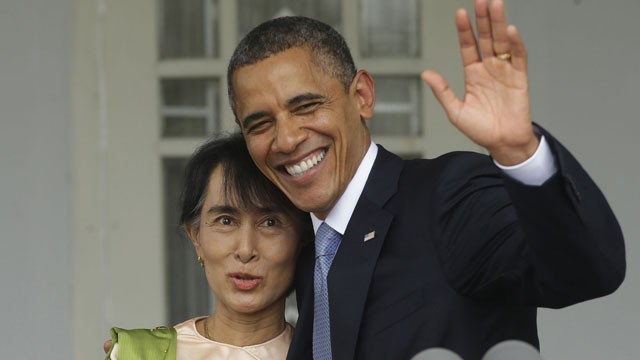
President Obama: Controversial Myanmar visit "not an endorsement" of its government,
http://www.cbsnews.comPresident Obama has become the first sitting U.S. president to visit Myanmar. He landed there Monday. While he's there, the Burmese public will hear him congratulate the former pariah state "on having opened the door to a country that respects human rights and respects political freedom," he said during a press conference Sunday. "But what they'll also hear is that the country has a long way to go." Mr. Obama's unprecedented stop through the nation - also called Burma - during his Southeast Asia trip has angered some human rights activists who believe the country should prove it has truly moved on from its years of brutal military rule before a sitting president pays it a visit. But Mr. Obama argued during Sunday's news conference in Thailand that Myanmar's steps toward democratization deserve acknowledgement.The visit "is not an endorsement of the Burmese government," the president pointed out, but "an acknowledgement that there's a process under way inside that country that even a year and a half, two years ago, nobody foresaw." Citing positive leadership from Myanmar President Thein Sein and Parliament member Aung San Suu Kyi - both of whom he and Secretary of State Hillary Clinton will meet with during their visit - as well as the release of political prisoners, Mr. Obama said the nation is demonstrating "an articulated commitment to further political reform." While admitting no one "is under any illusion that Burma has arrived," he argued, "If we waited to engage until they had achieved a perfect democracy, my suspicion is we'd be waiting an awful long time. "One of the goals of this trip is to highlight the progress that has been made, but also to give voice to the much greater progress that needs to be made in the future," the president continued. "Change can happen very fast if a spotlight is shown on what's going on in a country, and the people there start believing that their voices are heard around the world. And one of the things that we can do as an international community is make sure that the people of Burma know we're paying attention to them, we're listening to them, we care about them. "And this visit allows me to do that in a fairly dramatic fashion," he concluded. The president's stop in Myanmar also gives him an opportunity to see a place that helped form his Kenyan grandfather, according to the New York Times. Hussein Onyango Obama spent part of World War II in what was then Burma as a cook for a British Army captain. Later Monday, another presidential first: Following his Burmese visit, Mr. Obama will travel to Cambodia to attend the East Asia Summit.
Subscribe to:
Posts (Atom)