Syria's information minister has lashed out at Turkey, accusing Ankara of sending foreign fighters across the border to fight Syrian government troops in President Bashar Assad's ancestral homeland in Latakia province. Omran al-Zoubi told the state TV on Sunday that neighbouring Turkey is facilitating the entry of "groups of foreigners, armed to their teeth" into Latakia, where fighting is raging between Syrian government forces and rebel fighters trying to oust Assad. Recently, the Syrian government complained to the UN that Ankara was providing cover to rebels crossing the border to Syrian soil. Turkey is a NATO member that once had good ties with Syria. But the two countries had a falling out over Ankara's support for the Syrian opposition in the three-year-old conflict. Hostilities have flared along the border on several occasions and last week, Turkey shot down a Syrian fighter jet, saying it violated its airspace. Damascus rejects Ankara's airspace violation allegations, saying that the plane was hit on Syrian airspace.Damascus says Ankara sends foreign fighters to Syria to fight government troops.
Monday, March 31, 2014
Turkey accused of sending fighters to Syria
Saudi Arabia: Three held over criticising government on YouTube
 Saudi authorities have arrested three citizens who posted YouTube videos urging the oil-rich kingdom to improve their living standards and criticising “corruption”, activists said on Sunday.
The arrests were made on Saturday, the day US President Barack Obama flew home from Saudi Arabia under fire for not having done more to raise human rights concerns during talks with King Abdullah, activists said.
Saudi authorities have arrested three citizens who posted YouTube videos urging the oil-rich kingdom to improve their living standards and criticising “corruption”, activists said on Sunday.
The arrests were made on Saturday, the day US President Barack Obama flew home from Saudi Arabia under fire for not having done more to raise human rights concerns during talks with King Abdullah, activists said.
 In one video, a young man identifying himself as Abdulaziz Mohammed al-Dosari addressed King Abdullah saying he has to survive on a low income, and does not own a house or a car.
“We are fed up, and you still blame those who carry out bombings,” the man says, urging the king to give Saudis money to improve their lives.
“Give us our money… we do not want to beg… You and your children are playing with this money,” he said about Saudi’s oil wealth in the 30-second video during which he held up his identification card.
In another video, a man identifying himself as Abdullah bin Othman charged that “corruption is widespread” in Saudi Arabia while “people are hungry and oppressed.”
In one video, a young man identifying himself as Abdulaziz Mohammed al-Dosari addressed King Abdullah saying he has to survive on a low income, and does not own a house or a car.
“We are fed up, and you still blame those who carry out bombings,” the man says, urging the king to give Saudis money to improve their lives.
“Give us our money… we do not want to beg… You and your children are playing with this money,” he said about Saudi’s oil wealth in the 30-second video during which he held up his identification card.
In another video, a man identifying himself as Abdullah bin Othman charged that “corruption is widespread” in Saudi Arabia while “people are hungry and oppressed.”
Pakistan:Sindh Assembly demands end to CII
 The Sindh Assembly Monday demanded the disbandment of the Council of Islamic Ideology while passing a resolution to stop implementation on the CII's earlier decisions, DawnNews reported.
The resolution was moved by Pakistan Muslim League-Functional's (PML-F) leader Mehtab Akhtar Rashidi.
The Assembly expressed serious reservations over the recent decisions taken by the CII with regards to women.
It moreover demanded of the federal government that any implementation of the CII’s recommendations on underage marriages and DNA tests should be stopped
The CII has come under fire with its controversial statements and rulings.
Earlier this month, the CII had ruled that laws related to minimum age of marriage were un-Islamic and that children of any age could get married if they attain puberty.
CII chairman Maulana Mohammad Khan Sheerani had said that the age of puberty varied from individuals to individuals and that it was the responsibility of guardians to have ruksati as soon as the child attains the age of puberty.
It had also said that the current law requiring a man to seek written permission from his wife before contracting a second marriage should be amended.
“The government should amend the law to make the issue of more than one marriage easy and in accordance with Sharia," Sheerani had said.
The Sindh Assembly Monday demanded the disbandment of the Council of Islamic Ideology while passing a resolution to stop implementation on the CII's earlier decisions, DawnNews reported.
The resolution was moved by Pakistan Muslim League-Functional's (PML-F) leader Mehtab Akhtar Rashidi.
The Assembly expressed serious reservations over the recent decisions taken by the CII with regards to women.
It moreover demanded of the federal government that any implementation of the CII’s recommendations on underage marriages and DNA tests should be stopped
The CII has come under fire with its controversial statements and rulings.
Earlier this month, the CII had ruled that laws related to minimum age of marriage were un-Islamic and that children of any age could get married if they attain puberty.
CII chairman Maulana Mohammad Khan Sheerani had said that the age of puberty varied from individuals to individuals and that it was the responsibility of guardians to have ruksati as soon as the child attains the age of puberty.
It had also said that the current law requiring a man to seek written permission from his wife before contracting a second marriage should be amended.
“The government should amend the law to make the issue of more than one marriage easy and in accordance with Sharia," Sheerani had said.
Farhatullah Babar replies to media queries about jewelry allegedly belonging to Shaheed Mohtarma Benazir Bhutto
Spokesperson replies to media queries about jewelry allegedly belonging to Shaheed Mohtarma Benazir Bhutto Islamabad March 31, 2014: Replying to a media query about a letter purportedly written by PPP Co Chair Mr. Asif Ali Zardari to unnamed Swiss authorities through a Swiss lawyer seeking return of a jewellery allegedly belonging to Shaheed Mohtarma Benazir Bhutto, Spokesperson Senator Farhatullah Babar recalled that the jeweler, when summoned by the Swiss Magistrate, had already deposed at the time denying that the jewelry belonged to her. Since the ownership of the jewelry has already been denied by the jeweler himself before the Magistrate it is strange and illogical to assert that Mr. Asif Ali Zardari has asked for the return of the jewelry that neither belongs to him nor to Shaheed Mohtarma Benazir Bhutto, he said. Furthermore, he said that for the past several years since the case ended there has been no Swiss lawyer of Mr. Zardari in Switzerland through whom Mr. Zardari is alleged to have approached unnamed Swiss authorities.http://mediacellppp.wordpress.com/
Kerry, Lavrov fail to reach Ukraine deal
The United States and Russia failed to reach a deal on Ukraine after talks in Paris, with US Secretary of State John Kerry calling on Moscow to pull back its forces.
Europe’s dependence on Russian gas to remain in near future — German expert

Diversifying gas supplies to Europe will only be possible by the end of this decade, says Friedbert Pflueger, director of the European Centre for Energy and Resource Security

“Whether we want it or not, our energy dependence on Russia will still remain for a rather long time, even if we manage to slightly reduce it,” Pflueger said. “EU strategy aimed at diversification of energy sources is right in terms of politics and economy,” he added. “However, it should be used with caution, avoiding populist decisions made in a hurry and taking into account the importance of Russian supplies for European enterprises and consumers that will remain for a long time.”
Crimea to become special economic zone with tax breaks to attract investors


New Focus on Pakistan’s Lawless Border Region

Abdullah Sees Surprise Win Making Him Afghanistan President

Abdullah Abdullah, who finished second in Afghanistan’s 2009 presidential election, is confident he can win enough ballots on April 5 to avoid a runoff and sign a deal “within a month” to keep U.S. troops in the country.“God willing, we will have an election which will purely reflect the outcome of Afghans votes and it won’t go to the second round,” Abdullah, 53, said in an interview on March 28 during a campaign stop in the northern city of Mazar-e-Sharif when asked about his chances. “I’m not that much concerned about other candidates.”
Abdullah is one of several leading contenders to succeed President Hamid Karzai, who has refused to sign an agreement to keep U.S. troops in Afghanistan beyond this year. The Taliban, which lost power after the U.S. invasion in 2001, has sought to disrupt the vote with attacks on police outposts, election offices and establishments frequented by foreigners. A surprise first-round victory followed by the security agreement would pave the way for Asia’s poorest country to receive billions of dollars in funds to pay government salaries and fight militants. Marine Corps General Joseph Dunford, the head of U.S.-led forces in the country, said this month the elections are likely headed for a runoff, and a new president probably wouldn’t take office until August.
Abdullah, who served as Karzai’s foreign minister for four years, withdrew in 2009 from a runoff with his former boss, saying it wouldn’t produce a clean vote. Abdullah said he has “hope” that this election will be cleaner than the 2009 election, even as Taliban attacks curtail monitoring activities.U.S. Troops Afghanistan needs the U.S. and international community to provide support, both financially and with security, Abdullah said. President Barack Obama said Feb. 25 that he asked the Pentagon to prepare plans for withdrawal of all forces by December, while waiting to see if the next Afghan leader will sign the Bilateral Security Agreement. The number of international troops in Afghanistan should be enough to “assert their presence and provide support,” Abdullah said. “It’s in the interest of Afghanistan.” At the same time, he called for closer relations with neighboring countries and said Afghanistan’s foreign policy should balance concerns of Russia, China and the U.S.. While cross-border attacks have hurt relations with Pakistan, it’s still an important partner for Afghanistan, he said. “Pakistan understands Pakistani Taliban are threatening their own security, and Afghan Taliban are also threatening their security and ours,” Abdullah said. Blaming Pakistan Karzai blamed Pakistan for a March 20 attack on Kabul’s Serena Hotel that killed nine people. In a phone call two days ago with Secretary of State John Kerry, Karzai questioned whether the U.S. has the ability or will to influence countries that “support terrorism,” a reference to Pakistan. The Taliban are boycotting the elections and have vowed to disrupt the polls. Abdul Jabar Haqbeen, governor of northern Sar-e Pol province, said the group last night abducted a candidate who is running for a seat in the provincial council along with his seven associates. Taliban spokesman Zabihullah Mujahed did not answer calls to his mobile phone. The guerrilla group attacked the Election Commission headquarters in Kabul two days ago, adding to violence that killed or injured more than 8,000 civilians in 2013, a 14 percent increase from the previous year, according to the United Nations Assistance Mission in Afghanistan. ‘Desire Peace’ The people of Afghanistan “just desire peace,” Abdullah said in the interview, adding that he’d continue talks with the Taliban to reach a settlement. Abdullah is half Pashtun and half Tajik. Pashtuns account for 42 percent of Afghanistan’s 31 million people, while Tajiks make up 27 percent, according to the CIA World Factbook. Uzbeks and Hazaras both account for 9 percent and other groups comprise the rest, it says. Last week in Mazar-e-Sharif, an area where Pashtuns are a minority, tens of thousands of people came to hear Abdullah’s speech. Some supporters celebrated the political rally by dancing in the crowd. “Dr. Abdullah has grown up among people and he can better understand people’s sorrow, said Jawid Khaliqi, 27, a book seller in the city, in an interview. ‘‘Other candidates grew up in foreign countries and will never understand our needs.’’ Sept. 11 Abdullah was a close aide of Northern Alliance commander Ahmad Shah Masood, a Tajik who is seen by many Afghans as a national hero. They fought together against Soviet occupiers in the 1980s and the Taliban in the 1990s. Suicide bombers killed Masood two days before the Sept. 11 attacks that led to the U.S. invasion. Abdullah’s top opponents are Pashtuns who have also had roles in Karzai cabinets: Ashraf Ghani Ahmadzai, a former finance minister who holds a doctorate degree in cultural anthropology from Columbia University in New York, and Zalmai Rassoul, an ex-foreign minister who received an endorsement from Karzai’s brother. Also running is former warlord Abdul Rasul Sayyaf, according to a Feb. 27 report from the Congressional Research Service. Sayyaf supported figures in the 1980s and 1990s who ultimately formed al-Qaeda and served as the ‘‘mentor” of Khalid Sheikh Mohammed, the mastermind of the Sept. 11, 2001 attacks on the World Trade Center and Pentagon, according to The 9/11 Commission Report. Either Abdullah or Ghani will probably become Afghanistan’s next president, according to Faizullah Jalal, a lecturer at Kabul University. “It is hard to say which one of these two most popular politicians will win,” he said. “But it’s simple to say one of them will win unless there is fraud.”
Pakistan’s Former Ruler Pleads Not Guilty to Treason
 Pervez Musharraf, Pakistan’s former military ruler, pleaded not guilty to treason on Monday after being formally indicted by a special court in Islamabad, the capital, according to lawyers in the case.
The indictment marks a turning point for Pakistan, where the military has long dominated the civilian leadership and no military ruler has ever been tried for abuse of power.
As the formal charges were read out, Mr. Musharraf stood in a defiant stance and pleaded not guilty.
“I fought two wars for the country,” he said. “I gave 44 years of my life to Pakistan’s army. The country was nearing default in 1999 when I assumed power, but I restored the country’s honor. I regret that despite all this I am being called a traitor.”
Mr. Musharraf is accused of subverting Pakistan’s Constitution in 2007, when he imposed emergency rule and fired high-ranking judicial officials in an attempt to maintain his grip on power. He resigned under threat of impeachment in 2008 and left the country.
He returned to Pakistan in March 2013 to revive his political career, but instead found himself ensnared in a phalanx of court cases stemming from his time in power. The treason charge is the most serious one Mr. Musharraf faces; if convicted, he could be sentenced to death.
Proceedings in the case began last December, but Mr. Musharraf’s appearance Monday was only his second in 37 hearings. His lawyers have cited security and health concerns for past absences.
On Jan. 2, Mr. Musharraf was on his way to court but went instead to a military hospital in the neighboring garrison city of Rawalpindi, after complaining of heart trouble. Since then, the justices on the panel hearing the case have expressed their unhappiness with Mr. Musharraf’s continuing absence. The panel, headed by Justice Faisal Arab, issued an arrest warrant for Mr. Musharraf that would have gone into effect had he failed to attend the hearing Monday.
Late Sunday night, Mr. Musharraf’s lawyers said he had been admitted to intensive care at the military hospital, suggesting that he might again fail to appear. But on Monday morning, a contingent of Islamabad police officers arrived at the hospital. Mr. Musharraf, for whom arrest would have been a deeply humiliating possibility, agreed to go to Islamabad.
Elaborate security arrangements were made for the proceedings Monday. At least 2,100 police officers and paramilitary troops stood guard on the route from the military hospital in Rawalpindi to the court in Islamabad.
Muhammad Farogh Naseem, a lawyer for Mr. Musharraf, urged the court to allow him to travel to the United Arab Emirates to visit his mother, who he said was in critical condition in a hospital there. Mr. Naseem also asked that Mr. Musharraf be allowed to go to the United States, where he would prefer to receive his medical treatment. Justice Arab said the court would rule on those requests later Monday.
Pervez Musharraf, Pakistan’s former military ruler, pleaded not guilty to treason on Monday after being formally indicted by a special court in Islamabad, the capital, according to lawyers in the case.
The indictment marks a turning point for Pakistan, where the military has long dominated the civilian leadership and no military ruler has ever been tried for abuse of power.
As the formal charges were read out, Mr. Musharraf stood in a defiant stance and pleaded not guilty.
“I fought two wars for the country,” he said. “I gave 44 years of my life to Pakistan’s army. The country was nearing default in 1999 when I assumed power, but I restored the country’s honor. I regret that despite all this I am being called a traitor.”
Mr. Musharraf is accused of subverting Pakistan’s Constitution in 2007, when he imposed emergency rule and fired high-ranking judicial officials in an attempt to maintain his grip on power. He resigned under threat of impeachment in 2008 and left the country.
He returned to Pakistan in March 2013 to revive his political career, but instead found himself ensnared in a phalanx of court cases stemming from his time in power. The treason charge is the most serious one Mr. Musharraf faces; if convicted, he could be sentenced to death.
Proceedings in the case began last December, but Mr. Musharraf’s appearance Monday was only his second in 37 hearings. His lawyers have cited security and health concerns for past absences.
On Jan. 2, Mr. Musharraf was on his way to court but went instead to a military hospital in the neighboring garrison city of Rawalpindi, after complaining of heart trouble. Since then, the justices on the panel hearing the case have expressed their unhappiness with Mr. Musharraf’s continuing absence. The panel, headed by Justice Faisal Arab, issued an arrest warrant for Mr. Musharraf that would have gone into effect had he failed to attend the hearing Monday.
Late Sunday night, Mr. Musharraf’s lawyers said he had been admitted to intensive care at the military hospital, suggesting that he might again fail to appear. But on Monday morning, a contingent of Islamabad police officers arrived at the hospital. Mr. Musharraf, for whom arrest would have been a deeply humiliating possibility, agreed to go to Islamabad.
Elaborate security arrangements were made for the proceedings Monday. At least 2,100 police officers and paramilitary troops stood guard on the route from the military hospital in Rawalpindi to the court in Islamabad.
Muhammad Farogh Naseem, a lawyer for Mr. Musharraf, urged the court to allow him to travel to the United Arab Emirates to visit his mother, who he said was in critical condition in a hospital there. Mr. Naseem also asked that Mr. Musharraf be allowed to go to the United States, where he would prefer to receive his medical treatment. Justice Arab said the court would rule on those requests later Monday.
Renowned intellectuals believe Saudi-funded fanatics set all to occupy Pakistan
www.shiitenews.comRenowned intellectuals and analysts of Pakistan believe that Saudi-funded Deobandis and Salafis set all to occupy Pakistan. Meanwhile, former Prime Minister Chaudhry Shujaat Hussain, head of PMLQ, said that Pakistan would have to pay heavy price for the $1.5 billion Saudi gift. “Saudis always fund for services that the Saudi regime need from Pakistan hence their 1.5 billion dollars should also be seen in that perspective,” said Zaid Hamid, an analyst and intellectual answering a question of Din News channel’s anchor. On the other hand, Khushnud Ali Khan, Editor of Daily Jinnah, wrote in a column that Sunni Bralevis are majority sect in Pakistan but their majority doesn’t have deep knowledge of their peaceful ideology so they couldn’t differentiate between Bralevis and Deobandis/Salafis. He said that banned Sipah-e-Sahaba and such other outfits take the advantage of this ignorance and convert Sunni Bralevis by their propaganda. He said that Sunni Bralevis are ignorant of the fact that Saudi-backed Deobandis and Salafis have set all to occupy whole of Pakistan. “PMLN Government has displeased Shia population of Pakistan and Iran by allowing terrorist group Lashkar-e-Jhangvi freedom in Pakistan,” said Zaid Hamid. He further said that on the one hand, Pakistani army train Saudis who now want Pakistan naval officials too for Saudi submarines and on the other Iranian trainee cadets were assassinated in Pakistan. He said that awards were given to Lashkar-e-Jhangvi terrorists who assassinated Shia Muslims and Iranians and Punjab government’s representatives were present at that ceremony in Quetta.
Pakistan: 95% of minority worship places converted to commercial use, survey finds
Out of 428 minorities’ places of worship in the country, 408 have been converted into toy stores, restaurants, government offices and schools after 1990, a survey has found.
Another shocking figure disclosed in the survey conducted by the All Pakistan Hindu Rights Movement (PHRM) was that only 20 Hindu temples out of the 428 places of worship are operational.
“The remaining places of worship have been leased for commercial and residential purposes by the Evacuee Trust Property Board (ETPB), said PHRM Chairman Haroon Sarab Diyal. The 135,000 acres of land owned by around four million Hindus is now under ETPB’s control.
Representatives of the Hindu community also wrote to all the chief ministers of the four provinces but have not received a response yet, Diyal added. He urged the government to hand over these religious places to the Hindu community to mitigate their resentment and fear of being forced to leave their homeland.
Sharing documents with The Express Tribune, he revealed that Kali Bari Hindu Temple has been rented out to a Muslim party in Dera Ismail Khan. This historic temple is being used as Taj Mehal Hotel, he added.
The documents also allege that Frontier Constabulary officials, with the help of the ETPB, occupied the Shamshan Ghaat, also in Dera Ismail Khan. The Hindu community is unable to cremate their dead because of the unavailability of Shamshan Ghaat and is forced to bury them in a graveyard shared my members of other faiths.
A Hindu temple in district Bannu, Khyber-Pakhtunkhwa, is now a well-known sweets shop. Meanwhile, the Holy Shiv Temple in Kohat has been converted into a government primary school.
Government Girls High School, Peshawar Cantt, now stands where a historical Hindu temple used to be; other historic temples such as the Asamai temple has been closed down in the K-P capital.
Meanwhile, Guru Duwara Gali, a Sikh religious place, has been converted into a garments shop in Abbottabad.
In the federal capital, Islamabad, the Raam Kunde Complex of Temples at SaidPur Model village is now a ‘picnic site’. A second temple at Rawal Dam, Islamabad, has been shut down and the Hindu community believes that it is going to dilapidate day by day without being handed over to them.
In Punjab, a Hindu temple was demolished and reconstructed as a community centre in Rawalpindi, while in Chakwal, ten famous temples collectively known as Bhuwan are being used by the local Muslim community for commercial purposes, despite being handed over to the Hindus.
“Even if we have control of the temples, local residents dump oil drums, utensils and animals around them,” complained Diyal.
However, Religious Affairs Minister Sardar Yousaf assured that the Evacuee Trust has already been directed to gather the data pertaining to all religious places owned by minority communities. “At least, [all this] did not happen during our government’s tenure,” he said when he was informed of the survey’s findings. “I’ll take up this matter with minorities’ leaders. It’s a serious matter.”
A committee will be constituted to address these concerns, he routinely added.
https://www.blogger.com/blogger.g?blogID=6906155786122195046#editor/src=sidebar
Balochistan: Three more bodies found from a mass grave in Khuzdar
http://balochwarna.com/
 Three more bodies were found in a mass grave in Tootak area of Khuzdar, Balochistan on Sunday.
Tootak is the same area where on Jan, 24, 2014 at least 13 bodies had been recovered and the recovery of three more corpses makes the total official number of bodies 16.
Balochistan Home and Tribal Affairs Secretary, Asad Gilani, confirmed the recovery of three more bodies; he told BBC Urdu that a local of the area informed Deputy Commissioner Khuzdar about the presence of bodies.
He said the local administration inspected the area and excavated the three bodies.
According to Levies sources two bodies were found from one grave whereas the third was found from some distance in another place. The bodies have been shifted to district headquarters hospital in Khuzdar.
Hospital sources said the bodies were disfigured beyond recognition and six months old. Hospital sources also said two bodies were merely bones whereas the third still had some flesh on it.
The Home Secretary said that steps will be taken for the DNA test of these bodies to ascertain their identity.
It is pertinent to remember that three mass graves were found in the same location of Tootak area inKhuzdar district of Balochistan on 24 January. The regional administration had confirmed the discovery of 13 bodies from those graves.
After the discovery of mass graves human rights organizations and Baloch nationalist parties and organizations had protested against this incident. Baloch nationalist parties had said at least 169 bodies were found from three mass graves. The Pakistan army had later sealed the area and took control of the bodies.
The Balochistan government constituted a judicial inquiry Tribunal comprising a Balochistan High Court judge to investigate the discovery of mass graves in Tootak.
The Tribunal allowed the burial of 11 disfigured and unidentified bodies that were found from Khuzadr on 24 January, 2014. The local administration of Khuzdar buried the bodies in a mass grave. Identity of three of the bodies was ascertained and they were handed over to their relatives. All three men were residents of earthquake hit district of Awaran Balochistan.
Balochistan High Court judge Justice Mohammad Noor Miskanzai recorded the statement of eye-witnesses of Tootak mass graves before judicial Tribunal. The investigation of the previous mass graves is still continued yet another mass grave has been found in the same area.
Voice for Baloch Missing Persons and Baloch pro-freedom Baloch parties and leaders had asked for an international inquiry and urged the UN to send a team of medical experts to investigate the incident and ascertain the identity of those bodies found in Tootak mass graves.
Baloch pro-freedom leader Hyrbyair Marri in a statement expressed his concerned about the unearthing of mass graves in Balochistan on 24 January.
He had said: “We suspect that the government is trying to remove the evidence from the site because the other day when locals were digging the mass graves, the Pakistani security forces opened fire on them and took control of the entire region. They are not allowing anyone including the media to go in that area which illustrates that Pakistan army is busy in removing evidences.”
Three more bodies were found in a mass grave in Tootak area of Khuzdar, Balochistan on Sunday.
Tootak is the same area where on Jan, 24, 2014 at least 13 bodies had been recovered and the recovery of three more corpses makes the total official number of bodies 16.
Balochistan Home and Tribal Affairs Secretary, Asad Gilani, confirmed the recovery of three more bodies; he told BBC Urdu that a local of the area informed Deputy Commissioner Khuzdar about the presence of bodies.
He said the local administration inspected the area and excavated the three bodies.
According to Levies sources two bodies were found from one grave whereas the third was found from some distance in another place. The bodies have been shifted to district headquarters hospital in Khuzdar.
Hospital sources said the bodies were disfigured beyond recognition and six months old. Hospital sources also said two bodies were merely bones whereas the third still had some flesh on it.
The Home Secretary said that steps will be taken for the DNA test of these bodies to ascertain their identity.
It is pertinent to remember that three mass graves were found in the same location of Tootak area inKhuzdar district of Balochistan on 24 January. The regional administration had confirmed the discovery of 13 bodies from those graves.
After the discovery of mass graves human rights organizations and Baloch nationalist parties and organizations had protested against this incident. Baloch nationalist parties had said at least 169 bodies were found from three mass graves. The Pakistan army had later sealed the area and took control of the bodies.
The Balochistan government constituted a judicial inquiry Tribunal comprising a Balochistan High Court judge to investigate the discovery of mass graves in Tootak.
The Tribunal allowed the burial of 11 disfigured and unidentified bodies that were found from Khuzadr on 24 January, 2014. The local administration of Khuzdar buried the bodies in a mass grave. Identity of three of the bodies was ascertained and they were handed over to their relatives. All three men were residents of earthquake hit district of Awaran Balochistan.
Balochistan High Court judge Justice Mohammad Noor Miskanzai recorded the statement of eye-witnesses of Tootak mass graves before judicial Tribunal. The investigation of the previous mass graves is still continued yet another mass grave has been found in the same area.
Voice for Baloch Missing Persons and Baloch pro-freedom Baloch parties and leaders had asked for an international inquiry and urged the UN to send a team of medical experts to investigate the incident and ascertain the identity of those bodies found in Tootak mass graves.
Baloch pro-freedom leader Hyrbyair Marri in a statement expressed his concerned about the unearthing of mass graves in Balochistan on 24 January.
He had said: “We suspect that the government is trying to remove the evidence from the site because the other day when locals were digging the mass graves, the Pakistani security forces opened fire on them and took control of the entire region. They are not allowing anyone including the media to go in that area which illustrates that Pakistan army is busy in removing evidences.”
Demographic change in Balochistan and coming Tsunami
 Ever since the inception of Pakistan, Balochistan has been the most turbulent province. It has witnessed five major military operations. The ongoing operation which started on 2006 and was intensified after the demise of Nawab Akbar Bugti an influential tribal chief cum politician has been the deadliest of all operations.
As compared to past, Baloch sarmachars ( Baloch guerillas) are now more organized and powerful. They have been successful in not allowing the Gwadar Port (bone of contention between Islamabad and Baloch leaders) to be functional. Due to the fear of these insurgents, no entrepreneurs have shown any interest in vast resources of Balochistan because they fear that government will not be able provide security to them against Baloch insurgents.
Ever since the inception of Pakistan, Balochistan has been the most turbulent province. It has witnessed five major military operations. The ongoing operation which started on 2006 and was intensified after the demise of Nawab Akbar Bugti an influential tribal chief cum politician has been the deadliest of all operations.
As compared to past, Baloch sarmachars ( Baloch guerillas) are now more organized and powerful. They have been successful in not allowing the Gwadar Port (bone of contention between Islamabad and Baloch leaders) to be functional. Due to the fear of these insurgents, no entrepreneurs have shown any interest in vast resources of Balochistan because they fear that government will not be able provide security to them against Baloch insurgents.
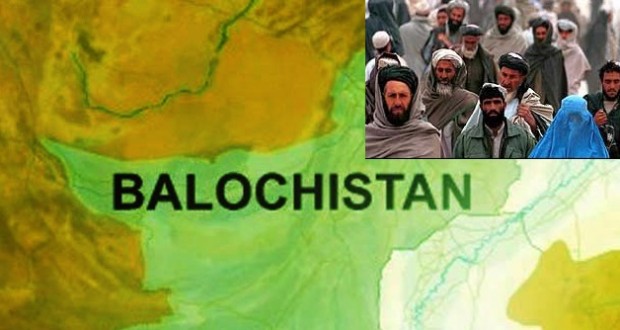 In most parts of the Balochistan, especially in southern and central Balochistan, writ of the government does not exist. In schools no Pakistani anthem is sung and no Pakistani flag is hoisted.
To counter the Baloch sarmachars, establishment has resorted to various counter insurgency strategies like kill and dump policy, hiring local people and establishing their own death squads, to abduct people who are ideological proponents of sarmachars. But all these imprudent strategies have not resolved the issue rather it has added oil to the fire. Owing to these insane policies, gulf between Baloch masses and state has widened.
After failing to crush the Baloch insurgency, establishment has now opted for another dangerous strategy that is bring demographic changes in Balochistan and to prove that anti state Balochs are minority in Balochistan, whereas, pro state Pashtoons are in majority. To achieve this goal, establishment is now importing Pashtoons from neighboring Afghanistan to settle in Balochistan.
As a result of this new strategy, millions of Afghan refugees have settled in Balochistan, especially in the Quetta city. Kharotabad, Pashtoonabad and western bypass are the areas where Afghan refugees are in majority. According to a survey, 50% of Quetta comprised of Afghan refugees. They don’t consider them as refugees, they have Pakistani passport, CNIC and have bought property in Quetta.
This unwise strategy will have grim and grave repercussions not only for Baloch insurgents, but for the Pakistani state as well. The immigrants will never be loyal to Pakistan; they will always remain loyal to their homeland Afghanistan. A visit of Liaqat Bazaar made me confused whether I am in Quetta or Kandahar. The Afghan refugees have put Afghanistan’s flags on the dash board of their cars and they have pasted sticker of Afghanistani flag on the windows of their cars.
A prominent leader of a Nationalist Pashtoon Party openly said that “those who call them refugees they are wrong, this is greater Afghanistan and a Pashtoon who travel from Quetta to Kandahar, he is not a refugee there, similarly a Pashtoon who travel from Kandahar to Quetta, he is not refugee here. Durand line, itself is an illegal border line and we don’t recognize it.” So, instead of countering Baloch insurgency, this import of refugees is reviving Pashtoon nationalism.
As compared to Baloch nationalism, Pashtoon nationalism will be far more dangerous for the state. In the Afghan refugees of Quetta, bulk of the population comprised of Afghan Taliban and in lexicon of Pakistani establishment they are called Good Taliban or Pro Pakistan Taliban and they have no nexus with Bad Taliban or Anti Pakistan Taliban. But in real, there is no concept of Good or Bad Taliban. They are same, they share the same ideology, they have a same agenda to establish their hegemony in the region and to impose a shariah of their own brand and more importantly they belong to the same ethnic group.
According to the political pundits, after the departure of US, Taliban will easily conquer Kabul and Bad Taliban or TTP will find safe havens in Afghanistan and they will launch their attack in Pakistan from Afghanistan. There will be a change in the attitude of Good Taliban after US drawdown and they will also become Bad Taliban. They will join hands with TTP and they will start a Al-Qaeda version of Jihad in Pakistan.
Unlike Baloch nationalism, Pashtoon nationalism can use the tool of Islam to capture whole Pakistan which means apart from Pashtoon Taliban, Punjabi Taliban, Lashkar e Jhangvi and other Islamic militant all over the world can come to join hands with them and Pakistan’s chances of defeating these combine forces of Islamic extremists will be nil. The result will be as that of a Tsunami.
In most parts of the Balochistan, especially in southern and central Balochistan, writ of the government does not exist. In schools no Pakistani anthem is sung and no Pakistani flag is hoisted.
To counter the Baloch sarmachars, establishment has resorted to various counter insurgency strategies like kill and dump policy, hiring local people and establishing their own death squads, to abduct people who are ideological proponents of sarmachars. But all these imprudent strategies have not resolved the issue rather it has added oil to the fire. Owing to these insane policies, gulf between Baloch masses and state has widened.
After failing to crush the Baloch insurgency, establishment has now opted for another dangerous strategy that is bring demographic changes in Balochistan and to prove that anti state Balochs are minority in Balochistan, whereas, pro state Pashtoons are in majority. To achieve this goal, establishment is now importing Pashtoons from neighboring Afghanistan to settle in Balochistan.
As a result of this new strategy, millions of Afghan refugees have settled in Balochistan, especially in the Quetta city. Kharotabad, Pashtoonabad and western bypass are the areas where Afghan refugees are in majority. According to a survey, 50% of Quetta comprised of Afghan refugees. They don’t consider them as refugees, they have Pakistani passport, CNIC and have bought property in Quetta.
This unwise strategy will have grim and grave repercussions not only for Baloch insurgents, but for the Pakistani state as well. The immigrants will never be loyal to Pakistan; they will always remain loyal to their homeland Afghanistan. A visit of Liaqat Bazaar made me confused whether I am in Quetta or Kandahar. The Afghan refugees have put Afghanistan’s flags on the dash board of their cars and they have pasted sticker of Afghanistani flag on the windows of their cars.
A prominent leader of a Nationalist Pashtoon Party openly said that “those who call them refugees they are wrong, this is greater Afghanistan and a Pashtoon who travel from Quetta to Kandahar, he is not a refugee there, similarly a Pashtoon who travel from Kandahar to Quetta, he is not refugee here. Durand line, itself is an illegal border line and we don’t recognize it.” So, instead of countering Baloch insurgency, this import of refugees is reviving Pashtoon nationalism.
As compared to Baloch nationalism, Pashtoon nationalism will be far more dangerous for the state. In the Afghan refugees of Quetta, bulk of the population comprised of Afghan Taliban and in lexicon of Pakistani establishment they are called Good Taliban or Pro Pakistan Taliban and they have no nexus with Bad Taliban or Anti Pakistan Taliban. But in real, there is no concept of Good or Bad Taliban. They are same, they share the same ideology, they have a same agenda to establish their hegemony in the region and to impose a shariah of their own brand and more importantly they belong to the same ethnic group.
According to the political pundits, after the departure of US, Taliban will easily conquer Kabul and Bad Taliban or TTP will find safe havens in Afghanistan and they will launch their attack in Pakistan from Afghanistan. There will be a change in the attitude of Good Taliban after US drawdown and they will also become Bad Taliban. They will join hands with TTP and they will start a Al-Qaeda version of Jihad in Pakistan.
Unlike Baloch nationalism, Pashtoon nationalism can use the tool of Islam to capture whole Pakistan which means apart from Pashtoon Taliban, Punjabi Taliban, Lashkar e Jhangvi and other Islamic militant all over the world can come to join hands with them and Pakistan’s chances of defeating these combine forces of Islamic extremists will be nil. The result will be as that of a Tsunami.
Pakistan: Female anti-polio worker shot dead in Bannu
Pakistan Today
Terrorists continue attacking anti-polio teams as one more female worker was gunned down on Monday. According to reports, the incident took place in the limits of Cantt police station of the city where unidentified gunmen opened fire on the female polio worker, leaving her dead on the spot. It may be mentioned here that anti-polio teams are being attacked in almost every province of the country since last year. Seeing the situation, the government has provided better security facilities to the workers.
Pakistan: Formation of forward bloc possible as differences engulf PTI
Overhaul in the making: Bilawal Bhutto hopes to induct fresh blood into PPP
The Express TribuneThe young leadership of Pakistan Peoples Party (PPP) is looking for a massive overhaul of the party by inducting into its ranks younger and dynamic faces that can actively engage the public through social and conventional media. Without proper organisation for a long time, the PPP is now looking for fresh blood to help its young patron-in-chief Bilawal Bhutto Zardari in steering the party following its humiliating defeat in the last year’s general elections.
 Bilawal, 25, who inherited the PPP from his mother Benazir Bhutto and maternal grandfather Zulfikar Ali Bhutto, is himself very active on social media and wants to reorganise all the wings of the party – especially its students’ wing, Peoples Students Federation(PSF) – by creating parallel youth wings at the union council level, according to activists close to the PPP chief.
The party’s reorganisation process, though long overdue, suffered a blow due to famine in Tharparkar district of Sindh. The disaster in the province ruled by the PPP left the party red-faced and tarnished its image further.
“The visit of Bilawal to Punjab to reorganise the party was due in March. But it is delayed due to security reasons and the situation in Thar,” an old PPP member told The Express Tribune.
Since the party was voted out of power in the centre and all the provinces except Sindh, the party leaders have been giving different dates for the party’s re-organisation. However, this time, the party is serious in doing so, claimed the PPP central leaders.
Bilawal was declared chairman of the party though a purported will, after assassination of his mother in 2007, but his father former President Asif Ali Zardari still calls the shots, analysts believe.
The party’s reorganisation process has already kicked off, claimed Naveed Chaudhry a veteran PPP leader from Lahore.
He said the first meeting in this regard was held last week in Dubai. Bilawal took recommendations from the party’s leaders and those who could not go to Dubai were taken live on Skype, he added. “A few more meetings will be held before the plans will get a final shape,” he added.
Qamar Zaman Kaira, former information minister and information secretary of the party, said though he could not give precise dates when the party’s reorganisation would be completed the process had already kicked off.
“Security issues are the main reason for postponement of Bilawal’s visit to Islamabad,” he said, adding that Bilawal wanted to focus more on youth in party’s proposed new bodies.
Contrary to Bilawal’s own point of opinion to induct maximum fresh blood at all levels, the PPP senior leaders have recommended him to include a mix of youth and experienced at the central and provincial levels while at the lower level party should focus maximum on fresh blood.
Peoples Students Federation
According to Faisal Sakhi Butt, who contested but lost a National Assembly seat from Islamabad, Bilawal wants to reorganise the PSF, which, he said, was once very dynamic on campuses throughout the country.
Butt said before announcing new bodies of the PSF, Bilawal wants to hold interactive sessions with students of colleges and universities.
“We are planning his interaction with students when he will be in Lahore. We are also planning his visit to Islamabad for the same purpose,” he said.
In Lahore, he would be meeting students from the central and southern belt of Punjab, while in Islamabad he would meet the students of colleges and universities from Northern Punjab, Khyber-Pakhtunkhwa (K-P) and other adjoining areas, Butt said.
He claimed that the process would be completed by the mid year before the new PSF bodies are in place.
Bilawal, 25, who inherited the PPP from his mother Benazir Bhutto and maternal grandfather Zulfikar Ali Bhutto, is himself very active on social media and wants to reorganise all the wings of the party – especially its students’ wing, Peoples Students Federation(PSF) – by creating parallel youth wings at the union council level, according to activists close to the PPP chief.
The party’s reorganisation process, though long overdue, suffered a blow due to famine in Tharparkar district of Sindh. The disaster in the province ruled by the PPP left the party red-faced and tarnished its image further.
“The visit of Bilawal to Punjab to reorganise the party was due in March. But it is delayed due to security reasons and the situation in Thar,” an old PPP member told The Express Tribune.
Since the party was voted out of power in the centre and all the provinces except Sindh, the party leaders have been giving different dates for the party’s re-organisation. However, this time, the party is serious in doing so, claimed the PPP central leaders.
Bilawal was declared chairman of the party though a purported will, after assassination of his mother in 2007, but his father former President Asif Ali Zardari still calls the shots, analysts believe.
The party’s reorganisation process has already kicked off, claimed Naveed Chaudhry a veteran PPP leader from Lahore.
He said the first meeting in this regard was held last week in Dubai. Bilawal took recommendations from the party’s leaders and those who could not go to Dubai were taken live on Skype, he added. “A few more meetings will be held before the plans will get a final shape,” he added.
Qamar Zaman Kaira, former information minister and information secretary of the party, said though he could not give precise dates when the party’s reorganisation would be completed the process had already kicked off.
“Security issues are the main reason for postponement of Bilawal’s visit to Islamabad,” he said, adding that Bilawal wanted to focus more on youth in party’s proposed new bodies.
Contrary to Bilawal’s own point of opinion to induct maximum fresh blood at all levels, the PPP senior leaders have recommended him to include a mix of youth and experienced at the central and provincial levels while at the lower level party should focus maximum on fresh blood.
Peoples Students Federation
According to Faisal Sakhi Butt, who contested but lost a National Assembly seat from Islamabad, Bilawal wants to reorganise the PSF, which, he said, was once very dynamic on campuses throughout the country.
Butt said before announcing new bodies of the PSF, Bilawal wants to hold interactive sessions with students of colleges and universities.
“We are planning his interaction with students when he will be in Lahore. We are also planning his visit to Islamabad for the same purpose,” he said.
In Lahore, he would be meeting students from the central and southern belt of Punjab, while in Islamabad he would meet the students of colleges and universities from Northern Punjab, Khyber-Pakhtunkhwa (K-P) and other adjoining areas, Butt said.
He claimed that the process would be completed by the mid year before the new PSF bodies are in place.
Pakistan vs Syrian conflict: lessons from history
Saudi Arabia has provided $ 1.5 billion to the government of Pakistan. Apprehensions and misgivings are widespread over the ulterior motives behind this big sum of money. The Prime Minister (PM) of Pakistan and the finance minister have stated to the opposition parties, the media and the nation that the money has been ‘gifted’ to Pakistan by Saudi Arabia without any terms and conditions. This is not a plausible explanation by the PML-N. This has never occurred in the history of Pakistan. The PML-N first tried hard not to divulge the name of the donor country but in this cyber age that attempt failed and it fuelled suspicions of ulterior objectives behind the move. Saudi Arabia has been frustrated by the US’s inclination to support dialogue between the rebels and the Assad government for a resolution of the Syrian civil war. Saudi Arabia has criticised the international community for not arming anti-Assad regime rebels. Saudi Arabia wants an end to the regime in Syria at every cost. It knows well that if Bashar al-Assad is not removed, Shia resistance in the Middle East will continue and its dreams of being the sole powerful player in the affairs of the Middle East will remain unfulfilled. To turn its dreams into a reality, Saudi Arabia has turned to Pakistan. The talk about town is that Saudi Arabia needs Islamabad’s support for anti-Assad forces in Syria. The foreign minister of Saudi Arabia visited Pakistan in January. The crown prince came to Islamabad in February. The King of Bahrain paid a visit this month. All these dramatic visits paint the picture that Saudi Arabia needs men and arms from Pakistan.By Inayatullah RustamaniThe war on terror has proved costly for Pakistan. Islamabad has lost its economy, peace, cricket and tarnished its international image as well. Pakistan cannot afford to step for the third time in history into the affairs of another country — the conflict in Syria
Pakistan has already suffered enormously for interfering in the affairs of others. It has done so twice. The then president Ziaul Haq dragged Pakistan into the Afghanistan war in the 1980s. This made the Federally Administered Tribal Areas (FATA) of Pakistan the permanent abode of freedom fighters and, nowadays, terrorists. Ex-president Pervez Musharraf repeated Zia’s acts and involved Pakistan’s army in a US-led war on terror to crush those fighters once called freedom fighters during the Zia regime. The war on terror has proved costly for Pakistan. Islamabad has lost its economy, peace, cricket and tarnished its international image as well. Pakistan cannot afford to step for the third time in history into the affairs of another country — the conflict in Syria.
There is very disturbing news too that ‘al Qaeda militants seek a Syria base, US officials say’ (The New York Times, March 25, 2014), which reads: “Dozens of seasoned militant fighters, including some mid-level planners, have travelled to Syria from Pakistan in recent months in what American intelligence and counterterrorism officials fear is an effort to lay the foundation for future strikes against Europe and the United States...The Qaeda veterans have multiple missions and motivations, counterterrorism officials say. Like thousands of other foreign fighters, many have been drawn on their own to Syria to fight the government of President Bashar al-Assad.” Pakistan’s involvement or any indirect role in the Syrian conflict will turn sour the relations between Pakistan and its neighbouring country, Iran. It will shelve the already long delayed Iran-Pakistan gas pipeline. Pakistan faces a severe energy shortage and the supply of gas from Iran will play a pivotal role in reducing it. The US and Saudi pressure on Pakistan is huge in that both do not want Pakistan to purchase gas from Iran. Pakistan must pursue its own national interests. It has made a pact with Iran for the gas purchase so it must live up to its pact.
Relations between Pakistan and India have always been strained. This has always compelled Islamabad to make a huge budgetary allocation to the defence sector. In the last budget, there was over Rs 600 billion for defence — around 18 percent of the total budget. Sour relations with another neighbouring country, Iran, will have unbearable impacts on Pakistan in terms of defence budgetary allocation. All the efforts of Iran are directed in Syria towards saving the regime of Bashar al-Assad, and any anti-Assad regime move by Pakistan will surely prove the final straw in relations between Islamabad and Tehran. Pakistan is being blamed internationally by those who say that its foreign policy is for sale and that it is a rentable state. There should not be any compromise on our foreign policy and national interests. The PML-N government must clearly reveal the real Saudi intentions behind provision of the money to dispel the wrong perceptions being circulated in different national and international circles that Pakistan received the money to arm anti-Assad rebels and send armed men to Saudi Arabia and Bahrain to topple the Assad regime. There is a strong suspicion that a secret cauldron is boiling in Pakistan regarding the fate of Syria. We must learn a lesson from the past two blunders made by Zia and Musharraf. Pakistan should not be part of a third blunder, which will make for the mother of all blunders.
Pakistan's Musharraf charged with high treason
 A court in Pakistan has charged former military ruler Pervez Musharraf with treason, the first army chief to face such a prosecution.
Mr Musharraf is accused of unlawfully suspending the constitution and instituting emergency rule in 2007.
He pleaded not guilty and has always claimed that the charges against him are politically motivated. He faces the death penalty if convicted.
President from 2001 to 2008, he was one of Pakistan's longest-serving rulers.
He went into self-imposed exile in 2008, returning to Pakistan in March 2013.
He had hoped to lead his party into elections, but was disqualified from standing and found himself fighting an array of charges relating to his time in power.
He has been in hospital since the beginning of year and reports say he is being treated for high blood pressure.
The judge read out five charges to Mr Musharraf.
He pleaded "not guilty" to each of them but also addressed the court with a speech about his services to the country and questioned how he could be called a traitor.
He declared that he was a patriot who fought in two wars for his country and that he acted within the constitution when he declared a state of emergency in the country in 2007.
Mr Musharraf also added that he did not act alone when he suspended the constitution in 2007.
The BBC's Shaan Khan at the scene reports that when the former president entered the court he was heavily guarded, but nevertheless appeared relaxed, even waving to the audience.
A court in Pakistan has charged former military ruler Pervez Musharraf with treason, the first army chief to face such a prosecution.
Mr Musharraf is accused of unlawfully suspending the constitution and instituting emergency rule in 2007.
He pleaded not guilty and has always claimed that the charges against him are politically motivated. He faces the death penalty if convicted.
President from 2001 to 2008, he was one of Pakistan's longest-serving rulers.
He went into self-imposed exile in 2008, returning to Pakistan in March 2013.
He had hoped to lead his party into elections, but was disqualified from standing and found himself fighting an array of charges relating to his time in power.
He has been in hospital since the beginning of year and reports say he is being treated for high blood pressure.
The judge read out five charges to Mr Musharraf.
He pleaded "not guilty" to each of them but also addressed the court with a speech about his services to the country and questioned how he could be called a traitor.
He declared that he was a patriot who fought in two wars for his country and that he acted within the constitution when he declared a state of emergency in the country in 2007.
Mr Musharraf also added that he did not act alone when he suspended the constitution in 2007.
The BBC's Shaan Khan at the scene reports that when the former president entered the court he was heavily guarded, but nevertheless appeared relaxed, even waving to the audience.
Forgotten Balochistan
THE attack on a radar station in Pasni may be a small incident in the larger, darker scheme of things in Balochistan, but it is yet another reminder that the low-level insurgency in the province could explode once more with devastating consequences for the province and the federation. Unhappily, Balochistan appears to have once again become the forgotten province. Vast swathes of the Baloch populated areas are all but cut off to the outside world and to the media. Quetta is heavily barricaded and while still relatively accessible, is hardly the preferred destination of anyone outside Balochistan. Bodies of activists linked to separatist politics continue to turn up. The missing persons issue continues to inflame. Meanwhile, the provincial government, of which there were such high expectations last summer, has descended into internecine coalition warfare. Chief Minister Abdul Malik Baloch seems a man overwhelmed and unable to give much, or any, attention to his principal task: returning normality in a security sense to the province.
Just as egregious, given the role that the centre has to play in brokering a peace between the army-led security establishment and the separatists, is the approach of the federal government. Having ceded its claim to the top job in the province, the PML-N leadership in Islamabad, Prime Minister Nawaz Sharif in particular, appears uninterested in investing any further political capital in the provincial government, meaning little headway can be made. The juxtaposition between the pre-election promises and the post-election actions of Mr Sharif are startling: where he once talked bluntly and repeatedly about the need for dialogue in Balochistan, it seems the only dialogue the prime minister is interested in today is with the outlawed TTP. Is it the case that once again the perceived relative importance of some regions over others is making itself felt? Is Balochistan destined to remain on the back burner forever, or at least until events cause a fresh conflagration?
If even the interest and will to bring peace to Pakistan’s geographically largest and strategically vital province are in question, there is little point in reiterating the well-known first steps that have to be taken. Who to talk to and how to go about it becomes a secondary issue when it’s not even clear that the governments, federal and provincial, even see talks as a priority issue. In fact, perhaps the most important preliminary step the federal government could take now is to stop the infighting in the provincial coalition government by issuing clear instructions to the provincial PML-N leadership. Surely, Prime Minister Sharif could not have believed that once he had overruled his party leadership in Balochistan and installed the National Party’s Abdul Malik as chief minister, it would be smooth sailing. But the prime minister seems far too distracted by the dialogue with the TTP to pay much attention to Balochistan at the moment.
Khyber Pakhtunkhwa govt to spend Swabi varsity funds on uplift schemes
The future of the recently-established University of Swabi is at stake as the Khyber Pakhtunkhwa government is understood to have decided to spend the funds approved for the educational institution on development schemes.
The Awami National Party-led government in the province had established the University of Swabi at the request of local lawmakers to provide higher education to youths, especially girls, on their doorstep.
According to an official in the know, Rs1.454 billion was approved for development of the university’s infrastructure and payment of salary to its employees during five years.
He said in light of the availability of limited financial resources, the government had decided that the university’s expenses would be met from Swabi’s share in tobacco cess and net hydel profit.
The official said the current MPAs from Swabi had, however, forced the government not to release approved funds for the university’s development, so the share in tobacco cess and net hydel profit would be utilised on construction of roads, streets, drains etc.
A senior member of the university’s administration said under the plan, Rs221 million and Rs290 million were to be paid to the university for 2012-13 and 2013-14 respectively, but that didn’t happen.
“The only fund the university has received so far is the Rs426 million grant given by the previous government,” he said.
He said denial of funds could lead to the university’s closure.
The member of the administration said the university had enrolled 1,500 students and employed more than 300 people.
He said the employees’ salary and electricity and other utility bills cost the university millions of rupees every month. The member of the administration, however, said the university could approach donors agencies for funds as a last resort.
The university was established in two buildings of the Elementary College for Boys and Elementary College for Girls.
Currently, it’s in initial stage of establishment.
When asked if the Higher Education Commission has provided any funds to the university like other universities in the country, the member of the administration said under the HEC rules, the newly established universities were to be financed by the respective provincial governments for first three years.
He said unavailability of funds had hampered the university’s plans to put up new buildings, establish libraries and laboratories, and carry out other activities.
When contacted, Swabi MPA Shahram Khan Tarakai, who is also the provincial agriculture and information technology minister, said utilisation of net hydel profit and tobacco cess payments on the university was illegal.
He said under the rules, money generated by tobacco cess would be utilised for the development of the area from where it was collected.
The MPA said not all local MPAs, who were part of the previous government, had approved of the use of tobacco cess and net hydel profit payments on the university.
He said the chief minister had agreed to provide funds for the university from other heads as the government didn’t want to close it.
Sunday, March 30, 2014
Search Operation Will Continue Until MH370 Is Found
http://www.bernama.com/Prime Minister Datuk Seri Najib Tun Razak Sunday assured that the Malaysian government was fully committed to the search operation for the missing Malaysia Airlines (MAS) Flight MH370, and will not stop until the plane was found. As the search operation entered the third week, the prime minister said his thoughts and prayers were always with the families of the passengers and crew of the Boeing 777-200ER aircraft that vanished on March 8. "As we enter the third week in the search for MH370, be assured that the Malaysian government is fully committed to the search operation and we will not stop until the plane is found," he said in his latest Facebook posting. Najib also expressed his appreciation to the Australian government and other countries taking part in the search for the plane. "I would like to take this opportunity to convey my gratitude to the Australian government and other nations involved for their tireless efforts in locating our missing plane," he said. The plane with 239 passengers and crew onboard, went missing about an hour into its Kuala Lumpur-Beijing flight after taking off from the Kuala Lumpur International Airport at 12.41am. Najib announced on March 24 that Flight MH370 had ended in a remote region of the southern Indian Ocean.
China never allows Philippines to seize Ren'ai Reef: FM spokesman
 A Foreign Ministry spokesman said here on Saturday that China will never allow the Philippines to occupy the Ren'ai Reef off China's Nansha Islands in any form.
Hong Lei, the spokesman, made the remarks in a written statement in response to the Philippines' action of sending a supply ship to the Ren' ai Reef with journalists on board on Saturday.
He said the Philippines' action was aimed to hype up the South China Sea issue, so as to serve its attempt to illegally seize the Ren'ai Reef.
The Philippines' action can not change the fact that China owns sovereignty over the Nansha Islands, including the Ren'ai Reef, and can not shake China's resolve to safeguard its national sovereignty, said the spokesman.
He stressed that China would never allow the Philippines to undermine the Declaration on the Conduct of Parties in the South China Sea (DOC) signed by China and ASEAN member countries in 2002.
The Philippines grounded a warship near the Ren'ai Reef in the South China Sea in 1999 and refused to retrieve the ship.
In a recent statement, the Philippine side claimed that the stranded warship has served as a permanent installation since 1999.
The Philippines has also repeatedly attempted to deliver construction materials to build on the reef, in order to intensify and expand its military presence.
A Foreign Ministry spokesman said here on Saturday that China will never allow the Philippines to occupy the Ren'ai Reef off China's Nansha Islands in any form.
Hong Lei, the spokesman, made the remarks in a written statement in response to the Philippines' action of sending a supply ship to the Ren' ai Reef with journalists on board on Saturday.
He said the Philippines' action was aimed to hype up the South China Sea issue, so as to serve its attempt to illegally seize the Ren'ai Reef.
The Philippines' action can not change the fact that China owns sovereignty over the Nansha Islands, including the Ren'ai Reef, and can not shake China's resolve to safeguard its national sovereignty, said the spokesman.
He stressed that China would never allow the Philippines to undermine the Declaration on the Conduct of Parties in the South China Sea (DOC) signed by China and ASEAN member countries in 2002.
The Philippines grounded a warship near the Ren'ai Reef in the South China Sea in 1999 and refused to retrieve the ship.
In a recent statement, the Philippine side claimed that the stranded warship has served as a permanent installation since 1999.
The Philippines has also repeatedly attempted to deliver construction materials to build on the reef, in order to intensify and expand its military presence.
Bahrain court gives life sentence to 13 protesters
 A court in Bahrain has sentenced 13 pro-democracy protesters including several teenagers to life in prison, as the Al Khalifa regime steps up its crackdown on dissent.
The court issued the verdicts on Sunday after convicting the defendants of allegedly attempting to kill a policeman and participating in an anti-regime protest outside the capital city of Manama in March 2012.
Mohammad Al-Tajir, a lawyer for the convicted Bahrainis, said another person was sentenced to 10 years in prison in the same case. He added that the defense plans to appeal.
On March 26, another court in Bahrain handed jail terms of up to 10 years to 29 anti-regime protesters.
The prosecution accused the men of being behind an attack with petrol bombs and iron rods on a police center in the village of Sitra, south of Manama, in April 2012. A policeman was wounded in the incident.
The defendants, however, dismissed the accusations, insisting that they were tortured and their confessions were obtained under duress.
Since mid-February 2011, thousands of pro-democracy protesters have held numerous demonstrations in the streets of Bahrain, calling for the Al Khalifa royal family to relinquish power.
On March 14, 2011, troops from Saudi Arabia and the United Arab Emirates invaded the country to assist the Bahraini government in its crackdown on peaceful protesters.
Scores of Bahrainis have been killed and hundreds injured and jailed by the regime forces since the uprising broke out.
Last month, Amnesty International denounced the “relentless repression” of anti-regime protesters in the tiny Persian Gulf kingdom, blaming Bahraini security forces for their repeated use of “excessive force to quash anti-government protests.”
A court in Bahrain has sentenced 13 pro-democracy protesters including several teenagers to life in prison, as the Al Khalifa regime steps up its crackdown on dissent.
The court issued the verdicts on Sunday after convicting the defendants of allegedly attempting to kill a policeman and participating in an anti-regime protest outside the capital city of Manama in March 2012.
Mohammad Al-Tajir, a lawyer for the convicted Bahrainis, said another person was sentenced to 10 years in prison in the same case. He added that the defense plans to appeal.
On March 26, another court in Bahrain handed jail terms of up to 10 years to 29 anti-regime protesters.
The prosecution accused the men of being behind an attack with petrol bombs and iron rods on a police center in the village of Sitra, south of Manama, in April 2012. A policeman was wounded in the incident.
The defendants, however, dismissed the accusations, insisting that they were tortured and their confessions were obtained under duress.
Since mid-February 2011, thousands of pro-democracy protesters have held numerous demonstrations in the streets of Bahrain, calling for the Al Khalifa royal family to relinquish power.
On March 14, 2011, troops from Saudi Arabia and the United Arab Emirates invaded the country to assist the Bahraini government in its crackdown on peaceful protesters.
Scores of Bahrainis have been killed and hundreds injured and jailed by the regime forces since the uprising broke out.
Last month, Amnesty International denounced the “relentless repression” of anti-regime protesters in the tiny Persian Gulf kingdom, blaming Bahraini security forces for their repeated use of “excessive force to quash anti-government protests.”
Geologist explains deadly Washington mudslide
David Montgomery, a geology professor at the University of Washington, talks about what caused the deadly weekend landslide that killed at least 24 people and left scores missing.
Lavrov meets Kerry in Paris to discuss Ukrainian stalemate
http://voiceofrussia.com/

Halfway home from a trip to the Middle East, Secretary Kerry turned back after refueling his plane in Ireland and arrived in Paris late on Saturday. He held talks with Foreign Minister Lavrov on Sunday about a possible diplomatic solution to the crisis in Ukraine. Kerry was welcomed at the Russian ambassador's residence in Paris by Lavrov and the two men posed for a photograph before starting a meeting on a plan to ease the worst East-West standoff since the end of the Cold War. The talks are being held behind closed doors.
Pakistan: 'No policy clarity'
AT present, the pervasive characteristic of Pakistan’s security policies — regarding the TTP, Afghanistan and India — is reactive incoherence.
TTP: Despite the TTP’s escalated violence, the government has persisted in its preference for ‘talks’. The objectives sought to be achieved are unclear. Obviously, the government cannot accommodate any of the main demands of the TTP without compromising Pakistan’s Constitution and the country’s progress and prosperity. What is required in essence is the TTP’s surrender. Can this be achieved through talks and at this time?
The right time to negotiate with the TTP would be once it is militarily and politically on the defensive. This is the lesson of other successful counter insurgencies. Islamabad has reversed this order.
Nor can negotiations succeed unless these are conducted with the ‘principles’. Neither of the negotiating committees contains these. The TTP is a hydra-headed monster, which includes a score of extremist parties and groups, with diverse aims, composition, locations and affiliations. A large number of its members are foreigners — Arabs, Uzbeks and Afghans. Its affiliations are complex: Al Qaeda supports it; Afghan intelligence collaborates with it, and Indian intelligence has infiltrated it. Can negotiations succeed with these elements? Perhaps the government is smarter than presumed and will utilise these talks to divide the TTP into the good, bad and ugly. Perhaps it needs to go through the motions of these talks to justify the military action that will be inevitably required to defeat the TTP. Whatever the policy, it needs to be clearly articulated and secure public support. Else, it will fail.
Afghanistan: The ongoing transition in Afghanistan is likely to be messy and potentially dangerous for Pakistan. Yet, Islamabad is strangely silent on the developments next door. There has been no concerted response to President Karzai’s repeated diatribes against Pakistan and its security forces and agencies. Nor has any view been expressed on the US plans to leave behind a rump force in Afghanistan post-2014.
Even if Washington secures Afghan agreement to this, sustaining this reduced force will be difficult. Thus, unless a negotiated peace is achieved, Afghanistan is likely to descend into civil war. This will spread to Pakistan and also compromise Pakistan’s goal of neutralising the TTP.
Pakistan is well placed to promote a negotiated peace in Afghanistan. But to do so, it has to exercise its reputed influence with the Afghan Taliban; separate them from the TTP; build confidence with the successors of the Northern Alliance; promote dialogue with Iran, Saudi Arabia, Russia and China to forge regional support for a negotiated settlement.
India: The Pakistan government has made several gestures and pleas for good relations with India. These overtures have not been reciprocated. New Delhi has refused to engage with Pakistan except on terrorism and trade. It is obviously a tactical imperative for Pakistan to ease tensions with its eastern neighbour, particularly while it is preoccupied with internal security challenges and the difficult situation on its western border. But the gestures made to India need to be calculated and well-timed. Above all, these should not compromise Pakistan’s vital interests or positions.
The thesis that trade is the panacea for resolving Pakistan’s problems with India is naive and fallacious. Policies should not be adopted merely to ‘look good’. Offering MFN status to India on the eve of its elections and while the US and EU are filing WTO complaints against Indian trade restrictions, is to say the least, bad timing.
Islamabad needs to recognise, as New Delhi has, that Pakistan-India relations will remain adversarial. The primary requirement is to manage relations in ways that avoid crises and conflicts. Two issues are central to such management: Kashmir and the military balance. India’s ongoing repression in Kashmir can erupt at any time into widespread violence and spark a crisis. Pakistan needs to deploy its diplomacy to halt Indian excesses in Indian-held Kashmir and draw world attention to the legitimate aspirations of the Kashmiri people. Absent this, the Indian narrative of ‘Pakistan-sponsored terrorism’ will gain greater credibility.
Second, the international community must be made to realise that India’s feverish arms build-up is likely to create a situation where a future crisis or conflict between Pakistan and India can escalate quickly to the nuclear level. Unfortunately, this danger was not projected by Pakistan at the recent Nuclear Security Summit in the Hague.
The management of relations with India will become immensely more difficult if Narendra Modi becomes prime minister. Being business friendly is Modi’s slogan; in essence he remains a Hindu supremacist. His animus towards Pakistan, and Indian Muslims, may soon become visible. How will Pakistan respond?
There are three preconditions for policy clarity and their effective implementation.
One, a strategic vision. Is Pakistan’s leadership still guided by Jinnah’s vision of Pakistan as a democratic, progressive and tolerant state? If so, our policy direction should be clearly opposed to that of the religious extremists. Two, effective and professional institutions. Unfortunately, barring pockets of brilliance, Pakistan’s institutions of governance have steadily deteriorated over the past six decades. Three, consultation and coordination. Unless the executive and its ministries, parliament and the judiciary, as well as the armed forces, operate in unison, incoherence will not be overcome in policy formulation or execution.
Pakistan needs to get its policy house in order. The Ukraine crisis has illustrated how internal confusion, corruption and chaos can quickly become an existential threat to a nation.
Pakistan: Calling Us Dollar Hungry and Fake Liberals
Femen shows up in Turkish PM Erdoğan’s constituency on election day


Ukraine crisis: US and Russia set for Paris talks
Russian Foreign Minister Sergei Lavrov has set out demands for a neutral and federal Ukraine, ahead of crisis talks with his US counterpart in Paris.Sunday evening's meeting with Secretary of State John Kerry was hastily arranged after President Vladimir Putin phoned Barack Obama on Friday. Russia has annexed Crimea and there are reports of thousands of Russian troops massed close to Ukraine's borders. Mr Lavrov has categorically denied any plans for an invasion. But he has stressed Moscow will protect the rights of ethnic Russians and Russian speakers, after pro-EU protests in Kiev led to the ousting of Ukraine's President Viktor Yanukovych. He had faced months of protests after pulling out of an association deal with Brussels. Hours before the Paris talks were due to take place at the Russian ambassador's residence, Mr Lavrov told Russian state TV that Ukraine should come up with a new constitution "providing for a federal structure" and neutrality.
The Russian foreign minister said Moscow, the US and European Union should act as a support group for Kiev to begin a nationwide dialogue that did not involve the "armed radicals". Moscow claims that fascists have taken power in Ukraine, jeopardising the safety of Russian speakers. In an interview on Saturday, he said Russia had been deceived after being promised "there would be no movement of Nato military infrastructure closer to our borders". Nato's outgoing Secretary-General Anders Fogh Rasmussen warned on Sunday that Russia's government was "[flouting] the principle that every state is sovereign and free to choose its own fate". Mr Putin is also thought to be demanding that Washington accepts Crimea's independence from Ukraine. Separately, Moscow is keen to tackle the issue of Trans-Dniester, a pro-Russian separatist region of Moldova on the south-western border of Ukraine. It accuses Ukraine and Moldova of "blockading" the area while the EU and the US stay silent.
US officials are divided over whether Mr Putin is seeking to ease tensions or is still planning further military action, BBC Paris correspondent Christian Fraser reports. The Pentagon believes Moscow has massed tens of thousands of troops close to Ukraine's eastern border. Food, medicines and a field hospital are said to be among the supplies moved into position, officials say, which would not be necessary for any spring military exercise.
Jimmy Carter Issues 'Call to Action' to Stop Abuse Against Women
Turkey: Clashes erupt during municipal elections, six dead
Six people were killed on Sunday in clashes between groups backing rival candidates in Turkey's municipal elections, which turned into a referendum on the rule of Prime Minister Tayyip Erdogan.
Security officials said four people were killed in a gun fight between two families in the village ofYuvacik in the eastern province of Sanliurfa, which borders Syria. Such clashes have occurred at previous local elections.
In Hatay province, also bordering Syria, two people died in a gunbattle between relatives of two candidates in Golbasi village, the officials said. Candidates in the voting for these local officials are not party-affiliated.
Tensions rose in Turkey in the build-up to the elections, with Erdogan trying to fight off graft allegations and stem a stream of damaging security leaks.
Read more: http://voiceofrussia.com/news/2014_03_30/Turkey-Clashes-erupt-during-municipal-elections-six-dead-6575/
Cricket: Bangladesh crash out of World T20
Bangladesh crashed out of the World Twenty20 after going down to a 50-run defeat to Pakistan in their Group 2 tie of the Super 10 on Sunday.


Subscribe to:
Comments (Atom)