Monday, March 15, 2021
The #Grammys' diverse winner list isn't box-ticking – these are terrific artists

Alexis Petridis
While questions rightly remain over its shadowy nominations process, Grammy voters should be praised for honoring a large number of women and people of color.
T
he Grammys always attract a degree of controversy. This year, there was singer Teyana Taylor protesting that “all I see is dick” in the all-male nominations for best R&B album, and a slightly peculiar statement from Justin Bieber, asking to be considered an R&B artist rather than a pop singer. More headlines were grabbed by the Weeknd, understandably shocked that his double-platinum album After Hours, and its accompanying single Blinding Lights – a song so omnipresent that it recently celebrated an entire year in the US Top 10 – didn’t receive a single nomination: he subsequently announced he would stop his label submitting his music in future. The latter’s complaint revolved around a lack of transparency in the voting process: the presence of nomination committees that retain executive power over who makes the shortlists and who hold the ability to add artists who have received no nominations in many of the Grammys’ categories.

Once Again, Pakistan’s Women’s March Is Targeted With a Vicious Smear Campaign

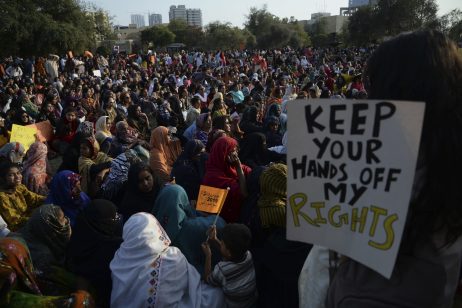
On March 8, dozens of Pakistani women in all major cities took to the streets to highlight discrimination, inequality, violence, abuse, and injustices against them and other marginalized communities in the country. Despite threats and right-wing attacks on the Aurat March last year, the demonstrators were resilient and undeterred in putting forward their demands, which emphasized prioritizing healthcare for women during the pandemic and ensuring protection against patriarchal violence among others. But as is all-too-typical for Pakistan, the women’s day demonstration — on the only day when women voice their concerns in large numbers — was met by resistance and a smear campaign. A disinformation campaign was unleashed on social media with a doctored video purporting to show “blasphemous” slogans taking over Twitter. The video was even shared by some right-wing TV anchors and journalists without fact-checking. A feminist organization, Women Democratic Front’s (WDF), had its flag misrepresented on social media as that of France to portray the movement as anti-Islam, given the anti-Muslim discourse is on the rise in the European country. When opponents of the march couldn’t justify their anti-women arguments with reason and intellect, they resorted to propaganda – and that too involving extremely volatile and sensitive sentiments around religion and blasphemy in a society where people have been jailed or even killed over such accusations. Clearly certain quarters will go to any lengths to malign the women’s rights campaign without regard for the repercussions the move may have, including endangering innocent lives. The Pakistani Taliban also threatened the march organizers and demanded that the government prosecute them for blasphemy. The horrific motorway rape incident last year along with the steady stream of honor killings and forced marriages are a shameful reminder of the country’s collective failure to ensure women’s safety. At a time when cases of violence against women have recently doubled, as revealed by a report titled “Tracking Numbers: State of Violence Against Women and Children in Pakistan,” women’s rights campaigns are crucial to highlight atrocities against them. On the economic front too, Pakistan is one of those countries where limited opportunities are available for women. Just 20 percent of women are part of the workforce in the country, while the pay gap between men and women has also increased. A United Nations Development Program (UNDP) report revealed that Pakistan topped the list of countries holding prejudiced views against women; the percentage of people holding at least one sexist bias was the highest in Pakistan of the countries surveyed, at 99.8 percent. Despite such worrying statistics and the abysmal state of affairs for women, any attempt to empower and speak up for the female population in Pakistan, whether it’s the global #MeToo movement or the annual Aurat March, has largely been met with sheer ignorance, toxic chauvinism, and intolerance from society at large. Misogynistic, hateful comments on social media and demeaning posts become a regular occurrence every Women’s Day. While elsewhere in the world, people celebrate women’s achievements and advocate for their better representation and rights, in Pakistan the moral brigade takes over to issue judgements on what is socially acceptable and what is not, seemingly protecting the non-egalitarian norms and values that have been largely formulated to control and suppress women and gender minorities. Several factors have contributed to this backlash and hate against women, who are already greatly discriminated against. Opponents term these yearly marches as un-Islamic and “immoral” based on some of the slogans like “mera jism meri marzi” (my body, my choice”) that are used in marches. In a country where conservative values are central to the national narrative, this phenomenon traces back to the time of independence. With the demand to have a separate homeland for the Muslims of the subcontinent, religion became the basis for Pakistan’s very existence. Thus non-egalitarian religious nationalism has always been at the core of society’s values. The rise of fundamentalist leaders, however, especially military dictator Zia-ul-Haq’s Islamization and the absence of real democracy, meant that these values got instilled deeper and deeper into the country’s social fabric and were started getting misused to maintain a certain balance of power. Rules have been made by men for men. Feminist scholars argue that there are “limits to Muslim women’s piety” – again, as defined by men in patriarchal societies – and there is a need to promote the potential for females’ autonomy and liberal freedoms in such societies. Pakistani women are now standing up to intimidation, injustice, and an environment of fear and inequality. They demand autonomy and structural and transformational changes. In doing so, they are seen as challenging male dominance, and are therefore bearing the brunt of online vitriol and smear campaign from all corners.Pakistani women challenging toxic masculinity are being vilified.
#Pakistan - Results of by elections are a proof that nation stands with PDM, Chairman #PPP

https://www.ppp.org.pk/pr/24468/
Sunday, March 14, 2021
How Pakistani Spy Officials Blocked Justice for Daniel Pearl
Jeff Stein
Of all the open sores in the long, painful relationship between the United States and Pakistan, the dragged-out case of Daniel Pearl’s murder hurts the worst.
Just over 20 years have passed since Pearl, an affable and gifted correspondent for the Wall Street Journal, went missing in Karachi. About a month after his disappearance on Jan. 23, 2002, his killers posted a grisly video of his beheading.
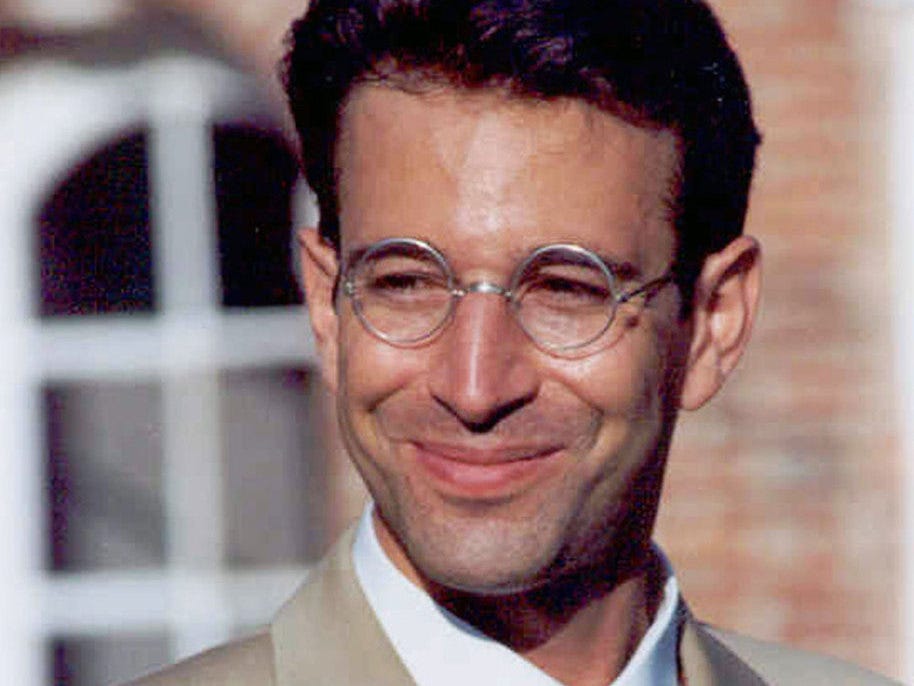
From start to finish, the people involved in Pearl’s kidnapping and murder were members of militant groups long backed by Pakistan’s all-powerful Inter-Services Intelligence agency, or ISI. Last month, in yet another outrage, Pakistan’s Supreme Court freed Omar Saeed Sheikh, the man responsible for luring Pearl to his death, from prison and sent him to a halfway house. The judges had connections to the ISI.
The act exemplified Pakistan’s treacherous double game with the U.S. The Islamic nation claims to practice democratic norms, yet empowers its security agencies to collaborate with the world’s most dangerous militant groups, from Al Qaeda to the Afghan Taliban to terrorist units carrying out bloody attacks in India.
“The overturning of the convictions of Daniel Pearl’s killers reflects the tenuous nature of Pakistan’s actions against terrorists,” Hussain Haqqani, a prominent pro-Western Pakistani journalist who served as his nation’s ambassador to the U.S from 2008 to 2011, told SpyTalk.
But the case has also been complicated by the FBI and Justice Department quietly accepting false and conflicting confessions in the U.S. case against Sheikh, who was indicted by a federal grand jury in Newark on March 14, 2002. One former FBI agent who worked on the case in Pakistan tells SpyTalk that his bosses and then-federal prosecutor Chris Christie “didn’t want to hear” information that undermined a murder charge against the Pakistani suspect. “There was no one else that they could stick with it,” Ty Fairman told SpyTalk in an exclusive interview. “They wanted to get him” because he’d been involved in the kidnapping of two other Americans in India seven years earlier.
Biden administration officials responded to the Pakistani court decision with unbridled anger. At the White House, Press Secretary Jen Psaki said the United States was “outraged.” She described Sheikh’s release as “an affront to terror victims everywhere.” Secretary of State Antony Blinken issued a lengthy statement asserting that the United States was “deeply concerned,” a message he “reinforced” in a telephone call with Pakistan’s foreign minister. Acting Attorney General Monty Wilkinson added that the U.S. “stands ready to take custody of Sheikh.” Pearl’s widow Marianne wrote a mournful piece for The Washington Post saying she was “convinced that true justice will never come from above.”
She is right. The case has been so tainted by corruption and interference by powerful figures in Pakistan’s security establishment that Sheikh is not only likely to go free but escape justice here—in the unlikely event he were shipped to the U.S. for trial. The U.S. and Pakistan have no extradition agreement. The case has been marred from the beginning by false, coerced and contradictory confessions that would make a murder conviction in an American court unlikely.
“It would be a nightmare of a case," former FBI agent Jay Kanetkar, who headed the bureau’s investigation in Pakistan, told Georgetown University’s Pearl Project, which has spent years on the case. Omar Sheikh had undergone a "softening up" by Pakistani police, he said.
The case had been troubled from the beginning. Pakistani police coerced a confession from a taxi driver that he had ferried Pearl and Omar Saeed Sheikh to the spot where Pearl was kidnapped.
Former FBI agent Fairman tells SpyTalk Sheikh was nowhere near Karachi. He “was actually in his home town with his wife and family the day that Daniel Pearl was picked up [by kidnappers] in Karachi,” Fairman says, “and we all knew that. It was part of the information that we passed on. Everyone knew it.”
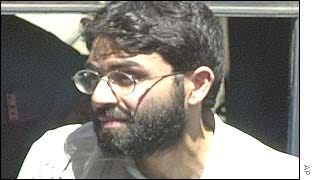
But in an unsettling allegation, Fairman says his FBI bosses and Christie, then the U.S. Attorney in Newark, who would rise to become governor of New Jersey, didn’t want to hear about it. They wanted a fast solution to Pearl’s murder, implicating Sheikh, who had already been secretly indicted for kidnapping American tourists in India years earlier.
Omar’s Alibi
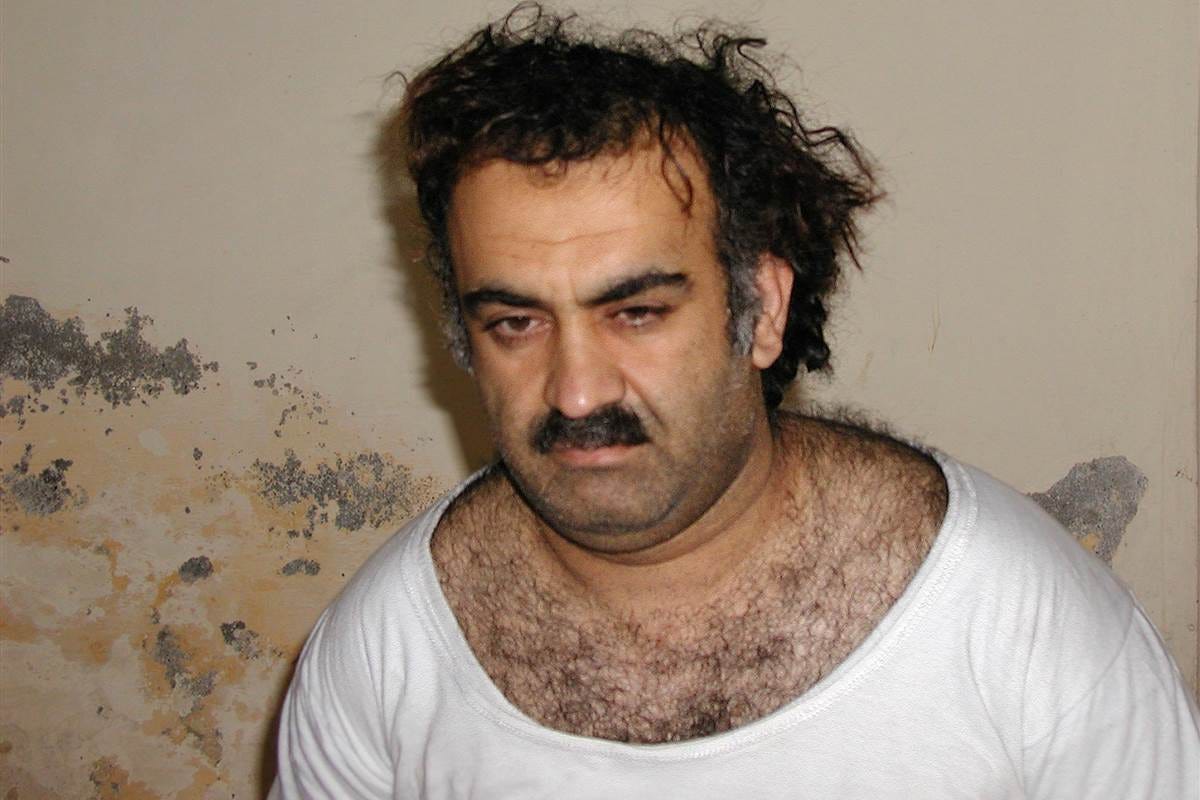
Fairman, who is telling the inside story of the FBI’s handling of the case for the first time, says he told his supervisors that not only was Sheikh 840 miles away in Islamabad, an FBI forensic analysis of the execution video released by his captors on February 22 ruled out Sheikh’s presence at the scene. The real killer was the infamous Al Qaeda terrorist Khalid Sheikh Mohammed, who was then at large in Pakistan and wanted for coordinating the Sept. 11, 2001, attacks on the World Trade Center and Pentagon.
“We got the videotape and we processed it one frame at a time,” Fairman says. “We looked at the feet, the hands, everything about the video. And we gave FBI Newark the information saying this is not Sheikh. We said it was Khalid Sheikh Mohammed.”
“They weren't happy with that information,” Fairman added. He says he was demoted and eventually forced out of the FBI because of his objections. “Chris Christie was not happy with the information.” Nor were the Pakistanis. Authorities “deliberately discounted testimony suggesting” Khalid Sheikh Mohammed was responsible, the BBC reported.
The Justice Department and FBI declined to comment. Chris Christie, who now runs a lobbying firm, did not respond by press time.
Gone Free
KSM, as he’s universally known, was captured by U.S. agents in Pakistan in 2003 and immediately hustled out of the country to a succession of CIA black sites, where he was subjected to “enhanced interrogation techniques.” Four years later at Guantanamo, he confessed to FBI agents that he “personally slit Pearl’s throat and severed his head to make certain he’d get the death penalty and to exploit the murder for propaganda,” the Pearl Project reported. But he has never been charged in the case. His trial by a military court on the 9/11 charges has been repeatedly delayed, most recently because of coronavirus concerns.
Fairman says Pakistani authorities “refused to allow us to interview the taxi driver. It was off limits. We were told to leave him alone—don't even push the issue. And that's it, don’t touch it.” And he added, “That was a smoking gun. If you have no proof to put Omar Sheikh in Karachi at the same time that Daniel Pearl was picked up and actually kidnapped, you can't really tie them together” in a murder charge.
Not that Sheikh was entirely innocent—hardly. He’d volunteered to police that he’d arranged for Pearl’s kidnapping, but nothing more. Fairman says Sheikh told him he had planned to kidnap Pearl in a grand scheme to ransom him for U.S. F-16 warplanes that Pakistan had paid for but never received because of congressional concerns over Islamabad’s pursuit of nuclear weapons. But then Al Qaeda intervened, Sheikh told him.
“He did admit to me that he was orchestrating the kidnapping,” Fairman said in a telephone interview from Sierra Leone, where he now lives and works. “But when Al Qaeda found out [Pearl had been kidnapped], that's when they came in and took over. And he was pissed off with Al Qaeda and had issues with them on why they would circumvent his operation.”
That’s not what Sheikh was telling authorities, however. In a deposition a few month later he told the anti-terrorism court he had nothing to do with Pearl’s disappearance, that “he had never met him.” The judges didn’t buy it, convicting him of murder and sentencing him to death by hanging. Only 17 years later, in a bid for a new hearing to get the sentence overturned, did he admit complicity in the crime, arguing that his involvement was “a relatively minor one….”
“That’s a lie, of course,” wrote Pearl Project Co-Director Asra Nomani, a former Wall Street Journal reporter and close friend of Pearl. Sheikh “was the spider who lured Pearl into a web of murderous extremists who killed him.”
If Sheikh were to be extradited to the U.S. to stand trial on murder charges, Fairman maintains, he would be acquitted. Federal prosecutors “have no concrete evidence to tie him into the murder of Daniel Pearl,” he says. “Accessory to the kidnapping, yes.”
The notion that Pakistani security officials, a number of whom have sympathies for and even close ties to terrorist groups including Al Qaeda, were quick to confine their murder case to Omar Sheikh and a few accomplices is not new—NBC News reported that in 2007. What is new is that U.S. officials went along with it.
The Pearl Project, co-directed by Barbara Feinman Todd, who has assisted such Washington Post luminaries as Bob Woodward, Carl Bernstein and the late Benjamin Bradlee with their books, also found that the proceedings were corrupt.
“In their haste to close the case, Pakistani authorities knowingly used perjured testimony to pin the actual act of murder on Omar Sheikh and his three co-conspirators,” the Pearl Project said in its 2011 report. “While the four were involved in the kidnapping plan and certainly were culpable, they were not present when Pearl was murdered. Others, who were present and actually assisted in the brutal beheading, were not charged.”
The main culprit, of course, was KSM, who was captured in Rawalpindi, which also happens to be the headquarters of the Pakistani Army and home to hundreds of current and retired generals and senior officials of the ISI. As the world now knows, Osama Bin Laden lived for some time in Abbottabad, 75 miles north of Islamabad and home to the Pakistani Military Academy. The Al Qaeda leader and his terrorist group had previously been sheltered in Afghanistan by the ISI-backed Afghan Taliban.
If Pakistan admitted that KSM had executed Pearl, its tolerance, if not protection, of Al Qaeda would be laid bare. But Omar Sheikh’s involvement also threatened to spotlight the double game Pakistani intelligence has long played with the U.S. and its allies.
While the ISI had worked hand in glove with the CIA in the 1980s to defeat the Soviet Red Army in Afghanistan, elements of it have gone on to work with terrorist organizations to advance Pakistan’s aims of destabilizing India and thwarting its influence in Afghanistan. At other times, Pakistani security agencies have helped Washington hunt down jihadis such as Mir Aimal Kansi, who shot several CIA employees outside the agency’s gate in Langley, Va., inJanuary 1993, and Abu Zubaydah, a militant wrongly identified at the time as a top lieutenant to Osama Bin Laden. Elements of the ISI and Pakistani Army Rangers also assisted in the 2003 capture of senior 9/11 conspirator Khalid Sheikh Mohammed, whose presence in the country was a huge embarrassment.
Omar Sheikh was deeply enmeshed in that duplicity—and more. According to a 2002 ABC News report, the U.K.-raised and educated Sheikh began working for the ISI in 1993, after he’d gone to Bosnia to help Muslims under assault by Serbs. According to some accounts, he may also have been working for Britain’s MI6 intelligence in Bosnia when it and the CIA were both helping the Bosnian Muslims fend off the Serbs. Former Prime Minister Pervez Musharraf alleged in his 2006 autobiography that Sheikh was recruited by MI6 while a student at the London School of Economics but “went rogue” and turned into a jihadi “double agent” in Bosnia. In any event, he soon joined up with Harkat-ul-Ansar, an ISI-backed Pakistani terrorist group fighting in India’s divided Kashmir. He became such a trusted operative that in the summer of 2001 then-ISI head Mahmoud Ahmed reportedly gave him $100,000 to wire to Mohammed Atta, the lead hijacker in the 9/11 attacks. In the ensuing months and years seven key Al Qaeda operatives, most of them connected to the 9/11 plot, were arrested in Pakistan.
In late January and early February 2002, Pakistan was under enormous pressure from Washington to find and rescue Pearl. Within days of his disappearance, his kidnappers had released a photo of Pearl with a gun at his head, but KSM’s connection to the crime had not surfaced. On February 5, 2002, Sheikh showed up at the home of retired general Ijaz Shah, a family friend who also happened to be a former ISI intelligence officer. Seven days would pass before Ijaz Shah delivered Sheikh to Pakistani police. Was ISI trying to work out some kind of deal to keep him quiet about its connection to him, or even figure out a way to help him escape?
“This interlude has raised numerous questions,” noted the Pearl Project, “Was the ISI protecting Sheikh?” the project’s final report asked. “Was it holding him to make sure he wouldn’t spill any of its secrets? Was Omar Sheikh hoping the intelligence service — perhaps the most powerful institution in Pakistan—would provide him some protection? Most provocatively, were elements in the ISI, which have backed the Taliban and Pakistan militant groups, knowledgeable about Omar Sheikh’s kidnapping activities? Even worse, was the ISI involved?”
None of these questions have been answered. Nor this one: How much did MI6 and the CIA know about Omar Sheikh Sheikh’s connection to ISI-backed terrorist groups? In an disquieting coincidence, the former ISI chiefMahmoud Ahmed happened to be in Washington on Sept. 11, 2001 on an official visit feted by CIA Director George Tenet and other top officials. (Ahmed would be forced out after reports of Omar Sheikh’s $100,000 wire transfer to Mohammed Atta surfaced.)
Taxi to the Dark Side
Fairman says that Pakistani police “coerced the taxi driver into saying that Pearl and Sheikh were both in the car together" in Karachi, where the reporter was en route to a meeting for a story he was pursuing.
On July 15, 2002, with Washington closely watching, an anti-terrorism court judge sentenced Sheikh to death by hanging as the “mastermind” of Pearl’s murder. Three others involved in the plot were given life sentences.
“Islamabad was embarrassed about Pearl’s execution and wanted to show it was tough on terrorism—at a time when it had just established a new, post-9/11 counterterrorism partnership with Washington,” Michael Kugelman, senior associate for South Asia at the Wilson Center in Washington, D.C., recently wrote.
In New Jersey, a federal grand jury returned a superseding, and more careful, indictment charging Sheikh with “hostage-taking and conspiracy to commit hostage-taking, resulting in the death of Daniel Pearl.” The Justice Department also unsealed an indictment charging him with the 1994 armed kidnapping of Béla Nuss, an American tourist, in India. (Sheikh was jailed in that case but freed soon after when his followers hijacked an Air India jet out of Nepal and swapped the hostages for his release.)
In both the Béla Nuss and Pearl cases, the tall, sweet-talking Pakistani with the plummy British accent had diabolically employed his quick wit to lure them into danger. In India, Sheikh had offered Nuss a special tour. In Pakistan, he offered Pearl help with his investigation of Pakistani terrorist links to Richard Reid, the so-called “shoe bomber” who attempted to blow up an airliner en route from Paris to Miami in December 2001.
After KSM’s 2007 confession, Sheikh’s lawyers began appealing his murder conviction.
On April 2, 2020, Pakistan’s high court decided he was guilty only of kidnapping and sentenced him to seven years in jail. Since he had already spent 18 years in prison, he was ruled free to go, but the Pakistani government prevented his release by detaining him and the three co-defendants. While denouncing his release, the U.S. State Department hailed Pakistan’s decision to appeal. Then came the Pakistani Supreme Court January order freeing Sheikh to a halfway house.
All along, more questions have arisen about the true role of Ijaz Shah, the former ISI intelligence officer who gave shelter to Sheikh for a week in February 2002. According to some reports, Shah was Sheikh’s ISI handler.
None of that has stopped Shah’s rise in Pakistan’s security hierarchy and may have even helped it. Last year Prime Minister Imran Khan elevated him to interior minister, where a well informed source said he “got the court to acquit Sheikh and has effectively blocked Sheikh’s extradition to U.S.” In a cabinet shuffle in December, he was put atop the counter-narcotics ministry. His new boss, Sheikh Rasheed Ahmad, was once detained at the Houston airport and interrogated for five hours about his links to the terrorist organization Lashkar-e-Taiba and Hafiz Muhammad Saeed, an alleged mastermind of 2008 Mumbai attacks. A strenuous protest by Pakistan got him released. Two of the three Pakistani Supreme Court jurists who freed Sheikh in January, saying the murder conviction was flawed and that he’d already served enough time for kidnapping, are "considered sympathizers to militants in Pakistan,” Asra Nomani told SpyTalk. “One is a military judge.” Fouling Justice And so once again, Islamabad’s deeply entrenched intelligence officials have scuttled a chance for Pakistan to improve relations with the United States. “Sadly,” says Larry Pfeiffer, former chief of staff to retired CIA Director Michael Hayden, “Pakistan’s behavior demonstrates that without continued U.S. pressure—persuasion or coercion—it too readily falls back into the bad habit of protecting or even supporting those who would do Americans harm. We’ve seen this movie before, and we know sadly that it too often can end in American deaths.” Daniel Pearl’s parents, Ruth and Judea Pearl, said the family was “in complete shock” over the decision, calling it a travesty of justice.” They added that “the release of these killers puts in danger journalists everywhere and the people of Pakistan.” In 2018, the Trump administration got fed up with Pakistan for continuing to "harbor criminals and terrorists," as the former president put it. It directed the Pentagon to suspend $300 million in aid designated for Pakistan under a program for regional partners who are helping "stop the resurgence of safe havens that enable terrorists to threaten America." Also at the administration’s urging, the Financial Action Task Force, an international dirty-money watchdog, put Pakistan on its “grey list” for failing to crack down sufficiently on terrorism. The FATF renewed the designation last month. Lisa Curtis was a key advocate for a tougher line on Pakistan in the Trump White House National Security Council. “Pakistan did try to distance itself from the militancy somewhat” after the Pentagon aid cut, she told SpyTalk. “We did see some decrease in the operations of these groups, over the last couple of years.” On the other hand, she said, “with the Taliban, we still see that they {Pakistani leaders] are playing both sides.” The prospects for Pakistan handing over Sheikh for trial in the U.S.are dim, Curtis says. Too many secrets could emerge. Some Pakistani observers with longtime experience dealing with Islamabad suspect the CIA has sources and methods at risk as well. The CIA and ISI go back a long way, they note with a raised eyebrow. “Why is the U.S. not fast-tracking the extradition demand?” one asked. Knowledgeable Americans dismiss Pakistani skepticism as a conspiracy fantasy: The U.S. has wanted to try Omar Sheikh for years, all the way back to 1994 Bela Nuss kidnapping. In any event, that trial won’t happen—unless Washington finds some way to get Sheikh into a U.S. courtroom. “I think it's highly doubtful that Pakistan would agree to extradite Omar Sheikh, for the simple reason that he likely has had dealings with the ISI in the past and the Pakistan government would not want that to surface,” Curtis said. “I think the best that we can hope for is that Pakistan finds some way to keep him in detention.” Keeping him under wraps in Pakistan also keeps a lid on the FBI’s can of worms. “I tell you what,” says Fairman, the former FBI agent, who was involved in several foreign terrorism cases as a forensic expert, “they couldn't call me to testify. I’d have to answer the questions and tell the truth. I couldn't lie. Not on the stand.” He’d say Omar Sheikh was only an accessory to the kidnapping.. The Pearl Project’s Asra Nomani just wants to see Sheikh back in prison, wherever. “Because this was an extraterritorial case outside of U.S. boundaries, there were complicating factors in the case,” she concedes. “But Omar Sheikh and the three co-defendants are absolutely one-hundred-percent guilty. And they should not see freedom.”#Pakistan - #Coronavirus: '' The third wave ''


The ineffective enforcement of public health measures and poor compliance among people have triggered a sharp increase in Covid-19 positivity rate in Lahore over the last three weeks, paving the way for a third wave of novel coronavirus infections.
The massive public non-compliance of bio-safety standard operating procedures (SOPs) in public places around the city continued as segregated smart lockdowns in isolated areas proved futile in restraining the transmission of virus among the people.
The number of new Covid-19 infections and fatalities in Lahore registered a 37 percent and a 13.58 percent increase, respectively, between February 20 and March 8.
Over this two and a half-week period, there were 2,579 new cases and 25 more deaths as compared to the preceding period of the same duration - from February 3 February 20.
Countrywide, the positivity rate jumped from 3.31 percent to 4.16 percent between February 2 and March 5. Public health experts believe that a rapid increase in new infections and mortalities in Lahore over the past two to three weeks suggests a higher positivity trend of coronavirus in the city than recorded in the country.
کرونا کی تیسری لہر: پاکستان کے متعدد علاقوں میں جزوی لاک ڈاؤن

پاکستان کے سب سے بڑے صوبے پنجاب اور ملک کے شمالی حصوں میں کرونا (کورونا) وائرس کی تیزی سے پھیلتی ہوئی تیسری لہر کے تناظر میں صحت اور انتظامی حکام نے متاثرہ علاقوں میں جزوی لاک ڈاؤن نافذ کردیا۔
پنجاب میں حکام نے وائرس کا مقابلہ کرنے کے لیے عائد پابندیوں کی خلاف ورزی کرنے پر متعدد شادی ہالز اور ریستورانوں پر جرمانہ عائد کیا ہے۔ دارالحکومت اسلام آباد میں حکام نے شہریوں کو خبردار کیا ہے کہ وہ لازمی طور پر ماسک پہنیں اور عوامی مقامات پر سماجی فاصلہ برقرار رکھیں۔
پاکستان میں اب تک کرونا کے چھ لاکھ سے زائد کیسز رپورٹ اور تقریباً ساڑھے 13 ہزار اموات واقع ہوئی ہیں۔
عرب نیوز کے مطابق کووڈ 19 کے خلاف حکومتی پالیسی بنانے اور اس پر عمل درآمد کرانے کی مجاز اتھارٹی ’نیشنل کمانڈ اینڈ آپریشن سینٹر‘ (این سی او سی) نے ملک میں وبا کے بڑھتے ہوئے تناسب پر شدید تشویش کا اظہار کیا ہے۔
این سی او سی نے ہفتے کو ایک خصوصی اجلاس کے دوران کرونا کی صورت حال کا جائزہ لینے کے بعد ایک بیان میں کہا: ’قومی سطح پر وائرس پھیلنے کے تناسب میں تیزی سے اضافہ دیکھنے میں آرہا ہے اور یہ پانچ سے چھ فیصد تک پہنچ چکا ہے۔ وبا کا بڑھتا ہوا رجحان سنگین تشویش کا باعث ہے۔‘
جنوری میں پاکستان کی کرونا وائرس کے پھیلنے کی شرح تقریباً تین فیصد تک گر گئی تھی جو اب دوبارہ بڑھ کر تقریباً چھ فیصد تک جا پہنچی ہے۔این سی او سی نے تمام وفاقی یونٹس (صوبوں) پر بھی زور دیا کہ وہ فوری طور پر اقدامات کریں اور وبائی بیماری کو روکنے کے لیے پابندیوں کی پیروی کریں۔
وزارت صحت نے اتوار کو بتایا کہ دو ہزار 266 افراد کے کرونا ٹیسٹ مثبت آئے ہیں جب کہ گذشتہ 24 گھنٹوں کے دوران 32 اموات ہوئیں۔
این سی او سی نے مزید کہا کہ جنوبی افریقہ اور برازیل سمیت وائرس کے بہت زیادہ پھیلاؤ والے بعض ممالک کے بین الاقوامی سفر پر مزید پابندیوں پر غور کیا جا رہا ہے۔
سول ایوی ایشن اتھارٹی کے ایک بیان کے مطابق پاکستان نے ان باؤنڈ پروازوں پر عائد پابندیوں میں مزید توسیع کردی ہے جو 18 مارچ تک برقرار رہے گی۔
Pakistan wants reset in ties with US but there’s no such thing as stand-alone geo-economics
In the long run, Washington cannot leave Islamabad entirely dependent on China and useful only to Beijing’s strategic purposes.
Pakistan-US relations in recent years have derived largely from Washington’s China and India policies, the Afghanistan war and US national security concerns related to international terrorism. And they have not performed well, leaving both sides unhappy. The Biden administration has given no hint of what comes next.
Pakistan for its part, going by official statements and think tanks reports, is hoping for a reset where relations find their own rationale yet reflect a balance in America’s ties with India and Pakistan, and its consent to Islamabad’s strategic links with Beijing. But Pakistan has given no indication how the competing objectives in its wish list can be reconciled, and hasn’t provided any clues about its own policies to induce the desired change in US policies. All we hear is talk that Pakistan is moving away from geopolitics to geo-economics.
In fact, there’s no such thing as stand-alone geo-economics especially when Pakistan’s value as an economic partner is anything but obvious. Here a little history is relevant. Pakistan’s close relations with the US have historically been a function of geopolitics (1954 to 1965 and 1979 to 1990) or issues relating to US and global security (2001 to 2011). That is where the relations found their logic. Geopolitics still remains the guiding principle of Pakistan-US relations except that now it provokes conflict. Cooperation is still possible in areas such as stabilisation of Afghanistan and counterterrorism. The US feels that continued Afghan conflict will keep insurgency and terrorism alive, and would not only threaten its own security but by fuelling extremism in Pakistan would also hold the stability of the nuclear-capable country hostage. Jihadists also threaten India, undermining Washington’s China policy. As it is these areas of cooperation between the two sides are also marked by a conflict of perception, policy and interests, How Washington resolves these dilemmas will depend not only on its China and Afghanistan policies currently under review but also on how compatible Pakistan’s polices will be with US objectives. America does not want to start a new Afghan war. Nor does it want to scuttle the February 2020 agreement entirely. Washington may have lost the war but has not lost the capacity to prevent instability in Afghanistan. However, it will need Pakistan’s help. But there appears to be no clarity in Pakistan’s Afghanistan policy except in rhetoric. There is also a continued lack of trust in Washington’s policies. Those sceptical of America’s value as a partner need to revisit Pakistan’s own history. To its credit, the US did help Pakistan meet its economic and security challenges earlier. Problems arose in the 1980s and after 9/11 in liaisons between Washington and the Zia and Musharraf regimes struggling to gain legitimacy, economic support and political backing. They made a bad bargain with the US in their own interest rather than Pakistan’s. Sadly, more than suffering at the hands of others Pakistan was a victim of its own poor policy choices and their advancement through an unqualified partnership with the US. Pakistan’s policies must enjoy domestic support before others respect it. And if Pakistan wants to move from geopolitics to geo-economics it has to reach some understanding with Washington on strategic and security issues, otherwise these will keep colliding with prospects of economic cooperation. And finally, Pakistan has to enhance its value as an economic partner for which it needs to strengthen its economy, free itself from entrenchment in a security-dominated national purpose, and pursue policies that make its excellent geopolitical location a true asset, not a liability. Its real value as an economic partner will not show until Afghanistan stabilises and Pakistan becomes a hub for pipelines and trade with Central Asia. Pakistan should not seek across-the-board change in its ties with the US. Washington is not interested in broadening the relationship. Pakistan should start modestly with Afghanistan and counterterrorism and build mutual confidence, and then expand the dialogue and agree to cooperate on points of convergence while trying to manage areas of divergence. In the long run, Washington cannot leave Islamabad entirely dependent on China and useful only to Beijing’s strategic purposes. And that is where there is some strategic convergence. Pakistan should revisit Zulfikar Ali Bhutto’s great idea of ‘bilateralism’. Instead of being concerned over losing China in pursuit of America, Islamabad should worry about gaining internal strength to enhance its appeal to both sides so neither can afford to lose Pakistan. A weak Pakistan would need both China and the US. However, it would have no option but to choose one. https://theprint.in/opinion/pakistan-wants-reset-in-ties-with-us-but-theres-no-such-thing-as-stand-alone-geo-economics/621315/
Saturday, March 13, 2021
When will there be justice for Pakistan’s victims of child abuse?
