Wednesday, March 10, 2021
Pakistani film star Zeba Begum shifted to ICU after her health deteriorates

Hard to find greater a 'hypocrite' than Imran Khan
Imran Khan's 'Naya Pakistan' is endgame: Report
With political turmoil in Pakistan worsening with every passing day, the end seems to be in sight for Prime Minister Imran Khan's 'Naya Pakistan' courtesy rising inflation in the country.
According to Imad Zafar, a political commentator for various media outlets and think tanks, the Prime Minister is finding it tough to steer the country out of its political and economic crisis.
Khan won a vote of confidence from the National Assembly (NA). Khan needed that vote to confirm his majority in the lower house of parliament after his party suffered an embarrassing defeat in the Senate at the hands of the Pakistan Democratic Alliance, a coalition of opposition parties.
Zafar pointed out that not only did the PDM manage to get ex-prime minister Yousaf Raza Gillani elected to the Senate, defeating the incumbent finance minister Hafeez Shaikh, but it also managed to secure a majority in the upper house.
"Though Khan somehow managed to thwart the crisis for the time being by getting a vote of confidence from the NA, for sure the storm is not over for him. The rising inflation and increasing poverty in the country are only making his Naya Pakistan (New Pakistan) project a nightmare for the masses," Zafar wrote for The Asia Times.
He added, "Such is the state of affairs that even the military establishment is unable to run the country from behind the scenes."The frustration of the elite, he said, was evident on the day of the vote of confidence, when parliamentarians of the Pakistan Muslim League-Nawaz (PML-N) were attacked by a mob of supporters of the ruling Pakistan Tehreek-e-Insaf (PTI).
"Imran Khan is trying everything possible to stay in power. The question remains, however, how he will survive the onslaught of the opposition at a point when the establishment is about to ditch him and is looking for a new puppet to rule the country on its behalf," the commentator wrote for the Asia Times.
He added, "For Khan the game is almost over, as perhaps a few generals will still support him, but he does not enjoy the unconditional support from the establishment that he had after his relaunch in politics in 2011. So probably he knows this is his first and last time to enjoy power, so he is trying everything to stay in charge."The question is how long a few generals will be able to save him from the inevitable, as the growing anger in the masses about inflation, unemployment, and economic turmoil is growing with the passage of time, Zafar said further.
He pointed out that this is "perhaps the first time" that the doctrine of the military establishment to rule the country indirectly has backfired, and it has happened in only two and a half years.
"Though the majority of the mainstream media was behind the hybrid regime, still the opposition managed to produce counter-narratives through international media and digital news platforms, and the inability of Khan and his backers to manage the economy and governance doomed the Naya Pakistan project," he said.
Zafar added, "The endgame has started, and the interesting thing is that Khan cannot even get rid of the government until both Sharif and Zardari agree to topple him."This comes as Pakistan's financial debt continues to mount because the Imran Khan government received USD 6.7 billion in gross foreign loans in the first seven months of the current fiscal year, including a new commercial loan of USD 500 million from China last month.
According to The Expresss Tribune, Ministry of Economic Affairs reported that during the July-January period of fiscal year 2020-21, the government obtained USD 6.7 billion in external loans from multiple financing sources. The gross loans were higher by 6 per cent or USD 380 million over the same period of the last fiscal year.
Pakistan's foreign debt and liabilities have mounted by USD 3 billion or 2.6 per cent during the six months period ended in December last year, the central bank's data reported in February.
https://www.bignewsnetwork.com/news/268063504/imran-khan-naya-pakistan-is-endgame-report
چیئرمین پاکستان پیپلزپارٹی بلاول بھٹو زرداری کی الیکشن کمیشن کے نوٹیفکیشن کے اجراءکے فیصلے پر سید یوسف رضا گیلانی کو مبارکباد

https://www.ppp.org.pk/pr/24439/
Tuesday, March 9, 2021
Chairman PPP Bilawal Bhutto Zardari congratulates Syed Yousaf Raza Gillani

Bilawal Bhutto Zardari felicitated Syed Yousuf Raza Gillani and Abdul Ghafoor Haideri on their nomination as PDM candidates for the position of chairman and deputy chairman respectively. He said that the democratic forces are united against this incapable and incompetent government. He said that the success of Syed Yousuf Raza Gillani is in fact a victory of the people of Pakistan.
#Pakistan - President ANP, KP called on former President Asif Ali Zardari and Chairman PPP Bilawal Bhutto Zardari

Monday, March 8, 2021
#InternationalWomensDay #WomensDay #womensday2021 - Family of girl, 12, forced to marry abductor condemn Pakistan authorities
 |
The family of a 12-year-old girl in Pakistan who was chained up in a cattle pen for more than six months, after allegedly being kidnapped and forced to marry her abductor, have attacked the authorities for refusing to act. The case is among those now being examined by a government inquiry into the forced conversions of religious minority women and girls, after police released the man, saying they believed the girl had married him of her own free will.Criticism follows release of 29-year-old who kept girl chained in cattle pen, in latest case highlighting abuses of religious minorities.
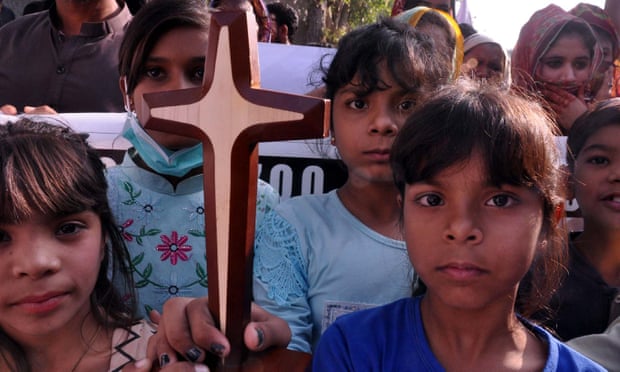
The child was taken from her home in Faisalabad last June and had been held at the home of 29-year-old Khizer Hayat, where she was made to work clearing animal dung. Her family are angry that no further action has been taken against the man. Police investigators initially held Hayat but then released him, saying there was no evidence the girl had not consented to the marriage and that a medical report said she was 16.“The case has been taken up by the parliamentary committee of human rights in the Senate of Pakistan and police are attending the committee’s hearings. She confessed before the magistrate … that she married Khizer Hayat of her own free will and she wants to live with him,” said Musaddiq Riaz, a detective with Faisalabad police. The father of the girl – who is not being named to protect her identity – told the Guardian that the police had discovered his daughter at a house in Hafizabad, 110km (68 miles) from her home. “They repeatedly raped my daughter. She was in trauma after being subjected to physical and mental torture. They had forcibly converted her to Islam. She was kept as a slave and forced to work having a chain attached to her ankles. Police were not registering my complaint and threatened me [for] being a minority Christian and used discriminatory remarks,” he said. “She was brought to the police station after negotiations with her abductors and she was bandaged at the police station,” he said. “She was traumatised and I still can’t believe she testified in favour of her kidnappers.” He disputed the court report and showed his daughter’s birth certificate along with photographs of deep cuts and sores on her ankles. According to a 2019 report by the human rights commission of Pakistan, an estimated 1,000 Christian and Hindu women are abducted and forcibly married every year. Many of the victims are minors. Sexual assaults and fraudulent marriages are used by perpetrators to entrap victims, and authorities rarely intervene. Pakistan’s tiny Christian population of about 2.5 million in the Muslim majority country of 223 million faces frequent discrimination. In 2020 a 14-year-old Catholic girl from Faisalabad was kidnapped at gunpoint and forced to “marry” her 45-year-old kidnapper. She managed to escape and is in hiding with her parents after a court ruled she must return to her abductor.
Lala Robin Daniel, an activist based in Faisalabad, said of the recent case: “Despite the parliamentary Senate committee for human rights hearings, I am not hopeful that justice will be served to the poor family. She was injured and in a state of trauma.“Teenage girls from religious minority groups are often targeted for forced conversions and marriages due to certain gaps in the law and weak laws. Police and judiciary make fun of the parents seeking justice,” she said. John Pontifex, of Catholic organisation Aid to the Church in Need, said the British government should be looking at the issue: “This case should sound a warning shot to the UK government, questioning the efficacy of its aid strategy, which for years prioritised funding to Pakistan. Given the institutionalised nature of abuse of young girls of minority faith backgrounds, we should in good conscience ask: is UK aid to Pakistan being used wisely? Is it aiding the girls or abetting the problem?” He added: “We receive reports every week of incidents in which girls of minority faith backgrounds are abducted, gang-raped, forcibly converted and who are made to marry their abductor. “And it seems the state is complicit by failing to investigate cases, failing to bring the perpetrators to justice and sanctioning child marriages.” In December, Pakistan’s prime minister Imran Khan ordered an inquiry into the forced conversions of religious minority women and girls. Tahir Mehmood Ashrafi, Khan’s special representative for religious harmony, said: “We are aware of the incident and the state of Pakistan is fully committed to ensure justice to minorities whether it’s forced marriage or forced conversion. “We will not tolerate these acts. We will pursue the case, no one is above the law and we will take serious action against the culprits … We are working on the formulation of interfaith harmony councils at the local level to ensure minority protection and to resolve such cases promptly.”
#InternationalWomensDay #WomensDay #womensday2021 - 'Pandemic of patriarchy': Pakistani women defy threats to hold march

Healthcare is focus of event to mark International Women’s Day, as organisers say pandemic has led to setbacks in rights.

A march during the time of Covid is a difficult thing to plan safely. For Pakistan’s women, determined to have their “Aurat March” today, there are other risks – to their physical safety as well as of online abuse and trolling. Noor is an organiser for this year’s masked nationwide rallies. She said she could not give her surname for fear of reprisals over her work. “The pandemic has hindered mobilisation significantly,” said Noor, who added that the closure of public transport alone has been a huge obstacle to women in the country. But it is the healthcare crisis that is the focus of this year’s marches in Pakistan to mark International Women’s Day. The event is being organised online as well as on the streets, with organisers encouraging women to stay at home if the health risks outweigh the benefits. Those who do take to the streets are being asked to wear political slogans on their masks. Online, women are using the hashtag #PatriarchyKaPandemic (“Patriarchy’s Pandemic”) to mobilise women and call out everyday violence against women by “airing dirty laundry”, said Noor. During the pandemic Pakistan has seen a sharp rise in domestic violence cases, along with an increased burden of domestic and care work imposed on working women. With about 600,000 Covid-19 cases in Pakistan, this year’s manifesto for the march is markedly different from previous years’ because of the increased focus on health. Women are calling on the government to increase the health budget to 5% of GDP; implement a Covid-19 plan for women and minorities; tackle violence against women; assign equal recognition to women’s labour; and allocate more health resources for women and transgender people. In recent weeks, Noor has organised medical camps to speak to poorer Pakistani women about the health issues in their marginalised communities, most of which are linked to water and sanitation. Pakistan has among the world’s worst access to safe water, with almost 80% of the population unable to access clean drinking water. “You realise how inaccessible and unaffordable healthcare is for a lot of communities,” Noor said. “I might have access to healthcare, but they won’t.” Muqaddas Afzal, 25, vice-president of a group called the Progressive Students’ Collective in Lahore, said the pandemic had further exposed economic and social injustices. “It has also taught us that the pandemic of patriarchy is far worse than the Covid pandemic. Covid will be eradicated, but what about patriarchy?” “It’s a very timely theme,” said digital rights activist Nighat Dad. “In the pandemic, women’s health problems have come before everyone. I would call it a health emergency, to be very honest.” This is evident in the country’s maternal mortality statistics: 140 maternal deaths per 100,000 births. Nearly half of Pakistani mothers face malnutrition and almost 40% of children under five are stunted. Women are also calling for a fairer Covid-19 vaccine rollout in Pakistan, one of the few countries that has allowed private companies to import vaccines without price caps, exacerbating social inequalities. The pandemic has “unravelled many myths” about policies, said Zainab Najeeb, 28, who teaches gender and feminism at Lahore University of Management Sciences. Najeeb said women have faced a significant rise in care work at home, exacerbated by the increase in domestic violence. An organiser of the march in Islamabad, Tooba Syed, said: “The fight against patriarchy is a fight for recognition of care work and women’s role in social reproduction.” In the early days of the virus, female health workers who took part in door-to-door mass awareness campaigns about Covid-19 faced hostility and violence. “As domestic violence increased during the pandemic, the lady health workers were the only form of care available to survivors of domestic violence,” said Syed. “They’re the backbone of the public health system of the country.” Organisers are also calling for universal access to contraception and safe family planning, said Noor. “Our healthcare system doesn’t believe that women can make their own decisions. That’s our cultural mindset – there are so many hindrances and limits on women’s decision-making. We have to march, and we have to keep working on this movement. “When we march, we see a lot of women on the streets. It’s liberating and gives you a lot of hope. You see how many women are together in this and you see a hope for a change.”
https://www.theguardian.com/global-development/2021/mar/08/pandemic-of-patriarchy-pakistani-women-defy-threats-to-hold-march
#InternationalWomensDay #WomensDay #womensday2021 - OP-ED: Acknowledging Malala

Haya Fatima Sehgal
For International Women’s Day we highlight Malala Yousafzai as being one of the most powerful symbols of Women’s Empowerment in the world today.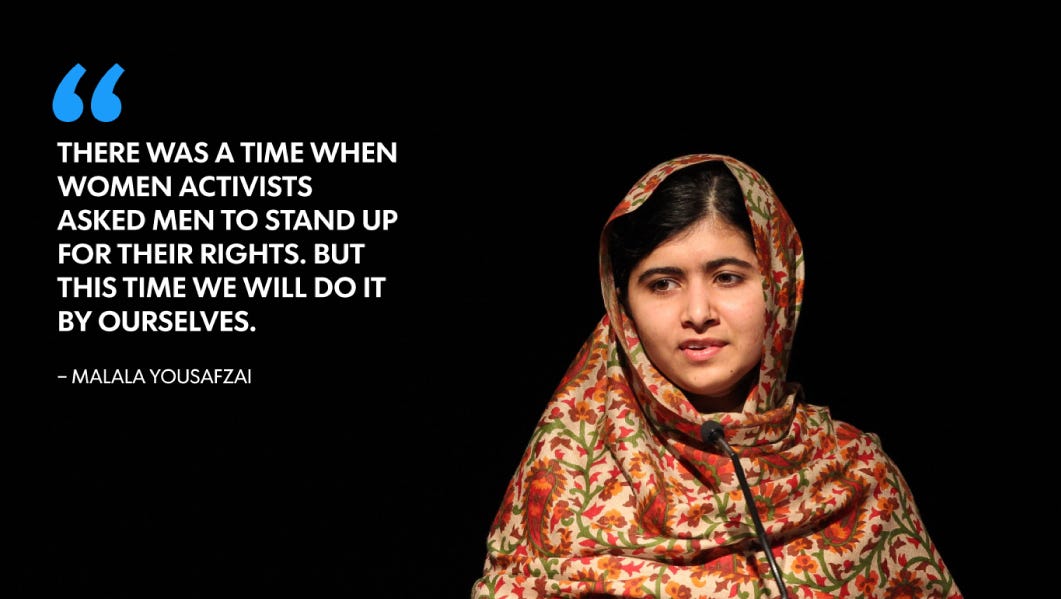
The story of Malala Yousafzai, the young Pakistani girl who was shot in 2012 by militants for expressing her opinions, is known across continents. After surviving the brutal attack, she went on to be an outspoken voice for promoting education. Sadly, several years later, Pakistanis fail to acknowledge the phenomenon that she has become worldwide. An Oxford graduate and the youngest Noble Peace Prize laureate, Malala Yousafzai is an emblem of women’s empowerment. Perhaps it is about time Pakistanis officially acknowledge and honor her heroic bravery. It would be beneficial for us where voices like hers are not disregarded but rather promoted and honored.Opinions have remained divided because of the various stories circulating about her circumstances. Most of these were unfair and further confounded people into silence or negativity. On one side was an extremist religious faction, which had created a terror network of fear. On another hand were those who denied her story, sparking great divisions and diatribe. Ms. Yousafzai was fortunate to have ample help and support by good people. Yes, mostly these have been foreigners who have supported her by helping her rebuild her life abroad. And there is nothing wrong with that. We must now consider striking a relationship with her existent status. There are many who have not welcomed her warmly over here and all that is by the tone of conversations, lack of media coverage and the unwillingness of upholding her as a national symbol. Even though she visited Pakistan in 2018, one felt it was overall a lukewarm response given as a welcome back.
#InternationalWomensDay #WomensDay #womensday2021 - World Women’s Day: ‘PPP takes pride a great woman led this party’
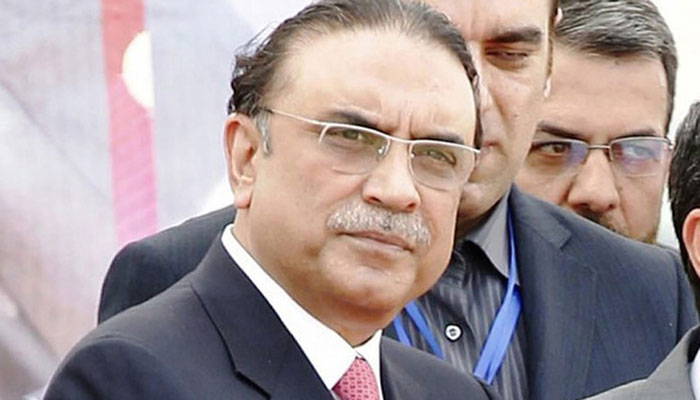
Asif Ali Zardari, who is also President Pakistan People’s Party Parliamentarians, in a message said that the PPP takes pride in the fact that a great woman led this party. “Shaheed Mohtarma Benazir Bhutto is regarded as a brave woman all over the world,” he said. He said that Pakistan needs an environment where women do not feel threatened and frightened. “The purpose of initiating the Benazir Income Support Programme was to empower women and instill confidence in them,” he said. Zardari said that the PPP in power always assured participation of women in every field of life. He said the PPP’s achievements for women include appointment of women judges in higher courts, establishment of women bank and women police stations. He said the PPP also introduced legislation against harassment of women at workplace. Chairman Pakistan People’s Party Bilawal Bhutto Zardari has said that gender equality and empowerment of women is his party’s manifesto and a dream of Shaheed Mohtarma Benazir Bhutto, for which the party leadership and every Jiyala (party worker) are struggling to make them a reality. In his message, the PPP chairman said that political, economic and social changes are taking place all over the world and it is clear that this century will be the century of women’s advancement. “A nation that does not give women equality will not be able to compete with other nations”, he maintained. Bilawal Bhutto Zardari said that his party, whether in government or on the ground of struggle, has taken concrete steps to promote gender equality and women’s empowerment, which are unprecedented in Pakistan. He pointed out that a mega model project for poverty alleviation like the Benazir Income Support Program (BISP) — which has been recognized by many global institutions like the World Bank for its transparency and positive results — was launched beside another program introduced on the Union Council level to provide interest-free loans to women for micro-businesses, which benefited more than 600,000 women and their families in Sindh. “As well as the First Women Bank, Women Police Stations and Lady Health Workers Program, which was started by Shaheed Mohtarma Benazir Bhutto herself, and the project of giving ownership of agricultural land to landless women farmers free of cost, are having far-reaching results in Pakistan,” he said. He further said that the establishment of the National Commission on the Status of Women, Anti-Women Practices Act, Anti-Acid Crimes Law, Protection of Women at Workplace Law at the federal level and many such other laws are also the hallmarks of PPP. said that the Sindh Assembly led by his party also adopted the Sindh Child Marriages Restraint Act 2013, Domestic Violence (Protection & Prevention) Act 2015 and Commission on the Status of Women 2015 from the Sindh Assembly. Bilawal said that he is well aware of the fact that there is a long way to go to achieve Shaheed Mohtarma. https://www.thenews.com.pk/print/800754-world-women-s-day-ppp-takes-pride-a-great-woman-led-this-partyFormer president of Pakistan Asif Ali Zardari has felicitated women all over the world in general and Pakistani women in particular on the World Women’s Day on 8th March.
Chairman PPP Bilawal Bhutto Zardari press conference after PDM meeting in Islamabad

Chairman PPP said that PDM is following the action plan presented by the PDM on 20 September in its first meeting. The PDM takes decisions with consensus. He said that he visited Chaudhry Shujaat Hussain to enquire about his health.
حکومت نے چیئرمین سینٹ کے الیکشن سے قبل اپنی شکست تسلیم کی، بلاول بھٹو
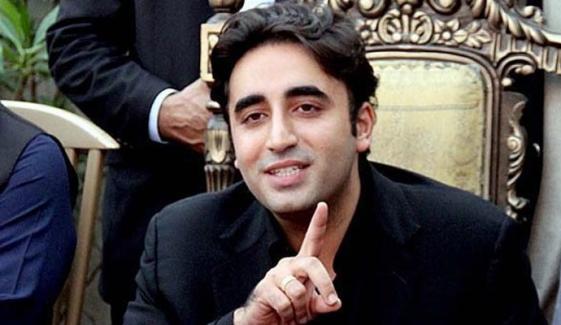
اسلام آباد میں پریس کانفرنس کرتے ہوئے بلاول بھٹو نے کہا کہ وہ غیر جمہوری طریقوں سے ہمارے امیدوار کو روکنا چاہتے ہیں۔
بلاول بھٹو زرداری نے کہا کہ امید رکھتے ہیں الیکشن کمیشن اور عدالت آئین و قانون کے مطابق کام کریں گے۔
پی پی چیئرمین نے کہا کہ لانگ مارچ سے متعلق پوری قیادت ایک پیج پر ہے، فیض آباد کا نام لیا ہے تو یہ پنڈی میں بھی ہے اور اسلام آباد میں بھی ہے۔
بلاول بھٹو نے کہا کہ کل چوہدری شجاعت اور حمزہ شہباز سے بھی ملاقاتیں ہوئیں، اب فیصلہ پی ڈی ایم کرے گی کب اور کہاں عدم اعتماد آئے گا۔
https://jang.com.pk/news/895105
Sunday, March 7, 2021
Attacks on minority women in Pakistan spark calls to reopen Office of Religious Freedoms

By Zeenya Shah
Human rights organizations estimate that over 1000 Christian and Hindu girls are kidnapped, raped, and forcibly converted each year in Pakistan.
There are new calls for the resurrection of the Office of Religious Freedoms, with advocates and opposition politicians saying its closure by the Trudeau Liberals has left Canada without a strong response against targeted abductions, rapes and forced conversions of young Christian and Hindu girls in Pakistan.
Opposition MPs say that the Office of Religious Freedoms created under the previous Conservative government monitored and addressed religious persecution and protected the freedom of religion around the world.
The Office of Human Rights, Freedoms and Inclusion took part in the Ministerial to Advance Freedom of Religion or Belief, hosted virtually last November, where Rob Oliphant, the Parliamentary Secretary to the Minister of Foreign Affairs, specifically raised the concern of “violence targeting religious minorities, particularly Christians” in Pakistan, Franklin said.
But experts say more work needs to be done in Pakistan, and the issue is not a gender or female empowerment ssue, but a religious persecution issue. Targeted kidnappings, rapes, and forced conversion are merely symptoms of deeply-rooted religious intolerance and accepted violence.
Rev. Andrew Bennett, the former Ambassador of the Office of Religious Freedom, said Pakistan has a long-held persecution ideology towards its minority groups. “These ideas are amplified by the media, or by religious leaders, which are then taken up by people who do wicked things.”
He said some of his previous duties included working closely with the Pakistani government to make changes to its penal code, for example. “When the office was closed we lost that voice,” he said.
Some of the most well-known cases of religious intolerance come from Pakistan. Asia Bibi a Christian mother who spent nine years on death row in a Pakistani jail for accusations of blasphemy after an argument with co-workers, was granted asylum into Canada in 2018, where she still remains in hiding.
Article content
Peter Bhatti of Mississauga, Ont., is the founder of International Christian Voice, a Canadian human rights organization. He said discussions about religious minorities in Pakistan were taking place while the Office of Religious Freedom was operating, but those conversations have since ended.

Bhatti’s brother, Shahbaz Bhatti, was Pakistan’s only Christian cabinet minister. Shahbaz was assassinated by an Islamic extremist in 2011 when he advocated for Bibi’s freedom. The creation of the Office of Religious Freedoms in Canada was inspired by his death.
https://nationalpost.com/news/politics/attacks-on-minority-women-in-pakistan-spark-calls-to-reopen-office-of-religious-freedoms-closed-by-liberals
Vaccine hesitancy in Pakistan heightens risk of COVID resurgence

By Asad HashimA month after immunisation began, Pakistan has only administered 197,000 doses of vaccine, or 0.09 vaccinations per 100 members of the population. Pakistan’s success at managing the coronavirus pandemic – with relatively low rates of severe disease and death – and distrust of government-led and foreign-funded public health initiatives has driven vaccine hesitancy, which could put the country’s fragile gains against COVID-19 at risk, say experts and officials.Since the pandemic began, Pakistan, a country of 220 million people, has registered more than 586,000 cases of the virus, with 13,128 deaths, as per government data. Its current case-fatality rate of 2.2 percent is comparable to countries such as France and Canada – and is slightly higher than the United States – but is extremely low when its very low rate of testing is accounted for. Pakistan conducts 0.18 tests per 1,000 people, compared with 4.62 per 1,000 in France or 2.76 per 1,000 in the US, as per government data. In February, the country opened up vaccinations for hundreds of thousands of front-line healthcare workers across the country, with the arrival of more than 500,000 doses of the Chinese Sinopharm vaccine donated by the Chinese government. Almost immediately, however, the campaign hit a snag. “Even in the healthcare community, people thought that taking the vaccine might be harmful,” says a senior health official involved in vaccination efforts in Sindh province, which saw some of the worst of Pakistan’s COVID-19 pandemic. The official spoke on condition of anonymity. While thousands of healthcare workers registered themselves for the vaccine, initial rates of vaccination were slow, with doctors saying they were concerned about possible side-effects or reactions to the vaccine. In the first two weeks after vaccinations began, only 32,582 front-line healthcare workers in Sindh, out of an eligible 78,000, had gotten their first jab of the vaccine, as per government data. In other provinces, the situation was even worse.“Initially, people did not get vaccinated and a lot of people were concerned about reactions [and side-effects],” says Dr Ahmed Zeb, a physician in the northwestern city of Peshawar, which saw hospital intensive care units overflowing in June, during Pakistan’s first peak of coronavirus cases. Dr Faisal Sultan, Pakistan’s health minister, says the hesitancy has been driven by healthcare workers “over-analysing the data”. “That is a hazard in today’s world, with a number of vaccines available and people looking at all the pros and cons and analysing efficacies, and sometimes losing sight of the fact that for the individual the most important number to remember is the protection against severe disease,” he told Al Jazeera. “And all the licenced vaccines protect against severe disease in the 90 percent [range].” So far, a month after vaccinations began, Pakistan has only administered 197,000 doses of the vaccine, or 0.09 vaccinations per 100 members of the population, putting it almost dead last in countries where vaccination data is available, according to the Our World In Data dataset. Moreover, as the vaccination programme moves towards getting senior citizens their jabs, the lack of public buy-in is clear. Only 240,000 out of an estimated eight million citizens over the age of 65, or three percent, have so far registered to receive the vaccine in the next phase, according to government data. Why the hesitancy? So what is driving this hesitancy and could low rates of vaccination drive a later resurgence of the coronavirus? Dr Faisal Mahmood, head of the infectious diseases department at the Karachi-based Aga Khan University Hospital, says there are “many reasons” for the hesitancy but one stands out. “In a small survey I did, the most common reason [is] concerns regarding safety,” he says. “There is an inherent fear in some to get the vaccine, in some fuelled by distrust of the data, or perhaps due to ‘news’ received from social media.” Pakistan is currently administering doses of the Chinese Sinopharm vaccine, with 14.6 million doses of the Oxford-AstraZeneca vaccine due to arrive in two batches in March and between April and May through the global COVAX initiative. The country has also approved the use of the Russian Sputnik V vaccine. All three vaccines have passed peer-reviewed phase III clinical trials and are in use in at least 10 countries collectively, according to medical journal The Lancet.“We always have vaccine hesitancy in Pakistan,” says Dr Wajiha Javed, the head of public health at the multinational pharmaceutical company Getz Pharma’s Pakistan division.“People don’t understand scientific data, if it gets in the hands of people who are not educated enough to understand it [in the media and elsewhere].”Dr Javed said that qualified doctors in her own company had refused to take the vaccine “because they don’t have good information”. Rumours of the vaccine’s safety were not helped by the provincial health minister in Punjab province, the country’s largest, saying during a press conference that citizens took the vaccine “at their own risk”. By the end of February, levels of vaccine uptake by healthcare workers were so low that Sindh’s health minister ordered all government healthcare workers to take the vaccine or face disciplinary action, with similar orders given by directors at main government hospitals. According to the country’s health ministry, meanwhile, there has not been a single case of serious side-effects from the vaccine reported in Pakistan since vaccinations began. The concerns around safety alone, however, may not be enough to fully explain the hesitancy, says Maha Rehman, a data analytics specialist and member of faculty at the Lahore-based LUMS University. “Efficacy data alone is not enough to [understand the] scepticism around the vaccine rollout,” she says. “The overall level of trust in the health service provider is critical.” Pakistan consistently ranks low on global healthcare indicators such as access to healthcare and child mortality. It is one of two countries in the world where polio remains endemic and faces a number of other health challenges. “People don’t really trust the government,” says Rehman. “They don’t trust what vaccine they will get, will it be a trial, will it be a placebo? […] There needs to be an active policy shift that everything is being done very, very transparently.” Health Minister Sultan says that concern may not be relevant, pointing out that vaccines have been developed by international companies and are being administered worldwide. “At the end of the day, people do know that the vaccines have not been made in a backroom by anyone, they have been made by leading entities in advanced countries who used their technological muscle [and] invest[ed] billions of dollars,” he says. That, however, opens a different kind of distrust, say experts. “There is this conception that it is foreign-funded, so there must be some other agenda, why can’t our own government look into it?” says Dr Javed, explaining a trend that has driven the country’s challenges in eradicating polio. Polio vaccine refusals in Pakistan have grown because of misinformation about the foreign-funded vaccination programme being harmful to children’s health. ‘What difference does it make?’ In addition to hesitancy around the vaccine itself, doctors say there is also a sense of indifference among the general public regarding the virus, given Pakistan’s relatively low number of deaths and cases of severe disease from COVID-19. “There is a sense of […] why should we get it, what difference does it make, corona is not a major issue,” says Dr Adnan Khan, a public health researcher and infectious disease specialist. “Mostly it is indifference, that what’s the need to for getting the vaccine when corona was not that big a deal.” Khan said that when he got the first dose of his vaccination last week, none of the staff who administered the injection to him had gotten the jab themselves, despite being eligible. “Even now, I still run into people who say that what is this corona that you are talking about? I still wear my mask and I am probably the only person who is wearing a mask in an overwhelming majority of situations.” During the country’s first peak of coronavirus cases in June, Pakistan saw cases rising by more than 6,000 each day, with daily deaths peaking at 155 on June 19. At the time, intensive care units in main cities were beginning to turn patients away for a lack of ventilators. As cases subsided, however, so did social-distancing measures and government-mandated restrictions on gatherings. The country’s second peak hit in late November, and appeared to be shallower and more sustained, with cases still not back down to the levels seen in between the peaks. The slower rate of cases and deaths, say experts, has led to public indifference regarding the seriousness of the virus. “There are people who don’t even believe in COVID here, so how would you find people to take the vaccine?” asked the senior Sindh health official. The risks created by the rates of vaccination remaining low, however, are very real. “The risk to Pakistan or any country where the vaccination rates remain low is that here will be chances of a resurgence and the resurgences will impact our businesses [and our health],” says Health Minister Dr Sultan. “Our ability to resume normal [life] is heavily dependent on having community-level immunity and the best way to get that is to get vaccinated.” Dr Mahmood, the infectious disease specialist, agrees, although he also stressed that vaccines were not a silver bullet for the pandemic and that continued social-distancing restrictions were required. “Without the vaccine, we will always be under the threat of more surges,” he said. “That is not to say that this is not possible even with the vaccine, however, the chances do drop.” Momentum picking up For the government, the issue of the slow vaccine distribution is more a question of time and momentum than one of serious vaccine refusal. “The hesitation is based on doctors and nurses looking and asking each other whether their peers and opinion leaders have taken the vaccine,” says Dr Sultan. “This is not strange, it happens in every country and is happening in Pakistan as well. “Gradually we are seeing a good pick up of it. And we are seeing that [in the data] as well.” This week, daily vaccination numbers went up to about 15,000 per day countrywide, from 3,000 per day earlier in the campaign, according to government data. Doctors, too, say they are beginning to see the campaign pick up momentum. “Once people started getting the vaccinations and they saw that people are not suffering side effects [it has gotten better],” says Dr Zeb, the physician in Peshawar. “The awareness is getting better and the number of people who are getting vaccinated is increasing.” Zeb, who works with a doctors’ union, said his organisation’s data showed that only 36 healthcare workers were vaccinated in the first four days of the campaign in Peshawar but that there were currently between 70 and 80 doctors being vaccinated each day at his hospital alone. As momentum for vaccinations picks up, Pakistan’s challenges may shift from being demand-side to supply-side. Currently, the country has confirmed supplies of roughly 15.85 million doses of the Sinopharm and Oxford University-AstraZeneca vaccines (both requiring two doses per person) arriving through Chinese government grants and the COVAX initiative by the end of May. In a country of 220 million, that will not be near enough to cover enough of the population to establish herd immunity. “By the end of the year, our estimate is that […] we need to have vaccines available for […] about between 45 to 50 million people,” says Health Minister Sultan. “We will get those from whatever entities make it available, largely COVAX and then whatever [else is available].” Pakistan’s government has also authorised the private sector to acquire government-approved vaccines for sale, although no company has yet been able to do so due to a shortage of global vaccine supplies. “If someone wants to buy it separately, we will not stop them, that path is available,” says Sultan. “We will control the prices, but the price control will be reasonable.” Others in the sector, however, are sceptical that the distribution of vaccines will remain equitable if there is a shortage of free government vaccines and an open private market. “The haves will have it and the have-nots will not be able to afford it,” says Dr Javed. https://www.aljazeera.com/news/2021/3/5/in-pakistan-vaccine-hesitancy-heightens-risk-of-covid-19-resurge
چیئرمین پاکستان پیپلز پارٹی بلاول بھٹو زرداری کی پی ایم ایل نون کے اراکین قومی اسمبلی پر عمران خان کے کرائے کے غنڈوں کی جانب سے حملے کی سخت الفاظ میں مذمت

پاکستان پیپلزپارٹی کے چیئرمین بلاول زرداری نے اراکین اسمبلی خاص طور پر خاتون رکن قومی اسمبلی پر حملہ پر کہا ہے کے پاکستان میں اس قسم کی ثقافت اور روایات نہیں کے کسی خاتون پر ھاتھ اٹھایا جائے انہوں نے اپنی اور تمام پی ڈی ایم کی جانب سے پی ایم ایل نون کے اراکین قومی اسمبلی پر عمران خان کے کرائیے کے گنڈوں کی جانب سے حملے کی سخت الفاظ میں مذمت کی بلاول بھٹو زرداری نے یوسف رضا گیلانی کی جیت کی کے سلسلے میں سندھ ہاؤس اسلام آباد میں پی ڈی ایم کے پارلیمنٹیرینز کے ایک اجتماع سے خطاب کر رہے تھے، انہوں نے
کہا کے اسلام آباد سے ہمارے امیدوار کی جیت نے یے ثابت کردیا ہے کے سیاست ممکنات کا فن ہے جس سے ناممکن کو ممکن بنایا جا سکتا ہے، انہون نے کہا کہ یے کٹھپتلی گزشتہ تین سالوں سے پاکستان نہیں چلا پارہا ہے میڈیا پر پابندیاں ہیں اور عدالتوں پر دباؤ ہے پچھلے تین سالوں سے سیاسی قائدین، اراکین اسمبلی اور ان کے اہل خانہ پر دباؤ ڈالا جارہا اور انہیں انتقام کا نشانا بنایا جارہاہے یے کٹھپتلی پچھلے تین سالوں سے یے تاثر دیرہا ہے اور وہ ایک پیج پر ہے اور وہ پانچ یا دس سالوں کیلئے نہیں آیا ہمیشہ کیلئے آیا ہے انہوں نے کہا کے چارٹرڈ اور ڈیموکریسی پر شہید محترمہ بینظیر بھٹو اور میاں نواز شریف نے دستخط کئے تھے جس کی وجہ سے پر امن انتقال اقتدار ممکن ہوا تھا.
بلاول بھٹو زرداری نے کہا کہ اس وقت ملک میں ایک عامرانہ حکومت ہے لیکن ہم نے اپنا سیاسی کارڈ کھیل کر اس فاشسٹ اور کٹھپتلی حکومت کو ایکسپوز کردیا آج ایک جانب پورا پاکستان یے فتح کی تقریب دیکھے رہا ہے اور دوسری جانب جھکی بڈھے کو اپنا اختتام صاف نظر آرہا ہے اس کی جہنجہلاٹ کو سب دیکھے سکتے ہیں، اس ایک جیت نے فاسٹ اور کٹھپتلی کو ایکسپوز کردیا اراکین اسیمبلی نے ثابت کر دیا ہے کہ قومی اسمبلی میں عمران خان اپنی اکثریت کوچکا ہے یہاں تک کہ صدر پاکستان نے بھی کہا ہے کہ عمران خان اپنی اکثریت کہو چکا ہے عمران خان گنڈوں کے جتھوں کو پارلیمنٹ بلا کر اپنی اکثریت ثابت نہیں کرسکتا اب عمران خان کو نا تو پارلیامینٹ کی اکثریت حاصل ہے اور ناہی پاکستانی عوام کی چیئرمین پی پی پی کہا کہ پی ڈی ایم یے فیصلا کری گی کے کس کہ خلاف کہاں اور کب عدم اعتماد کی تحریک لائی جائے انہوں نے کہا کہ یے کٹھپتلی مولانا فضل الرحمان، صدر آصف علی زرداری اور میاں نواز شریف کے منصوبے کا مقابلا نہیں کر سکتا انہوں نے کہا پی ڈی ایم نے تھوڑی سے وقت میں بڑی فیصلے لیے ہیں
عمران خان نے قومی اسمبلی کی بے توقیری کی ہے پی ڈی ایم کے پاس بہت تھوڑی اسپیس تھی لیکن کٹھپتلی کو ایکسپوز کرنے کیلئے کافی تھی ہر صوبے کی عوام پی ڈی ایم کے ساتھ ہے اور پی ڈی ایم نے چاروں صوبوں میں ضمنی انتخابات جیتے ہیں. بلاول بھٹو نے کہا کہ یے حکومت نظام کیلئے خطرہ ہے انتہائی افسوس کی بات ہے کہ عمران خان نے پی ایم ایل نون کے اراکین اسمبلی پر حملہ کی مذمت نہیں کی یے رویہ بتاتا ہے کہ عمران خان نا تو جمہوری شخص ہے نا ہی سیاسی عمران خان صرف گالیاں دینا اور الزامات لگانا جانتا ہے انہوں نے کہا ہے کہ عمران خان کو چاہیے تھا کہ وہ سید یوسف رضا گیلانی کے خلاف بدزبانی کرنے کے بجائے یے سیکھتا کے وزیر اعظم کیسے کام کرتے ہیں، چیئرمین پی پی پی نے کہا کہ صدر آصف علی زرداری نے جہوٹے الزامات پر تیرا سال جیل کاٹی ہے اور ان کے خلاف ننانوے فیصد کیس جہوٹے ثابت ہوئے اور انہین باعزت بر کردیا گیا لیکن جو کچھ عمران خان نے گزشتہ تین سالوں میں کیا ہے اس پر عوام عمران خان کو بری نہیں کری گی صدر آصف علی زرداری نے آئین کو اپنی اصل شکل میں بحال کیا اور صوبوں کو ان کے حقوق دیے
بلاول بھٹو زرداری نے کہا کہ ان کے ننہال اور ددھیال دونوں کئی نسلون سے سیاست میں ہیں انہوں نے کہا کہ ان کے دادا حاکم علی زرداری عوامی نیشنل پارٹی کے بانی اراکین میں سے ہے اور ای این پی کے صوبہ سندھ کے صدر بھی تھے انہوں نے کہا کہ ہمیں فخر ہے ہم کبھی چور دروازے سے اقتدار میں آئے ہیں اور نا کبھی آئین گے بلاول بھٹو نے کہا کہ عمران خان نے گذشتہ تین سالوں سے پاکستان کے مزدوروں، کسانوں اور تاجروں کا مہاشی قتل عام کیا ہے اور ان سب لوگوں نے اسلام آباد سے ہماری جیت کا جشن منایا ہے اگر پی ڈی ایم اسی طرح محنت سے جدوجہد کرتے رہے تو کامیابیاں ہمارے قدم چوم گی اور یے کامیابیاں کسی ایک پارٹی کی نہیں پوری پاکستانی عوام کی کامیابیاں ہونگی.
https://www.ppp.org.pk/pr/24426/
Gender equality and empowerment of women is PPP’s manifesto and a dream of Shaheed Mohtarma Benazir Bhutto, Chairman PPP

https://www.ppp.org.pk/pr/24431/