Friday, November 6, 2020

Music Video - #SavageGarden #IWantYou #Vevo Savage Garden - I Want You

Video - #Colbert #Monologue #LSSC Stephen Rips Up The Monologue And Starts Over After Trump's Heartbreaking Thursday Night Lie Fest

Video - #Kimmel Trump is Losing, Lying & Tearing Democracy Down with Him

#ElectionResults2020 - #Biden Takes Lead In #Pennsylvania, #Georgia


Democratic Party candidate Joe Biden has gained razor thin leads over President Donald Trump in Georgia and Pennsylvania, as vote counting continues Friday.

The Trump campaign continues to dispute the results, however, saying in a statement Friday the “this election is not over,” and claiming the president will ultimately win after expected recounts in close state races. The Trump campaign has also filed legal challenges over unsubstantiated allegations of vote fraud and irregularities. 

Biden currently leads in the popular vote as well as the Electoral College count, 253-214, with a majority of 270 needed to claim the presidency for a four-year term.  
 
Biden has moved ahead of Trump in both Georgia and Pennsylvania on the strength of mail-in ballots that were cast in reliably Democratic areas such as the cities of Atlanta and Philadelphia.

In Pennsylvania, Biden overtook Trump by 5,587 votes Friday morning, and in Georgia, he now has a 1,097-vote lead. Both margins were expected to increase as additional ballots continue to be counted.  

Biden would be the first Democrat to win Georgia since Bill Clinton in 1992.

In the U.S. Electoral College system, the popular vote winner in each state — with two exceptions, Maine and Nebraska — receives all of that state’s electoral votes, which are allocated on the basis of population. 

Meanwhile President Trump, without evidence, Thursday accused Democrats of engineering massive fraud and irregularities to prevent him from winning reelection as president.  

“This is a case where they are trying to steal an election, they’re trying to rig an election, and we can’t let that happen,” said Trump during a news conference.   

In contrast, Biden earlier in the day urged patience while states tabulate the record number of votes, more than 150 million, cast in this year’s election.  

“Each ballot must be counted. And that’s what we’re going to see going through now. And that’s how it should be. Democracy sometimes is messy,” Biden said during a briefing.  

Counting under way

If Biden holds his vote leads in Arizona, with its 11 electors, and Nevada with six, he will reach the 270 Electoral College majority and become the country’s 46th president at his inauguration in January, no matter the outcome in Georgia and Pennsylvania.   

Trump needs to hold all the states he has been leading in and pick up either Nevada or Arizona, in each of which Biden is currently leading.  

The Biden campaign had urged supporters to vote by mail to stay safe during the coronavirus pandemic, while Trump has, without evidence, denounced mail-in voting as fraudulent and a scam.  

Trump cited the disproportionate number of late votes being won by Biden as possible vote interference by what he called the corrupt voting apparatus of states with Democratic governors.  

“We were winning in all the key locations by a lot, actually, and then our numbers started miraculously getting whittled away in secret,” Trump said on Thursday. 

Twenty electoral votes are at stake in Pennsylvania. Trump has more comfortable leads in two other states that have not yet been called: Alaska and North Carolina. 

Biden leads the national popular vote 73.5 million to 69.5 million, but it is the Electoral College that will determine the winner after a contentious, months-long campaign.   

On Twitter, Trump demanded that the vote count be stopped. But if the vote count were frozen in its late Thursday morning state, Trump would lose, becoming the third U.S. president in the last four decades to lose reelection after a single term.

Lawsuits

Trump on Thursday also cited irregularities, such as state officials barring his campaign from observing the vote count, called mail-in voting a “corrupt system” that lacks “any verification measures,” and said he expects contested election litigation to end up in the Supreme Court.

The vote count across the U.S. has been slowed by the vast number of mail-in ballots — about two-thirds of the more than 101 million ballots cast before Tuesday’s official Election Day — and which are taking longer to count. Many people who voted by mail said they wanted to avoid long lines at polling stations on Tuesday and coming face to face with others amid the country’s unchecked coronavirus pandemic.   

Biden’s campaign urged voting by mail, and the result is that his vote count has swelled in numerous states as those ballots are tallied. Trump mostly urged Election Day in-person voting by Republicans, claiming without evidence that mail-in voting would lead to an election rigged against him. Those ballots were generally counted earlier. 

Trump’s lawyers also called for a recount in the Midwestern state of Wisconsin, where Biden was projected the winner of the state’s 10 electors on Wednesday. They contended that there were irregularities at some voting stations.  

Trump claimed victory in the early hours of Wednesday, but Biden has stopped short of saying he has won. 

“I’m not here to declare that we’ve won,” Biden said Wednesday. “But I am here to report that when the count is finished, we believe we will be the winners.” 


https://www.eurasiareview.com/06112020-biden-takes-lead-in-pennsylvania-georgia/

#ElectionResults2020 - Opinion: Is America Becoming a Failed State?

By Paul Krugman 

  As I write this, it seems extremely likely that Joe Biden has won the presidency. And he clearly received millions more votes than his opponent. He can and should claim that he has been given a strong mandate to govern the nation. But there are real questions about whether he will, in fact, be able to govern. At the moment, it seems likely that the Senate — which is wildly unrepresentative of the American people — will remain in the hands of an extremist party that will sabotage Biden in every way it can. Before I get into the problems this confrontation is likely to cause, let’s talk about just how unrepresentative the Senate is. Every state, of course, has two senators — which means that Wyoming’s 579,000 residents have as much weight as California’s 39 million. 

The overweighted states tend to be much less urbanized than the nation as a whole. And given the growing political divide between metropolitan and rural areas, this gives the Senate a strong rightward tilt.
An analysis by the website FiveThirtyEight.com found that the Senate in effect represents an electorate almost seven percentage points more Republican than the average voter. Cases like Susan Collins, who held on in a Democratic state, are exceptions; the underlying right-wing skew of the Senate is the main reason the G.O.P. will probably retain control despite a substantial Democratic victory in the presidential popular vote.
But, you may ask, why is divided control of government such a problem? After all, Republicans controlled one or both chambers of Congress for three-quarters of Barack Obama’s presidency, and we survived, didn’t we?
Yes, but.
In fact, G.O.P. obstruction did a lot of damage even during the Obama years. Republicans used hardball tactics, including threats to cause a default on the national debt, to force a premature withdrawal of fiscal support that slowed the pace of economic recovery. I’ve estimated that without this de facto sabotage, the unemployment rate in 2014 might have been about two percentage points lower than it actually was.
And the need for more spending is even more acute now than it was in 2011, when Republicans took control of the House.
Most immediately, the coronavirus is running wild, with new cases exceeding 100,000 a day and rising rapidly. This is going to hit the economy hard, even if state and local governments don’t impose new lockdowns.
We desperately need a new round of federal spending on health care, aid to the unemployed and businesses, and support for strapped state and local governments. Reasonable estimates suggest that we should spend $200 billion or more each month until a vaccine brings the pandemic to an end. I’d be shocked if a Senate still controlled by Mitch McConnell would agree to anything like this.Even after the pandemic is over, we’re likely to face both persistent economic weakness and a desperate need for more public investment. But McConnell effectively blocked infrastructure spending even with Donald Trump in the White House. Why would he become more amenable with Biden in office?
Now, spending isn’t the only form of policy. Normally, there are many things a president can achieve for good (Obama) or evil (Trump) through executive action. In fact, during the summer a Democratic task force identified hundreds of things a President Biden could do without having to go through Congress.
But here’s where I worry about the role of a heavily partisan Supreme Court — a court shaped by McConnell’s norm-breaking behavior, including the rushed confirmation of Amy Coney Barrett just days before the election.Six of nine justices were chosen by a party that has won the popular vote only once in the past eight elections. And I think there’s a substantial chance that this court may behave like the Supreme Court in the 1930s, which kept blocking New Deal programs until F.D.R. threatened to add seats — something Biden wouldn’t be able to do with a Republican-controlled Senate.So we are in big trouble. Trump’s defeat would mean that we have, for the moment, avoided a plunge into authoritarianism — and yes, the stakes are that high, not just because of who Trump is, but also because the modern G.O.P. is so extremist and anti-democratic. But our skewed electoral system means that Trump’s party is still in a position to hobble, perhaps cripple, the next president’s ability to deal with the huge epidemiological, economic and environmental problems we face.
Put it this way: If we were looking at a foreign country with America’s level of political dysfunction, we would probably consider it on the edge of becoming a failed state — that is, a state whose government is no longer able to exert effective control.
Runoff elections in Georgia may yet give Democrats Senate control; barring that, Biden might be able to find a few reasonable Republicans willing to pull us back from that brink. But despite his apparent victory, the Republic remains in great danger.
https://www.nytimes.com/2020/11/05/opinion/joe-biden-senate-mitch-mcconnell.html

Thursday, November 5, 2020

Music Video - TheWeeknd #BlindingLights #ShuffleDance The Weeknd - Blinding Lights

Video - #Colbert #Monologue #LSSC Biden Urges Patience And Trump Claims Victory As Battleground States Count Their Ballots

Video - #DailyShow #TrevorNoah #Election2020 Trump Wants to Stop Counting Votes & Republicans Hold the Senate | The Daily Social Distancing Show

#ElectionResults2020 - Muslim and Arab Voters May Have Secured Biden’s Michigan Win


By Rowaida Abdelaziz
Biden beat Trump by roughly 150,000 votes in Michigan, where Hillary Clinton lost by just 11,000 votes in 2016.
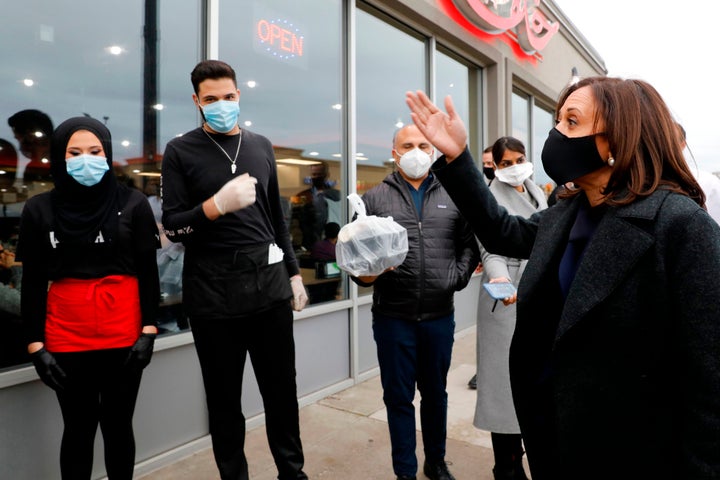
Arab and Muslim communities likely substantially contributed to Democratic presidential nominee Joe Biden’s victory in Michigan, according to local activists and organizers.
Emgage Action, a Muslim civic advocacy organization that endorsed Biden, said that approximately 81,000 Muslim Americans cast early and absentee votes in the state. (The exact number of votes cast by Muslim Americans in Michigan is not yet known.) Biden beat President Donald Trump by roughly 150,000 votes in Michigan, where Hillary Clinton lost by just 11,000 votes in 2016.
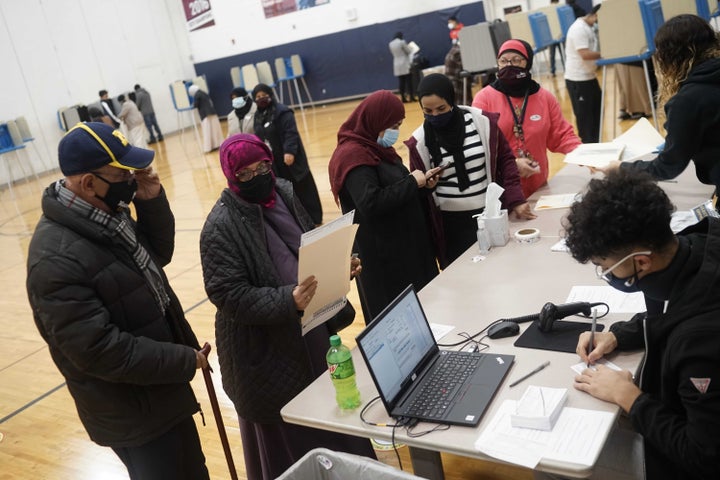
Muslim American groups and activists focused on rallying voters before Election Day — setting up phone banks and virtual town halls aimed at maximizing turnout, especially in battleground states. Those efforts, they said, paid off and Michigan is an example of that.
“Where would the Democrats be without those 81,000 Muslims?” said Nada Al-Hanooti, executive director of Emgage’s Michigan chapter. She said her organization had been working every day since August to register a record number of Muslims as part of their nationwide Million Muslim Votes campaign, and added that Biden’s victory in Michigan could not have happened without the Muslim and Arab vote.
“Muslims showed up for Biden today and we’re going to expect him to show up for us come January,” she said.
Although it is difficult to say for sure, the Arab and Muslim vote in the state appears to have had a significant impact. More than 270,000 Muslim Americans live in Michigan, making up nearly 2.75% of the state’s population. More than one-third of residents in Dearborn, a suburb of Detroit, identify as Arab-American or Muslim or both. Biden defeated Trump in Wayne County, which includes Detroit and Dearborn and is the most populous county in the state.
Nationwide, Muslim American voters turned out in huge numbers this election, which is in line with patterns across all demographics. Preliminary projections from The Washington Post predict that turnout in 2020 was the highest percentage it’s been since 1900, and the highest number of voters ever.
Emgage estimates that over 800,000 Muslim Americans voted nationally, while the Council on American-Islamic Relations (CAIR), the nation’s largest Muslim civil rights and advocacy organization, puts that number at roughly 1 million. According to its own survey, CAIR estimates that 69% of Muslim voters backed Biden. (An NPR poll conducted in the days leading up to and on Election Day found that 64% of Muslim Americans voted for Biden and 35% of voted for Trump.)
In 2016, Muslim and Arab voters were credited with Sen. Bernie Sanders (I-Vt.)’s primary win over Clinton. And while Biden wasn’t the first choice for many Arab and Muslim residents in the Dearborn area, many strongly opposed Trump due to his anti-Muslim, anti-immigrant policies and rhetoric. “Just based on all the efforts, I think we really hit the message home that this election is unlike any other election, and it’s a critical matter of life and death to get out the vote this time and I think the community responded really well,” said Sarah Alaoui, a Ph.D. candidate at John Hopkins School of Advanced International Studies and a volunteer with Arab Americans for Biden, a grassroots coalition working to elect Biden. Alaoui believes that Arab Americans’ huge turnout can be attributed to the Biden campaign’s direct engagement with the community; that it spoke to voters in Arabic; and that it reached out to both Arab Muslims and Christians, which showed that it was able to identify and speak to the diversity of the Arab community.
Organizers also said endorsements from Sanders and Wayne County’s own Rep. Rashida Tlaib (D-Mich.) helped galvanized Arab and Muslim voters in the state as well. The results mirror early polling and initial exit polling that suggested that high turnout from Arab and Muslim segments of the state assisted Biden’s win.
Despite their small numbers overall ― Muslims make up just 1% of the U.S. population ― there are significant concentrations of Muslim Americans in key presidential swing states, including Michigan.
Michigan is not only home to a populous and diverse Muslim community, it also has one of the largest mosques in North America, whose congregation can trace its history back 100 years. The state is also the birthplace of the Nation of Islam, a Black political and religious movement founded by Wallace Fard Muhammad in 1930.
Youssef Chouhoud, an assistant professor of political science at Christoper Newport University in Virigina, said both Democrats and Republicans often overlooked Muslim and Arab voters due to their comparatively small population size and historic lack of civic engagement nationwide.
But that’s changing. Although it is difficult to nail down exact numbers, he is confident that a larger trend is at play.
“These numbers are very inexact but what is indisputable is that there has been a much larger turnout in the Arab American community and in the Muslim American community this year than we’ve seen in any previous presidential cycle,” said Chouhoud. “I only see that growing.”
Nationwide, more than 66% of Muslims identify as Democrats, according to a 2018 Pew Research poll. Chouhoud said that it is crucial for Democrats to seize this opportunity to invest in Arab and Muslim voters. “It is to the benefit of the Democratic Party to nurture that support and not simply take it for granted. Michigan is going to remain a pivotal state in presidential contests moving forward. So if the Democratic Party is wise, they will nurture their support and not simply ignore it,” add Chouhoud.
The work is also far from over for activists; Al-Hanooti said her job isn’t done. Getting out the vote was just the first step to ensure that Arabs and Muslims’ concerns are addressed outside of campaign season. “Regardless, we know we won right now and we feel good, but we’re still rolling up our sleeves and getting to work,” she said. “No one person is going to save the world. So we still have so much work to do.”
https://www.huffpost.com/entry/muslim-voters-michigan-biden-trump-2020_n_5fa41369c5b6f1e97fe77a1f

#ElectionResults2020 - Let the Votes Be Counted Please, don’t listen to the president.

Count all the votes.

This shouldn’t be a remotely controversial proposition in a representative democracy. A complete and accurate count is the only way to determine the will of the people who cast ballots.
During even typical election years, the process can take days. It takes longer in the highest-turnout election in generations — and that’s before factoring in a pandemic that has driven tens of millions of Americans to vote by mail and has made it far harder to carry out even basic tasks, like vote counting, that involve many people being in enclosed spaces for extended periods.
A president who cared about upholding American democracy would do all he could to drive this point home with the public. He would set the example by reassuring the people that the nation’s time-honored electoral system is working as it always has — state by state, county by county, precinct by precinct.
President Trump, as usual, is doing the opposite. As growing vote totals in several key battleground states favored Joe Biden, Mr. Trump began casting doubt on the veracity of the counts.
Shortly after midnight, the president said falsely on Twitter that the election was being stolen.
A few hours later, in a rambling, middle-of-the-night speech from the East Room of the White House, Mr. Trump accused “a very sad group of people” of trying to “disenfranchise” those who had voted for him. He threatened to force the election into the Supreme Court. “We want all voting to stop,” he said. “We don’t want them to find any ballots at four o’clock in the morning and add them to the list. OK?”
“This is a fraud on the American public,” Mr. Trump continued. “This is an embarrassment to our country. We were getting ready to win this election. Frankly, we did win this election.”
The speech was one of the lowest, most disgraceful moments in an administration filled to the brim with strong competition. It was also self-contradicting. In the same breath that he cast suspicion on counts in states that appeared to be turning against him, he welcomed more counting in states where his totals looked like they were growing.
On Wednesday morning, Mr. Trump was at it again, compounding the damage with rageful, misleading tweets.
“Last night I was leading, often solidly, in many key States, in almost all instances Democrat run & controlled. Then, one by one, they started to magically disappear as surprise ballot dumps were counted. VERY STRANGE, and the ‘pollsters’ got it completely & historically wrong!” he wrote in a tweet that Twitter flagged, along with several others he has sent, for containing “misleading” content.
Mr. Trump is right that the polls were off — by a lot, in some key states. But none of this is “very strange.” Neither candidate won the election on Tuesday night. That determination won’t be made by the candidates’ wishes or the media projections. It will be made by the voters and the workers who count their ballots. States aren’t even required to certify their count until Dec. 8. In the meantime, there are no “surprise ballot dumps” that make votes “magically disappear.” It’s normal for vote totals to change, especially in the hours and days after polls close. When one or the other candidate pulls ahead, it’s not “flipping” the result, because there is no result yet to flip.
The irony is that the count could have proceeded more quickly in several battleground states, like Michigan, Wisconsin and Pennsylvania, had Republican lawmakers there followed their counterparts in many other states and allowed for mail ballots to be opened and processed before Election Day. But despite repeated pleas for them to do so, they refused. Now Mr. Trump and his Republican allies are using that refusal to claim that votes are being counted too late. It’s as though they defunded the Fire Department and then got mad when their house burned down.
On Wednesday, the Trump campaign announced it would seek a recount in Wisconsin, where Joe Biden leads by a little more than 20,000 votes, or less than 1 percent. That is Mr. Trump’s right, although he will have to pay $3 million out of pocket for it, and statewide recounts only change the margin, on average, by fewer than 300 votes. If anyone has reason to be upset, it is the hundreds of thousands of voters around the country whose mail-in ballots were never delivered to election offices. On Tuesday, a federal judge in Washington ordered the Postal Service to search 12 postal processing facilities in 15 states for any remaining undelivered ballots, which were generally cast overwhelmingly in favor of Democratic candidates. The Postal Service ignored the order, saying it would continue on its own inspection schedule.
It is understandable that Americans want to know quickly and clearly the outcome of the presidential election. But that doesn’t change the fact that it takes time to count 150 million votes. Across the country, election workers and administrators are committed to doing their job and are working long hours to ensure that every ballot is counted.
No matter how much the nation has come to expect this sort of behavior from Mr. Trump, he always manages to exceed expectations. That doesn’t make it better. To the contrary, it is extremely dangerous. Mr. Trump has for years fanned the flames of rage among his supporters and flooded American society with disinformation.
On Wednesday, Mr. Trump tweeted, “They are finding Biden votes all over the place — in Pennsylvania, Wisconsin, and Michigan. So bad for our Country!”
Yes, Mr. President. That’s what happens when you count the ballots. It’s up to the rest of us, and especially you, to stay calm and let the electoral process play out as it does every four years. In the end, both parties will have won some and lost some. That’s not fraud. It’s democracy.
https://www.nytimes.com/2020/11/04/opinion/vote-count-election-2020.html

Wednesday, November 4, 2020

Video - "We believe we're on track to win":#Election2020 Biden addresses the nation

#Election2020 - Trump's call to halt vote counts is his most brazen swipe at democracy yet

By Stephen Collinson
President Donald Trump's demand for vote counting to stop in an election that is still undecided may have been his most extreme and dangerous assault on the institutions of democracy yet in a presidency replete with them.
Trump appeared in the East Room of the White House early on Wednesday morning to claim falsely that he had already beaten Democrat Joe Biden, and the election was being stolen from him in a massive act of fraud. He vowed to mount a challenge in the Supreme Court and declared that he had already won states that were still counting votes, including Georgia, North Carolina and Pennsylvania. The election has not yet been won, and the President and the former vice president are still locked in a tight battle for the decisive states with millions of votes still being counted.
Trump's remarks essentially amounted to a demand for the legally cast votes of American citizens not to be recorded in a historic act of disenfranchisement. And they brought closer the potential constitutional nightmare that many have feared since Trump started to tarnish an election that he apparently worried he could lose months ago. His rhetorical broadside was also notable because it came at a moment of huge tension in a deeply divided nation -- a time when a president, even one whose political fate is in the process of being written -- could be expected to call for calm.
Trump's comments were especially remarkable since it appears that the President has a good chance of winning outstanding states in Pennsylvania, Wisconsin, Georgia, North Carolina and Michigan, which could hand him a second term. And the implication of his authoritarian remarks was that the President wants vote counting to stop in those states but to go on in Arizona, where he trails Biden. They were also a warning sign of the kind of behavior that might be expected in a second term from a President who has survived impeachment and may be heading for a new mandate that he would view as a validation of his norm-crushing behavior. In some ways, Trump's aggressive response to a night of nail-biting tension and a yet-to-be-decided result could also take the gloss from what would be a stunning political achievement if he wins reelection despite expectations that his handling of the pandemic would cause the country to turn against him. "Millions and millions of people voted for us," Trump said in the East Room. "A very sad group of people is trying to disenfranchise that group of people."
Trump wary of early and mail-in votes
Trump is angry that hundreds of thousands of mail-in and early votes -- cast disproportionately by Democrats -- are still being counted, leaving open the possibility that Biden could challenge Trump's leads in the Midwest. But those votes were made in a way that is just as legitimate as the ballots that were lodged by voters showing up in their precincts in the traditional manner.
"We were getting ready for a big celebration. We were winning everything. And all of a sudden it was just called off," Trump said. "This is a fraud on the American public. This is an embarrassment to our country."
"Frankly, we did win this election," he said, despite millions of votes still outstanding.
The President made his televised statement after his opponent delivered his own remarks and said that all of the votes must be counted.
"It's not my place or Donald Trump's place to declare who has won this election," Biden told his crowd in Wilmington, Delaware.Throughout his presidency, Trump has consistently taken aim at the institutions that have underpinned American government for decades. He has attacked the judiciary, the intelligence services and made clear for example that he believes that the Justice Department should be loyal to him rather than the law. He has even said that as president he has absolute power under the Constitution to do whatever he wants. "I have an Article Two where I have the right to do whatever I want as President," Trump declared last year.
'Legally cast ballots'
It was not immediately clear on what grounds Trump planned to try to ask the Supreme Court to intervene in the election because, so far, he has not provided evidence for any voting irregularities."These are legally cast ballots or at least will be determined to be legally cast ballots by the appropriate local county and state officials," Benjamin Ginsberg, a longtime Republican election lawyer, told CNN's Jake Tapper."And for a president to say we are going to disenfranchise those legally cast ballots -- it really is extraordinary."
The President's statement sparked a sharp response from Biden's campaign manager, Jen O'Malley Dillon. "It was outrageous because it is a naked effort to take away the democratic rights of American citizens," she said in a written statement. "The counting will not stop."
And former New Jersey governor and top Trump ally Chris Christie voiced disagreement with Trump's election night remarks prematurely declaring victory and attacking legitimate vote counting efforts. Christie said Trump "undercut his own credibility.""There's just no basis to make that argument tonight. There just isn't. All these votes have to be counted that are in now," Christie said during a panel on ABC News moments after Trump's remarks, noting that the vote count in Pennsylvania will continue for days and "that argument's for later."
https://edition.cnn.com/2020/11/04/politics/election-2020-donald-trump-joe-biden-voting-speech/index.html

#Election2020 Deep-seated divisions in US contradict democratic values

By Wang Wenwen
Violence, guns. These are often fixtures of elections in underdeveloped or developing countries. What is happeningduring the US election is something that we could have never imaged in this "Beacon of Freedom."
The US is considered a model of democracy, and one characteristic of democracy is: "I disapprove of what you say, but I will defend to the death your right to say it." Democracy is exercised in a civilized and graceful manner. The one who loses in elections is supposed to stay cool, accept the result, and call for bridging differences to move the country forward. But it seems that this does not exist in the US nowadays.
In the past four years, we have witnessed how a divided US becomes even more divided. Two years ago when I went to the US to cover the mid-term elections, I clearly felt partisan division, but the social atmosphere was restrained and controllable. But this year's general election is totally different.
Ahead of the elections, the Americans went panic-buying, with many industries experiencing product delays and shortages. There has been a surge of new gun owners, looking to arm themselves in the event of a turbulent election aftermath. Gun sales in the US have hit a record this year, with 1.7 million in October. Meanwhile, businesses in major cities across the US have boarded up windows and doors for fear of election unrest.
Crowds violently clashed outside the White House on election night as thousands of protesters gathered. Over 3,000 National Guard troops have been activated in various states for fear of violence. It remains to be seen how the "civil war" evolves as a result of the election.
The US stands on the high political and moral ground among developed Western countries. In an election of such a country as the US, what was uncertain in the past was the result of the election, while the election process would always remain certain. Disputes, chaos and the refusal of election results by certain candidates were supposed to take place in developing countries where political conditions were not stable, and definitely not in a country like the US.
But things have changed - all these have occurred in the US, and the US is not synonymous to a stable, civilized and consensus-based society anymore. The US has been keen on dividing other societies in countries it sees as rivals. It is an old hand in launching "color revolutions" which have spread from Eastern Europe to Central Asia. Ironically, US society has to face such a division in itself.
The division in the US is triggered by the split in values and conflicts of ideals. No matter whether Joe Biden or Donald Trump wins, both are consuming the Americans' trust toward elections and bringing political confrontation and social division to a higher level. A Gallup survey in February showed that 59 percent of Americans interviewed said they are not confident in the honesty of elections in their country. It also noted that a majority of Americans have consistently lacked confidence in the honesty of elections every year since 2012.
The partisan confrontation is the epitome of deep-seated divisions in US society. There is no end in sight to the social contradictions. More importantly, the US leadership has no will to solve such woes. And what comes up with the distrust is the questioning of the much-touted slogans of "democracy" and "freedom."
This is costing the US' international reputation as well. The presidential election has attracted world attention, but what everybody is interested in much more is what kind of farce the world's No.1 would make. As Paul Kelly, editor-at-large on The Australian, wrote, "The collapse of the American code of traditional virtue along with the collapse of institutional authority that once propagated that code risks generating a society that cannot deliver for the common good."
https://www.globaltimes.cn/content/1205738.shtml

#Election2020 - 'Authoritarian': Trump condemned for falsely claiming election victory


Vote count is still under way and results so far show Democratic challenger Joe Biden in the lead. Donald Trump has confirmed the worst fears of his opponents by making a false declaration of victory in the US presidential election and threatening to plunge the nation into a constitutional crisis.
Results so far show his Democratic challenger, Joe Biden, with an edge in the race to 270 electoral college votes after flipping the state of Arizona, but it could be days before the outcome is known.
“The president’s statement tonight about trying to shut down the counting of duly cast ballots was outrageous, unprecedented and incorrect,” said the Biden campaign manager, Jen O’Malley Dillon, in a statement.
That Trump had been widely predicted to make a baseless assertion of triumph and resort to the courts to stop votes being counted did not make his 2.21am speech at the White House any less shocking. Some likened the move, unprecedented in American history, to a presidential coup. “Once again, the president is lying to the American people and acting like a would-be despot,” tweeted Adam Schiff, the Democratic chair of the House intelligence committee. “We will count every vote. And ignore the noise.”
Trump spoke in the East Room with numerous US flags behind him and flanked by two TV screens, which had been showing Fox News. Around 150 guests were standing with few face masks and little physical distancing. Donald Trump Jr, Ivanka Trump and other family members sat in the front row.
“Millions and millions of people voted for us tonight, and a very sad group of people is trying to disenfranchise that group of people and we won’t stand for it,” Trump said to whoops and cheers. “We will not stand for it.”
There is no evidence for Trump’s allegation of disenfranchisement.
The president listed some correct state victories, some false claims of state victories, and dived deep into unfounded conspiracy theories.
“And did I predict this, did I say this? I’ve been saying this from the day I heard they were going to send out tens of millions of ballots because either they were going to win or, if they didn’t win, they’ll take us to court.”
He added: “This is a fraud on the American public. This is an embarrassment to our country. We were getting ready to win this election. Frankly, we did win this election. So our goal now is to ensure the integrity – for the good of this nation, this is a very big moment – this is a major fraud on our nation.
“We want the law to be used in a proper manner, so we’ll be going to the US supreme court. We want all voting to stop. We don’t want them to find any ballots at four o’clock in the morning and add them to the list. OK? It’s a very sad moment.
“We will win this and as far as I’m concerned we already have won it.”
Trump’s demand for all voting to stop did not make sense after polls had already closed, but appeared to be an attempt to sow confusion about mail-in ballots. Millions are still to be counted in key battleground states in the midwest such as Pennsylvania and they are expected to heavily favour Biden.
Trump has spent months arguing that mail-in ballots are prone to fraud. Experts say there is no evidence for this.
The president appears to be pinning hopes that a conservative majority on the supreme court, including his recent appointment Amy Coney Barrett, will rule in his favour. The role of the attorney general, William Barr, who has been loyal to Trump, could also be critical.
The scenario could also involve support from Republican senators, conservative media and the millions of people who voted for Trump’s re-election, creating a powder keg with high potential for battles in the courts and the streets.
Trump’s attempt to enflame divisions to his political advantage provoked a fierce backlash. Dillon, Biden’s campaign manager, said: “The counting will not stop. It will continue until every duly cast vote is counted. Because that is what our laws – the laws that protect every Americans’ constitutional right to vote – require.”
Alexandria Ocasio-Cortez, a Democratic congresswoman from New York, tweeted: “Donald Trump’s premature claims of victory are illegitimate, dangerous and authoritarian. Count the votes. Respect the results.”The Minnesota congresswoman Ilhan Omar added: “The irony of worrying about people turning America into Somalia, while allowing Trump to do literally what Somali dictators used to do.“Wake up, he is destroying everything that sets us apart. We send election observers into other countries, we shouldn’t need ours monitored.”
David Plouffe, a former campaign manager and White House senior adviser for Barack Obama, predicted “dark and scary days” to come.
He told MSNBC: “It’s one of the darkest hours the White House has ever seen, one of the darkest hours in American history … Even if Trump’s not successful, and I don’t think he will be if the votes are there for Joe Biden, you’re going to have to 40 to 45% of the country believing him, which is going to affect our democracy going forward.”
Historian Michael Beschloss posted: “Trump claiming a victory he never won, and saying he will take it to the supreme court. This is what dictators do. Stop.”
Even conservatives expressed criticism. Justin Amash, a former Republicam congressman from Michigan, tweeted: “That was one of the most dishonest and despotic speeches ever given by a president of the United States.”
Ben Shapiro, an author and media personality, wrote: “No, Trump has not already won the election, and it is deeply irresponsible for him to say he has.”
Earlier on Wednesday, Biden told supporters: “It’s not my place or Donald Trump’s place to declare who’s won this election. That’s the decision of the American people, but I’m optimist about this outcome.”
https://www.theguardian.com/us-news/2020/nov/04/donald-trump-election-joe-biden-vote-count

#Elections2020 - Opinion 2020 Should Be the Last Time We Vote Like This - Turnout was inspiring, but our voting system is badly flawed.


By Farhad Manjoo

Now that the ballots have been cast and we wait to see whose will be counted and whose will be ignored, can we please take a moment to acknowledge what a huge mess this whole thing has been?
I don’t mean the big things — the absurd twists in the ugly, never-ending, pandemic-blurred, possibly world-ending presidential election of 2020. No, I’m referring to the smallest, most particular act of this saga: the way we voted. The process of registering your democratic preference, the citizen’s core duty in a democracy. Can we take a moment to acknowledge how terribly inefficient, inaccessible, unfair and just plain backward this process remains in the United States?
When all the tallying is done, up to an estimated 160 million Americans will have voted this year — a turnout of about 67 percent of eligible voters. That would be a modern record, and given that it occurred as the coronavirus raged, the casting and counting of all those votes should be regarded as an achievement for the United States’ election system.
But that’s not a very high bar, and the biggest problem about how America conducts its elections is that we have been too tolerant, for too long, of a bar set way too low.
High turnout notwithstanding, the glaring lesson of this year’s election is that we cannot go on this way. From the endless lines to the pre-election legal wrangling to the president’s constant effort to undermine the process, every ballot cast this year was a leap of faith: Would it get there in time? Would it get there at all? Would they try to toss it out because you voted from a car? Would they throw it out because you signed your name carelessly? Would judges be called upon to alter the mail-in deadline after the election had already begun? Would you ever be able to find the one dropbox in your sprawling county? And, after all that, would anyone believe the count, anyway?
All of this uncertainty is unworthy of the world’s “oldest democracy.” American elections are broken, and because the legitimacy of the entire political system rests upon our votes, their brokenness mars every other part of our democracy.
Fixing how we vote isn’t a mystery. Experts have recommended several specific measures that could greatly expand the franchise, including federal measures to make registration easier, expand early voting and ensure we have adequate resources at polling locations to prevent long lines.The difficulty is, instead, political. For decades, limiting who gets to vote has been a key strategy of the Republican Party — though usually people on the right have not been quite so proud of this fact. This year, as has happened often with Donald Trump, subtext became text. In the weeks before Election Day, Trump all but boasted about the role that voter intimidation and suppression would play in his campaign.
“We’re watching you, Philadelphia,” Trump warned in Pennsylvania last week, suggesting something untoward going on with the vote in a city highly unfavorable to his candidacy. “We’re watching at the highest level.”
If Democrats win the presidency and the Senate, undoing the Republican bet on disenfranchisement ought to be among their highest priorities. One reason voting remains so onerous is that we rarely think about it except close to Election Day. The further out we get from the vote, the less urgency there is to fix things. But nothing else in a democracy works if voting doesn’t work. So, please, let’s fix voting first.
None of the problems we saw this year were new; inaccessibility, confusion, bureaucratic hoop-jumping and outright intimidation have long been hallmarks of American elections. Though politicians speak dreamily of the importance of voting, the United States badly lags other democracies on many measures of electoral success; in many countries, a turnout rate of about two-thirds wouldn’t rank as particularly extraordinary. Voting in this country is also highly unequal. Compared with turnout among whites, turnout among people of color is often lower. It’s hard to argue this isn’t by design, a result of decades of deliberate disenfranchisement and the perpetuation, still, of voter suppression efforts aimed at people of color.
But the best way to appreciate the shortcomings in how we vote isn’t by looking at other countries. Instead, compare the act of voting to other modern services. Set against so many less important transactions in American life — ordering a complicated coffee from a national chain, or finding the best sushi place in a town you’ve never visited before — the simple act of casting a ballot is laughably antiquated.
Across much of the country, registering to vote is a labyrinth. In most states, if you haven’t remembered to register by Election Day, you’re too late. Not that you’d necessarily know about it. In between elections, it’s become common for states to “purge” voter rolls of people deemed ineligible, a process that many voters only learn about when they show up at the polls and are denied the chance to vote.
The system is also fragmented and underfunded, and it suffers from misaligned incentives. In many countries, elections are administered by nonpartisan agencies that set rules for the entire nation. In the United States, elections are often run by elected officials — Republican or Democratic secretaries of state, for instance — and rules about who gets to vote and how they do so differ from state to state.
Because states and the federal government do not sufficiently fund the voting system, it is often unable to meet anything more than ordinary demand. In the last few weeks, Americans in many cities have waited hours for the chance to vote, which is both inspiring and a really terrible comment on the state of our democracy.
As Amanda Mull noted recently in The Atlantic, in 2020 the act of voting was elevated to that most sacrosanct place in American society — it became feel-good marketing for brands. This year it felt as if just about every brand in America turned giddy about the democratic process. Retailers and fashion designers and restaurant chains couldn’t stop reminding us to “Vote!”
But the embrace of voting as a way to project corporate virtue only highlights how little the government has done to promote this supposedly precious democratic act. “As long as America’s leaders decline to make the system-wide changes that would help more people vote, corporations with something to sell will seep into the void,” Mull wrote.
She’s right, and it’s terrible. Voting shouldn’t be this difficult or this uncertain. We know what needs to be done to improve the process. And we shouldn’t wait until another election to get it done.

Tuesday, November 3, 2020

Video - #DailyShow #TrevorNoah #Election2020 Biden & Trump Make Drastically Different Final Pitches to Voters | The Daily Social Distancing Show

Video - #Election2020 #ElectionDay2020 - Barack Obama Explains Donald Trump, Joe Biden, and The Media - Oct 14, 2020

Video - #Election2020 #ElectionDay2020 - Don Lemon: The reasons why US is divided run very deep

Video Report - #Election2020 #ElectionDay2020 #Minnesota #US Minnesota: A major swing state in US elections

Video - #Election2020 #ElectionDay2020 - What is the US electoral college?

Video - #Election2020 #ElectionDay2020 - Obama delivers scathing takedown of Trump at unscheduled Georgia rally

#Election2020 #ElectionDay2020 - Nearly 100 million Americans have already voted, so what will Election Day turnout look like?

Opinion: You’re Not Just Voting for President. You’re Voting to Start Over.


The American experiment has taken a beating, but there’s a chance to renew our democracy.
As Americans go to the polls on Tuesday, the last day of voting in the 2020 election, the health of American democracy hangs in the balance. But in this hour of crisis, the strength of democracy also is on display. As Martin Luther King Jr. said in his final speech, “Only when it is dark enough can you see the stars.”
Even as Republican officials work frantically to discourage voting, and to prevent ballots from being counted, officials in many states have made it easier to vote than ever before. California, Nevada, New Jersey and Vermont, along with Washington, D.C., sent mail-in ballots to all voters, joining five other states that already did so. New York, New Hampshire and Virginia, among other states, eased the rules for voting by absentee ballot. In Harris County, Texas — a jurisdiction with a larger population than 26 states — some early voting sites stayed open all night.
Even as President Trump has celebrated acts of violence against people who do not support his re-election, Americans in the millions have taken advantage of these new opportunities to vote. More than 97 million people have already cast ballots nationwide. In Texas and Hawaii, the number of votes cast before Election Day has surpassed the total vote in the 2016 election.
Even as the coronavirus pandemic rages, millions more Americans plan to put on masks on Tuesday and vote in person. Some will wait for hours in long lines — a heroic response to a disgraceful reality — to exercise their right to pick the people who will serve them in Washington and in state and local government.
In the accumulation of these individual acts, our representative democracy is renewed.
State election officials have an obligation to ensure that all of these votes are counted. That process will not end on Tuesday. Some states may report results quickly; others expect it will take days to make the count.
Mr. Trump, and other Republican officials, can help by setting aside plans to interfere. One attempt at sabotage suffered a setback on Monday when a federal judge rejected an effort by Texas Republicans to toss more than 127,000 ballots from drive-through polling stations in Harris County, which includes Houston. Ben Ginsberg, a longtime lawyer for the Republican Party in voting cases, including in Florida in 2000, broke ranks in that case. “Not so long ago, it was a core tenet of the Republican Party that the vote of every qualified voter should be counted, even if, at times, it did not work in the party’s favor,” Mr. Ginsberg wrote. That should be a core tenet for both parties in the coming days.
The courts, which will inevitably be called upon by both parties, have a paramount duty to maximize the opportunity to vote and ensure that ballots are counted.
Candidates also have an obligation to wait for the votes to be counted. Mr. Trump has suggested he is ready to claim victory before states finish their counting. Such premature claims, sometimes excused as gamesmanship, would be particularly irresponsible in the present climate. Should a candidate make such a claim, however, it’s also worth noting that there’s no special magic in saying the words. Mr. Trump cannot obtain a second term by declaring himself the winner.
Once the results are in? Once the nation has picked a president, 35 senators and 435 representatives, not to mention state and local officials and the results of referendums? The election is just a beginning.
The winning candidate and his supporters will celebrate, but the importance of an election is easily overstated. What is won is not the right to carry out a particular set of campaign promises, but only the chance to govern.
Voters have made their own compromises in selecting candidates who embody some but not all of their priorities, some but not all of their values. Once those choices are made, the men and women they have selected must go to work and forge their own compromises.
This nation was struggling to address a range of long-term problems before Mr. Trump’s victory in 2016. Over the past four years, those challenges have only increased, in part because Mr. Trump has failed to understand the work of a president. He has sought to rule by fiat, to besiege his opponents and demand that they surrender. Time and again, he has decided that no loaf is better than half a loaf.
Now America gets its quadrennial chance to start over again.
The immediate challenge is to hold a free and fair election, to demonstrate to ourselves more than anyone else that this nation remains committed to representative democracy and to the rule of law. But the vote itself is just a means to an end. Once the ballots are counted, those who win must prove they can govern.
https://www.nytimes.com/2020/11/02/opinion/2020-election-voting.html

Trump and Boris Johnson have shown countries need leaders, not celebrity politicians

Rafael Behr
After four years and a pandemic, one thing is clear: the fence between entertainment and politics must urgently be rebuilt
Boris Johnson had barely finished telling the nation about new English lockdown arrangements on Saturday night when the BBC, correctly reading the mood of its primetime audience, cut live to Strictly Come Dancing.
It is easy to imagine Johnson on the other side of that switchover. There is a parallel universe where “Boris” is one of the sequin-clad celebrities waiting in an Elstree studio for the jaunty music to strike up while someone with natural gravitas delivers the serious message from Downing Street. In this scenario, Johnson’s political career fizzled out after a second term as mayor of London but his fame stayed alight. He was an obvious match for Strictly. (The judges deride his shambolic dances and dishevelled appearance, but he appeals over their heads to the voting public, who keep returning him to the dancefloor – for a laugh: a welcome distraction from the pandemic.)
And in that hypothetical world, Donald Trump still hosts The Apprentice, because liberal democracy has not been taken hostage by marauding vaudevillians.
I have witnessed Johnson holding forth over lunch with a dozen guests and declaiming to vast auditoriums. It is the same act in any venue. He adjusts his beliefs to whatever he thinks the audience wants to hear, but not the raconteur style, sustained by laughter and applause. Few things disturb his poise more than a stone-faced reception. If his words hang in the air too long, there is a danger they will be examined, remembered, taken seriously. He was not a great parliamentary speaker before the pandemic, but he really bombs in the Commons chamber now that it is thinly populated and hushed by social distancing.
Trump uses a fraction of Johnson’s vocabulary, and his delivery is less laboured, but he also uses cadences more familiar from standup comedy than traditional oration. He is master of the faux-conversational ramble that invites intimacy, the little observations and non-sequiturs, the unnatural pauses that build tension before a punchline drops.
When the fate of US democracy hangs in the balance, Trump’s rhetorical technique might not be the most pressing concern. But that showbiz patter has been a key to unlocking the character of his presidency. He has the personality of a tyrant, but not the premeditated programme of a dictator. His thirst for power has always been deep, but it is the impulsive craving of a man addicted to attention for its own sake, without the mechanical drive to rearrange society and fashion other people’s destinies in the mould of a Hitler or Stalin. Trump is a more theatrical breed of despot, who bullies people and abuses his office because he believes they exist to gratify his needs and satisfy his fan club. The harm to the American republic is profound already. The incarceration of children, the approval of white-supremacist militias, the dehumanisation of opponents – it is the stuff of incipient fascism. But the slide into the abyss has been slowed by incoherence, infantile inattention and impatience. A more systematically ideological and intelligently focused saboteur in the White House could have done even worse. Other nationalist demagogues have used the coronavirus pandemic to expand their control of society and suffocate dissent. It is the obvious move. There is a national emergency that requires some suspension of civil liberties and unusual regulation of citizens’ private business. The authoritarian opportunities have not been wasted on Vladimir Putin in Russia and Viktor Orbán in Hungary. Trump could have exploited the virus to build an apparatus of political repression. Instead he opted for denial and petty frustration, belittling the pandemic because it was a bigger story than his own presidency. He couldn’t bump it out of the headlines with an aggressive tweet. Barack Obama called it right when he mocked the president for being “jealous of Covid’s media coverage”.
Johnson’s approach has been much more rational. He is better at hiding resentment of the way his job has turned out to be less fun than anticipated. But the disappointment is there – the dismay of the comedian inadvertently booked to speak at a memorial service with no fitting repertoire, no fluency in consolation.
The prime minister believes in the utility of lockdowns (unlike Trump), but he shares his American counterpart’s disregard for their use as tools of coercion. Backbench Tories are quick to highlight how the letter of Covid regulations is totalitarian, but none actually thinks Johnson intends to apply them in that spirit. The constant assertions of reluctance and regret – the pained apology for meddling in private freedoms – are about the only sincere notes he strikes in those televised addresses.
Johnson is in any case too lazy for fascism, which requires an obsession with order. His preferred flavour of control is best conveyed in a line from an old interview, when he described the “rather weird sense of power” he got as Brussels correspondent for the Telegraph, making mischief with confected tales of meddlesome European bureaucracy: “I was just chucking these rocks over the garden wall,” he said. “I’d listen to this amazing crash from the greenhouse next door, over in England.”
Now Johnson is keeper of the greenhouse. That doesn’t stop him chucking rocks, but the effect is more self-defeating. He does not have “weird”, remote, unaccountable power. He has the ordinary kind that comes with elected office, where popularity is not an end in itself, but a temporary licence to get things done on behalf of other people. Johnson is a more conventional politician than Trump, but he also reached the top by trampling through the boundary between celebrity and statecraft. His brand was built by turns as a panellist on Have I Got News For You more than on his record at City Hall. Both men benefited from a transatlantic culture of democratic complacency. They carved their way through the ranks of stale, cavilling bores because most politicians were bad for ratings and entertainment was news. Now we are stuck in a strange intermediate zone where real-life events have the febrile, climactic quality of a box-set season finale.
The pandemic shows why that fence between entertainment and politics needs to be restored. Covid cannot be played for laughs. Managing a public health crisis involves metrics of success other than applause. It requires politicians who can meet a challenge without self-pity at being forced to do the tough part of the job. Democracy is unsafe in the hands of egocentric men who do not know which way to turn in a crisis because they dare not face away from a cheering mob.
https://www.theguardian.com/commentisfree/2020/nov/03/trump-johnson-leaders-celebrity-politicians-pandemic-politics

#ElectionDay - After a campaign like no other, #Americans rendering final verdict at polls

By Trevor Hunnicutt, Doina Chiacu

Americans cast votes on Tuesday in the bitterly contested presidential race between incumbent Donald Trump and challenger Joe Biden after a tumultuous four years under the businessman-turned-politician that have left the United States as deeply divided as at any time in recent history.
Voters lined up at polling places around the country casting ballots amid a coronavirus pandemic that has turned everyday life upside down. Biden, the Democratic former vice president who has spent a half century in public life, has held a strong and consistent lead in national opinion polls over the Republican president.
But Trump is close enough in several election battleground states that he could piece together the 270 state-by-state Electoral College votes needed to win the election.Trump is hoping to repeat the type of upset he pulled off in 2016 when he defeated Democrat Hillary Clinton despite losing the national popular vote by about 3 million ballots. Trump is aiming to avoid becoming the first incumbent U.S. president to lose a re-election bid since George H.W. Bush in 1992.It is possible that it could be days before the result is known, especially if legal challenges focused on ballots sent by mail are accepted in the event of a tight race.
There was a sense of anxiety among voters and concern about possible unrest after a campaign with heated rhetoric. There were buildings boarded up in anticipation of possible protests, including in Washington and New York City. A new fence was erected around the White House.
Polls opened in some Eastern states at 6 a.m. EST (1100 GMT). The most closely watched results will start to trickle in after 7 p.m. EST (2400 GMT) when polls close in states such as Georgia.
Biden made another appearance on Tuesday morning in the pivotal state of Pennsylvania. Speaking to supporters using a bullhorn in Scranton, the city where he was born, Biden returned to some of his familiar campaign themes, promising to unite Americans and “restore basic decency and honor to the White House.”
Appearing on Fox News on Tuesday morning, Trump said the crowds he saw on Monday during his frenetic last day of campaigning gave him confidence that he would prevail.
“We have crowds that nobody’s ever had before,” said Trump, who has been criticized by Democrats for holding packed rallies in defiance of social-distancing recommendations during the pandemic. “I think that translates into a lot of votes.”
The voting caps a campaign dominated by a pandemic that has killed more than 231,000 Americans and put of people millions out of work. The country this year also was shaken by protests against racism and police brutality. Biden, who has framed the contest as a referendum on Trump’s handling of the pandemic, promised a renewed effort to combat the public health crisis, fix the economy and bridge America’s political divide. Trump has downplayed the pandemic, saying the country is “rounding the corner” even as numerous states set single-day records of new infections in the final days of the campaign.
More than 99 million Americans voted early either in person or by mail, motivated not only by concerns about waiting in lines on Election Day amid the pandemic but also by extraordinary levels of enthusiasm after a polarizing campaign.
The record-shattering total is nearing three-quarters of the total 2016 vote, according to the U.S. Elections Project at the University of Florida. Experts predict the vote could reach 160 million, exceeding the 138 million ballots cast in 2016. While there were long lines in some places, in many states lines were shorter, perhaps a reflection of the massive early vote. In McConnellsburg, Pennsylvania, about a dozen voters lined up, bundled in jackets and hats on an unseasonably chilly morning. “He’s a bit of a jerk, and I appreciate that,” Martin Seylar, a 45-year-old welder who had just finished his shift, said of Trump, his preferred candidate. “He doesn’t get everything that he says done, but the way I see it is he’s trying, versus where everybody else blows smoke at us.”
In Detroit, Republican voter Nick Edwards, 26, cast a ballot for Biden but voted for Republican candidates for Congress.
“Honestly, decency in the White House,” Edwards said when asked about his main concern. “When someone leads the party, they need to hold those values, as well. I don’t think Trump encompasses that.” Some crucial states, such as Florida, begin counting absentee ballots ahead of Election Day and could deliver results relatively quickly on Tuesday night. Others including Pennsylvania, Michigan and Wisconsin are barred from processing the vast majority of mail ballots until Election Day, raising the possibility of a prolonged vote count that could stretch for several days.
U.S. stocks opened higher on Tuesday, as investors wagered that Biden would prevail and usher in fresh stimulus spending.
CONTROL OF CONGRESS AT STAKE
Voters on Tuesday will also decide which political party controls the U.S. Congress for the next two years, with Democrats pushing to recapture a Senate majority and expected to retain their control of the House of Representatives.
Trump, 74, is seeking another four years in office after a chaotic first term marked by the coronavirus crisis, an economy battered by pandemic shutdowns, an impeachment drama, inquiries into Russian election interference, U.S. racial tensions and contentious immigration policies. Trump, looking tired and sounding hoarse after days of frenetic campaigning, struck a decidedly less belligerent tone on Tuesday than he did on the trail over the weekend. He was expected spend most of Tuesday at the White House, where an election night party is planned for 400 guests, all of whom will be tested for COVID-19.
Biden, 77, is looking to win the presidency after a five-decade political career including eight years as vice president under Trump’s predecessor, Barack Obama. He mounted unsuccessful bids for the Democratic presidential nomination in 1988 and 2008.
Biden started his day at St. Joseph on the Brandywine, his Roman Catholic church near Wilmington, Delaware, where he spent some time at his son Beau’s grave with Beau’s daughter, Natalie. Beau Biden died of cancer at age 46 in 2015. The two candidates have spent the final days barnstorming half a dozen battleground states, with Pennsylvania emerging as perhaps the most hotly contested. Biden will have made at least nine campaign stops in Pennsylvania between Sunday and Tuesday.
Biden’s polling lead has forced Trump to play defense; almost every competitive state was carried by him in 2016.
https://www.reuters.com/article/us-usa-election/after-a-campaign-like-no-other-americans-rendering-final-verdict-at-polls-idUSKBN27J0GK

Monday, November 2, 2020

Video - #Vote #Election2020 #ElectionDay #ElectionDay - The 2020 Election Is Here -- and Trump Is Trying to Steal It: A Closer Look

Video - #DailyShow #DonaldTrump #100MostTremendousScandals Counting Down Donald Trump’s 100 Most Tremendous Scandals: 25-1 | The Daily Social Distancing Show

Video - #Vote #Election2020 #ElectionDay #ElectionDay - Lady Gaga's Speech at Joe Biden's Rally in Pittsburgh Pennsylvania 2020

Video - #Vote #Election2020 #ElectionDay #ElectionDay - Drive-in Rally with Sen. Kamala Harris in Bethlehem, #Pennsylvania

Video - #Vote #Election2020 #ElectionDay #ElectionDay - How will the vote go? Tension mounts ahead of U.S. presidential election

Vote - #Election2020 #ElectionDay #ElectionDay - Biden Campaigns With Lady Gaga In Pittsburgh

Vote - #Election2020 #ElectionDay #ElectionDay - Obama delivers scathing takedown of Trump at unscheduled Georgia rally

#Election2020 - Final Pennsylvania presidential polls have Biden winning the pivotal swing state

By Alex Abad-Santosalex
@vox.com 

 Pollsters found Trump would need a repeat of 2016’s surprise results to win the state again. Total swing states in the 2020 presidential election: Pennsylvania.
The final polls of the state from Monmouth University and Morning Consult have Biden ahead of President Donald Trump.
A Monmouth University poll — taken from October 28 to November 1 and released Monday morning — has Biden with a 5 to 7 percentage point lead over Trump among likely voters. The spread is the result of Monmouth pollsters modeling two turnout scenarios: the poll found Biden had 51 percent support compared to Trump’s 44 percent among likely Pennsylvania voters in a high turnout scenario; and 50 percent support for Biden compared to 45 percent for Trump in a low turnout model. The low turnout model took into account a large number of ballots being rejected, which remains a possibility due to a recent Supreme Court decision. If ballots aren’t rejected, given current turnout, the high turnout scenario is more likely.
Morning Consult’s poll, taken from October 22 to 31, did not differentiate turnout. It found Biden leading Trump by 9 percentage points among likely voters, 52 to 43 percent.
Morning Consult’s results are a bit of an outlier compared to FiveThirtyEight’s average of Biden leading by around 5 percentage points. Monmouth’s low turnout result is line with FiveThirtyEight’s polling average.
These polls are significant because of Pennsylvania’s Electoral College importance.
As national polls continue to spell out a Biden lead, and as the traditionally Republican-dominated state of Texas has become a toss-up race, the question for Trump and Republicans has become where the president’s path to reelection lies. A crucial piece to that puzzle is Pennsylvania, which swung for Trump in 2016 by fewer than 45,000 votes. Trump winning Pennsylvania was seen as part of the fall of the proverbial “Blue Wall,” a block of Democratic-leaning states that have boosted Democratic presidential nominees’ Electoral College totals in the past.
Pennsylvania, which has 20 electoral votes (candidates need to rack up 270 to win the White House) is seen as an opportunity for Trump once again this year. As Vox’s Andrew Prokop explained, Trump needs to pick up electoral votes in swing states, where polling currently shows him down between 5 and 9 percentage points, in order to win. While polling suggests the race is currently closer in swing areas like Nebraska’s Second District (where Biden has a 4.5 percentage point average lead, according to FiveThirtyEight). So Trump is working hard to make sure current polling isn't predictive of the outcome in the state. He visited Pennsylvania five times in September. In the weekend before the election, Trump visited the state an additional five times as part of his 17 rallies in four-day stretch tour. Biden and his team understand the importance as well, and will campaign with Lady Gaga and John Legend in Pittsburgh and Philadelphia on November 2.
It’s also crucial to understand that four years ago Pennsylvania’s final polls had Hillary Clinton leading Trump by around the same margin as Biden leads Trump. FiveThirtyEight’s final average of Pennsylvania polling had Clinton at 48.9 percent to Trump’s 45.2 percent — a lead that vaporized when votes were tabulated. As Vox’s Matthew Yglesias explained, polling methodologies have improved since then, but that does not mean polling will reflect the final result in the state. Biden is ahead now, but Trump’s late attention on the state could mean a victory for him there once all votes are totaled.
https://www.vox.com/2020/11/2/21545863/pennsylvania-final-polls-2020-biden-trump