Tuesday, September 10, 2019
New York to commemorate 18th anniversary of the September 11 attacks
It's been 18 years since the September 11 attacks left nearly 3,000 people dead in the worst act of terrorism the nation has ever experienced. On Wednesday, the 9/11 Memorial and Museum will commemorate the lives lost with a ceremony honoring those killed at the World Trade Center, Pentagon and aboard Flight 93 — as well as the 1993 World Trade Center bombing.
As has happened in years past, the names of those killed will be read during Wednesday's ceremony. Last year, some families of victims infused their own, personal messages of remembrance, inspiration and concern.
CBSN New York will live stream the ceremony starting at around 8:25 a.m. ET from the 9/11 Memorial plaza in lower Manhattan. You will be able to watch the event at the top of this page or on the CBS News app.
During the ceremony at the 9/11 Museum and Memorial, the site will only be accessible to relatives of those killed in the September 11th attacks. That evening, a public ceremony featuring the public art piece Tribute in Light will open to the public as the sun sets. The Memorial plaza will also be open to the public from 3 p.m. to midnight.
The 9/11 Memorial and Museum is encouraging those commemorating the anniversary to use the hashtag #Honor911 on social media. The center is also providing resources for anyone interested in planning their own commemoration ceremony.

Blast heard near US Embassy in Kabul on 9/11 anniversary

A large explosion rocked Afghanistan’s capital near the U.S. Embassy in the early hours of Wednesday on the anniversary of the 9/11 attack on the United States.
A plume of smoke rose over Kabul just after midnight and sirens could be heard. An embassy employee reached by phone confirmed the explosion but had no details. There was no immediate official comment.
It would be the first major attack in the Afghan capital since President Donald Trump abruptly called off U.S.-Taliban talks over the weekend, on the brink of an apparent deal to end America’s longest war.
Two Taliban car bombs shook Kabul last week, killing several civilians and two members of the NATO mission. Trump has cited the death of a U.S. service member in one of those blasts as the reason why he now calls the U.S.-Taliban talks “dead.”
The 9/11 anniversary is a sensitive day in Afghanistan’s capital and one on which attacks have occurred. A U.S.-led invasion of Afghanistan shortly after the 2001 attack toppled the Taliban, who had harbored Osama bin Laden, the al-Qaida leader and attacks mastermind.
In the nearly 18 years of fighting since then, the number of U.S. troops in Afghanistan soared to 100,000 and dropped dramatically after bin Laden was killed in neighboring Pakistan in 2011.
Now about 14,000 U.S. troops remain and Trump has called it “ridiculous” that they are still in Afghanistan after so long and so many billions of dollars spent.
It is not clear whether the U.S.-Taliban talks will resume.
#Pakistan: School principal abducts 15-year-old #Christian girl, forces #Islamic conversion
A school principal in Pakistan is accused of abducting a Christian student and taking her to an Islamic madrasa to forcibly convert her to Islam.
The Press Trust of India reports that the girl's father, Mukhtar Masih, filed a complaint at a local police station in the Punjab province after his daughter, 15-year-old Faiza, did not come home from school last Wednesday.
Masih said the family contacted the school to ask where their daughter was. It was then that the class teacher told them that the school's Principal, Saleema Bibi, had taken Faiza to a nearby Islamic madrasa to be converted to Islam.
The father says he went to three Islamic seminaries before finding his daughter. However, the staff at the madrasa did not allow Faiza to return with her family.
After Masih filed a complaint, the police raided the madrasa and rescued Faiza. The girl was then taken to a shelter in Sheikhupura. The news agency reports that the family is now appealing for authorities to allow Faiza to return home.
“We took action and recovered the girl on Mukhtar Masih’s complaint but a [first information report] has not been registered against anyone yet,” police official Muhammad Nawaz told PTI.
“However, we are investigating the matter.”
Faiza was said to have informed her parents that she was told by a teacher that she’d “automatically become a Muslim” because she read Arabic in school.
“The principal had also offered us to convert to Islam and in return, she would compensate us by paying for our needs but we refused,” Masih was quoted as saying.
According to journalist Nail Inayat, Faiza is the third reported case of forced religious conversion in Pakistan in just one week.
“Renuka Kumari, Jagjit Kaur and Faiza Mukhtar. Hindu, Sikh and Christian girls are not 'pure' enough for the land of the pure?” Inayat asked in a Twitter thread.
“The teacher who taught Arabic to the girl in the gov't school told her you can't go back home now as you're a Muslim.”
Faiza’s alleged forced conversion follows reports that a young Hindu woman in the Sindh province was abducted from the Institute of Business Administration in Sukkur and forcibly converted to Islam.
In late August, a Shikh family alleged that their daughter had been abducted and forced to convert to Islam. However, the girl has claimed publicly that she converted to Islam and married her captor on her own free will.
Unlawful marriages are punishable by up to seven years in prison, according to the Pakistani penal code. Yet the frequent abductions of Christian and Hindu girls by Muslim men continues to be a problem.
A 2014 estimate from the nongovernmental organization Movement of Solidarity and Peace suggests that as many as 1,000 Hindu, Christian and other religious minority girls are abducted, raped or forced into Islamic marriages each year.
According to the United Kingdom-based Centre for Legal Aid, Assistance and Settlement, authorities in Pakistan often side with perpetrators of abductions while courts do not give clear judgments because of pressure from radical religious leaders.
CLAAS voiced an alarm this summer about the abduction of 14-year-old Christian Benish Imran, who was also forced into an Islamic marriage.
Pakistan ranks as the fifth-worst country in the world when it comes to the persecution of Christians, according to Open Doors USA’s 2019 World Watch List. The U.S. State Department has also listed Pakistan as a “country of particular concern” for its religious freedom violations.
Illegally Detained Christian Tortured to Death in Custody in Pakistan, Family Says
Police in Lahore, Pakistan tortured to death the Christian father of 14-day-old and 7-year-old sons, relatives said.
Officers on Aug. 28 illegally detained 28-year-old Amir Masih on a false charge of theft and tortured him for four days before he died in a hospital on Sept. 2, his brother Sunny Masih told Morning Star News.
Interrogating officers in the 96-percent Muslim country “urinated on Amir’s face and body and mocked his Christian faith” while trying to torture him into a false confession, Masih said.
After filing an application with police on Aug. 31 alleging forced disappearance of Amir Masih, relatives were informed that he had been taken into custody by a sub-inspector identified only as Zeeshan in connection with a theft case. Their repeated attempts to meet Sub-Inspector Zeeshan were blocked. They did know of Amir Masih’s whereabouts until an officer phoned Sunny Masih on Sept. 2 to tell him that his brother was not well and that they should come and take him to the hospital, Masih said.
“We rushed to the police station, where we were handed a semi-conscious Amir,” he said. “He was beaten up mercilessly, and his body was full of bruises. While we were taking him to the hospital, Amir told us that Inspector Nasir Baig, Sub-Inspector Zeeshan and four unidentified constables had tortured him continuously for four days.”
Sunny Masih said that while police released without a scratch all other employees who worked with Amir Masih, a gardener, after they were summoned about the alleged theft, his brother was subjected to severe torture because he was a poor Christian whom police believed could be coerced into a false confession.
“He told us that the police officials had urinated on him while cursing him for being a Christian and tried to force him to confess to the crime,” he said. “But my brother was innocent, and he refused to admit to something that he had not done, which further infuriated his interrogators. They increased the intensity of the violence, also subjecting him to electric shocks.”
Doctors at Services Hospital tried to save his life, but he succumbed to his injuries after a couple of hours, Masih said.
Working as a gardener in PAF Colony, Amir Masih was summoned to North Cantt Police Station in a phone call from Zeeshan regarding a theft case registered by his employer, Rana Mohammad Hanif, Masih said.
“Amir was present at Hanif’s house when he received the inspector’s call,” he said. “The watchman of the house told him that all employees had been summoned by the police to record their statements, and he should do the same. My brother went to the police station of his own will, but when he reached there the cops seized his phone, bundled him into a vehicle and spirited him to some unknown place.”
When he did not return home that evening, Sunny Masih and other relatives went out to search for him, he said.
“When I reached Hanif’s house to inquire about Amir, the watchman told me that he had been summoned by Sub-Inspector Zeeshan to record his statement,” he said. “For the next two days, we continued to search for both Amir and the police officer but failed to find any trace of their whereabouts.”
Autopsy
A post-mortem report on the death states that torture marks were visible on his hands, feet, back and arms. His ribs were also broken.
After news of the killing in custody spread on mainstream and social media and drew public ire, Punjab Inspector General of Police Captain Arif Nawaz Khan ordered registration of a case against Inspector Nasir Baig, Zeeshan and four other police officers and ordered a detailed report on the case.
Police have taken Baig and Zeeshan into custody, but the four other officers accused are still at large as no serious efforts have been made to arrest them, Masih said. Police at the same station where his brother was tortured registered his complaint for murder, illegal detention and torture.
Both Punjab Minister for Minorities and Human Rights Aijaz Alam Augustine and Shunila Ruth, a member of the National Assembly, said that they were making efforts to ensure justice for the grieving family of Amir Masih. Both officials are Christians.
Augustine said that he had visited the family and was in contact with police officials to ensure arrest of the absconding accused.
“This is a grave crime, and the accused police officers will be severely punished,” Augustine said, adding that the government would not show any leniency in cases of torture and custodial killings.
Ruth, who visited the victim’s family along with Punjab Gov. Muhammad Sarwar, said she would raise the matter in the National Assembly.
“The family’s claim that Amir was subjected to torture because of his Christian faith is not unfounded,” she said. “Unfortunately, there are segments in our society who continue to be prejudicial towards members of the marginalized communities.”
The two Christian officials said they believe they’ll be able to bring the perpetrators to justice, but attorney Saiful Malook, who gained fame for securing freedom for high-profile Christian blasphemy convict Aasiya Noreen (commonly known as Asia Bibi), said he feared the case would be swept under the carpet after the media hype dies because “police are known to protect their own.”
“Amir Masih’s murder in police custody is not only a serious crime but also a severe violation of the constitution,” he said. “Therefore, it should be taken up very seriously, and the police alone should not be trusted in this regard.”
Malook said that the First Information Report of the case also should have included the names of the deputy superintendent of police of the zone and the station house officer, as they were the supervisory officers and it was their responsibility to ensure that no citizen was subjected to illegal detention and torture.
“I’m sure the police misguided the complainant into naming only the six accused in order to save their seniors,” he said. “I am ready to provide pro-bono legal assistance to Amir Masih’s family, because I believe that they deserve justice on merit.”
Pakistan ranked fifth on Christian support organization Open Doors 2019 World Watch list of the 50 countries where it is most difficult to be a Christian, and on Nov. 28, 2018, the United States added Pakistan to its blacklist of countries that violate religious freedom.
Milk at Rs 140/litre, costlier than petrol in Pakistan
The price of milk has gone out of control across major cities of Pakistan on the day when Muharram is observed, according to Pakistani media reports.
Interestingly, petrol and diesel prices in Pakistan are lower than that of milk. Petrol was selling Rs 113 per litre, while diesel was Rs 91 per litre in Pakistan, just two days ago.
There have been even reports that milk is sold for as high as Rs 140 a litre in some parts of Sindh.
"Milk is being sold between Rs 120 and Rs 140 across the city of Karachi due to the sharp increase in demand," said a shopkeeper.
During Moharram, Sabeels (stalls) are set up in different parts of the city to offer milk, juices and cold water to the participants of the holy month's processions. For this, there is a huge demand for milk. Due to the increased demand, the milk hike of milk due to Muharram.
Karachi Commissioner Iftikhar Shallwani, who is responsible for controlling the price of milk, seems to have done nothing about the exorbitant rates, according to reports.
Ironically, the official price of milk set by the Commissioner Office is still Rs 94 a litre.
Ironically, the official price of milk set by the Commissioner Office is still Rs 94 a litre.
Pakistan’s former legislator seeks asylum in India
Baldev Kumar (43), along with his wife and two children came to India last month and is presently staying at Khanna in Punjab’s Ludhiana district.
A former legislator from Pakistan Prime Minister Imran Khan’s Pakistan Tehreek-e-Insaf (PTI) party has sought asylum in India, claiming that minorities were deprived of their rights in the neighbouring nation.
Baldev Kumar (43), along with his wife and two children came to India last month and is presently staying at Khanna in Punjab’s Ludhiana district.
“I have come here to seek asylum and will request [Prime Minister Narendra] Modi Sahib to help us,” Mr. Kumar told reporters in Khanna on Tuesday.
When asked why he left his country and came to India, Mr. Kumar said, “the whole world is watching what is the situation in Pakistan now. We were expecting from [Pakistan PM Imran] Khan Sahib that when he came [to power], the fate of Pakistan will change, he said, claiming Mr. Imran failed to do so.
“You are watching the situation [in Pakistan] and I am also watching the same. That day our Sikh girl was kidnapped. Such things should not take place,” said Mr. Kumar.
Notably, in Pakistan’s Punjab province, a teenage Sikh girl, the daughter of granthi (priest) of a Gurdwara there, was abducted and converted to Islam at gunpoint before she was married to a Muslim man, her family had alleged.
A video of the girl’s family had gone viral on social media in which one of her family members had alleged that a group of men attacked their house and she was abducted and forcibly converted to Islam.
He said, “had minorities been getting rights in Pakistan, such situation should not have arisen.”
He further said he has also requested his other family members to leave Pakistan.
Mr. Kumar said that there were several families in Sindh and Nankana Sahib which told him that if he got asylum there (India), then they would also try to leave Pakistan.
Mr. Kumar was a former Member Provincial Assembly (MPA) from Barikot seat in Khyber Pakhtunkhwa province in Pakistan.
India had expressed strong concern over the incidents of forced conversion and asked the neighbouring country to take remedial action to stop such cases.
Monday, September 9, 2019
Is Majoring in English Worth It?
By William McGurn
Employers used to be able to count on the skills a liberal-arts education cultivated.The summer holidays have finally ended, and across America college students are returning to campus. But not before someone—most likely mom or dad—has written a hefty tuition check. If you’re a parent going into hock to pay for your son or daughter’s degree in English lit, you may be feeling a mite anxious about what you are getting for all those dollars.
A just-released Bankrate study won’t make you feel any better. In a ranking of 162 college majors by median income and unemployment rate, English majors landed among the bottom dwellers, at 132. At $47,800 in median income, they did better than those in drama ($35,500) or fine arts ($37,000), but they earned less than half as much as someone who majored in, say, electrical engineering ($99,000).
Alas, even if your undergrad is happy with his English major now, other studies say he will come to regret it. In June, a Payscale survey of 250,000 college grads reported 1 in 5 with a humanities degree as saying that, next to their student loans, their choice of major was their biggest educational regret. A 2017 MarketWatch story was blunt: It called English “the most regretted college major in America.”
Manifestly, English majors aren’t getting much respect these days—including self-respect. But don’t blame the kids. Colleges sell themselves as a ticket to upward mobility, without providing the data students and parents need to weigh college costs against expected benefits. Humanities students have it even worse, because the watering down of the curriculum has diminished the value of degrees such as English or history.
In marketing college to prospective students, universities like to cite the significant difference in lifetime earnings between someone with a bachelor’s degree and someone with a high school diploma. Fair enough. But as the Bankrate survey illustrates, the earnings differential among college degrees can be significant too.
Economist Richard Vedder, author of “Restoring the Promise: Higher Education in America,” has long urged colleges to give students many more measures along the lines of the Bankrate survey. What students especially need, however, isn’t averages but the worth of particular degrees from particular universities.
“When you spend $100,000 or more for something, you are entitled to know the probable value of what you are getting,” says Mr. Vedder.
No one is surprised to learn that STEM majors (science, technology, engineering, mathematics) out-earn English majors. After all, the purpose of what used to be called a “liberal education” has never been about a high-paying career. Even so, Jonathan Pidluzny, director of academic affairs for the American Council of Trustees and Alumni (ACTA), notes that employers nevertheless prize the critical thinking, communication skills and judgment cultivated by a liberal-arts education.
“The English major was once a guarantor of effective, formal writing skills and the ability to comprehend and analyze the complex thoughts found within centuries of brilliant and challenging poetry and prose,” he told Campus Reform. “Its decline into the epiphenomena of popular culture and identity politics is a self-inflicted wound that has rocked its credibility.”
In other words, what’s on offer today isn’t your father’s English degree. An ACTA study of English programs reports that 48 of 52 top schools (as ranked by U.S. News & World Report) allow English majors to graduate without ever having taken a course on Shakespeare. In the past ACTA has also highlighted studies showing that the average grad, even those from prestigious flagship universities, shows little or no improvement in critical thinking for having gone to college.
Here the much-maligned English degree is simply a proxy for what is wrong with college today. It isn’t that STEM subjects are the only majors worth anything. It’s that the humanities have disproportionately been infected by political correctness and the malignant influence of Herbert Marcuse, father of the “repressive tolerance” so prevalent on campuses these days.
In a phone conversation, Mr. Pidluzny maintains that a humanities major rooted in a rigorous core curriculum still provides value. The operative word is rigor. The 2018 Strada-Gallup survey reports that college grads who “strongly agree” they were challenged academically are 2.4 times more likely to say their degree was worth the cost.
So why have the sciences kept their integrity while the humanities haven’t? Mr. Pidluzny suggests it’s because the costs of a dumbed-down STEM degree can be both more obvious and more consequential.
“The university can’t get away with not teaching engineering students differential equations because we’d then have collapsing bridges all over the place,” he says.
“But for an English major who studies Harry Potter instead of Chaucer, or spends his time on gender theory instead of reading great literature, the costs aren’t as obvious—except to the graduate who only later realizes he never developed the keen analytical mind and precise style of writing college was supposed to cultivate.”
Pakistan’s slice of the moon

MONDAY’S launch of the Chandrayaan-2 water-finding moon mission is a significant demonstration of India’s scientific and engineering capacity. It puts India firmly within a select group of countries prowling the solar system for commercial, strategic, and scientific reasons. Pakistanis naturally want to know where they stand in science — of which space exploration is just a small part — and why. What gave India this enormous lead over Pakistan?
It is natural that India’s Hindutva government should boast Chandrayaan-2 as its own achievement and claim continuation with imagined glories from Vedic times. But rightfully the credit goes elsewhere. Just imagine if history could be wound back by 70-80 years and prime-minister Jawaharlal Nehru was replaced by Narendra Modi.
Instead of astronomy, today’s India would be pursuing astrology. Its university departments would have many ganitagayons but few mathematicians, an army of rishis would outnumber physicists. The cure for cancer would be sought in yoga while floods and earthquakes would somehow be linked to cow slaughter. Instead of devising Chandrayaan, Indian scientists would be searching for the fictitious Vimana of Ravana.
Aiming for a culture of science will serve Pakistan better than trying to match India’s new moon shot.
The atheistic Nehru brought to India an acceptance of European modernity. For this Hindutva hates him even more than it hates India’s Muslims and Christians. Still, his insistence on ‘scientific temper’ — a singularly odd phrase invented while he was still in prison — made India nurture science. Earlier, vigorous reformers like Raja Ram Mohan Roy (1772-1833) had shown the path. As long as Nehru stood tall no rishi, yogi, or army general could head a science institution
Will Pakistan also get a slice of the moon? That depends upon the quality of our scientists and if a culture of science develops. Of course, Pakistan never had a Nehru. A further setback happened in the Ziaul Haq days when Sir Syed Ahmad Khan’s modernism had its remaining flesh eaten off by Allama Iqbal’s shaheen. As if to compensate the loss of appetite for science, buildings for half-a-dozen science institutions were erected along Islamabad’s Constitution Avenue. They could be closed down today and no one would notice. Today’s situation for science — every kind except agriculture and biotechnology — is dire.
The official website of the National Space Agency of Pakistan (Suparco) is silent on space exploration plans. Born a year before its Indian counterpart ISRO, Suparco lists its earliest achievement as the periodic launches of US-supplied weather monitoring Rehbar rockets between 1962 and 1972. The most recent activity listed is of July 9, 2018, when China launched two remote sensing satellites for Pakistan to monitor progress on CPEC. One of the two “was indigenously designed and solely developed by Suparco, and is primarily aimed at remote sensing”.
As a space-filler this pathetic website speaks in hushed terms about the Hatf and Shaheen-III missile programmes but falls short of saying what Suparco’s role was, if any. The last four chairmen of Suparco, together with their educational qualifications, are listed as Maj Gen. Raza Husain (2001-2010, BSc), Maj Gen. Ahmed Bilal Husain (2010-2016, MSc), Maj Gen. Qaiser Anees Khurram (2016-2018, BSc), and Maj Gen. Amer Nadeem (2018-present, BSc).
National achievements in space science being so lean, where should bright young Pakistani science buffs be pointed towards? Every day they read of some great achievement — spacecraft landing on asteroids, new planets being discovered, black holes colliding in distant galaxies, etc. But Pakistan’s three most celebrated scientists have precious little to offer. Let’s call them X, Y, Z.
X appears to have lost his earlier passion for bombs and missiles and these days is mostly concerned with finding religious cure to cancer as well as advising women on how to deal with menopause problems. Y is (or was?) under a NAB investigation because he spent Rs4.69 billion gasifying Thar coal but failed to produce a single watt of electricity. He may be in much hotter water once the Reko Diq investigation gets going and his role in the Tethyan Copper affair is revealed. Mishandling Reko Diq currently threatens Pakistan with a mind boggling $5.9bn fine. Z has clawed his way back to power but cannot explain why billions spent upon his institute have not produced a single useful pharmaceutical product.
Lacking guidance from knowledgeable elders, a few of Pakistan’s most gifted kids have found their own way. I have been astonished and thrilled to meet some. Aged 12-18, like hungry animals, they have gorged themselves on distance learning materials offered by Stanford, MIT, Coursera, etc. They seem to owe nothing to their environment, teachers, and even their parents. Some are village bumpkins, others are English-speaking urbanites. Natural genius propels them. But how far?
It’s good that such talent is achieving some recognition. Fawad Chaudhry, the newly appointed minister of science and technology, told me that he plans to start 1500 STEM schools for exceptional students. One hopes that the right students will be selected and that by some miracle good teachers can be found. Chaudhry should realise that the chance of failure will be one hundred per cent if students are graded by ratta-promoting local examination boards. Duffers must never be allowed to judge geniuses; alternatives must be explored.
More encouraging news: Pakistani doctors in the US are fabulously rich but are not known to spend their money wisely or well. That may be changing. Last month, at the annual meeting in Florida, the Association of Physicians of Pakistani Descent of North America (APPNA) put out an appeal to create an institute that would identify and support young people with exceptional math/physics talent. Let’s hope that that pans out.
Pakistan’s chance of a moon shot — unless on the back of a Chinese rocket — will stay zero for a long time. There is no reason to cry about this. Much more important problems need to be addressed. Solving them needs a strong scientific base at every step. Creating this base calls for developing scientific attitudes and dumping non-scientific ones. Symbolically this amounts to putting Sir Syed ahead of Allama Iqbal as a national icon. Impossible? Maybe. But, as they say, you can’t make an omelet without breaking an egg.
https://www.dawn.com/news/1496468/pakistans-slice-of-the-moon
#Pakistan - Imam Hussain’s (AS) sacrifice a beacon light to resist tyranny, falsehood: Bilawal Bhutto
Imam Hussain (AS) belongs to that rare category of humankind who redefine the meanings of life and death, of the victor and vanquished and of the honour and dishonor, he said, adding that his life was a beacon light to resist tyranny and falsehood.The lesson of the ultimate sacrifice rendered by Hazrat Imam Hussain (AS) and his companions is to resist oppression, tyranny and falsehood even at the cost of one’s life and under the most trying of circumstances, Pakistan People’s Party (PPP) Chairman Bilawal Bhutto Zardari said in his message on the Youm-e-Ashur today (Tuesday).
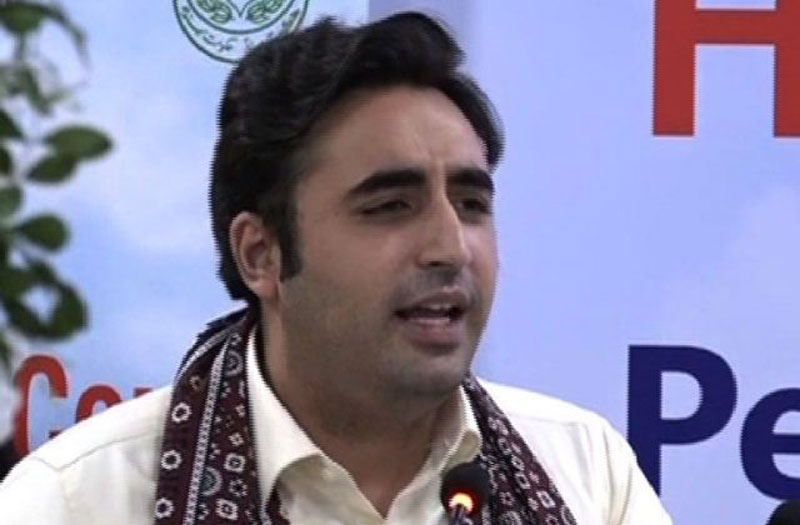
The Youm-e-Ashur this year is significant because of the new wave of repression and tyranny against the people of Indian-held Kashmir as well as Palestine in particular and in many other parts of the world in general.Following in the footsteps of Imam Hussain (AS) the oppressed people anywhere will succeed against injustice and tyranny, he said.Falsehood and oppression are also the tools of militants and extremists employing false notions of religiosity, he said. “The people must be watchful against the designs of such bigots and fanatics”.Every time tyranny rears its ugly head in any form and in any manifestation, it must be put down with the courage and spirit of Imam Hussain (AS), the PPP chair said in his message. “On this day we also pay homage to the immortal martyrs of Karbala. May Allah be pleased with them all.”
Meanwhile, Pakistan Muslim League (PML) President and former prime minister Ch Shujaat Hussain, Punjab Assembly Speaker Ch Pervaiz Elahi and MNA Moonis Elahi have said that by depriving Kashmiris of fundamental necessities, India had turned Occupied Kashmir into Karbala.
In a statement, they said that for ridding Kashmiris of Modi government’s oppression and torture, inhuman treatment and illegal shackles, the Islamic world particularly Pakistani nation direly needed to demonstrate Hussaini (AS) spirit. “We should today, by brushing aside all mutual differences and personal interests, pledge for elimination of oppression and injustice and upholding truth and greatness of humanity steadfastly.”|The PML leaders on their messages on Youm-e-Ashur said that by offering great sacrifice Hazrat Imam Hussain (AS) along with his companions had given the lesson not only to the Muslims but entire humanity that for supremacy of Islam and Ummah, Shabbiri character was essential and that not bowing in any condition and circumstances face the evil forces steadfastly and courageously without spacing any sacrifice, not only every Pakistani, every Muslim but every man should follow in the footsteps of Hazrat Imam Hussain (AS) and his martyred colleagues demonstrate faith (Iman), sacrifice, unity, steadfastness, courage and bravery, the best way to pay homage to Shuhda-e-Karbala is that we make their actions and sayings our beacon light, earnestly pray that Almighty Allah safeguards our motherland from internal and external enemies conspiracies and acts and rid oppressed and helpless Muslims of Kashmir and other areas of oppression, suppression and bloodshed.
https://dailytimes.com.pk/463169/imam-hussains-as-sacrifice-a-beacon-light-to-resist-tyranny-falsehood-bilawal/
Islamic Ummah has ditched Pakistan on Kashmir. Surprise it took us so long to realise this
PERVEZ HOODBHOY
All Gulf countries remain fearful of street demonstrations in any shape or form. Protests for Kashmir in Bahrain after Eid prayers led to several arrests.
FOR five weeks, day after day, Pakistanis have been tearing their hearts out complaining that the world has turned a deaf ear to India’s ‘forcible annexation’ of Kashmir. They were shocked when some of Pakistan’s closest allies — including the United Arab Emirates and Kingdom of Saudi Arabia — appeared to either side with India or stay silent. When PM Khan invited the foreign ministers of KSA and UAE to “explain Pakistan’s position”, many hoped that things would be reversed. So what happened?
Not much, it seems. The foreign ministers met with PM Khan and COAS Bajwa in Islamabad on Wednesday. Thereafter FM Qureshi is reported to have said, “We are hopeful that [both countries] will not disappoint us. The ministers of both countries have listened to our stance”.
There could not have been a blander statement. No one expected much, but for all three countries it was a good photo-op: Pakistan could claim it had succeeded in engaging KSA and UAE in its promised diplomatic offensive. In turn, without offending India, these two Arab states could be seen as relevant to the region. But this visit will not calm the storm of indignation in Pakistan’s media — unless the media’s minders put the brakes on.
What explains the KSA/UAE tilt towards India? In TV talk shows and from columnists one hears that ours is a dog-eat-dog world where countries care only about markets and trade, not moral imperatives. No one cares about the poor. This explanation is partly, but not wholly, true.
From the KSA/UAE perspective, Pakistan is indeed a supplicant for periodic bailouts. Last year it received over $6 billion from each. Saudis lump Pakistanis with other ‘miskeen’ (needy) people from countries like Bangladesh, Sri Lanka, Philippines, etc. The term ‘rafiq’ (dear friend), says columnist Khaled Ahmad, is reserved by Saudis only for white expats from Europe and America. Indians presently do not qualify as rafiqs, but KSA might someday consider a relook.
KSA and UAE cannot call for self-determination in Kashmir for fear of consequences at home.
India’s growing economic clout, the sophistication of its workforce, and KSA-India cooperation in counterterrorism and military matters resulted in Pakistan’s de-hyphenation from India more than a decade ago. In 2016, the Saudi king personally conferred upon Narendra Modi the King Abdulaziz Sash (KSA’s highest civilian award). Earlier recipients include Shinzo Abe, David Cameron, Barack Obama, Vladimir Putin, and Abdel Fattah el-Sisi. The list does not have any Pakistani leader.
Most recently, just after Kashmir went into lockdown, Crown Prince MBS vowed to invest $100bn in India by 2021. Earlier this year he had promised to invest $20bn in Pakistan. The differential recognises the different sizes of the two economies. The latest available figures show Pak-Saudi trade in 2017-2018 at $7.5bn while India-Saudi trade in the same year was $27.5bn. Remittances from Pakistani workers in 2018 from KSA were $4.9bn; that from Indian workers were $12.2bn.
UAE showed even less concern than KSA by rubbing salt into Pakistan’s wounds. UAE’s ambassador to India, Ahmad Al Banna, defended India’s action as an internal administrative matter and a “step towards further stability and peace”. Then, on Aug 24, UAE awarded Narendra Modi its highest civilian honour, the Order of Zayed. This made Senate Chairman Sadiq Sanjrani cancel his scheduled visit to UAE.
It’s not just because of India; here’s why it is unlikely that KSA and UAE would ever support Pakistan on Kashmir. KSA is a monarchy run by the House of Saud while UAE is an autocracy run by sheikhs from different Emirati tribes. One becomes a ruler in KSA/UAE because of rank at birth, not by election or competence or any other virtue. Therefore, people cannot be allowed to express their will, advocating democracy is a punishable crime, and dissent is quashed well before it can reach the streets.
Can you imagine the consequences if KSA and UAE were to advocate the democratic rights of Kashmiris? The very next question would be: what about elections and democracy at home? KSA’s foreign minister was therefore as likely to demand democracy or plebiscite in Kashmir as he was to revealing the whereabouts of Jamal Khashoggi’s remnants.
The ill-fated Arab Spring briefly threatened regional monarchies and dictatorships but withered away long ago. As noted above, the man who helped to crush it in Egypt, General Abdel Fattah el-Sisi, is also a recipient of the Saudi Sash — alongside Modi. All Gulf countries remain fearful of street demonstrations in any shape or form. Protests for Kashmir in Bahrain after Eid prayers led to several arrests.
We must not conclude from this that KSA is uninterested in Kashmir. There appears to be a new kind of religious proxy war in the making. KSA and Iran wish to foist their respective brands of Islam onto Kashmiris; funds for mosques and madressahs and preachers from these countries are going there.
In supporting Kashmiris, national interests everywhere take primacy over all else. The recent strong rebuke to India from Iran’s Supreme Leader was presumably to bolster Iran’s standing with Kashmiri Shias — roughly 15 per cent of the population — although it could also have been an expression of displeasure at India’s de facto acquiescence to US-led sanctions on Iran.
Lest we be unjustly harsh on countries hesitating to denounce India’s actions, let us admit that Pakistan too compromises frequently on essential principles. Look at the facts: to preserve CPEC it cannot speak about the forced dispatch of Uighur Muslims to re-education camps; for fear of angering Saudis and Emiratis it dare not speak of the death and destruction taking place in Yemen; and out of greed for military and civil aid it has served America’s interests for many decades.
Will more energetic diplomacy bring dividends to Pakistan? So far nothing supports this. Of course, things could change if violence explodes in Kashmir after the withdrawal of extra Indian troops, or if war seems to be around the corner. Even then, no one expects much from Muslim countries. “The bubble of an Islamic ummah has burst,” said former Senate chairman Raza Rabbani during a discussion on Kashmir in the Senate last week. True enough, but why did it take Pakistan so long to figure that out?
Pakistan Releases JeM Chief Masood Azhar from Custody Amid Tensions With India Over Article 370 Move: Report
The United Nations designated Azhar a terrorist in May 2019 after veto-wielding permanent member China — also Pakistan’s all-weather ally — lifted its technical hold on the proposal by the US, the UK and France to list him.
Sunday, September 8, 2019
Another turn in #Peshawar BRT project
The treacherous, winding Peshawar Bus Rapid Transit (BRT) project has dodged many deadlines and cost estimates. The recent one is, as reported by the Peshawar Development Authority (PDA), the addition of another Rs3 billion cost to the BRT project, bringing the total to a mammoth Rs71 billion. The PDA took up the issue of cost hike and consequent revision of the PC-I of the mass transit project at a meeting where participants leaned in utter disbelief that the project’s cost had been up by Rs3 billion mainly due to the devaluation of the local currency and subsequent inflation. If the PC-1 is revised, which is a complex issue at the moment, it will be the second such exercise. Earlier last year, the PC-1 was revised to put the project’s cost at Rs68 billion from the initial Rs49 billion after falws were detected in the design.
The provincial government, however, insists that the revision of PC-1 involves a hectic exercise and many forums such as the Executive Committee of the National Economic Council, so the approved PC-I and the time for the project’s completion will be followed.
The Peshawar BRT has gradually become the epitome of the public sector’s incompetence. The project has constantly been behind deadlines mainly because of flouting of clauses of the contract agreement by the contractor. Rules allow the government to penalise the contractor with imposing interim recoupable liquidated damages – maximum five per cent of the project cost and slapping the irreversible permanent liquidated damages and terminating the contract. It is high time the government shows its tough face to violators and saves the day. Also, the project had flaws in the drainage near Tehkal area on University Road. This speaks volumes of the efficiency of the project planners.
https://dailytimes.com.pk/462537/another-turn-in-peshawar-brt-project/
The provincial government, however, insists that the revision of PC-1 involves a hectic exercise and many forums such as the Executive Committee of the National Economic Council, so the approved PC-I and the time for the project’s completion will be followed.
The Peshawar BRT has gradually become the epitome of the public sector’s incompetence. The project has constantly been behind deadlines mainly because of flouting of clauses of the contract agreement by the contractor. Rules allow the government to penalise the contractor with imposing interim recoupable liquidated damages – maximum five per cent of the project cost and slapping the irreversible permanent liquidated damages and terminating the contract. It is high time the government shows its tough face to violators and saves the day. Also, the project had flaws in the drainage near Tehkal area on University Road. This speaks volumes of the efficiency of the project planners.
The Pakistan Tehreek-i-Insaf government of 2013-18 in Khyber Pakhtunkhwa initiated the BRT project only to beat the criticism haunting it in the wake of the launch of such projects in Punjab. Peshawar, a smaller city than Lahore, did not need such a project. It only needed an efficient public transport system. The government, however, went for the showoff project in haste, and the consequences can be seen.
The project’s cost escalation should be discussed by the ruling party’s top circles so bureaucratic hiccups can be removed at the earliest.
https://dailytimes.com.pk/462537/another-turn-in-peshawar-brt-project/
#Pakistan - Poverty and child mortality - Child mortality figures in Pakistan are worrying

Dr Rafi Amir-ud-Din
Child mortality figures in Pakistan are worrying and demand immediate steps to remedy the situation.
Seventy five children out of 1,000 live births died in Pakistan before reaching the age of five years in 2017, according to the UNICEF.
The average under-5 mortality rate in the world was 39 and South Asia’s average under-5 mortality rate was 45 in 2017. In other words, around 8 percent of the children died before reaching their fifth birthday in 2017 in Pakistan. This requires an urgent response from the health sector.
Poverty is universally believed to be the prime reason behind high child mortality. High mortality and poverty are indeed inextricably linked. Poverty means lack of access to adequate resources. This, in turn, translates into malnourishment and morbidity among children. Malnutrition in the early part of life is not only associated with higher likelihood of under-5 mortality, it also has lifelong consequences, such as cognitive deficiencies and poor economic and social outcomes.
Poverty and illiteracy generally go hand in hand; their combined effect can frequently prove fatal. Poverty also means adverse living conditions, such as inadequate housing, poor sanitation, unhygienic environment, all of which contribute to child morbidity and mortality. Poverty also affects child mortality through a range of indirect pathways, such as gender discrimination, domestic abuse, incessant family feuds arising out of the division of limited resources and broken families.
Alleviation of poverty and inequality in Pakistan is a long-term proposition. In view of an increasing population, political uncertainty, recurring economic downturns and crises, it is only expected that poverty in Pakistan is there to stay for a considerable time. There are many reasons why poverty cannot be alleviated in a short time. An economic turnaround requires structural changes with a focus on the development of functional political and economic institutions as well as skill development and capacity-building of the labour force, among others.
It may be argued that catch-up industrialisation (a theory which posits that developing countries will industrialise more rapidly than the time taken by the developed world to industrialise) is less time-consuming. Still, a complete overhaul of the economy requires time. So, one implication of poverty reduction being a long-term phenomenon is that reducing child mortality and achieving the Sustainable Development Goal of 25 deaths per 1000 live births requires a sustained effort over a long time. However, one silver lining is that some quick fixes exist.
Existing evidence has highlighted some known risk factors in child mortality which are generally analysed in terms of individual, household and community-level characteristics. Mother-related risk factors of child mortality include inadequate antenatal care, home-based births, illiteracy, lack of exposure to the media, and poor health during pregnancy and after childbirth.
Poverty and illiteracy generally go hand in hand; their combined effect can frequently prove fatal. Poverty also means adverse living conditions.
Low birth weight, premature birth, and fraternal twinning are some of the known risk factors of early child mortality too. Institutional factors, such as inadequate healthcare available to the mother during the pregnancy as measured by inadequate antenatal care visits, lack of immunisation and difficulty to access healthcare facilities are other risk factors.
Coming back to the quick fixes, some factors have been identified which can be effectively used to reduce under-5 child mortality even without significantly reducing poverty. Two of these factors are optimal birth spacing between two successive childbirths and optimal breastfeeding practices. Evidence on the link between birth spacing and breastfeeding and child mortality in the context of Pakistan is slow to emerge.
According to one estimate, the children who were never breastfed were 20 times more likely to die before their fifth birthday than those children who were ever breastfed. So, optimal breastfeeding could be potentially a decisive factor against under-5 child mortality. Best breastfeeding practice consists of three components: early initiation of breastfeeding (within one hour of childbirth), exclusive breastfeeding for the first six months and complementary breastfeeding for 2 years. In Pakistan, only 18 percent of the mothers initiate early breastfeeding while only 37.7 percent of mothers practise exclusive breastfeeding for 6 months.
Dr Tedros Adhanom Ghebreyesus, WHO director general has remarked: “Breastmilk works like a baby’s first vaccine, protecting infants from potentially deadly diseases and giving them all the nourishment they need to survive and thrive.” It also helps prevent diarrhea and pneumonia which are major causes of death in infants. Mothers who breastfeed have a reduced risk of ovarian and breast cancer, which are two leading causes of death among women. Promotion of breastfeeding could save the lives of 820,000 children under the age of five years globally.
It is crucial to have a clear understanding of the problem of suboptimal breastfeeding practices. Why women stop breastfeeding before two years requires special attention of health professionals and other stakeholders. According to the Pakistan Demographic and Health Surveys 2017-18 data, the reasons why women stopped breastfeeding before two years include, i) the child has grown (21 percent), ii) health problems (40 percent), and iii) child cannot suckle (18 percent). Interestingly, a sizeable number of women considered their child as “grown” and, therefore, unfit for further breastfeeding only when the child was just one year old.
Optimal birth interval can also help drastically reduce under-5 child mortality. It may be noted here that too widely-spaced or too closely-spaced childbirths both have their known risks for the children and mothers. However, the risks of closely-spaced childbirths far outweigh the risks of widely-spaced childbirths. According to one estimate, children who are born within 18 months of the previous birth were four times more likely to die than those who were born after 36 months of previous birth. Similarly, the children were 43 percent more likely to die when their subsequent sibling was born within twenty months as compared to those children whose subsequent sibling was born after 20 months.
The political economy of child mortality in Pakistan points towards some important processes which partly explain high child-mortality rates. Birth spacing is part of the larger debate on family planning. To begin with, there has been a lot of intellectual confusion about family planning in Pakistan. While the Population Welfare Department has been long trying to convince the population about the benefits of small family size and adequate space between two births, the clergy has a very different narrative which favours large family size and says that family planning is a sin.
Large family size and small birth space between two children have an economic logic, too. There is a widespread perception that the state lacks the capacity to provide a decent living for every citizen. In the absence of any dependable social security network for the population not employed in the public sector, people believe that their children are the only dependable capital on which they can fall back in time of need or in their old age.
Large family size is thus considered a safe investment. One takeaway is that more holistic approaches are required to address the problem of high population growth rate. Family size cannot be significantly reduced unless the government shows by its actions its commitment to provide a decent minimum living standard to its citizens.
Similarly, the approach required to achieve optimal breastfeeding must factor in maternal health status and the circumstances at her workplace if she is employed. While female employees in the public sector are assured paid maternity leave, the situation is not as well-defined in the private sector. When it comes to the rights of employed women in the informal sector, it is a complete disaster.
Subscribe to:
Posts (Atom)