Tuesday, January 22, 2019
#Pakistan - #SahiwalMassacre #SahiwalEncounter #SahiwalKillings - Hang the system

By Hussain Nadim
How do you explain to those innocent children that survived the tragedy in Sahiwal why their parents were shot dead right in front of them by the very people that are under an official oath to protect them? Is it a one-off human error — an accident or a symptom of an elite-induced governance failure? The way this case will be handled will not only serve as a litmus test of Prime Minister Imran Khan’s ability and resolve to change the system that he promised in his 22 years of struggle for justice, it would also set the precedent for future governance and democracy in the country. This makes the Sahiwal incident a potential watershed moment with high stakes.
For a start, the Sahiwal tragedy is not a one-off accident, and must not be treated as such. It is a symptom of dysfunctional governance system that routinely comes to surface in the face of different tragedies. For instance, while the toxic air quality, terrorism and incidents like Sahiwal may not appear to have any commonality at the first glance, a deeper look reveals that they all share a common denominator; governance failure. This governance failure is no accident, and is a result of a deliberate resistance to reforms by the political elite that yields its power through corrupt and dysfunctional state institutions. The art of politics for the elite is, therefore, to strike a balance between keeping state institutions weak enough to allow elite power grab, while not entirely tipping them over that would force the public to come out on the streets. Incidents like Sahiwal, therefore, represent a challenge to the elite grab because of the nationwide protests and a potential boil-over that would force institutional reforms curbing the powers of the elite.
Therefore, all attempts are made to deflect any need for serious reforms. For instance, the way PM Khan’s team in Punjab has responded to the event reflects the traditional approach, used to be adopted by the PML-N and the PPP, to place the issue under the rug through contradictory statements and casting deliberate confusion over the incident to dilute its significance. This is not unexpected given the political team of the PTI that makes up the rank and file of the Punjab government is rooted in traditional colonial-style politics conditioned to respond to such matters from an elite vantage that has little empathy for the people beyond cosmetic redressal of grievance and promises of ‘swift action’. This elite apathy is not limited to the sitting government but more obvious in the petty politics of the opposition political parties over the dead bodies of Sahiwal tragedy. For the political elite, the life and death of common people have been reduced to political point scoring in their quest for power.
Therefore, the prescription offered to handle these tragic incidents are tailored-fit to shift the burden of blame away from the political elite to those lowest in the food chain that have no power or agency. For instance, the political elite calling for a swift action and accountability of CTD officials and ‘public hangings’ is nothing but a deflection from the original and deeper problem of lack of reforms. What exactly will be achieved by throwing a dozen of CTD officials that belong to lower middle-class backgrounds, and work 16 hours a day for barely Rs25,000? They simply take orders and what happened in Sahiwal reflects their poor training and deep politicisation at the hands of the same elite that is now calling for their head. Surely, they need to be held accountable so that the institution of police conducts its own internal reforms. However, it is not the CTD officials that need to be hanged, it is the current system of governance hijacked by the elite establishment that must be hanged and then revived from the scratch.
The current policing system in Pakistan is a relic of the colonial-era police that the British developed after the 1857 mutiny. The purpose of this police was not to safeguard and protect the public welfare, but to protect the British colonial interests against any agitation or public unrest. The fact that after Pakistan’s independence the praetorian oligarchy continued the same system and policing mindset explains the nature of the elite grab that has continued to infest this country over 70 years to a point where it is now boiling over.
Therefore, Imran Khan’s fight is not just against the PML-N and the PPP, it is in reality against the colonial era political-bureaucratic system of which 99% of his own party is also part of. Thus, the key test of Imran Khan lies, first, in his recognition of this challenge, and second, in his resolve to defeat this system from the inside. So far he has succeeded in beating the rigged political system of the elites to reach to the PM office using all levers of power. Hopefully, through his unorthodox approach, he is able to push through reforms that would disrupt and decolonise the political and bureaucratic culture where the power shifts from a selected elite into the hands of common citizens. Anything less, will be a cosmetic sense of ‘swift justice’ that didn’t work for the PML-N and the PPP, and will certainly not work for the PTI in the long run.

#Pakistan - Pashtun Tahaffuz Movement barred from holding scheduled events at #Peshawar Press Club

AMRITA NAYAK DUTTA

Advocate Rahim Shah, an active member of PTM and organiser of one of the events, told DawnNewsTV that a booking and payment of Rs15,000 had been made two days ago for seminars to be held on Wednesday and Thursday.
He said the aim of Wednesday's seminar was to highlight the issues faced by locals and traders at Torkham — a major border crossing between Pakistan and Afghanistan.
And Thursday's event was arranged to look back at the founding of the movement and would have marked the launch of the PTM anthem on the occasion of its foundation day, according to PTM core committee member Abdullah Nangiyal.
"I received a call from the press club informing me about the cancellation of [our] booking," said Shah, adding that the club's president, when contacted, confirmed the same.
"President Bukhar Shah Bacha told me that they have directions from higher-ups and they are compelled," the PTM member claimed while narrating his exchange with the club's president.
Shah announced that the group would go ahead and hold their event outside the press club in protest.
Meanwhile, as senior members of the press club also expressed concern over the sudden notice given by the club to PTM members, the newly elected general secretary of the club, Zafar Iqbal, attempted to provide a clarification for the move.
He said the cancellation of both events was simply due to the fact that the only hall at the venue was undergoing renovation work.
"There is no pressure from any side to ban any event," Iqbal said, dismissing any notion to the contrary.
Pashtun rights activist Alamzeb Mehsud arrested in Pakistan

A prominent Pashtun rights activist has been presented in a Pakistani court after being arrested on charges of rioting and inciting hatred at a protest demonstration, rights activists say.
 Alamzeb Mehsud, 26, was arrested in Karachi, Pakistan's largest city, on Monday evening, video footage taken by activists from the Pashtun Tahaffuz Movement (PTM) showed.
Mehsud's vehicle was intercepted by police on a busy thoroughfare, with armed police officers forcing him to disembark and be taken into custody, the footage showed. An unidentified man, wearing plain clothes, was seen waving a pistol at Mehsud in the footage.
"He was presented in court today [Tuesday] and the court has ordered he be kept in police custody for four days," said Mohsin Dawar, a PTM leader and member of parliament.
Since early 2018, the PTM has organised dozens of mass protests against rights abuses allegedly committed by the Pakistani military in its war against the Tehreek-e-Taliban Pakistan and its allies.
The country has been battling the Pakistan Taliban, an umbrella organisation of armed groups targeting the state and aiming to enforce a strict interpretation of Islamic law, since 2007.A series of military operations since 2014 has seen the group displaced from its erstwhile headquarters in the country's northwest and pushed into neighbouring Afghanistan.Violence has dropped drastically, although sporadic large casualty attacks targeting civilians and security forces still occur.
The PTM and other rights groups allege the military has carried out a campaign of thousands of enforced disappearances and extrajudicial killings as part of its war against the TTP. Mehsud, a founding member of the group, has been instrumental in gathering data on missing persons and victims of landmines in the northwest tribal districts, where the military's fight was focused on Tuesday, images from his court appearance showed Mehsud in handcuffs, his face hooded. He has been charged under anti-terrorism laws with inciting a riot, defamation and "promoting enmity between different groups", according to the police report filed on his arrest.
On the weekend, Mehsud had addressed a PTM-organised rally of hundreds of protesters in Karachi, repeating the group's calls for justice to be done for victims of enforced disappearances and extrajudicial killings.
The police report named him and 15 others, including Ali Wazir, a PTM leader who is also a member of parliament, in the case.
Amnesty International, a UK-based rights organisation, said it was "concerned" after news of the arrest broke.
We are concerned about reports of the disappearance of PTM activist Alamzeb Mehsud. His whereabouts must be disclosed immediately. Either produce him in court or release him without delay.

609 people are talking about this
"Freedom of peaceful assembly must be protected. Activists must never be attacked," the group said in a tweet.
The PTM has been subject to widespread repression since it launched its movement last year, with leaders regularly named in treason and rioting cases, and coverage of its rallies all but blacked out on local news media.
Dawar, the member of parliament, said the group was undeterred by the government's actions against them.
"If they think that [police cases] and arrests will stop the PTM, they are mistaken," he told Al Jazeera. "They can put as much pressure as they want, we will stick to our demands."
The angry #Pakistani

By Arifa Noor
IT takes an outsider to point out the anger within us. Last week, a former US ambassador to Pakistan, Cameron Munter, spoke at an event, arguing that our anger prevents us from telling the good story about Pakistan to the world.
It reminded me of an interaction that took place nearly 20 years ago. Back in 2000, a soft-spoken Indian professor from Delhi had asked why the Pakistani people were always so pessimistic about their country — present and future — despite the fact that till the 1990s, Pakistan had always enjoyed better social and economic indicators (including a higher growth rate) than India. It was a question I had no answer to. The hostile questions about Kargil and military rule were easier to answer during that trip to India than this gentle insight and a sense of bewilderment about our state of being.
But since that morning in New Delhi, there have been so many moments when the professor’s question has come back to mind. Countless memories that came spilling out echoed what former ambassador Munter said. Some as clear as the question asked by the Indian professor; some a little less sharp. But each one testifies to our despair, anger or lack of confidence in what is known as Pakistan.
We have been living in an age of anger, decades before Pankaj Mishra wrote about it.
It’s an anger that is accompanied by a sense of helplessness at the direction in which the country is headed.
Fast forward from 2000 to the last months of 2007 or the beginning of 2008: a faded memory, I am unsure of the exact month, but it was during the days of that heady yet difficult transition from dictatorship to democracy. Musharraf was fighting for his survival. Benazir Bhutto and the Sharifs were clawing their way back to relevance (followed by the devastating assassination of the former). A lawyers’ movement had caught Pakistan’s imagination. And there were terrorist attacks galore.
In the midst of these trying yet hopeful times, an op-ed had discussed Pakistan as a possible failed state. I was told that the writer had gotten a call from an amused friend in Afghanistan who said that despite all that had happened in and to Afghanistan, no Afghan would ever call his country a ‘failed state’.
We, of course, have used this term so often for the country that many of us believe it is a failed state — despite the term’s problematic origins as one used by Washington to describe countries it ‘disapproved’ of rather than an empirically established concept.
Then there are jumbled up memories of various track II dialogues. Each such seminar or conference is coupled with at least one discussion (on the sidelines) of how the Indians (and more recently the Afghans) present a united stand unlike Pakistanis. There is always a sense of frustration at how we end up helping ‘their’ cause rather than supporting our interest.
Why do we do this, as the professor asked?
Perhaps it stems from our long bouts of dictatorships. Denied their due and rightful say in policymaking has made entire swathes of the populace angry, hostile and critical of the state. They are angry at being left out: it’s an anger that is accompanied by a sense of helplessness at the direction that the country and society have taken. And in recent times, too, there is a sense of outrage because course correction (if there is any in their opinion) has not included their input. Hence, many refuse to believe that there has been any course correction, or criticise it for moving too slowly.
This is why perhaps the anger is most palpable when it comes to foreign policy, especially relations with India, and the radicalism that has engulfed state and society.
Being denied a voice, there is little left to do but express rage at the state, what it has come to stand for and to also conclude that there can be little hope for the future. (Pakistan has not just been at the crossroads ever since I can remember, it has also forever been in danger of being torn apart).
The rage has gotten worse post-2008, for the hope that accompanied the transition then has turned bitter. We thought that the worst was over, that ‘true’ democracy had returned to Pakistan and politicians would now rule — fixing all that had gone wrong. The 10 years of exile and powerlessness had also given the politicos a sheen of competence and maturity. But it was yet another shab gazida sahar (night-bitten dawn).
Ten years later, the anger has grown for it seems that decision making was never transferred. But because the hope this time was greater, so has the rage been too. And perhaps because the urban middle class fought for this transition in greater numbers than before, the disappointment is greater. They are angry for they cannot see the change they had fought for or protested against. The judiciary turned out to have feet of clay. The military didn’t really share as much as they had promised. And the politicians didn’t deliver the reform or show any inclination for democratic norms once in power. And we continue to rail, against all of them or the one we had placed most hope in, or the one we hated most.
In addition, the rage has turned into hatred of the institution that has disappointed us the most. Indeed, the anger is expressed with malicious glee at times: the Sahiwal incident is a case in point, as was the controversial statement by a former high court judge, Shaukat Aziz Siddiqui, or any terrorist attack which reveals chinks in the armour of the security forces. And, of course, the various JITs revealing the shenanigans of our political ruling class.
It is as if we have no option but to express our rage, so all energy is poured into it.
But expressing outrage, however cathartic it may be, is not a strategy, which is what Cameron Munter was trying to say.
Monday, January 21, 2019
Young girl's tragic story makes her symbol of Yemen war
 Buthaina Mansur al-Rimi's life has changed drastically since last year - orphaned in Sanaa, the little girl controversially ended up in Saudi Arabia for medical care and has just returned to Yemen's capital.
Her entire immediate family was wiped out in an air strike by a Saudi-led coalition that backs Yemen's government, using an explosive device Amnesty International says was made in the US.

Images of Buthaina's rescue and a picture of her swollen and bruised at a hospital trying to force open one of her eyes with her fingers were beamed worldwide.
That international fame saw her become something of a propaganda pawn in the war between Yemen's Iran-backed Huthi rebels and Saudi media.
In an interview with AFP, Buthaina and her uncle Ali - her legal guardian - recall the strike that killed her parents, four sisters, only brother and another uncle.
"THE HOUSE FELL"
"I was in my mother's room with my father, sisters, brother and uncle," Buthaina tells AFP from rebel-held Sanaa, where she has returned from Saudi Arabia to live with Ali and her cousins.
"The first missile hit, and my father went to get us sugar to get over the shock, but then the second missile hit, and then the third," she says.
"And then the house fell," adds the little girl, who says she is eight.
It was the night of Aug 25, 2017.
The uncle who died was her "favourite", she says.
Along with her family, eight other civilians - including two children - were killed in a house nearby.
A few days later, the picture of Buthaina attempting to force open her right eye went viral.
The Saudi-led alliance admitted responsibility for the air strike describing it as a "technical mistake".
But it drew strong international condemnation.
In the week ahead of that strike, 42 people were killed in other air strikes, according to the United Nations (UN).
A month after her close family was wiped out, pictures of Buthaina appeared in Saudi media showing her being treated in Riyadh.
The circumstances surrounding her move from Sanaa to the Saudi capital remain unclear.
The Huthi rebels say Buthaina, her uncle Ali and his family were "kidnapped" by the coalition and taken to government-held Aden, before travelling onwards to Riyadh.
Saudi media said she was brought to the Saudi capital at the request of the internationally-recognised Yemeni government.
Although the Saudi government has never commented officially on Buthaina's case, pictures of her apparently boarding a private jet from Riyadh to Sanaa were published by the Al Riyadh newspaper on Dec 19.
The Huthis' Al-Masirah media outlet has published stories welcoming them back from the "grasps of Saudi Arabia".
"Eye of humanity exposes the enemy", ran one headline.
Mahdi Al-Mshat, head of the rebels' Higher Political Council, has ordered Buthaina and her remaining family be offered a home and salary, according to the rebels' Saba news agency.
"SHE DOESN'T FORGET"
Buthaina says she is looking forward to going to school for the first time.
Looking healthy, she sits on the floor of her uncle's home in Sanaa.
She plays alongside her cousins with a doll, braiding its hair.
"I want to go to school and become a doctor," she tells AFP, her own hair tied in a ponytail.
"I want the war to stop and for us to live in peace ... for the children of Yemen to live in peace," she says.
Her uncle, sitting behind her, nods.
Both the Huthis and the Saudi-led coalition stand accused by a UN panel of experts of acts that could amount to war crimes.
While the Huthis have been accused of widespread and indiscriminate use of landmines, the coalition has come under fire for air raids that have killed civilians, including children, in rebel-held areas.
Buthaina's return to her home city comes amid a ceasefire agreement in the lifeline port city of Hodeida - part of a peace push seen as the best chance yet of ending four years of devastating conflict.
It has been a long journey back home for the little girl, who became a symbol of Yemen's war.
Ali says that she still struggles with the loss of her family.
"She doesn't forget her mum and dad. She feels sad when she sees things that remind her of her parents or siblings ... or when she hears the songs her father used to listen to," he says.
"We tell her to hold on and that they are in heaven... and heaven is a beautiful place.
Ali says that Buthaina is his "flesh and blood" and considers her a daughter.
Holding back tears, he says: "When their house collapsed, I asked God not to deny me from seeing my brother again, but it's ok. Thanks to him, Buthaina stayed with us."
Yemen's war has killed nearly 10,000 people, including 2,200 children, according to the World Health Organisation, but other groups say the toll is far higher.
Read more at https://www.channelnewsasia.com/news/world/young-girl-s-tragic-story-makes-her-symbol-of-yemen-war-11075318
US’ Bernie Sanders slams Saudi’s Bin Salman
Veteran US politician Bernie Sanders has severely criticised Saudi Crown Prince Mohammad Bin Salman (MBS) and called for the international community to hold him accountable for his crimes.

https://www.middleeastmonitor.com/20190119-us-bernie-sanders-slams-saudis-bin-salman/
Sanders – a former nominee for the US presidential elections – also criticised US President Donald Trump for supporting Bin Salman and describing him as a “reformer”. He also called for the US and the international community to hold the “despotic” Saudi regime accountable for its crimes.
In a tweet, Sanders wrote: “Saudi Arabia’s crown prince, Mohammed bin Salman, has been hailed as a progressive reformer. But his track record of imprisoning, torturing and murdering activists begs to differ. It’s time that the US and the international community hold this despotic regime accountable.”
Sanders also spoke about the Yemeni crisis resulting from attacks by the Saudi-led coalition, labelling it the “worst human crisis in the world”.
In a historic move in December, senators supported a motion tabled by Sanders which called for an end to US military support for the Saudi-led coalition in Yemen’s civil war.
The motion pointed out that the UN described the conflict, during which tens of thousands of people have been killed, as a dire humanitarian crisis which has left the country on the brink of famine.
https://www.middleeastmonitor.com/20190119-us-bernie-sanders-slams-saudis-bin-salman/
Obama puts out call for service on MLK Day: ‘Make a positive impact on the world’

BY AVERY ANAPOL

Former President Barack Obama on Monday urged Americans to “make a positive impact on the world” in honor of Martin Luther King Jr. Day.
“I’ve always drawn inspiration from what Dr. King called life’s most persistent and urgent question: ‘What are you doing for others?’” Obama tweeted. “Let’s honor his legacy by standing up for what is right in our communities and taking steps to make a positive impact on the world.”
I’ve always drawn inspiration from what Dr. King called life’s most persistent and urgent question: "What are you doing for others?" Let’s honor his legacy by standing up for what is right in our communities and taking steps to make a positive impact on the world.
The former president spent a number of his Martin Luther King Jr. Days in office volunteering at local organizations in Washington, D.C.
Pak-China CPEC Project: Gwadar master plan delay upsets Chinese

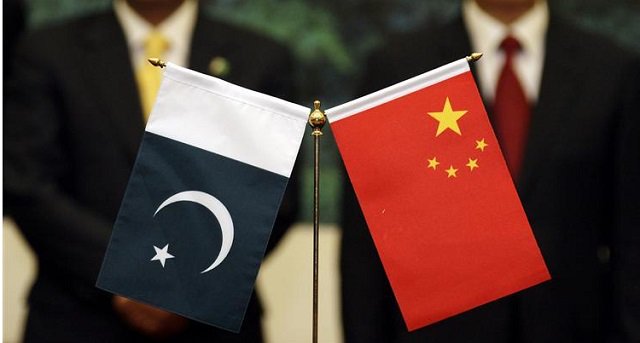
The ‘Gwadar Smart Port City Master Plan’ was prepared by two Chinese companies, China Communication Construction Company Limited and Fourth Harbor Engineering Investigation, at a cost of Rs521 million.
The companies started work on the project in 2017. It was completed in December 2018 and sent to the federal government for approval.
However, according to sources, the government has not yet taken any step so far for the approval of the plan, which is pending with the steering committee of the Planning and Development department for further decision.
The governing body of the Gwadar Development Authority (GDA) had already given approval of the plan for implementation.
“Chinese companies have expressed their reservation and displeasure over the delay in approving the plan by steering committee of the planning and development department. They have warned that in case of increase in the cost of the plan, the government of Pakistan will be bound to pay the extra cost,” a senior official privy to the developments said on condition of anonymity.
According to the official, any further delay in approval of the plan implementation would also have an adverse impact on several development projects of GDA.
Pakistan’s new chief justice is showing signs of an old habit – siding with the military

By TAHA SIDDIQUI
Chief Justice Khosa’s allegiance to the Bajwa doctrine can spell fresh crisis for Pakistan.
Last week, Pakistan’s Supreme Court got a new chief justice, Asif Saeed Khosa, but soon after the top judge took oath, he showed signs that he won’t be any different from his predecessors when it comes to rooting for the military.
The 26th chief justice of Pakistan indicated, at the farewell ceremony of outgoing chief justice Mian Saqib Nisar, that he too would follow the ‘Bajwa Doctrine’, a proposed move to limit the financial autonomy of Pakistan’s provinces.
Chief Justice Khosa’s allegiance to the doctrine – in his short tenure, which will end 20 December 2019 – may spell fresh crisis for Pakistan.
Belling the Bajwa doctrine
In March 2018, a few select journalists were invited to speak to Pakistan Army chief General Qamar Javed Bajwa in an unconventional briefing.
It was reported that General Bajwa wanted to do away with the 18th Amendment, passed unanimously by Pakistan’s national assembly in 2010, and bring in a more centralised system of governance.
Striking down the devolution of powers for provinces, this move would make federal authorities the sole in-charge, especially when it comes to allocation of financial resources.
General Bajwa believes that Pakistan owes its current economic downturn to provinces that are drawing too much money, and therefore forcing curbs on military spending.
So, the reversal of this amendment would also mean that the military will get an even bigger share from the federal budget.
Judicial support for army
Previous chief justices of Pakistan have been unable to do much when it comes to keeping a check on military power. In a recent hearing before his retirement, Chief Justice Nisar asked why the 18th Amendment was passed without a parliamentary debate. His argument is fallacious because there were several rounds of deliberations before parliament approved the amendment.
And, last week, taking a leaf out of his predecessors’ book, Chief Justice Khosa said: “Let us also discuss, without mincing words or feeling shy, the role of the armed forces and the intelligence agencies in the governance paradigm.”
He proposed that he would hold an inter-institutional dialogue, but worryingly suggested that the President of Pakistan should convene and chair this meeting that should be attended by the top parliamentary leadership, the top judicial leadership and the top executive leadership, including the military and intelligence agencies.
This is quite alarming given that Pakistan is a parliamentary system where the power lies with the Prime Minister.
What is more, Chief Justice Khosa suggested the gathering come up with a Charter of Governance—even though as per the Constitution, the onus lies on the parliament and provincial governments.
But such centralisation of power is anti-democratic and must be discouraged.
However, there is little chance of that happening since the central government’s spokesperson has already welcomed this controversial proposal by the new chief justice.
This is perhaps because the new government enjoys a thin majority in parliament and cannot reverse the 18th Amendment on its own. It may need an alternative platform of governance to do so.
The chief justice calling for a parallel governance structure only furthers the popular belief in Pakistan’s power circles that most of the economic woes the country faces today are due to provincial autonomy.
Chief Justice Khosa is undoubtedly taking a cue from General Bajwa’s words.
Provincial autonomy is not the enemy
Pakistan’s financial troubles can’t be entirely attributed to provincial autonomy. In fact, it has brought more democratic sustainability in the country. But it appears that once again Pakistan’s institutions do not want to operate within the constitutional framework.
This has resulted in ordinary citizens being controlled by a handful of non-democratic forces. It is time the country’s judiciary stopped this practice and instead focused on what it is meant to do: dispense justice.
There is currently a backlog of more than 1.8 million cases in courts across the country.
Pakistani citizens can be served better if judges focused on clearing pending cases instead of introducing non-democratic structures to run the country – for which they have no mandate.
The silver lining
Chief Justice Khosa takes over from Mian Saqib Nisar, who was criticised by most of the legal fraternity for his celebrity ways as he encroached upon everything legislative and executive.
Chief Justice Nisar also opted to be a tool used by the Pakistan military to settle political scores as witnessed in the case of former Prime Minister Nawaz Sharif, who was removed over trumped up charges and is currently in jail. It is widely believed that Sharif is being punished for challenging the military.
However, it was a relief to hear Justice Khosa’s speech at the full-court reference in honour of the outgoing chief justice. The new chief justice announced that judicial activism in the form of suo motu notices would be used ‘very sparingly’.
Nisar, his predecessor, was criticised for issuing too many suo motos – which allow the courts to intervene in public interest matters – on frivolous issues, for the sake of self-promotion.
It is welcome to see that the highest office-bearer in the judiciary is willing to reassess his role in trying to ‘save’ the country through ‘activism’ and by correcting the wrongs, real or perceived, committed by the executive.
Chief Justice Khosa also boldly spoke on the issue of missing persons. He said enforced disappearances – allegedly carried out by the Pakistan Army – must be addressed.
He denounced it as being ‘offensive to the constitutionally guaranteed fundamental rights to life and liberty’.
And so the big question for Chief Justice Khosa is: will he or will he not let governance prevail over the army?
Subscribe to:
Posts (Atom)