Sunday, October 14, 2018

#Pakistan - OP-ED: - The limits of populism

By Raza Rumi
Khan said he would kill himself before begging for foreign assistance. Now his government is doing just the same.

It has been more than fifty days since the creation of Naya Pakistan. The hype, the promise and euphoria among the voters of Pakistan Tehreek e Insaf (PTI) is now taking a more somber turn as the hard realities of governing become clearer every day. While it is true that the PTI government has inherited formidable, if not intractable challenges, PTI is haunted by its populism, and it’s performance has been undermined by lack of preparation and a looming impression of incompetence.
Populist politics work well while a leader or a party is in the opposition. There is no responsibility but ample room to attack opponents (in power) and promise the moon. However, in Pakistan’s polarized political landscape, the myth of ‘popular mandate’ is also manufactured largely due to the mainstream media that was tasked with the project of presenting Imran Khan and the PTI as saviour[s]. This was good until the responsibilities of wielding power set in and now the media is getting increasingly divided on where the government is headed.
Take the case of tackling the balance of payments crisis. It was evident from day one that Pakistan would need to seek assistance from International Monetary Fund (IMF). But the government dilly-dallied for weeks largely under its own populist baggage. Imran Khan as the opposition leader had relentlessly attacked previous governments for ‘begging’ from foreign powers. To the extent that Khan said he would kill himself before doing that. Now his government is doing the same; and the finance minister has distanced himself from this stance.
The federal cabinet comprises a good number of Musharraf era team. The Punjab has PML-Q (the old Pakistan’s vanguard) as a major partner; and the old bureaucrats have new postings. Yet, the informed and the educated in Pakistan and overseas are somehow convinced that with jazba (passion) there are miracles in store.
In the process of eliminating ‘non-IMF’ options for financial stabilization, the government faltered and way too quickly. First came the visit to Saudi Arabia with the proverbial begging bowl followed by inaccurate claims of Saudis joining the China-Pakistan Economic Corridor (CPEC). Sympathetic media commentators and analysts went on a celebration spree until the Chinese and Saudis had to clarify that no CPEC festival was on the anvil. Not to mention the reckless statement by a minister on reviewing CPEC deals. China is perhaps the most reliable partner and friend of Pakistan and irking them for no reason was nothing short of a blunder. But this rhetoric continues.
The idea of writing a letter to the Indians without taking into account the political climate next door was also a miscalculation at best. There is little appetite in India during an election year to hold any kind of dialogue let alone mend fences. But the question is who advised the Prime Minister and why? The facts will emerge sooner than later but Pakistan did not earn any brownie points regionally or globally whatever the shrill rhetoric about an ‘obstinate’ India, not willing to talk, on the television screens.
Perhaps the populist positions of the past hurt the most when it came to cosmetics of the Imran Khan choosing not to live in the PM House. Travelling via helicopter was made into a big deal by the media simply because PTI and its hordes of self-righteous followers had made this into an issue for many years. And now their leader doing the same was a tad embarrassing. Auctioning cars for austerity resulted in 10% of the estimated amount and selling buffalos at PM House for a paltry sum were nothing more than gimmickry which cannot cover up the obvious: unpreparedness.
Worse, the affairs of the Punjab administration have exposed the mythology of Naya Pakistan. The police officials transferred for not obeying the political diktat and arresting the leader of the opposition in the parliament just before the by-polls are tricks that Pakistani state has been using through different regimes. The competence of Punjab Chief Minister is still under media scrutiny (TV journalists have been shouting that the CM doesn’t read files); and the thana-kuthcery politics of patronage is still the order of the day. Punjab is and will remain the biggest political challenge for PTI, and there is certainly more of the same impression thus far. If anything Shehbaz Sharif had set certain standards of efficiency which will be hard to meet by a minority government in the province.
The federal cabinet comprises a good number of Musharraf era team. The Punjab has PML-Q (the old Pakistan’s vanguard) as a major partner; and the old bureaucrats have new postings. Yet, the informed and the educated in Pakistan and overseas are somehow convinced that with jazba (passion) there are miracles in store.
The greatest manifestation of this flawed approach to a complex world is the building multi-billion dollar dams through public donations. The judiciary, the army and now the prime minister are all convinced that they can build dams in such a manner. Experts continue to remind that this is simply not possible but populism reigns supreme. Very soon this bubble will also burst like raising funds from overseas Pakistanis, China and the Saudis to service debts accumulated over the year.
It is still not too late. There are competent and experienced people in Imran Khan’s team such as Shafqat Mahmood, Dr Ishrat Hussain and many others who can tell their boss that the time for populism may be over. Jailing political foes, keeping mum on media controls, crackdown on activists and making unrealistic promises – such as building millions of homes each year – will only backfire when the ruling party goes back to electorate in a few years.
https://dailytimes.com.pk/310067/the-limits-of-populism/

#Pakistan - Silence speaks volumes - In Pakistan’s history of curbs imposed on media


In Pakistan’s history of curbs imposed on media, the spirit of defiance and revolution did occasionally seem to spring its head.
As early as I can remember the 9o’ clock khabarnama at the Pakistan Television (PTV), its association with the fact that the content has always remained under the government’s control tags along stark and clear. To this day, the PTV is judged as simply the state’s spokesperson, with no independent analysis or delivery of news. So when among the earliest tabdeelis, it was announced that it will be released from the shackles of the state to run as an independent news channel, possibly on the lines of British Broadcasting Corporation (BBC) (which is not even remotely possible), it seemed like breaking news. However, irrespective of the fact that PTV is, at present, not entirely independent, the answer to whether private publications and news channels are, would be: Probably not.
Among discreet conversations, columns and other sources of information, a shadowy image looms, who is said to ‘dictate’ the content of each news channel’s bulletin headlines, to suit the state’s approved outlook. Naturally frustrated at the constant use of discretion, the upper tier of most news channels let their subordinates handle the process. Contributors to print media have often complained that some of their critical pieces have been excused from being printed by the editorial. Many editorial staff members have admitted of having to practise self censorship.
The curious case of the ‘missing persons’, including brazen activists and journalists, remains unsolved. And while such accusations can easily be dismissed as mere gossip, the latest report by the Human Rights Commission of Pakistan (HRCP) validates them when it expressed concern over increase in media curbs and held both government and agencies responsible for the situation.
Only recently, a local court withdraws arrest warrants issued against a prominent journalist and orders travel restrictions on him to be removed, as hearings in a treason case against him and two former prime ministers continue. The nature of the case itself has been highly protested against, since in defence it has been argued that the journalist was only reporting, or in other words, just doing his job. Meanwhile, journalists and media workers rally across the country to protest against downsizing and measures aimed at curbing newspapers circulation and TV channels’ transmission.
The Council of Pakistan Newspaper Editors (CPNE) has also showed its concern and called upon the government to consult editors, journalists, publishers and other stakeholders before carrying out legislation on any media law. This was a reaction to Federal Information Minister Fawad Chaudhry’s hint at the formation of a ‘Pakistan media regulatory authority’ to replace the Pemra (Pakistan Electronic Media Regulatory Authority) and the Press Council.
And while we debate and worry in Pakistan about the fleeting freedom of press, it may be enlightening to know that we are part of a global trend. The Economist reports that ‘across the world, freedom of the press is atrophying’.
So in Pakistan, freedom of press seems like a thing of the past.
When we talk of the past, in Pakistan’s history of curbs imposed on media, the spirit of defiance and revolution did occasionally seem to spring its head. During the Zia regime, Mehtab Rashidi famously refused to cover her head with a scarf for the news bulletin and over the dispute, preferred to resign. In 1953, the then editor of Dawn, Altaf Husain, became so frustrated over press censorship that in one edition he left blank the space for the editorial, with a note written in his own handwriting:
“When the truth cannot be freely spoken and patriotism is held almost a crime, this editorial space is left blank on Quaid e Azam’s birthday to speak more eloquently than words”.
Years later, in a recent example among many others, the Pakistani copy of The New York Times (NYT) similarly carried a blank column in its Op-ed section in place of an article ‘Why Muslims slaughter animals for God?’ published in the original edition. This time, there was a printed note at the bottom, which was a disclaimer by the NYT editorial saying it had no role in the removal of the piece by its Pakistani alliance. Even the columnist, Turkish writer Mustupha Akyol could not help expressing his bewilderment in a tweet over the omission. The act was not due to any inspiration from the 50s Dawn editorial or any other form of protest, rather it was another example of censorship in the print media and a proof of our intolerant society.
And while we debate and worry in Pakistan about the fleeting freedom of press, it may be enlightening to know that we are part of a global trend. The Economist reports that ‘across the world, freedom of the press is atrophying’. According to scores compiled by Freedom House, a think-tank, the muzzling of journalists and independent news media is at its worst point in 13 years.
According to the Committee to Protect Journalists, the number of journalists jailed for their work is at the highest level since the 1990s’.The report reveals that this deteriorating situation is being witnessed in countries like Russia, where ‘Vladimir Putin has so thoroughly throttled the Russian media that Freedom House’s scorers rated Venezuela freer’, where presidencies of Hugo Chavez and Nicholas Marduro have ‘utterly corroded the Venezuelan press’. In Turkey, President Erdogan is blamed for suppressing civil liberties and being ‘the world’s leader in jailing journalists’.
In the United States, although Donald Trump has frequently demonised the news media as the ‘enemy of the people’, America’s strong First Amendment and independent courts have prevented him from acting on these illiberal outbursts. In fact, The Boston Globe fittingly replied Trump by printing on one of its front pages last month ‘Journalists are not the enemy’! The Washington Post still prints under its masthead ‘Democracy dies in darkness’.
Perhaps surprisingly, Afghanistan since the overthrow of the Taliban regime and Tunisia after the Arab Spring toppling President Ben Ali, have made steady progress in press liberalisation and rapidly expanded press protections, respectively.
But we need not look that far for comparison. Reporters Without Borders (RSF), a watchdog, reported this May that our next door neighbour India’s ranking in the Press Freedom Index has fallen two places to 138 in a ranking of 180 countries. RSF ranks Norway as the world’s freest press for the second year in a row, while North Korea remains the most repressive country followed by Eritrea, Turkmenistan, Syria and then China. In India, the watchdog report blamed ‘physical violence’ against journalists like Gauri Lankesh as the key reason behind the country’s low ranking, with a warning that hate crime is another reason plaguing the country.
So Pakistan has two diverse situations to choose from. Either to join the bandwagon of increasing curbs on freedom of speech in the name of patriotism and promoting outlooks which suit an agenda, or to let go of checks and monitor and try the outcome when every opinion is open for comment. In the other scenario, people would decide themselves which news is anti-state and which is not. At least, they would know what happened to the Pashteen movement. They would know why a person went ‘missing’. They would know what is the truth behind allegations of rigging in this year’s elections.
We already know. For the time being, we choose silence to be more eloquent than words. Only, the silence speaks volumes.

http://tns.thenews.com.pk/silence-speaks-volumes/#.W8POmmhKiUk

#Pakistan - OP-ED - #IMF, NFC Award & #PTI

Dr Ikramul Haq
In 2013, Income Support Levy was imposed on net moveable assets which exceeded Rs. 10 million at the rate of just 0.5 percent but 99.9 percent of the parliamentarians, including the incumbent Prime Minister and his predecessor, did not pay it. The rulers do not pay due taxes and then beg for IMF's bailouts-obviously the conditions of IMF hit the poor and not them
According to a Press report, the International Monetary Fund (IMF) has asked the Finance Minister of Pakistan to reduce the share of provinces under the National Finance Commission (NFC) Award, as a condition for new bailout package. Reportedly, Mr. Asad Umar refused to commit anything which is not allowed by the Constitution of Pakistan. In terms of Article 160 (3A), inserted by the 18th Constitutional Amendment in 2010, “the share of the Provinces, in each Award of National Finance Commission shall not be less than the share given to the Provinces in the previous Award”. It means that the share of provinces are 57.5 percent, under the seventh NFC Award which cannot be reduced. The IMF even before giving us a fresh bailout was behaving like a Neo East India Company. But the fault lies with our parliamentarians and men in power. They have policies of appeasement towards tax evaders. They get tax amnesties and immunity for the tainted money under unjust laws like the Protection of Economic Reforms Act, 1992, which has still not been repealed even after empirical data proved that it helped in the flight of money from Pakistan, to almost $ 250 billion in the last 25 years. We keep on cursing the IMF and others but never try to put our own house in order, beggars cannot be the choosers. IMF did not invite us for another bailout. During the Decade of Democracy (2008-18), both the Pakistan People Party (PPP) and Pakistan Muslim League-Nawaz (PML-N) helped the rich industrialists to avoid paying enhanced contributions to the Workers’ Welfare Fund by making amendments in the law through a Money Bill rather than taking the proposed legislation to both the Houses. Even after the verdict of the Supreme Court of Pakistan on this issue, no corrective measure has been taken. In 2013, Income Support Levy was imposed on net moveable assets which exceeded Rs. 10 million at the rate of just 0.5 percent but 99.9 percent of the parliamentarians, including the incumbent Prime Minister and his predecessor, did not pay it. The rulers do not pay due taxes and then begged an IMF bailout-obviously the conditions of IMF target the poor and not them.
The parliamentarians, instead of making Pakistan self-reliant, were keener to increase their salaries, perks and perquisites. Moreover, the minimum wages notified for poor workers are a mockery of Article 3 of the Constitution. For such rulers and those who vote for them, subjugation at the hands of foreign investors/lenders is a fait accompli. The stalwarts of Pakistan Tehreek-i-Insaf (PTI) while sitting in Opposition are now in power; they did not prepare a plan on how to avoid this subjugation, though boisterous sloganeering to this effect was their hallmark.Of late, some economists have argued that the 7th NFC Award is harming the fiscal stability of the federation. Their argument needs consideration. The issue of NFC Award vis-à-vis provisions of the 18th Constitutional Amendment relating to the decentralisation of fiscal powers cannot be examined in isolation. It is clear that the federal and provincial governments are not concerned with the fundamental issue of judicious and even handed distribution of taxation rights between the Centre and federating units, that can help the empowerment of masses and ensure prosperity for all.In 2009, the representatives of the provinces and the federal government showed ‘satisfaction’, rather ‘jubilation’ over the 7th NFC Award. In fact, our ruling classes failed to comprehend the real issue faced by the federation. It was, and is, how to empower the provinces so that they are autonomous in fiscal and administrative matters. The issue is not of merely devising a fair formula for the distribution of the net proceeds of the taxes, but the revisiting of Articles 142 and 160 of the Constitution vis-à-vis bringing the less privileged and the underdeveloped areas at par with big sprawling cities; where the mass influx of people is playing havoc, resulting in the creation of ghettos..According to a Press report, the International Monetary Fund (IMF) has asked the Finance Minister of Pakistan to reduce the share of provinces under the National Finance Commission (NFC) Award, as a condition for new bailout package. Reportedly, Mr. Asad Umar refused to commit anything which is not allowed by the Constitution of Pakistan
The Centre, at present, is transgressing on the constitutional right of provinces by levying income tax on gross value of many services and then out of the divisible pool giving funds that otherwise exclusively belong to them. Moreover, depriving the provinces of the right to levy sales tax on goods is the fundamental flaw of our Constitution. It was available to them before independence. The Constituent Assembly took away the right of levying sales tax on goods from provinces with the promise to give it back as soon as the financial position of the Centre improved-a promise that never unfulfilled and in the 1956 Constitution, “tax on sales and purchases” appeared at Serial No. 26 of the Federal Legislative List making it for the first time a federal subject.
The federal government, even after usurping the right of provinces of ‘tax on sales and purchases of goods’ has failed to tap the real revenue potential if about Rs. 8 trillion. The failure of FBR on this account adversely affects provinces as they are dependent on what the Centre collects and transfers to them from the divisible pool. Since the size of the cake is small, the provinces lack sufficient resources for the welfare of their people. In this scenario, the real victims are the masses. The taxation rights under the prevalent constitutional scheme need reconsideration allowing provinces to raise adequate resources that will also help in overcoming overall fiscal deficit faced by the Centre. For example, Balochistan should get ‘net proceeds’ on natural gas and Khyber Pakhtunkhwa on electricity, as envisaged in Article 161(1) (a) and (b) of the Constitution. Their present share in sales tax from the divisible pool is as low as 9 percent and 14 percent respectively. They have rich natural resources and a wealth of oil, gas and electricity, but due to the low population rate, they get a small share for the goods they produce. The same is the case with Sindh. Punjab is the only beneficiary of the existing distribution of taxes under Article 160-it gets the lion’s share of 53 percent (for 2017-18 it was Rs. 1.2 trillion).
The performance of provinces in collecting agricultural income tax is extremely appalling. This is a common issue both at federal and provincial level arising from the absence of a political will to collect income tax from the rich-the meagre collection of agricultural income tax-less than Rs. 2 billion by all provinces and Centre in fiscal year 2017-18-is lamentable. It is imperative that the right to levy a tax on income, including agricultural income, should be given to the Centre. In return, the Centre should hand over sales tax on goods to the provinces. This will help FBR to collect income tax of Rs. 5 trillion. It will also reduce the fiscal deficit of the Centre. This is the only way to achieve a fiscal stabilisation in Pakistan without disturbing the 18th Constitutional Amendment.
https://dailytimes.com.pk/310066/imf-nfc-award-pti/

Prominent Human Rights Activist Briefly Held by Pakistan Authorities

Pakistani authorities detained and then released on bail a prominent human rights activist as she re-entered the country, although they withheld her passport, the activist said. 

Gulalai Ismail said she was returning from London Friday when immigration authorities at an Islamabad airport told her she was on a no-fly list. 


Talking to VOA's Deewa Service, Ismail said authorities could not explain to her which government department had put her name on the list, or why. 

In August, police charged Ismail and 18 other people with making anti-state comments and using inflammatory language at a protest rally in Swabi, in Khyber Paktunkhwa province.

The rally was organized by the Pashtun Tahaffuz Movement, a party considered anti-military for its stance that Pakistan's military has used the fight against terrorism to carry out human rights abuses against Pashtuns in restive tribal areas and other parts of the country.

The military has been carrying out operations in those areas, often under international pressure, to clear them of militant groups. 

PTM gained nationwide attention after the extra-judicial killing of a young Pashtun male model in Pakistan's largest city, Karachi. The suspect in the killing, police officer Rao Anwar, is out on bail. The case is still pending. 

Ismail denied charges against her.

"This is not an attack on Gulalai Ismail or PTM. This is an attack on civic freedoms, this is an attack on our liberty to speak out, this is an attack on our freedom of speech," Ismail claimed in an audio statement she sent to a WhatsApp group. 

Human rights activists who went to the offices of the Federal Investigation Agency, the government agency detaining Ismail, said they were allowed to communicate with Ismail.

"They were very cordial with us. I was pleasantly surprised," said one activist who did not want to be named. 

PTM says it has challenged the police report in court and a hearing is scheduled for later this month. 

Ismail is a women's rights activist and runs a non-governmental organization called Aware Girls.

https://www.voanews.com/a/prominent-human-rights-activist-briefly-held-by-pakistan-authorities/4612861.html

EDITORIAL: #Pakistan - Tackling extremism

The Tehreek-Labbaik Pakistan (TLP) is back on the streets. And this time it is threatening nationwide agitation. Indeed, in a confidence-builing move of sorts — to demonstrate that it means business — the party held simultaneous rallies in Lahore and Karachi. The one-point agenda was to call for Asia Bibi to be sent to the gallows.
Khadim Rizvi, the TLP chief, has from the offset centred his so-called political credentials on the blasphemy question. Indeed, he hero worships the bodyguard who gunned down a sitting provincial governor over the latter’s support for Asia Bibi as well as daring to lobby for blasphemy law reform. Back in November, Rizvi and his cohorts held the federal capital hostage for three weeks over a clerical error in the Khatam-e-Nabuwwat. His critics are right to dismiss him as an opportunist. But this does not deflect from the fact that he knows how to work the crowds for political gain. The Faizabad sit-in certainly helped the TLP go all the way to the Sindh Assembly. This time around, Rizvi has his eyes firmly on today’s by-elections. This is to say nothing of attempts to undermine the Supreme Court’s (SC) probe into whether or not the party fulfils the necessary criterion to be registered as a political entity.
Be all this as it may, the ruling PTI cannot afford to dismiss any of this as mere politicking. Not when Rizvi is threatening to prevent the government from functioning if he does not get his way regarding a poor Christian woman who has spent close to a decade in solitary confinement. By means of framing her possible acquittal as “an attack on Islam, the Constitution, and blasphemy law”. For to be clear, if he is allowed to succeed — at the front of the firing line will be the entire Christian community.
Prime Minister Imran Khan must address this matter at the earliest; including the fact that the Lahore rally went ahead in violation of Section 144. But more than this, he needs to put an end to this dangerously cruel practice whereby calling for the execution of minorities is viewed as legitimate election campaigning. And this means booking Rizvi and the rest of the TLP leadership for hate speech. While providing Christians and Ahmadis with security wherever possible.
This is the very least the Centre must do. Its previous missteps over the inclusion in and then subsequent firing of Dr Atif Mian from the Economic Advisory Council (EAC) naturally exacerbated prevailing trust-deficits. Thus inaction on the blood-baying TLP will likely prompt charges of state-sponsored terrorism by another name. And if that happens, we at this newspaper, will not beg to differ.
https://dailytimes.com.pk/310106/tackling-extremism-2/

Saturday, October 13, 2018

Video Report - #CNN #News Don Lemon: Our politics are at peak crazy

Video - Former Vice President Joe Biden campaigns in Kentucky for Amy McGrath

Video Report - #Saudi government planned Jamal #Khashoggi hit: NY Times | Al Jazeera English

Video Report - Saudi Arabia under pressure on Jamal Khashoggi's disappearance

Video Report - Major business leaders boycott #Saudi summit over #Khashoggi case

Pashto Music Video - Latifa Azizi - Gull Yema

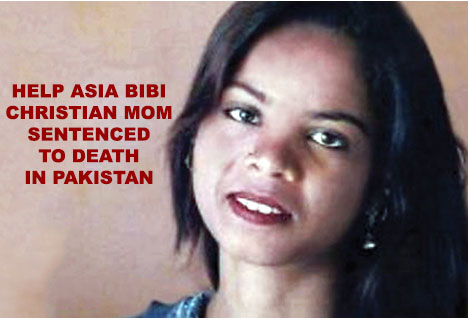
Asia Bibi, Mother on Death Row in Pakistan, Asks Christians Worldwide to Pray for Her Release

By 

Asia Bibi, the Christian mother of five who's on death row in Pakistan for "blasphemy," has asked Christians worldwide to pray for her as her nine-year ordeal continues.
On Monday, Pakistan's Supreme Court decided to reserve judgment on her final appeal against execution on the charges of blasphemy.
Her husband, Ashiq Bibi, told Premier while traveling to the U.K. that she has a message for fellow Christians.
"She told [me] that the community must remember her in their prayers because this is an international country ... [I] need international pressure for the release of Asia Bib," the husband said through an interpreter.
"She always has said that Jesus is her life and she is living in the name of Jesus, and [trusting] that Jesus will help her," he added.
He said that the family is suffering without Bibi.
"As the husband, I am missing Asia and the daughters are also missing Asia," he attested.
Eisham, one of Bibi's daughters, also traveled with her father with the aim of raising international attention for her mother's case.
"[Eisham is] praying that her mother is with her as soon as possible and she is also requesting that you also pray for their family and especially for Asia," a translator relayed.
"The family of Asia Bibi is always under threat and when Asia Bibi would be [sic] released from the jail she will never, ever be living in Pakistan [again]."
Still, the family told Catholic charity Aid to the Church in Need that they are hopeful that an acquittal is not far away.
"Although the judges didn't give a judgement, this has happened in many cases of this kind in the past — and they still ended positively," Father Emmanuel Yousaf said on behalf of Ashiq Bibi.
"We will have to wait a few days but we are confident that things will go well."
Bibi was sentenced to death in 2010, but has been held since 2009 after she was accused of blaspheming the Islamic prophet Muhammad during an argument with Muslim farmworkers.
She has denied the charges, and her plight has drawn the attention of several human rights and persecution watchdog groups around the world.
Yousaf noted that uncertainty over the mother-of-five's fate remains, but also said that there is good reason to hope for good news.
"There is no decision — we are hanging in the air — but God willing it will soon be over and [Asia Bibi] will be back home with the family," he said.
"We have prayed 10 years now for our sister, Asia, and I am confident that our prayers will be heard, and the judgement will go in favor of Asia, her family and the entire Pakistani Christian community."
https://www.christianpost.com/news/asia-bibi-mother-on-death-row-in-pakistan-asks-christians-worldwide-to-pray-for-her-release-227918/

Asia Bibi - Family Of Pakistani Christian First To Face Death For Blasphemy Holds Out Hope


Asia Bibi, who has been on death row since 2010, is at the centre of the high-profile case that has divided Pakistan and drawn prayers from the Vatican.

The family of Asia Bibi, a Christian mother who faces becoming the first person to be executed for blasphemy in Pakistan, said they hoped the Supreme Court would free her.
But in any case they feared for their future living in Pakistan under the blasphemy laws, they told AFP.
Bibi, who has been on death row since 2010, is at the centre of the high-profile case that has divided Pakistan and drawn prayers from the Vatican.
On Monday the Supreme Court heard her last appeal and said it had reached a judgement, which it has yet to reveal.
b2pbj01o
"We are hopeful that whatever the court proceedings are it will come out as positive for us," her husband Ashiq Mesih told AFP. Her daughter Eisham Ashiq added: "I will be very happy the day my mother will be released. I will hug her and will cry meeting her and will thank God that he has got her released." (AFP)
"We are hopeful that whatever the court proceedings are it will come out as positive for us," her husband Ashiq Mesih told AFP.
Her daughter Eisham Ashiq added: "I will be very happy the day my mother will be released. I will hug her and will cry meeting her and will thank God that he has got her released."
Bibi's family are in London on a visit organised by Aid to the Church in Need, a charity which helps repressed and persecuted Christians.
Bibi, a labourer, was accused of blasphemy against the Prophet Mohammed in 2009 by Muslim women she was working with in a field.
The charge is punishable by death under legislation that rights groups say is routinely abused to settle personal vendettas.
Her family said that if Bibi is released, it would be difficult to stay in her homeland.
"Pakistan is ours: we were born there, raised there," Mesih said.
"The only tension we have is the blasphemy law. It is imposed on Christians. When it is imposed on us our (Muslim) brothers should think that the Christians never say anything bad about the Koran," he said.
Asia Bibi, after her release, can't stay there in the presence of this law.
"Living in Pakistan for us is very difficult. We don't go out of our home and if we go, we come out very carefully."
Life in Pakistan "for us is very difficult".

Tackling Pakistan's pathetic economy: Is Imran Khan up to the task?

Almost two months after Imran Khan took office as Pakistan's PM, the reality is knocking hard on the doors of his government. Wracked by a raft of financial challenges, the country has become an economic basket case.
Pakistan's economy is a perpetual mess. It's not hard to come to this conclusion considering the fact that the country has gone begging to the International Monetary Fund (IMF) 14 times since 1980 seeking bailouts. The current Pakistani government, led by the newly elected Prime Minister Imran Khan, has once again gone cap in hand to the IMF requesting yet another rescue.   
"An IMF team will visit Islamabad in the coming weeks to initiate discussions for a possible IMF-supported economic program," IMF Managing Director Christine Lagarde said on Thursday.
The South Asian nation, home to over 200 million people, is beset by a range of financial and structural challenges. Pakistan has long imported more than it exported. The result is a surging current account deficit — now estimated at over 5 percent of gross domestic product (GDP) — and a looming balance-of-payments crisis.
For decades, Pakistan's real per capita income growth has underperformed many of its peers. Corruption and tax evasion remain rampant, resulting in reduced revenue for the state. Less than 1 percent of Pakistanis, for instance, pay income tax.
Severe problems
State resources are also often squandered. Defense spending takes a higher priority than allocating resources for more productive purposes like education and healthcare. That's a consequence of the Pakistani military's obsession with maintaining a military, political and diplomatic competition with neighboring India.
Furthermore, Pakistan faces a chronic energy crisis, resulting in regular power outages across the country. The economy is highly vulnerable to shifts in global crude prices, as 80 percent of its oil needs are met through imports. The recent rise in oil prices has aggravated the nation's already fragile financial situation.   
Many state-run firms are loss-making and the government has failed to make enough headway when it comes to their privatization as well as cutting bureaucratic red tape and improving ease of doing business. 
The problems have put heavy pressure on the nation's currency, with the Pakistani rupee falling by more than 20 percent in four big drops since December. Its foreign exchange reserves are also dropping rapidly. In September, they stood at $8.4 billion (€7.25 billion), barely enough to cover Pakistan's debt payments due through the end of the year.
IMF to the rescue — once again
When Pakistan has previously found itself in this situation, it has knocked on the doors of the IMF. But this time around, the nation's leaders appeared to be a bit reluctant to approach the global lender, as it is likely to impose tough conditions on government policy, limiting Prime Minister Imran Khan's vision of an Islamic welfare state.
"As the price for a deal with Pakistan, the IMF is likely to demand a further sharp tightening in fiscal and monetary policy as well as structural reforms aimed at raising more revenue and improving the business environment," Gareth Leather, Senior Asia Economist at Capital Economics, said in a research note.
Khan, whose new administration took office in August, said on Wednesday that his government will seek help from "friendly countries" alongside any assistance provided by the IMF. 
Khan has also promised to recover funds stashed abroad by corrupt officials, and embarked on a series of populist austerity measures such as auctioning luxury cars owned by the prime minister's house and crowdfunding to build a dam in the country's north. He has also vowed to turn around loss-making state-run enterprises and reform tax collection.
"This prime minister and his team seem serious about focusing on Pakistan's economy, and moving beyond superficial economic management to deeper reforms, given that they have engaged some prominent Pakistani economists to help them out," Madiha Afzal, an assistant professor at the University of Maryland's School of Public Policy and a non-resident fellow at the Brookings Institution, told DW. "Some of their rhetoric and actions, however, are markedly superficial, which does not bolster confidence in their approach," she added.
To combat the economic woes, many Pakistanis seem to be expecting help from their ally China, often called an "all-weather friend" to Pakistan due to the two sides' close political, economic and military ties as well as aligning strategic interests. But it is unclear how generous Beijing will be in helping its strategic partner weather the current economic storm. 
CPEC's role
Many inside and outside Pakistan also partly blame China for the troubles afflicting the Pakistani economy. They argue that the deteriorating balance of payments is a result of higher import spending by Pakistan on materials from China for the China-Pakistan Economic Corridor (CPEC) project.
CPEC is a Chinese-led series of ambitious transport and energy projects to build infrastructure in Pakistan that some estimate at over $60 billion. It forms part of Beijing's wider Belt and Road Initiative (BRI).
As part of CPEC, China provides loans to Pakistan, which imports equipment and services from China. This adds to Pakistan's debt and worsens the current account deficit.
If investments are sound, CPEC has the potential to boost the Pakistani economy. But observers say the terms and conditions of much of the Chinese lending are opaque, and interest rates on some loans may be higher than Pakistan can afford. 
Acknowledging that Pakistan needs more infrastructure development, the IMF's chief economist Maurice Obstfeld recently cautioned: "It is important that the design of the projects... be solid and excessive debts which cannot be repaid are avoided."
One implication of Islamabad approaching the IMF now is that Pakistan will likely have to be far more transparent about the lending terms of its CPEC projects than it has been so far. "This transparency may have positive implications in terms of generating public support for renegotiating some CPEC deals which are not necessarily beneficial for Pakistan," said Afzal. 
Karte Map China Pakistan Economic Corridor
Difficult reforms await
Regardless of CPEC, there are a number of difficult measures Khan's administration will have to take to pull Pakistan out of its economic malaise. Economists say the government needs to tackle tax evasion and broaden the tax base by removing tax loopholes and exemptions.
It has to privatize some loss-making and inefficient state-owned firms, which are acting as a major drag on the economy. 
Reforming the product and labor markets, particularly the energy and agricultural sectors, will also have to be high on the agenda. Also, the Pakistani rupee, experts say, has to be fairly valued, flexible and market-determined.
If Khan's administration manages to push through at least some of these measures, it could significantly improve Pakistan's growth trajectory. "While a sharp slowdown in growth looks inevitable over the coming year, Pakistan's longer-term prospects should improve if the IMF deal leads to a sharp fall in the country's external vulnerabilities and an improvement in its business environment," said Capital Economics' expert Leather.
https://www.dw.com/en/tackling-pakistans-pathetic-economy-is-imran-khan-up-to-the-task/a-45844615

#Pakistan - #PPP to resist political victimisation: Bilawal Bhutto

Accusing Prime Minister Imran Khan of behaving like a dictator, Pakistan Peoples Party (PPP) Chairman Bilawal Bhutto Zardari has said the PPP will resist any move by the Pakistan Tehreek-e-Insaf (PTI) government to start political victimisation in the name of accountability.
“We also support the accountability process; but political victimisation under its garb is not tolerable. Khan sahib is behaving as if he is still in opposition,” Bilawal said while speaking to media after co-chairing a party meeting along with the PPP supremo Asif Ali Zardari.
The meeting, which was convened at the residence of PPP MNA Naveed Qamar, was attended by senior party leaders, including Khursheed Shah, Yousaf Raza Gilani, Nayyar Bukhari, Sherry Rehman, Farooq H Naek, Murad Ali Shah, Faryal Talpur, Chaudhry Manzoor and Nisar Khuhro.
“What can we say when the prime minister is threatening the National Accountability Bureau (NAB) to take action merely for victimising opponents,” the PPP chief added.Bilawal said even though Pakistan Muslim League (PML-N) President Shehbaz Sharif had not used reasonable words for the PPP in the past, his October 5 arrest by NAB in connection with a housing scam “is a condemnable act”.
Replying to a question about possible arrest of PPP leaders, he said, “We have been hearing this since the PTI has come to power and political leaders are being victimised.”
However, a source privy to the meeting said the moot was convened in view of rumours that the Federal Investigation Agency (FIA) may arrest Zardari and his sister Faryal Talpur by October 13.
“The recent actions of NAB and the FIA have set the alarm bells ringing in the party. The arrest of the PPP leaders who are facing money laundering and corruption charges and an inquiry into the 10-year record of the Sindh government were the main agenda of the meeting,” a source said.
He said sensitivity of the meeting could be gauged from the selection of its venue, where not a single political activity has taken place for the past decade. The sources said various legal and political options were discussed and party leaders also suggested joining hands with the PML-N on various issues.
NFC and Thar
Bilawal announced that the PPP would protest if provincial share in the National Finance Commission (NFC) award was slashed. “We will be a stumbling block if anyone tries to repeal the 18th Amendment and reduce the provincial autonomy. We will launch a campaign for the rights of provinces,” he said.
To a question about a hearing in the Supreme Court on plight of Thar, he said, “One should also look at the development (work undertaken the PPP provincial government) in Thar.” He criticised the PTI government’s policies said the country had suffered a loss of billions of rupees in a short span of time.

https://tribune.com.pk/story/1823847/1-ppp-resist-political-victimisation-bilawal/

Friday, October 12, 2018

Video Report - #JamalKhashoggi: The world demands answers - UpFront

Video Report - Turkey has evidence of Saudi journalist's torture, murder – reports

Video - Michelle Obama On Current Political Climate: ‘Fear Is Not A Proper Motivator’

Video - Kanye West and Taylor Swift Pick Political Sides | The Daily Show

Video - Nikki Haley’s Surprise Resignation | The Daily Show

Blasphemy ruling could signal strength of hardliners in Pakistan


On Monday, Pakistan's Supreme Court heard the final appeal of Asia Bibi, a Christian woman sentenced to death for blasphemy in November 2010.
The verdict, not yet issued, could well signal if the hardline Islamists, who seek to create a full-blown theocracy, are gaining influence throughout the country and helping to shape its future.
Bibi's case began on June 14, 2009, when an ordinary altercation between women working in a field in an area north of Lahore turned into a feud over their faiths. Three women did not want to share a cup of water with Bibi because she was Christian and they were Muslim. After a heated argument, the three women trooped off to complain to the village cleric, claiming she had sullied the name of the Prophet Mohammed.
As Bibi's lawyer, Saiful Malook, argued on Monday, the legal case against her is weak at best, featuring blatant contradictions between witness statements. The cleric, who actually registered the case and made the allegations against Bibi, was not even present when the altercation between the women took place, and he did not have permission from the appropriate officials to register the case. These legal and evidentiary issues would likely be determinative in any other case, but in this one, they may have little impact on the outcome.
    The murky facts of Bibi's case may make it hard to discern whether the case, filed at a time when the region was seeing an increase in recruitment by hardline Islamists, was filed at the behest of a particular group. It is known that in the decade since then, hardline groups -- the Tehreek-e-Labbaik in particular -- have gunned down politicians and lawyers who have dared question the validity of the blasphemy law or championed the cause of blasphemy defendants.
    In January 2011, a little over a month after the trial court sentenced Asia Bibi to death, Salman Taseer, a Punjab governor, was gunned down by his bodyguard, Mumtaz Qadri, because he had visited Bibi in prison and questioned her conviction. Qadri, a member of Tehreek-e-Labbaik, said he had been protecting the honor of the prophet and that he had killed Taseer because of his support for Bibi. Qadri himself was executed in 2016, an event which brought out thousands of mourners affiliated with various hardline groups to the street.
    These are not the only deaths. In March 2011, Pakistan's Federal Minister of Minority Affairs, a Christian man named Shahbaz Bhatti, was gunned down after calling for reform of Pakistan's blasphemy law. In 2014, gunmen barged into the office of Rashid Rehman, a human rights lawyer who had been representing another blasphemy suspect, and killed him.
    Pakistan has never executed anyone convicted of blasphemy. Until very recently, Pakistan was not executing many people at all. But a moratorium on the death penalty was lifted in 2015, reflecting Pakistan's rightward political swing.
    According to Amnesty International, though there was a 31% decrease in executions from the previous year, Pakistan still executed 60 people in 2017, while nearly 7,000 people languished on death row. When this inclination to execute is combined with the pressures of groups like Tehreek-e-Labbaik, and the fact that Bibi is a Christian woman in an increasingly misogynistic and xenophobic atmosphere, there seems almost no cause for hope.
    But it doesn't have to be this way. The three justices who heard Bibi's final appeal could do the right thing, take note of the many holes in the case, the baselessness of the allegations themselves, the contradictions between witness accounts and exonerate a poor woman who has been wrongfully accused and imprisoned.
    The military, which has worked so diligently to eradicate terrorism in Pakistan, could crack down on groups like Tehreek-e-Labbaik that make ordinary Pakistanis pawns in their game of blood and terror. They could promise added protection to all involved in the case and deploy forces in sensitive areas of the country, such that Tehreek-e-Labbaik and their threats of violence cannot materialize.
    Pakistan's new administration, led by the swashbuckling former cricketer Prime Minister Imran Khan, could also take a stance against the intimidation of Tehreek-e-Labbaik, whose leaders have demanded that Khan fulfill his promises to make Pakistan an "Islamic state" and that "Asia Bibi should be hanged keeping international pressure aside." Khan could respond to this by noting that Pakistan is already an Islamic Republic and that, according to the Quran, Pakistan cannot execute an innocent woman for any crime.
    Instead of snubbing the international community, one that Islamists see as impinging on Pakistan's move toward a full theocracy, Khan could emphasize the need to embrace it and to work with it. In other words, Khan could choose to stand with the innocent woman instead of the rabid and bloodthirsty extremists.
    Saving Bibi need not only be a Pakistani campaign. The Supreme Court of Pakistan, likely fearing violence by hardliners, has instructed Pakistani media to refrain from discussions of Bibi's case until the verdict is issued. This places responsibility on international media and human rights groups to step up their efforts and fill the vacuum.
      The Supreme Court of Pakistan would never admit to being permeable to international campaigns for a particular accused, but judges exist in the same larger political context as all the rest of us. A groundswell of international protest and attention, via media and social media, could drown out the venal voices of hardliners demanding death and replace them with activists insisting on life.
      The verdict is not in yet on Bibi's case; there is time still to write and tweet and petition. Global attention may well add up to the difference between life and death for a woman sitting alone in a cell in a Pakistani prison.