Sunday, March 4, 2018
Christian Persecution in Pakistan - Uproar in Pakistan over 'torture and sexual abuse' of Christian youths


Rights groups have condemned the alleged torture and sexual abuse of two Christian youths by investigating officials. The latest blasphemy controversy highlights the plight and vulnerability of Pakistani Christians.
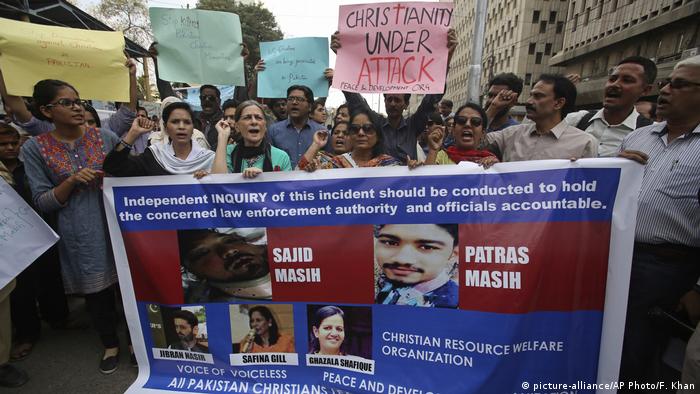
On Friday, Sajid Masih, a 24-year-old blasphemy suspect, leapt from the fourth floor of the Federal Investigation Agency's (FIA) Punjab headquarters in Lahore and severely injured himself. In a video statement, Sajid alleged that he jumped because the FIA officials tortured him and ordered him to "sexually assault" Patras Masih, his cousin and the main accused in an online blasphemy case.
"They asked me to abuse myself, but I refused to do so. Later, they asked me to sexually assault my cousin, but I remained silent and jumped from the building," he said.
Following Sajid's accusations, FIA Director General Bashir Ahmed Memon ordered an official inquiry.
Patras, 21, who is a resident of Lahore city, was arrested by police last week for allegedly posting a "blasphemous photo" on Facebook on January 16. The arrest was made after hundreds of supporters and activists of the Islamist Tehreek-i-Labaik Ya Rasool Allah (TLYRA) party staged protests against Patras. The TLYRA outfit has gained prominence in Pakistan since their "blasphemy siege" of the capital Islamabad in October last year.
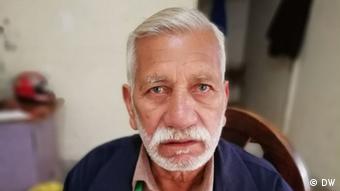
Patras' grandfather: 'This is extreme injustice'
The blasphemy allegations against Patras are being investigated by FIA's cyber crime unit, which had brought in Sajid Maish for interrogations on Friday.
Blasphemy is punishable to death in the Islamic Republic of Pakistan, where around 97 percent of its 180 million inhabitants are Muslim. Rights advocates have long been demanding a reform of the controversial blasphemy laws, which were introduced by the Islamic military dictator General Zia-ul-Haq in the 1980s. Activists say the laws have little to do with blasphemy and are often used to settle petty disputes and personal vendettas.
Living in fear
Many Christian residents of the Shahdara town in Lahore are fleeing the area due to the latest blasphemy controversy. Islamic extremists, and in some cases common Muslims, have set Christians' houses on fire or lynched alleged blasphemers even before the intervention of authorities.
"They [protesters] came with petrol bombs, bricks and sticks and threatened to burn down our houses," Pervaiz Akhter Naz, Patras' maternal grandfather, told DW.
"Mohammad Siddiqui, a Muslim resident of our area, filed a police report accusing Patras and some others of posting blasphemous content on Facebook. As soon as this news became public, hundreds of people gathered outside my daughter's house," Naz said.
Some 1,500 Christian residents have left the area since then, Naz added.
"I am heartbroken for Patras and Sajid. While the former remains in police custody the latter is fighting for his life in hospital. FIA actions forced Sajid to jump from the building. This is extreme injustice," Naz complained.
Persecution of religious minorities
Pakistan's Christians and other religious minorities complain of legal and social discrimination in their country. In the past few years, many Christians and Hindus have been brutally murdered over unproven blasphemy allegations.
One of Pakistan's most high profile blasphemy cases is that of Asia Bibi, a Christian woman who was found guilty of committing blasphemy while working in the fields in 2009 and was sentenced to death. In 2014, her death sentence was upheld by the Lahore High Court. Amnesty International called the verdict a "grave injustice."
In one case, a young Christian girl with Down syndrome was accused in August 2012 of burning pages upon which verses of the Koran were inscribed. Rimsha Masih was taken into police custody and only released months later, when charges were dropped. The case caused an uproar in her home town and beyond and sparked riots and violence against Christians in the region. In 2013, she and her family relocated to Canada.
In 2014, a Christian couple was beaten to death for allegedly desecrating a copy of the Koran. Their bodies were subsequently burned in a brick kiln.
In September last year, a Christian man in Pakistan was sentenced to death for sharing "blasphemous" material on WhatsApp.
#Pakistan - Women In Administration

Pakistan as country needs to adopt policies that encourage women in administrative roles. For many years now, women in Pakistan have been pushing barriers, breaking stereotypes and joining the workforce. This is the result of years of effort by the women of the society who refused to play a passive role in their lives and wanted to be at the forefront as well. However it has been rightly identified by United Nations (UN) that the step forward is to increase the representation and advancement of women in the civil service.
This move must be accepted whole heartedly and worked up diligently because the country needs a good balance of both genders working tirelessly towards progress. The study conducted by United Nations Development Programme (UNDP) and the United Nations Entity for Gender Equality and the Empowerment of Women (UN Women) shows how socio-economic factors hold back women from becoming a part of the state’s administration . This should serve as the basis of formation of policies that take into account these socio-economic barriers and help women move forward in their career trajectories.
If one out of five women in Pakistan is now a part of the labor force of the country, this means that the involvement of women has increased on every level. If this is the scenario, it means that the administration now needs people with multi-faceted approach, who can not only understand the realities on ground for both genders but are also empowered with decision making authority to be able to make a significant change in the setup and the governance of this country.
Since the Women Development Ministry has been dissolved, which was responsible for discussing means of development for the gender, the parliament now needs to engage in dialogue to address this particular concern or devise a new committee dedicated to the cause of women development. Decisions taken at the top always have a trickle-down effect. Once the office adopts the approach of gender balance, public opinion changes accordingly. The hesitance and the resistance in the public regarding female administrators will automatically change into acceptance. This will push a new generation of women to aim to be in positions of power and be able to devise policies that affect the masses in Pakistan.
#SenateElections2018 - #Pakistan - In historic first, a Thari Hindu woman has been elected to the Senate

In a historic first, Thari Hindu woman Krishna Kumari was elected to the Senate on Saturday.
Kumari, a rights activist belonging to the Kohli community from the remote village of Dhana Gam in Nagarparkar, was selected as a candidate for a Senate seat by the Pakistan Peoples Party (PPP).
Kumari was elected to a reserved seat for women from Sindh, along with Quratulain Marri.
"I feel delighted, this was unthinkable for me, to reach the Senate," Kumari told The Associated Press.

"I will continue to work for the rights of the oppressed people, especially for the empowerment of women, their health and education," she said.
Ratna Bhagwandas Chawla from Jacobabad was the first Hindu woman to be elected to the Senate on a PPP ticket in March 2006.
Born on Feb 1, 1979, Kumari (lovingly called Kishoo Bai by her parents) had a tough childhood when she along with her family members and relatives were held for three years as bonded labour in a private jail allegedly owned by the landlord of Kunri of Umerkot district.
They were set free in a police raid on the farmland of their employer. She started her primary education initially from Talhi village of Umerkot district and then the Tando Kolachi area of Mirpurkhas district. Her parents facilitated her and her brother Veerji’s studies and academic activities despite the hard days they had been facing. She attributes her success to her parents, who encouraged her to pursue her education and eventually helped her to earn a university degree. She was married off to Lal Chand, a student of the Sindh Agriculture University, Tandojam, in 1994, when she was 16 and a class IX student. She continued her studies after the marriage to get a postgraduate degree in sociology from the University of Sindh.
She started taking part in social activities in 2005 by organising and participating in different seminars in Tharparkar.
She was selected for the third Mehergarh Human Rights Youth Leadership Training Camp held in 2007 in Islamabad during which she covered an overview of people’s movements in the world, history of social movements in Pakistan and a thorough understanding of the governance system in the country. She also learned strategic planning and tools for bringing social change.
After completing the training, she worked for the Youth Civil Action Programme to identify cases of bonded labour and conducted case studies focusing women under bondage, organised workshops and seminars on bonded labour, sexual harassment at workplace and other human and women’s rights issues and contributed write-ups to various newspapers.
PPP lawmaker from Thar Dr Mahesh Kumar Malani, when contacted by Dawn earlier, was hopeful that Kumari, a Kolhi girl from the family of the valiant freedom fighter Rooplo Kolhi would be elected.
Rooplo Kolhi had waged a war against the invading British colonialist forces when they had attacked Sindh from Nagarparkar side in 1857. Subsequently, he was arrested and hanged by the British on August 22, 1858.
Kumari, who worked the fields alongside her parents as a child, will take the oath of office later this month alongside some of the biggest landowners in the country.
#Pakistan - Democracy under squeeze

By Afrasiab Khattak
The civil military row or to be more precise the wrangling between PML (N) led elected civilian government and the military establishment is quite open and public by now. But the dark prophesies about complete derailing of democracy, postponement of the Senate election and general election haven’t come true so far. In fact polling for the Senate election will be taking place as you will be reading these lines. Preparation for general elections are also in full swing. Even then unlike 2013 general elections, one can’t confidently think or talk about a smooth transition from one elected government to another in 2018. The reason for this uncertainty is the naked political engineering by security establishment through administrative, judicial and political instruments. By now it is an open secret that aggressive political agitation by test tube political outfits for creating conducive conditions for raising of “ umpire’s finger “ wasn’t spontaneous. Several onslaughts on Islamabad by a variety of putschists had the unmistakable signature of expertise accumulated over the years by the permanent state. Even the post Panama JIT-led judicial activism has tended to reveal the long arm of security establishment behind it. The extremely selective nature, weak legal grounds and justice not appearing to be be done in accountability has seriously undermined credibility of the process. Totally different decisions in similar cases have given rise to questions in minds of the people. Unfortunately our higher judiciary has the historical baggage of upholding unconstitutional military coups and taking oath under PCOs of the usurpers. Its failure in prosecuting General Pervez Musharraf for abrogating the Constitution and its recent controversial role in deciding political cases has created the impression of perpetuation of the so called Doctrine of Necessity. It is disappointing for the people of Pakistan who have always struggled for the independence of judiciary and rule of law.
The contradiction between the de facto and de jure has deepened to an extent where serious questions have arisen about the sustainability of the present constitutional order in the country. The almost total marginalisation of civilian government by the security establishment epitomises a grave crises in the state system. By now it should be obvious that room for any powerful civilian chief executive in the system has dramatically shrunk. This is a serious enough crises to create doubts about the effectiveness of even the future elected government. But the irony is that political parties do not seem to be worried about it. Removing the present federal government and Punjab government by hook or by crook appears to be their only focus. The active role of some opposition political parties in the recent parliamentary coup in Balochistan is a case in point. They justify their wrongdoings by referring to the negative role of the current ruling party in the past. So the political feud is being fought out in tribal fashion without any concern about its consequences for the future.
Be that as it may, there are two fundamental issues that require special attention even in the middle of the present crises. First is the question of federation. Pak-Indian sub continent has seen two partitions in comparatively recent past on the question of provincial autonomy. In 1940s the failure of major political players on the quantum of provincial autonomy among other things led to the partition of India and creation of Pakistan in 1947. Similarly the denial of provincial autonomy to the former East Pakistan ( despite having the majority population) created a crises that led to the dismemberment of Pakistan in 1971. The main political leadership learnt their lesson and adopted a federal system for the remaining Pakistan in the 1973 Constitution. But provincial autonomy remains a thorn in the side of anti democratic forces in Pakistan. Every military coup in the past attempted to to roll back the federal structure and turn the country into a unitary state. That’s why it is not surprising to see an insidious campaign against the 18th Constitutional Amendment at a time when democratic system is being ambushed. But as a participant in the debate on federation for the last many decades I want to make it clear that any subversion of 18th Amendment by dubious and unconstitutional means would leave no other option with smaller provinces but to demand parity in the National Assembly for all the federating units. It’s the medicine that was originally invented by Punjabi ruling elites in mid 1950s for countering the population weight of the then East Pakistan ( now Bangladesh). What moral ground the same elite will have if it’s raised by political forces of the smaller provinces in the face of subversion of federalism?
The second question relates to foreign policy and security policy of the country. It is pretty clear that one main bone of contention between the civil and military factions of the state is the issue of control over foreign policy. Nawaz Sharif’s effort for normalising relationship with the neighbours, particularly with India and Afghanistan became a major point of friction with the other side. So far security establishment has prevailed and support for Afghan Taliban and militants active against India is continuing. But this policy has reached a dead end and is dramatically leading to international isolation of the country. The FATF’s decision on February 23 in Paris about putting Pakistan on a grey list from the coming June is the latest indication of the failure of Jihadist foreign policy. More important than the increasing US pressure is the growing symptoms of Chinese fatigue syndrome in protecting Pakistan from adverse action by international community. It’s high time to take bold steps for getting back from the precipice. Going ahead on this dangerous path will be following in the footsteps of Saddam Hussain’s Iraq and Gaddafi’s Libya. It’s urgent and corrective measures on this front can’t wait for complete restoration of democracy.
There is a silver lining in the otherwise bleak situation. In a long time the people of Punjab province ( which is a real bastion of power in present Pakistan) are rallying behind Nawaz Sharif who has boldly challenged the political engineering of the security establishment. Nawaz Sharif will have to build an inclusive and broad democratic campaign by addressing the major socio political issues such as eliminating terrorism, bringing peace to Balochistan, empowering of FATA Pashtuns and people of Gilgit Baltistan apart from restoring sanctity of the vote for putting the country back on track.
Bilawal advises Imran to bring forward ideological activists, not affluent


Chairman Pakistan Peoples Party (PPP) Bilawal Bhutto on Sunday said Chairman Pakistan Tehreek-e-Insaf (PTI) Imran Khan should bring forward ideological activists from his party rather than relying on affluent people, ARY News reported.
“I would like to advise Imran Khan to bring forward his party’s ideological workers and avoid fielding ATM (Automated Teller Machine) machines as candidates. Your party activists, who are committed to your party’s ideology, can win election for you,” he said while addressing a press briefing regarding Senate elections in Karachi.
He said if Imran would field only wealthy people in Khyber Pakhtunkhwa and assume that they would buy votes for themselves then issues would surface.
Censuring the PTI chief for not balloting in Senate polls, Bilawal said if he himself would not go to ballot then his party workers would not be enthusiastic enough to vote for his party.
He said PTI’s position had grown weaker in Karachi, because Karachiites knew that the PTI government had done no significant development work in Khyber Pakhtunkhwa.
“Imran and Nawaz have wasted the last five years in battle over throne of Raiwind. On the contrary, only the PPP’s government in Sindh has focused on the public issues in the meanwhile,” he said while counting a number of development works done by the Sindh government.
“Our candidates were the best in the Senate polls. So, Alhamdulillah, we have succeeded due to many factors,” he added.
https://arynews.tv/en/bilawal-advises-imran-bring-forward-ideological-activists-not-affluent/
PPP in contact with opposition for Senate chairmanship, says Bilawal


Pakistan Peoples Party (PPP) Chairman Bilawal Bhutto on Sunday said that the party is in contact with other parties and will try to bring a candidate for Senate chairman from the opposition.
Political temperature in the country is on the rise as parties have redoubled their efforts to strategise alliances ahead of elections for the seat of Senate chairperson and deputy chairperson.
The competition between Pakistan Muslim League-Nawaz (PML-N) and PPP for the two seats of power will largely depend on independent senators.
Addressing a news conference here, Bilawal also sked his political opponents to not blame his party for not performing well in Saturday's Senate elections.
“People should not take out their frustration on us… everything is being blamed on us” he said while addressing a news conference here.
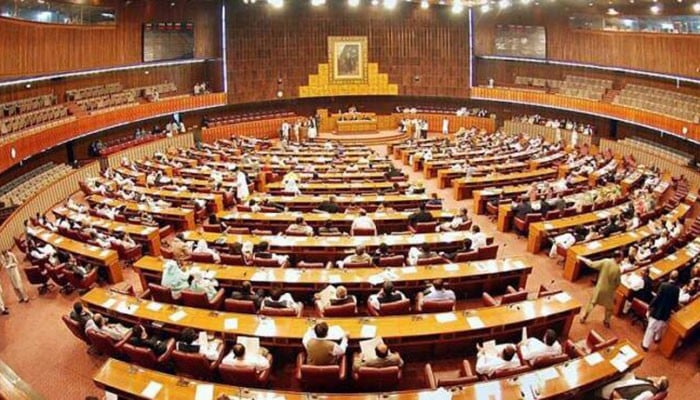

The PPP chairman was responding to allegations of horse-trading, or buying votes through money, by Pakistan Tehreek-e-Insaf (PTI) and PML-N.
Bilawal also urged Muttahida Qaumi Movement-Pakistan (MQM-P) of resolving the issues of infighting by itself and not place the blame on PPP, after over 10 MQM-P MPAs in Sindh vote for PPP in Senate elections.
Taking a jibe at Imran, Bilawal said that the PTI chief should promote ideological candidates and not ATMs.
He said that PPP has various reasons for clinching seats on Senate, terming Imran’s absence from voting process as among the reasons for his party MPAs being disoriented.
Regarding PML-N’s claim that it is the single largest party in Senate, Bilawal said it is unfair for them to say that because all their candidates contested as independent.
According to unofficial Senate results, PML-N clinched 15 seats and PPP won 12 seats in the polls.
PPP wins Senate election in Sindh

Pakistan People’s Party (PPP) bagged 10 seats from Sindh Assembly.
Muttahida Quami Movement Pakistan (MQM-P) bagged one seat from Sindh.
Pakistan Muslim Functional one seat from Sindh. According to the details, PPP candidates form Sindh, Raza Rabani, Mola Bux Chandio, Mustafa Nawaz Khokhar, Syed Muhamad Ali Shah Jamote, Imamudin Shoukeen, Anwar Lal Din were elected from Sindh. Meanwhile, MQM-P candidate Baresteor Farogh Naseem was elected from Sindh.
Pakistan Muslim League Functiola (PML-F) candidate Syed Muzafar Hussain Shah was elcted from Sindh.
http://www.thesindhtimes.com/blog/2018/03/04/ppp-wins-senate-election-sindh/
Video Report - Bilawal Bhutto Zardari holds meeting with PPP’s Senators-elect, extends congratulations
Chairman Pakistan Peoples Party Bilawal Bhutto Zardari extended congratulations to the newly-elected Senators from Sindh at meeting held at Bilawal House on Sunday evening.#PPP Chairman @BBhuttoZardari holds meeting with PPP's Senators-elect, extends congratulations https://t.co/GFpkCS8exZ pic.twitter.com/s8HEaaSOHS
— PPP (@MediaCellPPP) March 4, 2018
The meeting was attended by Chief Minister Sindh Murad Ali Shah, Chairman Senate Raza Rabbani, Senators-elect Maula Bux Chandio, Dr Sikandar Mandharo, Mustafa Nawaz Khokhar, Mohammad Ali Shah Jamote, Imamuddin Shauqeen, Rukhsana Zubairi, Kirshin Kolhi. Qurratul Ain Marri and Anwar Lal Dean.
Sindh Ministers Mukesh Kumar Chawla, Imdad Pitafi, Fayyaz Ahmed Butt, MPA Awais Shah and others were also present at the meeting.
https://mediacellppp.wordpress.com/2018/03/04/bilawal-bhutto-zardari-holds-meeting-with-ppps-senators-elect-extends-congratulations/
Saturday, March 3, 2018
#FloridaSchoolShooting - Why 70% support isn't enough to change gun laws

Analysis by Gregory Krieg and Sam Petulla

Not a fortnight after it began, in the hours after the deadly mass shooting in Parkland, Florida, the latest push to expand or fortify federal gun control laws seems destined for a recognizable end.
A series of competing bills and amendments are currently sitting in limbo on Capitol Hill as lawmakers, most of them Republicans, refuse to consider -- much less vote for -- any meaningful new legislation.
Outside of Washington, however, there is a wide and growing consensus that some kind of reform is necessary -- and has been for some time. Recent CNN polling shows a strong majority of Americans (70%) support generally stricter gun laws. When it comes to more specific measures, the numbers tick up further.
But history tells us that popular support will only take a controversial cause so far. Driving action in Congress requires an assortment of preconditions, from the obvious -- electing officials who support a given policy -- to the less easily defined -- electing officials who will actually work to deliver it. To put both in place, voters and activists need to grow coalitions, keep their issues in the headlines and solidify a hardline base of support.
It also helps to be lucky. If Democrats hadn't enjoyed a Senate supermajority early in Barack Obama's presidency, there would be no Obamacare. If Democrats hadn't then lost that supermajority in 2010, the law might have been come out stronger and less vulnerable to GOP efforts to undermine it.
Which brings us back to the guns. A new CNN poll conducted by SSRS found that 87% of Americans back laws to prevent convicted felons and people with mental health problems from obtaining guns, 71% support raising the age to purchase a firearm from 18 to 21 years old, and 63% want a ban on the sale and possession of high-capacity or extended ammunition magazines.
So, what's the hold-up?
The impasse here mostly belongs to the Republicans. They run a paralyzed Congress, and President Donald Trump, though talking a typically big game, has shown no real inclination to buck the party line. Democrats, too, deserve some cut of the blame. Senate Minority Leader Chuck Schumer, for instance, has criticized one option, which he himself is co-sponsoring, for not going far enough -- an odd angle to play given the GOP's refusal to take up even the most modest reform.
But there is a larger question here that needs answering. It asks why, in such a divided country, that a political goal enjoying such broad backing can't get a hearing in the halls of power?
The typical explanation, one frequently used by politicians and elected officials, is to blame the outsize influence of rich interest groups. When it comes to gun control, the National Rifle Association is the name that comes up the most.
This makes sense, though not to the extent some would have you believe. The NRA is powerful, for sure, but not only because of its spending. The organization also says it has 5 million dues-paying members. For many among the rank-and-file, turning back efforts to tighten gun laws is their top, perhaps only, political priority. And that, more than few thousand dollars in campaign bucks, is what makes the NRA so powerful.
On the flip side, fervor among gun control advocates has proven more difficult to maintain and, more importantly, count on when election day comes around. The poll numbers in favor of action tend to jump after high-profile mass shootings, then slump during the increasingly brief interregnums.
That kind of soft support can be measured in a couple different ways. With guns, we can see pretty clearly what moves the poll numbers. When it comes to issues with less frequent flashpoints, like immigration and health care, prioritization is often a better measure. But even then, the picture can be muddled when competing interests get thrown into the mix.
Consider the polling from late January on the future of the Deferred Action for Childhood Arrivals program, just before the brief government shutdown. DACA, when stood up on its own, is remarkably popular, with 84% of Americans saying they would like to see it continue. Ninety-six percent of Democrats support the program, as do 82% of independents and 72% of Republicans.
Despite it all, there's been no deal -- and none seems likely to come anytime soon.
The simple explanation here is that Republicans, seeing that Democrats wanted a fix more, tried to extract additional concessions as part of an agreement, failed, then moved on from the issue rather than give in on their demands. But that fails to take into account voters' priorities, which might not have been what they initially seemed.
A survey from just before the shutdown fight showed that, despite their overwhelming support for DACA, a majority of Americans, 56%, believed that sealing a spending deal was more important. Ditto for the Children's Health Insurance Program, for which Republicans refused to renew funding without a DACA-free short-term agreement, and which was also rated higher as a priority than DACA in CNN's poll at the time.
Days after the shutdown ended, a Quinnipiac poll found that 78% of Democrats believed it was "unnecessary." That number jumped to 84% with Republicans and independents factored in. Democratic leaders were accused of lacking a backbone after giving up the ploy, the only real recourse for the minority party in these situations, but the polling revealed a more complicated reality -- Democrats simply didn't care about DACA as much as many previously believed.

Which is more important...
avoiding a shutdown or
continuing DACA?
A majority of Americans says it supports
keeping the government open over finding
a solution for the DACA program.
Avoiding a
shutdown
56%
Continuing
DACA
34%
10%
20%
30%
40%
50%
60%
Source: CNN poll conducted by SSRS, Jan. 14-18, 2018.
1,005 adults, ±3.7% pts.
The progressive push for a single-payer health care system is likely to encounter similar crosswinds. While recent surveys have shown growing popularity among Democrats and receding partisan opposition to the plan, which in its current form would effectively extend the Medicare program to cover every eligible American, there are roadblocks up ahead.
Quinnipiac, in a September 2017 poll, tested the durability of its support by adding in a question that was sure to dampen the excitement. First, it established a baseline: 65% of Democratic respondents said they thought the plan was a "good idea." Then the pollsters asked another question: "Would you think that a single-payer system is a good idea or a bad idea if it removed all health insurance premiums, but also increased your taxes?"
Support dropped, but only by six points, to 59%. Opposition -- those who called it a "bad idea" -- went from 25% to 34%. The reason support mostly held is simple: Democrats, for all their concerns over the program, are typically unfazed by the prospect of a tax hike. That's ideology at work. So when you read a poll, like this one from Quinnipiac, that finds 97% of Americans back requiring background checks of all gun buyers but only 66% support stricter gun control -- and only 34% of Republicans -- it shouldn't actually be that surprising.
Ultimately, the ideological planks of a party prevail because voters don't usually hold politicians accountable on a case-by-case basis. They are more likely to rally around the parties themselves. How a lawmaker breaks on a specific bill? That tends to be disregarded come election time.
Polling, as pollsters often remind us, is just a snapshot -- not a projection of what's to come.
The first year of Trump's presidency offers a lesson. Republicans were able to pass a deeply unpopular tax cut bill late in late 2017 because they had the majority and the support of their voters. They failed to repeal Obamacare earlier in the year because enough of them decided, ultimately, that its consequences would imperil their jobs.
Neither would have come up for a vote if Republicans were responding to public opinion alone. Now, as the gun control debate moves forward (or doesn't) a similar web of motivations are likely to keep meaningful reform legislation on the sidelines -- no matter what the polls say.
The #NRA used to be a bipartisan campaign contributor, but that changed in 1994. Here's why

By KURTIS LEE and MALOY MOORE
During the 1992 election cycle, the NRA contributed 37% of its congressional campaign donations to Democrats. Republicans got the lion's share — 63% of the $1.8 million the group gave that year — but it was not as if the NRA was a pseudo-wing of the party.
By 2016, that had all changed.
According to data from the Center for Responsive Politics, a nonpartisan group that tracks money in political campaigns, nearly 99% of the $1 million in NRA contributions to congressional candidates in 2016 went to Republicans. The few Democrats who did get money — Reps. Sanford D. Bishop Jr. of Georgia, Henry Cuellar of Texas, Collin C. Peterson of Minnesota and Tim Walz of Minnesota — all have A ratings from the group. What changed? Two things, according to many of those who have followed the group.
First, in the fall of 1994, the Democratic-controlled Congress — with staunch opposition from the NRA — narrowly passed a 10-year federal ban on assault weapons. In the two-year period leading up to the vote on the issue, the NRA increased its contributions to Republicans by about $675,000 while reducing contributions to Democrats by nearly $200,000. It was the group's largest single-cycle — or two-year — dip in donations to Democrats.
Second, many who study the issue say, both the NRA and the Republican Party became more implacably opposed to gun regulations, while Democrats mostly favored them.
"It is all about playing to the arch-conservative base," said Robert Spitzer, chairman of the political science department at the State University of New York at Cortland, who has written extensively on politics and gun control. He said that since the 1994 assault weapons vote, the NRA "locked itself into a pattern of ever more apocalyptic, extremist, uncompromising rhetoric." The progression, he said, coincided with the Republican Party's own shift to the right.
Spitzer said Democrats have mostly remained consistent in their positions on gun control, but there "are fewer of those so-called Blue Dog Democrats around who supported less gun control." Indeed, in the early to mid-2000s, moderate Democrats from conservative-leaning states such as Arkansas and Louisiana received NRA support, although not at the levels seen in the early 1990s, according to figures from the Center for Responsive Politics.
The NRA did not respond to a request for comment about its political spending.
One question now is whether the NRA's shift in contribution patterns poses a long-term threat to the group's power. A change in power in Congress, or defections by Republicans, could leave the group on the outside.
The chief executive of the NRA, Wayne LaPierre, seemed to be worried about the former scenario when he spoke last month at the Conservative Political Action Conference. "If they seize power … our American freedoms could be lost and our country will be changed forever," he said. "The first to go will be the 2nd Amendment."
LaPierre didn't explicitly identify "they," but the message was clear.
In the weeks since a gunman killed 17 people at a South Florida high school, some Republicans — including, at least briefly, President Trump — have broken ranks with the gun rights group to support modest gun control legislation, such as raising the age limit for buying assault weapons and banning so-called bump stocks, which turn semiautomatic weapons into something close to machine guns.
But despite a surge in mass shootings — seven of the deadliest in modern U.S. history have happened since 2007 — the NRA has remained mostly steadfast in its opposition to any gun control legislation. In 2012, after mass shootings at an Aurora, Colo., movie theater and Sandy Hook Elementary School in Newtown, Conn., various proposals — such as requiring more thorough background checks — lost traction in Congress because of a lack of Republican support. But soon after, several blue or purple states, including Colorado, California, Connecticut and Maryland, passed some of the strictest gun laws in the country. In Colorado, the then-Democratic-controlled Legislature passed bills requiring universal background checks to buy guns, and limits on ammunition magazines. Not a single Republican supported the legislation.
After Tom Sullivan lost a son, Alex, who was killed on his 27th birthday in the Aurora theater shooting, he gained a singular focus: The country needed stricter gun laws and the NRA was in the way.
"The NRA is about fear and stifling progress," Sullivan said. "Republicans are so concerned that the NRA will put up money to primary them that the thought of supporting gun control legislation is almost unheard of."
If that has changed in recent days, it mirrors a shift in the views of voters.
In a CNN/SSRS poll released days after the Florida shooting, 70% of people questioned supported stricter gun laws — the largest share since 1993. That included 49% of Republicans, up from 30% in October, after the mass shooting at the Route 91 Harvest Music Festival in Las Vegas. Since the Feb. 14 shooting at Marjory Stoneman Douglas High School in Parkland, Fla., a slew of corporations have rushed to cut ties with the NRA. At the same time, some Republicans have pushed back against the powerful special interest group in ways that, a month ago, seemed unimaginable. Rep. Brian Mast, a Florida Republican who lost his legs while serving in Afghanistan, recently called for a ban on assault weapons. And Florida Gov. Rick Scott, a Republican who has an A rating from the NRA, said he supports raising the minimum age for purchasing semiautomatic rifles from 18 to 21. In an extraordinary televised meeting with Republican and Democratic lawmakers on Wednesday, Trump indicated support for such legislation and even suggested he would support taking guns away from citizens, and worry about the legality of such a move later.
"I like taking guns away early," Trump said. "Take the guns first, go through due process second."
Rick Tyler, a longtime Republican political strategist and NRA supporter who has worked on several state-level campaigns, said Trump's comments were concerning. "He demonstrated that he is going to sell out every member of the NRA and every law-abiding gun owner in America," Tyler said, adding that the group shouldn't worry about the handful of Republicans rebuking them. Despite declines in gun ownership nationwide, "the NRA will not lose influence," said Tyler. "If anything they will gain it because their members contribute and they vote."
On Friday, following a meeting with NRA officials, the White House emphasized that Trump was committed to defending the 2nd Amendment.
Trump takes six positions on gun control: Why that matters »
Still, Nathan Gonzales, editor of Inside Elections, a nonpartisan group that analyzes congressional and gubernatorial races nationwide, said that "it's really unheard of to witness Republicans so vocal in supporting legislation that the NRA opposes."
"Is this a breaking point? … Time will tell, but Republicans and the NRA have gone hand in hand for a long time," Gonzales said.
In past years, Republicans have rebuffed the NRA and have faced challenges. In election cycles between 2010 and 2018, the NRA spent nearly $36.4 million in support of Republicans, while also spending about $256,000 to oppose members of the GOP in primaries, general elections and the special Senate election in Alabama last year.
Former Indiana Sen. Richard G. Lugar was among the NRA's primary targets. In 2012, the group spent $169,000 in opposition to his reelection. Lugar, a Republican who had served more than three decades in the Senate, often held moderate views on gun legislation, voting in support of the assault weapons ban in 1994. He had an F rating —usually reserved for liberal Democrats — from the NRA. Lugar lost in a primary to a candidate supported by the NRA. Earlier in the week, during the meeting about school safety and gun control, Trump highlighted the fear that some Republicans — not himself, he said — have when dealing with the NRA.
During the meeting, Trump, who got nearly $10.6 million in support from the group in 2016, asked Sen. Patrick J. Toomey (R-Pa.) if the bipartisan background-check bill he helped author in the aftermath of the Sandy Hook shooting included a provision to raise the age to buy rifles from 18 to 21. (The gunman in the elementary school shooting was 20.)
Toomey said it did not. "You know why?" Trump prodded. "Because you're afraid of the NRA."
#SenateElections2018 #Pakistan - Senate polls: PML-N, #PPP win most seats

The ruling PML-N and opposition PPP have won the maximum number of seats in the Senate's elections held on Saturday, unofficial results show.
Polling for 52 vacant seats was held in the National Assembly and four provincial assemblies.
According to the results received from National Assembly and four provincial assemblies, PML-N has become the majority party in the Upper House of the Parliament followed by PPP. PTI is now the third largest party in the Senate.
Who Won Where
PML-N
Unofficial results show that PML-N has won as many as 15 Senate seats from Punjab, Khyber Pakhtunkhwa and Islamabad.
PPP
PPP has won 12 seats from Sindh and Khyber Pakhtunkhwa respectively.
PTI
Imran Khan's Tehreek-e-Insaf has has won six seats - five Senate seats from Khyber Pakhtunkhwa and one from Punjab.
JUI-F
The JUI-F has managed one seat each in Khyber Pakhtunkhwa and Balochistan.
JI
The Jamaat-e-Islami has managed to elect one Senator from Khyber Pakhtunhwa
MQM-P
Muttahida Qaumi Movement Pakistan must be disappointing with the results as the party has only got one seat in Sindh.
PML-F
Pakistan Muslim League-Function won one Seat seat from Sindh.
FATA
In FATA, four independent candidates emerged as victorious by securing seven votes each.
National Party
The National Party got two candidates elected in the Senate from Balochistan Assembly.
PkMAP
Pakhtukhwa Milli Awami Party of Mahmood Khan Achakzai bagged two Senate seats from Balochistan Assembly.
Independents
Six seats were won by independent candidates in Balochistan Assembly.
FATA – There were 24 candidates in the run for four FATA seats.
Four independent candidates have won four Senate seats by securing seven votes each.
According to unofficial results, Senator designate Hidayatullah, Hilal-ur-Rehman, Shamim Muhammad Afridi and Mirza Muhammad Afridi would represent FATA in Senate for next six years term.
Islamabad
According to unofficial and provisional results, PML (N) supported candidates have won both the Senate seats from the Federal Capital Territory.
Former Minister for Information and Broadcasting Mushahid Hussain Syed and son of former Prime Minister Muhammad Khan Junejo, Asad Ali Khan Junejo have been elected as Senators for Islamabad.
According to unofficial results, the candidates backed by Pakistan Muslim League Nawaz (PML-N) won the elections with clear majority on one technocrat and one general seat.
According to details, Mushahid Hussain Syed secured 223 votes on technocrat seat while PPPP Candidate Raja Shakil Abbasi remained runner up by securing 64 votes.
Thirteen votes were rejected by the officials.
Asad Ali Khan Junejo was declared successful on general seat of Islamabad by securing 214 votes.
Raja Imran Ashraf of PPP got only 45 votes while Kanwal Shozef who got 32 votes. Nine votes were termed rejected on this contest.
As many as 300 MNAs cast their votes on one each seat of General and technocrat from Islamabad.
Punjab
Independent candidates backed by PML-N won 11 out of 12 senate seats in Punjab Assembly. Seven candidates contested for general seats, one for minority , two for technocrat and two for women seats.
Out of seven senate general seats in Punjab, independent candidates backed by PML-N won six general seats, whereas PTI
candidate Chaudhry Sarwar won one seat.
According to official results, PML-N backed candidates Dr Asif Kirmani secured 42 votes, Dr Musadik Malik 42 votes,
Rana Maqbool 43 votes, Zubair Gul 38 votes, Haroon Akhtar 42 votes and Shaheen Khalid Butt 41 votes, whereas PTI candidate Chaudhary Muhammad Sarwar got 44 votes.
Kamran Michael, an Independent candidate backed by PML-N, was elected on the minority seat by securing 321 votes.
While former finance minister Ishaq Dar and Hafiz Abdul Karim were elected on technocrat seats by securing 155 votes and 160 votes, respectively.
PML-N backed independent candidates Saadia Abbasi and Nuzhat Sadiq were also elected on two women Senate seats by securing 160 votes and 152 votes, respectively.
Sindh
Pakistan Peoples Party (PPP) won 10 out of total 12 Senate seats in Sindh Assembly and emerged as the leading party in the province.
Muttahida Qaumi Movement-Pakistan and Pakistan Muslim League-F won seat each. Out of total 166 eligible votes, 161 votes were polled. Five MPAs could not participate because of being out of country.
The total strength of Sindh Assembly is 168 members. Two MPAs from PPP had died recently.
ECP's Provincial Commissioner M.Yousuf Khattak informed the media that of 161 polled votes, 25 were rejected in different categories.
He said the winners on seven general seats of the Senate includedPPP's Moula Bakhsh Chandio, Imamuddin Shauqeen, Raza Rabbani, Mustafa Nawaz Khokhar, Muhammad Ali Jamote, Syed Muzaffar Hussain Shah from PML-F and Firogh Naseem Advocate from MQM-P. On the two technocrats seats, PPP's Dr. Sikandar Ali Mandhro and Rukhsana Zuberi were declared successful.
PPP's Qurat-ul-Ain and Kesu Bai (Kirshna Kolhi) bagged two seats for women while Anwar Laluddin of PPP succeeded on the minority seat.
He said ECP would share detailed results with the Media on Sunday.
Khyber Pakhtunkhwa
Five out of eleven Senate seats in Khyber Pakhtunkhwa Assembly were won by Pakistan Tehreek-e-Insaf (PTI), while Pakistan Peoples Party(PPP) and Pakistan Muslim League backed independent candidates won two seats each and Jamiat Ulema-e-Islam (JUIF) and Jamaat-e-Islami (JI) also got one seat each.
According to unofficial results, out of the seven general seats PTI obtained three while PML-N backed independent candidate, PPP, JUI-F and JI clinched one each.
The wining candidates on General seats included Pir Sabir Shah (Independent/PML-N) Faisal Javed (PTI), Talha Mahmood (JUI-F), Bahramand Khan Tangi (PPP), Mohammad Ayub (PTI), Fida Mohammad (PTI) and Mushtaq Ahmad Khan (JI).
Dr. Meher Taj Roghani of PTI and Robina Khalid of PPP were elected on women seats.
Azam Sawati of PTI and Dilawar Khan PML-N backed independent candidate were elected on the Technocrats seats.
Balochsitan
Eleven new senators including, six independent candidates were elected in Balochistan Assembly on Saturday, according to unofficial results.
The wining candidates are Anwar ul Haq Kakar (independent supported by PML-N), Ahmed Khan (independent), Kuda Babar (independent), Muhammad Sadiq Sanjrani (independent), Sardar Muhammad Shafiq Tareen (Pakhtunkhwa Milli Awami Party), Muhammad Akram ( National Party) and Molvi Faiz Muhammad (JUI-F) were elected on general seats.
While Muhammad Tahir Bizenjo (National Party) and Naseeb Ullah Bazai (independent supported by PML-N) were elected on Technocrats seats.
Abida Umar (Pakhtunkhwa Milli Awami Party) and Sana Jamali (independent) won the elections on women reserved seats.
LIVE UPDATES
- 16.00 -- The voting for the 2018 Senate elections ended.
- 15.52 -- Provincial minister Manzoor Kakar could not exercise his right to vote as he was deseated.
- 15.52 -- All 64 members of Balochistan Assembly have voted in the Senate elections.
- 15.37 -- Less than half an hour to go till voting for Senate elections end.
- 15.27 -- He confirmed that he has defected to PTI.
- 15.27 -- PML-N's Tahir Iqbal Chaudhry joined the ranks of PTI.
- 14.51 -- "Imran Khan should vote otherwise people will realize how much he trusts the system," Shah said.
- 14.51 -- Opposition Leader Khursheed Shah urged PTI Chairman to vote in the Senate elections.
- 14.26 -- MQM parliamentarians Iqbal Mohammad Ali and Rasheed Godel cast their votes.
- 14.47 -- He said voting is going smoothly in all provinces and no complaint has so far been received from any party or candidate.
- 14.47 -- He said that parliamentarians were satisfied as no one has complained about the voting.
- 14.47 -- Secretary Election Commission of Pakistan Babar Yaqoob Fateh Muhammad
said no complaint or anomaly has been pointed out so far. - 14.39: I am satisfied that the elections are being conducted in a peaceful manner, Khattak said.
- 14.37 -- Chief Minister KP Pervez Khattak said that his party did not approach any parliament nor do they have money for horse-trading.

#PPP MPA @RubinaQaimkhani Will Go to Vote cast This is loyalities of PPP Works.. We Stand with #PPP
#SenateElections2018 #VoteForTeer #SenateElections

- 14.31 -- Chief Minister of Punjab Shahbaz Sharif reached Punjab Assembly to vote in the Senate elections.
- 14.20 -- Orakzai said that Khattak should not threaten parliamentarians from home.
- 14.20 -- PPP's Nighat Orakzai said that CM KP Pervez Khattak is trying to "buy" lawmakers in the Senate elections.
- 14.02 -- Chairperson PPP Bilawal Bhutto Zardari said that there are complaints of rigging in every elections.
- 14.02 -- Chaudhry Nisar Ali Khan stated that PM Abbasi did not ask if he voted nor he give any kind of reply to him.
- 14.00 -- I had an informal meeting with Prime Minister Shahid Khaqan Abbasi, Nisar said.
- 14.00 -- PML-N leader Chaudhry Nisar Ali Khan said that institutions should take notice if horse-trading is taking place in Senate elections.
Congratulations to all democrats. Another step forward for Pakistan’s young democracy, Senate elections taking place despite conspiracy theories. #PPP has put forward the best candidates. Wishing them best of luck.

- 13.49 -- PTI's Qaisar Jamal boycotted the Senate elections, citing issues in the system.
- 13.41 -- We will hold those agencies accountable who tried to disassemble parties, Abid Sher Ali said.
- 13.39 -- Abid Sher Ali said that only former prime minister Nawaz Sharif is being targeted.
- 13.37 -- Even the election symbol was taken away from PML-N, Abid Sher Ali said.
- 13.37 -- State Minister for Water and Power Abid Sher Ali said that a conspiracy was hatched to keep a major party out of Senate elections.
- 13.25 -- Rana Mashood stated that PML-N's rivals will lose the elections.
- 13.25 -- PML-N leader Rana Mashhood claimed that the next prime minister will be from his party.
- 13.11 -- PTI leader Shah Mehmood Qureshi said that the parliamentarians are playing with their self-respect through horse-trading.
- 13.07 -- He said that the Rs. 3.20 million was the final rate of the seats.
- 13.07 -- PTI leader Hamid-ul-Haq claimed that a "market" was setup in parliament lodges which FATA seats were "sold".
- 12.51 -- Forty-two members of Khyber Pakhtunkhwa (KP) Assembly have voted in Senate election. Twelve Balochistan Assembly have cast their votes.
- 12.51 -- Seventy parliamentarians have voted in Sindh Assembly while 250 lawmakers have exercised their right to vote in Punjab.
- 12.43-- "PML-N has been filing cases against them before," Elahi said.
- 12.43 -- Elahi also said that bureaucrats used to respect the parliamentarians in their tenure.
- 12.43 --PML-Q leader Chaudhry Pervez Elahi said that they supported PTI in every situation.
- 12.42 -- He said that Nawaz Sharif's bond with the people cannot not be damaged.
- 12.41 -- Sanaullah hoped that his party will win the elections on all general seats as well.
- 12.40 -- PML-N leader Rana Sanaullah Khan Saturday said that his would win all the 12 Senate seats from Punjab.
- 12.35 -- Sharmila Farooqui said that they had dinner and breakfast with MQM leaders
- 12.35 -- Pakistan People's Party leader Sharmila Farooqui said that her party will surprise Muttahida Qaumi Movement in the Senate elections.
- 12.18 -- Everyone should accept the nation's decision, Ahsan Iqbal said.
- 12.13 -- Throwing PML-N out of the Senate elections is a violation of the constitution, says Interior Minister Ahsan Iqbal.
- 12:09 -- Prime Minister Shahid Khaqan Abbasi cast his vote.
- 12.00 -- Agha Siraj Durrani said that no one knows what is happening inside the assembly.
- 12.00 -- Pakistan People's Party leader Agha Siraj Durrani said that he "cannot be bought".
- 12:00--MNAs Bilal Rahman, Jamal and Nasir Afridi have voted for FATA candidates
- 12:00--Three more votes cast in FATA senate election
- 11:40--Pre-poll rigging was committed when PML-N candidates were deprived of their election symbol
- 11:30--He who does not understand the concept of sanctity of vote should not come to the parliament: Zaeem Qadri
- 11:22--We will solve problems relating to MQM-P's party structure: Farooq Sattar
- 11:20--Every man has his own conscience--if any MQM MPA trades his loyalty, party will take action: Farooq Sattar
- 11:20--MQM candidates belong to middle class unlike others: Farooq Sattar
- 11:17--We will not disappoint our votebank: Farooq Sattar
- 11:17--Farooq Sattar addresses media
- 11:14--Not even a single vote has been cast in Balochistan Assembly owing to the absence of a large number of MPAs
- 11:09--A couple of PTI MPAs have deflected but the party has managed to secure some from the opposing camp
- 11:09--19 votes have been polled so far in Khyber Pakhtunkhwa assembly
- 10:52--Parliamentarians take to the polling booth without suits and waist coats on account of suspicion of hidden cameras
- 10:50--ECP decides to call in Rangers at Punjab Assembly
- 10:30--PML-N candidates have arrived here after sacrificing their prime minister, party president and election symbol: Khurram Dastagir
- 10:30--Critics were saying that this day would never come, Minister of Defence Khurram Dastagir
- 10:26--PTI steps up efforts to woo dissidents
- 10:25--MQM-P candidates will hopefully win all seats they are contesting from: Kamran Tessori
- 10:10--Opposition members had objected to PTV's coverage of senate elections
- 10:10--PTV stopped from covering senate elections at Punjab Assmelby
- 10:00--Big setback for PML-N as MNA Tahir Iqbal Chaudhry refuses to cast vote
- 09:56--Election symbol was stolen from PML-N candidates, says Rana Sanaullah
- 09:54--PML-N will clean sweep elections in Punjab by winning all 12 seats, says Rana Sanaullah
- Polling will continue uninterrupted till 4pm
- 09:52 The first vote has been cast by Maulana Jamal-ud-Din
- 09:52--FATA parliamentarians arrive to cast their votes
- 09:36--Rumours concerning delay in senate elections have been put to rest this day: Khursheed Shah
- 09:36--Will miss parliamentarians such as Aitzaz Ahsan whose tenures have been completed: Khursheed Shah
- 09:36--It is a day to be proud as a transition is taking place via a democratic process, says Khursheed Shah
- 09:35--Leader of the Opposition Khursheed Shah arrives at National Assembly
- 09:20--National Assembly Speaker and Secretary Legislation inspect the FATA polling station
- 09:17--Mushahid Hussain arrives at the National Assembly to vote, says 'fortune favours the brave'
- 09:17--24 candidates are contesting for 4 FATA seats
- 09:17--Polling underway for FATA seats that number four in total
- 09:15--As per our correspondent Abbas Shabbir, returning officers have been granted the status of First Class Magistrate
- 09:05--National Assembly Speaker Ayaz Sadiq arrives at the National Assembly
[iframe width="425" height="350" frameborder="0" scrolling="no" marginheight="0" marginwidth="0" src="https://www.youtube.com/embed/8qgPVWNXaCI"]- 09:00--Polling underway for senate elections
- 08:50--If any MNA or MPA violates code of conduct, we will cancel his/her vote or postpone polling: RO Ghulam Israr Khan
- 08:50--We will ensure secrecy of vote at all cost, says RO Ghulam Israr Khan
- 08:50--Election commission staff has arrived at the National Assembly and provincial assemblies
[iframe width="425" height="350" frameborder="0" scrolling="no" marginheight="0" marginwidth="0" src="https://www.youtube.com/embed/T5HmUR_nGXo"]
[iframe width="425" height="350" frameborder="0" scrolling="no" marginheight="0" marginwidth="0" src="https://www.youtube.com/embed/HVRAU3275mg"]


[iframe width="425" height="350" frameborder="0" scrolling="no" marginheight="0" marginwidth="0" src="https://www.youtube.com/embed/TagLr1UNECU"]
All arrangements have been finalized for the conduct of the Senate elections.
Polling will begin at 9:00am and continue till 4pm.
Halls of the National Assembly and the provincial assemblies have been declared polling stations.
The Commission has delegated powers of First Class Magistrate to all Returning Officers to ensure secrecy of the voting and to cope with any emergent situation.
During the polling process, members of the National Assembly will not be allowed to carry their cell phones inside the polling stations or take their ballot papers out of the assembly halls.
Returning Officers will announce unofficial results in the evening.
There are five candidates for two Senate seats from Islamabad, 20 candidates from Punjab, and 33 from Sindh against 12 seats each.
There are 24 candidates in the run for four FATA seats.
There are 26 candidates in Khyber Pakhtunkhwa and 23 in Balochistan for eleven seats each.
Ballot papers have been handed over to the Returning Officers for election.
Subscribe to:
Posts (Atom)