Saturday, February 13, 2016

Pakistan: The bully in the region

By Sobdar Baloch
If you want to know about the role of Pakistan in the region especially in Afghanistan, before any conclusion, you definitely have to consult the track record of Pakistan and need to study the biography of it based on 68 year of history (1947-2015).
The retired Pakistani generals who frequently appear on TV talk shows have been misleading the public opinion by trying to glorify the negative role of Pakistan and term it as a constructive contribution.There is no doubt that army generals are the real master of Pakistan from day one. Army is the judge, the judiciary and the executioner of the people since a segment of India was cut off from it in the name of religion and named it Pakistan. The civil governments have been and are a show case to protect the military dictatorship in Pakistan. Whether it is the relationship with US, India Afghanistan, The Arab Gulf states, Central Asian countries, the west or dealing with insurgency in occupied Balochistan, army is the key player in this regard. Army is also considered the most powerful entity in the country which overthrown most of political regimes of Pakistan on several times in its short history. It has been controlling the media, judiciary, civil society and politics without any hindrance.

We have been listening from Pakistani establishment and its army to offer a constructive and reconciliation role regarding Afghanistan’s problem but when we study 68 years of its history, we only can see the bloodshed and destruction made by the Pakistan in Afghanistan and its neighboring country Balochistan for decades.
If you have any doubt on Pakistan’s wrong doing in the region you must consult with its neighboring countries like Afghanistan, India, Balochistan and Bangladesh who can describe Pakistan’s role in their countries because they have been the victims of Pakistani terrorism for six decades. Bangladesh had lost 3 million of its citizens at the hands of Pakistan army in 1971 during its war of liberation, India had fought four major wars with Pakistan, Balochistan is still struggling to regain its independence and the current Baloch war of liberation is the fifth attempt to break free from the yoke of Pakistani slavery.
Balochistan was occupied by Pakistan at gun in 27 March 1948 and later forcibly annexed to Pakistan. Since then the Baloch nation has been struggling to regain their independence from 1948-2015. Afghanistan has been also facing Pakistani atrocities for many decades now. The 1.277 billion people of India, 156.6 million Bengalis, 30.60 million Afghans andmore than 14 million Baloch are major victims of Pakistani state terrorism in contemporary world. Fed of Pakistan atrocities and decades of sufferings at the hand of Pakistani forces, these nations are now rising against injustice, human rights violations and for their right to be free and sovereign.
One important question that come to mind ,is Pakistan really sincere taking action against its own strategic assets (the religious extremists) which it has been catering for 68 years?
Many countries of world including Russia, USA, NATO, Gulf countries, West, Afghanistan and India have been hoping that Pakistan will take action against the terrorist outfits that have been nurtured and trained on its soil but contrary to the wishful thinking of these powers, Pakistan continues to provide support and succor to its religious proxies and use them to blackmailed the world powers.
The world has let the people of South Asia, especially the victims of Pakistani state terrorism, down when they turned a blind eye to Pakistan’s war crimes against Bangladesh in 1971, in Balochistan since 1948-2015 and in Afghanistan for many decades. If one still thinks that Pakistan is neutral in Afghanistan’s issue, they don’t need to go far but seek help from YouTube and social media where they can find the video interviews and speeches of Pakistani army’s retired generals praising the Jihadi groups and Taliban fighters to continue war in Afghanistan and Kashmir.
Pakistan has been officially supporting the cause of Kashmir but India and Afghanistan the neighboring countries of Balochistan have so far shown no official support to Balochistan independence movement.

Nado5
“Why is it that we have not gone to school today, Dada Abu”, asks Nafeesa …
“Beta, today is the Kashmir Day whereby the whole nation expresses its unflinching support to our Kashmiri brothers and sisters”, I reply…
“Why, Abu jee”, Nafeesa asks out of curiosity…
“They are waging a struggle for their rights and we stand by them through thick and thin” ..
As we observe the day, it is important that we tell our children about what the Kashmir Day is all about, the sacrifices the Kashmiris are making for their rights and why it is important for us to support them as part of our responsibility…”

Every year on 5th February Pakistan officially marks Kashmir Day where army, political parties and militant Jihadi groups organize rallies, seminars and conferences and openly vow to strengthen the Jihad in Kashmir.  The same Jihadi bandits of Pakistani state have declared Jihad against Balochistan liberation movement. Pakistan army have established more than a dozen death squads in different districts of Balochistan. These state sponsored death squads are playing the exact role of Al Shams and Al Badar organizations which were used to counter pro-liberation parties of Bangladesh freedom movement.
The Recent attack on Bacha Khan University on 20 Jan 2016 where predominantly Pashtun nationalist students are enrolled has been seen as an obvious conspiracy of state to the attack the Pashtun nationalist Universityand kill their cadres who would become the future leader of Pashtun nation. It is also obvious that Pakistani army and its religious proxies fear from education and well-educated Baloch and Pashtun youth. Pakistan army is angry on the Pashtun uprising in Pashtun belt where people are demanding for the independent Pashtunistan. Before the Pashtun nation take up arms and go to the mountains for resistance, apparently army have initiated ruthless tactic to kill the cream of Pashtuns to silence the voice of Pashtunistan liberation movement.
Recently Pakistan is facing enormous pressure from the US and India after Pathankot attack. India had hand over two dossiers to Pakistan which contains the proof of Pakistani funded militant Jihadi groups. According to India, the mastermind behind the attack is Moulana Masoud Azhar who, the right hand of ISI and Pakistan army. He was trained and sent to Afghanistan for Jihad against the USSR troops in 1980. After defeating the Soviet Union troops, he was given another task to launch offensives against the Indian army in Kashmir.
According to available sources he was given full impunity to live in Lahore, Islamabad, cash and a huge amount of ammunition were also provided to his organization by the ISI and Pakistan army for ‘the liberation’ of Kashmir.
The demand of Liberation of Kashmir is a longstanding conspiracy theory of Pakistan army and its politicians, and Jihadist assets of Pakistan. So it unlikely that Pakistan will take action against its ownassets like Jesh-e-Mohammad, Lashkar-e-Tayyiba, and other extremist groups operating in Pakistan with full protocol.
When there was a combine government of Taliban + Pakistan in Afghanistan after the USSR’s erosion, Masoud Azhar’s followers had high jack a plane from India in 2000. The plane was landed in Taliban’s heaven, Kandahar province of Afghanistan without any fear because Pakistan was the unofficial ruler of Afghanistan at this era of Taliban. After landing at Kandahar airport, Masoud Azhar’s fighters were given special protocol and prestigious respect and were warmly welcomed by the Taliban regime. India eventually give in to the pressure of those Pakistani sponsored terrorists and agreed to exchange the perpetrator Masoud Azhar in order to release all unarmed Indian passengers. This gave a new life to Mr. Masoud Azhar to coordinate and launch more attacks against India.
Pakistan army still visits to Kabul and uses the Taliban, Haqani Network’s card to blackmail Mr. Ashraf Ghani’s government to keep them away from India’s friend list. Balkh Police chief, Sayed Kamal Sadat categorically said in his official statement that attackers of Indian consulate are from Pakistani military. These attacks are enough evidences of Pakistan’s involvement in terrorism in Afghanistan. Intellectuals believe ISI is aggressively pursuing its terror policies ever before but unfortunately on the other hand India and Afghanistan governments in spite of such obvious involvement of ISI behind the attacks, are hoping for good from Pakistan.
Difa-e-Pakistan Council chaired by Moulana Sami-u-Haq, created, financed and backed by the ISI, is actively recruiting fighters to encounter Indian interests in the region. Difa-e-Pakistan Council is considered the political platform of ISI and Pakistan army to provide the ground support to Pakistan army to bargain with the world. The DPC initiated its first assignment by blocking the NATO supply to Afghanistan, which passes through the territory of Balochistan (Karachi to Chaman Border) Khyber Pakhtunkhwa KPK (Torkham border). The organization totally comprises of top Jihadi groups whose prime objective is to lodge terror attacks inside Afghanistan, infiltrate in to India and radicalize the youth in Balochistan. No political party in Pakistan is united on even identical issues, they always have been seen quarreling on TV debates and stage rallies against each other but the army has very tactfully brought around 40 Jihadist groups under one umbrella to blackmail the NATO, USA, India and Afghanistan. Difa-e-Pakistan Council reads the exact script of Pakistan army and its main tower is in GHQ where it retrieves signals from. Its fighters are actively involved in Afghan and Kashmir Jihad. These Jihadi stare termed as heroes by Pakistani generals and hard core extremist groups.
By reading the Biography, profile and background of the members of Difa-e-Pakistan Council one can find the jaw dropping fact that these religious parties also have their own separate Jihadi militias groups supported by Pakistan army and ISI. They are working on identical agendas on separate platforms. The surface political front is apparently aimed to provide Pakistan army political support but their hidden agenda is to recruit jihadist and send them to Afghanistan, Balochistan and Kashmir for the Pakistani army’s version of Jihad. These religious parties are the camouflage proxies of Pakistan army and ISI. Most of these are now associated with the global terrorist organizations like Al Qaeda, ISIS or Daaesh, Alshabab and Boko Haram.
Baloch pro-freedom leader Hyrbyair Marri in a recent statement termed the Taliban, ISIS and Jihadi militants the plain-clothed personnel of Pakistani army. Mr. Marri is absolutely right in is observation about nexus between Pakistani army the religious extremist groups. As he is one of the most experienced leaders and pioneering leaders of the current Baloch struggle for freedom.
In the list below you will figure out the two Hindu community parties and one party is from Christian minority. The purpose to including their name in Difa-e-Pakistan Council is to send a message to the people that minorities in Pakistan are safe and sound in Pakistan but the ground reality are in total contradiction of DPC’s claim. Hundreds of Hindu families have been forced to leave the country. Thousands of families are seeking asylum in India. Many Pakistani Christians and Hindus have either been killed or still languishing in Pakistani jails for alleged blasphemy. The Difa-e-Pakistan Council have done nothing to raise voice against arrest and murder of Hindus and Christian by Pakistani religious terrorist organisations.
Media reports suggests that in the month of November 2013, an angry mob set fire to over 100 homes in the Joseph Colony Christian settlement, near Badami Bagh (Lahore). Residents were forced to flee and at least 35 people were injured. The attack resulted from an accusation of blasphemy registered against one of the residents, Sawan Masih who reportedly had an argument with a Muslim two days before the attack.
The anger of the Islamic community did not subside and the following morning a large group of people ransacked Joseph Colon and set several houses on fire.
Salamat Masih, one of the resident of Badami Bagh, Lahore told media reporters that “when we started to hear a noise, and suddenly a sea of people fell upon the colony. They threw acid and stoned our houses, then set them on fire. The authorities intervened only when everything was destroyed”. The local Iman issued an edict that Sawan Masih shall be killed whenever he is found.
It is worth mentioning that Hindu community is facing same sort of humiliation and harassment by the religious parties who are the members of Difa-e-Pakistan Council.

1: JUI-S (Sami ul Haq) (President)2: JUD (Professor Hafiz Muhammad Saeed) (Vice President)
3: JI (MoulanaSiraj Ul Haq) (Secretary General)
4: AhleSunnatWalJuma’at (Moulana Muhammad Ahmed Ludhianvi) (Joint Secretary)
5: JUP (Dr.Sahibzada Abdul Khayr Zubair, Shah OvaisNoorani)
6: JUI-N (Maulana Asmatullah, MaulanaA.Qadir)
7: JamiatMashaikhAhle Sunnah
8: Muslim Conference AJK (sardarAtiq Ahmed)
9: Majlis-e-Ahrar-e-Islam (Abdul Latif Khalid Cheema)
10: Mohsinan-e-Pakistan (Mr.Abdullah Gul. Rep of AQ khan)
11: Pakistan Water Movement (Maulana Nasr)
12: Tehreek e Ittehad (Gen.Hamid Gul)
13: Muslim League Zia (Ijaaz ul Haque)
14: Awami Muslim League (Sheikh Rasheed Ahmed)
15: Tehreek-e-HurmatRasoon (Maulanaamirhamza)
16: Sec.Gen DPC (Qari Muhammad Yaqoob Sheikh)
17: Ansar ul Ummah (Maulana Fazal-ur-Rehman Khalil)
18: AMTKN (Maulana Ismail Shujabadi)
19: Pakistan Ulema Council (Allama Tahir Mehmood Ashrafi)
20: Tehreek-e-Azaadi Kashmir (SaifullahMansoor)
21: Muslim League-Sher-e-Bangal (Dr.SualehZahoor)
22: AMTKN-International (M.IlyasChinoti MPA)
23: Sunni Ulema Council (MaulanaM.Ashraf Tahir)
24: Christian Community (Adv.Yusuf)
25: Sikh Community (SardarShaam)
26: Hindu Community Lahore (Manohar Chand)
27: Hindu Community Khi (Ramesh Laal)
28: JamiatIttehad ul Ulema – Pakistan
29: Tanzeem-e-Islaami (Hafiz Akif Saeed)
30: JamatAhle-Hadith (A.Hafeezropri)
31: JamiatAhle-Hadith (Second.GenIbtisamElahiZaheer)
32: MutahidaJamiatAhl-e-Hadith (Naeem Badshah)
33: Majlis-e-Ahrar-e-Islam (Syed Muhammad Kafeel Bukhari)
34: JamiatAshatTauheedsunnah (MaulanaTayyabtahiri)
Who is Moulana Masoud Azhar?
One must not be excited and believe in Pakistan’s narrative of conducting investigations to the culprits involve Pathankotattack. The world, particularly Indian government needs to ask Pakistan to arrest or crackdown against the religious extremist groups which are working under the banner of above parties.
Moulana Masoud Azhar is one of the iceberg of massive Jihadi factories of Islamabad, producing suicide bombers and extremists. Until these all terrorist sponsored organizations are not kept behind the bars or bombed, hoping for peace in the region is nothing less than day dreaming.
Pakistan army is cunningly clever they may try to arrest few extremist figures to calm the Indian pressure and to show to the world that they’re taking action against religious extremism. But there will not be a massive operation or use of heavy gunship helicopters and tanks in Raiwand, Islamabad, Lahore and Rawalpindi as it is conducting offensives in occupied Balochistan and Pashtunistan on daily bases.
Pakistan army and its government is feeding misinformation to the world that investigations are underway regarding Pathankot and Bacha Khan University attacks. There are rumors that Masoud Azhar is detained but Pakistan’s defense spokesperson denies his arrest. Intellectuals say Mr. Azhar may be called by the ISI only to inform him on Indian dossier regarding Pathankot. This friendly investigation is a tactical move to silence India and mislead the rest of the world.
It is an undeniable truth that religious groups are the second important assets of Pakistan army after its nukes in order to blackmail the world. To keep India and Afghanistan under constant pressure there is no any useful tool then such extremist groups. Intellectuals largely believe that Pakistan though can’t formally send its foot soldiers to fight inside India and Afghanistan, the Jihadi groups are the better choice to pursue the same assignment of Pakistan army.  If someone hope that Pakistan army and establishment will carry out fruitful operations against its own national assets (the religious groups) who have been catering the army’s goals and ambitions, is living in fool’s paradise.
One has to thoroughly research on the sequence of events and the narrative and policies of Pakistan about Taliban and Al Qaida after 9/11 terror attacks. The government of Nawaz and Raheel are reading the same script of Musharraf’s regime. Ex-army Chief General Pervez Musharraf proudly terms the terrorist Jihadi groups as heroes of Pakistan on TV channel interviews. Zardari regime Sheltered Usama Bin Laden, Mullah Umar and other Islamic terrorists, but were misleading the World and US about presence of top Al-Qaeda leaders in Pakistan. Eventually Usama Bin Laden was hunt down by the US special forces exactly under the nose of Pakistan army’s Kakol base, some 850 yards away from the garrison.
It is high time the world now must understand the reality that Pakistan is the bone of contention of religious extremism around the world. It is overwhelmingly an accepted fact that Pakistan is a paid killer not a pain killer because it never wanted peace in the entire world since its birth. It is a crucial need for the world to search for an alternative friendly country in the Asia to rein on the Pakistani sponsored extremism state terrorism and that is Independent of Balochistan.
Pakistan a front friend or front row foe?
Pakistan’s external minister Sartaj Aziz has blamed the US for “decades of instability” in the region, saying Washington’s foreign policies are behind the rise of militant groups, particularly Daesh.
At a Senate meeting in Islamabad on Monday, adviser to Pakistani PM on national security and foreign affairs Sartaj Aziz said Daesh, mainly active in Iraq and Syria, is a byproduct of Washington’s long-running agenda in the region.
Blaming the US Mr. Taj further said that “It was the US that created the militant groups operating in Pakistan’s tribal areas in 1980s and left them there after the ex-Soviet Union’s war in neighboring Afghanistan ended. This contributed to decades of instability in Pakistan and the region,” stressed the Pakistani official.
He said Washington is repeating the same policies in the region, setting the stage for the emergence of Daesh in the Middle East.
The comments come in response to US President Barack Obama’s State of the Union address on 19 Jan 2016, in which he blamed the policies of some governments, including Pakistan, for instability in the region. Press TV reported.
Pakistan army considers the Jihadi groups and Taliban as their assets. An Ex-DG ISI Khawaja Ziaudin categorically stated on ARY TV channel on 8 Jan 2016 that the Taliban and other Jihadi groups must not be target in Zarb-e-Azb because they are our fifth and sixth line of defense.

Militant’s Jail break prior to Zarb-e-Azb
15 June 2014; Pakistan army try to create a hip to fool the US and rest of the world that it has started comprehensive military offensives against extremist groups and Taliban hideouts and Al Qaida fighters in Khyber Pakhtunkhwa and Waziristan regions. The army named it the Zarb-e-Azb operation. But there is lots of ambiguity about this operation from day first. Experts believe Pakistan army deliberately evacuated the good Taliban and pushed them into Afghanistan bordering regions which resulted increase attacks inside Afghanistan against NATO bases and Afghan troops.
It is interesting to know that before the Zarb-e-Azb there were some major jail breaks where thousands of Al Qaida, ISIS associated militants and Pakistani sponsored extremist fighters were deliberately released.
July 2013; At least 248 prisoners escaped, of whom six were later re-arrested, senior government official Mushtaq Jadoon told ARY television, describing about 30 of them as “hardcore militants”.
Malik Qasim, prisons adviser to the chief minister of northwestern Khyber Pakhtunkhwa province, confirmed that 248 had escaped.
April 2012; More than 200 heavily armed Taliban militants travelling in several vehicles attacked the Central Jail in Bannu, Southern District of Khyber Pakhtunkhwa, releasing 384 prisoners in a pre-dawn assault on Sunday, officials said.
Adnan Rashid joined PAF as a junior technician in 1997. Security officials apprehended him from Balochistan in 2004 in connection with a plot to assassinate Musharraf. Sources said that he was shifted from Kohat to Bannu Jail some Eight months ago.

Killed in Afghanistan buried in Pakistan
After the friendly and so called Zarb-e-Azb operation in Waziristan, rapid increase of attacks on Afghan soil has been witnessed. Pakistan army shifted the whole militant groups into Afghanistan to carry out ruthless attacks on NATO and Afghan soldiers to embarrass Mr.Ghani’s government and term it as weak and incompetent.
Al Badar and Jamaat-ud-Dawa lead by Hafiz Mohammad Saeed who is also heading terrorist activities in Kashmir, claimed on 20 November 2015 that his 22 members were killed in a US drone attack in the Alisher districts of southeastern Khost Province of Afghanistan bordering with Pakistan.
Pakistan and Afghan officials have confirmed the casualties of Pakistani sponsored militant group. Alamzeb Khan, the district Nazim of Khyber Pakhtunkhwa’s Lower Dir region told Radio Mashaal that the dead bodies have been shifted into Pakistan from Afghanistan.
The officials in Afghanistan also confirmed the heavy casualties of Hafiz Saeed group wanted by US and India. However the local sources say the number of casualties are higher than 70. The increase wave of attacks by Pakistan sponsored Taliban on Capital Kabul and other provinces is the reflection of Pakistan’s dirty policies to keep Afghanistan unstable which president Ghani described as an“unannounced war.”

What to be done?
The icon of Balochistan freedom movement, Hyrbyair Marri, the most powerful and influential figure, widely respected inside Balochistan and abroad said in a TV Interview, “The solution of Balochistan’s long lasting issue is the unconditional and immediate withdrawal of Pakistani occupying forces from Baloch homeland. Inhabitants of occupied Balochistan have decided not live with Pakistan as slaves any more. If Pakistan wants to escape Bangladesh type genocide and war crimes in Balochistan and want a face saving, it must roll back its army without any delay. China must quit Balochistan and its halt so called development projects until the Balochistan issue is resolved,” Baloch leader.
The world has piles of proofs of Pakistani sponsored terrorism in Afghanistan, India and Balochistan. Before Pakistan launches another 9/11, 26/11 and Afghan parliament type attacks, world must declare Pakistan as a terrorist state and impose tough sanctions on it. The military aid must be fully cut and its UN membership must be withdrawn. US, India and Afghanistan must carry physical and direct operations inside Panjab province and hunt down all Pakistani terrorists hideouts, training centers, cut all their supply lines going from Balochistan territory. A free and sovereign Balochistan can play a vital role to uproot the terrorist operating from Balochistan soil.
Independence of Balochistan to be acknowledged worldwide, Baloch Sarmachaar (Freedom fighters) fighting the liberation of Balochistan must be given latest equipment and technology to defend their territory from Pakistani Jihadi militants which are posing great threat to the stability of the region. The Baloch, Pashtuns under Pakistani occupation and the Afghan leadership must join hands against Pakistani terrorism. Like the Kurds the Baloch must be given full moral, political, diplomatic, financial and military support to disable Pakistani militants who are rapidly infiltrating into Afghanistan and rest of the world.

http://balochwarna.com/2016/02/05/pakistan-the-bully-in-the-region/

Pakistani Hindus show concerns on controversial clause of Hindu Marriage Act


The Hindu community across the country has shown their serious concerns on the recently-presented Hindu Marriage Act in which it is proposed that due to religion conversion, Hindu marriage would be terminated.

According to details, a Hindu delegation consisting of prominent personalities from social and business sector, has called on Patron-in-chief of Pakistan Hindu Council and Member of National Assembly, Dr. Ramesh Kumar Vankwani, on Saturday.

The delegation, which included Dileep Kumar Advocate from Sindh, Rajesh Kumar from Rahim Yar Khan Punjab, Chandi Ram from Balochistan, and others, lauded the restless struggle of Dr. Ramesh Vankwani for the Hindu Marriage Bill. 

On the occasion, Dr. Ramesh Vankwani, terming the act as part of basic human rights, said that it was demand of peaceful Hindu community since the formation of Pakistan, and now when the historical struggle is going to be successful, the controversial clause 12(iii) has been included. “There is no concept of divorce in the Hindu religion,” he said, however adding that in the context of present scenario, an option for the marriage termination has been proposed by him. “After the whole separation process of two years, the marriage could be terminated and each individual would be independent for taking decisions, including the conversions,” he expressed.

Dr. Ramesh Vankwani was of the view that the objectable clause 12(iii) would be misused for inhuman forced conversions which should be condemned and stopped at any cost. According to Clause 12(iii), the marriage could be terminated due to conversion to another religion. 

Dr. Ramesh vowed to keep raising the voice in the both houses of the parliament, and all forums available to ensure the protection of Hindu rights. The participants also asked the Hindu MNA to play his due role for mobilizing the media and civil society in this regard. "Next week, I would start meeting with the leading political leaders, and civil society activists, to seek their cooperation," Dr. Ramesh Vankwani concluded, while hoping that the act would be passed by next month. - See more at: http://www.pakistanchristianpost.com/detail.php?hnewsid=5793#sthash.JT1QXuTK.dpuf

Forcibly Married to Muslim Man; Christian Woman Faces Danger Even After Escaping Capture

An already married woman, Fouzia from Pattoki village, Punjab was abducted and forcibly married to a Muslim man in July 2015. While Fouzia’s family did all in their power to bring her back, Muhammad Nazir, the powerful landlord held Fouzia in captivity calling her his wife and refusing to return her to her family. Fouzia is already a mother of three.
Fouzia has managed to escape Muhammad Nazir’s captivity with the help of her family and has been taken under the protection of British Pakistani Christian Association.
“God has worked a miracle. I never thought I would see my sister again! Our whole family has grieved her loss as if she was dead,” Fouzia’s brother told BPCA. “Now, she is free [and] we will do whatever we can to make sure she is not forced backed into the depravity her Muslim captor subjected her to.”
After Fouzia’s escape, Nazir accused Fouzia of theft saying that she had stolen gold jewellery from his house. Police, enticed by Muhammad Nazir, who is already a father of eight, threatened Fouzia’s family to return her back to her so called husband and threatened to arrest any other member of Fouzia’s family if she is not turned in.
“If an adult son had been at home this would have been usual practice,” BPCA Chairman Wilson Chowdhry told The Christian Post. “Fortunately, Paris was away with his sister and the father is seriously ill and disabled. It seems police left the father as there would be a serious risk of him dying under torture or false imprisonment. Fathers have been arrested previously when police are trying to capture sons.”
Fouzia and her family are poor farm workers and Muhammad Nazir is the landlord of the lands where Fouzia and her family works. On July 23, 2015, Fouzia was called for domestic help at Nazir’s house. Her family expected her back at home by the evening. When she had not returned, Fouzia’s family inquired about her. They were told that she would return the next day.
The next day, Muhammad Nazir told Fouzia’s family that Fouzia had been married to Muhammad Nazir and was now his wife so she was not to be sent back to her family.
When Fouzia was not returned despite any amount of pleas by her family, the family contacted a Christian lawyer who helped them register an FIR for the case.
According to the lawyer, “Cases like this are common, but in this case the abductor is a married man and the abducted Christian woman is also married”, and this element could save her. Usually, episodes like this proceed in the following manner: the family of the victim presents a complaint. The abductor lodges a counter-complaint affirming that the woman made a voluntary decision. In most cases the victims are minors, young adolescent girls. They suffer sexual violence, forced prostitution, domestic abuse and even sold to human traffickers”.
“Only rarely,” he added, “such cases end with the return of the girls to their original families.”
Fouzia’s brother talking about the injustice said, “We ask for the prayers and support from Christians everywhere.
There is a huge injustice happening in Pakistan and if you do not protect us and ignore our plight, one day it could be your daughters and sisters that are trapped. I pray Christians respond to our pain and offer help as we are desperate and need your assistance.”
Fouzia, along with her brother and youngest sister have been moved to a safe place by BPCA.
- See more at: http://www.christiansinpakistan.com/forcibly-married-to-muslim-man-christian-woman-faces-danger-even-after-escaping-capture/#sthash.pikALd4e.dpuf

Pakistan: Christian Man Appeals Death Sentence, Denies Sending 'Blasphemous' Texts to Islamic Cleric

A disabled Christian man who has been sentenced to death alongside his wife for allegedly sending blasphemous text messages to an Islamic cleric has filed an appeal at Lahore High Court, seeking bail due to his deteriorating health.

"I have developed bedsores and I may die in jail as there is no possibility of a better treatment there," Shafqat Masih, who is paralyzed from his waist down, said in his petition, according to the Deccan Chronicle.

"There are serious contradictions in witness accounts against me and my wife and we are hopeful of an acquittal on our appeal," he added.

Masih, alongside his wife, Shagufta, both of whom are in their 40s, were convicted and sentenced to death on charges of blasphemy back in April 2014. The couple, who have four young children, were found guilty of sending blasphemous text messages to a local cleric, something which they deny on account that they are both illiterate.

"There was no evidence that the text messages came from a phone owned by the couple. In the first place they had lost the phone some months before July 2013 and secondly there was no SIM card in their names. The only evidence police produced was a bill for a SIM card from a shop owner which is unheard of," said Farukh Saif, an official of World Vision in Progress, an organization defending the Christian couple.

The Lahore court is set to hear the petition on March 5.

Human rights and persecution watchdog groups, such as International Christian Concern, have pointed out that Pakistan's controversial blasphemy laws are often used to persecute Christians and other religious minorities in the country.

While meant to protect Islamic sensitivities, the laws are often used to settle scores, for personal gain, and to oppress minorities, ICC said.

One of the most famous blasphemy cases of the past few yeas concerns Asia Bibi, a Christian mother of five who was sentenced to death back in 2010. Bibi was accused of blaspheming against Islam by a group of Muslim women who were angry at her for drinking from the same water bowl as them.

Bibi's family won the right to see her in prison without restrictions following a court decision in August, and the petition to free her has gained international momentum. Bibi's husband, Ashiq Masih, met and prayed with Pope Francis at the Vatican last April.

"We are here in Italy to make sure we can be the voice of an innocent woman who has been suffering in jail for six years," Masih said at the time.

"Since the day Asia Bibi was arrested, our family is totally destroyed. The children cannot survive without their mother. Asia Bibi misses her children, the children miss her," he added.

http://ahmadiyyatimes.blogspot.com/2016/02/pakistan-christian-man-appeals-death.html

A Solution to the Afghanistan-Taliban Conflict?


By Wahab Raofi

Every time a suicide bomber blows up Afghan civilians - as in the January attack that killed seven and injured 26 staffers of the TOLO-TV news team in Kabul - Afghans wonder: Why does Pakistan continue to support the Taliban, which brazenly claimed responsibility for this and other deadly attacks on innocent civilians?
Pakistan doesn't necessarily hold a deep love for the Pashtun-dominated Taliban; it bombs them in Waziristan, north of Pakistan, while at the same time asking the Afghan government to enter into negotiations with them.
Pakistan knows that a nationalist Taliban stronghold in Kabul would be a major threat to the security of the Punjabi-dominated Pakistan establishment. But Pakistan wants to use the Taliban as an instrument of pressure to force the Afghan government to capitulate to its demands.
Pakistan is well aware that, since the 2015 disclosure of Taliban spiritual leader Mullah Omar's death, the group is fractured. The radical organization is no longer an ideology-driven team of young, devoted soldiers seeking to establish a global caliphate, as Al Qaeda or the Arab nationalists in ISIS desire.
The Kunduz incident in 2015 showed their weakness: The Taliban occupied a province for a few days but soon was ousted by the Afghan army and civilians fighting shoulder to shoulder - a scenario quite unlike the '90s, when Afghans welcomed the Taliban to clean up the mess that the Mujahedeen caused.
Many Taliban leaders who tacitly approved of joining the peace process were either mysteriously assassinated or are serving time in Pakistani jails. Therefore, Pakistan would be better off dealing with moderate, educated Afghan President Ashraf Ghani (a Pashtun) than the true warriors of Pashtun ethnicity.
So why does Pakistan support the Taliban? Because the terrorists can help Pakistan achieve its land-grab goals.
Former president Hamid Karzai, in his farewell speech to Afghans in 2014, lamented failure to bring the Taliban into the peace process. He blamed Pakistan. "Pakistan wanted me to ratify the Durand Line and to control our foreign policy," Karzai said (Pakistani officials privately confirmed this to American observers at the recent peace talks, according to Afghan journalists).
The Durand Line is the disputed border between Pakistan and Afghanistan. Before the birth of Pakistan - originally part of India - British envoy to India Sir Mortimer Durand in 1893 signed a treaty with Afghanistan King Amir Abdul Rahman, whereby the British seized 40,000 square miles of ancestral Pashtun territory between the Indus and the Khyber Pass. That land is demarcated by the so-called Durand Line.
Ever since, the Durand Line has been disputed by both Afghanistan and Pakistan. Afghan kings, communist leaders and even the Pakistani-supported Taliban have contested the Line. The Taliban's one-eyed leader, Mullah Omar, reportedly refused to ratify any agreement. Pakistan wants the issue resolved once and for all.

What can Afghans do? They don't have much leverage. The Afghan government is exhausted and almost on the verge of collapse because of constant attacks from all sides by the Pakistan-supported Taliban. The only card they have to play is the Durand Line.
Pakistan wants a treaty ratified to give it legal claim to the land. A face-saving solution for Afghanistan would be to hold an internationally-monitored referendum to allow Pashtuns on the Pakistani side of Durand Line to decide for themselves.
Such a vote has happened before. On June 21, 1947, after the creation of Pakistan, Pashtuns on that side of the Durand Line voted to join Pakistan. A new vote might give Pakistan the land it wants, while providing Afghanistan with the peace it needs.
But the question of pressure from India remains.
After Karzai (with a college degree from India) came into power in Afghanistan in 2001, India increased its influence by building schools and clinics for Afghanistan. India also built a new Parliament building for Afghanistan at a cost of $90 million.
Unfortunately, India's good deeds have been marred by a series of deadly attacks on Indian Consulates in Afghanistan, with the Pakistani Taliban sending terrorists to punish civilians.
Pakistan could serve the purpose of peace by using more of its "soft power," as India has done in helping Afghanistan rebuild, rather than taking the destructive path of death.
Pakistan continues to see Indian influence as a threat. Former Pakistan Prime Minister Pervez Musharraf admitted to The Guardian that during his tenure as head of state, he tried to undermine the government of former Afghan president Karzai because Karzai had helped "India stab Pakistan in the back."
Musharraf ordered a reorganization of the Pakistan's Taliban-friendly intelligence agencies after India extended its influence in Afghanistan by opening consulates in Jalalabad and Kandahar, bordering Pakistan. He accused the Afghan government of fomenting anti-Pakistani sentiment in the disputed territory of Kashmir through these consulates.
Therefore, it seems clear that Pakistan will continue to support the Taliban - and obstruct a peaceful solution - unless and until two major issues are resolved: The Durand Line dispute and the long-standing India-Pakistan animosities.
Hanging in the balance is Afghanistan's future as a viable nation ... or a failed state.

Pakistan - The Pashtun dislocation


By Afrasiab Khattak

The devastating armed conflict that has continued in and around Afghanistan for the  last four decades has brought death and destruction on a very large scale. It has not been some local or limited conflict fought  between lightly equipped local factions. The strongest armies of the modern big powers of the contemporary  world  and regional states equipped with the most lethal weaponry of the 20th and 21st century have been  parties to the prolonged war in and around Afghanistan. It started with the Soviet military occupation of Afghanistan in December 1979 that continued till early 1989. Soviet army used fighter jets, tanks and other heavy weaponry for retaining their grip over Afghanistan. The Afghan resistance  received large scale material support, military training and political backing from the US and other western powers, Arab countries and Pakistan in their fight against the Soviet Union and her Afghan Allies. Unfortunately the war did not end with the withdrawal of Soviet troops and proxy wars and civil war replaced the war against the Soviet occupation. Afghan cities were particularly destroyed during this phase of the armed conflict. The induction of US-led ISAF forces after 9/11 that  battled against the Pakistan based Alqaida and Taliban brought in a new wave of colossal destruction. This situation not only did not allow any let up in the conflict but it also became instrumental in gradually expanding the conflict into FATA and Pakhtunkhwa in Pakistan that was a base area of Taliban fighting in Afghanistan. Like withdrawl of Soviet troops the large scale draw  down of ISAF forces has also not led to peace in Afghanistan. The resurgent Taliban have launched large scale attack on personal and installations of Afghan state to impose their version of theocracy on Afghanistan. FATA and parts of Khyber Pakhtunkhwa has also suffered heavy losses in continued fighting between Pakistan army and fanatic insurgents who also want to Talibanize Pashtun areas in Pakistan.
Pashtun belt on both sides of the Durand Line has been the epicenter of this war therefore it has naturally borne the brunt of the devastation, although the entire region including many other ethnicities have also  been impacted by it. Hundreds of thousands people lost their lives in Afghanistan . Millions had to leave their ancestral abodes for saving their lives by taking refuge in neighboring countries.
Pashtuns/Afghans have faced horrendous and brutal invasions in the past mostly because of their geographic location as gateway to Indian sub continent . For example the marauding lashkars  of Ulagh Bek and subsequently Babur unleashed bouts of murder and plunders in Kabul and Kandahar that forced a number of Pashtun tribes to immigrate to South and East. The immigration of Pashtun tribes of Yosufzai (originally Esupzai) and Mohammadzais to Peshawar valley was a case in point. They were forced to leave their homes and hearths to save their lives unlike the migrations that have been taking place through out the history for seeking economic fortunes. There is a difference between immigration of Pashtun/Afghan tribes when they  marched towards Indian subcontinent as part of their own armies or becoming components of the armies of other conquerors to build empires in foreign lands. But there are numerous instances when they have  been forced to resort to exodus to avoid large scale death and destruction of war.
The current displacement and dislocation is unprecedented, first of all in its magnitude. Originally about five millions Afghan refugees had come to Pakistan in 1980s. Around three millions Afghan/Pashtuns are still  living on the eastern side of Durand Line. Their absolute majority initially lived in the Pashtun belt of Pakistan but as the flames of war reached these areas they along with the local Pashtuns had to move further in the southern and eastern direction. Analysts in Pakistan are reluctant to point out the fact that apart from providing cheap labor in Pakistani cities these Afghan refugees have also been the main source for providing cannon fodder to the Pakistan supported Taliban war in Afghanistan. Taliban could not be “defeated” in Afghanistan as they had pools of new recruits among Afghan refugees after loosing thousands of fighters in Afghanistan.
Together with about three million IDPs of FATA and Pakhtunkhwa the Afghan/Pashtun dislocated persons constitute the gravest humanitarian crises in South Asia. Because of setting in of refugee fatigue and also because of eruption of Middle Eastern crises the international community’s focus has already shifted from the humanitarian crises here. The most “ imaginative “ initiative taken by Pakistani state has been to change the nomenclature. IDPs are now termed by ISPR as TPI (temporarily displaced persons). As if that will reduce their hardships. As if that will persuade Punjab police to stop humiliating and fleecing these hapless people. It is a typical bureaucratic move to push the real problem under the carpet.
Afghan refugees problem has persisted mainly because fighting has continued in Afghanistan. Pakistan has to realize that as long as Taliban will be free to go from their Pakistani sanctuaries to fight in Afghanistan there wouldn’t be any sustainable repatriation and if the fighting intensifies we can also expect new Afghan refugees. Secondly, successive Pakistani governments and UNHCR have focused only on repatriation along with a little bit of relocation. But they have never considered local absorption which has been an important component of of the solution of every major refugee problem in the world. For example, Pakistan has so far refused to grant citizenship rights provided in the country’s Citizenship Act to the Afghan refugee children born in Pakistan. One reason in the recent years for the rise of anti-Pakistan sentiment among the Afghan Pashtuns has been the brutal treatment meted out to refugees who are victims of misguided policies of  different state actors. Pashtun IDPs from FATA are totally powerless and helpless due to the total lack of any representative government structure of their own. They come from already marginalized areas and are faced with almost criminal negligence of the different layers of administration. For example, about one hundred thousand people from North Waziristan who had to cross over into Khost province of Afghanistan during the operation Zarb-e-Azb are a totally forgotten story. No government delegation has visited them and there is no plan in sight for their repatriation. This humanitarian crises needs attention of all concerned national and international organizations.
Special initiatives are required to bring armed conflict to an end by denying sanctuaries to fighters, prepare and implement effective plans for the repatriation and rehabilitation of refugees and IDPs and to to introduce administrative and political reforms including these marginalised people in decision making processes in the state systems. Continued neglect and colonial like rule is bound to deepen the alienation with dangerous political consequences.

Pakistan - GOVT DIDN’T BOTHER TO TAKE PARLIAMENT INTO CONFIDENCE OVER QATAR LNG DEAL

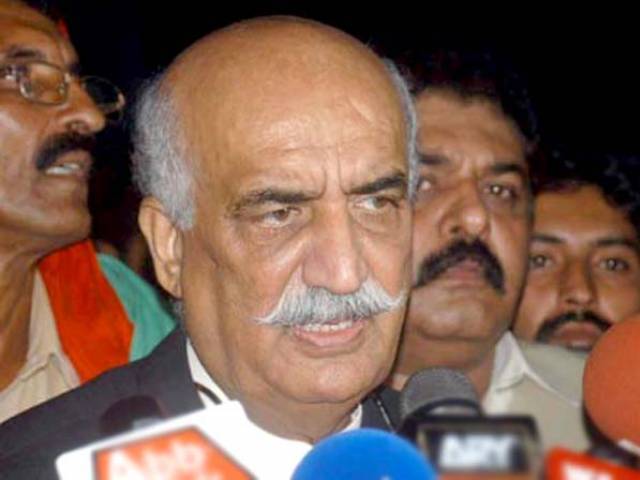
Leader of the Opposition in the National Assembly (NA) Syed Khursheed Ahmed Shah on Friday said that the government had not bothered to take the Parliament into confidence over the $16 billion LNG deal with Qatar.
It was a ‘sad’ act on the part of the government not to keep the parliament in the loop on such an important matter, he said while speaking in the National Assembly.
He said the government returned to parliament whenever it faced difficult times.
“It is painful to hear the ministers calling opposition members’ arguments ‘politics’,” Shah said.
He said that unfortunately, the government was not aware of the power that the parliament bestowed upon its members. Not giving due importance to the parliament was a conspiracy against the system, he added.
He said that the parliamentarians kept clamouring for details of the LNG project to be released for over a year and a half, but nobody from the government bothered to take them into confidence.
Shah said that the agreement signed by the former government for import of CNG was transparent but it was not allowed to materialise by ex-chief justice Iftikhar Muhammad Chaudhry.
He said that he would brief the House on the losses suffered by the Pakistan International Airlines since 2006.
“Decisions (regarding Pakistan) should not be taken by the International Monetary Fund (IMF), but rather the people should be allowed to decide,” he added.
Shah said that it is the fundamental right of the parliamentarian to create policy for the sake of the public.
The opposition leader said that it was unfortunate that the leader of a country adopted a dictatorial behavior. Leaders of the party, which had promised a load shedding-free Pakistan, beat their own people for protesting against power outages, he added.

https://ppppunjab.wordpress.com/2016/02/13/govt-didnt-bother-to-take-parliament-into-confidence-over-qatar-lng-deal-khursheed-shah/

Bilawal Bhutto strongly condemns armed attack on PPP workers convention in AJK by the goons of PML-N

Bilawal Bhutto Zardari Chairman Pakistan Peoples Party has strongly condemned armed attack on PPP workers convention in Nakial, Kotli district in Azad Jammu and Kashmir by the goons of PML-N in which PPP workers martyred and injured with bullet wounds.

PPP Chairman took notice of the fact that some PML-N Federal Ministers were using foul and filthy language and were seen instigating violence against the PPP workers and supporters in AJK.
Bilawal Bhutto Zardari said that PML-N has adopted dictatorial tactics and let loose its armed goons to mount murderous attacks on political gatherings of the PPP ahead of the general elections.
He warned Prime Minister Nawaz Sharif to bridle his Ministers from promoting violence and use of lethal weapons against opponents otherwise he would be held responsible for the consequences.
Bilawal Bhutto Zardari further said that those who killed and maimed PPP workers in Nakial won’t go scot-free and all the legal means should be utilized to bring them to book.
PPP Chairman expressed sympathies with families of martyrs and those injured and added that their sacrifices won’t go in vain.

https://mediacellppp.wordpress.com/2016/02/13/bilawal-bhutto-strongly-condemns-armed-attack-on-ppp-workers-convention-in-ajk-by-the-goons-of-pml-n/

Friday, February 12, 2016

#ErdoganAsesino - Why did Erdogan's bodyguards beat up these Ecuadorian women?


By PINAR TREMBLAY


Turkish President Recep Tayyip Erdogan embarked on a Latin America trip between Jan. 31 and Feb. 4. The main goal of his trip was to expand trade relations with Chile, Peru and Ecuador. On Feb. 4, Erdogan gave a speech at the Instituto de Altos Estudios Nacionales (National Higher Studies Institute) in Ecuador’s capital, Quito. During his speech, a group of female protesters were heard screaming “Fuera Ecuador Erdogan” ("Get out of Ecuador, Erdogan") and "Asesino" ("Murderer"). Some of the protesters had "asesino" written on their hands as well. Their protest lasted less than a minute before they were brutally attacked by Erdogan's Turkish bodyguards. The women were forcefully removed from the room and claimed to have been assaulted; the bodyguards punched their heads, vaginas and breasts. As the female protesters were being dragged out of the auditorium, Erdogan said, “As we see now, there are sometimes disrespectful characters as well. Appropriate responses will always be taken to handle these disrespectful people.”

Outside the building, a larger group of demonstrators had gathered to protest Erdogan’s visit. Their banners read, “Erdogan loves IS [Islamic State]” and “Erdogan Kills in Syria,” while others expressed solidarity with the Kurds. The guards attacked this group as well, breaking the nose of an Ecuadorian lawmaker, Diego Vintimilla. Vintimilla posted photos of his injuries on Twitter. Social media users retweeted it and he received hundreds of supportive messages from Turkey.
The news became a trending topic for the next couple of days in Turkey, with hundreds of entries on social media. However, most of the mainstream TV channels and pro-government newspapers did not even mention the events or show images of the protests. Both in Turkey and in Ecuador caricatures were drawn ridiculing Erdogan’s aggressive bodyguards. Girgir, one of Turkey’s most popular satirical magazines featured the event on its cover, with Erdogan wearing boxing gloves asking not just Turks but the entire world to remain silent. On Twitter, #ErdoganAsesino, #HeilHitlerdogan and #DirenQuito (Resist Quito) became trending hashtags. A few critical Turkish pundits carried this sensitive incident to their columns. One was Hayko Bagdat’s humorous piece for the Diken website titled “To us everywhere is Kasimpasa.” Kasimpasa is a district of Istanbul where Erdogan grew up. It is known for tough and standoffish men ready to confront anyone and everyone.
A satirical column for Daily Zaman was penned by Turan Alkan titled “Who is the biggest parallel: Ecuador,” referring to the nickname for the Gulen movement members. Alkan ridiculed several instances of doublespeak by Justice and Development Party (AKP) elites, and then he indicated that due to Ecuador’s location it must be the place for all Gulen movement members to escape to.
In the meantime, Ecuadorian Deputy Foreign Minister Fernando Yepez summoned Korkut Gurgen, the Turkish ambassador in Quito, demanding an answer about the excessive use of force by the Turkish bodyguards. Ecuadorian Interior Minister Jose Serrano said they had requested the bodyguards to surrender their passports on Feb. 5, but the Turkish delegation had already departed Ecuador en route to Senegal.
At the same time, several Ecuadorian pundits are both upset with Erdogan and displeased with their own leaders. Cristina Burneo Salazar, a professor at Simon Bolivar Andean University of Quito, wrote a searing piece stating that “Erdogan should have never been invited to speak at a university,” explaining how the original location, La Universidad Central, had rejected to host Erdogan. Salazar’s piece has in-depth details about the AKP’s track record on human rights and disrespect of women. She even mentions Bulent Arinc’s notorious comment advising women not to laugh loudly in public.
A group of Turkish businessmen living in Ecuador have announced they will sue the six female protesters who were brutally beaten by Erdogan's bodyguards. They allegedly said that “these unidentified women entered the lecture hall and called our president a murderer.”
For the people in Turkey, however, the intriguing part was not the aggression against unarmed protesters in Ecuador. After all, in the last couple of years, Turks have witnessed the violent suppression of almost all anti-government protests. Even sporadic protests against Erdogan and his men have met with extreme aggressive reactions in public, with little to no legal repercussions for the instigators. Indeed, Freedom House recently announced that on average there are four court cases initiated every day for the crime of “offending Erdogan” in Turkey.
For Turkish audiences, the real surprise was that a government that came to power with the slogan “zero problems with neighbors” has not only managed to increase friction and conflict with almost all neighbors simultaneously, but also for the first time in Turkish history managed to generate a diplomatic crisis between Ecuador and Turkey. One tweet put it succinctly: “If he [Erdogan] manages to be a problem in Ecuador, no wonder he is a problem in Syria.” In a humorous approach, most Turks were asking if the Ecuadorian protesters were Kurds or Gulenists, and what kind of traitors were they that they failed to respect the “world leader.”
Beyond all these recurring scenes of violent attacks and angry outbursts of AKP members lies a lack of tolerance for dissent. The intolerance level is increasing at an alarming rate, due to what might be called a “preaching to the converted” syndrome. Erdogan and almost all AKP elites, including Prime Minister Ahmet Davutoglu, do not appear before random crowds; all press interviews are exclusively conducted by pro-government members of the media.
Erdogan’s latest favorite audience has been the mukhtars (leaders of neighborhoods and villages) who are vetted rigorously prior to being accepted into the palace. They dutifully clap after each sentence Erdogan utters. For instance, on Feb. 10, during the 20th mukhtar gathering at the palace, Erdogan complained about the alleged US support for the Kurdish troops in Syria while mukhtars cheered him on respectfully.
These loyal and controlled audiences are much more difficult to assemble in foreign countries. In Turkey, the opposition is a feeble voice whose questions are not taken into account.
In regard to Erdogan's visit to Ecuador, scholars such as Aylin Topal, a Latin America expert and professor of political science at the Middle East Technical University, have argued that the lawsuits against Erdogan’s bodyguards have taken the forefront of the trade agreements signed between Ecuador and Turkey. Yet Ecuadorian activists have expressed their disappointment with their own government for sacrificing human rights in exchange for strengthening trade relations. Indeed, Miguel Molina Diaz, Quito-based journalist and editor, argues that the covering of the nude statues during Iranian President Hassan Rouhani’s visit to Italy was less offensive than what Erdogan’s entourage did against the Ecuadorians and sovereignty due to the Ecuadorian government’s submission to Erdogan.
The financial consequences of Erdogan’s Latin America tour will most likely not be felt in Turkey in the short run. Yet the excessive use of force by Erdogan’s bodyguards’ (allegedly there were 70 of them) in Ecuador have reconfirmed two facts: First, whenever Erdogan cannot preach to the "converted," he is out of his comfort zone and surprising events are likely to happen. Second, as one of the Ecuadorian protesters, Karla Kalapaqui, told Al-Monitor, “Turkish and Kurdish women everywhere are very brave.” They are indeed!


Read more: http://www.al-monitor.com/pulse/originals/2016/02/turkey-ecuador-protesters-beaten-by-president-bodyguards.html#ixzz400nWhjT5