Sunday, April 12, 2015
Obama and Raul Castro dialogue: What’s next US-Cuba?
http://www.havanatimes.org/?p=110591
By Isaac Risco

A “historic” gathering with an open ending, the Panama Summit will be remembered as the scenario in which the presidents of the United States and Cuba turned to dialogue, but it will be just one more stop on a long road.
“We are ready to discuss everything, but we have to be patient, very patient,” said the president of Cuba, Raul Castro, during his meeting with his US counterpart in Panama City.
Barack Obama also acknowledged that both parties will often “disagree”, but hoped they do so “with respect”.
Full normalization of relations between Washington and Havana will be a “long process, difficult and complex,” predicted Cuba Foreign Minister Bruno Rodríguez, when he appeared before the press to discuss the historical dialogue between Obama and Castro.
Despite the thaw between the two countries, “profound differences” persist that will not be easy to remedy. Even the planned reopening of embassies is without a date. Rodriguez could not even confirm when the fourth round of the negotiations who occur. The talks began in January.
The United States has not yet announced the removal of Cuba from its list of countries sponsoring terrorism, noted Rodriguez, which is currently seen as one of the main obstacles to the advancement of the diplomatic rapprochement.
In Panama there was speculation that Washington would announce the removal of Cuba from the “black list” during the days of the summit. The list, in effect since 1982, currently includes Iran, Sudan, Syria and Cuba. The White House said that the evaluation process has concluded, but the decision is not taken.

Raul Castro and Barack Obama dialogue at the Summit of the Americas in the presence of their delegations. Photo: Estudios Revolución
Obama attributed the inaction to a temporary issue. “I’ve been traveling and I want to make sure I have a chance to read it (evaluation),” he explained.
Rodriguez also called for a prompt solution to the problem faced by the Cuban Interests Section in Washington because no bank will handle its accounts, due to ramifications of the US embargo on the island. The building is destined to become the next Cuban Embassy.
Even when praising Obama for approving measures to ease the embargo, Rodriguez was critical: “Cuba appreciates the very limited steps taken by the US government,” he said.
But Washington has repeatedly stressed since it began diplomatic negotiations with the Castro administration that it will continue to support Cuban dissidents. “Our governments will continue to have differences,” Obama noted in Panama.
Before his first greeting with Castro at the summit, the US President even received two Cuban dissidents, along with 13 other civil society activists from around the continent. The anti-Castro opponents had participated in the civil society forum that took place in the days before the summit, in which there were several incidents between Castro supporters and dissidents.

Raul Castro and Barack Obama on April 11, 2015, at the Summit of the Americas in Panama.
“Nobody thought that decades of mistrust and suspicion were going to disappear overnight,” said Michael Shifter of the Washington Inter-American Dialogue think tank before the summit.
Full normalization of relations with Cuba in the region itself will be a difficult task. To date, Havana refuses to return to the Organization of American States (OAS), despite the body lifting six years ago its 1962 sanctions against Cuba.
The government of Raul Castro rejects the OAS, traditionally seeing it as an “instrument of domination” of Washington in the region.
“Rapprochement, if any, will occur in the coming years, through other UN agencies,” predicted the outgoing OAS general secretary, José Miguel Insulza, in a conversation with dpa in Panama.
The new secretary, Luis Almagro, said he expects to achieve the return of Cuba during his mandate.
With Iran and now Cuba, Obama breakthroughs face hard sell
http://www.chron.com/
By JIM KUHNHENN
After breakthroughs abroad, President Barack Obama is finding stern challenges at home to his foreign policy, facing hard sells to skeptics over U.S. shifts, first on Iran and now Cuba.

Obama returned to Washington early Sunday still basking in the attention from his historic meeting with Cuban President Raul Castro at a summit of Western Hemisphere leaders. But Obama is certain to find a less appreciative crowd in Congress than the one he left behind at the Summit of the Americas in Panama.
To complete a nuclear agreement with Iran, Obama must deal with resistance in Congress and the unpredictability of the Iranian leadership, which has a distinctly different interpretation of what the sides have settled on so far.
Cuba and Iran offer Obama, whose term ends in early 2017, the potential for legacy-crowning achievements. Iran may prove a greater challenge than Cuba, but together they are subjecting Obama's foreign policy to the kind of scrutiny that most international issues, short of war, rarely draw.
Obama made clear in a closing news conference late Saturday in Panama City that he believes he can handle the twin trials. The American public is on his side on Cuba, the president said, and he had tough words for Republicans defying him on Iran.
Both have their roots in decades of grievances. Both have had constituencies in the U.S. deeply mistrustful of the governments with which Obama is dealing. Pro-Israel Americans cannot fathom a deal with an Iran that will not recognize Israel's existence. And for long, Cuban-Americans who escaped Fidel Castro's revolution could not imagine a U.S. government not committed to ousting the Havana government.
On the flip side, Cuba is hardly the threat Iran could be. Public opinion no longer demonizes Cuba. In the end, Obama's efforts to re-establish normal relations looks like the lesser burden.
When it comes to Cuba, "the American people don't need to be persuaded," Obama said.
Still, there are reminders that the barriers have not all fallen.
Castro, in a lengthy speech at the summit, recited a litany of objections to past U.S. policies. And the room where Obama and Castro met displayed no flags, thus declaring the absence of diplomatic relations.
Obama's next step is removing Cuba from the United States' list of state sponsors of terrorism. Such a decision, recommended by the State Department, could come in days. Obama would have to notify Congress. Lawmakers do not have to ratify the decision, but they have 45 days to disapprove it.
Such a vote, if attempted, probably would not succeed. But the issue is percolating just as 2016 presidential candidates are jumping into the race.
Florida, once the center of anti-Castro activism, is a pivotal presidential state, and some Republican candidates will try for a political upper hand by accusing Obama of weakening America's place in the world.
"President Obama's foreign policy has been one appeasement toward autocratic dictators, thugs, and adversaries after another," Sen. Lindsey Graham, a South Carolina Republican toying with a presidential run, said amid news Obama was to sit down with Castro.
The White House hardly appears worried about the politics of Cuban diplomacy, given that support for ending more than 50 years of U.S. isolation of the island nation crosses party and geographic lines.
"''Perhaps the most important difference is that while Iran is inherently a security issue, today Cuba is the opposite," said Carl Meacham, a former senior Republican aide on the Senate Foreign Relations Committeewho now is a director at the Center for Security and International Studies. "If he removes Cuba for the list of state sponsors of terror, President Obama will demonstrate that the United States can no longer reasonably look at Cuba as a threat to our own security."
Obama perceives the Iran deal as far more fragile.
Iran and the world powers negotiating the deal have until the end of June to reach a final deal. Congress is angling to assert authority over the final agreement, and even some of Obama's Democratic allies support that.
But Obama reserves most of his frustrations for Republicans and he singled out Sen. John McCain of Arizona, his 2008 presidential rival, for specific scorn during Saturday's new conference.
McCain last week declared a major setback in the nuclear talks after Iran's supreme leader demanded that sanctions against Tehran had to be lifted immediately after a deal went into place.
Obama cast McCain's criticism as an assault on the credibility of Secretary of State John Kerry.
"Now we have a senator suggesting that our secretary of state is purposefully misinterpreting the deal and giving the supreme leader of Iran the benefit of the doubt in the interpretations," Obama said. "That's not how we're supposed to run foreign policy, regardless of who is president or secretary of state."
Why Hillary Clinton Has Such a Strong Chance of Becoming the Next President

BY PERRY BACON JR.
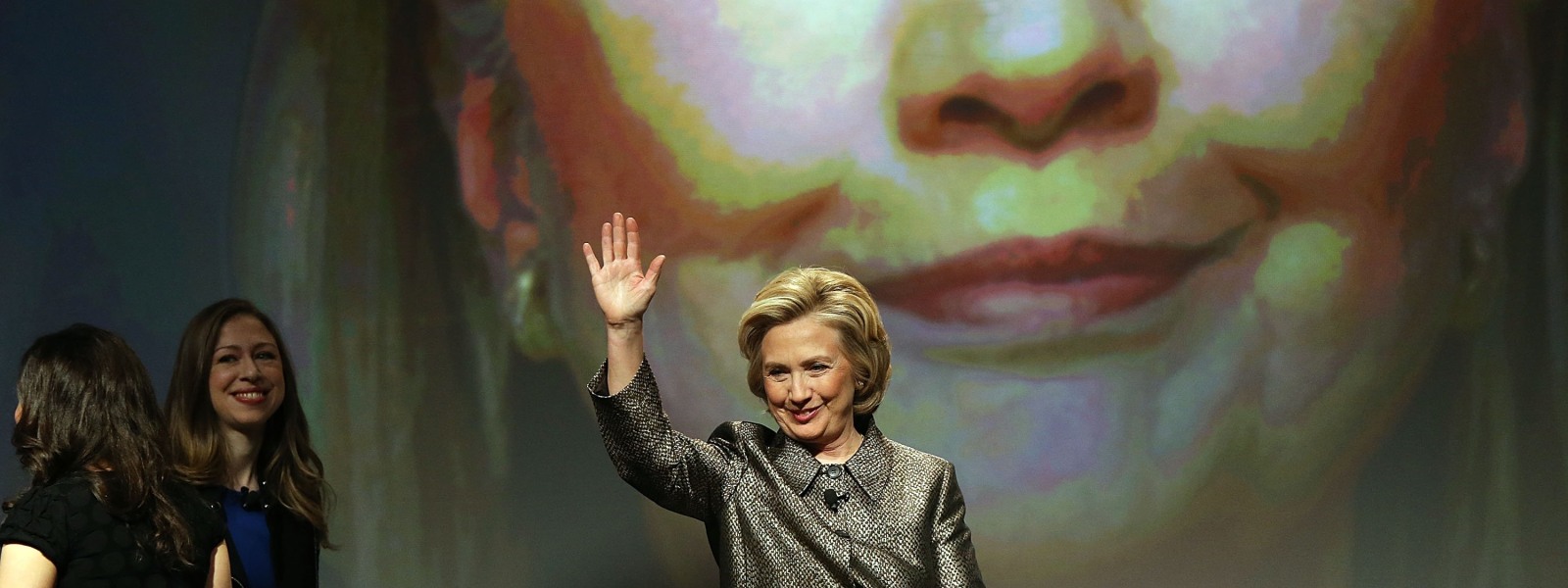
Her circumstances at first glance look similar today: she is the leading Democrat and the most famous candidate in the field. But this time is much different. Hillary Clinton begins the race with a much, much larger advantage than in 2008 against other Democrats in the primary, but it may be harder for her to win the general election in 2016 than it would have been back then.
In terms of the primary, Clinton is right now the strongest non-incumbent candidate from either party since then-Vice President Al Gore ran in 2000. Dozens of members of Congress have already endorsed Clinton, her campaign staff includes some of the most experienced strategists in the Democratic Party and President Barack Obama and his political circle have all but anointed her as his successor. The party's donors are strongly behind Clinton as well.
Clinton was the favorite of the party in 2008 as well, but Democrats were much more divided back then. Clinton's vote for the Iraq War and refusal to apologize for it made her vulnerable in the primary, with a heavily anti-war electorate and the rise of Obama, who had opposed the war from its start.
Tom Daschle, the former Senate Majority Leader and an influential figure in the party back then, endorsed Obama early in the race and many of his former aides joined Obama's team. Even as Clinton was preparing her campaign in 2006, Sen. Harry Reid of Nevada and Sen. Chuck Schumer of New York, two of the party's leading figures, privately urged Obama to run. Eric Holder and Susan Rice, who held senior roles in Bill Clinton's administration, opted for Obama over Clinton early in the race.
Eventually, Ted Kennedy endorsed Obama, dismissing concerns about his level of experience and giving Obama backing from a deeply-trusted figure in the party. For many Democrats, electing the first black president was just as or more significant than electing the first woman. And African-Americans overwhelming backed Obama, making it impossible for Clinton to win many Southern primaries.
Now many Democrats have said the party should nominate a female candidate. The war in Iraq is no longer a huge issue in American politics.
There is no obvious black candidate seeking to challenge Clinton, and even if one emerged, it's not clear that person would get more than 80% of the black vote as Obama did. The election of the first black president, a huge motivating factor for many African-Americans voters and some whites, has already happened.
The Democrat in perhaps the best position to defeat Clinton is someone who has never run for office before and seems very unlikely to do so: Michelle Obama.
Seeing the consolidation around Clinton, some of the strongest potential Democratic candidates are so far not even bothering to run. There is little sign that Vice President Joe Biden or Massachusetts Sen. Elizabeth Warren, the two strongest potential challengers, are considering campaigns. The field of candidates who appear likely to run against Clinton lack broad or intense support in the party: former Maryland Gov. Martin O'Malley, Vermont Sen. Bernie Sanders and former Virginia Sen. Jim Webb.
This trio is likely to attack Clinton on two issues: economic populism and national security. Sanders supports major tax increases on the wealthy and increasing Social Security benefits. It's not clear where Clinton stands on those issues. O'Malley has called for greater restrictions on Wall Street banks, another topic where Clinton has not stated precise views recently.
Webb was an early Iraq War opponent and is more skeptical of the use of U.S. military force than Clinton has been in the past. The two could differ on how much the U.S. should do to stop ISIS and how much it should intervene in the Syrian civil war. Clinton has said Obama waited too late to support Syrian rebels.
But Clinton's biggest challenge in the Democratic primary is a mistake that forces the party's establishment to rethink whether she is a strong candidate for the general election. In that scenario, major party officials could tap a candidate like Warren and provide her with the kind of fundraising and grassroots support to challenge Clinton.
This is what happened in 2008, when Obama got so much support in part because of concerns from top Democrats about Clinton's ability to win the general election.
An anti-Clinton campaign within the Democratic Party seems very unlikely this year. The recent controversy about Clinton's unusual use of e-mail as secretary of state has not caused Democrats to break from the former first lady, although investigations by both Republicans in Congress and the press may unearth more damaging details.
Clinton's ties with Wall Street, while annoying to party liberals, have not yet emerged as the kind of rift that her Iraq War vote was. And Clinton is already taking strong stances on other issues liberals care deeply about, recently blasting the religious freedom law that was being considered in Indiana and calling Obamacare a huge success.
And despite complaints from some voters that America does not need to elect another president whose last name is Bush or Clinton, the former first lady's association with Bill Clinton seems to be an asset at this point.
In terms of the states that vote early in the Democratic primary, Clinton struggled in Iowa in 2008, finishing behind not only Obama, but also John Edwards. Some Iowa Democrats who backed Obama in 2008 say they are behind Clinton now.
But even if the former of secretary of state somehow lost Iowa to O'Malley, she would still have a strong chance of winning the nomination. Voters in New Hampshire strongly supported Bill Clinton in the 1992 primary and Clinton upset Obama there in 2008.
South Carolina's large black population is a huge advantage for her.
The general election will be much more difficult for Clinton than the primary. She does have some advantages. Her stances on many major issues, such as calling for an increase in the minimum wage and paid sick leave for all workers, are backed by a majority of Americans. While wages remain stagnant for many U.S. workers, the economy is in much better shape than when Obama took office.
And whoever is the Republican Party's nominee must grapple with balancing the views of the party's older, mostly white and deeply-religious bloc of base voters with the views of younger, less-religious voters. Clinton's strong support of gay marriage and creating a pathway to citizenship for illegal immigrants will be a strong contrast to the GOP nominee, who will likely have to hedge on those issues.
At the same time, Clinton must navigate establishing her own political brand as being different from both her husband and Obama.
A March NBC News/ Wall Street Journal poll showed that 51 percent of Americans say that she would "represent too much of a return to the policies of the past" if elected president, while 44 percent say she "would provide the new ideas and vision the country will need for the future."
Republicans will rightly argue that electing Clinton would be something of a third term for Obama, since he and Clinton agree on nearly every major policy issue. The last two people (Gore in 2000 and John McCain in 2008) who tried to run for the third term of their political party lost.
In addition, even some Democrats consider President Obama's foreign policy record weak, from tense relations with Israel to the rise of both ISIS and Russia militarily during his tenure. Republicans plan to attack Clinton's four years as one of Obama's top foreign policy advisers.
Clinton has an obvious model to follow in terms of getting elected in the general election. Obama won in both 2008 and 2012 by carrying a series of states that Gore in 2000 and John Kerry in 2004 did not: Colorado, Florida, Nevada, Ohio and Virginia. He benefited from both a growing percentage of non-white voters (from about 19 percent of the electorate in 2000 to 26 percent in 2012) and deep support from those minority voters, about 80% of whom backed him.
Clinton will be hard-pressed to follow the model of her husband, who won in states like Arkansas and Kentucky. The South has become almost entirely Republican at the federal level since Bill Clinton's victories, and it's hard to see Hillary Clinton reversing such a strong trend.
There are a few factors about the electorate environment that aren't clear at this point. Will minority voters be less inclined to get behind Clinton, either because Republicans successfully woo them or the absence of Obama on the ticket? Could Clinton outperform Obama among women because of the historic nature of her candidacy? Will some men or even women be reluctant to elect a female president? Can she appeal better than Obama to working-class whites? And how will Americans view the economy and Obama's presidency overall 18 months from now?
Hillary Clinton Announces 2016 Presidential Bid

Throwing her hat in the ring!
It's official: Hilary Clinton is running for President of the United States once more. The former Secretary of State, New York Senator, and First Lady announced her candidacy bid on Sunday, April 12.
Clinton, 67, launched her campaign for the 2016 election with emails from her campaign chairman, John Podesta, to donors and others on Sunday afternoon.
"I wanted to make sure you heard it first from me – it’s official: Hillary’s running for president,” the email reads.
Clinton previously lost to President Barack Obama for the Democratic nomination in 2008.
Clinton's plans to run slipped through the cracks on Friday, with several media outlets reporting that she would be making a statement over the weekend. That same day, a new epilogue to Clinton's 2014 memoir, Hard Choices, was published on Huffington Post.
"You shouldn't have to be the granddaughter of a President or a Secretary of State to receive excellent health care, education, enrichment, and all the support and advantages that will one day lead to a good job and a successful life. That's what we want for all our kids," the passage read, referring to her 6-month-old granddaughter Charlotte.
"I'm more convinced than ever that our future in the 21st century depends on our ability to ensure that a child born in the hills of Appalachia or the Mississippi Delta or the Rio Grande Valley grows up with the same shot at success that Charlotte will," she continued. "Becoming a grandmother has made me think deeply about the responsibility we all share as stewards of the world we inherit and will one day pass on. Rather than make me want to slow down, it has spurred me to speed up."
Up next, Clinton is immediately getting to work with planned trips to Iowa and New Hampshire to meet with voters and begin the road to win the ticket at the Democratic convention. The next general presidential election will be held on Nov. 8.
Read more: http://www.usmagazine.com/celebrity-news/news/hillary-clinton-announces-2016-presidential-bid-in-twitter-video--2015124#ixzz3X7nS2SPr
Follow us: @usweekly on Twitter | usweekly on Facebook
Friday, April 10, 2015
Holograms for Freedom: Thousands join virtual demo against new protest law in Spain
Protesters in Spain have come up with a novel way of taking on a new law that limits the rights of the public to take part in demonstrations. There was a large turnout, but nobody even came close to being arrested – because no one actually attended the protest. A number of holograms were projected outside Spanish parliament building, showing people across the globe, who are angry at the new so-called ‘safety’ law, which makes it illegal to protest outside government buildings, insult police officers or refuse to reveal identification documents.
A view from Turkey - Cover Your Eyes, Yemen Is Dying

Fehim Tastekin
Now that Saudi Arabia's attack on Yemen has the support of Turkey and a large part of the international community, feel free to be deaf and blind to what will actually happen to this country. Turkish President Tayyip Recep Erdogan claimed that Iran has Yemen under its control and ordered their withdrawal. From this moment, Turkey will not bother with questions such as who are the rebelling Houthis in Yemen, who is fighting whom, what is really driving the Saudis or even the alleged "Iran factor" itself. And do not bother to ask about the civilian losses either. Nobody cares about the 40 people dead and 200 wounded at the al-Mizrak refugee camp on March 30. Who will ponder the numbers offered by Amnesty International either? 14 people, four of them minors, burned to death by the Saudi Attacks in three days 20 civilians, three of them minors, killed in Kitaf on March 27, The March 31 bombing of Sanaa killed 25, including six under the age of 10 This is a war and the list of causalities will increase. It is also meaningless to see these as attacks “against the Houthis.” At the end of the day, it is Yemen being hit, and the people pay the price. Furthermore, the operation does not seem to be pushing back the Houthis and the military groups acting alongside them. The area controlled by the Houthis has expanded since the bombardment began, and they have even reportedly captured a base at the Bab-el-Mandeb Strait which may allow them to threaten the oil tankers which transport 8% of the world's oil. The Saudis plan is to cripple the defense forces of Yemen and force the Houthis to retreat, but they may be forced into a ground operation — which would be a huge gamble for the alliance. The Saudis experienced war with the Houthis in 2004-2010 during six operations led by the dethroned Yemen leader Ali Abdullah Saleh. As a retaliation to the airstrikes of Riyad, Houthis crossed mountain terrain to penetrate 30 kilometers deep inside Saudi Arabia territory and terrorized their army. The resistance front may get even stronger since a ground operation would be observed as an invasion. Yemen may wind up as the Vietnam of the Arab alliance. The trap is calling you So, why are our leaders in Ankara so willing to enter such a game of traps? Three driving factors seem evident: the rage felt against Iran for spoiling Turkey's plans in Syria and Iraq; the need for investment from the Gulf countries; and ultimately the chance of fulfilling the dream of transporting the power of a joint Arab intervention into Syria. However, as Turkey steps up to play the spokesperson of this war, it risks destroying relations with Iran — and failing to see its new place on the Arab map. Rather than listening to the compliments made on the red carpet for the sake of an alliance against Iran, Turkey must understand that many Arab countries today actually believe Turkey is playing a dangerous games. Indeed, it is a troubling reminder of Turkey's strategy with Syria, while the geopolitical game in the Middle East is now firmly in the hands of the new Saudi ruler, King Salman. Barbara Bodine, former US Ambassador to Yemen has said the Saudis are exaggerating Tehran's influence in the Yemen. “The idea that the Houthi are an Iranian creation is ahistorical," she said. Of course, Iran supports the Houthis, but the Saudis are exploiting this situation to suppress the poor and powerless people of an entire country. In fact, the Saudis are the main reason Yemen now has such a strong Salafi presence, with their religious ideology injected to this country after the 1970s under the cover of financing Yemen's Ministry of Education. Sunni Shafi'is and Shia Zaidis were living together in harmony for centuries before the ideological intervention of the Saudis that encouraged radicalism. The Sunnis and Shias of Yemen were as close as being able to pray at the same mosque; Sunnis could pray at mosques where the call to prayer is sung in the Shia way. The people of this country used to take pride in that. This oasis of tolerance is being destroyed step by step. In parallel to the radicalization of the Sunni side, the Shia Zaidis are experiencing an ideological change through the Houthis. The Iranian influence can be traced in the Houthi leaders, many of whom were educated in Iran's holy city of Qom. But to conclude that "Iran is taking control of Yemen" only serves the needs of the Saudis. Ali Abdullah Saleh, who was also a Zaidi, used this tactic to obtain financial support from the Saudis. He also liked to accuse Iran of being behind the Houthis. Today, the Saudis are doing everything they can to prevent a potential ally of Iran to have influence in their backyard. Yemen shifting under the influence of Iran is as worrisome as it is important that the dark shadow of Saudi Arabia (which intervened in Yemen for decades by bribing the tribes) be lifted from hanging over this country. One is a fear about the future while the other has been a fact for decades. It is noteworthy that the Yemen people who refuse both the Iranian influence and the Saudi intervention have started a campaign with the #Kefayawar hashtag. What they say is that Yemen had enough war because they want peace, food, water, education, health institutions and infrastructure. The al-Qaeda militants sent by the Saudis, wars with the Houthis and unending social conflict since 2011 have taken almost everything from Yemen. Now, the Saudi operation is destroying what is left, with the aim of forcing Yemen to kneel. Now, these questions should be asked: Can Turkey be a friend to Yemen by supporting a policy of destruction? Israel is the secret and happy partner of this coalition. Is the Ankara government happy being part of that? This war increases the price of oil. The oil barons are happy. What about Turkey? Playing to "Shia phobia" is the favored tactic to compete for the leadership of the Arab world. But what does Turkey actually hope to gain from this apart from hurting the fragile domestic situation of its own Sunni and Shia sects? Read the full article: Cover Your Eyes, Yemen Is Dying Worldcrunch - top stories from the world's best news sources Follow us: @worldcrunch on Twitter | Worldcrunch on Facebook
#YemenCrisis - UN calls for immediate 'humanitarian pause' in Yemen

By Jamal al-Jabiri
Red Cross, UN aid is first to be flown in to Yemen since fighting began - but is far from enough, says UN official.
The Red Cross and UN flew medical aid into Yemen's capital Friday after the southern city of Aden was battered by the heaviest night yet of Saudi-led air strikes targeting Houthis.
The UN also called for an immediate "humanitarian pause" of at least a few hours each day, saying aid was desperately needed in the conflict-ravaged country
The International Committee of the Red Cross said it dispatched an aircraft to Sanaa, its first aid shipment since the international campaign against the Houthis began last month.
"This is the first ICRC plane to have landed in Sanaa. It is loaded with 16 tonnes of medical aid," said Marie Claire Feghali, Red Cross spokeswoman in Yemen.
Residents and officials in Aden said the city was pounded overnight after Houthis and renegade army soldiers loyal to former president Ali Abdullah Saleh arrived at the city's northern entrance.
"The raids began at around 10:00 pm (1900 GMT) on Thursday and were the most violent since the start of 'Operation Decisive Storm'," a resident told AFP.
Residents also said coalition aircraft targeted other positions, including a stadium in the centre of the city and checkpoints manned by the rebel forces.
More than two weeks of heavy bombardment by the Saudi-led alliance against opponents of exiled Yemeni President Abd Rabbuh Mansour Hadi and fighting between rival militias prompted the UN call for a freeze in the violence.
UN humanitarian coordinator in Yemen, Johannes Van Der Klaauw, told reporters in Geneva on Friday that "immediate humanitarian pause in this conflict" was desperately needed.
He insisted that the aid that got through was far from enough.
The UN's children agency UNICEF said it had delivered 16 tonnes of aid by air to Sanaa, including medical supplies for 80,000 people as well as food supplements for 20,000 children.
"The supplies we have managed to bring in today can make the difference between life and death for children and their families," said UNICEF Yemen Representative Julien Harneis.
The Saudi-led coalition says it will continue its raids on Yemen until the Houthis, who seized control of Sanaa and central areas last year, retreat to their northern mountain stronghold.
Saudi Atrocities Go Unnoticed

In December 2011, the United States sold $30 billion worth of weapons to the monarchy of Saudi Arabia. Included in the sale were 84 F-15 fighter jets, which are now “at the core” of the Saudi war in Yemen.
This fact, and numerous others about the Kingdom have received scant attention from proponents of the Saudi attack on Yemen.
Here’s a look at five things about Saudi Arabia that US officials and the establishment media are neglecting to talk about as Saudi bombs continue to drop on the people of Yemen with the support of the United States:
- Sharia Law runs the country.
- Saudi Arabia is an authoritarian dictatorship: There are no national elections, no parties, and no rights.
- People are publicly beheaded in the Kingdom.
- Human rights for Saudi women are among the worst in the world.
- The monarchy is a cash machine for terrorists.
1. Sharia Law runs the country
The following quotes are directly from Saudi Arabia’s Basic Law of Governance:
- “The King shall rule the nation according to the Sharia.”
- “The Kingdom of Saudi Arabia is a sovereign Arab Islamic State. Its religion is Islam. Its constitution is Almighty God’s Book, The Holy Qur’an…”
- “Monarchy is the system of rule in the Kingdom of Saudi Arabia. Rulers of the country shall be from amongst the sons of the founder King Abdulaziz bin Abdulrahman Al-Faisal Al-Saud, and their descendants.”
- “The Courts shall apply rules of the Islamic Sharia in cases that are brought before them.”
- “The aim of education is to implant the Islamic Creed in the hearts of all youths.”
“The Hanbali school, Islam’s most orthodox which spawned the Wahhabi and Salafi branches, is embraced in Saudi Arabia and by the Taliban,” according to the Council on Foreign Relations.
2. Saudi Arabia is an authoritarian dictatorship: There are no national elections, no parties, and no rights
On January 27, 2015, RT reported, “There are no national elections, no parties, and no parliament – only a symbolic advisory chamber, known as Majlis al-Shura. Criticism is strictly forbidden: only last year, prominent opposition activist Abd al-Kareem al-Khoder joined hundreds of the country’s political prisoners, when he was sentenced to eight years for demanding the changeover to a constitutional monarchy. Just days before King Abdullah’s death, blogger Raif Badawi was given the first 50 of his 1,000 lashes – for calling for free speech on his blog.”
“Saudi Arabia’s infamous religious police are employees of the Committee for the Promotion of Virtue and the Prevention of Vice. Their job includes ensuring that men and women do not mix socially, that people do not dress immodestly and that businesses close during prayer time,” wrote Adam Taylor of the Washington Post.
Saudi Arabia was rated as “not free” and was given the lowest possible score in a January 2015 report by Freedom House, a nongovernmental organization that tracks human rights.
Also in January, Human Rights Watch published a report stating that, “Saudi Arabia imprisoned … activists on broad, catch-all charges designed to criminalize peaceful dissent, such as breaking allegiance with the ruler and setting up an unlicensed organization.”
And last month, the Islamic Human Rights Commission reported that there are an estimated 30,000 political prisoners in Saudi Arabia.
3. People are publicly beheaded in the Kingdom
Saudi Arabian courts “continued to use corporal punishment as a judicial penalty, including floggings and amputation, as well as public execution by beheading,”according to a 2012 US State Department report.
In 2013, Amnesty International condemned the “disturbing” rise in Saudi executions, including public beheadings and the practice of crucifixion, which “refers to the court-ordered public display of the body after execution, along with the separated head if beheaded.” There were at least 79 executions in 2013, according to Amnesty.
The Kingdom publicly beheaded 19 people in the first half of August 2014 for offenses that ranged from drug smuggling to sorcery.
Included was Mohammed bin Bakr al-Alawi who was beheaded for allegedly practicing black magic sorcery, the Saudi Gazette reported. Another Saudi man wasbeheaded in 2012 for “sorcery and witchcraft.”
4. Human rights for Saudi women are among the worst in the world
Woman are not allowed “to leave the house, make a purchase, sign any legal document – in fact perform almost any official action, from agreeing to surgery, to signing up to a class – without the consent of a guardian, either the husband or the father.”
“Yet, even these suffocating measures give only scant impression of the status of Saudi women in a society where even their court testimony is worth half of that of a man,” RT reported.
There are many other things women in Saudi Arabia are not allowed to do, including:
- Drive a car
- Go for a swim
- Compete freely in sports
- Try on clothes when shopping
- Enter a cemetery
- Read an uncensored fashion magazine
According to the 2013 World Report by Human Rights Watch, “punishment for domestic violence remain[s] lax [in Saudi Arabia.] The government failed to enact a 2011 draft law to combat violence against women and children. In May, Jeddah’s Summary Court convicted a man for physically abusing his wife to the point of hospitalization, but sentenced him to learning by heart five parts of the Qur’an and 100 sayings of the Prophet Muhammad.”
In 2014, the World Economics Forum ranked Saudi Arabia 130 out of 142 countries in its annual report on gender equality.
5. The monarchy is a cash machine for terrorists
In a 2009 secret paper released by WikiLeaks, Hillary Clinton said, "Donors in Saudi Arabia constitute the most significant source of funding to Sunni terrorist groups worldwide…more needs to be done since Saudi Arabia remains a critical financial support base for al-Qaeda, the Taliban, LeT and other terrorist groups."
“Saudi Arabia, and the other Sunni countries in the Middle East, have been financially and morally supporting the growing and evolving Sunni insurgency against Shias in the region for years. They have intentionally bankrolled groups whose mission it is to wipe out the Shia minority in the region. First they started with al-Qaeda, and then they bankrolled what became ISIS,” wrote Thom Hartmann, although the Saudis vehemently deny support of ISIS.
The Atlantic reported in June 2014, the success of ISIS “is in part due to the support they have received from two Persian Gulf countries: Qatar and Saudi Arabia,” though there remains much debate about whether or not the Kingdom is in fact supporting ISIS.
Why isn’t Washington being transparent?
If the United States chooses to support, and provide weapons to an un-elected Saudi government that is among the world’s worst human rights violators, it should at least do so transparently.
Would the people of the United States go along with the Saudi attacks in Yemen if it knew how the Saudi monarchy operates?
7 ways Saudi Arabia is silencing people online

By Ben Beaumont

Raif Badawi is serving a 10-year prison sentence in Saudi Arabia, mainly for setting up a website. We talk to another local blogger – who has to remain anonymous for their own safety – about different tactics the authorities use to silence people online.
1. Gagging anyone with an independent opinion
“Overall, the situation in Saudi Arabia is very bad, particularly from the point of view of people with independent opinions who go against the grain. Recently, there have been investigations, arrests and short-term detentions of journalists, athletes, poets, bloggers, activists and tweeters.”
2. Blaming everything on terrorism
“The authorities are fragile. They seek to gag and stifle dissent using various means, including the shameful Terrorism Law that has become a sword waved in the faces of people with opinions. Courts issue prison sentences of 10 years or more as a result of a single tweet. Atheists and people who contact human rights organizations are attacked as ‘terrorists’.”
The authorities approached the internet providers hosting my personal website and asked them to block it and delete all the content.
3. Personal attacks on bloggers
“I have been harassed in many ways. The authorities approached the internet providers hosting my personal website and asked them to block it and delete all the content. They also dispatched security officers to tell me to stop what I was doing in my own and my family’s best interests. I was later officially banned from blogging and threatened with arrest if I continued. I succumbed and stopped in order to protect my family.”
4. Bans, false accusations and being fired from your job
“There are many cases of bloggers being restricted or banned. Some of them – whom I know – are still being investigated about blogs they wrote in 2008, even though they aren’t involved in blogging anymore. Saudi bloggers can also be fired from their jobs and prevented from making a living. Many face false allegations that they are ‘atheists’ or ‘demented’. Restrictions are imposed on almost every aspect of the blogger’s life.”
5. Far-reaching online surveillance and censorship
“Censorship is at its maximum, especially after passing the Terrorism Law. A poet was arrested as a result of a single tweet which indirectly criticized King Abdullah using symbolic language. With millions of web users in Saudi Arabia, this means the authorities are keeping an eye on everything that’s being written. We have also received reports through international newspapers that Saudi Arabia uses surveillance to hack and monitor activists’ accounts.”
6. Deploying an electronic army
“The authorities have powerful cyber armies which give a false impression of the situation in Saudi Arabia to deceive people overseas. They launch websites, YouTube channels and blogs to target activists and opponents, and depict them as atheists, infidels and agents who promote disobedience of the Ruler. By contrast, these websites, channels and blogs often praise the state and its efforts. I have personally been the victim of such state orchestrated campaigns that harmed my reputation.”
7. Brutal punishments
“Raif Badawi’s case further demonstrates the brutality of a state that still rules through punishments from the Middle Ages, like flogging, hefty fines and exaggerated prison terms. The Saudi government needs to know that it doesn’t own the world and that it can’t silence the world’s voice with its money.”
Subscribe to:
Posts (Atom)