
Sunday, January 20, 2013
Anti-Torture Efforts in Afghanistan Failed
لانگ مارچ کا ڈھونگ؛ انقلاب کے نام پر انقلاب کا سبوتاژ
Written by Lal Khan
ریاست کے کچھ حصوں، سامراج اور حکمران طبقات کے دھڑوں کی جانب سے حقیقی انقلابی تحریک کو دبائے رکھنے اور اسے منقسم کرنے کے لیے تحریک کے نام پر ایک اور ڈھونگ رچایا جا رہا ہے۔ دائیں بازو کے پر جوش خطیب مولا ناطاہر القادری کے ’لانگ مارچ‘ پر کروڑوں نہیں بلکہ اربوں روپے پانی کی طرح بہائے جار ہے ہیں۔ پیسو ں کے ڈھیر تلے دب چکے سرمایہ دارانہ میڈیا پر بہت بڑی مہم شروع ہے جس سے لاہور اور اسلام آباد میں بیٹھے پہلے سے خوفزدہ حکمران ہیجان میں مبتلا ہو گئے ہیں۔ ٹی وی سے شہرت پانے والے اس شخص کے راتوں رات عروج پر سماج میں کئی طرح کی سازشی تھیوریاں اور قیاس آرائیاں گردش کر رہی ہیں۔ ان میں سے ایک مقبول تھیوری کافی دلچسپ ہے۔ کینیڈا کی شہریت اور سامراج سے اس کے تعلقات کی بنیاد پر قادری کا تعلق دنیا میں سونے کی کانکنی کی سب سے بڑی اور کینیڈین کمپنی بیرک گولڈ Barrick Gold سے جوڑا جا رہا ہے، جس کی بلوچستان میں ریکو ڈک سونے کی کان میں اربوں ڈالر کی سرمایہ کاری سپریم کورٹ کی جانب سے 1993ء میں نگران حکومت کے جاری کیے گئے لائسنس کی منسوخی کی وجہ سے خطرے میں پڑ چکی ہے۔ بلوچستان میں بغاوت کی بڑی وجوہات میں سے ایک سامراجی لوٹ مار ہے اور اس تنازعے نے پورے خطے کو بربادی اورکشیدگی میں جھونک دیا ہے۔ اگرچہ مولانا کے 23 دسمبر کے جلسے میں بڑا مجمع تھا لیکن اس تعداد کو قادری کے پیروکاروں اور میڈیا نے جان بوجھ کر بہت زیادہ بڑھا چڑھا کر پیش کیا۔ جو بھی ہو اس جلسے میں شریک تعداد اس پر خرچ کیے گئے بے پناہ پیسے کے مقابلے میں بہت کم تھی۔ شاید یہ اس ملک کی تاریخ کا مہنگا ترین سیاسی جلسہ تھا۔ قادری کے ساتھ ایم کیو ایم کی شمولیت نے کسی کو بھی حیران نہیں کیا۔ ایک ہی وقت میں شکاری اور شکار دونوں کا ساتھ دینا ایم کیو ایم کا پرانا وطیرہ ہے۔ اسلام آباد میں ’شاہراہ دستور‘ کو تحریر سکوائر بنانے کی بات حقیقت سے بہت دور ہے۔ سچ تو یہ کہ قاہرہ کے اس چوک میں طویل دورانیے کا دھرناحسنی مبارک کا تختہ الٹنے میں فیصلہ کن نہیں تھا۔ در حقیقت نہر سویز کے محنت کشوں کی ہڑتال اور اس تجارتی راستے کی بندش کی دھمکی نے اس جابر حکمران کو بھاگنے پر مجبور کیا۔ ایک اور عام غلط فہمی یہ ہے کہ لانگ مارچ انقلابات کا موجب بنتے ہیں۔ 1949ء کے انقلابِ چین میں بھی سرمایہ داری کا خاتمہ کسانوں کی اکثریت پر مشتمل سرخ فوج کے لانگ مارچ سے نہیں بلکہ شنگھائی، نان جنگ، پیکنگ، کانٹون اور دیگر صنعتی شہروں کے پرولتاریہ کی عام ہڑتال سے ہوا تھا۔ کراچی کے محنت کشوں کو انقلابی سرکشی کے لیے اسلام آباد تک مارچ کرنے کی ضرورت نہیں پڑے گی۔ اس ظالم ریاست کو منہدم کرنے کے لیے انہیں کارخانوں اور معیشت پر قبضہ کرنا ہوگا۔ ایک انقلابی پارٹی کی موجودگی میں محنت کشوں اور کسانوں کی عام ہڑتال کے ذریعے قدرے آسانی اور بہت کم خونریزی کے ساتھ پاکستان میں سوشلسٹ فتح حاصل کی جا سکتی ہے۔ لاکھوں اور کروڑوں افراد کا متحرک ہونا ہمیشہ انقلابی کردار کا حامل نہیں ہوتا۔ رد انقلابی، رجعتی اور حتیٰ کے فاشسٹ قوتیں بہت بڑے جلسے کر سکتی ہیں۔ ہٹلر، مسولینی، ایل کے ایڈوانی اور کئی دیگر رجعتی اور فاشسٹوں کے جلسے جلوسوں میں لاکھوں کی شرکت ہوتی تھی۔ کسی انقلابی یا رجعتی تحریک میں بنیادی فرق یہ ہے کہ انقلاب میں عوام شعوری طور پر، جرات، اعتماد اور اپنی مرضی سے نظام اور اور اپنی تقدیر کو بدلنے کی خاطر سیاست کے میدان میں داخل ہوتے ہیں۔ رجعتی تحاریک دیو مالائی لیڈروں کے گرد بنتی ہیں اور سماج کے پسماندہ حصے ان کی جانب مائل ہوتے ہیں۔ اکثر اوقات یہ اس وقت سماج میں پھیلی بے چینی، جمود اور نا امیدی کا جنونی شکل میں اظہار ہوتی ہیں۔ اگر ہم موجودہ وقت میں پاکستان کی صورتحال اور عوام کے مزاج کا تجزیہ کریں تو یہ کافی مدہم دکھائی دیتا ہے۔ عوام کو درپیش سماجی اور معاشی مصائب پر اسلامی بنیاد پرستوں کی دہشت گردانہ خونریزی اور سامراجی جارحیت اور لوٹ مار جلتی پر تیل ہے۔ سرمایہ داری کا استحصال اور ظلم کبھی بھی اتنا شدید نہیں رہا۔ فوج، عدلیہ، سیاسی اشرافیہ، ملاء، منشیات کے سوداگر اور میڈیا مالکان لوٹ مار کے اس ننگے کھیل میں باہم منسلک ہیں۔ اشرافیہ صرف سماجی بے حسی اور لا تعلقی پھیلا رہے ہیں۔ ایم کیو ایم دو دہائیوں سے زیادہ مدت سے اقتدار کے مزے لوٹ رہی ہے اور قادری بھی اسٹبلیشمنٹ اور مسلط کیے جانے والے سیاسی سیٹ اپ کے لیے کوئی نیا چہرہ نہیں۔ انیسویں صدی کے فرانسیسی اشرافیہ کے متعلق مارکس کے ان الفاظ اور موجودہ حالات میں بہت مماثلت ہے کہ ’’پارٹی آف آرڈر نے ثابت کر دیا ہے۔ ۔ ۔ کہ نہ تو وہ حکمرانی کے قابل ہے، نہ محکومی کے، نہ جینے، نہ مرنے کے، نہ ریپبلک کو قبول کرنے کے، نہ اسے رد کرنے کے، نہ وہ اس حالت میں ہے کہ آئین پر آنچ نہ آنے دے اور نہ اس پوزیشن میں کہ اسے پھینک دے‘‘۔ لیکن مولانا کا تضادات سے بھرپور اور حقیقی مسائل سے توجہ ہٹانے والا پروگرام سمجھ سے بالا تر ہے۔ اس کا نچوڑ ’بغیر تبدیلی کے تبدیلی‘ ہے۔ وہ سرمایہ دارانہ نظام کا پر زور حامی ہے۔ ۔ ۔ جو نظام اس بربادی اور محرومی کی حقیقی وجہ ہے۔ یہ شعبدہ باز لینن کے اس قول کی حقیقت سے مفر کی کوشش میں ہیں کہ ’’سیاست مجتمع شدہ معیشت ہوتی ہے‘‘۔ قادری معیشت کے بغیر سیاست کی، حقیقت کی بجائے ظاہریت کی، علت کے بغیر معلول کی اور مادی حقائق کی بجائے افسانوی باتیں کرتا ہے۔ وہ جاگیر داری کے خاتمے کی بات کرتا ہے لیکن سرمایہ داری کے خاتمے پر ایک لفظ نہیں بولتا۔ جبکہ در حقیقت پاکستان میں جاگیر داری کی محض باقیات ہیں اور ملک کے انتہائی دور افتادہ علاقوں میں بھی سرمایہ دارانہ رشتوں کا جبر حاوی ہے۔ دائیں بازو کے دوسرے سیاست دان بھی انقلاب کی نعرہ بازی کرتے نہیں تھکتے جبکہ یہی بے پناہ دولت مند طفیلیے انقلاب کا شکار بنیں گے اور ان کے مال کو ضبط کر لیا جائے گا۔ آفاقی قانون ہے کہ محنت کشوں اور مجبور عوام کے انقلاب سے قبل جمود کے ادوار میں ہر طرح کے نفرت کے سوداگراور عجیب و غریب رجحانات منظر عام پر نمودار ہوتے رہتے ہیں اور پھر فوراً ہی گوشہِ گمنامی میں غائب ہو جاتے ہیں۔ لیکن در حقیقت قادری اور اس جیسے رجعتی کرداروں کو عوام کو گمراہ اور انقلابات کو روکنے کی خاطر تیار کیا جاتا ہے۔ متلون، غیر مستحکم اور بے صبر نفسیات والی پیٹی بورژوازی (درمیانہ طبقہ) بہت جلد ایسے فریب کاروں کے گرد جمع ہو جاتی ہے۔ لیکن یہ سراب بہت جلد ہی تحلیل ہو جاتے ہیں۔ قادری کے پاس تبدیلی کا کوئی ارادہ، پالیسی، پروگرام، طریقہ کار اور لائحہ عمل نہیں۔ سرمایہ داری کے ڈوبنے کے ساتھ بحران مزید گہرا ہوتا چلا جا رہا ہے۔ لیکن تبدیلی آ کر رہے گی۔ اس بے رحم نظام کے ہاتھوں جیتے جی جہنم واصل کروڑوں انسانوں کے لیے یہ زندگی اور موت کا مسئلہ ہے۔ وہ اس درد اور اذیت سے نجات پانے کے لیے بے قرار ہیں۔ ان کا وقت اب بہت دور نہیں۔ پرولتاریہ اپنے اندر ایک طبقے سے اپنے لیے ایک طبقے میں تبدیل گا۔ اورپھر یہ اپنی قوت کو پہچانتے ہوئے پر زور انداز میں بطور طبقہ تاریخ کو بدل ڈالنے کی خاطر تاریخ کے میدان میں داخل ہو گا۔ صرف اس وقت ہی نظام بدلے گا، صرف اس کو اکھاڑ پھینک کر۔
CIA drone strikes will get pass in counterterrorism ‘playbook,’ officials say

Obama: Americans must "demand" gun control
President Obama has unveiled the most sweeping gun control package in generations. But, as Major Garrett reports, Mr. Obama warned that it will not be easy to implement without the help of voters.
Zardari: All political forces to be consulted on interim govt
Radio PakistanPresident Asif Ali Zardari has assured that all allies‚ opposition‚ and political forces will be consulted on forming interim government to arrange general elections. According to News channels‚ he was talking to PML-Q President Chaudhry Shujaat Hussain on telephone. He said the promise made with the masses for holding free‚ fair and transparent elections will be fulfilled at all costs. The President said unity of political forces for strengthening democracy is a victory of the people. He said the PPP and PML-Q will jointly contest the next elections. Chaudhry Shujaat Hussain said PML(Q) will continue to support the government for strengthening democracy in the country.
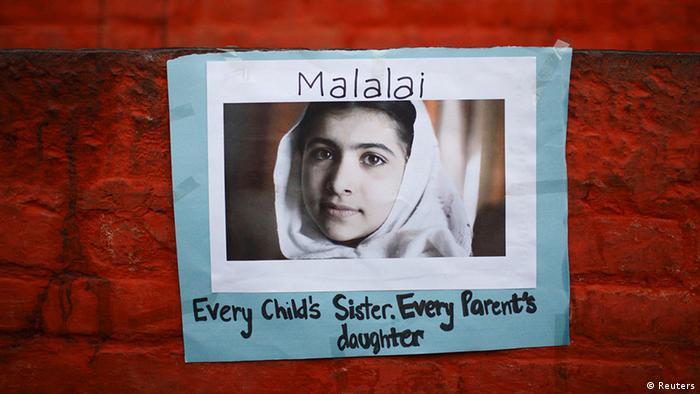
Will Malala's influence stretch to Europe?

Saturday, January 19, 2013
Pakistan: IMF hardens stance
THE FRONTIER POSTFinance minister Dr Abdul Hafeez said a few months ago that Pakistan would not require a fresh bailout programme of the International Monetary Fund. But when the IMF mission is now in Pakistan, the government says it needs another such arrangement to remove difficulties of the fragile national economy. This economic plight owes largely to corruption in successive governments that could not achieve budgetary and other economic targets. The incumbent government would be more to blame that it did not deliver despite availing the IMF bailout package amounting to $11.3 billion in 2008 and addition of another $500 million to the exchequer from the US-led Coalition Support Fund late last year. Where has the money gone, is a pertinent question that the government must answer. This is in this background that the IMF now seems coagulating its stance if Islamabad made a formal request for another loan. The world body believes that Islamabad has done almost nothing to consolidate its macroeconomic management and taken no other steps committed when the government was availing off the earlier package. For example, it says that the government has not reformed its taxation regime, failed to bring reforms in general sales tax, took no initiative for internal resource mobilization in boosting revenues, did not withdraw subsidies and paid more or less no attention in overcoming power shortage which has now become number one crisis in Pakistan. The mission also says that the request of a future loan programme can be entertained only if the country’s political leadership and the forthcoming caretaker governments at the centre and in provinces give their consent. Even such an arrangement will be conditional to bringing about a radical change in economic strategy as losses incurred by government institutions substantiate the fact that current economic policies and priorities have failed. The IMF also understands that budget deficit has gone up due to the power sector’s line losses and theft. The deficit will now rise to 7.5 per cent of the GDP during the ongoing financial year against the government’s target of 4.7 per cent. Consequently, the economic growth will be around 3.5 per cent against the target of 4.2 per cent. The budget deficit has become a critical issue for several years and bridging this gap would need billions of dollars in revenue. Not only this Pakistan’s foreign exchange reserves have also fallen from $13.782 billion on week ending on January 11 to $9.3 billion earlier this week and this size of reserves is hardly enough to foot the imports bill for a maximum of three months. Another crisis seems looming large is that Pakistan has to repay around $1.7 billion to the IMF in the remaining five and half months this fiscal and another $3.4 billion in 2013-14 and this would further deplete the foreign exchange reserves leaving no other option than to approach the Fund for a fresh bailout package. What actually has marred Pakistan’s economic progress is all governments at least since Ayub Khan’s regime have not kept the national interest as the ultimate goal. Their economic policies and priorities have consistently been subject to political expediencies and vested interests. Looking around Asia, the example of several countries, including China, South Korea, Malaysia, Thailand, Vietnam and even South Asian countries like India, Bangladesh and Sri Lanka, would demonstrate that Pakistan stands nowhere in economic development in the continent. What irks more is that most of these countries got freedom much after this land of the pure did. One particular aspect which sufficiently proves how deep rooted corruption in our country is, as also pointed by the IMF, that no government has been able to overcome the chronic ill of power theft nor control system and power losses that are as high as 35 per cent against an internationally accepted standard of a maximum of 10 per cent. This is only because corruption has permeated in electricity companies like cancer. And since energy issue is the country’s core issue, such a huge loss cannot be condoned by any yardstick. Indeed it is now crucial that incumbent rulers should focus on internal resource mobilization, including reforming the hackneyed tax collecting system with an even-handed approach of taxing all those are eligible and are rolling in wealth, in addition to documentation of the national economy. But for the first time, for a change, the government should focus the interest of Pakistan and its 180 million people who are, for decades, hoping their miseries will be over one day.
Pakistan: The melodrama is over
EDITORIAL: DAILY TIMESAlthough he promised a mammoth ‘revolution’, Dr Tahirul Qadri turned out to be no more than a glitch in the ongoing democratic process. The ‘million’ man march and rally he vowed would hold the capital hostage came to a rather unceremonious end after five days of essentially waiting on the government to kowtow to his demands and whims. The result was not one he had hoped for as all the political stakeholders did what they normally never do: unite for a common cause. All the political parties set aside their differences and vowed to ensure that the democratic process would not be allowed to be manipulated by any random entrant bent upon inciting a ‘revolution’ but delivering only a distraction. While government representatives did get a little hot under the collar on Tuesday due to the Supreme Court’s (SC) surprise ruling against Prime Minister Ashraf, they were not too deterred by the screams and shouts of the doctor who made some very ludicrous demands. Dr Tahirul Qadri’s mass demonstration against the present dispensation has seen a rather unceremonious end as he has been given no more than a chance at saving face after the thundering promises he made the nation. Government representatives from all political parties have met with the Dr and have agreed to reforms that do not as much concede to his wishes as they do allow for a smooth run up to the elections. They include the dissolution of the National Assembly before March 16, 2013 so that elections can be held within 90 days, taking a detailed look at the composition of the Election Commission of Pakistan, focusing on the enforcement of electoral reforms, finding an honest and impartial caretaker prime minister and withdrawing all cases registered against each other — not quite the booming blow to this government Mr Qadri may have wanted to flaunt. Dr Qadri has accepted these reforms without hesitation because all his calls for political backing by the MQM and the PTI were rejected, the government was not conceding and the number of people supporting him was pitiable compared to the millions he professed. He, essentially, had been backed into a corner and knew his mischief making days were numbered. Sitting in his heated and comfortable container while the people sat on the cold tarmac outside in winter’s freezing cold, the ‘revolutionary’ liked to think he was representing the people and addressing their grievances. Most Pakistanis were not taken in by his rhetoric and bellowing ambition as could be seen by the fact that, in the end, Dr Qadri was standing alone. The government was all too kind to allow him such a clean and fair getaway. The silver lining here is that our political forces have realised the stakes involved in the run up to the general elections and how fragile Pakistan’s first ever democratic transition really is. They have also realised that there are plenty of detractors of democracy here and surprise ‘revolutions’ are not a thing of fiction. Dr Qadri’s role in this entire drama must be questioned. Now that the storm has abated, everything about Mr Qadri’s exploits must be investigated. It is being reported that the Canadian authorities have summoned Mr Qadri to question him about why he has been in Pakistan when he applied for Canadian citizenship on the pretext of seeking asylum from that country. If this is true, the news serves as another blow to the doctor’s credibility. Now that Tahirul Qadri’s little crusade is over, it is extremely important that the government and all political entities do one thing: wake up. No matter who the quack may be, the people will follow him. They are disenchanted, hungry, power- and energy-deprived, jobless and angry. It is time the government faces these real problems. Anomalies like Mr Qadri should be relegated to the dustbin where they belong by the united democratic forces.
Karachi keeps bleeding
http://www.thefrontierpost.comThis is shocking that the situation in Karachi, the largest city of Pakistan and its commercial capital, continues to deteriorate as law enforcing regime is more or less collapsing to the hilt. The new wave of bloodshed on Thursday saw a Muttahida Qaumi Movement MPA Syed Manzar Imam and eight others being gunned down, falling to target killing, in different districts. The MPA’s driver and two security guards were among them. Although the inept police said the assailants were not identified, the Tehreek-e-Taliban Pakistan claimed the responsibility terming it the first step of the “pledge” it had made to protect the people of Karachi from MQM. After the incident, tensions gripped the city as angry protesters took to streets, resorted to aerial firing and forced shopkeepers to pull down their shutters. At least five vehicles were set afire in different areas of the city and people rushed home to avoid any potential violent backlash. The MQM Coordination Committee announced three days of mourning and asked its supporters to remain peaceful. This is the second shooting of an MQM provincial lawmaker in just over two years in Karachi. The death of MQM MPA Raza Haider, on whose seat Imam was elected to Sindh PA, in an ambush in August 2010 sparked a fierce wave of ethnic and politically-linked violence that killed over hundred people. Karachi, once the city of lights, started bleeding with mafias, backed by political parties, gaining control over land for political dominance of the port city as back as late 1980’s. This violence has now added more characteristics in it as political and ethnic prejudices have also been added to the reasons, notwithstanding the element of terrorism. But no corrective measures have been taken to restore normal life for decades. The city is invariably crippled with every new target killing that forces business being shut and transport withdrawn; no normal socio-economic life is left for about 18 million of its residents. On an average 10 people are dying by assassins bullets on streets every day and yet the government does not seem moved enough to discharge its constitutional duty. Besides, every day passing under these distressing conditions add to the financial loss of no less than Rs5 billion and that too big a blow for the country’s fragile economy. The situation weeks before elections is all the more distressing because polling in this city under the circumstances may pose a problem. The federation imposed governor’s rule in Balchistan for poor law and order conditions and Sindh is no better off either on the same count. Would Syed Qaim Ali Shah would also like see the province treated similarly? His administration has, too, for all practical and moral purposes, lost its justification to govern. The Supreme Court announced in October last year an overarching judgment on the law and order situation and target killings in Karachi and criticized both the federal and Sindh governments for their failure to ensure peaceful economic activity in the city. It termed the “unimaginable brutalities” a result of a turf war aimed at keeping socio-political control over the city. The verdict called for new laws to deal with the menace of land-grabbing, creation of an independent and a de-politicized investigation agency to investigate crimes and setting up of a special cell to deal with illegal immigrants. Deplorably, the Sindh government showed a total indifference to the SC guidelines and allowed the allowed the conditions to remain as frightful as before. Non-implementation of the SC verdict keeps on the residents of the largest city hostage to high uncertainty and extreme fear. The solution of the issue that is eating up the city’s socio-economic and commercial life like a termite is simple yet extremely difficult. If all the political parties in Sindh, whether in government or in opposition, are prepared to boldly plead for an even-handed dealing of the violent question and accept their role in resolving the maddening affair with a strong political will, the solution is easy. If this approach is not accepted, the solution is almost impossible. It is Sindh political leadership alone to decide, and decide immediately, if they want peace or allow the city keep on bleeding. And ruling PPP and MQM have a bigger responsibility; if and when they show willingness, there will remain no conflict, no violence in the largest city of Pakistan.
Friday, January 18, 2013
US supports only democratic government in Pakistan: Olson
RADIO PAKISTANUS Ambassador to Pakistan‚ Richard Olson has said the United States supports only democratic government in Pakistan instead of extending support to any individual. Talking to newsmen in Islamabad on Friday‚ he said the US did not support any specific political party or person‚ including Chief of Minhaj ul Quran Dr. Tahirul Qadri. Ambassador Olson further said that the US would like to see free and fair elections in Pakistan. Commenting on the recent tension between Pakistan and India‚ he said the two countries need to work together for peace in the region and the ceasefire agreement along the Line of Control is encouraging. Earlier‚ the US envoy met more than one hundred students who have studied in the United States. He said the United States is working on a comprehensive education programme for the promotion of education in Pakistan.
Royal Canadian Mounted Police summons Qadri for violating oath

End result of Qadri's adventurism
THE FRONTIER POSTThe political crisis triggered by Allama Tahirul Qadri’s long march that took women, children and elderly people, his hostage for four long days and chilling nights in the coldest month of the year, ultimately stood resolved when all parties in the coalition government provided the man from Canada a situation to save his sullen face from a complete embarrassment on Thursday. The safe and honourable exit to Qadri was provided by a government committee, headed by Chaudhry Shujaat Husain, that held talks with the highly ambitious enlightened cleric for hours starting at 4pm. A formal agreement was also inked after about four hours and, no doubt, Qadri would present this document as a certificate of his “resounding success”. The fiasco in which the whole high political drama ended also clearly polarized the country in a sense that all the political parties whether in government or in opposition were seen on one page in support of the constitutional scheme of things and democratic polity. Other sections of society like lawyers and forward-looking people also came out in their support. This completed for the first time in history a consensual convergence of almost all shades of political opinion on the way forward: fair and free transparent elections through a consensus-based Chief Election Commissioner under an agreed caretaker setup whose neutrality will be beyond doubt because it will enjoy the confidence of both government and opposition. Standing against them was the Shaikhul Islam who presented most of the steps, outside the pale of a disciplined legal order ; that is why he has effectively been isolated along with all his ranting and Imran Khan’s ill-conceived seven-point demand that included the resignation of President Asif Ali Zardari. It is strange that the anti-democratic camp kept on rejecting these agreed rules of the game framed after a great deal of thought and discussion in parliament and which are enshrined in the 18th Amendment. The qualified criticism being leveled at the CEC being too old to ‘resist’ the machinations of the parties in government and the opposition, made no sense when these governments will cease to exist once the assemblies are dissolved and the caretaker setup takes over. March 6 is said to have been proposed by the government for this arrangement whereas it says elections will be held in the first week of May. If the caretaker setup to come is being criticized as some kind of underhand deal amongst the parties in parliament, surely this is an illogical stance given that inherently the government and opposition are rivals in the elections and have framed these rules of the game to avoid the usual accusations of election rigging that have bedeviled every such exercise in the past. On the touchstone of the constitution, they are the best democratic practices and intent and their criticism lacks a genuine political mannerism. The people of Pakistan are certainly unhappy with the performances of governments at the center and in provinces and this was this discontent than the people demonstrated during the Qadri show. Yet, only uninformed and foolhardy elements without an iota of understanding of our past want to dent a democratic order. The days of imposed governments manipulated into power by hook or by crook by the establishment may or may not be over, the situation and the conspiratorial moves to deny the people the right to bring in another elected government for the first time in the country’s history through fair elections cannot and should not be denied to them, especially when the moment is tantalizingly close. It is the interests of all political parties, arguably even those supporting Qadri for whatever misconceived reasons, that the electoral exercise is allowed to proceed on time and without putting obstacles in its way. Authoritarian, military and imposed governments are littered through Pakistan’s passage through time, but each one has left a bigger mess in its wake than when it started. The lesson is inescapable: the discontents with democracy and its failings notwithstanding, there is no way forward in the foreseeable firmament other than letting the democratic political process play itself out in what promises to be an increasingly credible manner since it enjoys across the board consensus, and using the space and freedoms only democracy allows to tackle vital issues confronting the country and society.
Pakistan averts, for now, two new crises
Thursday, January 17, 2013
Pakistan: The ‘game’ is over
Daily TimesThe five-day long ‘million march’ melodrama came to an end on Thursday, in a win-win situation for both government and Dr Tahirul Qadri. The hours-long successful negotiations between a 10-member committee comprising representatives from Pakistan People’s Party and its coalition partners and Tehreek-e-Minhajul Quran chief in a bullet-proof container in the heart of federal capital not only gave a breathing space to a fragile government in its last days in the office, but also gave a face-saving to Dr Tahirul Qadri, who had been virtually pushed into a blind ally, thanks to an unprecedented unity among all the democracy-loving political forces in Pakistan. Dr Qadri told his followers to pack their bags as he read aloud the three-page ‘Islamabad Long March Declaration’ duly signed by him and Prime Minister Raja Pervez Ashraf. Elections: According to the declaration, the National Assembly will be dissolved at any time before March 16 (the due date), so that the elections may take place within 90 days. One month will be given for scrutiny of nomination papers for the purpose of pre-clearance of the candidates under articles 62 and 63 of the constitution so that the eligibility of the candidates is determined by the Election Commission of Pakistan. No candidate will be allowed to start the election campaign until pre-clearance on his eligibility is given by the Election Commission of Pakistan. Election Commission of Pakistan: The issue of composition of the Election Commission of Pakistan will be discussed at a meeting on Sunday, at 12 in the noon at the Minhajul Quran Secretariat in Lahore. Subsequent meetings, if any in this regard, will also be held at the secretariat. Law Minister Farooq H Naek will convene a meeting of lawyers comprising SM Zafar, Waseem Sajjad, Aitizaz Ahsan, Farough Naseem, Latif Afridi, Dr Khalid Ranjha and Hamayoun Ahsan to legally and constitutionally analyse the issue of reconstitution of the Election Commission of Pakistan. The law minister will report the results of this legal consultation to the January 27 meeting. Electoral Reforms: Both sides agreed to focus on the enforcement of electoral reforms prior to the elections through: a) Article 62, 63 and 218 (3) of the constitution; b) Section 77 to 82 of the Representation of Peoples’ Act 1976 and other provisions relating to holding of free, fair, just and honest elections guarded against all corrupt practices; c) The Supreme Court’s June 8, 2012 judgement will be implemented in toto and in true letter and spirit. Cases registered: All cases registered against each other will be withdrawn immediately and there will be no acts of victimisation and vendetta against either party or the participants and the organiser of the march. Caretaker prime minister: The treasury in complete consensus with Pakistan Awami Tehreek will propose names of two honest and impartial persons for appointment as caretaker prime minister. However, there was no mention in the declaration of Dr Qadri’s earlier demand regarding consultation with armed forces of Pakistan and the judiciary on appointing a caretaker set-up prior to the elections. Addressing the rally after the agreement, Qadri lauded the participants for their struggle. “The peaceful march that started on Sunday and continued till today has become a great model for the world to see,” he said. “It is a day of victory for the participants as well as the whole nation,” he added. All members of the negotiating team also hailed the success of dialogue and termed it a victory of democracy. The crowd, which braved cold weather and heavy rain, broke into cheers and danced on the road at the news of success of dialogue. Earlier, a delegation comprising Afrasiab Khattak, Farooq Naek, Qamar Zaman Kaira, Chaudhry Shujaat Hussain, Farooq Sattar, Babar Ghauri, Khurshid Shah, Amin Faheem and Mushahid Hussain entered the container at around 4pm. Hours before the meeting began, Qadri issued a ‘final’ warning to the government. “Now I give an ultimatum that the president and his team come for talks by 3 and it’s the last peaceful offer to them,” said Qadri. “Today is the last day of our sit-in. Tomorrow, we will act with a new strategy.” He asked his supporters not to leave the protest site until a written agreement was hammered out. Qadri gave the government a 90-minute deadline to act on his demands by 3pm, but later said he had now given government time till 3.45 pm. He said government had contacted him and sought more time so that a delegation could meet him at the site of his protest. He also told his followers that he had set only one condition for talks: Interior Minister Rehman Malik should not be part of delegation. In his address in the day, Qadri said the attitude of country’s rulers had proven that there was no space for peace in the country. He had although he had given the government three weeks for negotiations, the rulers had failed to budge. He had said government does not believe in a peaceful resolution of issues confronting. He said that hundreds of thousands had been staging a protest for days without any government security, adding that the participants were only counting on Almighty Allah’s mercy. He said the country was not being governed under a democratic system and instead barbarity was the order of the day. He criticised Prime Minister Raja Pervez Ashraf for travelling to Balochistan four days after the bombings in Quetta. He questioned as to how were the ‘Uzbek terrorists’ entering Pakistan, adding that brutality was at its extreme in the country.
President Zardari summons Senate, NA sessions for Jan 21

President Asif Ali Zardari has summoned sessions of both the lower and upper houses of Parliament to convene on Monday, Jan 21. According to a press releases issued by the President House on Thursday, the President summoned the National Assembly on the advice of Prime Minister Raja Pervez Ashraf to on Monday at 4 pm. The President Asif also summoned a session of the Senate on the same day, according to Spokesperson to the President Senator Farhatullah Babar.
Not enough proof to arrest Pakistan's PM
indiatimes.comPakistan's anti-graft body NAB's chief on Thursday told the Supreme Court that the evidence in a corruption case involving Prime Minister Raja Pervez Ashraf was weak and unlikely to lead to conviction, a statement that irked the top court which directed him to submit to it all records of the investigation. National Accountability Bureau (NAB) chairman Fasih Bokhari's statement came two days after the apex court directed the anti-corruption agency to arrest the Prime Minister and more than 20 other suspects in connection with alleged graft in the rental power projects. Appearing before a three-judge bench headed by Chief Justice Iftikhar Chaudhry, Bokhari said an investigation report on alleged corruption in rental power projects, submitted earlier to the apex court, was inaccurate. Bokhari said the evidence gathered so far by NAB investigators was weak and that the allegation about the power projects causing losses to the national exchequer had not been proved. The investigation officers had worked in a hurry and did not provide adequate proof in their reports, he said. If a case is filed on the basis of the investigations done so far, the suspects will be acquitted, he added. Bokhari's remarks angered the bench, which said the stand taken by the NAB did not reflect the reality. The Chief Justice directed Bokhari and other NAB officials to submit all records of their investigation so far to the Supreme Court. NAB prosecutor K K Agha argued that the apex court could not see the agency's investigation records, but the bench maintained that the records should be submitted on Thursday. NAB officials said the records were with an official in Rawalpindi and would be submitted to the Supreme Court's Registrar. Chief Justice Chaudhry remarked that some persons involved in the rental power projects case seemed to think they were "above the law" and made it clear that the apex court was determined to take action in the matter. Officials and federal ministers have already said that premier Ashraf is unlikely to be arrested soon as several procedures will have to be completed before an arrest warrant can be issued. Legal experts have said Ashraf can continue to perform his duties as the chief executive even if he is arrested. The graft charges against Ashraf date back to his tenure as power minister, when contracts were signed for several rental power projects as part of the PPP-led government's strategy to overcome a crippling energy shortage. Though Ashraf was dropped during a cabinet reshuffle in 2011, he remained close to President Asif Ali Zardari. Ashraf became Prime Minister after the exit of Yousuf Raza Gilani, who was convicted of contempt by the Supreme Court last year for refusing to write to Swiss authorities to reopen graft cases against President Asif Ali Zardari. The apex court began investigating the rental power plants in 2009 following a complaint of corruption from PML-Q parliamentarian Makhdoom Faisal Saleh Hayat. The court had directed NAB to take action against all government functionaries involved in clearing the power projects, including ministers who held the power portfolio since 2006 and officials of state-run power utilities who derived financial benefits from the contracts.
India unlikely to agree to Foreign Minister-level talks with Pak: Sources

Pakistan: The facade of long marches

by Lal KhanIslamabad has been witnessing “anti-corruption” protests led by Tahir ul Qadri recently returned from his long residence in Canada. He leads a reactionary movement that is actually being fomented by a section of the Pakistani ruling elite. Here we publish a comment on this phenomenon by Lal Khan that was first published in the Pakistan Daily Times.Yet another facade of a movement has been unleashed by sections of the state, imperialist interests and factions of the ruling classes to undermine and cut across a genuine revolutionary upheaval of the toiling masses from below. Billions not millions are being squandered on the so-called “long march” called by the right-wing demagogue Maulana Tahir ul Qadri. The bourgeois media, pumped with colossal amounts of cash, is overwhelmed and an enormous campaign has been launched that has panicked the already shaky incumbent rulers in Lahore and Islamabad. Society is rife with conspiracy theories and wild speculations about the meteoric rise of this televangelist. One theory doing the rounds in the commentators’ circles is rather intriguing, involving his Canadian citizenship and his links with the imperialists. Qadri’s connections are being linked to the Canadian gold mining giant Barrick Gold, the largest gold producing firm in the world, whose stakes in the Reko Diq gold mine in Baluchistan are in jeopardy due to the cancellation by the Supreme Court of a contract, signed in 1993 under another caretaker government. Imperialist plunder is one of the main causes of the revolt in Baluchistan and this strife has plunged the region into mayhem and conflagration. Although there was a big crowd at the December 23 meeting of Maulana, the numbers have been deliberately and grossly exaggerated by the disciples of Qadri and the media. If anything, the gathering was small compared to the obscene amounts of money spent on promoting it, the arrangements made and the huge publicity campaign launched to haul the people to the venue. One can safely bet that this was the most expensive political rally in the history of the country. The jumping of the MQM onto Qadri’s bandwagon didn’t surprise anyone either. It is their characteristic ploy of running with the hare and hunting with the hounds. [Note: Muttahida Quami Movement, United National Movement, a reactionary, chauvinist party mainly based in Sind]. The attempts to compare Constitution Avenue in Islamabad with ‘Tahrir Square’ are also farfetched. The truth is that the prolonged sit-in at the Cairo square was not the decisive factor that deposed Mubarak. It was when the workers of the Suez Canal went on strike and the threat of the closure of this crucial waterway became imminent, along with the general strike of the Egyptian proletariat that pushed the despot out of power There is another chimera here: that long marches lead to revolutions. Even in the Chinese revolution of 1949 capitalism was overthrown not by the long march of the mainly peasant red army but by the general strikes of the Chinese proletariat in Shanghai, Nanjing, Peking, Canton and other industrial heartlands of china. The workers of Karachi don’t have to march to Islamabad for a revolutionary insurrection. What they have to do is seize the factories and the economy to bring down the state. With a revolutionary party leading the working masses a general strike of the workers and peasants of Pakistan could achieve a socialist victory with relative ease and little bloodshed. Mass mobilisations of millions or even tens of millions are not always of a revolutionary character. There can be huge rallies of the forces of counter-revolution, reaction and even fascism. After all fascist despots like Hitler, Mussolini, L. K. Advani and innumerable other reactionaries did mobilise millions to their rallies and movements. The main difference between a revolutionary and a reactionary mobilisation is that in a revolution the masses enter the political arena on a voluntary basis with an honest and genuine quest to transform the system and change their destiny. In the case of the vanguard, of the proletariat there is a thorough understanding of the aims and objectives of the revolution that makes their participation a conscious act and a subjective element in the equation. Reactionary mobilisations are based upon mythological demagogues and attract rather primitive sections of society. Mostly these are a desperate expression of the social malaise, stagnation and despair that prevails in those moments in time. If we are to seriously analyse the present situation and the mood of the masses in Pakistan, it is one which has been affected by betrayals and deceit by those in whom they had developed so many illusions. Their social and economic suffering has been exacerbated by the terrorist bloodshed of Islamic fundamentalists, imperialist aggression and plunder. Capitalist exploitation and coercion has never been so grave. The army and the judiciary, the political elite and the mullahs, the drug barons and the media bosses are knotted in an evil nexus that it is almost impossible to differentiate between them in this orgy of loot and plunder. The only thing that exudes from the elite is a callous social indifference. The MQM has been in power for more than two decades and Qadri is no novice to the establishment and the imposed political setup. The prevalent conditions of the ruling political elite are analogous to what Karl Marx described about the nineteenth century French elite. He wrote, “The party of Order proved... that it neither knew how to rule nor to serve; neither how to live nor how to die; neither how to suffer the republic nor how to over throw it; neither how to uphold the Constitution nor how to throw it overboard.” However, one is perplexed by Maulana’s contradictory and distractive programme and objectives. The crux of it is that he wants to change the system without changing it. Like everyone else in this moneyed politics he is an ardent supporter of the capitalist system that is the real cause of this misery, poverty, mayhem and deprivation. These charlatans evade the reality expressed in Lenin’s dictum, “politics is but concentrated economics.” Qadri accentuates politics but not economics, form and not the content, effect and not cause, mythology and not reality. He talks about the abolition of feudalism but not a word about the overthrow of capitalism. When in reality there are only remnants of feudalism in Pakistan and even in the remotest areas of the country there is a crushing domination of capitalist relations and exploitation. Then there is the relentless din of revolution. Most of the right-wing politicians are chanting revolution when it is actually these preposterously rich parasites that the revolution has to target and expropriate their wealth. But the imperialists, the drugs cartels that lord it over two thirds of Pakistan’s economy – the informal or black economy – and the capitalist exploiters are Qadri’s main sponsors and backers. It is a universal law that in periods of stagnations all kinds of rabble-rousers and peculiar phenomena keep on appearing suddenly and then rapidly vanishing into oblivion before a revolution of the workers and the oppressed masses breaks out. The fact is that Qadri and such reactionary characters are actually nurtured and created to confuse the masses, subvert and deprecate the revolution. The petit bourgeoisie as an instable class, with its erratic nature and whimsical, impatient temperament rushes to foist such chicanery. But sooner rather than later its delusions evaporate. Qadri has come and will fade away with the same rapidity. Nothing is going to change neither does he have any intentions, policies, programme, methodology, tactics or strategy to change. However, the crisis is worsening with the convulsive downward spiral of capitalism. But real change has to come. It is a question of life and death for the teeming millions doomed by this cruel system into a living hell. They are yearning for an end to this pain and agony. Their time is not far off. The proletariat will transform from a class in itself to a class for itself. And once that takes place it will realise its power and move as a class with its gigantic strength into the arena of history to change its course. Only then will the system be changed, and that can only come about by overthrowing it through a socialist revolution.
Pakistan Criticizes Obama’s Plan for Turning Over Military Command in Afghanistan
By DAVID E. SANGER
Pakistan’s foreign minister on Wednesday issued a biting critique of President Obama’s plan to accelerate the handover of military command in Afghanistan to Afghan forces, declaring that the border with Pakistan has become “less well managed” and that the United States is leaving “without determining whether you have accomplished your objectives.”
The minister, Hina Rabbani Khar, who became the country’s first female foreign minister in 2011, said she would not offer her own preferred timetable for an American departure. But in a wide-ranging interview at the Council on Foreign Relations in New York, she argued that the United States was being driven more by its determination to leave Afghanistan quickly than by a set of minimal objectives.
“ ‘Afghan good enough’ was the right strategy,” she said, referring to the informal name for a White House committee, set up in 2010, that reduced, then reduced again, the American objectives in Afghanistan. But she expressed doubts that the Afghan forces would be able to step up to the job of operating independently across the country, and said that the number of refugees from Afghanistan coming into Pakistan had increased considerably.
Ms. Khar also defended Pakistan’s prosecution of Shakil Afridi, the physician who ran a vaccination program in Abbottabad that was started by the Central Intelligence Agency and intended to extract DNA from the occupants of the house where Osama bin Laden was believed to be hiding. He was arrested after Bin Laden was killed by an American SEAL team, and the United States government has repeatedly tried, and failed, to get him freed.
“To me he is a villain, not a hero,” said Ms. Khar, arguing that he had “contracted himself to terror groups.” He was sentenced to 33 years in prison — ostensibly not for his role in the Bin Laden hunt, but for his ties to an Islamic extremist, Pakistani officials say.
She argued that his action, and the C.I.A. program, had now made it all but impossible to conduct vaccination programs. Several Pakistani workers trying to give polio vaccines have been killed by Islamic extremists, who have argued the vaccines are part of an American plot.
Ms. Khar also defended the safety of Pakistan’s nuclear arsenal, at a time American officials are increasingly concerned about new, mobile tactical nuclear weapons — which Pakistan can roll out to the Indian border. The weapons are considered easier to steal than larger weapons kept on Pakistani bases. “We are very confident” that Pakistan can protect its entire arsenal, she said, without referring directly to the new generation of weapons.
She repeated her insistence that the United States should end all drone strikes on Pakistani territory, which has been a longtime Pakistani demand. But she argued that for the first time, “I sense that here in America” there is also a sense that “the strikes are counterproductive in the long term.”
Bara killings: Police, protesters clash outside Peshawar Press Club
The Express TribuneBara protesters and police clashed outside the Peshawar Press club after officials attempted to disperse the crowd on the second day of the protest, Express News reported. The police fired shells at the protesters and resorted to aerial firing. The protesters, responding in kind, pelted them with stones. The ensuing chaos resulted in aerial firing from both sides which injured a few among the crowd. The protesters, however, dispersed from outside the press club after a another contingent of police reached the scene. Police, earlier today, fired tear gas shells to disperse coffin-carrying protesters who refused to bury 14 people allegedly killed in a raid by security forces, officials said. The pre-dawn operation was launched about 13 hours after around 300 people staged a sit-in outside the governor’s house in Peshawar along with bodies of those killed in the raid on Tuesday night. The protesters blamed security forces and refused to bury the bodies until they get justice. “We used tear gas and dispersed the protesters because they were creating a law and order situation in Peshawar,” senior police officer Kamal Hussain said. The bodies were taken to their home town of Bara and handed to the local administration for burial, he said. Local police station chief Shabih Hussain confirmed the tear gas shelling, adding that 17 people were arrested and later released. Residents said armed men attacked five homes in Bara and killed 14 people on Tuesday night. “They entered our houses and killed our relatives to avenge the killing of six security personnel in the same area of Bara on Monday night,” said local resident Muhammad Shabbir, a former member of the Frontier Corps (FC), told AFP. Security and military officials denied that security forces were involved and said it was militants who attacked the homes. Shabbir said his father, five brothers and two cousins were among the dead. The government ordered a judicial enquiry into the incident and decided to pay 400,000 rupees ($4,000) each to the families of the deceased, Hussain said. Wednesday’s protest was the second of its type in a week. In Quetta, thousands of Shias demonstrated for four days after the worst-ever bomb attack on their minority community in Pakistan killed 92 people. They refused to bury the dead, demanding the army take over security in Quetta. The protest mainly by ethnic Hazara Shias ended after Prime Minister Raja Pervez Ashraf sacked the provincial government. Last month, Amnesty International said both the Pakistan military and the Taliban were guilty of rights abuses in the tribal belt. The military rejected the allegations as a “pack of lies”.
Pakistan: Crisis and response
EDITORIAL: DAILY TIMESThe political crisis triggered by Maulana Tahirul Qadri’s long march, continuing rally in Islamabad and set of demands, and the suspiciously coincidental order of the Supreme Court ordering the arrest of Prime Minister Raja Pervez Ashraf and others in the RPPs case has revealed the divide in the polity and society. On the one hand stand Qadri and his supporters within the political parties, chief amongst them MQM and PTI. On the other side can be counted almost all the parties represented in parliament, government and opposition, civil society, the lawyers community, and concerned citizens. The former camp has come out through Qadri’s rantings and Imran Khan’s so-called charter of seven demands with ideas that stripped of their verbiage, amount in essence to a return to the affliction of anti-democratic forces putting the cart before the horse, or more accurately, red herrings to sabotage the historic elections due soon. The other camp is agreed on the historic nature of this conjuncture, when Pakistan is poised for the first time in its history to witness a consensual convergence of almost all shades of political opinion on the way forward: fair and free transparent elections through a consensus-based Chief Election Commissioner (CEC) under a consensual caretaker setup whose neutrality will be beyond doubt because it will enjoy the confidence of both government and opposition. It is strange then that the anti-democratic camp is still railing on about rejecting just these consensual rules of the game framed after a great deal of thought and discussion in parliament, and enshrined in the 18th Amendment. The qualified criticisms being levelled at the CEC of being too old to ‘resist’ the machinations of the parties in government and the opposition make no sense when these governments will cease to be in power once the Assemblies are dissolved and the caretaker setup takes over. If the caretaker setup to come is being criticised as some kind of underhand deal (muk-muka) amongst the parties in parliament, surely this is an illogical stance given that inherently the government and opposition are rivals in the elections and have framed these rules of the game to avoid the usual accusations of election rigging that have bedevilled every such exercise in the past. On the touchstone of the constitution, best democratic practice and intent, therefore, the critics are making no sense. The people of Pakistan may or may not be happy with the performance of the incumbent governments during the last five years, but only uninformed and foolhardy elements without an iota of understanding of our past want to throw the baby of democracy out with the bathwater of these governments. The ‘crisis’ engendered by these sinister simultaneous moves aside, the demands of Qadri have exposed his hand. He wants, as in the past, the military and judiciary to settle the fate of the country. Powerful as these institutions are, this is neither their remit nor in accordance with any constitutional or democratic principle. The days of imposed governments manipulated into power by hook or by crook by the establishment may or may not be over (the jury is still out), but the situation and the conspiratorial moves to deny the people the right to bring in another elected government for the first time in the country’s history through fair elections cannot and should not be denied them, especially when the moment is tantalisingly close (this very closeness may well explain the frantic efforts to sabotage the electoral exercise). It is the interests of all political parties, arguably even those supporting Qadri for whatever misconceived reasons, that the electoral exercise is allowed to proceed on time and without putting obstacles in its path. Authoritarian, military, imposed governments are littered through Pakistan’s passage through time, but each one has left a bigger mess in its wake than when it started. The lesson is inescapable: our discontents with democracy and its failings notwithstanding, there is no way forward in the foreseeable firmament other than letting the democratic political process play itself out in what promises to be an increasingly credible manner since it enjoys across the board consensus, and using the space and freedoms only democracy allows to tackle the very serious problems confronting the country and our society.
Victory in Afghanistan? Not without U.S. troops

Subscribe to:
Posts (Atom)