Wednesday, August 24, 2022

Video Report - #Iran #US #nuclear - US and Iran edge closer to a nuclear deal as Tehran drops some demands

Video Report - #SaudiArabia - Concern for Saudi student jailed for 34 years over tweets

Video Report - China to use geoengineering to combat historic drought

Video Report - #Angola #CivilWar #election Angola elections: 20 years on, civil war painful legacy

Video Report - Joe Biden announces $10,000 in student loan forgiveness

Video Report - TERE QADMON KO BIKHAR JANAY KO JEE CHAHTA HAI - NOOR HEHAN - PAKISTANI FILM SOCIETY GIRL

Video Report - Bilawal Bhutto Visits Flood Affected Camps

#PakistanFloods #FloodSituation - Foreign Minister Wang Yi has expressed sympathy to Pakistani Foreign Minister Bilawal Bhutto Zardari for the floods

 China has noted the severe floods raging across Pakistan and the heavy casualties and loss of property ensued. We express sincere condolences to the victims, and our hearts go out to the bereaved families, the injured and those in the stricken areas.
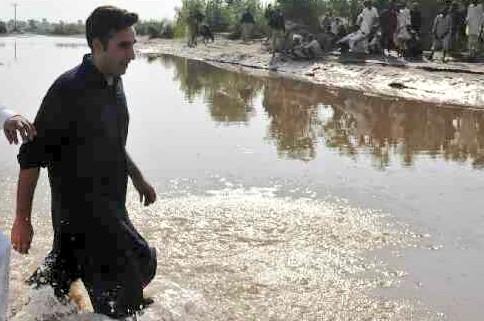
China and Pakistan are true friends and good brothers sharing weal and woe. We are always ready to help each other in the face of major natural disasters. China will never forget that Pakistan rushed to our assistance after the earthquake hit Wenchuan in 2008 and airlifted all its tents in store to the stricken area. State Councilor and Foreign Minister Wang Yi has expressed sympathy to Pakistani Foreign Minister Bilawal Bhutto Zardari for the floods. Under the social and livelihood cooperation framework of the China-Pakistan Economic Corridor, China has provided 4,000 tents, 50,000 blankets and 50,000 pieces of waterproof canvas. They have been delivered to the frontline of disaster relief.

Considering the current situation, China has decided to provide another batch of emergency humanitarian supplies, including 25,000 tents and other supplies in dire need, to be delivered as soon as possible. The Red Cross Society of China will provide USD 300,000 in emergency cash assistance to the Pakistan Red Crescent Society. China will continue to promote bilateral cooperation in disaster prevention and mitigation and against climate change. It is believed that under the leadership of the Pakistani government and with the joint help of the international community, the people in the disaster-hit areas will overcome the difficulties and life and work will go back to normal at an early date.

https://www.fmprc.gov.cn/eng/xwfw_665399/s2510_665401/202208/t20220824_10750725.html

#Pakistan - #PakistanFloods #FloodSituation - FM Bilawal appeals to UN to help flood-hit families
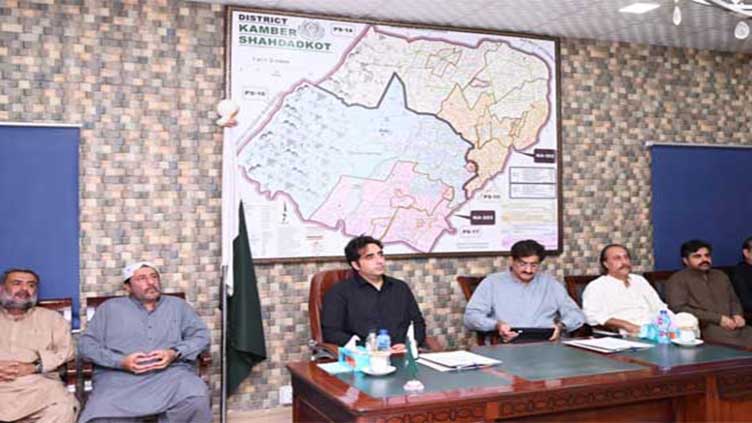
 

Foreign Minister Bilawal Bhutto Zardari on Tuesday appealed to the United Nations (UN) to help the flood-hit families.

Talking to the media in ShahdadKot, he said that there is a great need for tents in the affected areas of Sindh, adding that we all have to face the difficulties together, too many houses and crops have been damaged, and the Sindh government will provide relief to the victims through Benazir income support program.

“I am appealing to UN to help us in this difficult time, please help with rations, tents. Europe tour has been cancelled due to floods,” he added.

Bilawal Bhutto further said that people cannot imagine being left alone, diseases are spreading in flood-affected areas, flood victims need immediate help, and the administration is assessing the damages in flood-affected areas.


https://dunyanews.tv/en/Pakistan/664733-FM-Bilawal-appeals-to-UN-to-help-flood-hit-families

Pakistan - Bilawal most vocal speaker in NA, says report


During the tenure of the Pakistan Tehreek-i-Insaf (PTI) government - three years and eight months - in the 15th National Assembly, Bilawal Bhutto-Zardari of the PPPP was the most vocal lawmaker with a recorded talk time of one hour and 59 minutes, according to a Pildat analysis.

Then leader of the opposition Shehbaz Sharif of the PML-N got the second position in speaking for one hour and 57 minutes followed by Khawaja Mohammad Asif of the PML-N who spoke for one hour and 27 minutes.
Ahsan Iqbal Chaudhary of PML-N, Shazia Marri of the PPPP got fifth and sixth position, respectively.
During this period in the house of 342 members, 174 members did not speak for a single minute in the assembly. Out of these, 149 were male and 25 female. Eighty-four of these MNAs belonged to the PTI, 48 to the PML-N and 23 were affiliated with the PPPP.

174 MNAs did not speak even for single minute in assembly in three years and eight months

Legislative activity witnessed a decrease of 8pc in the fourth year of the 15th National Assembly as it passed 55 laws compared to 60 bills passed during the third year of the assembly.

The house passed 24pc more laws in the same period compared to the previous assembly.

The Pildat comparative analysis also looks at how the three years and eight months period of the National Assembly under the prime ministership of Imran Khan was different from the same period in the 14th National Assembly.

The 15th National Assembly passed 155 bills in the four-year period while the 14th National Assembly passed 125 bills in its first four years. During the fourth year of the assembly, 32 government bills were introduced compared to 31 in the third year while private members introduced only 46 bills which was a decline from third year when 74 bills were introduced.

Excessive reliance on issuing ordinances was witnessed during four years of the 15th National Assembly through seventy-four ordinances laid in the assembly. A slight decrease was seen in the number of ordinances laid by the government in the house in its fourth year compared to the third year.

As many as 16 ordinances were laid in the assembly in the fourth year compared to 20 during the third year which is a decrease of about 20pc.

The incumbent assembly has only met for 87 days in the fourth parliamentary year. It has met for 10 per cent more days than it was convened during its third year which were 79 sittings. However, on average, the assembly met for 88 working days per year in its first four years in comparison with an average of 99 working days per year in the previous assembly.

This is an 11pc decrease in the performance of the 15th National Assembly compared to the 14th National Assembly.

The incumbent assembly could not dispose of nearly 41pc of planned agenda items in 87 sittings. On average, 58.87pc agenda items were left over in the sittings during the fourth year of the assembly.

During the fourth year, average attendance of MNAs was recorded at 67pc until April 9, 2022. After the PTI tenure, average attendance of MNAs during the fourth year dropped to 51pc which is 14 percentage points lower than the attendance of MNAs during the third year which was 65pc.


Monday, August 22, 2022

Pashto Muic Video - Zahra Elham & Laila Khan - Jenakai Dali Dali | زهرا الهام و لیلا خان - جینکۍ ډلې ډلې

Pakistan: Sikh girl kidnapped in Khyber Pakhtunkhwa province; forcibly married to Muslim

By Brijesh Goswami
A Sikh girl teacher was kidnapped and forcibly converted into Islam in Pakistan’s Khyber Pakhtunkhwa province near Buner district.

In another incident of human rights violation in Pakistan, a Sikh girl teacher was kidnapped on Saturday. The incident reportedly happened in Pakistan’s Khyber Pakhtunkhwa province near Buner district. On the incident, the local police did not register the FIR and tried to hush up the matter. The incident was shared by the BJP leader Manjinder Singh Sirsa on Twitter.

The girl has been identified as Deena Kaur. It is reported that she was forcibly converted to Islam after her marriage to a Muslim man.

In his tweet, Sirsa also demanded Foreign Minister S Jaishankar address the issue of the minority Sikh community in Pakistan. He also said that Pakistan Prime Minister’s Office turned deaf ear to his tweets on this issue.

”But how can a family silently watch their daughters being converted forcibly? This is agnst basic human rights. We stand in support of Sikh brethren of Pak. I urge @DrSJaishankar
Ji to address issue of minority Sikhs in Pak; @PakPMO turned deaf ear to our tweets on this issue,” wrote Sirsa in his tweet.

Earlier in May this year, India had lodged a strong protest over the killing of two Sikhs in the country.

https://newsroompost.com/world/pakistan-sikh-girl-kidnapped-in-khyber-pakhtunkhwa-province-forcibly-married-to-muslim/5165906.html

Pashto News - په بلوچستان کې په سیلابونو کې د مړو شویو کسانو شمېر له دوه سوو واووښت

Pashto News - بونير کې سیکانو احتجاج کړی، وايي د ټولنې یوه جینۍ په زورمسلمانه کړی شوې او واده کړی شوې ده

The code has been copied to your clipboard.

Pashto News: - د خېبر پښتونخوا په مومندو کې د امن جرګې په نوم غونډه

Sunday, August 21, 2022

Video Report - #DailyShow #Comedy #TrevorNoah Liz Cheney Gets Crushed In Primary & "Quiet Quitting" Is On The Rise | The Daily

Video Report - What's needed to end the famine in Tigray?

Video Report - #Ireland #NorthernIreland #Brexit How Brexit brings old tensions back to Northern Ireland | Focus on Europe

Video Report - NASA scientist explains why images from new telescope astounded him

OPINION: Even a Single Case of Polio Is a Threat

By Mary T. Bassett
The case of a young adult paralyzed by polio in New York is not simply unexpected. It’s shocking. The last time polio was diagnosed in New York State was in 1990. And yet the virus has now also been found in wastewater samples in Rockland County, Orange County and New York City. As surveillance continues, we will learn more, but what we know already is enough. We have circulating poliovirus that can cause paralysis in these communities. Polio in New York today is an imminent threat.
Unlike Covid-19, polio is not a novel disease. Once a source of terror in summer months, the virus seemed headed to the history books. Successful vaccination campaigns in the 1950s meant wild poliovirus was declared eliminated in the United States in 1979, and from the Americas in 1994.
Today, polio remains endemic only in the political disarray of Afghanistan and Pakistan, although Malawi and Mozambique have reported cases in the past seven months. Wealthy countries with monitoring in place are on high alert. On Aug. 10, the U.K. Health Security Agency announced it would offer a booster dose to children in London because a poliovirus has been found in wastewater, seeking to avert a human tragedy that has already happened here.
In a conversation, my colleague and friend Jane Cardosa, a Malaysian virologist, calmly noted, “In our part of the world, one case of paralytic polio is an outbreak.” The case in New York State is no fluke, freak accident or government conspiracy. And it’s not surprising that we have had just one person develop paralysis. Many are unaware that about 70 percent of people who contract polio have no symptoms. About 25 percent of people infected experience symptoms that are mild or flu-like — headache, fatigue, fever, stiffness, muscle pain, nausea, a sore throat — all of which could be mistaken for many other illnesses. Fewer than 1 percent of infected individuals develop paralysis. Of those paralyzed, 2 to 10 percent die when their breathing muscles become immobilized. On this virus, we simply cannot play the odds.
The greatest danger is to adults and children who are unvaccinated. While you may assume that you and your children are up to date with polio immunizations, now is the time for all adults, including those who are pregnant, to ensure that this is true.The answer is simple, although the solution is not so easy. Vaccination coverage is too low in too many places, and unvaccinated and undervaccinated individuals are too often clustered together. Approximately 60 percent of 2-year-olds in Rockland and Orange Counties have completed their initial three-dose regimen. Well over 90 percent coverage is the goal, and immunizing young children on time is what we are after. Immunized people have a virtual wall against paralysis and may shed less virus if they get infected. Community spread is what drives the emergence of paralytic strains.
Up-to-date polio immunizations are a requirement for school-age children. But more vaccinations are needed, and sooner. The greatest hurdle is vaccine resistance, which has grown astronomically. True, many people have lost confidence in government, and public health departments have borne the brunt. Some believe they can protect themselves and their families by going against the advice of public health experts and flouting state-mandated immunization programs.
The problem is not just those who resist. Today, health departments fight not only infectious diseases but also disinformation campaigns designed to wage war against vaccines. During the 2018-19 New York State measles outbreak, reporting showed highly targeted misinformation meant to seed doubt about vaccines in the community suffering the outbreak. According to a study conducted by the Kaiser Family Foundation in November 2021, 78 percent of adults said they heard at least one of eight false statements about Covid-19 or the vaccines and, worse, that they believed that statement to be true or were unsure if it was true or false. Bad actors with clever marketing prey on their victims openly.
Polio, like other recent viral threats, exposes societal fissures. There has been a loss in understanding that government performs necessary functions that individuals and families cannot do alone: Government protects our air, water and food. It suppresses contagion. A damaging cycle perpetuates when underresourced health departments are unable to mount the kind of response the public seeks, further diminishing trust. Budgets and policies may expand to meet a crisis, only to shrink when it passes. When public health bodies respond reactively, it’s too little, too late. The damage is done, the suffering has ensued, and faith in the institutions people need is left devastated.
This is where we are. The emergence of new pathogens like Covid-19 or unusual presentations of more recently identified viruses in the U.S., like monkeypox, will only be the beginning. Polio, an ancient scourge, can come back. The good news is that we can change this grim scenario. Already, the New York State Health Department — in coordination with local and national health authorities — is working tirelessly. Together, we are conducting a case investigation, assessing spread and communicating openly and honestly. Driving immunizations is the goal of our public health response. To be successful, local health care providers, community-based organizations and trusted leaders are urged to join us. We must reconvince America that innovation in science, like space, and our medical advancements — whether the speed at which vaccination can be developed or the deployment of those already proven to be safe and effective — should be a great source of comfort and pride, never a political football. There are many reasons, whether individual or group-based, that make some people more fearful of vaccines than of the diseases they protect against. We must therefore address every concern. The result means more public health, not less, integrated into our routine activities, school lessons and national consciousness while accounting for community-based nuances and norms. Public health is public safety, and we must start investing in it as such.
It is my fervent hope that one day, we will declare that, like smallpox, polio has been eradicated. Vanished as a source of human illness. Global eradication remains within reach. If we get there, it will be because of vaccines. Childhood immunization will be the hero of the story.
https://connect.xfinity.com/appsuite/#!!&app=io.ox/mail&folder=default0/INBOX

Music Video - Rothay ho tum tum ko kaisay- RIP #NayyaraNoor

Video Report - #PPP - Cyber Knife Robotic Radio Surgery JPMC | #VoteForTeer #CancerTreatmentForAll

Ousted Pakistan PM Imran Niazi booked under terror act, arrest likely


A case under Anti Terrorism Act section 7 has been registered against Former PM Imran Khan by Islamabad police on the alleged threats that he gave to the IG Police Islamabad and a Female magistrate during a public rally in Islamabad on 20th August.
Once a protégé of Rawalpindi GHQ, Imran Niazi turned turtle and started abusing the powerful Pak army chief Gen Qamar Jawed Bajwa and the establishment for not coming to his aid and watched his ouster without any interference.

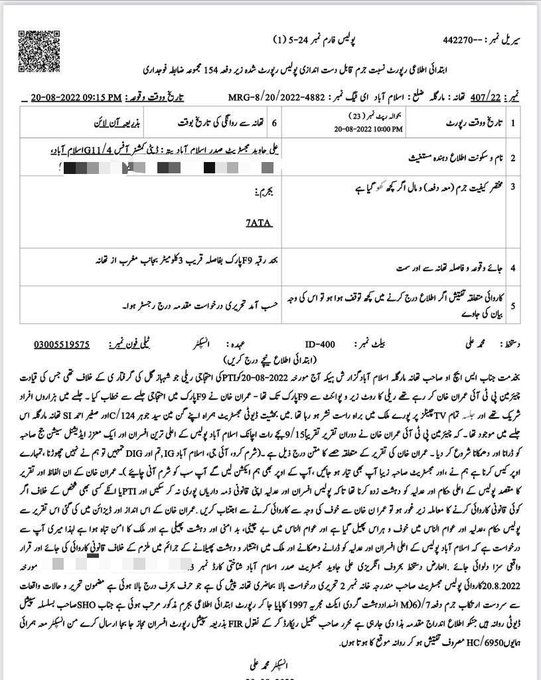
Former Pakistan prime minister Imran Khan Niazi on Sunday was booked for threatening a judge and two top police officials at a public meeting that took place in Islamabad on Saturday. The Pakistan Tehreek-e-Insaf (PTI) chairman was booked under the Anti-Terrorism Act (ATA). An FIR has been filed against Niazi under Section 7 ATA for challenging judicial and law enforcement authorities.

There is also speculation about Niazi's arrest shortly or in the next couple of days. Pakistan's interior minister Rana Sanaullah earlier on Sunday said that the government was mulling to file a case against the former prime minister for issuing threats to state institutions and making provocative statements while addressing the rally.

A copy of the FIR against Imran Khan Niazi.

Niazi, while addressing a public gathering, threatened to file cases against top police officials, a woman magistrate, the election commission of Pakistan and political opponents over the treatment meted out to his aide Shahbaz Gill, who was arrested last week on charges of sedition.

Sanaullah alleged the speech by the Pakistan Tehreek-i-Insaf chief was a continuation of a trend to target army and other institutions.

“This is all happening in continuation — from a campaign after Lasbela incident when six army officers were killed followed by Gill’s attempt to incite army ranks to go against their top command and then Imran threatening a woman judge and police officials for performing their duties as per the law,” the minister said.

His remarks came after Pakistan’s electronic media watchdog banned satellite television channels from broadcasting live speeches of the ousted prime minister, hours after he threatened state institutions and made provocative statements while addressing the rally.

The Pakistan Electronic Media Regulatory Authority (PEMRA) in a communique issued on Saturday said television channels despite repeated warnings had failed to implement a time-delay mechanism to stop the broadcast of material against “state institutions”.

The regulator said his speeches were in violation of Article 19 of the Constitution and against the code of conduct for the media.

Reacting sharply to the ban imposed on the PTI chairman, the party said the government of Prime Minister Shehbaz Sharif has a fascist regime.

Meanwhile, Niazi has said he will address a rally at Rawalpindi’s Liaquat Bagh ground later on Sunday.

https://www.hindustantimes.com/world-news/ousted-pakistan-pm-imran-niazi-booked-under-terror-act-arrest-likely-101661096309313.html

Once a protégé of Rawalpindi GHQ, Imran Niazi turned turtle and started abusing the powerful Pak army chief Gen Qamar Jawed Bajwa and the establishment for not coming to his aid and watched his ouster without any interference. Former Pakistan prime minister Imran Khan Niazi on Sunday was booked for threatening a judge and two top police officials at a public meeting that took place in Islamabad on Saturday. The Pakistan Tehreek-e-Insaf (PTI) chairman was booked under the Anti-Terrorism Act (ATA). An FIR has been filed against Niazi under Section 7 ATA for challenging judicial and law enforcement authorities.

Pakistan: Sit-in continues in Bajaur tribal district amid rising killing incidents


A sit-in which was organized to call for maintaining law and order in the Bajaur District of Khyber Pakhtunkhwa province has been continuing as the protestors demand the restoration of peace and security in the region.Many incidents of killings have been reported in the district as the law and order situation in Bajaur continued to deteriorate forcing people to raise their voices against the situation. The sit-in was led by Jamiat Ulema-i-Islam-Fazl (JUI-F).People from different walks of life, including political and social activists, youths and elders participated in the protest sit-in staged outside the Civil Colony, Khar, which houses the residences of government officials, reported Dawn.
JUI-F district chief Maulana Abdur Rasheed said the agitation would continue till the authorities took concrete steps to maintain law and order in the region. He said the Station house officer (SHO) of the police station concerned would be responsible if any incident of the killing happened in his jurisdiction.
The tribal district has remained a volatile region as numerous incidents of bomb blasts have been reported in various areas across the district. Earlier, two policemen — Said Ahmed and Inayatur Rahmen — were killed in a remote-controlled bomb blast in the Mamund area on Friday.Moreover, the killing of a youth by unknown robbers in Salarzai tehsil sparked a protest demonstration by the villagers here on Friday. Besides the victim’s relatives, scores of villagers and political activists participated in the protest and placed the victim’s body on the Khar-Falang bypass road in Khar town for about two hours.
The protesters said that the victim Ayaz Khan, 24, was on his way home on Thursday night when unknown robbers interpreted him to snatch his mobile phone. They said that the robbers opened fire on Ayaz when he showed resistance. They said the victim was critically wounded and died on way to the hospital.
Awami National party district president Gul Afzal Khan condemned the incident and termed it a failure of the district administration and police to give protection to the residents. They said the district had witnessed scores of such incidents during the last several months.They said the growing incidents of mobile phone snatching and other street crimes were a matter of serious concern for the residents. They urged the senior officials of the district administration and police to take immediate steps for arrest of the criminals involved in such incidents.
JUI-F district chief Maulana Abdur Rasheed, Awami National Party (ANP) leaders Sheikh Jan Zada, Nisar Baz Khan, Pakistan People’s Party (PPP) Syed Akhunzada Chattan, Jamaat-e-Islami Pakistan (JI) Qari Abdul Majeed, former Khyber Pakhtunkhwa Governor Eng Shaukatullah Khan, Khar traders’ association president Haji Khan Bahadur, Pakhtunkhwa Milli Awami Party chief Malik Asghar Khan, Pakistan Muslim League (N) (PML-N) leader Malik Shahauddin Khan and Pakistan Tehreek-e-Insaf (PTI) Member of National Assembly Gul Dad Khan were present at the sit-in.
https://theprint.in/world/pakistan-sit-in-continues-in-bajaur-tribal-district-amid-rising-killing-incidents-2/1093247/

Pakistan - RIP #NayyaraNoor - Legendary Singer Nayyara Noor Passes Away

Popular playback singer Nayyara Noor passed away on Sunday, reported local media. The celebrated crooner, whose fruitful career spanned over several decades, was 71. Noor was conferred with multiple national honours. She was initially conferred with the title of Bulbul-e-Pakistan alongside the Pride of Performance Award by the President of Pakistan in 2006. Noor was also honoured with the Nigar Award in 1973.
The news of her passing away soon reached social media after a family member of the singer confirmed her demise.Soon after, many social media users took to the micro-blogging website and expressed condolences.
Born on November 3, 1950, in Guwahati, Assam, northeastern India, Noor spent her early childhood on the other side of the border. The late singer's first brush with melody was said to have been inspired by the bhajans of Kanan Devi and Kamla as well as the ghazals and thumris of Begum Akhtar. Despite having a successful career and being touted as Queen of Melody, Noor never had any formal training.
Second to none
The singer was discovered by Professor Asrar Ahmad at the Islamia College in Lahore after hearing her sing for her friends and teachers at an annual dinner at the National College of Arts in Lahore in 1968. She was later brought in to sing for the university's Radio Pakistan programs.
It wasn't until 1971 that Noor made her public singing debut. She began with Pakistani television serials and then went on to sing in films like Gharana (1973) and Tansen. She has since sung ghazals penned by famous poets like Ghalib and Faiz Ahmed Faiz. Not just that, Noor had performed with legends like Mehdi Hassan and Ahmed Rushdi.
Popular work
Some of her famous ghazals and songs comprise Woh Jo Hum Mein Tum Mein Qarar Tha Tumhein Yaad Ho Keh Na Yaad Ho, Rang Barsaat Nay Bharay Kuchh Tou, Phir Sawan Ruth Ki Pawan Chali Tum Yaad Aye, Aye Ishq Hamay Barbaad Na Kar, Barkha Barsay Chhat Per, Mein Teray Sapnay Deikhuun, Kabhi Hum Bhi Khoobssorat Thay, Jalay Tau Jalao Gori and her most famous, Watan Ki Mitti Gawah Rehna.
She also sang popular film songs. Her famous songs such as Ik Ajnabi Chehray, Mera Pyar Tum Hee Ho, Mausum Tau Deewana Hai, Tera Pyar Bun Kay Aaye, Zara Meri Nabz Dekh Kar, Kuchh Log Mohabbat Ka Sila and Anjanay Naga.
'Was never tempted by material things in life'
For a better part of the last decade, Noor wasn't seen in public, until she showed up at Napa in a rare public appearance. “To be honest with you, I was never tempted by material things in life since I was a kid,” Noor told the audience as she sat onstage. “I never felt shallow or incomplete without the embellishments and makeovers. I didn’t need anything to make myself look better and I was and am very content with myself,” the hall echoed with applause.
“You should be in sync with who you really are and that is the only way of embracing the divine energy in you,” Noor had then said. She was of the opinion that the more you force yourself in a certain direction the lesser chances of it working out. “The moment you subscribe to any kind of pretentiousness or fakeness, that’s the moment you lose it.”
Noor remained adamant that finding yourself in your expression is the most significant part of the creative process. It’s all about avoiding that moment and the idea to dress in a stranger’s cloak. “Being who you truly are, helps tremendously,” said Noor while adding, “Only you know who you really are that is all that matters. Your essence is the purity you bring to the world and if you can connect with it then you can do wonders."
https://tribune.com.pk/story/2372349/legendary-singer-nayyara-noor-passes-away

Saturday, August 20, 2022

Video Report - #VelshiBannedBookClub: Salman Rushdie’s “The Satanic Verses”

Video Report - Researcher sees a "dangerous" and significant shift by right-wing militia groups

Video Report - #Coronavirus #Covid19 #pandemic The end of coronavirus restrictions? | COVID-19 Special

Video Report - Extreme drought conditions persist in northern Mexico

Video Report - Fallout from Pelosi's trip to Taiwan ripples across the world

Pashto Music - Naghma & Mangal - Saba Kooch Dey Laliya

Video Report - شہباز گل پر تشدد: نجم سیٹھی نے تحریک انصاف اور عمران خان کے الزامات کو جھوٹا قرار دے دیا

OP-ED: #Pakistan – The Future Image


Huzaima Bukhari

 “With faith, discipline and selfless devotion to duty, there is nothing worthwhile that you cannot achieve”-Muhammad Ali Jinnah
Agreed that Pakistan today is not the country its people would have liked it to be. Agreed that there are many systemic drawbacks, agreed that its economy is definitely not enviable, agreed that there is a law and order situation, agreed that corruption is rampant in all spheres of life, agreed that the general population is unhappy and restless, agreed that health and education are nothing more than businesses, agreed that agriculture is no longer our pride, agreed that the once thriving industries are now facing serious set-backs, agreed that if given an opportunity most Pakistanis would choose migrating to foreign lands, agreed that our polity is dominated by those who would never be able to find even a petty employment post on their own, agreed that we have missed many buses as we enter into our 76th year of existence, agreed that countries who saw independence after us have progressed while we have played havoc with our own rich resources…..agreed that we have together brought our beautiful country to the edge of disaster but how do we steer this ship out of these choppy waters is the question every Pakistani is seeking a workable answer to. Is it possible for us to find the messiah who can resurrect and restore this country to a glory worth its dignity or do we need something else?
A building, no matter how magnificent, can get reduced to rubbles if it is not inhabited by human beings. On the same note, if those people or the caretakers are insensitive, callous and irritatingly incompetent, there is a great probability that the building would not be able to retain its grandeur which points to the fact that the quality of humans is essential to maintain a certain standard. This is also indicative of another important factor that if a country has to make a positive turn-around, the first thing to focus on is its people for without their help and support there is no way anyone can single-handedly bring about a revolution and the most effective way is to instil discipline. Only a nation that knows how to remain disciplined and steadfast can expect to gain progress and retain its independence. Good leaders like a sensible shepherd will therefore first harness their people’s behaviour even if it entails invoking discipline with an iron hand. Learning to obey and respecting rule of law are traits that enable human beings to accept the writ of the state and appreciate freedom in its true sense that also means justice too is indispensable.
A building, no matter how magnificent, can get reduced to rubbles if it is not inhabited by human beings.
Simultaneously, the physical health of the people should be at the forefront of priorities which means increasing agricultural production with intensity covering all aspects including grains, fruits, dairy products and livestock. Self-sufficiency in food is significant for promoting health because only a healthy body is capable of housing a healthy mind essential for growth and advancement. Related industries can help in accelerating economic activity that is vital for employment resulting in higher revenues for the government. This requires a substantial shake-up in revenue laws making them equitable across the country as well as across all spheres of activity.
Mental faculties get honed with a good education that is not limited to just reading and writing but goes beyond these areas towards developing the character of inquiry to encourage investigation important for innovations and inventions. Our downfall is partly due to converting our younger generation into automatons dependent upon foreign technologies and knowledge. Unfortunately, there are a few worthwhile inventions that can be credited to Pakistanis although they are adept at making the most of gadgets introduced by others. Check out the usage of top-loading washing machines for the extraction of butter in the early 1980s. Using services of the existing selfless and the practical in both education and health, these sectors can be improved tremendously without incurring too much hassle.
The above can be made possible only when merit and competence reign supreme in civil-judicial-military bureaucracy. When the concept ‘right man for the right job’ is fully in play then only can one aspire to promote these ideas, improve infrastructure and go for development keeping in mind at least the next 100 years if not more. The existing regulatory structure has lost its effectiveness becoming just a giant white elephant that is sucking the country dry. A more responsible governance scheme is needed at the grass-root level to ensure progress for every segment of society.
One does not start painting the neighbourers’ walls if one’s own house is in disorder. Despite the necessity of having good international relations with the entire world and maintaining a neutral position with respect to all, the best thing to do is first organize and clear up the inner mess. We claim ourselves to be an Islamic country but pay no heed to have cordial relations with bordering countries. We even forgot the words of our founding father, Muhammad Ali Jinnah when he said: “I sincerely hope that they (relations between India and Pakistan) will be friendly and cordial. We have a great deal to do…and think that we can be of use to each other and to the world.” There is no point in claiming independence if one is unable to take up a stand for or against others and if one is to align with a particular block in defiance of another then it only shows interdependence. Foreign relations are highly sensitive and must be handled extremely wisely and prudently.
It is important to remember that when cancer attacks bodies, three important treatments are meted out. Surgery, chemotherapy and radiation-all these methods are invasive and meant to cut and flush out the toxins from the body. Similarly when cancerous people or situations attack and paralyze the country then some stringent measures are required to be taken on a war footing to avert further damage. Of course, no existing political personalities would be willing to incur the wrath of their electorate if they seriously and honestly go about bringing a much-needed transformation for in doing so they are bound to step up on the toes of their patrons and may even lose their support. Only one with nothing at stake can be prompted to take action without any hesitation provided one does so with absolute sincerity and loyalty to this country.
“You will have to make up for the smallness of your size by your courage and selfless devotion to duty, for it is not life that matters, but the courage, fortitude and determination you bring to it.”-Muhammad Ali Jinnah
https://dailytimes.com.pk/984373/pakistan-the-future-image/

PRECISE AND POPULAR: WHY PEOPLE IN NORTHWEST PAKISTAN SUPPORT DRONES

NEHA ANSARI
On May 26, 2012, a missile from a drone hit the top floor of a two-story bakery in Pakistan’s North Waziristan tribal agency, killing four al-Qaeda members. A couple of weeks later, a similar strike took place when a drone launched two missiles at the upper level of a grocery store in Miramshah Bazaar, killing another senior al-Qaeda commander. The buildings remained intact, and no civilians were killed.
Sound familiar? On July 31, 2022, al-Qaeda chief Ayman al-Zawahiri was standing on the balcony of a safe house in Afghanistan’s capital, Kabul, when two Hellfire missiles fired from an unmanned aircraft killed him. No civilians were reported killed, while unconfirmed photos of the drone strike showed only partial damage to the balcony of the house he was apparently living in. Although 10 years apart, the drone strikes are remarkably similar.

 Indeed, the drone strike in Kabul’s affluent downtown neighborhood eliminated a very high-value target in comparison to the North Waziristan bazaar strikes, which targeted makeshift improvised explosive device factories. Nevertheless, the quality of the intelligence locating and identifying the targets, the decision to conduct the attack at an opportune time, and the ability to avoid civilian casualties and widespread property damage in a closely-built area are very similar. This shows that drone strikes can be precise and discriminating and achieve counter-terrorism goals. The attack on al-Zawahiri after America’s troop withdrawal from Afghanistan is exactly what President Biden’s “over-the-horizon” counterterrorism strategy sought to deliver. It was a model strike. But as critics have pointed out, it is just one data point.
However, we have more data showing how effective this strategy can be. The drone program in Pakistan, particularly under Obama’s second presidential administration, targeted and killed top al-Qaeda commanders as well as chiefs and militants of both the Afghan and Pakistan Taliban with minimal civilian harm. From 2009 onwards, even though drone strikes increased in number, civilian casualties decreased with every subsequent year. From 2013 onwards, no local civilian was reported killed by American drone strikes in Pakistan.
My own quantitative with the qualitative research confirms that over-the-horizon strikes can be carried out consistently and effectively with minimum casualties or popular blowback. I collected data by interviewing 116 residents of Pakistan’s tribal belt — where the United States has conducted over 420 drone strikes. Two-thirds of my sample said that they were in favor of the American drone program, calling it “successful” and “effective” in killing militants. All those in favor of unmanned strikes admitted that there were instances of civilian casualties, such as the attack on a Taliban commander’s funeral in 2009 and another strike at a jirga in 2011. However, the respondents quickly added that a majority of the strikes killed only militants.
“Justice-Delivering Technology”
Before beginning my research, I believed that drone strikes killed more civilians than militants. Media coverage of American drone strikes is dominated by images of houses reduced to rubble, news articles about scores of estimated deaths of women and children, and videos of charged Pakistani protestors setting American flags on fire.But as I spoke to more and more local residents from Pakistan’s tribal areas — tribal leaders (known as malik) and elders (known as masharaan), university students, journalists, academics, activists, lawyers, and internally displaced persons returning to their homes — a clear majority of them rejected that narrative. For them, drones had done what local militias and even Pakistani military operations could not do: kill the bad guys, with limited-to-no collateral damage. “The drone is a justice-delivering technology,” one respondent from South Waziristan said. “Taliban Inc. — which is very powerful as it’s challenging Pakistan’s state sovereignty — commits atrocities against the local population and the people don’t have the power or the resources to retaliate or defend themselves. The drone compensates for this asymmetry.”
In the course of my research, I spoke to residents from all seven tribal agencies and frontier regions, seeking out the most representative sample of people possible from different socio-economic and political backgrounds. Among lower-income families or supporters of more overtly religious political parties, there was some sympathy for al-Qaeda and related groups. But the Pakistani Taliban’s violence and brutal imposition of its own version of sharia had created a widespread animosity that transcended many tribal, economic, and political divides. And this translated into support for drone strikes.
A resident of North Waziristan said he had seen drones hovering in the sky every day for weeks on end but had never witnessed a strike. “We never had a drone strike in our village because we didn’t have any militants in our area,” he said, demonstrating his confidence in the targeting of the drone program.To be sure, this was not always the case. According to my respondents, the initial years of the drone program under President George W. Bush invoked fear among the population — missed targets caused trauma, and there were tens of civilian casualties, including women and children. Residents in my sample who support drone strikes had opposed the program during its initial years, but between 2009 and 2011, their opinion became more favorable and accepting of the operations.The residents of Pakistan’s tribal areas began to support the drone operations because the unmanned program evolved and improved its targeting practices. During Obama’s first term, improvements in technology and intelligence collection and analysis made the targeting more precise and discriminating. The United States expanded and improved its intelligence-surveillance-reconnaissance capabilities by procuring more efficient drones, employing more analysts and linguists, and developing its sprawling intelligence-collection and data-fusion infrastructure. During this time, the Pentagon maximized the production and deployment of the Reaper — the Predator drone’s more lethal and efficient cousin — while at the same time ramping up training for operators for these new drones. This improved intelligence apparatus allowed the United States to locate militant networks and infrastructure and identify them correctly, helping to achieve precision: The intended target was accurately attacked.
Near-Certainty Standard
Precision was not enough though — strikes had to ensure no civilians were killed. In 2011, a drone launched two missiles in quick succession at a jirga in Datta Khel, North Waziristan, killing over 40 local tribesman and Khasadar (members of a lightly armed local police force). The attack on a peaceful jirga led to disagreements on targeting practices and procedures within the Obama administration, resulting in an internal review. The review created more checks and balances in the selection and execution of a target: The State Department now had more of a say in the strike decisions, Pakistani leaders would get advance notice about some drone strikes, and the CIA would halt unmanned operations when Pakistani officials visited the United States. These changes had an impact, as demonstrated by the steady decline in civilian casualties.
By 2013, the Obama administration was feeling rising global pressure to ensure greater transparency and accountability regarding his classified unmanned program. As drone warfare was here to stay, particularly in areas of active hostilities that were not declared warzones, Obama introduced policy guidance on drone strikes and established an inter-agency review process to systemize and bureaucratize the process of target selection and authorization.
He promulgated the Presidential Policy Guide, which established the “near-certainty standard” of no civilian casualties, emphasizing that U.S. government agencies must identify targets for direct lethal action and also present a legal and threat-based justification for their inclusion. From 2013 onwards, not a single local civilian death was reported in American drone attacks in Pakistan’s tribal areas.
Weakening Terrorist Groups
Scholars have provided evidence of how the U.S. drone program in Pakistan and Afghanistan affected al-Qaeda’s organizational capabilities. Data on the Pakistani Taliban shows that its top commanders, including all its former chiefs, have been killed by drone strikes: Baitullah Mehsud, Hakimullah Mehsud, and Maulana Fazlullah were targeted and killed in 2009, 2013, and 2018, respectively. American drone operations forced the leadership of the Pakistani Taliban (also known as the Tehreek-e-Taliban Pakistan) into hiding. There was no specific time when the drones would surveil or strike — they would hover or attack during the day and well into the night. “The only certainty was that it was safe for the Taliban when it was cloudy; no drones could be in the sky when it was covered with clouds,” explained a North Waziristan resident. Under these circumstances, all the Pakistani Taliban leaders could not be in the same place and at the same time, which the leaders found deeply frustrating. This restricted mobility and limited communication, which further weakened their command and control. Moreover, the accurate targeting of top leaders and commanders created multiple leadership crises within the Pakistani Taliban, which in turn led to fragmentation and infighting. The infighting took place usually over disagreements about succession, with different tribes and factions wanting their commander to take the helm of affairs. This resulted in violent clashes which deepened cleavages, leading to fragmentation and desertions, further eroding their capacity to organize and operate.
All this caused the Pakistani Taliban to eventually lose their grip over the country’s tribal areas: They could not earn revenue through their extensive extortion networks, which required a powerful presence, and therefore their ability to intimidate and commit violence against the local population of the Federally Administered Tribal Areas diminished. All these direct and second-order effects of improved targeting yielded successful counter-terrorism results and also increased the acceptability and favorability of drone strikes among the local population of Pakistan’s tribal areas.
Can “Over-the-Horizon” Deliver?
After withdrawing from Afghanistan, the United States left behind non-state militant groups pitted against each other, fighting over turf and the resources of a war-torn state. Although a U.S. intelligence assessment, leaked to the New York Times, concluded that al-Qaeda does not have the ability to launch attacks from Afghanistan against America’s homeland, the Taliban cannot be trusted to ensure their territory is not used to plan and conduct terrorist attacks. In such a volatile environment and with no ground presence, the United States seeks to pursue an intelligence-forward, technology-driven strategy, dominated by unmanned systems, to ensure those groups cannot plan new attacks.
This “over-the-horizon” strategy is predicated on good, accurate human and signals intelligence. Over the last 20 years, the United States has established a strong, reliable intelligence gathering and analysis infrastructure across Central and South Asia. The U.S. withdrawal from Afghanistan will certainly result in diminished intelligence capabilities. However, according to the coordinator of the United Nations Analytical Support and Sanctions Monitoring Team that tracks non-state militant groups, “very rich sources” still remain in Afghanistan and the region. The United Kingdom, the United Nations through member nations, and a range of neighboring countries retain strong intelligence capabilities in Afghanistan. Although the U.S. departure resulted in a material reduction of direct intelligence collection, Washington maintains access to credible sources which can be triangulated, particularly with signals intelligence. Al-Zawahiri’s assassination validates this network. The al-Qaeda chief was communicating more freely after the Taliban takeover of Kabul, making him more vulnerable to electronic interception. This, possibly augmented by non-U.S. human intelligence networks and behavioral pattern-of-life analysis, allowed for an accurate identification.
Can “over-the-horizon” deliver? Yes. But is it sustainable? That is a more complicated question.
There are a lot of necessary factors: credible intelligence networks, cooperating governments, multilateral institutions with access, reliable unmanned combat and intelligence drones, surveillance and reconnaissance infrastructure, and targeting practices that adhere to the near-certainty standard. The United States managed to have all these in place during its drone operations in Pakistan from 2013 onwards. But it is a challenging task. Any variation could have adverse consequences and result in loss of life, like the tragically botched drone attack around the same time last year that killed 10 civilians, including seven children. Unmanned warfare is no panacea. A counterterrorism strategy relying on unmanned assets is a short- to medium-term policy solution at best, and should be complemented with more long-term, non-military strategies. Yet as both the al-Zawihiri strike and my research in Pakistan show, drones have an important — and still sometimes underappreciated — role to play.
https://warontherocks.com/2022/08/precise-and-popular-why-people-in-northwest-pakistan-support-drones/

OP-ED: Leading From The Front - Foreign Minister of Pakistan Bilawal Bhutto Zardari

By Senator Sehar Kamran 
@SeharKamran
August 2,2022


“You cannot defend the soil unless you know the smell of that soil.” – Zulfiqar Ali Bhutto
Foreign Minister of Pakistan Bilawal Bhutto Zardari will complete his first 100 days in office, on August 4. Keeping up with the legacy of his grandfather and Former Prime Minister of Pakistan Zulfiqar Ali Bhutto who served as a foreign minister before assuming charge as the chief executive of the country, Foreign Minister Bilawal Bhutto Zardari has carved his own niche and is setting new benchmarks with every passing day.
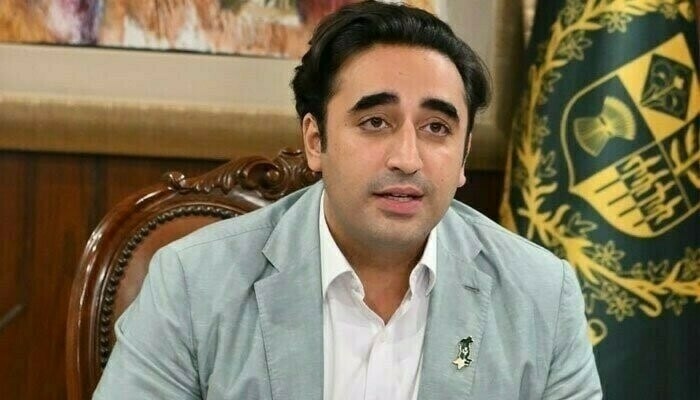
Chairman Bilawal Bhutto Zardari took the oath as Pakistan’s 37th Foreign Minister in April 2022. In the face of humongous challenges left by the previous government and its mishandling of Pakistan’s foreign relations, Foreign Minister Bilawal Bhutto Zardari has a daunting task ahead of him, to meet the expectations of millions of people.
Despite being the youngest foreign minister in the history of the country, Bilawal Bhutto Zardari has been on a relentless mission to improve Pakistan’s image in the world, and renew its diplomatic ties, especially with the West by engaging them. Since assuming office, he has advocated the case for trade and engagement with other countries. His presence and speeches at the various international forums have exhibited his passion and commitment toward the people of Pakistan, as well as showcased effective communication with clarity of thought in his words and media engagements. The maturity and resolve he displayed while representing the case of Pakistan was a much-needed breath of fresh air.
In a short span of time, Foreign Minister Bilawal Bhutto Zardari has become a celebrity of sorts among the diplomatic community. His gentle mannerism, charisma and humility have earned him global popularity and positive international media coverage which is rare for a Pakistani government official. By leading from the front, Foreign Minister Bilawal has been successful in bridging the diplomatic gap with Pakistan’s allies and striking a balance in its diplomatic relations. He has played a pivotal role in reaffirming Pakistan’s ties with the Gulf Cooperation Council, European Union, US, and other friendly countries which was the need of the hour. His successful visits to important countries like the US, China, KSA, Turkey, UAE and Iran, to name a few, and high-level engagements have helped revive Pakistan’s goodwill in the diplomatic community.
Foreign Minister Bilawal Bhutto Zardari has proven with his actions rather than words that he is a representative of the people of Pakistan and not just Pakistan’s largest political party.
During his maiden visit to the US at the invitation of the Secretary of State Antony Blinken, Foreign Minister Bilawal Bhutto Zardari had important engagements and sideline meetings. He also met with UN Secretary-General Antonio Guterres and raised the issue of Jammu and Kashmir. He also held an important bilateral meeting with the US Secretary of State Blinken to reset the diplomatic ties between Pakistan and the US and expressed his determination to further strengthen the broad-based and multifaceted bilateral relations.
Another core issue which has been successfully handled by Foreign Minister Bilawal Bhutto Zardari has been raising his concerns regarding the issue of Islamophobia and persecution of Muslims in India. In June, Foreign Minister Bilawal, in a telephone call, apprised the President of the UN General Assembly (PGA), H.E. Abdulla Shahid, of the derogatory and offensive remarks made by two senior officials of India’s ruling party BJP, against the Holy Prophet Muhammad (Peace Be Upon Him).He also contacted the OIC Secretary General Hissein Brahim Taha and apprised him of the plight of Muslims in India, and stated that this matter needed to be addressed through collective efforts. As a result of Bilawal Bhutto Zardari’s effective and credible leadership in his first 100 days as the Foreign Minister, Pakistan has managed to get out of the Financial Action Task Force’s grey list, revived the International Monetary Fund’s program which was put on hold, thwarted India’s bid for the United Nations Security Council membership, assisted getting a $2.3 billion loan facility agreement amid dwindling cash reserves, raised the issue of Islamophobia at various international platforms, to name a few.
On his personal special request during his meeting with State Councilor and Foreign Minister Wang Yi in China on May 22, 2022, the first batch of Pakistani students was able to return to China for on-campus studies on June 20, 2022. In addition, Foreign Minister Bilawal Bhutto Zardari has led the Pakistani delegation and represented the country at various international forums including the World Economic Forum, and Shanghai Cooperation Organisation (SCO), among many others. Like a true statesman, he displayed maturity in his interactions and held important bilateral meetings.
A key initiative taken by Foreign Minister Bilawal was the successful convening of the first meeting of the Group of Friends on Countering Disinformation, as a follow-up to the implementation of UN’s landmark resolution 76/227. Foreign Minister Bilawal Bhutto Zardari urged the international countries to create an “international plan of action” to battle disinformation and demanded the United Nations create an effective strategy. This step will have a positive impact globally as the world governments are struggling to control the menace of disinformation campaigns, especially those run on social media.The Pakistan-sponsored resolution on Countering Disinformation for the Promotion and Protection of Human Rights and Fundamental Freedoms was adopted by the UN General Assembly on Countering Disinformation for the Promotion and Protection of Human Rights and Fundamental Freedoms, in June 2022.
Foreign Minister Bilawal has the advantage of representing the new generation of Pakistan. According to the United Nations Development Programme, 64 per cent of Pakistan’s population is under 30 years of age, and 29 per cent of Pakistanis are between 15 and 29. He truly is the representative of the vibrant and emerging youth with a hand on the pulse of the people. His motivation and drive to present the soft image of Pakistan on the global stage are being acknowledged and applauded.
It is said that the darkest hour brings out the best in people. The importance of visionary leadership is often underestimated, nor is the concept too often understood properly. There is a unique set of characteristics which sets statesmen apart: principles, vision, a moral compass, and an innate ability to unite differing factions, and Foreign Minister Bilawal encompasses all of the above qualities. Foreign Minister Bilawal Bhutto Zardari has proven with his actions rather than words that he is a representative of the people of Pakistan and not just the Chairman of Pakistan’s largest political party. Bilawal Bhutto is a torchbearer of the Bhutto Legacy. He is determined to follow the footsteps of his grandfather Zulfiqar Ali Bhutto and mother Shaheed Mohatrma Benazir Bhutto to carry forward their arduous struggle for democracy, fundamental rights and constitutional supremacy.
Great leaders are said to inspire greatness in others, by envisioning and creating policy directions that will bear fruits for generations. In his first 100 days in office, Foreign Minister Bilawal Bhutto Zardari has brilliantly demonstrated his leadership skills, calibre and foresight. He has truly emerged as an icon of hope who will shape the future landscape of the country and will lead Pakistan towards the path of peace, prosperity and progress.
https://dailytimes.com.pk/975672/leading-from-the-front-5/