Monday, May 24, 2021

Pakistan’s Private Vaccine Sales Highlight Rich-Poor Divide

By Salman Masood
An inoculation push, plagued with limited supplies and red tape, makes doses available to those who can pay for them. In a country with a struggling economy, most can’t.
The coronavirus was ripping through Pakistan, and Muhammad Nasir Chaudhry was worried. Long lines and tight supplies plagued the government’s free vaccine campaign. Newspapers were filled with reports of well-connected people jumping the line for a free dose.
Then Mr. Chaudhry, a 35-year-old government consultant, discovered he could pay to leapfrog the long lines himself. He registered to take two doses of the Russian-made Sputnik V vaccine for about $80 from a private hospital. That’s a lot of money in a country where the average worker makes about $110 per month, but Mr. Chaudhry was ready to make the commitment.
Critics have assailed such private sales in Pakistan and around the world, saying that they make inoculations available only to the wealthy. But in Pakistan, like elsewhere, tight supplies have stymied those efforts. The private hospitals are out of supplies, and Mr. Chaudhry still hasn’t been vaccinated.
“I am willing to pay double the price for the vaccine, but I don’t want to wait on and on,” Mr. Chaudhry said.
Access to the coronavirus vaccine has thrown a stark light on global inequality. The United States and other rich countries have bought up most of the world’s vaccine supplies to protect their own people, leaving millions of doses stockpiled and in some places unused. Less developed countries scramble over what’s left.To speed up vaccinations, some countries have allowed doses to be sold privately. But those campaigns have been troubled by supply issues and by complaints that they simply reflect the global disparities.
“The Pakistani example is a microcosm of what has gone wrong with the global response — where wealth alone has primarily shaped who gets access,” Zain Rizvi, an expert on medicine access at Public Citizen, a Washington, D.C., advocacy group, said in an email. “Ending the pandemic will require the global community to do much more than just that.”
India sells vaccines to private hospitals, though they are scrambling to find supplies now that the pandemic there is so serious. Kenya authorized private sales, then blocked them over fears that counterfeit vaccines would be sold. In the United States, some well-connected companies, like Bloomberg, have secured doses for employees.
Indonesia on Tuesday allowed companies to purchase vaccines from the government to inoculate employees and family members free of charge. The only vaccine approved for that program so far is one made by Sinopharm.
Pakistan says the private program could make more free shots available to low-income people. By purchasing doses of the Russian-made Sputnik 5 vaccine, the country’s wealthy wouldn’t need to get the free doses, which are made by Sinopharm of China. Some people would prefer to get inoculated at a private hospital because they are widely believed to be comparatively better organized and more efficient than overwhelmed government facilities. Pakistan’s need is growing. The country of nearly 220 million people is reporting more than 2,500 new infections a day, but its low rate of testing suggests many more cases remain undetected. The government has toughened restrictions and limited public gatherings.
But the government’s vaccination campaign has been slow. It has started giving doses to people over 40 this month. Younger people may need to wait several months.
Tight global supplies are to blame, said Chaudhry Fawad Hussain, Pakistan’s information minister. In addition to the Sputnik and Sinopharm vaccines, Pakistan earlier this month received 1.3 million doses of the AstraZeneca vaccine from Covax, the international body that promotes vaccinations, and is due to get 3.5 million doses of the Sinovac vaccine from China by the end of May.
Private sales set off a fiery debate in a country where the economy has stalled from the pandemic and from longstanding issues like a lack of foreign investment and heavy government debt. Critics say the decision will deepen the divisions within the country, where a large section of the society lives under the poverty line.“The government did not think about the suffering of the poor while allowing the importers to sell the vaccine,” said Dr. Mirza Ali Azhar, a leader of the Pakistan Medical Association, the nationwide medical professional body. “Such discriminatory policies will increase the sense of deprivation among the poor young people, especially those with weak immune systems.”
Mr. Chaudhry, the information minister, played down the pricing issue, saying that private vaccines could not cater to the public need anyway.
The initiative has run into another problem: Hospitals can’t find vaccines to buy. Demand has been strong. The government sets a ceiling on prices but has been locked in a dispute with private importers over how much that should be.
In April, in the city of Karachi, long lines formed when two private hospitals began selling the Sputnik V vaccine to walk-ins. Private hospitals in Islamabad, the capital, and Lahore faced a similar rush of people and ran short within days. Hospitals in the major cities have now stopped taking walk-ins, and online registration has also been put on hold.
Sputnik V isn’t the only vaccine that the government allows to be sold privately. A one-dose shot made by CanSino Biologics of China is priced at around $28. Demand has been weaker because of greater public confidence in the Russian vaccine. Still, supplies sold out quickly after the CanSino doses went on sale last month. The government has said another 13.2 million doses will arrive in June.
AGP Limited, a private pharmaceutical company that has imported 50,000 doses of Sputnik, is urging patience.
“Sputnik V received an overwhelming response in Pakistan with thousands of people being vaccinated in just a few days and an even higher number of registrations confirmed in hospitals across Pakistan,” said Umair Mukhtar, a senior official of AGP Limited. He said the company has placed large orders for more.The government price dispute could delay further expansion. The drug regulatory authority wants Sputnik V to be sold at a lower price. AGP won an interim court order on April 1 to sell the vaccine until a final price is fixed.For those who can afford the doses, frustration is growing. Junaid Jahangir, an Islamabad-based lawyer, said several of his friends got private inoculations. He registered with a private lab for Sputnik V but got a text message later saying that the vaccination drive was on hold.
“I am being denied a fair chance to fight this virus if I end up getting infected,” Mr. Jahangir said. “The demand is there, and I don’t see what could possibly be the reason behind the inefficiency in supply.”
Some of the people who paid for private doses justified their decision by citing media reports that some well-connected people were jumping the line to get free, public doses. In May, at least 18 low-level health care workers were suspended by the authorities in Lahore for vaccinating people out of turn after taking bribes.

Iffat Omar, an actor and talk show host, apologized publicly in April for jumping ahead of the line to get the vaccine. “I am sorry,” she said on Twitter. “I am ashamed. I apologise from the bottom of my heart. I will repent.”

Fiza Batool Gilani, an entrepreneur and the daughter of Yusuf Raza Gilani, the former prime minister, said she knows of several young people who jumped the queue and got the free government vaccine in recent weeks.

“I was myself offered out of turn, free vaccine, but I declined as I wanted to avail the private vaccine,” said Ms. Gilani. Wealthy people should pay for their doses, she said, adding that her family would pay for CanSino shots for its household staff.

Many people, like Tehmina Sadaf, don’t have that option.Ms. Sadaf, 35, lives along with her husband and a 7-year-old son in a working-class neighborhood on the outskirts of Islamabad. Her husband is a cleric at a mosque. She gives Quran lessons to young children. She said the pandemic had negatively impacted the family’s income of around $128 per month. “After paying the house rent and electricity bill, we are not left with much,” she said.She had her doubts about the public vaccine, “but the price of the private vaccine is very high,” she said. “It should have been lower so that poor people like us can also afford it. https://www.nytimes.com/2021/05/22/world/asia/pakistan-private-vaccines.html

Imran Khan trying to cover up economic disaster with lies: Bilawal

Chairman of Pakistan Peoples Party (PPP) Bilawal Bhutto Zardari has said that Imran Khan is trying to cover up the economic catastrophe with persistent lies as marketing of chickens, eggs and buffaloes cannot improve the country’s economy.
A statement issued by Bilawal Bhutto Zardari states that Imran Khan’s government used the old census data to depict higher per capita income. As long as there are experiments like Imran Khan in the country, Pakistan cannot make progress. Reminding the premier of his promises, Bilawal recalled that Imran Khan had claimed to fix the national economy in 90 days but today it is 1011th day and still there is no economic recovery.
PPP Chairman said that Imran Khan failed to fulfill any of the promises he made with the people. An increase of 53% in the import bill of food commodities in an agricultural country is a slap on the economic performance of the government, he added.
Bilawal said that a false impression of Imran Khan’s honesty was created but the truth is that the PTI elites are robbing the country with both hands.
https://dunyanews.tv/en/Pakistan/602911-Imran-Khan-trying-to-cover-up-economic-disaster-with-lies-Bilawal

Bilawal announces PPP candidates for AJK elections


PPP Chairman Bilawal Bhutto Zardari Monday unveiled his party candidates for the upcoming Azad Jammu & Kashmir General Elections 2021.

The candidates that will contest the AJK elections on a PPP ticket are as follows:

ConstituencyCandidate
LA-1 (Mirpur-I)
Muhammad Afsar Shahid
LA-2 (Mirpur-II)
Chaudhry Abdul Majeed
LA-3 (Mirpur-III)
Chaudhry Muhammad Ashraf
LA-5 (Bhimbher-I)
Chaudhry Pervaiz Ashraf
LA-7 (Bhimbher-III)
Anees Ahmed Kashmiri
LA-8 (Kotli-I)
Muhammad Aftab Anjum
 LA-9 (Kotli-II)
Javed Iqbal Budhanvi
LA-11 (Kotli-IV)Sardar Muhammad Bashir Pehalwan
LA-13 (Kotli-VI)Muhammad Waleed Inqalabi
LA-14 (Bagh-I)
Raja Khawar Qayyum Advocate
LA-15 (Bagh-II) 
Sardar Zia Ul Qamar
LA-16 (Bagh-III)
Sardar Qamar Zaman
LA-17 (Bagh-IV)
Faisal Mumtaz Rathore
LA-18 (Sudhnoti & Poonch-I) 
Sardar Amjad Yousif Khan
LA-19 (Sudhnoti & Poonch-II) 
Sardar Saud Bin Sadiq
LA-23 (Sudhnoti & Poonch-VI) 
Sardar Muhammad Raees Khan
 LA-24 (Sudhnoti & Poonch-VII)
Sardar Inayat Ullah Arif
 LA-27 (Muzaffarabad-I)
Sardar Muhammad Javed Ayub
LA-28 (Muzaffarabad-II) 
Syed Bazil Ali Naqvi
LA-29 (Muzaffarabad-III)
Sardar Mubarak Haider
LA-30 (Muzaffarabad-IV)
Mubashir Munir Awan
LA-31 (Muzaffarabad-V)
Chaudhry Latif Akbar
LA-32 (Muzaffarabad-VI)
Sahibzada Muhammad Ishfaq Zaffar
LA-33 (Muzaffarabad-VII)
Sahibzada Muhammad Imtiaz Zaffar
LA-35 (Jammu-II)
Muhammad Iqbal Mujaddadi
LA-36 (Jammu-III)
Chaudhry Shoukat Wazir Ali
LA-39 (Jammu-VI)
Chaudhry Fakhar Zaman Gulpera
LA-40 (Kashmir Valley-I)
Amir Abdul Ghaffar Lone
LA-42 (Kashmir Valley-III)
Hafeez Ahmed Butt
 LA-43 (Kashmir Valley-IV) 
Azhar Gillani
LA-44 (Kashmir Valley-V) 
Rashid Salam Butt

The candidate list was issued after last week's PPP Parliamentary Board of AJK completed consultations regarding the elections and submitted a report to the PPP chairman.

The meeting of the board was held at the Zardari House, Islamabad, and was chaired by Faryal Talpur, central president of the PPP Women's Wing, and other senior leaders. 

The general elections in AJK are due to take place in June or July this year. However, the exact date for the polls is yet to be announced by the region's election commission.

https://www.geo.tv/latest/351706-bilawal-announces-ppp-candidates-for-ajk-elections

وزیراعظم صاحب، مرغیوں، انڈوں، بھینسوں اور کٹوں کی مارکیٹنگ سے ملکی معیشت بہتر نہیں ہوسکتی، چیئرمین پاکستان پیپلزپارٹی بلاول بھٹو زرداری


پاکستان پیپلزپارٹی کے چیئرمین بلاول بھٹو زرداری نے کہا ہے کہ عمران خان کی حکومت نے فی کس آمدنی زیادہ دکھانے کیلئے پرانی مردم شماری کے اعدادوشمار کا استعمال کیا، مسلسل جھوٹ اور غلط بیانی سے عمران خان معاشی تباہی پر پردہ ڈالنے کی کوشش کررہے ہیں، میڈیا سیل بلاول ہاؤس سے جاری اپنے ایک بیان میں چیئرمین بلاول بھٹو زرداری کا کہنا تھا کہ وزیراعظم صاحب، مرغیوں، انڈوں، بھینسوں اور کٹوں کی مارکیٹنگ سے ملکی معیشت بہتر نہیں ہوسکتی،

 عمران خان نے 90 روز میں ملکی معیشت ٹھیک کرنے کا کہا تھا، آج ایک ہزار 11واں دن ہے، ملکی معیشت کب ٹھیک ہوگی؟ انہوں نے کہا کہ عمران خان نے عوام سے آج تک جتنے وعدے اور دعوے کئے، کسی ایک کو بھی پورا نہ کرسکے، ایک زرعی ملک کے صرف غذائی اجناس کے درآمدی بل میں 53 فیصد تک کا اضافہ حکومتی معاشی کارکردگی پر ایک طمانچہ ہے، انہوں نے یہ بھی کہا کہ عمران خان کی ایمان داری کا جھوٹا تاثر قائم کیا گیا، حقیقت یہ ہے کہ پی ٹی آئی کی اشرافیہ ملک کو دونوں ہاتھوں سے لوٹ رہی ہے، ملک میں جب تک عمران خان جیسے تجربے ہوتے رہیں گے، پاکستان ترقی نہیں کرسکتا، چیئرمین پی پی پی نے مطالبہ کیا کہ عمران خان مہنگائی کے سونامی کی تباہی کے شکار عوام کے سامنے سرنڈر کرکے جھوٹے دعوے کرنے پر معافی مانگیں 

https://www.ppp.org.pk/pr/24888/

Sunday, May 23, 2021

Video Report - 'Vaccines for everybody' | Italian protesters demand fair distribution of COVID jabs

Video Report - Vaccine distribution in crisis with only 1% inoculated in Africa

Video Report - Deadly fungus affects thousands of Covid-19 patients in India

Video Report - TV News from Israel - May 23, 2021

Video Report - #CNN Fareed Zakaria GPS - Israel-Palestine Crisis - Israel Is The Super Power Of Middle East - Sunday 5/23/21

Music Video - Tahira syed sings Ahmad Faraz - Yeh Aalam Shauq ka dekha na jaaye

Afghan Music - Ahmad Zahir "Khuda Bowad Yaret" - By Taranasaz

Video Report - Tareen Group Returns To PTI? | Shehbaz Sharif Threat To Imran Khan? | Nawaz Sharif Hamla

عمران خان اپنے محسن ڈکٹیٹر پرویزمشرف کے دور میں ہونے والی 50 فیصد شرح غربت کے ہدف کے تعاقب میں ملک کو تباہی کی جانب لے جارہے ہیں، چیئرمین پی پی پی بلاول بھٹو زرداری


کراچی/اسلام آباد(—–) پاکستان پیپلزپارٹی کے چیئرمین بلاول بھٹو زرداری نے عمران خان کو ملکی تاریخ کا سب سے بڑا معاشی مجرم قرار دیتے ہوئے کہا کہ جب پوری دنیا میں معاشی بحران آیا تھا، اس وقت بھی ملکی معیشت کا اتنا برا حال نہیں تھا کہ جتنا اکیلے عمران خان نے کردیا، میڈیا سیل بلاول ہاؤس سے جاری اپنے ایک بیان میں چیئرمین پی پی پی بلاول بھٹو زرداری کا کہنا تھا کہ عمران خان اپنے محسن ڈکٹیٹر پرویزمشرف کے دور میں ہونے والی 50 فیصد شرح غربت کے ہدف کے تعاقب میں ملک کو تباہی کی جانب لے جارہے ہیں اور اگر عمران خان کے بڑھتے قدموں کو نہ روکا گیا تو وہ گھر گھر معاشی بدحالی کی ایسی آگ لگادیں گے کہ جسے دہائیوں میں بجھایا نہ جاسکے گا،

 انہوں نے کہا کہ اپنے پیچھے معاشی بربادی کی داستانیں چھوڑ کر عمران خان شوکت عزیز اور پرویزمشرف کی طرح ملک سے باہر چلے جائیں گے اور ہم ایسا نہیں ہونے دیں گے، عمران خان کو اپنے معاشی جرائم پر ایک عام آدمی سے معافی مانگنا ہوگی، انہوں نے یہ بھی کہا کہ بیرون ملک سے سخت شرائط پر بھاری قرضے وصول کرکے عمران خان کی کابینہ کرپشن میں ملکی خزانے کا پیسہ اڑارہی ہے، عمران خان کا جرم صرف مہنگائی کرنا نہیں بلکہ مہنگائی کرنے والی مافیا کی سرپرستی کرنا بھی ہے، چیئرمین پی پی پی بلاول بھٹو زرداری کا کہنا تھا کہ دوسروں پر الزامات لگانے والے عمران خان اپنے گریبان میں جھانکیں، پاکستان کے عوام عمران خان کے معاشی جرائم پر انہیں کبھی معاف نہیں کریں گے۔

https://www.ppp.org.pk/pr/24865/

The only viable option for Pakistan is for the Prime Minister to resign – says Chairman PPP Bilawal Bhutto Zardari.

The Chairman Pakistan People’s Party (PPP) Bilawal Bhutto Zardari declared the puppet Prime Minister, Imran Ahmed Khan Niazi, an imposter that has been imposed on the country. The criminal ineptitude on display over the past three years have destroyed the economic, social, and political fabric of Pakistan, he added. “The only thing driving Imran Khan is his unbridled lust for power. He doesn’t care about the will of the people as was evidenced by the widespread rigging that brought him here. The sheer shamelessness and criminality with which Imran Khan came to power shows that he will stop at nothing to sate his ego.”The COVID-19 pandemic has effected the entire world, and Pakistan is no an exception, however the way the PTI led federal government have used the pandemic as an excuse to gut social protections, ruin the economy, deflect responsibility, and persecute the opposition, shows the lengths that they will go to to hold onto power.
In a statement issued from the Media Cell Bilawal House, the Chairman PPP said that Imran Khan seriously lacks any sense as to how the country should be governed. The fact that Pakistans poverty levels have skyrocketed, with numbers inching towards 50 percent, it would seem like Imran Khan is trying his level best to reincarnate the years of his political mentor, the dictator Pervez Musharraf. Those policies took us down a path of absolute ruin, and Imran Khan and his government have once again set us down that path, he said. The only viable option for Pakistan is for the Prime Minister to resign, he added.
It is candidly clear that the selected Prime Minister, Imran Ahmed Khan Niazi, will soon join his predecessors Musharraf and the rented PM Shaukat Aziz in living lavish a lifestyle abroad, after bringing about a complete fiscal default to the country.If the puppet PM, Imran Ahmed Khan Niazi, has even an iota of care for the well being of the masses he has no option but tendering an unconditional apology to all Pakistanis for bringing the country to ruin.The corrupt Prime Ministers corrupt federal cabinet is busy enjoying their ill gotten gains at the cost of the national exchequer, while the masses are crushed under the burden of inflation and unemployment.
“The selected PM is not only guilty of mismanaging the economy and causing sky-rocketing inflation, but also giving carte blanche to the multitude of mafias he calls his political party.”The Chairman PPP Bilawal Bhutto Zardari said that Imran Khan should take a look at the wreckage of the country around him, and take stock of how long he thinks he can get away with all his crimes by blaming the opposition, when his fingerprints are all over the scene of his horrendous crimes.
https://www.ppp.org.pk/pr/24867/

Saturday, May 22, 2021

Music Video - Luciano Pavarotti - "Nessun dorma" from Turandot (The Three Tenors in Concert 1994)

Music Video - Taylor Swift – my tears

Music Video - Madonna - La Isla Bonita

Music Video - Michael Jackson - Beat It

Music Video - Billy Joel - We Didn't Start the Fire

Video Report - President Biden Participates in an Expanded Bilateral Meeting with H.E. Moon Jae-in

Video Report - Vice President Harris Hosts H.E. Moon Jae-in, President of the Republic of Korea

Video Report - President Biden Holds a Press Conference with H.E. Moon Jae-in, President of the Republic of Korea

Video Report - White House cuts infrastructure proposal to $1.7 trillion

Video Report - #santorum #kcra3news #voxnews -

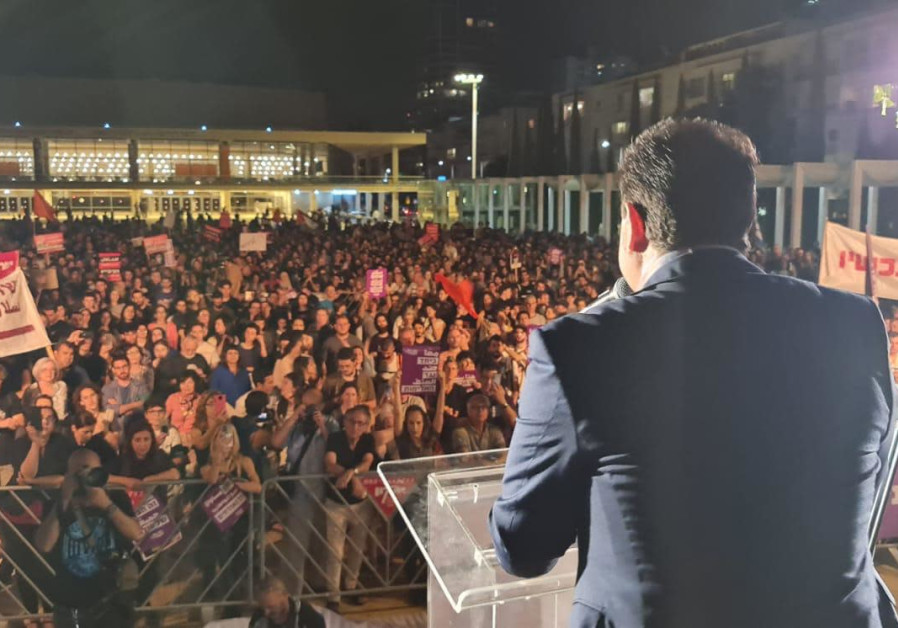
Thousands of Jews and Arabs march in Tel Aviv for peace, coexistence


By TOBIAS SIEGAL

Protesters voiced support for the recent ceasefire between Israel and Hamas and called on the government to take immediate action to reach peace with the Palestinians.

Thousands of Israelis marched in Tel Aviv on Saturday evening in a show of support for peace and coexistence between Jews and Arabs amid two long weeks of intense violent riots waging across the country.Protesters also voiced support for the recent ceasefire between Israel and Hamas that came into effect early Friday, calling on the government to take immediate action to end Israeli occupation in the West Bank and to reach peace with the Palestinians.The mass march was organized by the "Standing Together" and "Breaking the Silence" movements. It left Rabin Square in Tel Aviv and made its way toward Habima Square.
Speakers included well-known Israeli novelist and left-wing activist David Grossman, author ʻAwdah Bishārāt, Joint List leader Ayman Odeh and MK Tamar Zandberg (Meretz)."I hear politicians and security officials speak about another round of fighting in a few months or years, while being blind to the 7 million Palestinians living between the [Jordan] river and the [Mediterranean] sea," Odeh said. "There are two peoples living here and both deserve the right for self-determination."
"These past few days have shown us how life in this country can look like - a nightmare," Zandberg added. "We don't want to start waiting for the next war, but to change direction toward peace - to live together in true partnership."

A similar protest took place last Saturday at Habima Square, which was one of several protests attended by Jews and Arabs across the country that called for peace and for coexistence amid the nationwide riots and the military operation in Gaza. Jews and Arabs gathered daily during Operation Guardians of the Walls on bridges and intersections along the country and protested against the ongoing violence.
Also on Saturday, hundreds gathered outside the Prime Minister's Residence in Jerusalem, calling on Prime Minster Benjamin Netanyahu to resign and blaming him for the escalation in Gaza and claiming that he deliberately extended the operation for no reason but personal interest. Earlier Saturday, about 200 people marched along the streets of the mixed city of Jaffa, voicing support for coexistence between Arabs and Jews while visiting small local businesses.
https://www.jpost.com/israel-news/thousands-of-jews-and-arabs-march-in-tel-aviv-for-peace-coexistence-668852

#Israel-#Palestine: A new generation says 'enough is enough'

BY Azzam Tamimi
Anger and frustration have been deepened by a decade that saw Arab governments in the region relegate the Palestinian cause to the margins of their politics.

This is not the first war between Gaza and the Zionist regime occupying Palestine. It is the fourth major confrontation in less than 13 years - but this one is different. 

Firstly, it was Hamas that initiated the battle in retaliation for Israel’s desecration of al-Aqsa Mosque and the attempt to forcibly remove Palestinian families from their homes in Jerusalem’s Sheikh Jarrah neighbourhood, to be replaced by Jewish settlers. 

Secondly, the confrontation coincided with an unprecedented show of unity and solidarity across the occupied West Bank, ’48 Palestine and the diaspora. All were brought together by flagrant Israeli provocations over what Muslims around the world consider to be their third-holiest place of worship on earth. 

This generation was born into a completely different reality. Very little territory was left for any meaningful Palestinian state

Thirdly, an entirely new generation of young men and women is at the forefront, challenging an increasingly fanatical Jewish society and extreme right-wing Israeli government. This generation is under no illusions about the occupation. Most of its members were born well after the Oslo Accords, which were supposed to lead to a Palestinian state in the West Bank and Gaza.

Instead, this generation was born into a completely different reality. Very little territory was left for any meaningful Palestinian state. Since 1967, and more actively since 1993, Israel has confiscated more land, built more settlements, expanded existing ones, and demolished more Palestinian houses. The new generation did not have a state waiting for them, but rather a Palestinian Authority, the main outcome of Oslo, which colludes with Israel in oppressing Palestinians.

Normalisation with Israel

The disappointment, bitterness, anger and frustration felt by this new generation have been deepened by a decade that saw Arab governments in the region relegate the Palestinian cause to the margins of their politics. This culminated with the decision by several Arab states to normalise relations with Israel, despite the latter’s push to annex more land and declare Israel a Jewish supremacist state. 

The standoff at al-Aqsa Mosque and Sheikh Jarrah was the straw that broke the camel’s back. Under Prime Minister Benjamin Netanyahu, Israel has been shifting to the extreme right of the political spectrum, giving increasing power to the Religious Zionist camp, which believes that Palestine was promised to them by God and they are thus entitled to dispossess Palestinians. They are particularly focused on al-Aqsa Mosque, which they believe will ultimately become the site of a third temple.

Israeli security forces position themselves in Hebron on 25 April 2021 (AFP)

To prepare the landscape for such an eventuality, they have claimed ownership of Palestinian homes near the mosque, including in Sheikh Jarrah, and used Israel’s apartheid court system to legalise evictions. Acting with impunity and protected by Israeli security forces, the Jewish extremists organise provocative marches within Jerusalem, and at times storm al-Aqsa Mosque complex.

The latest flareup came as settlers organised a big rally to celebrate the anniversary of the occupation of East Jerusalem in 1967. During the holy month of Ramadan, Israeli police and settlers intimidated and harassed Muslim worshippers, including through the implementation of measures to restrict access to the mosque by Palestinians from the occupied West Bank. 

As provocations and tensions escalated, worshippers, most of whom happened to be members of the new generation of Palestinians, stood up to police, ultimately leading to the removal of barriers from the Damascus Gate plaza.

Profound grievances

As tensions simmered, Hamas warned Israel against continuing its attacks against worshippers and the desecration of the mosque. It gave Israel until 6pm on 10 May to stand down, promising it would otherwise come to the aid of Palestinians in Jerusalem - and the rockets began firing right on schedule. 

As the battle rages on, more than 200 Palestinians have now been killed, including more than 60 children. Substantial destruction has been inflicted upon Gaza, with Israel destroying residential homes on top of their inhabitants, apparently aiming to turn the population of Gaza against Hamas and other resistance factions. Instead, Palestinians in Gaza have grown increasingly emboldened, despite the enormous pain and loss. Meanwhile, southern and central Israeli towns have been paralysed by the constant barrage of missiles from Gaza. 

As in previous wars, regional and international players have been trying to broker a ceasefire. But what complicates matters for Israel is the broad participation in this popular uprising of Palestinians from across the country, including ’48 communities. Palestinians citizens of Israel, treated as second-class citizens in a vicious apartheid regime, have their own profound grievances. The facade of Arab-Jewish harmony in “mixed” towns and cities, such as Lod, Jaffa and Haifa, has been shattered beyond repair. 

By allying itself with Jewish fanatics who want all Palestinians expelled from their “promised land”, the current Israeli political class has succeeded like never before in turning the political conflict between Palestinians and Israelis into a religious war. But do Zionists really believe they can win, when they are up against more than 1.8 billion Muslims worldwide?

https://www.middleeasteye.net/opinion/israel-palestine-new-generation-says-enough

Commentary: Political solution only practicable path to Palestine-Israel peace

 Concerned about the deteriorating humanitarian situation and mounting hostilities in the Palestine-Israel conflict, the European Union (EU) has urged "the immediate cessation of all violence and implementation of a ceasefire."

"Security for Israel and Palestine requires a true political solution," said the EU foreign policy chief Josep Borrell at a Tuesday meeting.

Representing 26 member states, the EU has made such a clear-cut statement, which highlighted outsiders' concern and lent a new urgency to political dialogues over the Palestine issue.

The worst conflict between Palestine and Israel since 2014 has lasted for over 10 days. More violence within the occupied territory made the Jews feel more threatened while several Arab hospitals, including a main COVID-19 testing center in Gaza, were damaged.

The suffering of both sides sheds light on the appalling years-long political stalemate on the Palestine issue.

In recent years, conflicts of different scales between the two sides have never vanished since the Palestine-Israel peace talks reached a deadlock due to the contentious expansion of Jewish settlements.

It is globally recognized that both Palestinians and Israelis are eligible to live in the region around the holy city of Jerusalem, a status quo brought by complex historic and religious factors dated back thousands of years.

Though the two peoples are both keen for a lasting peace, they have felt their respective frustrations -- failed nationalist aspirations for Palestinians and shattered absolute security for Israelis, making their common eagerness a long shot.

In history, the closest moment to such a peace was when the "two-state solution" was presented and accepted by both sides in the 1990s, with concrete support from the international community, including key Arab countries and the Middle East Quartet.

At the moment, it is imperative that the international community once again show resolution and solidarity to strengthen efforts to mediate between the two sides so as to de-escalate the conflict.

An immediate ceasefire is the top priority. And then adequate humanitarian assistance should be delivered to the enclave Gaza Strip, thronged with thousands of the injured and tens of thousands of refugees in want of water and food.

Only the hostilities decrease to a certain level can it be possible to relaunch peace talks. The Middle East Quartet, as well as the United Nations, need to play a bigger and positive role in not only brokering a temporary truce but pushing for a long-term political process.

Unfortunately, the United States, as a permanent member of the UN Security Council, repeatedly blocked the UN's efforts to make a unanimous voice on the Palestine-Israel conflict.

Given the great disparity in national strength between Palestine and Israel, it is hardly possible for the two sides to negotiate a fair and equitable deal all by their own.

Therefore international community needs to lend sufficient support for members of the Middle East Quartet, key Arab and international partners to make every endeavor to bring the Israeli and Palestinian leadership back to meaningful negotiations, making the two-state solution viable.

Realizing lasting peace in the Middle East is probably one of the hardest nut to crack for the international community. Only by accommodating the interests of all parties on the basis of a fair and just standpoint can a solution be accepted by all the parties involved.

Political process will be time-consuming and arduous, but it is the only practicable path to a final resolution to the long-lasting problem.

May 20, 2021 http://en.people.cn/n3/2021/0520/c90000-9852036.html

#Gaza’s children have learned to hate Jews – but it didn’t have to be that way


By Revd Frank Gelli, an Anglican priest, activist, and cultural critic. He has read philosophy and theology at London and Oxford Universities, served in parishes in London and also as a chaplain to the Church of St Nicholas, British Embassy, Ankara, Turkey. He has published several books on spiritual subjects available on Amazon, and lectured on religious/interfaith dialogue at many academic conferences in the UK, the United States, Switzerland, Qatar, Iran, and Italy.

For some Palestinian children Al-Yahud, or ‘The Jew,’ has become the bogeyman adults use to scare them into obedience. But sadly, the missiles and bombs dropped on those children by the Jewish State, are no fairytale.

“Frank, pray for our poor Palestine.” A sorrowful message from Gaza. Friend Ahmad tells me of the hardships, no, the horrors of his family’s life under a constant hail of Israeli bombs and missiles. Ali, his youngest child, shakes with a mixture of fear and fury. “Al-Yahud will get you!” an uncle teases him when he is naughty. A sensitive and impressionable child, Ali runs to tell his dad: “Why should they want to kill me? I am only a little boy…”

I befriended Ahmad several years ago in Cairo. He was training as a dentist. An impecunious student, I treated him to meals at al-Fishawi restaurant, near the main bazaar, while trying to practice my rudimentary Arabic. We chatted about the Middle East and the world’s problems. Naturally, he disliked the Israelis but also admired their cleverness: “Al-Yahud are so very smart,” he’d repeat, “Look at the way they got America to feed off their hand!” But I never heard Ahmad utter words of real hatred for his people’s oppressors. Not in his nature, I guess. He later returned to Gaza to start his practice. Until I got his recent texts I thought he had forgotten me.

Little Ali has seen his neighbours’ homes ruined or flattened by deathly fire from the sky and his schoolmates made homeless – many killed or wounded. “He now hates all al-Yahud,” says his father. “And so do all the kids here.” They now hate the Israelis with infinite hatred. Ahmad, though a good Muslim and a proud Palestinian, doesn’t feel that is a good thing: “It is terrible when a child grows up with that kind of venom in his heart. What can we do?” Albert Camus believed that every person can access a zone of influence, good or bad. It is a matter of activating the good part, to stop the bloodshed, but that wouldn’t be realistic in Gaza under the ferocious IDF onslaught. Fighting back is the only option.

The father of Hannibal, the famous Carthaginian general and statesman, had brought him up from infancy to hate the Roman race. Hannibal won epic battles against his enemies and got as far as the gates of Rome, but fate was not on his side. He let victory slip through his fingers and eventually Scipio crushed him at Zama, in what is now Tunisia. He spent the rest of his life as a desperate, wandering exile. To avoid capture by the vengeful Romans, he committed suicide. For Hannibal, the unfortunate hero, hatred did not pay off.

A sage wrote that the suffering of innocent children is an argument against God. That is possible but not in this case. It isn’t the Divinity who is unleashing drones and missiles on the Gaza kids. It is a power that is human, all too human – the Israeli Army. It is not God who is morally or spiritually responsible. It is human beings. The Israeli military have a choice not to do this evil but choose to do it. Let us be fair to the Creator and not impute to him a wickedness which is essentially human.

This is not a Manichean point. To paraphrase Gertrude Stein, “a child is a child is a child is a child.” Ordinary Israelis are human, let’s never forget that. Their kids are vulnerable and can suffer too. However, to date in this latest conflict, 61 Palestinian children have been killed by IDF strikes, and many more wounded. I have also read of two Israeli children being killed by Hamas rockets. One single dead child is too many, of course. Still, the balance appears chillingly disproportionate.

Gaza’s children have been targeted before, in subtler, perhaps more cruel ways than bombs. Back in 2010, IDF commandos took over boats of a flotilla meant to deliver humanitarian aid to the blockaded city. Israel demanded that the ships be taken to port and searched for banned goods. The flotilla's cargo included kids' toys, jam, chocolate and dried fruits. Were the Israelis afraid they could be turned into Kassam rockets? It was collective punishment and one of the meanest sorts. Because it was aimed at innocent children. To stop them from enjoying themselves like children anywhere do. What could be nastier than that? I remember dreaming at the time that Israeli kids would feel compassion and send gifts of toys to their Palestinian counterparts. It would have been wonderful! Vain hope, alas.

The Greek philosopher Empedocles conceived of reality as governed by two fundamental forces, Love and Strife. The elements of the cosmos are combined or united by Love and separated or fragmented by Strife, also called Hatred. The two principles war against each other. Love sometimes reigns supreme, until Hatred proves stronger. In the Golden Age, Love is completely triumphant, then Hatred hits back and conquers. The battle is everlasting.

Looking at the Holy Land, it seems that the forces of darkest hatred are in the ascendant. Love doesn’t give up so easily, though. My dear little Ali, you and the suffering children of Palestine, don’t despair. I promise you, in the end Love shall overcome!

https://www.rt.com/op-ed/524468-gaza-children-learned-hate-jews/

#NYT EDITORIAL: A Cease-Fire, and New Ideas in Israel and the Palestinian Territories

The cease-fire between Hamas militants in Gaza and Israel didn’t come a second too soon.
Israelis should not have to live in fear of rockets raining down, which killed a dozen people living in Israel since fighting broke out 11 days ago. Nor should people in Gaza live in fear that they might become collateral damage from Israeli bombs. Israeli airstrikes and artillery killed at least 230 Palestinians, including militants and many civilians.
Israel has a right — even a responsibility — to put a stop to the rocket attacks at their source. More than 4,000 were fired at Israel from Gaza in 10 days, though most were intercepted by the Iron Dome antimissile system. But the fighting took an unbearable toll on civilians, the vast majority of them Palestinian. More than 60 children in Gaza were killed, tens of thousands of people were displaced, and hundreds of buildings were destroyed or severely damaged.
The most intractable problems facing Israel and the Palestinians cannot be bombed away. When the dust settles, the misery and resentment will remain, starting in motion the next round of fighting. It is not in the interests of Israel, the United States or the rest of the world to make life unlivable in Gaza or to see another generation of children grow into adulthood knowing no government but Hamas, no economy but blockade and no certainty about the future except periodic bombardment.
As this round of fighting ends, two million people remain penned into 141 square miles of Gaza, with no escape from the devastation and economic blockade. There is now civil unrest and sectarian violence in communities in Israel that no Iron Dome or separation wall can parry. Across the region, hundreds of thousands of Palestinians mounted a general strike, the largest peaceful demonstration of unity in many years.
Political solutions are the only bloodless solutions. But politics is broken. Benjamin Netanyahu, who has been prime minister longer than any other Israeli, has been unable through several elections to gather a stable majority in Parliament. Mahmoud Abbas, the octogenarian and increasingly unpopular president of the Palestinian Authority, recently called off its first elections in 15 years, dashing hopes that a new generation of leaders might emerge.
The Biden administration could be forgiven for coming into office without any grand plans for solving one of the world’s most intractable geopolitical problems. Every year the “peace process” has yielded nothing but the aggressive expansion of settlements and shrinking areas of land for a future Palestinian state. The expansion has brought no lasting security for Israel.There is a dire need for fresh thinking from the Biden administration both to meet the moment and to address growing calls from his party to reassess the U.S.-Israeli relationship. That pressure comes not only from young lawmakers to the left of the president but also from older, more hawkish Democrats. Senator Robert Menendez, the chairman of the Foreign Relations Committee, put out a statement last weekend calling for an end to hostilities. “I am deeply troubled by reports of Israeli military actions that resulted in the death of innocent civilians in Gaza as well as Israeli targeting of buildings housing international media outlets,” it read in part.President Biden should not delay in appointing an ambassador to Israel and reiterate that American support doesn’t include support for settlements or endless occupation. There is also an urgent need for his administration to rebuild ties with the Palestinian people, which atrophied under President Donald Trump. In 2018 the Trump administration closed the office of the Palestine Liberation Organization in Washington, D.C., and also closed the U.S. Consulate in Jerusalem that had served as a quasi embassy for Palestinians. The consulate’s operations were folded into the U.S. Embassy, which had just relocated to Jerusalem. Palestinians boycotted the new office. As a result, American officials have had no meaningful and sustained political contact with Palestinian officials for two years.
The Biden administration should appoint an envoy to the Palestinian people, tasked with restoring relations with Palestinian officials and building ties with civil society groups and the new generation of leaders who have been shut out of power with the lack of elections. The portfolio should include Palestinian people, broadly speaking, including their vital ties to brethren in Israel and throughout the diaspora.
The Biden administration should also consider new ideas. One approach would be for American diplomats to take tangible steps to “improve the freedom, prosperity and security of all people living between the Mediterranean Sea and the Jordan River” while trying to preserve the possibility of a Palestinian state — a proposal outlined in a report by the Center for a New American Security.
Adopting this model would require American diplomats to speak out against restrictions on trade and freedom of movement for Palestinians and to advocate reducing the disparities in treatment of Israeli and Palestinian civilians. The secretary of state, Antony Blinken, appears to be leaning in this direction, writing on Twitter that “Israelis and Palestinians deserve equal measures of freedom, dignity, security and prosperity,” echoing language in that report.
Many Palestinians, as well as progressives in the United States and Israel, favor a second model, which would shift American policy in the region away from a nearly exclusive focus on obtaining Palestinian statehood and on Israel’s security to the protection of human rights. A number of analysts have floated this idea over the years, most recently in a report by the Carnegie Endowment for International Peace and the US/Middle East Project.
In an ideal scenario, the rights-based approach, as it is often referred to, would lead to the preservation of rights of Jewish Israelis — to life, to security, to their religious traditions and to the idea of a Jewish homeland — and address the rights of Palestinians to life, security, political representation, freedom of movement, freedom to work and to citizenship in a country that values them.
Many young Palestinians say their parents’ dream of an independent state has morphed into a struggle for civil rights within the borders of land that Israel has controlled since 1967. But there are some who believe in the two-state solution that this editorial board has long advocated and argue that the rights-based approach is a strategy to get Israel’s government to grapple with what a one-state reality would really mean, which might motivate them to get back to the bargaining table to establish a Palestinian state.
A cease-fire should be celebrated. But when the guns fall silent, the hard work of forging a more lasting peace needs to begin. If it does not, it’s only a matter of time before more innocent lives are lost again.
https://www.nytimes.com/2021/05/21/opinion/ceasefire-israel-palestinian-territories.html

Music Video - Hum Tumhe Itna Pyar Karenge

Video - #KhabarSayAagay #NayaDaur #Politics - Tareen Group To Topple Govt? Nawaz Saving Buzdar? Imran's Not Happy With Ministers Who Met COAS

#Pakistan - 24 more patients died of Coronavirus in Khyber Pakhtunkhwa

 As many as 24 more persons have died of Coronavirus during last 24 hours taking total toll of deaths from the pandemic to 3924 in the province, official sources in Health Department confirmed on Saturday.

The official said that during the period 918 persons recovered from the virus taking the number of recovered persons 119,241 in the province.

A total of 7,754 corona tests were conducted in the period out of which the virus was confirmed in 400 persons, raising the total number of Corona patients to 129,413. Active cases in the province were 6248.

During last 24 hours, the highest 125 Corona cases have been reported from the provincial metropolis Peshawar, 36 in Abbottabad, 35 in Mardan, 28 in Mansehra and 26 cases in D.I. Khan respectively.

https://www.brecorder.com/news/40094449/24-more-patients-died-of-coronavirus-in-kp

#Pakistan - Failing our children

Maria Taimur
EACH day brings us heavy news of a child being sexually assaulted somewhere in the country. The issue needs to be seared into the public’s consciousness so that it results in the same wake-up call that we saw in Zainab Ansari’s assault and murder case in 2018. Public debates on the issue and policy interventions are the need of the hour. Although we have seen several gruesome cases of paedophilia and child abuse — such as the murder of over 100 young boys by the serial killer Javed Iqbal in 2001 — silence surrounds the topic which is considered taboo.
There are different factors which increases a child’s vulnerability to abuse. The current rise in child abuse cases and a statistical analysis show that there is a greater threat tilted towards male minors (under 10 years) who become victims of sexual abuse. Unless remedial measures are taken, this problem is likely to continue because there is a perception among parents and guardians of minor children that male minors are less likely to be the target of abuse. There are serious hazards attached to such misplaced perceptions, and a shift in this view and far greater caution by the parents is required.
Male minors are culturally perceived to be largely immune from abuse. The belief is that they can take care of themselves very well and even chaperone adult female relatives to ward off unwanted social pressure and harassment. This unnatural, culturally constructed masculine image puts male minors at a great disadvantage. As the data shows, male minors fall victim to strangers as well acquaintances and are assaulted in both open and closed spaces.
The disparity in the number of cases of child abuse among the provinces is the result of a difference in reporting mechanisms, cultural understanding of the issue and poor awareness of the laws. Nevertheless, a statistical scrutiny of reported cases reveals that among the children in the age brackets six to 10 and 11 to 15 years, boys are more vulnerable to sexual exploitation as compared to girls. But in the 0 to 5 and 16 to 18 years age brackets, it is females who are more susceptible to being abused. Overall, the reported cases of assault on male minors is almost twice that of female minors. Urban areas top the list mainly because of greater awareness of such cases and media and police access. But the situation may not be that much different in the rural areas.
Male minors are wrongly perceived to be immune from abuse.
The reluctance to report stems mainly from two reasons. One is the culture of silence which forces the parents to stay quiet and not approach the police. Analyses show that the absence of knowledge of child protection laws further paralyses the parents who hide facts. There have been instances where the child’s mother knew about the repeated assault he was being subjected to at school but since her son complained of physical pain only, she did not share this information with her husband for fear that she would be blamed for being a negligent mother. She was also afraid that her child’s education would be discontinued.The second reason is the family pressure on parents not to disclose the identity of the perpetrator who is often a close relation or someone they know very well. Research on the proximity of the perpetrator to the child throws up some uncomfortable facts. The perpetrator can be a family member and the communication gap between the parents and the children and the blind trust of the parents in this family member who is actually a threat to their child is also responsible for such issues going unnoticed for long periods of time.
There are many challenges to grapple with when it comes to child abuse, and it is not easy to find solutions to this crime. Information and knowledge related to self-protection, also focusing on male minors and their vulnerability, must be made part of school studies and media campaigns. Children, both boys and girls, must learn that no place is safe from abuse and that they should immediately report any instance of being molested to their parents.
Similarly, parents and extended communities can be approached by the police to make them aware of their role as protectors of children and how they can come up with an effective child protection system, based on distinctive environments and social settings. Police come across many cases of attempted assault where parents and teachers are not sensitive to the need of the rehabilitation of the survivor through consultations with a psychiatrist or another similar professional support system.
A top-to-bottom approach to child abuse is needed, whereby the government devises practicable and efficient legal frameworks as well as child-centred policies and programmes with specific budgetary allocations. The reticence and sensitivity dominating this issue has unfortunately pushed society towards a dead end. A multi-stakeholder approach is the only effective solution to this long-standing problem. https://www.dawn.com/news/1624825/failing-our-children

Since PTI formed their government in Khyber Pakhtunkhwa, poverty levels have gone up by 9% to a whopping 27% today – says Chairman PPP Bilawal Bhutto Zardari.

 The Chairman Pakistan People’s Party, Bilawal Bhutto Zardari, has said that the PTI-led federal government has a unique talent in being absolutely shameless when it boldly and brazenly misleads the people. The Federal Government has, since its first day in office, been fudging numbers and stacking statistics in their favour. “Fudging economic figures may feed the large egos in the government, but it doesn’t feed the people. These alleged facts and figures are tantamount to gaslighting the lived experience of the people who are being crushed under the economic failures of Imran Khan.”

The Chairman PPP went on to say that since the PTI formed government in Khyber Pakhtunkhwa nearly a decade ago, poverty levels have increased exponentially, with figures showing that poverty has gone up by 8.9% to a whopping 27% today.

In contrast, under the PPP the province of Sindh has managed to slash the poverty rate by 7.6 percent. The PPP government in Sindh has also overseen Sindhs rise in per capita income, with the province now leading in both rural and urban figures, he pointed out.

“Despite soul crushing inflation and rapidly increasing poverty levels, the PTI-led federal government is preparing to levy taxes on the pensions of the retired employees.”

The Chairman PPP Bilawal Bhutto said that the PPP was determined to protect the rights of pensioners and that it rejects any scheme that would seek to tax them. The proposed ten percent tax on pensions in next budget would only push people further to the brink.

The powers that foisted an incredibly inept government and Prime Minister on the country have done a great disservice to the country and its future, he added.

https://www.ppp.org.pk/pr/24861/