Thursday, April 15, 2021

Pakistan protests: Why the Islamist TLP party is now a major political force

Haroon Janjua
Violent anti-French protests have paralyzed Pakistan for the past few days. The architect of these demonstrations is the Tehreek-e-Labiak Pakistan party, which is now a force to be reckoned with in Pakistani politics.
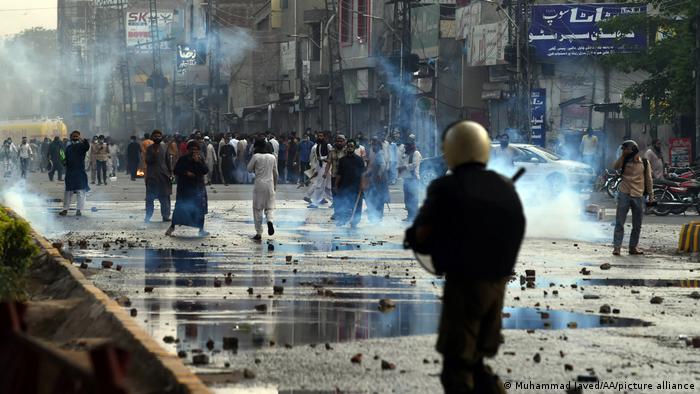
Pakistani authorities have decided to outlaw the hard-line Tehreek-e-Labiak Pakistan (TLP) party. The group opposes the publication of cartoons depicting the Prophet Muhammad in France, and also the French response reaffirming the right to "blasphemy" after schoolteacher Samuel Paty was beheaded near Paris last October after showing caricatures of the prophet of Islam to his class.
The TLP has demanded that the government expel the French ambassador and endorse a boycott of French products. TLP activists have also demanded the release of Saad Rizvi, the 26-year-old leader of the group. Violent TLP protests have wreaked havoc in the Muslim-majority country, with Islamist supporters and police clashing in major cities. At least two police officers have been killed and over 100 injured in these clashes.
Prime Minister Imran Khan's government is being heavily criticized for mishandling the protests and not acting swiftly against violent protesters.
On Thursday, the French Embassy in Pakistan advised all French nationals and companies to temporarily leave the country, following the anti-French protests.
"Due to the serious threats to French interests in Pakistan, French nationals and French companies are advised to temporarily leave the country," the embassy said in an email to its citizens.

Husain Haqqani, a former Pakistani ambassador to the US, believes the TLP is playing politics over the Muhammad cartoons. "France is a major financial donor to Pakistan and the demand to expel its ambassador over alleged blasphemy is just a gimmick," Haqqani, who is the director for South and Central Asia at the Washington-based Hudson Institute, told DW.

"If Pakistan starts expelling ambassadors of all countries where someone commits what these hard-liners see as blasphemy then Islamabad will have diplomatic relations with very few countries," he said.

Anti-blasphemy politics

TLP is a largely Barelvi (a sect in Islam) party, founded in 2015 by Khadim Hussain Rizvi, a firebrand cleric who died in November 2020. The core ideology of this party revolves around the "finality of Prophet Muhammad" and the protection of Pakistan's blasphemy laws.

"The group represents a powerful Sunni sect and its mission is to protect the honor of the prophet. The TLP is now a formidable political force in Pakistan," Raza Rumi, a Pakistani political analyst, told DW.

Blasphemy is a contentious issue in Pakistan, where anyone deemed to have insulted Islam or the Prophet Muhammad can face the death penalty under the country's blasphemy laws.

Rights activists say the laws are often employed in cases that have little to do with blasphemy and are used to settle petty disputes and personal vendettas. Christians, Hindus and Ahmadis — a minority Islamic sect — are often victimized as a result.

In November 2018, the TLP called off nation-crippling protests after striking a deal with the government on the legal future of Asia Bibi, a Christian woman acquitted of blasphemy. TLP supporters held three days of sit-ins and demonstrations after the Supreme Court of Pakistan overturned Bibi's blasphemy conviction, ending her eight years on death row.

"The TLP's main motivation revolves around aggressively defending Pakistan's blasphemy laws. That has long been its bread and butter. Linked to this focus on the blasphemy laws is the group's bigoted views toward religious minorities, the very groups that suffer the most from these laws," Michael Kugelman, a South Asia expert at the Washington-based Woodrow Wilson Center for Scholars, told DW.

How popular is the TLP?

"Unfortunately, given that the blasphemy laws are fiercely defended by a critical mass of Pakistanis, the TLP has been able to attract substantial constituencies of support. This is not only through street power, but also through respectable performances in elections, which is unusual for an Islamic political party in Pakistan," Kugelman added.

In the 2018 election, the party bagged 2.2 million votes, mostly from the Punjab province, and won two provincial seats in the Sindh Assembly. The TLP emerged as the third-largest party in Punjab, behind Khan's Pakistan Tehreek-e-Insaf (PTI) party and Former Prime Minister Nawaz Sharif's Pakistan Muslim League (PML-N).

Some analysts believe that rising unemployment, growing inflation and illiteracy are also some of the factors behind a surge in TLP's popularity. With many people unhappy with Khan's economic performance — and with mainstream political parties in general — an increasing number of voters are looking toward Islamist parties for a remedy.

"TLP's popularity is linked to wealth and income disparities in the country. Its supporters are not only madrassa students but even common youngsters who have gained nothing from the country's political and economic system," Rumi said, adding that the government needs to create economic opportunities for the youth to sway them away from hard-line religious groups.

But former Pakistani ambassador Haqqani downplayed the talk about TLP's popularity. "It is just one of many Islamist groups that has become a threat to Pakistan's stability," he said.

Kugelman agrees. "The TLP may have substantial support, but not enough to challenge the ruling PTI or its main rival, the PML-N. There have been fears that the TLP could siphon off votes from other parties, but not on a level of scale that it could impact the electoral performance of the major parties in a big way. That said, the electoral performance of the TLP shouldn't be shrugged off. It has done significantly better than most other religious political parties."

But analyst Rumi said the TLP has gained much public support in a short period of time. "If it continues to mobilize people, it could gain more ground."

Will the state change its 'pro-Islamist' policy?

Observers say that if the TLP threat goes unchallenged, it will increase Pakistan's international isolation. Haqqani said the country's establishment, the military, has "historically used Islamist groups to strengthen Pakistan's anti-India narrative."

"Prime Minister Imran Khan, who harbors Islamist sentiments himself, needs to tell Pakistanis to have a realistic world view," he said.

But analysts say that banning TLP won't solve the problem of increasing religious extremism in Pakistan.

"Pakistan has done the right thing by banning the TLP, but that's only the first of many necessary steps. Many extremist groups have been banned in Pakistan, and they tend to reappear under new names," said Kugelman.

"To achieve true success in removing the TLP threat, Islamabad needs to not only ban it but also build narratives and messaging on a state level that aim to condemn and delegitimize the TLP and its ideologies. The party enjoys substantial support, and so simply banning it won't make it go away," he added.

https://www.dw.com/en/pakistan-protests-why-the-islamist-tlp-party-is-now-a-major-political-force/a-57214719
Amid Border Crisis, U.S. Government Strikes at Pakistani Smuggler of 'National Security Risk' Migrants

 By Todd Bensman 

As a mass-migration wave overwhelms the southern border, the Department of Justice and Department of the Treasury have brought hammers down on a Pakistan-based human smuggling organization that continues to illegally ferry foreign nationals “who pose a threat to national security” through the Americas to the U.S. southern border.


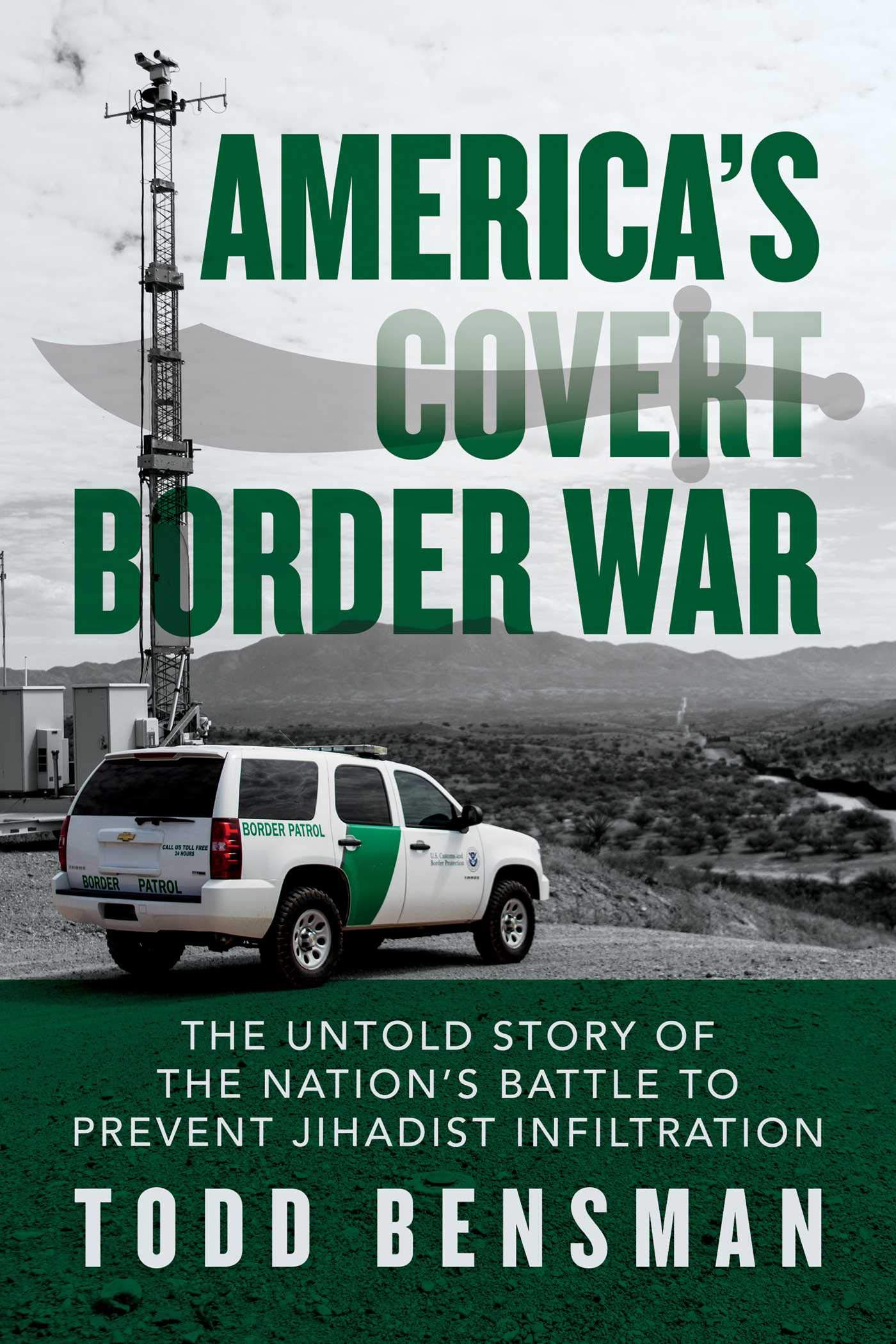
The recent government enforcement moves against the Abid Ali Khan human smuggling network represent the latest salvo in an ongoing U.S. homeland security effort to combat jihadist border infiltration (the subject of my book America’s Covert Border War). The actions against Khan also come just days after U.S. Customs and Border Protection announced two separate California apprehensions of Yemeni migrants who were already on the FBI’s terrorist watch list, one of whom also was on the No Fly list, and underscore terrorism threats perhaps exacerbated by the ongoing mass-migration crisis.

A federal indictment filed April 7 after a lengthy Miami-based ICE Homeland Security Investigations probe alleges that, since at least 2015, Abid Ali Khan has operated his network from Nowshera, Pakistan, which is known as a troubled center of violent Islamic militancy. He has often transported Afghans and Pakistanis disguised as foreign nationals of other countries.

The Khan network allegedly still smuggles aspiring illegal U.S. border entrants (whom homeland security categorizes as “special interest aliens”, or SIAs) from Afghanistan and Pakistan to Brazil by air, then overland through Central America and Mexico for an average of $20,000 per person.

Neither Khan nor the key subordinates in his far-flung smuggling network apparently have been arrested. So in a rare secondary move to “help stop Khan and his network from allegedly continuing to smuggle persons to the United States”, the Treasury Department’s Office of Foreign Assets Control (OFAC) designated Khan and three others in his network, one Afghan and two other Pakistanis, as a Transnational Criminal Organization. The designation opens the door for U.S. government operations to disrupt Khan’s finances and isolate him and his subordinates from most financial dealings. But OFAC designations are rarely, if ever, used against SIA smuggling networks like this, which stands as an indication of the danger with which U.S. homeland security views the Khan network at this early stage of the border crisis.

The involved U.S. agencies did not say where Khan or his alleged co-conspirators are today. But the U.S. actions reportedly prompted Pakistan to hunt down and question Khan in his native Pakistan. He has insisted he is not involved in smuggling, that someone based in Mexico had appropriated his name, and that he planned to march down to the local U.S. embassy with a lawyer and demand answers for why he is accused.

A National Security Threat at the U.S. Southern Border During a Mass Migration Crisis

Rarely does the U.S. homeland security establishment publicly acknowledge when suspected terrorists are smuggled over the border, although America’s Covert Border War provides extensive detail about many who have.

In a surprise departure from that tradition, however, on April 5 U.S. Customs and Border Protection issued a fairly detailed press release acknowledging the separate January and March apprehensions of two Yemenis who were already on the FBI’s terrorism watch list when they were apprehended near Calexico, Calif. CBP removed the document the next day after many on social media began citing it as evidence of a national security threat inherent in the current border crisis. CBP told CIS it had not gone through proper “review”, but did not disavow its accuracy. (An intelligence community source with direct knowledge of the cases told CIS the release was accurate.)

Announcements of U.S. government action against the Khan organization came only a day later, going largely unreported by U.S. media or, this time, even on social media. Federal officials characterized the Khan smuggling organization as a live, continuing national security threat to the United States at the southern border, albeit without the specificity of the deleted CBP press release about the Yemenis. Treasury department officials did not respond to a CIS emailed inquiry by publication time.

But Miami Homeland Security Investigations Special Agent in Charge Anthony Salisbury did note in one of the releases that the Khan network transported “people with nefarious motivations” into the United States. And while Salisbury did not elaborate, he reiterated that his Miami team was committed to prosecuting individuals like Khan who “pose a threat to national security”.

Likewise, Acting Assistant Attorney General Nicholas L. McQuaid of the Justice Department’s Criminal Division, noted in the same Treasury Department statement that the government moves sought to prosecute Khan and smugglers like him “who seek to profit from ... jeopardizing our national security.”

Asylum Fraud and Threats to U.S. National Security Vetting Processes

Along with the question of how many “people with nefarious motivations” Khan smuggled over the southern border is the important question of how they are able to obtain legal permission to remain once they cross. That is typically done through the U.S. asylum system, as almost all special interest aliens who enter illegally and are apprehended then claim the benefit.

As I detail extensively in the first and fourth chapters of America’s Covert Border War, SIA smugglers and Islamic terrorists who illegally entered European Union nations abused an asylum system that was structurally incapable of detecting their frauds and deceits, especially during the 2014-2018 mass-migration crisis that beset Europe. As many as 150 Islamic terrorists who illegally entered the EU over its external common land and marine borders went on to conduct terror attacks throughout Europe or were caught plotting them.

But SIA smugglers and Islamic terrorists also have exploited the highly similar U.S. asylum system’s inability to verify even the identities and stories of strangers who show up at the border with no identification or bogus passports. Like the one in Europe, the U.S. asylum process is built to give asylum claimants the benefit of the doubt and not to detect fraud or terrorism associations.

SIA smugglers often provide their clients with fake persecution stories carefully designed to get them through the initial screening processes and inside the United States with legal status that can last for many years, as I report in the book.

In line with these findings, the government alleges that the Khan organization’s counterfeit identity documents and altered stolen passports “significantly impair appropriate immigration vetting processes”, and “undermine[] the credibility of the US asylum system, damaging public confidence in the vetting process.”

Elevated Dangers During a Mass Migration Crisis

Hundreds of Pakistanis have crossed the southern border in recent years, and they are among the top 10 SIA nationalities that do so. CBP encounter statistics obtained through a CIS Freedom of Information Act request, reflecting both those who cross at established ports of entry and between them, show that 1,653 Pakistanis were encountered between 2008 and 2019. Some 175 were caught at the southern border in 2019 crossing through the brush.

Federal intelligence and law enforcement officers typically try to interview all Pakistani border-crossers to vet them for basic identity and terrorism. Officers will check pocket litter and dump cell phones and check databases looking for evidence of terrorism associations or deceit.

But the process is imperfect and vulnerable to deceit and asylum-process time constraints even in the best of times.

At issue now is that the vetting process in place for SIAs is at risk of becoming sidetracked and swamped to incapacitation during the mass migration crisis now underway. The process of learning who illegal immigrants from Pakistan and Afghanistan really are, a challenge even under ideal circumstances, enters a red zone when detention centers are overrun, Border Patrol agents are distracted by processing children, and asylum officers are hopelessly backlogged with the largely ineligible asylum claims of economic migrants from Central America.

As Europe’s catastrophe shows, those same factors can combine to become a perfect terrible storm here in the United States. These government moves against Khan hedge against that growing probability.

https://cis.org/Book/Americas-Covert-Border-War

The IMF Is Using the Debt Crisis to Hollow Out Pakistan’s Sovereignty

BY AMMAR ALI JAN
Imran Khan's government came to power in 2018 promising to reorient Pakistan's economy toward the needs of the population. But faced with a debt crisis it soon dropped its reformist agenda — and now, the International Monetary Fund is pressuring it to place its State Bank permanently beyond democratic control.
As the COVID-19 crisis continues to wreak havoc, at the end of March UN Secretary General António Guterres called for “decisive action” to avert the developing world’s deepening debt crisis. He warned that the previous debt obligations of poor countries were fast maturing, threatening to prolong the economic crisis. African governments alone owe $23.4 billion in repayments to financial institutions this year, notwithstanding current pressures — signaling the scale of the economic burden imposed on poor nations across the globe.
The kind of future in store for the developing world can be gauged by the sweeping financial reforms being imposed by the global financial technocracy in Pakistan. A poor country struggling to meet the basic needs of its people, under the pressure of the pandemic its creditors are now being forced into a financial arrangement that will erode any semblance of democratic control over the country’s economy.
IMF Stranglehold
Imran Khan’s Pakistan Tehreek-e-Insaf (PTI) government came to power in August 2018 promising to break the “begging bowl” of the International Monetary Fund and reorient the economy toward meeting the development needs of the public. However, a mounting balance-of-payments crisis inherited from the previous government, as well as economic mismanagement in the first few months under the new administration, forced the country back to the IMF in April 2019.
Pakistan signed a punishing deal the following month, which demanded massive austerity, including cuts to social and development spending, in exchange for a loan of $6 billion over three years. Finance minister Asad Umar, who had been vocal in his criticisms of the IMF in the past, was forced to resign, and replaced by Hafeez Shaikh.
Upon his appointment, Shaikh was widely viewed as a representative of the international financial technocracy in Pakistan. Under the military dictatorship of General Musharraf, he had worked as Sindh province’s finance and planning minister, and was later appointed federal minister for privatization. He also served as finance minister under the Pakistan People’s Party government (2008–2013), overseeing the implementation of a tough IMF program, which was heavily criticized at the time by Imran Khan for its negative impact on ordinary Pakistanis.
Shaikh was working at the World Bank in 2019, before he made his spectacular return to office as Khan’s finance minister. To further ensure that Pakistan’s economic policy obeyed the diktats of international financial institutions, the former IMF country representative in Egypt, Raza Baqir, was appointed governor of the State Bank of Pakistan. It was clear that both the manifesto of the ruling party and the aspirations of the people had been torpedoed to hand over key decision-making to bureaucrats nurtured by the global financial oligarchy.
The measures introduced by the new economic team soon led to an unprecedented contraction in the economy. Pakistan’s GDP growth rate plummeting to -0.4 percent, the first time it had fallen below negative in seven decades. The devaluation of Pakistani currency created massive inflation, rising from 3.93 percent in 2018 to 10.74 percent by 2020. The program also imposed austerity measures such as a whopping 40 percent budget cut to higher education, while plans to privatize the health sector were also set in motion last year. Under IMF pressure, Pakistan was forced to reduce subsidies on utilities as well as to cancel the yearly increments of wages for public sector employees. This structural adjustment program was not implemented without resistance. Indeed, the result over the last two years has been an unprecedented rise in labor and student militancy. For example, in November 2019 student mobilizations in dozens of cities shook Pakistan, as thousands of students denounced the rising costs of education as well as rampant sexual harassment on campuses.
Similarly, government employees staged two large sit-ins in the capital Islamabad (in October and December 2020), while teachers also staged countrywide protests against job insecurity in December 2020. More dramatically, a farmers’ alliance staged a tractor march to Punjab’s provincial capital of Lahore, highlighting the breadth and depth of the discontent boiling up across the country.
Having already limited its own capacity to intervene in financial matters, in line with the IMF conditions, the government responded to these demonstrations with brute force. Organizers of the student movement were charged with sedition, and the government suffocated the peaceful protests of teachers and government employees in clouds of tear gas.
The most horrific incident occurred at the farmers’ protest, where the police used water mixed with chemicals against the demonstration, leading to the tragic death of farmer leader Ashfaq Langrial. The repression highlighted a new normal in which decisions imposed by technocrats would not only be rubber-stamped by elected governments but would also have the violent backing of the coercive state machine.
A Financial Coup
Pakistan’s economy, much like in the rest of the world, has been ravaged by the COVID-19 pandemic. Millions of people were forced out of work when the government imposed a lockdown in March 2020 due to mushrooming cases of the virus. A recent report by the Mahbub ul Haq Center shows that unemployment rose by 34 percent, while mean income fell by a massive 42 percent. By November 2020, three million workers still had not regained employment, whereas the average income remained 5.5 percent below its pre-lockdown level. The sustained unemployment and rising inflation were emblematic of the struggles faced by ordinary people across the country.
However, some of the most deleterious effects of the crisis were mitigated by the intervention of the government, which issued a relief package of 430 billion rupees (roughly $2.78 billion) as part of the Temporary Economic Refinance Facility (TERF) provided by the State Bank at government instigation. The package was used to inject liquidity into the economy and boost industry. A similar package was announced to offer partial relief to workers rendered jobless after the lockdown — highlighting the importance of public spending during a crisis. However, today the IMF is pushing Pakistan’s government to make its State Bank “independent” of democratic politics through an act in Parliament. Termed the State Bank Amendment Bill, the proposed legislation purportedly aims to protect the bank from “political interference” in order to ensure that the country can service debt and maintain price stability at manageable levels. Yet, the bill entails the complete erasure of the country’s economic sovereignty — with potential disastrous consequences for working families in Pakistan.
The bill stipulates that the government will no longer be able to acquire facilities such as TERF or borrow money from the State Bank to support local banks, placing serious constraints on the state’s capacity for public investment. As a result, the government will be forced to seek loans from commercial banks at higher interest rates to pay its pending bills, compounding rather than resolving Pakistan’s debt problem in the long term. Furthermore, the bill sets price and financial stability as its primary and secondary objectives respectively — pushing development to a “tertiary” objective.
So, while countries in the developed world are pushing “stimulus” packages to jump-start the economy, Pakistan will face increasing constraints in shaping its monetary policy to facilitate badly needed investment for providing essential services and jobs to citizens. In a country where over a million young people enter the job market each year, a prolonged recession threatens not only economic stability but social breakdown. Despite the prevailing crisis, the government has announced its plans for an unprecedented hike in power tariffs of Rs. 5.65 per unit. Starting in July, the move will hit ordinary consumers with a 36 percent electricity price increase and aims to squeeze an extra Rs. 884 billion ($58 billion) this year in order to generate revenue for repaying foreign loans, revealing the extractive nature of the IMF’s prescriptions.
Removing decision-making from even notional democratic control, the bill will stop the government from appointing its own representative to the bank’s board of governors and prevents Pakistan’s legal institutions from holding board members accountable for their actions.
This blatant disregard for public or juridical scrutiny is supplemented by the directive in the bill that stipulates that the bank will have the responsibility of servicing the country’s foreign debt “without reserve to the government” (i.e., without being answerable to the elected government). If the bank does not possess enough resources to meet the country’s debt obligations, it will “request” the government to transfer funds “within a period not exceeding 30 calendar days.” These amendments thus reflect yet another clear case of a Third World country being forced to abdicate its responsibility toward the public, conform to the dogmas of neoliberal orthodoxy, and reorient its priorities to meet the impossible demands of predatory creditors.
It’s About Democracy
While the bill is still pending approval in Pakistan’s parliament, the prime minister dismissed Hafeez Shaikh as finance minister on March 29 due to growing concerns over inflation — creating more ambiguity over the country’s economic direction. The growing financial chaos is emblematic of the dire future confronting debt-stricken nations across the world. These crippling financial constraints suggest that, while the United States is imagining a “return to normal” by the end of the summer, most poor countries will continue to face a burgeoning health crisis for years to come. In Pakistan, less than even 1 percent of the population has been vaccinated, while the slow pace of the vaccination drive has opened up a private market for vaccines at the exorbitant rate of Rs. 12,000 (roughly $80 per person).
This is especially damaging in a country whose public health infrastructure was crumbling even before the pandemic arrived. According to the World Health Organization, 40 percent of deaths in Pakistan owe to waterborne diseases such as typhoid and hepatitis, while dengue fever and malaria remain common.
A recent article in the New York Times noted the rapid spread of HIV among children in the Sindh province of Pakistan, making the country an emerging hot spot for the disease. Sindh is ruled by the federal government’s opposition, the Pakistan People’s Party, whose mismanagement has exacerbated the crisis. This indicates that the social crisis has deepened to the extent that it can no longer be associated with a single party, but has to be viewed as general decay afflicting the entire system.
The rising movements against austerity in Pakistan offer the best hope for building a viable political project against the stranglehold of international financial institutions and their local collaborators. Yet, the fight for popular sovereignty in the Global South is incomplete without solidarity from the Global North. This is especially urgent since we know that each time global capitalism “overcomes” its crisis at the center, it does so at the expense of an exacerbation of the crisis on the peripheries.
Moreover, even apart from the emerging vaccine apartheid, the further accumulation of debt poses the greatest challenge to stability in the developing world. The destabilization of poor countries eventually creates a boomerang effect, fueling right-wing movements that scapegoat immigrants fleeing economic hardship to pit them against struggling workers in the metropolitan centers.
Yet, the creditors in New York and London exploiting the labor of workers in the Global North are the same ones aiming to reap returns from further exploitation of the Global South. This is why we need a transnational alliance of debtors and progressive forces resisting the dismantling of democratic institutions and creating an alternative development agenda for the post–COVID-19 world. Ending Third World Debt and cooperating on global public health are the points of convergence for a new internationalism that can exorcise the ghosts of imperialism and regenerate our broken world.
https://www.jacobinmag.com/2021/04/pakistan-debt-sovereignty-covid-economic-crisis

Wednesday, April 14, 2021

Video - #DailyShow #TrevorNoah #JoeManchin Please Allow Me to Introduce Yourself: Joe Manchin | The Daily Social Distancing Show

Video Report -14 Signs Of Vitamin D Deficiency

Video Report - How Biden's presidency is giving hope to progressivesHow Biden's presidency is giving hope to progressives

Video Report - President Biden's approval at 59 percent in new polling

Video Report - Sen. Kaine: Pulling troops from Afghanistan is the right call

Sen. Tim Kaine, D-Va, joins Morning Joe to discuss the president's plans for a full troop withdrawal from Afghanistan by September and why he supports the withdrawal. Sen. Kaine also discusses urging the president to rejoin the Iran nuclear agreement.

Video Report - #COVID19 #BirthRate #BabyBust Many countries are reporting historically low birth rates | COVID-19 Special

Video Report - #Coronavirus #Vaccination #VaccinePatents The great gap in vaccinations | COVID-19 Special

Video Report - Trouble ahead? Russia, US in Black Sea showdown over Ukraine

Video Report - Christiane Amanpour looks back at Afghanistan’s wars

Biden, saying it is ‘time to end America’s longest war,’ declares troops will be out of Afghanistan by Sept. 11.


President Biden formally ended the 20-year, largely unsuccessful American effort to remake Afghanistan, declaring from the White House on Wednesday afternoon that he would withdraw the remaining few thousand United States troops in the country by Sept. 11 and refocus American attention elsewhere.
“It’s time to end America’s longest war,” he said. “It’s time for America’s troops to come home.”
He warned the Taliban that if American forces are attacked on the way out of the country, “we’re going to defend ourselves and our partners with all the tools at our disposal.”
Speaking from the Treaty Room in the White House, Mr. Biden made the case that the United States had only one real task in the country: ousting Al Qaeda and making sure that the country would never again be the launching pad for a terrorist attack on the United States, as it was on Sept. 11, 2001.
In announcing his decision, the president made only passing mention of the other objectives that had been used over the years to justify the continued American military presence: building a stable democracy, eradicating corruption and the drug trade, assuring an education for girls and opportunity for women, and supporting peace talks between the Taliban and the government.
All were noble goals, he suggested, but keeping American troops in the country until they were accomplished was a formula for a perpetual presence after the killing of Al Qaeda’s leader, Osama bin Laden. “We delivered justice to bin Laden a decade ago,” he said. “And we’ve stayed in Afghanistan for a decade since.”
Saying he was the fourth president to deal with the question of troops in Afghanistan, two Republicans and two Democrats, he added, “I will not pass this responsibility on to a fifth.”
For the United States, Mr. Biden’s announcement was a humbling moment. The Afghan war was not only the longest in American history, it was one of the costliest — more than $2 trillion. Nearly 2,400 American service members were killed, more than 20,700 wounded.
And while the United States accomplished the key strategic objective that led President George W. Bush to order the invasion of the country in October 2001 — ousting Al Qaeda and preventing it from using Afghanistan’s mountains and deserts to launch another attack on the United States — few of the broader, shifting goals of building the nation proved lasting.
Mr. Biden is the first president to have rejected the Pentagon’s recommendations that any withdrawal be “conditions based,” meaning that security would have to be assured on the ground before Americans pulled back. To do otherwise, military officials have long argued, would be to signal to the Taliban to just wait out the Americans — after which, they would face little opposition to taking further control, and perhaps threatening Kabul, the capital.
But some architects of the policy agreed that it was time to go. Douglas Lute, a retired general who ran Afghan policy on the National Security Council for Mr. Bush and then for President Barack Obama, wrote for CNN with Charles A. Kupchan on Wednesday that “those who argue that we need to stay in Afghanistan to thwart attacks against the homeland are wrong,” because the terror threat from inside the country “has been dramatically reduced in the last 20 years.”
And Mr. Biden has made clear that Afghanistan has become a drain on resources and attention, at a moment he wants to focus on inequality and investments in infrastructure and new technology at home, and far more complex threats from China and other adversaries. In so doing, he is joining the British and the Soviets, among others, who thought they could reshape Afghanistan, only to discover the cost was unacceptably high.
The nation’s top intelligence officials faced a congressional panel on Wednesday for the first time in two years to discuss global threats faced by the United States, fielding questions on China, Russia, Iran and more.
Lawmakers said they would press the intelligence chiefs on China, Russia, Iran, as well as domestic extremism, cyberattacks and election interference. Senators are also likely to raise prospects for continued violence in Afghanistan now that President Biden has decided to pull out troops by September. The intelligence community’s annual threat assessment report released ahead of the hearing emphasized the growing challenge of China and the continuing threat from Russia, though it acknowledged that both powers wanted to avoid direct confrontation with the United States. “China is employing a comprehensive approach to demonstrate its growing strength and compel regional neighbors to acquiesce to Beijing’s preferences,” Avril B. Haines, the director of national intelligence, told senators.
The F.B.I. director, Christopher A. Wray, also emphasized the threat from China. “We’re opening a new investigation into China every 10 hours,” he said of the bureau, “and I can assure the committee that’s not because our folks don’t have anything to do with their time.”
In his opening statement, Senator Mark Warner, the Virginia Democrat who leads the committee, emphasized that the challenge was not from the Chinese people, and especially not with Asian-Americans, but Beijing’s communist government. Ms. Haines was joined at the hearing by four other agency directors: Mr. Wray, William J. Burns of the C.I.A., Gen. Paul M. Nakasone of the National Security Agency and Lt. Gen. Scott D. Berrier of the Defense Intelligence Agency. Both Russia and China have been blamed for conducting cyberoperations that compromised broad swaths of the software supply chain. Lawmakers said they would press Ms. Haines and the other intelligence officials on the Russian hacking, which penetrated nine federal agencies, and another by China that compromised Microsoft Exchange servers. The Biden administration is expected to respond to the Russian hacking soon.
Ms. Haines said Russia uses hacks to sow discord and threaten America and its allies. “Russia is becoming increasingly adept at leveraging its technological prowess to develop asymmetric options in both the military and cyber spheres in order to give itself the ability to push back and force the United States to accommodate its interests,” she said.
Biden administration officials have emphasized that they want the intelligence agencies to take a wider view of threats, and the officials are expected to discuss the impacts of climate change on national security. The threats report linked surges in migration to both the pandemic and climate change.
Ms. Haines noted that another recent intelligence report on global trends highlighted how the pandemic and climate change, along with technological change, were testing “the resilience and adaptability” of society. The “looming disequilibrium,” she said, compels intelligence agencies to broaden their definition of national security. https://www.nytimes.com/live/2021/04/14/us/joe-biden-news

Urdu Music - Larsha Pekhawar Ta Kamiz Tor Mala Rawra, Taza Taza Guloona Dre Salor Mala Rawra ~ Urdu Song

Video Report - Punjab Police Force Facing TLP Protestors: Where Is Usman Buzdar & Punjab Government?

Video Report - Govt Decides To Ban TLP As Roads Remain Blocked| Shehbaz Sharif Bail |PMLN Deal With Establishment?

Video Report - TLP Ban - Hoax or Serious ?

Under Biden, Pakistan and the US face a dilemma about the breadth of their relationship


By Madiha Afzal

After the unpredictability of the Trump years, Pakistan approached Joe Biden’s win and the new administration with both expectation and apprehension. It hoped that the administration would buy its pitch for a reset and for broadening relations beyond Afghanistan, but it worried about “baggage” that the Biden team could bring from its experience during the Obama years — the second half of which was a relative low point in the U.S.-Pakistan relationship. Nearly 100 days into the new administration, it appears that redefining U.S.-Pakistan relations isn’t going to be quite as easy as Islamabad had hoped, even as Pakistan concertedly pushes a new geo-economic vision.

President Biden has not yet spoken to Prime Minister Imran Khan. Nor did Biden invite Pakistan to a planned leaders summit on climate change later this month, though the leaders of India and Bangladesh will be there, and Pakistan was the only country among the world’s 10 most populous to not receive an invitation. Its absence is all the more pointed given Pakistan’s efforts to mitigate climate change, including its commitment to plant a billion trees. Khan claims he’s not bothered. Biden’s Special Envoy for Climate Change John Kerry, meanwhile, is currently in the region — visiting India and Bangladesh, but not Pakistan. Separately, Pakistan continues to play a key role in the Afghan peace process.

Trump took a transactional approach to Pakistan, which worked well in some ways. What Pakistan wants now is a relationship with the U.S. that is broader in scope, and includes trade and investment. Will Biden deliver?

WHAT PAKISTAN WANTS

In recent months, Pakistan’s civilian and military leadership have together been promoting a new focus on “geo-economics” — an approach that emphasizes regional trade and connectivity, and stresses that Pakistan is open for business. The new focus recognizes that a geostrategic approach only goes so far, and if Pakistan is to rise on the world stage (as its neighbor India has done), that position will have to be predicated on economic growth.

In tandem, Pakistan says it wants to co-exist with its neighbors and wants a peaceful outcome in Afghanistan. It seeks a potential détente with India: In February, the two agreed to honor a 2003 ceasefire agreement along the Line of Control in Kashmir, and there might be more in the offing on a rapprochement. In a recent speech in Islamabad, Pakistan’s chief of army staff, General Qamar Javed Bajwa, notably said: “We feel that it is time to bury the past and move forward.”

Pakistan also wants a more broad-based relationship with the U.S., one that goes beyond strategic concerns and the war in Afghanistan. It is conveying openness to the West, with its leadership stating that the country’s economic fortunes are not wedded to China — and the $62 billion China-Pakistan Economic Corridor (CPEC), a flagship project of China’s Belt and Road Initiative — alone. In his speech last month, Bajwa said: “While CPEC remains central to our vision, only seeing Pakistan through CPEC prism is also misleading. Our immensely vital geostrategic location and a transformed vision make us a country of immense and diverse potential.” Pakistan’s foreign minister has also said as much: “[Americans] have to understand that our relationship with China is not a zero-sum game for them. They should come, compete and invest.” The problem with this pitch is that Pakistan’s regulatory climate is less than ideal for investors.

The foreign minister and other officials have also suggested that Pakistan can serve as an interlocutor in the U.S. relationship with China, harkening back to an approach that worked well half a century ago. But in 2021, the U.S. likely won’t take Pakistan up on this.

A TOUGH START

Pakistan’s relationship with the Biden administration got off to a bumpy start. On January 28, Pakistan’s supreme court upheld a lower court’s judgment acquitting Omar Saeed Sheikh, the man convicted of masterminding the kidnapping of Wall Street Journal journalist Daniel Pearl in 2002 — a kidnapping that led to his murder. The Biden administration swiftly denounced the court’s decision, calling it an “affront to terrorism victims everywhere, including in Pakistan,” adding that the U.S. expected “the Pakistani government to expeditiously review its legal options to ensure justice is served.”

The decision came the day before Secretary of State Antony Blinken’s first calls with the foreign ministers of India and Pakistan. The juxtaposition of the two readouts presented a sharp, unavoidable contrast. In his conversation with Pakistani Foreign Minister Shah Mehmood Qureshi, Blinken focused on America’s concern with the Sheikh judgment; in his conversation with Indian Minister of External Affairs S. Jaishankar, he emphasized the importance of the U.S.-India relationship moving forward.

THE AFGHANISTAN FACTOR

The Biden administration looks at Pakistan through the lens of Afghanistan, much like the Trump administration did. Special Envoy Zalmay Khalilzad continues his regular visits to Islamabad and the army headquarters in Rawalpindi for discussions on the peace process. But while the Trump administration privileged Pakistan over all other third parties on Afghanistan, the Biden administration hasn’t done so. In a leaked letter to Ghani, Blinken notably mentioned India and Iran as well as Russia, China, and Pakistan as countries that could help in the peace process. The mention of India, in particular, worries Pakistan. Ultimately, at the troika-plus-one (China, Russia, and the United States, plus Pakistan) talks on the Afghan peace process that were held in Moscow last month, Pakistan was the “plus one,” but it seems likely that India will play a greater role going forward than it has in the past few years.

The dilemma is that the U.S. wants more from Pakistan on Afghanistan, including to try to get the Taliban to agree to a ceasefire. Pakistan insists that it is doing all that it can, that it has already done a lot by bringing the Taliban to the negotiating table, and that there are real limits to its leverage over the group. There is truth to those limits, given that the Taliban has evolved away from Pakistani control since the 1990s, and Pakistan’s influence over Taliban field commanders, in particular, may be a lot less than we imagine. While Pakistan wants to retain its key position in the Afghan peace process, one it attained precisely because of the leverage it has over the Taliban, Pakistanis tend to begrudge the demand to “do more” to rein in the Taliban, particularly after the U.S. negotiated a peace deal with the group. Across recent U.S. administrations, of course, the thinking has been that Pakistan’s support for the Taliban (including sanctuaries for the group in Pakistan) caused the United States to lose the war in Afghanistan. The two countries continue to see past each other, bedeviling the relationship.

Through it all, the U.S. ends up privileging Pakistan’s military — its usual partner and the one institution in Pakistan it perceives as effective — over its civilian officials.

THE BIDEN ADMINISTRATION

Biden knows Pakistan well through his years on the Senate Foreign Relations Committee and as vice president. Pakistanis had hoped that that would be enough for a reset and for widening the scope of the relationship, but the reality is that Biden is too busy elsewhere — with more pressing concerns both domestically and abroad — to focus on Pakistan beyond the Afghanistan issue, at least for now. Pakistani officials have acknowledged privately that the Biden administration “was not giving encouraging signals.”

Washington will likely continue to see Pakistan through the prism of countries in its neighborhood: Afghanistan, India, and China in particular. Paradoxically, Trump’s unorthodoxy had soothed some of Pakistan’s fears; its leaders felt for a time as if America’s relationship with Pakistan was decoupled from its relationship with India. That feeling is unlikely to last. In Pakistan, the old perceptions that Republican administrations are better for it than Democratic administrations and that the U.S. favors India at Pakistan’s expense are never far from the surface.

The legacy of the Obama years likely weighs heavily, and not just on the issue of Afghanistan and safe havens for the Haqqani network in Pakistan, which became a sticking point in the relationship during Biden’s time as vice president. The Navy Seal raid on Abbottabad in May 2011 that killed Osama bin Laden marked a low point during those years. For Pakistan, this raised the issue of sovereignty. For America, the episode laid bare a greater issue: that it could not trust Pakistan, and the Obama administration’s relationship with the country never recovered from this. (Pakistanis have their own grievances from that year, when a CIA contractor, Raymond Davis, shot and killed two Pakistani men in Lahore, and a NATO attack in November accidentally killed 24 Pakistani soldiers.)

LOOKING AHEAD

Pakistan has made it clear that it wants a different relationship with the U.S. But what’s equally clear is that the United States isn’t buying its new geo-economic pitch quite so easily. Part of this is because it is unrealistic: Pakistan doesn’t yet have the economic depth needed for this new approach. But it would still be useful for the Biden administration to look beyond its singular Afghanistan lens at Pakistan. The country has changed since 2016; it knows it needs a new paradigm, and business as usual is not enough. This presents a good time to rethink U.S. engagement with Pakistan. Climate change would have been an obvious new issue on which to cooperate, and not engaging with Pakistan in that arena could be a missed opportunity.

For a new approach for getting the relationship to work, both countries will have to do more to meet each other somewhere in the middle. The Biden team needs to keep an open mind and look at Pakistan with a broader lens. And if Pakistan doesn’t want strategic concerns to dominate its relationship with the U.S., it needs to offer up something more than words: real economic incentives.

https://www.brookings.edu/blog/order-from-chaos/2021/04/12/under-biden-pakistan-and-the-us-face-a-dilemma-about-the-breadth-of-their-relationship/

Editorial - #Pakistan - TLP protests


APPEASEMENT of reactionary forces amounts to playing with fire — and, ultimately, to setting one’s own house alight. That reality is once again starkly evident, with dozens of sites in urban areas held hostage by violent mobs suffused with self-righteous rage and, even more dangerously, confident of their power to bring the country to a halt.
Since Monday, TLP activists have been demonstrating against the arrest of their leader, Allama Saad Hussain Rizvi. He was detained after announcing countrywide agitation from April 20 to demand the French ambassador’s expulsion and a ban on imports from France in protest against the publication of blasphemous images in that country. The right to protest is contingent upon doing so peacefully. In the ongoing disturbances however, many people have been injured and several killed.
Sadly, the state has carried out multiple experiments in nurturing or at least tolerating ultra-right elements to achieve dubious short-term gains. The TLP is merely the latest in a long line of such ill-conceived initiatives. Balochistan descended into an orgy of bloodletting after extremist outfits were given virtual carte blanche to carry out their sectarian agenda in return for countering the separatist, and largely secular, insurgency in the province. Even the Pakistani Taliban were handled with kid gloves in the earlier years; ‘peace deal’ after ‘peace deal’ was negotiated. Each one was violated by the militants, but it succeeded in further strengthening their position against the state.
During the Faizabad sit-in in November 2017, the TLP was similarly indulged, perhaps on account of its potential to destabilise the PML-N government and cut into the party’s vote bank. The dharna, based on an entirely specious pretext, saw traffic between Rawalpindi and Islamabad brought to a halt for 20 days, causing huge inconvenience to citizens. The impasse was resolved only after a humiliating climbdown by the government when an army-brokered deal was negotiated with the protesters, who were given envelopes full of cash for ‘travel expenses’. PTI chief Imran Khan, in the opposition at the time, took an equivocal stance instead of condemning the TLP.
If he had paid heed to history, he would have realised that if his ambition to come to power was realised, the ultra-right group would become a thorn in his side as well. But that would have required a far-sighted clarity of thought. Sure enough, when Asiya Bibi was acquitted of blasphemy in 2018, the group led violent protests all over the country. The current unrest is a result of the PTI government having promised TLP last November that they would take up the matter of the French ambassador’s expulsion with parliament. Pandering to demands by reactionary forces only emboldens them further, making the challenge to deal with them ever greater. For the good of the country, and its image as a nation where extremism has no place, such groups must be strictly reined in.
https://www.dawn.com/news/1618136/tlp-protests

#Pakistan - Hostage to extremism

By Zahid Hussain
IT is not for the first time that a religiously motivated group has disrupted civic life but what happened this week is extremely serious. The state seemed to have disappeared as the followers of a radical cleric blocked highways and train tracks connecting the country’s main cities. Violent mobs held sway in many parts of the country. Most disturbing are the videos circulating on social media of some security personnel approvingly responding to the crowd.
It all started with the protest against the detention of Tehreek-i-Labbaik Pakistan chief Saad Hussain Rizvi, a day after he threatened to storm Islamabad in pursuance of his group’s demand for the expulsion of the French ambassador over blasphemous images and the French president’s controversial remarks. The young cleric who took over the group’s command after his father’s death wanted the government to implement the agreement the TLP claimed the ruling set-up had reached with it late last year.
The shameful surrender has come back to haunt the government. It had apparently conceded to all the demands presented by the group during a protest march in Islamabad last November. The demands included parliamentary approval for severing diplomatic ties with France within three months. Such a move could have been disastrous. How can the government allow a group to dictate to it on a sensitive foreign policy matter?
That sense of victory gave further stridency to the TLP. Not surprisingly, the protesters led by Khadim Hussain Rizvi, the founder of the group, had gone home triumphant. A few days later, the cleric died reportedly of Covid-19. Hundreds of thousands of people attended his funeral in Lahore. Once again, the TLP has succeeded in bringing the administration to its knees. Saad Hussain Rizvi seems to be trying to emulate his father’s vitriolic oratory. The latest call for a long march to Islamabad was seen as an attempt by the young cleric to continue his father’s legacy of extremism. His speeches being live-streamed on social media are no less provocative. It is the same kind of toxic narrative in the name of faith that has been witnessed all along. Where is the law when it comes to those who spew such vitriol and who hold the nation hostage?
It was the sit-in in Islamabad in 2017 that announced the arrival of the TLP on the scene as a major sectarian force representing Barelvi militancy. The group’s protest centred on a clause in the Election Act relating to the finality of prophethood.
Religious sentiments were whipped up and the matter soon turned into a political controversy. The stand-off continued for weeks before the security agencies intervened to broker the deal. The civilian government was made to sign on the dotted line and concede to the demands of the group.
Apparently, a senior intelligence officer was also a signatory to the deal along with the then interior minister. As I wrote in this space at the time: “It is hard to recall another instance of an intelligence official involved in brokering a deal between the government and extremists challenging the writ of the state.” The footage that was telecast of the Punjab Rangers chief distributing cash to the protesters was simply appalling.
I had also mentioned the fact that the protesters were being rewarded for targeting the civilian law enforcers and vandalising public property. “The authority of the state has seldom been so compromised. It was not just appeasement but abject submission to the lawbreakers and the non-state actors that has undermined the legitimacy of the civil administration.”
It is no surprise that this episode ended up empowering the extremists. The TLP emerged as a major political force in the 2018 election. The group might not have won a National Assembly seat, but it was the third largest group in terms of votes in Punjab. It was the same policy of appeasement that led the PTI government to concede to the TLP’s demands in November 2020. Indeed, the deal ended the protest but by giving in to the irrational demands of the religious group the government and the state have further weakened their own authority. The administration, it is clear, has not learned any lessons from its mistakes or the cost of delayed action.
While the agreement empowered the radical group, the government only managed to postpone the crisis. What has been happening now was inevitable. The way the administration has collapsed in the face of mob violence is alarming to say the least, and underscores how we are failing to deal with rising religious extremism.
How can a particular group become so emboldened as to paralyse the entire country? Once again, the TLP has succeeded in bringing the administration to its knees. The inaction of successive governments and the policy of appeasement has created a veritable monster. The PTI government’s overdose of religiosity has given impunity to extremist religious groups. Now the government faces a more violent form of zealotry. The spectacle of the mob beating police officers and making them hostage has exposed the false claims of the rule of law.
In Punjab, which has been the centre of the violence, a few thousand zealots were able to paralyse the whole administration. The violence could have easily been stopped with timely action against the rioters. Instead, the inaction has further emboldened the rampaging mob. What message was being sent to all those who have suffered the consequences of the blockade and violence?
The latest episode is a manifestation of a serious problem related to the rise of a more radical Barelvi sectarian movement that publicly espouses violence in the name of a narrow view of religion. But it is the government’s responsibility to uphold the rule of law.
The challenge of extremism overall must also be looked at as a significant concern. Religion and its nexus with politics have fuelled bigotry. A joint effort is needed by all stakeholders to deal with this rising menace.
https://www.dawn.com/news/1618140/hostage-to-extremism?preview