Wednesday, April 14, 2021

Pakistan’s marginalised Hazara women turn to Chinese martial arts for self-defence

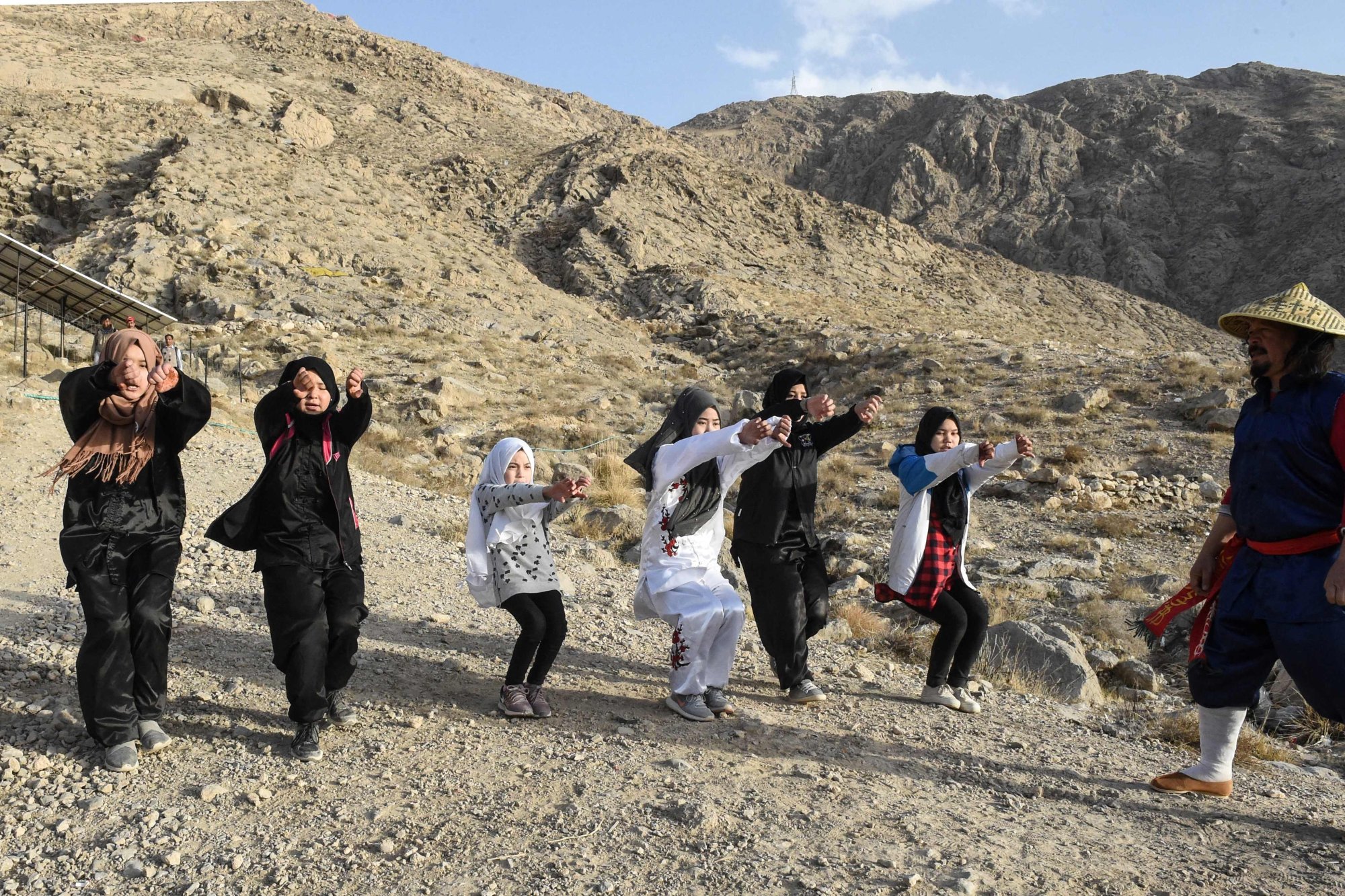
Hazaras, who are mainly Shia Muslims, have faced decades of sectarian violence in the southwestern city of Quetta. Women in the community also contend with routine harassment from men, with groping commonplace in crowded markets or on public transport.
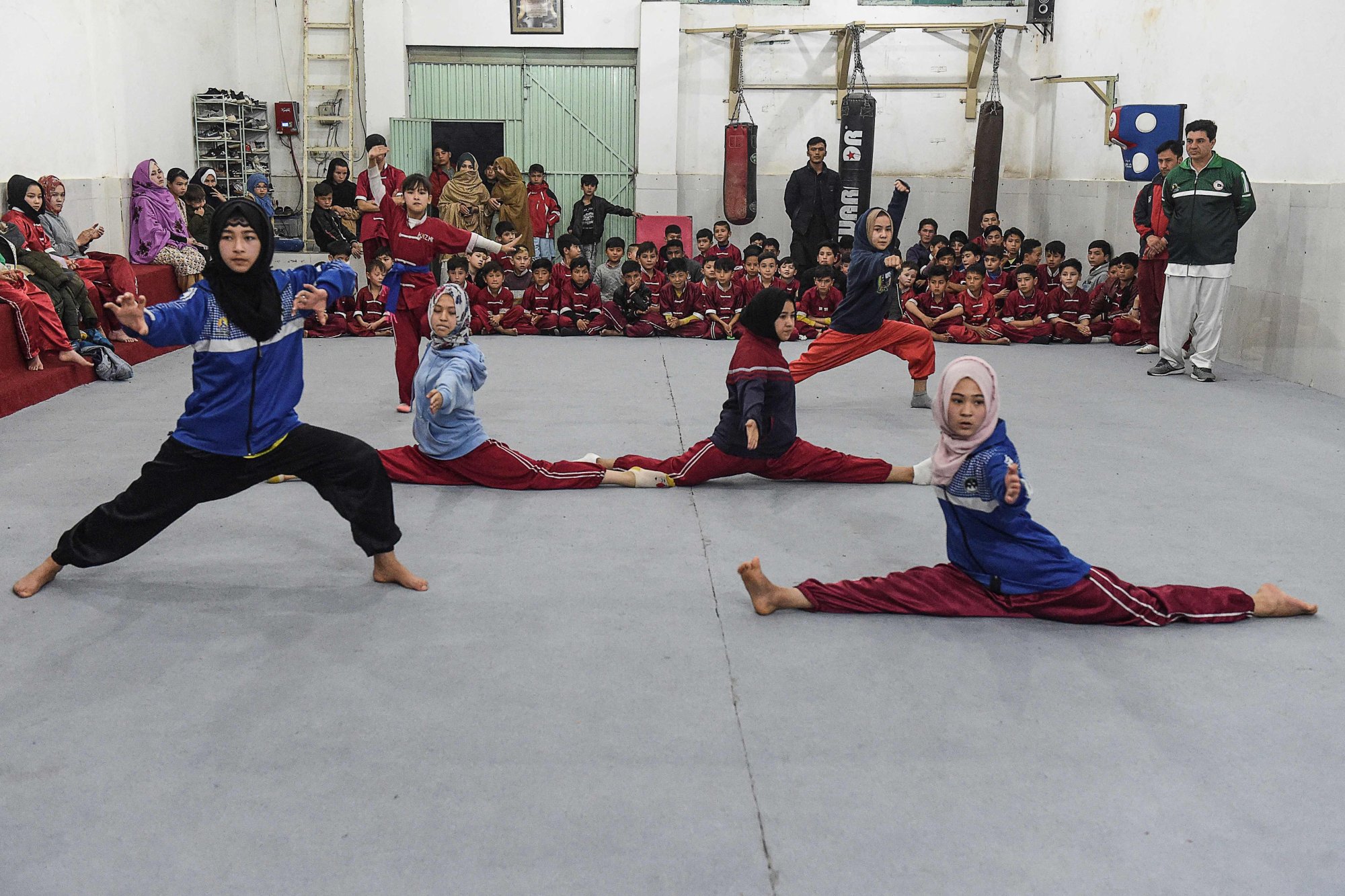
Hundreds of Pakistani Hazara women are learning how to deliver side kicks and elbow blows as martial arts booms within the marginalised community.Hazaras, who are mainly Shia Muslims, have faced decades of sectarian violence in the southwestern city of Quetta, living in two separate enclaves cordoned off by checkpoints and armed guards to protect them.
Women must also contend with routine harassment from men, with groping commonplace in crowded markets or on public transport.
“We can’t stop bomb blasts with karate, but with self-defence, I have learnt to feel confident,” said 20-year-old Nargis Batool. “Everyone here knows that I am going to the club. Nobody dares say anything to me while I am out.”

Up to 4,000 people are attending regular classes in more than 25 clubs in Balochistan province, of which Quetta is the capital, according to Ishaq Ali, head of the Balochistan Wushu Kung Fu Association, which oversees the sport.
The city’s two largest academies, which train around 250 people each, said the majority of their students were young Hazara women. Many of them go on to earn money from the sport, taking part in frequent competitions.It is still unusual for women to play sport in deeply conservative Pakistan where families often forbid it, but martial arts teacher Fida Hussain Kazmi says exceptions are being made.
“In general, women cannot exercise in our society … but for the sake of self-defence and her family, they are being allowed,” he said. The uptake is also credited to national champions Nargis Hazara and Kulsoom Hazara, who have won medals in international competitions.
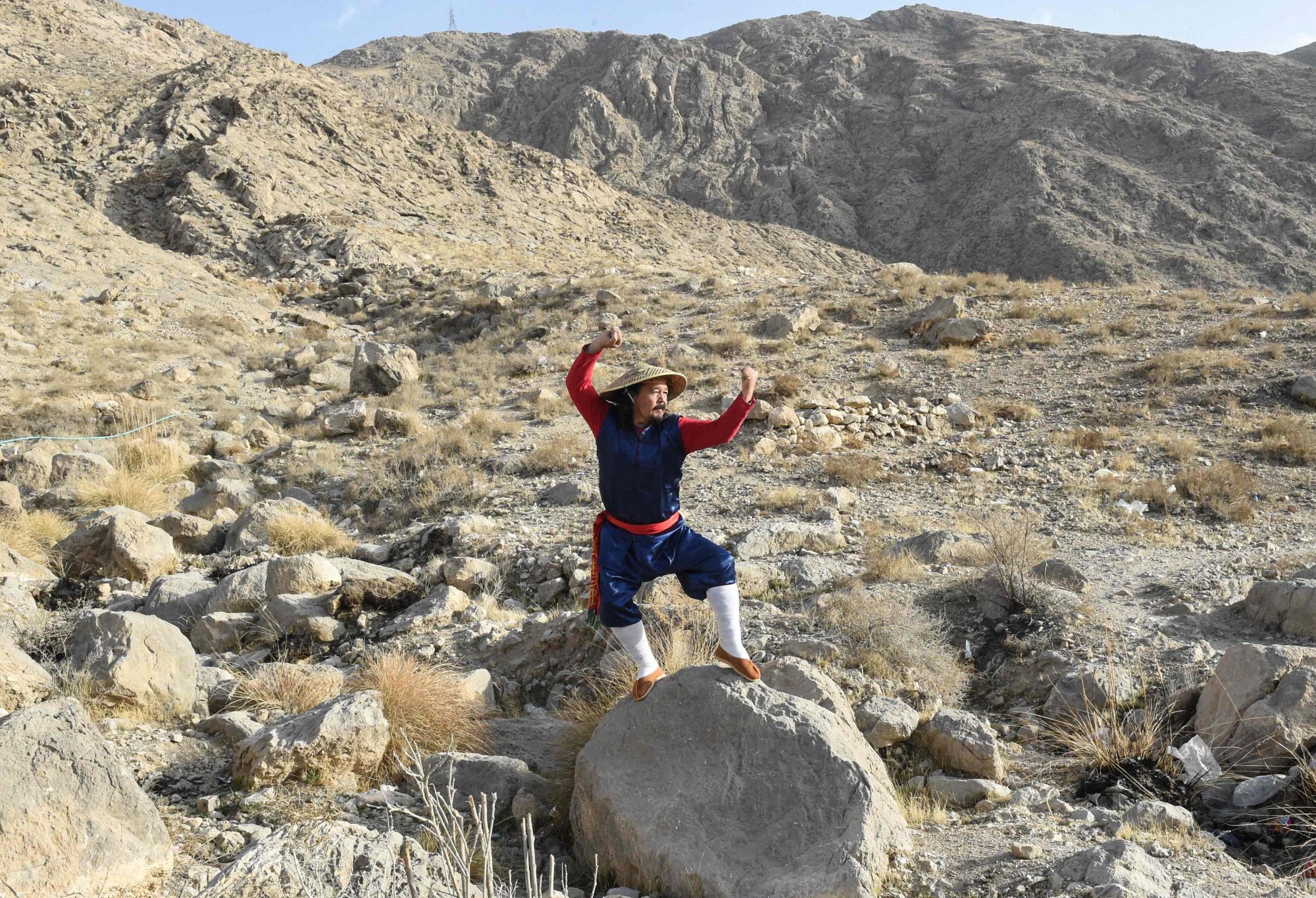
Kazmi says he has trained hundreds of women in the South Asian nation over the years, after learning the sport from a Chinese master in the eastern city of Lahore.The 41-year-old offers two hours of training six days a week for 500 rupees (US$3) but gives free classes to women who have lost a relative to militant violence.“The Hazara community is facing many problems … but with karate we can begin to feel safe,” said 18-year-old student Syeda Qubra, whose brother was killed in a bomb blast in 2013.


https://www.scmp.com/news/asia/south-asia/article/3129100/pakistans-marginalised-hazara-women-turn-chinese-martial-arts

#Pakistan - Terms for Peace

By:  Sherry Rehman

As Pakistan lurches through its worst wave of the Covid-19 pandemic, talk of peace with India fuels a fresh round of speculation about prospects and obstacles in the path ahead. Peace, of course, is understood to be a broad public good in Pakistan among political and policy groups that take a long view of the region, especially given the high cost of conflict for two nuclear neighbours that have been at war four times since 1948, and at strategic loggerheads most of our postcolonial history.

The first problem is that this view is not necessarily reflected beyond a point in current Indian thinking, particularly among the ranks of the hyper-nationalist Modi’s BJP, which is overtly different from the Vajpayee BJP, in as much as it has gone the extra mile in aggressively alienating Kashmiris and Indian Muslims as well as its own population of the poor, dispossessed and socially excluded Indians.

The second problem is that, despite an ‘Islamabad Dialogue’ in Pakistan, that suggested a moving away from the burdens of the past, the language of strategic ambiguity, which is often used to invite an opening to dialogue, was unpacked by Indian hawks as an acceptance of the status quo.

Which is why before unilateral or backchannel-led steps are taken by Islamabad to move further into terrain it has not been able to manage, a clear-eyed assessment of a policy review is needed. There is no doubt that the revival of the 2003 ceasefire on the Line of Control is an important step for saving Kashmiris on both sides of the divide. It was sorely needed as a de-escalator of kinetic violence in a fragile zone inhabited by civilian populations.

Violations had exponentially escalated since 2017, with the Indian military often extending its aggressive shelling to the Working Boundary into Sialkot and Kasur, where the plains of Punjab offer a clear line of vision to all sides, particularly the Indian government that routinely weaponised allegations of cross-border terrorism, irrespective of the facts on the ground. Modi’s misadventures such as the false-flag attack in Pulwama, followed by the Balakot debacle where an Indian Airforce pilot was grounded inside Pakistani territory and then repatriated with a cup of Pakistani tea, did not evoke rebuke for Modi from the international community, but exposed a strong vein of anti-Pakistani pathology inside the BJP’s ranks. The latter lost no opportunity to excoriate Pakistan at the highest levels, routinising threats of invasion and calls for escalated violence to a point where no talks were even possible, let alone palatable.

Yet it was Modi’s attempted annexation of Indian Occupied Jammu and Kashmir in 2019 that marked an existential turning point in the relationship between Pakistan and India. While his manifesto had always contained the dark promise of revoking the special status of IOK, the actual act of removing Articles 370 and 35-A of the Indian constitution signalled a move towards a unilateral ‘end of history” from the Indian side. Since then, despite Modi’s inability to contain the story of political trauma and barbaric human rights violations inside what came to be known as the largest open jail in the world, New Delhi has remained intransigent on its ruinous path. At that point, Modi’s calculus was likely based on managing the crisis on that border while reshaping the map of Kashmir by simply ending its disputed status. It was Pakistan that was caught unawares.

Now, over 18 months later, for this February 2021 ceasefire, change seems to be driven by ground assessments. New Delhi may have been driven by its new Ladakh military front with China, nudged on by external players, as well as the fact that the politics of managing dissent in IOK has proven to be more difficult than Modi’s advisers imagined.

The policy-path, at the same time, from Islamabad, left a lot to be desired. Since August 5, 2019, in fact, PM Imran Khan did not call a joint session of parliament until the opposition raised it as a non-negotiable intervention. He did not in fact even brief – on Kashmir – a committee room full of Pakistan’s leadership that waited for him for over an hour. Pakistan needed to send the message that it stood united on the issue of Kashmir, and statements from parliament convey a powerful message, but there was no call to unity from the leader of the National Assembly. The opposition did it anyway.

Lessons from the past may be salutary for a clear-eyed assessment of policy today. The PPP government in 2012 was able to achieve tough foreign policy milestones while facing a stressful situation with an angry superpower on the closing of mission-critical Ground Lines of Communication for Nato with Afghanistan after our soldiers were martyred on the Afghan border at Salala by ‘friendly fire’. Parliament took a united position on closing air bases previously outsourced to the US by General Musharraf, and on obtaining an apology from a recalcitrant Obama administration.

Today, when Imran Khan sends messages of conciliation to Modi, while an ostensible backchannel clears the path, saner minds need to remind this government of where such serial non-transparency landed such policy and its architects in the past. The much touted four-point Kashmir formula of Musharraf is a classic case in point, where once again, tactical relief was almost traded for Pakistan’s core position on Kashmir, without any consultation with key stakeholders, either in Islamabad or Azad Kashmir. Ancillary CBMs worked temporarily, as the intra-Kashmir bus service ran for a while. Trade was welcomed too, as it should be, but then it all fell back to old patterns because the basis of the formula was not grounded in sustainable peace that was owned by the people on the ground. Today as well questions are being asked about Pakistan’s parliament, let alone AJK, being in the policy loop.

A great deal of diplomatic groundwork can be gained by backchannels, but they only work as test-conversations, not policy substitutes. All governments have used them, but none have succeeded when they were unable to leverage at the right time and the right level, the democratic consent of the people of Pakistan.

Even though it came into force two years later, the most enduring security protocol between India and Pakistan being used today was set up and secured by Shaheed Benazir Bhutto’s government in 1988 as part of a non-attack agreement on India and Pakistan’s nuclear installations. It took months of work between diplomats to just design and redesign, but the actual agreement was welcomed by the people of Pakistan because it was shared with parliament and secured by a democratically elected PM, who behaved like a democratically elected PM. In contrast, a weak Indian PM, like the erudite Manmohan Singh, for instance, was unable to follow through discussions from the Non-Aligned Summit at Sharm-al-Shaikh with Pakistan’s then PM Yusuf Raza Gilani in 2009, because when he returned to New Delhi, the entire Lok Sabha erupted against him for making promises he wasn’t authorized to do.

In any scenario between India and Pakistan, the minefields are so manifest that agreements can only be seen as legitimate or irreversible if grounded in democratic institutions. The current government would do best to remember that. The people may not seem sovereign in Pakistan, or even India, but their buy-in changes history, nothing else. Peace never needs a mandate, but its terms certainly do.

https://jinnah-institute.org/publication/terms-for-peace/

Chairman PPP Bilawal Bhutto Zardari strongly condemns violence across the country during last three days

 Chairman Pakistan Peoples Party Bilawal Bhutto Zardari has strongly condemned violence in different parts of country during last three days, in which two policemen among seven people were killed in different incidents.

In a statement, the PPP Chairman said that this kind of violence, ransacking, vendalizing public and private properties and mob-attacks on policemen could not be allowed to go unchecked. Those responsible must be dealt with in accordance to the law, and the govt cannot be allowed to abdicate its responsibility.

This week’s naked violence shows that the selected regime has dragged the country into a deadly quagmire, where no one is safe, he said . Under the PTI regime, even the police seems to be in need of protection, as the govt has abandoned the people.

PPP expressed sympathised with the martyred policemen as well as the innocent people who lost their lives in violence in Punjab and other parts of the country and stressed for best possible medical facilities to those wounded.

https://www.ppp.org.pk/pr/24652/

Tuesday, April 13, 2021

Music Video - Frank Sinatra - New York, New York

Music Video - Taylor Swift - Fearless

Music Video - Bebe Rexha - I Can't Stop Drinking About You

Music Video - Bebe Rexha - Meant to Be

Music Video - #JonasBrothers #WhatAManGottaDo Jonas Brothers - What A Man Gotta Do

Video Report - White House press briefing with Dr. Anthony Fauci — 4/13/21

Video Report - Russia's Lavrov visits Tehran amid escalating tensions with Israel over Iran nuclear deal

Video Report - #kenya Why is Kenya trying to close one of the world's biggest refugee camps?

Video Report - China sends warplanes into Taiwan's air defense zone, Taipei says

Video Report - U.S. puts Johnson & Johnson COVID vaccine on hold over reports of blood clots

Video Report - #KhabarSayAagay State Bank Being Handed To IMF? | Imran Unable To Deal With Inflation

#rememberingmashalkhan - Mashal Khan Lynching: Twitter Mourns The Brutal Killing Of Student Over Blasphemy

 Arhama Altaf

On Tuesday, Twitter mourns the brutal killing of student Mashal Khan, who was murdered in Abdul Wali Khan University after allegations of blasphemy.


#rememberingmashalkhan is trending on Twitter as people mourn the loss of Mashal Khan over blasphemy allegation, later cleared by the Supreme Court of Pakistan (SC).

Earlier in 2020, in the murder case, the Peshawar High Court (PHC) had maintained a life sentence to seven convicts and three years jail term to 25 others.

The appeals were filed by the Khyber Pakhtunkhwa government, Mashal’s father and the convicts who were awarded jail terms by the trial court.

Father’s Plea

Mashal’s father, Iqbal Khan had filed an appeal in the PHC against the ATC’s verdict, demanding further punishment for the accused.

In the review petition, Iqbal Khan pleaded that those who were sentenced to life imprisonment should be put on death row.

He had also appealed for an increase in the punishment of those sentenced to three-four year jail sentences.

Mashal Khan Murder Over ‘Blasphemy’

Mashal, 23, a student at Mardan, was brutally lynched by a mob on April 13, 2017, instigated by rumours that he had committed blasphemy by posting sacrilegious content online.

The court cancelled the bails of 25 convicts and ordered their arrest from the courtroom.

A 13-member joint investigation team (JIT) was formed to probe the case.

On February 07, 2018, the ATC sentenced the prime suspect to death while five others to 25 years’ imprisonment in the case.

ATC  had acquitted 26 suspects and awarded three years of jail term to 25 other accused in the case.

Convict Imran, who was awarded capital punishment, was found guilty of firing shots at the victim student from his pistol.

He had also confessed to the crime before the court.

Nearly 50 prosecution witnesses testified against the suspects during the course of the hearing conducted inside Haripur Central Jail.

The prosecution charged 61 people in the case, while 57 of them were arrested and produced before the court for trial.

https://www.bolnews.com/pakistan/2021/04/mashal-khan-lynching-twitter-mourns-the-brutal-killing-of-student-over-blasphemy/


ہر سوچنے والا مشال خان ہے #rememberingmashalkhan

عبدالستار

سوچنا، غورو فکر کرنا اور کائناتی رازوں کو ڈی کوڈ کرنا ہر ایک کے بس کی بات


نہیں ہوتی کیونکہ اس کی بھاری قیمت چکانا پڑتی ہے۔ اس حقیقت کی تاریخ شاہد ہے کہ سوچنے والے اذہان کو کس قدر دربدر کیا گیا اور ان کی سوچ پر پہرے بٹھائے گئے اور بہت ساروں کو تو سوچنے کی قیمت اپنے خون سے بھی چکانا پڑی۔ یہ الم ناک سلسلہ آج بھی جاری ہے، آج بھی سوچنے والوں مختلف کفریہ القابات سے نوازا جاتا ہے۔ اس جنونیت کا نہ جانے کتنے قیمتی ہیرے شکار ہو چکے ہیں۔

13 اپریل 2017ء میں بھی ایک دلخراش واقعہ پیش آیا تھا، اس بار اس ظالمانہ روش کا شکار عبدالولی خان یونیورسٹی کا ایک عظیم سپوت ہوا تھا۔ یونیورسٹی کے ایک جنونی جتھے نے محض جھوٹے الزامات کی بنیاد پر مشعال کو گستاخ مذہب قرار دے کر انتہائی سفاکی اور بے دردی کے ساتھ اینٹیں مار مار کر اس کے پورے وجود کو ہی چھلنی کر ڈالا اور یہ ظالمانہ اقدام کر کے انہوں نے اپنا نام وارثان جنت کی فہرست میں جلی حروف میں درج کروا لیا تھا۔

اساتذہ، والدین اور قریبی دوستوں کے مطابق مشال ایک مؤدب اور آؤٹ آف دی باکس جا کر سوچنے والا انسان تھا اور اپنی سوچ کا اظہار انتہائی شائستہ اور پڑھے لکھے انداز میں کرتا تھا۔ بعض دفعہ وہ اپنی سوچ کا اظہار اپنی فیس بک کی وال پر بھی کر دیا کرتا تھا، وہ سیکھنے اور جاننے کا اتنا متلاشی تھا کہ سکالر شپ کی بنیاد پر روس کی ایک یونیورسٹی میں انجینئرنگ پڑھنے بھی گیا مگر گھریلو مالی حالات کی وجہ سے تعلیم مکمل کیے بغیر ہی وطن واپس لوٹنا پڑا۔

اس کے بعد مشال نے ماس میڈیا اور صحافت میں ماسٹرز کرنے کا فیصلہ کیا، یہ تعلیمی سفر ابھی جاری تھا کہ ایک دن چند جنونیوں نے ظلم و بربریت کی ایک الم ناک داستان رقم کر دی اس روشن خیال انسان کو ہمیشہ کے لیے خاموش کر دیا اور ایسا خوف کا سما ں پیدا کر دیا تھا کہ چند لوگ ہی اس عظیم انسان کے سفر آخرت میں شریک ہو سکے تھے مگر یہ قربانی رائیگاں کیسے جا سکتی تھی؟

اس کے جانے کے بعد شعور و آگہی کا ایک نہ تھمنے والا سلسلہ شروع ہو گیا تھا، اس کی الم ناک موت پر دانشوروں نے سوال اٹھائے، طالب علموں نے سوال اٹھائے، ہر سوچنے والے ذی شعور نے سوال اٹھائے حتیٰ کہ کھوج لگانے والی سرکاری کمیٹی جو اس الم ناک واقعے کی تفتیش کر رہی تھی انہوں نے مشال کو معصوم قرار دے کر تمام الزامات سے بری کر کے انسانی تاریخ کے آگے سرخرو کر دیا۔ سوال یہ پیدا ہوتا ہے کہ آخر مشال کا قصور کیا تھا؟

اس کے جسم کو بے رحمانہ طریقے سے کیوں کچلا گیا؟ اس کی زندگی کا فیصلہ چند بے رحم جنونیوں کے رحم و کرم پر کیوں چھوڑ دیا گیا؟ میری نظر میں اس کا قصور صرف یہ تھا کہ وہ سوچنے لگ پڑا تھا اور اپنی سوچ کا وائرس دوسرے سوچنے والے اذہان میں بھی منتقل کر رہا تھا اور یہ بات تو طے ہے کہ سوچنے کی بیماری جس کسی بھی سماج میں سرایت کر جائے تو پھر ”اسٹیٹس کو“ کا جمود ٹوٹنے لگتا ہے اور لوگوں میں شعور پنپنے لگتا ہے اور یہی شعور لوگوں کو سوال اٹھانے پر مجبور کرنے لگتا ہے۔

مشال خان اسی شعور کا نقارچی تھا مگر اس کی انالحق کی صدا کو گستاخی سمجھا گیا اور جس یونیورسٹی میں وہ شعور کی منزل حاصل کرنے آیا تھا ، اسی یونیورسٹی کے کھوکھلے جنونیوں نے اس کی شعوری آواز کو خاموش کر دیا مگر یہ بات روز روشن کی طرح عیاں ہو چکی ہے کہ ہر سوچنے والا مشال خان ہے اور یہ سلسلہ یونہی چلتا جائے گا۔

https://www.humsub.com.pk/387522/abdul-sattar-91/ 

Pakistan’s new law criminalises military criticism with 2-yr jail term, sparks outrage

REVATHI KRISHNAN
The Pakistani government has proposed a law that will criminalise the criticism of the military, which has been approved by a panel of the National Assembly — the lower house of the country’s parliament.The bill, which was approved by Pakistan’s National Assembly Standing Committee on Interior on 7 April, proposes to change the country’s criminal law and states that anyone who “intentionally ridicules, brings into disrepute or defames” the country’s military will undergo a two-year prison sentence or will be fined more than $3,200 (Rs 5,00,000) or both.
The bill, however, still needs majority approval in the National Assembly and the Senate (upper house) of the country’s Parliament.
It was introduced by the ruling Pakistan Tehreek-e-Insaf leader Amjid Ali Khan, in response to the growing criticism of the armed forces. Several members of the military have been subject to criticism for their alleged interference in matters related to governance.
During deliberations on the law in the panel, opposition leaders from the Pakistan Peoples Party (PPP) and Pakistani Muslim League (Nawaz) had opposed the law and said that it could be used against freedom of expression in the country.
Criticism of the law
Rights activists, politicians and other social media users have vociferously criticised the law. Even Prime Minister Imran Khan’s cabinet ministers have expressed reservations about the bill.
Chairman of the Pakistan Bar Council Khush Dil Khan, in a statement, said that if the bill is passed, it will be used as a tool against political victims. “If it is passed, then the Pakistan Bar Council will oppose it tooth and nail.” The move was also criticised in a strongly worded editorial in the newspaper Dawn, which said that “no one is above criticism, including the senior leadership of our security apparatus — this includes those perceived as going beyond their scope of responsibilities”.
The editorial cited Pakistan’s checkered political history that has seen abrogation of the Constitution, dismissal of elected governments and military intervention and noted that the new legislation will also “give weight to the argument that the present dispensation is a hybrid regime”.
“Freedom to question here does not mean that the military’s role in defending the country is being doubted. It simply gives people their constitutional right to question the alleged involvement of an institution of the state in affairs that are beyond its constitutional mandate,” the editorial said, adding that the bill should be dismissed in “the interest of democracy”.
The controversial legislation comes against the backdrop of the Pakistan government trying to control the social media ecosystem in the country.
Earlier in April this year, Pakistan resumed access to Tik Tok after banning it in March for spreading offensive content.
https://theprint.in/go-to-pakistan/pakistans-new-law-criminalises-military-criticism-with-2-yr-jail-term-sparks-outrage/638520/

#Pakistan - #PPP rejects controversial census validation by the CCI


“Unbelievable that the Council of Common Interest could validate a massive fraud in the shape of Census 2017 against the right of people of Sindh to be counted correctly”, said Senator Taj Haider Member PPP Core Committee in a Press Statement issued today against the validation of the provisional figures of Census by the CCI.Senator Taj Haider reminded that all parties of the Senate had signed an agreement for a recount in 5% population blocks and the correction of the Census figures. This agreement also bears the signatures of Senator Azam Swati who at that time was Parliamentary leader of the PTI.
The agreement of all leaders of parliamentary parties of the Senate to correct Census figures concluded with the then Prime Minister Mr. Shahid Khakan Abbasi in chair was a trick played against Sindh by the PML (N) government in order to get the 24th Amendment passed. The present Government instead of implementing that agreement is promising fresh census in 2023 which is yet another deception. No one in his right mind can trust this Government.Sindh is not prepared to be deceived twice on the same issue. This Government has come to power through an electoral fraud and its record shows that it wants to perpetuate every fraud against the people of Pakistan.In spite of the Chief Minister Sindh reminding the other CCI members again and again that migrants from other provinces into Sindh had been counted in the fraudulent Census in their original provinces and not in Sindh, the CCI opted for the first time in history to take decisions with majority vote and not by consensus.
The real population of Sindh counted in different surveys by internationally accepted de-facto method is around 62 million and not 47 million as counted by the anti-Sindh de-jure method. The loss of representation and divisible resources due to this fraud can never be ignored or forgotten by the people of Sindh. Even livestock animals are counted correctly, why not us Sindhis?Senator Taj Haider pointed out that going back on written and signed agreements between the Provinces cuts at the roots of the Federation which is a much greater loss for all those who have been struggling for the strengthening of the Federation. Let everyone know that Pakistan People’s Party shall not take this injustice lying down. The Senator appealed every patriotic Pakistani and specially those who had signed the All Parties Agreement for the correction of Census figures to condemn this injustice and to join the PPP in its struggle against this fascist Government.
https://www.ppp.org.pk/pr/24648/

Monday, April 12, 2021

Video Report - President Biden calls for PEACE and CALM after Brooklyn Center protests

Saudi Arabia human rights abuses detailed in US State Dept. report


 By ZACHARY KEYSER

One major area of concern for the State Department is the “arbitrary” detention and disappearances of Prince Salman bin Abdulaziz bin Salman and his father.

The US State Department released its annual Country Reports on Human Rights Practices, and within it raised concerns over numerous areas in which it believes Saudi Arabia is guilty of abusing human rights within its sovereign borders.Aside from restrictions on freedom of speech, press, access of information and gender equality, the US has been more focused on the political crackdown that has been under way within the royal family since Crown Prince Mohammed bin Salman – commonly referred to as MBS – came into prominence in 2017.
The report detailed the instance in which Prince Salman bin Abdulaziz bin Salman and his father were arbitrarily detained, along with 11 other princes, after they allegedly staged a sit-in at a royal palace in Riyadh “to demand the state continue to pay their electricity and water bills,” the report said.According to AFP, Prince Salman and his father have never been interrogated, charged or put on trial over the course of their detainment that began more than two-and-a-half years ago.
Without saying so outright, or mentioning the political implications, the State Department pointed to instances where MBS allegedly seized power through internal politics within the royal family, and the sudden disappearances of many of his competitors who could have challenged him for the throne.
Another major area of concern for the State Department is the “arbitrary” detention and disappearances of Prince Ahmed bin Abdulaziz and other prominent members of the Saudi royal family in March 2020.“In early March, authorities reportedly detained four senior princes: Prince Ahmed bin Abdulaziz, King Salman’s full brother; his son, Prince Nayef bin Ahmed, a former head of army intelligence; Prince Mohammed bin Nayef, former crown prince and interior minister; and his younger brother, Prince Nawaf bin Nayef,” the report said.
The report noted that the detentions were not announced publicly by the government. A regional source said at the time that MBS “accused them of conducting contacts with foreign powers, including the Americans and others, to carry out a coup d’état.”“With these arrests, MBS consolidated his full grip on power. It’s over with, this purge,” the source added, indicating that no rivals remain to challenge his succession to the throne.Within the same span of time, Saudi forces also detained dozens of “Interior Ministry officials, senior army officers and others suspected of supporting the alleged coup attempt,” according to the report.While Nayef, who was a senior Interior Ministry official, has been released, there has been no word on the whereabouts of the other three princes mentioned in the March sit-ins as of the writing of the report.
And considering the accused are princes, their cases “have to be treated with dignity,” Saudi sources have earlier said. This could hold the meaning behind, or a cover-up for, their whereabouts being kept secret and trial proceedings kept under wraps – as was the aim of the statement. MBS, King Salman’s son and de facto ruler of the country, which is the world’s top oil exporter and a key US ally, has made major moves to consolidate power since ousting Mohammed bin Nayef as heir to the throne in the 2017 palace coup. Later that year, he arrested several royals and other prominent Saudis, holding them for months at Riyadh’s Ritz-Carlton hotel in an anti-corruption campaign that caused shock waves at home and abroad.
MBS has also fueled resentment among some prominent branches of the ruling family by tightening his grip on power. Some critics have questioned his ability to lead after the 2018 murder of prominent journalist Jamal Khashoggi by Saudi agents and the largest-ever attack on Saudi oil infrastructure, sources have said. He also faced international criticism over the Yemen war and the detention of women’s rights activists seen as part of a crackdown on dissent.
Critics have said that royals, seeking to change the line of succession, view Prince Ahmed, King Salman’s only surviving full brother, as a possible choice who would have support of family members, the security apparatus, and some Western powers. Prince Ahmed’s whereabouts, as aforementioned, are unknown.Prince Ahmed was one of only three people on the Allegiance Council, made up of the family’s senior members, who opposed MBS becoming crown prince in 2017, sources have earlier said.
Saudi watchers have said there is no evidence Prince Ahmed is willing to take the throne.
Saudi authorities have not commented on issues of succession or criticism of the crown prince’s leadership. MBS is popular among Saudi youth and has staunch supporters within the royal family, which numbers around 10,000 members.
The crown prince has been lauded for easing social restrictions in the conservative Muslim kingdom and trying to diversify the economy away from oil.
https://www.jpost.com/middle-east/us-state-dept-details-saudi-arabia-human-rights-abuses-in-report-663677

COLUMN: Saudi Arabia’s continued human rights abuses cannot be supported by the U.S. any longer

By Galen Sherby Zavala 
Mar. 17, 2021
For decades Saudi Arabia and the U.S. have been joined at the hip, and this relationship must be ended if America wants to live up to its ideals.
For decades, Saudi Arabia and the United States have been staunch economic, political and military allies. Despite a long history of human rights abuses, theocratic fundamentalism and an ever-present tyrannical system of government, the U.S. and Saudi governments have maintained close diplomatic relations. This hypocritical and contradictory unity between a state that purports to be the global defender of democracy and one of the last absolute monarchies on Earth is baffling at first glance.
However, the reasons behind this uncharacteristic alliance are surprisingly simple, and even the cold-blooded murder of journalist Jamal Khashoggi has been incapable of shaking the ties that the U.S. has built with the Saudi royal family. This isn’t to say that the U.S. necessarily ignores the worst crimes of the Saudi regime. Diplomatic reprimands are issued whenever there are particular excesses committed by the kingdom. Although, it should go without saying that empty words do nothing to erase our government’s consistent material support of the regime.
To better understand the current Saudi-American relationship, one has to be aware of the context behind Saudi Arabia’s origins and the historical path the nation has taken up to the present. The kingdom’s modern history begins in 1932 with its establishment under the rule of the powerful Saud family, headed by its patriarch, Ibn Saud. Its position over lucrative oil reserves caught the eye of Europe and the U.S. alike. Over the course of the Cold War, Saudi Arabia was also seen as a bastion of anti-communism, and American soldiers were routinely stationed within the country.
Throughout its existence, the Saudi government has adhered to a conservative interpretation of Islam known as Wahhabism. Many of the draconian laws surrounding women’s rights and LGBT+ rights within the country stem from this fundamentalist strain of thought. This blend of conservative religious teachings and a strictly autocratic government resulted directly in the brazen murder and dismemberment of dissident journalist Jamal Khashoggi.
If Saudi Arabia lived up to the ideals the U.S. supposedly stands for, in any way, the very notion of murdering a journalist for expressing dissent would have been unthinkable. However, Saudi Arabia’s autocratic system practically demands that those who voice opposition to the royal family’s policies should be eliminated in one way or another.
The ongoing humanitarian crisis in Yemen is another example of criminal conduct by the Saudi state that the American government has, until recently, been actively supporting. Lucrative arms deals between U.S.-based weapons manufacturers and Saudi Arabia have helped the Saudi army to continue waging a war in which tens of thousands of civilians have already died. According to the UN, multiple war crimes have been conducted by the kingdom, using American-made bombs, rockets and bullets. Even now, new information is coming to light regarding the depth of the Saudi royal family’s involvement in the plot to murder Khashoggi. Recently the CIA declassified a report confirming with a “medium to high degree of certainty” that Crown Prince Mohammed bin Salman played a key role in approving the journalist’s killing despite his statements to the contrary. Saudi Arabian authorities including the Crown Prince himself have insisted that Jamal Khashoggi’s killing was planned and approved without bin Salman’s knowledge, but this new report has quickly unraveled the officially sanctioned narrative.
The United States’ alliance of convenience with Saudi Arabia must be ended as soon as possible. The continued support of a government that is diametrically opposed to our country’s stated goals is a fundamental travesty and it must be recognized as such in our nation’s actions, not just our words.
https://themaneater.com/stories/opinion/column-saudi-arabias-continued-human-rights-abuses-cannot-be-supported-by-the-us-any-longer

Commentary: Rampant gun violence makes U.S. a proven hypocrite on human rights


A more underlying reason for the deteriorating gun violence in the United States is that the government makes little effort to address the root causes -- racism, poverty and lack of access to education.

WASHINGTON, April 11 (Xinhua) -- A recent string of mass shootings in the United States have once again proved that the country, always proclaiming itself a defender of human rights, is indeed a hypocrite, as deadly gun violence rate keeps ballooning while gun proliferation remains rampant.

U.S. President Joe Biden on Thursday depicted gun violence in the country as "an epidemic" and "an international embarrassment," highlighting a chronic human rights crisis that has reached epidemic proportions and long blighted the United States.

Over the last few weeks, the country witnessed mass shootings occur nearly back-to-back in Orange, California, Boulder, Colorado, the Atlanta area in Georgia and Central Texas.

As of April 7, 11,535 Americans were killed by gun violence this year, according to data from the Gun Violence Archive. Last year, the number of gun violence death topped 435,000, including nearly 300 children, more than any other year in at least two decades.

Although Washington has largely rejected being held accountable for the ravaging crisis, its failure to protect its citizens from gun violence has been constantly reviewed and bombarded by international human rights bodies including the United Nations Human Rights Committee.

The "right to life, liberty and security of person" is codified in the 1948 Universal Declaration of Human Rights. "Life" also comes before "liberty and the pursuit of happiness" among the three unalienable rights enshrined in the Declaration of Independence.

However, for decades, Washington has failed to live up to the legal promises made to its people. The right to bear arms too often trumps the right to life as a result of powerful lobbying by interest groups such as the National Rifle Association, erecting a major barricade to gun control legislation.

Multiple complex legal, political and cultural factors lead to the high rate of gun violence in the United States.

The most conspicuous one is that guns are unreasonably easy to get in the country. Gun control advocates even lamented that it's "easier to buy a gun than to register to vote" in the United States, which bills itself as a champion of freedom and human rights.

As a consequence, gun proliferation has been appalling. With less than 5 percent of the world's population, the United States owns 46 percent of the global civilian-owned guns, according to a report by the Switzerland-based Small Arms Survey.

In 2020, industry data and firearms background checks show that nearly 23 million guns were purchased in the country, up by 65 percent from the previous year, according to U.S. consulting firm Small Arms Analytics.

A more underlying reason for the deteriorating gun violence in the United States is that the government makes little effort to address the root causes -- racism, poverty and lack of access to education.

Specifically, eight people were shot dead at three massage parlors in the Atlanta area in March, of whom six were Asians, stoking fears over rising hate crimes against Asian-Americans.

Meanwhile, the country's public divide on gun control has revealed the cavernous gap between rural and urban Americans. Many of the supporters for gun ownership take hunting and fishing as a way of life in states with large rural populations, while for many in coastal cities, owning guns is unacceptable.

Unfortunately, gun control legislations are extremely hard to get through the U.S. Congress due to partisan politics and the influence of interests groups.

The hot-button issue has for decades been a major point of contention between Democrats and Republicans. The GOP favors gun-owners' rights, arguing that gun laws will not keep people safe, but rather take away the rights of law-abiding citizens.

In contrast, Democrats contend that gun laws will make a difference, saving people's lives and preventing firearms from getting into the hands of the wrong people.

Last month, the House of Representatives approved a pair of bills aimed at expanding and strengthening background checks for gun buyers. Though widely popular with voters, the measures were expected to face strong GOP opposition in the Senate.

Biden, who campaigned on the issue of curtailing gun violence, is expected to proceed with piecemeal regulations through executive orders or tucking them into the massive infrastructure bill that is now taking shape in Washington.

Yet gun control advocates maintained that Washington's measures on gun control are far from enough. Without the right to life, it is impossible to enjoy other rights. The U.S. government has clear and urgent obligations to tackle gun violence.

Effective gun control is more about whether Washington has adequate political will and moral courage to take all measures necessary to protect people from gun violence. As Biden has said, "Enough prayers. Time for some action." And for real action. 

http://en.people.cn/n3/2021/0412/c90000-9837977.html

Western media absent as Tokyo is about to dump radioactive water


By Li Qingqing

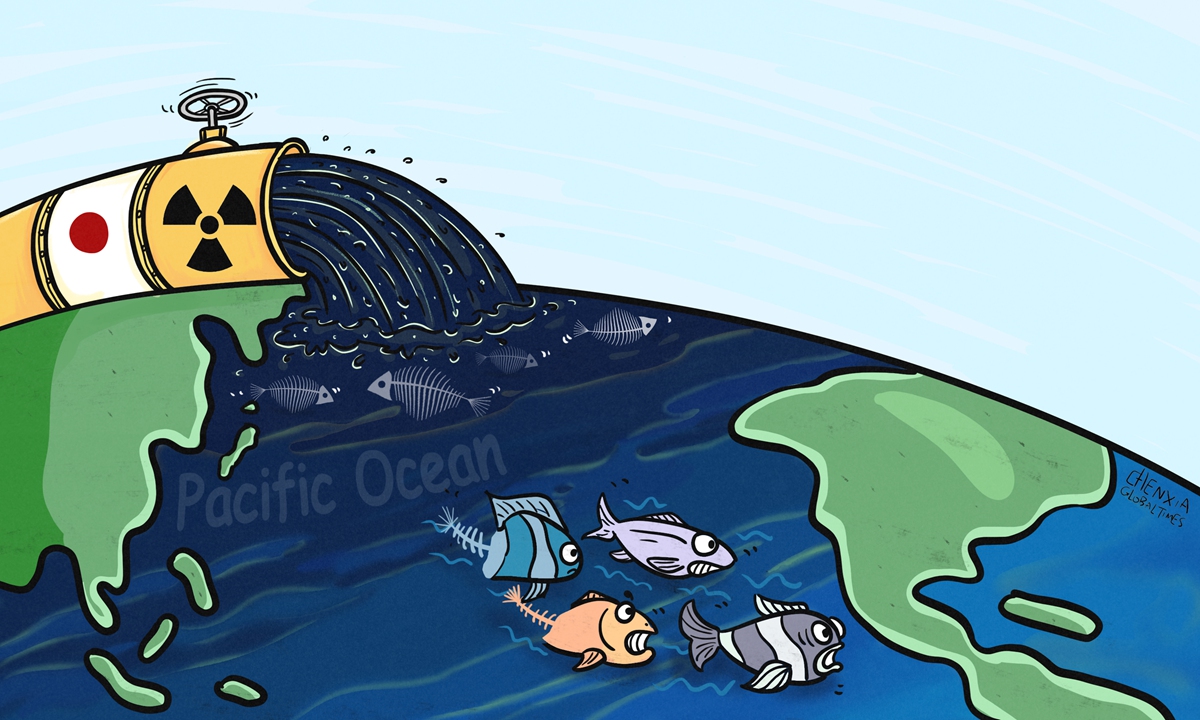
The Japanese government "is poised to" release polluted water from the Fukushima nuclear power plant into the Pacific Ocean, according to Kyodo News. Such an extremely irresponsible act has been strongly criticized by China and other neighboring countries of Japan. However, most major Western media outlets have remained silent on Japan's decision that will influence health of hundreds of millions of people. For many Western elites, it seems that their so-called environmental concern is ideologically biased. Environmental protection is just an ideological tool for them to suppress rival countries.


Dumping nuclear wastewater into the Pacific Ocean will cause infinite harm to the entire human race and the ecological environment on which the world depends. "It is a move that will have serious, long-term consequences for communities and the environment, locally and much further afield," according to report from environmental rights organization Greenpeace. 

Japan's neighboring countries, including China and South Korea, will be the first to suffer from the serious pollution and it is also difficult for Western countries to stay aloof from the affair. As the world's oceans are connected, more countries will also be harmed by the nuclear wastewater sooner or later. 

Such an apparently wicked act has not been jointly condemned by Western countries, and mainstream Western media which hold great international discourse power have not criticized Tokyo on a large scale. 

It's a sharp contrast to the Chernobyl nuclear disaster. The Soviet Union was heavily attacked by the Western media back then and the West also used the disaster to instigate anti-Soviet Union sentiment. Today, Japan's radioactive wastewater may remain dangerous for thousands of years and may even cause human DNA changes, according to Greenpeace. The Western media's collective silence at this time has formed a sharp contrast

"In Western countries' view, Japan is an important ally of the US in Asia. Japan is consistent with Western political and economic systems and values. Therefore, the West often has a good impression of Japan's moves," Zhou Yongsheng, professor of China Foreign Affairs University, told the Global Times on Monday.

Western elites have always claimed to uphold high environmental protection standards, and they often use environmental issues to criticize China. Some of their accusations even sound ridiculous. For example, Time magazine published an article in January entitled "How China could change the world by taking meat off the menu," targeting China's rising meat consumption and trying to label China as a destroyer of the environment. However, Western media has been downplaying the US livestock industry's "contribution" to global warming.

Compared with meat consumption, Japan's releasing of polluted water into the Pacific will endanger the health of mankind. But Western media has lost their voice. "Western countries generally favor Japan and they are not even willing to criticize Japan's wrong moves. This is not an objective stand at all," Zhou said.

The Pacific is about to become the ocean of Japanese sewage. Relevant international organizations and media should have strengthened supervision on Japan, urged Japan to regularly release the status of nuclear sewage treatment and disclose the facts to the world to form a broader global consensus. 

Although Japan has claimed that the wastewater will be diluted to meet international standards before any release, environmental protection agencies have questioned this. Greenpeace said in its report that Tokyo Electric Power Company and Japanese government bodies "appear to have conspired to make the crisis worse." And considering Japan's poor performance in the COVID-19 fight, there are reasons to doubt the Japanese government's wastewater handling.

https://www.globaltimes.cn/page/202104/1220876.shtml

Video Report - Michigan sees surge in COVID-19 cases among children

Video - SE Cupp: What two politicians and a 'real' housewife have in common

Video - President Biden Joins the Virtual CEO Summit on Semiconductor and Supply Chain Resilience

Video - President Biden and Vice President Harris Meet with a Bipartisan Group of Members of Congress

Video - President Biden speaks on #Minnesota shooting during infrastructure meeting

Video Report - Ahmadi Worship Place In Muzaffargarh | French Ambassador To Pakistan Issue

Video Report - Gul Bukhari - Protest Jalsa by PTM: The Pakistani state is forcing Taliban rule over Wana, South Waziristan. Why?

#PPP says it is vacating all positions in #PDM, demands apology

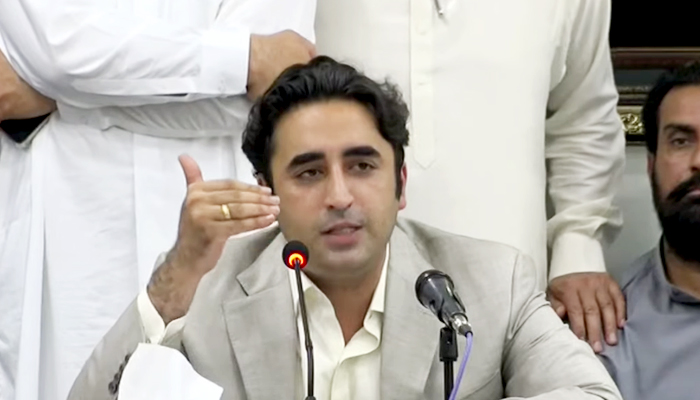
PPP chairperson Bilawal Bhutto Zardari on Monday announced that the party's Central Executive Committee (CEC) has called upon its members to resign from all positions of the Pakistan Democratic Movement (PDM). 

Flanked by party leaders, Bilawal held a news conference to speak about the matters that came under discussion during the recently-held Central Executive Committee meeting of the party. 

He said the CEC had come to the conclusion that resignations from the national and provincial assemblies should be "like an atom bomb".

Bilawal said the PPP's stance that the Opposition should not "abandon the Parliament and the Senate battleground" had been vindicated.

He said if the PPP had listened to other political parties in the Opposition and boycotted the Senate elections and by-elections, then it would have harmed democracy.

"We did not give the PTI government an open field to form a two-thirds majority in the Senate," he said, adding that the government lost on its "own pitch" when the PDM candidate won from the Nowshera by-election.

"We will not undermine these gains that the PPP has achieved after giving many sacrifices," he said. "When the PML-N was in power, we protected the Parliament then and we will protect the Parliament today."

He said those who wanted to resign from the Parliament, should do so.

"But, no one should try to impose their will or their dictation on any other political party," he said. "And the Pakistan Peoples Party will continue in its firm, consistent Opposition to the selected government that has been ongoing since day one and has not broken for a single day," stressed the PPP chairperson.

"The Pakistan Peoples Party rejects the so-called show-cause notice," he said. "Politics is done with equality and respect," he added.

"The PPP demands an unconditional apology to the ANP and to the PPP for this obnoxious attitude," he said.

Bilawal said the PPP stands by the ANP and would not abandon them under any circumstances. "There is no concept of show-cause notices in democratic alliances," he said.

He recounted the PPP's participation in the Movement for the Restoration of Democracy and the Alliance for the Restoration of Democracy.

"We condemn the politics of Opposition against members of the Opposition," he said.

The PPP chairperson said his party's doors were open for all other parties, adding that there should be a "working relationship" among them.

'PTI-IMF' deal 

He spoke about the $500mn loan received by Pakistan from the IMF. "It [IMF deal] consistently targets the poor people of Pakistan," he said, adding that the government is putting the burden on the shoulders of the poor. 

"Neither the details of the PTI's deal with the IMF have been shared with the people or their representatives," he said. "Whatever knowledge we derived about is was due to the IMF's documents," he added. 

He blamed the government for conducting "a historic attack" on the country's economic independence, saying that through the draft State Bank of Pakistan ordinance that the Centre wanted to be passed, the government was ensuring that the central bank does not answer to the country. 

"The PPP's Central Executive Committee rejects it [the ordinance] and we will, even in Ramadan, start a campaign against this PTI-IMF deal," he said. 

'Confusing, contradictory policy on Kashmir'

The PPP chairperson said the government's policy on the contentious Kashmir issue was "contradictory and confusing". He said it was the obligation of the government to represent and be the voice of the oppressed Kashmiris in their time of need. 

He said the BJP's manifesto spoke about annexing occupied Kashmir. "Despite that, during India's election campaign, the prime minister of Pakistan said if Modi wins, only then the issue of Kashmir will be solved," Bilawal stressed. 

The PPP chairperson said "history will remmeber" this sentence by PM Imran Khan. 

"History will remember there was a prime minister who was this inept and a failure on this issue," he lashed out at the premier. 

Bilawal lamented PM Imran Khan had reacted to India's illegal August 5 move by saying: "What can I do?"

"And all of a sudden Imran Khan remembered that Modi, for whom he campaigned during the entire elections, was a fascist," he said, mocking the prime minister. 

He then pointed out how the government had, at first, said it wanted to trade with India but later rejected its on move. "Khan can't seem to not make mistakes on Kashmir," he said. "And he keeps on making mistakes on Kashmir [again and again]," he said. 

"He [Imran Khan] says at times that he is the ambassador of Kashmir but then acts as Kulbhushan Jadhav's lawyer," said the PPP chairperson.  

Bilawal said "when a leader leads" the country by taking the Parliament and the people into confidence, then the country can tackle India and other powers in the world as well. 

He said the PPP's CEC had decided to take up the issues of occupied Kashmir through its Kashmir Action Committee time and again, adding that it was the party's resolve to ensure the Parliament is taken on-board in matters concerning the masses. 

2017 census results

Bilawal said the CEC also discussed the census 2017 results, adding that the PPP had conditionally accepted census 2017 results at first. 

He said it was on the basis of the results of the census that the country's resources were distributed to provinces. Bilawal said the census 2017 were "de jure" results and not the "de jure" figures. 

"It doesn't count the people actually living there and consuming figures," he said, adding that it was the PPP's demand that the de facto results be included in the census. 

He demanded the government discuss the census results during a joint session of the Parliament. "A transparent census is necessary to empower the people of Pakistan," he said. 

https://www.geo.tv/latest/344870-ppp-announces-resignation-from-all-pdm-offices
PPP has opposed the anti-people deal of PTIMF from day one as the details of the agreement between PTI government and the IMF have neither been laid before the Parliament nor made public, Chairman PPP

 Chairman Pakistan Peoples Party Bilawal Bhutto Zardari has said that his Party has opposed the anti-people deal of PTIMF from day one as the details of the agreement between PTI government and the IMF have neither been laid before the Parliament nor made public.


Addressing a Press Conference following two-day meeting of the Party’s Central Executive Committee (CEC) at Media Cell Bilawal House today, he said that this deal is detrimental to the people of Pakistan and the economy as a whole. “This move will be a burden on the poor people of Pakistan. We strongly condemn it and our party demands that PTI regime withdraw from this move. This deal is not in the interest of Pakistan which endangers its sovereignty and sky-rocket inflation through hike in prices of electricity and gas,” he added.
Talking about the issue of Kashmir discussed in the CEC, Bilawal Bhutto Zardari said that the PPP and Kashmiri people have a three-generation relationship and his Party has never compromised on Kashmir nor will in future. Selected Prime Minister was praying for victory of Modi despite knowing that changing the status of Held Kashmir was part of BJP manifesto. When Modi changed the status of the held valley, the incompetent PM said what can he do, the PPP Chairman stated.
He further said that Parliament was not taken into confidence on Kashmir policy nor was it informed whether there will be trade with India or not. Shaheed Zulfikar Ali Bhutto had said that Kashmir was an issue on which he could not err even in his sleep. But there is one Imran Khan, who does nothing but make blunders on this issue, he said adding that the people of Pakistan and Kashmir cannot afford an incompetent Prime Minister and the only way to get right on the Kashmir issue is to oust Imran Khan.
Bilawal Bhutto Zardari informed that the CEC urged the Federal government to ensure the supply of vaccines to the citizens for the prevention of Corona virus and also rejected a possible amendment to the Pakistan Penal Code for taking action against critics of the armed forces. The CEC also expressed concern over the issue of hidden cameras in the polling booths during the Senate elections and described this act as tantamount to rigging in the Senate elections.
Talking about the census issue, the PPP Chairman said that the PPP has been expressing its objections and concerns on this issue since 2017. In order to avoid delays in the general elections and to hamper the democratic process, it was temporarily accepted on the condition that 5% census results be re-checked. Holding a fair and transparent census is as important as conducting fair and transparent general election, he said adding that PPP demanded a clean and transparent census and the issue would be taken up in a joint parliamentary session.
On this occasion, PPP Chairman announced the CEC decision for resignations from all the posts of PDM adding that we pursue politics with dignity and equality.  Politics of the opposition against the opposition is unacceptable and CEC pledged that PTI regime won’t be allowed to sit comfortably, he added.
He further said that CEC has rejected the PDM’s show cause notice and decided to resign from all the posts in protest against the inappropriate behavior, procedures and attitude of some office-bearers of the alliance. There is no precedent in the country’s political history for such show-cause notices and CEC has demanded an unconditional apology from both PPP and ANP, he added.
 
The CEC noted that no show cause notice was given to anyone at a time when the action plan of the alliance was not being implemented. In Punjab, five Senate seats were given to PTI, but no notice was given. The CEC was of the view that resignations from the assemblies were an atomic bomb and should be used as a last resort. The PPP had the same stance yesterday and today. Those who want to resign may resign but do not dictate or impose their decision on others, he added.
PPP Chairman pointed out that if the by-elections had been boycotted at the behest of other parties, the PTI would have won all the assembly seats by now. We won’t back down from our struggle, will stand by ANP, and would make all decisions in consultation. “Our doors are open to any party that opposes the PTI regime,” he added.
Bilawal Bhutto Zardari said that the loss of interlinking the long march with en masse resignations at the last moment harmed the opposition. Opposition’s opposition is unacceptable. PML-N has to decide whether to oppose selected Imran Khan and the Establishment or to oppose the PPP. He pointed out that PML-N had also tried to snatch the right of opposition leader from PPP in Gilgit-Baltistan.

https://www.ppp.org.pk/pr/24639/ 

Video - Chairman PPP addressing a press conference after the meeting of PPP CEC.