Tuesday, February 2, 2021

Bakhtawar Bhutto-Zardari 'touched by love, prayers and good wishes'


 Newlyweds Bakhtawar Bhutto Zardari and husband Mahmood Choudhry tied the knot over the weekend in an intimate ceremony at Bilawal House. The couple, who got engaged in November, has shared few glimpses from their festivities. The elder Bhutto-Zardari daughter has promised to share even more pictures soon as she thanked everyone for love and wishes.

Taking to Instagram, the 31-year-old shared, "We are touched by all the love, prayers and good wishes. Deciding to get married during corona meant we were limited by the SOPs." 

She went on to add, "Luckily, we were able to capture our joyous times and will be sharing with you through them." Soon after, Mahmood took to his Instagram and posted few pictures from the ceremonies. 

Nikkah Ceremony: 

Bakhtawar, the eldest daughter of the late Prime Minister Benazir Bhutto and Asif Ali Zardari, married son of a US-based businessman named Mahmood Choudhry in a daytime ceremony at Bilawal House in Karachi on Friday.

On the occasion of her wedding, Bakhtawar's siblings took to social media and wished her a blissful married life. Bilawal shared some pictures and a sweet message for his newly-wedded sister on Instagram. "Happiest moment in many years to see my sister Bakhtawar getting married. Felt like our mother was watching over us in this moment of joy. Wishing them both all the best for their new life together," he wrote.

Aseefa, the youngest Bhutto sibling, also wished the couple "a lifetime of happiness and joy" on their new journey. "I love you, my dear sister. I wish you a happy married life," she wrote.

Valima Reception: 

A reception ceremony took place on Saturday night at the Bilawal House, Karachi. Clad in a green and gold ensemble with a matching mask, Bakhtawar looked radiant. PPP Chairman Bilawal Bhutto Zardari looked dapper in a navy suit, whereas their youngest sibling, Aseefa Bhutto Zardari looked gorgeous in a blue and silver outfit. 

The event was attended by popular politicians, such as Sharmila Faruqi, Sherry Rehman, CM Sindh Murad Ali Shah and former PM Yousuf Raza Gilani. The reception ceremony was also attended by members of the UAE Royal family. Nahyan bin Mubarak Al Nahyan was welcomed by the officials after he landed in Karachi via a private plane. 

Another event was held in Kakri ground in Lyari. 33 years ago, public reception for Asif Ali Zardari and former PM Benazir Bhutto also took place at the same place. Celebrations continued as traditional performances took place for the newlyweds. 

Monday, February 1, 2021

Music Video - Frank Sinatra - Let It Snow! Let It Snow! Let It Snow!

Video - #Myanmar - Can #Myanmar return to democracy? | Inside Story

Video Report - Dr. Fauci: There is light at the end of the tunnel, but it's up to us

Video Report - White House press secretary Jen Psaki holds daily briefing

Opinion: The Republican Economic Plan Is an Insult

By Paul Krugman
It’s bad faith in the name of bipartisanship.
So 10 Republican senators are proposing an economic package that is supposed to be an alternative to President Biden’s American Rescue Plan. The proposal is only a third of the size of Biden’s plan and would in important ways cut the heart out of economic relief.
Republicans, however, want Biden to give in to their wishes in the name of bipartisanship. Should he?
No, no, 1.9 trillion times, no.
It’s not just that the G.O.P. proposal is grotesquely inadequate for a nation still ravaged by the coronavirus pandemic. Beyond that, by their behavior — not just over the past few months but going back a dozen years — Republicans have forfeited any right to play the bipartisanship card, or even to be afforded any presumption of good faith.
Let’s start with the substance.
By any measure, January was the worst pandemic month so far. More than 95,000 Americans died of Covid-19; hospitalizations remain far higher than they were at previous peaks.
True, the end of the nightmare is finally in sight. If all goes well, at some point this year enough people will have been vaccinated that we’ll reach herd immunity, the pandemic will fade away and normal life can resume. But that’s unlikely to happen before late summer or early fall.
And in the meantime we’re going to have to remain on partial lockdown. It would, for example, be folly to reopen full-scale indoor dining. And the continuing lockdown will impose a lot of financial hardship. Unemployment will remain very high; millions of businesses will struggle to stay afloat; state and local governments, which aren’t allowed to run deficits, will be in dire fiscal straits.
What we need, then, is disaster relief to get afflicted Americans through the harsh months ahead. And that’s what the Biden plan would do.
Republicans, however, want to rip the guts out of this plan. They are seeking to reduce extra aid to the unemployed and, more important, cut that aid off in June — long before we can possibly get back to full employment. They want to eliminate hundreds of billions in aid to state and local governments. They want to eliminate aid for children. And so on.
This isn’t an offer of compromise; it’s a demand for near-total surrender. And the consequences would be devastating if Democrats were to give in.
But what about bipartisanship? As Biden might say, “C’mon, man.”
First of all, a party doesn’t get to demand bipartisanship when many of its representatives still won’t acknowledge that Biden won legitimately, and even those who eventually acknowledged the Biden victory spent weeks humoring baseless claims of a stolen election.
Complaints that it would be “divisive” for Democrats to pass a relief bill on a party-line vote, using reconciliation to bypass the filibuster, are also pretty rich coming from a party that did exactly that in 2017, when it enacted a large tax cut — legislation that, unlike pandemic relief, wasn’t a response to any obvious crisis, but was simply part of a conservative wish list.
Oh, and that tax cut was rammed through in the face of broad public opposition: Only 29 percent of Americans approved of the bill, while 56 percent disapproved. By contrast, the main provisions of the Biden plan are very popular: 79 percent of the public approve of new stimulus checks, and 69 percent approve of both expanded unemployment benefits and aid to state and local governments.
So when one party is trying to pursue policies with overwhelming public support while the other offers lock-step opposition, who, exactly, is being divisive?
Wait, there’s more.
Everyone knew that Republicans, who abruptly stopped caring about deficits when Donald Trump took office, would suddenly rediscover the horror of debt under Joe Biden. What even I didn’t expect was to see them complain that Biden’s plan gives too much help to relatively affluent families.
Again, consider the 2017 tax cut. According to the nonpartisan Tax Policy Center, that law gave 79 percent of its benefits to people making more than $100,000 a year. It gave more to Americans with million-dollar-plus incomes, just 0.4 percent of taxpayers, than the total tax break for those living on less than $75,000 a year, that is, a majority of the population. And now Republicans claim to care about equity?
In short, everything about this Republican counteroffer reeks of bad faith — the same kind of bad faith the G.O.P. displayed in 2009 when it tried to block President Barack Obama’s efforts to rescue the economy after the 2008 financial crisis.
Obama, unfortunately, failed to grasp the nature of his opposition, and he watered down his policies in a vain attempt to win support across the aisle. This time, it seems as if Democrats understand what Lucy will do with that football and won’t be fooled again.
So it’s OK for Biden to talk with Republicans and hear them out. But should he make any substantive concessions in an attempt to win them over? Should he let negotiations with Republicans delay the passage of his rescue plan? Absolutely not. Just get it done.
https://www.nytimes.com/2021/02/01/opinion/coronavirus-relief-biden-republicans.html?action=click&module=Opinion&pgtype=Homepage

Music Video - Noor Jehan - Dildar Sadqay Lakh War Sadkay

Video Report - #Pakistan #GulBukhari #DanielPearl Acquittal, Detention of Omar Sheikh, accused in Daniel Pearl case || Gul Bukhari with Bilal Warraich

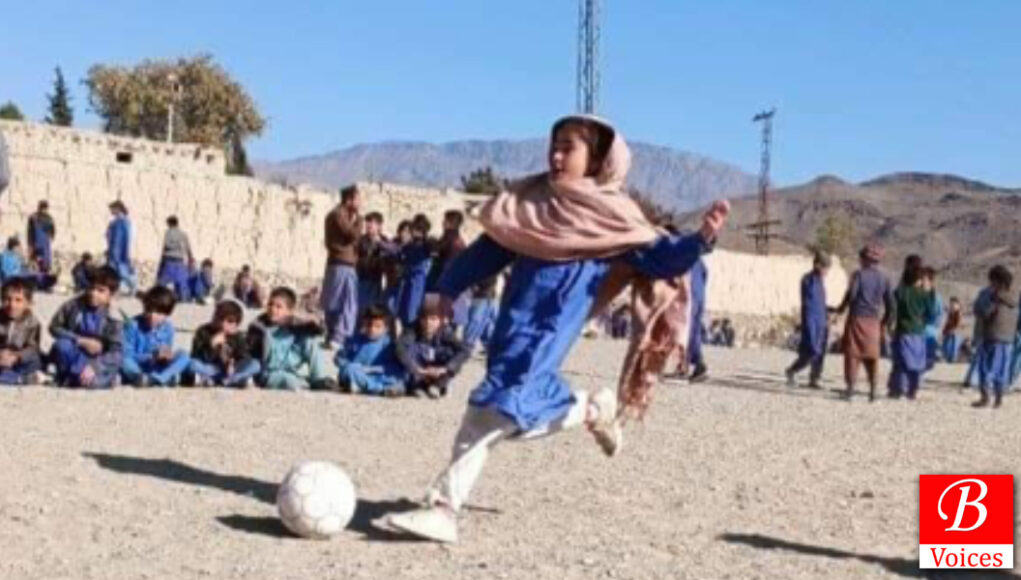
Girl Kicking the Narrow-mindedness of Society


Nabila Malik Haya
Since corona came into our lives and disturbed our lives completely, each positive thing that occurs in our toxic environment motivates us to forget all the damages, and build some positive vibes for the future, to create some good room in mind and freshens the soul,A picture of a girl kicking a football is one of them.

Sometimes the social media proves itself positivity and rightly for its users, at least did this time to show us the picture that was taken in the ground of  Waziristan and made our day, that we received it in social media, sitting far far away. Twitter users heartily started commenting on the picture, most of them didn’t even know her name but we’re happy to see Waziristan glowing, Asma hafiz is the student of class three, the energetic soul, the future of Waziristan.
The social media users in Pakistan commented on the picture that the picture itself is breaking the stereotype that Pashtoon female is not allowed to get an education and take part in healthy activities in the Waziristan. One of them said that  “Inspirational & powerful image, full of hope for a better future. The girl is not only kicking the ball but the orthodoxical mindset which places women inferior to men. This image shows what the future holds for people of war-torn Waziristan”. The other said the girl is not kicking the football but all the barriers that stoping them from their rights and kicked the  Nero mind-set.
the ground of Waziristan made us all smile and helped us to forget the hectic day tension. girl in the picture is a  slap in the faces of those who still believe that female has a certain role and can’t be equal to man, the picture is a slap to those who believe that their Izat  and namoos will get damage if they let daughters and girls participate in the healthy activities.
Different approaches on a single picture
Waziristan  “land of the Wazir” is a mountainous region covering the former FATA agencies of North Waziristan and South Waziristan which are now districts of Khyber Pakhtunkhwa province of Pakistan. Waziristan covers some 11,585 square kilometers. The area is populated by ethnic Pashtuns.
Waziristan was famous among Pakistani’s for negative news most of the time and was called the most dangerous place on earth. However the time is changed,  their struggle might come to an end, now Peace can be seen clearly in the picture. The children can go to school and has the freedom to play is itself is proof of a healthy environment.
Coming towards the next point which is gender. The difference between gender and sex is that the letter refers only to biological differences.
But the society especially Pashtoon and Baloch expects males and females to adopt, believe in, and fulfill specific gender roles,  Generally, males are expected to be strong, independent, and athletic, whereas females are expected to be quiet, obedient, attractive, and nurturers. When these gender norms are violated, it is common for labels to be given, questions to be asked.
But change has witnessed in one of the rural areas of Pakistan,  no doubt there are gaps and the large numbers of girls are out of school, the enrollment of girls in the school is very less compared to their strength. Injustice is still common against women but at least we have such energies to believe that change will come. Who knows what this girl will become in the future, the world no  1 Pernille Harder, the no 2  Vivianne Miedema, or Dr. Hajar Abdulfazl. Whoever she becomes we believe she will be spreading smiles and happiness among us.
But the Asma has fear, fear of not getting an Education as Waziristan has the highest girls dropout rate in the region. According to the Dawn report, The dropout rate in the militancy-affected North Waziristan district is 63pc (73pc among girls), which is the highest among the seven districts’
 We don’t have girls high school in our village, I am studying in co-education and I have to leave the school after 6 class, I request the Government for High school the little angel expressed this on independent Urdu channel and asked the government to make her education possible.
https://balochistanvoices.com/2021/02/girl-kicking-the-narrow-mindedness-of-society/

U.N. urges Pakistan to include Ahmadis in National Commission for Minorities


The U.N. High Commissioner for human rights has called on the Pakistan government to include the minority Ahmadi Muslims in the National Commission for Minorities.

The office of the U.N. High Commissioner for Human Rights said the country’s recently established National Commission for Minorities did not to meet the standards set out for national human rights institutions. The U.N. experts recommended Pakistan undertake a serious review of the current structure and membership of the commission and establish clear procedures for the selection and appointment of the members.

The agency said the Pakistan Government should also reverse its decision to exclude certain Muslim minorities, in particular the Ahmadis, and other minorities, and encouraged the holding of consultations with all minorities, as well as other civil society actors, to ensure that “the needs of minorities who are most often excluded or marginalized are duly taken into account.”

https://www.rabwah.net/u-n-urges-pakistan-to-include-ahmadis-in-national-commission-for-minorities/

Bilawal Bhutto slams Imran Khan led-Pak govt: 'Force removal of puppets'

 Pakistan Peoples' Party chairperson Bilawal Bhutto-Zardari on Sunday lambasted the Imran Khan-led federal government by calling Khan and members of his cabinet "puppets."

This comes after the Khan-led government refused to quit after Pakistan Democratic Movement (PDM) challenged the Khan government to resign by January 31.

Pakistan Peoples' Party chairperson Bilawal Bhutto-Zardari on Sunday called upon the joint opposition party alliance to "force the removal of puppets", after any signs of the government retreating."The selected PM has failed to resign by the deadline set by PDM. had given this illegitimate regime the opportunity to step aside respectfully and allow for a transition to democracy with free, fair, and transparent elections," Bilawal wrote in a tweet.
According to Dawn, he said that the Pakistani people faced historic poverty, unemployment, and inflation because the incumbent government had been "forced on them".
"The people face historic, poverty, unemployment, and inflation because this government was forced on them. The joint opposition must now force the removal of puppets. PPP believes in relying on democratic tactics. Sustained joint efforts inside & outside parliament will ultimately succeed," he added.
Bilawal said that the plan of staging a long march against the government and moving a no-trust motion against Prime Minister Imran will "hopefully be discussed" in the next PDM meeting.
The PPP chairperson further hit out at the Imran Khan government saying that the establishment is trying to change the rules and rig the upcoming Senate elections."Long March and no confidence will hopefully be discussed in our PDM meeting. (The) govt's desperation is clear. trying to change rules to rig senate elections because they can see their defeat. IA Senate elections will show govt is on shaky ground. Bilawal also used the occasion to reiterate that the establishment "must leave political battles to the politicians now or risk being drawn into controversies"."The establishment must leave political battles to the politicians now or risk being drawn into controversies. Only a government chosen by the people can deliver for the people," he said further.
Dawn reported further that after a meeting of the leadership of its member parties, the PDM had given a deadline to Prime Minister Imran to step down by January 31, with the warning that a march on Islamabad would otherwise result in the ouster of the PTI government.
"In case the government does not step down, the date of the long march will be announced on Feb 1. We ask the people of Pakistan to start preparations for the long march from today," PDM chief Maulana Fazlur Rehman had told a presser after presiding over the meeting.
The alliance constituent parties also collected the resignations of their lawmakers in the national and provincial assemblies, but have decided against submitting them for now. The parties have also decided to jointly contest the Senate elections -- scheduled for March -- and the upcoming by-polls.
Accusing Imran Khan of seeking the biggest National Reconciliation Ordinance (NRO) in the foreign funding case, the PDM chief said "Foreign funding case is the biggest scandal in the country's history and Imran Khan is the main accused in the case."
PDM had organised several rallies including those in Peshawar, Gujranwala, Karachi, Quetta, Multan, and Lahore since October 16.
http://www.catchnews.com/world/bilawal-bhutto-slams-imran-khan-led-pak-govt-force-removal-of-puppets-209795.html

Sunday, January 31, 2021

Video - As Trump's impeachment trial nears, Republicans mull questions on party's future

Video - #COMEDY - Born In The Middle East, But Raised In The South

Video Report - #Myanmar Could Myanmar's military stage a coup?

Video Report - Fareed Zakaria GPS - 1 ON 1 with Biden's Climate Envoy John Kerry - 1/31/21 |

Video Report - The Rising Right-Wing Terror Threat | The Mehdi Hasan Show

Persian Music Video - Ahmad Zahir - "Khuda Bowad Yaret"

#Pakistan - Daniel Pearl Murder Case: A Prognosis – OpEd

By Nilesh Kunwar
Now that Pakistan’s highest court has acquitted Ahmed Omar Saeed Sheikh, accused for his involvement in the 2002 abduction and subsequent decapitation of American journalist Daniel Pearl, the question on everybody’s lips is, ‘What next?’ Whereas Sindh Government says it’s filing a review petition against the supreme court’s verdict, while the federal government has pledged its “full support,” but given Islamabad’s characteristic reluctance to act against terrorists, these assurances have done precious little to allay fears of yet another hardcore terrorist going scot-free. Perhaps this is why US acting Attorney General Jeffrey Rosen has said that “The United States stands ready to take custody of Omar Sheikh to stand trial here.”
Sheikh’s case has once again exposed Islamabad’s duplicity in its much hyped ‘zero tolerance’ for terrorism, because his involvement in Pearl’s abduction and murder case wasn’t the first terrorist act, he committed. Eight years before, as a Harkat-ul Ansar [HuA] terrorist, Sheikh had kidnapped four foreign tourists [three Australian and one American national] from New Delhi. To secure their release, a demanded that ten terrorists jailed in J&K should be set free was made alongwith the threat to behead the hostages if the demand wasn’t met. Luckily, the police were able to secure release of the abducted foreigners after a bloody shootout, while Sheikh was apprehended and imprisoned.
However, in 1999, Pakistan based terrorists hijacked an Indian Airlines aircraft and managed to secure release of Sheikh alongwith two other convicted terrorists in exchange for passengers of this flight. Even though Sheikh took refuge in Pakistan and made no efforts to conceal his identity or whereabouts, Islamabad didn’t consider it necessary to ensure that this terrorist guilty of abduction is brought to book. The reasons for such an irresponsible behaviour are obvious-firstly, Islamabad’s anti-India mindset makes it believe in the ‘enemy’s enemy being a friend’ philosophy. Secondly, since HuA is one of the many terrorist groups Pakistan army is using to wage proxy war against India, Rawalpindi has ensured that Sheikh remains beyond reach of law.
This incident, which exposes Islamabad’s utter lack of seriousness in holistically combatting terrorism cannot be dismissed as mere aberration because it’s not the only instance of Islamabad looking the other way as terrorist masterminds based on its soil were running riot in neighbouring countries. Its long list failures to bring terrorist leaders living in Pakistan to justice includes architects of 2001 Indian Parliament terrorist attack, 2002 Mumbai carnage, 2016 Pathankot airbase attack, 2019 Pulwama car bombing of a bus carrying central police force personnel, and many more such despicable acts of terrorism. Infact, anyone following what Pakistan’s leaders, Generals and government officials have been saying will agree that Islamabad and Rawalpindi always had an extremely selective approach towards terrorism dictated by its self-serving interests.
While talking about terrorism during a 2014 TV interview, Adviser to the Pakistani Prime Minister on National Security and Foreign Affairs, Sartaj Aziz, made Islamabad’s stand on terrorism clear by saying, “Why should America’s enemies unnecessarily become our enemies?” Two years later, he not only admitted that Pakistan had been hosting Afghan Taliban for 35 years, but also boasted that “We have some influence over them because their leadership is in Pakistan and they get some medical facilities.” So, former US President Donald Trump wasn’t at all wrong when he tweeted that “The United States has foolishly given Pakistan more than 33 billion dollars in aid over the last 15 years, and they have given us nothing but lies & deceit, thinking of our leaders as fools. They give safe haven to the terrorists we hunt in Afghanistan…!”
By admitting that “we made a mistake by joining someone else’s war…[as] we had nothing to do with 9/11 attacks,” Prime Minister Imran Khan has unwittingly exposed Pakistan’s selective approach in fighting terrorism. However, going by Khan’s view of not “joining someone else’s war,” handing over Sheikh to the Americans so that he can stand trial for the kidnapping and murder of Daniel Pearl appears to be a distinct possibility. After all, since the accused is a British national [albeit of Pakistani descent] and the victim was an American, neither the accused nor the victim have anything to do with Pakistan, so there’s legal issues involved. Moreover, as Islamabad had handed over a Kuwaiti national named Khalid Sheikh Mohammed, who was an Al Qaida terrorist and main 9/11 plotter to the US in 2003, precedent for turning over terrorists of foreign nationality to America already exists.
However, this is not likely to happen, because even though the Daniel Pearl murder may not have anything to do with Pakistan, yet Rawalpindi will never accept a member of what it considers to be its ‘strategic asset’ to be handed over to America. It’s already ensured this in the case of Lashkar-e-Taiba [LeT] co-founder Hafiz Saeed and so, doing otherwise in Sheik’s case is unlikely. What makes such an eventuality even more improbable is the revelation by 9/11 planner Khalid Sheikh Mohammed that Omar Sheikh had sent about USD 100,000 from UEA to 9/11 hijacker Mohamad Atta on instructions from the then ISI chief Lt Gen Mahmud Ahmed!
Just two years ago, Justice Shaukat Aziz Siddiqui, a senior serving judge of Islamabad High Court went on record to say, “Today the judiciary and media have come in the control of ‘Bandookwala’ [army].” Disclosing that the “judiciary is not independent,” he went on to reveal that “In different cases, the ISI forms benches of its choice to get desired results.” Hence, the most likely out come of the Pearl trial case is that the Supreme Court of Pakistan will in all probability reverse Sindh High Court’s acquittal verdict and after rejecting the serious charges, declare Sheikh guilty on minor charges and sentence him to a jail term that would more or less be equivalent to the time he’s already spent in jail.
As Section 403 of the Pakistan Code of Criminal Procedure,1898, incorporates the universally accepted ‘nemo debt bis vexari prone et eadem causa’ [no person should be put to peril twice for the same offence] maxim, a jail sentence awarded to Sheikh will ensure that he can’t be tried in this case again. Islamabad has already used this option to ‘technically’ comply with Financial Action Task Force’s observation regarding involvement of LeT co-founder Hafiz Saeed and its present chief Zakiur Rehman Lakhvi in terror financing. By framing feeble charges against both, it has ensured that both have been awarded short jail sentences and as such, there’s no reason why Islamabad won’t follow suit in Sheikh’s case.
https://www.eurasiareview.com/31012021-daniel-pearl-murder-case-a-prognosis-oped/

Accountability mania - #Pakistan has faced a massive challenge of corruption and abuse of authority right from day one


Dr Rafi Amir-Ud-Din

Perhaps nowhere in the developing world has accountability been so much at the heart of national debate than in Pakistan. Ironically, very few countries may have made more of a mess of the job.

If needed, the proof is the most recent ranking of Pakistan on the Corruption Perceptions Index by Transparency International. According to the 2020 ranking, Pakistan has slipped four points down the transparency ladder compared to 2019.

Historically, accountability in Pakistan has been mostly ill-conceived, rarely well-executed, and blatantly selective in most cases. In almost all accountability drives, politicians on the wrong side of the divide were regarded as fair game. Civil bureaucracy was the second major target of accountability. The security establishment and judiciary were conspicuous by their absence among the targets.

Pakistan faced a massive challenge of corruption and abuse of authority right from day one. Jinnah rightly pointed out corruption as one of the biggest curses that must be put down with an iron hand. Ironically, the way evacuee property, which was abandoned by the departing Hindus and Sikhs during mass migration after Partition, was dispensed with shaped the moral fabric and mostly institutionalised corruption. There are authentic reports of massive corruption by politicians, bureaucrats, local notables and refugee groups who scrambled for evacuee property.

The accountability drive in Pakistan formally started when the then prime minister, Liaquat Ali Khan, promulgated the Public Representative Offices Disqualification Act (PRODA) in 1949 to check graft and misuse of authority. Corrupt politicians could be disqualified under PRODA for as long as ten years. The political opposition alleged that PRODA was aimed at whistleblowers in the opposite camps who highlighted the ruling Muslim League’s corruption.

In 1954, Liaquat Ali Khan’s PRODA was repealed because of its partiality and incompatibility with democratic norms. In March 1959, Gen Ayub Khan replaced the PRODA with a new law called the Public Offices Disqualification Order (PODO) and had later substituted it with the Elective Bodies Disqualification Order (EBDO). Under this law, around 75 senior politicians were charged. This included Qayyum Khan and Hosein Shaheed Suhrawardy.

They were disqualified from contesting elections till the end of 1966. However, they were never tried and convicted. This lends credence to the presumption that the objective of the PODO and the EBDO was not as much to stem corruption as it was to tame the politicians in the opposition.

In 1976, then prime minister, Zulfikar Ali Bhutto enacted the Holders of Representative Offices Act and the Parliament and Provincial Assemblies (Disqualification for Membership) Act. Still, no case were registered under these laws. However, around 1,100 government officers were sacked without trial. Due process of law that was ignored in the summary dismissal of civil servants. This became the hallmark of subsequent accountability drives as well.

Gen Ziaul Haq repealed the earlier anti-corruption laws and issued two presidential orders, commonly known as PPO No 16 and 17 in 1977. Critics still argue that the Zia regime institutionalised corruption. It introduced ideas, such as development funds for MNAs and MPAs and wrote off bank loans of the military ruler’s supporters and loyalists. Ironically, only this week Prime Minister Imran Khan has announced a grant of Rs 500 million for each member of National Assembly and provincial assemblies for development schemes in their constituencies. It is not yet clear if party affiliation will be a factor in the release of development funds to parliamentarians. If so, further exegete will be needed on how such allocation of public money based on party affiliation can be made.

In 1990, Prime Minister Benazir Bhutto was ousted from power on corruption charges by President Ghulam Ishaq Khan. President Khan was instrumental in filing about 20 corruption cases against Bhutto and her husband, Asif Ali Zardari, during 1990-92.

The emergence of Broadsheet scandal also sheds light on the direction of accountability in Pakistan. The NAB signed a highly controversial agreement with the assets recovery firm.

After the 1993 elections, Benazir Bhutto became PM for the second time. She vehemently accused the Sharifs of receiving kickbacks in the Lahore-Islamabad Motorway and Yellow Cab Scheme and obtaining huge loans from nationalised banks. A total of 150 cases of corruption and irregularities were instituted against Nawaz and his family members.

In a strange twist of turns, President Farooq Leghari sent Benazir Bhutto packing in November 1996 over similar charges of corruption. President Leghari also promulgated the Ehtesab (Accountability) Ordinance.

Nawaz Sharif came to power for the second time in 1997 and amended the Ehtesab (Accountability) Ordinance. The amended law shifted the investigation from the Chief Ehtesab Commissioner to an Ehtesab Cell located at the PM‘s Secretariat and headed by Sharif‘s close confidant, Senator Saifur Rehman. Soon, the Cell earned notoriety for targeting political opponents and intimidating dissenting elements in the press. It focused largely on former prime minister Benazir Bhutto, her family and close associates. She was incriminated on charges of misuse of power and possession of assets beyond known means of income. Her husband, Asif Ali Zardari, was detained on five charges of corruption and one of smuggling narcotics case.

The US State Department, in its annual Human Rights Report for the year 1997 highlighted the allegation of Asif Zardari that he had been tortured and his tongue lacerated in the custody of the Crime Investigation Agency. This was seen as an attempt to force a confessional statement incriminating him and his wife. The police called it a suicide attempt. Recently, Nadeem Afzal Chan, a spokesperson for PM Imran Khan has said that Rana Maqbool, then IGP, had cut Zardari’s tongue and was rewarded for it with several favours including a Senate ticket. Asif Zardari, arrested by the caretaker government after the PPP government’s dismissal in November 1996, spent eight years in prison.

In October 1999, Gen Pervez Musharraf assumed power and replaced the Ehtesab Act of 1997 with the National Accountability Bureau Ordinance. The NAB was given sweeping powers. It could arrest anyone for 90 days without producing the arrested person in any court of law. The accused could not apply for bail.

Gen Musharraf also promulgated the National Reconciliation Ordinance (NRO) in October 2007. It granted amnesty to politicians, political workers and bureaucrats who were accused of corruption, money laundering, murder and terrorism, etc between January 1, 1986, and October 12, 1999, the time between two Martial Law stints in Pakistan. The NRO was declared unconstitutional by the Supreme Court of Pakistan in December 2009.

In 2007, the cases against PPP leaders were also closed. However, the Supreme Court declared the NRO void in 2009. This resulted in reopening of these cases. However, by then, Asif Zardari had been elected president and thereby enjoyed constitutional immunity. After his term ended in 2013, he faced references in several cases.

In May 2013, Nawaz Sharif bagged the popular vote to rule the country for the third time. However, the PTI alleged serious rigging of elections. Later, the allegations of corruption against PML-N leaders rose to a deafening crescendo.

The names of 436 Pakistanis were identified in Panama Papers and 135 in Paradise Papers revelations. Only Nawaz Sharif was disqualified from premiership in this context even though his name did not directly appear in Panama Papers. No effective investigations were carried out against others named in Panama Papers.

The recent emergence of Broadsheet scandal has shed new light on the direction of accountability in Pakistan. The National Accountability Bureau (NAB) signed a highly controversial agreement with the assets recovery firm. Justice Azmat Saeed, a former Supreme Court of Pakistan judge, who has been nominated by the federal government to head the inquiry committee to probe the Broadsheet affair, was then a deputy prosecutor general of the Bureau.

Justice Saeed was appointed a special NAB prosecutor in 2001 to pursue cases before the accountability courts at Attock Fort and Rawalpindi. Later, as a judge of the Supreme Court, he was a member of the bench that handed down the judgment in the Panama Papers case against Nawaz Sharif that disqualified him. Justice Saeed is currently an honorary member of the board of governors of Shaukat Khanum Memorial Cancer Trust.

https://www.thenews.com.pk/tns/detail/782453-accountability-mania

#COVID19Vaccine - #Pakistan battles tsunami of Covid-19 patients with few vaccines in sight

By Rebecca Wright, Ivan Watson and Sophia Saifi

Keeping vigil outside the hospital ward in Karachi, Daniyal Ameen watched his father breathing through a ventilator via a live video link from the intensive care unit (ICU).
He came every day to see his father, 73-year-old Muhammad Ameen, as he spent weeks on oxygen battling Covid-19. The video link was set up at the private South City Hospital in Karachi to enable relatives to feel closer to their loved ones in the ICU, as visits inside that facility are prohibited.
The screen is the closest Ameen has come to seeing his father for about 18 months. The 33-year-old flew back to Pakistan from his home in Melbourne, Australia, when his dad was hospitalized."Seeing him on a screen like that was pretty traumatizing for me," said Ameen. "We told him that yes, I am here, and I want to see him healthy and smiling back again."But Ameen's father didn't survive. Instead, he became one of thousands of Pakistanis to die from the virus.For many countries struggling in the Western world as winter cases surge, the arrival of vaccines has provided a light at the end of the tunnel. But in places like Pakistan, that tunnel remains in near darkness. "The vaccine is not here in this country for the foreseeable future," says Dr. Nashwa Ahmad, Coordinator of Covid Services and Research and Development at South City Hospital.
"That means our health care workers still have to continue to do their jobs, (and) endless hours, without the protection of the vaccine. "A vaccine would definitely have given us the additional boost we needed to continue on with fighting the disease." The hospital has been overwhelmed with "a tsunami of patients," Ahmad says. The three Covid-19 ICU wards are full, and more patients are waiting in ambulances outside. "We are full, we have patients waiting, we have families who are suffering, we have patients at home, sick patients at home, patients who are on oxygen, we just don't have space in hospitals," she says.
A sign at South City Hospital, a private hospital in Karachi which has stopped taking Covid-19 patients as all its ICU beds are full. So far, Pakistan has officially recorded more than half a million cases of Covid-19, and more than 11,600 related deaths -- although health officials tell CNN that testing is not sufficient to reflect the true picture. Pakistan has secured 1.2 million doses from China's Sinopharm, with 500,000 expected to arrive this weekend, but they will barely make a dent in vaccinating the country's population of 216 million. Health workers in major cities are due to start receiving shots next week, and negotiations are underway for vaccines from other manufacturers, says Asad Umar, the chief of the National Command and Operations Centre. Pakistan's health minister confirmed this week that his country will also receive 17 million doses of AstraZeneca's coronavirus vaccine in 2021. About 6 million of those doses are expected in the country in March with the remaining batches following in the second quarter of the year.
A 'humongous logistical challenge'
Pakistan is also pinning its hopes on COVAX, the global initiative to provide up to 2 billion vaccine doses to the most vulnerable 20% of the world's poorest populations, formed by Gavi, the Vaccine Alliance, the World Health Organization (WHO), and the Coalition for Epidemic Preparedness Innovations. "This is an unprecedented effort," said Aurélia Nguyen, managing director of COVAX. "We have never rolled out this number of vaccines in this short (a) time." The ambitious COVAX program is aimed at ensuring equitable vaccines for all, to end the "acute" phase of the pandemic. Rollouts are expected to start in February, although the exact timeline depends on regulatory approvals of vaccines in each country -- as well as their readiness to administer them properly.
Such an approach presents a "humongous logistical challenge," especially for vaccines such as Pfizer-BioNTech which require ultra-cold chain refrigeration, said Benjamin Schreiber, deputy chief of the global immunization program at the UN International Children's Emergency Fund (UNICEF).UNICEF will help deliver the vaccines on the ground in developing countries, where it already has a presence. "We've never seen an introduction of a vaccine to so many countries in one go, that's absolutely new, and really no vaccine has ever been deployed and introduced in so many countries so quickly," Schreiber said.This uncertainty is already creating anxiety in countries reliant on COVAX, he added. "Countries are looking at COVAX and don't see yet vaccines arriving, while they see some countries are making bilateral deals, and that creates kind of a panic," Schneider said.
Vaccine nationalism
Pakistan is one of 92 lower-income countries eligible for free vaccines from COVAX. Another 98 wealthier countries will also purchase doses through the organization, using it as a middle man to streamline negotiations with vaccine makers -- and to prevent vaccine nationalism. The concept of vaccine nationalism has become a significant global concern, highlighted by the ongoing public spat between the European Union and British-Swedish drug maker AstraZeneca, which recently informed the bloc it would not be able to supply the number of vaccines the EU had hoped for by the end of March. EU leaders are furious the company appears to be fulfilling its deliveries for the UK market and not theirs. "I think we can expect that it's not going to be all smooth sailing, as the vaccine manufacturing is scaled up and distribution happens," Nguyen said. "I think it's important for everyone to be able to be accountable to the commitments that they've made." Nguyen said it was inevitable that initial vaccine demand would outstrip supply. "This is exactly the reason why COVAX was created, to avoid a bidding war for vaccines," she added.
"Without concerted effort, lower-income countries will be left behind because of the restrictions of their financial capabilities to be able to buy vaccines."
COVAX has so far raised $6 billion from wealthier countries and other organizations, including a giant injection of $4 billion from the US, approved by Congress in December. The Biden administration also announced it would join the global initiative. "That's been a hugely welcome move on the part of the Biden-Harris administration," Nguyen said. "I think it's a very strong endorsement of the COVAX facility, of the aim to have a global and multilateral approach to fair and equitable access for Covid-19 vaccines." Vaccinating 20% of people in the world's poorest countries, however, won't be enough to help their populations reach herd immunity. Although COVAX plans to expand the program for as long as it is needed, analysis by the Economist Intelligence Unit suggests huge swathes of Asia and Africa will not see widespread availability of Covid-19 vaccines until 2022 or 2023.
Pakistan's Prime Minister, Imran Khan, addressed this issue during the UN Conference on Trade and Development on January 25, calling for more to be done to help vaccinate the developing world.
"It will take much longer for the vaccine to fully cover the global south," Khan said. "The coverage of the COVAX facility must be expanded. This will enable the developing countries to spend their precious resources on socioeconomic development needs." Many of the richer countries self-funding vaccines in COVAX do understand the importance of a united solution to the pandemic. Singapore, for example, has pledged $5 million to COVAX to fund vaccines for poorer countries. "This is borderless, this is a problem without a passport, it doesn't need a visa," says Umej Bhatia, Singapore's Permanent Representative to the United Nations Office and member of the "Friends of COVAX" group.
"If we don't help solve this problem, we will have this problem for a longer time."
But still, the global race to procure vaccines directly from manufacturers is gathering pace.
"Vaccine nationalism is the is the evil twin of COVAX," says Jerome Kim, Director General of the International Vaccine Institute. "A lot of the countries that signed up for COVAX, the high-income countries in particular, hedge their bets by putting in pre-orders for Covid-19 vaccines.""(Now) COVAX is at the back of the line," Kim said, although he added the situation could change with wealthier countries ultimately donating excess vaccines back to COVAX.Alarm over the growing chasm has been raised by the WHO director-general, Tedros Adhanom Ghebreyesus."I need to be blunt," he said. "The world is on the brink of a catastrophic moral failure. And the price of this failure will be paid with lives and livelihoods in the world's poorest countries."Of 39 million vaccines administered globally by January 18, Ghebreyesus said, just 25 doses were given in a lower-income country."Not 25 million, not 25,000, just 25," he said.
"I think the rich-poor divide is always going to be there," said Dr. Naseem Salahuddin, Head of the Department of Infectious Diseases at the public Indus Hospital in Karachi. "We have learned to accept that the West is always privileged. Since they have invested all the money in developing the vaccines, they're going to be in the front line anyway."
Internal divisions
As the vaccine divide grows internationally, an internal divide between the rich and poor is also expected to emerge -- and for many middle-class and wealthy Pakistanis, flying abroad might be the only option to receive a vaccine anytime soon. The market for vaccine tourism is taking shape. An exclusive lifestyle club called Knightsbridge Circle, based in London, has started offering trips to Dubai to enable the ultra-rich to skip the vaccine queue. For its members, who pay 25,000 British pounds ($34,000) a year, the package includes flights, accommodation, and two doses of the vaccine three weeks apart. From this week, the company is also offering a package for non-members, which starts at 10,000 British pounds ($13,685), including two doses of the vaccine plus transfers from the airport and the vaccine center. The scheme will only be available to the over-65s or those with pre-existing conditions. The founder, Stuart McNeill, said they decided to do this in the UAE because the population already has free access to the vaccine. For Daniyal Ameen in Karachi, the option of paying for his family to receive vaccines abroad is an attractive prospect. As well as losing his father to Covid-19, his mother was also hospitalised with the coronavirus, although she has since recovered. "If there is an opportunity for me to get myself or my family vaccinated, of course I'm going to get that," he says. "Whatever it takes to do that, because I have seen that very personally that all my family members were affected by Covid." As a middle-class family, they're among the lucky ones who may have the financial means to make it happen.
Pakistan's anti-vaxxers
Bigger problems may also face Pakistan -- and many other countries -- even when vaccines eventually arrive. Misinformation about Covid-19 is rife in Pakistan. Many people refuse to believe the virus even exists, and therefore they don't plan to take a vaccine even if it is offered.
The National Library of Medicine in the US released a study in June 2020 warning that the threat of vaccine hesitancy in Pakistan would hamper the country's Covid-19 efforts -- and advised measures to counteract the "misleading narratives." Pakistan is "quite vulnerable to such conspiracy narratives and has experienced failures of polio vaccination programs because of such claims," the study said. Pakistan's failure to stop the spread of polio is due in part to a historical distrust of foreign healthcare providers, concerns that were inflamed after allegations surfaced that US intelligence officials had used a fake vaccination program in the city of Abbottabad as part of efforts to capture Osama bin Laden in 2011."My apprehension is the acceptability amongst the general population," says Salahuddin, from Indus Hospital. "The average man on the street is not very impressed with the whole pandemic, they are in denial, and they may not even want to take the vaccine."
In a bustling outdoor market in the capital Islamabad, motorbikes snake past the roadside vendors, and families mill around the stalls -- shopping for mobile phones, fresh vegetables, or snacking on fresh bread and kebabs. Masks are on sale in one stall, but most people don't wear them. "In Pakistan, the first thing is that mostly people don't believe that corona exists," says customer Mohammad Armaghan, 21. "They just won't get vaccinated.""There's no need for a vaccine. This corona is nothing, we have faith in Allah, we don't wear masks, we don't need any protection," says another customer, Ghulam Ali Chauhan.Back at South City Hospital in Karachi, such misconceptions are what keeps Ahmad awake at night, worried that Pakistan could ultimately fail to emerge successfully from the coronavirus crisis.
"(The public) are in this impression that the disease does not exist," she says. "That is a little bit scary, because then we don't see the end to the peak, we don't see the end to the disease. And with no vaccine in the near future, the peak could prolong for a very long time."
https://edition.cnn.com/2021/01/30/asia/coronavirus-vaccine-divide-pakistan-dst-intl-hnk/index.html

رقص زنجیر پہن کر بھی کیا جاتا ہے، نیلو بیگم کا فلمی سفر

فاطمہ علی 


ہفتے کی شب نیلو بیگم کے بیٹے شان شاہد نے اپنے ٹویٹر اکاؤنٹ سے ٹویٹ کر کے اپنی والدہ کے انتقال کی اطلاع دی کہ ان کی والدہ اپنے خالق حقیقی سے جا ملی ہیں۔ 


پاکستانی سلور سکرین کی معروف اداکارہ نیلو بیگم طویل علالت کے بعد ہفتہ کی شام انتقال کر گئیں۔  اداکارہ نیلو بیگم معروف اداکار و ہدایت کار شان شاہد کی والدہ اور اپنے زمانے کے معروف ہدایتکار ریاض شاہد کی اہلیہ تھیں۔

ہفتے کی شب نیلو بیگم کے بیٹے شان شاہد نے اپنے ٹویٹر اکاؤنٹ سے ٹویٹ کر کے اپنی والدہ کے انتقال کی اطلاع دی کہ ان کی والدہ اپنے خالق حقیقی سے جا ملی ہیں۔ 

شان شاہد نے اپنی والدہ کے انتقال کے کچھ گھنٹوں  بعد ایک اور ٹویٹ بھی کی جس میں انہوں نے لکھا ’میں نہیں جانتا کہ میں کیا لکھوں کیونکہ میرے الفاظ خالی پڑ گئے ہیں بالکل اسی طرح جیسے میری دنیا میری والدہ کے بغیر بے معنی ہو گئی ہے۔ میری کامیابی و ناکامی دونوں کو ان کی ضرورت ہے۔ اب صرف ایک امید ہے کہ وہ زندہ ہیں اور ان سے ایک روز اگلے جہان میں ملاقات ہو گی۔ میں آپ سے ہمیشہ پیار کرتا رہوں گا، اللہ آپ کے ساتھ ہو۔‘

نیلو 1940 میں سرگودھا کی تحصیل بھیرا میں پیدا ہوئیں۔ زخمی کانپوری کی برصغیر پاک وہندکی خوبصور ہیروئینوں پر لکھی کتاب ’پری چہرے‘ کے مطابق نیلو بیگم کا تعلق ایک مسیحی گھرانے سے تھا اور ان کا اصل نام پروین الیگزینڈر تھا۔ انہیں فلمی دنیا میں نیلو بیگم کے نام سے جانا جاتا تھا۔ 16 سال کی عمرمیں لاہور میں فلمائی جانے والی ہالی وڈ فلم ’بھوانی جنکشن‘ سے انہوں نے فلمی سفر کا آغازکیا مگر انہیں شہرت پاکستانی فلموں میں کام کرنے سے ملی۔

انہوں نے ایک کے بعد ایک کامیاب فلم دی اور پھر ان کا وجود  پاکستانی فلموں کے لیے ناگزیر ہو گیا۔ نیلو بیگم پر کئی مشہور گانے فلمائے گئے جن میں فلم سات لاکھ کا گانا ’آئے موسم رنگیلے سہانے‘ بھی شامل ہے۔ یہ گانا آج کل کی نسل میں بھی مقبول ہے۔

'کچھ بھی نہ کہا اور کہہ بھی گئے۔' فلم ڈائریکٹر و پروڈیوسر اور ایورنیو سٹوڈیو کے مالک جی اے گل کے بیٹے آغا سجاد گل نے انڈپینڈنٹ اردو سے بات کرتے ہوئے اس گانے کا ذکر کیا اور کہا ’ایورنیو پکچرز کی فلم عذرا کا یہ گانا نیلو بیگم پر فلمایا گیا۔ نیلو بیگم نے 60 کی دہائی میں  ایورنیو پکچرز کے تحت بننے والی سب سے زیادہ  ہٹ فلموں میں کام کیا اور مجھے اب تک ان فلموں کی عکس بندی یاد ہے کیونکہ میں تب بہت چھوٹا تھا اور فلموں کی شوٹنگ دیکھنے سٹوڈیو آیا کرتا تھا۔ نیلو بیگم کا دنیا سے چلے جانا یقیناً انتہائی دکھ کی بات ہے مگر نیلو بیگم ہمیشہ دل کی دھڑکنوں میں زندہ رہیں گی اور انہیں ہمیشہ 60 کی دہائی کی پاکستانی فلموں کی مرکزی اور بے باک اداکارہ کے طور پر یاد رکھا جائے گا۔‘

اداکارہ نیلو نے ہدایتکار ریاض شاہد سے شادی کے وقت اسلام قبول کیا اور ان کا نام پروین سے تبدیل کر کے عابدہ 

رکھا گیا۔

ساٹھ کی دہائی  میں جب نیلو بیگم شہرت کی بلندیوں پر تھیں تو مغربی پاکستان میں اس وقت کے گورنر نے ایک غیر ملکی سربراہ (شاہ ایران) کے دورہ پاکستان  کے دوران نیلو بیگم کو ان کے سامنے  رقص کرنے کے لیے مجبور کیا لیکن نیلو بیگم نے انکار کر دیا۔ جس کے نتیجے میں انہیں ہراساں کیا گیا اور انہوں نے خود کشی کی کوشش کی۔

اس واقعے کے بعد ریاض شاہد نے نیلو سے شادی کر لی تھی جب کہ  معروف شاعر حبیب جالب نے نیلو کے عنوان سے ایک  نظم لکھی  ’تو کہ ناواقف آداب شہنشاہی تھی، رقص زنجیر پہن کر بھی کیا جاتا ہے۔‘  اس نظم کو بعد میں فلم زرقا میں نیلو بیگم پرفلمایا گیا۔ چونکہ یہ فلم فلسطین کے موضوع پر بنائی گئی تھی اس لیے جالب کی اس نظم کے مصرعوں کو تبدیل کر کے ’تو کہ ناواقف آداب غلامی ہے مگر رقص زنجیر پہن کر بھی کیا جاتا ہے‘ کر دیا گیا۔ یہ فلم سو ہفتے چلی اور اس فلم کو پاکستان کی پہلی ایسی فلم کا اعزاز ملا جس نے ڈائمنڈجوبلی کی۔

نیلوبیگم نے سینکڑوں فلموں میں کام کیا جن میں دوشیزہ، ناگن، ڈاچی، عذرا، جی دار، شیر دی بچی، آخری نشان، چنگیز خان، کوئل، سہرا ، بلندی کے علاوہ ان کے اپنے بیٹے شان کی ہدایت میں بننے والی فلم وار بھی شامل ہے۔  نیلو بیگم کو 1959، 1963، 1969، اور 1999 میں بہترین اداکارہ کے علاوہ دیگر کیٹگریز میں نگار ایوارڈ سے بھی نوازا گیا۔

نیلو بیگم کو اتوار کی دوپہر لاہور کے علاقے گلبرگ میں میں سپرد خاک کردیا گیا۔ ان کے جنازے میں اداکار معمر رانا، ریمبو، غلام محی الدین، شفقت چیمہ، سید نور، نغمہ بیگم، صائمہ، وارث بیگ سمیت دیگر شوبز کی شخصیات شامل ہوئیں۔

https://www.independenturdu.com/node/58791


Saturday, January 30, 2021

Music video - Naheed Akhtar: Tha Yakeen Ke Aayengi Yeh Raatan Kabhi

#KhabarSayAagay #NayaDaur #Pakistan Corruption Increased In Pakistan: Transparency International 2020 Report | PTI MNA, MPA Funds

Faith-Based Discrimination in Balochistan

 By Hummas Lashari


“Whosever killed a person; it shall be as if he had killed all mankind.” The Holy Quran (5:33)
Our religion, Islam, teaches tolerance, peace and universal brotherhood. But in today’s world, many so-called Muslims seems to have forgotten about the fundamental laws and principles of Islam. A few days ago, cowardly inhumane act of terrorism took place in Balochistan, and the gunmen took the lives of 11 innocent people. Now here comes the real question,” Who were those 11 people? Well, they were from Pakistan’s minority Shi’ite Hazaras. Their only fault was their faith. Yes, you heard it right, Shia Hazaras were killed on the basis of their faith. The so-called believers and advocates of Islam took their lives in a very inhumane way possible.
The only fault of those innocent miners was their faith. They were only trying to make their both ends meet. And to be very honest, this is not new. There has always been discrimination in Pakistan, especially in Balochistan on the mere basis of faith. Shia people have always been a victim of sectarianism. The ethnic Hazara population make up the most of Shia population in Balochistan. And once in a while, they get killed because of their ethnicity and faith.
It has been several days, and the people have been sitting on the roads and demanding justice for the lost souls. While, on the other hand, our officials are only condemning, which is more heart-wrenching. Hazara people have gathered on the roads, but it doesn’t seem they are getting justice any soon. Our officials are only good at making promises, but when it comes to fulfilling those promises, they once made, they disappear, as if they don’t even exist.
We, as a society, have become so heartless that we don’t feel anything at all. Besides, in Balochistan, Shias are already living in terror, and now this incident took place. And I cannot imagine the pain and suffering of the families of the victims. It must be tough for them to live in a state which cannot even protect their lives, let alone their other needs. https://dailytimes.com.pk/711622/faith-based-discrimination-in-balochistan/

From Small Town In Pakistan To Shoe Empire In New York: How She Found Freedom


 B

"It's the same story taught to every Pakistani girl. We are raised from a young age to believe that our purpose in life is to find and keep a husband," says Sidra.

"Just two kids from a small town in Pakistan, who escaped their conservative families" is how Sidra Qasim describes herself and her husband, Waqas Ali. Sidra and Waqas are today the power couple behind Atoms - a New York-based footwear brand known for its quarter sizes and comfortable sneakers. But the road to success was not an easy one for them, and now Sidra has opened up about their journey in an interview with Humans of New York.

"It's the same story taught to every Pakistani girl. We are raised from a young age to believe that our purpose in life is to find and keep a husband," she says in the first of her 11-part interview. But even as a child, Sidra had bigger dreams, and she held on to them even as her family pressurized her to get married right out of school. 

Sidra, who belongs to the small town of Okara, first met Waqas at her aunt's house. He was one of her aunt's students. "We'd discuss life, and society, and human emotions. It became the only chance I had to exchange my ideas with anyone. And Waqas took my opinions seriously," she says.

After school, she enrolled in a college and became one of the only 15 female students there. It was after she successfully produced a play to help with flood relief efforts that Waqas asked her to join him in Lahore - where he had moved to study further - and become his business partner. 

"It finally felt as though my talents were being recognized, and the next day I asked for my parent's permission. But they refused," she says.

The refusal came as a blow to Sidra, who describes lying listless on the couch for weeks - to the point where it scared her father. Eventually, they agreed to let her move to Lahore, where she began working with Waqas on a company named 'Social Media Art' which aimed to help brands establish a social media presence.

As their company struggled, Waqas and Sidra grew closer. "We never discussed the status of our relationship, but both of us could feel a closeness. We were bonded by our journey. Both of us were defying our parents," she says. 

"But after a year of rejection we had begun to lose hope."

A ray of hope came from unlikely quarters, when Sidra Qasim and Waqas Ali met with a group of craftsmen in the local village council of Okara. "They were making leather shoes on the floor of a two-room workshop," she says. 

Sidra returned to the workshop again and again for a week and, in the end, the craftsmen agreed to collaborate with them. 

While Waqas worked on the website, Sidra ensured that the shoes they produced met the highest quality standards.

" We called our collection 'Hometown Shoes.' And after we launched our website, the first order came in right away," she says. Although they made a loss on the order due to the high shipping cost to France, the couple did not give up hope.

"After a year we were selling about 50 shoes per month. We were happy to have any business at all, but it wasn't nearly enough to survive," says Sidra. They started a highly successful Kickstarter campaign and raised $1,07,000 in 2014 by selling over 600 pairs of shoes. 

After that, Sidra and Waqas got married in a small ceremony - and immediately began to work on their application for the Y-combinator accelerator programme in San Francisco. "The admissions process was more selective than Harvard, and they'd helped launch companies like AirBnB and Dropbox," says Sidra. 

Although she describes their interview as a "disaster", they did get through and moved to the US.

Their time at Y-combinator was one of making mistakes and learning from them. "We were the only company in our group who didn't raise money. And to make matters even worse, it had been a formal event," says Sidra, describing Demo Day which is sort of a final exam for participants of the programme. "Many of our classmates had dressed up. But none of them were wearing the shoes we had sold them."

Doing more market research helped them understand that most people wanted shoes they could wear every day, and so Sidra and Waqas shifted their focus from formal footwear to casual.

"We researched the highest quality materials, and we put all of our findings into a document called 'Ideal, Everyday Shoe.' Then we gave all our notes to a talented designer. Together we built a prototype, and we called them 'Atoms,' because we'd gone to the atomic level in search of quality."

It took them several months to manufacture their first collection after extensive customer feedback and market research. "By the time we were ready to launch, 45,000 people had signed up for our mailing list. On the first day of sales our website crashed," says Sidra.

Their company expanded to 25 employees, but they also had to go through a round of layoffs. At the beginning of the pandemic, to stay afloat in the face of dwindling funds and investors unwilling to put in more money, Atoms expanded to making masks. 

"One year later we've sold 500,000 of them, and donated 500,000 more. Our shoe business has continued to grow, and once again investors are calling on the phone," says Sidra to Humans Of New York.

She concluded the interview by talking about the change that her business has helped brought about. She has been able to help her family back in Pakistan financially. "But more importantly I've provided an example," she says.

One of her younger sisters is now working as a fitness coach, the other is selling sanitary pads. But the biggest transformation, she says, has been in her mother - a school headmistress who now tells her students to be financially independent and learn technology.

"She's telling them all the things that I needed to hear as a little girl. The road was so lonely for me, and maybe I still carry some unconscious resentment," says Sidra. "She's telling them all the things that I needed to hear as a little girl. The road was so lonely for me, and maybe I still carry some unconscious resentment.

"But my mother has apologized for not supporting me more. And consciously I have forgiven her."

https://www.ndtv.com/offbeat/from-a-small-town-in-pakistan-to-new-york-city-the-couple-who-built-a-shoe-empire-from-nothing-2359840


Blinken calls Pakistan FM Qureshi, seeks accountability in Daniel Pearl murder case

US Secretary of State Anthony Blinken urged Pakistan to explore all legal options to ensure that the killers of Pearl are brought to justice.
US Secretary of State Tony Blinken has spoken over phone with Pakistan’s Foreign Minister Shah Mahmood Qureshi and discussed the accountability of convicted terrorists responsible for the murder of Daniel Pearl, according to the State Department. Pearl, the 38-year-old South Asia bureau chief for The Wall Street Journal, was abducted and beheaded while he was in Pakistan investigating a story in 2002 on the links between the country’s powerful spy agency ISI and al-Qaeda.
State Department Spokesperson Ned Price said on Friday that Blinken reinforced America’s concern over Pakistan Supreme Court’s ruling acquitting Pearl’s killers.Blinken and Qureshi discussed how to ensure accountability for convicted terrorist Ahmed Omar Saeed Sheikh and others responsible for the kidnapping and murder of American journalist Daniel Pearl, Price said in a readout of the call.In addition, the Secretary and the Foreign Minister discussed the importance of continued US-Pakistan cooperation on the Afghan peace process, support for regional stability, and the potential to expand our trade and commercial ties, Price said.
A day earlier, Blinken expressed concern over Pakistan Supreme Court’s decision acquitting those involved in the sensational kidnapping and murder of Daniel Pearl in 2002 and said that the judgement is an affront to terrorism victims everywhere.
In a strongly worded statement, Blinken urged Pakistan to explore all legal options to ensure that the killers of Pearl are brought to justice.
The United States is deeply concerned by the Pakistani Supreme Court’s decision to acquit those involved in Daniel Pearl’s kidnapping and murder and any proposed action to release them, he said.Pakistan’s Supreme Court on Thursday dismissed appeals against the acquittal of British-born al-Qaeda terrorist Ahmed Omar Saeed Sheikh in the kidnapping and murder case of Pearl and ordered his release, a judgement denounced by the American journalist’s family as ‘a complete travesty of justice.’Sheikh and his three aides – Fahad Naseem, Sheikh Adil and Salman Saqib – were convicted and sentenced in the abduction and murder case of Pearl in Karachi in 2002.
Blinken said: Ahmad Omar Saeed Sheikh was indicted in the United States in 2002 for hostage-taking and conspiracy to commit hostage-taking, resulting in the murder of Pearl, the South Asia Bureau Chief for the Wall Street Journal, as well as the 1994 kidnapping of another United States citizen in India.
The court’s decision is an affront to terrorism victims everywhere, including in Pakistan, he said.
We expect the Pakistani government to expeditiously review its legal options to ensure justice is served. We take note of the Attorney General’s statement that he intends to seek review and recall of the decision. We are also prepared to prosecute Sheikh in the United States for his horrific crimes against an American citizen, Blinken said.
The United States is committed to securing justice for Pearl’s family and holding terrorists accountable, he said.
Pearl’s murder took place three years after Sheikh, along with Jaish-e-Mohammad chief Masood Azhar and Mushtaq Ahmed Zargar, was released by India in 1999 and given safe passage to Afghanistan in exchange for the nearly 150 passengers of hijacked Indian Airlines Flight 814.
He was serving a prison term in India for kidnappings of Western tourists in the country.
A three-judge bench of Pakistan Supreme Court led by Justice Mushir Alam on Thursday dismissed the Sindh government’s appeal against the Sindh High Court’s (SHC) decision to overturn the conviction of Sheikh in the Pearl murder case. The beheading of the American journalist in 2002 had grabbed international headlines.
The court ordered that three others, who had been sentenced to life in prison for their part in Pearl’s kidnapping and death, also be freed.
https://theprint.in/world/blinken-calls-pakistan-fm-qureshi-seeks-accountability-in-daniel-pearl-murder-case/595183/