Monday, October 12, 2020

The Army Public School in Peshawar Report


 Rahimullah Yusufzai


Six years after the deadliest terrorist attack in Pakistan’s history, the commission’s report has been made public.

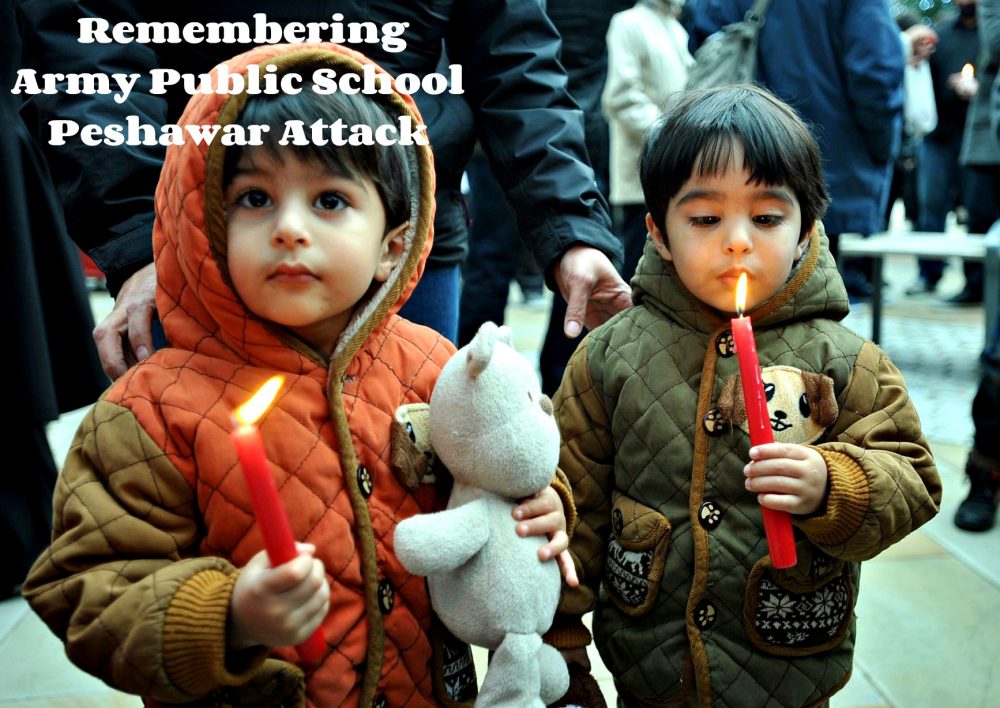
Nearly six years after the deadliest terrorist attack in Pakistan’s history, a judicial commission has shed some light on the incident that caused the martyrdom of 147 persons, including 132 schoolchildren, at the Army Public School in Peshawar.

It isn’t common in Pakistan for reports of judicial commissions formed to inquire into important incidents to be made public. Often such commissions are constituted to calm down the citizens. The government’s refusal to make public the Hamoodur Rahman Commission report on the 1971 debacle in East Pakistan that led to its separation and creation of Bangladesh is widely quoted as an example of hiding facts and keeping the people in the dark. Ironically, the report was leaked by unknown sources to the Indian media which broke the story.

However, in the case of the Army Public School (APS) carnage, the Supreme Court of Pakistan headed by Chief Justice Gulzar Ahmed ordered the government to make the report of the judicial commission public and also give its copy to the parents of the victims along with the government’s response to it. The apex court under the then Chief Justice Mian Saqib Nisar had taken suo motu notice of the incident in response to the demand by the victims’ parents and asked the Peshawar High Court in October 2018 to set up the judicial commission.

The bereaved parents, who split into at least two groups owing to differences in their ranks, had been staging protests to demand a judicial probe as they believed that the real culprits involved in it had not yet been apprehended. Even now some of them are calling it an incident of “target-killing” rather than an act of terrorism. Though the government and the Pakistan Army have done their best to console and compensate the families of those martyred and wounded through cash payments, plots of land, special education facilities and overseas trips, most of the parents have maintained that their loss was huge and unforgettable. They wanted answers to their questions as to how the army-run school was left almost undefended on that fateful day, December 16, 2014, which was the anniversary of the fall of Dhaka.

Though the government managed to arrest four men based in Peshawar and Khyber, in December 2015 for their involvement in the attack as they had allegedly facilitated the six terrorists who stormed the school, their conviction by a military court and hanging did not satisfy the parents as they argued that the masterminds of the assault had yet to be nabbed and punished. They also wanted those guilty of neglect in protecting the school to be identified and taken to task.

Senior army officials at the time of the attack had pointed out that most of the available troops in Peshawar had been sent to North Waziristan to participate in the Zarb-e-Azb military operation, the biggest operation to-date against terrorists in Pakistan launched in June 2014, and the subsequent Khyber-1 action.

However, the one-man judicial commission of Peshawar High Court, consisting of Justice Mohammad Ibrahim Khan, noted that the security guards present in the school weren’t properly positioned to engage the attackers and buy time for the Quick Response Force and Rapid Response Force, both of whom were rushed to the site of the incident. Besides, it said, the security patrol present near the school was misled by the terrorists who set their vehicle on fire to distract its attention and enter the school premises from the rear to launch the attack. Though the commission in its report praised the armed forces for offering sacrifices and winning the battle against terrorists, it nevertheless noted that “the incident of APS plagued their success stories which deserved deification.” It admitted that terrorism in Pakistan had reached its peak in 2013-14, but it “doesn’t obligate us to hold that our sensitive installation(s) and soft target(s) could be forsaken as a prey to the terrorists’ attack.”

Senior army officials at the time of the attack had pointed out that most of the available troops in Peshawar had been sent to North Waziristan to participate in the Zarb-e-Azb military operation.

The commission, which compiled the 525-page report after recording the statements of 132 persons, including 31 army and police officials, during its nearly 20 months proceedings, had also mentioned the porous border between Afghanistan and Pakistan and unrestrained movement of Afghan refugees as a reason for the entry of the terrorists who attacked the school. The report used strong words such as “infidels” for the facilitators of the attack. It also noted that some of those found guilty of negligence including army personnel had already been awarded punishment.

Concerning the widespread belief that the APS had not been properly protected despite a threat alert by the National Counter Terrorism Authority (Nacta), the commission argued that the alert was of a generic nature about terrorists seeking to target army families and academic institutions as retribution for the successful military operations, Zarb-e-Azb and Khyber-1.

Chief Justice Gulzar Ahmad made two important observations while hearing the case after submission of the judicial commission report in his court. He regretted that traditionally “lower-ranked officials” were held responsible for such incidents and those holding senior positions were spared. He made the remark when the attorney general representing the government said that every possible action was being taken against those involved in the carnage. The chief justice also observed that the militants were able to “achieve their objective”, adding that the security institutions “should have been aware of this conspiracy”.

The two masterminds of the APS attack, both based in Afghanistan and belonging to the Tehrik-i-Taliban Pakistan (TTP), were subsequently killed in US drone strikes. Khalifa Umar Mansoor aka Umar Naray, who had claimed responsibility for the attack and was seen in pictures with the six terrorists as they embarked on their journey to Pakistan, was killed on July 9, 2016, in Afghanistan’s eastern Nangarhar province. The TTP head Maulana Fazlullah, who must have been aware of the planning of the terrorist assault on APS and had defended it, was eliminated in another US drone strike on June 14, 2018, in Kunar province.

These two deaths may have brought closure to the parents and relatives of the victims and the judicial commission’s report has tried to answer some of their questions. The tragedy will, of course, continue to haunt not only the victims’ parents but also rest of the nation.

The Cat and Mouse game between Pakistan and FATF

 By Hafeez Hassanabadi 

Pakistan is on the grey list of the International Financial Action Task Force (FATF) for supporting terrorists and being involved in serious crimes of money laundering since 2018, and so far it has dodged the blacklist by tricking the United States with false promises of help to exit Afghanistan, these procrastinating tactics have become a cat and mouse game between FATF and Pakistan.

It is noteworthy to remind that Pakistan was blacklisted for two years in 2008 but somehow it made to grey list in 2010, but again it slid into blacklist for its shenanigans in 2012. Again it made to grey list in 2014. Later, it extracted itself from the grey to white list, however, in 2018 it was again put on the grey list. It shows that Pakistan has been playing cat and mouse games with the FATF, having been blacklisted twice and grey-listed three times since 2008. Despite being given the chance to improve itself, it has not broken its ties with terrorist organizations.

 If it is ready to risk being globally isolated and lose ten billion dollars annually but not ready to give up its relationship with terrorists, then it means that the terrorists and their organizations are much more beneficial to Pakistan than the annual loss of ten billion dollars. Otherwise, how can a country that is on the brink of economic bankruptcy, sunken in external debt, faces internal political turmoil, begging for alms all over the world, play games with an influential international organization like FATF for the last twelve years?

In recent days, hastily laws have been passed in the Pakistani Parliament in the pretext of fulfilling the requirements of FATF, such as spying on people without permission, imprisoning them without giving any reason, transferring them to unknown places without any warrant or FIR. These illegal laws will reinforce the pre-existing state terrorism and create difficulties for personal freedom, including freedom of expression. Pakistan, at the state level, has been treating its citizens in an illegal and inhumane manner for a long time. The rampantly disappearing thousands of Baloch, Pashtuns and Sindhis without giving any reason, getting them killed by unknown people, strewing of mutilated corpses are routine practices in Pakistan. Now that these inhuman measures have the legal backing, it is not difficult to imagine how miserable could be the life of a common man when faced with such absolute power of a state that has never bothered to respect the human rights of its citizens.

The dangerous thing is that the courts in Pakistan are not independent, which certainly reinforces the fact that the law can be molded and folded according to the will of the state, which means the laws, that are being made in keeping with the demands of FATF, are the laws that will further allow the unstrained state to increase its lawlessness by hoodwinking the international community.

If Pakistani forces can find out secular Baloch and Pashtun political activists and kill them in remote villages and mountains of Balochistan, Waziristan; then why it has failed to apprehend bin Laden, Mullah Omar, Akhtar Mansour, Dawood Ibrahim, Ranjit Singh Neta of Khalistan Zinda Bad Force, Babar Khalsa International,  Leaders of Wadhwa Singh Babar, Khabir Singh of Khalistan Zinda Bad Force, Paramjit Singh of Khalistan Commando Force,

at a time when Pakistan was listed in grey and black because of being non-compliance with FATF’s demands and remain hidden from the eyes of Pakistani agencies under the shadow of Pak army cantonments in different cities of Pakistan?

 Dozens of terrorists including Hafiz Saeed, Masood Azhar, Zakir-ur-Rehman Lakhvi are on the UN Security Council’s list of global terrorists, some of them have been arrested under the pressure of FATF, but the reality is different, they are not in any prison, rather, they’ve been provided VVIPs protocol in state-owned luxury guest houses, from where they’re continuing their terrorist activities in Afghanistan and India.

Baloch, Pashtun and Sindhi are subjected to the worst form of atrocities and brutalisation in Pakistan, and abroad, Afghanistan and Kashmir are their centers from where they are spreading their dirty mayhem all over the world which is known as global terrorism.

The intensification of their activities in Kashmir and the extent of the horror of their war in Afghanistan are no secret. There are still at least three or four Pakistani nationals among every ten terrorists who’re killed in Afghanistan every day and they belong to Lashkar-e-Taiba and Jaish-e-Muhammad fighting under the umbrella of one or another terrorist organization.

While providing training camps to Afghans themselves with all kinds of facilities, is a different topic. It is quite clear that if their terror activities have not been affected, it means the arrest of their leaders, the closure of their accounts, the confiscation of their properties are all eyewash tactics Pakistan continuously uses to further its hidden agenda of Punjabi domination.

The catchy slogan,  “Operation Zarb-e-Azb” was carried out in 2015 to eradicate terrorists but in reality, it was all about evacuating its deep state assets and transferring them to safe havens in Afghanistan, Kashmir and Balochistan so that they could be saved from any possible US drone attacks.

Pakistani army cashed in billions of dollars from US and NATO in the name of war against terrorism by a simple act of deception that it was a genuine ally against terrorism, while the homes, shops and properties of innocent Pashtuns were demolished as evidence of its performance, and anyone who raised a voice against this atrocity was selectively killed.

As a result of these atrocities Pashtun Protection Movement, PTM was formed by Pashtun nationalists. State terrorism is also on the rise in occupied Balochistan. On the one hand, hundreds of madrassas have been turned into factories for producing terrorists, on the other, the dirty act of rampant abduction of educated secular members of Baloch society is continuing. While the process of torture and dumping of mutilated dead bodies of Baloch political activists never abates. 

Those who are aware of the state-sponsored terrorism, money laundering and corruption, are well aware that Pakistan must have arranged alternatives for these terrorists before closing their accounts and businesses, exactly in the same way as Pakistan’s military generals, politicians, bureaucrats steal billions in the name of their relatives by manipulating under the pretext of business. 

The FATF does not need to go far; it should only trace the overseas assets of some of the Pakistani ex-army generals including Gen. Pervez Musharraf, Gen. Kayani,  Gen. Jahangir Karamat, Gen. Mirza Aslam Baig and Gen. Asim Saleem Bajwa how these generals have misused their power to commit every robbery and corruption –  How they’ve laundered billions of Pakistani rupees into dollars and shifted the black money abroad and how they’ve fooled the civilized world, including the United States, in the name of the war on terror by turning terrorism into a lucrative business and money earning industry?

In the process, they will also learn how Pakistani generals have turned occupied Balochistan into an “efficient” delivery corridor of billions of dollars’ drugs from Afghanistan to the rest of the world against the will of Baloch and how they’ve entrapped Afghans in a stupid war thereby exploiting and exporting their minerals resources with the fake name of Pakistani brand.

The economic interests top the list in Pakistan’s proxy war against Afghanistan, besides many other political motives behind terror catastrophes in Afghanistan that have directly benefited Pakistani security forces. That is why they are hatching each passing day a new kind of conspiracy to perpetuate their terrorism in Afghanistan.

If the FATF wants to stop Pakistan from supporting terrorism, it must ensure two more things: first, to bring to justice the heads and sponsors of those terrorists who were killed and captured in Afghanistan and Kashmir and secondly ensure that all terrorists are referred to the International Court of Justice because they’ve been designated as global terrorists by the UN Security Council.

We are convinced that if the FATF ensures the accountability of the masterminds of the terrorists in Afghanistan, Kashmir and around the world who are linked to and centered in Pakistan, at least fifty to sixty percent of all such crimes in the world could be reduced. This is what the FATF is trying to control. Otherwise, Pakistan will not only maintain the financial support and political backing of these terrorists at the state level but will also try new ways to mislead the world.

In conclusion, it is enough to say that if a state can terrorize its citizens, how can one expect it to have mercy on others? Hence, we strongly argue that blacklisting Pakistan is the best solution to contain it until it has practically given up all forms of sponsorship of terrorists.

https://balochwarna.com/2020/10/01/the-cat-and-mouse-game-between-pakistan-and-fatf/

Pakistan Is Doing Its Own Political Reengineering in Kashmir

BY KUNWAR KHULDUNE SHAHID
After condemning New Delhi for its machinations in Jammu and Kashmir, Islamabad is quietly changing the status of Gilgit-Baltistan on its side of the Line of Control.

Ahead of general elections in the Pakistan-administered region of Gilgit-Baltistan on Nov. 15, 554 candidates had submitted their nomination forms to run. India, which also claims the area as part of the broader dispute about the border between the two countries, has slammed the decision to hold the vote as an illegal annexation.

In some ways, New Delhi is right about Islamabad’s intentions. It is holding the elections as part of an attempt to mainstream the area as a fifth province of the country. The move also comes in reaction to India’s own decision last year to revoke Article 370 of its constitution, which had granted Indian-administered Kashmir some autonomy and had protected the region against any attempts from the central government to repopulate it with non-Kashmiris.

After Article 370 was revoked, Pakistan was quick to register its outrage, particularly focusing on the fate of Kashmir’s Muslims. But the rhetoric was largely designed for domestic consumption, especially given that Islamabad has engaged in demographic engineering in Kashmir as well. Following the Partition of India in 1947, Pakistan separated the region it was given to administer into two parcels—the Northern Areas (the northern part of the broader Kashmir region) and Azad Jammu and Kashmir—until a final settlement of the borders between it and India. That divide was formalized in 1974 through the Northern Areas Council Legal Framework Order. Following that order, Islamabad actively encouraged Pakistanis from the rest of the country to settle in the Northern Areas, which tilted the region’s demographics away from its Ismaili Shiite population.
Further, although Pakistan’s Azad Jammu and Kashmir has enjoyed some token autonomy over the past 73 years, the Northern Areas have been ruled from the center, with Islamabad maintaining the area’s legal status quo ostensibly to protect its claim on the entirety of Kashmir if there is ever a settlement with India.
Over the course of that history, Islamabad has often faced dissent from protesters in the Northern Areas demanding that it be turned into an official fifth province and granted all the associated rights. Faced with growing demands from the locals, in 2009, Pakistan renamed the Northern Areas “Gilgit-Baltistan” and gave the region its first legislative assembly. Islamabad also created a legal framework to potentially provide anyone living in Gilgit-Baltistan, including those from outside of the region, with formal residency there. More reforms, supposedly to give residents of Gilgit-Baltistan greater say in their governance, came in 2018. But when Islamabad maintained its tight-fisted control over Gilgit-Baltistan anyway, protests ensued.
The protests among Gilgit-Baltistan nationalists have been met with pushback from Kashmiri nationalists on both sides of the Line of Control between the Indian- and Pakistani-controlled parts of the region, who have condemned plans to alter the status of the Pakistani-administered territories. In 2016, one prominent figure, Syed Ali Shah Geelani, wrote a letter to then Pakistani Prime Minister Nawaz Sharif, calling the plans to elevate Gilgit-Baltistan a “disaster” for an independent Kashmir that includes all of the disputed regions. Sayyid Abdullah Gilani, another prominent Kashmiri nationalist, has similarly urged Pakistan to reconsider the upcoming election.
But with locals in Gilgit-Baltistan increasingly forceful in their anger—and with Pakistan looking for an opportunity to needle India after India’s own moves in Kashmir—now must seem like an opportune time for Islamabad to mainstream the area as a province.

Of course, the growing nationalist movement in Gilgit-Baltistan was only one factor in Pakistan’s decision to move forward with the vote. Another came from China.
In 2015, Beijing set in motion the transformation of Gilgit-Baltistan when it formally inaugurated the now $87 billion China-Pakistan Economic Corridor (CPEC). The corridor, meant to connect China’s Xinjiang with Pakistan’s coastline in Baluchistan, has to pass through Gilgit-Baltistan. The CPEC is said to be China’s largest-ever overseas investment, and Beijing does not want to see it embroiled in the protracted dispute over Kashmir.
The ongoing Chinese-Indian conflict in Ladakh, an Indian-administered region along the disputed Indian-Chinese border, has led to further militarization of the Pakistani-Indian dispute. However, China’s muscle-flexing to establish itself as the region’s stand-alone power may suggest that Beijing is warning India off any tussles with Pakistan. China is helping develop businesses and infrastructure in Gilgit-Baltistan, most notably the Diamer-Bhasha Dam. The growing Chinese presence has reassured Islamabad that Beijing will have its back.
https://foreignpolicy.com/2020/10/12/gilgit-baltistan-election-pakistan-india-kashmir/

Why Pakistan will regret opening the door to radical Islamist parties

MIHIR SHARMA
Pakistani politics may see a three-way tug-of-war between a middle-class populist, an aggressive military establishment and radical Islamists.

 Across Asia, populists and authoritarians have taken advantage of the pandemic to go after their political opponents. Last week, Pakistan’s already frail opposition was dealt a further blow: A case was filed against the former prime minister and stringent critic of the military, Nawaz Sharif, for “sedition,” while former president Asif Ali Zardari was formally charged with corruption. Sharif and Zardari lead different parties and are old antagonists; all they have in common is that they are now tentative and distrustful allies against the army-backed government of Prime Minister Imran Khan.


It isn’t hard to see why the Pakistani state has escalated its attacks on the opposition. Zardari, Sharif and the Islamist cleric-politician Fazlur Rehman — three very unlikely fellow travelers — recently launched a joint movement to unseat the government. In exile in London, Sharif has delivered a series of belligerent, unrestrained speeches in which he has accused the military of being a “state behind the state” and of manipulating the election of 2018 that brought Khan to power.
That seems to have been the last straw for Pakistan’s military establishment. Sedition cases weren’t just registered against Sharif but also his daughter and heir-apparent Maryam, as well as 44 other leaders of his Pakistan Muslim League. Sharif’s brother Shahbaz, until recently the chief minister of Pakistan’s populous Punjab province, has also been arrested. Shortly afterwards, Pakistan’s media regulator banned speeches or interviews with “fugitives,” clearly meant to prevent the re-broadcast of Sharif’s speech or others like it.
Others, including ministers from Khan’s party, have said that criticism of the military in Pakistan is unconstitutional. Imran Khan’s own response has been to claim that Sharif — thrice elected prime minister of Pakistan — is an agent of the Indian government.
The Pakistani military has some hard thinking to do. Most of its choices in the past three or four years have been bad ones. First it decided to prop up Khan and his party. As the Pakistani security analyst Ayesha Siddiqa points out, Khan’s government has failed on at least two counts that matter to his uniformed backers. It has not been able to ensure that funds continue to flow into Pakistan’s fragile, externally dependent economy. Meanwhile, foreign-policy grandstanding, including cozying up to his fellow populist, Turkish Prime Minister Recep Tayyip Erdogan, seems to have irritated Pakistan’s most reliable supporters in Riyadh and Beijing.
In time, too, the military may discover that Khan himself is not quite as biddable as they would like. Earlier this month, in response to Sharif’s claim that the then-chief of military intelligence had asked him to quit as prime minister in 2014, Khan claimed that, in Sharif’s position, he would have demanded the spymaster resign for making the threat.
While a bit over the top, Khan’s boast is a reminder that the prime minister has had a proper populist’s ego ever since his days as a star cricketer. He has claimed that he himself is the personification of Pakistani democracy and that the army is quietly obedient to him because of his clean image. One wonders if the only person in the Pakistani establishment who doesn’t believe Imran Khan is beholden to the military is Khan himself.
On Oct. 16, the joint opposition will face its first test — a rally in Sharif’s Punjabi heartland. It is a long road back to power for Sharif’s party and Zardari’s; the former has lost Punjab and the latter its own power base in Pakistan’s only global city, Karachi. Yet it won’t be easy to root for the new opposition alliance, either. It is being led, after all, by the radical Fazlur Rehman, a canny cleric-politician who has openly said he shares the objectives (if not the dedication to violence) of the Taliban.
While Pakistan’s Islamist parties have been junior parties in government before and can draw large numbers of demonstrators, they have always been electorally marginal. Now, given that the mainstream political parties are unpopular and enfeebled, this might be the moment that Rehman and his colleagues have been waiting for. Egypt has shown us how hard it is for military dictators to fight political Islamism. And in India, Hindu nationalists were similarly marginal to electoral politics until they became part of the alliance, 40 years ago, that defeated the authoritarian Indira Gandhi.
If mainstream parties continue to fade, Pakistani politics may well see a three-way tug-of-war between a middle-class populist, an aggressive military establishment and radical Islamists. That’s in nobody’s interest — not even the Pakistan army’s.
https://theprint.in/opinion/why-pakistan-will-regret-opening-the-door-to-radical-islamist-parties/521686/

#FATF regional group says Pakistan’s measures ‘not sufficient’ against terror financing


The Asia-Pacific Group has kept Pakistan in its 'Enhanced Follow-up' list, saying the country has improved full compliance on only two of the 40 FATF recommendations.

Noting that Pakistan’s measures against money laundering and terror financing “is not yet sufficient to justify a re-rating”, a regional affiliate of the Financial Action Task Force on Monday retained the country on its ‘Enhanced Follow-up’ list, according to a media report.
The development came only a few weeks ahead of the meeting of the FATF — the Paris-based global money laundering and terrorist financing watchdog — to decide on Pakistan’s grey list status.
The first Follow-Up Report on Mutual Evaluation of Pakistan released by the Asia-Pacific Group (APG) underlined that the country’s progress on the 40 FATF recommendations on the effectiveness of anti-money laundering and combating financing terror (AML/CFT) system largely remained unchanged — non-compliant on four counts, partially compliant on 25 counts and largely compliant on nine recommendations, the Dawn News reported.
Pakistan has improved its full compliance on only two of the 40 FATF recommendations, the APG report noted.
Pakistan will remain in enhanced (expedited) follow up, and will continue to report back to the APG on progress to strengthen its implementation of AML/CFT measures, the APG concluded in its 12-page report.
The APG Mutual Evaluations is a peer-review system to determine whether countries meet the compliance standards for money laundering and terror financing.
After a country submits a Mutual Evaluation report, APG members can decide to place a member either through regular or enhanced follow-up. While a regular follow-up means just biennial reports, a country put under enhanced follow-up has to send four reports of compliance the following year.
The APG report noted that though the country has taken measures on recommendations pertaining to money laundering and terror financing, the progress is not yet sufficient to justify a re-rating .
Pakistan had requested for re-ratings on three areas declared partially compliant by the APG in October last year. The request was accepted on one count and rejected on two due to “insufficient” progress to the satisfaction of international experts.
The 41-member APG in August last year had downgraded Pakistan’s status to ‘Enhanced Follow-up’ category from ‘Regular Follow-up’ over technical deficiencies to meet normal international financial standards by October 2018. ‘Enhanced follow-up’ is an intensive process of correction that deals with members with significant deficiencies (for technical compliance or effectiveness) in their AML/CFT systems. The APG’s report came ahead of the virtual FATF plenary scheduled for October 21-23 during which it would be decided if Pakistan should be excluded from its grey list, based on a review of Islamabad’s performance to meet global commitments and standards on fight against money laundering and terror financing (ML&TF).
FATF had placed Pakistan on its grey list in June 2018 and asked Islamabad to implement a plan of action to curb money laundering and terror financing by the end of 2019 but the deadline was extended later on due to COVID-19 pandemic.Seeking to wriggle out of the FATF’s grey list, debt-ridden Pakistan in August imposed financial sanctions on 88 banned terror groups and their leaders, including 26/11 Mumbai attack mastermind and Jamaat-ud-Dawa (JuD) chief Hafiz Saeed, Jaish-e-Mohammed (JeM) chief Masood Azhar and underworld don Dawood Ibrahim.In February, the FATF gave Pakistan, which missed 13 targets, a four-month grace period to complete its 27-point action plan against ML&TF committed with the international community.
In its third plenary held virtually in June, the FATF decided to keep Pakistan in the grey list as Islamabad failed to check flow of money to terror groups like Lashkar-e-Taiba (LeT) and Jaish-e-Mohammed (JeM).
With Pakistan’s continuation in the ‘grey list’, it is increasingly becoming difficult for the country to get financial aid from the International Monetary Fund (IMF), World Bank, Asian Development Bank (ADB) and the European Union, thus further enhancing problems for the nation which is in a precarious financial situation.
The APG report noted that Pakistan considered 12 terrorist organisations, including eight UN-designated entities of concern (EOCs), for threat profiles but only in terms of inflows and not outflow of funds to support terrorist activities.
It also noted that the National Risk Assessment (NRA) 2019 has confirmed that abuse of non-profit organisations for terror financing purposes continued to pose a significant threat both domestically and externally and that charities and fund-raising was a source of funds for almost all EOCs.
https://theprint.in/world/fatf-regional-group-says-pakistans-measures-not-sufficient-against-terror-financing/521884/

Sunday, October 11, 2020

Video - Trump and Biden tied in Iowa as Biden leads in Michigan and Nevada

Video - #DailyShow #TrevorNoah #ColumbusDay What’s with Columbus Day? | The Daily Social Distancing Show

Video - How America Bungled the Plague | NYT Opinion

Video - #US #Trump - How has COVID-19 changed the US campaign?

EDITORIAL BOARD #NYT - Elect Joe Biden, America

Joe Biden has vowed to be a president for all Americans, even those who do not support him. In previous elections, such a promise might have sounded trite or treacly. Today, the idea that the president should have the entire nation’s interests at heart feels almost revolutionary.

Mr. Biden has also vowed to “restore the soul of America.” It is a painful reminder that the country is weaker, angrier, less hopeful and more divided than it was four years ago. With this promise, Mr. Biden is assuring the public that he recognizes the magnitude of what the next president is being called upon to do. Thankfully, he is well suited to the challenge — perhaps particularly so.
Kathleen Kingsbury, acting editorial page editor, wrote about the choice to endorse Joe Biden for president in a special edition of our Opinion Today newsletter. You can read it here. In the midst of unrelenting chaos, Mr. Biden is offering an anxious, exhausted nation something beyond policy or ideology. His campaign is rooted in steadiness, experience, compassion and decency.
A President Biden would embrace the rule of law and restore public confidence in democratic institutions. He would return a respect for science and expertise to the government. He would stock his administration with competent, qualified, principled individuals. He would stand with America’s allies and against adversaries that seek to undermine our democracy. He would work to address systemic injustices. He would not court foreign autocrats or give comfort to white supremacists. His focus would be on healing divisions and rallying the nation around shared values. He would understand that his first duty, always, is to the American people.
But Mr. Biden is more than simply a steady hand on the wheel. His message of unity and pragmatism resonated with Democratic voters, who turned out in large numbers to elevate him above a sprawling primary field.
His team has put together a bold agenda aimed at tackling some of America’s most pressing problems. The former vice president is committed to working toward universal health care through measures such as adding a public option to the Affordable Care Act — which he played a significant role in passing — lowering the age for Medicare eligibility to 60 years old and cutting the cost of prescription drugs. He recognizes the fateful threat of climate change and has put forward an ambitious, $2 trillion plan to slash carbon emissions, invest in a green economy and combat environmental racism.
Mr. Biden will not be morphing into an ideological maximalist any time soon, but he has acknowledged that the current trifecta of crises — a lethal pandemic, an economic meltdown and racial unrest — calls for an expanded governing vision. His campaign has been reaching out to a wide range of thinkers, including former rivals, to help craft more dynamic solutions. In midsummer, he rolled out an economic recovery plan, dubbed “Build Back Better,” with proposals to bolster American manufacturing, spur innovation, build a “clean-energy economy,” advance racial equity and support caregivers and educators. His plan for fighting the coronavirus includes the creation of a public health jobs corps. Progressives who want even more from him should not be afraid to push. Experience is not the same as stagnation.
Mr. Biden has a long and distinguished record of accomplishment, including, as a senator, sponsoring the landmark Violence Against Women Act of 1994 and, as vice president, overseeing the American Recovery and Reinvestment Act of 2009, passed in response to the Great Recession. In a 2012 interview on “Meet the Press,” his remarks in support of gay marriage — which blindsided the Obama White House and caused a public kerfuffle — proved a watershed moment for the cause of equality. In 1996, Mr. Biden had voted as a senator in favor of the Defense of Marriage Act, which prohibited federal recognition of same-sex marriages, making his evolution on the issue particularly resonant.
He has an unusually rich grasp of and experience in foreign policy, which, as traditionally understood, has not played a central role in the presidential race — though the pandemic, the climate crisis, a more assertive China and disinformation wars against the American public argue strongly that it should. The next president will face the task of repairing the enormous damage inflicted on America’s global reputation.
Mr. Biden has the necessary chops, having spent much of his career focused on global concerns. He not only took on thorny diplomatic missions as vice president, he also served more than three decades on the Senate Foreign Relations Committee. Aware that an “America First” approach in reality amounts to “America alone,” he would work to revive and refurbish damaged alliances. He has the respect and trust of America’s allies and would not be played for a fool by its adversaries.
Certainly, not all of Mr. Biden’s foreign policy decisions through the decades look sage in hindsight, but he has shown foresight in key moments. He fought a rear-guard action in the Obama White House to limit the futile surge in Afghanistan. He was against the 2011 intervention in Libya and skeptical of committing American troops to Syria. He opposed renewing the Foreign Intelligence Surveillance Act in 2007 and 2008 because it gave the government too much power to spy on Americans. He’s supported closing the prison at Guantánamo Bay. Little wonder that he has the backing of a who’s who of the foreign policy community and national security officials from both parties.
Mr. Biden is not an ideological purist or a bomb-thrower. Some will see this as a shortcoming or hopelessly naïve. Certainly, it’s unlikely that if Republicans retain control of the Senate, their leader, Mitch McConnell, will abandon his policy of fanatical obstructionism of any Democratic president.
That said, as the emissary often dispatched by President Barack Obama to deal with Republican lawmakers during tough legislative fights, Mr. Biden has intimate experience with the partisan gridlock crippling Congress. He knows how the levers of power work on both ends of Pennsylvania Avenue, and he has longstanding relationships with members from both parties. More than any of this cycle’s other presidential hopefuls, he offered weary voters a chance to see whether even a modicum of bipartisanship is possible.
He is also offering a glimpse of the Democratic Party’s future in his choice of running mate, Senator Kamala Harris of California. Ms. Harris would become a number of firsts — a woman, a Black person and an Asian-American — as vice president, adding history-making excitement to the ticket. A former prosecutor, she is tough, smart and can dismantle a faulty argument or political opponent. She is progressive, but not radical. In her own presidential campaign, she presented herself as a unifying leader with center-left policy proposals in a mold similar to Mr. Biden, albeit a generation younger. Mr. Biden is aware that he no longer qualifies as a fresh face and has said that he considers himself a bridge to the party’s next generation of leaders. Ms. Harris is a promising step in that direction.
If he wins election, Mr. Biden will need to take his governing agenda to the people — all of the people, not just his party’s loudest or most online voices. This will require persuading Americans that he understands their concerns and can translate that understanding into sound policy.
Mr. Biden has a rare gift for forging such connections. In his younger days, he, like so many senators, could be in love with the sound of his own voice. Time and loss have softened his edges. He speaks the language of suffering and compassion with a raw intimacy. People respond to that, across lines of race and class — ever more so in this time of uncertainty. The father of the police-shooting victim Jacob Blake described his phone conversation with Mr. Biden as full of “love, admiration, caring,” in one of many recent examples of the former vice president’s hard-earned empathy.
Mr. Biden knows that there are no easy answers. He has the experience, temperament and character to guide the nation through this valley into a brighter, more hopeful future. He has our endorsement for the presidency.
When they go to the polls this year, voters aren’t just choosing a leader. They’re deciding what America will be. They’re deciding whether they favor the rule of law, how the government will help them weather the greatest economic calamity in generations, whether they want government to enable everyone to have access to health care, whether they consider global warming a serious threat, whether they believe that racism should be treated as a public policy problem.
Mr. Biden isn’t a perfect candidate and he wouldn’t be a perfect president. But politics is not about perfection. It is about the art of the possible and about encouraging America to embrace its better angels.
https://www.nytimes.com/2020/10/06/opinion/joe-biden-2020-nytimes-endorsement.html

#NayaDaur #NadiaJameel Nadia Jamil | Sania Saeed, Mohsin Sayeed And Raza Rumi Pay Tribute To Their Friend

Video Report - #NayaDaur - Is Martial Law Possible In Pakistan? | Suhail Warraich Explains Political Situation

Pakistan's Former President Asif Zardari shifted to hospital after feeling unwell

 Former president and Pakistan Peoples Party (PPP) Co-chairman Asif Ali Zardari has been shifted to hospital after his condition deteriorated.

According to sources, doctors are conducting medical check-up and various tests of former President Zardari.


It may be recalled that Bilawal Bhutto had said in a press conference last year that doctors had instructed his father to undergo an important test for heart, while the bail application filed by Farooq H.Naik said that three stunts have been inserted in the heart of former President Zardari.

Zardari has a disease called  ischemic , in this disease heart does not get enough blood and oxygen.

#Pakistan - Rootless PTI regime discrediting country, demolishing economy and discouraging meritocracy, says Bilawal Bhutto Zardari


Chairman Pakistan Peoples Party Bilawal Bhutto Zardari has said that incompetent and selected government of Imran Ahmed Niaz become a burden on the country as well its masses and the economy hence it should step down before the public ire kicks this dispensation into the dustbin of the history.

Presiding over a meeting of Party’s Karachi Coordination Committee at Bilawal House today, the PPP Chairman said that PDM Jalsa on the occasion of anniversary of Shuhda-e-Karsaz in Karachi would be a referendum against the puppet regime from the country’s commercial capital on October 18. “The Imran regime imposed on the people through stolen mandate has destroyed everything in the country and people are fed up with its anti-people policies of promoting unemployment, inflation, diplomatic isolation and economic assassination of Pakistan,” he added.

He said that PTI regime has no roots among the people and it has been selected to demolish and discredit the country and discourage meritocracy in every field.

Bilawal Bhutto Zardari asked the KCC to facilitate the people of Karachi to reach the venue of the public meeting without any hindrances and organize the Party’s and other democratic workers of PDM for better arrangements of the mammoth gathering.

The KCC Coordinator Waqar Mehdi, PPP Karachi Division President Saeed Ghani, MNA Qadir Patel, Lal Bux Bhutto, Najmi Alam, MPA Sajid Jokhio, Khalid Lateef, Ghulam Mohammed Samoon and others were present at the meeting. 

https://www.ppp.org.pk/pr/23899/

Fair trial concerns plague world’s largest death row in Pakistan

By Asad Hashim & Asad Hashim
Courts handed out record 632 death sentences last year in a country where the criminal justice system lacks an international standard, legal experts say.
When the judge read out a sentence of death, 17-year-old Muhammad Iqbal could scarcely believe it, and reached out for his brother.
As guards converged upon him to escort him away from the courtroom and back to prison, the teenager was desperate to speak to his family.
“The words ‘sentenced to death’, I didn’t know much at that time about appeals and everything else,” he recalls, sitting on a rope bed in the winter sunshine in his native Mandi Bahauddin, in central Pakistan. “I thought they were going to execute me [right then].
“My brother was in the courtroom at the time of the verdict, I called to him, to see him one last time and to say goodbye to him.”
Iqbal, now 39, would spend 21 years on death row before a court ruled earlier this year that he had been sentenced incorrectly, commuting his sentence and releasing him on June 30.
During his trial, where he was convicted for murder, he says he was largely unaware of how the legal proceedings functioned, a concern that is emblematic of fair trial concerns in a country where the death penalty is applied widely, according to lawyers and activists.
Pakistan is one of 56 countries worldwide who retain the use of the death penalty in law and practice. In 2019, it continued to hold the world’s largest recorded death row population, with more than 4,225 people awaiting execution, according to rights group Amnesty International.
Pakistan’s penal code carries the death penalty for at least 33 crimes, ranging from murder, gang rape and kidnapping to blasphemy, adultery, treason and various narcotics charges. The Pakistani government is currently considering a proposal to expand the use of the penalty and to add public hanging as a form of execution.
“The reason [for expanding the scope for rape cases] is that there is no deterrence,” says Faisal Javed Khan, a senator for the ruling Pakistan Tehreek-e-Insaf party. “We want severe punishments for rapists because there is no deterrence whatsoever.”
In 2019, Pakistan held the record for the most death sentences handed out by its court system, with more than 632 convicts sentenced to death, which is 27.3 percent of all death sentences worldwide, according to Amnesty’s data.
For prisoners like Iqbal, accused of murder, the problems begin right from the moment of arrest.
‘Needed to escape that hell’
“They tortured me, telling me to confess to the crime,” he says, of the days after he was arrested by police in connection with a robbery near his home in which a man was killed.“Under torture, I confessed that I had done it, I was so desperate that I accepted responsibility for it. I just needed to escape that hell somehow.”Pakistani police deny the use of torture officially, but rights groups have documented its routine use by police across the country, particularly in cases of violent crime.
Iqbal, whose family owns a small farm where they grow rice, wheat and fodder for their five buffaloes, did not have the resources, or knowledge of the justice system, to hire a competent lawyer, and his trial was conducted swiftly, taking no note of his allegations of a confession obtained under torture.
“I had […] the kind of lawyer who just files 13 bail applications a day. My father didn’t have the money to hire anyone else,” he says.
“He never met me. I only saw him many months later during a hearing, to know that this man is my lawyer.”
Access to the right lawyer, in a justice system like Pakistan’s, where a case depends greatly on proceedings at the trial court level, can be the difference between life and death, say experts.“It really does make a huge difference – if you have a committed lawyer or if you have a lawyer who knows the judges, which comes with a heavy price tag,” says Reema Omer, South Asia legal adviser for the International Commission of Jurists (ICJ).“Who you are plays a huge role in the kinds of lawyers you will get, how quickly the case is decided, the kind of facilities you get in prison, and whether you are even aware of your rights as an accused or a convict.”The Pakistani legal system mandates the right to a legal defence for those who cannot afford lawyers, but does not state guidelines or qualifications for lawyers to be appointed by the state.“The majority of people on death row are from indigent backgrounds and so they have state-appointed counsels,” says Sarah Belal, executive director of legal aid organisation Justice Project Pakistan (JPP).
“That state counsel has no money to do investigations, he never meets you, he gets the file a few days before [the hearing] and goes and argues the case. There is no minimum standard applied for what effective legal representation means.”
For many death row convicts, Iqbal says, that results in a situation where they have never spoken to their lawyers during the trial, and are often unaware of what the charges against them are, or their fundamental legal rights.“There are some people who don’t even know when their case is being heard,” says Iqbal, of prisoners he was jailed with. “Elderly parents, their child in jail, who have no idea that there is a hearing or that they need to get a lawyer.”At one stage, Iqbal says, his appeal had been suspended pending a response from a lower court, but his lawyer told his father that the appeal had been rejected.
For almost a decade, as he remained on death row, Iqbal believed that this was the case, and his family pursued the matter no further.
‘Felt my life had ended’
“In Punjabi we have a saying: ‘Even the most friendly dog, if you tie it up it will go mad’,” says Iqbal, of the mental toll that being on death row takes.
“It makes a man more irritable and makes you very frustrated. Any person who has been a victim of injustice, he starts to think that even those working for his betterment are trying to cheat him.”Death row prisoners in Pakistan are held in cells that are, on average, roughly eight feet (2.4 metres) wide by 10 feet (three metres) long, with at least five prisoners held to a single cell.
Conditions, Iqbal says, are difficult.
“There was just one daal, [and] it was black as night. Other than two times in the week … that was all that was cooked,” he says.
“Sometimes I would even find insects crawling in it.”
Pakistani prisons have separate sections for those sentenced to death.
“We would be shut in the cell for 23 hours a day,” says Iqbal, who was incarcerated in three different prisons during his 22 years in jail. “Half an hour in the morning and half an hour in the evening, we would be let out, but with handcuffs on.”
The afternoons, he says, were the hardest.
“In my experience, from the morning until the early afternoon, you are passing your life in routine. You can [pass the time], or speak to other people, or someone new comes in or someone leaves.”
He pauses, his eyes darting from left to right.
“But when the jail is shut, and no one is entering or leaving, that’s a very heavy time for a convict. You spend it just thinking. Thinking about where you are trapped, what will happen to you.”
In 2016, a prison officer came to his cell on one such afternoon, informing him that death warrants had been issued for his execution, in four days’ time. He was swiftly shifted to another prison, one equipped with a gallows to carry out the sentence.“I had fought so many cases, so many writ [petitions], so many appeals, thinking that through some appeal or writ my voice would be heard. I felt like my life had ended.”He was escorted to a small cell, where he was alone, and under strict guard to prevent him from doing any possible harm to himself. “The time passed very slowly,” he says. “Each day felt like a year. It was very difficult. The nights felt very long, and the days felt long as well.”
Hours before he was due to be executed, the Supreme Court issued a stay of execution, as it considered a petition lodged by his lawyers.
‘I had stopped climbing’
Pakistan’s Supreme Court is the court of final appeal in the country’s justice system, and hears dozens of cases a day. Lawyers and activists say the country’s overloaded justice system places a huge burden on the higher courts to overturn trial court verdicts that may be faulty due to inadequate police investigation, faulty evidence or incompetent legal representation.
Omer, the adviser at the ICJ, says the legal system does not have clear sentencing guidelines or standards for when the death penalty is to be applied.
“Judges have taken polar opposite positions, with some judges who believe that the death penalty should be the norm in the murder cases, while other judges have said it should only be applied in serious aggravating circumstances,” she says.
“It’s very problematic because the justice system should be a lot more consistent and you should be able to predict the penalty someone is given. In death penalty cases, it’s crazy, because it’s a case of someone’s life.”
Belal, of JPP, agrees that there is a lack of standardisation of how the law is applied in capital cases.
“Trial court is like breakfast, it’s like the most important meal of the day. They are the most important forum. They have the time and ability to hear all the evidence and call all the witnesses. You need to invest more in ensuring that we have better standards for the trial court.”
The data on criminal proceedings in capital cases appears to bear out the assertion that trial courts in Pakistan often get it wrong. According to a 2019 report by rights group Reprieve, prepared in consultation with Pakistani legal aid organisation the Foundation for Fundamental Rights (FFR), an overwhelming majority of capital cases are either overturned or commuted on appeal at the Supreme Court.
From a dataset of 310 capital crime cases heard by the Supreme Court between 2010 and 2018, Reprieve and FFR found that 73 percent resulted in acquittals, commutations or orders for a review by the lower court.
In 2018, the latest year included in the dataset, the Supreme Court upheld the death penalty in only three percent of cases.
For Iqbal, whose sentence was commuted in February ahead of his release later in the year, the intervention of the high court was something he could scarcely believe.
“My mind couldn’t accept it, that my case had really changed,” he says. “Because look, a man is constantly beaten down, beaten down, and he keeps climbing, keeps climbing in the belief that he will reach the top of the mountain eventually.
“At that time, I was exhausted, and I had stopped climbing.”
He spent his last day in prison on June 30, before he walked out into freedom.
One thing, he says, stood out for him, and continues to fascinate him every day.
“It was amazing, to see the open sky. I have spent most of my life within a few feet, and when I came out I felt like I was seeing the open sky for the first time in my life.”
https://www.aljazeera.com/features/2020/10/9/fair-trial-concerns-plague-worlds-largest-death-row-in-pakistan

Saturday, October 10, 2020

#DailyShow #TrevorNoah What the Hell Happened This Week? - Week Of 10/5/2020 | The Daily Social Distancing Show

Video Report - #Coronavirus #AntigenTest #RapidTesting Coronavirus rapid antigen testing: Major step forward or false hope? | COVID-19 Special

Video Report - #Coronavirus #Covid19 #Pandemic Coronavirus update: European countries scramble to stop second wave

Video Report - North Korea holds rare military parade, Kim Jong Un addresses

Video Report - New details emerge about plot to kidnap Michigan governor

Video - Chairman PPP Bilawal Bhutto Zardari addressing a press conference at Media Cell Bilawal House

Power Play, Morality and … a TikTok Ban in Pakistan

By Abhijnan Rej 

Islamabad’s decision to ban the popular Chinese app comes amid deepening political turmoil in the country.
Reuters reported on October 9 that Pakistan has blocked the popular social media app TikTok in the country. It quotes a statement from the Pakistan Telecommunications Authority (PTA) as saying that the decision was taken “[i]n view of number of complaints from different segments of the society against immoral and indecent content” on the app. With this decision, Pakistan joins arch-rival India which blocked TikTok, along with a number of other apps of Chinese origin, on national-security grounds late June this year. The Trump administration too tried to ban the app, along with WeChat, on August 7 if they were not sold to an American firm by ByteDance and Tencent, respectively, within 45 days. A federal judge has blocked the ban from coming to effect.
Over a short span of three months, the short-video app famous for carrying dance videos has unexpectedly come under geopolitical spotlight. While India and the United States’ push was explicitly tied to both countries’ tense relationships with China, Islamabad and Beijing have long considered each other “iron brothers.” Pakistan, arguably, is China’s closest military ally, as both countries seek each other’s help to maintain sustained strategic pressure on India. The China-Pakistan Economic Corridor (CPEC) is the flagship project of the Belt and Road Initiative (BRI).
What drove Pakistan to ban TikTok knowing well that China would not be thrilled with the decision is not clear. The public morality argument is superficially plausible given the country’s often quixotic attempts at regulating digital obscenity in the past. But the timing of the ban is interesting, coming as it does as China inches toward declaring the disputed autonomous province of Gilgit-Baltistan as full-fledged province. Pakistan has also supported China’s position on the Muslim-majority Xinjiang region. A bold move for a country that has often attempted to position itself as a leader in the Islamic world, it most recently did so at the United Nations General Assembly. China’s military pressure over India in the past five months has also taken heat off Pakistan. Since August last year, New Delhi had repeatedly signaled it could adopt a much tougher stance on Kashmir Pakistan administers. Finally, CPEC seems to be firmly back on track.
While China’s reaction to the ban in the coming days will be telling –China has called India’s “selective and discriminatory,” going against World Trade Organization rules – it is important to keep in mind that the ban takes place amid growing political turmoil in Pakistan. As things stand now, the opposition seeks to, simultaneously, bring the Imran Khan government to its knees as well as end the military’s meddling in domestic affairs. If the heat on Khan and his military backers continue, it is likely the Pakistan Army will have to draw support from the Sunni-Islamic clergy in that country – a powerful constituency that has often, though not always, worked hand in glove with it. That, in turn, would mean making some concessions to the clerics. Going after apparently immoral apps and websites would be an easy way by which the Khan-military “hybrid government” could placate powerful religious constituencies as it seeks to consolidate its base.
Keep in mind that the opposition alliance of 11 parties is being led by Fazlur Rehman, a firebrand Islamist cleric turned politician, not exactly known for his progressive views. By playing the morality card in front of the public, Khan could hope to deflect some of the heat off him from Rehman. Do also note that apparently Khan himself has taken the lead on the TikTok decision, directing “the telecoms authorities to make all efforts to block vulgar content,” as Reuters reported.
Of course, as the PTA itself has noted, the door is far from permanently shut on TikTok. If the app complies with its demands to remove content deemed improper by the regulator, it could be allowed to operate again. So, if China is keen to play along in this game of thrones in Pakistan on Khan and the military’s side, it could very well give them what they what they want so that they keep their grip on power. Or not. Much depends on conversations between Khan, the Pakistan Army and China that are surely on in the background, and the give-and-take at the end of the day.
Finally, there’s the possibility that by banning TikTok, Khan hopes to take an increasingly popular social-media app off the hands of the opposition as country-wide protests start this month. But again, it seems like an extremely risky move especially if he hasn’t secured Beijing’s blessings.

#Pakistan: Is Political Change in the Air?

Mohammad Taqi
@mazdaki
The opposition, particularly Nawaz Sharif, is going after the Imran Khan government and Pakistani army all guns blazing.
Over the past two weeks, Pakistan’s political opposition has gone after Prime Minister Imran Khan and his benefactor, the Chief of Army Staff (COAS) General Qamar Javed Bajwa, with all guns blazing.
The three-time former premier, Nawaz Sharif, has unequivocally indicted General Bajwa and the incumbent and former Director General Inter-Services Intelligence (DG ISI) – Generals Faiz Hamid Chaudhry and Zaheer-ul-Islam, respectively – for blatantly meddling in political affairs. The former prime minister named the two generals for first, attempts to topple his government through orchestrated street protests, and failing that, by influencing the judiciary and the National Accountability Bureau (NAB) to disqualify him from holding the high office. He called them out for subsequently installing Imran Khan as their puppet prime minister, after rigging the 2018 election in his favour.
Sharif fired the first salvo at an All Parties Conference (APC) hosted by the Pakistan Peoples Party (PPP) of Asif Ali Zardari and Bilawal Bhutto-Zardari. They were joined by nationalist Pashtun and Baloch parties, the Pashtun Tahaffuz Movement (PTM), and above all, the Jamiat-e-Ulama-e-Islam (JUI) of the cleric-politician Maulana Fazl-ur-Rehman, who had led a march onto Islamabad, a year ago with the intent to topple the Imran-Bajwa hybrid martial law regime. The maulana failed at the time, simply because both the PPP and Pakistan Muslim League-Nawaz (PMLN) opted to play it safe in the end and had jumped off the wagon. The APC formed an alliance dubbed Pakistan Democratic Movement (PDM), issued a 26-point charter of demands, and resolved to start street protests shortly.
What has changed since the maulana’s fizzled out march? I had noted here that to topple the Imran-Bajwa regime, the maulana would need help from the PMLN and to a lesser extent, the PPP. But the two had left him hanging simply because their priorities, at the time, were different. The PPP has the provincial government in its power base, Sindh, and did not wish to lose that, lest it may not be able to return to power. It is still lukewarm to the idea of mobilising on the street for the same reason. The PMLN had abandoned the maulana because there is a sizeable faction within its leadership, headed by the party president and current opposition leader in the National Assembly, Shehbaz Sharif, which pushed for a rapprochement with the army brass in the aftermath of the 2018 elections.
Nawaz Sharif, the Quaid or supreme leader of his party, had ostensibly allowed his brother Shehbaz to pursue that track. Whether it was a good cop/bad cop routine, or the younger Sharif’s chance to appease, he gave it his best shot – for two years, no less – but had little to show in return. In fact, instead of the army backing off from using the courts and the NAB to hound and arrest the Sharifs and other PMLN leaders, remained relentless. Shehbaz Sharif was arrested days after the recent APC.
The army through its civilian fig leaf, Imran Khan had recently pushed a set of laws through the parliament, which, prima facie, are supposed to bring Pakistan into compliance with the requirements of the anti-terror financing watchdog, the Financial Action Task Force (FATF). But Imran Khan’s Pakistan Tehrik-e-Insaf (PTI) rammed these bills through the parliament, despite the opposition’s protests, with verbiage that not only immixes terror financing with white-collar crime, but gives the notorious NAB and the intelligence agencies sweeping powers to go after the suspects.
The opposition had initially defeated these bills in the parliament’s upper house, the Senate, where it has a majority. The Imran-Bajwa regime circumvented that roadblock by steamrolling the legislation in a joint session of the National Assembly and the Senate. But not leaving anything to chance, the junta hounded dozens of the opposition parliamentarians and forced them to stay away from the joint session, eking out a slim majority. The opposition rightly fears that in the garb of fulfilling the FATF requirements, these laws have been passed to further persecute the political opponents. The army has overplayed its hand. This legislation might have the last straw that broke the camel’s back. The opposition has sensed that more of the same will follow if something is not done urgently.
Another major milestone less than six months away is the Senate elections in March 2021, when half the senators are up for a reelection. The senators are elected indirectly by the provincial assemblies, in a process that is historically infamous for manipulation. Control over the Senate would complete the hybrid martial law’s vice-like grip over the country’s political system. The constitution could then be tinkered with or even defaced beyond recognition, by changing its character from parliamentary to presidential.
Pakistan’s army dictators have trampled upon the existing constitution(s), introduced virulent mutations and anomalies into it, or replaced with warped ones of their own. The army brass’s sole aim has been to have a controlled democracy either under it, when it ruled directly or in front of it, when it has ruled from behind the scenes. The latter arrangement is the idea behind the army’s Imran Khan project. The project ostensibly was conceived to last at least ten years, and the army appears inclined to perpetuate at any cost. Khan is a perfect marionette who is doing exactly what his puppeteer wants him to do. The army, therefore, has no plans to change its horse midstream, despite Khan driving the country’s economy into the ground. In fact, both a JUI leader and Nawaz Sharif have charge-sheeted General Bajwa for first actively conniving to oust the PMLN government and then to keep Khan in power by keeping Sharif, his family and party, on the ropes.
While Nawaz Sharif had always wanted to take the army head on, his brother and some lieutenants were able to restrain him for the past two years. His daughter and political heir-apparent, Maryam Nawaz Sharif, on the other hand, worked hand-in-glove with him to buttress his narrative summed up in their slogan ‘vote ko izzat do’ i.e. the army must respect the people’s mandate. The father-daughter duo faced disqualification and prison in their quest for civilian supremacy but did not back off.
After the APC volley, Nawaz Sharif has been on fire. He has barraged the army almost every other day in speeches to his party, short media talks and Twitter postings. He has raised questions about family of the former military spokesperson Lieutenant General Asim Salim Bajwa, going from rags to riches in tandem with his rise to power in the army. The army then leaked information about various parliamentarians from many opposition parties and (separately) another party leader from the PMLN meeting the army chief with a clearly malicious intent to undermine the narrative evolving since the APC. It backfired, big time.
Nawaz Sharif upped the ante by barring his party leaders and cadres from meeting with members of the armed forces. If naming and shaming Generals Bajwa, Faiz and Zaheer-ul-Islam, was unprecedented, proscribing even the social interaction with the servicemen – read army brass – is virtually unheard of, in Pakistan, let alone doing so in writing via a directive from his party’s secretariat. It simply means that there’s no turning back for the PMLN supremo. What Nawaz Sharif has done by naming the generals is to pry away the civilian fig leaf this hybrid martial law had. The strength of the hybrid regimes is in wily use of a civilian façade to prevent people from directly challenging the army brass’ hegemony. A declared martial law draws a clear line between pro-democracy and anti-democracy forces, whereas an indirect martial befuddles even the well-meaning democrats at times. The army, especially General Bajwa, has been flayed proverbially naked by Nawaz Sharif and the maulana.
So, what’s next? The PMLN and the maulana can count on each other and assorted Pashtun and Baloch nationalist parties, and sections of the PTM. The PPP while casting its lot with them, on paper, would probably play it safe still. And that usually is name of the game in loosely allied movements. If the agitation gains steam, the fence-sitters would jump into the fray, on the winning side. The JUI had demonstrated last year that it can mobilise its dedicated cadres and religious seminary students in droves, across Pakistan. The PMLN has rather limited history of agitational politics but with Nawaz Sharif mincing no words and Maryam Nawaz holding no punches, their workers are charged and motivated.
In fact, the sentiment within the PMLN cadres has gone from palpably anti-establishment to outright sloganeering against General Bajwa in the heart of Lahore. Nawaz Sharif, who had gone to London for medical treatment, has given no indication of returning anytime soon. And he certainly shouldn’t till the proverbial iron is hot for the final strike. It is highly likely that Maryam Nawaz would be arrested sooner than later. That the PMLN cadres may put up resistance to her arrest is not outside the realm of possibility but having the party patriarch guide the movement from outside the country, is all the more imperative, if she indeed is incarcerated again.
The way the APC and its aftermath were handled by both the army and its civilian veneer, the PTI, indicates that they have opted to fight back. While the army tried to smear the opposition for meeting the COAS, Imran Khan ludicrously blamed India for helping Nawaz Sharif. The dictum in Pakistan goes that chief is the army and army the chief. The army behemoth acts in unison. But the tenure extensions and out-of-turn promotions, invariably leave many in the general staff very sour. Additionally, the blatant intrusions by General Bajwa – beneficiary of an extension – in political affairs, does not sit well with some in the brass and soldiery. Add to the mix that the Punjab province is the power base for both the army and Nawaz Sharif, and there is a possibility that sections within the brass may tacitly approve of a shakedown if not a complete toppling of the applecart.
Civil and military bureaucracies have an uncanny ability to sense when the political sands may be shifting. Nawaz Sharif’s recent speeches getting live airtime on the otherwise tightly controlled media, suggest that there may be a few sensing that something is afoot. But that couldn’t be lost on the Imran-Bajwa regime either. What do they plan on doing, then? Chances are that they’d resort to both carrots and sticks to play off the opposition against each other. Various parties would be promised different rewards – electoral or material – to stay out of the fracas. Failing that, they would be threatened by NAB cases, leaks of personal and political nature, and eventually arrests. If the PDM is able to hold the trifecta of its street and parliamentary power – the PMLN, JUI, nationalist groupings – together, it can give Imran-Bajwa regime hell. By resigning en masse from the assemblies, they can create a crisis of moral legitimacy, if not a constitutional one. One’s calculated hunch is that General Bajwa is extremely vulnerable on many counts. By resorting to childish leaks about meeting politicians, he may have blinked first.
To protect Imran Khan, the junta would have to expose itself further, and in the process become more vulnerable. Clamping a direct martial law is always an option but definitely not a viable one. It would unite the political forces within Pakistan and an international outcry with deep financial repercussions, which no dictatorial regime would be able to handle. General Bajwa and his coterie had opted to sink or swim together with Imran Khan. At the present time, they can barely keep their head above the political waters. Sinking together seems quite plausible. It is unlikely that one would survive without the other. https://thewire.in/south-asia/pakistan-nawaz-sharif-opposition-imran-khan

Bilawal Bhutto challenges Imran Khan, says ready to go to jail


Pakistan Peoples' Party (PPP) Chairman Bilawal Bhutto Zardari on Friday stated that he is ready to go to jail with all other politicians, and will not be afraid of the Imran Khan government.

While addressing a press conference in Karachi, Bilawal claimed that the Prime Minister is using Army as a political bloc and the government appears nervous due to the rallies carried out by the opposition, reported Dunya News"He said that the opposition is ready to protest against this system, adding that we are trying to get the people out of this predicament," quoted Dunya News.

Bilawal further said that the army was not an institution of one party, and that the Prime Minister should not use it as a political bloc.

He also added that the government has pushed the masses against the wall with rising inflation.

The opposition parties of Pakistan have alleged that Khan's government had belittled the expectations of the general people and had left them in tatters amid the economic havoc caused by the COVID-19 pandemic.

The Imran Khan-led government have launched multiple crackdowns against several opposition leaders, with the latest case under the sedition law filed against former prime minister Nawaz Sharif, his daughter Maryam, and Pakistan-occupied Kashmir "premier" Raja Mohammad Farooq Ahmed Khan on October 1.

A First Information Report (FIR) was registered on the basis of a complaint lodged by a local resident in Shahdra police station against the Pakistan Muslim League (Nawaz) leader on the charges of criminal conspiracy for the "provocative speeches" he made in London to "defame Pakistan's institutions".

Sharif's daughter, Khan and three retired generals among 40 PML(N) leaders have also been named in the FIR.

As many as 11 Pakistani opposition parties, prominent among which are the PPP, PML-N, Awami National Party, and Jamiat Ulema-e-Islam-Fazl (JUI-F), at the conclusion of an All Parties Conference (APC) on September 20 announced the formation of a joint platform, PDM. (ANI)

https://www.bignewsnetwork.com/news/266645731/bilawal-bhutto-challenges-imran-khan-says-ready-to-go-to-jail

پاکستان پیپلزپارٹی کے چیئرمین بلاول بھٹو زرداری نے یوم شہدائے کارساز کے موقع پر پاکستان ڈیموکریٹک موومنٹ کے تحت 18 اکتوبر کے جلسے میں خطاب کے لئے مریم نواز کو دعوت دے دی،


کراچی: پاکستان پیپلزپارٹی کے چیئرمین بلاول بھٹو زرداری نے یوم شہدائے کارساز کے موقع پر پاکستان ڈیموکریٹک موومنٹ کے تحت 18 اکتوبر کے جلسے میں خطاب کے لئے مریم نواز کو دعوت دے دی، انہوں نے یہ دعوت سابق وزیراعظم شاہد خاقان عباسی کے ذریعے مریم نواز کو دی، چیئرمین بلاول بھٹو زرداری سے ملاقات کے لئے مسلم لیگ ن سے تعلق رکھنے والے سابق وزیراعظم شاہد خاقان عباسی، مفتاح اسماعیل کے ہمراہ کراچی میں بلاول ہاؤس پہنچے تھے، 

اس موقع پر پاکستان پیپلزپارٹی کے سینئر رہنما اور رکن قومی اسمبلی سید نوید قمر بھی موجود تھے، چیئرمین بلاول بھٹو زرداری کو سابق وزیراعظم شاہد خاقان عباسی نے 16 اکتوبر کو گوجرانوالہ میں ہونے والے پاکستان ڈیموکریٹک موومنٹ کے جلسے میں خطاب کی بھی دعوت دی،

 اس موقع پر دونوں رہنماؤں نے ملکی سیاسی صورت حال پر بھی تبادلہ خیال کیا، چیئرمین بلاول بھٹو زرداری نے مسلم لیگ ن کے وفد سے گفتگو کرتے ہوئے کہا کہ عمران خان تحریک سے پہلے بوکھلا کر گرفتاریوں کی دھمکیاں دے رہے ہیں، اگر پی ڈی ایم نے جیل بھرو تحریک چلائی تو قیدخانوں میں جگہ کم پڑجائے گی،

 انہوں نے مزید کہا کہ حکومت کی غریب دشمن پالیسیوں کی بدولت ملک پیچھے جارہا ہے، ملک میں مہنگائی، بے روزگاری اور لاقانونیت اپنے عروج پر ہے، ایسی صورت حال میں سلیکٹڈ حکومت کو اب زیادہ عرصہ برداشت نہیں کیا جاسکتا، چیئرمین بلاول بھٹو زرداری نے اس عزم کا بھی اعادہ کیا کہ پی ڈی ایم کی تحریک اس ظالم حکومت کو گھر بھیج کر دم لے گی۔


https://www.ppp.org.pk/pr/23890/