Monday, September 14, 2020

In TV show 'Churails', Pakistani women take on society's demons


By
@AsadHashim
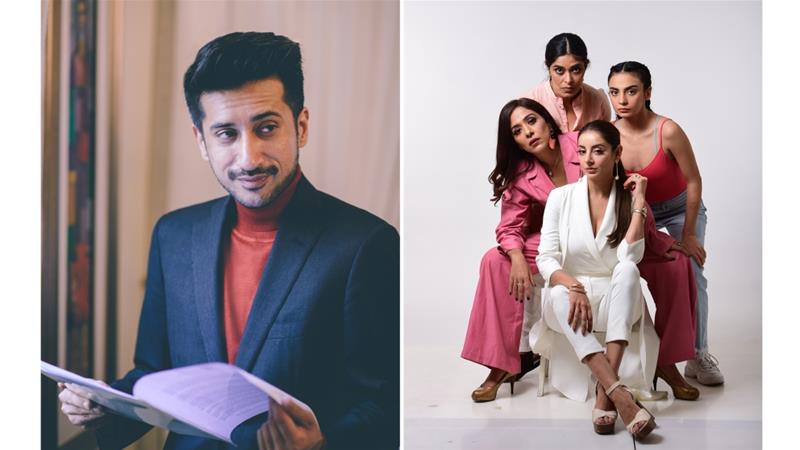
Asim Abbasi (left), the show's creator, writer, and director says it took almost two years to film and finish the show [Courtesy: Zee Entertainment]aption


Churails has been lauded for breaking new ground, smashing stereotypes and putting women at the center of its story.

Ten women, dressed in colorful burqas and armed with hockey sticks, cricket bats and their wits, step out of a shop to confront an angry mob. Over two minutes, they deliver a sound beating to a mainly male group that had gathered at the door, having shown up thinking they could stop the women from doing what they do best, helping other women out of difficult or violent situations. Using cricket bats, hockey sticks, and even whiskey they found lying around, the women push the shocked mob back. Churails is certainly not your everyday Pakistani television show. 

 This cathartic scene in particular flies in the face of how such confrontations are generally expected to go in Pakistan, a country of 207 million people where violence against women is frequent and widespread. Written and produced in Pakistan, Churails - which was released in August on Indian streaming platform Zee5 - breaks new ground, smashing stereotypes and putting strong women at the centre of its story.It follows the stories of four women - a rich homemaker, a wedding planner, a recently released convict and a boxer - in the southern Pakistani city of Karachi, as they fight the patriarchy and set up a detective service to help other women in need.Lauded for breaking the mould of formulaically written female characters in South Asian television, the show has raised concerns from Pakistani feminists about how it treats issues of class and homosexuality, and whether it is commodifying feminism.
The "churails", so named after an Urdu word for "witches", spend 10 episodes investigating cheating husbands, confronting abusive partners, browbeating a landlord and ultimately uncovering a massive conspiracy to traffick and murder women. It is a wild ride, and the characters often curse, bludgeon and drink their way through it. For the critics, the show is a complex one to break down, and much of their concern stems from one question: Is the show capitalising on feminism, delivering a feel-good ride without actively confronting the structures of violence in South Asian society?
'Cathartic' Aimen Rizvi is one of those conflicted cultural critics. "It was just very cathartic to see women kicking a**, or being bada**," says Rizvi, a culture writer. "Even just the language, the vernacular, is not something that we really get to see [women using on screen]. It's very rare for Pakistani women to feel represented and to see characters they can so closely identify with on-screen."She quickly points out though that the show also appeared to be capitalising on a rising feminist movement in Pakistan without delving deeper into any of the issues it raises."You have these men writing these empowered female characters ... it's almost like we are following the same tropes and stereotypes, but we are not sitting to think what it means to be a 'brave' woman, what are the costs, how do you sit with these things?" she says.She offers the US television show Mrs America and the UK show I May Destroy You, both released this year, as examples of shows dealing with issues of systemic misogyny in more nuanced and complex ways.

"My concern is that the people creating the show are not really living through those realities," says Rizvi. "It is an appropriation and a misrepresentation in certain ways."
Yasra Rizvi plays Jugnu, a disgraced wedding planner who is battling her, and society's, demons [Courtesy: Zee Entertainment]
Yasra Rizvi plays Jugnu, a disgraced wedding planner battling her, and society's, demons [Courtesy: Zee Entertainment] 
Ushah Kazi, a culture writer and author of The Pop Culture Junkie's Guide to Pakistani Cinema, says that classifying the show as feminist simply based on its subject matter is problematic.
"I think classifying Churails as a feminist series is a little over-enthusiastic," she says. "I do believe that it is feminism-curious for sure. It is willing to create interesting narratives that focus on women. But with that said, it is a commercial venture, and the limitations of that will hinder how far it can push the envelope."
The language used in the show and its marketing is significant, says Kazi.
"The marketing for the series doesn't even use the words 'feminist' or 'patriarchy'. This could be a coincidence, or it could be a conscious decision on the part of the team to not alienate potential subscribers."
Anna MM Vetticad, an Indian journalist and author of The Adventures of an Intrepid Film Critic, does not shy away from calling the show "feminist", but says the series remains "brave yet problematic".
"Churails' significance lies in the range of sensitive issues it confronts while making no apologies for its feminism," she told Al Jazeera.
"The show is also, in some senses, superficial. While it purports to expose classism, it seems unaware of its own class bias. And it does not delve sufficiently into some of the trickier moral questions it raises.
"In terms of its courage in taking on issues usually avoided by mainstream Hindi/Hindustani language cinema though, that too in a hugely gutsy and entertaining fashion, it is a new frontier for south Asian TV."

'Great' reception

For Asim Abbasi, the show's creator, writer and director, the feedback has been immense, and varied.
"The reception overall has been great ... I knew it would impact people, but I didn't know the amount of engagement it would create, between the people who like it or don't like it," says Abbasi.
"Even if you don't like it, you're talking about. Those dialogues are important. Whether that is about gay and lesbian representation, whether it's about women's rights. It's interesting to see who is reacting well to it and who is not."
Abbasi defends the show against allegations of not dealing deeply enough with issues of class, racism or structural drivers of violence, saying he wrote storylines to revolve around a single central theme.
"For me, the show was about power dynamics and how it causes gender bias," he says. "The one thing is the power imbalance between a man and woman, and how that can cause female rage and give you both positive and negative consequences."
Sarwat Gillani, left, and Yasra Rizvi, right, play two of the four lead roles in this groundbreaking Pakistani television show [Courtesy: Zee Entertainment]
Sarwat Gillani, left, and Yasra Rizvi, right, play two of the four lead roles in Churails [Courtesy: Zee Entertainment]


Nimra Bucha plays Batool, the newly released convict, and delivers one of the show's most powerful performances as a woman who murdered her husband for attempting to rape their child. "The way the story is told ... will strike you as radically different," she says. "And the screen will seem unfamiliar because it will be populated with people you don't see on screen doing things they normally don't do on screen here."Bucha said it took a while to better understand her character, who is central to the plot but has perhaps the fewest lines of dialogue in the show. "There were clues all over the script that led to her," says Bucha. "Asim had written some really wacky scenes for her with minimum direction which were fun to interpret. She's not boring. She's not 'strong and silent' [either]." Cross-border appeal India and Pakistan, South Asian neighbours who have fought three full-scale wars since gaining independence from the British colonial rulers in 1947, have seen tensions rise in recent years, focused on the disputed territory of Kashmir.India's government, led by Hindu nationalist Prime Minister Narendra Modi, has seen space for Pakistani artists in that country's massive Bollywood market shrink to almost nothing.

Pakistan, too, has banned Indian films and television channels from its screens.Pakistani television shows, however, are a notable exception, finding dedicated audiences in India and escaping vocal opposition from the country's Hindu right wing."India and Pakistan have historically been dichotomous in their approach to each other's art and artists," says Vetticad. "While the general public have welcomed cross-border exchanges, right-wing elements and politicians have consistently sought to stem them." The show, however, managed to navigate both strict Pakistani censor board rules and the virtual cultural apartheid being played out across the two countries' industries. "It was certainly not going to get past the censors, there was no way to air this on a Pakistani channel," says Abbasi. "Something like this would never get approved without significant cuts." The show found a home on Zee5, a streaming platform owned by the Zee Entertainment group, a $1.08bn Indian company that operates more than 80 television channels and reaches 173 countries. Zee5, which offers a range of television shows - many produced in Pakistan - commissioned the show under its Zindagi brand, which highlights Pakistani content. The content is not geo-limited, meaning subscribers anywhere in the world can watch it for as little as $0.50 per week. 

 Rizvi says Pakistan's television production industry could certainly benefit from the investment and the relative freedom that producing for a streaming platform offers. "It is exciting that there is funding coming in from other parts of the world ... the industry needs it, although it results in a different kind of gatekeeping," she says. "It would be interesting how that plays out in the future."Kazi points out that by being aired on a streaming platform, the show also manages to short-circuit a growing movement by certain Pakistani conservative parties to ban cultural products that are not deemed to fit their idea of being either Pakistani or pious."The most insidious thing about individuals or organisations that hope to stifle artistic expression in Pakistan is that they are methodical and effective," she says, offering the example of award-winning film Zindagi Tamasha, which was passed by the censor board but blocked from release by far-right anti-blasphemy groups. "They used sentiments, and trigger words, but at the end of the day, they took advantage of the very nature of a traditional film industry setup. That you need permission to exhibit, and ticket sales that rely on audiences, to regain investment." Digital streaming platforms like Zee5, she says, bypass all that.

Ultimately, even with questions around how it deals with its subject matter, is the space better for having Churails in it?
"One hundred percent, there is no question of it," says Rizvi. "I hope that it sets a precedent and shows artists that there is room to talk about these issues, that we should be creating art about women that centers women."
https://www.aljazeera.com/indepth/features/tv-show-churails-pakistani-women-society-demons-200914103028048.html

Bilawal Bhutto Zardari: Strengthening the roots of democracy in the world was the responsibility of individual nations and the collective responsibility of the democratic world

Long Live Bhuttoism!!!

Chairman Pakistan Peoples Party Bilawal Bhutto Zardari has said that strengthening the roots of democracy in the world was the responsibility of individual nations and the collective responsibility of the democratic world. In his message on the eve of the International Day of Democracy being observed by the United Nations and its member states on Tuesday, the PPP Chairman emphatically endorsed the UN statement that, “the values of freedom, respect for human rights and the principle of holding periodic and genuine elections by universal suffrage are essential elements of democracy.”

 Bilawal Bhutto Zardari said that the fight between democratic and dictatorial forces which began in Pakistan after the death of Quaid-e-Azam Mohammad Ali Jinnah, is still raging despite the sacrifices of democratic leaders Shaheed Zulfikar Ali Bhutto, Shaheed Mohtarma Benazir Bhutto and others who laid down their lives for democracy and human rights. He said the democratic workers of Pakistan suffered capital punishments, solitary confinements, tortures, public lashing, long imprisonments and fabricated cases at the hands of tin-pot dictators and their puppets, but never compromised on democratic and human rights of the people. 

The Pakistanis struggle for democracy and the huge sacrifices made to achieve it, stands out in the contemporary struggles for democratic systems, he added. 

 Bilawal Bhutto Zardari pointed out that PPP gave to the people of Pakistan their first-even unanimous Constitution, the first-ever directly Prime Minister Shaheed Zulfikar Ali Bhutto and the first-ever woman elected Prime Minister of Islamic world Shaheed Mohtarma Benazir Bhutto, besides the first-ever democratic government in Pakistan to complete its tenure under President Asif Ali Zardari. PPP Chairman pledged that his Party, together with other democratic parties would continue the struggle for strengthening of democracy, because a strong democracy is the sole guarantee for a strong Pakistan. “Victimisation, intimidation and fake cases cannot deter our Party and the democratic forces from carrying out the mission of our democratic leaders who embraced martyrdom but didn’t surrender,” he added.

https://www.ppp.org.pk/pr/23746/

Sunday, September 13, 2020

Video Report - Sweden's chief epidemiologist: 'We are happy with our strategy' on Covid-19

Video Report - #Thailand #ThaiFood #Coronavirus COVID-19 makes plant-based diets more appealing in Thailand

Video Report - Blitzer to Fauci: Who should we trust, you or President Trump?

Video Report - Fareed Zakaria - Fareed: We need to prepare for this 'deeply worrying' scenario

Video Report - America is failing on multiple fronts

Pashto Music - Khyal Mohammad & Mah Jabeen - Sterge De Kachkol Krra Wakhla

Pashto Music - Jamal Shah Shakela Naz - زما جانانا باران دی

Nashanas- زخوشرابی.یم.شیخه سه.راسره.جنگ.کری.برخی ازلی.دی.کاشیکی.مادزان.پرنگ کری.ای.ناشناس.دمت.گرم

#Pakistan's stance on religious minorities exposes its hypocrisy

The condition of minorities is worsening in Pakistan and their numbers are declining by the day.
Minorities in Pakistan are severely charged on minor allegations, leading to punishments like the death penalty. Blasphemy laws, in most cases, are used to fulfill a personal vendetta.
Religious minorities are living a life under siege in Pakistan. The country's stance on them exposes its hypocrisy.
In February, Imran Khan issued a warning that anyone targeting the non-muslim population of Pakistan will be dealt with strictly. He declared that minorities are equal citizens of his country. However, his actions have fallen way short of his lofty words.
Since August 2018, after Imran Khan took power, at least 31 members of the minority community have been killed, 58 have been injured in targeted attacks and 25 blasphemy cases have been filed. At least seven places of worship for the minorities have also come under attack. The Shia Muslims, Christians, Ahmadis, Hindus and Sikhs make up the minority community in Pakistan. All of them, without exception, have been targeted under Imran Khan.
The Shias, specifically, the shia hazara community, continue to suffer violent attacks.According to one claim, at least 509 Shia Hazaras have been killed in violence since the 2012.Under Imran Khan, at least 24 members of this community were killed last year.In April last year, an attacker detonated a bomb at a vegetable market in Quetta. The target were the Hazaras.The Christian community in the country has been perpetual sufferers of violence and discrimination.Asia Bibi, a woman belonging to this community had spent almost a decade in prison on blasphemy charges before she was acquitted in 2018.But, she couldn't leave the prison for weeks because in Pakistan religious leaders are above the law.
When hardlines laid seige to major cities in Pakistan, Imran khan was helpless before the radicals.He couldn't ensure the safety of Asia Bibi and her five children in their own country and they had to be whisked out of Pakistan and took asylum in France.
The Ahmadiyya community represents less than one percent of Pakistan's population continue to be attacked. They boycott elections in protest.Nearly 90 percent of Ahmadis in Pakistan's Rabwah boycotted the election in 2018.So far, no leader has addressed their concerns. Their places of worship have been vandalised.There are laws that make it illegal for Ahmadi Muslims to recite the Quran. They are also not allowed to have Islamic inscriptions on headstones or even call their place of worship a mosque.
Under Imran Khan, nothing has changed. The Ahmadis remain doomed. They face constant attacks. In this year alone, a group stormed into a mosque. Local authorities could not do anything. So, the Ahmadis had to hand over their mosque to hardliners.
And there's no end to stories of the plight of Hindus and Sikhs in Pakistan.
According to the human rights commission of Pakistan, close to one thousand young Hindus and Christians are forced to convert to Islam every year.
Last year, a 19-year-old sikh girl was forced to convert to islam. She came back home after a 30-member committee of the Sikh community put pressure on the government.
Attacks on hindu temples are frequent. Last year, a large mob in Sindh vandalised a temple. This was after a Hindu principal was accused of blasphemy.
In the month of may, the Imran Khan government announced the formation of the national commission on minorities.
The cabinet decided to include the Ahmadis, only to drop them later. The Pakistani government faced a backlash, it had to keep the Ahmadis out.
So, Pakistan's minority commission has no representation from the Ahmadis. The minority group, that faces the most severe persecution in Pakistan. This case alone exposes Imran Khan's farce on minorities.
https://www.msn.com/en-in/news/other/pakistans-stance-on-religious-minorities-exposes-its-hypocrisy/ar-BB17PW2Q?fullscreen=true#image=1

Christian Activists Stage Hunger Strike Against Abuse of Pakistan’s Blasphemy Laws

According to the Union of Catholic Asian News (UCAN), Christian activists in Pakistan observed a day-long hunger strike to condemn the abuse of the country’s blasphemy laws. The demonstration came only a day after another Christian, Asif Pervaiz, was sentenced to death for allegedly sending blasphemous texts in 2013.
Shabbir Shafqat, Chairman of the National Christian Party, led a group of supporters in a hunger strike in front of the Karachi Press Club on September 9. The demonstration condemned both the abuse of the Pakistan’s blasphemy laws and the death sentence awarded to Asif Pervaiz.
We strongly condemn the capital punishment awarded to Asif Pervaiz, who is being punished for refusing to convert to Islam,” Shafqat told UCAN. “There was no evidence to convict Asif. No proper investigation was carried out to establish the facts. Police simply acted on false accusations from the complainant.
In Pakistan, false accusations of blasphemy are widespread and often motivated by personal vendettas or religious hatred. Accusations are highly inflammatory and have the potential to spark mob lynchings, vigilante murders, and mass protests.
Currently, 25 Christian are imprisoned on blasphemy charges in Pakistan, including Asif Pervaiz. These 25 Christians are defendants in 22 blasphemy cases represented at various levels of the judicial process in Pakistan.

Video Report - #Punjab Police | Anti-Shia Rallies|Bigotry in Pakistan|How to Fix

#Pakistan - The Roma of #Lahore

 By Usman Ghafoor
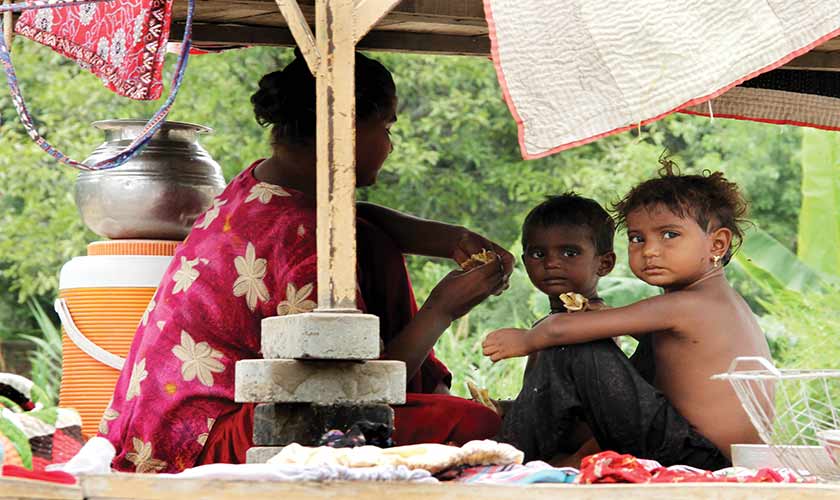
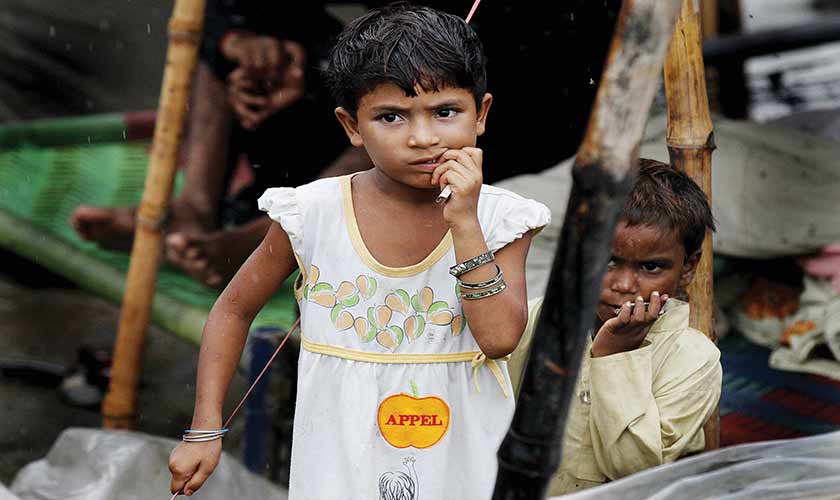
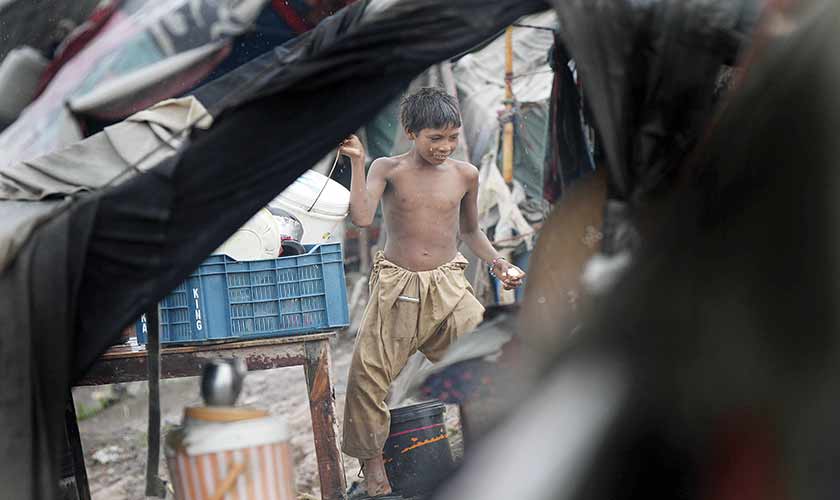
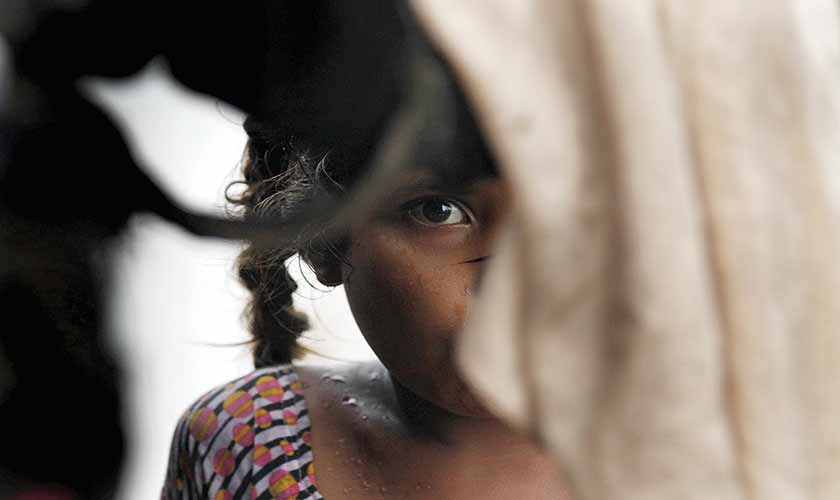
They are a politically and socially isolated community, with no status as citizens and, hence, no claims to basic utilities such as electricity.
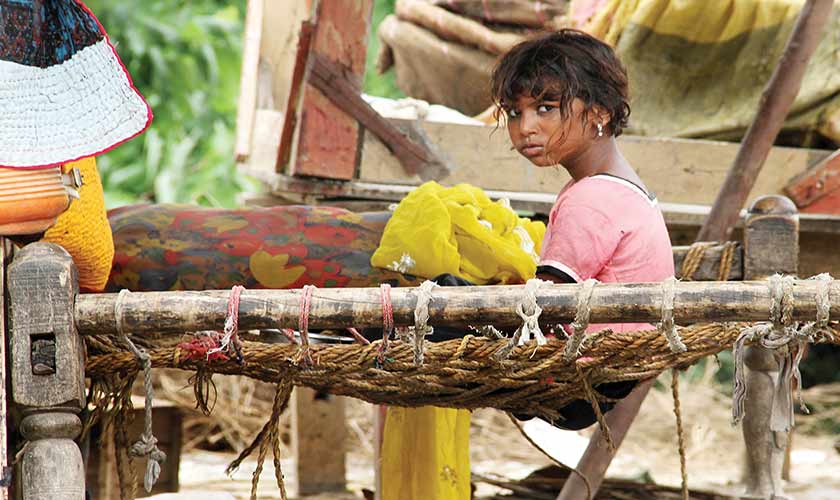
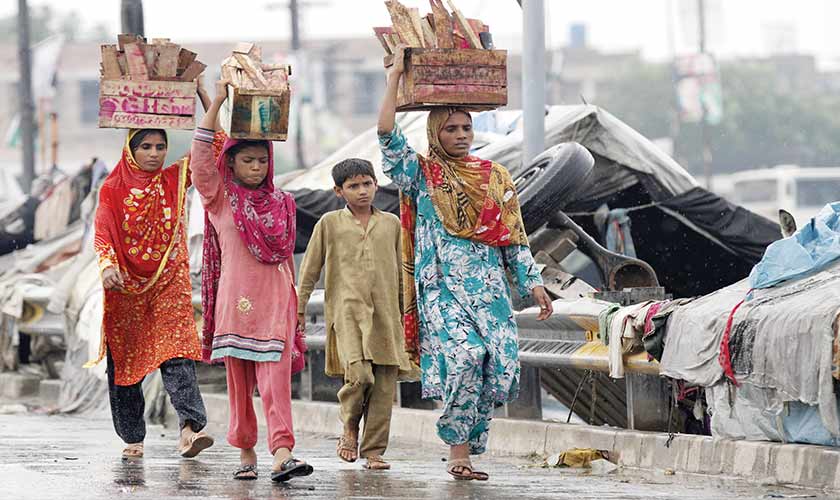
 It might be long before the government can successfully develop an entire, modern city upon the Ravi. Till then, Lahore is most likely to continue to be home to over half a million gypsies, many of whom have based themselves in makeshift tents along the banks of the river. They are a politically and socially isolated community, with no status as citizens and, hence, no claims to basic benefits as well as utilities like electricity. They have no access to jobs and security, and their children can’t enroll in schools. This, despite a UN Commission on Human Rights report which calls on the countries of the world to “adopt all appropriate measures in order to eliminate any form of discrimination against the Roma (gypsies).” 
They live way below poverty line. Their main ‘vocation’ is begging, though some also work as labourers on daily wages or sell cheap household items on city streets to earn a living. Rag-picking is another common activity.
The gypsies are known to have special, indigenous knowledge of medicinal herbs. Some of them famously keep snakes.
The gypsies of Lahore come from varied castes — Qalandar, Oudh, Musali, Jogi, Bazigar, Marasi, Koray and so on. The Qalandars and Marasis popularly indulge singing and dancing, while the Kenghars make mud toys.
These people usually occupy a place for a short period of time — a couple of months or years — before they move on. Some stay as briefly as for a few days. It is not yet clear as to what role will they be assigned, once the urban development project is set in motion.
Photo by Rahat Dar
Photo by Rahat Dar
Photo by Rahat Dar
Photo by Rahat Dar
Photo by Rahat Dar
Photo by Rahat Dar

Pizza corruption scandal risks dragging China into Pakistan’s domestic affairs

Imran Khan has been trying to seal allegations that his top belt-and-road official failed to disclose interests in a US pizza chain.
The ruling PTI party has suggested India is behind the claims, which are attracting a backlash and may again pull China into its ally’s domestic affairs.
A former army general who was last year put in charge of China’s belt and road projects in Pakistan has become embroiled in a corruption scandal, once again dragging Beijing into its close ally’s dirty domestic politics.Pakistan’s government and powerful military have worked hard to suppress the mainstream media’s coverage of allegations that retired lieutenant general Asim Saleem Bajwa’s family built a multimillion-dollar US-based business which grew in parallel to his ascent through the ranks. The allegations were made in a report published last month by the independent news website FactFocus, co-founded by renowned Pakistani investigative journalist Ahmad Noorani.
The report claims that Bajwa failed to declare his wife’s stake in the business – the single largest franchise holder for US pizza chain Papa John’s – when he submitted details of his wealth to Prime Minister Imran Khan.
Bajwa was obliged to make public details of his wealth and assets after being appointed the prime minister’s special assistant on information in April – a role he performs alongside his job as the chairman of the China-Pakistan Economic Corridor (CPEC) Authority.
The former military spokesman said he “strongly rebutted … a malicious propaganda story published on an unknown site, against me and my family”.
Khan’s ruling Pakistan Tehreek-i-Insaf (PTI) party, responding to the allegations on Twitter, characterised the allegations as an attack on the CPEC Authority by “a dissident social media group sitting abroad … to further the Indian agenda”.

They paint it as a nefarious effort to undermine China and PakistanMichael Kugelman, Wilson Centre

The PTI has also launched a social media campaign to discredit the allegations, entitled #IndianProxiesAttackCPEC – an ultranationalist narrative which was subsequently echoed by some popular cable news channels. Parallel to this social media campaign, the government suppressed mainstream media coverage of the allegations against Bajwa. “For Beijing and Islamabad, the goal will be to focus on how to keep these allegations out of the public eye,” said Michael Kugelman, senior South Asia associate at the Wilson Centre, a Washington-based think tank. “So long as there’s not much public buzz, the allegations can be shrugged off by both governments as a mere distraction. But if they start getting more airplay in Pakistan, then the allegations can become more damaging, and there could be big problems,” he said. 
However, the Pakistani media blackout was broken on Tuesday after Maryam Nawaz, daughter and heir apparent of ex-prime minister Nawaz Sharif, accused the government of double standards for characterising FactFocus’ expose of Bajwa’s undeclared wealth as an attack on the CPEC. She pointed out that Sharif, “the founder of CPEC who brought US$60 billion of Chinese investment to Pakistan”, was forced to step down as prime minister by the Supreme Court in July 2017 for failing to declare that he drew a salary from a family business in the United Arab Emirates, in order to secure a residence visa. In a TV interview aired late on Thursday, Bajwa said he would resign from his cabinet role as special assistant to Khan, but continue as chairman of the CPEC Authority. 
After consulting his family, Bajwa said he would “put all my energy into CPEC because we thought that a lot of focus is currently needed on the CPEC Authority”. Critics, however, claimed Bajwa’s decision was motivated by a desire to avoid the public scrutiny he and his family’s business would be subject to as long as he held a cabinet position. 
Prime Minister Khan refused to accept Bajwa’s resignation on Friday, saying he was satisfied with the explanation given for the ex-general’s family’s US$70 million business. While Pakistan’s opposition parties fully endorse Islamabad’s alliance with Beijing, they have opposed the creation of the CPEC Authority and the appointment of Bajwa as its head.

 In July, the opposition thwarted a proposal to make Bajwa the key decision maker in Pakistan’s belt and road negotiations with China, in place of the elected planning minister. FactFocus’ founder Noorani claims he has received more than 100 death threats following the government’s social media campaign, sparking calls from journalists’ organisations in Pakistan and abroad for an official investigation. “Pakistan authorities must investigate who is behind these malicious online attacks … and ensure that such threats are not tolerated,” said Steven Butler, Asia programme coordinator for the Washington-based Committee to Protect Journalists. Kugelman said many Pakistanis were joining their government in blaming the allegations against Bajwa on India.

 “They paint it as a nefarious effort to undermine China and Pakistan at a moment when New Delhi’s relations with both are experiencing a major low,” Kugelman said. “In this sense, India and India-China tensions give Islamabad a useful pretext to shirk responsibility and outsource blame on the usual external suspects.”

Previously, Khan was a self-described CPEC sceptic and while in opposition attacked the programme launched by his predecessor and political nemesis Nawaz Sharif as a debt trap, echoing US criticism of the Belt and Road Initiative.In its ruthless pursuit of corruption charges against Sharif and other opposition politicians, PTI politicians have not hesitated to attack CPEC projects.
In February last year, communications minister Murad Saeed accused Sharif and his ministers of siphoning US$420 million in funds for a motorway built by the China State Construction Engineering Corporation (CSCEC).
Saeed alleged the CSCEC had been awarded an inflated US$2.94 billion contract for the motorway linking the cities of Multan and Sukkur.
Responding at the time, CSCEC said it felt “extremely shocked by the groundless allegations”.
The PTI’s anti-corruption rhetoric was later that month drastically curtailed, however, after Indian warplanes crossed into Pakistani airspace to attack a training camp for Kashmiri militants.
Pakistan became increasingly reliant on China’s diplomatic support during the subsequent escalation of tensions, which peaked in August last year after India revoked the semi-autonomous status of the part of Kashmir it administers.
During a visit by Khan to Beijing last October, Chinese President Xi Jinping agreed to raise the Kashmir dispute at the United Nations Security Council. The decision was announced immediately before Xi flew to the Indian city of Chennai for an informal summit with Prime Minister Narendra Modi.
. Bajwa was appointed CPEC Authority chairman soon afterwards, in response to China’s complaints about the slowed implementation of belt and road projects.
The tensions sparked by China’s unprecedented diplomatic intervention on behalf of all-weather ally Pakistan boiled over in June, when Chinese troops occupied previously Indian-held territory in Ladakh , a northern region of Kashmir adjoining Tibet.China’s diplomatic support to Pakistan has been made all the more crucial by the refusal of its other close ally, Saudi Arabia, to confront its major trading partner India.Riyadh’s refusal has stymied Islamabad’s attempts to persuade the 57-member Jeddah-based Organisation of Islamic Conference to censure New Delhi.
Foreign Minister Shah Mahmood Qureshi, in an August 7 television appearance, threatened to form a breakaway Pan-Islamic platform with Muslim countries which have criticised India over Kashmir – a list comprising Saudi Arabia’s rivals Turkey and Iran, as well as Malaysia.
Khan had agreed to attend a Malaysia-hosted summit of these countries last year, but quickly changed his mind after Saudi Arabia conveyed its displeasure.
Qureshi’s recent outburst came after Saudi Arabia – apparently annoyed by Pakistan’s complaints – demanded the early repayment of most of a US$3.2 billion loan extended in October 2018 to help Khan’s newly-elected government weather a balance of payments crisis. Pakistan paid off US$1 billion of the Saudi loan recently with money urgently borrowed from China – which is widely expected to soon lend Islamabad another US$1 billion to settle matters with Riyadh.
In a TV interview on August 20, Khan denied there had been a breakdown in relations between Pakistan and Saudi Arabia.
But he also said: “China is our only friend which has remained politically steadfast with Pakistan during good and bad times. It should be clear that our future is connected with China,” Khan said. “China also needs Pakistan very much.” This quid pro quo was reflected in a statement issued by Pakistan’s ministry of foreign affairs after a round of “strategic talks” between Qureshi and Chinese counterpart Wang Yi in Beijing on August 21.
Appreciating China “for standing together with Pakistan in safeguarding its national security and sovereignty”, Islamabad reaffirmed its firm support to Beijing “on affairs concerning China’s core interests and issues of major concern, such as those related to Taiwan ,Xinjiang , Tibet and Hong Kong.
This apparent Pakistani endorsement of China’s mass detention of ethnic Uygur Muslims in so-called re-education camps is Islamabad’s first official stance on the controversy.
Previously, Khan feigned ignorance about the events in Xinjiang, although more recently he admitted it was a sensitive issue discussed with Pakistan’s Chinese friends behind closed doors.However, the momentous decision has barely received a mention in the Pakistani media, because of clear instructions from the government.The emergence of corruption allegations against Bajwa at this crucial diplomatic juncture in China-Pakistan relations threatens to create geopolitical complications for both.Although primarily a domestic issue, “when the head of CPEC’s operations in Pakistan is accused of such serious wrongdoing, then that’s a big problem for a giant connectivity project with sky-high strategic significance and very high stakes”, Kugelman said. ■
https://www.scmp.com/week-asia/politics/article/3100328/pakistans-pizza-corruption-scandal-risks-cheesing-top-ally-china

Pakistan: 14-year-old #Hindu girl forcefully converted and married to her abductor

A 14-year-old Hindu girl has been allegedly kidnapped and forcefully married in Pakistan by faking her actual age on the documents.
Parsha Kumari, a 14-year-old, was abducted from the Mori district of Khairpur in Sindh in Pakistan. The family had immediately filed a mission person report with the local police. However, the local police did not take any action.
Later, it was revealed that the minor was forced to convert and was later married off to Abdul Saboor, without consent.
Abdul Saboor faked Kumari's age on the affidavit, claiming that she is 18-years-old, making her an adult. However, the documents submitted by her parents, her date of birth mentioned is 15th September 2005, which makes Kumar 14 years old. She was a student of class IX.
The local media reported that an affidavit was presented from the girl’s side in which she claimed that her old name was Parsha Kumari and she has accepted Islam. However, Kumar's family believes she has been forced into converting and marrying Saboor, who is an adult.
Pakistan has also been in news for a sexual violence case where a woman was raped at gunpoint on Wednesday by two men before the eyes of her children after her vehicle ran out of fuel. The two men are also said to have stolen money and jewelry before fleeing the scene.
https://www.wionews.com/south-asia/pakistan-14-year-old-forcefully-converted-and-married-to-her-abductor-327201

#Pakistan #PPP - Govt should issue Watan cards to flood victims: Bilawal Bhutto

Pakistan Peoples Party (PPP) Chairman Bilawal Bhutto Zardari has demanded from the government to provide Watan card to the flood victims.
In Mirpur Khas, PPP Chairman Bilawal Bhutto while talking to media said that the attention of the rulers of Islamabad was drawn to the damage caused by rains and floods. Distribution of rations will not solve the problems of the flood victims. The present government should provide Watan Card to the flood victims.
He said that he spent more time in Mirpur Khas, it is just the beginning, PPP MNAs, MPAs work hard on their own, there were losses in Mirpur Khas, Umerkot, Badin, Tharparkar, we have come to assess the losses in the affected areas, he added.
Bilawal Bhutto said that Asif Ali Zardari had given Watan cards to the victims in 2011. PPP cadres know how to protest for the right. He said that we will not allow the people of Sindh to be left destitute by the government.
Chairman PPP said that federal government did not give NFC shares to Sindh government, farmers of the country are worried due to rains, floods and locusts. This year, the Sindh government was given Rs200 billion less.
He said that small farmers should also be helped by declaring emergency. He said that poor farmers of the country could not bear huge loss and all should work together to solve the problems of the people.
Bilawal Bhutto said that PTI should compensate every farmer, Sindh government is trying to come up with a scheme for farmers, next time we will have political activities here, he added.
https://dunyanews.tv/en/Pakistan/563610-Govt-should-issue-Watan-cards-to-flood-victims-Bilawal-Bhutto

Saturday, September 12, 2020

Video - #IGPunjab #NajamSethi #SajidGondal Sethi Sey Sawal | Sajid Gondal’s Enforced Vacation??

‘Kafir Kafir Shia Kafir’: Sunni extremists of Sipah Sahaba lead anti-Shia ‘protests’ in Karachi, pelt stones

Twitter user Syed Hussain Mujtaba Rizvi wrote, "So this all has started. Sipah Sahaba & Tehreek Labbaik Pakistan chanting Kafir Kafir Shia Kafir in Karachi. Imam Bargah Imamia at Lines Area under attack by the same goons, some pelting on Bargah reported."

On Friday, thousands of Sunni extremists hit the streets of Karachi to lead anti-Shia protests, thereby escalating tensions between the two Islamic sects and sparking fears of a series of violent events. The demonstrations took place in the backdrop of blasphemy allegations against Shiite Pakistani leaders for allegedly making objectionable comments about historic Islamic personalities during the live broadcast of Muharram procession on TV.
The rally took place near the Jinnah Mausoleum, also known as Mazar-e-Quaid. The Sunni extremists, affiliated with anti-Shia groups such as Sipah-e-Sahaba and Tehreek Labbaik Pakistan, referred to Shias as ‘infidels’ (Kafirs). Reportedly, Sipah-e-Sahaba has been responsible for killing hundreds of Shia Muslims in Pakistan in the past.

Sunni Muslims refer Shias as ‘Kaffirs’

Several videos of the said protests have come to light. In one such video, Sunni extremists atop buses can be seen waving flags and shouting Anti-Shia slogans. “Kafir, Kafir Shia Kafir (Infidels, infidels, Shia infidels)”, the demonstrators were heard as saying.
Twitter user Syed Hussain Mujtaba Rizvi wrote, “So this all has started. Sipah Sahaba & Tehreek Labbaik Pakistan chanting Kafir Kafir Shia Kafir in Karachi. Imam Bargah Imamia at Lines Area under attack by the same goons, some pelting on Bargah reported.”

Stone pelting at Imambargah by Sunni extremists

In another video, Sunni extremists associated with Sipah Sahaba can be seen pelting stones at an Imambargah (congregation halls for Shia Muslims during ceremonies) during their demonstrations in Karachi.
During a recent speech, a politician from the Jamiat Ulema-e-Islam political party, Qari Usman, said, “We will not tolerate any more defamation.” Shias, who constitute 20% of the Muslims in Pakistan, have been targeted during Muharram processions. While there has been a general decline in violence against Shiites since 2013, sectarian attacks continue unabated in several pockets of the country.

Blasphemy in Pakistan

Blasphemy in Pakistan is an offence, punishable by death. The archaic law is often misused to target religious and ethnic minorities to settle personal scores. Even if charges of blasphemy are not proved, the accused may be lynched to death by Islamist mobs.
The blasphemy law states, ”Whoever by words, either spoken or written, or by visible representation or by any imputation, innuendo, or insinuation, directly or indirectly, defiles the sacred name of the Holy Prophet Muhammad (peace be upon him) shall be punished with death, or imprisonment for life, and shall also be liable to fine.”

Pakistani Sunni Muslims refer to Coronavirus as ‘Shia virus’

Earlier, several Pakistanis took to social media to blame the Shias who returned from pilgrimage from Iran for spreading coronavirus. Some even said that more than China, the country where the deadly virus originated, Shias are responsible and the Chinese virus should actually be called ‘Shia Virus’. Some also accused the Shia Muslims of ‘intentionally’ bringing the virus to Pakistan. Some even accused Shias of being enemies of Islam.
https://www.opindia.com/2020/09/pakistan-karachi-anti-shia-protest-by-sunni-extremist-islamic-fundamentalism-details/

#motorwaycase #Hang_RapistsInPublic #Pakistan: - Motorway gang rape and fallout


As if the horrific gang rape incident on the motorway the other night was not bad enough, Lahore’s police chief chose to set a new low for himself, his department as well as the country in the immediate aftermath by effectively laying the blame for the savage attack on the victim herself. The disgust and outrage that has swept all social places, especially the online world, is not just understandable but very justified as well. It must take a special kind of talent to be this desensitised and blind to the fact that it is the pathetic breakdown of his own institution that has made the whole country so unsafe for women and children to begin with.
Not just common Pakistanis but opposition parties as well, especially PML-N, have now called for the scalp of the Lahore CCPO. Yet while that decision to send him packing has to be taken at the level of the provincial chief executive, especially if such an order descends from even higher up, there can be no denying that people who cannot sympathise or empathise with victims of the most despicable attacks cannot and must not be given the responsibility of ensuring our safety and security. One can only imagine how much worse the ordeal of the poor victim must have become, who was dragged and gang raped in front of her little children, when she got to know of the views of the city’s top police officer.
Now, even if as per the prime minister’s instructions the police force is able to somehow get its act together and find the culprits and the courts hand them fitting punishments there is still little if any comfort the victim and her family can take from the execution and exercise of the law. Eventually, no matter how this matter is investigated or what angle lawmakers look at it from, everybody will reach the same conclusion that such crimes are rampant because the perpetrators know of the very low chance of ever getting caught or convicted.
That is precisely why police chiefs should, instead of heaping blame on victims, make efforts to sort out their departments. All in all, what was already a sad day because of the sick mentality of certain individuals and the harm they brought to a mother and her family was made even worse because of another kind of disagreeable mindset that is enjoyed by one of the most senior police officers in the city. There is an urgent need for some relevant authority to introduce some sort of sanity to this situation.
https://dailytimes.com.pk/665599/motorway-gang-rape-and-fallout/

#motorwaycase #Hang_RapistsInPublic #Pakistan: How to approach the issue of rape amid a political controversy

Rape allegations are generally not taken seriously in Pakistan, with some people even blaming the victim for having a political motive. At the same time, activists say that "false accusations" can harm local movements.
In 2005, then-Pakistani President Pervez Musharraf claimed that rape accusations were an easy way to make money.
"You must understand the environment in Pakistan... This has become a money-making concern. A lot of people say if you want to go abroad and get a visa for Canada or citizenship and be a millionaire, get yourself raped," Musharraf told the Washington Post in an apparent reference to the rape case of Mukhtaran Mai.
Mai, an illiterate woman, was gang-raped in June 2002 on orders of a "panchayat" (village council) as "punishment" for her younger brother's alleged illicit relations with a woman from a rival tribe. The rape made international headlines, with women's rights groups demanding justice for Mai and punishment for the rapists.
Local and international rights organizations slammed Musharraf's statement and demanded an apology. They accused him of trivializing a heinous crime. Musharraf justified his remarks by saying he had only expressed a commonly held opinion rather than his own.
Activists say rape allegations are seldom taken seriously in the Muslim-majority South Asian country, with some people accusing "immoral women" of "deserving" the assault. It is also common for people to bring the accuser's background and political affiliation into the rape discussion.
In 2017, Ayesha Gulalai, a former member of the Tehreek-e-Insaf (PTI) party, accused the current Pakistani Prime Minister Imran Khan of sexual harassment. She alleged that Khan sent her inappropriate text messages in 2013. Khan's party denied these allegations and PTI workers unleashed a social media campaign against Gulalai, accusing her of having a "political agenda" to malign their leader.
Sexual harassment is a 'crime'
In Pakistan, the terms "agenda" and "character" are often used to discredit women who speak out against sexual harassment. "Why is the woman talking about harassment and rape after such a long time?" is another excuse that is used to undermine the severity of allegations.
Women's rights activists say that allegations of sexual assault need to be taken seriously irrespective of their timing and the surrounding political controversy.
"There is no 'right' or 'wrong' way to address sexual harassment or rape allegations. They are crimes under the law. Evidence is required to prove allegations, no matter when the alleged crime occurred. Political considerations must not interfere with the rule of law," Tahira Abdullah, a veteran women's rights activist, told DW.
"Sexual harassment is a crime and it needs to be addressed under Pakistani law," she added.
 After the center-left Pakistan People's Party (PPP) came to power in 2008, it introduced several laws to combat sexual harassment and violence against women. However, legal experts say the laws use dubious terminology to define sexual crimes.
Osama Malik, a criminal law expert, is of the view that judges, police officials and investigation agencies are not properly trained to deal with sexual harassment cases.
"Women continue to feel reluctant about reporting harassment," Malik told DW.
Damage to local movements
Some rights activists say that false rape allegations could also damage the local women's rights movements.
"If a woman says she has been sexually harassed, she must be taken seriously. At the same time, she needs to prove her allegations in the court of law. Nobody is allowed to misuse law. If the allegations are proved in the court, the culprit must be punished," Farzana Bari, an Islamabad-based women's rights activist, told DW.
"If some women start misusing sexual harassment laws for political gains, it will damage the women's rights movements," Bari added. "It will eventually harm women who are genuinely harassed and are the real victims. They will not be taken seriously then."
Pakistan ranks as the sixth most dangerous country in the world for women, with cases of sexual crimes and domestic violence rapidly on the rise. Activists blame society's patriarchal attitudes for the problem.
In the past few years, the #MeToo movement has taken hold in Pakistan, with many women taking to the streets to demand their rights.
https://www.dw.com/en/pakistan-how-to-approach-the-issue-of-rape-amid-a-political-controversy/a-54339168

Pakistani police hunt for gang rape suspects as protests held across country

Protests were held in several Pakistani cities for a second day on Saturday (Sep 12) over the handling of an investigation into the gang rape of a mother traveling with her children on a highway, as police said they were launching a manhunt for the suspects.
The woman, who police say is in her early 30s, was driving late on Tuesday night outside the eastern city of Lahore with her two children when her vehicle ran out of fuel.
She phoned police for help, but before they arrived two men took her and her children out of the vehicle at gunpoint and raped her beside the highway.
Inam Ghani, Inspector General of Punjab province, where the incident took place, told reporters on Saturday night that police had identified the two suspects through DNA tracing.
"I am hopeful very soon we will reach them and arrest them," he said.
But the protesters are not satisfied, and called for the sacking of the lead police investigator assigned to the case, Omar Sheikh, who has repeatedly pointed out what he felt were mistakes made by the victim, such she should have taken a different, busier, highway, not travelled at night, and made sure her vehicle had enough fuel.He also said she appeared to be under the impression Pakistan was as safe for women as France, "her country of residence". Requests for comment to the French Embassy in Islamabad went unanswered.
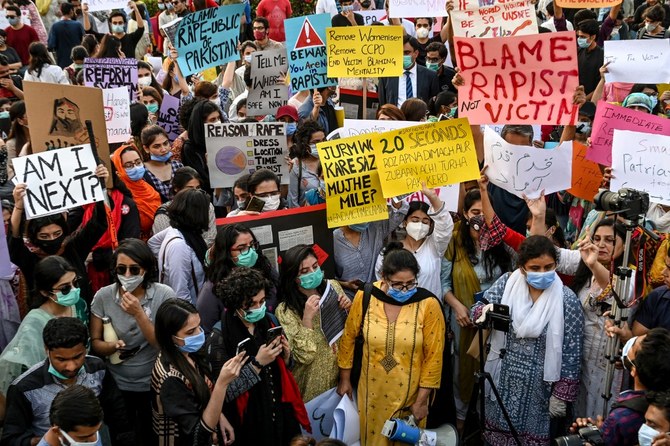
In Islamabad, several hundred protesters gathered, some waved French flags, and others held signs saying "hang the rapists."
Hundreds, mostly women, also gathered in Lahore, Karachi, and even the conservative northwestern city of Peshawar. "Shatter the silence, stop the violence," read one placard in Peshawar.
Global rights watchdogs have pointed out that Pakistan has not done enough to stem violence against women, including ensuring perpetrators are held accountable.
The attack has especially angered women who say public space in the ultra-conservative country was already limited. "And now the police are telling you that you are responsible for your own safety," said Yamna Rehman at the Islamabad protest.
The incident has sparked widespread outrage on social media.
https://www.channelnewsasia.com/news/asia/pakistani-police-hunt-for-gang-rape-suspects-as-protests-held-across-country-13106082

سانحہ موٹروے پر کہانیاں نہ سنائیں، اقدامات اٹھائے جائیں، نفیسہ شاہ

پاکستان پیپلز پارٹی (پی پی پی) کی سیکریٹری اطلاعات ڈاکٹر نفیسہ شاہ نے کہا ہے کہ کہانیاں نہ سنائی جائیں، سانحہ موٹروے کے مجرموں کو گرفتار کرکے سخت سزا دلوانے کے لیے ٹھوس اقدامات اٹھائے جائیں۔
ڈاکٹر نفیسہ شاہ نے ایک بیان میں کہا کہ وزیراعلیٰ پنجاب سردار عثمان بزدار اور انسپکٹر جنرل (آئی جی) پنجاب پولیس انعام غنی کہانیاں نہ سنائیں۔
انھوں نے سوال اٹھایا کہ جو وزیراعلیٰ غیرذمہ دار سی سی پی او لاہور عمر شیخ کو ان کے عہدے سے نہیں ہٹا سکتے اور نہ ہی ان کی بدزبانی پر کوئی کارروائی کرسکتے ہیں، وہ قانون کی رٹ کیسے بحال کر سکتے ہیں؟
نفیسہ شاہ نے کہا کہ ویسے تو وزیرِ مواصلات مراد سعید حکومتی مخالفین کے خلاف بیان بازی میں آپے سے باہر ہو جاتے ہیں مگر اس سانحے کے بعد وہ لاپتہ ہیں۔
انھوں نے یہ بھی کہا کہ نالائق وزیرِ مواصلات مراد سعید کو چاہیے تھا کہ میڈیا پر آکر اپنی نالائقی کا اعتراف کرتے، مگر وہ چوروں کی طرح چھپے ہوئے ہیں۔
نفیسہ شاہ نے وزیر مواسلات مراد سعید کی برطرفی کا بھی مطالبہ کردیا۔
پیپلز پارٹی کی سیکریٹری اطلاعات نے کہا کہ موٹروے پر سفر کے لیے پیسے تو لیے جاتے ہیں مگر سفر کرنے والوں کی حفاظت کا انتظام کیوں نہیں کیا جاتا؟ 
ان کا یہ بھی کہنا تھا کہ قوم متاثرہ خاتون اور ان کے خاندان سے انصاف چاہتی ہے۔
 انھوں نے کہا کہ سانحہ موٹروے کے مجرموں کو گرفتاری عمل میں لاکر سخت سزا دلوانے کے لیے ٹھوس اقدامات اٹھائے جائیں۔
https://jang.com.pk/news/819716