Sunday, January 12, 2020

پی ٹی ایم کوئی ختم نہیں کر سکتا، بنوں جلسہ اس بات کا ثبوت: محسن داوڑ - #PashtunTahfafuzMovement

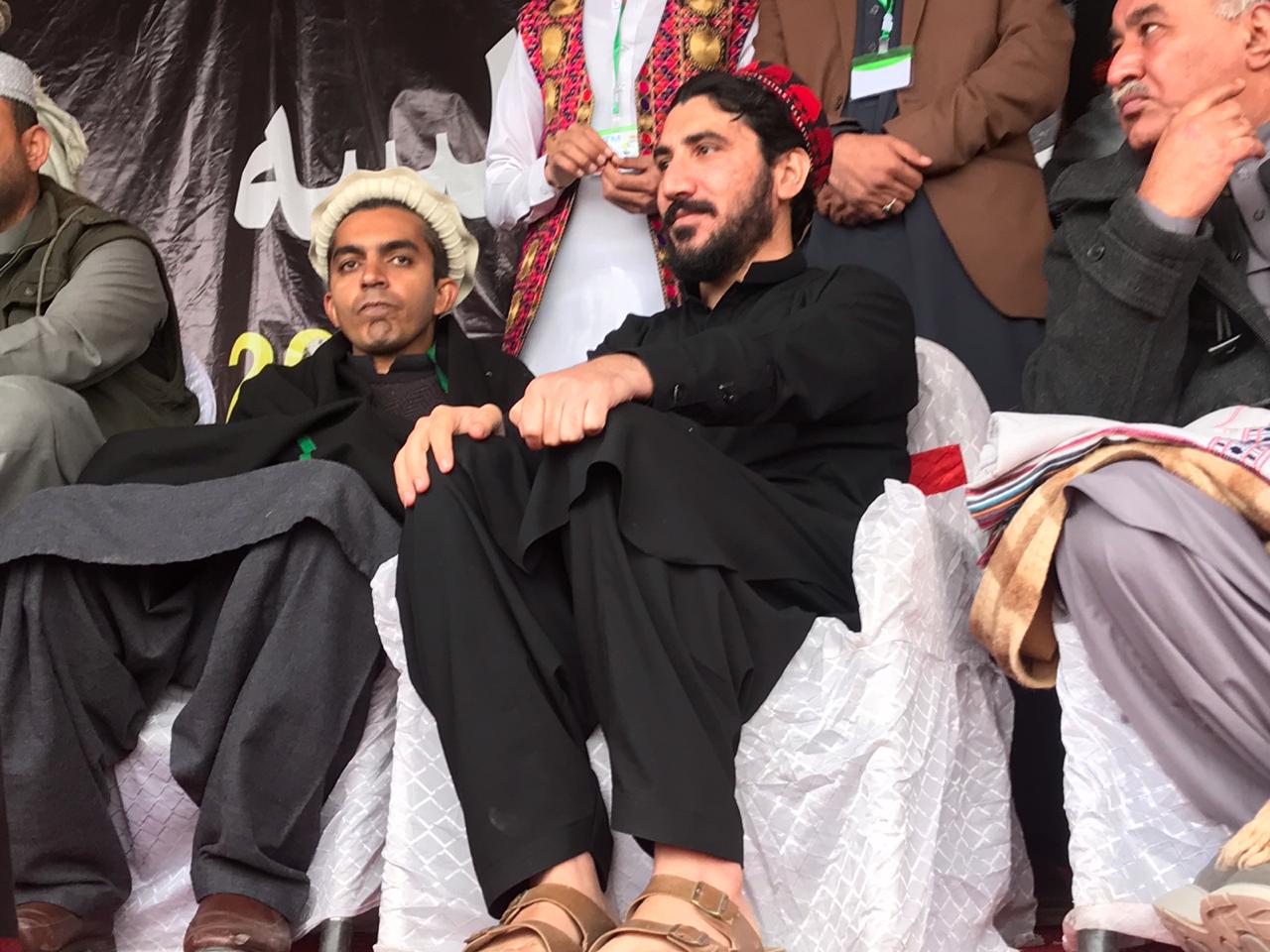
پشتونوں کے حقوق کے لیے آواز اٹھانے کا دعوی کرنے والی تنظیم پشتون تحفظ موومنٹ کے سربراہ منظور پشتین نے پی ٹی ایم کے زیر اہتمام ضلع بنوں منڈان پارک میں جلسہ عام سے خطاب کرتے ہوئے کہا کہ وہ تمام سیاسی پارٹیوں کے ساتھ بیٹھ کر پشتونوں کے حقوق کی بات کو آگے لے کر جانا چاہتے ہیں۔
پی ٹی ایم کی جانب سے کئی ماہ کے بعد خیبر پختونخوا ضلع بنوں میں جلسے کا اہتمام کیا گیا جس میں تنظیم کے سربراہ سمیت ارکان قومی اسمبلی محسن داوڑ، علی وزیر اور صوبائی اسمبلی کے رکن میر کلام وزیر کے بھی شرکت کی۔

عوامی نیشنل پارٹی کے سربراہ کی جانب سے مشال ریڈیو پر ایک انٹرویو میں پی ٹی ایم پر الزام لگایا گیا تھا کہ یہ تنظیم ملک کے اداروں کے خلاف پرتشدد باتیں کرتی ہے اور اسی وجہ سے وہ پی ٹی ایم کی موجودہ روش کو سپورٹ نہیں کرتےدوران خطاب رکن قومی اسمبلی نے مزید کہا کہ پی ٹی ایم ہی کی وجہ سےآج پشتونوں کو حکومتی اداروں میں عزت کی نگاہ سے دیکھا جاتا ہے اور پشتونوں کا مسئلہ بھی عالمی سطح پر اجاگر ہو رہا ہے نیز پی ٹی ایم ہی کی وجہ سے ہی راؤ انوار پر عالمی پابندیاں عائد کی گئی ہیں۔

جلسے سے خطاب کرتے ہوئے منظور پشتین  نے کسی کام نام لیے بغیر کہا کہ ’پی ٹی ایم کو اگر کوئی گالی بھی دے، جو مرضی الزام لگائے لیکن ہم پھر بھی ملک کی تمام سیاسی پارٹیوں کے ساتھ اتحاد کرنے اور ان کے ساتھ بیٹھ کر پشتونوں کے مسائل حل کرنے کے لیے تیار ہیں۔‘
انھوں نے  جلسے کے شرکا کو مخاطب کرتے ہوئے کہا ’آپ لوگ میرے ساتھ وعدہ کریں کہ ہم سیاسی پارٹیوں کے سربراہان کے پاس جرگہ لے کر جائیں گےتاکہ ہم مل کر پشتونوں کے حقوق کی بات کر سکیں۔ چاہے وہ اسفندیار ولی خان ہوں، محمود خان اچکزئی ہوں، مولانا فضل الرحمٰن ہوں یا آفتاب شیرپاؤ، ہم ان کے پاس جائیں گے۔‘
دیگر سیاسی پارٹیوں پر تنقید اور ان کے سربراہان کے خلاف باتیں کرنے کے حوالے سے منظور پشتین کا کہنا تھا کہ اس مجمعے میں اگر کوئی کسی بھی سیاسی لیڈر کے خلاف کچھ بھی کہتا ہے تو وہ اس کا ذاتی فعل ہوگا اوروہ پی ٹی ایم کا موقف بالکل نہیں ہوگا۔
انھوں نے دوران خطاب کہا کہ ’ہم ہر مظلوم کے ساتھ ہیں چاہے اس کا تعلق کسی بھی پارٹی یا تنظیم سے ہے۔ ہم اس کے لیے آواز اٹھائیں گے اور اس کے حقوق پر کسی قسم کا سمجھوتہ نہیں کریں گے۔‘
اپنے خطاب کے آخر میں انھوں نے پی ٹی ایم کے یوم تاسیس کے سلسلے میں دو فروری کو کوئٹہ میں جلسے کا اعلان کرتے ہوئے کہا کہ جلسوں کا یہ سلسلہ دوبارہ شروع ہوگیا ہے اور اس کے بعد مردان، چارسدہ سمیت دیگر مختلف اضلاع میں جلسے منعقد کریں گے۔
رکن قومی اسمبلی محسن داوڑ نے جلسے سے خطاب میں کہا کہ  کچھ مہینے پہلے کہا گیا تھا کہ ’پی ٹی ایم کا وقت ختم ہوگیا اور پی ٹی ایم جلسے نہیں کر سکتی  لیکن ہم بتانا چاہتے ہیں کہ پی ٹی ایم کوئی بھی ختم نہیں کر سکتا اور آج کا یہ جلسہ اس بات کا ثبوت ہے۔‘
انھوں نے شرکا کو مخاطب کرتے ہوئے کہا کہ ’آپ لوگ مایوس نہیں ہوں گے کیونکہ پی ٹی ایم ہی کی وجہ سےآج پشتونوں کو حکومتی اداروں میں عزت کی نگاہ سے دیکھا جاتا ہے اور پی ٹی ایم ہی کی وجہ سے پشتونوں کا مسئلہ عالمی سطح پر اجاگر ہو رہا ہے نیز پی ٹی ایم ہی کی وجہ سے پشتونوں کے قاتل راؤ انوار پر عالمی پابندیاں عائد کی گئی ہیں۔‘
واضح رہے کہ پی ٹی ایم نے ماضی میں ریاستی اداروں پر  مختلف الزامات لگائے ہیں جن میں لاپتہ افراد کا معاملہ سر فہرست ہے۔ پی ٹی ایم کا موقف رہا ہے کہ بغیر کسی ثبوت کے ریاستی اداروں کی جانب سے لوگوں کو لاپتہ کیا جاتا ہے اور کسی بھی عدالت میں پیش نہیں کیا جاتا۔ تاہم پی ٹی ایم کی جانب سے لگائے گئے تمام الزامات کی تردید پاکستان کے ریاستی اداروں اور حکومتی وزرا نے مختلف مواقع پر کی ہے۔ ماضی میں پاکستان فوج کے ترجمان پی ٹی ایم کے بیرونی فنڈنگ معاملے میں مبینہ طور پر ملوث ہونے کے حوالے سے بھی بیانات دے چکے ہیں۔
پی ٹی ایم کے بنوں جلسے میں مختلف ایسے خاندانوں نے بھی شرکت کی جن کے اپنے پیارے لاپتہ ہیں۔ ان لاپتہ افراد کے رشتہ داروں نے پلے کارڈز اٹھا رکھے تھے جن میں لاپتہ افراد کے کوائف درج تھے۔
مقامی میڈیا کی جانب سے جلسے کا بلیک آوٹ
مقامی میڈیا کی جانب سے بنوں جلسے کو کوریج نہ دی جا سکی۔ میڈیا مانیٹرنگ کے دوران صرف پشتو چینل خیبر نیوز پر جلسے کی کوریج دیکھنے کو ملی ۔ ماضی میں بھی مقامی میڈیا کی جانب سے پی ٹی ایم کے جلسوں کی کوریج نہ ہونے کے برابر رہی ہے اور زیادہ تر 
چینلز پی ٹی ایم جلسوں کو مکمل نظر انداز کرتے ہیں۔

#PashtunTahfafuzMovement - پي ټي اېم: پاکستان دې د بل جنګ برخه نه جوړېږي - زرګونو کسانو د بنو جلسه کې ګډون وکړ

پښتون ژغورنې غورځنګ [ پي ټي اېم]، د جنورۍ پر ۱۲مه، په بنو کې د جلسې پر مهال پر حکومت غږ وکړ چې په منځني ختیځ کې دې د شخړې برخه نه جوړېږي.

پښتون ژغورنې غورځنګ، د جنورۍ پر ۱۲مه، په بنو کې د جلسې پر مهال پر حکومت نیوکه وکړه چې د پښتنو حقونو ته یې پام نه دی کړی. هغوی همدا راز اعلان وکړ چې راتلونکې جلسه به یې د فبرورۍ پر دویمه وي چې پکې به د پي ټي اېم د وژل شوي مشر ارمان لوڼي تلین هم لمانځل کېږي.
جلسه د بنو په منډان پارک کې وشوه چې لږ تر لږه ۲۰ زرو کسانو پکې ګډون وکړ چې په منځ کې یې د هغو کورنیو غړي هم وو چې خپلوان یې ورک دي. هغوی تور پورې کوي چې امنیتي ادارې د خلکو په ورکولو لاس لري، خو حکومت دا تورونه ردوي.
جلسې ته د پښتون غورنې غورځنګ مشرانو ویناوې وکړې.

منظور پښتین:

منظور پښتین جلسې ته د وینا پر مهال وویل، پاکستاني ریاست د پښتنو په وړاندې له ظلمه ډکه رویه نده بدله کړې. نوموړي وویل چې په یو شمېر سیمو کې ریاست یو ځل بیا د خپلې خوښې وسله وال پورته کړي دي او خلک پرې ځوروي.
د هغه په وینا د ایین له مخې ورته حقونه نه ورکول کېږي خو چې کله جلسه وکړي، بیا همدا ایین د هغوی پر ضد کارول کېږي او ملګري یې نیول کېږي.
نوموړي وویل، د نقیب الله مسود او سلګونو نورو کسانو قاتل راوانوار تر اوسه ازاد ګرځي خو د هغوی ملګري په جیلونو کې دي.
منظور پښتین زیاته کړه چې هغوی پر پښتنه خاوره د هر ډول مرګ ژوبلې مخالف دي.

علي وزیر:

د پاکستان په قامي اسمبلۍ کې د جنوبي وزیرستان د خلکو استازي علي وزیر جلسې ته د وینا پرمهال په منځني ختیځ کې د ایران او امریکا تر منځ ترینګلتیا ته په اشاره وویل، هغوی د هر ډول تصادم خلاف دي.
علي وزیر وویل، د پښتنو خاوره تل د پردو د جنګونو لپاره کارول شوې ده خو اوس خلک پوه شوي، هغوی د دغو جنګونو مخالفت کوي او خپلو ماشومانو ته د روښانه سباوون غوښتونکي دي، هغوی د قلم او کتاب غوښتونکي دي.
محسن داوړ وايي د پي ټي اېم هڅې دي چې حکومت خلکو ته معاوضې ورکوي

محسن داوړ:

د پښتون ژغورنې غورځنګ مخکښ مشر او د قامي اسمبلۍ غړي محسن داوړ د بنو جلسې ته په وینا کې وویل، دا د پي ټي اېم برکت دی چې حکومت په قبایلي ضلعو کې خلکو ته د هغوی د شویو تاوانونو معاوضې ورکوي. هغه زیاته کړه چې تر هغې به خپله مبارزه جاري ساتي چې پښتنو ته یې پوره حقونه ترلاسه کړي نه وي.

میرکلام وزیر:

په صوبايي اسمبلۍ کې د شمالي وزیرستان د خلکو استازي میرکلام وزیر جلسې ته په وینا کې وویل، د پاکستان د نورو سیمو خلک چې له کومو حقونو څخه برخمن دي، د قبایلي ضلعو خلک ترې تر اوسه محرومه ساتل شوي دي. نوموړی وايي، حکومت پر هغو تورونه لګوي خو غوښتنو ته یې سم ځواب نه وايي.

عالم زېب مسود:

عالم زیب مسود چې د پي ټي اېم غړی دی او د ورکو کسانو په اړه معلومات لري مشال راډیو ته وویل، اوس هم له ۲۵۰۰ نیولې تر ۳۰۰۰ پورې کسان ورک دي.
د میرلي یوې مېرمنې د جلسې ځای کې مشال راډیو ته وویل:
"خاوند مې ورک شوی دی، زه منظور پښتین ته وایم چې زما خاوند دې راله پیدا کړي. که هغه مجرم وي، عدالت ته دې وړاندې کړي، که نه وي نو خوشې دې کړي. موږ خو په دعاګانو، ژړاګانو او ختمونو هم ستړي شولو. پینځه کاله کېږي چې هغه ورک ده."
پښتون ژغورنې غورځنګ د دې کسانو د تښتولو تور د پاکستان پر امنیتي ادارو پورې کوي خو هغوي یې نه مني.

د پي ټي اېم راتونکې جلسه:

منظور پښتین اعلان وکړ چې د غورځنګ د وژل شوي غړي ارمان لوڼي د لومړي تلین پر مهال به د بلوچستان په پښتنه سیمه کې جلسه کوي.
ارمان لوڼی او خور یې وړانګه لوڼۍ
ارمان لوڼی د ۲۰۱۹م کال د فبرورۍ پر دویمه په لورالايي کې وژل شوی وو. د پښتون ژغورنې غورځنګ مشران وايي، ارمان لوڼی د پولیسو لخوا د تشدد پر مهال وژل شوی وو، خو حکومت دا نه مني او وايي، د پلټنو پر مهال پر هغه د زړه حمله شوې وه چې له وجې یې هغه مړ شو.

د حکومت او پوځ دریځ:

د پاکستان حکومت او پوځ د جنورۍ پر ۱۲مه د پښتون ژغورنې غورځنګ د مخکښانو او ملاتړو د څرګندونو په غبرګون کې څه نه دي ویلي خو تر دې وړاندې یې په بیا بیا د پي ټي اېم د زیاتره غوښتنو د منلو خبره تکرار کړې چې پکې د ترۍ تمو کسانو موندل هم شامل دي.
حکومت وايي، تر اوسه سلګونه ورک کسان موندل شوي او کورنیو ته یې سپارل شوي دي.
پي ټي اېم د پاکستان له حکومته غواړي چې د ماورای عدالت وژنو مخه ونیسي، ورک او ګرفتار کسان عدالت ته وړاندې کړي، قبایلي سیمې له ځمکلاندې بمونو پاکې کړي او په سیمه کې بشري حقونه باوري کړي.
د پاکستان حکومت او پوځ د دې غوښتنو د پوره کولو ډاډ ورکړی.
د نقیب مسود په وژنه تورن پولیس افسر راو انوار هم تر مقدمې لاندې دی خو په ضمانت خوشې شوی دی.
د پاکستان چارواکي وايي، د مسود کورنۍ ته انصاف ورکوي.

Pashtun Tahaffuz Movement Holds Rally in Pakistan, Calls for Pashtun Unity

The Pashtun Tahaffuz Movement has formed a jirga—a local council—to strengthen unity among Pashtun leaders.
The Pashtun Tahaffuz Movement (PTM) held a public gathering in the city of Bannu in Khyber Pakhtunkhwa on Sunday, calling for unity among Pashtun leaders, Pakistani news agencies reported.
Pakistan’s Dawn.com reported that PTM leader Manzoor Pashteen and other leaders of the movement, Ali Wazir and Mohsin Dawar, addressed the crowd.
PTM is a Pashtun-rights group that has called for the de-mining of the former tribal areas and greater freedom of movement. It has called for an end to “extrajudicial killings, enforced disappearances and unlawful detentions,” according to a Dawn report.
According to PTM members, almost 30,000 people from the two provinces – Khyber Pakhtunkhwa and Baluchistan – have gone missing over the past 10 years. Pakistan’s army and ISI--the Pakistani intelligence agency--appear to be behind the disappearances, according to the PTM.
However, the Human Rights Commission of Pakistan has said that the number of missing individuals is 1,532.
In Sunday’s rally, Dawn reports, the movement’s leadership announced the formation of a jirga to convince Pashtun leaders to join the PTM to strengthen its cause and jointly fight for Pashtuns’ rights.
“We want the unity of Pashtuns,” said Manzoor Pashteen, while addressing the gathering, as quoted by Dawn.
“Pashtuns have suffered for long and are still suffering,” he said, asking that Pashtun political leaders unite. Pashteen added that they were not opposing any political party or Pashtun leader.
“We want peace and justice, but unfortunately, new waves of targeted killings have been seen in (the) former tribal belt and justice is not being served,” Pashteen said.
Pashteen said that PTM is a civil movement, not a political party, and will continue to struggle for the rights of Pakhtuns.
“I assure you, PTM will always stand by you in any difficult time," Pashteen told the gathering.
The report says that the gathering was also addressed by Arman Loni's sister. Loni was a prominent PTM leader who died allegedly during a police crackdown during a sit-in in Balochistan's Loralai on February 2, 2019.
PTM will hold a public gathering in Baluchistan in February on the anniversary of Loni's death.
https://tolonews.com/world/ptm-holds-rally-pakistan-calls-pashtun-unity

Saturday, January 11, 2020

Video Report - Prime Minister Justin Trudeau says many questions must be answered

Pashto Music - larsha pekhawar

Ahmad Zahir - اوبه درته راورم سابه درته پاخم درزم درسره خانه ده ورانشه جوگی

Music Video - Ahmad Zahir "Khuda Bowad Yaret" -

Music - #PPPPashtosong #Pashto - #PPP Pashto Song

The United States has generated a Level 2 travel alert for Pakistan and other polio-endemic Asian countries

The United States has generated a Level 2 travel alert for Pakistan and other polio-endemic Asian countries following outbreak of the crippling disease, declaring the life-time booster dose for adults mandatory during the period of restrictions imposed by the World Health Organisation (WHO).
The US issued new guidelines for travelers bound for polio-endemic countries on the recommendations of its federal agency -- Center for Disease Control and Prevention (CDC) -- to stop spread of the virus to other states. “The World Health Organization recommends that these countries require residents and long-term (four weeks or more) visitors show proof of polio vaccination before leaving the country,” reads the level 2 travel alert by the US.
It says before traveling to these countries, adults who have completed their routine polio vaccine series as children should receive a single, lifetime adult booster dose of polio vaccine.
According to the CDC, the polio outbreaks have been reported in eight Asian countries including Pakistan, Afghanistan, China, Burma, Indonesia, Malaysia , Papua New Guinea and Philippines.
Particularly, the WHO had extended travel restrictions on Pakistan following frequent outbreaks of vaccine-derived poli-ovirus type 2 (cVDPV2) and wild polio-virus type 1 (WP1) cases.
Level 2 guidelines require visitors to show proof of polio vaccination
What can travelers do to prevent polio?
According to the US travel alert 2, the CDC recommends that all travelers to the countries in-question be vaccinated fully against polio.
The adults who were fully vaccinated during childhood should receive an additional (single) lifetime booster dose of polio vaccine.
“Even if you were vaccinated as a child or have been sick with polio before, you may need a booster dose to make sure you are protected”, reads the alert The World Health Organization recommends that these countries require residents and long-term (4 weeks or more) visitors show proof of polio vaccination before leaving the country, according to the CDC.
Clinician information
For travelers going to countries with circulating polio-virus who have completed their routine polio vaccine series but who have not already received an adult booster dose, the CDC recommends administering an inactivated poliovirus vaccine (IPV) booster dose.
Federal government version
A spokesperson for the Ministry of National Health Services, Regulations & Coordination (MoNHSRC), said on Friday that Pakistan faced a challenging year for polio eradication in 2019.
“As of today, 134 of our children have been paralysed by this debilitating disease”, he said adding that the government had put in place a comprehensive plan to reverse the situation in 2020, starting with a successful nationwide polio vaccination campaign last month.
Commenting on the WHO IHR
Emergency Committee recommendations regarding vaccination of international travellers from Pakistan and other infected countries, the spokesperson said that these were first implemented in May 2014 to prevent the transmission of virus from infected countries to other areas.
“Pakistan implemented the same immediately as a responsible member of the international community and has been doing so since then”, he said.
According to him, over 500,000 international travellers from Pakistan received polio vaccine every month prior to departure and the certificate issued in this respect was valid for 12 months.
Around 180,000 travellers of all ages were additionally vaccinated every month at Pak-Afghan border crossings.
Pakistan polio eradication programme faced special challenges in 2019 which led to resurgence of polio cases during the year, he said.
The programme, however, conducted a critical analysis of the situation and devised a comprehensive strategy to overcome challenges in sustainable manner.
“Our fightback has already started through the successful Dec NID that was inaugurated by the prime minister in the federal capital and all chief ministers in respective provinces”, the spokesperson said.
He added that a total of 40 million under five year age children were successfully reached and vaccinated to protect them against the crippling virus.
He said that the national coordinator of the Emergency Operations Centre (EOC) had planned an aggressive case response from Jan 13 targeting around 12 million children in currently infected districts.
This would be followed by two NIDs in February and April and another strategic response round during March.
“All these efforts will plug the immunity gaps and significantly reduce the transmission intensity by mid-2020 setting the stage for the final push”, he added.
Meanwhile, Minister of state for NHSRC Dr. Zafar Mirza said that the government was working across political divide to take the agenda forward as a shared priority.
“Besides extensive community engagement, the Ministry of NHSRC has already moved on integration of the Polio programme with EPI to quickly improve routine immunization coverage particularly in the high risk areas”, he said.
He said as many as many as 40 super high risk UCs had further been identified within core reservoirs where a broader package of services would be delivered aiming improvement of basic health services, nutrition as well as the safe water and sanitation by broadening partnership..
Dr Mirza also said that the transformation plan and the roadmap was shared with global leadership including the Polio Oversight Board that expressed it’s confidence on it and reassured Pakistan of the fullest support to achieve a polio free Pakistan and the world.

#Pakistan - National Political Charter (NPC) on state policies

Rehman malik
While I was on-board flying back from Karachi to Islamabad, I met several parliamentarians including Member of National Assembly Syed Agha Raif Ullah, who while sitting on the right side asked me a number of questions regarding our ‘political ethics’. The questions he asked were, why there is so political polarization in our country even on national issues and why our political leadership has so far failed to bring consensus on our national issues including our national security? I was glad to know the concern of a young MNA from Karachi. Though I responded to him on it however I decided to pen down my thoughts in an article.
I think everybody will agree that nations rise with unity and actions with the collective wisdom. Quaid-e-Azam Mohammad Ali Jinnah had laid the foundation of growth and development of this country upon three words ‘Unity, Faith and Discipline’. It is unfortunate that as a nation we ignored the real benefit of these magical words because if we remember Quaid’s principles well and accordingly act upon those, this could have changed our fate as a nation. We as a nation have lost the importance of national interest. It is a national tragedy that we failed to follow the Quaid’s principles in full spirit as we are mostly directionless in building our Economy, Foreign policies including our National Action Plan. We are out of discipline as politicians, bureaucrats, businessmen, students and even as a common members of our society that we are hardly on the same page over any issue.
The collective strength of a nation is drawn from the Parliament whereas today, we hardly see any discipline in the house as per the given legal course to be followed to lead the nation and resolve the public issues through continued processes of various legislations. However, the public now seems to be all disappointed, losing the faith in our unruly democratic institutions including the Government. It is high time that we build national consensus rather than playing blame games that we can win the confidence of our public.
Faith is something that comes from within the social fibre which solely depends upon the honest behaviours and transparency. There should be a fair practice of the criminal justice system coupled with a political ethical code of conduct to homogenize the nation and thus take it forward. This can happen only when there is an effective and unbiased rule of law with the provision of easy justice to a common man. The rule of law is not possible unless there is an element of strong and definite deterrence of law which cannot be brought about until we have an efficient system of law enforcers free of political influences and also corruption.
The nations like China, Japan, and other developed countries are already experiencing the magic of these three words coupled with their national security programs. These nations have never compromised on their discipline and national security and their internal national unity bond is exemplary. The political polarization has dented our national security since we are habitual of bringing our national institutes to disputes and instead of backing them we have seen the anti-Pakistan odd voice being backed by certain political factions. I have also dealt with such anti -Pakistan elements as a law enforcer and Interior Minister.
I can only appeal to all political parties that for the sake of our future generation, let us end our political polarization and we should always follow an agreed political charter whereby we must work with the collective mind to give the nation flawless policies to take the country out of the crisis. Let us all move our directions to a permanent ‘Political National Charter’ collectively on the following main terms of reference; National security, National Economy , National Foreign Policy and National Political Ethics. Let this charter be discussed in the parliament and it should be signed with an SOP to be followed. Let there be a debate in the house to ensure the enactment of the charter as per the national interest. The proposed charter is the need of the time to make our country stronger and prosperous. Let us name it as the ‘Political National Charter’ duly agreed by all political parties of the country that we can give confidence to a common man and all factions of the society.
Let this become a well-defined and nationwide accepted document to become SOP between the politicians and the common man. Let there be ownership of the people of Pakistan. I hope one day this national dream will come true and I will move a motion for discussion on in the Senate and an act of parliament shall be moved to the house.
https://nation.com.pk/11-Jan-2020/national-political-charter-npc-on-state-policies

All that remains for Pakistan now is to hope Gen Bajwa doesn’t turn out to be Gen Ayub Khan

HUSAIN HAQQANI
Pakistani politicians who once pushed for control over policy-making have accepted that they can’t have that control. So they chose to hand it over to the military. Only a few brave politicians and intellectuals objected to the overwhelming vote by Pakistan’s parliament to extend the tenure of Army chief General Qamar Javed Bajwa for another three years. Little debate or discussion preceded the vote, as if parliament was rubber-stamping a decision rather than making one.
General Qamar Bajwa now has a free hand to run Pakistan, with a minimal civilian façade, backed by apparent parliamentary consensus and little opposition.
General Bajwa’s confidantes say he will concentrate on enacting reforms that Pakistan’s divided elite has failed to enact. He would like to use his position to create circumstances to end future military interventions.
Given Pakistan’s history, there remains a lot of scepticism. But the army’s de facto primacy in Pakistan has long been recognised and one wonders what difference, if any, would be made by providing it de jure sanction through nearly unanimous legislation.
Opposition’s surrender
For the few supporters of civilian supremacy in Pakistan’s public square, the conduct of mainstream opposition parties – the Pakistan Muslim League Nawaz (PML-N) led by former prime minister Nawaz Sharif, and Pakistan Peoples Party (PPP) headed by former president Asif Zardari – was disappointing.Both parties have spoken in the past against the Pakistani military’s political role. But they conceded consolidation of power by the current military chief, ostensibly in return for having criminal proceedings that had kept their leaders in prison. Some politicians argued rather incredulously that by bringing the matter to parliament, the Pakistani military was conceding civilian supremacy.
A total of 315 legislators from various political parties in both houses of parliament effectively voted in favour of General Bajwa’s extension. This marks the end of the assumption that the military is content with ‘being on one page’ with the weak and ineffective prime minister, Imran Khan, and his Pakistan Tehreek-e-Insaf (PTI). The two major parties, PML-N and PPP, are expecting fresh elections and would probably be happy to be General Bajwa’s new political partners.
Failure of political class
The military has been the anchor for the ship of state in Pakistan since 1951. But after the collapse of the military regime headed by General Pervez Musharraf in 2008, people thought the generals had understood that soldiers alone cannot ensure a country’s progress. Instead of assuming power directly, they seemed willing to share responsibility with the elected politicians in running Pakistan.
Relations between Pakistan’s generals and politicians have never been smooth under dyarchy, or dual control. There was always deference to the military’s concerns in foreign policy and matters pertaining to national security. But the politicians’ performance was far from exemplary even in their own domain.
The politicians who pushed for greater control over policy-making in the last decade now seem to have accepted that they cannot have that control. Mainstream politics in Pakistan has become an arrangement for distribution of patronage, in which opposition to the military is voiced primarily when a leader or a political party faces allegations of corruption and bad governance.
Had Pakistan’s politicians been able to keep their hands relatively clean and abided by constitutional norms and democratic traditions, the gradual democratisation of Pakistan might have been easier.
Pakistan’s generals are rightly blamed for their part in the country’s difficulties. But the political class, too, has obstructed Pakistan’s transition along the lines of Indonesia or Chile, where sustained civilian rule has successfully followed military dictatorship.
Also read: Pakistan needs to stop thinking of Kashmir as an unfinished business of Partition Military’s image makeover When General Qamar Bajwa became army chief in November 2016, he apparently decided that Pakistan could not afford to be pulled in different directions by the military and the civilians. There is considerable potential in stable civil-military relations and Gen Bajwa expressed a desire to make Pakistan a ‘normal country.’ Unlike General Raheel Sharif, Bajwa did not want a personality cult for himself, nor did he focus solely on getting an extension in his three-year tenure, as General Ashfaq Parvez Kayani had preferred. After getting the three-year extension in tenure, Bajwa’s interest is now said to be in correcting the country’s course from General Headquarters (GHQ) through parliament and civilian institutions. As is often the case with well laid out plans of absolute control, Pakistan’s current dispensation has had its share of setbacks. The Supreme Court’s outgoing Chief Justice, Asif Saeed Khosa, waited until the last few weeks of his tenure to deliver a series of judgments that challenged Bajwa’s plans. The extension of Bajwa’s tenure as army chief by three years was determined by the Court as not possible under existing laws. The Supreme Court allowed a six-month extension to enable a legal fix, which has come in the form of the latest amendment in the Pakistan Army Act. Consensus among disparate parties in parliament to enable Bajwa’s extension was worked out to help recover the military’s image. That image had been somewhat dented by the Supreme Court’s challenge to Bajwa’s extension as well as another court sentencing former army chief General Musharraf to death for treason over his suspension of the Constitution in 2007.
Gen Bajwa vs Gen Ayub Khan
Having secured his extension with parliament’s blessing, General Bajwa would now like to focus on straightening out Pakistan’s economy, suppressing Jihadi terrorism, working out a peace deal in Afghanistan, finding a balance in ties with China and the US as well as between Iran and Saudi Arabia, and normalising relations with India without giving up on Pakistan’s claims on Kashmir.
That daunting agenda ahead might need more than a general’s sincerity and patriotism. Bajwa stands now at a point similar to where General Ayub Khan stood soon after taking over the reins of power in October 1958. Hardly anyone opposed Ayub Khan’s authority in his first few months as Pakistan’s absolute ruler.
As he progressed towards becoming Field Marshal, he found that his solutions to some problems generated new issues. Some of his decisions turned allies into critics and critics into virulent opponents.
Ayub Khan made the mistake of assuming that diverse opinions and policy prescriptions were damaging for Pakistan; that politicians and independent-thinking civilians were untrustworthy and lacking in national spirit; and that learning from the past meant determining whom to blame rather than figuring out what those mistakes might have been.
Can General Bajwa move past those assumptions?
https://theprint.in/opinion/all-that-remains-for-pakistan-now-is-to-hope-gen-bajwa-doesnt-turn-out-to-be-gen-ayub-khan/347967/

حکومت اور ن لیگ کا این آر او ہوگیا، اعتزاز احسن

پیپلز پارٹی کے سینئر رہنما اور نامور وکیل اعتراز احسن نے دعویٰ کیا ہے کہ تحریک انصاف کی حکومت اور اپوزیشن کی بڑی جماعت مسلم لیگ ن میں این آر او ہوگیا ہے۔
الحمرا ہال لاہور میں 2 روزہ تھنک فیسٹیول کے افتتاحی سیشن کے موقع پر میڈیا سے گفتگو میں اعتزاز احسن نے کہا کہ وہ 1985ء سے نواز شریف پر اعتبار نہیں کرتے۔
انہوں نے کہا کہ وزیراعظم عمران خان کہتے رہ گئے مگر این آر او تو ہوگیا، نواز شریف (ن) لیگ کے ووٹ بیچ کر باہر چلے گئے۔
اعتزاز احسن نے مزید کہا کہ میاں صاحب نے آرمی ایکٹ میں ترمیم کے لیے بہت زیادہ پھرتی دکھائی، پیپلزپارٹی آرمی ایکٹ میں ترمیم کے لیے ووٹ دینے کے حق میں نہیں تھی۔
ان کا کہنا تھا کہ پاکستان میں بدقسمتی سے سویلین بالادستی کبھی نہیں رہی، ایک فوجی نواز شریف کو گرفتار کرکے سارے خاندان سمیت سعودی عرب بھیج دیتا ہے۔
پی پی کے سینئر رہنما نے یہ بھی کہا کہ نواز شریف نے پیسے نہیں دیے، انہوں نے 80 ایم این ایز کے ووٹ بیچ دیے۔
انہوں نے کہا کہ جنرل (ر) پرویز مشرف نے مارشل لاء لگا کر غلط کیا، آرمی چیف کے پاس کوئی اختیار نہیں کہ وہ آئین معطل کرے۔
اعتزاز احسن نے مزید کہا کہ وزیراعظم عمران خان کی بات پر کوئی یقین کرنے کو تیار نہیں کہ وہ اپنے بیان پر قائم رہیں گے، وہ تو سعودی عرب سے فون آنے پر ہی اپنی بات سے پھر جاتے ہیں۔
ان کا کہنا تھا کہ بلاول بھٹو زرداری کی قابلیت پر شک نہیں، وہ ایک نوجوان سے قد آور سیاستدان کی طرف بڑھ رہے ہیں۔
پی پی رہنما نے بھارتی سیاست پر تبصرہ کرتے ہوئے کہا کہ شہریت بل نریندر مودی کے لیے وبال جان بن گیا ہے، بھارتی ہندو بھی وہاں کے مسلمانوں کا ساتھ دے رہے ہیں، اب بھارتی وزیراعظم کی جان چھوٹنے والی نہیں۔

Bomb Blast Claimed by ISIS Kills at Least 15 in Pakistan Mosque Used by Taliban

By Salman Masood and Zia ur-Rehman
The bomb, which tore through Friday evening prayers at a mosque in Quetta, Pakistan, also injured at least 18 more, with many in critical condition.
A bomb blast inside a mosque in southwestern Pakistan, believed to be frequented by senior Taliban figures, killed at least 15 people on Friday and wounded at least 18 more, according to police officials.
Several of the wounded were in critical condition, and hospital authorities feared the death toll could climb further.
The blast tore through a mosque during evening prayers in Quetta, the provincial capital of Baluchistan Province, which borders Afghanistan and Iran.
The Islamic State claimed responsibility for the bombing, according to the SITE intelligence group.
A local leader of a religious political party in Pakistan, who is familiar with Taliban networks in the country and spoke on condition of anonymity because of fear for his safety, said that the mosque was sometimes used by a Taliban leader, Mawlawi Abdul Hakeem, but he was not present at the time of the attack.
The Taliban and the Islamic State have battled each other for control of territory in Afghanistan, and Afghan Taliban leaders have long used sanctuaries across the border in Pakistan. But Qari Muhammad Yousuf Ahmadi, a Taliban spokesman, said that no Taliban leader was present and no meeting was taking place at the mosque when it was struck with the bombing.
The head cleric of the mosque and a police officer were among those killed.
Paramilitary troops reached the mosque soon after the bombing and cordoned off the area for further investigations.
Pakistani civil and military leaders condemned the bombing, calling it an act of terrorism.
“Those who targeted innocents in a mosque can never be true Muslim,” said Gen. Qamar Javed Bajwa, the Pakistan army chief, as quoted by a military spokesman, Maj. Gen. Asif Ghafoor.
Quetta has a history of sectarian and militant-related violence. Sunni militant groups there have in the past targeted the country’s minority Shiite Muslims. And a secessionist group, the Baluchistan Liberation Army, has waged a low-level insurgency for years. The secessionists are demanding more autonomy and a greater share in the region’s natural resources, such as gas and oil.
On August 16, 2019, a bomb exploded near Quetta at a mosque frequented by the Taliban’s supreme leader, Mawlawi Haibatullah Akhundzada. He was not in the mosque during the explosion but one of his brothers was killed.
https://www.nytimes.com/2020/01/10/world/asia/pakistan-mosque-bombing-isis-taliban.html

Friday, January 10, 2020

#PPP Music Video - Bilawal Bhutto - Sindhi Song 2020

#Pakistan - Blasphemy laws need reforming not toughening


While observers from around the world are horrified to see how lives like that of Asia Bibi’s can be torn apart by our current blasphemy laws, many inside the country see things rather differently. They consider the already stringent laws too lenient.
Recently the Punjab Assembly unanimously passed a resolution asking the government to improve existing laws or make new ones to punish blasphemers more sternly. The resolution also calls for a central screening system, like that used in Saudi Arabia, to intercept blasphemous content on social media. It seems they would prefer a surveillance state to the chance that someone could type something that might cause offence.
The resolution suggests that the current blasphemy laws aren’t being enforced properly. Some people, they claim, are committing blasphemy under the guise of freedom of expression. According to the resolution, blasphemous content is available online, while blasphemous books are being brought into the country.
They seem unconcerned with the major problem with the laws as they stand. That the laws are being used as a tool for persecution and oppression, especially against the religious minorities. That they can be used as an excuse to intimidate and threaten religious minorities and justify violent attacks and arson on their homes and places of prayer.
There has been a continuous increase in the registering of blasphemy cases since the law was amended in 1986 by the military ruler General Zia-ul-Haq. But that doesn’t mean that blasphemy is on the rise. The testimonies of many innocent men and women suggest another reason. More and more people are learning that this is an easy, cheap and quick way to settle personal scores against their enemies, especially if their adversaries aren’t Muslim and are less likely to be listened to in court.
Because of inaction from government, extrajudicial or vigilante killings have increased. Government fails to bring the perpetrators to justice. This encourages the hate-mongering mullahs and citizens to take the law into their own hands and justify killing in the name of religion. it undermines the courts and the justice system as well as tearing the lives of innocent families apart.
When in 2011 Mumtaz Qadri killed the then governor of Punjab, Salmaan Taseer in broad daylight for supporting Asia Bibi, he was treated like a hero by many. After Qadri was convicted and executed an elaborate shrine and mosque were erected in his honour on the outskirts of Islamabad.
Later that year, Shahbaz Bhatti, the only Christian minister in parliament, was killed for calling for reforms to the blasphemy law. Several people including Sherry Rehman were threatened with death and silenced.
These are surely the sort of things that would scandalise anyone, be they Christian or Muslim.
Though voices have largely been silent from inside the country, we have seen the international community repeatedly call for repeal or for appropriate changes to be made to Pakistan’s blasphemy laws to stop their terrible abuse. Yet we are supposed to believe that the only problem with the laws is their leniency. And it’s not just the Punjab Assembly calling for such changes.
In 2018, Hammad Azhar, the then Minister of State for Revenue, made a similar request, presenting the Prevention of Electronic Crimes(Amendment) Bill 2018 to make the blasphemy law harsher by adding new offences.
Blasphemy laws are inconsistent with universal human rights, several western countries have already removed them from their statute books.
The Senate human rights committee has suggested that someone making a false accusation of blasphemy should face a similar punishment to someone found guilty of blasphemy. It may not be the best solution, but it would at least encourage someone planning to make a false accusation to think again. The committee also recommended that anyone accusing somebody of blasphemy should come up with two witnesses to corroborate his claim. Government ignored both the suggestions.
When vicious vigilante attacks take place following false allegations, there are assurances that the killers would be brought to justice. However, there doesn’t seem to be any will to do that.
In 2009, after a bloody attack in Gojra where eight Christians were burnt alive and hundreds were injured, a one-man tribunal was set up to investigate the incident and to prepare recommendations. The report was handed over to the then chief minister Shehbaz Sharif in October 2009, seeking an immediate implementation of the recommendations, but todate, nothing has been done in that regard. Instead, there are continued efforts to make this law more stringent through parliament.
Since then several innocent men and women have been killed by vigilantes. The twenty-five-year-old Mashal Khan who was studying at the Abdul Wali Khan University Mardan was lynched by his fellow students. The Christian couple Shama and Shahzad were burnt alive in a brick kiln furnace. That such mob brutality is possible suggests something is wrong with the current laws and their implementation, not that they are too lenient.
Meanwhile, dozens languish in jails, often with a death sentence hanging over them, all based on the flimsiest of allegations and little or nothing in the way of solid evidence.
Wajih-ul-Hassan was released by the Supreme Court after almost eighteen years in jail. The prosecution failed to provide any substantial evidence against him. Eighteen years for a piece of hearsay, yet nobody is willing to express their regret, or reform the justice system.
Asia Bibi was released last year after nine years, while there are several victims of this law awaiting their trial. Though Pakistani politicians have completely failed to bring the issue of the misuse of the blasphemy laws to parliament, international human rights organisations seem more concerned and regularly raise their voices against the abusive implementation of this law.Western politicians often speak against the misuse of the law; even the European parliament, House of Commons and House of Lords have discussed the impact of the blasphemy law and have repeatedly called on the Pakistani government to reform this law. But it is all falling on deaf ears and, instead, the present government has twice discussed making this law more stringent instead of listening to the international community and stopping the killing of innocent people in the name of religion.
Blasphemy laws are inconsistent with universal human rights, several western countries have already removed them from their statute books. Pakistan needs to follow suit in spite of vested interests that argue in favour of more laws, not fewer. Pakistan is in the top five countries where the blasphemy law is regularly misused. Government must understand that there is no place for such a law in the 21st century.
https://dailytimes.com.pk/536167/blasphemy-laws-need-reforming-not-toughening/

MIDDLE CLASS ON VERGE OF ‘EXTINCTION’ IN #PAKISTAN

OPPOSITION SLAMS INCUMBENT GOVERNMENT OVER ITS CLAIMS OF ACHIEVING ECONOMIC STABILITY IN PAKISTAN
A Pakistan Peoples Party parliamentarian on Thursday slammed the incumbent Pakistan Tehreek-e-Insaf-led government’s claims of achieving economic stability by alleging that its policies had driven the country’s middle class to the verge of extinction.
In an at-times contentious session of the National Assembly, the bonhomie between government and opposition on legislation to secure the Army chief’s extension appeared a thing of the past. PPP’s Abdul Qadir Patel said the PTI’s ministers kept claiming Pakistan’s economy was on the right track, but appeared oblivious to the ground realities, adding unemployment was on the rise and inflation was putting food and medicines out of the reach of the common man.
Patel was reacting to a speech by Communications Minister Murad Saeed, in which the PTI stalwart had claimed that the economic stability achieved in 2019 would this year be transferred to the masses. Saeed said the government’s Sehat Insaaf Card scheme would provide 5.7 million people access to the best healthcare facilities. The distribution of these cards has already started, he said, adding 53,480 cards would be provided to residents of the federal capital by March, while families in tribal districts would receive them by the end of the year.
The minister also highlighted the government’s Rs. 6 billion relief package for the Utility Stores to ensure affordable essential commodities for the common man. He also discussed the launch of homeless shelters for the impoverished.
Earlier, the Parliamentary Secretary for Planning and Development Kanwal Shauzab told lawmakers that 13 projects worth around $11 billion had already been completed under the China-Pakistan Economic Corridor (CPEC) project. To a question, she said another 13 CPEC-related projects valued at $18 billion were currently underway, while projects worth $21 billion were in the pipeline.
Shauzab said 46 percent of the work on the Gwadar East Bay expressway had been completed, adding that the New Gwadar International Airport—said to be the largest in the country—was currently being built with the help of a Chinese grant.
Meanwhile, Minister of State for Parliamentary Affairs Ali Muhammad Khan told the lower house that 124,587 people had availed the Assets Declaration Scheme launched by incumbent government last year, leading to recoveries of over Rs. 62 billion. He also said that the federal government has allocated Rs. 152 billion during the current fiscal for the development of tribal districts.
Parliamentary Secretary for Commerce Aliya Hamza Malik said that the country’s exports have enhanced by 4.79 percent during the first five months of the current fiscal year. She said our trade deficit had reduced by 35 percent, which is a big success.
Responding to a calling attention notice, Power Minister Omar Ayub said Rs. 300 million had been approved to upgrade a grid station in Chitral and electrification of adjoining areas there. He said the PTI government was dedicated to the development of Chitral.
Ayub said Pakistan is a peace loving country and Prime Minister Imran Khan has promoted the positive and soft image of Pakistan by opening the Kartarpur corridor. He said the Sikh community across the world is recognizing and acknowledging this very positive step of Pakistan.

After Soleimani killing, Iran's proxy war to impact Afghanistan and Pakistan

While it's unlikely that Iran will directly attack the US over the killing of Qassem Soleimani, it could attempt to indirectly harm US interests in Afghanistan. If this happens, Pakistan could be drawn into the conflict.
The assassination of General Qassem Soleimani, the head of Iran's elite Quds Force, by the US on January 3 has created a sense of unease in the Afghanistan-Pakistan region, which is already vulnerable to Islamist militancy.
Both the Afghan and Pakistani governments have urged restraint by Washington and Tehran, fearing that an all-out US-Iran war could unleash uncontrollable violence on their soil.  
Iran has vowed retaliation for the US' airstrike against Soleimani in Iraq, but experts say the hardline Shiite regime in Tehran is not in a position to directly confront Washington. Instead, it could attempt to harm US interests in the Middle East, as well as Afghanistan, they say.
Saudi Arabia — a longtime US ally in the Middle East — and Iran are already engaged in a proxy war in places across the region. 
The Iranian regime has also expanded its influence in Afghanistan over the past decade, and more recently by directly engaging with the Taliban. 
Taliban commanders have traditionally been allied to Riyadh due to the Sunni-Wahhabi ideology they share with Saudi monarchs.
But the influence of both Saudi Arabia and Pakistan on the Islamist group has been substantially reduced in the past few years. Tehran has made inroads in the region, and security analysts say it could complicate matters for US President Donald Trump's administration, which has been trying to finalize a peace deal with the Taliban for a respectable departure from the war-torn country.
The Taliban as Iran's proxies?
The Afghan government said Friday it was concerned about an escalation of violence in the region after Soleimani's death.
"We call on the Islamic Republic of Iran, our big neighbor, with whom we have a common language, religious, historic and cultural [values], and on the US, who is Afghanistan's strategic and fundamental partner, to prevent conflict escalation, and we hope that both sides solve their differences through negotiations," said a statement from Afghan President Ashraf Ghani's office.
The statement depicts Kabul's dilemma, as it does not want to offend the US, nor does it need another violent conflict on Afghanistan's long border with Iran. And yet, Soleimani's killing is likely to sabotage the peace process with the Taliban.
Attiqullah Amarkhail, a retired Afghan general, and security analyst, praised President Ghani's "neutral" stance on the US-Iran conflict, but at the same time acknowledged potential risks.
"Soleimani had supporters in a number of extremist groups in Afghanistan, and they could act against the US. Iran is not capable of directly attacking US targets in the country; the only force that can do that is the Taliban," Amarkhail told DW, referring to Soleimani's alleged role in recruiting Afghans to fight for President Bashar al-Assad in Syria.
The situation will have a negative impact on the ongoing peace process as well as the overall security situation in Afghanistan, the expert added.
Abdul Baqi Amin, the head of the QASED Strategic Research Center in Afghanistan, said the Afghan government must remain neutral in the conflict, although he admitted that Iran can influence Afghan politicians.
Rahmatullah Nabil, the former head of Afghanistan's NSD intelligence agency, said Kabul should try to stay away from the conflict.
"Soleimani was an asset for Iran as well as a threat to the region. He was a master of proxy wars, credited with the creation of a number of regional militant groups. His death will increase tension in the region. If the Afghan government fails to maintain a neutral position, the current circumstances will destabilize Afghanistan even further," Nabil said.
But Afghan neutrality does not guarantee that US forces in Afghanistan will ignore a possible Iranian threat.
"Iran must be assured that its interests will not be threatened from Afghanistan, but Afghan authorities have no control over US forces in the country. Also, Kabul can't rein in pro-Iran fighters, who have fought in the Middle East, especially in Syria," analyst Amin underlined.
Upper hand for Pakistan's military
The complicated situation in Afghanistan is likely to draw in Pakistan, another important player in the region, and one of the few countries in the world that recognized the Taliban government in Kabul in 1996.
Security analysts say the Islamic country still has considerable influence on the insurgent group, made evident by the fact that it has been playing a pivotal role in brokering a deal between the US and the Taliban.
The US is aware of Islamabad's significance in the aftermath of Soleimani's assassination. US Secretary of State Mike Pompeo promptly made a telephone call to Pakistan's army chief, General Qamar Javed Bajwa, after the assassination on Friday.
"Pakistan's Chief of Staff General Bajwa and I spoke today about US defensive action to kill Qassem Soleimani. The Iran regime's actions in the region are destabilizing and our resolve in protecting American interests, personnel, facilities, and partners will not waver," Pompeo said on Twitter.
Unlike Afghanistan, Pakistan has a powerful and well-trained military, which has assisted the US in its past interventions in Afghanistan. The Trump administration might hope that Pakistan's generals could use their influence to stop the Taliban from falling into Iran's orbit. 
Ties between Iran and Pakistan have been tense for many years due to a deep mutual mistrust. Islamabad and Tehran accuse each other of backing separatist groups, which are active in Pakistan's and Iran's Baluchistan provinces.
Shiite-majority Iran is wary of Islamabad's alleged support for various Sunni militant groups, which have been involved in launching attacks in Iran's eastern areas, and massacring Shiite citizens inside Pakistan.
Will Pakistan support the US on Iran? 
Supporting the US on Iran "would be a tough decision for the Pakistani government," Hasil Bezenjo, an opposition politician in Islamabad, told DW.
"Pakistan has a large Shiite population and if Islamabad sides with Washington, it would unleash a sectarian war in the country."
At the same time, Pakistan cannot afford to go against the US and Saudi Arabia, as its economy is heavily dependent on the two countries.
"An independent approach would be best for Pakistan, but I fear the government won't be able to remain neutral in this conflict. Pakistan desperately needs funds from the IMF and the World Bank," Najamuddin, an Islamabad-based analyst, told DW.
Shiite groups in Pakistan are already skeptical of the government's neutrality claims. "Pakistan is not neutral. If a war breaks out between Iran and the US, Washington would even demand military bases in the country. Pakistani officials have not directly condemned Soleimani's killing, which shows that the country has already sided with Saudi Arabia and the US," Rashid Rizvi, the head of a Shiite organization, told DW.
Experts contend that the Pakistani army would benefit from a US-Iran confrontation, as it would give generals more leverage domestically and internationally. Soon after Soleimani's killing, Washington revived a military training program for Pakistan, and the Trump administration could soon restore suspended military aid for the South Asian country.

#Pakistan Mosque Bombing Kills 15


Authorities in southwestern Pakistan say a powerful bomb blast ripped through a packed mosque during Friday evening prayers, killing at least 15 worshipers and injuring around 20 others.
A senior police official was among those killed in the bombing in Quetta, the capital of Baluchistan province bordering Iran and Afghanistan.
A senior provincial police official, Abdul Razzaq Cheema, told reporters most of the victims were civilians. An investigation into the deadly attack was underway but it was not immediately known whether the slain officer was the target, Cheema added.  
Doctors said the death toll could rise because some of the wounded were brought to Quetta hospitals in “critical condition.”
The Islamic State terror group claimed responsibility for Friday's attack, saying it was carried out by a suicide bomber. IS claimed the blast caused 60 casualties, including 20 dead, according to the SITE Intelligence Group, which provides alerts and translations of jihadist threats.
On Tuesday, a bomb went off near a security personnel vehicle in Quetta, killing at least two people and injuring 14 others. The explosives were planted in a motorcycle parked on a main road in the city. Hizbul Ahrar, a breakaway faction of the outlawed Pakistani Taliban, took credit for that attack.
Baluchistan, Pakistan’s largest but sparsely populated province, is rich in mineral resources and has routinely experienced militant violence.  
The province is home to a separatist Baluch insurgency and it allegedly also shelters Afghan Taliban leaders and fighters in areas hosting hundreds of thousands of Afghan refugees.
Pakistani security officials, however, say sustained counter-militancy operations have significantly improved the law and order situation in Baluchistan in recent years.  
The province is at the center of major infrastructure, transportation and power generation projects being built under the multi-billion-dollar China-Pakistan Economic Corridor (CPEC) collaboration, a flagship of Beijing’s Belt and Road Initiative.