Wednesday, September 4, 2019

Pakistan’s minority problem

Sujan R. Chinoy S
Instead of vilifying India, Prime Minister Imran Khan should first set his house in order.

 On August 31, after the release of the final list of the National Register of Citizens (NRC), Pakistan Prime Minister Imran Khan accused the Indian government of attempting to change the demography of the region through the “ethnic cleansing of Muslims”. This was the latest in a series of irresponsible tweets by Mr. Khan, who has even threatened war against India since the Indian government’s decision to revoke the special status of Jammu and Kashmir.
A brief history of NRC
It is clear that Mr. Khan does not understand the facts of the NRC process in Assam. The cut-off date for inclusion in the NRC is March 24, 1971. On March 25, 1971, the Pakistani military had embarked on ‘Operation Searchlight’ to curb the elements of the separatist Bengali nationalist movement in erstwhile East Pakistan. It was this crackdown that had resulted in the massive influx of refugees into India. The flow of refugees into Assam has been a burning political issue in the State since then. It led to an agitation in 1979 against illegal immigrants and to the signing of the Assam Accord in 1985, which calls for the “detection, deletion and deportation of foreigners”. Every nation has a sovereign right to check claims of citizenship. What is happening in India is merely an updation of the NRC, which is taking place under the watchful eyes of the Supreme Court.
Moreover, the government has also made it clear that the final list will also be subject to revision. Those excluded from the list will get up to 10 months to prove their citizenship. Each such person will have a maximum of 120 days now to challenge his or her exclusion at a Foreigners’ Tribunal. The entire process is objective and does not target any particular ethnic group or community.
New Delhi has kept Dhaka informed about the NRC. In 2018, the then Information Minister of Bangladesh, Hasanul-Haq Inu, said that the NRC was India’s “internal matter”. External Affairs Minister S. Jaishankar also reiterated this recently. His assertion was repeated by Bangladesh Foreign Minister A.K. Abdul Momen.
Whether in Assam or in J&K, the Constitution is the ultimate guardian for all citizens of India. The internal processes of India brook no external interference. India’s own credentials as a secular democracy need no certification. In India, unlike in most other countries, minorities have occupied the highest offices of the land.
An abysmal record
Instead of vilifying India, Mr. Khan should be more concerned about the treatment of the minorities in his own country, where the minority population has plunged since 1947. The discriminatory treatment meted out to Hindus, Christians, Sikhs, Ahmadiyyas, the Baloch, Pashtuns and the Kalash people in Pakistan is well documented. 

In 2011, Human Rights Watch said that the brutality in Balochistan had reached an “unprecedented level”. When Mr. Khan speaks of “ethnic cleansing”, he is choosing to ignore Pakistan’s abysmal track record in this respect. In 1971, as many as three million Bengalis were killed by the Pakistani military, according to independent researchers. Pakistan is said to be among the worst places in the world for Shia Muslims. In 2012, gunmen pulled out at least 20 Shia Muslims from a bus and killed them in northern Pakistan.
Other minorities fare no better. Hindu women are routinely forced to convert to Islam, especially in rural Sindh. Asia Bibi, a Christian woman, was acquitted by the Supreme Court of Pakistan of blasphemy charges in 2018 after languishing for eight years on death row. In 2014, a Christian couple was burnt alive in Kasur, some 60 km from Lahore. Recently, a teenage Sikh girl was allegedly abducted and converted to Islam in Pakistan’s Punjab province. Given this depressing state of affairs, Mr. Khan should first ensure that the minorities in his country are treated with the respect and dignity they deserve before making reckless statements.
Sujan R. Chinoy is a former Indian Ambassador and the Director General of the Institute for Defence Studies and Analyses, New Delhi. Views are personal.
https://www.thehindu.com/opinion/op-ed/pakistans-minority-problem/article29324790.ece

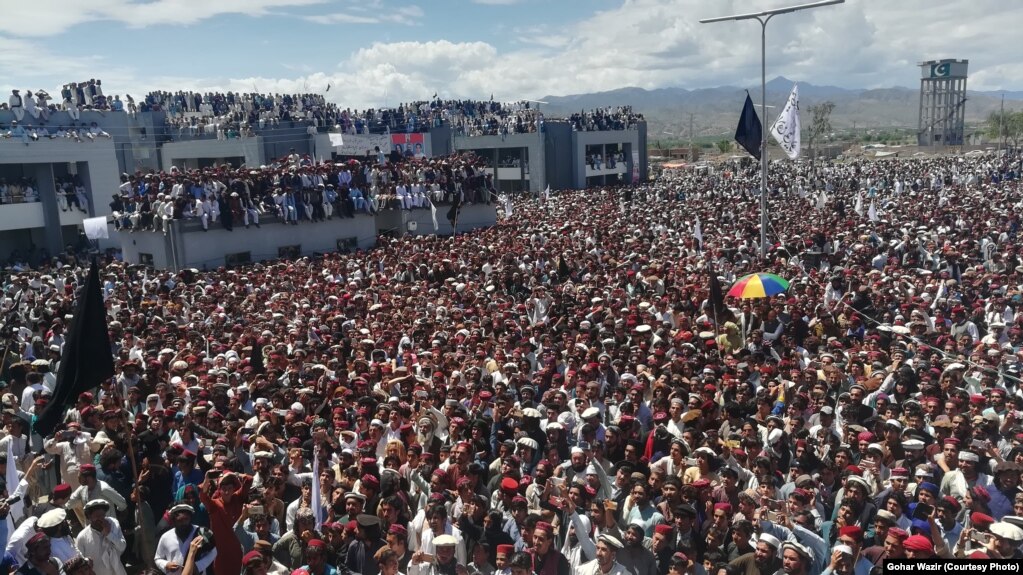
U.S. Deal with Pashtun Taliban, What about Non-Pashtuns?

Kamran Mir Hazar

While the Pashtun representative of the U.S. government Zalmay Khalilzad is dealing with Pashtun Taliban, non-Pashtuns are concerned about their security. The Hazara, Uzbeks, Tajiks and other non-Pashtuns think the U.S. deal with terrorists put their life in great danger, and Taliban war against them is not avoidable. That is why one of the discussions among non-Pashtuns are to prepare for long-term self-defense in the next term of the war of Taliban and other terrorist groups founded among Pashtun tribes. 

Non-Pashtuns particularly the Hazara have suffered genocide, forced migration, and systematic discrimination in the hands of Pashtun fundamentalists and government. Pashtun totalitarianism that was established at the end of the 19th century, and modernized in the next decades have killed, injured and displaced millions of non-Pashtuns. 

The U.S. deal with Pashtun Taliban is now raising the idea of Khorasan, Hazaristan, and Turkestan of Non-Pashtuns. If the U.S. cannot guarantee the safety of non-Pashtuns and is defeated like the Vietnam war, then the only solution would be a federal system or partition.

افراسياب خټک له علي وزیر او محسن داوړ سره لیدلي

پښتون مخور سیاستوال او پخواني سېنېټر افراسياب خټک له وزيرستانه د قامي اسمبلۍ استازیو او پښتون ژغورني غورځنګ غړو علي وزير او محسن داوړ سره د سېپټېمبر پر ۴مه په هري پور زندان کې ملاقات کړی دی.

د دې لیدنې په اړه له مشال راډيو سره په خبرو کې افراسياب خټک وويل چې په هېواد کې ټول جمهوريت پالي او خوښونکي له دوی سره ولاړ دي.
پخوانی سېنېټر او د سياسي چارو شنونکي افراسياب خټک، علي وزير او محسن داوړ سره په هري پور زندان کې ليدلي دي. د نوموړي په خبره په لومړي سر کې د هري پور زندان چارواکیو ملاقات ته نه پرېښودلی او د درېوو ګنټو تر انتظار وورسته ورته اجازت ورکړل شو.
افراسياب خټک وويل: ''موږ تر نيم ساعت پورې له علي وزير او محسن داوړ سره وليدل. هغوی په خپل موقف باندې چې څه رنګه د وزيرستان غرونه کلک ولاړ دي داسي علي او محسن هم کلک ولاړ دي. د حق او انسانيت لپاره يې موقف اختيار کړی دی. زه هيله لرمه چې د حق خبره به ومنل شي. دوی ته به په قانوني طريقه سره له زندانه بهر د راتلو موقع ترلاسه شي. خلک ورپسي ولاړ دي، د ټول وزيرستان پښتانه او ان په پاکستان کې ټول جمهوريت پلوه د دوی شاته ولاړ دي.''
د پارلېمان دواړه غړي د مې پر ۲۶مه د شمالي وزیرستان په خړ کمر کې د ډزو تر هغې پېښې وروسته نیول شوي ول چې پوځ او پښتون ژغورنه غورځنګ یې پړه پر یو بل اچوي.
پر هغه ورځ، د پوځ له وینا سره سم، پر سرتېرو تر برید وروسته په ځوابي ډزو کې درې کسان وژل شوي او ۱۰ ټپیان ول. خو غورځنګ وايي، د سرتېرو په ډزو کې ۱۴ کسان وژل شوي او تر ۴۰ زیات ژوبل شوي ول. علي وزیر پر هغه ورځ نیول شوی وو او محسن داوړ وروسته ځان پولیسو ته سپارلی وو.
دواړه له هغه وخت راهیسې بندیان دي او د خوشېکولو لپاره یې د بنو عدالت د اګست پر ۱۷مه د درخواست اورېدنه وکړه چې پکې یې په یوه مقدمه کې ضمانت منظور او د خړ کمر په هغې کې یې رد کړ.
د دوی وکيل لطيف اپرېدي بيګا مشال راډيو ته وويل چې يوازې په يوه مقدمه کې ضمانت پاتي دي او په دي لړ کې يې درخواست ورکړي دي. نوموړي وويل:
''په ايف ای ار نمبر ۱۴ کې ضمانت پاته دی او په دې کې ډېر دفعات لګېدلي دي. موږ به په دې کې پېښور های کورټ کې کېس کوو خو تاريخ مو نه دی ټاکلی.''
داوړ او وزیر پر ځان لګېدلي تورونه ردوي او د پاکستان په پارلېمان کې د اپوزیشن پیپلز ګوند په ګډون، یو شمېر سیاستوالانو یې له سپیکره څو ځلې غوښتنه کړې چې دواړه دې د قامي اسمبلۍ غونډو ته وروبولي خو سپيکر اسد قیصر وايي، دا مسله یې د قانوني چارو وزارت ته سپارلې.
د دواړو د خوشې کولو لپاره څو ځلې په سیمه کې پراخې مظاهرې هم شوې دي.
https://www.mashaalradio.com/a/30146532.html

AI Calls On Pakistan To Halt Crackdown On Pashtun Rights Group

As Pakistani authorities arrest more members of a civil rights movement campaigning for the rights of the country’s ethnic Pashtun minority, the global rights watchdog Amnesty International (AI) has called on Islamabad to end its clampdown.
“The crackdown against the PTM must stop,” Omar Waraich, AI’s deputy South Asia director, said while referring to the Pashtun Tahafuz (Protection) Movement by its acronym. “All activists detained for their peaceful activities must be released immediately.”
This week, Pakistan’s months-long campaign against the PTM apparently intensified with scores of new activist arrests and new cases launched against its leaders. The ongoing crackdown against the group began soon after a military spokesman warned in April that “time is up" for the PTM because it was “playing into the hands of others.”
Abdullah Nangyal, a senior PTM leader, told RFE/RL’s Gandhara website that on August 28 three prominent members of the movement were arrested in various parts of the country.
He says PTM activists Shah Faisal Ghazi and Sher Nawaz were arrested in the southern districts of South Waziristan and Tank in the northwestern province of Khyber Pakhtunkhwa while Kaka Shafee Tareen was arrested in southwestern Balochistan Province.
Nangyal added that in recent days Pakistan’s Federal Investigations Agency (FIA) arrested PTM activists Shiraz Mohmand, Ismail Mehsud, Qasim Achakzai, Idress Bacha, and Abdul Hai Pashteen on charges of alleged cybercrime. Bacha was granted bail on August 29.
“Our activists arrested by the FIA and intelligence agencies are being tortured,” he said. “While people being investigated in police cases are not tortured physically, they are treated like terrorists and being kept in small cells.”
It was not possible to immediately reach officials about the allegations of torture and mistreatment. But Pakistani authorities deny torturing detainees and have maintained that the PTM is being dealt with under the country’s laws.
Since the beginning of the year, dozens of PTM activists have been arrested. More than two dozen among them, including lawmakers Mohsin Dawar and Ali Wazir, are in prison on charges ranging from terrorism to sedition and rioting.
Alamzaib Khan Mehsud, a PTM activist who investigated illegal killings, forced disappearances, and documented incidents of landmines that killed or maimed civilians, is in prison on charges of rioting and terrorism since January.
Gulalai Ismail, a feminist and celebrated right activists, has been on the run for nearly three months since Pakistani authorities accused her of sedition, financial terrorism, and defaming state institutions.
The PTM’s vocal and public criticism of Pakistan’s powerful military appears to trigger the arrests and investigations.
“They can hold protests and rallies, but their criticism of state institutions amounts to creating anarchy,” Attiqullah Wazir, a senior police officer in South Waziristan, told Radio Mashaal. “Every time they protest, they repeat this criticism, which triggers cases against them.”
AI’s Waraich, however, has urged Islamabad to act fairly.
“The Pakistani authorities must uphold the rule of law and due process, ensuring that no one is detained for their peaceful and lawful activities, and that anyone charged is given a fair trial,” he told RFE/RL Gandhara.
Since its emergence from a sit-in protest in Islamabad in February 2018, hundreds of PTM activists have been imprisoned on rioting, terrorism, and sedition charges.
The movement emerged from Pakistan’s western Pashtun heartland, which straddles its border with Afghanistan. The PTM has demanded rights, accountability, and security for Pakistan’s estimated 35 million Pashtuns, the country’s largest ethnic minority. The movement’s leaders say Pashtuns have borne the brunt of Islamabad’s war on terrorism, which killed tens of thousands and forced millions to flee their homes.

Balochistan: Pakistani forces disappeared six Baloch youth from Kharan

At least six persons have been arrested and taken away during the ongoing offensives of Pakistani forces in district Kharan Balochistan in the earlier hours of Monday.
According to details, Pakistani forces have been conducting offensives in Kharan from past few days. As a continuation of their aggression Pakistan military and intelligence agencies carried out house-to-house operations in Killi Jalal Zai and Killi Gozgi of Kharan district, late Sunday night.
Pakistani forces abducted at least four people during their unwarranted raid. The victims include Dr Abdul Sattar Peerakzai and his two sons named Farooq Peerakzai and Kamran Peerakzai, and another youth named Safiullah Menga has also been abducted.
 Separately, Pakistani forces abducted Akhtar Mengal resident of Gozgi from a barbers shop in Kharan bus terminal.
In another similar raid, Pakistani forces abducted Saddam Sarparah Baloch from a tailor shop in Kharan Bazaar.
Sources reported that Saddam was previously abducted in 2016 during a military offensive but he was later released and now he has been abducted again.
The enforced-disappearances in Balochistan continue unabated despite the release of few people in past months, Baloch Human Rights activists claim that the number of missing persons continues to grow in Balochistan.

#Pakistan - PM Imran takes U-turn on tax exemption to industrialists

PM directs attorney general to approach SC for urgent hearing of pending litigation on GIDC
–Says taxes were written off in a bid to recover 50 per cent of ‘stuck revenue’ by way of an out-of-court settlement
Prime Minister Imran Khan on Wednesday retracted the decision of granting tax exemptions to wealthy industrialists by waiving off the Gas Infrastructure Development Cess (GIDC) after it came under intense criticism by public and opposition parties alike.
The U-turn came days after the government wrote off Rs208 billion in taxes to the capitalists through a presidential ordinance.
After the decision came under fire, the prime minister, in a cabinet meeting on Tuesday, remarked that the decision was taken to provide relief to the public instead of some individuals.
According to a statement issued by the Prime Minister’s Office (PMO) on Wednesday, the premier decided to withdraw the presidential ordinance regarding the GIDC and directed the attorney general to “approach the Supreme Court (SC) for urgent hearing of the matter”.
The decision to go to the apex court was taken so that the matter could be decided at earliest, strictly in accordance with the law and the constitution. However, the government is concerned over going to the SC, saying the decision could go either way and then it wouldn’t get even half of the money under the GIDC head.
“Going to court carries a risk because the decision could go either way. This means that the government could get the whole amount or could lose it all and possibly forgo any prospect of future revenue collection under the head,” added the statement.
“Also, on top of this, the government could be saddled with the burden of administering refunds of approximately Rs295 billion of the principal amount,” the statement added.
Though there have been multiple clarifications by the prime minister’s economic team after the decision, it has now come up with a new justification for its decision to write off these taxes through an ordinance.
The government exempted the taxes in a bid to recover 50 per cent of the “stuck revenue by way of an out of court settlement after consultation with the industry”.
The PM statement also said that the total amount stuck in the GIDC litigation from January 2012 to December 2018 was about Rs417bn.
In the first round of litigation, SC annulled the GIDC while the federal government’s review petition was also dismissed by the top court.
Thereafter, fresh legislation was brought about, which are presently under challenge before the provincial high courts and a set of appeals is already pending in the SC.
The government, strapped for cash, was willing to forgo half of what it was owed meant that their case pending in the Supreme Court (SC) was quite weak, especially considering that one of the conditions for the waiver was that the companies would subsequently withdraw their cases.
After the government forwent the GIDC, the sectors–CNG, fertiliser, captive power industry, Karachi Electricity, generation companies (GENCO) and independent power producers (IPPs)—had been asked to pay half of the outstanding cess levied or charged from the May 22, 2015 to the December 31, 2018, after entering into an agreement with the SNGPL and SSGCL within 90 days of the commencement of the said ordinance.
The GIDC was initially introduced on November 25, 2011, as a money bill. The main objective of the levy of GIDC was to raise the funds for undertaking the development of infrastructure related to transnational gas pipelines and Liquefied Natural Gas (LNG) projects.
Even, the SC in June 2014 held that GIDC was a fee, not a tax. Subsequently, the government on Sept 24, 2014, promulgated the GIDC Ordinance which was also challenged in various courts. Upon this, the government promulgated the GIDC Act in 2015.
The consumers challenged the GIDC Act, succeeding to get a stay against the act.
Resultantly, the arrears amounts of GIDC have been accruing from the inception of GIDC i.e. from January 2012 to December 2018.
As per documents, total GIDC outstanding amount pre-GIDC Act 2015 was Rs 147.2 billion, while the total amount of outstanding post-GIDC Act 2015 up to December 2018 was Rs 269.1 billion.
Sector-wise and company-wise details before GIDC Act 2015 said that outstanding amount with fertiliser (fuel) was Rs0.9billion; fertiliser (old) Rs15.1bn; fertiliser (new) Rs8.5 bn; industry Rs 20.7bn; IPPs Rs9.6bn; KESC Rs 25.3 bn; captive power Rs28 bn; CNG Region-1 Rs 21.2bn and CNG Region-2  Rs18 bn.
Similarly, outstanding amount after the promulgation of the act in 2015 up to December 2018 is: fertilizer (fuel) was Rs1.5bn; fertiliser (old) Rs57.5bn; fertilizer (new) Rs54.5bn; industry Rs21.8bn; IPPs Rs 2.5bn; KESC  Rs 32.1bn; captive power Rs63.4bn; CNG Region-1 Rs22.6 bn; CNG Region-2 Rs 18.3bn.
As per the documents, people paid Rs701bn to the government in 2012-2018, while Rs285bn was deposited to the national exchequer.
The government had imposed surcharge worth Rs300/MMBTU on the gas used in fertiliser plants as feed while Rs150/MMBTU on the gas used as fuel in fertiliser plants. Likewise, the government had imposed the surcharge of Rs200 /MMBTU on captive power plants and Rs100/MMBTU on other industries.

Why Pakistan is changing its tune on Kashmir


Islamabad is trying to move away from war-mongering and towards a stronger diplomatic offensive.

In his infamous op-ed in The New York Times, Pakistan Prime Minister Imran Khan took to the predictable nuclear blackmail to draw the world’s attention to Kashmir. “World War II happened because of appeasement at Munich. A similar threat looms over the world again, but this time under the nuclear shadow,” he wrote.
The very next day, his foreign minister Shah Mahmood Qureshi said in a BBC Urdu interview that war was not an option to deal with the Kashmir issue. He also seemed to soften his position on bilateral talks with India. Imran Khan, in contrast, had categorically said that there would be no talks until India reversed its 5 August decision to “annex” Jammu & Kashmir.
Changing its tune on war-mongering, Imran Khan has now himself said that Pakistan won’t initiate a conflict with India: “Both Pakistan and India are nuclear powers and if tension escalates, the world will face danger… I want to tell India that war is not a solution to any problem. The winner in war is also a loser. War gives birth to host of other issues.”
He didn’t say, as initially misreported, that Pakistan was changing its nuclear policy to no-first-use, but there is nevertheless a shift from “two nuclear-armed states get(ting) ever closer to a direct military confrontation” to “we will never ever start the war”.
There have been other interesting shifts in Pakistan’s strategy. It expelled the Indian High Commissioner, an act that often accompanies military tensions. But when it came to closing Pakistani air space to Indian commercial traffic, Islamabad decided not to do so for the moment, suggesting that the two countries aren’t scrambling to launch their fighter jets yet.

No terror attack yet

Imran Khan’s first response to the Modi government’s changes in the constitutional status of J&K was to threaten India with Pakistan’s real nuclear arsenal, terrorists. He said, “incidents like Pulwama are bound to happen again… I can already predict this will happen. They will attempt to place the blame on us again…”
When the Pakistani establishment wants to make a point, a big terror attack can happen very quickly. The 26/11 Mumbai attacks happened just a few days after then Pakistan President Asif Ali Zardari said his country would not be the first to use nuclear weapons against India, a policy change not backed by the military establishment. When Prime Minister Narendra Modi made a surprise visit to Pakistan, a terror attack on an Indian Air Force base took place within a week. Narendra Modi gave up on bilateral negotiations since then.
This time, however, Pakistan openly warned of a terror attack, but nearly a month later we are yet to see it. Many have said that’s because Pakistan is under global spotlight and pressure, negotiating with Donald Trump, the IMF, and the FATF at the same time even as it manages a precarious economy. Some analysts feel a terror attack will take place after the United Nations General Assembly’s 74th session concludes in September-end.

Sweet revenge

After the 26/11 attacks in Mumbai, India did not respond militarily to Pakistan despite immense domestic pressure to do so. Similarly, India did not cross the Line of Control during the Kargil war, did not respond militarily to the Kandahar hijack in December 1999, and did not actually go to war after Parliament attack in 2001 despite threatening to do so.
The idea was to look like the more responsible state between the two and use the opportunity to lobby against Pakistan globally. This ‘strategic restraint’ was aimed at destroying Pakistan’s reputation at the international stage, painting it as a ‘terror state’, and isolating it in the international fora. Such a strategy aims to impose non-military costs on a country, such as its relations with other countries, its foreign aid and investments, its tourist inflows and the worth of its passport. Narendra Modi changed the policy of strategic restraint with a surgical strike in 2016 and an air strike in 2019.
In the ongoing clampdown on Kashmir, Pakistan now sees an opportunity for sweet revenge. It is belatedly but calculatedly changing its tune on war-mongering so that it doesn’t look like the bad guy in the story. Pakistan-backed terror attacks are often aimed at creating global headlines to ‘internationalise’ Kashmir. But they often fail to do so. Now that India is itself ‘internationalising’ the issue, why would Pakistan need a terror attack?
This is why the Pakistani offensive is not limited to Kashmir. Pakistan wants to paint Modi’s India as an authoritarian regime where religious minorities are unsafe and unequal. As part of this strategy, Imran Khan and his government are repeating ad nauseam keywords, such as “RSS”, “fascist”, “Hitler”. In his NYT op-ed, Imran Khan devoted four of the 18 paragraphs to the rise of Hindu nationalism in India, even expressing concern for Christians and Dalits.
In his speeches, he repeatedly talks about lynchings by cow vigilantes, and now the National Register of Citizens in Assam. He and his foreign minister are even paying tributes to Indian secularism, which Pakistan once rejected. From UNICEF meets to Bernie Sanders talking about Kashmir, Pakistan’s mega offensive on the contentious issue is getting a wide play.

The party has only begun

The Modi government seems to have decided to risk India’s international image with its Kashmir decision. The idea seems to be that India’s standing before the world is strong enough to survive the onslaught of protests on Kashmir by human rights-types. Don’t they need India’s markets?
As the Indian economy finds itself in the middle of a slowdown, India is further reducing its global bargaining power by weakening its position on Kashmir.
While the constitutional changes may be defensible as India’s personal business, the global press won’t be stopped anytime soon from worrying about an unprecedented lockdown of 80 lakh people India claims are its own.
Pakistan is having a great time punching at India’s image as a democratic country with a big market everyone loves. The party is far from over. The more India delays lifting the clampdownin Kashmir, the more the Kashmir story will drag on in the international press.
The clampdown can’t continue forever. If not tomorrow morning then next summer, it will have to be lifted. The longer it takes, the more it will anger the people. If not now then maybe two years later, but Kashmir is bound to erupt in large-scale protests and violence. Pakistan is waiting for the headlines that will scream the climbing death toll. No matter how the story proceeds, it is India that looks like the bad guy here. Patriotic Indians should ask themselves: what did we achieve apart from the schadenfreude over Kashmiri humiliation?

Both Indian Democracy and Pakistan’s Militarism Have Failed Kashmir


By Mohammad Taqi

“In future all questions relating to the working of the farm would be settled by a special committee of pigs, presided over by himself. These would meet in private and afterwards communicate their decisions to the others. The animals would still assemble on Sunday mornings to salute the flag, sing ‘Beasts of England’ and receive their orders for the week; but there would be no more debates.”∼∼ George Orwell, Animal Farm 

The dust has not yet settled on the Indian government’s ‘Orwellian’ decision last month to cancel Jammu and Kashmir’s autonomous status. In an attempt to seal Kashmir’s fate, Prime Minister Narendra Modi sealed off the state and its people from the rest of the world.
We are living in times when populists and demagogues are ruling the roost from the US to UP and Islamabad to Italy, where civil freedoms and human rights are on the chopping block. Foul is increasingly becoming fair.
The Modi government’s actions were particularly heinous, however, in that they did not just flout bilateral or international agreements and declarations but actually trampled upon the Indian constitution itself.
Those of us from Pakistan are used to that country’s constitution being abrogated, held in abeyance or simply defaced by a slew of army dictators. But it was flabbergasting to see how the Indian government simply defied its own grundnorm. It reminded one of the Pakistani dictator-general Muhammad Zia-ul-Haq’s infamous slur:
“What is a constitution? It is a booklet with twelve or ten pages. I can tear them away and say that tomorrow we shall live under a different system. Today, the people will follow wherever I lead. All the politicians including the once mighty Mr. Bhutto will follow me with tails wagging.”
Article 370 of the constitution, which was grounded in the Instrument of Accession signed by Maharaja Hari Singh – which forms the legal basis of the Indian claim over Kashmir – was wiped clean from the books on the pretext that it was a temporary provision. Even a cursory familiarity with the state’s accession history and subsequent constitutional evolution shows the contrary to be true.
The Article itself carries the provision of its scrapping, with a huge caveat that it is contingent upon the state’s constitutional assembly recommending it to the Indian Union’s president. What home minister Amit Shah et al glossed over was that the constituent assembly dissolved itself on January 26, 1957, thereby rendering the impugned Article permanent. And that has been the de jure position since then.
To bring the de jure standstill in line with the de facto power structure, the Bharatiya Janata Party (BJP) introduced a perversion that the state assembly is a proxy for the now-defunct constituent assembly, and since there is no state assembly at the present time, the Indian parliament can arrogate itself that power – which was not its right ab initio.In a most ironic way, foundations of an ostensible democracy are being laid on the bedrock of a mutation that has been introduced into the body of the constitution. In an ideal world, any Supreme Court worth its salt would throw a constitutional aberration – nay, flagrant violation – out swiftly and permanently. But those of us who grew up seeing the Supreme Court of Pakistan give cover to martial laws under what was termed the Doctrine of Necessity, wherein what is illegal is allowed to become legal for state’s necessity, won’t hold our breath.
It has to be the first democratic transition in history in which not just the constitution, but the people too were squashed. By arresting tens of thousands of Kashmiris, including their political leaders and shutting down communications and media, at gunpoint, an iron curtain was drawn down on the state.
Democracy is dying in darkness and the BJP government is trying to ensure that not a ray of light reaches Kashmir, or a peep comes out of it, while it buttresses its unconstitutionally constitutional gains. Historical wisdom has been that force ought not to be used to impose democracy but only to defend it. But in the current instance, the justification for unjust means has been sought in the ends. The proviso has been that democracies don’t go to war with each other. But in India’s case, the world’s largest democracy went to war with itself.
Kashmiris walk past broken window glass after clashes between protesters and the security forces on August 17, 2019, in Srinagar. Photo: Reuters/Danish Ismail
What is happening in Kashmir is annexation by coercion, not union by popular sentiment and mandate. Another hallmark of populism is rationalising such actions in the face of a real or perceived conflict with others and outsiders.
Pakistan’s role
In Kashmir’s case, Pakistan has done plenty to provide a ready pretext to India for its actions. From militarising the issue from day one through a tribal invasion plotted and organised by its army, to introducing virulent jihadism and outright terrorism on both sides of the Line of Control (LOC), again under the army’s umbrella, Pakistan has undermined the Kashmir issue at many levels.
It sure did internationalise it, but for all the wrong reasons. The nationalist strands – both democratic and militant – of Kashmiriat were actively weeded out by Pakistan’s Kashmir planners, only to replace them with assorted Lashkars and Jaishes of jihadists.
The Pakistan army gained multifold benefits in Kashmir. It essentially justified its bloated existence and budget by creating the state of constant war at the LOC, kept the Indian military bogged down in the Valley and later on used the spectre of a nuclear standoff to gain hegemony in Afghanistan.
The net result was that Pakistan painted itself, and by extension the Kashmiris, into a corner. Thanks to Pakistan’s shenanigans, genuine Kashmiri grievances have not been felt even as a pinprick on the world’s skin. The ready Indian retort that Pakistan has deployed jihadist terror in Kashmir, has nearly isolated Islamabad diplomatically as the recent closed-door session of the UN Security Council indicated.
The military paradigm has shifted since the Uri and Pulwama attacks, and the Indian retaliation across the LOC after those. Pakistan is no longer able to wield nuclear blackmail as deterrence against limited conventional engagement. That Pakistan is under a virtual martial law, where opposition leaders – including a former president, two ex-PMs and a dozen parliamentarians – are under arrest, and the media is gagged, doesn’t help its position.
A Kashmiri man looks out of his house during restrictions after the scrapping of the special constitutional status for Kashmir by the government, in Srinagar, August 14, 2019. Photo: Reuters/Danish Siddiqui
Pakistan has virtually no options to counter Modi’s move. Prime Minister Imran Khan’s Twitter ranting and an address to the nation betray a monumental failure and weakness, not strength. The sabre-rattling Pakistan army has restrained its rhetoric to “defending Pakistan” and its spokesperson – a major general – has been able to do nothing more than trolling retired mid-level Indian servicemen, journalists and celebrities.
Other than blowing some hot air and beseeching the US to intercede, Pakistan seems to have accepted Modi’s move as fait accompli. In a meeting with the Indian prime minister on the sidelines of the G-7 summit, President Donald Trump has already poured cold water over Pakistan’s expectations that had risen after his offer to arbitrate in Kashmir.  
Be that as it may, Pakistan’s domestic or across-LoC actions, or the international indifference are no justification for the Indian high-handedness. Curbing rights and freedoms is never an internal matter of a country. Human rights are universal and condemnation has to be universal too when those rights are abused.
Barring the opposition leader Rahul Gandhi – whose illustrious maternal ancestors were Kashmiri – from entering the region flies in the face of pledges to Kashmiris of easing off the clampdown. Every independent report coming out of Kashmir indicates that the region is seething with angerover the humiliation piled upon a people who have been proud of their distinct identity for centuries.
Large protests have already erupted in the Valley and the Indian response has been the same: curfew, concertina wire and troops. The debilitating pellet guns continue to be used. A report on Kashmir by the UN High Commissioner for Human Rights released last month notes that according to “Srinagar’s Shri Maharaja Hari Singh Hospital, where most pellet shotgun injured are treated, 1,253 people have been blinded by the metal pellets used by security forces from mid-2016 to the end of 2018”.
New Delhi cannot blind people and ask them to look towards it, at the same time. The way things appear to be headed, both the protests and repression will increase. India, however, cannot mainstream Kashmir by locking up its mainstream political leaders. It is an untenable position, an indelible smear on India’s democratic credentials, and bound to backfire.

Tuesday, September 3, 2019

Music Video - Googoosh - Man Amadeam گوگوش - من آمدم

Video Report - Forced & Enforced conversion. Situation of religious minorities in Pakistan.

PM Imran Khan has had more failures than successes: Aseefa

Aseefa Bhutto Zardari, the daughter of former president Asif Ali Zardari, sees a lot of similarities between Prime Minister Imran Khan’s government and the dictatorship of Gen (r) Pervez Musharraf.
While evaluating the one-year performance of the Pakistan Tehreek-e-Insaf (PTI) in an interview with the BBC Urdu Service, she noted that PM Khan “has the same cabinet ministers as Musharraf had”. “Imran Khan has had more failures than successes. 

There has been a crackdown on freedom of speech, freedom of association, human rights – these are all happening under his term,” she said. The daughter of the PPP chief also targeted the prime minister over his past promises. She said, “He [Imran Khan] had promised the Pakistani people that he would create 10 million jobs. However, he has yet to create a single job. He has actually created more instability and many millions of people have been laid off due to this economic instability.“He promised he would make five million homes. He is yet to make one house and has [instead] destroyed millions [of homes].“He promised that he would rather commit suicide than go asking other nations for aid; however, he is seen in every single country with the same begging bowl in his hand,” she said. Talking about inflation, she said, “If you ask the ordinary person, the common man of the streets, they will tell you that inflation is at an all-time high; unemployment is at an all-time high. They will tell you that the electricity is expensive, bread is expensive and gas is expensive, the cost of living is expensive, and even death is expensive in Pakistan.” “This is what is happening today in Imran Khan’s Pakistan – U-turn after U-turn,” she said. 

 She also compared the incumbent regime with the former government of the PPP, describing the Zardari-led party’s tenure as “better” than the current government. “If you compare this with the PPP government – despite a world recession, despite the war on terrorism, despite two natural disasters – the PPP was able to create six million jobs. It created the first social net for millions of Pakistanis from across Pakistan, the Benazir Income Support Programme. “Former president Zardari strengthened ties with China by creating the China-Pakistan Economic Corridor, which is going to create economic opportunity for Pakistan and will benefit the region also. We restored the 1973 Constitution; we gave provinces greater power. This and many other things are the reason why the PPP government was centered on people’s rights and opportunities for everyone. Imran Khan’s government is none of these things,” she claimed. 

 Talking about her motivation to join politics despite hardships, she said that she had lost her grandfather, her mother and said her family “had made a lot of sacrifices”. “One only needs to go to Ghari Khuda Baksh to see how many of my family members have been sacrificed for Pakistan. The options [for me] are to either remain silent or speak up. My grandfather chose to speak up for the people’s rights. My mother chose to speak up for the people’s rights, and my brother also speaks up for the people’s rights on the basis of my grandfather’s mission and my mother’s vision.” “My brother speaks for the entire Pakistan, and we will therefore continue to speak up and stand by our chairman, Bilawal Bhutto Zardari.”
Kashmir issue
Aseefa criticised the PTI-led government for its Kashmir policy as well. “Personally, I think that Imran Khan’s delayed speech in the parliament lacked direction. It was a failure. The foreign minister went to Azad Jammu and Kashmir and said that we should not expect much from the international community, which is ridiculous.” “It is outrageous what is happening in Kashmir, and there needs to be international as well as national outrage. I would like to reiterate what my father said on the parliamentary floor, that had this happened under his term, the first flight he would have taken would be to the United Arab Emirates, then to China, then to Russia, then to Iran to call upon our Muslims brothers and sisters and our allies to stand by us and denounce the fascist and humanitarian crisis that is happening in Kashmir.”
She said that the in this regard. “I think the international community needs to condemn the situation in Kashmir and much more. There is not enough condemnation for the situation in Kashmir.”“The state-backed atrocities in Jammu and Kashmir include women being raped, children being murdered, protesters being shot at. If anyone holds a Pakistan flag, soldiers think that they have a right to shot at them. These are grave human rights violations and the international world is silent and their silence is deafening,” she said.
Zardari’s health
She also reiterated her concerns over the health of her father, Asif Ali Zardari, who is currently incarcerated for his alleged role in a massive money laundering case. She demanded that the government shift the former president to a hospital for proper medical treatment.
“I first heard about the severity of the situation when a BBC article came out saying my father needed to go to a hospital and the government was reluctant to move him.”“I managed to come to Islamabad to meet my father, I had a court order in hand that gave me permission to meet him. However, once I arrived at the hospital, the authorities had locked all the doors. The patients were not allowed to come in or come out; citizens were not allowed to enter. I managed to enter and was waiting for my father to complete some tests.“While I was waiting for him and he was returning, some 30 policemen surrounded him. The women manhandled me, the men were pushing us back as well. I tried to catch a glimpse of my father but the police were determined not let my father see my face.
“I pushed through, I held his hand. I tried to walk into his room; however, the women police were still pulling me back and physically trying to restrain me from letting me bring my father to his hospital room.”
She said that she had spoken to Zardari’s doctors and they stated that they were very concerned as three of his arteries are blocked.
“He is not only a sugar patient, but due to his last 11-and-a-half-year incarceration and due to the torture he suffered, he developed severe back problems. His spinal issues have returned in his present condition.”
She said that her father’s doctors were under the impression that further tests needed to be conducted and further treatment needed to be continued in a hospital.
“Later on that day, I found out through the media that they shifted my father back to jail clearly without the doctors’ permission. The doctors were being pressurised before and the government clearly succeeded in pressurising them to send my father back to jail.”
“I am absolutely not satisfied with the treatment. My father needs to be in hospital under doctors’ observation until they say he is fit enough to go back to jail.”
Talking about the much-talked NRO – a plea bargain between her father and the government – she said, “The current government keeps saying that they are not interested in giving NRO, they won’t give an NRO: our response is who is asking for an NRO? My father spent 11-and-a-half years in jail, being tortured, and he never asked for an NRO.
“He does not have a single conviction against him and he will not make a deal. So I do not think my father will cut a deal anytime soon.”