Monday, August 19, 2019

‘Dumped like a dog by almost everyone,’ is Steve Bannon still influencing the White House?


Steve Bannon (right), watches as President Donald Trump (left) speaks on the phone with Prime Minister of Australia, Malcolm Turnbull, in the Oval Office on January 28, 2017 in Washington, DC. Photo: VCG
"Now Sloppy Steve has been dumped like a dog by almost everyone. Too bad!" This is how US President Donald Trump mocked his fired White House chief strategist Steve Bannon in a tweet on January 6, 2018.

It is hard to believe that this "dumped dog" was one of Trump's "best pupils" during his election campaign. Former White House chief strategist Steve Bannon, also Trump's former campaign chief who spread Trump's anti-immigrant and nationalist calls leading up to the US general election, has now made attacking China his new business after being dumped by Trump.

In 2019, Bannon intensified his assault on China with even more hysterical right-wing opinions.

Steve Bannon told the South China Morning Post, a Hong Kong-based newspaper, that the executive order signed by US President Donald Trump banning Huawei from the US market and cutting off vital components is "10 times more important than walking away from the trade deal." 

On May 6, he published an article in the Washington Post vilifying and inciting his country to confront China.

"Steve Bannon has now added a new project to his portfolio - one designed, like all Bannon projects, to harness the worst in a situation to make it even worse. Lately, he has been focusing on an adversary that troubles those on both the left and right: China. But Bannon's aim is hardly to reduce tensions between the US and China; he means to ratchet up the trade war," according to the American Prospect, an American political and public policy magazine.

The "China threat theory" has fermented rapidly in the Trump era, and this can be partly attributed to the profound influence Steve Bannon had on the US president. Although Bannon left the White House in 2017, there are no fundamental differences between Bannon and Trump in terms of governance philosophy and China policy, and he still has access to the White House to influence its China policy decisions, said Chinese experts.

Residual power

In May, Bannon claimed in his Washington Post article that the goal of the Communist Party of China is "to be the global hegemonic power," and asserted China "has been waging economic war against industrial democracies."

Bannon maliciously smeared China by saying that it is a "rapidly militarizing totalitarian state imprisoning millions in work camps," and "the world is a house divided, half slave, half free." Washington and Beijing are "facing off to tip the scales in one direction or the other," he wrote.

Bannon focused his fire just at a time when pressure is growing on China-US relations. But how can Bannon stir up a new wave of anti-China rhetoric in Washington after being kicked out of the White House? It could be because his personnel deployment strategy in the White House is still working. 


Bannon has had his fingerprints all over the address since he served as the White House Chief Strategist: he wrote Trump's inaugural address, prompted Trump to nominate conservative justices to the Supreme Court, and was reportedly an important part of Trump's controversial "Muslim ban."

"A new chapter of American greatness is now beginning," Trump said at one point. "A new national pride is sweeping across our nation." That sort of rhetoric is right out of Bannon's world and evidence of just how much influence Bannon has over Trump, said the Washington Post on March 1, 2017.

Bannon grabbed a place in the White House National Security Council in January 2017 when it was being reshuffled. The Council has had an unwritten rule for years: no standing seats for officials with strong political views. Bannon is not only politically radical but also has little experience in foreign and national security decision-making. 

But this move made him more influential than most other cabinet officials. He used his power to promote to the White House a host of middle-ranking right-wing officials who shared his values.

Steve Bannon lost his National Security Council seat in April amid fears that the circle of US intelligence chiefs was being politicized. 

Although Bannon has been personally sidelined by Trump, most of his followers remain in their posts, building on their radical ideas.

Kiron Skinner, the director of policy planning at the US Department of State, said in public earlier in May that the growing competition with China is "the first time we will have a great power competitor that is not Caucasian," drawing criticism for her racial characterization of the conflict, according to South China Morning Post.

This showed that some officials like Skinner had largely embraced Bannon's ultra-conservative right-wing views.

Anti-China clique

After leaving the White House, Bannon is still actively expanding his media network, maintaining close contact with many hosts from Fox News, the main platform for American right-wing conservatives, as well as making frequent appearances for various far-right organizations.

A widely anticipated debate between Liu Xin of China Global Television Network (CGTN) and Trish Regan of the Fox Business Network in the US drew global attention in May. What many people don't know is that Bannon was also behind this debate.

On May 22, Liu Xin strongly refuted Regan's remarks on the US-initiated "economic war" against China in a short video commentary. The next day, Trish responded to Liu in her show, then invited Bannon to appear on it.

Bannon said that China's personal attacks on him showed it was "in a state of hysteria." Bannon stated that President Trump has fully understood that Beijing has been "running an economic war against the industrial democracies now for 20 years," reported CNBC. Bannon goes to great lengths to describe how "jittery" China is. 

After this show, Regan offered to have a debate with Liu Xin.

In addition to keeping a close eye on China issues in Fox News, Bannon is personally close to a number of hosts, regularly meeting with them, relentlessly promoting the "China threat" and using the media megaphone to get his voice heard.

Bannon has also worked with other hawks to create an Anti-China clique. The latest example came in March, when Bannon colluded with other Washington policy advisers to establish the Committee on the Present Danger, which targets China. 

It aims to facilitate "public education and advocacy against the full array of conventional and non-conventional dangers" posed by China, according to an announcement the group released. The committee is widely believed to be fueling bilateral tensions between the two countries. 

Fading away

Many political analysts believe that Bannon was valued by Trump not because of how competent he is, but because he and Trump have many things in common: they are eloquent, part of the elite, and hold similar ideas in trade, immigration and public security.

More importantly, Bannon took advantage of the moment when both parties were looking to adjust their strategy toward China, creating an infectious anti-China atmosphere and blaming China for many problems in American society.

But now Bannon's influence on Trump is arguably minimal. After Trump won the 2016 election, Bannon compared himself with Thomas Cromwell, an ambitious adviser to King Henry VIII in the 16th century, triumphantly hinting at his powerful influence over Trump. 

This metaphor is ironically accurate. The "Cromwell" who once advised the "King" did not escape the fate of being eventually discarded by his master.


Hong Kong's future lies with China, not the West: Martin Jacques

By Kou Jie 

As protests in Hong Kong continue, scholars and experts worldwide have expressed their concern over the city's economic recession and rising violence. During an exclusive interview with People's Daily Online, Martin Jacques, a senior fellow at Cambridge University, called for restored stability and order in Hong Kong, adding that its future lies only with China.
Jacques explained that there is a difference between the original peaceful demonstrations and attacks on police and innocent people, further noting that stability and order should be restored to ensure Hong Kong's future development.
Jacques' comments came after the protests in Hong Kong evolved into extreme violence, with some radicals ransacking the Legislative Council building, assaulting the police, forcing a shutdown of the Hong Kong airport with unauthorized rallies and beating up innocent people.
"I think it's very important for them to see their future in terms of the relationship with China and ‘one country, two systems,' because HK is now part of China, and it offers an enormous opportunity. Certainly, a section of the young people in Hong Kong seem to think that China is not the way forward... and I think they are quite mistaken in this." said Jacques.
According to Jacques, Hong Kong should consider itself a part of China's development, while initiatives such as the Guangdong-Hong Kong-Macao Greater Bay Area could help Hong Kong tackle its economic shortages, securing its future development.
"Hong Kong could try to be a part of what's happening in Southern China. It can get involved, even become leaders in some area, but a positive relationship with the Chinese mainland should be maintained. Otherwise, Hong Kong will simply become increasingly less important, and in some way relatively marginalized, and that will be a very bad situation," said Jacques.
The British scholar has also criticized support from western countries, especially the UK, for the demonstration. He noted that such supportive opinions are irresponsible, while the violence of the demonstration has often been ignored.
"If these demonstrations were taking place in the United Kingdom, the reaction would be completely different. This is a fundamental hypocrisy in the western attitude," adding that the British government has been irresponsible because it was originally party to the agreement of "one country, two systems."
"One of the great problems in Hong Kong when I lived there was the huge ignorance about China. They didn't look north; they look west. " said Jacques.
"The future of Hong Kong is not with Britain; Britain is in serious decline. Why are the young [in Hong Kong] thinking that the future for them is some kind of restoration with the West? There needs to be a big shift in attitudes within Hong Kong, and they should open their eyes to what China is," added Jacques. 

Macron lectures Putin on ‘right to protest’ amid own crackdown on Yellow Vests

Emmanuel Macron took the opportunity to tell Russia’s Vladimir Putin that a “true democracy” should treat protesters with respect. In France, anti-Macron protesters have been met with police batons for the past 40 weekends.
The two leaders met ahead of the G7 summit, which Russia will not be part of, to talk about issues both bilateral and international. Amid the mostly-amicable exchange, the French president scaled the moral high ground to admonish Putin for his treatment of protesters at home.
“We called this summer for freedom of protest, freedom of speech, freedom of opinion and the freedom to run in elections, which should be fully respected in Russia like for any member of the Council of Europe,” Macron said at a joint press briefing at his summer residence on the French Mediterranean coast ahead of 3.5-hour-long talks with Putin.
Referring to a series of opposition protests that were held in the Russian capital in recent weeks, the French leader urged Russia to abide by international agreements guaranteeing freedom of speech and freedom to gather.
“That is why a lot of people were concerned with what is going on in Moscow with all the arrests … that were made by police,” he said. Indeed, both the Western political establishment and media have been gripped by the news of the rallies in Moscow.
What they have not been nearly as thrilled about, though, are the ongoing Yellow Vest rallies in France itself. The country, which, according to Macron, “has always respected all the rights of its citizens,” has seen protests for the past 40 weekends – larger than those in Moscow, and met with a much tougher police response.
While the latest rallies in Moscow were indeed marred by occasional instances of violence and resulted in an unusually high number of detentions, which gave the Western media an opportunity to present it as a crackdown, they still have a long way to go to compare to what the French Yellow Vests have been enduring.
Originating as a protest against a planned fuel tax hike last November, the protests have since turned into a broader movement opposing the policies of Macron and his government. Over the months, which saw demonstrations every weekend, the rallies repeatedly spiraled into clashes between the protesters and police.
Law enforcement never hesitated to use not only batons and tear gas, but also “non-lethal” guns firing 40-mm rubber ‘bullets’ and “instant tear gas grenades” – explosive munitions packing 30 grams of TNT.
This has resulted in thousands of protesters suffering various – sometimes life-changing – injuries, like lost eyes and limbs. In July, hundreds of people even joined the ‘march of the mutilated’ in Paris to protest police brutality.
Putin himself made a reference to the Yellow Vests’ protests, saying that Russia does not want to see uncontrolled violence on its streets, and that citizens are given opportunities to express their opinion in a peaceful and legal way.
“Our people have the right to voice their protest. The authorities need to make sure that this right is upheld,” the Russian leader said, adding, though, that the idea of respecting that right should not be reduced to “absurdity.”
“It should not lead to clashes. Anyone responsible for violence should be held accountable under Russian law.”

Music Video - Shawn Mendes, Camila Cabello - Señorita

Video Report - China 'will not sit on its hands' over Hong Kong protests

Video Report - Court hears Omar al-Bashir 'got millions' from Saudi royal family

Video Report - #Putin #Macron - Putin & Macron speak to media

Video Report - What are the warning signs of a recession?

Video Music - بیا د عشق دریاب راوخوت چلې چلې

Video Report - Sethi Sey Sawal | 18 August 2019 | Najam Sethi Official

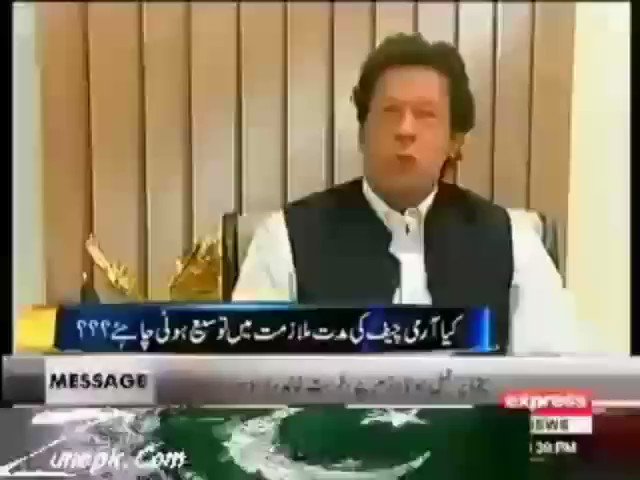
Imran Khan had once opposed extension for army chief. Today, he’s given one


Imran Khan, as opposition leader, had opposed extension to then Army chief Gen. Ashfaq Parvez Kayani on the grounds that such actions weakened a country's institutions. 

As opposition leader, Pakistan Prime Minister Imran Khan had famously called for the “rule of law” to be followed in opposing an extension to the country’s former Army chief Gen. Ashfaq Parvez Kayani.
“In the First World War and the Second World War, no General got an extension,” Khan had said in an interview to the Express News Channel in Pakistan, arguing that rules being bent for one person weakens a system while insisting that only dictators do it.
On Monday, however, the prime minister appeared to have forgotten his own words in granting a three-year extension to incumbent Army Chief Gen. Qamar Javed Bajwa.
In a notification, personally signed by Khan, the Pakistani government has defended the decision, saying “it has been taken in view of the regional security environment”.
Bajwa, appointed in November 2016 by then-PM Nawaz Sharif, was due to retire in November 2019. There is a feeling in Indian circles that his extension will see the Pakistani Army’s policy towards India to get more rigid when it comes to supporting terror.

Khan argued for institutions

In stark contrast, Khan had then argued against granting extensions, saying they weakened institutions. “When you break rules for an individual… Gen Musharraf did it, dictators do it, he destroys that institution.”
He further said that it is important in Pakistan to make the institutions stronger and make the systems more powerful.
When asked specifically if he would oppose if an extension is given to Kayani, he said the rule of law applied to all, be it Army or the judiciary. “Rule of law should be followed,” he said.
Below is the transcript of the Imran Khan interview:
Khan: Even during the time of the First and Second World Wars, nobody was given any extension. When you are breaking the law, you destroy institutions and go beyond the realms of law as other dictators including General Musharaf did.
If we have to save this country, we have to strengthen our institutions and society and this is possible only when our law is strengthened.
(Journalist: Do you think General Ashfaq Parvez Kiyani should not have been granted an extension?)
No general nor judge should get an extension because it will weaken the respective organisation. See how much General Pervez Musharraf weakened the army, whereas, in Pakistan, the army is given highest regard. There should be a unifying law which should bind all the citizens in equal measures.

#Pakistan - ’غریب ہو تو مفت علاج کے لیے ثبوت کے طور پر حلف نامہ لاؤ‘


سرکاری ہسپتالوں اور بنیادی مراکز صحت پر ملنے والی غریبوں کو مفت علاج کی کئی سہولیات ختم، ٹیسٹوں کی قیمتوں میں 200 فیصد تک اضافہ۔

پاکستان کے سب سے بڑے صوبے پنجاب میں سرکاری ہسپتالوں اور بنیادی مراکز صحت پر ملنے والی غریبوں کو مفت علاج کی کئی سہولیات ختم کر دیں گئی ہیں۔


 ہسپتالوں میں ہونے والے معمولی ٹیسٹوں کی قیمتوں میں 200 فیصدتک اضافہ ہوا ہے جبکہ زکوہ کے مستحق مریضوں کے لیے رائج نظام ختم کر کے انہیں غریب ثابت کرنے کے لیے حلف نامہ جمع کرانا ہوگا۔
صوبائی حکومت کے اس فیصلے سے غریبوں کے ساتھ ساتھ متوسط طبقہ بھی مشکلات کا شکار ہوگا۔
ادویات کی قیمتوں میں اضافے کے بعد ٹیسٹ بھی مہنگے:
پاکستان تحریک انصاف کی موجودہ صوبائی حکومت نے کچھ عرصہ قبل ادویات کی قیمتوں میں 20-25 فیصد تک اضافہ کیا تھا۔
اب پنجاب کے محکمہ پرائمری اینڈ سکینڈری ہیلتھ کئیر نے ڈی ایچ کیو اور ٹی ایچ کیو ہسپتالوں میں تشخیصی ٹیسٹوں کی فیس میں 200 فیصد تک اضافے کا نوٹیفکیشن جاری کیا ہے۔
نوٹیفکیشن کے مطابق مفت ملنے والی ڈینٹل ٹیسٹ کی پرچی 50روپے، سٹی سکین ٹیسٹ ایک ہزار روپے کے بجائے 2500 روپے، خون ٹیسٹ 100سے200 روپے، ایل ایف ٹی 50سے بڑھا کر 300روپے، ای سی جی 60سے 100روپے، الٹرا ساؤنڈ50سے 150روپے، تھائیرائیڈ ٹیسٹ200 کے بجائے900روپے ہوگیا۔
اسی طرح سرکاری ہسپتالوں اور بنیادی مراکز صحت آنے والے مریضوں کو مفت دی گئی سہولیات ختم کر کےاب ایکسرے کرانے کے 60روپے، ہیپاٹائٹس کی سکریننگ کی 75روپے فیس دینا ہو گی۔
ایڈز کی سکریننگ اور او پی ڈی پرچی کے بھی 50,50روپے اداکرنا ہوں گے، ای سی جی 100روپے اور الٹراساؤنڈ150روپے، پتھالوجی کی 43مختلف اقسام پر بھی نئی فیس ہو گی۔
سی بی سی ٹیسٹ کے لیے 200روپے، ای ایس آر کے لیے 60روپے، شوگر ٹیسٹ کے 65روپے، بلڈ یوریا لیول کے لیے 65، سیرم کریٹنن کے 65، سیرم یورک ایسڈ 65، جگر کے حالات کا جائزہ لینے کے لیے لیور فنگشنگ ٹیسٹ کے 300 روپے، پیشاب کی مختلف بیماریوں کا جائزہ لینے کے لیے مریض کو60روپے دینا ہوں گے۔
خواتین کے اسقاط حمل کے حوالے سے ٹیسٹ کی فیس 65روپے، خون کے گاڑھے پن کا تجزیہ کرنے کے لیے 400روپے، ہیپاٹائٹس بی اور سی کی سکریننگ کے لیے 75 روپے، دل کے دورے کی صورت میں ٹراپ ٹی ٹیسٹ کی قیمت 600 روپے، جوڑوں کے درد کا پتہ چلانے کے لیے ٹیسٹ کی قمیت 110روپے، ٹائیفائیڈ بخار کا ٹیسٹ کرنے کے لیے مریض کو 125روپے، مردوں کے مخصوص امراض کی تشخیص کے لیے سیمن ٹیسٹ 125 روپے، پاخانے کا تجزیہ کرنے کے لیے 75، فلویڈ روٹین کے لیے 200، ہیپاٹائٹس بی اور سی کے لیے پی سی آر کی فیس بالترتیب 200اور 400روپے مقرر ہوئی ہے۔
اے این اے ٹیسٹ کی فیس 200، ملیریا بخار کے ٹیسٹ کی فیس 100روپے، خون میں ہیوموگلوبن لیول چیک کرنے کی فیس 350روپے، سوڈیم اور پوٹاشیم کی فیس175، سیریم کیلشیم 125، سریم ایملس کے لیے مریض کو 125روپے ادا کرنا ہوں گے۔
لیپڈ پروفائل کے لیے 250، تھرائی رائیڈ کا بیلنس چیک کرنے کے ٹیسٹ کی قیمت 900روپے مقرر کی گئی ہے ۔
صرف ایمرجنسی وارڈ میں آنے والے مریضوں کو ٹیسٹ کی مفت سہولت دستیاب ہو گی۔ وراڈز میں داخل ہونے یا معمول کا چیک اپ کرانے پر مریضوں کو مزکورہ فیسیں ادا کرنا ہوں گی۔
مفت سہولت حاصل کرنے کی شرائط:
ابتدا سے ہی سرکاری ہسپتالوں میں غریب اور نادار مریضوں کو صحت کی مفت سہولیات کے لیے زیادہ اخراجات کی منظوری کے لیے میڈیکل افیسر یا ڈپٹی میڈیکل افیسر سے تصدیق کرانا ہوتی تھی۔
تاہم، نئے حکم نامہ کے مطابق مستحق مریضوں کو غریب ثابت کرنے کے لیے حلف نامہ پُر کر کے اپنے علاقے کے چیئرمین عشر وزکواۂ کمیٹی سے 
تصدیق کرانا لازم ہوگی۔ 
انگریزی روزنامہ ڈان، لاہور کے سینئر ہیلتھ رپورٹر آصف چوہدری نے اس اقدام کو غریب اور سفید پوش گھرانوں سے تعلق رکھنے والے مریضوں کی عزت نفس مجروح کرنے کا اقدام قرار دیا ہے۔
انہوں نے حیرانی کا اظہارکرتے ہوئے بتایا کہ صوبائی وزیر صحت ڈاکٹریاسمین راشد خود پیشہ ور ڈاکٹر ہونے کے باوجود عام اور غریب مریضوں کے مسائل بہتر سمجھتی ہیں لیکن شاید ان پر اعلیٰ قیادت کا دباؤ ہے کہ محکمہ اپنے اخراجات خود پورے کرے یا پھر بیوروکریسی انہیں جان بوجھ کر ناکام کرنا چاہتی ہے۔
انہوں نے کہا پہلے سے موجود نظام میں بہتری کے بجائے خرابیاں پیدا کی جارہی ہے جو نہ حکومت کے حق میں ہیں اور نہ ہی عوام کے لیے مفید ہیں۔
کئی مریضوں کے لواحقین کا کہنا تھا کہ جب ہم مفت علاج کی درخواست کرتے ہیں تو اب ہمیں جواب میں کہا جاتا ہے کہ غریب ہو تو مفت علاج کے لیے ثبوت کے طور پر حلف نامہ لاؤ۔ 
اس معاملے پر جب صوبائی وزیر صحت ڈاکٹر یاسمین راشد اور سیکرٹری صحت پنجاب سے رابطہ کیا گیا توانہوں نے موقف دینے سے اجتناب کیا۔
حکومتی فیصلے پر سیاسی بیان بازی:
ترجمان وزیر اعلیٰ شہباز گل کے مطابق ٹیسٹوں کی قیمتوں میں اضافہ جتنا بتایا جا رہاہے وہ درست نہیں، ہاں البتہ تھوڑا بہت ضرور ہوا ہے جس کی بنیادی وجہ اخراجات اور سہولیات بہتر کرنے کے اقدامات ہیں۔
انہوں نے تصدیق کی کہ صحت کارڈ رکھنے والے اور حلف نامہ جمع کرانے والے مریضوں کو ٹیسٹوں کی مفت سہولت برقرار رہے گی۔
ان کا کہنا تھا ایک کروڑ غریب افراد کو ساڑھے سات لاکھ روپے کی حد تک علاج کرانے کے صحت کارڈ جاری کر چکے ہیں جبکہ ساڑھے تین کروڑ مزید جاری کیے جائیں گے۔
شہباز گل نے بتایا ہسپتالوں سے ہونے والی آمدن جدید مشینری اور نئے آلات خریدنے، آپریشن تھیٹرز کی حالت بہتر کرنے پر خرچ ہوگی اور یہ اقدام خزانہ بھرنے کے لیے بالکل نہیں۔
سابق وزیر اعلیٰ میاں شہباز شریف نے اپنے ٹویٹر پیغام میں کہا کیا نیازی حکومت میں عوام کے خون پسینے کی کمائی کا پیسہ صرف اشرافیہ اور حکمرانوں کی عیاشی کے لیے ہے ؟ اس غریب دشمن اور سیلفی زدہ حکومت نے پہلے طلبا و طالبات سے تعلیمی وظائف چھینے اور اب غریب مریضوں کا سرکاری ہسپتال میں بھی علاج ناممکن بنا دیا ہے۔ آخر قومی خزانہ جا کہاں رہا ہے؟؟
سابق دور حکومت میں سرکاری ہسپتالوں میں پارکنگ فیس ختم کردی گئی تھی اب کار20روپے اور موٹرسائیکل پارک کرنے کے بھی دس روپے ٹوکن فیس اداکرنا ہوگی۔

'Linking Kashmir With Our Peace Efforts is Reckless, Unwarranted': Afghanistan Lashes Out at Pakistan


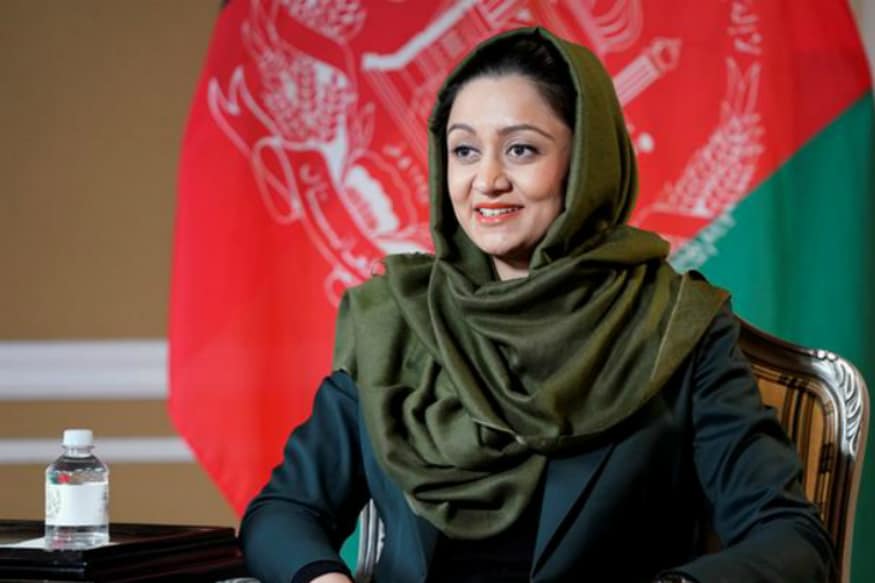
Afghan ambassador to the US Roya Rahmani said her country believes Pakistan's motive and insistence to purposely tie Afghanistan to the Kashmir issue is a deliberate attempt to prolong the violence happening on Afghan soil.

Afghanistan has hit out at Pakistan after the latter linked the current situation in Kashmir with the ongoing peace efforts in Afghanistan, with Afghan ambassador to the US Roya Rahmani calling it "reckless, unwarranted and irresponsible".
"The Islamic Republic of Afghanistan strongly questions the assertion made by Pakistan's ambassador to the United States, Asad Majeed Khan, that the ongoing tensions in Kashmir could potentially affect Afghanistan's peace process," Rahmani said.
Asserting that Kashmir is "a bilateral issue" between India and Pakistan, Rahmani said her country believes Pakistan's motive and insistence to purposely tie Afghanistan to the Kashmir issue is a deliberate attempt to prolong the violence happening on Afghan soil.
"Any such statements that link the evolving situation in Kashmir to the Afghan peace efforts are reckless, unwarranted and irresponsible," the top Afghan diplomat said in an unusual lengthy statement here. "It is a poor excuse used by Pakistan to justify its inaction against the Taliban and to avoid taking a decisive stance against the militant group," she asserted.
Rahmani said the assertion by the Pakistani Ambassador that the Kashmir issue could compel Pakistan to reposition its troops from its western frontier with Afghanistan to its eastern border with India is "a misleading statement which inaccurately suggests that Afghanistan poses a threat" to Pakistan.
"There is no threat from Afghanistan to Pakistan. The Afghan government sees no credible reason for Pakistan to maintain tens of thousands of military troops on its western frontier," she said. "On the contrary, Afghan stability is frequently threatened by Pakistan-based, sanctioned and supported militant and terrorist groups," Rahmani said.
These groups operate openly from Pakistan-governed spaces and regularly spill over into Afghanistan, she alleged. "Pakistani authorities should address this problem by undertaking a sincere and forceful law and order measure through police actions inside Pakistan," she said.
Rahmani said the statement by her Pakistani counterpart runs contrary to the positive and constructive engagement Afghan President Ashraf Ghani had with Prime Minister Imran Khan and Pakistan Army Chief General Qamar Javed Bajwa on his recent visit to the country.

Sunday, August 18, 2019

Video Report - Full Interview: Anderson Cooper Talks To Stephen Colbert About Trump and His Policy

Video Report - Majority of House Democrats Total Attack Trump With Impeachment Vote

Video Report - What one Greenland town thinks of Trump's interest in buying the island

Video Report - #Buttigieg calls Trump's China tariffs 'a fool's errand'

Video Report - Is Donald Trump in a rush to withdraw from #Afghanistan?

Pashto Music - Ustad Awalimir - Afghanistan Da Zamong Zeba Watan

Pashto Music - اے زما وطنه د لالونو خزانى زما

Video Report - How the US should leave #Afghanistan

The Uncomfortable Truth about Afghanistan's Future

By Paul R. Pillar
Kabul must learn to grapple with its Taliban
Anyone looking in Afghanistan for an easily understood story of good versus evil, or moderation versus extremism, will be disappointed. That war-torn country is a congeries of conflicts with diverse ethnic, sectarian, and ideological overtones. Battles are fought between antagonists who hate each other but each exemplify values far different from anything that Americans would identify with or want to defend. And that’s just the internal Afghan conflicts, on top of which is the added complexity of external involvement by Pakistan, India, and others.
Such a place is unfavorable territory for prosecuting what has become America’s longest war, which has no military solution in sight. President Donald Trump is right to seek a negotiated agreement that would permit a U.S. military withdrawal, even though his diplomatic clumsiness, on display during a meeting with the Pakistani prime minister, needlessly offended Afghans with talk about how he could wipe Afghanistan off the face of the Earth if he chose to, and needlessly angered Indians with his false claim that New Delhi wanted him to mediate the Kashmir dispute.
Whatever agreement emerges from ongoing negotiations between the Afghan Taliban and U.S. envoy Zalmay Khalilzad is sure to face criticism from people in Washington quick to focus on what an undesirable lot the Taliban are. Indeed, there is much to loathe about the Taliban’s domestic policies, especially regarding their medieval views about the role of women. But the critics should keep in mind the complexities of Afghan conflict and which, if any, issues involving Afghanistan really are important enough to the United States to become make-or-break issues in negotiations.
International terrorism, which can affect U.S. interests, is probably the most often cited rationale for U.S. military involvement in Afghanistan. The rationale routinely overstates the supposed uniqueness of Afghanistan as a base for terrorists, an overstatement that projects into the future some irreproducible circumstances of the past. Nonetheless, there are real terrorists in Afghanistan, and on this issue it is worth reflecting on somereporting by Washington Post columnist David Ignatius during a recent visit there. Ignatius refers to fighting between the Taliban and the Afghan affiliate of the Islamic State or ISIS. In a couple of provinces in the north and west of the country, ISIS fighters faced a “double whammy: U.S. counterterrorism forces struck the top leadership, and mainstream Taliban fighters cleaned up the rest.” The fact that the Taliban and the United States share a common enemy in the form of ISIS leads Ignatius to wonder, “Could the United States and the Taliban quietly cooperate against a common enemy, after a peace deal?”
Setting aside details about what this might imply regarding any residual U.S. military presence, more fundamental observations follow from this line-up of conflict and cooperation. One is that the Afghan Taliban are not international terrorists. They never have been, even when, in a marriage of convenience, they hosted Osama bin Laden’s organization to get its help in the Afghan civil war than raging. The Taliban think negative and violent thoughts about the United States only insofar as the United States interferes with the Taliban’s objectives regarding the organization of politics and society inside Afghanistan.Another observation is that even loathsome actors can be counterterrorist partners. Indeed, the story of counterterrorism worldwide is filled with strange bedfellows, although most of the cooperation that matters takes place out of public view. What’s more, a loathsome but local partner may be even more effective in the counterterrorist tasks that matter most than the United States would be. When someone else can do the fighting and dying for their own local reasons, and to combat an international terrorist group in the process, so much the better for the United States.
Finally, doing business with a distasteful element such as the Taliban, only some of whose interests parallel those of the United States, is not a reason to tie the United States to everything else such an element does. Nor is it a reason similarly to tie any other outside actor that has specific reasons to do business with the Taliban. The Trump administration, as part of its misrepresentation-filled campaign of stoking hostility toward Iran, has gone so far as to blame Iran for car bombs in Afghanistan that Tehran probably had nothing to do with. On the eve of a possible U.S. agreement with the Taliban, which will be followed by the Taliban continuing to blow things up as it fights its enemies within Afghanistan, the administration needs to be more careful about such stone-throwing
Iran, by the way, has interests regarding Afghanistan, the Afghan civil war, and terrorism that closely parallel the interests of the United States—just as it did in the first few months of the U.S. intervention, when Iran provided critical help in midwifing a new Afghan government to replace the Taliban. Iranian interests have suffered in the past at the hands of the Taliban, and in more recent years from attacks by ISIS. There is no shortage of strange bedfellows in combating the likes of ISIS.Whenever Ambassador Khalilzad’s negotiations bear fruit, the result should be judged not by the company that the United States has been keeping in the negotiating room but instead by how well the result upholds genuine U.S. interests while extracting it from its longest war in history.
https://nationalinterest.org/blog/paul-pillar/uncomfortable-truth-about-afghanistans-future-73886

The deadliest attack of the year in Kabul bodes poorly for the US-Taliban deal

US-Taliban peace talks are nearing their conclusion, but a terror attack in Afghanistan’s capital that killed at least 63 people gives credence to critics who claim the deal will be a disaster for Afghans.
A suicide-bomb blast killed at least 63 people at a wedding party in Kabul on Saturday night, and injured 182 more.
It was the most lethal attack in Afghanistan’s capital this year, and it comes at a sensitive time: the US and the Taliban are in the final stages of negotiating a deal that would allow the US to withdraw its troops from the country provided that certain security goals are met.
The Taliban denied responsibility for the attack and condemned it, and the local affiliate of ISIS claimed that it was behind the bombing.
The president of Afghanistan, Ashraf Ghani, however, said that he believed Taliban insurgents were culpable on some level.
“Taliban cannot absolve themselves of blame, for they provide platform for terrorists,” he tweeted after the attack. He also called for a day of mourning.
More than a thousand guests had gathered for the wedding, and both the bride and groom lost dozens of family members and friends. The groom told a local television station: “My family, my bride are in shock, they cannot even speak. My bride keeps fainting.”
According to the New York Times, the wedding hall is in an area in West Kabul in which ethnic Hazaras, who are predominantly Shiite, live. ISIS has repeatedly attacked that neighborhood with suicide attacks in recent years.

Could this complicate the US-Taliban deal?

While ISIS has claimed responsibility for the attack and the Taliban have condemned it, not all Afghans are convinced that the Taliban’s hands are clean.
“They are responsible in the eyes of Afghans. They have turned a country of 30 million people into a slaughterhouse,” Tabish Forugh, an Afghan journalist, said of the Taliban after the attack, according to Reuters. “We should not surrender to Taliban terror.”
Sana Safi, an Afghan journalist with BBC, also cast doubt on the Taliban’s denial.
“Who else is capable of carrying out such brutality?” she tweeted after the attack. “So ‘peace agreement’ with the Taliban isn’t going to end the bloodshed for ordinary Afghans?”
Doubt about the honesty of the Taliban could potentially complicate the finalization of a US-Taliban deal intended to make the US’s withdrawal from Afghanistan as smooth as possible.
The premise for the deal is that the US will begin a phased withdrawal of troops from Afghanistan if the Taliban agrees to cut off all ties with extremist Islamist groups and prevent them from operating in territories that they control in Afghanistan. The deal is also meant to create a framework for a ceasefire and peace talks between the Taliban and the national government.
However, Afghanistan’s government has not been involved in negotiating the agreement, and the deal as currently drafted does not grant the Afghan people any protections from Taliban attacks. Critics, including military officials and congressional Republicans, have argued that in having failed to extract a commitment of protection from the Taliban, US negotiators are leaving innocent people to die.
And while the Taliban have claimed they are not responsible for Saturday’s wedding attack, they have claimed responsibility for a number of other recent, deadly attacks, many of which were carried out as the organization was negotiating with the US. In July, for instance, the group took responsibility for the bulk of 1,500 Afghan civilian casualties wounded or killed in terror attacks, and in early August, Taliban operatives killed 14 people and wounded 145 others in Kabul.
Despite this, President Trump has continued to push for a deal, hoping to withdraw all US troops from Afghanistan before the 2020 presidential election.
The US originally invaded Afghanistan 18 years ago because the Taliban gave safe haven to Osama bin Laden in the run-up to the 9/11 attacks. While the US was able to topple the Taliban government, it has never been able to fully quash the fundamentalist movement. Now the US is trying to find a compromise with them and find a way to withdraw while minimizing future security risks for US interests.
In order for the deal to work, the US needs to believe that the Taliban won’t covertly back or turn a blind eye to terrorists in Afghanistan. Critics of the deal say this is exactly what will happen once the US leaves the country, and attacks like the wedding blast will only serve to weaken the argument of those in the White House who say it will not.
For now, however, preparations to conclude the talks continue, and the deal is expected to be completed within the next week, ahead of an informal September deadline.

#Kashmir Vs #Pakistan - Promises broken and kept - #Pakistan must fulfil promises made to its own citizens.


By Pervez Hoodbhoy

NO Indian prime minister could have stated his promise to Kashmiris more clearly, eloquently and unequivocally: “We do not want to win people against their will and with the help of armed force; and, if the people of Jammu and Kashmir State wish to part company with us, they can go their way and we shall go ours. We want no forced marriages, no forced unions” (Jawaharlal Nehru, Aug 7, 1952).
This solemn commitment was soon broken but not all was lost. Articles 370 and 35-A of the Indian constitution granted India-held Kashmir an autonomous status within the Indian union. Howsoever unsatisfactory and diluted by subsequent governments, in principle, they provided some measure of self-rule. But last week, almost exactly 67 years later, the remaining bits were blasted away when the Modi government revoked these articles.In a world increasingly tolerant of majoritarian diktat, no global outcry followed. Awed by India’s economic might and growing political clout, the OIC limited itself to the “curtailment of religious freedoms of Kashmiri Muslims”. China took the opportunity to emphasise its own dispute over Aksai-Chin, stopping well short of condemning India. Most disappointingly, for all the red carpets, rose showers, and personal chauffeuring by Prime Minister Khan, MBS of Saudi Arabia kept his royal mouth tightly shut. The UAE went with India.
Pakistan has kept its commitments to Kashmiris; now it must fulfil promises made to its own citizens.
Friendless, and with the euphoric spurt from Trump’s off-the-cuff mediation offer gone in a puff of smoke, Pakistan says it will still continue to fight back. Our leaders say that to do nothing would violate our 70-year-old commitment to the people of Kashmir to whom we promised political, moral, and diplomatic (PMD) support. Indeed, for 70 years Pakistan has copiously supplied PMD support — followed by support that went well beyond PMD. The latter has come back to haunt; the sword of FATF hangs in full view. To let it fall invites economic catastrophe; to work around it risks perils and pitfalls.
Let’s examine the options available to Pakistan.
Building upon BBC reports and the harrowing news leaking out of Kashmir, Pakistan could focus upon the tribulations of an occupied population. More PMD stuff is easily doable — fly Pakistani and Kashmiri flags together on national days in Pakistan and its overseas embassies; instead of the annual Kashmir Day (Feb 5) make total national shutdowns biannual or perhaps even monthly; bring still more energetic speakers like Zaid Hamid on to TV screens; start morning school assemblies with pledges to liberate Kashmir; etc.
What then? Jacking up public fervour takes little. But as expectations rise, so will the clamour to do more. This shall challenge the Pakistani state, and appeal to discordant voices within the establishment. Public rumblings against the no-war line taken by Prime Minister Khan and Foreign Minister Qureshi — who presumably took it after GHQ nodded its approval — are already audible. There is talk of betrayal.
This is an open vulnerability awaiting exploitation by a desperate opposition that is being hounded to the ground by Khan. Unprincipled politicians could make passionate appeals to a charged public that thinks war with India just means downing a few more Bisons and capturing more Abhinandans. The establishment’s inaction will seem inexplicable. Just as Musharraf was pilloried after 9/11 for being an American stooge and then targeted by suicide attacks, Khan and company could be held as sellouts to the IMF for unduly harassing Hafiz Saeed and Masood Azhar.This challenge can only increase in severity in the months ahead. Kashmiris, whether aided or unaided by Pakistan, are bound to react against yet more brutalisation. More Pakistani flags will appear in protest demonstrations but Modi has taken the gamble of his life and doesn’t care. He will simply lay the blame for another Pulwama on Pakistan’s doorstep. How clean and limited the subsequent Indian surgical strike will be — and similarly for the expected counterstrike by Pakistan — one cannot predict.On the diplomatic front, Pakistan could engage pricey PR firms, send swarms of diplomats abroad, and require its foreign minister to hop non-stop from one capital to the next. Prime Minister Khan, in his speech before the Azad Kashmir Assembly, promised to become Kashmir’s ambassador to the world. He is trying his best. One doesn’t know if Trump will pick up the phone, but so far Khan’s calls to Boris Johnson, Mohammad bin Sultan, and Tayyip Erdogan have produced plain vanilla stuff. It’s not his fault — Nawaz Sharif too had tried and then let his failure eventually dribble through ‘Dawn leaks’.
On the nuclear side, there’s not much to be done. Adding a few more warheads, SLBMs, TNWs, cruise missiles, or increasing ranges and accuracies will have zero effect upon Kashmir. Many years ago, Pakistan and India crossed the point where they could mutually obliterate each other. This, for better or worse, means that the LoC has been frozen. Apart from occasional fiery threats from second-tier political leaders, both countries carefully avoided mention of nuclear weapons after Pulwama. This is very different from the shrillness during India-Pakistan crises in 2002 (Parakaram), 1999 (Kargil), May 1990, and possibly 1987 (Brasstacks).
Pakistan has fulfilled its PMD commitments to the people of Kashmir and done every bit it could. Now it must repair the broken commitments made earlier to the people of Pakistan. The country is in bad shape. It is financially desperate; science and technology-wise it stands nowhere; the largely unskilled workforce is unequipped for a modern economy; population rise is out of control; education is of abysmal quality and access to it is small; work ethics are poor and the citizenry prone to violent behaviour. It has been outstripped by Bangladesh which now enjoys a higher GNP per capita, has much greater foreign exchange reserves, a tight lid on population growth, and offers a much wider net of social services.
The solemn commitments made to the people of Pakistan by every subsequent political leader since Mohammad Ali Jinnah must finally be taken seriously. Although the window is narrowing, it can still be done. The condition: prioritise social welfare and economic development. All else must perforce take care of itself — we come first, everyone else comes second.