Saturday, August 17, 2019

The failure of Imran Khan comes as no surprise

By Sushant Saree

From administrative and governance issues to a collapsing economy, Pakistan under Khan is in shambles.
More than nine months after Imran Khan, the great hope of the well-heeled “Khanistas” (the Pakistani version of Bhakts), was manoeuvred into the office by the “khakis”, the dream is starting to unravel. Except for his most die-hard supporters, no one had really expected Imran Khan to work miracles and turn Pakistan around. But hardly anyone except his most inveterate critics and perhaps the perpetual cynics had expected the sort of feckless governance and complete drift in the affairs of state that is on display. Forget about starting to fix things, the Imran Khan-led regime has not even been able to set a clear-cut direction, much less a course of action to pull the country out of the morass in which it finds itself.
During his time in the Opposition, Imran Khan had built a cult following with his rabble rousing. He had managed to convince his hard-core supporters that he was the messiah who would deliver Pakistan from the venal and vile politicians. It was not just the youth (mostly middle and upper middle class) but also most of the uniformed services which identified with him and believed that he would transform Pakistan. In fact, the Pakistani armed forces rooted for him to a point where they actually paved the way for his ascent to power by fixing the match and tilting the field in his favour.
While Imran Khan remains Teflon-coated for the Khanistas, it is now clear to most other people that Imran Khan was mostly hot air—a real “feku”. He still says all the right things but has no idea on how to implement the tall promises he had made and continues to make. It is almost as though he is living in an alternate reality, or perhaps is in stupor, that makes him take flights of fancy. At a time when the economy is broke, development expenditure has been cut drastically, growth is falling alarmingly, debt servicing and defence alone have surpassed the entire revenue of the federal government, Imran Khan like a potentate of yore goes about announcing fancy packages: a PKR 100 billion here, another PKR 150 billion there, a poverty alleviation scheme of PKR 80 billion (even 10 times the amount wouldn’t be enough) which will bring prosperity, a hare-brained housing programme to construct five million houses, and so on and so forth.
None of this is surprising to anyone who has watched Imran Khan when he was in Opposition. He was a one trick pony then—raved and ranted about corruption—and remains a one trick pony now. Except that even that one trick is only a trick because half his Cabinet is stacked with people who are steeped in the corrupt and venal ways of Purana Pakistan. The thing is that Imran Khan was and is a man of limited intelligence with no administrative experience or knowledge (unless of course you consider leading an 11-man cricket team as being enough to run a country of 210 million people).
The only thing Imran Khan had was his clipped and correct upper-crust English accent. In a country where the ISPR spokesman and the top most spin doctor tweets of the “bondage” between the people and the military, someone like Imran stands out as a genius because he speaks good English. Other than his accent, Imran Khan was the sort of guy who regurgitates the last thing that he reads in the papers, or sees on TV, or even what someone whispers in his ear.  He doesn’t have the intellectual bandwidth to apply his mind or even consider the ridiculousness of what he so nonchalantly says in public. Simply put, Imran Khan is a prime example of a disastrous cocktail of arrogance and ignorance, which makes him both abusive and abrasive.
As if his administrative and governance failures were not glaring enough—despite his complete control over his party and his claims of enjoying total support of the army—Imran Khan is so insecure that he has appointed two complete non-entities and utterly incompetent men as chief minister in two crucial provinces of Khyber Pakhtunkhwa and Punjab and is trying to run the administration in both these provinces by remote control. His inability to even forge an understanding, much less a consensus, on issues critical to those who “selected” him as Prime Minister are now fraying the strings that control him. He has bad-mouthed and needlessly hounded all his opponents to a point where getting the opposition on board for legislation on the military courts, finance commission and even the anti-terrorism stand is now looking impossible.
The economy is collapsing. Growth is likely to fall from around 5.2 per cent to anything between 3-3.5 per cent which given a population growth of 2.4 per cent means virtually no increase in incomes. Interest rates have gone through the roof and are likely to rise further. This has made doing business unviable because already businesses are borrowing money only to stay afloat. The massive depreciation of the currency—it is feared that the PKR might fall to as much as 180 to a dollar in the coming months—has made imports expensive leading to rise in inflation (highest in five years and still rising) with utility and energy prices breaking the back of the people.
The greatest achievement of Imran Khan being touted by his camp followers is his successful foreign policy which is nothing more than his managing to get loans from Saudi Arabia, UAE and China, which in turn have increased the debt burden and with it debt servicing. The confrontation with India has proved to be extremely expensive and forced a big rise in the defence budget at a time when the fiscal deficit is out of control. People are losing jobs by the day and economic distress is rising. After some grandstanding Pakistan is finally all set to approach the IMF which is likely to force a stiff structural adjustment programme on Pakistan—which in turn will worsen the economic crisis.
Suddenly, many of the members of the media corps (journalists who work as adjuncts of the military and take their line and their awards from the military spokesman’s office) who had been rooting for Imran Khan have started asking tough questions to retain a modicum of credibility. He has let loose his storm troopers in the social media space to troll his critics. The old media is meanwhile being pressured into compliance using the bait and threats of advertisements to keep them in line. Ironically, instead of helping the Imran Khan regime in painting a rosy picture, the muzzling of the media is leading to pressure building up in the system because it is finding no outlet.
The situation is ideal for the opposition parties. But they are in no position to exploit the situation partly because the main leaders of these parties are trying to save themselves from jail, and partly because they are trying to win an approval from the military before they take to the streets. In what is a classic game theory framework, the opposition parties are trying to maximise their individual welfare instead of cooperating to maximise their collective welfare. Meanwhile, the army is scratching its head on what to do to handle the situation. Having invested so much in Imran Khan and pushed the other parties against the wall, the military is for now left with no option but to stick with the man they selected. But for how long?
Even if the main opposition parties don’t take to the streets, the rising economic distress is going to create pressure from below. If that happens, the opposition parties will probably be left with no choice but to ride that wave. With the Khanate going kaput, it is going to be only a matter of time before the “khakis” will be left with no option but to intervene. It is of course another matter that the military’s “khakicracy” is really a kakistocracy.

After failed UNSC move, Imran Khan says 'ensuring resolution to Kashmir issue responsibility of this world body'

US President Donald Trump has already asked Pakistan PM Imran Khan to resolve the issue through bilateral dialogue.


A day after China-Pakistan initiative to rake up Kashmir at United Nations found no support at the United Nations Security Council Consultative (UNSCC) meet on Friday, a rattled Pakistan Prime Minister Imran Khan on Saturday said he welcome UNSC discussions on Jammu & Kashmir.
"I welcome the UNSC meeting to discuss the serious situation in Jammu & Kashmir. It is for the first time in over 50 years that the world’s highest diplomatic forum has taken up this issue. There are 11 UNSC resolutions reiterating the Kashmiris right to self-determination."
However, even after US President Donald Trump asked Pakistan to resolve the issue through bilateral dialogue, Imran Khan once again tried to play his Kashmir propaganda saying, "And the UNSC meeting was a reaffirmation of these resolutions. Therefore addressing the suffering of the Kashmiri people and ensuring resolution of the dispute is the responsibility of this world body."
Apart from US, other nations including Russia, France have called that Kashmir issue should be resolved bilaterally.  
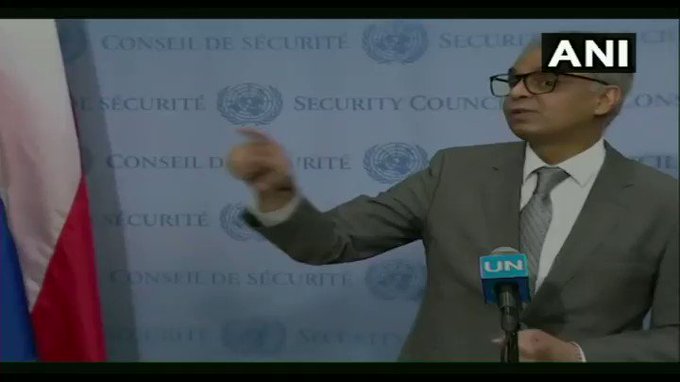
Meanwhile, addressing a presser at the UNSC, India's permanent envoy to United Nations, Syed Akbaruddin on Friday had already conveyed, "Article 370 is internal matter... these have no external ramifications."
Addressing a Pakistani reporter's query on when talks with Islamabad will take place, Akbaruddin said, "Using terror to push goals is not the way normal states should behave. Stop terror to begin talks."
Akbaruddin spoke to the media after the representatives of China and Pakistan had spoken and took questions unlike his counterparts. He took first three questions from Pakistani journalists and even went to them to shake hands in a gesture reflecting India's willingness to engage in a dialogue provided there was no push to terror.
Akbaruddin said that matters related to Article 370 of Indian Constitution "were entirely an internal matter of India".
Asked about India refusing dialogue with Pakistan, Akbaruddin said there are normal diplomatic ways of dealing with countries. "But using terror to try and push your goal is not the way that normal states behave. No democracy will acknowledge or accept talks when terror thrives. Stop terror, start talks," he said.
Russia, France and the US backed India at the consultations.
First Deputy Permanent Representative of Russia, Dmitry Polyanskiy said, "We will open-heartedly continue to engage with Islamabad and New Delhi in order to help both of them to come to terms and have good neighbourly ties on Kashmir on the basis of Simla Agreement of 1972 and Lahore declaration of 1999."

Kashmir off the table, Modi govt now wants revised ‘talking points’ with Pakistan


Cross-border terrorism is set to become single-point agenda between India and Pakistan as Modi govt looks to revise the terms of engagement.

With Kashmir now pulled off the negotiation table, the Narendra Modi government is planning to revise the “talking points” with Pakistan that may render the composite dialogue process redundant. The issue of cross-border terrorism is likely to become the single-point agenda between New Delhi and Islamabad.
The composite dialogue process was established between India and Pakistan by former prime ministers, I.K. Gujral and Nawaz Sharif, respectively, on the sidelines of the 1997 SAARC summit in Maldives.
It was the first time that the two sides agreed to discuss “all outstanding issues including Jammu and Kashmir” as part of the structured dialogue.
However, a senior government official told ThePrint that the “Kashmir chapter is now over”.
“The talking points will now have to be revised. Although there is no room for a dialogue at this end, India has to be seen as a statesman,” said the official on condition of anonymity.
India now plans to increasingly portray an image of a statesman in front of the world, as far as the South Asian region is concerned, that is keen on having a normal and stable relationship with its neighbour, the official added.

How Modi govt sees the composite dialogue

The composite dialogue process has been suspended several times in the past, but it underwent a complete transformation under the Modi government’s first tenure when both sides agreed to discuss terror and violence and delink the issue with talks.
The process was regularly reviewed between both sides until it was suspended in the aftermath of the 2008 Mumbai terror attack. It had been suspended on a couple of instances prior to that too, especially during the 1999 Kargil War, but the credibility of the process came under severe scrutiny after the Mumbai attack. In 2010, the process was resumed under a different nomenclature and it included new talking points such as counter terrorism.
Under the Modi government the composite dialogue transformed into what came to be known as ‘Comprehensive Bilateral Dialogue’. This was announced by former external affairs minister Sushma Swaraj at the Fifth Ministerial Conference of the Heart of Asia-Istanbul Process in Islamabad on 8-9 December, 2015.
However, in the wake of the September 2016 Uri attack, the Modi government said “terror and talks won’t go together”.
“The problem in India-Pakistan relations is not the absence of good talking points or dialogue mechanisms… Notwithstanding what new items are listed for dialogue by diplomats, the test of the relationship will remain the irreversible end of terrorism and walking away from viewing each other as enemies who must be outwitted and defeated at all costs,” said Husain Haqqani, former ambassador of Pakistan to the US.

Terror and talks

According to former foreign secretary Kanwal Sibal, the main talking point that India needs to sort out with Islamabad is terrorism, with particular reference to cross-border terrorism.
“At this time, talks are out of question. But at a later stage, India has to discuss terrorism with Pakistan, which remains the biggest unfinished agenda. Besides, agreement on nuclear sites also remains a crucial part of the composite dialogue,” said Sibal.
Unlike the previous dialogue process that had eight subjects, the comprehensive bilateral dialogue included over ten: Peace and security, confidence building measures, Jammu and Kashmir, Siachen, Sir Creek, Wullar Barrage/Tulbul Navigation Project, economic and commercial cooperation, counter-terrorism, narcotics control, humanitarian issues, people to people exchanges and religious tourism.
T.C.A. Raghavan, former Indian high commissioner to Pakistan, said while it is too early for both the nuclear-armed neighbours to have a dialogue, the issue of counter-terrorism will now rule the roost.
“As neighbours there are a number of issues that both the countries have to discuss. The issue of Kashmir is not over yet. The question of Pakistan-occupied Kashmir (PoK) has to be settled.
“But Pakistan is clearly overreacting at the moment. We want a stable relationship with Pakistan,” Raghavan, director general of Indian Council of World Affairs (ICWA).
The real issue between both countries right now is whether they can overcome “mistrust”, said Haqqani, who is also director (South & Central Asia), Hudson Institute and author of Pakistan: Between Mosque and Military and Magnificent Delusions: Pakistan, the United States, and an Epic History of Misunderstanding.
“Terrorism has muddied the water since the 1980s but even before that, the 1965 war came right after the 1963 ministerial level talks on Kashmir and the 1971 war was not long after the Tashkent Declaration of 1966.
“The Simla Accord of 1972 lays the foundation for dealing with all issues, including Kashmir, bilaterally. It also calls upon India and Pakistan to end the propaganda that breeds hostility,” added Haqqani.
Before the Kashmir issue sprang up earlier this month, the Imran Khan government had urged India for a dialogue on many occasions, even after the Balakot air strikes. However, with the scrapping of Jammu and Kashmir’s special status, Islamabad has refused to engage with for a dialogue.
On Friday, post the UN Security Council closed-door meeting on the Kashmir issue, Pakistan Foreign Minister Shah Mahmood Qureshi said “there is no question of a dialogue with India” after its Kashmir move.

US Cuts $440 Million Financial Aid To Pakistan: Report

The US apprised Pakistan Prime Minister Imran Khan about its decision to cut aid three weeks before his planned visit to Washington.
 The United States slashed the aid to Pakistan by nearly $440 million, bringing down its commitment to just $4.1 billion.
The aid was disbursed under Pakistan Enhanced Partnership Agreement (PEPA) 2010, reported Express Tribune.
The US apprised Pakistan Prime Minister Imran Khan about its decision to cut aid three weeks before his planned visit to Washington.
Notably, the PEPA was signed in September 2010 to make operational the Kerry Lugar Berman (KLB) Act that was passed by the US Congress in October 2009 to disburse $7.5 billion to Pakistan over a period of 5 years.
Earlier the aid under the KLB stood at nearly $4.5 billion. Following the cut, the aid will come down to $4.1 billion.
Last year in September, the United States'' military cancelled the financial aid worth $300 million to Pakistan due to the growing concerns regarding Islamabad's failure to tackle terrorism.
In January that year, Pentagon had cut $1 billion worth financial aid to Pakistan, with Defense Secretary James Mattis and other officials citing Islamabad's failure to crack down on the Haqqani terror outfit as the reason behind it, Fox News reported.
During his meeting with Pakistan Prime Minister Imran Khan, last month, US President Donald Trump strongly criticised Islamabad for its behaviour which led to the cancellation of US aid amounting to $1.3 billion to the country.
"We were paying $1.3 billion to Pakistan as aid, for many years. The problem was...Pakistan was not doing anything for us. They were really subversive. They were going against us. I ended that about a year and a half ago, the $1.3 billion (aid)," Donald Trump said during his meeting with Imran Khan.

#Video - Bilawal Bhutto condemns Kuchlak blast

Pakistan Peoples Party (PPP) Chairman Bilawal Bhutto Zardari on Friday strongly condemned the Quetta blast and expressed grief over the loss of precious lives, ARY News reported. 

The PPP leader, in a statement, sympathized with bereaved families and prayed for the departed souls and early recovery of the injured.
“Implementation on National Action Plan (NAP) is necessary in order to eliminate the mindset of extremism,” said PPP chairman in a statement.
Earlier in the day, Prime Minister Imran Khan strongly condemned the terrorist attack in Quetta’s mosque during Friday prayers that left at least five people martyred and 15 others injured.
At least five people were martyred and 15 injured in a bomb blast during Friday prayers in the provincial capital of Balochistan.
Rescue sources said the explosion took place in a Madrasa of Kuchlak town of Quetta during Zuhr prayers. Five people were reported to be dead and around 15 sustained injuries in the blast.
The injured are being shifted to Mufti Mehmood hospital.
As per sources, the explosive was placed beneath the carpet of Madrasa which was set off during Friday prayers.
Rescue teams and security forces have reached the site of the incident.

Friday, August 16, 2019

Video Report - Kids speak their minds about race

Video Report - Michelle Obama Goes Viral With Takedown Trump 'It’s Our America'

Video Report - First test of Russia’s new heavyweight combat drone ‘Hunter’

Video Report - Elizabeth Warren releases policy plans to aid Native Americans

Video Report - Rep. Rashida Tlaib tweets she won't visit Israel

#Pakistan - #PTI govt’s first year is a series of miserable failures

Pakistan Muslim League-Nawaz (PML-N) Information Secretary Marriyum Aurangzeb on Friday said that Pakistan Tehreek-e-Insaf (PTI) government’s first year was a series of miserable failures when it comes to governance and policy-making.
In a statement, the former information minister said that Prime Minister Imran Khan has successfully turned every national success into terminal failure. “The country has gone from one of the most affordable countries in the region to one of the most difficult countries to survive in,” she said.
She said that PM Imran will break his own “world record of compulsive lying” on August 18 when his government would have completed its first year in power. “Over 4.5 million people have been pushed below the poverty line whereas 1.5 million have become jobless. Despite borrowing huge sums from other countries and the International Monetary Fund (IMF), the government has not completed a single developmental project,” she said.
She said that inflation has spiked from 3 per cent to 13 per cent, growth rate of 5.8 per cent has fallen to under 2 per cent and interest rate has shot up from 5.75 per cent to 14 per cent, which is nothing but catastrophic for the national economy.
She asked how many “paradigm-changing chickens and cattle” were distributed by the government. “The government had promised five million homes and 10 million jobs but it has not delivered on a single promise,” she added.

#Pakistan - #PTI government’s first year in power - The promise versus performance


The PTI will be completing the first year of its tenure tomorrow. It is time to take account of its perceived achievements and failures.
Two million jobs and 200,000 houses per year were required to fulfil the promise of 10 million jobs and one million homes in five years. While tens of thousands of people have lost jobs, not a single new residential unit has been built so far. The party considers a handful of ‘Panah Gahs’ a major achievement. Other steps paraded as landmarks include E-visa extension and visa on arrival, which have no bearing on the life of the people of this country. That no financial scandal involving government high ups has been reported is also presented as a remarkable feat.
Within eight months of coming to power a clueless PTI government fired its own financial wizards, handing over the country’s economic management to the IMF’s team which is least bothered about the impact of its policies on the life of the common man. The people are consequently suffering under the impact of rising prices and inflated gas and electricity bills. The government’s economic policies have pushed tens of thousands below the poverty line.
The PTI government took political polarisation to an unprecedented height in the very first year of its rule. It goaded NAB to arrest opponents even when no offense had been proved against them in a court of law. The arrest of former PM Shahid Khaqan Abbasi, former Finance Minister Miftah Ismail and PML-N Vice President Maryam Nawaz are some of the cases that prove that malice was the motive behind the arrests.
Free speech has been suppressed, TV channels pulled off-air without due process, newspapers pressurised to ban columnists and baseless treason cases filed to silence the media.
The government has squandered the opportunity provided to it by the Trump Administration’s urgency to quit Afghanistan. The government has played its cards badly. Instead of supporting Pakistan’s Kashmir stand, US Secretary of State Mike Pompeo’s message on August 14 underlines the need to build on the important commitments made during recent visit by Prime Minister Imran Khan and the senior leadership of the Government of Pakistan. Back to do more, Pakistan.

Opinion: Imran Khan — one year of stumbling ineptitude

BY Harris Khalique 
Pakistani Prime Minister Imran Khan promised to provide relief to citizens when he came to power last year, but his government has only added to their misery, says Harris Khalique of Pakistan's human rights commission.
When Imran Khan was elected as Pakistan's prime minister on August 17, 2018, some Pakistanis saw him as the the best option, but others saw Khan as a messiah, and followed him like blinkered members of a populist cult.
Khan's victory was the triumph of Pakistan's self-righteous and self-serving affluent urban middle class. They were aided internationally by a well-meaning but naive diaspora, and domestically by the leadership of the politically dominating and psychologically impatient judiciary and military.
Khan's supporters agreed on his prescription for treating the ills of Pakistan's economy and polity: i.e. moral answers to material questions and administrative solutions to structural problems.
Both have failed to work. Rather than providing relief to common citizens as promised, the past year has added to their misery.
In 2018, the narrative that was sold to the public for a "new idea of Pakistan" could be summarized as a corruption-free economy and a justly governed country. This narrative was realized through Khan's rise to power, along the rise of his political outfit, Pakistan Tehreek-e-Insaf (PTI), in national and provincial general elections.
The July 2018 general elections were marred by  accusations of pre-poll manipulation and vote-rigging. But those who understood that a nascent democracy constrained by a colonial structure would stumble before finding its feet were willing to give Pakistan's new democratic dispensation a serious chance. Even the main opposition parties were cautious and feared that their non-cooperation could have brought an end to the democratic order altogether.
Therefore, Khan's government began with even better support than two of his predecessors — Zulfikar Ali Bhutto in 1972, and Nawaz Sharif in 1990. All powerful institutions of the state were on his side, opposition was reluctant to agitate and a large part of the affluent middle class — having sway over both market and media at that time — saw him as a savior.
Economic mismanagement
One year into this government, not only do we find all the promises made for improving the economy and governance unfulfilled, the path forward seems to have been lost as well.
Capitalism works in a certain way in a developing country, and the PTI claims it can fix the system without knowing how it works.
The PTI's rhetoric about curbing corruption and ending financial debt was turned upside down sooner than imagined. The cluelessness, and therefore poor performance of PTI's economic managers appointed at the outset, brought their unceremonious ouster within months.
A late agreement with the International Monetary Fund (IMF) not only put more pressure on Khan's government, it also meant the IMF could exercise more control over Pakistan's financial decision-making.
In the name of bringing macroeconomic stability, growth has been stifled, the currency is majorly devalued and markets have lost their trust. Hyper-inflation and unprecedented power and energy price hikes coupled with sharp decline in incomes of middle, lower middle and working class have brought extraordinary hardships on common people. Poverty indicators soar and under- and unemployment rise as a consequence of this economic slowdown. 
On top of this, there have been major cuts introduced in spending on health and education directly hitting the disadvantaged. As far as public debt is concerned, a recent report in The Express Tribunenewspaper revealed that more than two-thirds of what the previous Pakistan Muslim League Nawaz (PML-N) government had borrowed in five years has already been acquired by Khan's government in less than one year.
Foreign relations and domestic policies
In terms of foreign relations, Khan's government is finding it hard to create a balance between the US and China for its own benefit. The pace of investments and development under the China-Pakistan Economic Corridor (CPEC) is caught up in uncertainty, while the US seems to be reluctant in offering any substantial support unless Pakistan fulfills the role Washington envisages for it in the ongoing Afghan peace process.
Bending over backwards to woo Saudi Arabia and the UAE over the past year has brought limited dividends to Khan in every quarter, including support to Pakistan's economic stability.
The Arab countries' response was cold when Pakistan expected them to denounce India's recent annexation of the State of Jammu and Kashmir, where constitutional safeguards were withdrawn, compounded with stark military aggression against civilians.
What Khan's government and its backers in the establishment have successfully done over the past year is to systematically curb political dissent and constrain freedom of the mainstream media.
But those who can recall Pakistan's political history —however chequered it may have been — know full well that muffling of voices eventually leads to unmanageable dissonance in the body politic that in turn erodes the very base of the government.
Need for introspection
At the end of its first year in power, what Khan's government needs is a critical introspection in order to fundamentally alter its economic policies to realize the economic rights of Pakistani citizens. This includes alleviating poverty and increasing productivity.
The government also needs to better manage the country's foreign relations with a long-term vision that helps strike a balance between global powers to Pakistan's advantage.
Finally, the government needs to appreciate the importance of civil and political rights and respect for the freedom of expression, which are prerequisites to creating a healthy society and sustainable polity.

China Blames India for Kashmir Tension as UN Action Blocked - U.S. and France blocking a Chinese attempt

China’s ambassador to the United Nations blamed India for stoking tensions with Pakistan and called on both sides to exercise restraint after a rare closed-door Security Council meeting on the situation in Kashmir that failed to produce concrete action.
The Security Council met on Friday to discuss Indian Prime Minister Narendra Modi’s decision to scrap autonomy for Kashmir, though the body was divided on how to proceed, with the U.S. and France blocking a Chinese attempt to get the 15-member body to publicly urge parties to refrain from actions that exacerbate tensions along the line of control, diplomats said.
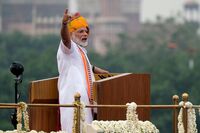
India Prime Minister Narendra Modi At Red Fort For Independence Day Celebrations
Narendra Modi delivers a speech in New Delhi.
Photographer: T. Narayan/Bloomberg
“It’s obvious that the constitutional amendment by India has changed the status quo in Kashmir, causing tensions in the region,” Chinese Ambassador Zhang Jun told reporters after the closed-door meeting. “China is deeply concerned about the current situation and opposes any unilateral action that complicates the situation and we call upon the relevant parties to exercise restraint.”
China is a historic ally of Pakistan. Underscoring rising tensions between nuclear powers India and Pakistan over Kashmir, it was the first full Security Council meeting to discuss the disputed region since 1965.
One Western diplomat, who asked not to be identified discussing the closed meeting, said even though no decision was reached, holding the meeting helped calm tensions because it showed Pakistan that the international community is engaged on the issue.
India has called the Kashmir decision an internal matter with no bearings on its international borders with Pakistan and China. Yet Beijing issued a strongly worded statement last week questioning the impact on the mainly Buddhist region of Ladakh -- an area of strategic importance nestled between Tibet and Pakistan.
Friday’s discussion came after Pakistan’s Foreign Minister Shah Mahmood Qureshi urged the Council earlier this week to hold an urgent meeting, arguing that India’s moves pose “a threat to international peace and security, willfully undermine the internationally recognized disputed status of Jammu & Kashmir,” and violate the human rights of the Kashmiri people.
India says its decision to convert Jammu and Kashmir into two federally administered regions would usher in prosperity for the region where as many as 42,000 people, including civilians, army, police and militants have died in violence in the last three decades.
“The recent decisions taken by the government of India are intended to ensure that good governance is promoted and social economic development is enhanced,” Syed Akbaruddin, India’s ambassador the the UN, said. “We are saddened that terrorism is being fueled while language and incendiary talk of Jihad are being mentioned by people who should know better.”

Pakistan’s doctors are getting fired in Arab countries. Blame its unreliable medical degrees


Many Pakistanis working in the field of clinical research would say that the unfortunate episode was waiting to happen.

Research is a word reviled in Pakistan, and the lack of it has come back to haunt Pakistani doctors working in the Gulf.
Saudi Arabia, Qatar, Bahrain and the United Arab Emirates recently showed the mirror to Pakistan’s medical community by sacking hundreds of Pakistani doctors who had secured jobs on account of their MD/MS degrees. These doctors have now been issued deportation orders. Most of them had been working in the Arab countries since 2016.
Pakistani doctors working in clinics (patient treatment and care) are excellent, but that’s not the case with those working in clinical research. And, it is the second group that has brought ignominy to Pakistan.
In the past, Saudi Arabia was more concerned about the clinical aspect of medicine, but it has recently invested heavily in clinical research, especially in the area that focuses on cause of a disease and application of drugs in patients.
In response to this, some medical universities in Pakistan developed certain MS and MD programmes to ensure the skilled force gets opportunities in Saudi Arabia and other Gulf countries, but the strategy seems to have backfired.
First Saudi Arabia and now others have alleged that Pakistan’s postgraduate degrees in medicine are lacking in structured training programmes.
There are four main reasons for such criticism.

No concept of research

First, Pakistan’s medical universities are alien to the concept of research. Professors themselves violate research rules with impunity and the same malpractice trickles down to the student researchers. Garbage in, garbage out.
For instance, a former vice-chancellor of government-run University of Health Sciences in Lahore, after assuming the position, had circulated his CV wherein he claimed that he had 120 research articles published in the field of reproductive endocrinology and high-altitude physiology in a career spanning 35 years.
Going by the sheer number of articles, an entire book on medical research would have been published. Similarly, with such vast experience in medical research, one would assume there were several discoveries (patent rights) against his name. Unfortunately, there was none. No standard book on medical research included his name as a contributor to appreciate his scientific work.

Stealing ideas

Second, medical researchers in Pakistan are not careful about the validity of their research. They overlook the fact that the steps taken to conduct research are more important than the conclusion drawn. Every step has to be recorded in a logbook. There is a tendency among Pakistani researchers to steal the objectives and conclusion of a research performed in some other part of the world and replicate the same in the context of Pakistan to claim a scientific credit. This explains why the conclusion drawn often doesn’t flow from the research conducted.
For instance, in 1991, P. Laurberg et al published the result of their study conducted at Aalborg University Hospital (Denmark) on high incidence of multinodular toxic goiter in the elderly population in a low iodine intake area in East Jutland, Denmark. In 2013, a team of Pakistani researchers in Rawalpindi replicated the same study in northern region of Pakistan among the elderly population. Without following the requisite steps of research, they arrived at the same conclusion to earn a scientific credit. Steps for conducting research were not followed because the team of researchers already knew the conclusion they would arrive at.
Similarly, in 2005, at the Osaka University in Japan, A. Fukukara et al conducted a study on humans to examine the effect of a secreted protein (Visfatin) on the testosterone levels in insulin-resistant diabetic males. Interestingly, in 2013, a team of Pakistani clinical researchers based in Rawalpindi reinforced the same findings by conducting a study on male rats to earn a scientific credit.
Across the world, experiments are conducted first on animals and based on their success, clinical trials are conducted on humans. In Pakistan, the reverse pattern is followed just to earn a scientific credit, making a mockery of research. News of such virtuosity has reached foreign countries that now view the achievement of Pakistani researchers with doubt.

No reliability of research

Third, medical researchers in Pakistan are incautious about the significance of the reliability of research. Any research whose results are not replicable is unreliable research. There are several examples where unreliable data have been produced to only serve the purpose of the researcher.
For instance, a head of the department at the government-run medical university in Lahore declared a couple of years ago that he had discovered a ‘Pakistani type-II diabetes’. To publicise his findings, the professor published four research articles (in 2013, March 2014, September 2014 and 2015) in four different research journals of Pakistan. The articles indicated that each time he got the approval of the ethical committee of the university to collect the samples.
Interestingly, the blood samples of 212 patients were reportedly collected from November 2009 to January 2012 during his PhD studies. It is still not known how he cryopreserved the samples or if he used the same samples for more than three years since the date of the sample collection. It also not known how and why the ethical committee of the university would allow him to declare in each article that the samples used were fresh.
No independent or third-party researcher has been able to successfully repeat the experiments to confirm the authenticity of the findings.

A culture of condoning

Fourth, Pakistani researchers practice a culture of condoning – you overlook my faults and I will overlook yours. They do not challenge each other because they mutually conduct research malpractices.
There are other silent participants in this malicious activity of research quackery. Every medical university in Pakistan has hired the services of media managers who secure hefty salaries from the university and penetrate the media to forestall the publication of any news, which is against the interests of the university. These media managers also offer the reporters covering the medical beat a direct access to medical facilities of the attached hospitals as a sop to stay tightlipped.
Above all, medical universities, especially those run by the government, are supervised by the chancellor who happens to be governor of the province. Governors, mostly from non-science background, do not wish to interfere in the universities’ research issues.
There are, for instance, several complaints against research malpractices pending with the office of the Governor of Punjab. Registrars of medical universities are also known to propitiate the governors with different favours to keep the issues suppressed.

Thorough probe needed

The news of expulsion of Pakistani doctors from the Gulf countries might have taken many Pakistani by surprise, but to many Pakistanis working in the field of clinical research, the unfortunate episode was waiting to happen. When teachers (or trainers) are involved, students (or trainees) cannot escape research malpractices.
A thorough inquiry into the matter is required to root out the malpractices of research quackery and research misconduct, which are rampant in Pakistan’s medical universities and hospitals. These malpractices are spoiling the future of young clinical researchers in Pakistan and bringing disgrace to the country.