M WAQAR.....
"A man's ethical behavior should be based effectually on sympathy, education, and social ties; no religious basis is necessary.Man would indeed be in a poor way if he had to be restrained by fear of punishment and hope of reward after death."
--Albert Einstein !!!
NEWS,ARTICLES,EDITORIALS,MUSIC... Ze chi pe mayeen yum da agha pukhtunistan de.....(Liberal,Progressive,Secular World.)''Secularism is not against religion; it is the message of humanity.''
تل ده وی پثتونستآن
Pakistan inducted A-100 rocket in Multiple Launch Rocket System (MLRS) into its arsenals, boosting the strength of Artillery Crop on January 4, 2019. The missile system was indigenously developed by Pakistani scientists and engineers. MLRS which comprise of two main elements: rocket munitions and a self-propelled platform to carry and launch those rockets, designed to disrupt enemy’s mobilization. MLRS is unguided rocket against enemy position in artillery minded sense.
The media wing of the armed forces, the Inter Services Public Relations (ISPR) said that this rocket is a highly effective and potent for interdiction that can effectively disrupt enemy’s mobilization and assembly. Chief of the Army Staff (COAS) General Qamar Javed Bajwa, presided over the induction ceremony, paid rich tributes to scientists and engineers for indigenously develop A-100 rocket which shall augment the existing conventional fire power capabilities of Pakistan Army.
While addressing at the ceremony, he emphasized Pakistan Army’s resolve to strengthen conventional forces to meet challenges of full spectrum threat. Pakistani defence industry had maintained steady progress in the recent times and had contributed to defence of Pakistan. This missile system is another addition in the deterrence equation of South Asian region.
In the South Asia context, mutual hostility and unresolved disputes between India and Pakistan create instability and insecurity. The induction of nuclear weapons into the national defense structures of both states in 1998 has brought an era of dynamics of nuclear politics. Nuclearisation brought the concept of deterrence in the region. The deterrence equilibrium in South Asia is viewed as an assurance for peace and stability in the region. The strategic significance of nuclear weapons in the South Asian security equation is undeniable because these weapons reduce the chances of limited conflict between the two hostile states. Pakistan as a responsible nuclear weapon state has never been in competition with India in terms of size, scope and efficiency of is conventional or strategic capabilities. Hence, equilibrium of nuclear deterrence between India and Pakistan is the underpinning of South Asian strategic stability.
Recently, India’s doctrinal policy shift and its objectives ultimately forcing an arms race in the region. Pakistan is obliged to rely on the employment of nuclear weapons owing to conventional military asymmetry. India’s aggressive limited war ‘Cold Start’ (CSD) left no choice for Pakistan but to introduce Short Range Ballistic Missile ‘Nasr’ (TNW).
Indian Offensive Military Doctrine which is specifically designed to undermine Pakistan’s conventional capability and occupy its small territory which could be used as a significant tool in post conflict negotiation by initiating surprise attack from eight different fronts by the Integrated Battle Groups (IBGs).
Pakistan developed TNWs to deter India’s conventional military superiority. It is well known that conventional asymmetry between India and Pakistan is continuously widening with the passage of time. India also allocated huge budget for its military which defiantly have ramifications for Pakistan. Pakistan cannot afford arms race with India for the purpose of conventional military parity, consequently Pakistan developed such a capabilities (TNWs) which could deter India’s conventional military superiority. Pakistan views SRBM as a stabilizing addition to the prevailing deterrence equation. Pakistan considers the nuclear weapons as last resort weapons which are only meant for deterrence and their use can only be contemplated as a last resort.
Recent Indian weapons modernization and force posturing is viewed as a threat to the strategic stability of South Asian region. India’s air defence system the latest addition of S-400 system also has the ability to disturb the regional strategic stability. S-400 is a long range surface to air missile system and has the ability to access aerial targets up to 400 km away. It has the potential to counter threats from ballistic missiles, unmanned aerial vehicles, and aircraft.
To counter Indian doctrinal change, military modernization and proactive military strategy of launching limited conflict and capture some territory of Pakistan adopted Minimum Credible Deterrence with Full Spectrum Deterrence. Now this A-100 missile rocket is also made foe conventional deterrence.
Although, initiation of conventional war, for certain extant will remain a conventional conflict but beyond certain level no one can say that it will remain limited conventional war. It can lead to a nuclear holocaust. It will have series of implications. If India is insisting for operationalizing its Cold Start Doctrine against Pakistan than India will also have to pay for the severe implications at conventional as well as strategic level. No one knows the adversary redlines.Pakistan in recent years has been trying to modernize its forces as per demands of the contemporary security challenges. Induction of A-100 MLRS into Pakistan army will give it the utmost superiority to overcome conventional threats coming from Indian side. It allows Pakistan artillery corps to keep an eye on enemy’s mobilization and prepare them for any Indian military adventure. Induction of A-100 system also affects the surprise element of Cold Start Doctrine. This system makes Pakistan capable to meet the needs of deterrence against the conventional and unorthodox threats. Interestingly, MLRS computerized fire control system enables a reduced crew, or even a single soldier to load and unload the launcher. Furthermore, The MLRS offers a devastating physical and psychological effect on the enemy, covered with high explosion, anti-personnel or chemical warheads as needed.
Lastly, sophisticated technology and long-range ballistic missile development has not only made Pakistan more determined to acquire similar capabilities to counter Indian threat but also to ensure credibility of its nuclear deterrence. Long history of military confrontation, the growing asymmetry and disparity in South Asia has accelerated the process of mastering the latest sophisticated conventional and nuclear technologies. Therefore, both South Asian nuclear states have developed enough nuclear capable warheads, bombers and ballistic and cruise missiles.
So far Pakistan has been doing great overall three domains, Air, Sea, and land, in terms of meeting the needs of deterrence against the conventional challenges.
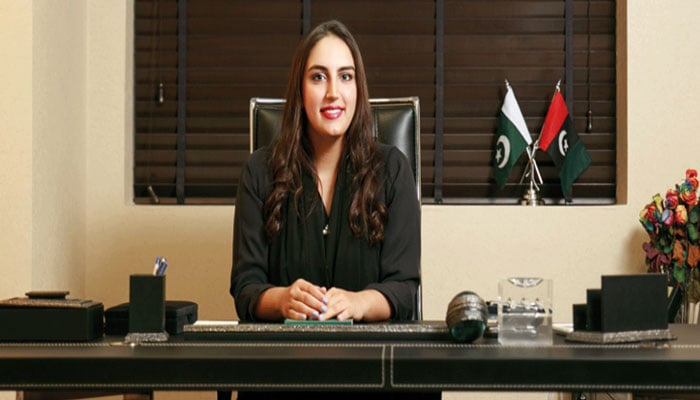
Bakhtawar Bhutto Zardari, daughter of Muslim world's first female Prime Minister Shaheed Mohtarma Benazir Bhutto, has turned 29 years old today.
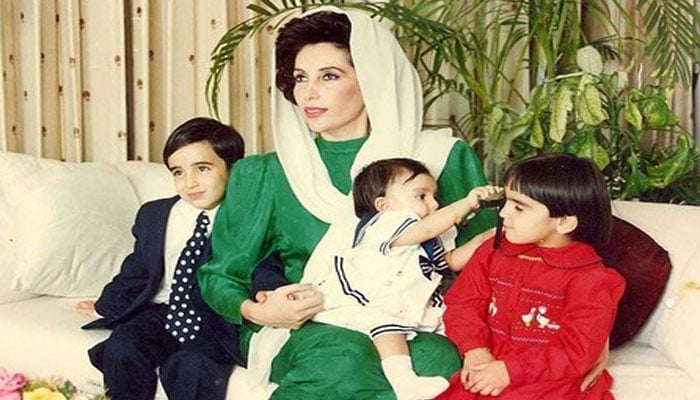
Born on January 25, 1990 to Benazir Bhutto and Asif Ali Zardari, Bakhtawar Bhutto enjoys the stature of being the first child born to a sitting female Prime Minister. She is the eldest of Benazir's three children.
A strong exponent of human rights, Bakhtawar studied at the prestigious University of Edinburgh and graduated with a Masters with honours MA(Hons) in English Literature. She plays an eminent role in furthering education at the renowned educational institution Shaheed Zulfiqar Ali Bhutto Institute of Science and Technology founded by her mother in 1995.
Bakhtawar also established her own non-governmental organization known as 'Save the Flood and Disaster Victims Organization' for early recovery response to those impacted by natural calamities in Pakistan.
Furthemore, she is an avid adventurist who's fond of paragliding, archery and other adventure sports.
Bakhtawar, on the occasion of her 29th birthday, took to Twitter to express gratitude to everyone who wished her.
The war in Afghanistan has become a multigenerational exercise in absurdity. Many of the soldiers now fighting were in diapers when the war began.
When President Donald Trump announced that he would be withdrawing half of the U.S. troops serving in Afghanistan, the national security establishment was aghast. Afghanistan will become a failed state! The Taliban will expand their power! Chaos and disorder will follow! The critics might be right. The president should follow through anyway.
Aware the war in Afghanistan is unwinnable, Trump nevertheless now dithers. He is being pressured by military leaders who understandably want their sacrifices to have achieved something. And he is selfishly concerned with being blamed if the government in Kabul collapses on his watch.
But letting the Afghanistan War “muddle along” for so many years has been a grievous mistake. Roughly 2,400 U.S. service members and 4,000 American contractors have been killed there, including four just over Thanksgiving. As my old boss, John Kerry, asked a Senate committee in 1971, after returning from that other quagmire in Vietnam, “How do you ask a man to be the last man to die for a mistake?”
The war in Afghanistan has become a multigenerational exercise in absurdity. Many of the soldiers now fighting and dying were in diapers when the war began. Yet almost two decades and more than a trillion dollars later, the U.S.-backed Afghan government controls only 55 percent of the nation’s territory and 65 percent of its population.
Rather than fading away, the Taliban are stronger than they’ve been at any time since they were ousted when the war began. If our objective is the destruction of the Taliban, the war will be impossible to win militarily.
Don’t take my word for it. The new U.S. general leading our mission in Afghanistan, Scott Miller, conceded to NBC News that “this is not going to be won militarily.”
Instability doesn't always mean insecurity
The decision to invade and occupy Afghanistan was steeped in outdated thinking from an earlier era. In the years leading up to the 9/11 attacks, U.S. foreign policy experts were obsessed with the danger posed by “power vacuums” and “failing states,” and the terrorist breeding grounds they bore. The invasion and occupation of Afghanistan sought to deny al-Qaeda a base for its operations. Yet most of al-Qaeda’s leadership simply fled to Pakistan, and America got bogged down fighting the Taliban, who despite their radical ideology have never had designs on attacking the U.S. mainland. Now, when terrorism is more likely to be homegrown than coordinated from a remote mountain cave, the use of military occupations to disrupt terrorist havens is as antiquated as it is ineffective.
One thing we’ve learned is that American interventionism, however well intentioned, can create more power vacuums than it fills. Such was the case in Iraq and Libya. The threat of “failing states” has been exaggerated. Instability does not necessarily yield insecurity. And some of the biggest challenges to America’s national security come from countries like North Korea, China and Russia, where the control by the central government is all too stable.
In Afghanistan, the Taliban are a fact of life. Instead of trying to defeat or destroy the Taliban, we should define success more in terms of brokering a political settlement — much like the one the Colombian government reached with FARC — that increases the prospects for peace for our Afghan partners after we end our commitment there.
The only thing that can ultimately guarantee the independence and self-determination of the Afghan people is an Afghan government that has its own independence and self-determination. When President Barack Obama announced his timetable for a previous troop drawdown in 2014, Afghan President Ashraf Ghani acknowledged that “deadlines concentrate the mind.” If a more imminent deadline doesn’t prompt the government to rise to the challenge of independent governance, it’s unclear anything will.
The American public is ready for the war to end
Afghanistan has shown signs of confidence. Its national security adviser is meeting with international partners who might help the young government continue to get its footing. One of Ghani’s aides notes that pundits who warned of a doomsday scenario after the 2014 drawdown of U.S. troops were proven wrong, that and “our brave defense and security forces … defended the nation with great valor.”
Even the most strident hawks understand that the war in Afghanistan is unwinnable. Their alternative to withdrawal is to maintain an indefinite troop presence, akin to the permanent stationing of U.S. troops in Germany and Japan after World War II. This is a ludicrous idea. America’s post-World War II occupations guaranteed the security and prosperity of the world’s foremost centers of economic activity, whereas Afghanistan is a desperately poor country with little strategic significance.
The political will to end the war in Afghanistan exists. One recent poll shows that fewer than half of Americans say the initial decision to use military force in Afghanistan was correct. Another new poll finds that a majority of Americans would support a presidential decision to withdraw troops from Afghanistan within a year, while only about one in five would oppose it.
And although some military leaders pressuring the president to stay might feel “pot committed” to the conflict, soldiers and veterans are even more likely than the general public to support a withdrawal of troops from Afghanistan.
Yet few leaders have taken a strong stance toward ending the war. Democrats in particular find themselves in an awkward spot, historically skeptical but inclined to automatically oppose any Trump policy. They should follow the example of Sen. Elizabeth Warren, who displayed political courage by agreeing with the Trump administration’s decision to withdraw troops. Let’s take a break from partisan scorekeeping to, at last, curtail the worst excesses of the so-called War on Terror.
In 1966, in the middle of the Vietnam War, a Vermont senator named George Aiken urged President Lyndon Johnson to “declare victory and get out.” Imagine the financial, geopolitical and human costs that could have been spared if we took his advice then. Let’s take it now.
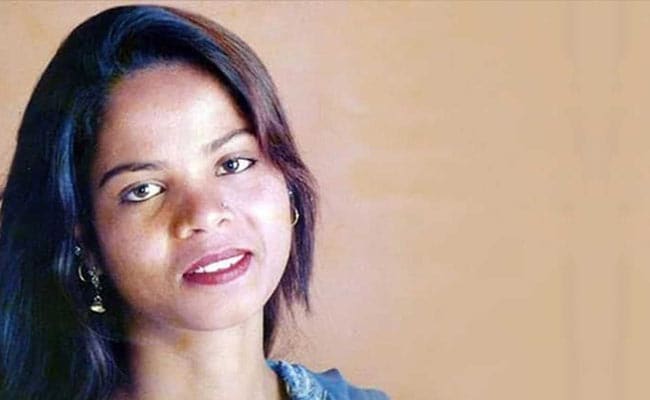
Pakistan's Supreme Court will decide on January 29 whether to allow an appeal against its acquittal of a Christian woman at the centre of a blasphemy row, a lawyer involved in the case said Thursday.If the court refuses to allow the appeal, it will remove the last legal hurdle facing Asia Bibi, who is a prime target in conservative Muslim-majority Pakistan and remains in protective custody.
Bibi was on death row for eight years for blasphemy, a hugely sensitive charge.
The Supreme Court's decision in October last year to overturn her conviction ignited days of violent demonstrations, with enraged Islamists calling for her beheading, mutiny within the powerful military and the assassination of the country's top judges.The government has since launched a crackdown on the Tehreek-e-Labaik Pakistan (TLP) party -- the Islamist group driving the violent protests -- charging its leaders with sedition and terrorism.But authorities also struck a deal with the protesters to end the violence, forming an agreement which included allowing a final review of the Supreme Court's judgement.
On January 29, "the court will determine if our appeal against her acquittal is admitted", Ghulam Mustafa Chaudhry, the lawyer who filed the petition seeking an appeal, told AFP.
"Usually the court decides on the same day if the appeal is admitted or not," he added.
Under Pakistan's creaky legal system any private citizen can petition the courts on any matter of public interest or human rights, as in the Bibi case.
However legal experts said it would be highly unusual for the Supreme Court to overturn its own decision, especially one that as carefully drafted as the Bibi ruling.
Pakistan has been debating how to regularise its weapons market, and a state-run company is about to set up an industrial estate around the old ‘gun valley’.
Ajab Khan Afridi is an unusual hero. Legend has it that one night in 1923, the Pashtun tribesman and his brother rode towards the lodge of a British officer. Swords and torches in hand, they barged in and killed the officer’s wife. Afridi then picked up the couple’s teenage daughter, Molly, slung her over his shoulder and took her away.
The men, it is said, were furious because the British raided their village and misbehaved with the women. But they never meant to harm young Molly, who was treated well and released by her captors after the British army paid ransom.
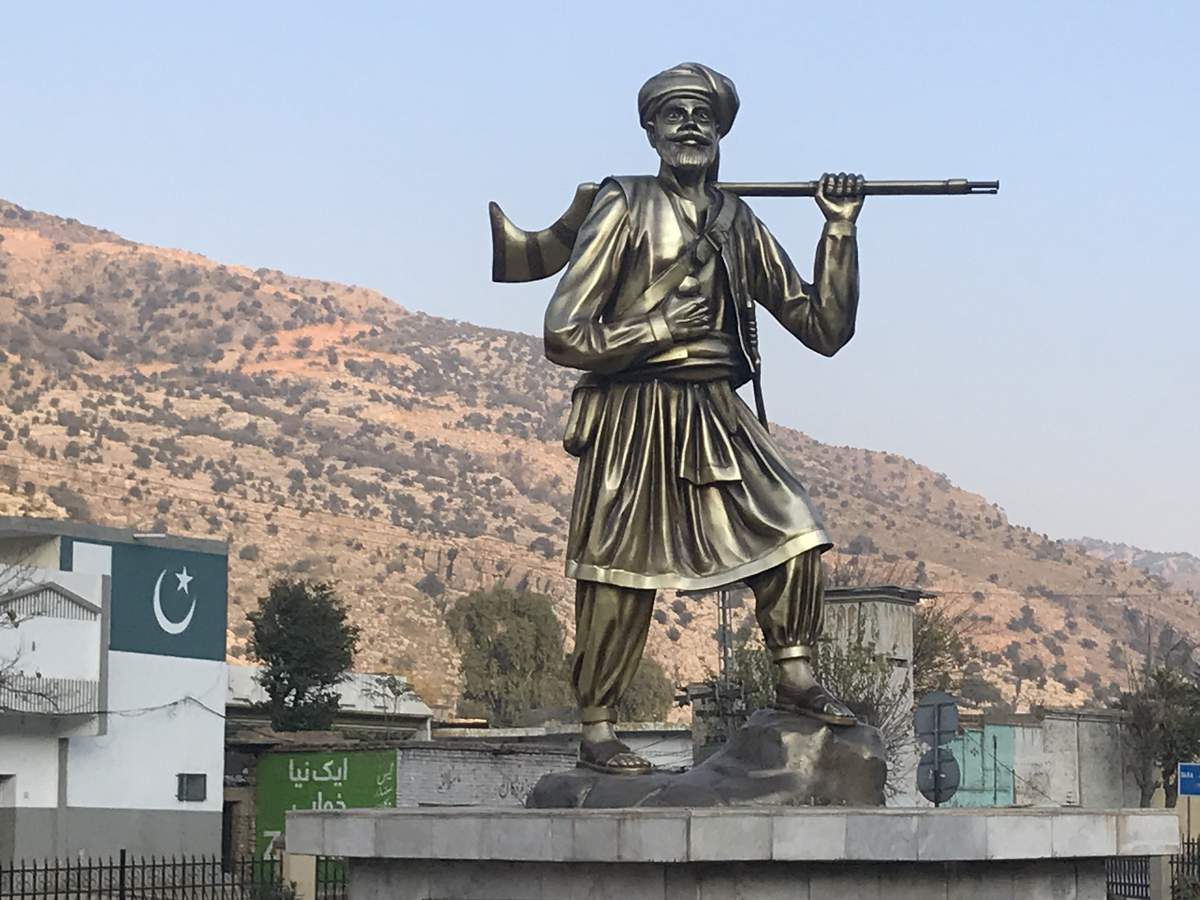
Today, Afridi is an icon in Pakistan’s largest and oldest firearms market — one that is almost 150 years old. His marble statue stands tall in the main square of Darra Adam Khel, a mountainous valley in the northwestern tribal belt, close to the border with Afghanistan.
Darra Adam Khel’s statue | By special arrangement
Pakistan’s ‘Gun Valley’, as it has come to be known, is a small and impoverished town, with a population of an estimated 80,000. Yet, it is home to about 2,000 weapon shops, and according to some, over half the population is employed in making weapons. For most, making firearms is the only thing they know how to do.
Sounds made by hammers, electricity generators and gunshots echo through Darra Adam Khel. The quality of the products is impeccable and nearly impossible to distinguish from the originals. Everything is available here — from automatics and semiautomatics, to 9mm and Beretta, and even anti-aircraft guns — at below-market prices of between Rs 20,000 and Rs 40,000.
In the 1980s, the valley armed the war in neighbouring Afghanistan, both legally and illegally. Then, in 2008, militants overran the area and a notorious commander took control, though it didn’t curb profits. But when the Pakistan Army launched a military assault in the lawless tribal belt, to scrub it of local and foreign terror outfits, sales tumbled. Pakistan imposed stricter gun-control laws, which further dried up the customer base.
Law-and-order has been bad for business, complain gun-makers.
“The industry has collapsed,” says Gul Zameen Afridi, a 40-year-old who deals in 12-bore shotguns. “Earlier, people would come from all over the world to buy weapons. Now, we are only allowed to manufacture licenced weapons.”
In the old days, a single gun would be passed between six to seven labourers, who would painstakingly chisel each weapon. But now, the thousand-strong workforce is melting away, taking up other professions to earn their living.
Libas Khan, 47, has been in the industry for three decades. He sells shotguns, semi-automatics, 8mms and 7mms.
“I have no formal education,” he says. “Making firearms is the only skill I have learned from my grandfather. None of my eight children go to school, because I don’t earn enough to pay their fees.”
Plan for a reboot
For a while now, Pakistan has been earnestly debating how to regularise its arms and weapons market. The state-run Pakistan Hunting and Sporting Arms Development Company has proposed setting up an “industrial estate” or a gun town, for which over 200 acres of land near Darra Adam Khel will be acquired. Initially, 500 shops will be set up to control production and the quality of the weapons.
“The government has already begun acquiring land,” says Tahir Khattak, CEO of the company. “Once that is complete, we aim to have this town ready within two years.”
Internationally, the arms trade is big business, which Khattak says the government is finally keen to tap into. Pakistan, at the moment, exports shotguns and small arms to Austria and Lebanon, while its import bill of weapons is close to $20 million from China, the US and Turkey.
“Our exports, as of now, are close to nothing. Only when the imports will be cut off completely can the local industry grow. Already, 10 small arms being produced by Darra Adam Khel are internationally certified. Africa and the UK can be big buyers for these,” Khattak said.
Books, not guns
But not all the residents of Darra Adam Khel agree that the age-old tradition of arms dealing and making should continue. Shahnawaz Zeb, 32, is a professor at a private college. His family was also in the firearm trade.
Yet, last year, he went his own way and set up a small library, with donations, in the midst of the weapons market. He then launched its Facebook page, Darra Adam Khel Library, to invite local people.
“I know it is a strange composition — a library on the top floor of a gun shop. But business is not bad,” Zeb says with a chuckle.
His collection includes books in English, Urdu and Pashto. Today, he has 170 members. Most of his regular customers are women, who are not permitted to venture out in Pakistan’s tribal areas.
According to the Bureau of Statistics, the estimated literacy rate among women in the tribal areas is below eight per cent. So, Zeb’s female customers have to send a male relative with a handwritten list of books they would want to buy or borrow.
“Times are changing and we should change too,” says Zeb. “We need to take the guns away from our younger generation and arm then with books instead.”
He then points to a poster behind him that reads “Chheen lo haath se bandooq merei, aur panaah do mujhey kitabon mein (Snatch the gun from my hand and give me shelter in books).”
Bakhtawar Bhutto Zardari, daughter of the former Prime Minister Shaheed Benazir Bhutto on Thursday celebrated her 28th Birthday.
Several celebrities, including family members, took to the Twitter to wish Bakhtawar her Birthday.
Bakhtawar expressed her joy over the Birthday messages that poured in on Twitter for her.
“Twitter feed flooding with the sweetest birthday messages, pictures & video compilations. So overwhelmed by the love. Thank you all so much,” Bakhtawar tweeted.
Bakhtawar is second of the three children of former president Zardari. She was born on 25th January 1990.
Her brother, Chairman of Pakistan Peoples Party (PPP), Bilawal Bhutto Zardari also wished his sister on Twitter:
Bakhtawar’s sister, Aseefa Bhutto Zardari tweeted: Happy Birthday to my incredible sister @BakhtawarBZ, I am so lucky to have you as my sister.”
Happy Birthday BB @BakhtawarBZ May all your dreams and wishes come true. Hope your special day brings you all that your heart desires! Wishing you a day that is as special in every way as you are! #HappyBirthDayBakhtawarBZ@BBhuttoZardari@AseefaBZ