Saturday, December 29, 2018

#PashtunTahaffuzMovement #Pakistan - A praetorian state?


Zahid Hussain
December 12, 2018.


IT is not unusual in Pakistan for the military’s spokesman to opine on everything from security to foreign and domestic affairs. His press talks are given live TV coverage and his remarks make newspaper headlines. After a brief respite, the ISPR chief spoke again last week. And, sure enough, it covered a range of topics.
DG ISPR Maj Gen Asif Ghafoor was pleased with the economy’s “revival” and the government’s overall performance. While calling for a political solution to the Afghan crisis, he wanted the American forces to stay in Afghanistan. He warned the Pashtun Tahafuz Movement (PTM) against crossing a “red line”. But, more importantly, the good general had some piece of advice for the media: show only ‘progress’ over the next six months. Is there anything left?
Indeed, the general was presenting not his personal but his institution’s thinking on those issues. But should the military spokesman be holding forth on policy matters that do not come under his domain? Should he be commenting on the government’s performance and opining on political affairs? Does he need to tell the media what to portray?
The civil-military imbalance has remained a major source of political instability.
It also raises the question of whether there exists an elected civilian government or if this is a praetorian state. Such statements by the military spokesman not only fuel confusion, but also undermine civilian institutions. The extensive media coverage given to his remarks, which often takes precedence over even those of top civilian leaders, is itself a statement.
Is it hard to understand the obligation of the military spokesman to adopt such high personal profile? The ISPR is expected to confine itself to security and other issues related to military matters. But this military organisation seems to have expanded its role hugely over the past few years — getting directly involved in matters that must not fall under its sphere.
Despite the military’s predominance, ISPR chiefs tended to maintain at least some semblance of balance and avoided being engaged in political controversies. But that seems to have gone awry. One clear example is the latest press conference that dealt with domestic political and foreign policies. It is not that the military leadership has not been involved in those matters, yet one does not expect the ISPR to be defining state policy.
Maj Gen Ghafoor maintains that, being a national institution, the military is not linked to any party or person. It was apparently in response to the prime minister’s statement that the military stood behind his government. Should it be seen as a rebuff to the prime minister or simply a statement of fact? There may not be any inference, but the clarification was not required.
It is not the first time that the DG ISPR has spoken about Pakistan’s Afghan policy. But his latest statement on the Afghan reconciliation process raises some serious questions. More importantly, it is the job of the foreign office to explain Pakistan’s foreign policy.
Maj Gen Ghafoor’s statement that the American forces should not pull out from the war-torn country was not prudent at a time when the Afghan Taliban is engaged in direct negotiations with the US. One of the insurgents’ demands is that of the timeframe for the withdrawal of US forces from Afghanistan. It is better to leave any policy announcement to the relevant civilian forums. Such statements undercut civilian authority and fuel confusion.
His remarks on the PTM, too, have got the institution engaged in unnecessary political controversy. It is a political issue and should be left to the civilian government to deal with. Such warnings could only ignite the situation. Surely there has been provocation from some elements within the movement, but generally the PTM’s supporters have remained peaceful. The military’s involvement in the matter could only provide ammunition to vested interests. We must learn some lessons from our experience in Balochistan. There is always a political solution to popular discontent. Outside powers can only fish in troubled water.
The DG ISPR’s advice to the media seems quite interesting. What the good general may not understand is that journalism is the act of bringing information and opinion into the public arena. It provides a platform for discussion across a range of political, social and development issues. Only when the media is free to monitor, investigate and criticise the state’s policies and actions can good governance take hold.
Free, pluralistic and independent news media contributes to social, economic and political development. The job of the media is to provide credible information representing a plurality of opinions, facts and ideas. But, unfortunately, there is now a move to stifle freedom of expression and plurality of views in the name of national security. This is extremely dangerous for the political and social cohesion of the country. The ISPR’s job should be to provide information, not to try to impose a particular narrative.
A narrow-minded approach and suppression of press freedom intensifies polarisation among the media, as is being witnessed today. Surely the media, too, must show responsibility and be objective, but any pressure to toe certain lines is not going to help. In this age of communication, facts on the ground cannot be glossed over. The paranoia over so-called hybrid war has become a major factor in the move to control the media.
The civil-military imbalance has remained a major source of political instability hampering the democratic process. Despite three democratic transitions, the space for the military establishment has not diminished. Indeed, the PTI government has moved cautiously, trying to maintain good working relations with the generals.
Prime Minister Imran Khan is right in saying that the military is behind him, and that has given the civilian government some space to breathe. It is imperative that this space be maintained for the smooth functioning of the system and to dispel concerns of the rise of a praetorian state.

2018: A year of media suppression and rights abuses in #Pakistan


By

Over the past year, there was a noticeable increase in attacks on freedom of expression and human rights in Pakistan.
"Sneaky", "sinister" and "Orwellian" are just some of the words Pakistani journalists and human rights defenders used to describe the censorship and growing clampdown on dissent, mainstream andsocial media in their country over the past year.
Although previous Pakistani governments also put pressure on civil society and the media, this year, many Pakistanis working in these fields I talked to felt that direct and indirect repression has increased significantly.

Attacks on the media 

As we were wrapping up 2018, there were a number of incidents that solidified the perception that the situation in the country has really gotten worse.
In early December, the Pakistani authorities blocked the website of Voice of America's Pashto language radio service.
Then on December 8, a police case was filed against dozens of people in the aftermath of a rally organised by the Pashtun Tahafuz Movement (Pashtun Protection Movement - PTM), which campaigns for Pashtun rights. Among them were two journalists Sailaab Mehsud, affiliated with Dawn newspaper and Radio Free Europe Radio Liberty's Mashaal Radio, and Zafar Wazir of the local channel Khyber TV, who had been covering the rally.
On December 14, Pakistan's electronic media regulatory authority (PEMRA) issued an advisory note calling on media outlets not to report excessively on topics such as violence, kidnapping, sexual abuse, terrorism and natural disasters. 
This document came after a similar one was issued in advance of the July parliamentary elections, which called on the media not to air "derogatory and malicious content" against the judiciary and the army. These regulatory letters purportedly aim to build a "positive image" of the country and address the "negative perception" of Pakistan globally, but many see them as a form of pressure on the media.
Then on December 15, Jang Group, the country's leading media house, fired hundreds of staffers en masse, closing down a number of its outlets.
Over the past year, a number of media organisations have had to downsize or close down due to declining advertising revenue or other financial constraints. Journalists I have talked to believe that this is a tactic to control the media and impose more "friendly" reporting on the authorities. 
They also say that printing presses have been pressured to stop from publishing certain newspapers, cable operators have been asked to cease broadcasting certain channels and big businesses have been advised against putting up advertisements with certain media outlets.
The media have also been pressured to fire certain employees who have been too critical of the Pakistani establishment. This year, leading prime-time news show hosts Talat Hussain, Murtaza Solangi, Mateeullah Jan, and Nusrat Javed either quit or lost their jobs. What they have in common is that they all questioned the transparency of the July elections and openly criticised the jailing of the former PM Nawaz Sharif and his daughter Mariam Nawaz.  
Journalists I talked to also shared their frustration with the increasing pressure and censorship in Pakistani newsrooms.
"It was ridiculous how we had to keep beeping off Nawaz Sharif when he would appear in court and during the election coverage. Election day was one of the worst days in my career as a producer in the newsroom, and I have seen the Musharraf era. We were not allowed to counter the official narrative of the authorities," a senior producer of a news bulletin of a prominent cable news network told me.  
An editor of an English-language daily complained that a "screening process" was set up in his newsroom under the explicit directions of the publisher which resulted in everyday interference and forced removal of editorials and op-eds.

Pressure on civil society

In addition to an intensifying clampdown on the media and the resulting self-censorship, the authorities are now pushing hard to further suppress the civic space and impose the official narrative on the human rights situation in the country after the July election.
In 2018, the authorities escalated pressure on human rights defenders and activists peacefully exercising their right to freedom of expression. They faced arrests, disappearances, accusations of treason, and violent threats from hardliner groups. The government has also stepped up filing complaints with social media companies against its online critics.
Recently, Minister of Information Fawad Chaudhry admitted that the authorities want to regulate social media. Over the past several months, a number of human rights defenders and activists have received emails from Twitter that their tweets violate the country's law; some accounts have even been suspended.
There have also been a number of human rights defenders, journalists and members of the legal profession who have either had to go into hiding or move to another country. Journalist Taha Siddiqui, for example, had to leave with his immediate family after narrowly escaping an abduction attempt.
The current government also continued the campaign the previous one started against non-governmental organisations (NGOs). As a result, this year some 18 international NGOs were forced to discontinue operations in the country, including Action Aid and Plan International. 
Another prominent target of the Pakistani authorities' assault on civil society this year was the Pashtun Tahafuz Movement.
Many of its members, including two MPs, Mohsin Dawar and Ali Wazir, are facing police cases for taking part in rallies and corner meetings of the PTM.
In July, Hayat Preghal, a Pashtun human rights defender, was detained for a few days. He later faced charges of "anti-state" online expression via social media for his posts in support of PTM.
Preghal, who worked as a pharmacist in the United Arab Emirates, was in Pakistan on leave. Following the court hearing, his name was put on a no-fly list and as a result, Preghal, who is the primary breadwinner of his family, lost his job. He is yet another victim of what appears to be a campaign of targeted economic pressure against political dissidents and human rights activists. 
Over the summer, Wrranga Lunri, a Pashtun women's rights advocate and supporter of PTM, also faced an intimidation campaign and had to relocate from her hometown in Balochistan. She was targeted for being a woman and an organiser, speaking out in public about her cause.
These are just a few of many examples of people who have fallen victim to the increasing intolerance for freedom of speech and human rights activism in Pakistan.
It is clear that this year the Pakistani authorities not only failed to abide by their constitutional and international commitments to ensure respect for rights and freedoms, but they actually actively engaged in campaigns of intimidation and censorship.
Unfortunately, there is little evidence that 2019 would be any different in this regard.

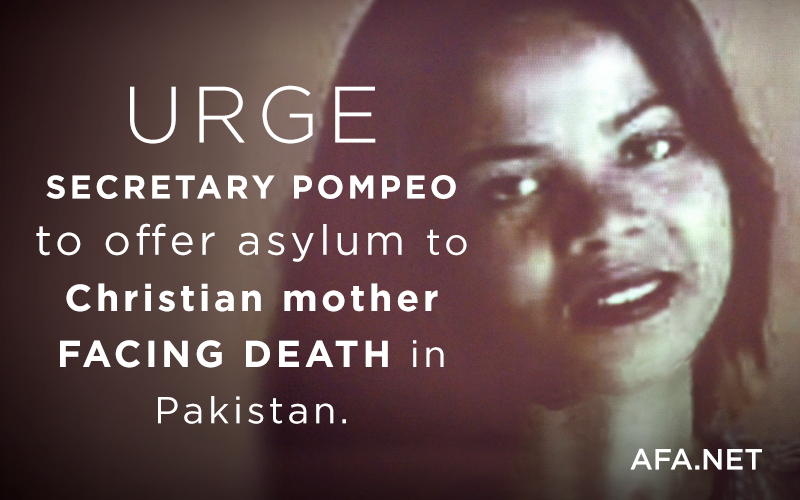
Scottish Politicians Press Theresa May to Grant Asia Bibi Asylum

A Scottish frontbencher has slammed the British government for failing to uphold the democratic value of freedom of religion in what she called a "failure" to address the situation of a Pakistani Christian, Asia Bibi, and grant her asylum in the United Kingdom.
A plea by more than 30 Scottish National Party (SNP) MPs has been sent to the UK Prime Minister Theresa May. The officials called on PM May to let Asia Bibi — who faces the threat of "violent mobs calling for her execution" in Pakistan — come to Britain and claim asylum.
SNP MP Carol Monaghan and other signatories to the letter praised "Canada, Spain and France for their offers of asylum, and note that Germany and Italy have reportedly held talks with Pakistan on the issue".
However, Westminster under Theresa May's leadership has failed to do the same, the MPs argued.
"If we claim to champion freedom of religious expression as one of the UK's core values, then we must act to uphold it rather than hiding behind others in fear of a backlash," they said in the letter.
A Catholic herself, Monaghan, said that her party would "continue to work with other parliamentarians and human rights organisations in pressing the UK government to take the right course of action."
Earlier in November, a group of politicians and campaigners have written to UK Foreign Minister Jeremy Hunt, urging him to grant asylum to Asia Bibi.
Bibi's case made headlines across the world, attracting backers and violent protesters — mainly in Pakistan — who spoke out on the matter.
Bibi was put on death row for blasphemy in Pakistan almost ten years ago, following allegations by Muslim women she worked with that she insulted Prophet Mohammed. Bibi denied the claims but was jailed and sentenced to hang on November 11, 2010.
The mother of three was eventually set free, following years in jail, after the Pakistani Supreme Court overturned the conviction last month. Bibi has reportedly spent Christmas in hiding, remaining in a secret location.
https://sputniknews.com/europe/201812281071063566-scottish-politicians-asia-bibi/

My client’s death sentence for blasphemy was overturned. She still cannot leave Pakistan.


Saif ul Malook, a lawyer, represented Asia Bibi in the successful appeal of her blasphemy conviction. Mehreen Zahra-Malik, a former Reuters correspondent based in Islamabad, assisted in the preparation of this op-ed.
Asia Bibi spent Christmas in a safe house in Islamabad, Pakistan. I hope that’s the last time my client, a Catholic, must spend the holiday unable to live and worship in freedom. Two months ago, a three-justice panel of the Pakistani Supreme Court overturned her 2010 conviction and death sentence for blaspheming the prophet Muhammad. Protests by religious hard-liners over the possibility that she would be allowed to leave Pakistan prompted the government to bar her, at least temporarily, from departing.
Prime Minister Imran Khan’s government appears determined to ensure the safety of Asia and her husband, Ashiq Masih, and the couple’s two daughters, until another country agrees to take them in. Canada is their most likely destination.
Asia was still in prison, not in the courtroom, when the decision was handed down on Oct. 31. Enraged protesters poured into the streets in several Pakistani cities. Police escorted me from the courthouse, and I spent three days in hiding, aided by friends in the diplomatic community, before I boarded a flight for the Netherlands still wearing my Pakistani lawyer’s uniform of a black suit and white shirt. I had insisted I wouldn’t leave without Asia, but my friends swore they would take good care of her. It was my life they feared for at that moment.My last meeting with Asia had taken place on Oct. 10 at the women’s prison in Multan, about 250 miles from my home in the eastern city of Lahore, where she had been incarcerated for the past five years. Contrary to reports of her terrible treatment in prison, Asia seemed to have found a quiet life of sisterhood with her guards, who allowed her a television set and more time outside her cell than usually granted to death-row inmates. The relatively benign treatment might have resulted from pressure by Western governments, but I sensed it was because the guards recognized Asia’s bravery and human spirit.
Asia is not a sophisticated person. She was born 47 years ago to a poor family in a dusty farming village in the Punjab province and never sat in a classroom for a single day of her life. But she was helped by her strong religious faith when she ran afoul of blasphemy laws often exploited by religious extremists and ordinary Pakistanis to settle personal scores.
She was working on a berry farm in June 2009 with several Muslim women when a dispute broke out because Asia had filled a jug of water for her co-workers. Like many Pakistani Muslims, the women refused to drink water from a utensil touched by a choorhi, a derogatory word for a Christian. Apparently incensed that a lowly Christian woman had argued with them, two of the women who later appeared as witnesses in the case said Asia had insulted Muhammad and the Koran. Local clerics began denouncing her. An enraged mob beat her and dragged her to a police station, saying she had confessed to blasphemy.Asia was sentenced to death by a district court in 2010. She had legal representation in name only, because competent lawyers often fear to take on blasphemy cases. At least 70 people , including defendants, lawyers and judges, have been killed by vigilantes or lynch mobs since blasphemy laws were strengthened in the 1980s under the military dictator Gen. Mohammed Zia ul-Haq. A lawyers group that offers free legal advice to complainants is known to pack courtrooms with clerics and raucous supporters who try to bully judges into handing out convictions.
In 2011, Salman Taseer, the prominent governor of Punjab and a critic of the blasphemy laws who had visited Asia in prison and promised to lobby for her pardon, was assassinated by one of his own bodyguards. A few months later, Shahbaz Bhatti, a Christian and a cabinet minister for minorities who had also spoken up for Asia, was murdered.
I took on Asia’s case in 2014. I’m a lawyer, and I do not want to see anyone falsely convicted of a crime, much less hanged for it. The Supreme Court granted a petition to appeal her case, and in 2015 the death sentence was suspended. In October, I was notified that the final appeal would be heard. The justices’ ruling for Asia, citing insufficient evidence, took great courage.I think I will have to stay away from Pakistan for at least two years before it will be safe to return. Until then, I will live with friends in the Netherlands or with my daughter in Britain. But I yearn to return home to continue defending victims of the blasphemy laws.
Asia had rarely ventured far from her village before being imprisoned, so beginning a new life in another country would be a challenge for her. But she has shown remarkable strength throughout this ordeal, and I am confident that she will succeed.

Video Report - Corrupt Generals of Pakistani Army

Friday, December 28, 2018

Music Video - Despacito Luis Fonsi ft Daddy Yankee

Video Report - The World This Year: Our look back at 2018

Video Report - Riot Control: #French govt to buy more non-lethal weapons despite serious injuries

The U.S. needs a reset in its relations with Saudi Arabia

By Will Hurd
Fifteen months ago in Riyadh, I met Mohammed bin Salman, who was then deputy crown prince of Saudi Arabia, for the first time. During that meeting, I heard bin Salman say something I had never heard an Arab leader admit before — that Islamist extremism is a problem within Islam and must be solved by Muslims with the help of Western democracies. At the time, I never would have thought the crown prince would be implicated in the gruesome murder of a journalist. After becoming crown prince, Mohammed bin Salman began implementing much-needed social reforms in Saudi Arabia, including allowing women to drive and reopening movie theaters for the first time in decades. The next time I met him in Washington, he explained the importance of these reforms for revitalizing Saudi society and the economy. After all, a prosperous Saudi Arabia is very much in America’s interest. Like so many other Western officials, I had hopes that he would lead Saudi Arabia in a positive new direction free from oppression and political persecution.
The murder of Jamal Khashoggi has largely destroyed those hopes.
Freedom of the press underpins free societies around the world. Unfortunately, acts of violence and intimidation against journalists, such as Khashoggi’s atrocious murder, are all too common. As of Dec. 14, 34 journalists have been killed in retaliation for their work in 2018, according for the Committee to Protect Journalists, nearly double the number in 2017. The United States must not only unequivocally support international press freedom but also condemn all leaders who intimidate, imprison or murder journalists and dissidents, including Russian President Vladimir Putin, Turkish President Recep Tayyip Erdogan and Chinese President Xi Jinping. Sanctioning any Saudi official involved in Khashoggi’s murder is the right decision and reaffirms America’s commitment to human rights and civil liberties. Now we face the challenge of balancing those values with U.S. security needs in the Gulf region. The U.S.-Saudi relationship has been an important part of our foreign policy in the Middle East for more than 70 years. Today, Saudi Arabia and its partners in the Gulf are crucial allies in the fight against terrorism, as well as efforts to counter the rogue and destabilizing regime in Iran. They are doing both in Yemen, where the Saudis and Emiratis are fighting al-Qaeda, the Islamic State and a rebel group backed by Iran. In the past three years, the Houthi rebels in Yemen have launched more than 130 Iranian-supplied ballistic missiles at Saudi cities. The Houthi advance has also raised the possibility that a hostile rebel group could seize power on Saudi Arabia’s southern border.
At the same time, the war has also created a serious humanitarian crisis with appalling civilian casualties, the destruction of hospitals, schools and water supplies, and more than 8 million people in need of emergency food aid. Here, too, we must urge both sides to do the right thing. The Saudi government must change its policies, or the United States will find it impossible to stand behind a regime that has joined the ranks of states willing to murder those who disagree with or criticize its policies. If the crown prince and the government of Saudi Arabia do not change course, then King Salman, the leader of Saudi Arabia, must rethink who should be his successor.
In the aftermath of Khashoggi’s murder, there must be dramatic and demonstrated change in policy in Riyadh. First and foremost, we need meaningful commitments from the Saudis that they will respect human rights. This will require frank conversations between U.S. officials and their Saudi counterparts. The crown prince should immediately release all imprisoned dissidents, including Raif Badawi, Samar Badawi and other women’s rights activists who were arrested earlier this year. The Saudis also must follow through on holding all of the officials involved in Khashoggi’s murder accountable.
In Yemen, meanwhile, diplomatic cooperation with the U.N. special envoy must continue to bring an end to the war and resulting humanitarian crisis. The recent cease-fire in the port of Hodeidah, a crucial entry point for humanitarian aid, is a welcome first step to relieving the suffering of the Yemeni people. Any work on a potential peace settlement must safeguard the well-being of Yemenis while preventing Iran or any terrorist groups from gaining a foothold on the Arabian Peninsula. Finally, Congress should require that future arms sales to Saudi Arabia be preconditioned on real social and human rights progress. Such a policy will take into account the importance of Saudi Arabia to our interests in the region while also standing up for our values. Saudi Arabia is a crucial ally in the Middle East, supporting U.S. efforts to fight terrorism and halt the ambitions of a hostile and increasingly aggressive Iran. But the murder of Jamal Khashoggi represented a blatant disregard for human rights and an unfortunate reversal from the hopes many of us had for the new Saudi leader. The crown prince and his government must change course, or there will need to be new Saudi leadership if the close, decades-long cooperation between Washington and Riyadh is to continue.

Arms Sales to Saudis Leave American Fingerprints on Yemen’s Carnage


By Declan Walsh and Eric Schmitt
When a Saudi F-15 warplane takes off from King Khalid air base in southern Saudi Arabia for a bombing run over Yemen, it is not just the plane and the bombs that are American.
American mechanics service the jet and carry out repairs on the ground. American technicians upgrade the targeting software and other classified technology, which Saudis are not allowed to touch. The pilot has likely been trained by the United States Air Force. And at a flight operations room in the capital, Riyadh, Saudi commanders sit near American military officials who provide intelligence and tactical advice, mainly aimed at stopping the Saudis from killing Yemeni civilians.
American fingerprints are all over the air war in Yemen, where errant strikes by the Saudi-led coalition have killed more than 4,600 civilians, according to a monitoring group. In Washington, that toll has stoked impassioned debate about the pitfalls of America’s alliance with Saudi Arabia under Crown Prince Mohammed bin Salman, who relies on American support to keep his warplanes in the air. Saudi Arabia entered the war in 2015, allying with the United Arab Emirates and a smattering of Yemeni factions with the goal of ousting the Iran-allied Houthi rebels from northern Yemen. Three years on, they have made little progress. At least 60,000 Yemenis have died in the war, and the country stands on the brink of a calamitous famine. For American officials, the stalled war has become a strategic and moral quagmire. It has upended the assumptions behind the decades-old policy of selling powerful weapons to a wealthy ally that, until recently, rarely used them. It has raised questions about complicity in possible war crimes. And the civilian toll has posed a troubling dilemma: how to support Saudi allies while keeping the war’s excesses at arm’s length. In interviews, 10 current and former United States officials portrayed a troubled and fractious American response to regular reports of civilians killed in coalition airstrikes.
The Pentagon and State Department have denied knowing whether American bombs were used in the war’s most notorious airstrikes, which have struck weddings, mosques and funerals. However, a former senior State Department official said that the United States had access to records of every airstrike over Yemen since the early days of the war, including the warplane and munitions used. At the same time, American efforts to advise the Saudis on how to protect civilians often came to naught. The Saudis whitewashed an American-sponsored initiative to investigate errant airstrikes and often ignored a voluminous no-strike list. “In the end, we concluded that they were just not willing to listen,” said Tom Malinowski, a former assistant secretary of state and an incoming member of Congress from New Jersey. “They were given specific coordinates of targets that should not be struck and they continued to strike them. That struck me as a willful disregard of advice they were getting.” Yet American military support for the airstrikes continued. While American officials often protested civilian deaths in public, two presidents ultimately stood by the Saudis. President Obama gave the war his qualified approval to assuage Saudi anger over his Iran nuclear deal. President Trump embraced Prince Mohammed and bragged of multibillion-dollar arms deals with the Saudis.
As bombs fell on Yemen, the United States continued to train the Royal Saudi Air Force. In 2017, the United States military announced a $750 million program focused on how to carry out airstrikes, including avoiding civilian casualties. The same year, Congress authorized the sale of more than $510 million in precision-guided munitions to Saudi Arabia, which had been suspended by the Obama administration in protest of civilian casualties. Nearly 100 American military personnel are advising or assisting the coalition war effort, although fewer than 35 are based in Saudi Arabia. American support for the war met stiff headwinds this fall, when congressional fury over the murder of the Saudi dissident Jamal Khashoggi combined with worries over civilian deaths in Yemen. In response, the Trump administration ended American air-to-air refueling of coalition warplanes over Yemen in November but has otherwise continued to support the war. This month, the Senate voted to end American military assistance to the war altogether, a sharp rebuke to the Trump administration, but the bill died when the House refused to consider it. The civilian toll is still rising. According to the Armed Conflict Location and Event Data Project, November was the most violent month in Yemen since the group began tracking casualties in January 2016. There were 3,058 war-related fatalities in November, it said, including 80 civilians killed in airstrikes.
For decades, the United States sold tens of billions of dollars in arms to Saudi Arabia on an unspoken premise: that they would rarely be used. The Saudis amassed the world’s third-largest fleet of F-15 jets, after the United States and Israel, but their pilots almost never saw action. They shot down two Iranian jets over the Persian Gulf in 1984, two Iraqi warplanes during the 1991 gulf war and they conducted a handful of bombing raids along the border with Yemen in 2009. The United States had similar expectations for its arms sales to other Persian Gulf countries. “There was a belief that these countries wouldn’t end up using this equipment, and we were just selling them expensive paperweights,” said Andrew Miller, a former State Department official now with the Project on Middle East Democracy. Then came Prince Mohammed bin Salman. When the prince, then the Saudi defense minister, sent fighter jets to Yemen in March 2015, Pentagon officials were flustered to receive just 48 hours notice of the first strikes against Houthi rebels, two former senior American officials said. American officials were persuaded by Saudi assurances the campaign would be over in weeks. But as the weeks turned to years, and the prospect of victory receded, the Americans found themselves backing a military campaign that was exacting a steep civilian toll, largely as a result of Saudi and Emirati airstrikes. American military officials posted to the coalition war room in Riyadh noticed that inexperienced Saudi pilots flew at high altitudes to avoid enemy fire, military officials said. The tactic reduced the risk to the pilots but transferred it to civilians, who were exposed to less accurate bombings.
Coalition planners misidentified targets and their pilots struck them at the wrong time — destroying a vehicle as it passed through a crowded bazaar, for instance, instead of waiting until it reached an open road. The coalition routinely ignored a no-strike list — drawn up by the United States Central Command and the United Nations — of hospitals, schools and other places where civilians gathered. At times, coalition officers subverted their own chain of command. In one instance, a devastating strike that killed 155 people in a funeral hall was ordered by a junior officer who countermanded an order from a more senior officer, a State Department official said. The Americans offered help. The State Department financed an investigative body to review errant airstrikes and propose corrective action. Pentagon lawyers trained Saudi officers in the laws of war. Military officers suggested putting gun cameras on Saudi and Emiratis warplanes to see how strikes were being conducted. The coalition balked.
In June 2017, American officials extracted new promises of safeguards, including stricter rules of engagement and an expansion of the no-strike list to about 33,000 targets — provisions that allowed the secretary of state, then Rex W. Tillerson, to win support in Congress for the sale of more than $510 million in precision-guided munitions to the kingdom. But those measures seemed to make little difference. Just over a year later, in August 2018, a coalition airstrike killed at least 40 boys on a packed school bus in northern Yemen. Still, American leaders insisted they need to keep helping the Saudi coalition. America’s role in the war was “absolutely essential” to safeguard civilians, the general in charge of Central Command, Gen. Joseph L. Votel, told a charged Senate hearing in March. “I think this does give us the best opportunity to address these concerns,” he said. What the U.S. Knows
In March, Prince Mohammed paid a visit to Washington, where he was feted by President Trump. As the two leaders sat in the White House, Mr. Trump held aloft a chart with price-tagged photos of warplanes and other weapons. “$3 billion,” Mr. Trump said, pointing to the chart. “$533 million. $525 million. That’s peanuts for you.” The prince chuckled.
But in Congress, the mood was souring. In the March hearing, senators accused the Pentagon of being complicit in the coalition’s errant bombing, and pressed its leaders on how directly the United States was linked to atrocities. General Votel said the military knew little about that. The United States did not track whether the coalition jets that it refueled carried out the airstrikes that killed civilians, he said, and did not know when they used American-made bombs. At a briefing in Cairo in August, a senior United States official echoed that assessment. “I would assume the Saudis have an inventory system that traces that information,” said the official, who spoke anonymously to discuss diplomatically sensitive relations. “But that’s not information that is available to the U.S.” But Larry Lewis, a State Department adviser on civilian harm who worked with the Saudi-led coalition from 2015 to 2017, said that information was readily available from an early stage. At the coalition headquarters in Riyadh, he said, American liaison officers had access to a database that detailed every airstrike: warplane, target, munitions used and a brief description of the attack. American officials frequently emailed him copies of a spreadsheet for his own work, he said.
The data could easily be used to pinpoint the role of American warplanes and bombs in any single strike, he said. “If the question was “Hey, was that a U.S. munition they used?” You would know that it was,” he said. Capt. Bill Urban, a spokesman for Central Command, did not deny the existence of the database, but said that American officers only used coalition data to carry out their core mission: advising on civilian casualties, sharing intelligence on Houthi threats and coordinating the midair refueling that ended in November. “I will not speculate on how the United States could have used or compiled the information the Saudi-led coalition shared for some other function,” he said in a statement. “That is not the mission these advisers were invited to Riyadh to perform. That is not the way partnerships work.”
Other officials have said that collating information about use of American munitions in Yemen would be onerous and, ultimately, pointless. “What difference would it make?” the senior United States official in Cairo said. But legal experts say such information could be significant. Inside the State Department, there have been longstanding worries about potential legal liability for the American role in the war. In August, the United Nations’ human rights body determined that some coalition airstrikes were likely war crimes. Under American law, customers of American weapons must follow the laws of armed conflict or future sales may be blocked, said Ryan Goodman, a former Defense Department attorney who teaches law at New York University. Mr. Lewis, who left the State Department in 2017, said that in his experience, individual Saudi officers were often concerned or distressed by airstrikes that killed civilians but there was little institutional effort to reform the system. The Joint Incidents Assessment Team, the body set up to investigate errant strikes, worked diligently at first, he said. But when its findings were made public, the Saudi Ministry of Foreign Affairs had removed any references that were critical of coalition actions. Asked if that was the case, the Saudi ambassador to Yemen, Mohamed Al Jaber, said, “The JIAT is an independent team,” and he referred any questions to them.
“I will not speculate on how the United States could have used or compiled the information the Saudi-led coalition shared for some other function,” he said in a statement. “That is not the mission these advisers were invited to Riyadh to perform. That is not the way partnerships work.” Other officials have said that collating information about use of American munitions in Yemen would be onerous and, ultimately, pointless. “What difference would it make?” the senior United States official in Cairo said. But legal experts say such information could be significant. Inside the State Department, there have been longstanding worries about potential legal liability for the American role in the war. In August, the United Nations’ human rights body determined that some coalition airstrikes were likely war crimes.
Under American law, customers of American weapons must follow the laws of armed conflict or future sales may be blocked, said Ryan Goodman, a former Defense Department attorney who teaches law at New York University. Mr. Lewis, who left the State Department in 2017, said that in his experience, individual Saudi officers were often concerned or distressed by airstrikes that killed civilians but there was little institutional effort to reform the system. The Joint Incidents Assessment Team, the body set up to investigate errant strikes, worked diligently at first, he said. But when its findings were made public, the Saudi Ministry of Foreign Affairs had removed any references that were critical of coalition actions. Asked if that was the case, the Saudi ambassador to Yemen, Mohamed Al Jaber, said, “The JIAT is an independent team,” and he referred any questions to them. Obfuscation and impunity continue to characterize the coalition’s airstrike campaign. The coalition rarely identifies which country carries out an airstrike, although the vast majority are Saudi and Emirati, officials say. In July, King Salman of Saudi Arabia issued an order lifting “all military and disciplinary penalties” for Saudi troops fighting in Yemen, an apparent amnesty for possible war crimes. Over the summer, as Emirati warplanes pounded the Red Sea port of Hudaydah, General Votel and the defense secretary at the time, Jim Mattis, held at least 10 phone calls or video conferences with Saudi and Emirati leaders, urging them to show restraint, a senior American military official and a senior Western official said.
At least one of the conferences involved Mohammed bin Zayed, the crown prince of Abu Dhabi and the effective leader of the United Arab Emirates. “The Saudis are decent partners,” Gen. C.Q. Brown Jr., a former top commander of American air forces in the Middle East, said in an interview. “And sometimes our partners don’t always do things we would expect.” Short of halting all weapons sales, critics say the United States could pressure the Saudis by curtailing its assistance to the air war. Hundreds of American aviation mechanics and other specialists, working under Defense Department contracts, keep the Saudi F-15 fleet in the air. In 2017, Boeing signed a $480 million contract for service repairs to the fleet. But after the departure of Mr. Mattis, who resigned last week, the Defense Department will be helmed by Patrick M. Shanahan, an arms industry insider. Mr. Shanahan, the acting defense secretary as of Jan 1., spent more than three decades at Boeing, the F-15 manufacturer which has earned further billions from lucrative service contracts in Saudi Arabia.
Pentagon officials said that in his current job as deputy defense secretary, Mr. Shanahan had recused himself from decisions involving Boeing. Daniel L. Byman, a professor at Georgetown University’s School of Foreign Service, said that a more robust policy toward Saudi airstrikes would not just be good for Yemeni civilians — it would also help the Saudis.
“This war has been a strategic disaster for the Saudis,” he said. The airstrikes have shown no sign of defeating the Houthis, and the Houthis’ foreign ally, Iran, has gained from Saudi Arabia’s clumsy prosecution of the war. “The United States needs to use its power to promote peace and stability in Yemen,” Mr. Byman said. “And it needs to protect its allies from themselves.”

Pashto Music Video - زر زری شالونه - ساره سحر

Music Video - LAILA KHAN _ بی قراره یم جانه

Pashto Music Video - Laila Khan - Guzzraan Na Kegi

Music Video - Laila Khan - Naina Naina

For Pakistan, 2018 was just another year of the generals


Pakistan’s military feels that it has created unity of command in 2018 without a military coup.
Pakistan ends 2018 with a sharply devalued rupee, greater dependence on foreign largesse, lower credit rating, and even less democracy than before.
The year witnessed the imprisonment of a former prime minister and the selection of a new one – Imran Khan – hailed as the country’s saviour by some and seen as an inexperienced and dimwitted demagogue by others.
The turbulence in Pakistan’s politics began well before 2018 and will probably continue for years to come. But this was the year when the all-powerful military stopped pretending that elected civilians run the country’s affairs.
Everybody knows that the military has been Pakistan’s most powerful institution since 1951. But after the collapse of the military regime headed by General Pervez Musharraf in 2008, it was assumed that the generals had learnt their lesson. Instead of assuming power directly, they seemed willing to share responsibility for running the country with elected politicians.
The politicians pushed for greater control over policy-making in the last decade. The 18th amendment to Pakistan’s constitution enhanced the authority of the provinces, giving them greater control over economic resources.
There was deference to the military’s concerns in foreign policy and matters pertaining to national security. But the two generals succeeding Musharraf as chief of army staff went to great lengths to keep up appearances of constitutional governance and civilian rule. Many around the world bought into the idea of gradual democratisation of Pakistan.
All that changed once the current army chief, General Qamar Bajwa, threw down the gauntlet to Prime Minister Nawaz Sharif. Bajwa was not content with a personality cult for himself, like the one General Raheel Sharif had built. Nor did he focus solely on getting an extension in his three-year tenure, as General Ashfaq Kayani had preferred, although he still has another year in office and might seek that coveted extension.
Bajwa’s approach has been to virtually take over the civilian apparatus of state and to run the country, not from parliament or the presidency, but from General Headquarters (GHQ.)
“The military and the civilian government are on one page” is the new mantra in Pakistan.
The courts, especially the Supreme Court headed by Justice Saqib Nisar, seems to give judgments dictated by the military and any judge who does not toe the line is sidelined or removed. The media is tightly controlled and the general heading Inter-Services Public Relations (ISPR) is the virtual czar over the flow of information to Pakistan’s citizens.
After installing Imran Khan as the Prime Minister through an election that did not offer a level playing field to his rivals, the military has reverted Pakistan to where it was before the 2008 election that resulted in Musharraf’s removal from office. It is interesting that many of Khan’s ministers and close advisers are all individuals who held government positions under Musharraf.
From the generals’ point of view, things could not be better. They have an ostensibly civilian government in place, which can get the blame for Pakistan’s myriad problems, while the generals run the government. Who needs the title of president or chief martial law administrator (CMLA) when you can act as a ventriloquist and get the president, prime minister, and cabinet ministers to say and do exactly what you want?
The Pakistani military, like all militaries, is motivated by patriotism and its plan for effectively remaining in charge stems from several wrong assumptions. It assumes that diverse opinions and policy prescriptions are damaging for Pakistan; that politicians and independent thinking civilians are untrustworthy and lacking in national spirit; and that learning from the past means determining whom to blame rather than figuring out what those mistakes might have been.
That is why there has been a remarkable consistency in the core beliefs and thoughts of Pakistan’s top military commanders.
General Bajwa ended the year with the proclamation that Pakistan was the target of “a hybrid campaign”, in which “our own people” are major protagonists.
“Mostly misguided by ambitions, blinded by hate, ethnicity or religion or simply overawed by social media onslaught, some of our own boys and girls readily fall victim to such dangerous or hostile narratives,” he declared, implying that having a single narrative was all that was needed to protect Pakistan.
This way of thinking assumes that the normal exchange of ideas in a democracy is undesirable and is not unique to Bajwa. Pakistan’s first military ruler, Field Marshal Ayub Khan, spoke in a similar vein and most army chiefs since then have insisted on shutting down debate about what really ails Pakistan.
While the military leadership waged war against alternative narratives, Pakistan was put on the grey list of the UN’s Financial Action Task Force (FATF) that deals with money laundering and terrorist financing. Pakistan also ended up on the United States’ ‘countries of concern’ list in relation to religious freedom.
Dealing with internationally designated terrorist groups or protecting religious minorities simply do not feature among concerns of those who rule Pakistan, even if Imran Khan says it does. The country’s low ranking in most international indicators – its low literacy (which fell by 2 per cent over the last four years) and poor human capital – also are issues that get little mention and even less attention in the national discourse.
In international relations, deteriorating ties with the United States and India were put down to those countries’ arrogance. In the view from Islamabad, there is smugness about the ‘all-weather friendship’ with China coupled with the assumption that Pakistan’s strategic location makes it so important that some combination of powers would always be available as the country’s allies.
But the state of the economy is definitely a cause for anxiety. 2018 ended with the State Bank of Pakistan lowering its forecast for economic growth from 5.8 per cent to 4 per cent. The Pakistan rupee went through considerable devaluation during the year, foreign exchange reserves declined to precarious levels, and the stock market did not have a good year.
Pakistan found itself at the doorstep of the International Monetary Fund (IMF) for its 13th bailout since the 1980s, with most analysts predicting that it would come with tough conditions.
Khan approached Pakistan’s few remaining friends in the international community –China, Saudi Arabia, and the United Arab Emirates (UAE) – for loans and deposits to stave off a budgetary and foreign-exchange crisis.
The Saudis promised  $3 billion in the form of a deposit with the State Bank, of which $1 billion has been a delivered. The UAE promised another $3 billion deposit with the central bank. Saudi Arabia also announced that Pakistan would be allowed to defer payments on $3 billion of oil purchases for one year to preserve foreign exchange reserves. Negotiations with China for additional funds continued through the end of the year.
The Saudi and UAE deposits in the State Bank are short-term loans and at the end of the day, Pakistan needs to expand exports and increase remittances from overseas Pakistanis. There is no sign that exports would rise without a restructuring of the economy and growth in remittances was also flat.
There was no understanding among the men who rule Pakistan that economic performance is often linked to political stability and predictability as well as all the other things –like higher literacy, quality of education, human capital, openness to new ideas, social trust, ease of travel – that they do not wish to discuss.
With judicial manipulation, election interference, jailing and enforced disappearances of opponents, and a clampdown on the media, Pakistan’s military feels it has created unity of command in 2018 without a military coup. The generals and civilian ministers are said to be on the same page.
In 2019, we will find out whether the writing on that page will lead to a better outcome for Pakistan and Pakistanis than has been their fate for the several decades of military ascendancy.

Syed Ali Raza Abidi - Pakistani Party Blames Security Establishment for Killing of Former Lawmaker


By Salman Masood
A prominent secular political party on Wednesday accused Pakistan’s powerful security establishment of assassinating one of its former lawmakers a day earlier.
Syed Ali Raza Abidi, 46, was killed in a drive-by shooting on Tuesday evening outside his home in Karachi, a volatile city that is Pakistan’s commercial and economic hub. The party he once represented, Muttahida Qaumi Movement, called it a “coldblooded assassination” that was “part of a crackdown on the party by Pakistan’s military establishment.”
The Muttahida Qaumi Movement, or M.Q.M., controlled the politics of Karachi for decades, but has come under increasing pressure in recent years after a crackdown by security forces. The party’s founding leader, Altaf Hussain, has lived in self-imposed exile in London for the past two decades.
Critics said M.Q.M. maintained iron-fisted control over the city through fear and intimidation with a network of armed enforcers. The crackdown by security forces dismantled much of the party’s militant networks. The M.Q.M. fragmented into several factions, with each group vying for political legitimacy and control over Karachi.
Mr. Abidi was a well liked politician who had a large Twitter following and good relations with parties across the political spectrum.

He belonged to the Shiite Muslim sect, which has been targeted by extremist Sunni Muslim groups in the past.
“He was a liberal, progressive politician who was very vocal against religious extremism, sectarianism and intolerance,” said Owais Tohid, a veteran journalist and political analyst. “He was well entrenched in the civil society and campaigned for the rights of the religious minorities and the oppressed. His killing has come as a big shock,” he added.“He told me about receiving death threats when I spoke with him earlier this month,” Mr. Tohid said. “He said he was thinking of leaving the country. There could be political reasons behind his killing due to internal rivalries or his activism for rights groups.”
Mr. Abidi said in September that he was leaving the M.Q.M. But in recent weeks, he had been working to unite the different factions of the party.
His assassins seemed well trained and thorough. Two attackers followed Mr. Abidi’s S.U.V. as it pulled outside his residence in an upscale neighborhood of Karachi. CCTV footage showed one attacker getting off the motorbike as he took a few steps toward Mr. Abidi, who was sitting in the driving seat of the vehicle. After shooting multiple times, the attackers sped away.
On Sunday, two members of a breakaway faction, Pak Sarzameen Party (P.S.P.), which is considered close to the security establishment, were killed. The police said they were investigating the recent spate of killings, but it was too early to tell whether they were linked.
They said they were also looking into whether there were sectarian motives behind the latest attack.

#PAKISTAN - BANNED OUTFITS LEADERS AMONG ULEMA DELEGATION WHO VISITED NORTH WAZIRISTAN

It is very much unfortunate that the banned takfiri terrorist outfit Sipah-e-Sahaba’s ringleader was among a delegation of religious scholars and ulema who visited Miramshah and Mir Ali areas in North Waziristan tribal district where they were briefed about return of peace and normalcy in the region.

There, notorious head of banned militant outfit M Ahmed Ludhianvi’s presence cannot be called a prudent decision on the part of the power that be. The delegation in which renowned Shia Islamic scholars such as Allama Amin Shaheedi, Allama Iftikhar Hussain Naqvi, Allama Arif Hussain Wahidi, Deobandi cleric Mufti Mohammad Naeem, Sunni Bralevi Mohammad Raghib Hussain Naeemi, Pir Mohammad Aminul Hasanat and Council of Islamic Ideology chief Dr Qibla Ayaz were included, controversial figures and particularly heads of banned militant outfits should not have been part of that delegation.

The delegation also visited local garrison where they were briefed on the prevalent environment in North Waziristan, army’s operation against militancy and endeavours for socioeconomic uplift of people of the area. Genral officer commanding 7 Division, Major General Mumtaz Hussain, while interacting with ulema highlighted the measures being taken for development and economic revival in North Waziristan. The delegation appreciated the efforts and resolve of security personnel against militancy.

Later, the delegation drove through Miramshah city, witnessed Sarbankai Model Village, Miramshah bus stand, reconstructed market, DHQ hospital, Army Public School and Stadium Complex.
Thereafter, the delegation went to nearby Mirali town and besides interacting with Maliks they also visited Pak Sweet Homes Orphanage. The delegation members later departed for Islamabad.

However, for an ordinary Pakistani citizen, it is painful to see that those hatemongering who remains involved in terrorism, inciting people to violence against others in the name of sectarian differences, are produced as Mr. Clean. It was a wrong message and brings a bad name to Pakistan and tarnish its image.

http://www.shiitenews.org/index.php/pakistan/item/36295-banned-outfits-leaders-among-ulema-delegation-who-visited-north-waziristan