
Friday, October 12, 2018

Blasphemy ruling could signal strength of hardliners in Pakistan


On Monday, Pakistan's Supreme Court heard the final appeal of Asia Bibi, a Christian woman sentenced to death for blasphemy in November 2010.
The verdict, not yet issued, could well signal if the hardline Islamists, who seek to create a full-blown theocracy, are gaining influence throughout the country and helping to shape its future.
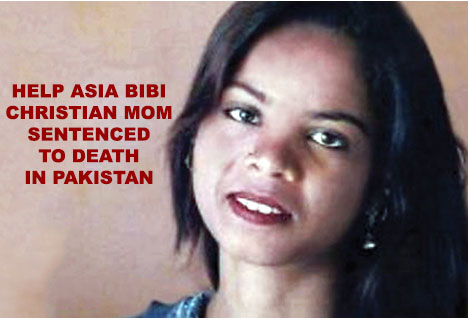
Bibi's case began on June 14, 2009, when an ordinary altercation between women working in a field in an area north of Lahore turned into a feud over their faiths. Three women did not want to share a cup of water with Bibi because she was Christian and they were Muslim. After a heated argument, the three women trooped off to complain to the village cleric, claiming she had sullied the name of the Prophet Mohammed.
As Bibi's lawyer, Saiful Malook, argued on Monday, the legal case against her is weak at best, featuring blatant contradictions between witness statements. The cleric, who actually registered the case and made the allegations against Bibi, was not even present when the altercation between the women took place, and he did not have permission from the appropriate officials to register the case. These legal and evidentiary issues would likely be determinative in any other case, but in this one, they may have little impact on the outcome.
    The murky facts of Bibi's case may make it hard to discern whether the case, filed at a time when the region was seeing an increase in recruitment by hardline Islamists, was filed at the behest of a particular group. It is known that in the decade since then, hardline groups -- the Tehreek-e-Labbaik in particular -- have gunned down politicians and lawyers who have dared question the validity of the blasphemy law or championed the cause of blasphemy defendants.
    In January 2011, a little over a month after the trial court sentenced Asia Bibi to death, Salman Taseer, a Punjab governor, was gunned down by his bodyguard, Mumtaz Qadri, because he had visited Bibi in prison and questioned her conviction. Qadri, a member of Tehreek-e-Labbaik, said he had been protecting the honor of the prophet and that he had killed Taseer because of his support for Bibi. Qadri himself was executed in 2016, an event which brought out thousands of mourners affiliated with various hardline groups to the street.
    These are not the only deaths. In March 2011, Pakistan's Federal Minister of Minority Affairs, a Christian man named Shahbaz Bhatti, was gunned down after calling for reform of Pakistan's blasphemy law. In 2014, gunmen barged into the office of Rashid Rehman, a human rights lawyer who had been representing another blasphemy suspect, and killed him.
    Pakistan has never executed anyone convicted of blasphemy. Until very recently, Pakistan was not executing many people at all. But a moratorium on the death penalty was lifted in 2015, reflecting Pakistan's rightward political swing.
    According to Amnesty International, though there was a 31% decrease in executions from the previous year, Pakistan still executed 60 people in 2017, while nearly 7,000 people languished on death row. When this inclination to execute is combined with the pressures of groups like Tehreek-e-Labbaik, and the fact that Bibi is a Christian woman in an increasingly misogynistic and xenophobic atmosphere, there seems almost no cause for hope.
    But it doesn't have to be this way. The three justices who heard Bibi's final appeal could do the right thing, take note of the many holes in the case, the baselessness of the allegations themselves, the contradictions between witness accounts and exonerate a poor woman who has been wrongfully accused and imprisoned.
    The military, which has worked so diligently to eradicate terrorism in Pakistan, could crack down on groups like Tehreek-e-Labbaik that make ordinary Pakistanis pawns in their game of blood and terror. They could promise added protection to all involved in the case and deploy forces in sensitive areas of the country, such that Tehreek-e-Labbaik and their threats of violence cannot materialize.
    Pakistan's new administration, led by the swashbuckling former cricketer Prime Minister Imran Khan, could also take a stance against the intimidation of Tehreek-e-Labbaik, whose leaders have demanded that Khan fulfill his promises to make Pakistan an "Islamic state" and that "Asia Bibi should be hanged keeping international pressure aside." Khan could respond to this by noting that Pakistan is already an Islamic Republic and that, according to the Quran, Pakistan cannot execute an innocent woman for any crime.
    Instead of snubbing the international community, one that Islamists see as impinging on Pakistan's move toward a full theocracy, Khan could emphasize the need to embrace it and to work with it. In other words, Khan could choose to stand with the innocent woman instead of the rabid and bloodthirsty extremists.
    Saving Bibi need not only be a Pakistani campaign. The Supreme Court of Pakistan, likely fearing violence by hardliners, has instructed Pakistani media to refrain from discussions of Bibi's case until the verdict is issued. This places responsibility on international media and human rights groups to step up their efforts and fill the vacuum.
      The Supreme Court of Pakistan would never admit to being permeable to international campaigns for a particular accused, but judges exist in the same larger political context as all the rest of us. A groundswell of international protest and attention, via media and social media, could drown out the venal voices of hardliners demanding death and replace them with activists insisting on life.
      The verdict is not in yet on Bibi's case; there is time still to write and tweet and petition. Global attention may well add up to the difference between life and death for a woman sitting alone in a cell in a Pakistani prison.

      For Pakistan's 13th IMF Bailout, Expect Tougher Conditions


      A regular client of the International Monetary Fund, investors are asking whether Pakistan’s 13th loan program since the late 1980s will finally break a cycle of financial crashes and bailouts.
      Pakistan’s history of taking the lender’s money while dragging its heels on economic reforms suggest otherwise. With Islamabad now formally requesting IMF aid -- seeking to raise anywhere between $6 billion to more than $12 billion -- it will also face more scrutiny over debt owed to China. U.S. Secretary of State Mike Pompeo has said he will oppose any use of IMF funding to repay loans to Beijing. “Their conditions will be tougher and we’ll have to pay the price,” said Nadeem Ul Haque, the ex-deputy chairman of Pakistan’s Planning Commission and a former economist at the IMF. “We’ve kept postponing solutions and not taking bold steps -- the cancer has been in the body since the 1960s.”
      Pakistan has regularly failed to meet conditions attached to its previous IMF loans -- for example trimming spending and privatizing bloated state-owned corporations. The nation has only ever managed to successfully complete one IMF program, meaning it received all the disbursements as planned, on a $6.6 billion three-year facility that ended in 2016. Even then, a number of requirements, were relaxed.
      IMF Bond
      Pakistan does not withdraw the entire amount in most loans with IMF.
      Economists have pointed to decades of inaction against widespread tax dodging across all levels of society handing the country one of the lowest tax-to-GDP ratios in Asia. In addition, the country has failed to revamp key export industries, such as textiles -- which have lost out to regional neighbors like Bangladesh -- or fix an energy system straining under more than 1 trillion rupees ($7.6 billion) of debt.“Pakistan needs to work on structural problems now so they can avoid another IMF program,” said Kimihide Ando, the chief executive officer of Mitsubishi Corp.’s Pakistan unit. “It’s just sheer will. The solutions are known including industrialization that has been declining in Pakistan.”The current crisis has been exacerbated by China’s Belt and Road initiative. Beijing has been criticized by some for pushing countries like Pakistan -- which has taken opaque Chinese financing for road and power plants projects of more than $60 billion -- into a debt trap. Welfare State
      The projects have meant imports to South Asia’s second-largest economy have surged. In turn Pakistan’s current-account and budget gaps have swelled to more than 5 percent of gross domestic product and foreign-currency reserves have plunged to the lowest in almost four years. In response authorities have devalued the rupee five times since December and hiked interest rates the most in Asia. The U.S. is also watching. “Part of the reason that Pakistan found itself in this situation is Chinese debt,” State Department spokeswoman Heather Nauert told reporters in Washington on Thursday. “This is something that we’ve been tracking fairly closely.” Elected in July and promising to roll out an “Islamic welfare state,” Prime Minister Imran Khan was reluctant to turn to the IMF. He criticized previous administrations for going to the lender and promised to break the “begging bowl” habit. Instead, the former cricket legend has been seeking funds from China, Saudi Arabia and the United Arab Emirates, but with little success. Muhammad Aurangzeb, the chief executive officer of Habib Bank Ltd., said IMF aid will provide some “breathing space” but the tough part will be narrowing the twin deficits.
      Rupee Devalued
      “We see all the signals coming from the new government, including the pronouncements that’s been made by the finance minister, that they are going to make some very, very tough political choices,” he said in an interview in Bali on the sidelines of the IMF-World Bank annual meeting. “And if that is done, then we do have a sustainable path to not get back into an IMF program.” There are signs Khan’s government will take a reform program more seriously after making early concessions. This week monetary authorities devalued the rupee the most in two decades after long-standing IMF observations that the currency was overvalued. Finance Minister Asad Umar told Bloomberg in August he will publish the terms of the Chinese loans. “Getting the house in order is painful, but I assure you we will see better days,” Khan told businessmen in Islamabad on Tuesday.
      Military Pressure
      The government is also being pressured by a domineering military that has made unprecedented statements about Pakistan’s economic quandary in the past year. Having directly governed the country for almost half its 71-year existence, the armed forces continue to control foreign policy and has been accused of engineering Khan’s rise to power through political and press repression. Along with debt servicing, it also takes more than half the federal budget.At a Karachi business conference last month, Major General Muhammad Samrez Salik said Pakistan’s economy had suffered from “negligence and incompetence” and highlighted that the country was “lagging behind in developing our economic cooperation” with Asia. Salik compared Pakistan’s $6 billion regional trade with arch-rival India’s $72 billion and added he believed Khan’s administration would drive commerce with Asia as relations with the West sour.The army’s worries have increased after U.S. President Donald Trump cut military aid to Pakistan earlier this year. Trump raged that Pakistan was continuing to support terrorist groups.
      “Trump is no fan of Pakistan,” Charles Robertson, chief economist at Renaissance Capital in London, said in a report on Tuesday. “We heard in the summer that the IMF had already warned in 2016 that -- after being fairly generous to Pakistan during the last program –- if it was invited back, it would have to go hardcore with Pakistan.”

      Pakistan’s fortunes can’t be rescued by celebrity PM and recycled foreign minister

      HUSAIN HAQQANI

      India and US’ concerns over Pakistan are old but now China and Saudi Arabia too are indicating wariness over unfulfilled promises.
      Few friends or presumed enemies seem willing to trust Pakistan’s promises even under a new leader. Reluctance of ‘friends’ Saudi Arabia and China to pump in billions of dollars in a faltering economy forced Prime Minister Imran Khan to turn to the IMF for a bailout. Ironically, he had said at one time that he would “rather commit suicide than go round the world begging for money”.
      The offer of a ‘reset’ in relations by the United States is also not panning out. The US wants Pakistan to help with the peace process in Afghanistan and remains concerned about terrorism. Washington refuses to restore suspended economic and security assistance until it sees signs of change in Pakistan’s conduct.
      India, often painted as Pakistan’s ‘eternal enemy’, has refused to hold high-level talks unless Pakistan stops supporting Kashmiri militants and other terrorists. Pakistan, it seems, has a credibility problem with most countries that matter in its foreign policy. American and Indian concerns about Pakistan are quite old but now even China and Saudi Arabia are indicating wariness over unfulfilled promises.
      China is concerned that Pakistan is trying to revise the terms of the approximately $60 billion China-Pakistan Economic Corridor (CPEC). From the Chinese perspective, a nation must honour its contracts and the Pakistani penchant for revisiting international business deals with every change of government in Islamabad is unacceptable.
      Saudi Arabia is also unwilling to continue giving cash first and making requests later – something it has done as a friend of Pakistan in the past. Its current leader, Crown Prince Mohammed bin Salman Al-Saud, wants Pakistan to shed ambiguity and stand by the Kingdom against Iran, in addition to providing troops or other material support for the Saudi war effort in Yemen.
      The Saudis say they are willing to invest in Pakistan but, like the Chinese, would want security and a good return for their investments. Pakistan has a poor track record in cancelling projects and using engineered judicial verdicts and criminal cases to deprive foreign investors of promised returns.
      Independent Power Producers (IPPs) learnt the lesson on Pakistan’s unreliable investment environment in the 1990s. Over the years, several foreign investors have won hefty international arbitration awards against Pakistan because of allegedly unfair cancellation of contracts.
      Tethyan Copper Company Pvt Ltd, a joint venture between Chilean mining giant Antofagasta and Canada’s Barrick Gold Corporation, is claiming more than $11 billion in compensation in the Reko Diq project after proving to the International Centre for Settlement of Investment Disputes (ICSID) that Pakistan’s decision to cancel its mining contract in Balochistan was unlawful and unfair.
      To be fair to Khan, many of these problems are the result of policies that have persisted for decades. But Khan still supports the hyper-nationalist Pakistani narrative that has given rise to Pakistan’s lack of international credibility. It persists with myths about Pakistan’s external friendships and animosities that are at the heart of the country’s global isolation.
      The entrenched establishment that brought Khan to office had hoped that a new government, led by a fresh face, would be enough to convince the world that a new Pakistan had been born. In this view, renewed national pride and a celebrity prime minister was all that was needed to make other countries see Pakistan differently than they had in the past.
      But a new prime minister and a recycled foreign minister do not change harsh realities. Pakistan does not honour United Nations’ terrorist designations nor does it abide by commercial contracts and agreements considered sacrosanct by the rest of the world. Such attitudes have consequences. Appointment of a new top management cannot help sell the old, bad product.
      India was the first to burst Khan’s bubble. Khan wrote to Prime Minister Narendra Modi and sought talks between Indian and Pakistani foreign ministers on the sidelines of the United Nations General Assembly. India initially agreed, leading to premature euphoria in Islamabad.
      For years, Pakistan’s leaders have defined the ability to keep India engaged diplomatically as an accomplishment in itself, even when no substantive progress is made in India-Pakistan talks.
      As nuclear-armed neighbours, it makes sense for both sides to continue talking. But after terrorist attacks in India following Modi’s trip to Lahore in 2015, Indians had decided to stop talking.
      There has been much speculation over why the Modi government initially agreed to the foreign ministers meeting in New York and subsequently changed its mind. The language of the statement by the Indian ministry of external affairs announcing the cancellation was definitely undiplomatic and provocative. But the argument that Pakistan must act against anti-India terrorists operating from its soil before there can be meaningful talks was certainly not new.
      As if to prove India’s point that the Pakistani side only wanted talks to score a point, not to solve any outstanding problems, Khan’s response to the cancellation of talks was worse. He tweeted about Modi being among “small men occupying big offices who do not have the vision to see the larger picture”.
      Those familiar with Pakistani hawks’ characterisation of Indian leaders in the past could see the pattern in Khan’s egomaniacal bravado. Field Marshal Ayub Khan’s propagandists had described Lal Bahadur Shastri as “a little man” during the 1965 war and General Yahya Khan had been dismissive about Indira Gandhi being “that woman”.
      Of course, the outcome of the anti-India bombast in 1965 and 1971 was not favourable for Pakistan and, notwithstanding the Modi government’s purported mishandling of ties with Pakistan, nor will the current swagger. But in the Pakistani establishment’s worldview – which is shared by Khan and his hyper-nationalist supporters – that is beside the point.
      While India’s refusal to talk could be chalked up to the historic India-Pakistan dynamic, the lukewarm response of China, Saudi Arabia, and the United States to Khan’s diplomatic initiatives represents greater challenges. It seems that major partners around the world want Pakistan to change its policies, not just its prime ministers and that change in policy does not seem to be on the cards.
      If anything, the Khan government, backed by the establishment, has doubled down on the failed policies of the past. Foreign minister, Shah Mehmood Qureshi, insisted recently that there can be no peace in Afghanistan without Pakistan, implying that Pakistan must be given a veto on the future of Afghanistan. This defies the notion of a peace process that is owned and led by Afghanistan’s government.
      Similarly, Pakistan’s UN ambassador recently called on the international community to differentiate between ‘terrorists’ and ‘freedom fighters’ – an argument that was effectively buried by UN Security Council Resolution 1566 of 2004. That resolution defined terrorist acts and declared that they are “under no circumstances justifiable by considerations of a political, philosophical, ideological, racial, ethnic, religious or other similar nature”.
      Instead of insisting on an ideologically driven, unrealistic agenda for engagement with the rest of the world, Pakistan needs to see itself from others’ eyes and embrace some humility. Whether it’s the issue of terrorism or the question of abiding by international contracts, Pakistan must change its policy direction.
      Until that happens, Pakistanis can express to each other as much optimism as they like about their future, based on the ‘dynamism’ and ‘incorruptibility’ of their new leadership. The rest of the world will not be swayed by such rhetoric.
      https://theprint.in/opinion/pakistans-fortunes-cant-be-rescued-by-celebrity-pm-and-recycled-foreign-minister/132639/

      Imran Khan can sell buffaloes and choppers, but Pakistan’s economy is still crashing

      By Gul Bukhari 

      Before coming to power, Imran Khan said Pakistan market will be flooded with money. It crashed this week.
      Pakistan Prime Minister Imran Khan continues to talk down the country and its economy. He was finally successful in causing the market to crash on 8 October, after a series of faux pas, U-turns and zero-policy statements. He continues to assure the world that Pakistan is bankrupt because of the previous government. To show for Khan’s performance, his government sells eight buffalos in the PM House, which had been gifted to former PM Nawaz Sharif, in a highly publicized auction. They also tried to sell four old helicopters and auctions old cars.
      Economists have been saying that given the current condition, Pakistan will have to seek an IMF bailout soon. But Imran Khan and the PTI’s repetitive accusations of beggary on Nawaz Sharif perhaps prevented him from taking a timely decision on this and introduced further uncertainty into the market. Khan had also been asserting that once he is in power the international community and offshore Pakistanis would flood the country with money because of their confidence in an ‘honest’ leader.
      The Imran Khan government even announced that Saudi Arabia would be giving – no, this is not made up – $10 billion to Pakistan and followed this up with a trip to Saudi Arabia. He came back and announced that the Kingdom of Saudi Arabia has been invited to be a strategic partner in CPEC.
      This was refuted by the Chinese authorities. As per the agreements between China and Pakistan, only with mutual agreement can a third party become a part of CPEC. Before this, government advisor Razzak Dawood had given a shocking statement to the Financial Times saying that the government will suspend all CPEC projects for a year and review them thoroughly. Pakistan refuted this. Observers believe army chief General Bajwa’s  trip to China after Dawood’s statement was essentially a damage control exercise.
      The government then took a U-turn and announced that Saudi Arabia will not be a partner in CPEC. Finance minister Asad Umar stated that Pakistan will be looking to ‘friends’ (read China, Saudi Arabia etc) instead of the IMF. However, nothing was forthcoming from China either. Foreign minister Shah Mehmood Qureshi had reacted angrily to the second suspension of Coalition Support Funds by the US and made defiant statements at the time.
      However, during his UN General Assembly trip he ended up pleading the US for money for the armed forces. Clearly, he was snubbed. He was even willing to consider offering jailed Shakil Afridi, of the Osama Bin Laden operation fame, in return for some money. But the US is not budging – various statements show that the US will not settle for anything less than safe havens of terror groups being destroyed and their financing being squeezed. Nor is the US will to work on promises. It wants evidence.
      As all of this unfolded, investors became jittery seeing no viable plan on the horizon. Then, former chief minister Shahbaz Sharif was suddenly arrested in a stunning move. The arrest came after the stock market had closed for the day. Perhaps the government was hoping the weekend would serve as a shock absorber for this horrifying move. The arrest is shocking because the case on Sharif is probably fictional: A housing scheme that never happened and for which no monies were exchanged.
      The outrage then spurred Khan to make an address in which he said himself that one of the reasons he is addressing the nation is because he wants to dispel the images of Shahbaz Sharif becoming a Nelson Mandela because of his arrest. He further presented the completely unqualified chief minister, Usman Buzdar, he has appointed in Punjab as the ‘tabdeeli’ (change). And then proceeded to introduce a toilet cleaning scheme. The nation was in shock. Here they wanted clarity on policy, and the man was talking corruption, bankruptcy, toilets and Buzdar tabdeeli. The result, obviously, was the crash in the Karachi stock exchange which fell by over 1,300 points in a single day causing wealth destruction of over Rs 110 billion in a single day.
      This was accompanied by a 7 percent devaluation of the rupee and the decision to approach the IMF was announced. Earlier, huge price increases in gas, electricity, petrol, and urea were announced. Consumers, investors, traders continue to reel in horror at the steep economic decline within a mere 50 days or so.
      As I write, the stock market continues to fall. Sentiments in Pakistan remain negative because the PM continues to sell incredibly stupid and half-baked schemes to the public. He recently launched his housing scheme to build – this is not made up either – 5 million homes that would cost $180 billion. To put the scale in perspective, there are a total of 4.9 million pucca houses in all of Pakistan’s urban areas; 5 million houses in five years means constructing more than 2,700 houses per day; $180 billion can construct almost 13 Diamer Bhasha dams for which he has joined the chief justice in his appeal for charity funds. They have thus far collected about $3.7 million only for the dam – that too mostly via forced ‘charity’ by cutting salaries of employees without their consent.
      It is now abundantly clear that the vortex Pakistan’s economy is in right now will not disappear till a regime change.
      https://theprint.in/opinion/imran-khan-can-sell-buffaloes-and-choppers-but-pakistans-economy-is-still-crashing/133225/

      TSUNAMI OF INFLATION HAS ARRIVED IN PAKISTAN: BILAWAL BHUTTO

      Pakistan Peoples Party (PPP) chairman Bilawal Bhutto Zardari on Tuesday stated that difficulties of the masses have been on rising against the backdrop of recent economic developments.
      He was talking to media in Karachi.
      “Tsunami of inflation has arrived in Pakistan due to policies of the incumbent government of Pakistan Tehreek-e-Insaf (PTI). This isn’t the way to run a country”, Bilawal was quoted as saying. On a question about Shehbaz Sharif, Bilawal made it overtly clear that PPP does not have sympathies for president of Pakistan Muslim League Nawaz (PML-N) as he had used foul language against PPP.
      However, he stressed on serving justice to the arrested leader.
      https://www.suchtv.pk/pakistan/general/item/76029-tsunami-of-inflation-has-arrived-in-pakistan-bilawal-bhutto.html

      Thursday, October 11, 2018

      Music Video - Charlie Puth - The Way I Am

      Video Report - Aerial view shows catastrophic damage from #HurricaneMichael

      Video Report - Don Lemon on Kanye: I had to turn the TV off

      Video Report - #Turkish media: #Saudi "hit squad" was sent to kill #JamalKhashoggi

      Video Report - What happened to #Saudi journalist Jamal Khashoggi? | Inside Story

      Video Report - : Economic situation of country is creating severe problems for common man: Bilawal Bhutto


      The economic situation of the country is creating severe problems for the common man.  I had already predicted that Government will approach IMF for the bailout package in the National Assembly of Pakistan. Increase in Gas prices by up to 143% will affect everyone. Current Federal Ministers always gave irresponsible statements. 
      Those irresponsible statements have an impact on our Foreign Policy and well as the economy, says Bilawal Bhutto while addressing media in Karachi.

      #Pakistan- #PPP - Bilawal Bhutto : Girls’ education and vocational training across the board and without any discrimination is the sole guarantee of Pakistan’s prosperity and progress


      Pakistan People’s Party (PPP) Chairman Bilawal Bhutto Zardari has said that girls’ education and vocational training across the board and without any discrimination is the sole guarantee of Pakistan’s prosperity and progress.

      In his message on the occasion of International Day of the Girl Child, he said that a future based on progress and prosperity could remain a dream without empowering them and taking them on board in all matters. PPP’s provincial government is taking every step for bringing our daughters ahead in every section of life and field.

      Bilawal Bhutto Zardari said that Sindh’s incumbent government of PPP has ensured free and standard education for girls and is supporting girl students with cash stipends, nowhere in any other province.
      The PPP Chairman said that his party is the sole party that fully represents the women and is the biggest advocate of women’s rights and is their guardian.

      Bilawal Bhutto Zardari saluted all those women who have stepped forward in all sections of life and field while defeating many impediments at every level and social taboos.

      Our women who have courageously overcome the social taboos and governmental restrictions would one day represent the true colours of Fatima Jinnah, Shaheed Mohtarma Benazir Bhutto, Asima Jehangir and Maryam Mukhtar. Let us respect them and value them, said the PPP Chairman.


      https://mediacellppp.wordpress.com/2018/10/11/girls-education-and-vocational-training-across-the-board-and-without-any-discrimination-is-the-sole-guarantee-of-pakistans-prosperity-and-progress-bilawal-bhutto-zardari/

      #Pakistan Seeks I.M.F. Bailout as Government Sends Mixed Messages

      By Maria Abi-Habib
      After Pakistan’s government signaled that it would seek a bailout from the International Monetary Fund, Prime Minister Imran Khan this week did the exact opposite of the austerity measures the global body is demanding: He inaugurated a public-housing project to deliver five million homes.
      That tension — between Mr. Khan’s campaign promises to build the social welfare state and the prescriptions to help set Pakistan’s devastated economy right — is leaving investors at home and internationally guessing about the policies he truly intends to pursue. But investors typically detest such uncertainty and responded this week by offloading the Pakistani rupee, which hit a historic low, while hammering the stock market with a sell-off, wiping $2 billion off the index’s value.
      There is only more uncertainty ahead. On Thursday, the Pakistani government formally began the process of seeking an I.M.F. bailout worth up to $12 billion. But analysts say the country’s financing gap may be as high as $20 billion, leaving investors worried that the government may not ask the fund for a robust-enough package while continuing to ask China and Saudi Arabia for more loans, after taking several billions of dollars worth of loans from Beijing this year alone.
      The concern surrounding Pakistan’s economic course and Mr. Khan’s intentions has clearly left the I.M.F. skeptical, and the result may be a tough road ahead for the country if it is to get its bailout.
      The fund’s managing director, Christine Lagarde, insisted on Thursday that Pakistan provide “absolute transparency” on its debts, many of which are owed to China as part of its Belt and Road construction program. Pakistan is a showcase for China’s initiative, hosting up to $62 billion of Chinese investments, most financed by costly loans taken from Chinese state-owned banks.
      Any bailout for Pakistan would require “complete understanding and absolute transparency about the nature, size, and terms of the debt that is bearing on a particular country,” Ms. Lagarde said, as she prepared to meet the Pakistani delegation later Thursday at the I.M.F. and World Bank Group annual meetings in Bali, Indonesia. Later that day, the I.M.F. released a statement saying that Ms. Lagarde had met the Pakistani team and that the fund would send a team to Islamabad in the coming weeks to initiate discussions for a bailout program.
      Ahead of Pakistan’s July elections, Mr. Khan promised to open up the books on Chinese investments and even cut projects that were unnecessary or too costly. Pakistan’s previous government, led by ousted Prime Minister Nawaz Sharif, was harshly criticized for refusing to publicly disclose the financing terms and conditions around China’s investments, leaving the country in the dark about exactly how much debt it has committed to repay.
      Critics of the previous Pakistani government, including Mr. Khan, accuse it of doing a poor job negotiating the Chinese loans and say that the costs were often inflated, leaving Pakistan with a debt load it will struggle to repay. But since coming to office in August, Mr. Khan has not opened the books, perhaps because of pressure from China, officials say. The United States has accused Beijing of using “debt trap diplomacy” to load up countries with debt in order to secure political and military demands, a charge China’s government denies. Although Pakistan faces an external debt burden of $8 billion this year, the first payments to China as part of the Belt and Road Initiative come due in 2019, with $1 billion owed, officials say. Pakistan’s foreign exchange reserves hit a four-year low last week, hovering at $8.4 billion according to the central bank. That is less than enough to cover even just two months of imports.
      “Going to the I.M.F. was inevitable. There was no other way out, not only to bridge the financing gap but to provide confidence to the markets,” said Farrukh Saleem, the spokesman for Pakistan’s Ministry of Economy.
      He added: “Even if China had given $26 billion to Pakistan, it doesn’t give confidence to the markets. It’s not just about the bailout but getting into an I.M.F. monitoring program,” which gives investors assurance that Pakistan is taking on needed economic reforms, allowing the country to tap other debt markets. Although Mr. Khan maintains that he will pursue both the I.M.F. bailout and loans from “friendly countries,” those statements contradict the stance of both his finance minister and information minister, Fawad Chaudhry, who said that the conditions on those outside loans were unacceptable. “We spoke with the United Arab Emirates, China, Saudi Arabia and held consultations with other countries,” Mr. Chaudhry said in televised remarks Tuesday. “We did not want to take the money the way it was being given to us.”
      The information minister did not explain what the conditions were. But Saudi Arabia and the U.A.E. have in the past requested that Pakistan join their war in Yemen, which has bogged down those countries financially while creating one of the world’s worst humanitarian crises as Yemeni civilians are killed by bombing and starvation. On the campaign trail before the July elections, Mr. Khan championed austerity even as he promised to build an Islamic welfare state. The new project to build five million housing units is a signature part of his “Naya Pakistan” agenda — meaning New Pakistan — to kick-start the economy and provide support to the country’s poorest. But going to the I.M.F. will likely mean cuts to those welfare state dreams. “With the I.M.F., there will be an impact on the government not fulfilling its election promises. But welcome to the real world,” said Mr. Saleem, the economy ministry spokesman. Image
      The contradicting remarks coming out of Islamabad have left investors confused about how seriously Mr. Khan’s government will commit to the I.M.F.’s austerity terms. This would be the latest in at least 12 I.M.F. programs Pakistan has undertaken in the last few decades, failing to complete the structural reforms required in all but one bailout package.
      “This crisis could have been averted better if the government had declared their plan two months ago, when they came to power. Instead they gave mixed messages, leaving the markets guessing. A lot of damage could have been averted with timely clarity,” said Ashraf Wathra, the former central bank governor under the previous government.
      While Mr. Wathra acknowledges that the previous government is at fault for the ballooning national debt, he says Mr. Khan should have taken the overwhelming advice from economists to go to the I.M.F. as soon as possible.
      This week, the Pakistani rupee fell as low as 137 to the United States dollar, shedding 10.2 percent of its value. The biggest ever one-day fall was in 1998, when the rupee fell 11 percent after Pakistan tested nuclear weapons. Pakistan’s business community, and even ardent supporters of Mr. Khan’s party, have also been angry at what many described as “dithering” ahead of the decision to go to the I.M.F. Farooq Sarwar, a Rawalpindi-based importer of food, toiletries and confectionary items, has said he has had to cut down on his stock, worried stores he supplies will close down as customers cut their spending as the rupee falls in value.
      “The dip in the dollar has affected the importers in a way that no one knows what to do right now,” Mr. Sarwar said. “We had high expectations from the current government and thought they will take steps after taking people in to confidence. But it seems they had done no homework.”
      https://www.nytimes.com/2018/10/11/world/asia/pakistan-imf-bailout-imran-khan.html

      EDITORIAL: #Pakistan - #FATF recommendations

      The visiting FATF delegation still has more than a week in-country. Yet some key points have begun to emerge. Such as how the team held questions-and-answer sessions with three important agencies: the Federal Investigation Agency (FIA); the Financial Monitoring Unit (FMU); and the Anti-Narcotics Force (ANF).
      This is crucial to helping both sides pinpoint how and which terror financing risks have been identified and assessed. Not to mention the role of law enforcement agents (LEAs) on the investigation front. For a lot has changed since Pakistan was formally grey-listed back in June. Especially with regards to the militant-mainstreaming project. Meaning that certain outfits proscribed by the state merely underwent a name-change and participated in the summer’s elections. Naturally, this brings to the fore the question of fund-raising.
      Thus the pressure is on the Imran Khan government; despite it having only been in power for around 45 days. Be that as it may, the FATF delegation is interested in immediate measures for both the short- and longer-term. Towards this end, therefore, the visiting team has directed the country to track all financial transactions totalling $3,000 and above across the board.; from real estate agents to accountants to stockbrokers to lawyers.
      This makes sense. For providing a paper trail is paramount. As the Prime Minister will still recall from the afterglow of Panamagate. Yet the Centre must not overlook and therefore repeat the mistakes of the past. Namely, its own lackadaisical approach to settling its bills when it comes to media advertising. For, to be sure, the fourth estate — both electronic and print — remains one of Pakistan’s most undocumented industries as far financing goes. That is, when federal governments delay payments to ad agencies, it is media houses and employees who get burned. This results in the former operating in the red while staff receive intermittent cash payments. From whichever way this is looked at, the endgame is the same: an erasing of the money trail.
      It is hoped that both PM Khan and his team as well as the FATF representatives will urgently address this state of affairs. Not least because the country’s journalists are already working in a hostile environment. And that last thing we, the fourth estate, need is a loaded gun held to our heads; demanding to know how we (barely) make our money.
      https://dailytimes.com.pk/308765/fatf-recommendations/

      #FATF unhappy with Pakistan's lack of progress in combating terror financing: Report

      Not impressed with Pakistan's efforts to combat terror financing, a delegation of the Financial Action Task Force (FATF) has asked it to do more to strengthen its legal framework if it wants to avoid being blacklisted by the Paris-based anti-money laundering watchdog, according to a media report on Thursday.
      Currently placed on the FATF'S 'grey list', Pakistan has been scrambling in recent months to avoid being added to a list of countries deemed non-compliant with anti-money laundering and terrorist financing regulations by the FATF, a measure that officials here fear could further hurt its economy. A second team of experts from the FATF arrived over the weekend to review the progress made by Pakistan on an action plan agreed in June to address global concerns.
      Dawn reported that the delegation of the Asia Pacific Group (APG) of the FATF was not impressed with the progress made by Pakistan so far as it found the legal framework insufficient, and the institutional arrangements weak. According to sources, the delegation feared that the setup installed for scrutinising the activities of non-profit organisations, brokerage houses, exchange companies and donations of corporate entities - registered under the companies act - was not robust enough.
      The sources said that the APG believed that even in areas where the legal framework appeared vigorous, the implementation mechanism was not geared to track down financial flows of the entities in question, because the agencies involved were not well-connected, according to the report. This weakness was prominent in real estate brokerages where large business transactions remained outside the ambit of legal records. A team of the Securities & Exchange Commission of Pakistan (SECP) reported to the APG that brokerage houses were largely documented though real estate dealers and their operations were generally outside its area of regulation.
      The APG also noticed shortcomings in commodity trading - and the effectiveness of laws against money laundering through cross-verification of service providers.The sources said the delegation asked the relevant authorities to issue deadlines for resolving the flagged weaknesses so that the problems could be remedied and future performance evaluations be made on the proposed matrix. The authorities would also have to properly record the number of donation boxes placed by religious and other organisations at restaurants and business centres among other places. Besides, all currency and real estate dealers would have to record every transaction - both small and large.
      The purpose of the mutual evaluation visit is to assess the effectiveness of Pakistan's Anti-Money Laundering and Counter Financing of Terrorism (AML/CFT) regime under FATF methodology. The visiting team included Ian Collins of the United Kingdom's Scotland Yard, James Prussing of the United States Department of the Treasury, Ashraf Abdullah of the Financial Intelligence Unit of the Maldives, Bobby Wahyu Hernawan of the Indonesian Ministry of Finance, Gong Jingyan of the Peoples Bank of China and Mustafa Necmeddin Oztop of the Turkish Ministry of Justice.
      In June 2018, Pakistan made a high-level political commitment to work with the FATF and the APG to strengthen its AML/CFT regime and to address its strategic counter-terrorism financing-related deficiencies by implementing a 10-point action plan. The successful implementation of the plan and its verification by the APG is a prerequisite for the FATF to remove Pakistan from its grey list. Earlier in August, the APG - as part of the mutual evaluation -identified a series of deficiencies in Pakistan's AML/CFT mechanisms. By the end of September next year, Pakistan must comply with the 10-point action plan it committed to with the FATF or else it will fall into the black list.
      The authorities are required to upgrade agencies and their human resource assets to be able to handle foreign requests to block terror financing and freeze illegal assets. The authorities are working on strengthening laws for extradition of those involved in terror financing and money laundering on requests from FATF-member countries. By January next year, Pakistan will identify and assess domestic and international terror financing risks to and from its system to strengthen investigations and improve inter-agency cooperation, the Federal Investigation Agency, the State Bank of Pakistan, the SECP, banks, the interior department as well as all other associated federal and provincial agencies, the report said.
      https://www.dnaindia.com/world/report-fatf-unhappy-with-pakistan-s-lack-of-progress-in-combating-terror-financing-report-2674212

      Wednesday, October 10, 2018

      Punjabi Music - Sun Way Balori Akh Waleya - ANWARA - Noor Jehan

      Video Report - How do you intend to pay for the $180bn housing initiative? - Aaj Shahzeb Khanzada Kay Sath - 10 October 2018

      Afghanistan's Civilian Death Toll Rising

      Afghanistan's civilians continue to die in record numbers, according to a new report released Wednesday by the United Nations Assistance Mission in Afghanistan.
      From the start of the year to the end of September, the U.N. documented 8,050 civilian casualties, of which 2,798 died, and 5,252 were wounded.
      In the 17 years of conflict, the last five years seem to have been the deadliest for civilians, a chart in UNAMA's report indicates.
      Most of the casualties resulted from the actions by non-state actors, including the Taliban and Islamic State. The use of improvised explosive devices used in suicide attacks increased in their "frequency and lethality," according to the U.N.'s Quarterly Report on the Protection of Civilians in Armed Conflict.
      "Of the 65 percent of civilian casualties attributed to anti-government elements, 35 percent were attributed to the Taliban; 25 percent to Daesh/ISKP; and 5 percent to unidentified anti-government elements (including less than 1 percent to self-proclaimed Daesh/ISKP)," the U.N. report specified.
      Ground engagements
      The second leading cause for civilian casualties, 29 percent, was ground engagements between warring factions.
      The report said casualties from ground engagements have declined, which may be due to efforts by various parties to protect civilians from harm, like advance warnings.
      The province with the most casualties was Nangarhar, where ISKP, Islamic State's Afghan branch, still has a stronghold. It was also the deadliest province for U.S. forces in 2017.
      The increase in NATO and U.S. airstrikes on Taliban and ISKP targets, particularly since President Donald Trump announced a new South Asia policy in August of last year, led to an increase in civilian casualties from air operations, the report said. The U.N. called the trend "worrying."
      More than 60 percent of the civilian victims of air attacks continued to be women and children, with the number of child victims increasing 53 percent over the same period last year, according to the report.
      Many attacks were on anti-government elements hiding among the civilian population, the report said.
      UNAMA has recommended to both Afghan and international forces that they review their targeting and battlefield criteria, including "considering all persons to be civilians unless determined otherwise."
      Reports of human rights abuses during government search operations is another concern of the U.N. mission.
      "The mission received consistent, credible accounts of intentional destruction of civilian property, illegal detention, and other abuses carried out by NDS Special Forces and pro-government armed groups, including the Khost Protection Force," the UNAMA report said.
      The report also documented the "killing, maiming, sexual abuse and recruitment and use of Afghan girls and boys."
      Election-related violence
      Meanwhile, 366 civilian casualties were a result of election-related violence. Afghanistan plans to hold its parliamentary election on Oct. 20.
      Calling the upcoming election "bogus," the Taliban announced this week that it would use all means to disrupt the elections, giving rise to fears that election-related violence will increase in the next two weeks.
      "The Islamic Emirate instructs all its Mujahideen to halt this American-led process throughout the country by creating severe obstacles for it, while taking extensive and intensive care of civilian Afghan lives and their properties," the Taliban statement said, asking fighters to attack anyone involved in helping hold the elections.
      The U.N. report also pointed out that civilians paid the heaviest toll during several days of fighting in Ghazni city when the Taliban launched a multipronged attack in August.
      "All parties can and should do their utmost to protect civilians from harm," said Tadamichi Yamamoto, the secretary-general's special representative for Afghanistan and head of UNAMA.

      https://www.voanews.com/a/afghanistan--civilian-death-toll-rising/4607577.html

      As 18th Year of War in Afghanistan Begins, Sen. Warren Says: 'Long Past Time to Bring Our Troops Home'

      By  Jessica Corbett

      Sanders, meanwhile, called for "a vigorous discussion about our foreign policy, and how it needs to change in this new era."

      After the U.S. War in Afghanistan passed the 17-year mark this week, Sen. Elizabeth Warren (D-Mass.) turned to Twitter on Wednesday with an assertion popular among advocates for peace: "It's long past time to reexamine why we're in Afghanistan, and whether keeping our troops there is making us any safer. It's long past time to bring our troops home."
      Linking to a BuzzFeed News report that pointed out that the military is struggling with recruitment among young Americans—including those who were born after the war began in 2001 and are now old enough to enlist—Warren lamented the numbers of Afghan civilians and U.S. soldiers who have been killed or wounded, and how the U.S. justification for being in Afghanistan has continued to shift over time.
      "We went to Afghanistan to defeat al-Qaeda—instead we have become deeply involved in a civil war that no amount of American military willpower, elbow grease, or ingenuity will bring to an end," Warren said. In addition to calling for withdrawing U.S. troops from Afghanistan, she also demanded that soldiers receive adequate healthcare and other benefits when they return home.
      Warren's remarks followed Bernie Sanders (I-Vt.) pointing to the $700 billion in military spending that lawmakers approved earlier this year and declaring, "The time is long overdue for a vigorous discussion about our foreign policy, and how it needs to change in this new era."

      As the U.S. military struggles to recruit new soldiers from a disillusioned and disengaged public, BuzzFeed reports that its leaders are worried "the cost of the U.S. War on Terror is being borne by an increasingly smaller number of families, isolated and unnoticed by the rest of the country."
      Writing for OtherWords this week, Stacy Bannerman of Military Families Speak Out detailed the impact the seemingly endless war has had on families, and demanded, "Support the troops, America: Bring them home now. Enough folded flags."
      As Bannerman wrote:
      Unfortunately, America's amnesia didn't prevent Command Sergeant Major Tim Bolyard from being killed in Afghanistan in early September during his eighth combat tour and 13th deployment.
      Eight combat tours—which should be illegal—sent Bolyard down-range repeatedly in a war President Obama purportedly ended over three years ago. A war this country forgot long before that.
      A nation that doesn't remember the men and women sent to fight on its behalf has no business whatsoever sending more. And a democracy that spends more time debating kneeling before the flag than the justification for issuing folded ones desperately needs to get re-acquainted with the Constitution—and its moral compass.
      Sen. Tammy Duckworth (D-Ill.)—a combat veteran who lost both her legs while serving in Iraq—also referenced the raging public debate over athletes kneeling or silenting protesting in some other way during the national anthem to direct public attention to police brutality and racism in the United States.
      "We've had more discussions about people kneeling during the national anthem than we have about when the war in Afghanistan is going to end," Duckworth said at a recent event, according to BuzzFeed.
      Although recruitment numbers and public awareness of the 17-year-old war have declined, BuzzFeed notes that "the U.S. military footprint across the globe has expanded rapidly since former president George W. Bush ordered U.S. troops into Afghanistan in Operation Enduring Freedom on Oct. 7, 2001. The U.S. still has 15,000 troops in Afghanistan, but last year Americans also died in combat in places like Yemen, Niger, Syria, and Somalia, where most people back home—including some members of Congress—were not even aware the U.S. was fighting."
      While some members of Congress have failed to keep tabs on U.S. military action abroad—even as war profiteers like Blackwater founder Erik Prince have pressured President Donald Trump to pour even more U.S. tax dollars into waging war on the world—others lawmakers including Duckworth, Sanders, and Warren continue to demand more critical public discourse about where the United States is engaging in armed conflicts, why, and at what cost.

      As journalist Rania Khalek noted in a video breaking down the war on Tuesday, that includes answering to the more than a million allegations of U.S. war crimes that Afghans have submitted to the International Criminal Court (ICC). Keeping with the age-old American tradition of rejecting the ICC's legitimacy, the Trump administration has refused to cooperate and even threatened sanctions against any court officials who probe claims made against the United States or Israel.

      It’s a war that can’t be won, but Washington won't admit defeat. @RaniaKhalek
      https://www.commondreams.org/news/2018/10/10/18th-year-war-afghanistan-begins-sen-warren-says-long-past-time-bring-our-troops
