M WAQAR.....
"A man's ethical behavior should be based effectually on sympathy, education, and social ties; no religious basis is necessary.Man would indeed be in a poor way if he had to be restrained by fear of punishment and hope of reward after death."
--Albert Einstein !!!
NEWS,ARTICLES,EDITORIALS,MUSIC... Ze chi pe mayeen yum da agha pukhtunistan de.....(Liberal,Progressive,Secular World.)''Secularism is not against religion; it is the message of humanity.''
تل ده وی پثتونستآن
A new civil rights movement in Pakistan is galvanizing a rapidly growing following among the country’s ethnic Pashtun minority by doing the nearly unthinkable: openly accusing the powerful and popular Pakistani military establishment of being “oppressors” who kill or whisk away Pashtuns by the thousands.
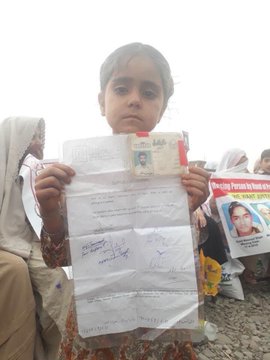
Counting hundreds of thousands of supporters in just its third month, the Pashtun movement has wielded the pictures and names of dead family members — along with the chant “What kind of freedom is this?” — as an indictment of unchecked military authority. From its start, the movement has been haunted by the question of how long the security forces would tolerate it before cracking down.
That time may be coming, many fear.
Despite its largest rally yet, a demonstration of tens of thousands in the northern city of Peshawar on April 8, the movement has labored under an only rarely interrupted media blackout. Interviews with editors and reporters at several outlets detailed pressure to avoid covering the Pashtun movement as an unmistakable sign that both the demonstrators and the press are facing a new level of threat from the military.
The country’s army chief, Gen. Qamar Javed Bajwa, ominously suggested at a public event last week that “engineered protests” threatened to reverse counterterrorism efforts by the military in recent years.
That military campaign, centered on operations against the Pakistani Taliban and some other militants in the country’s northwestern region — where most of the country’s Pashtuns live — has been credited with a drastic drop in terrorist attacks. It has greatly bolstered the military’s popularity, and tipped the balance of authority over the country’s institutions toward the army.
It has also led to the feeling that many of the country’s Pashtun population centers have been under functional occupation by the security forces. Using an alternative system of military counterterrorism courts along with an extensive network of covert jails, security and intelligence officers wield life or death power — often instantly — over the Pakistani region known as the Federally Administered Tribal Areas, a leftover from the British colonial system.
The new Pashtun rights movement — which is known by the initials P.T.M., from words that translate as Pashtun Protection Movement — is the product of years of outrage over the security forces’ power. It caught spark after the killing of a small group of Pashtun men, including an aspiring model named Naqeebullah Mehsud who was originally from the tribal areas, by police officers in Karachi in January. The officers have been accused of staging a fake shootout to cover up an extrajudicial killing spree.
Under the leadership of a young activist, Manzoor Pashteen, 26, the P.T.M. has evoked deep emotion from Pashtuns in Pakistan and Afghanistan, as well as overseas.
Mr. Pashteen and his allies say that Pashtuns, who make up about 15 percent of Pakistan’s population of some 204 million, have endured countless human rights violations, from disappearances to forced evictions. At rallies, women clutch pictures of sons they say were hauled off by security officials, never to be seen again.
Mr. Pashteen says that from the start, the movement has faced hostility from the military and its agencies, and is increasingly the subject of propaganda and social media campaigns engineered by supporters of the security forces.
“We’ve spent these two months enduring accusation after accusation, that we’re foreign agents and working on behalf of some other group,” he said Monday in an interview. “All we can do is try to take the moral high ground. We know our first mistake will be our last.”
Another leader of the movement, Mohsin Dawar, was equally stark about the risks of open protest against the military: “Speaking about the army like this in Pakistan is suicide.”
At the protest in Peshawar on April 8, Mr. Pashteen condemned the military and its agents as “oppressors” and called for the end of curfews and army checkpoints in the tribal areas.
Though the demonstration drew tens of thousands of Pashtun marchers from all over the country, its coverage on local television news media was next to absent, and only a smattering of Pakistani newspapers covered the event.
Then, three columns about the movement that were published by The News International, one of Pakistan’s biggest English-language news outlets, disappeared Sunday from its website not long after being posted.
Interviews with newspaper editors and writers — many of whom spoke on condition of anonymity out of fear of the military’s reaction — portrayed an atmosphere in which reporting on the Pashtun movement was widely being seen as a red line for the country’s security establishment.
The journalists described the main factors in keeping the movement out of the news as a combination of direct warnings from military officials or their go-betweens and self-censorship in order to avoid being shut down.
“A lot of this is self-censorship, but you can’t ask individual journalists to be crusaders for free expression,” said Saroop Ijaz, a representative for the advocacy group Human Rights Watch in Pakistan. “Now that the state has demonstrated its power against Geo, you have a chilling effect. They’ve set a precedent for blatant censorship.”
Khan Zaman Kakar, an anthropologist and P.T.M. activist, was among those whose column was abruptly removed from The News International. “My column went to print in the Sunday paper, then disappeared from the site around midday,” he said. “Then I received a call from my editor saying it wasn’t a technical issue.”
Photo
The Pashtun rights rally in Karachi this month drew tens of thousands of demonstrators from across the country.CreditFareed Khan/Associated Press
Mr. Kakar said he could read between the lines and wasn’t surprised that his column was censored: “I knew when I submitted it that it touches an issue the state does not want.”
Many journalists described coming under immense pressure to keep the Pashtun movement out of the headlines.
“What’s happening now is far more detailed and micromanaged as compared with the past,” said Talat Hussein, a senior broadcast journalist and talk-show host. “It makes the current crackdown deadly and disturbing,” he added, because there are no avenues for recourse.
Mr. Dawar, one of the movement’s lead activists, said the censorship was sad, but not surprising. “We were actually surprised that the columns ran in the first place,” he said. “Most publications are reluctant to cover any issues against the military.”
He said social media had allowed the movement to gain supporters, as well as sympathetic international audiences. “Electronic media, print media — we don’t need them. The entire world is seeing it, and seeing it live,” Mr. Dawar said.
AQ Peeri, a high school student in village Hirronk, describes how his teacher T. Ali enters the class with his cell phone in hand. Fifteen minutes later, he sits down and starts a short conversation with one student. His mobile phone rings again and he goes outside to attend it.
He comes back after five minutes and says: “Ady mai deek be mara nelet. Bare yak gappe Kant. Bachaka soor makane, na ke shuma bazzag bay.” Deek is an informal word in Balochi which is used to replace ‘wife’ (My wife doesn’t give me space. Every day she says do this, do that. Boys, I suggest you to never marry in life.) Just as he uttered these words, his cell phone rang again and this time he didn’t come back to class because the bell rang.
Is this what students get up for so early in the morning? Should teachers be discussing this kind of personal stuff with students? Is it the place of a teacher to use such informal language for his own wife? And they wonder why large number of students quit their studies and look for jobs as garage mechanic, drivers.
One of my classmates, Adil Ali, hails from a rural area. He told me about the state of affairs in his village Khairabad. Classes are scheduled without appointment of teachers. Moreover, when students are promoted to grade 9, they still lack understanding of Science and Arts and more so, there is a lack of prior career counselling.
I met Adil for the first time in college when he told me that he wanted to become an engineer but thought that engineering was available in every field of education. By the time he understood the system, it was too late to make the right choice.
Each year in Turbat, more than 2,000 students arrive from the surrounding countryside to continue their studies. We have no colleges or universities in the rural areas. While they come to the city, their concept of educational institutions is that they are similar to what they have seen in the villages. “There is no reason to attend classes. We will bunk and do self-study. Teachers are lazy, they don’t teach well. They only take salaries.”
Sanaullah Samad, one of my closest colleagues in DELTA, an institute of English, is a resident of village Shapuk. He migrated to Turbat city three years ago with a little brother and three sisters. “It has been three and a half years that the teachers of the high school in Shapuk have stopped showing up on time and the students of the village just come and go every day without gaining anything. I have published more than 100 letters in different newspapers in order to highlight the issue to the higher-ups but no action has been taken yet.”
Take the example of Balgatar, a village located between Turbat and Panjgor districts. It doesn’t have electricity. There is one high school where daily classes are held but the students cheat in exams. Mehr Ali, a cousin of mine, is domiciled there. He has passed his Matric exam. During the exams, he was present in Turbat city. In order to confirm whether the cheating claims were true or not, I asked him to which he replied: “There is no checking of fake students. Just go and give the paper anytime you want.” “Don’t you fail?” “Failing in Balochistan? Don’t joke man.”
Kassak village is nearly 30 km away from Turbat. The village has only one high school in name. The school has three teachers with three classes which are broken down. Interviewing a colleague in Kassak, Shakeel Phullan, I came to know that the teachers don’t attend classes on a regular basis and students often spend time playing cricket in school. “The school was donated by a local leader, Zahoor Ahmed Buledai on behalf of the Balochistan government but the authorities are not giving responses to the schools.” Some of the passionate students of Kassak go to Jussak high school which is 15 km away.
Kallag village perhaps tops the list; nearly roughly 90% of its residents are unaware of the benefits of education. Children are married at the age of 12 to 15 and are asked to work in the farms or as labours. One of my friends in Kallag, Hafeezullah, survived by moving to Turbat city for an education. He was forced by his parents to marry at 14 years, but he refused and settled in Turbat where he is a part-time teacher in an English institution. “My parents scolded me and said that they were not going to arrange my wedding at their own cost.”
Article 25A of the Constitution of Pakistan states: “The State shall provide free and compulsory education to all children of the age of five to sixteen years in such manner as may be determined by law.”
The reality, however, couldn’t be more different. As textbook prices and other education-related expenses spiral out of control, families struggling to make ends meet are forced to sacrifice other necessities to keep their children in school.
“I toil hard to make education possible for my child. I have to forego food in order to afford the education. I beg [the government], please do something for the high textbook costs. Where will the money come from? What do I do?” pleads a woman in tears.
According to the Pakistan Bureau of Statistics, cost of education in the country soared 18% between March 2017 and March 2018.
“A book that costs Rs 40 is selling for Rs 120, 140 with just the addition of a monogram,” tells a shopkeeper. “Everything is expensive.”
The inflation has not only impacted textbook prices; the prices of stationery and other education-related accessories have also risen. Education is no longer a cause, it has become commercialised like any other industry.
The question remains: can the State ever take on the responsibility for free education? Can the hard-earning parents ever find relief?
Renowned political leaders of Khyber Pakhtunkhwa called on the former President Asif Ali Zardari at Zardari House Islamabad on Monday evening and announced joining Pakistan Peoples Party.
The leaders who joined the Party included former federal Finance Minister Nawabzada Mohsin Ali Khan, president PTI Hayatabad Dr. Ilyas Khattak and nephew of ANP leader Afrasiyab Khattak, Mutiullah Khattak. Former Prime Minister Syed Yousuf Raza Gilani, President PPP KP Humayun Khan, former federal Minister Lal Khan and others were also present on the occasion.
New entrants in the Party said that the PPP leadership always fulfilled the promises they made to the people. President Zardari gave identity to the people of KP. Pakistan Peoples Party is the party of great leaders Shaheed Zulfikar Ali Bhutto and Shaheed Mohtarma Benazir Bhutto. They reposed full confidence on the leadership of Asif Ali Zardari and Bilawal Bhutto Zardari. Former President welcomed the new entrants in the Party.
The decision was made in a meeting of party's wings at People's secretariat under the chairmanship of PPP South Punjab Acting president at Bilawal House here on Monday. It was decided that all wings of the party would play its role for upcoming general elections for campaigning, said a press release issued here.
Early last month, Pakistan's Geo TV went black and remains off the air across much of the country and no one in a position of authority is saying why. Government ministers and the broadcasting regulator have denied any involvement.
The cable companies that pulled the plug on Geo are staying silent. As is the Pakistani military, which has butted heads with Geo before and is suspected by numerous political and media observers as having ordered the blackout.
While Geo TV used to follow the government line, it has in the last decade began to grow in another direction, according to observers.
"What we see now is actually Geo trying to not completely follow the state narrative on politics and that is largely considered to be the source of current friction between the channel and the military, according to Ayesha Siddiqa, research associate at SOAS University and author of Military Inc. "Geo was offering a bit of an alternative and even that was not tolerated."
It's a very critical moment in Pakistan's media industry when it has to make choices and stand up for itself. Because if it doesn't stand up, then there will be little difference between Sisi's Egypt and this Pakistan.
Ayesha Siddiqa, research associate, SOAS University and author of Military Inc.
Authorities in various countries tend to grow less tolerant of critical journalism as elections approach - and Pakistan has one coming up later this year.
Among the election-related topics Geo has covered that may have landed it in trouble is the 18th amendment, a constitutional change made in 2010 that forbids the military from getting involved in political areas outside its own remit of defence.
The army chief of staff wants that amendment abolished. Geo has taken a contrary - and, therefore, politically contentious view.
There is also the corruption trial of former Prime Minister Nawaz Sharif, who was permanently banned from politics by the Supreme Court this past week. His visibility has been much higher on Geo than on other news channels.
"Recently, New York Times wrote an article and they claimed that Geo is supporting Nawaz Sharif, so that's why some powerful people in Pakistan are not happy with the Geo TV," says Hamid Mir, senior anchor at Geo News. "But even if Geo is supporting Nawaz Sharif, it is not a legal excuse to shut down a TV channel."
The Pakistani media's almost complete silence on the side-lining of their journalistic colleagues at Geo tells its own story. One that could, in the not too distant future, come back to haunt them.
"Geo's story has not been reported anywhere except for the social media, and this is extremely unfortunate," explains Asad Baig, executive director at Media Matters for Pakistan. "Naturally, we don't expect any of these rivals to be reporting the shutdown of Geo. Why would they? It's good for their business. It's as plain and simple as that."
طالبان کا مغربی سرحد سے حملہ کر کے چھ مہینوں میں فاٹا پر قبضہ کرنا ایک مفروضہ ہے۔ یہ لوگ پہلے بھی ادھر تھے اور آج بھی ادھر موجود ہیں جس پر ریاست خاموش ہے۔ جہاں تک جنرل طارق کے آپریشن کی بات ہے تو وہ قوم کو ذرا بتائیں کہ انہوں نے کتنے طالبان کمانڈر مارے ہیں ان آپریشنوں میں؟ نیک محمد، بیت الله محسود، حکیم الله محسود اور ولی الرحمن سمیت تمام طالبان قیادت تو امریکی ڈرون حملوں میں ہلاک ہوئی ہے تو فوج نے کیا کیا ہے وہاں پر؟
شکوہ: جنگ پشتون علاقوں میں اس لئے ہورہی ہے کیونکہ پشتون علاقے افغانستان کے بارڈر پر ہیں.
جواب شکوہ: پشتون علاقے آج سے نہیں بلکہ کتنے سالوں سے افغانستان کے بارڈر پر ہیں. اس سے زیادہ سخت حالات پاکستان کے اوپر آئے ہیں، ٦٥ کی جنگ، ٧١ کی جنگ. نہ اس بارڈر سے پاکستان کو کوئی نقصان ہوا ہے اور نہ افغانستان سے ایسے لوگ ان اوقات میں وہاں سے آئے ہیں. ٩/١١ کے بعد جو لوگ یہاں پر آئے تھے، انھیں welcome کس نے کیا تھا؟ کیا ریاست سو رہی تھی اس وقت؟ انھیں روکا کیوں نہیں گیا؟ اس وقت ریاست خاموش تماشائی بنی رہی. وہ آگئے یہاں پر اور جو چاہتے تھے انہوں نے کیا. وہ اس معاشرے میں جب زم ہورہے تھے تو ریاست اس وقت کیا کر رہی تھی؟ ریاست اس وقت ان لوگوں کے ساتھ معاہدے کر رہی تھی. پچھلے ١٥ سالوں میں متعدد معاہدے ہوئے ہیں ان لوگوں کے ساتھ اور تمام معاہدوں میں یہ بات تھی کہ نہ وہ فوج کو کچھ نہیں کہیں گے اور نہ فوج انکو کچھ کہے گی. اس دوران طالبان بھی عام عوام کا قتل عام کر رہے تھے اور فوج بھی آپریشن کے نام پر عوام کا استحصال کر رہی تھی. ١٥ سال کے ان آپریشنوں میں کتنے طالبان یا القاعدہ کمانڈر مارے ہیں فوج نے؟ جتنے بھی مرے ہیں، امریکی ڈرون حملوں میں مرے ہیں. ٩/١١ کے بعد یہ ریاست ان لوگوں کو پشتون علاقوں میں لائی جو انکے دوست تھے اور ریاست کے ناک کے نیچے یہ سب کچھ ہوتا رہا.
شکوہ: دہشتگردوں کے خلاف آپریشن کی ریہرسل میں پشتونوں کا حلیہ اسلئے دکھایا جاتا ہے کیونکہ اصل دہشتگردوں کی ویڈیوز میں یہی حلیہ ہوتا ہے۔
جواب شکوہ: داڑھی صرف پشتونوں کی نہیں ہوتی. ہم نے دیکھا کہ یہاں پر عرب، ازبک، تاجک، چیچن اور پنجابی طالبان بھی آئے پھر ان فلموں اور ویڈیوز میں ہم نے کبھی عربی یا پنجابی بولنے والا دہشتگرد کیوں نہیں دیکھا؟ ہمارا اعتراض یہ ہے کہ جب بھی دہشتگرد کا حلیہ دکھایا جاتا ہے وہ پشتون کا حلیہ ہوتا ہے. جب بھی دہشتگرد کی زبان دکھائی جاتی ہے وہ پشتو ہوتی ہے.
شکوہ: دہشتگردی کا شکار پشتون زیادہ اسلئے ہیں کیونکہ دہشتگردی کرنے والے پشتون ہیں.
جواب شکوہ: پشتون اپنی زمین پر امن چاہتے ہیں اور ساتھ ساتھ پورے خطے میں امن کے خواہشمند ہیں. ہم نے کبھی یہ نہیں کہا کہ پشتونوں کے علاقوں میں دھماکے بند کرکے پنجاب میں دھماکے شروع کردو. پشتون یہ نہیں کہہ رہے کہ پنجاب میں دھماکے کیوں نہیں ہورہے. ہم یہ پوچھ رہے ہیں کہ ہماری سرزمین پر کیوں دھماکے اور دہشتگردی ہورہی ہے. سوال ہمارا یہ ہے کہ جو دہشتگرد بارڈر پار کر کے پشاور تک پہنچ سکتا ہے وہ اسلام آباد اور لاہور بھی پہنچ سکتا ہے لیکن ایسا کونسا Vested Interest ہے کہ دہشتگردی ہماری ہی زمین پر زیادہ ہورہی ہے. اگر یہ بات مان لی جائے کہ طالبان کی اکثریت پشتون ہے اور اسی لئے پشتون علاقوں میں دہشتگردی زیادہ ہے تو سوال یہ ہے کہ عصمت الله معاویہ پنجاب سے اٹھ کر پشتون علاقوں میں کاروائیاں کرنے آتا ہے تو پنجاب میں کیوں نہیں کرتا؟ شاید ریاست نے اسے پنجاب میں وہ ماحول نہیں دیا جو اسی ریاست نے اسے پشتون علاقوں میں دیا ہے جہاں وہ آکر بآسانی اپنی کاروائیاں کرسکتے ہیں.
شکوہ: بارودی سرنگیں پاک فوج نے نہیں بلکہ دہشتگردوں نے بچھائی ہیں. صفائی کا عمل جاری ہے اور اس میں زیادہ جانی نقصان فوج کا ہورہا ہے.
جواب شکوہ: ہم تو یہ بات ہی نہیں کر رہے کہ کس نے بارودی سرنگیں بچھائی ہیں. فوج نے بچھائی ہیں یا طالبان نے، انہیں صاف کرنا فوج کی ذمہ داری ہے یا پشتون عوام کی؟ جنوبی وزیرستان کا محسود بلٹ ٩ سال IDP رہا. ٩ سال میں انکا علاقہ کلئیر کر کے عوام کو واپس گھروں میں لوٹنے کا اعلان کرنے کے بعد انکے بچے بارودی سرنگوں میں شہید اور معزور ہو تو یہ کس کا قصور ہے؟ جہاں تک جانی نقصان کا تعلق ہے تو صرف پچھلے چھ مہینوں کے دوران ٨٠ کے قریب بچے یا تو جان سے ہاتھ دھو بیٹھے ہیں یا زندگی بھر کے لئے معزور ہوگئے ہیں. اگر صفائی کا عمل جاری تھا تو اتنا زیادہ جانی نقصان کیوں ہورہا ہے؟ بارودی سرنگوں کی صفائی کا عمل اسلام آباد دھرنے کے بعد تیز ہوا ہے ورنہ اس سے پہلے کوئی خاص صفائی کا عمل دکھائی نہیں دے رہا تھا.
شکوہ: پشتون پاکستان کی مغربی سرحد کے محافظ ہیں یہ ایک مفروضہ ہے کیونکہ وہاں سے کبھی کوئی حملہ ہوا ہی نہیں. جب طالبان نے حملہ کیا تو چھ مہینوں میں انہوں نے فاٹا فتح کرلیا جس کے بعد فوج کو آنا پڑا. ٹانک سے تعلق رکھنے والے جنرل طارق نے پہلا آپریشن کیا.
جواب شکوہ: مغربی سرحد سے طالبان نے حملہ کیا ہی نہیں. ان لوگوں کو ریاست نے ادھر آرام سے بٹھایا. آج بھی یہ دہشتگرد وانا سمیت پاکستان کے ہر حصے میں کھلے عام پھرتے ہیں اور ریاست نے اپنی آنکھیں بند کی ہوئی ہیں. طالبان کا مغربی سرحد سے حملہ کر کے چھ مہینوں میں فاٹا پر قبضہ کرنا ایک مفروضہ ہے. یہ لوگ پہلے بھی ادھر تھے اور آج بھی ادھر موجود ہیں جس پر ریاست خاموش ہے. جہاں تک جنرل طارق کے آپریشن کی بات ہے تو وہ قوم کو ذرا بتائیں کہ انہوں نے کتنے طالبان کمانڈر مارے ہیں ان آپریشنوں میں؟ نیک محمد، بیت الله محسود، حکیم الله محسود اور ولی الرحمن سمیت تمام طالبان قیادت تو امریکی درون میں ہلاک ہوئی ہے تو فوج نے کیا ہے وہاں پر؟