Sunday, January 7, 2018

Pakistan Is a Problematic Ally, But Trump Cutting It Off Won’t Change That


By Jonah Shepp
The Trump administration announced on Thursday that it was suspending nearly all security assistance to Pakistan, citing what it described as insufficient action by that country to combat the terrorist organizations such as the Taliban-connected Haqqani network that plot attacks in Afghanistan from its soil.
The decision could affect up to $1.3 billion in aid, including $1.1 billion in so-called Coalition Support Funds provided by the Pentagon to help pay for counterterrorism operations, along with $255 million in military funding from the State Department. Pakistan will not receive any American military equipment while the freeze is in place. However, State Department spokesperson Heather Nauert said the exact amount of funding to be frozen was not yet determined and that exceptions could be made on a case-by-case basis. Non-military funding such as economic and humanitarian aid is not affected.
The State Department also added Pakistan to its special watchlist of countries engaging in “severe violations” of religious freedom — a designation Pakistan’s government quickly decried as politically motivated.
President Donald Trump hinted at this freeze in his Afghanistan strategy speech last August and in an angry tweet on New Year’s Day, in which he accused Pakistan of giving the U.S. “nothing but lies & deceit” in exchange for $33 billion in aid since 2002. Pakistan has quibbled with that $33 billion figure, noting that the CSF component was no gift but rather “compensation for services rendered” and that not all funds allocated for aid to Pakistan have actually been disbursed. Pakistan’s prime minister Shahid Khaqan Abbasi described the proposed cuts as bewildering, claiming that the amount of aid his country had actually received from the U.S. was “very, very insignificant,” amounting to less than $10 million a year over the past five years.
The administration says Pakistan can get its security aid restored on the condition that it cut contact with extremist groups and reassign agents of its troublesome military intelligence agency (the Inter-Service Intelligence) with links to these groups. U.S. officials also want access to a member of the Haqqani network Pakistan captured during an October raid in which it freed a Canadian-American family being held hostage by them.
That Pakistan has served as a safe haven for terrorist groups is not really in dispute: After all, Osama bin Laden lived for six years in Abbottabad, a city that also hosts a major military academy, before being killed by Navy SEALS in 2011. Pakistan denied knowing he was there, but the idea that nobody in the country’s military or intelligence establishment had a clue simply beggars belief. Some members of the ISI are known to sympathize with militant groups like the Taliban, and the agency or elements within it have been suspected of abetting terror plots in Afghanistan and India.
The problem with labeling Pakistan qua Pakistan a sponsor of terrorism is that it may assume too much about the stability, cohesion, and reach of the Pakistani government. The terrorist groups that operate in Pakistan are mostly based in the country’s northern regions, between the porous border with Afghanistan and near the disputed territory of Kashmir. Islamabad has consistently had trouble governing this nigh-ungovernable region, which has been racked for decades by violence, crippling poverty, widespread illiteracy, and the kind of extremism that feeds off such conditions.
Even if Pakistan were a highly functional state, policing these nigh-ungovernable mountains would be a challenge. Unfortunately, it’s not: It’s a weak state, with less than complete control over its territory and fragmented authority among its agencies, particularly the unaccountable ISI. That weakness is sustained by poverty, ethnic divisions, and the growing influence of radical Islamic thought, promulgated in religious schools funded by Saudi Arabia.
The more complicated reality is that parts of the Pakistani state are very much sponsors of terrorism, while other parts are trying their best to fight it. That’s one reason why most observers doubt that cutting off Pakistan’s access to U.S. military aid will compel it to change its behavior: Even if it really wanted to meet Trump’s conditions, it probably can’t. Most Pakistanis hate the Taliban and other terrorist organizations, but they don’t exactly love the country that has been drone-bombing them for the past 13 years, either. Rallying Pakistan’s vast, fragmented military and intelligence community around the principle of unwavering cooperation with the U.S. would be a Sisyphean task.
Meanwhile, the Pakistanis in the anti-Taliban camp find Trump’s allegations of “lies and deceit” galling. Islamabad-based journalist and counterterrorism researcher Arsla Jawaid writes for CNN that for all its faults, the country has poured an awful lot of blood and treasure into the war on terrorism, making halting but meaningful progress in recent years, while thousands of Pakistani civilians have been killed by Taliban terrorists and American Predator drones alike. Factoring in the economic toll of helping the U.S. prosecute the forever war on its soil, Jawaid argues, the costs to Pakistan of being a U.S. ally have vastly outweighed the American aid it has received.
Even critics of Pakistan who support getting tougher with our problematic ally doubt that suspending aid will make much difference. Writing in the Washington Post, Indian journalist Barkha Dutt points out that an aid cutoff is a price the Pakistani military is willing to pay in order to pursue what it sees as Pakistan’s national interest rather than that of the U.S., whereas the American war effort in Afghanistan remains heavily dependent on supply routes through Pakistan, making it hard for leaders in Islamabad to imagine us abandoning them entirely. Unless the U.S. is willing to reroute its Afghan supply lines, while also backing Pakistan’s elected civilian government in its longstanding power struggle with the military, Dutt doubts that Trump’s move will have much effect.
In any case, we know that putting financial pressure on Pakistan doesn’t compel it to change its ways because the Obama administration tried it, repeatedly and to no avail. As Georgetown professor C. Christine Fair explains at Foreign Policy, Pakistan holds all the cards here, because we need them more than they need us. Not only is Pakistan a critical link in our supply chain to Afghanistan, it’s also got the fastest-growing nuclear program in the world, the security of which is already terrifyingly spotty. The global security threats posed by insolvency, instability, or economy or political collapse in Pakistan are such that we can’t cut it off completely without raising the specter of nuclear weapons falling into the hands of terrorists.
For its part, Pakistan has been preparing for a suspension of American aid for years, after all the other times we have threatened or attempted one. The country has cultivated other financiers, including Russia and China, as the dollar value of U.S. aid has declined in recent years. The Pakistanis can afford to gamble here, figuring that either Washington will eventually become too scared of loose nukes to let our purchased influence there deteriorate any further, or Beijing will step in to fill the gap. Secretary of Defense James Mattis told the press he was not concerned about the possibility of Pakistan cutting off our routes to Afghanistan in retaliation, which so far it has not indicated it will do. An anonymous official told Reuters on Friday that the administration was examining steps to mitigate the impact of such a retaliatory measure, which they acknowledged could be quite severe, but these “risk mitigation plans” are not fully developed. Judging from these remarks.
In keeping with his foreign policy doctrine of scuttling any transaction that does not get the U.S. enough bang for its buck, Trump appears to be balancing the cost of our aid to Pakistan against the help we’re getting from them and concluding that this deal is simply not worth the money. But accounting for the full range of costs and risks inherent in cutting Pakistan loose, along with the likelihood that this punishment won’t prove corrective, the balance sheet begins to look messier. America’s strategy in Pakistan has been on the wrong track for a long time, but that doesn’t mean Trump’s approach will put it on the right one.

Saturday, January 6, 2018

Music Video - Paula Abdul - Straight Up

Music Video - Pure Cuban Salsa in the center of Havana

Music Video - Henry Mendez "El Tiburón (The Shark)"

Music Video - Shakira - Loca (Spanish Version) ft. El Cata

Spanish Music Video/Mix - Luis Fonsi, Demi Lovato - Échame La Culpa

Music Video -Trey Songz - Animal

Prosecute Saudi Arabia for Yemen war crimes, rights group urges Britain


Britain should prosecute Saudi-led coalition states for committing ‘war crimes’ in Yemen, human rights campaigners have said. With 130 children dying there every day, the conflict has been described as the “world’s worst humanitarian disaster.”
More than 10,000 have been killed and three million displaced in Yemen since 2015, and UK-based campaign group Human Rights for Yemen is now calling on Britain’s Attorney General Jeremy Wright to prosecute Saudi Arabia, the United Arab Emirates and Qatar.
The Saudi-led coalition has already been condemned internationally over its attacks on civilian targets in its bombing campaign against Iranian-backed Houthi rebels.
Up to 2,000 schools have suffered damage due to the coalition’s air strikes, according to evidence gathered by the Legal Centre for Rights and Development, based in Yemen’s capital, Sana’a.
Pointing out that “any civilian site is considered sacred under the Geneva Conventions and its Protocols,” the campaigners want Britain to intervene and to hold the alleged criminals to account under UK statute.
Kim Sharif, Director of Human Rights for Yemen, said: “The UK has a moral and legal duty to uphold the rule of law. The government has willingly ignored the atrocities that have been inflicted on the people of Yemen, and has been totally complicit in the destruction.
We believe that Saudi forces are committing war crimes, and violating the Geneva Convention. We are calling for this to be investigated immediately, and are confident that there is jurisdiction to bring such proceedings in UK courts,” Mr Sharif concluded.
The UK itself has been condemned for failing to stop its arm sales to the Saudi kingdom, despite overwhelming evidence that the weapons are being used in violation of international humanitarian law.
According to Campaign Against Arms Trade (CAAT), the UK approved arms sales worth £4.6 billion to Saudi Arabia in the past two years.
Amid concern over the civilian death toll in Yemen, CAAT launched a judicial review of the government’s decision to carry on selling arms to Saudi Arabia. But the High Court ruled it lawful for the UK to carry on doing business with the Saudis, after evidence was seen proving the continued arms sale was “rational.”
The government recently admitted, however, that it had identified up to 318 cases in Yemen since the conflict began that could amount to a violation of international law.
Under UK law, weapons should not be exported “if there is a clear risk that the items might be used in the commission of a serious violation of international law.”
Speaking in the House of Commons in an emergency debate, Foreign Office Minister Alistair Burt admitted: “We have been tracking 318 incidents of potential concern since 2015, and this is used to inform the MOD’s advice to the Foreign and Commonwealth Office.”
A spokeswoman for the AGO told RT:
 “We received an application last year. It was missing information required to consider it properly and we informed the applicants as such. We will of course consider any new requests for the Attorney General’s consent to prosecute.”

Norway Suspends Military Exports to UAE amid Crimes in Yemen


The United Arab Emirates, which is part of a Saudi-led coalition in Yemen, has been accused of war crimes and torture in the impoverished nation.

Amid major humanitarian crisis in Yemen caused largely by the Saudi-led war in the country, Norway has suspended exports of weapons and ammunition to the United Arab Emirates over concerns they could be used in the war in Yemen, the foreign ministry said Wednesday.

The UAE is part of a Saudi-led coalition formed in 2015 to fight the Houthi rebel group that controls most of northern Yemen and the capital Sanaa, in a war that has killed more than 10,000 people and displaced more than 3 million.
While there is currently no evidence that Norwegian-made ammunition has been used in Yemen, there was a rising risk related to the UAE's military involvement there, the Norwegian government explained. Foreign Minister Ine Eriksen Soreide said there's "great concern" over the humanitarian crisis in Yemen. 
Existing export permits had been temporarily revoked and no new licenses would be issued under the current circumstances, she added.
In 2016, Norwegian exports of weapons and ammunition to the UAE rose to 79 million Norwegian crowns, about US$9.7 million, from 41 million in 2015, Statistics Norway data showed.
Since the start, the war against Yemen has been mostly backed by the UAE and Saudi Arabia’s western allies such as the U.S., and Britain, who continue to provide the rich oil Arab nations with billions of dollars in weapons and military arsenal.
The UAE has been one of the most instrumental forces in the Saudi war against Yemen providing both air and ground support for the coalition which has been accused of war crimes amid targeting of civilians in schools, local markets, wedding parties and even hospitals.
But Abu Dhabi’s violation does not stop there. The small country has also been accused of carrying out widespread torture, similar to that used by the United States in Iraq, Afghanistan and Guantanamo.
In June a detailed investigation by the Associated Press showed that the UAE carried out human rights violations through the establishment of 18 secret prisons in liberated provinces, notably Aden and Mukalla.
Some of those who survived what they called “the no-return prisons” told AP of being crammed into shipping containers smeared with faeces, and being tied to a spit like a roast and spun in a circle of fire. The witness said U.S. agents were present at the prisons but were only involved in the interrogation part, while UAE officers carried out the torture. 
The United Nations, Amnesty International and other human rights organizations accused the UAE and Saudi Arabia of wars against humanity over their actions in Yemen.
https://www.telesurtv.net/SubSecciones/en/news/world/index.html

I'm Chinese, and this is how I see Taiwan


During welcome week here at NYU, I heard a girl introducing herself: “I'm from Taiwan. I'm Taiwanese.” I feel heartbroken every time I hear the word “Taiwan,” and a part of me was waiting for her to say “Taiwan, China.” I have to say I was prepared, coming here, knowing that not everyone I meet will share the same view as I do. I was even told not to argue with people about this issue, but it still strikes me hard when I hear people speak of Taiwan without mentioning China. From what I’ve learned, both at school and at home, no matter historically or politically, the island of Taiwan is an inseparable part of China. Though this could be a personal issue I'm attached to, it also has political backgrounds.
Later, in my dorm, I read an article by Jane Perlez on The New York Times called “China Sees New Ambiguity with Donald Trump's Taiwan Call.” The article introduces the cause and effect of a phone call between president-elect Trump and Taiwan’s leader Tsai Ing-wen. An expert from a university in China is quoted: “Mr. Trump broke a Chinese taboo merely by using Ms. Tsai's title. Chinese media refers to Ms. Tsai as the 'leader of the Taiwan region,' to indicate that Beijing regards Taiwan not like a sovereign nation but as Chinese territory to eventually be brought under its control.” This is important because the one-China policy, agreed upon by the late US President Richard Nixon in 1978, is relationship bedrock for China-U.S. relations, yet the phone call no doubt challenged this consensus.
Adam Taylor, in his article "With Trump in China, Taiwan worries about becoming a 'bargaining chip,” from The Washington Post, concludes, “Taipei is pursuing a number of policies that seem [to be] designed [for currying] favor with the Trump administration, including a ban on all trade with North Korea.” This develops the matter that China and the U.S. both want the DPRK to abandon its nuclear weapons program, however, Trump's call diminished the bond between the two countries, thus making it harder for them to work together.
To complicate matters, in article The New York Times op-ed titled "Taiwan feels forgotten. But not by Trump,” Bethany Allen-Ebrahimian illustrates how Taiwan feels abandoned and ignored, standing from the side of right deviated Taiwanese/standing with Taiwan’s right deviation. Bethany quotes Tsai, "We are this vibrant democracy, but people always forget about us.” But Taiwan cannot be left out by the world, because it is not an independent country, and it can never be neglected within China, because it is a very important region that shapes China as a whole. Bethany's article is not helpful for Americans to understand this complicated matter, and is counterproductive to the progress made in China-U.S. relations. Tsai's political stance as right deviation is wrong and meaningless, because nothing can cut off the bond of blood between the Chinese mainland and Taiwan.
Historically or politically, there has never been a controversy on whether Taiwan belongs to China or not. In 1885, Taiwan was established as a province of China, after being a city which belongs to Fujian province for many years. Though occupied by Japan during the Second World War, it came back to China with glory after Japan was defeated. Thereafter, the Kuomintang (KMT) fled to Taiwan, because they lost the civil war against the Communist Party of China (CPC), and since then, Chinese mainland and Taiwan have developed under different systems. But that doesn't change the fact that Taiwan is still a part of China, and will always be a part of China. Ma Ying-jeou, the former leader of Taiwan, tried hard to deepen the connections with the mainland and made great progress in enhancing the relationship. However, as a radical right-deviate, Tsai keeps trying to push Taiwan away from its motherland China.
Why do “Taiwanese” harbor this belief that they are a separate country?
In my New Student Seminar class, I approached a Taiwanese girl and asked her why some Taiwanese people refuse to acknowledge the fact that they’re a part of China, and this question caught her by surprise. She never thought about it before and after a few seconds told me that all her beliefs are based on how she was raised and what she was taught; “Like a religion,” she said. The way she described how she gets offended when people mix up Taiwan as a part of China, and how there can only be “Taipei, China” in the Olympics, was very upsetting, and my feelings get hurt every time a Chinese person from Taiwan tries to separate themselves from Chinese mainland, or when I see a flag of Taiwan sitting next to other country flags. This mutual feeling of anger, sadness, and powerlessness actually places us on the same side.
This complicated feeling we have toward our culture reminds me of Jamaica Kincaid, an American writer. Growing up as a colonial child, Kincaid conveys in her essay “On Seeing England for the First Time” about how she was forced to see England. When she finally saw it, everything was not like how she was told. She wanted to fight for a change, and let her own people see the real England, and also let the world see what stereotyping did to them. She asked, “Who were these people who forced me to think?” which indicates that she was angry about being forced to see the world, hurt about losing her own culture over another that was disappointing, and felt powerless because what is done is done and she cannot change the history.
For me, my question is: Who are these people to decide if they want one part of my country to belong to my country or not? I am angry because it is none of their business, hurt because some people who call themselves Taiwanese are pushing Chinese mainland away, and feel powerless because this is a huge political issue that I alone cannot change. When people accuse China of “coaxing” other countries to agree to the one-China policy, they need to understand that we Chinese are not "coaxing" anything. The problem is that their misinterpretation of "Taiwan Independence" is affecting their judgment. For the majority of people in Taiwan, it only means to have their own system, just like the Hong Kong Special Administrative Region does. In this sense, they already have their independence. People in the world need to recognize the fact that Taiwan, this Mandarin speaking island, is a part of China.
When I was talking to the Taiwanese girl, who is now my friend, we both agreed that it isn't the place for the U.S. to try to decide its fate. Additionally, this historical controversy doesn't prevent us from being friends. In fact, if not for this conversation, we probably would have never talked to each other. I finally understand why I was warned not to argue with people about this matter—as a teenager, I should not worry about this political issue, nor could I have done anything to change it. "Keep believing what you believe, but also try not to let this affect your life," my mom told me when I was telling her about this through FaceTime. I believe, historically, Taiwan never left China. I believe, economically, it makes no sense for Taiwan to leave Chinese mainland. I believe, people holding different beliefs can become great friends. I also believe, after all the difficult negotiations and sacrifices made by both parties, Taiwan will eventually realize that it is an inseparable part of China. For I believe in my beliefs, I embrace those with different beliefs, and hope for the best for all. 

#China - Trump and Kim trade "nuclear button" threats unhelpful


On Tuesday, U.S. President Donald Trump threatened the Democratic People’s Republic of Korea (DPRK) on social media, saying that he too has a “nuclear button” on his desk and his button is “much bigger” and “more powerful.”
“North Korean Leader Kim Jong Un just stated that the ‘Nuclear Button is on his desk at all times,’” Trump tweeted. “Please inform him that I too have a Nuclear Button, but it is a much bigger & more powerful one than his,” the U.S. president said.
Trump’s outburst on social media comes after Kim Jong Un, the top leader of the DPRK, declared in a New Year’s Day speech that his nation is a nuclear power, which “no force and nothing can reverse.”
“In no way would the United States dare to ignite a war against me and our country,” Kim said. “The whole of its mainland is within the range of our nuclear strike and the nuclear button is on my office desk all the time.”
In fact, Trump does have a red button on his desk, but its purpose is much more benign. In an interview with The Associated Press, Trump revealed its purpose: to order a Coke. “With the push of a red button placed on the Resolute Desk that presidents have used for decades, a White House butler soon arrived with a Coke for the president,” the AP reported.
Social media users were quick to troll the U.S. president for bragging about the size of his nuclear button. “Also there’s a red button for Diet Cokes,” said The New York Times’ Maggie Haberman. “No no that one brings Diet Coke. You have to use the phone for the nukes,” said The Daily Wire’s Ben Shapiro. “Is it right next to the Diet Coke button? Please be careful!” wrote actor and comedian Kumail Nanjiani.
But on a more serious side, the “mine is bigger than yours” hostility from the U.S. president is unhelpful. “Spoken like a petulant ten year old,” said Eliot Cohen, a professor at Johns Hopkins University’s School of Advanced International Studies (SAIS).
As one of the most powerful countries in the world, the United States has an important role to play in promoting peace and prosperity.
China has stressed that the Korean Peninsula nuclear issue should be resolved peacefully through dialogue and consultation. Just yesterday, China’s Ministry of Foreign Affairs encouraged dialogue. “We encourage the two sides, as major parties concerned, to resume dialogue and build mutual trust and make concrete effort to bring the issue back to the right track of settlement through dialogue and consultation at the end.”
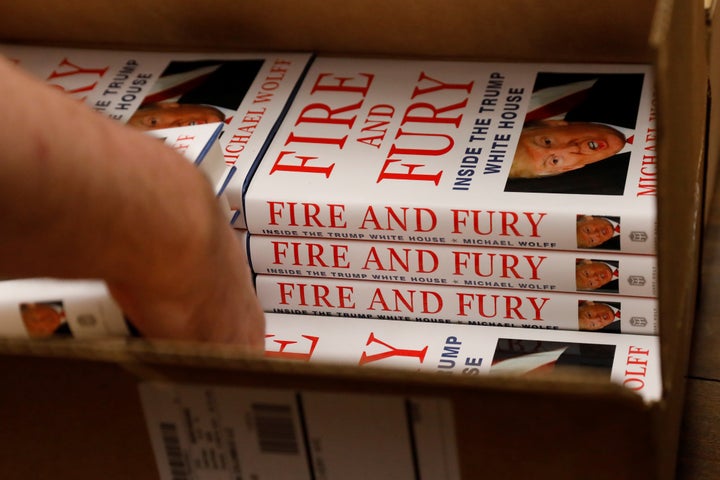
We will unleash “fire and fury” against you. The U.S. military is “locked and loaded.” We will “totally destroy” you. My “nuclear button” is bigger (and better) than yours. Such threats are not conducive to building trust and resolving the thorny issue.  As Cui Tiankai, China’s ambassador to the U.S. pointed out, the U.S. should refrain from making threats and do more to find effective ways to resume dialogue and negotiation.

Music Video - Dua Lipa - New Rules

Video - Between the Scenes - Trump’s Latest Coffee Boy: Steve Bannon: The Daily Show

Video - Bizarre, Unverified and Fraudulent: Michael Wolff Steps Inside the Trump Presidency: The Daily Show

Video - The Late Show with Stephen Colbert - Stephen Bites Into The Juicy New Trump Book

The Late Show with Stephen Colbert - Our President Never Planned On Being Our President

"Trump Is Not Fit For President!" Chris Cuomo Completely WRECKS Trump Admin. On Michael Wolff Book

Video Report - Jake Tapper Can't Believe Latest Actions From Trump Admin. To Block Michael Wolff Book

Video Report - Why has a new book angered Trump so much? 🇺🇸 | Inside story

The Wildest Moments From ‘Fire And Fury,’ The Trump Book Everyone Is Talking About

There's never been a better time to be single


By Bella DePaulo
"Marriage is a healthy estate," British physician William Farr wrote in 1858, in one of the first studies to conclude that married people were better off than their single counterparts. "The single individual is more likely to be wrecked on his voyage than the lives joined in matrimony."
The ensuing decades have done little to dissuade social scientists of their certainty that single people were doing themselves a disservice. Until now. In 2017, it was that conviction that got wrecked.
The new science of single people As a psychologist, I study single people -- their lives, their happiness, the stigma they face -- and I can say that 2017 was a banner year for the publication of massive studies challenging what we thought we knew about their supposedly inferior life voyages. New insights just kept coming: on sex and dating, on self-esteem, on what it means to be an adult. And they came just in time: In recent history, there have never been as many unmarried adults as there are right now.
Here are a half dozen of the coolest discoveries about single people from the year 2017.
Demographically, single people are more powerful than ever before.
In 2017, the Census Bureau reported that a record number of adults in the U.S. were not married. More than 110 million residents were divorced or widowed or had always been single; that's more than 45 percent of all Americans aged 18 or older. And people who did marry were taking longer than ever to get there.
The median age of first marriage rose to 29.5 for men; for women, it reached 27.4. (These trends are likely to continue: A report from the Pew Research Center a few years ago predicted that by the time today's young adults reach the age of 50, about one in four of them will have been single all their life.)
Living alone is also becoming more popular. Last summer, the Canadian press was abuzz with the news that for the first time in the nation's history, more people were living in one-person households than in any other arrangement. In the U.S., the number of people living without a spouse or partner rose to 42 percent last year, up from 39 percent a decade ago.
Why I bring all my baggage on my first dates
Individualistic practices like living alone aren't just Western phenomena -- they've gone global. In analyses of a half-century of data (1960-2011) from 78 nations around the world, psychology researcher Henri C. Santos and his colleagues found that the popularity of such practices grew significantly for 83 percent of the countries with relevant data. Individualistic beliefs, like valuing friends more than family, have also been on the rise, increasing significantly for 79 percent of the nations across the five decades.
Marriage is no longer considered a key part of adulthood.
A half-century ago, Americans who had not yet married wouldn't be considered real adults. That's no longer the case. According to a 2017 Census Bureau report, more than half of the participants in a nationally representative sample (55 percent) said that getting married was not an important criterion for becoming an adult. The same percentage also said that having a child was not an important milestone of adulthood.
More important now is completing formal schooling and having full-time employment; 95 percent said that each of those criteria was at least somewhat important.
High-schoolers aren't as into dating -- or sex.
In a study published last fall, psychologists Jean M. Twenge and Heejung Park analyzed four decades' worth of data (1976-2016) on the sex and dating experiences of more than 8 million students in the ninth through twelfth grades. The percentage of teens who had ever been on a date was lowest in the most recent years of the study. And along the same lines, the percentage who had had sex was at an all-time low in recent years.
Single people are having more sex than married people.
Moving past the teens and on to people 18 and older, the same holds true: Adults are having less sex than they used to. Analyzing survey data collected from more than 26,000 people between 1989 and 2014, researchers found that the average person now has sex around nine fewer times per year than the average person in the early '90s.
But not all groups followed the same sexual trajectory -- the drop was especially pronounced for the people who were married or divorced, compared to people who had always been single. In fact, according to one of several ways of looking at the data, singles are now having sex more often than married people are.
Why dating in your 20s is terrible
And then there are people that aren't having sex at all. The idea that there are some people who just do not experience sexual attraction has a more prominent place in our cultural consciousness today, something for which the the Asexual Visibility and Education Network (AVEN), founded in 2001, gets much of the credit.
By 2017, there was enough research on asexuality, including large-scale studies, to justify a review article in the Archives of Sexual Behavior. Defying the early skepticism on the topic, authors Lori A. Brotto and Morag Yule concluded that asexuality is a unique sexual orientation, one that applies to up to 3 percent of adults, and not a sexual dysfunction or psychiatric disorder.
A relationship doesn't mean higher self-esteem ...
As teens shrug at the idea of dating and adults put off or skip marriage altogether, skeptics might wonder, aren't they all missing out on that boost of self-esteem that comes from "having someone"?
Not really. In a landmark study on the link between romantic relationships and self-esteem, researchers Eva C. Luciano and Ulrich Orth studied more than 9,000 adults in Germany as they entered or ended romantic relationships or stayed single. Their conclusion: "Beginning a relationship improves self-esteem if and only if the relationship is well-functioning, stable, and holds at least for a certain period (in the present research ... one year or longer)."
People who started new romantic relationships that failed to last a year ended up with lower self-esteem than the people who stayed single. There was nothing magical about marriage, either; people who married enjoyed no better self-esteem than those who stayed in romantic relationships without tying the knot.
... and marriage doesn't mean better health.
Part of the mythology of marriage, long bolstered by the writings of social scientists, is that people who marry become healthier than they were when they were single. After all, the logic goes, married couples get all that loving support from each other, and they make sure their spouses are taking care of themselves. But three big methodologically sophisticated studies published in 2017 shook our faith in that idea.
In one of the studies, researchers followed more than 79,000 U.S. women between the ages of 50 and 79 over a three-year period, tracking whether they got married (or started a serious relationship), stayed married, got divorced or separated, or stayed single. Author Randa Kutob and her colleagues also took repeated physical measurements of the women's waist size, body-mass index, and blood pressure, and asked them about their smoking, drinking, exercise, and eating habits.
With just one exception, every significant finding favored the women who either stayed single instead of marrying, or who got divorced instead of staying married. For example, the women who married gained more weight and drank more than those who stayed single.
The women who divorced ate healthier, exercised more, and had smaller waists than the women who stayed married. (The one exception was that the women who divorced were more likely to start smoking than the women who stayed married.) The frustration of dating as someone who doesn't drink
In the second study, a 16-year survey of more than 11,000 Swiss men and women, the people who married reported slightly worse overall health than they had when they were single, even taking into account changes in health that often occur with age. And in the third study, sociologist Dmitry Tumin surveyed more than 12,000 adults in the U.S. who got married for the first time to see if they described their general health as better after they married or better when they were single.
He broke down the data several ways: He examined men's marriages separately from women's; he conducted separate analyses of the marriages of people born in different decades; he evaluated marriages that lasted for different lengths of time.
In all the scenarios he looked at, with one exception, the people who got married never reported being healthier. The exception was for the oldest women (born between 1955 and 1964) whose marriages lasted at least ten years, who considered themselves slightly healthier.
It's a powerful blow -- one of many -- against the notion that marriage is the ideal way to live. For a long time, we've accepted the idea that unless they hurry up and marry, single adults will stay sexless and unhappy until they die (and sooner, at that). But it seems single people don't scare so easily anymore -- in unprecedented numbers, they are going ahead and living their single lives, which are often healthier and more fulfilling than those of their coupled counterparts. In 2017, finally, the weight of the scientific evidence from the most sophisticated studies was on their side.

Music Video - Tumhi Ho Mehboob Mayray - Irene Parveen (Aaina)

Music Video - Aap Dil Ki Anjuman Main - Runa Laila (Anjuman)

Music Video - Dil Dharkay Mein Tum Say - Runa Laila (Anjuman)

Video Report - #China to build Military base at #Jiwani in #Pakistan

NACTA DIRECTED TO CONDUCT RESEARCH ON DAESH FOOTPRINTS IN #PAKISTAN

A Senate panel on Friday tasked the National Counter-Terrorism Authority (Nacta) with conducting research on the footprints of the takfiri militant Daesh group in Pakistan and its linkage with banned Deobandi terrorist outfit Tehreek-e-Taliban Pakistan (TTP), Al Qaeda and other terrorist networks.

The Senate Standing Committee on Interior, which met here under the chairmanship of Rehman Malik, also asked Nacta to take steps for capacity-building of the Federal Investigation Agency to effectively combat cyber terrorism and crimes.
Nacta’s national coordinator Ihsan Ghani presented a report on implementation of the National Action Plan over the last three years covering 20 salient points of the antiterrorism plan.
The report says 483 terrorists have been convicted since partial lifting of moratorium on death penalty in March 2015. It mentions extension in the term of military courts for another two years in March 2017 and constitution of 11 special trial courts and says: “These special trial courts serve as a cogent deterrent against terrorism, and the decrease in the incidence of terrorism can be attributed to quick trial and sentencing of terrorists.”
The report says the parallel administration in the Federally Administered Tribal Areas by different factions of the TTP has been brought to an end and they are no more in a position to use the territory for plotting and executing terrorist attacks.
It highlights the steps being taken to strengthen Nacta and reveals that the joint intelligence directorate is being staffed and it has received its first office building as well as the initial batch of officers.
About funding without which terrorist activities cannot continue, the report says terrorists and terrorist organisations could collect funds from a variety of sources such as charity and other nondescript formal and informal financial channels.
“In countries where banking sector works in isolation from the counterterrorism apparatus, tracking terrorism financing is a gigantic task. Extremists primarily collect money as subscription from sympathisers and criminal activities like extortion, gunrunning and narcotics trade. Such groups transfer funds through the formal financial system, alternative remittance services, trade, cash, non-profit organisations and charities; this merits presence of an effective combating financing of terrorism regime which has investigative, analytical, deterrent and preventive roles,” it adds.
The report says Nacta has taken various initiatives to choke funding of terrorist elements and organisations. It refers to the National Task Force on Choking Financing of Terrorism — a coordinating body of over 20 federal and provincial organisations, concerned with the policy and operational matters pertaining to combating financing of terrorism, regulation and monitoring of cross-border movement of currency, effective regulation of branchless and internet banking and creation of units for countering financing of terrorism in provincial counterterrorism departments.
The report contains details of money laundering and other related cases and reveals that around Rs1.5 billion has been recovered in 919 hawala and hundi cases, under which 1,209 arrests have been made. It says 426 money laundering cases have been registered and 571 persons arrested.

http://www.shiitenews.org/index.php/pakistan/item/32417-nacta-directed-to-conduct-research-on-daesh-footprints-in-pakistan