Monday, May 15, 2017

Pakistan - How extremism reached Sindh


After years of battle for political rights, Sindh is now confronting a new challenge of spiralling extremism.
Noreen Laghari, a second-year student of the Liaquat University of Medical and Health Sciences (LUMHS), Jamshoro disappeared in February 2017 and later surfaced as a terrorist-suspect when law enforcement agencies nabbed her after an encounter with a terrorist gang in Lahore. The incident generated a tremor across Sindh, which has hitherto remained insulated from perilous extremism. Although some heinous acts of terrorism occurred in Sindh during recent years, the perpetrators were not locals.
Jamshoro, a small town near Hyderabad on the flank of the Indus Highway, is home to three prominent universities of Sindh. The town has remained a centre of progressive political and cultural movements for decades. Thousands of students from all parts of the province, mostly coming from humble rural backgrounds, study in these universities. The Sindh University is the mother institute that nurtured two colleges namely Mehran Engineering College and Liaquat Medical College for several years before they were upgraded to the status of full-fledged universities.
LUMHS was originally established as a medical school in 1881. It was upgraded as a medical college and affiliated with the University of Sindh in 1942. It became a full-fledged university LUMHS in 2001. The youngest of the three institutes is Mehran University of Engineering and Technology, which was established as a campus of the University of Sindh in 1976 and now known as a premier engineering university of Pakistan.
The Sindh University had been at the forefront of the nationalist movement since the 1950s. Founded in 1947, the university was initially situated in Karachi. It was subsequently relocated to Hyderabad in 1951 after Karachi was detached from Sindh against the will of masses and the provincial government.
The partition of subcontinent brought an upheaval for the Sindhi society as its middle class was completely wiped out due to the migration of Hindus. Sindhi Muslims were scantly educated and therefore did not form a vibrant middle class to lead any political movements at that time.
Forced separation of Karachi from Sindh, expulsion of Sindhi language from official corridors, plunder of barrage lands and imposition of the One Unit jarred Sindhi society. Eruption of a mass movement was a natural reaction to such unjust policies of the establishment. In the absence of a dynamic middle class, students became the torchbearers of the movement for political, cultural and economic rights of Sindhis and the cluster of the three institutes emerged as an epicentre of the nationalist movement in Sindh.
All leading political parties formed their students’ fronts in these universities. Cultural and nationalist movements dominated the political landscape of these institutes in the following years. Political leaders, writers and poets would frequent universities to deliver lectures and students’ organisation would arrange rallies, observe memorial days, book fares, study circles and cultural events round the year.
The partition brought an upheaval for the Sindhi society as its middle class was wiped out due to the migration of Hindus. Sindhi Muslims were scantly educated and therefore did not form a vibrant middle class to lead any political movements at that time.
The universities remained abuzz with cultural bustle, keeping students wired with political and cultural activism. Anti-One Unit movement became a rallying point for different student groups. This was the era of the zenith of a progressive Sindhi nationalist movement when stalwarts like G.M Syed, Rasool Bakhsh Palijo, Hyder Bakhsh Jatoi and Kazi Faiz Mohammad were leading the political movement. Sindhi writers and poets like Shaikh Ayaz, Rasheed Bhatti, Jamal Abro, Hameed Sindhi, Ali Baba, Siraj Memon, Ustad Bukhari, Rashid Morai, Tajal Bewas, Agha Saleem and countless others were streaming heart-warming literature.
Student organisations were the lynchpin of the movements for printing voter lists in Sindhi language, stopping allotment of lands to non-locals, stopping settlement of aliens in Sindh and abolishing the One Unit. All this activism had a strong secular and progressive orientation and faith was never a divisive element. This movement brought fruition and One-Unit was ultimately abolished in 1970 and the identity of Sindh was restored after being held in abeyance for more than a decade and a half.
The post One-Unit years witnessed a massive degeneration in the character of student politics in Jamshoro. Although rival political groups remained engaged in slugfests and skirmishes during Bhutto’s era as well, hostels were not replete with automatic weapons and campuses were not smeared with blood in Jamshoro. The Zia era set the rot in motion and students’ unions were trammelled and criminal elements were inducted in the students groups. Lethal weapons were allowed to proliferate in hostels.
Once known as bedrock of resistance movement, the students’ politics was demonised as a shelter for criminals. Law enforcement apparatus unleashed all its might targeting student activists. The Movement for Restoration of Democracy (MRD) was pulverised with an atrocious use of force. Amid this chaos, universities would remain closed for several months. Academic standards nosedived and a rapid decay gripped these institutes.
In their heydays, these institutes not only churned out cadres of human resource in a range of professional fields but also an inspiring array of political leaders, writers, journalists and intellectuals.
Thanks to these institutes, Sindh that once faced a dearth witnessed a sharp rise of middle class during the last two-three decades. Jamshoro has remained a powerhouse of the Sindhi middle class by producing a profusion of professionals over the years. No matter how vilified, these institutes produced a large number of professionals to shore up a derelict rural society that eventually reshaped Sindhi society.
Although student politics had its own pitfalls, it acted as a bulwark against any invasion of faith-propelled extremism. Sindhi nationalist movement inspired by progressive literature and led by secular political leaders was deeply entrenched in the peaceful and tolerant culture of Sindh.
The scenario has gone through a drastic alteration in recent years. Student politics has been systematically expelled from universities, cultural days are no more celebrated with the same fanfare and political leaders do not frequent these institutes. Nationalist leaders desist from interacting with young students and Sindhi literature is no more laced with the idioms of resistance. University campuses are manned by security forces asserting to provide a peaceful environment to the students and faculty.
While law and order environment has considerably improved, student politics has not been replaced with any constructive engagement of youth through extra-curricular initiatives such as debating societies, conferences, exchange visits, sports competitions, art festivals, scientific societies, readers clubs, quality research, career counseling and innovative experimentation. Young minds need opportunities to unleash their creative energies in addition to the routine of classrooms and laboratories. Denial of such avenues results in frustration and dejection among youth.
The prevalent stagnancy in the universities has created a vacuum that is now being filled by obscurantist elements. Clandestine networks of such elements easily sneak into young cadres, who become easy prey to their emotive traps.
Network of seminaries has sprawled in the rural areas of Sindh during recent years. Extremist groups have been spreading their tentacles through multiple interventions in the province.
A massive displacement and deprivation caused by a series of flood disasters in 2010 and the following years provided easy access to religious charities in the remote areas of Sindh. The government’s inability to extend relief and rehabilitation services to a humongous number of the flood affectees provided new opportunities to such groups to ingratiate the dejected communities.
Another corridor is north Sindh districts bordering with Balochistan and South Punjab. These districts are tribal fiefdoms ruled by tribal chiefs. The area has remained hotbed of lawlessness, poverty, violence against women and gruesome tribal feuds for several years. Religious groups have also remained active in these areas. A new chain of seminaries grew in these areas. Jacobabad and Shikarpur districts witnessed some of the gory incidents of terrorism in the recent years. Incidents of abduction and forced conversions of the Hindu girls had been pervasive in the north Sindh districts.
Another major corridor of seminaries is southern districts of Sindh, mainly in Tharparkar, the area having a sizeable population of the Hindu community. Religious groups have been actively working and establishing seminaries even in the remote and inaccessible areas under high surveillance with restricted movement.
Karachi is yet another pocket of extremist elements in Sindh. Military operations in Swat and Wazirstan forced militants to flee and find new safe havens. Densely populated parcels of Karachi offered congenial shelter to such groups.
With extremism in Sindh attaining monstrous proportions, Sindh’s complexion of a progressive polity has been obliterated in an organised manner. Nonetheless Sindh’s deep rooted progressive political consciousness and the traditions of plurality and inclusiveness are offering stiff resistance to this unprecedented spike in extremism. However, the days of complacency are over. After years of battle for political rights, Sindh is now confronting a new challenge of spiralling extremism.

Former President Zardari for cordial relations with neighbours

Calling for good ties with neighbouring countries, Pakistan People’s Party (PPP) Co-chairman Asif Ali Zardari said on Sunday that though the situation was not that good in the region when they were in power. “We kept cordial relations with neighbouring states... Relations with Afghanistan were excellent and there was peace with India during our time,” Zardari said addressing party leaders and workers at a luncheon hosted by Arbab Alamgir.
“Our neighbours should be our friends. The PPP wants friendly ties with all neighbouring states. We will not let the Pakistan Muslim League-Nawaz (PML-N) government sow discord with neighbouring countries, he said.
Zardari remarked, “Prime Miniter Nawaz Sharif has the same thought process as the Americans when it comes to waging wars, but we will not let this [war with neighbours] happen.”
The PPP co-chairperson said that they could not properly campaign for the last general elections in 2013.
He said, “This time we will take our campaign to every town and house of the country. The PML-N will not succeed in forming a government again in Punjab.
The PPP won’t allow rigging in the next general elections. The PPP workers would be sitting in front of polling booths and would leave only after receiving results. The rulers would not be able to steal the mandate again through rigging.”
He was of the view that the government has failed to stabilise the economy on the one hand while on other it was relentlessly printing currency notes. “The rulers believe that the ‘Mughal era’ would continue,” Zardari said, adding that this won’t happen.
He said that immature people could not see that flames were raging in Khyber Pakhtunkhwa (KP). “People of this province have suffered a lot. And now, even their national identity cards are being blocked... they are being imprisoned.”
After coming to power, he said, his party would release the blocked CNICs of all the internally displaced persons that have created problems for Pakhtuns. “Also, Pakhtuns are being asked why they are there in Punjab, in Balochistan, in Islamabad. It is the Sindh province where Pakhtuns are welcomed, and I am proud that Karachi is the biggest city of Pakhtuns now.”
In a reference to PM Nawaz and Punjab Chief Minister Shehbaz Sharif, Zardari said they used to say that they will change their names if they could not end power loadshedding within months. “So, today, I ask the world what we should name them [as they have failed to fulfil their promise]”.
About Fata’s future status, the former president said that the PPP has decided that tribal areas must be merged with the KP.
“Rights should be given to tribal youth and women, the same rights that have been given to residents of other provinces,” he said.
Zardair said that if they were given the opportunity they will give Fata people their rights. He said that he as president had appointed KP governor from Fata because he wanted to remove the sense of deprivation.
He announced that if they came to power the PPP would double the Benazir Income Support Programme cards in KP. “The PPP had given Pakhtuns their identity and it will protect their rights in the future also.”
The PPP leader said, “We dreamt of the CPEC for KP and Balochistan. Unfortunately, it has been diverted to Islamabad and Punjab.” He said that his party would fulfil its dream by bringing it back from Islamabad to the province.
Coming hard on PTI chief Imran Khan, the former president said Imran was neither a Pakhtun nor has he any interest in the solution of Pakhtun’s problems. He said that Imran Khan could have changed the fate of Pakhtuns if he was sincere with them and interested in doing so.

http://nation.com.pk/newspaper-picks/15-May-2017/zardari-for-cordial-relations-with-neighbours

Video Report - Former President of Pakistan Asif Ali Zardari addresses to grand FATA Jirga in Peshawar

Pakistan - Metro buses, trains cannot ensure election victory: Zardari

Former president Asif Ali Zardari on Sunday said that metro buses and trains would
not ensure victory for political parties in elections. He was addressing a public gathering in Peshawar. “This time around, the rulers will not be able to steal the mandate through rigging elections. Economic condition of the country is not strong. The government is continuously printing new currency bills,” he said. He said that there should be good relations with neighbouring countries. “While the PPP was in power, Pakistan’s relations with Afghanistan and India were good and there was peace. We should be friends with our neighbouring countries. Nawaz Sharif has the same policy as the Americans when it comes to waging wars. We will not let this happen,” Zardari said. Zardari said that Khyber Pakhtunkhwa was on fire. “However, those governing the province are unaware of it. They do not know how many people are homeless in KP,” he said. “The Pakhtuns are being asked why they are in Punjab, in Balochistan, in Islamabad. I am proud that Karachi is the biggest city of Pakhtuns,” Zardari said. “The PPP has decided that FATA will be merged with KP, and rights will be given to FATA’s youth and women at a par with other provinces. If we are given the opportunity, we will give them their rights,” he said.


http://dailytimes.com.pk/pakistan/15-May-17/metro-buses-trains-cannot-ensure-election-victory-zardari

ن لیگ اور پی ٹی آئی والے ایک دوسرے کے بارے میں آدھا سچ بول رہے ہیں


ذوالفقارعلی بھٹو سے لے کرمحترمہ بےنظیر بھٹو شہید کے خلاف غیرملکی فنڈنگ استعمال کی گئی ہے
پاکستان پیپلزپارٹی کے رہنما سینیٹرسعید غنی نے کہا ہے کہ مسلم لیگ(ن) اور پی ٹی آئی والے ایک دوسرے کے بارے میں آدھا سچ بول رہے ہیں مکمل سچ یہ ہے کہ غیرملکی فنڈنگ پاکستان پیپلزپارٹی کی قیادت کے خلاف استعما ل ہوئی ہے۔ 1977ءمیں قائدعوام ذوالفقار علی بھٹو شہید کے خلاف غیرملکی سرمایہ استعمال ہوا تھا اور اسامہ بن لادن نے بھی محترمہ بینظیر بھٹو شہید کے خلاف نواز شریف کو خطیر رقم فراہم کی تھی۔ سینیٹر سعید غنی نے کہا کہ اسامہ بن لادن سے ملنے والی رقم کا خمیازہ قوم آج تک شدت پسندی اور دہشتگردی کی صورت میں بھگت رہی ہے۔ سینیٹر سعید غنی نے کہا کہ پاکستان پیپلزپارٹی کی جڑیں ملک کے عوام میں ہیں اور عوام ہی پاکستان پیپلزپارٹی کا سرمایہ ہے۔ سینیٹر سعید غنی نے کہا کہ آصف علی زرداری نے محترمہ بینظیر بھٹو شہید کے مشن کی تکمیل کی اس لئے آصف علی زرداری بھٹو دشمنوں کی آنکھوں میں کانٹے کی طرح کھٹک رہے ہیں۔

https://mediacellppp.wordpress.com

Pakistan - Former President Zardari terms FATA reforms package political gimmick

Former President Asif Ali Zardari has said that the government was not sincere in implementing FATA reforms package and challenged the government to prove its sincerity.
He was addressing a representative gathering of hundreds of tribal people drawn from all tribal agencies and Frontier Regions in Tehkal in Peshawar today on the third day of his tour of provincial metropolis.
It took nine months for the cabinet to approve the so called reforms package on March 2. Now on the eve of budget Bills have been introduced in the National Assembly without bringing them to the attention of opposition or tribal people let alone seeking a broad based consensus on them, he said. He said that the government will now pretend to pass the Bills hurriedly and blame the opposition for delay if it raised questioned whether the so called Riwaj Bill was re-incarnation of the hated Frontier Crimes Regulation (FCR) under a different name.
Spokesperson Senator Farhatullah Babar quoted the President as saying that the amendment Bill brought by the government today was a gimmick to score political brownies on the eve of 2017 budget.
Zardari said that the PPP had flung open the door of reforms in FATA in 2011 and will carry forward the reform process once it gets into power after the elections.
A fundamental issue in mainstreaming FATA is the resistance of vested interests including bureaucracy which is loathe to loosen its iron grip on tribal areas, he said. What is needed is to break the nexus between bureaucratic complex and Presidency to continue hold on tribal areas. Once this was done all other issues whether merger in KPK, local governments and extending jurisdiction of superior courts will automatically follow he said. He said that as President he transferred Presidential powers to the Parliament and opened up the reforms process in FATA. What is needed now is to transfer the Presidential powers with regard to FATA to Parliament as well to move forward, he said.
This indeed is the PPP agenda and the Party will do it when it comes into power. The present government which believes in concentration of power is neither capable nor willing to do so, he said.
The office of President should not be the lord of tribal areas concentrating all legislative and executive powers in the hands of Presidency and its agent the Governor KPK. This is a colonial structure to keep the tribal people under tight control and this structure must be demolished, he said. The legislative powers in respect of FATA should be transferred to the Parliament from the President and the genuinely elected representatives allowed participation and self governance, he said.
It is a fallacy to argue that the tribal people cannot be subjected to the laws of Pakistan. The tribal people across the border are governed under the laws of Kabul and there is no conflict with the Riwaj of the tribes.
A large number of people from all tribal agencies live in settled districts of KPK and other parts of Pakistan and have no problem living with the laws of Pakistan. They also live and work in ME where the laws are even more stringent but neither their riwaj nor the traditional jirga has stood in the way.
He said that the committees of parliament and media be allowed to visit tribal areas to tear apart the shroud of secrecy that has been deliberately woven around FATA by the vested interests.
He said that the PPP government had increased the PSDP for FATA from 3 billion to 19 billion rupees, made changes in the FCR disallowing arrest of women and children in the name of collective responsibility, allowed all political parties to function in tribal areas.
He lamented that the PPP plans for Medical College Bajaur, IT University in Kurram , University in Kohat and a cadet college in every Agency was shelved by the present government.
Zardari said that the Party will continue to struggle for the merger of tribal areas in KPK, extending the jurisdiction of high court and supreme court to the tribal areas and for doing away with the notorious FCR.
The tribal jals was also addressed by PPP FATA president Akhunzada Chattan and party heads of all tribal agencies.

 https://mediacellppp.wordpress.com/

Bilawal Bhutto congratulates Jiyalas of Gilgit-Baltistan for staging a massive power show in Skardu

Chairman Pakistan Peoples Party Bilawal Bhutto Zardari has congratulated the Jiyalas of Gilgit-Baltistan for staging a massive power show of the Party in Skardu adding that mobilization of masses in the nook and corner of the country may be stepped up.
During a telephonic conversation with PPP President of Gilgit-Baltistan Amjad Advocate, the PPP Chairman said that such a big public meeting in Skardu town has again proved that Bhuttoism and the PPP are chain of the Federation. “All attempts of threatening through Party leaders and workers through terror and maligning the PPP through media trial and propaganda have failed to scare the Jiyalas and masses,” he added.
Bilawal Bhutto Zardari stressed that both the previous and the current bodies of PPP GB should work together to take the Party message to every village and hamlet of Gilgit-Baltistan and ensure victory for the Party in next elections there.
PPP Chairman extended felicitations to the workers and leaders including PPP GB President Amjad Advocate, former Chief Minister Syed Mehdi Shah, and other office-bearers Master Ibrahim, Sheikh Nisar, Afzal Deenyal, Sherbaz, and others for their hard-work in making the PPP public meeting in Skardu successful event.

https://mediacellppp.wordpress.com/

Saturday, May 13, 2017

Video Report - China's mission to reinvent the Silk Road - Counting the Cost

Video Report - New Jersey congressman meets angry constituents

Video Report - Two EPA advisers resign "in protest"

Video Report - Bahrain denies entry to Human Rights Watch official over Israeli settlement football teams

Video Report - Swiss police can’t ban radicals who recruit to fight in Iraq & Syria due to religious freedom rights

Video Report - Peshawar: Former President Asif Ali Zardari's Press Conference

Pakistan - A heated neighbourhood


Afrasiab Khattak

Last Monday, Iranian General Mohammad Albaqiri, warned Pakistan of attack inside her territory to destroy what he called terrorist sanctuaries. The threat came about two weeks after Jaish ul-Adl (Army of Justice), a Sunni militant organisation, with a history of launching attacks in Siestan-Balochistan of Iran, accepted the responsibility of killing ten Iranian border guards in an attack carried out from Pakistani side of the border. Soon after the said attack Mr. Javed Zarif, the Iranian Foreign Minister paid a day-long visit to Islamabad and met top political and military leaders of Pakistan. There were reports about the tough talk of the other wise soft spoken top Iranian diplomat during his meeting with Pakistani leaders but at the end of his visit Islamabad gave the impression that the crises has been overcome by strong assurances from Pakistani side about ensuring security on the Pak-Iran border.
However, the latest threats publicly hurled by the Iranian general at Pakistan contradict that impression. These tumultuous developments in the relationship of the two countries can’t be understood without looking at the bigger picture of Middle Eastern politics. Iran is reasserting itself once again as a regional power after the lifting of western financial sanctions, and isn’t amused at all by Pakistan’s joining the Saudi sponsored Islamic Military Alliance which is now headed by General Raheel Sharif (GRS), the former COAS of Pakistan. The aforementioned military alliance is formally supposed to be aimed at curbing terrorism but the total exclusion of Shia Muslim countries from its fold clearly gives away its communal character and it also seems to be geared towards helping KSA in her military adventure in Yemen.
On May 5 a bloody clash took place between border forces of Pakistan and Afghanistan on the Durand Line near Chaman. The clash was preceded by aggressive patrolling by the two sides around the two villages where Pakistani authorities wanted to conduct population census and the Afghans believed that by doing so Pakistanis are crossing the not-so-clearly demarcated Durand Line. Precious lives were lost on both sides. After tense and prolonged negotiations both sides agreed to conduct a geological survey of the villages in question for determining their status. As has happened before the Pakistani side has arbitrarily closed the Speen Boldak crossing point for an indefinite period, leaving a large number of people and vehicles full of goods stranded on both sides. The Pakistani side is totally oblivious to large scale humanitarian problems and economic losses faced by Pashtuns living on both sides of the borders.
Pakistan’s complete disregard for the aspirations and interests of 50 millions plus Pashtuns living in Pakistan is remarkable. In the long term it can’t be without a political cost. If the post-2014 experience is anything to go by, Pakistan has totally given up on winning hearts and minds in Afghanistan; from pushing out Afghan refugees in an extremely harsh and unfriendly manner to trampling upon Pak-Afghan Transit Trade Agreement and humiliating and fleecing Afghans at crossing points on the borders. This clearly indicates that arrogant coercion is the core of Pakistan’s Afghan policy now. Pakistan is neither shy of owning Taliban as the only real ally nor is hesitant in using political and economic pressures on the National Unity Government to degrade it to “one of the parties” in the conflict. It goes without saying that the author of the shift in policy is the Punjabi dominated security establishment of the country which has been running Afghan policy for the last four decades.
The positive atmosphere created by the most recent Kabul visit of a high profile Pakistani Parliamentary delegation has proved once again that there is still a lot of potential for political and diplomatic initiatives in normalising relations between the two countries but as the subsequent events demonstrated that the civilian side from Pakistan is in no position to deliver anything substantial. Taliban’s so-called Spring Offensive continues, some minor precautionary adjustments on part of Pakistan with Trump Administration’s new strategy in Afghanistan not withstanding.
Hostility in relations with India could not be brought down despite PM Nawaz Sharif’s bold and consistent policy of achieving rapprochement with India. Narendra Modi’s government has unfortunately failed to reciprocate the spirit of the policy for normalisation of relations followed by Nawaz Sharif despite formidable hurdles. PM Nawaz Sharif even met the Indian tycoon Jindal as a part of back-door diplomacy, at a time when he was under immense pressure from the crises generated by the so-called Dawn Leaks and Panama Leaks. Some of his opponents, including some ex-serviceman publicly labeled him to be a “security risk”, but he did not back off.
The almost perpetual electoral cycle in India keeps the Modi government tied to the requirements of its electoral politics, particularly when the nature of that politics is growingly communal. The situation in Indian held Kashmir remains grim as India continues to use brute force against the Kashmiri population which is determined to break the status quo by street agitation. It is heartening to see some Indian intellectuals, journalists and civil society activists criticising the policy of Indian oppression in Kashmir. Such voices of conscience inspire hope. Peace constituencies in both countries need to expose jingoistic policies of their respective governments. But the worsening situation on the Line of Control (LOC) can spiral out of hand. Why can’t both the governments make use of the hotline between their militaries and senior level contacts of their respective foreign ministries to diffuse the tension on LOC?
Recent Chinese overtures to India on CPEC have ruffled a few feathers in Islamabad. Unfortunately there is almost an addiction in Pakistan to a delusional thinking about “friendship” with big powers due to our “strategic location.” First it was the US and now it is China. OBOR is basically a roadmap for a gradual transition towards a new world order to replace the present one. The process has to be inclusive, particularly in the immediate neighbourhood and also in Asia. China can’t have indefinite patience with South Asian squabbles. Russia has her own version of the new world order based on Eurasian Heartland theory. Unlike the far away US, China and Russia are almost part of our neighbourhood. They can’t afford to remain indifferent to this heating up. Let‘s not forget that the biggest challenge to these Chinese and Russian visions of a new world order is extremist religious violence in South and West Asia. The sooner the security tsars of Pakistan realise it and wind up their “jihadist” project, the better it would be for everyone, particularly for Pakistan. Pakistan after all can’t remain perpetually at war with her neighbourhood.

Bilawal Bhutto condemns terrorism in Gwadar

Chairman Pakistan Peoples Party Bilawal Bhutto Zardari has strongly condemned terrorist attack on labourers in Gawadar, in which innocent workers were gunned down in a horrific manner today.
In a Press statement issued here, the PPP Chairman said terrorism was not acceptable in any form or colour and those taking guns against fellow citizens are unpardonable.
He said that PPP’s stance was clear on terrorism from the day one when some people were begging mercy from terrorists and others were suggesting opening their offices in the country.
Bilawal Bhutto Zardari expressed solidarity with the victims’ families and demanded compensations from both Federal and Balochistan governments.
https://mediacellppp.wordpress.com

Ten gunned down near China 'Belt and Road' projects in Pakistan

By Gul Yusufzai
Ten laborers were gunned down in southwestern Pakistan on Saturday while working on link roads to connect outlying towns to the country's $57-billion Chinese "Belt and Road" initiative, security officials confirmed.
The attack on the Pakistani laborers took place some 20 kilometers from the emerging port city of Gwadar in Baluchistan province that forms the southern hub of the China-Pakistan Economic Corridor (CPEC).
"All the laborers were shot at close range," said senior levies official Muhammad Zareef, adding that the shooters were traveling on a motorcycle. The levies are a paramilitary force that oversees security in Baluchistan where police jurisdiction is limited to major urban centers.
Gwadar's deep-water port is the exit point for a planned route from China's far-western Xinjiang region to the Arabian Sea.
Nadeem Javaid, who advises Prime Minister Nawaz Sharif's government and works closely on the CPEC program, told Reuters earlier in the week that the Gwadar-Xinjiang corridor should be operational from June next year.
He said Pakistan expects up to 4 percent of global trade to pass through it by 2020.
Baluchistan, however, has long faced security concerns. Separatist militants in the province have waged a campaign against the central government for decades, demanding a greater share of the gas-rich region's resources.
Security officials have said previously that militants trying to disrupt construction on the "economic corridor" have killed 44 workers since 2014, all of whom were Pakistani. Pakistan's military created an army division in 2015, believed to number more than 10,000 troops, specifically to protect CPEC projects and Chinese workers.
The men killed and wounded on Saturday had been working for the provincial government at two separate construction sites on three kilometers apart along the same road. Two laborers wounded in the shootings were taken to hospital where one of them died from his injuries, Zareef said.
The roads the laborers were working on are not specific CPEC-funded projects, but they are part of a network of connecting roads that are part of the corridor.
No group has admitted responsibility for the shootings but past attacks in the region have been carried out by separatists who view construction projects as a means to take over their land.
The shootings come a day after a suicide bomber targetting a Pakistani senator killed 26 people and injured 40, Baluchistan Home Minister Sarfraz Bugti said.
Friday's attack was claimed by Islamic State via its Amaq news agency.
http://www.reuters.com/article/us-pakistan-militants-idUSKBN189086

‘Widespread’ torture by police in Pakistan condemned by United Nations


UN urges Pakistan to ‘incorporate into its legislation a specific definition of torture’ to be applied without exception.
A UN committee has condemned the “widespread practice of torture” in Pakistan by police, the military and intelligence agencies in a report published on Friday, and called on Islamabad to implement urgent reforms to the law. “The police engage in the widespread practice of torture throughout the territory ... with a view to obtaining confessions from persons in custody,” the UN Committee against Torture wrote in its first report on the situation in the country, made public after months of investigation.
“The Committee is seriously concerned at reports that members of the State party’s military forces; intelligence forces ... and paramilitary forces ... have been implicated in a significant number of cases of extra-judicial executions involving torture and enforced disappearances.”
It urged Pakistan to “incorporate into its legislation a specific definition of torture” that can be applied without exception, including to the army, which is regularly accused of abusing its powers.
The UN highlighted that the Torture, Custodial Death and Custodial Rape Bill, presented several years ago, has yet to be put to a vote.
Pakistan, which ratified the Convention against Torture in 2010, presented its first report on the situation in the country this year – four years late.
In its findings, the UN referred to the torture of several Pakistani bloggers who had criticised extremism and the authorities, leading to weeks in arbitrary detention.
The committee said Pakistan had failed to launch an investigation into any of these cases, or into the numbers disappeared or killed in detention.
The National Commission of Human Rights, an organisation linked to Pakistan’s parliament, welcomed the report, saying “the publication could help start a conversation about torture” in the country.
A “total” ban on torture is an “unequivocal prerequisite to effectively fight terrorism”, it added.


https://www.theguardian.com/world/2017/may/13/widespread-torture-by-police-in-pakistan-condemned-by-united-nations

Friday, May 12, 2017

Video - Victory Day Parade on Red Square 2017

Saudi Arabia uses money to silence world over Yemen crisis: Analyst


Saudi Arabia has been leading a brutal military campaign against Yemen since March 2015. The kingdom has also imposed an aerial and naval blockade on its southern neighbor. Some two thirds of the population or 18.8 million people are in need of assistance, according to the latest UN figures. Press TV has talked to Kim Sharif, director of Human Rights for Yemen, as well as Jihad Mouracadeh, political analyst, to discuss the humanitarian crisis in Yemen.
Sharif believes Saudi Arabia is using its money to silence the international community over the dire humanitarian situation in Yemen.
“The international community with the greatest respect is nothing but a bunch of hypocrites. This in history will be studied as a time of the age of hypocrisy because that is was it is. Everyone is being silenced with [Saudi] petrodollars,” she said.
She also noted there is a “grotesque abuse” of UN resolutions in order to subject the Yemenis to the will of the world’s most brutal dictators.
The analyst also criticized the countries that are selling weapons to Saudi Arabia, asserting that “they do not care how many millions of Yemenis die.”
Sharif further stated that militias loyal to resigned president Abd Rabbuh Mansur Hadi are terrorist outfits such as AQAP and Daesh who have been committing “untold amount of horrific crimes” in Yemen.
She also emphasized there needs to be an “international independent investigation” in order to verify who is responsible for the crisis in Yemen, adding that to start with, the Saudis’ “illegal bombardment” should be stopped.
Elsewhere in her remarks, Sharif dismissed the United Nations Security Council Resolution 2216 as “invalid,” given the fact that Russia has abstained.
She went on to say even if the resolution was valid, the way it has been executed is “grotesquely criminal” given the crimes against humanity, war crimes and genocide in Yemen.
The analyst concluded by saying that the rule of law and democracy must prevail in Yemen, arguing that the recent demonstrations in the war-torn Arab country prove that the Yemenis support the government of Sana’a.
Meanwhile, Jihad Mouracadeh, the other panelist on the program, blamed the humanitarian crisis in Yemen on the Houthi Ansarullah fighters and those who support them.
The analyst also noted that, in the eyes of the international community, the government of Hadi based in Aden is “legitimate, not the one in Sana’a.”
Therefore, he said, in order to stop the crisis in Yemen, the Houthis must accept to withdraw from Sana’a in accordance with the UN Resolution 2216.

http://www.presstv.ir/Detail/2017/04/27/519620/Yemen-Saudi-Arabia-UN-resolution-Hadi-Houthis-humanitarian-aid

How can Canada pretend that Saudi Arabia is an honourable, peaceful country?


By  

If you believe the official word from Ottawa it appears Saudi Arabia and Canada are on good terms. A Canadian government website, dealing with trade, takes care to assert that we share with the Saudis “many peace and security issues, including energy security, humanitarian affairs (including refugees), and counter-terrorism.” It also says admiringly that “The Saudi government plays an important role in promoting regional peace and stability.”
No wonder Canada seems willing to sell military vehicles and other products to Saudi Arabia. It sounds like a friendly government we should enjoy dealing with. Not democratic, of course, but sort of on the right side, at least sometimes.
On the other hand, UN Watch, an independent monitoring service, this week sent out a bulletin headed “UN holds lavish NGO forum in Saudi Arabia while rights activists languish in prison.” It seems that the Saudis, with support from a Saudi foundation headed by Deputy Crown Prince Mohammad bin Salman, the Saudi minister of defence, generously hosted a large global gathering of non-government organizations on the subject of Youth and their Social Impact.
It was staged in the luxury of the Four Seasons Hotel Riyadh (which advertises Distinguished Fine Dining and All-Men’s Spa) — even as, UN Watch went on, “young bloggers and human rights activists like Raif Badawi languish in prison for the crime of advocating freedom in Saudi Arabia.”

The name “Raif Badawi” was placed near the top of the bulletin because UN Watch knows it’s the name most likely to upset Saudi officialdom. In fact, to many people the treatment of Badawi damns Saudi Arabia as irredeemably evil.
Saudi law gives the state the right to ban any organization the government opposes, on grounds that it violates “Islamic Sharia” or public manners or national unity. Individuals committing such crimes, even if they are otherwise peaceful, get long prison sentences. Many activists are currently in jail for advocating human rights reforms.
And Raif Badawi? The more you know about Saudi Arabia, the worse it appears. Once you digest the stifling and humiliating rules governing women, and perhaps even consider them routine, you may begin to wonder how the Saudis treat men. And then you come across Raif Badawi and everything grows darker still.
He’s a young Saudi Arabian writer, the creator of the website Free Saudi Liberals. He was arrested in 2012 for insulting Islam through electronic channels and charged as well with apostasy, the abandonment or breach of faith (though he says he’s still a Muslim). He’s not respectful of the grand institutions of the country. He’s referred, for instance, to Al-Imam Mohammad Ibn Saud Islamic University as “a den for terrorists.”
Even worse, he believes in secular government — “Secularism is the practical solution to lift countries (including ours) out of the Third World and into the First World,” he says. “Look at what happened after the European peoples succeeded in removing the clergy from public life and restricting them to their churches. They promoted enlightenment, creativity and rebellion. States which are based on religion confine their people in the circle of faith and fear.”
Badawi apparently lives his life by words he quotes from Albert Camus: “The only way to deal with an unfree world is to become so absolutely free that your very existence is an act of rebellion.”
He was sentenced to seven years in prison and 600 lashes in 2013, then re-sentenced in 2014 to 1,000 lashes and 10 years in prison plus a fine. The lashes were to be carried out over 20 weeks.
The first 50 were administered on January 9, 2015 — in front of a mosque while hundreds of spectators shouted “Allahu Akbar.”
The succeeding lashes are indefinitely postponed, apparently because of his health. He’s known to have hypertension and his condition has worsened since the flogging began. His wife, who lives with their three children in exile in Canada, predicts that he won’t be able to survive more lashes.  Still, that part of his sentence hangs over him, capable of being invoked at the pleasure of his jailers.
The lashes, and the government’s absence of shame, seem to show that official Saudi Arabia is cruel, bigoted and uncivilized
The word “flogging,” with its overtones of barbaric violence and sadism, has aroused anger in many places and turned Badawi into an international hero. Eighteen Nobel laureates signed an open letter urging Saudi academics to condemn the flogging. Vigils marking his birthday are held outside Saudi Arabian embassies in several countries. Amnesty International designated him a prisoner of conscience, “detained solely for peacefully exercising his right to freedom of expression” and obtained 800,000 signatures on a petition demanding he be released.
He received the International Prize for Freedom in Brussels and 67 members of the U.S. Congress signed a bipartisan petition arguing he should be freed. Several people nominated him for the Nobel Peace Prize. He received the Sakharov Prize from the European Parliament, the PEN Pinter Prize from Britain and the Franco-German Journalism Courage Award. PEN Canada gave him its One Humanity Award. South Africa’s Archbishop Desmond Tutu wrote to the Saudi king supporting Badawi.
To this and much more, the Saudi Arabian government responded by asserting that “it does not accept interference in any form in its internal affairs.”
The lashes, and the government’s absence of shame, seem to show that official Saudi Arabia is cruel, bigoted and uncivilized.
Should Canada be engaged in trade with this country, as if were normal? How much longer can Canada’s relations with this backward state exist in a state of massive denial?

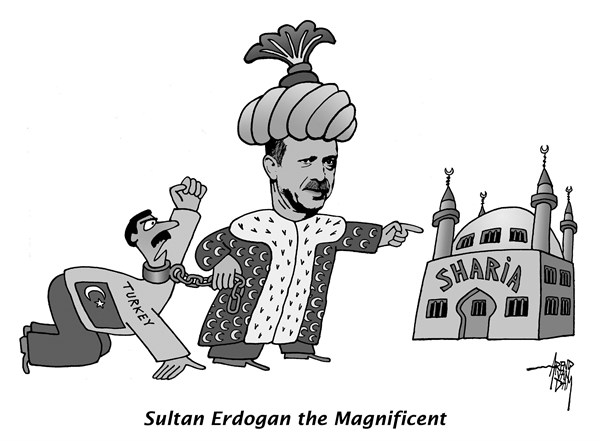
How Turkish referendum victory could backfire for Erdogan


Ali Bayramoglu
Can Turkey’s fractured opposition unite and produce a leader like French presidential winner Emmanuel Macron, driven by shared apprehension over President Recep Tayyip Erdogan’s rule? Can the critical presidential election in 2019 mobilize the opposition against him?

It's possible on paper, for the constitutional changes narrowly approved in the April 16 referendum have changed the rules of the game. Under the proportional representation system of the outgoing parliamentary regime, removing Erdogan and the Justice and Development Party (AKP) from power was virtually impossible under existing political balances. The new rules, however, allow an abrupt change in the seat of power by offering ground for alliances in the second round of the presidential vote. In other words, the new constitutional order that Erdogan wanted so badly and ultimately obtained risks becoming a political trap for him.
This possibility has stirred heated debate in Turkey since the referendum, with the opposition encouraged by the first serious signs that Erdogan can be defeated. Despite the unfair campaign conditions and allegations of electoral fraud, the “yes” camp came up with only 51% of the vote, about 10 fewer percentage points than the combined vote the AKP and its referendum ally, the Nationalist Movement Party (MHP), got in the general elections in 2015. In addition, the “no” vote prevailed in 17 major urban centers, including the country’s three biggest cities.
The fragility of Erdogan’s victory has given a boost to a gloomy opposition that expected a much worse outcome and animated the political scene. Veteran politician Deniz Baykal, former head of the main opposition Republican People’s Party (CHP) and still an influential parliament member, argued in a May 1 interview that the opposition should unite around a common candidate for the 2019 election, the first under the amended constitution. If CHP chair Kemal Kilicdaroglu does not plan to run for president, he should consider stepping down to allow for a stronger mobilization for the polls, Baykal argued. In another surprise statement, he suggested that former President Abdullah Gul, once Erdogan’s right-hand man, could be considered a joint candidate for the “no” camp.
With his veiled affirmation of Gul — an AKP founder at odds with Erdogan — as a possible candidate to unite the opposition, Baykal put into words something that many have silently thought of as a way to stop Erdogan. The mere utterance of this prospect was enough to rattle AKP ranks.
Baykal’s suggestion for a leadership change in the CHP also rattled the main opposition, sparking an internal power struggle and calls for an extraordinary party convention. The party’s in-house conflicts and the issue of whom it will back in the 2019 polls suddenly became intertwined.
Even more importantly, the hard-pressed CHP leader made it clear that the search for alliances for 2019 had already begun. “It would be wrong to behave as if the entire 49% [of the ‘no’ vote] belongs to us and embark on determining a candidate accordingly,” Kilicdaroglu said in a May 9 address to fellow party members in the parliament, stressing that he had consulted with the heads of more than 50 civil society organizations and was planning to visit fellow party leaders to discuss the process.
Political activity on the opposition’s left will clearly increase in this framework. Yet, it is the conservative camp that will make any alliance against Erdogan relevant and strong. At the referendum, 10% of AKP voters defied Erdogan, voting against the amendments. Will this group expand ahead of 2019? And even more importantly, will it become politicized? Those are vital questions for the coming period that are simmering anew in conservative quarters following Baykal’s mention of Gul as a possible joint candidate.
AKP officials urged Gul to speak out and clarify whether he does intend to confront Erdogan in the presidential race, while Erdogan slammed the idea as an effort to sow discord in the AKP ranks.
True to form, Gul remained cautious, neither opening nor closing the door. Speaking on May 5, he reiterated that he was keeping away from active politics, but at the same time stressed his “responsibility to share his knowledge and experience for the sake of the country.”
The AKP’s first prime minister and president, Gul has remained an important figure for the party and Turkish politics since completing his presidential term in 2014. Having fallen out with Erdogan over his policies after 2013, Gul represents the reformist and liberal leaning of the AKP’s original philosophy. As such, he enjoys a certain sympathy in opposition quarters and stands a chance of luring support from across the political spectrum should he decide to challenge Erdogan in the presidential race. So far, the non-confrontational Gul has held back from speaking out about his differences with Erdogan and creating discord and division in the AKP. The main reason was probably his belief that he had little chance of prevailing over Erdogan.
But given the growing discontent among conservatives and former AKP heavyweights, Erdogan’s continued pursuit of one-man rule could now upset the equilibrium. In his May 5 remarks, Gul seemed to speak on behalf of a certain group and orientation. Referring to vicious attacks from pro-government quarters, he said, “I condemn the unmentionable words and the foul language used against the AKP's real pioneers and founders and the unethical behavior within the party. Everybody now knows how this is being orchestrated.” Alluding to Erdogan, he expressed regret at “the silence in the face of all this.”
If an alliance emerges spontaneously around him, the possibility of Gul making a political move remains on the table in the new environment after the referendum. As Erdogan’s authoritarianism deepens and economic or foreign policy crises erupt, Gul is likely to remain relevant ahead of the critical election in 2019.
The key question, however, is whether the opposition — displeased and worried but still scattered and confused — can organize politically to mount a serious challenge. One must admit that this is no easy prospect. The 49% “no” camp includes antagonistic political movements whose reasons for rejecting the constitutional changes do not necessarily overlap, meaning that their ability to agree on and vote for a joint candidate cannot be assumed.
Moreover, Turkey’s political culture lacks any strong traditions of electoral alliances and compromise. Reconciliation between the MHP’s dissident naysayers and the Kurds, or between the conservatives and the left, seems quite difficult. Finally, the AKP remains the country’s strongest and best-organized political machine, with its popular support still at about 44% despite the recent hemorrhage.
All those developments are putting Turkish politics on a new and uncharted track.


Read more: http://www.al-monitor.com/pulse/originals/2017/05/turkey-can-erdogan-be-defeated-in-2019.html#ixzz4gu0VNpmZ

China - Pelosi, Dalai Lama stage show before their political exit


Just as the China-US relationship is getting back on the right track after experiencing some ups and downs, 77-year-old House Democratic Leader Nancy Pelosi, who is seen very much as clinging to power way past her prime, has found a chance to highlight herself by playing the Dalai Lama card. On Tuesday, she led a US Congressional delegation to Dharamsala, India, to visit the exiled and infamous Dalai Lama.

The remarks that Pelosi and her confederates made in Dharamsala were nothing but clichés. By wooing Tibetan separatists, they intended to highlight the US' high moral ground in democracy and human rights. 

But no matter how high-sounding she is, her dark side that fears changes could not be concealed. In the eyes of Chinese who live in the prospering Tibet Autonomous Region, this US lawmaker who unfailingly holds a hostile attitude toward China has no authority at all.

Another motive of Pelosi is to enhance the voices of the Democratic Party by hyping up the Tibet question, which is nothing but an outdated move. US President Donald Trump is propelled to abandon the polices of the Democratic Party of playing the cards of human rights and democracy, as these moves are doomed to fail. 

The US is changing, and the world is changing. The Americans cannot solve new problems with their outdated approaches. Meanwhile, we can get a sense of why US politics is trapped in the ceaseless wrangling of the two parties.

Pelosi led a delegation to visit Tibet in 2015. During her stay in Tibet and right after she returned to the US, she heaped praise on Tibetan culture and the Chinese government's efforts in protecting ecology and religious freedom and preserving traditional culture. However, she soon changed her tune, accusing the Chinese government of restricting culture and religious freedom. These words are in violation of the US' official stance of opposing Tibetan independence. 

Now Pelosi has yet again met with the Dalai Lama and poked her nose into the Tibet question. Such contradictory statements have rendered her moves worthless.

As China's influence is increasing, the determination of the Chinese people to object to separatism and safeguard the unity of their country has won wide support. The current Dalai clique has come to a dead end and is divided into several factions from within. 

The Dalai Lama's influence is waning and the space for Tibet independence is being squeezed. Pelosi wants to make political gains by clinging to the Dalai Lama, but she fails to grasp where the US interests lie over this matter. Pelosi, though such a senior US politician, holds a short-sighted view. People need to re-evaluate US politics. 

The US political landscape is changing. Washington's China policy and diplomacy, as well as its consideration over democracy and human rights, need to be adjusted to keep with the times. Pelosi and the Dalai Lama are indulging in their own shows before they exit the political stage.

Miley Cyrus - Malibu

Don't expect Mitch McConnell to defend the American republic


By Ross Barkan


Mitch McConnell has always liked to fight dirty. More than 20 years ago, at a Kentucky fundraiser, he took a cardboard cutout of Bill Clinton onto the stage and dared local Democrats to have their picture taken with it. The one congressman who accepted the dare later saw the picture in a TV ad for his opponent.
The congressman would go on to lose that fall.
Two decades later, McConnell is the Republican majority leader who will always put the fate of his party over the functioning of government. As Barack Obama’s tormentor, his legislative achievements were nonexistent, but he succeeded in stifling much of the Democrats’ agenda. Now he is in full bloom as an obstructionist, even with his own party in power.
As Democrats and some lawmakers in the Republican party, including John McCain, called for the appointment of a special prosecutor to probe possible Russian interference in last year’s election after Donald Trump fired James Comey, the FBI director, McConnell held his ground: he will not ask for a new investigation because it would “impede the current work” being done.
Trump’s firing of Comey, who was once the Democrats’ bête noire after he reopened an investigation into Hillary Clinton’s emails just days before the election, was yet another disturbing action from a White House committed to obliterating whatever democratic norms remain.
Like Richard Nixon, Trump dismissed someone investigating potential misconduct in his own administration, raising new questions about what exactly he is trying to hide. We don’t really know. As a compulsive liar with an addiction to misdirection, Trump will never be forthcoming unless the rule of law forces facts out of the darkness.
There is some hyperbole coming from the Democratic side. This is not necessarily a constitutional crisis; presidents reserve the right to dismiss FBI directors, and the bureau, created in 1908, does not exist in the constitution. While intelligence agencies agree that Russian agents hacked Clinton’s emails to benefit Trump’s campaign, no direct evidence has been aired in the public to bolster this case. Democrats call Trump Vladimir Putin’s puppet, but the reality is far more complex. The Democratic obsession with fomenting a new cold war – once the domain of hawkish Republicans not too long ago – doesn’t serve the country well.
But the public must know exactly what’s going on. Now that Trump has sacked Comey, he might seek a successor who toes the party line. Trump does not believe in political independence, separation of powers or the idea of other entities holding him accountable. His ideology, so porous and ill informed that it’s often a mere mirror of whatever he’s last seen on television, is rooted chiefly in loyalty. People who are good to him, who never say no, are rewarded. All dissent is shut out.
This is a dangerous place for any executive to be, let alone one as terrifyingly inexperienced as Trump. Republicans need to recognize this. Were McConnell another kind of man – one motivated primarily by preserving the integrity of the American republic – he would see that a special prosecutor is needed to tell us what happened last year, what’s happening now, and why exactly Trump fired an FBI director a third of the way into a 10-year term.
McConnell will not do this because self-preservation is all that animates him. He is a brilliant tactician and an empty shell, driven to cling to power at all costs, with the only endgame being a perpetual stranglehold on the majority. Never mind the corruption in the White House. Never mind the lack of serious policy coming from his party.
Lyndon Johnson was similarly obsessed with power, charting a path from majority leader to the presidency. Like McConnell, he was consumed by politics, kneecapping rivals and elevating his career at all costs. But he knew his power needed to be wielded for an end: to join history, he had to try to help people. And he did, shepherding Medicare, Medicaid and civil rights protections into law. He knew that power for power’s sake was worthless.
McConnell and his Republican allies drew their strength from opposition to Obama. Under Trump they are bereft of purpose, unable and unwilling to govern. Democrats aren’t blameless in this era of polarization, but it was the Tea Party and McConnell’s own vow to make Obama a one-term president which birthed the strife we have now.
McConnell knows that as Trump’s fortunes dim, so does his party’s, and an independent investigation unearthing uncomfortable facts may just endanger his slim majority. McConnell will fight to survive. He won’t fight for anything else. 

‘Witness Intimidation’: Trump May Have Crossed Legal Lines With Comey Tweet


On Friday morning, the sitting president of the United States may have threatened the former head of the FBI.

An early morning tweetstorm from US President Donald Trump warned darkly that ex-FBI Director James Comey “better hope that there are no ‘tapes’ of our conversations before he starts leaking to the press.”
Trump has been roundly bashed for sacking Comey. Some lawmakers say the move amounts to obstructing the ongoing investigation into ties between his inner circle and Russian government operatives. 
FBI directors usually serve 10-year terms to maintain independence from the common chaos of Washington politics. "The FBI is a tribal organization," Ben Wittes of the Brookings Institution told Vox. "You screw with the FBI, you screw with the institution of the FBI, and … a lot of people are going to be angry," he said Thursday. 
Another charge levied against the Trump administration following Comey’s ouster is that Trump’s tweets constitute nothing short of witness intimidation.
"First obstruction of an investigation. Now witness intimidation from the Highest Office. A sad moment for even this White House," Democrat lawmaker Gerry Connolly of Virginia tweeted Friday morning. 
"Unhinged?" Connolly inquired to the masses. 
Connolly wasn’t the only one to suggest Trump had broken the law. Former President Barack Obama’s ethics czar Norm Eisen also tweeted concern. 

​​If any "tapes" do in fact exist, they should be submitted to the House Intelligence Committee, ranking member Adam Schiff, a California Democrat, said Friday. 
A source close to the former FBI chief told CNN on Friday that Comey is "not worried about any tapes" as he enjoys his sudden vacation at home in northern Virginia. The source cast doubt on the existence of Trump’s phantom blackmail recordings: "If there is a tape, there’s nothing [Comey] is worried about."
When asked about the "tapes" on Friday afternoon, White House spokesman Sean Spicer said "the president has no further comment about that." Spicer added he was "not aware" of whether audio surveillance was conducted when Comey and Trump met for dinner at the White House on January 27.
Regarding Trump’s possibly threatening tweet, Spicer insisted the president had merely stated "facts."

Video - Russians Tricked Trump Once Again: The Daily Show

'Russians tricked us': US media outcry over exclusion from Trump-Lavrov meeting

Observing May Day

Ensuring workers' rights a far cry


May 1 remains a day of particular significance since it was the first time in history when 200,000 workers organised a nationwide strike in the United States in 1886 demanding an eight hour work day. We have to thank them for this and many of the other rights that we now take for granted – the right to minimum wage, safe working environment, leisure time, and the right to organise as a collective to demand to be treated with dignity. While most of these have been achieved in the more advanced economies of the world, our workers' hopes to those very rights remain unrealised.
Unfortunately, workers in the biggest segment of our economy, the readymade garments are still struggling for the right to unionise so that they may press home their right to work in a safe environment free of harassment and unlawful termination, and the right to due wage and festival bonuses. We look at the millions of our expatriate workers who brave seemingly insurmountable odds to reach foreign labour markets, only to find that they have been cheated out of a fair wage and face terrible human rights violations. Closer to home, the Domestic Workers Protection Welfare Policy 2015 was supposed to end domestic violence against household help but that has not happened.  This is more or less representative of other sectors, both formal and informal.
Until we learn to respect workers as human beings who toil in our factories and our homes, there can be no meaningful change. We are a nation of laws and we have ratified conventions internationally, yet we remain averse to giving workers the rights that are theirs by law. The observation of May Day carries little meaning if we cannot make workers' rights a priority in the national context.

http://www.thedailystar.net/editorial/observing-may-day-1398904