M WAQAR.....
"A man's ethical behavior should be based effectually on sympathy, education, and social ties; no religious basis is necessary.Man would indeed be in a poor way if he had to be restrained by fear of punishment and hope of reward after death."
--Albert Einstein !!!
NEWS,ARTICLES,EDITORIALS,MUSIC... Ze chi pe mayeen yum da agha pukhtunistan de.....(Liberal,Progressive,Secular World.)''Secularism is not against religion; it is the message of humanity.''
تل ده وی پثتونستآن
The Afghanistan district that cost dozens of San Diego Marines their lives is now in Taliban hands again. But was it “strategic retreat” or a heavy blow to the NATO effort there?
The opium-rich Sangin region of southern Afghanistan was overrun by Taliban troops late last week. The Taliban is celebrating it as a victory in the now 16-year-old war.
But NATO and U.S. officials say they had planned for months to move a headquarters post a few miles away after Sangin’s civic center was badly deteriorated after many battles.
And, they say, anything of value was destroyed before Afghan soldiers left. U.S. aircraft were used to transfer Afghan personnel to the new location.
“There is nothing left in the old district center except dirt and rubble,” U.S. officials said.
The group Terror Monitor said the Taliban released an infographic listing of an inventory of goods it captured as the “spoils of war.”
There’s no question that the anti-Taliban campaign known as Operation Resolute Support has seen mixed results.
Security in Afghanistan has been deteriorating since U.S. force levels dropped from a high of 100,000 in 2011 to the current size of roughly 9,000, according to the Institute for the Study of War.
“Russia will continue to establish itself as the dominant broker of peace in Afghanistan in order to gain leverage over the U.S. and NATO,” the same institute concluded in an update on Afghanistan last week.
Sangin is hallowed ground for some Camp Pendleton Marine veterans, after they bled to wrest it from the Taliban starting in 2010.
Marines from the 3rd Battalion, 7th Marine Regiment took over there in 2010 as the American surge revved up in that country.
Some 50 U.S. Marines were mortally wounded in Sangin in part due to aggressive use of roadside bombs by the Taliban.
Half died with Camp Pendleton’s “Darkhorse” 3rd Battalion, 5th Marine Regiment, the first Marine unit to serve a full seven-month tour in Sangin during the surge.
More than 200 of the battalion were seriously injured, in what was thought to be the worst casualty rate to that time for a unit its size during the Afghan war.
The British also paid a heavy price in the years just before.
As some lamented in the British press recently, Sangin accounted for a third of that nation’s dead in Afghanistan at the time.
Others in the West, including academics, expressed dismay and raised the question of whether this war will ever conclude.
Pakistan People's Party (PPP) Co-Chairman Asif Zardari has decided to snatch "Takht-e-Lahore" from the ruling Sharifs by dividing Lahore in four districts.
The Sharifs have already decided to divide Lahore in four zones to get the support of local bodies by mobilising their leaders.
The PPP leadership has started reconsidering its policies to come to power again in both the centre and Punjab, especially in Lahore.
Zardari has prolonged his stay in Lahore to make a better strategy and improve the party's organisation.
to snatch Takht-e-Lahore from the ruling Sharifs
Sources told Daily Times that PPP leaders have suggested Zardari to divide Lahore into four districts.
Sources added that work has been started and Zardari has urged four former presidents of Lahore PPP Azizur Rehman Chan, Misbahur Rehman, Aslam Gill and Aurangzeb Barki to serve the party. Sources, said the former PPP presidents were hesitant as they considered the offer as an insult.
Sources said further the party leadership, after getting a cold shoulder, has started considering Naveed Chaudhry and Faisal Mir for the slots. Sources added that Mir was also not interested in holding the office. Previously, the office of Lahore PPP president was equal to that of the Punjab PPP president. The Lahore president used to report to the party chairman, but the new organisation would demean the slot.
Former president and Pakistan People's Party co-chairman Asif Ali Zardari has said that his experience coupled with Bilawal Bhutto Zardari's youth will become party's strength for next election.
Asif Ali Zardari on Monday presided a meeting of PPP ticket-holders and leaders from Rawalpindi chapter at Bilawal House, Lahore, wherein the PPP members demanded for quitting party's reconciliation policy.
They called for aggressively competing with the ruling Pakistan Muslim League-Nawaz and Tehreek-e-Insaf, and responding to every allegation by the interior minister, according to the PPP media cell.
After listening to the party affiliates, Asif Ali Zardari directed them to expedite preparations for PPP rally in Chakri, near Rawalpindi. He said the PPP workers and leaders are ready to respond to anyone attacking the party.
Reiterating that Bilawal Bhutto is empowered to make decisions, he said that his experience coupled with Bilawal's youth will become strength of the party.
The ex-president will also address the PPP public gathering in Chakri, said the party's media cell in a statement.
Today marks the 46th anniversary of our independence. On this day, we pay our deep respects to the martyrs who laid down their lives and built the foundations for this country. We have, after all these years, come a long way, proving our detractors wrong and are perched at the threshold of becoming a middle income country. Yet, we must remember that we still have a long way to go and realise that what we have done so far may not be enough to get us there.
We have largely managed to cover the basic needs of most of our population. We should make it a priority to ensure that the basic needs of those who have been left behind are met as well, so that the country can maximally benefit from the progress and security enjoyed by all its citizens. Simultaneously, it will also assist us in guaranteeing long-lasting peace in our country, for which so many of the valiant freedom fighters laid down their lives.
But to achieve our aspiration to become a middle income country, good governance will have to be our core focus. And by good governance we do not mean 'good government' only, but something that is comprehensive and applied across all levels of our society. This includes fulfilling the basic rights enshrined in our constitution, freedom in all spheres of our individual and collective rights and accountability to the governed of those who have been entrusted to govern.
Let us now move forward to establish democracy, both true in spirit and form, and dedicate all our effort towards achieving our goal of good governance.
On March 23rd 1931 Bhagat Singh, the revolutionary icon of the liberation struggle was assassinated through the gallows in the Lahore jail by the British imperialists. In the official and the unofficial historiographies the real facts of the people’s struggles and the folklore heroes who fought are expediently suppressed. Bhagat Singh’s legacy has been the victim of such censorship.
Inspite of these sanctions and distortions Bhagat Singh’s struggle and message have continued to inspire millions throughout the subcontinent. His revolutionary struggle became so potent that it even threatened the leadership of the native bourgeois leaders. The orders of his execution by the Viceroy of India at the time, Lord Irving had a tacit approval of Ghandi.
A few days later the Indian masses were inflicted with the harrowing corollaries of the Ghandi -Irving Pact. Bhagat Singh’s legacy is tarnished and distorted on both sides of the Radcliff line by the reactionary politicians and intelligentsia to mould the history to distract the toiling classes from treading the path of his revolutionary legacy.
In Pakistan the religious and conservative right condemn Bhagat Singh as a kaafir and a terrorist. His Sikh ancestry is abused and ideological convictions deprecated to undermine his inspirational struggle for successive generations. What these obscurantist masters of our ethics and morality forget is the historical harmony of the ordinary people with different faith backgrounds in the subcontinent for ages. There are innumerable anecdotes that exhibit this affinity.
A moving example was of the fifth Sikh Guru Arjun waiting impatiently in Amritsar for Mian Mir to arrive from Lahore and lay the foundation stone of the Golden temple. The right wing analysts reject any role of Bhagat Singh in the struggle against imperialists not only because it is a source of unity of the people of across religious divisions but also because of there volutionary conclusions of lifelong struggle that socialist ideas were the only way-out from this exploitative system imposed by the Raj.
In India the portrayal of Bhagat Singh is no less incongruous. The Sikh fundamentalist Khalsa’s have turned him in to turban wearing devout Sikh and the reactionary fundamentalist Hindutva of BJP used his iconic figure to justify their nationalist chauvinism. Weeks before the 2014 election Narindera Modi, was invited to launch a book on Bhagat Singh. Modi’s invitation for the book’s inauguration was only made possible by the manipulation and bribery of Singh’s far relatives. Political parties representing diverse sections of the reactionary Indian bourgeois employ Bhagat Singh’s out of context quotes for their own vested interests.
It is true that Bhagat Singh began his struggle as a revolutionary nationalist fighting British imperialists. However his ideological evolution in the heat of struggle brought him to the conclusion that without a socialist revolution there can be no genuine independence for the masses.
Bhagat was profoundly inspired by the Bolshevik revolution of 1917 in Russia. He diligently studied the works of Marxism, Lenin and contemporary revolutionaries. In his writings, Bhagat rejected class collaboration. He wrote in ‘Outlines of a Revolutionary Programme: A Letter to Young Political Activists’. “If you are planning to approach the workers and peasants for active participation, then I would like to tell you that they couldn’t be fooled through some sort of sentimental rhetoric. They will clearly ask you what your revolution would give them, for which you are demanding sacrifice from them. If in place of Lord Reading, Sir Purushottam Das Thakur becomes the representative of the government, how would this affect people? How would a peasant be affected if Sir Tej Bahadur Sapru comes in place of Lord Irwin? The appeal to nationalist sentiments is a farce.”
He also laid bare the real role of Ghandi and the Congress, “What is the motive of Congress? I said that the present movement would end in some sort of compromise or total failure. The real revolutionary forces have not been invited to join the movement. It is being conducted only on the basis of a few middle class shopkeepers and a few capitalists. Both of these classes, specifically the capitalists, cannot venture to endanger their property. The real armies of the revolution are in villages and factories, the peasants and workers. But our bourgeois leaders don’t dare take them along, nor can they do so. These sleeping tigers, once they wake up from their slumber, are not going to stop even after the accomplishment of the mission of our leaders.”
The message that Bhagat Singh and B.K. Dutt sent to the Punjab Students Conference on October 19, 1929 symbolised their maturing revolutionary clarity. “Today we cannot ask the youth to take to pistols and bombs... The youth will have to bear a great burden in this difficult time in the history of the nation... They have to awaken the millions and millions of slum-dwellers of the industrial areas and villagers living in worn-out cottages...”
On February 2, 1931 writing of the turning point in his revolutionary career, Bhagat Singh stated, “I began to study, my previous faith and convictions underwent a remarkable modification.
The romance of the violent methods, alone which was so prominent among our predecessors, was replaced by serious ideas. No more mysticism, no more blind faith. The revolutionaries know better than anybody else that the socialist society is the only destiny for human emancipation.”
Bhagat Singh along with his comrades in arms Sukhdev and Raj Guru were hanged, their bodies mutilated and later burnt in the wee hours of that tragic March night at the Central Jail in Lahore. The Central Jail was demolished and no memorial or commemorative plaques of these valiant revolutionaries exists at the site. Yet their revolutionary message
lives on.
It could not be wiped out from transcending generations. Bhagat Singh was voted the “Greatest Indian” in a poll by the India’s leading magazine India Today in 2008, ahead of Netaji Subhash Chandra Bose and Mohandas Gandhi. There are rich lessons to be learnt and courage attained from Bhagat Singh’s heroic legacy of struggle in life and death by those striving today to transform this system of drudgery, tyranny and misery.
Jamaat-e-Islami is a political organization which appears to rule the hearts and minds of a majority of urban people in Pakistan despite their dismal electoral performance. This statement would be heartening for a supporter of the Islamist party still struggling to make a dent in the secular wall of Punjab and Sindh.
One of the reasons to demonstrate that is the complete lack of checks and control over their band of young fascist goons, the Islami Jamiat Talaba (IJT). Any given elected civilian government and even the military establishment are heavily under the influence of their ideological supremacy. They promise to establish Sharia in Pakistan despite having already influenced the theocratic elements in the Pakistani constitution. This in other words means that we are a work in progress to reach the excellence of the Islamic State (in Iraq and Syria).
The IJT are in the news again for disrupting a cultural event in the public educational institution Punjab University held by a secular Pashtun student organization PSF. This obviously resulted in a clash that has seen many injured and the environment of calm and peace destroyed for thousands of students in Lahore. Yes, this is Punjab we are talking about.
This is not for the first time of course and it surely would not be the last. Just a simple internet search about news related to them should suffice. Exhibit A.
I wish it would be the last straw that would have us say that enough is enough.
The pioneers of violence in student politics and the prime factors resulting in the creation of counter fascist (not counter-fascist) secular movements like APMSO, the Islami Jamiat-e-Talaba (Islamic Student Organization) has remained a menacing force in politics in Pakistan. The Islami Jamiat Talaba pretending to be representative of a democratic party and democratic values, always resort to violence for a reason. Because they actually work on a theocratic logic (which is never democratic) and are trained to silence everyone that holds a different world view. Because that is just the way religion works.
Also, it is about time we stop buying the same arguments about the alleged democracy of their mothership, the Jamaat-e-Islami, because that is precisely how they work as well. At least they promise Sharia in their manifesto in addition to what we have in Pakistan. Their so-called democratic process of electing an Emir is the biggest farce you are ever going to see.
Offering us the worst of the both worlds, the IJT is a mixture of toxic Islamist ideology and second hand anger fueled by misplaced male hormones, a trait they share with their secular brethren. This group of goons, just like the undemocratic party they represent, should be immediately banned from participating in politics nationwide, in educational institutes at least. And there are valid reasons why.
Ask yourself this question honestly. How many times have you heard that the activists of Islami Jamiat-e-Talaba have disrupted cultural and educational activities? While I know that the secular and progressive student unions do not have a clean sheet to offer as well, and I am not a fan, there is simply no parallel when it comes to the history the Jamiat enjoys. And that too, completely unchecked. Even in the overwhelmingly theological International Islamic University Islamabad, the organization (which enjoys a complete totalitarian control there) has been known to disrupt mixed gender conferences in its relatively and nominally secular business school.
I know a lot of my friends would disagree and I would understand, but I was relieved that student unions were banned by military dictators during my days in college. Because that offered the students some peace due to the break in regular violence. Still in those days, the Islami Jamiat Talaba (IJT) enjoyed unchecked influence not only in institutions heavily funded by Muslim majority Gulf states but also in various public secular institutions like the Punjab University.
They had always been a major force in the Karachi University at least. They introduced weapons and violence in the politics of Karachi under the secure guidance of our state which kick-started the sh*t-storm the city is in today. But even that is a smaller and long forgotten crime in comparison to the good work they are doing every day.
The biggest reason to ban the Islami Jamiat Talaba (IJT) is simply the fascist, authoritarian, and totalitarian ideology they are poisoning the minds of our youth with. They abuse the freedoms offered by the democratic process to push their theocratic agenda and aim to make Pakistan a far more frightening state than Iran or Saudi Arabia.
I know a lot of people would jump to attack this piece as endorsing undemocratic ideas, but sadly the IJT and their sympathizers do not know the first thing about democracy. Yes, even the political party of Adolf Hitler won a popular vote election and then suspended democracy. So, just having an election is not democracy, unfortunately.
Like other authoritarians such as Communists, fascists and Nazis, the Jamaat-e-Islami, IJT, and their ideology are the very anti-thesis of democracy, make no mistake about it.
I know the title of this piece is kind of ridiculous because any time to ban the IJT nationwide is good and it should have been done long ago.
And of course, whenever a ban on student unions is indeed put in place, the solution is to punish everyone for their crimes.
Because why discriminate against totalitarian theocrats?
Thanks to them, we have a theocratic constitution anyway.
Former president Asif Ali Zardari said on Sunday that his party would not allow the ruling PML-N to steal the upcoming elections in connivance with returning officers.
‘We are fully prepared for 2018 elections as my son, daughters and I are in the political arena. In 2013, our hands were tied (a reference to threats to PPP rallies in Punjab by the militants), but now we will tell them (Sharifs) how to contest elections’ said Zardari.
Addressing a jubilant crowd of party workers at the residence of Nadeem Afzal Chan in Lahore, he expressed that he would enlist the help of other political forces in a bid to thwart rigging.
‘PPP was never defeated. In the last election, it was defeated by ROs. To ensure transparent and rigging-free elections in 2018 we will contact other parties,’ Mr Zardari said, adding that now the PPP would tell how an election is contested.
Asif Zardari, who is currently in the country after spending over one and a half years in self-exile maintained that the provincial capital would welcome him in much the same manner as it welcomed Benazir Bhutto when roads were choked as party workers swarmed to catch a glimpse of their leader.
He asked the workers to replace the slogan ‘Ek Zardari sab par bhari’ with ‘Ek Zardari sab say yari’.
A delegation of Lahore Chamber of Commerce and Industry also called on PPP co-chairman and exchanged views regarding the current economic condition of the country.
Mr Zardari said foreign loans had been taken on exorbitant rate which was not good for the country’s economy, adding that both traders and farmers were suffering because of wrong policies of the PML-N government.
“The benefits of lower oil prices are not being passed on to the people. PPP will come to power again and open more trade avenues with China,” he said.
An apparent Saudi-led coalition attack on a boat carrying Somali civilians off the coast of Yemen highlights the need for accountability on the second anniversary of the Yemeni armed conflict, Human Rights Watch said today. Several witnesses reported that on March 16, 2017, a helicopter fired on the boat, killing at least 32 of the 145 Somali migrants and refugees on board and one Yemeni civilian. Another 29, including six children, were wounded, and 10 more remain missing. Photos of the boat taken the next day show damage consistent with gunfire from an aerial attack.
All the parties to the conflict denied responsibility for the attack. Only the Saudi-led coalition has military aircraft. The Houthi-Saleh forces do not. Somalia, which supports the coalition, called on the coalition to investigate. But the coalition has repeatedly shown itself unable or unwilling to credibly investigate its own abuses.
“The coalition’s apparent firing on a boat filled with fleeing refugees is only the latest likely war crime in Yemen’s two-year-long war,” said Sarah Leah Whitson, Middle East director at Human Rights Watch. “Reckless disregard for the lives of civilians has reached a new level of depravity.”
One of the boat’s four Yemeni crew members told Human Rights Watch that the boat was about 50 kilometers off the coast of the Yemeni port city of Hodeida, traveling away from Yemen, when it was attacked. That evening the captain had told the passengers to be quiet as they were transiting through “a very dangerous place,” two people onboard told Human Rights Watch. Earlier in the journey a vessel had approached and told the crew to stop the boat, but the boat continued.
Four people aboard the boat said that at about 9 p.m. they saw a helicopter repeatedly shoot at the boat. A Somali woman refugee, 25, who was wounded in the attack, said, “All of a sudden, I saw a helicopter above us. ... They attacked abruptly. … When they kept firing at us, those of us who spoke Arabic kept saying, ‘We are Somalis!’” Another woman said that she was hit by a fragment from an explosive weapon. A crew member and others said a large naval ship also fired on the boat.
After the attack, the boat docked at Hodeida port at about 4:30 a.m. The head of the fishing port, Daoud Fadel, said, “We couldn’t find a place to put the bodies, so we had to put them in the place where we store the fish.” Another witness said that, in addition to those who had been taken to nearby hospitals for treatment, about 15 men were wounded from bullets or fragments during the attack.
Both the Saudi-led coalition and the Houthi-Saleh forces denied carrying out the attack. The official state news agency of the United Arab Emirates reported that a UAE military source denied that its forces had been involved and welcomed an international investigation into the incident. Coalition members have naval vessels patrolling access to the Hodeida coast, while Houthi-Saleh forces maintain control over the port. The US, which has been carrying out airstrikes in Yemen against Al-Qaeda in the Arabian Peninsula (AQAP), also denied carrying out the attack.
Under the laws of war, attacks against civilians that are deliberate or reckless are war crimes.
Since March 26, 2015, the Saudi Arabia-led coalition has carried out military operations, supported by the United States, against Houthi forces and forces loyal to former President Ali Abdullah Saleh. The coalition has conducted numerous airstrikes that have unlawfully struck homes, markets, hospitals, and schools.
The Houthi-Saleh forces have indiscriminately shelled civilian neighborhoods, recruited child soldiers, and arbitrarily detained and forcibly disappeared scores of civilians. Since the start of the current conflict, at least 4,773 civilians had been killed and 8,272 wounded, the majority by coalition airstrikes, according to the United Nations human rights office.
Human Rights Watch has documented 62 apparently unlawful coalition airstrikes, some of which may amount to war crimes, that have killed nearly 900 civilians, and documented seven indiscriminate attacks by Houthi-Saleh forces in Aden and Taizz that killed 139 people, including at least eight children. Human Rights Watch has also documented the Houthi-Saleh forces use of banned antipersonnel landmines and the coalition’s use of widely banned cluster munitions. Both parties have blocked or restricted critical relief supplies from reaching civilians.
On March 23, 2017, the UN High Commissioner for Human Rights called for an international, independent commission of inquiry into allegations of violations of international human rights and humanitarian law by all sides in Yemen, a call repeatedly made by national, regional, and international organizations over the past two years.
The UN Human Rights Council fell short of establishing a full stand-alone inquiry in September 2016, but passed a resolution mandating the UN human rights office to deploy additional human rights experts to investigate abuses by all sides. Governments should fully support the office’s expanded investigative mandate in the absence of a standalone international inquiry, Human Rights Watch said.
The Saudi-led coalition-appointed Joint Incidents Assessment Team (JIAT) has failed to meet international standards. It has absolved the coalition of responsibility in nearly all of the 17 incidents it has so far investigated and released findings that differed drastically from those of the UN and others.
Although the coalition has conducted widespread unlawful attacks, the United States, United Kingdom, and France continue to sell billions of dollars of weapons to Saudi Arabia. Human Rights Watch was not able to determine which coalition member carried out the attack on the refugee boat, but the US State Department has approved licenses for the sale or servicing of military helicopters to Saudi Arabia, the United Arab Emirates, Kuwait, and Jordan. Governments should suspend all weapon sales to Saudi Arabia or risk complicity in future unlawful coalition attacks, Human Rights Watch said.
“Despite the growing mountain of evidence of coalition abuses, the US, UK, and France seem more focused on selling arms to the Saudis than on their possible complicity in coalition war crimes,” Whitson said. “After two years of unlawful attacks on civilians and civilian structures, Saudi Arabia’s allies should reconsider their support and use their leverage with Riyadh to end the violations.”
Australian firms have secured contracts to supply military equipment to Saudi Arabia, an autocracy accused of ongoing war crimes in a conflict that has killed more than 10,000 civilians.
Defence has approved four military exports to the kingdom in the past year and the Australian government has led the push for more.
But the government is refusing to release details of the approved military sales, citing commercial-in-confidence rules.
Australia Defence Industry Minister Christopher Pyne visited Riyadh in December to promote Australian materiel to senior government figures including Prince Mutaib bin Abdullah bin Abdulaziz al Saud, the head of the National Guard.
"The minister received a very positive reception, as did the business representatives who visited," a spokeswoman for Mr Pyne said.
The pitch to sell more to the world's biggest buyer of arms comes after the Dutch parliament voted last year to ban military exports to Saudi Arabia on humanitarian grounds.
Since March 2015, Saudi Arabia has led a coalition of Arab states on a bombing campaign in Yemen's north against Houthi rebels, which overthrew the government and have been labelled proxy fighters for Iran.
The United Nations recently confirmed at least 10,000 civilians had been killed in the conflict and warned some coalition attacks "may amount to war crimes".
A coalition blockade has pushed Yemen to the brink of famine.
"I despair for Yemen", said Sarah Phillips, a University of Sydney researcher.
Dr Phillips said both sides had used brutal tactics but Saudi Arabia's airstrike targeting had been "reckless at best", hitting funerals and hospitals at times.
Asked about Australian military exports to Saudi Arabia, Dr Phillips said: "I would find that deeply concerning, with the ways in which previous assistance from other Western nations has been used upon the civilian population."
The US provides logistical support and refuelling for the coalition but former president Barack Obama halted the sale of a precision-guided technology to the Saudis on humanitarian grounds. President Donald Trump reversed the decision this month.
Meanwhile, the legality of Britain's sales is being challenged in a High Court case and the Ministry of Defence is investigating 257 alleged breaches of international law by Saudi Arabia in Yemen.
Saudi Arabia briefly appeared on a UN "list of shame" as a violator of the rights of children in war but was then "temporarily" removed.
Greens Defence spokesman Scott Ludlam said an Australian minister soliciting military contracts from Saudi Arabia was "hideous".
"They are bombing hospitals, schools, agricultural areas, the port, bridges, power infrastructure, water infrastructure, attempting to starve an entire country into submission," Mr Ludlam said. "These are the sorts of crimes arms embargoes are for."
Australia has called for a ceasefire but neither Mr Pyne nor Foreign Minister Julie Bishop would comment on Saudi Arabia's use of force.
Pyne said military export applications were subject to "strict controls" and assessed against five criteria: international obligations, national security, human rights, regional security and foreign policy.
Pyne would not comment on the value of materiel exports to Saudi Arabia or say whether the market was growing. He declined to name which businesses accompanied him to Riyadh.
The shipbuilder Austal said that it joined the trip and had held preliminary talks about providing Saudi Arabia with high-speed support vessels. Thales Australia would not comment on whether it attended or exports to the country.
Lowy Institute research fellow Rodger Shanahan said if Australia were to expand exports to Saudi Arabia, it should focus on defensive equipment rather than munitions that could be misused.
"As the British have found out, Saudi use of overseas munitions in a military operation you might not want your name attached to is always a potential problem," Dr Shanahan said.
Saudi Arabia first denied then admitted to using cluster bombs purchased from Britain in the 1980s.
Former President Barack Obama is planning an extended stay in the South Pacific as he begins to write his memoir about his eight years in the Oval Office, according to a new report.
Obama has added the South Pacific island of Tetiaroa, once owned by actor Marlon Brando, to his post-presidency vacation spots, according to The Washington Post.
Both Obama and former first lady Michelle Obamahave signedmultimillion dollar book deals with Penguin Random House, the publisher announced last month.
The bidding war over the rights to the books had reportedly soared above $60 million, the Financial Times reported in February, although the specific financial terms of the book deals were not released.
No details on the titles or publishing dates for the post-White House books have been released.
The Obamas plan to donate some of their advances for their books to charities, including the Obama Foundation, The New York Times reported.
There’s little enthusiasm for going back to the way things were.
The Affordable Care Act overcame the tea party protests of 2009 and the Democrats losing their filibuster-proof Senate majority in 2010. It survived two challenges in front of the Supreme Court and the calamitous rollout of healthcare.gov.
Former President Barack Obama signs the Affordable Health Care for America Act on March 23, 2010. The historic bill was passed by the House of Representatives after a 14-month political battle that left the legislation without a single Republican vote.
Now it has withstood the attempt to replace it with the American Health Care Act, better known as Trumpcare.
Somehow, despite the intense political forces arrayed against it, and the mind-boggling policy problems it tries to solve, the 2010 health care law keeps defying efforts to wipe it out. That says something about the people who wrote it ― and what they have achieved.
Obamacare has never been hugely popular, and it has never worked as well as its architects hoped. Millions of Americans don’t like it and, even now, there are parts of the country where the markets are struggling to survive.
But the program has provided security and access to care for millions of others. More importantly, it has shifted the expectations of what government should do ― and of what a decent society looks like.
This week’s defeat of the Republican repeal effort shows just how hard it is to undo those changes. And it won’t get any easier.
What Obama And Pelosi Did (And Trump And Ryan Didn’t)
On Friday, hours before President Donald Trump and House Speaker Paul Ryan (R-Wis.) formally conceded their bill lacked the votes to pass, White House press secretary Sean Spicer signaled what was coming. Trump, he said, had “left everything on the field.”
The statement was preposterous.
Trump and the Republicans in Congress had spent all of 63 days trying to pass their Obamacare repeal ― less than three weeks of which were spent actually debating the text of the AHCA. They held votes before Congressional Budget Office evaluations were ready, and were about to ask the full House to decide on the proposal just hours after making major changes to it.
Over in the Senate, Majority Leader Mitch McConnell (R-Ky.) had already indicated he intended to bypass his committees altogether and take legislation directly to the floor ― perhaps with a quick House-Senate negotiation, a fast vote and a signature from the president.
By contrast, it took former President Barack Obama, former House Speaker Nancy Pelosi and former Senate Majority Leader Harry Reid (D-Nev.) more than a year to pass Obamacare ― a politically tortuous period that many people later blamed for Democrats losing their House majority in 2010.
At the time, every apparent error loomed large ― from taking on health care at all, to letting the process drag out for more than a year, to slavishly crafting a proposal as CBO specified, to cutting unpleasant deals with health care’s special interests.
Lost amid the recriminations was the talent each player brought to his or her task ― and the Democrats’ single-minded focus on avoiding mistakes of the past in order to achieve something their party had been trying to do since the days when Franklin Roosevelt was in the White House.
I am not saying we needed 14 months to do this. But I think a more careful and deliberate approach ... would have gotten us further down the path to a solution.
Sen. Tom Cotton (R-Ark.)
The work had begun long before Obama even ran for president. In the aftermath of the defeat for Bill Clinton’s 1994 health care plan, activists, advocates and intellectuals regrouped ― and then spent literally years hashing out their ideas for achieving universal coverage in a politically viable way. When Obama did run, he borrowed their work for his own plan. When he was elected, the most pivotal committee chairman of the process, Senate Finance Chairman Max Baucus (D-Mont.), was ready with his own blueprint that looked nearly identical.
Baucus had done something else: Working with then-Sen. Ted Kennedy (D-Mass.), he had convened meetings with virtually every health care stakeholder, from hospitals to unions to insurers to patient advocacy groups, exchanging ideas and negotiating over principles. It meant that when the actual legislating started, the channels of communication were already open and the groundwork for a common vision was already in place.
And still it was a nearly impossible task. Like the Republicans this year, Democrats found consensus difficult to achieve ― among the outside groups, and within their own ranks as well. Liberals wanted a more generous program, and a public option. Moderates wanted to avoid too much government spending and too much meddling with the way independent businesses operate.
But unlike the Republicans, the Democrats’ reaction was to work with the different groups and slowly bring them along ― most vividly, by negotiating with a handful of moderate Republicans, in the hopes that one or two (or maybe more) would sign onto the plan. It never happened, but the effort to woo those members helped secure moderate Democrats who needed to tell their constituents that, yes, they had tried to be bipartisan.
One reason Democratic leaders were able to preserve legislative momentum was that they understood, at all times, where they were trying to go ― and they were fluent enough in the policy to handle direct negotiations on their own. One of the enduring images of Obama during the Affordable Care Act fight was his visit to a Republican Party policy retreat in Baltimore, where he fielded questions and parried criticisms from the assembled members for roughly 90 minutes.
The work that led to Obamacare had begun before Obama even ran for president.
Trump, by contrast, seemed to lack anything beyond a superficial understanding of the bill, to the point where allies worried about letting him negotiate details. “Either doesn’t know, doesn’t care or both,” a Capitol Hill aide told CNN about the president.
As for Pelosi, her job was easier than Ryan’s in one important sense. Nobody in her caucus was as extremist or nihilist as the Freedom Caucus, partly because Democrats had done so much prep work and hammered out a rough consensus before the hard legislating work began.
But Pelosi didn’t try to jam through “slapdash” legislation, as Harold Pollack, writing in Politico, recently called the AHCA. And she didn’t flinch when her political task looked utterly hopeless.
When Kennedy’s seat went to Scott Brown, depriving Democrats of a filibuster-proof majority to approve a final compromise, she told Obama she would get the votes for the Senate’s bill ― and she did, taking charge of the whip count personally ― and working her caucus, one member at a time, until she had a majority.
On Sunday, during an appearance on CBS’s “Face The Nation,” Sen. Tom Cotton (R-Ark.), conceded that maybe the Democrats knew what they were doing.
“When the Democrats came to power in 2009, for 60 years at least, they had been pursuing a national health care system, yet they didn’t introduce legislation for eight months, and they didn’t pass it for over a year of Barack Obama’s first term,” Cotton said.
“I am not saying we needed 14 months to do this,” he added, “but I think a more careful and deliberate approach, which we now have time to do because we are going to have to revisit health care anyway, would have gotten us further down the path to a solution.”
In a bid to curb killings of baby girls in India, one doctor has started a unique initiative: He waives his fee if a girl is born in his hospital. But tackling deeply entrenched mindsets that favor boys is a challenge.
"It's a girl."
The three words struck terror in Jaya Sable's heart when she gave birth 10 years ago. That's because her husband and his family badly wanted a boy. They didn't even visit her in hospital. Instead, Jaya was punished when she came home for not bearing a son. Her husband and in-laws beat and harassed her for months. Finally, they attacked Jaya with acid, partially disfiguring her face. They even managed to have Jaya legally declared dead by procuring a fake death certificate.
Sometimes I wish I had given birth to a boy. My life would have been different. I would certainly have been spared this torture," the 27-year-old says as she lies in a hospital in Pune, recovering from a second reconstructive surgery, her right arm bandaged, her chest, neck and jaw crisscrossed with deep scars.
Jaya's case is extreme but it's a stark reminder of the widespread preference for boys over girls in India. It's an attitude that's led to rampant female feticide, infanticide, neglect of girls and in Jaya's case, attempted murder.
Campaigners say millions of female fetuses have been aborted in recent years despite legislation outlawing antenatal sex screening and government campaigns urging people not to kill their daughters. Earlier this month, police in the Sangli district of Maharashtra, about 230 kilometers (142 miles) south of Pune, discovered 19 aborted female fetuses near a hospital in what they say was a thriving illegal abortion racket.
The anti-girl bias has also had a corrosive impact on India's sex ratio. According to the 2011 census, for every 1,000 boys born in India, only 927 girls were born. The latest figures, released at the beginning of 2016, showed that figure had fallen further, to 918.
Sweets for boys; tears for girls
The statistics made Dr Ganesh Rakh realize just how dire the situation was. The doctor, who's treating Jaya in a burns ward in his hospital, said he routinely noticed that whenever a pregnant woman came for her delivery, all her relatives would be full of hope that the baby would be a boy.
"They would celebrate and distribute sweets if a male child was born. But if a girl was born, the relatives would disappear, the mother would cry, the families would ask for a discount. They would be crushed," the 41-year-old says.
That prompted Rakh to launch "Mulgi Vachva Abhiyan," which translates from Marathi as "Campaign to save the girl child," at his own hospital in January 2012. The idea is simple - Rakh waives all fees if a girl is born. And, the hospital staff celebrates the arrival of a baby girl with a cake and candles.
We want to send out a message that a girl's birth is worth celebrating," Rakh says. More than 500 girls have been born in his hospital since the launch of the campaign. None of the parents have been charged any fees.
'It's going to be a girl'
But, Rakh is well aware that a campaign alone won't solve the problem. A large part of his work consists of providing counseling to pregnant women and their relatives.
Since many families are hellbent on having a boy, putting enormous pressure on the prospective mother, Rakh says he counters it by repeating the mantra "You're going to have a girl" right from day one to mentally prepare the family - even though he doesn't know the gender of the baby and isn't legally allowed to tell the family.
"Sometimes our first impression is that the patient and her family react quite negatively when I say it's going to be a girl. Then I know we need to pay more attention to the case and monitor it closely," Rakh says. "Our aim is to ensure that the fetus remains healthy and grows well and that the family doesn't carry out an illegal sex determination test or female feticide in those nine months."
The doctor and his staff spend a lot of time understanding the family's concerns and easing their fears about having a daughter. Rakh also organizes marches through Pune's streets to convince people that a daughter is as precious as a son. He's contacted doctors around the country to join him in his campaign - and he says many have pledged support.
Fear and blind faith
His experience on the ground has given Rakh a deep insight into the mentalities and beliefs behind the traditional preference for boys over girls.
"The thinking here is that the family isn't complete without a boy. The boy is the one who carries on the family's lineage," Rakh says. "Girls on the other hand are seen as a burden, who will leave the parents for their matrimonial homes. Marriage customs dictate that the girl's family has to pay a large dowry to get her married. And they also have to bear all the marriage expenses. No wonder people are scared of having a daughter."
People like Chandabai Budhwant. The 55-year-old laborer is from a village outside Pune. She's come to the hospital to meet her three-day-old granddaughter. Chandabai herself had six daughters and then a son.
"After I had a son, I felt like I had finally become successful. People stopped taunting me and saying unkind things because I only had daughters," she says. "I didn't want my own daughters to go through the same thing. That's why I had hoped they would only bear sons. I feared for them."
It's a fear that prompted Chandabai to visit "holy men" and get "medicine" from them and pray in different temples to ensure her daughters gave birth to a male child.
Change is possible
But Chandabai insists she and her relatives have changed their minds since coming to Dr Rakh. She's now happy that her daughter Ashwini has given birth to a baby girl - who the hospital staff has named "Angel." Chandabai says the family plans to educate her and not simply spend huge sums of money on her marriage when she grows up.
Nurses and doctors from the hospital crowd around the infant, pressing flowers into the beaming mother's hands, cutting a cake in the baby girl's honor and singing "Happy birthday Angel."
Rakh says getting one family to change their mind about having a girl can go a long way.
"They talk about it with other people who also rethink their own ideas. So, it has a domino effect. I think it can bring real change," Rakh says. "The day people start celebrating a daughter's birth is when I'll start charging my fees again," he says.
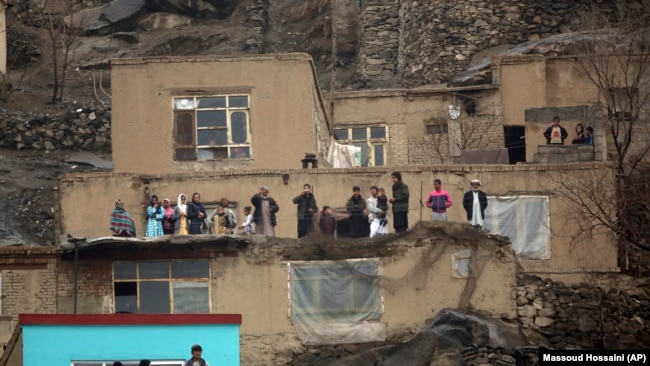
“Afghanistan remains one of the most dangerous and most violent, crisis ridden countries in the world,” where one third of the population needs help, according to the United Nations.
Afghanistan
A recent report by the UN Office for the Coordination of Humanitarian Affairs found that 9.3 million people in Afghanistan are in need of aid due to armed conflict. The population of Afghanistan is more than 32 million.
In 2016, every province in Afghanistan was affected by a natural disaster or armed conflict. More than half were affected by both. The fighting killed more than 8,000 civilians in the first nine months of 2016. A half million people lost their homes by November.
Jens Laerke is with the UN Office for the Coordination of Humanitarian Affairs.
"We expect very high levels of conflict-induced displacement and already this year, over 38,000 people have been newly displaced.”
More than half of those displaced were children.
The United Nations International Children’s Emergency Fund, or UNICEF says children and mothers are at great risk. The organization calls Afghanistan one of the most dangerous places in the world to be a baby, a child or mother because of limited access to health care.
UNICEF reports that thousands of Afghan women die every year because of problems linked with pregnancy. It says those deaths can be prevented. In 2015, it says more than one in every 18 Afghan children died before their first birthday.
UNICEF spokesman, Christophe Boulierac, says their poor diet is a silent emergency. He says more than 41 percent of Afghan children under age five are stunted. It is one of the highest rates in the world.
"Stunting, as you know, is a sign of chronicundernutrition during the most critical periods of growth and development in early life. Children who suffer from stunting are more likely to contract disease, less likely to access basic health care and do not perform well in school."
Boulierac says that the education system in Afghanistan has been destroyed by more than thirty years of conflict. He says three and a half million children do not go to school. An estimated 75 percent of them are girls.